
Can litter quality explain landscape evolution:

Description: Can litter quality explain landscape evolution: testing a soil-landscape evolution model Xia Meng, Arnaud J.A.M. Temme, W. Marijn van der Meij, Annemieke M. Kooijman, Erik L.H. Cammeraat We hypothesize that the topographic differences among
Related Topics
Download Presentation
"Can litter quality explain landscape evolution:" is the property of its rightful owner. Permission is granted to download and print the materials on this website for personal, non-commercial use only, and to display it on your personal computer provided you do not modify the materials and that you retain all copyright notices contained in the materials. By downloading content from our website, you accept the terms of this agreement.
Presentation Transcript
slide1. Can litter quality explain landscape evolution: testing a soil-landscape evolution model Xia Meng, Arnaud J.A.M. Temme, W. Marijn van der Meij, Annemieke M. Kooijman, Erik L.H. Cammeraat<br>
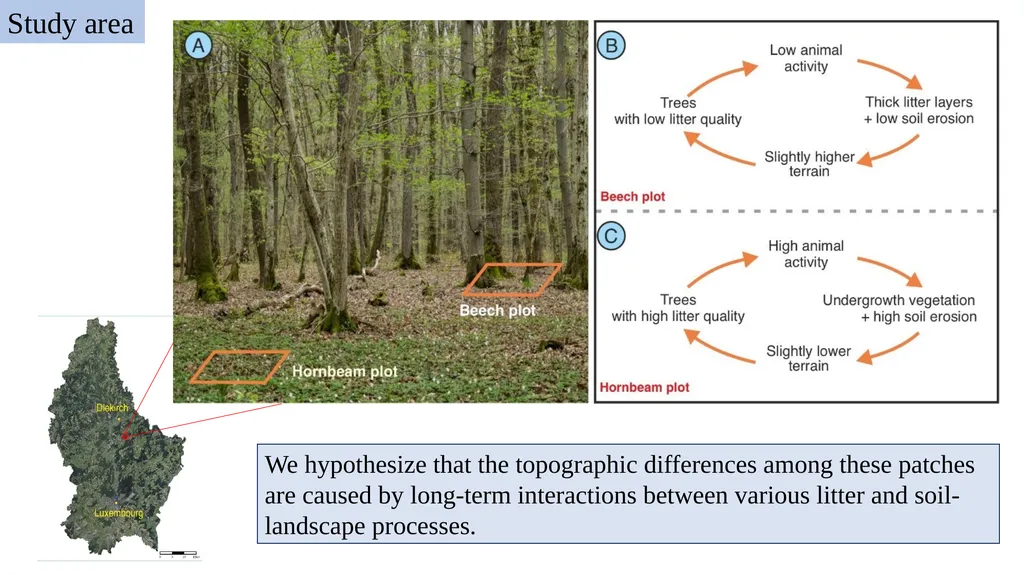
slide2. We hypothesize that the topographic differences among these patches are caused by long-term interactions between various litter and soil-landscape processes. Study area<br>
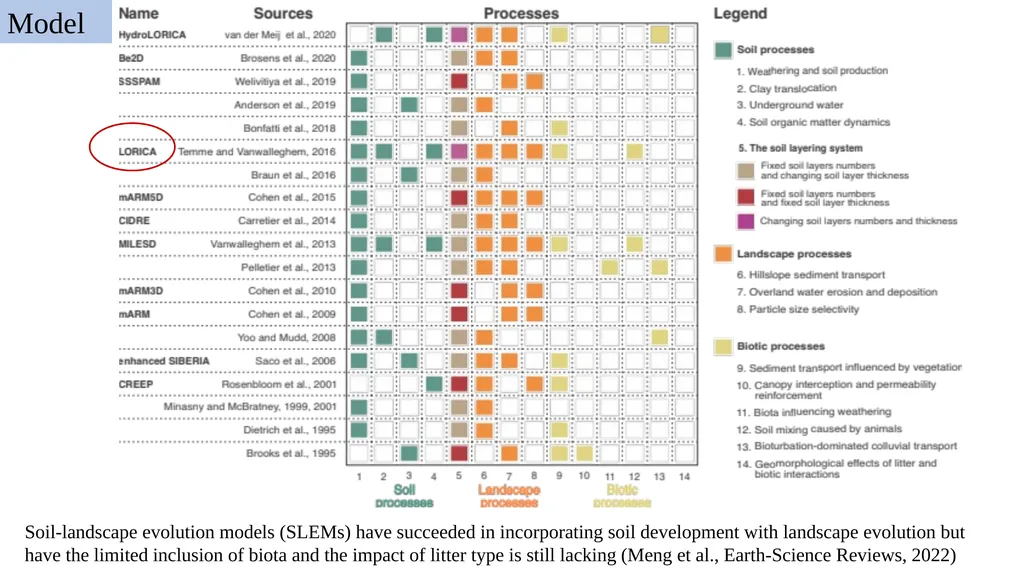
slide3. Soil-landscape evolution models (SLEMs) have succeeded in incorporating soil development with landscape evolution but have the limited inclusion of biota and the impact of litter type is still lacking (Meng et al., Earth-Science Reviews, 2022) Model<br>
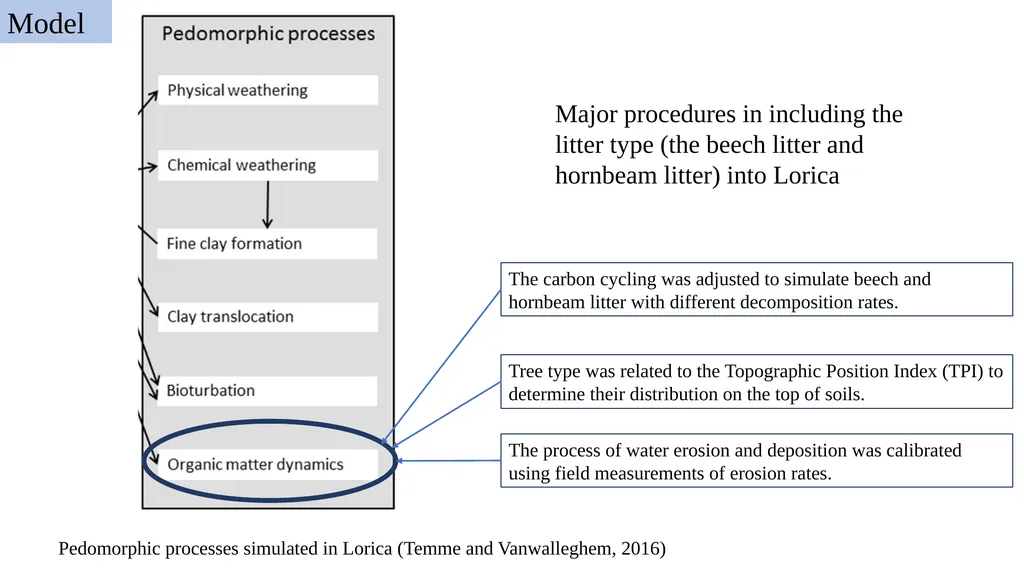
slide4. The carbon cycling was adjusted to simulate beech and hornbeam litter with different decomposition rates. Tree type was related to the Topographic Position Index (TPI) to determine their distribution on the top of soils. The process of water erosion and deposition was calibrated using field measurements of erosion rates. Pedomorphic processes simulated in Lorica (Temme and Vanwalleghem, 2016) Major procedures in including the litter type (the beech litter and hornbeam litter) into Lorica Model<br>
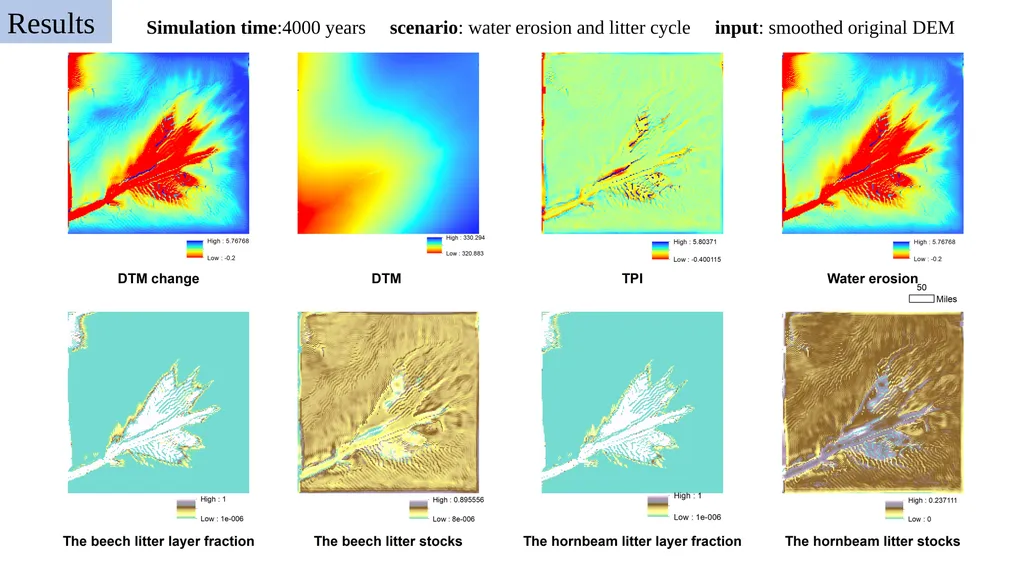
slide5. Results Simulation time:4000 years scenario: water erosion and litter cycle input: smoothed original DEM<br>
slide6. Thank you!<br>
slide2. We hypothesize that the topographic differences among these patches are caused by long-term interactions between various litter and soil-landscape processes. Study area<br>
slide3. Soil-landscape evolution models (SLEMs) have succeeded in incorporating soil development with landscape evolution but have the limited inclusion of biota and the impact of litter type is still lacking (Meng et al., Earth-Science Reviews, 2022) Model<br>
slide4. The carbon cycling was adjusted to simulate beech and hornbeam litter with different decomposition rates. Tree type was related to the Topographic Position Index (TPI) to determine their distribution on the top of soils. The process of water erosion and deposition was calibrated using field measurements of erosion rates. Pedomorphic processes simulated in Lorica (Temme and Vanwalleghem, 2016) Major procedures in including the litter type (the beech litter and hornbeam litter) into Lorica Model<br>
slide5. Results Simulation time:4000 years scenario: water erosion and litter cycle input: smoothed original DEM<br>
slide6. Thank you!<br>