
Can the behavioural sciences save humankind from

Description: Can the behavioural sciences save humankind from itself? Robert West solitary, poor, nasty, brutish and short less solitary, poor, nasty, brutish and short on average Continuing threats to human progress pollution tobacco alcohol diet
Related Topics
Download Presentation
"Can the behavioural sciences save humankind from" is the property of its rightful owner. Permission is granted to download and print the materials on this website for personal, non-commercial use only, and to display it on your personal computer provided you do not modify the materials and that you retain all copyright notices contained in the materials. By downloading content from our website, you accept the terms of this agreement.
Presentation Transcript
slide1. Can the behavioural sciences save humankind from itself? Robert West<br>
slide2. 'solitary, poor, nasty, brutish and short' less 'solitary, poor, nasty, brutish and short’ on average<br>
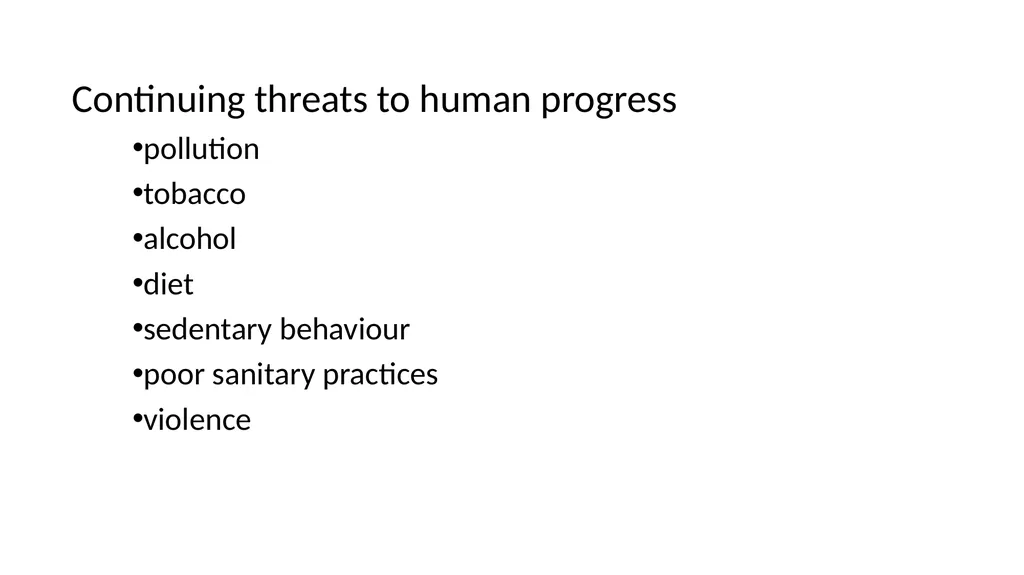
slide3. Continuing threats to human progress
pollution
tobacco
alcohol
diet
sedentary behaviour
poor sanitary practices
violence<br>
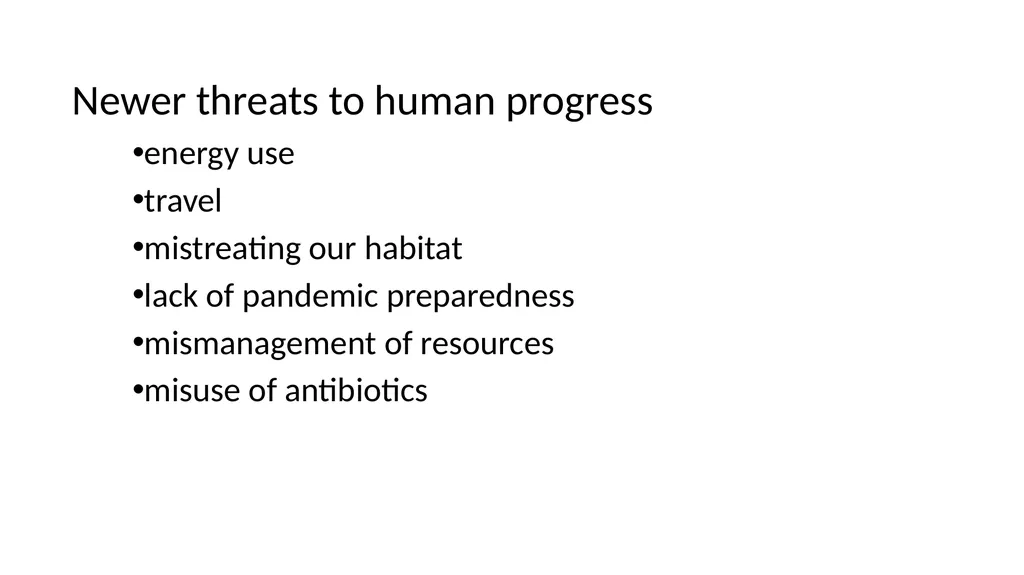
slide4. Newer threats to human progress
energy use
travel
mistreating our habitat
lack of pandemic preparedness
mismanagement of resources
misuse of antibiotics<br>
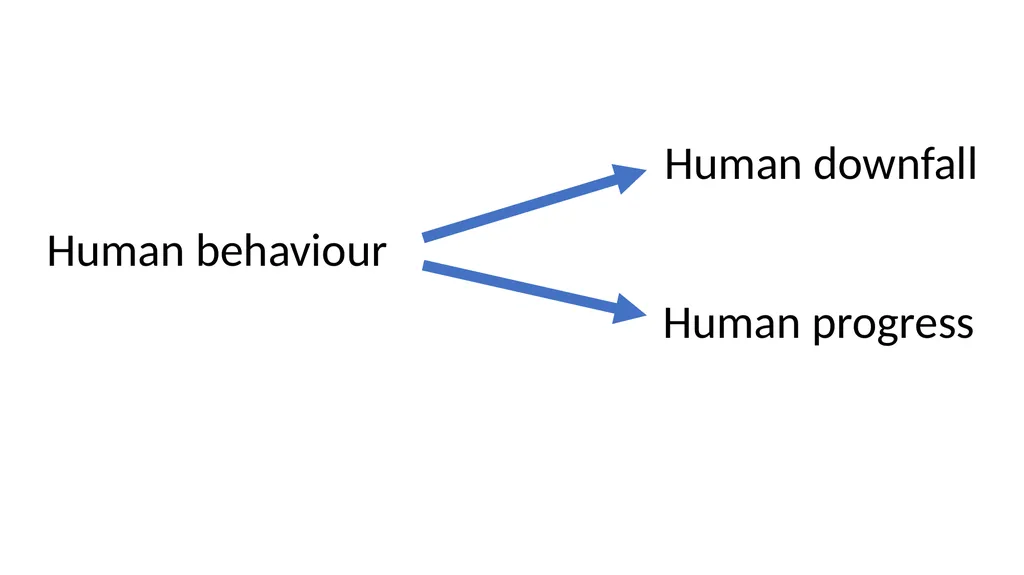
slide5. Human behaviour Human downfall Human progress<br>
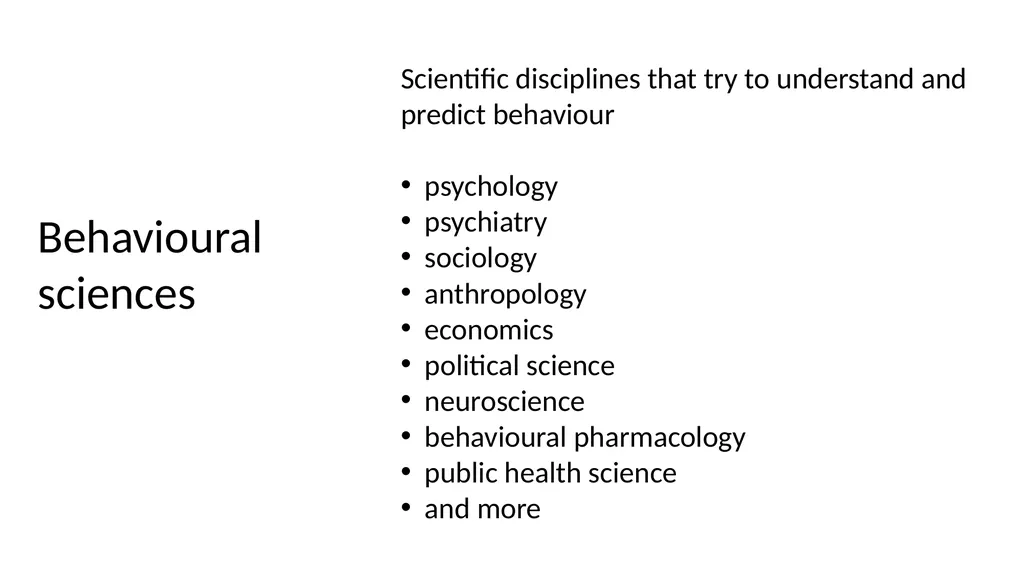
slide6. Behavioural sciences Scientific disciplines that try to understand and predict behaviour
psychology
psychiatry
sociology
anthropology
economics
political science
neuroscience
behavioural pharmacology
public health science
and more<br>
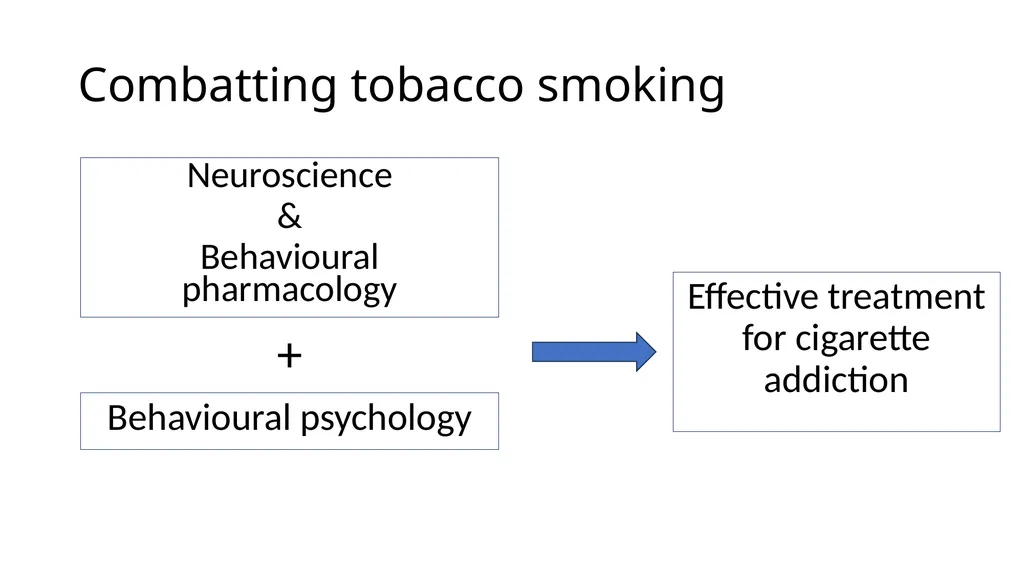
slide7. Combatting tobacco smoking Neuroscience
&
Behavioural pharmacology Behavioural psychology + Effective treatment for cigarette addiction<br>
slide8. But ... Health systems mostly don’t make it available
Where it is available smokers mostly do not use it
Where smokers do use it, service providers mostly don’t deliver it to specification<br>
slide9. Covid-19 Populations can be highly resilient and supportive of even very stringent measures
Adhering to self-isolation is related to norms and affordability
Trust in government is important to adhering to restrictions<br>
slide10. But ... Lockdown was delayed by misplaced belief in lack of resilience
Self-isolation was undermined by inadequate financial support
Government figures showed themselves to be untrustworthy<br>
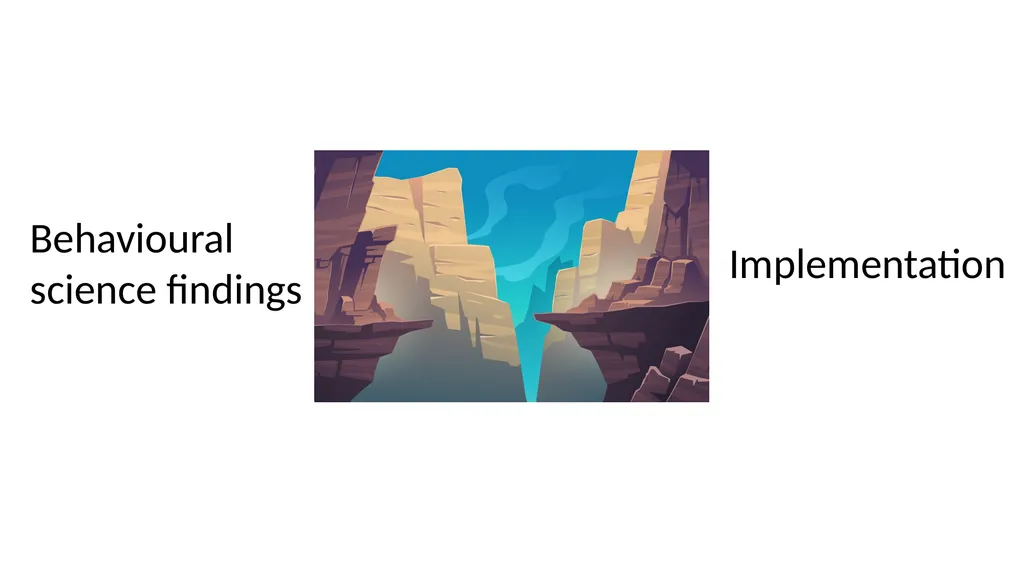
slide11. Behavioural science findings Implementation<br>
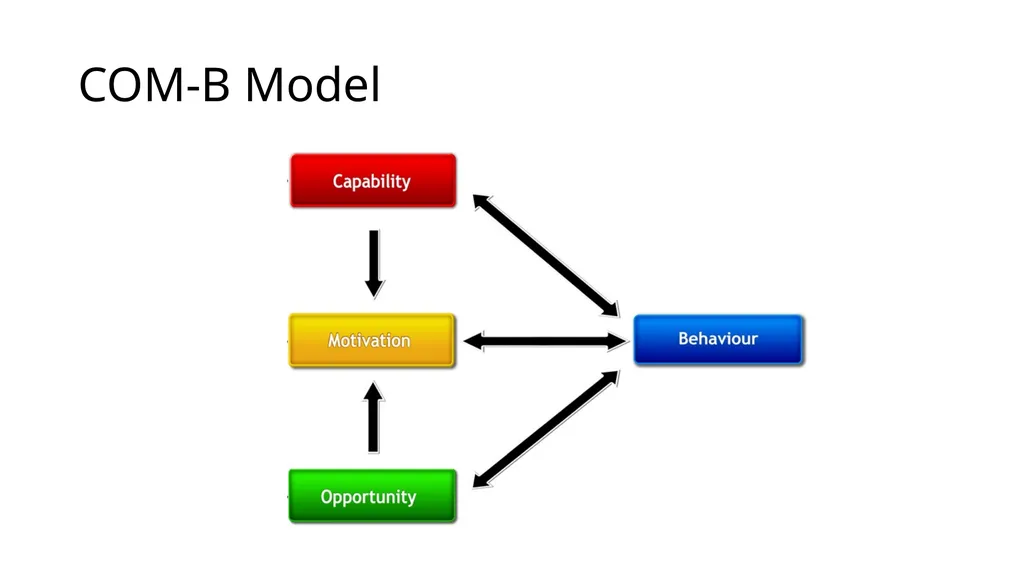
slide12. COM-B Model<br>
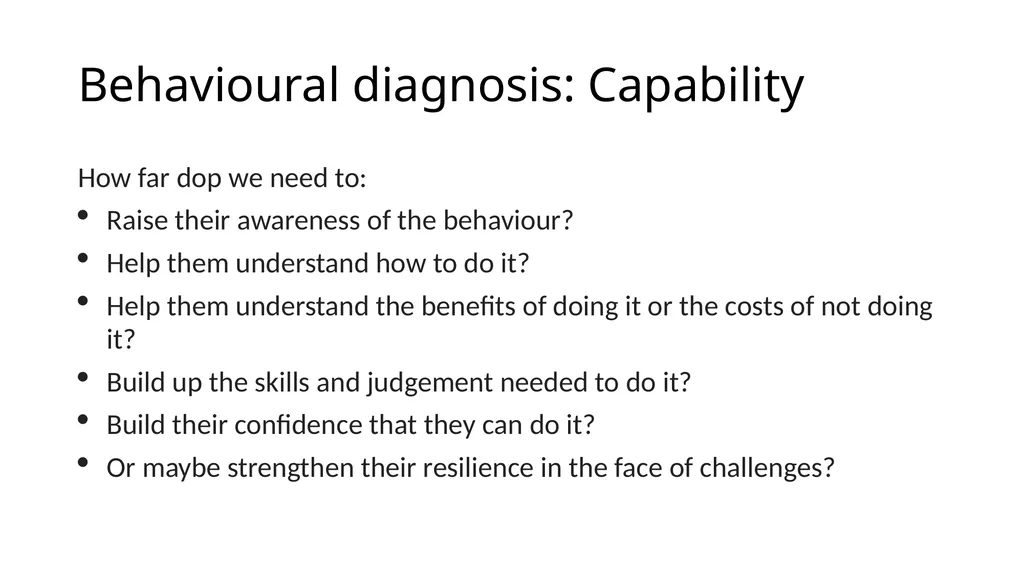
slide13. Behavioural diagnosis: Capability How far dop we need to:
Raise their awareness of the behaviour?
Help them understand how to do it?
Help them understand the benefits of doing it or the costs of not doing it?
Build up the skills and judgement needed to do it?
Build their confidence that they can do it?
Or maybe strengthen their resilience in the face of challenges?<br>
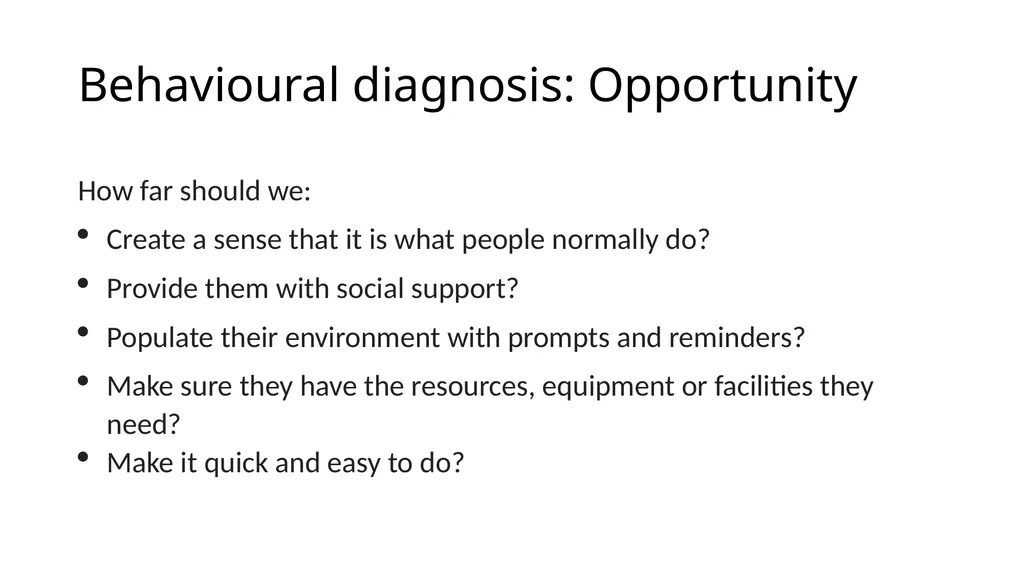
slide14. Behavioural diagnosis: Opportunity How far should we:
Create a sense that it is what people normally do?
Provide them with social support?
Populate their environment with prompts and reminders?
Make sure they have the resources, equipment or facilities they need?
Make it quick and easy to do?<br>
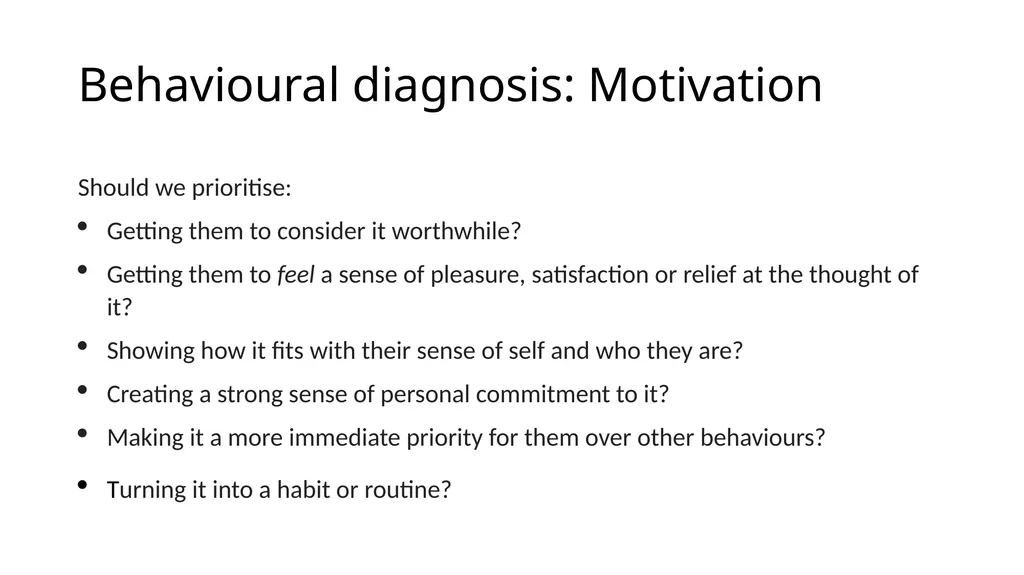
slide15. Behavioural diagnosis: Motivation Should we prioritise:
Getting them to consider it worthwhile?
Getting them to feel a sense of pleasure, satisfaction or relief at the thought of it?
Showing how it fits with their sense of self and who they are?
Creating a strong sense of personal commitment to it?
Making it a more immediate priority for them over other behaviours?
Turning it into a habit or routine?<br>
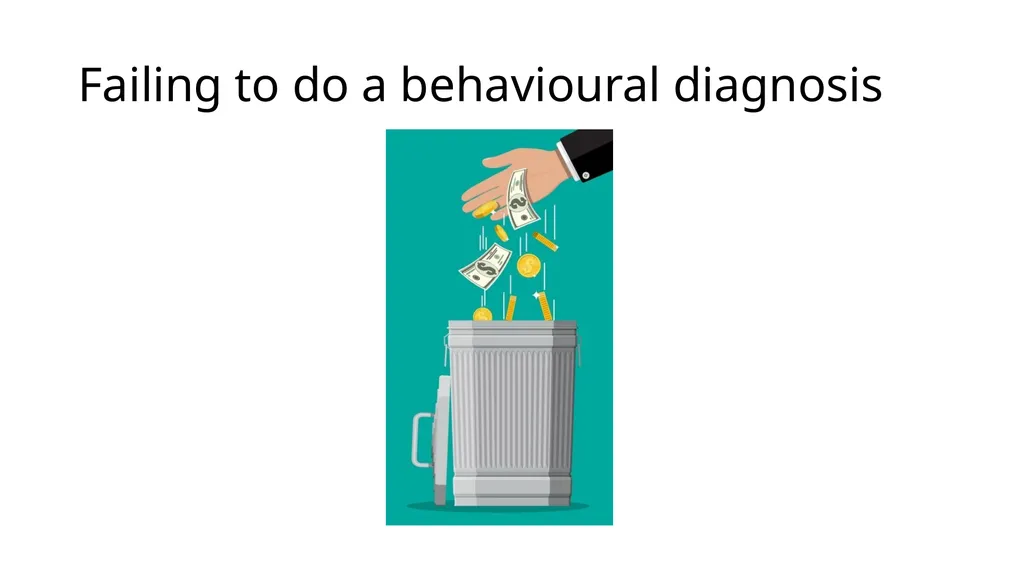
slide16. Failing to do a behavioural diagnosis<br>
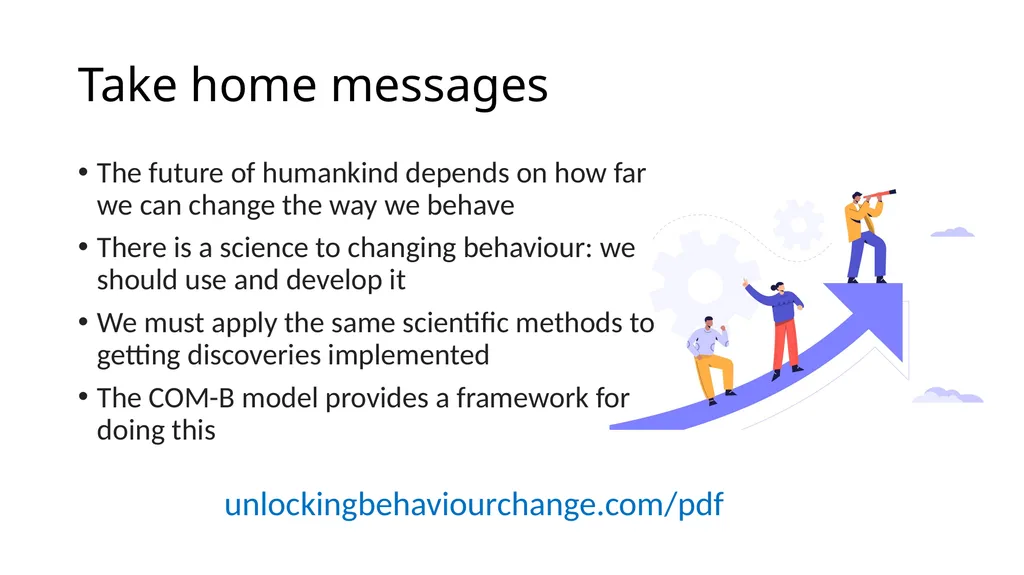
slide17. Take home messages The future of humankind depends on how far we can change the way we behave
There is a science to changing behaviour: we should use and develop it
We must apply the same scientific methods to getting discoveries implemented
The COM-B model provides a framework for doing this unlockingbehaviourchange.com/pdf<br>
slide2. 'solitary, poor, nasty, brutish and short' less 'solitary, poor, nasty, brutish and short’ on average<br>
slide3. Continuing threats to human progress
pollution
tobacco
alcohol
diet
sedentary behaviour
poor sanitary practices
violence<br>
slide4. Newer threats to human progress
energy use
travel
mistreating our habitat
lack of pandemic preparedness
mismanagement of resources
misuse of antibiotics<br>
slide5. Human behaviour Human downfall Human progress<br>
slide6. Behavioural sciences Scientific disciplines that try to understand and predict behaviour
psychology
psychiatry
sociology
anthropology
economics
political science
neuroscience
behavioural pharmacology
public health science
and more<br>
slide7. Combatting tobacco smoking Neuroscience
&
Behavioural pharmacology Behavioural psychology + Effective treatment for cigarette addiction<br>
slide8. But ... Health systems mostly don’t make it available
Where it is available smokers mostly do not use it
Where smokers do use it, service providers mostly don’t deliver it to specification<br>
slide9. Covid-19 Populations can be highly resilient and supportive of even very stringent measures
Adhering to self-isolation is related to norms and affordability
Trust in government is important to adhering to restrictions<br>
slide10. But ... Lockdown was delayed by misplaced belief in lack of resilience
Self-isolation was undermined by inadequate financial support
Government figures showed themselves to be untrustworthy<br>
slide11. Behavioural science findings Implementation<br>
slide12. COM-B Model<br>
slide13. Behavioural diagnosis: Capability How far dop we need to:
Raise their awareness of the behaviour?
Help them understand how to do it?
Help them understand the benefits of doing it or the costs of not doing it?
Build up the skills and judgement needed to do it?
Build their confidence that they can do it?
Or maybe strengthen their resilience in the face of challenges?<br>
slide14. Behavioural diagnosis: Opportunity How far should we:
Create a sense that it is what people normally do?
Provide them with social support?
Populate their environment with prompts and reminders?
Make sure they have the resources, equipment or facilities they need?
Make it quick and easy to do?<br>
slide15. Behavioural diagnosis: Motivation Should we prioritise:
Getting them to consider it worthwhile?
Getting them to feel a sense of pleasure, satisfaction or relief at the thought of it?
Showing how it fits with their sense of self and who they are?
Creating a strong sense of personal commitment to it?
Making it a more immediate priority for them over other behaviours?
Turning it into a habit or routine?<br>
slide16. Failing to do a behavioural diagnosis<br>
slide17. Take home messages The future of humankind depends on how far we can change the way we behave
There is a science to changing behaviour: we should use and develop it
We must apply the same scientific methods to getting discoveries implemented
The COM-B model provides a framework for doing this unlockingbehaviourchange.com/pdf<br>