CareerSource Chipola Performance Overview Keantha Moore and Lemuel Toro, Department of Economic Opportunity March 14, 2019 AGENDA Workforce Structure and Service Delivery Model Roles and Responsibilities Program Year 2017 Primary Indicators
"CareerSource Chipola Performance Overview Keantha" is the property of its rightful owner. Permission is granted to
download and print the materials on this website for personal, non-commercial use only, and to display it
on your personal computer provided you do not modify the materials and that you retain all copyright
notices contained in the materials. By downloading content from our website, you accept the terms of this
agreement.
Presentation Transcript
01
CareerSource Chipola Performance Overview Keantha Moore and Lemuel Toro, Department of Economic Opportunity March 14, 2019<br>
02
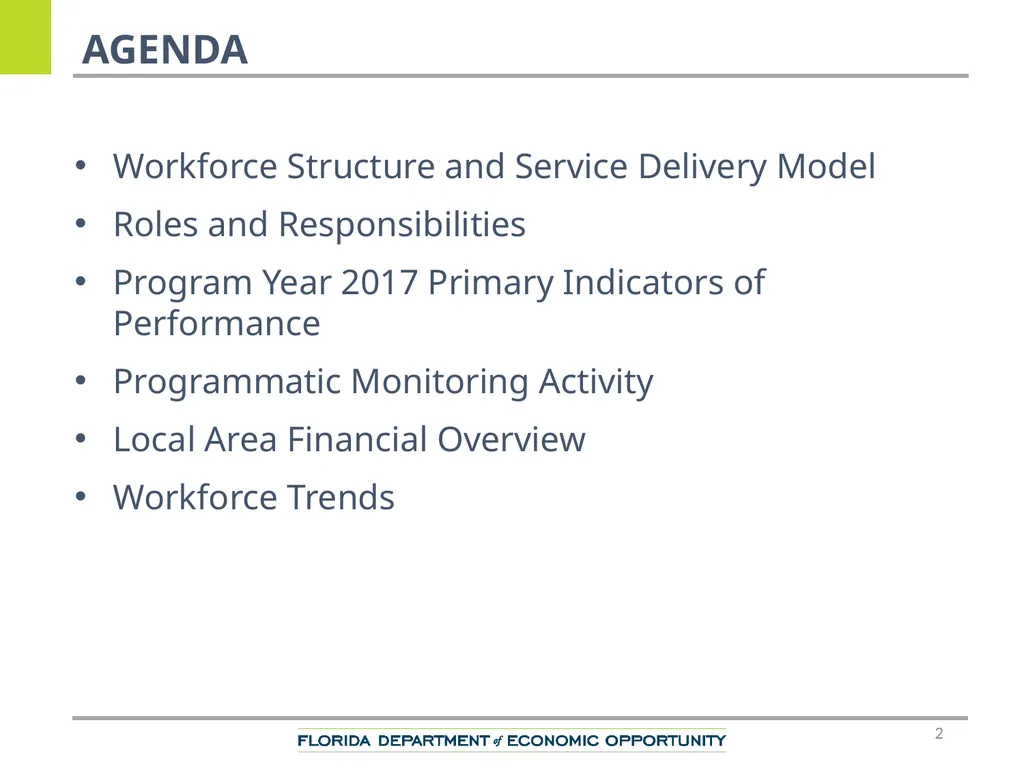
AGENDA Workforce Structure and Service Delivery Model
Roles and Responsibilities
Program Year 2017 Primary Indicators of Performance
Programmatic Monitoring Activity
Local Area Financial Overview
Workforce Trends 2<br>
03
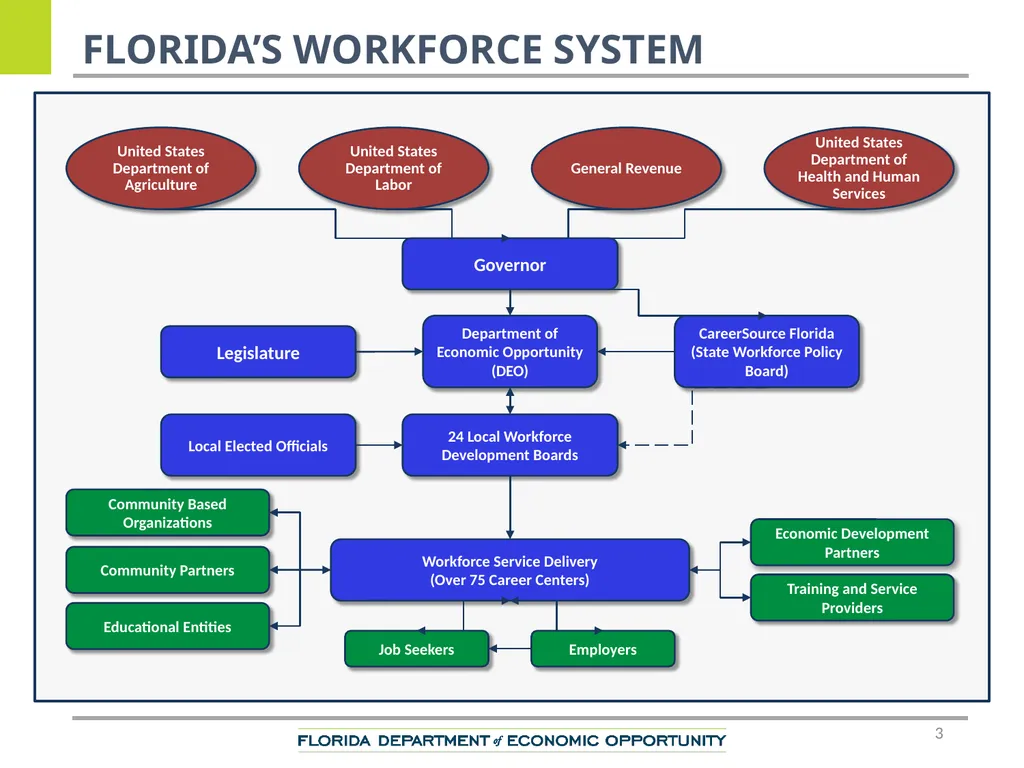
FLORIDA’S WORKFORCE SYSTEM 3<br>
04
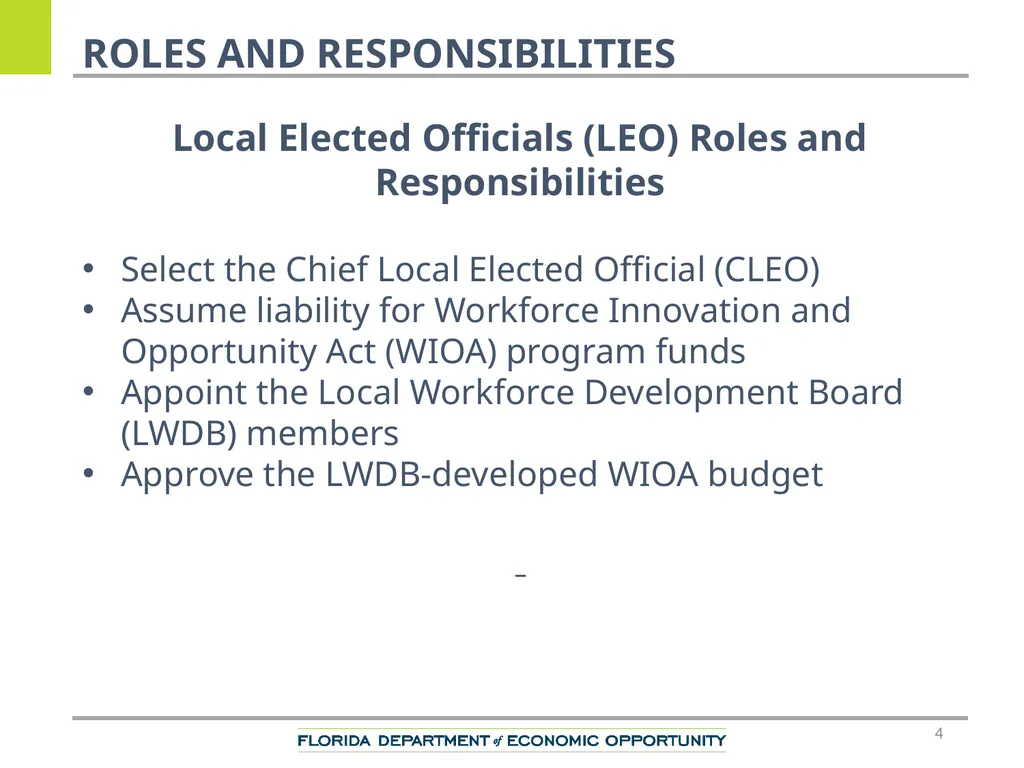
ROLES AND RESPONSIBILITIES Local Elected Officials (LEO) Roles and Responsibilities
Select the Chief Local Elected Official (CLEO)
Assume liability for Workforce Innovation and Opportunity Act (WIOA) program funds
Appoint the Local Workforce Development Board (LWDB) members
Approve the LWDB-developed WIOA budget 4<br>
05
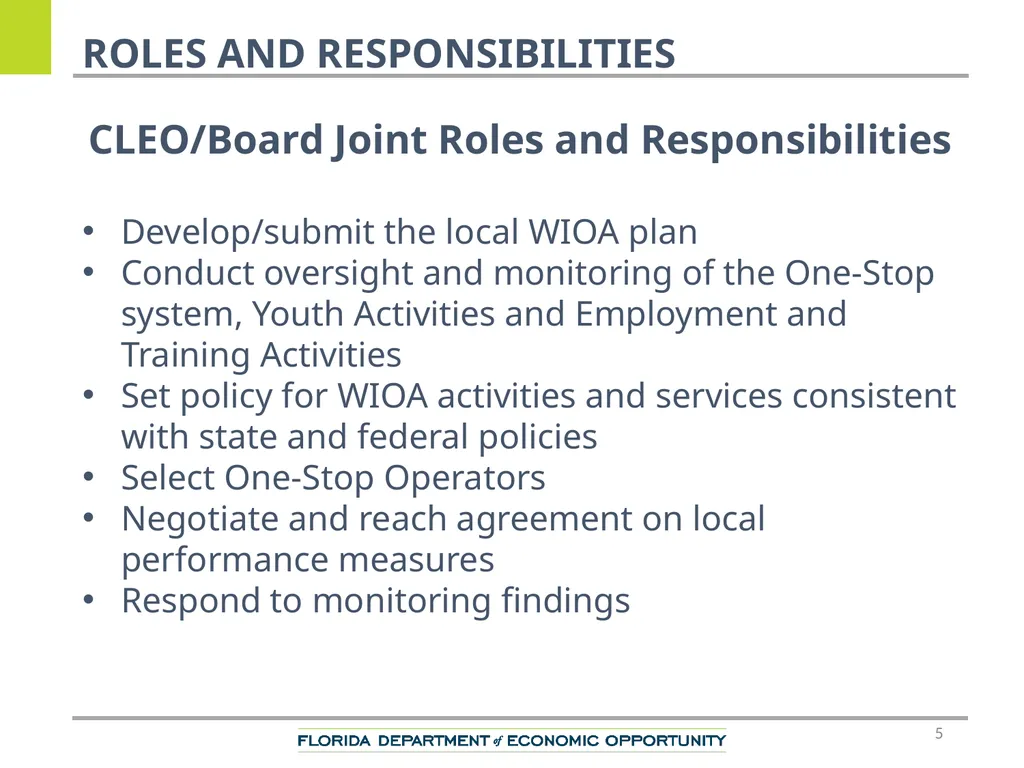
ROLES AND RESPONSIBILITIES CLEO/Board Joint Roles and Responsibilities
Develop/submit the local WIOA plan
Conduct oversight and monitoring of the One-Stop system, Youth Activities and Employment and Training Activities
Set policy for WIOA activities and services consistent with state and federal policies
Select One-Stop Operators
Negotiate and reach agreement on local performance measures
Respond to monitoring findings 5<br>
06
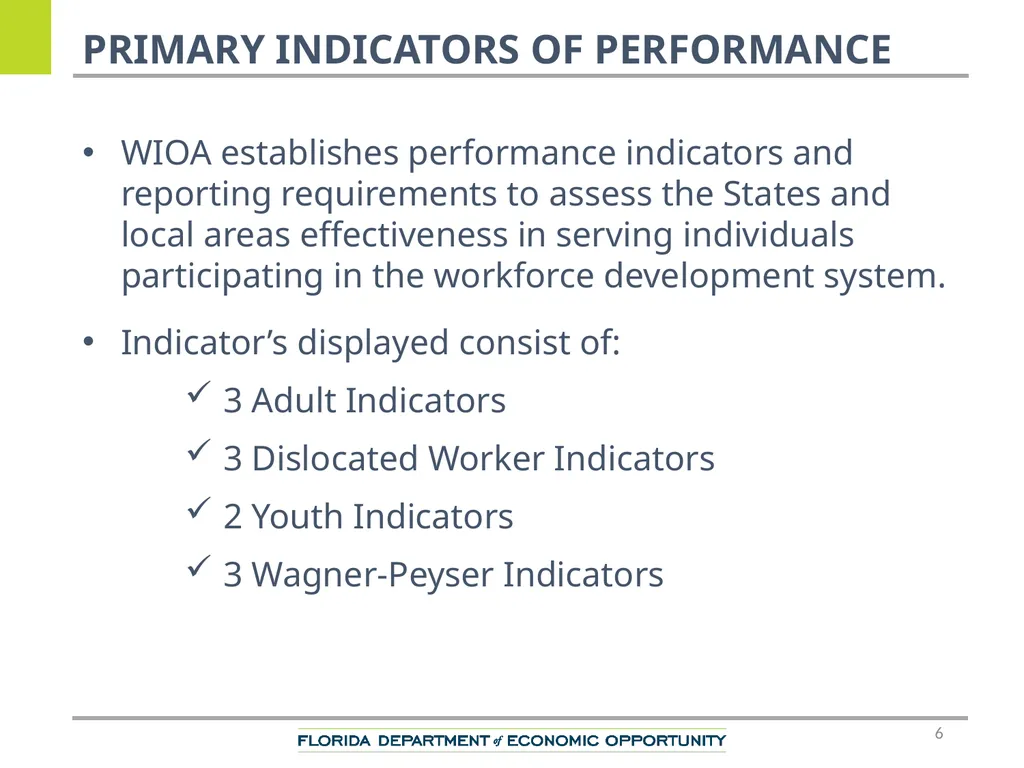
PRIMARY INDICATORS OF PERFORMANCE WIOA establishes performance indicators and reporting requirements to assess the States and local areas effectiveness in serving individuals participating in the workforce development system.
Indicator’s displayed consist of:
3 Adult Indicators
3 Dislocated Worker Indicators
2 Youth Indicators
3 Wagner-Peyser Indicators 6<br>
07
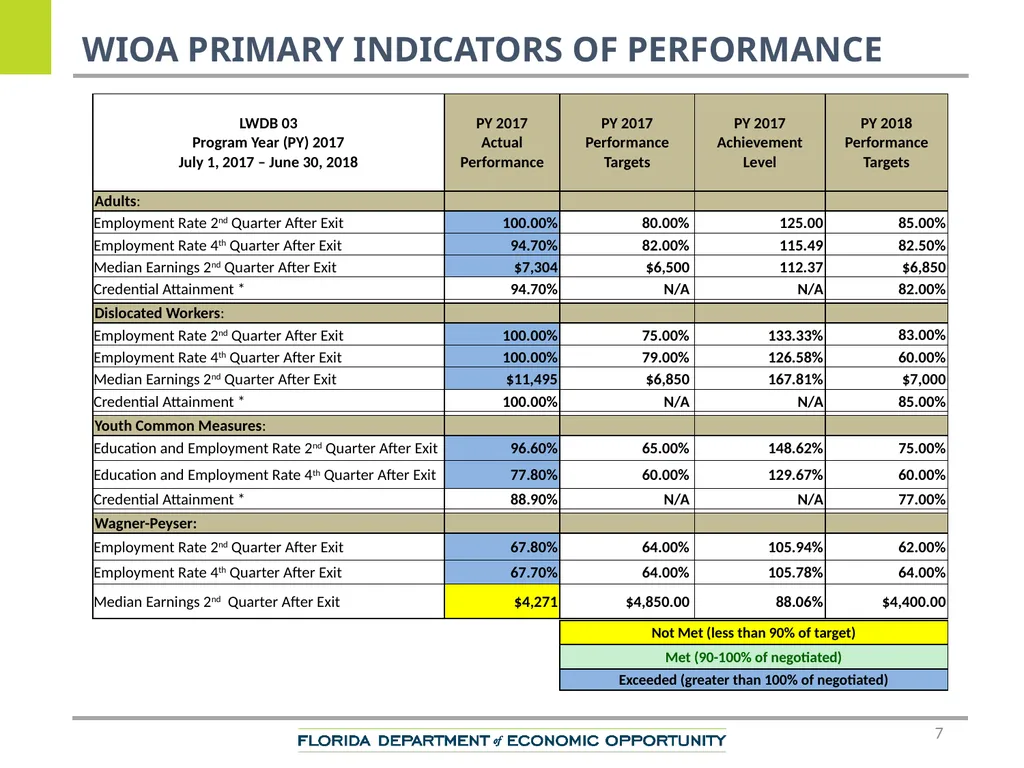
WIOA PRIMARY INDICATORS OF PERFORMANCE 7<br>
08
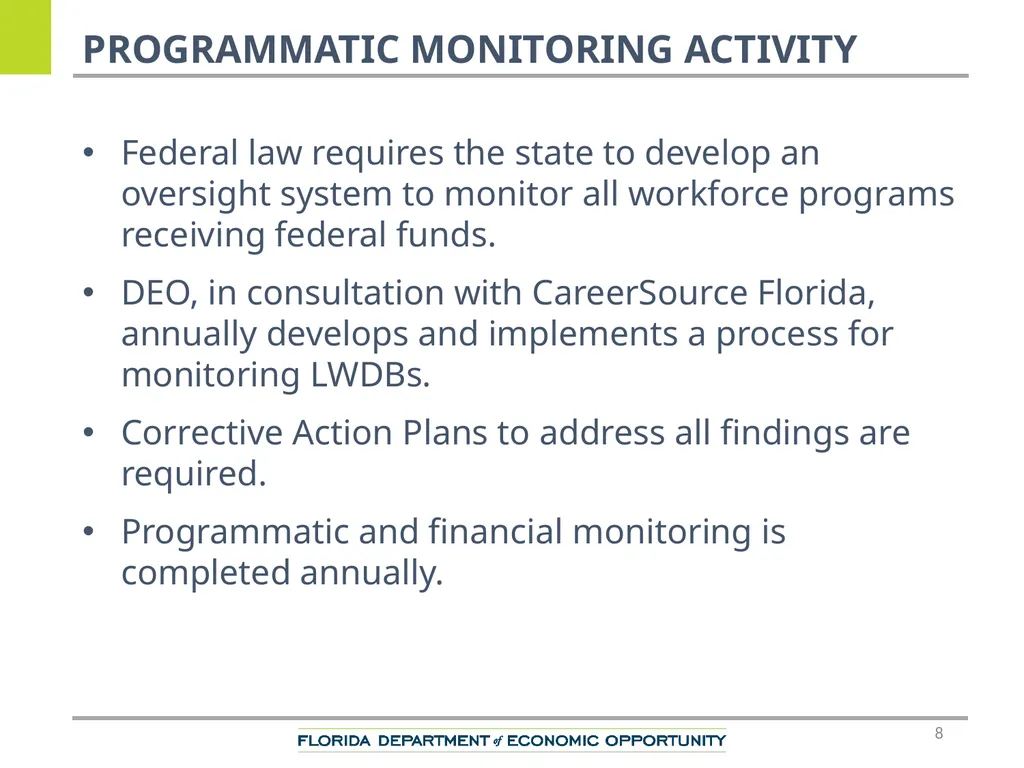
Federal law requires the state to develop an oversight system to monitor all workforce programs receiving federal funds.
DEO, in consultation with CareerSource Florida, annually develops and implements a process for monitoring LWDBs.
Corrective Action Plans to address all findings are required.
Programmatic and financial monitoring is completed annually. PROGRAMMATIC MONITORING ACTIVITY 8<br>
09
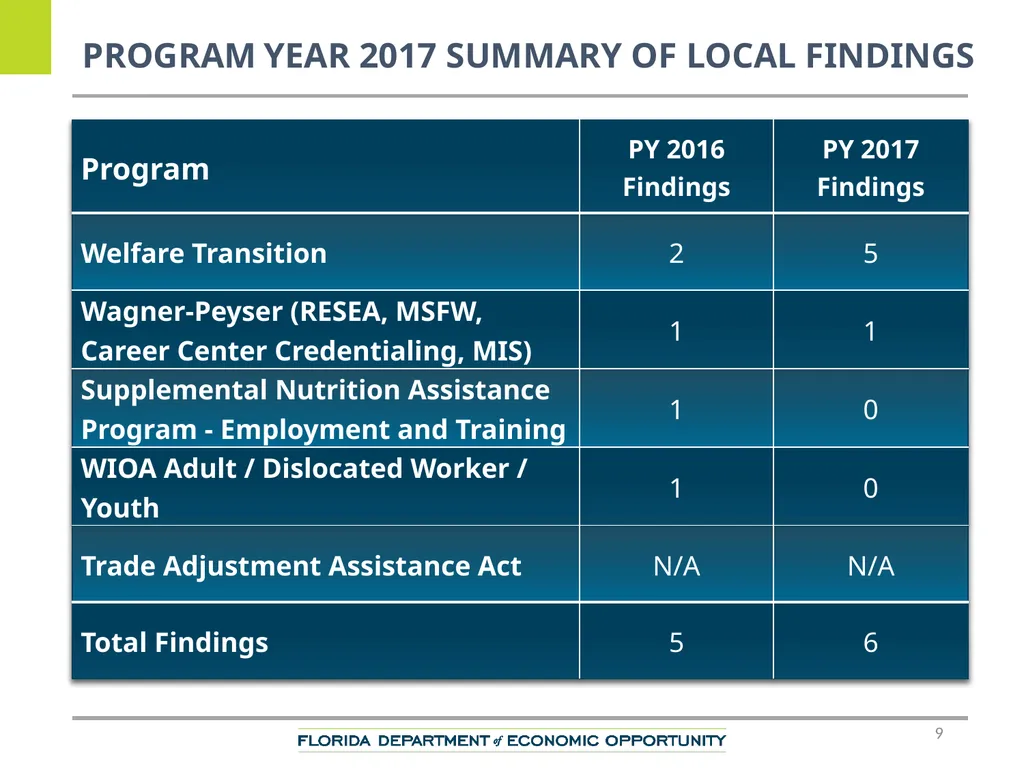
PROGRAM YEAR 2017 SUMMARY OF LOCAL FINDINGS 9<br>
10
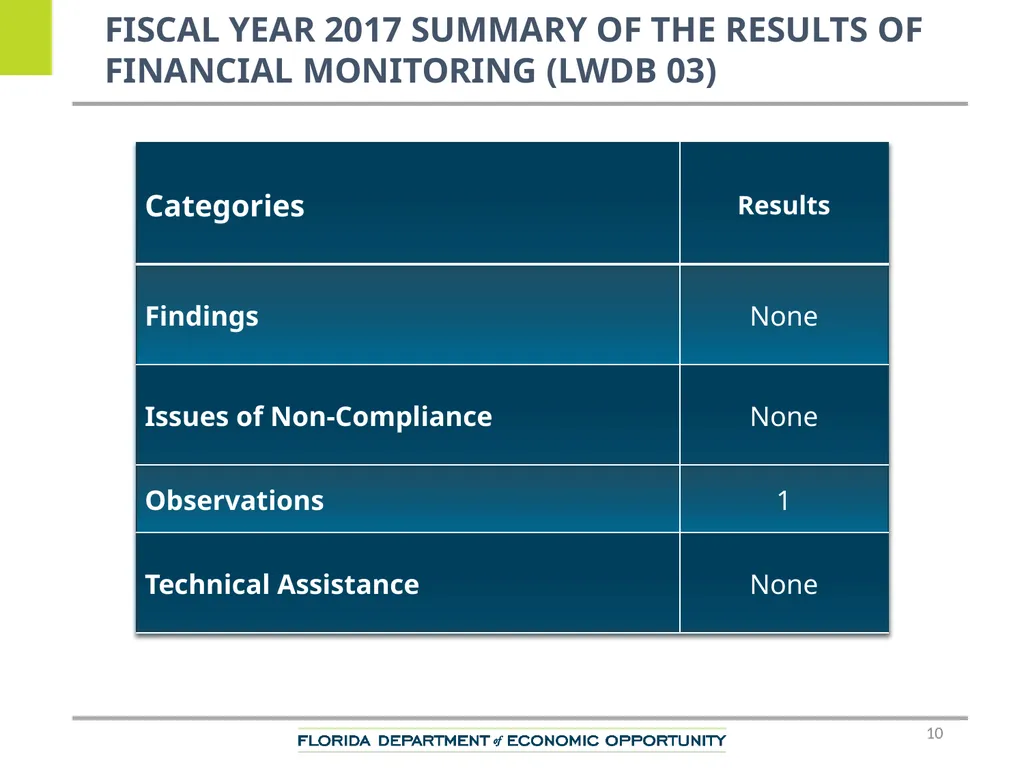
FISCAL YEAR 2017 SUMMARY OF THE RESULTS OF FINANCIAL MONITORING (LWDB 03) 10<br>
11
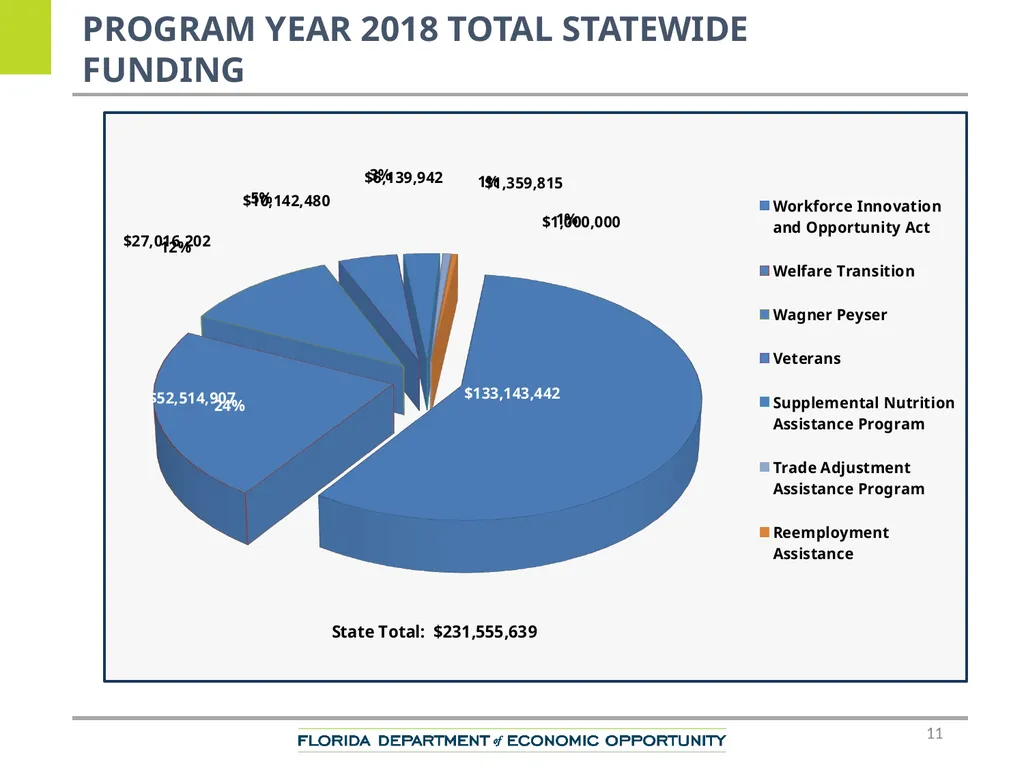
PROGRAM YEAR 2018 TOTAL STATEWIDE FUNDING 11<br>
12
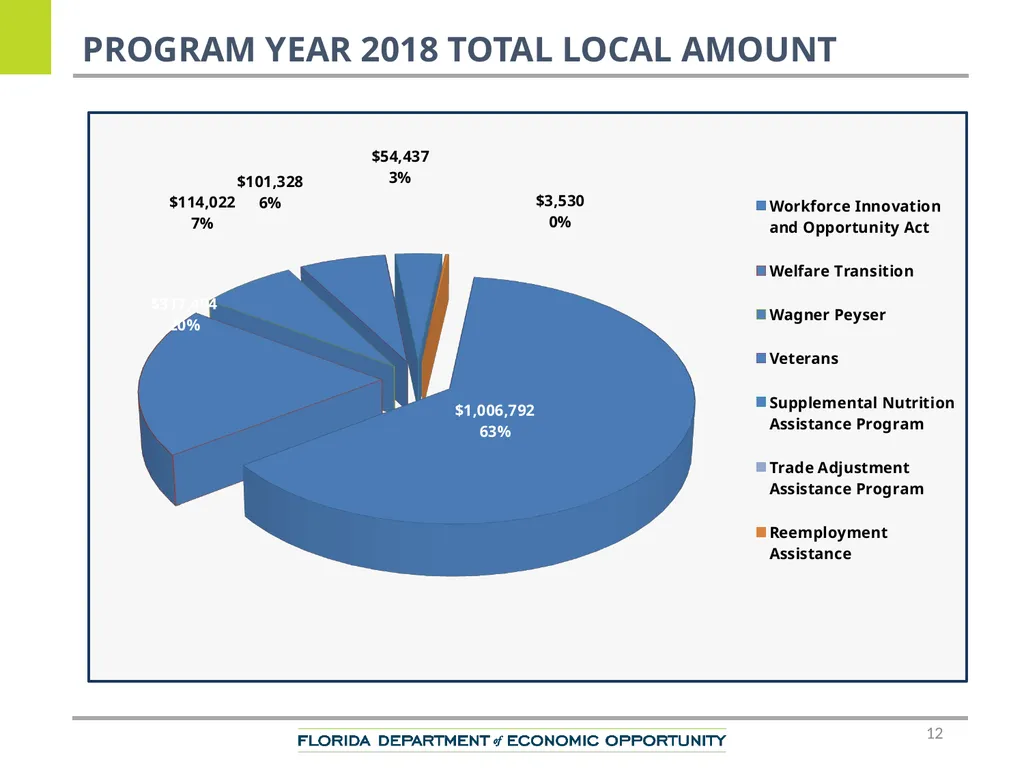
PROGRAM YEAR 2018 TOTAL LOCAL AMOUNT 12<br>
13
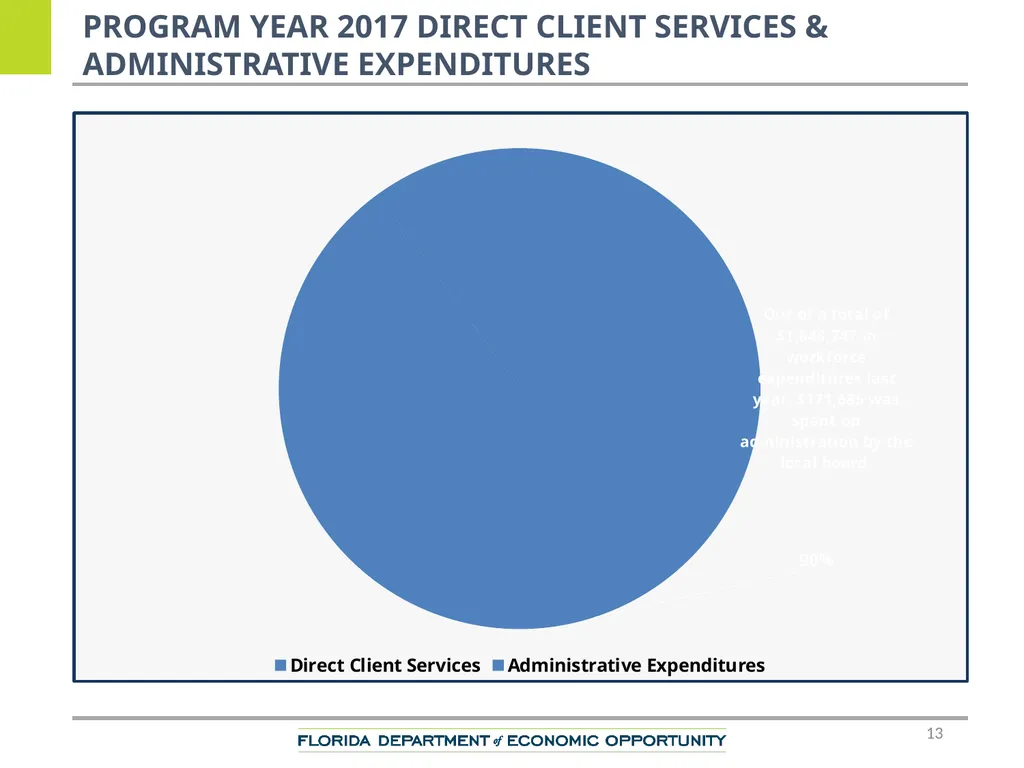
PROGRAM YEAR 2017 DIRECT CLIENT SERVICES & ADMINISTRATIVE EXPENDITURES 13<br>
14
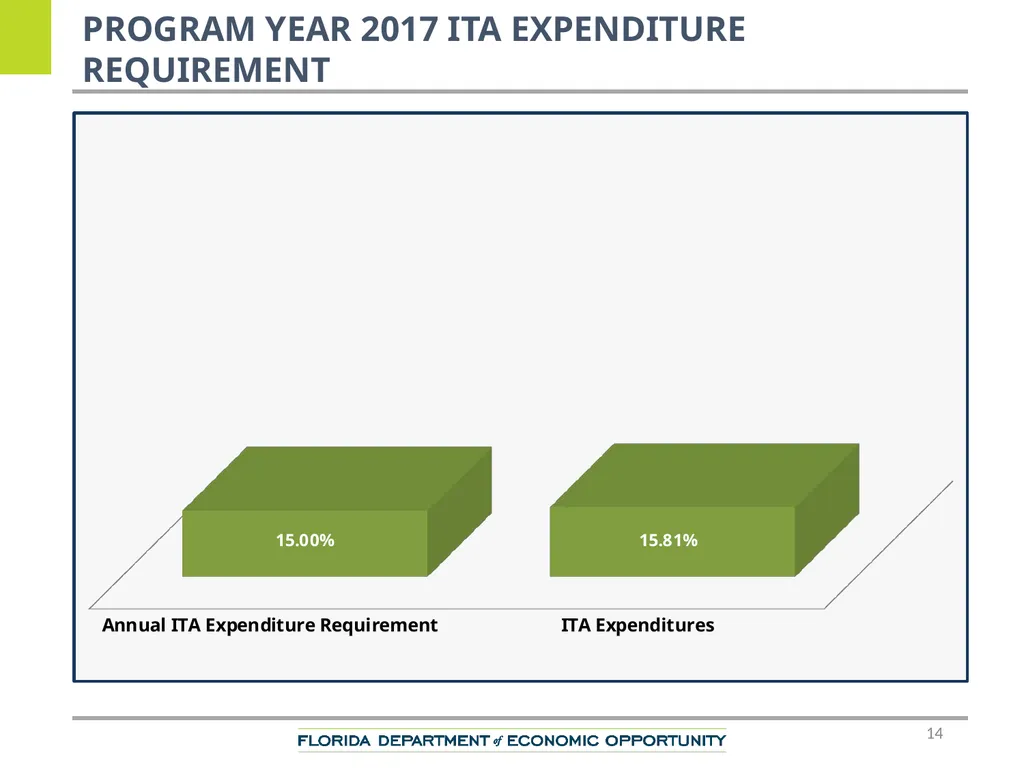
PROGRAM YEAR 2017 ITA EXPENDITURE REQUIREMENT 14<br>
15
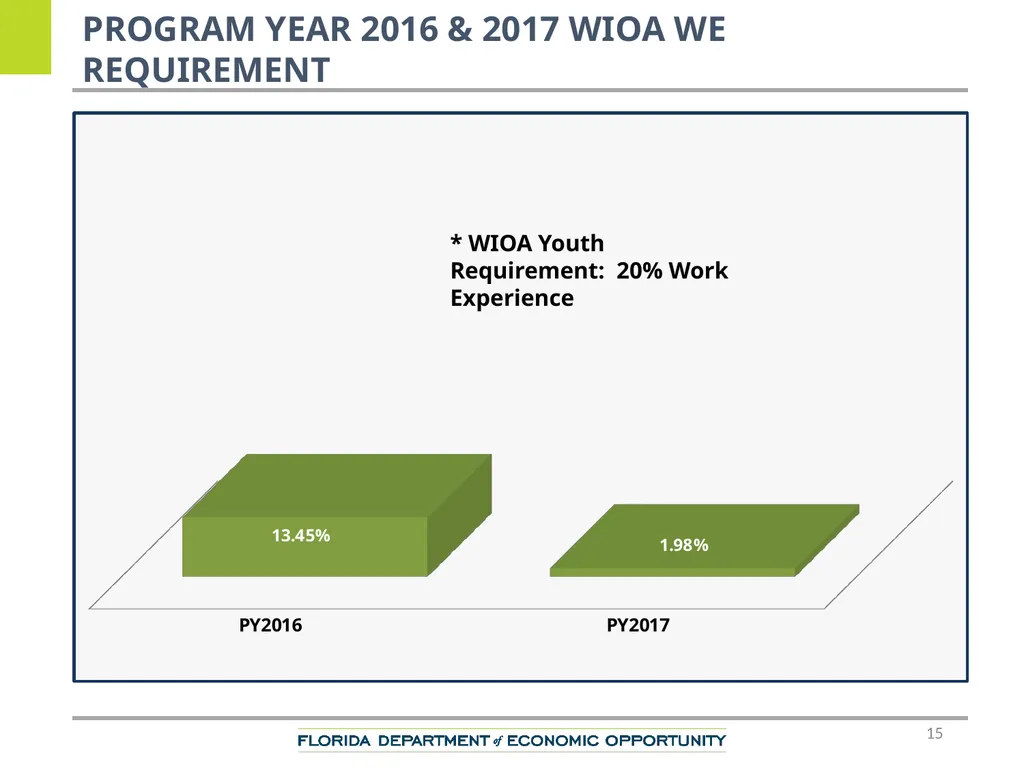
* WIOA Youth Requirement: 20% Work Experience PROGRAM YEAR 2016 & 2017 WIOA WE REQUIREMENT 15<br>
16
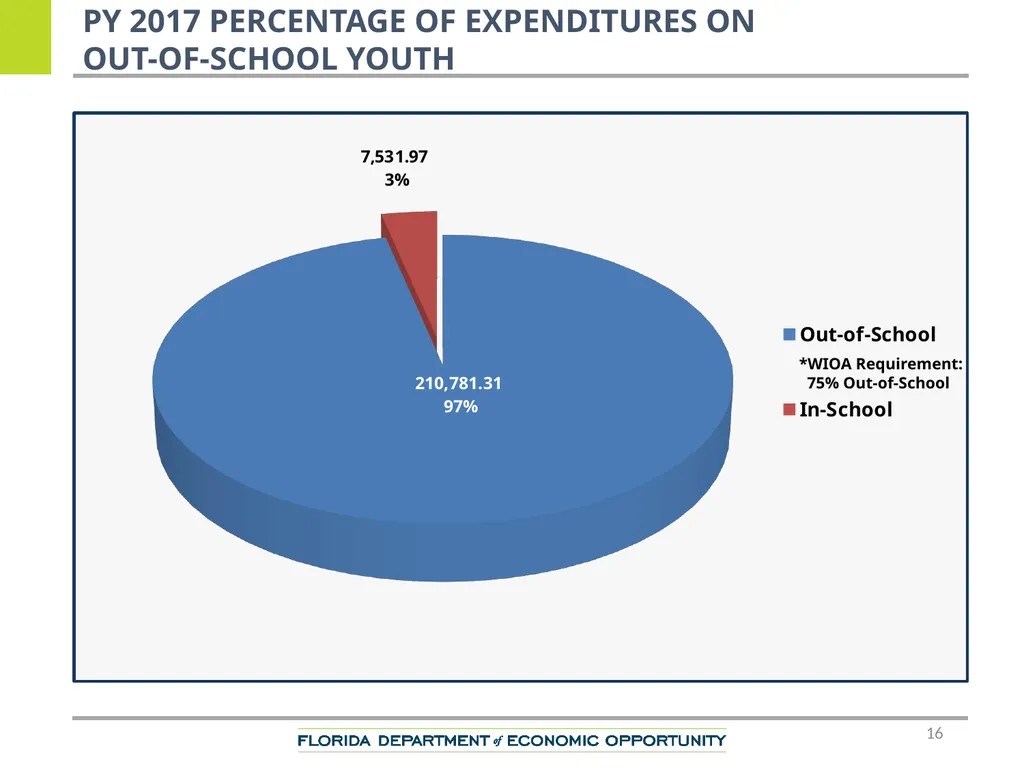
PY 2017 PERCENTAGE OF EXPENDITURES ON
OUT-OF-SCHOOL YOUTH *WIOA Requirement:
75% Out-of-School 16<br>
17
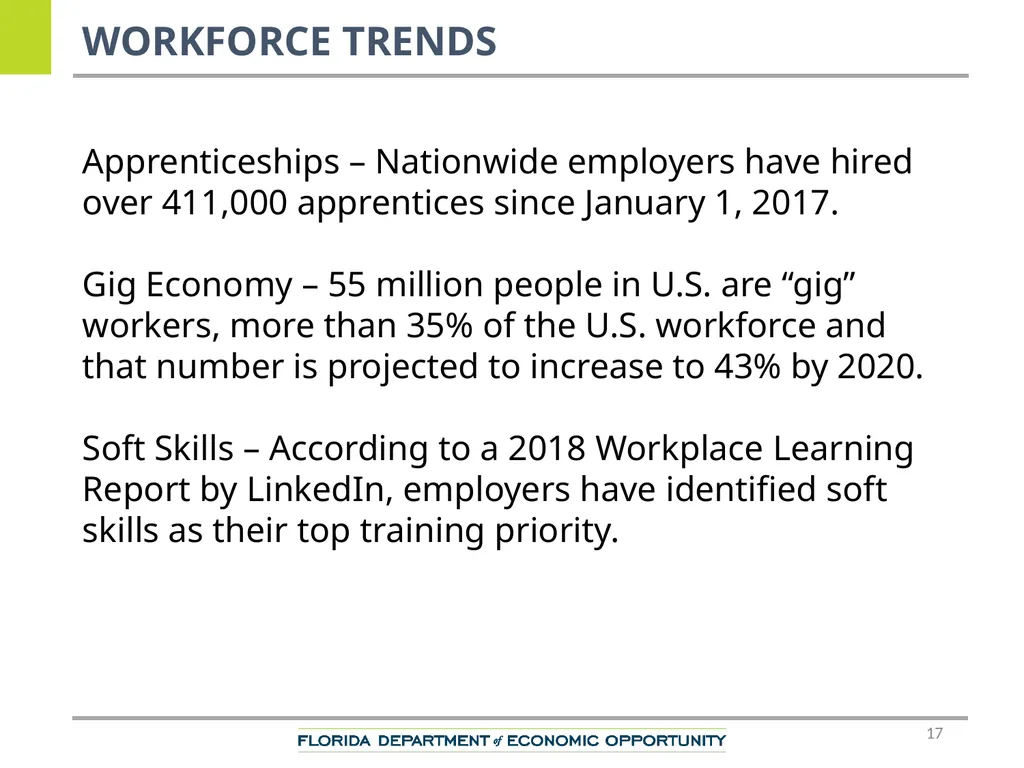
WORKFORCE TRENDS Apprenticeships – Nationwide employers have hired over 411,000 apprentices since January 1, 2017.
Gig Economy – 55 million people in U.S. are “gig” workers, more than 35% of the U.S. workforce and that number is projected to increase to 43% by 2020.
Soft Skills – According to a 2018 Workplace Learning Report by LinkedIn, employers have identified soft skills as their top training priority. 17<br>
18
QUESTIONS 18<br>
19
ADDITIONAL INFORMATION For more information, please contact:
Casey Penn
Florida Department of Economic Opportunity
One-Stop and Program Support
(850) 245-7485
Casey.Penn@deo.myflorida.com 19<br>