CCAC TRAINING MODULE ON: GENETICALLY-ENGINEERED FARM ANIMALS www.ccac.ca Relevance of this Training Module This training module is relevant to all animal users working with genetically-engineered (GE) farm animals in research, teaching or
"CCAC TRAINING MODULE ON: GENETICALLY-ENGINEERED" is the property of its rightful owner. Permission is granted to
download and print the materials on this website for personal, non-commercial use only, and to display it
on your personal computer provided you do not modify the materials and that you retain all copyright
notices contained in the materials. By downloading content from our website, you accept the terms of this
agreement.
Presentation Transcript
01
CCAC TRAINING MODULE ON: GENETICALLY-ENGINEERED FARM ANIMALS www.ccac.ca<br>
02
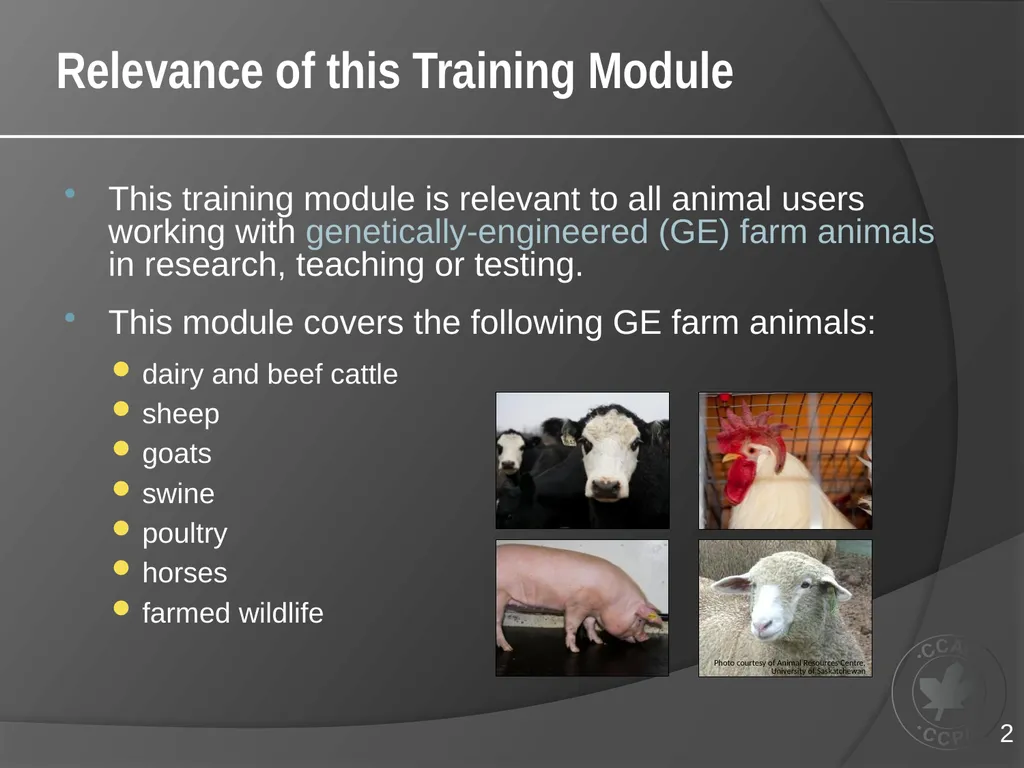
Relevance of this Training Module This training module is relevant to all animal users working with genetically-engineered (GE) farm animals in research, teaching or testing.
This module covers the following GE farm animals:
dairy and beef cattle
sheep
goats
swine
poultry
horses
farmed wildlife 2<br>
03
Training Module Goals Introduce the issues related to the impacts of genetic engineering on farm animals
Provide an appreciation for the special care requirements of GE farm animals
Provide investigators with references and resources for the ethical care and use of GE farm animals in science 3 Basic principles of farm animal welfare, fundamental needs, acquisition, routine handling and specialized procedures and termination of scientific use are covered in the
CCAC training module on: the ethical use and care of farm animals in science (2010)<br>
04
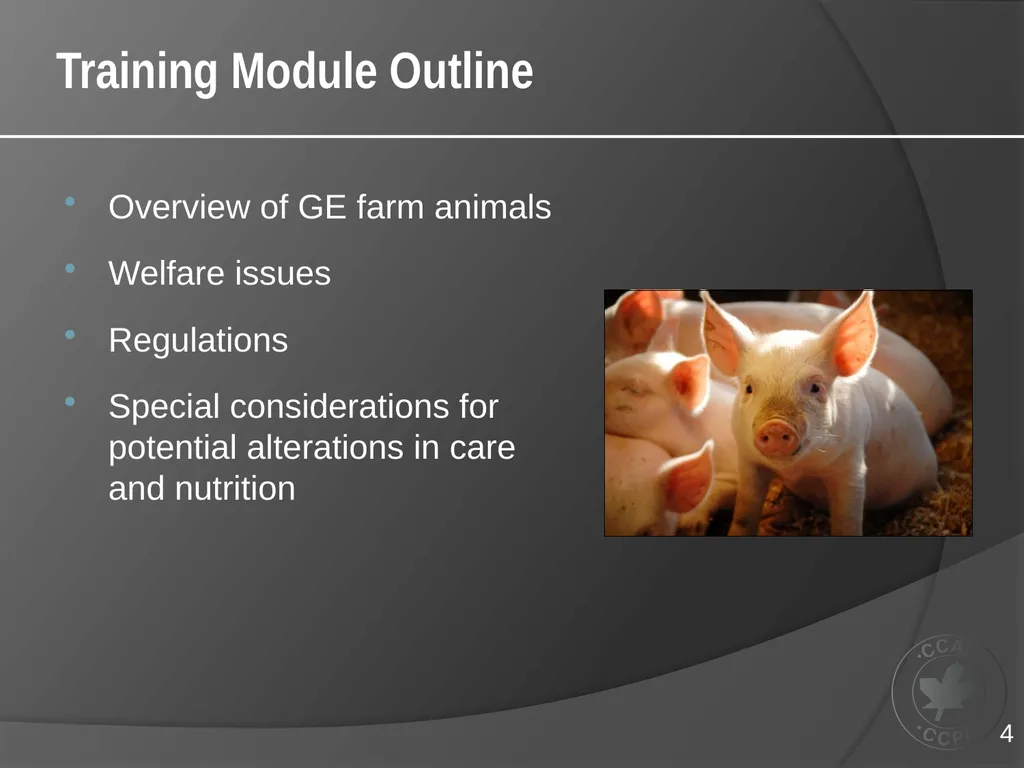
Training Module Outline Overview of GE farm animals
Welfare issues
Regulations
Special considerations for potential alterations in care and nutrition 4<br>
05
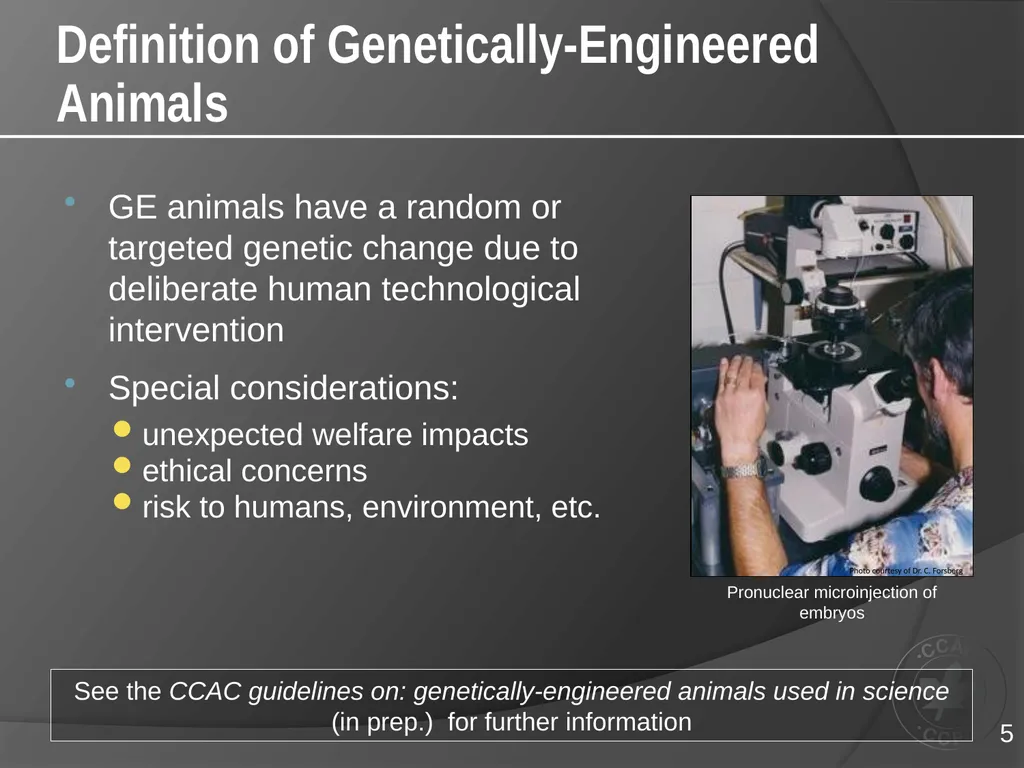
Definition of Genetically-Engineered Animals GE animals have a random or targeted genetic change due to deliberate human technological intervention
Special considerations:
unexpected welfare impacts
ethical concerns
risk to humans, environment, etc. See the CCAC guidelines on: genetically-engineered animals used in science (in prep.) for further information 5<br>
06
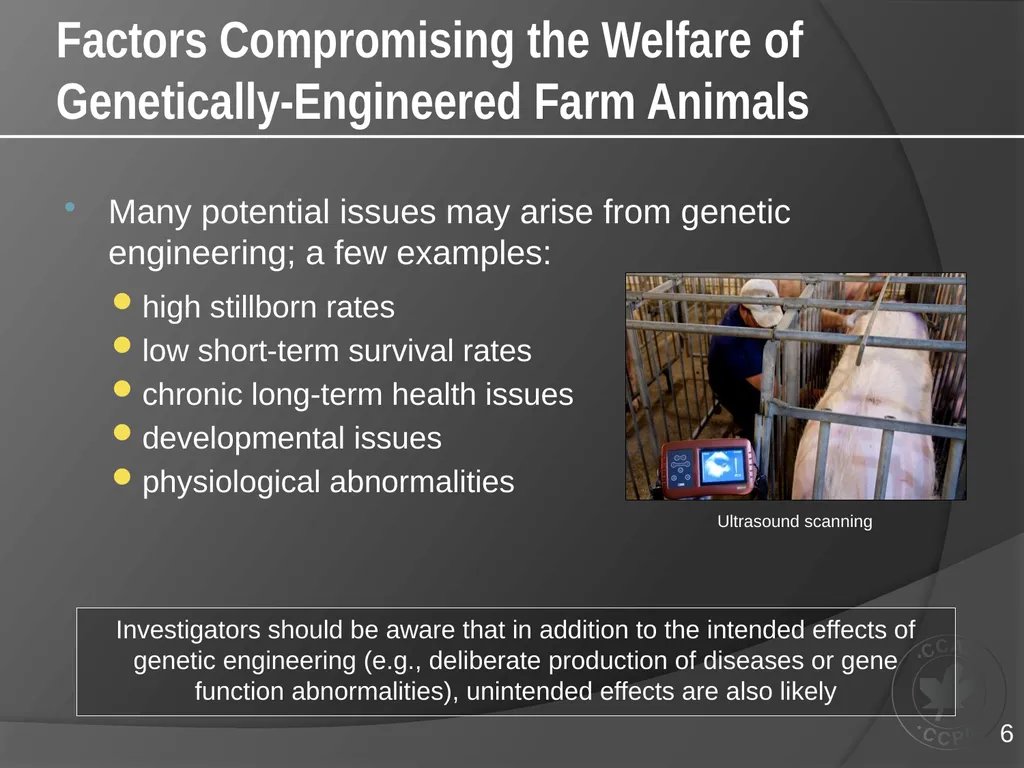
Factors Compromising the Welfare of Genetically-Engineered Farm Animals Many potential issues may arise from genetic engineering; a few examples:
high stillborn rates
low short-term survival rates
chronic long-term health issues
developmental issues
physiological abnormalities 6 Investigators should be aware that in addition to the intended effects of genetic engineering (e.g., deliberate production of diseases or gene function abnormalities), unintended effects are also likely<br>
07
Regulations Additional regulations for GE animals, as well as their progeny and products (e.g., “new substances”, “novel feeds”)
Environmental release and indirect human health impacts of “new substances” regulated by Environment Canada and Health Canada under the Canadian Environmental Protection Act, 1999 (CEPA)
Animal Feed Division of Canadian Food Inspection Agency requires safety assessment of “novel feeds”:
livestock
humans (worker/bystander exposure and consumption of products)
environment 7<br>
08
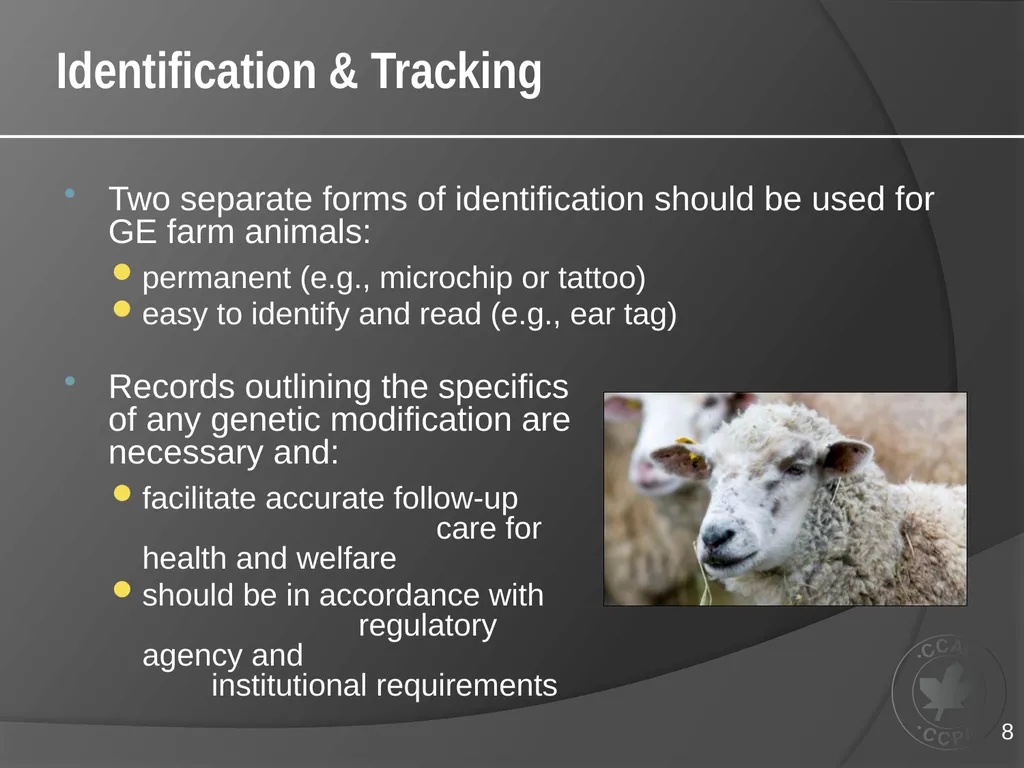
Identification & Tracking Records outlining the specifics of any genetic modification are necessary and:
facilitate accurate follow-up care for health and welfare
should be in accordance with regulatory agency and institutional requirements 8 Two separate forms of identification should be used for GE farm animals:
permanent (e.g., microchip or tattoo)
easy to identify and read (e.g., ear tag)<br>
09
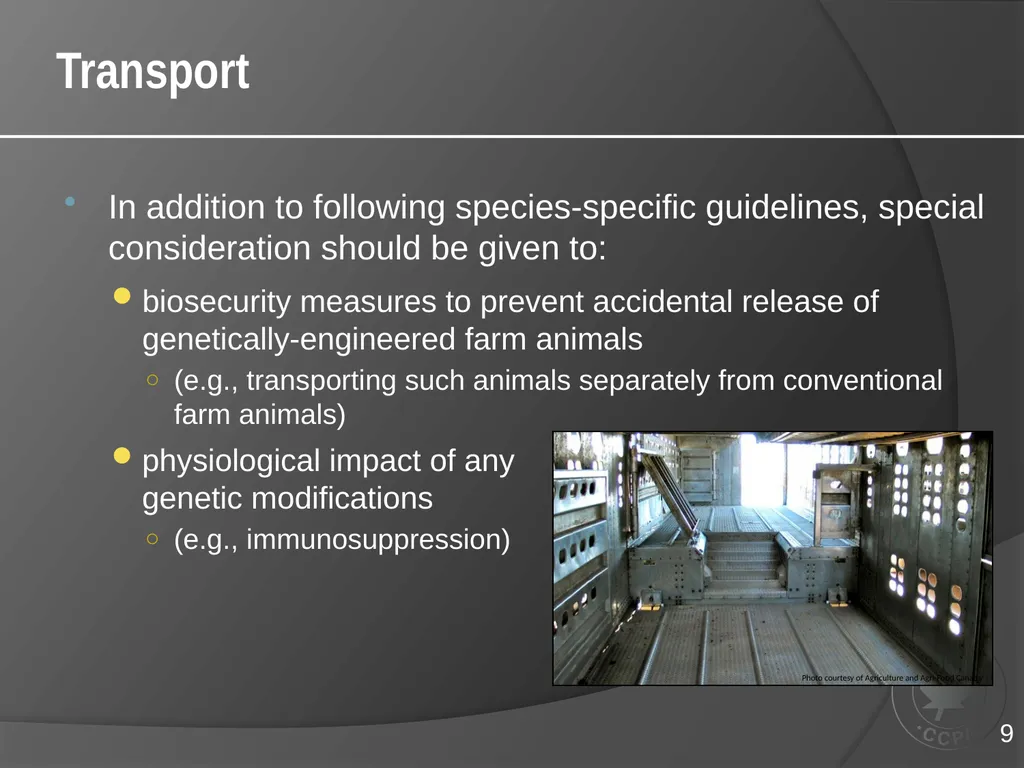
Transport In addition to following species-specific guidelines, special consideration should be given to:
biosecurity measures to prevent accidental release of genetically-engineered farm animals
(e.g., transporting such animals separately from conventional farm animals) 9 physiological impact of any genetic modifications
(e.g., immunosuppression)<br>
10
Confinement At least two physical barriers should be used when confining GE farm animals
Maintain secure confinement
limit access to authorized personnel only
screen and log all visitors and vehicles
adhere to any additional regulations 10<br>
11
Care & Nutrition Providing care tailored to the special needs of GE farm animals is important for both good animal welfare and for achieving scientific goals
higher levels of monitoring required to identify unanticipated welfare concerns
Care and nutrition of GE farm animals will be heavily dependent on the:
impact of specific genetic engineering methods
(e.g., a transgene introduced may alter physiology)
intended end use of animals or their products 11<br>
12
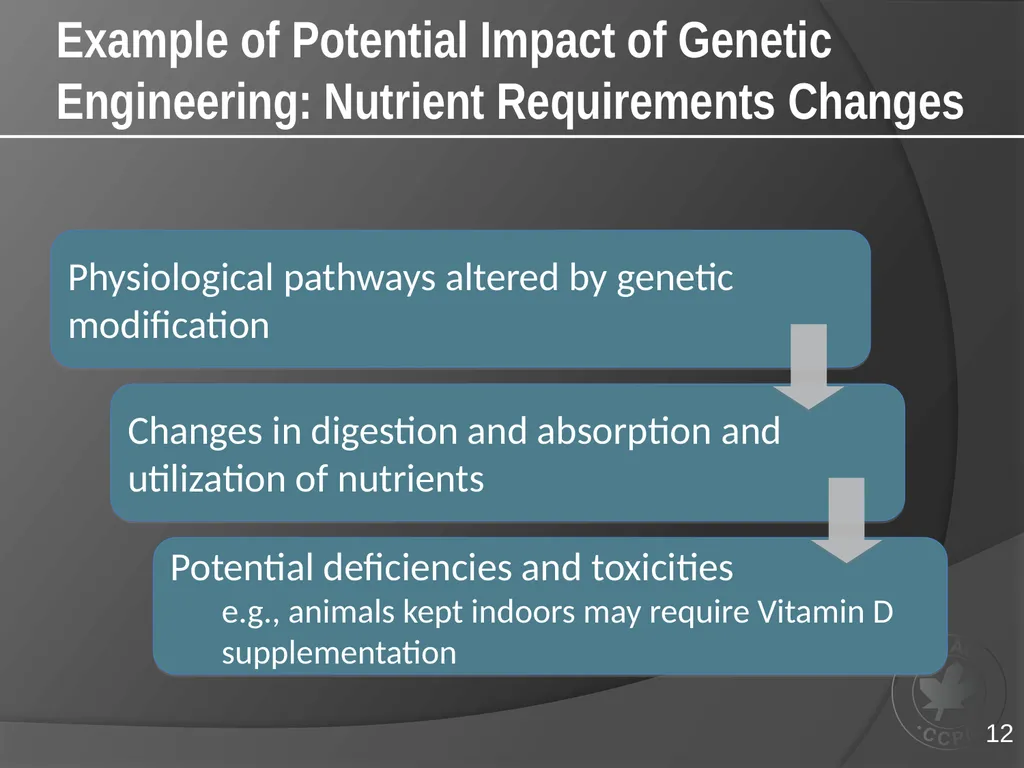
Example of Potential Impact of Genetic Engineering: Nutrient Requirements Changes 12 Physiological pathways altered by genetic modification Changes in digestion and absorption and utilization of nutrients Potential deficiencies and toxicities
e.g., animals kept indoors may require Vitamin D supplementation<br>
13
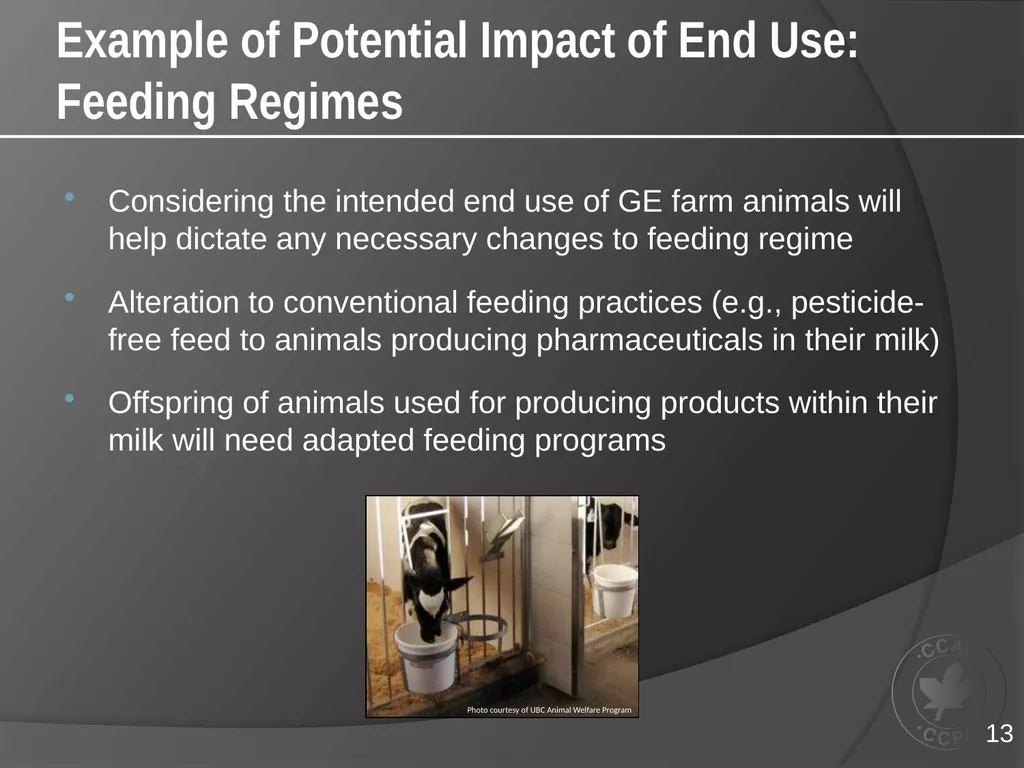
Example of Potential Impact of End Use: Feeding Regimes 13 Considering the intended end use of GE farm animals will help dictate any necessary changes to feeding regime
Alteration to conventional feeding practices (e.g., pesticide-free feed to animals producing pharmaceuticals in their milk)
Offspring of animals used for producing products within their milk will need adapted feeding programs<br>
14
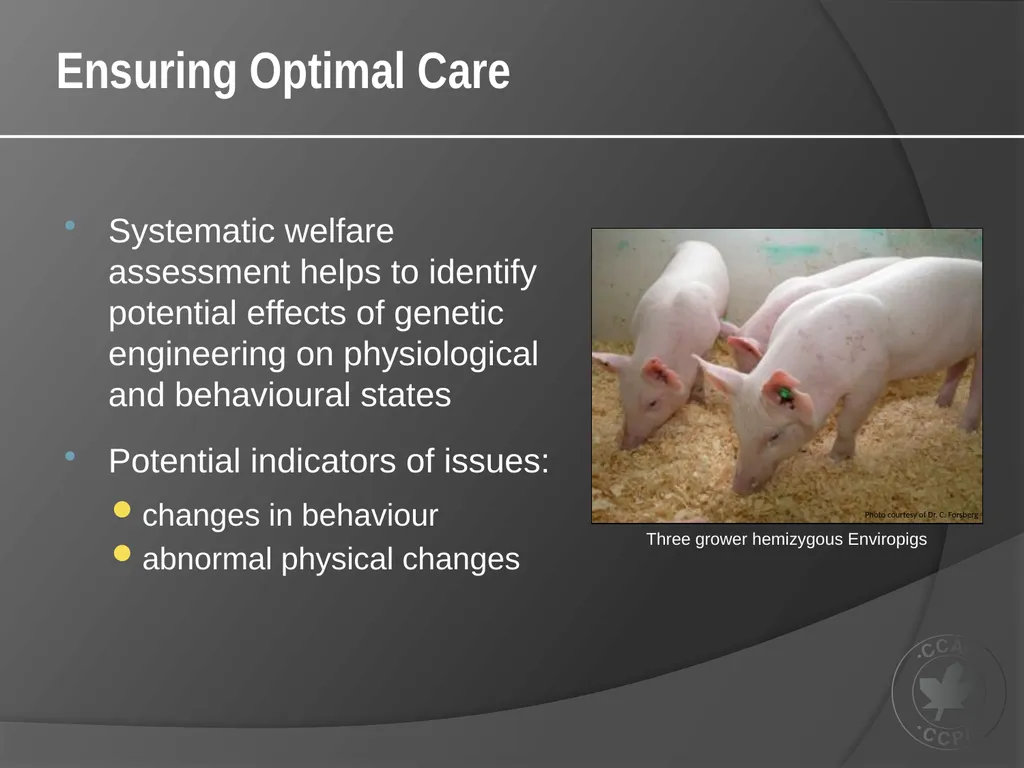
Systematic welfare assessment helps to identify potential effects of genetic engineering on physiological and behavioural states
Potential indicators of issues:
changes in behaviour
abnormal physical changes Ensuring Optimal Care<br>
15
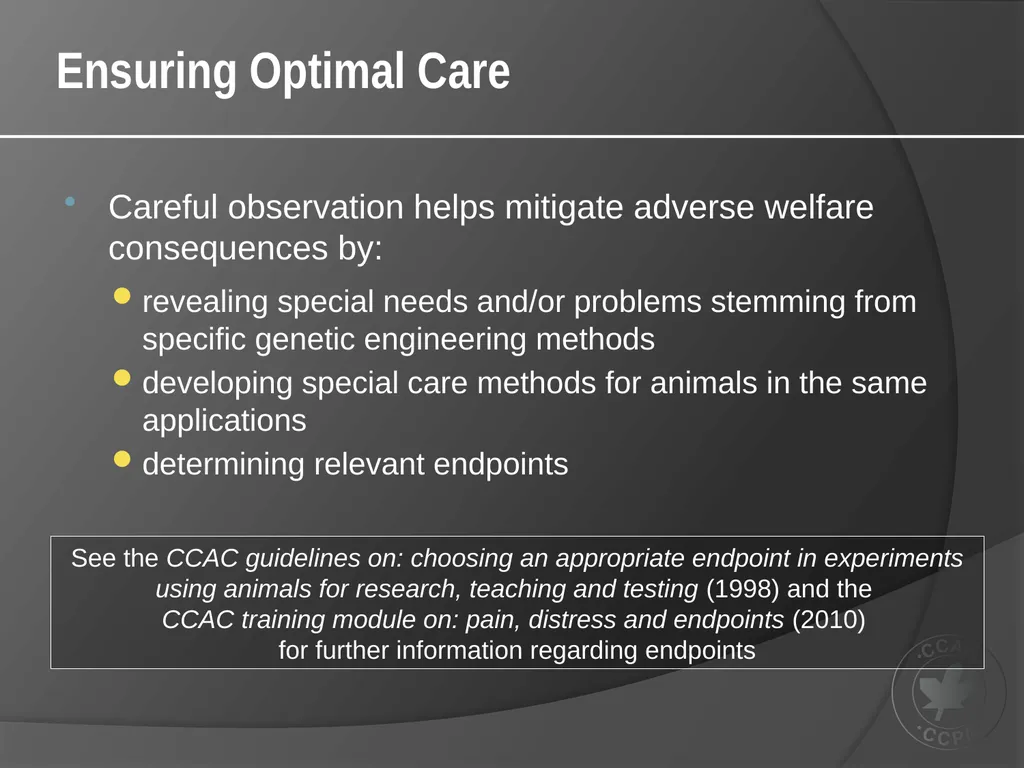
Ensuring Optimal Care Careful observation helps mitigate adverse welfare consequences by:
revealing special needs and/or problems stemming from specific genetic engineering methods
developing special care methods for animals in the same applications
determining relevant endpoints See the CCAC guidelines on: choosing an appropriate endpoint in experiments using animals for research, teaching and testing (1998) and the
CCAC training module on: pain, distress and endpoints (2010)
for further information regarding endpoints<br>
16
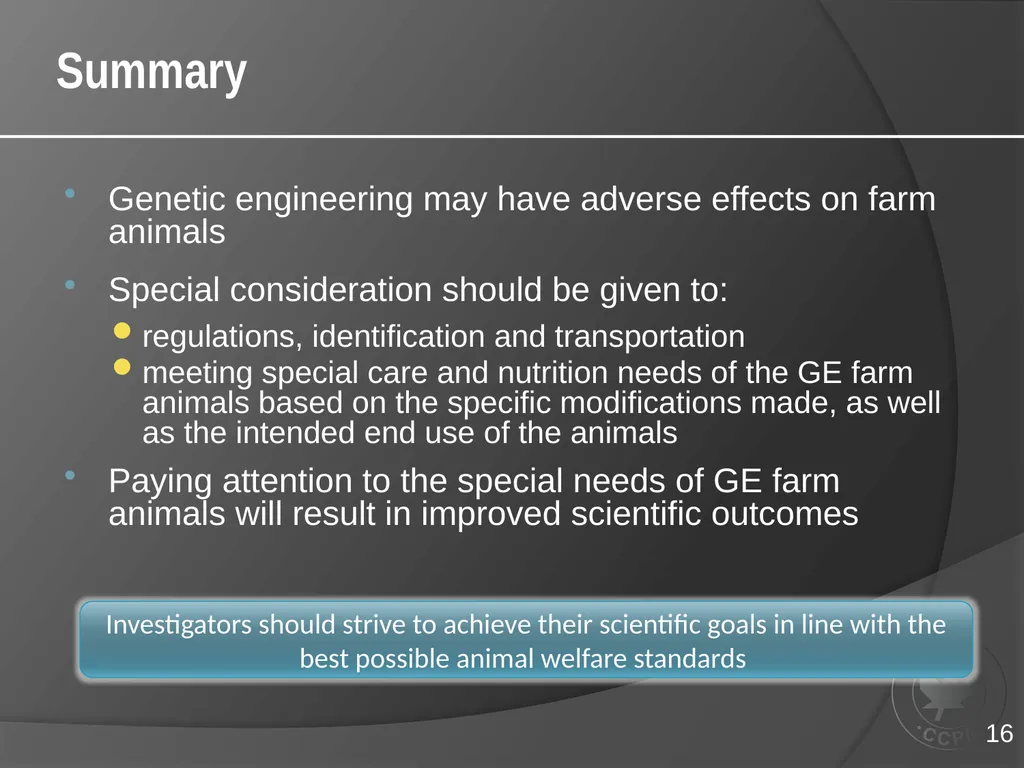
Summary Genetic engineering may have adverse effects on farm animals
Special consideration should be given to:
regulations, identification and transportation
meeting special care and nutrition needs of the GE farm animals based on the specific modifications made, as well as the intended end use of the animals
Paying attention to the special needs of GE farm animals will result in improved scientific outcomes 16 Investigators should strive to achieve their scientific goals in line with the best possible animal welfare standards<br>