04
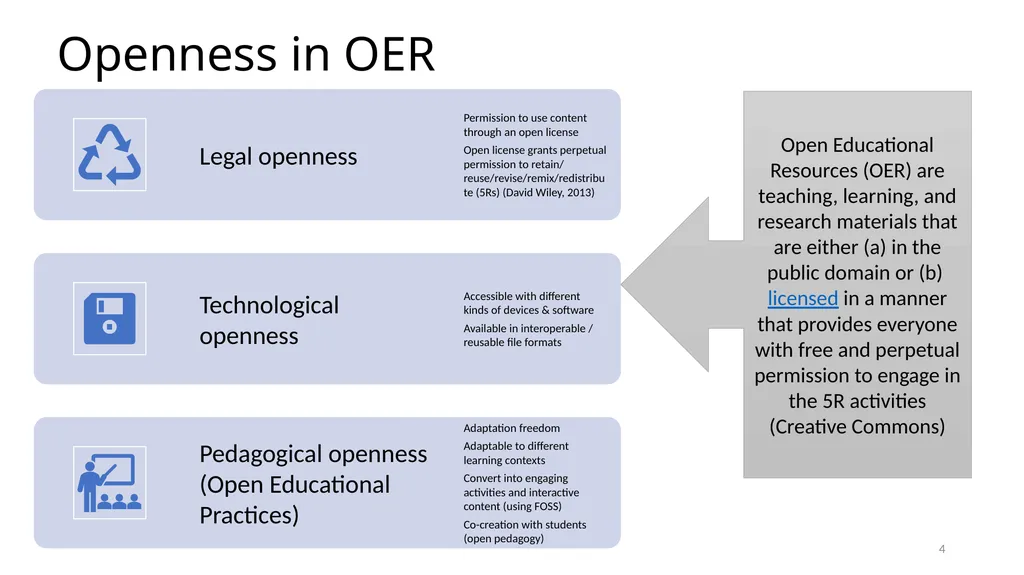
Openness in OER Open Educational Resources (OER) are teaching, learning, and research materials that are either (a) in the public domain or (b) licensed in a manner that provides everyone with free and perpetual permission to engage in the 5R activities (Creative Commons) 4<br>
05
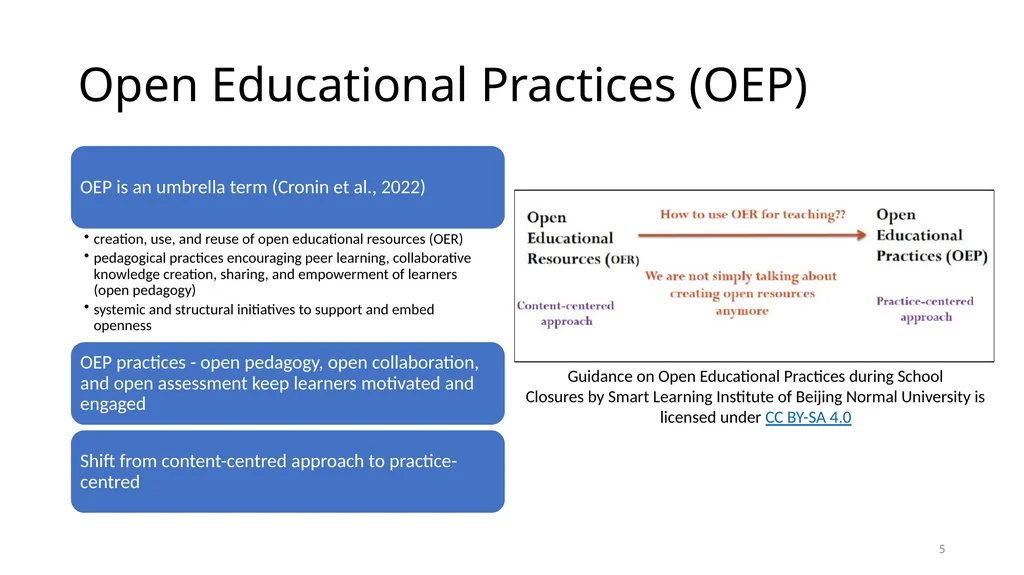
Open Educational Practices (OEP) 5 Guidance on Open Educational Practices during School Closures by Smart Learning Institute of Beijing Normal University is licensed under CC BY-SA 4.0<br>
06
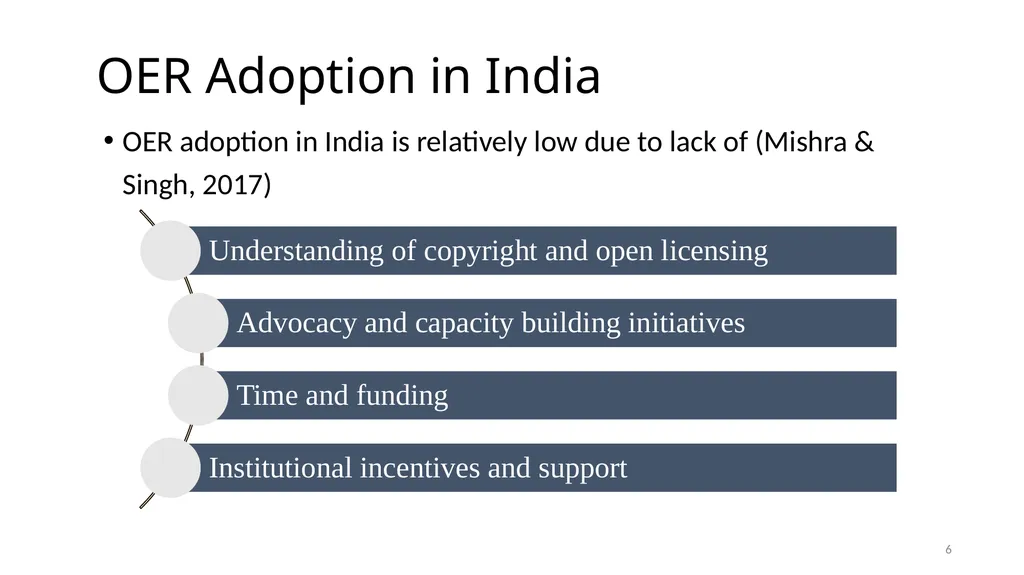
OER Adoption in India OER adoption in India is relatively low due to lack of (Mishra & Singh, 2017) 6<br>
07
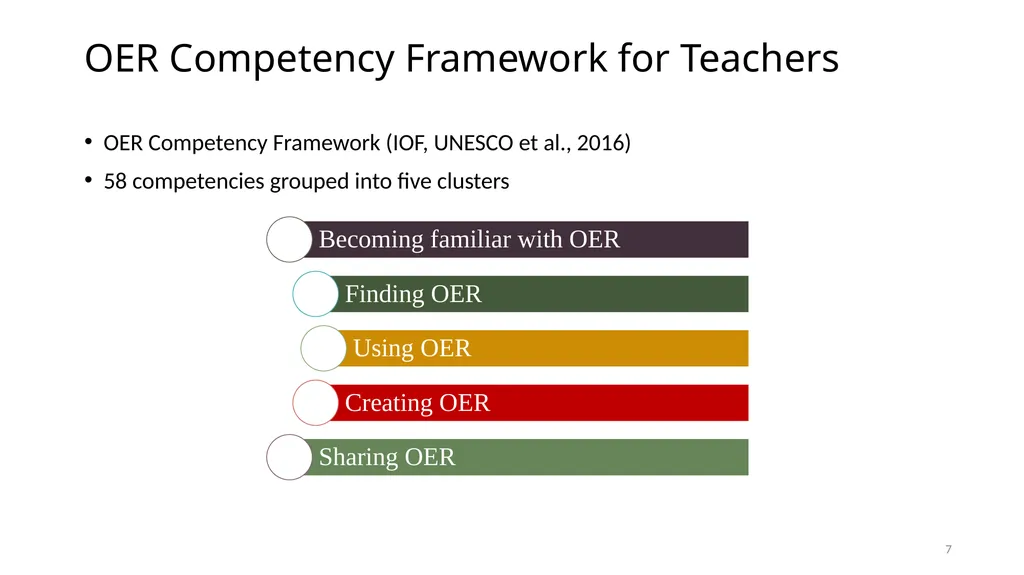
OER Competency Framework for Teachers OER Competency Framework (IOF, UNESCO et al., 2016)
58 competencies grouped into five clusters 7<br>
08
OER-enabled Teaching, Learning & Assessment 8<br>
09
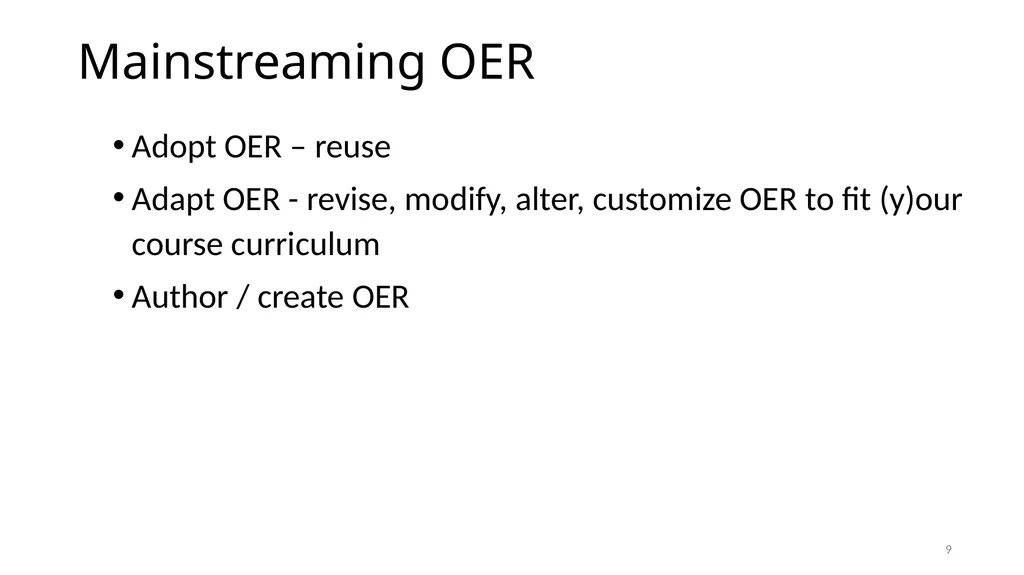
Mainstreaming OER Adopt OER – reuse
Adapt OER - revise, modify, alter, customize OER to fit (y)our course curriculum
Author / create OER 9<br>
10
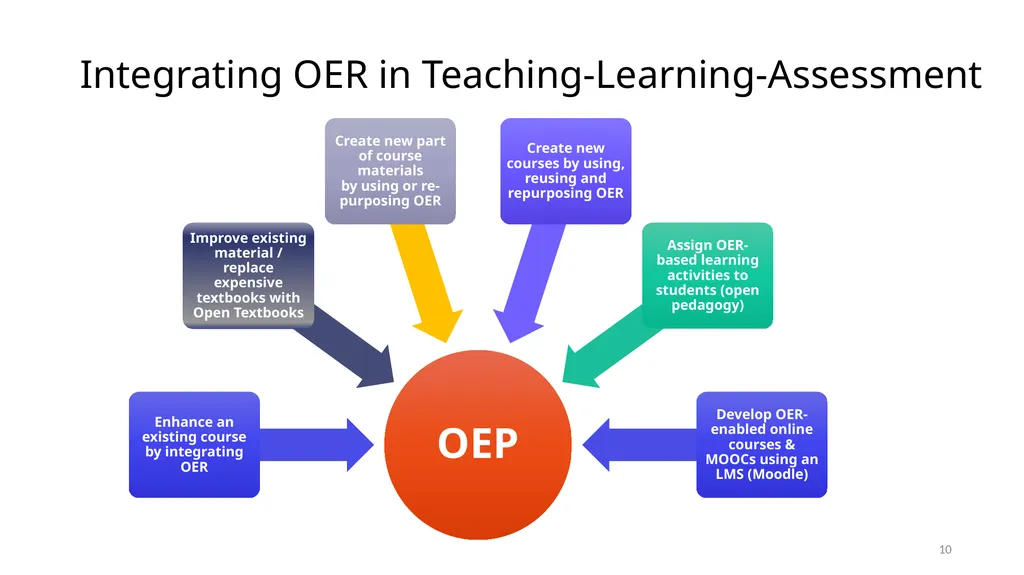
Integrating OER in Teaching-Learning-Assessment 10<br>
11
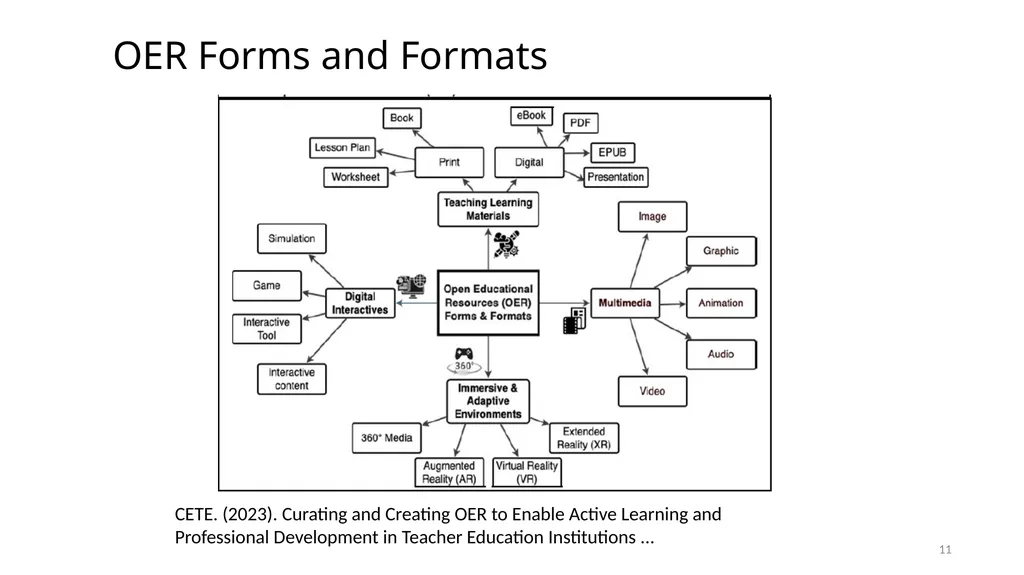
OER Forms and Formats 11 CETE. (2023). Curating and Creating OER to Enable Active Learning and Professional Development in Teacher Education Institutions ...<br>
12
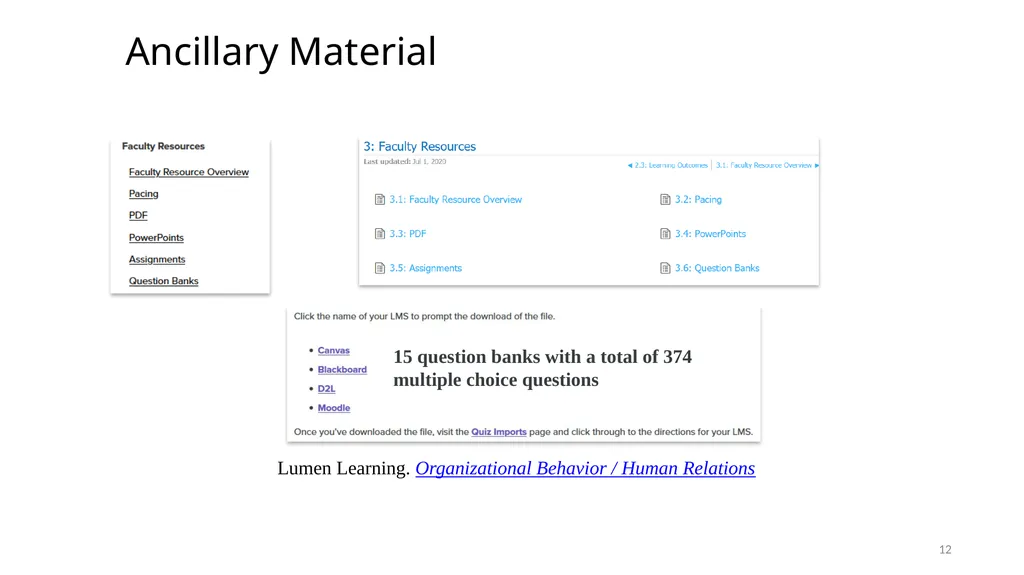
Ancillary Material 12 Lumen Learning. Organizational Behavior / Human Relations 15 question banks with a total of 374 multiple choice questions<br>
15
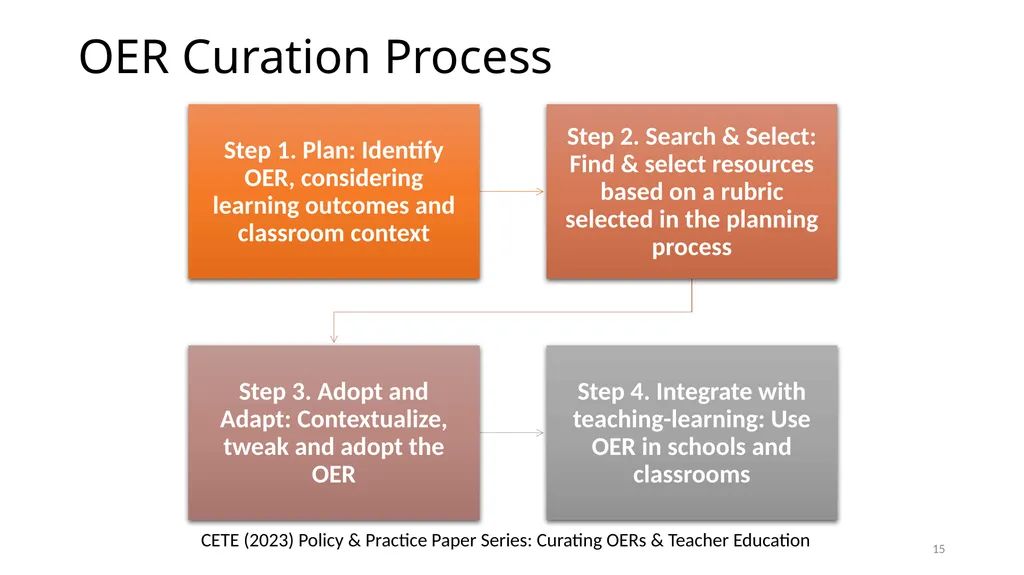
OER Curation Process 15 CETE (2023) Policy & Practice Paper Series: Curating OERs & Teacher Education<br>
16
Step 1 | Plan Identify OER, considering learning outcomes and classroom context
Create or identify a rubric to guide the curation process
List out the key topics and concepts that students commonly find difficult to understand
Map the topics to the textbook chapters and learning outcomes 16<br>
17
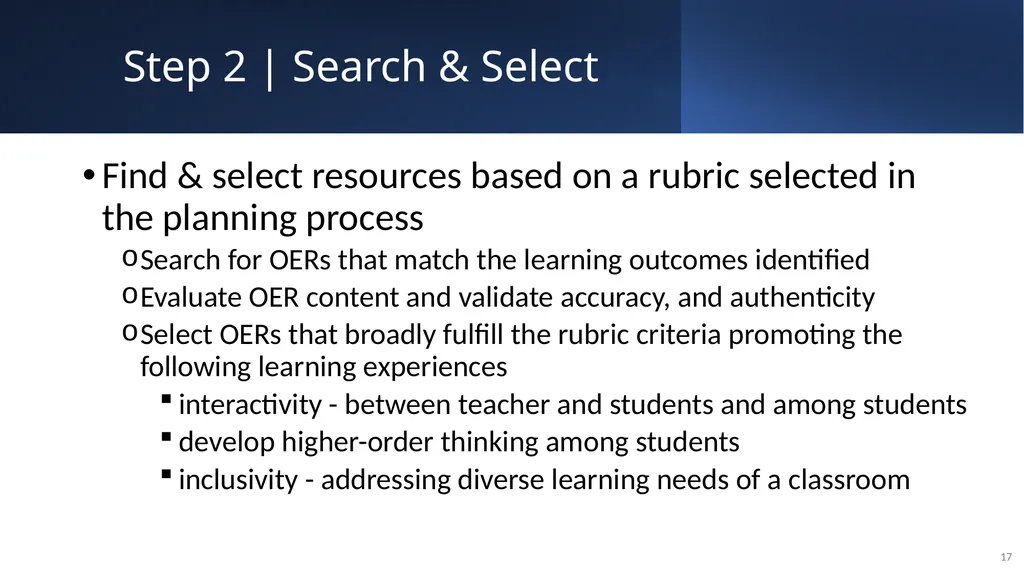
Step 2 | Search & Select Find & select resources based on a rubric selected in the planning process
Search for OERs that match the learning outcomes identified
Evaluate OER content and validate accuracy, and authenticity
Select OERs that broadly fulfill the rubric criteria promoting the following learning experiences
interactivity - between teacher and students and among students
develop higher-order thinking among students
inclusivity - addressing diverse learning needs of a classroom 17<br>
18
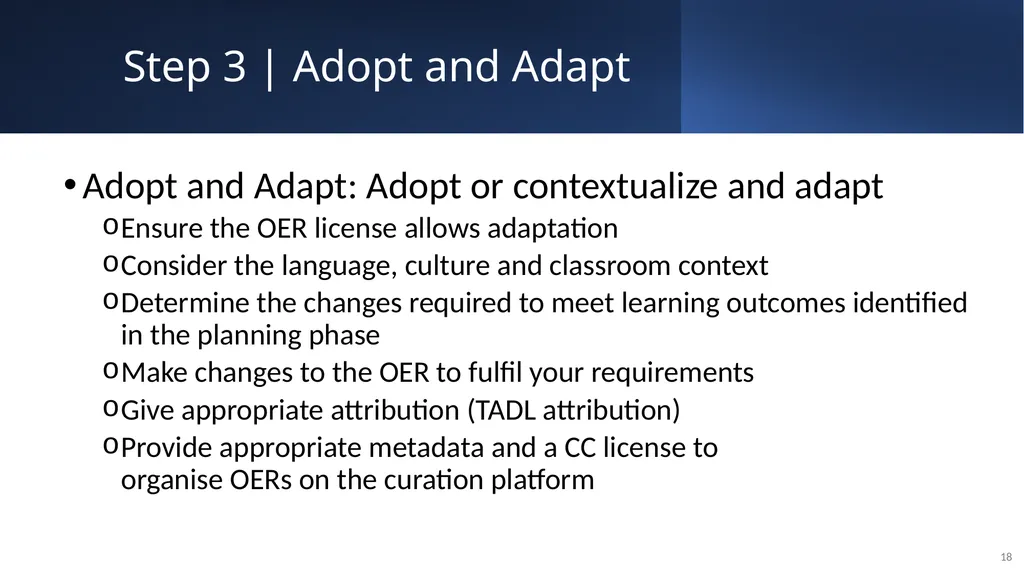
Step 3 | Adopt and Adapt Adopt and Adapt: Adopt or contextualize and adapt
Ensure the OER license allows adaptation
Consider the language, culture and classroom context
Determine the changes required to meet learning outcomes identified in the planning phase
Make changes to the OER to fulfil your requirements
Give appropriate attribution (TADL attribution)
Provide appropriate metadata and a CC license to organise OERs on the curation platform 18<br>
19
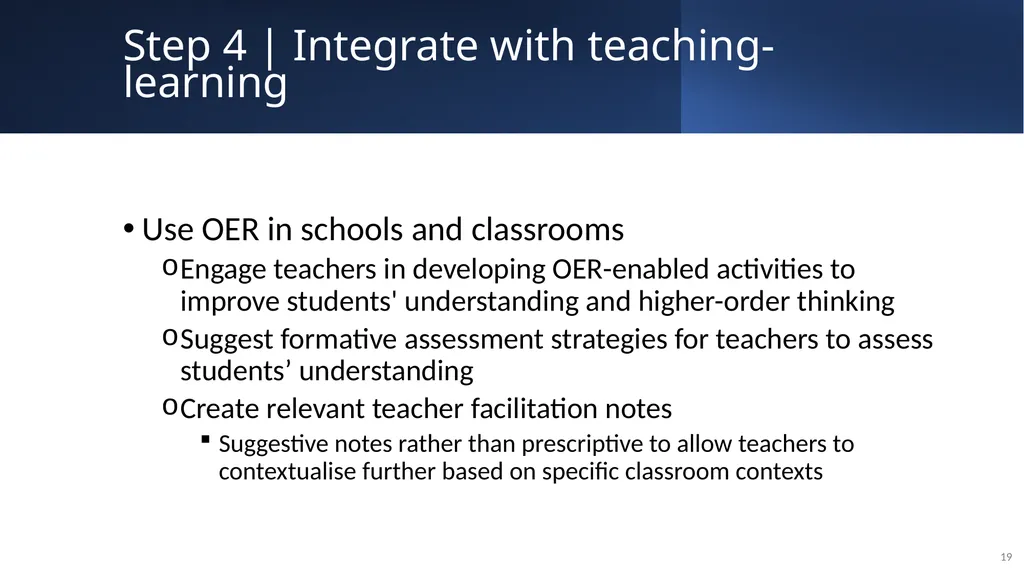
Step 4 | Integrate with teaching-learning Use OER in schools and classrooms
Engage teachers in developing OER-enabled activities to improve students' understanding and higher-order thinking
Suggest formative assessment strategies for teachers to assess students’ understanding
Create relevant teacher facilitation notes
Suggestive notes rather than prescriptive to allow teachers to contextualise further based on specific classroom contexts 19<br>
21
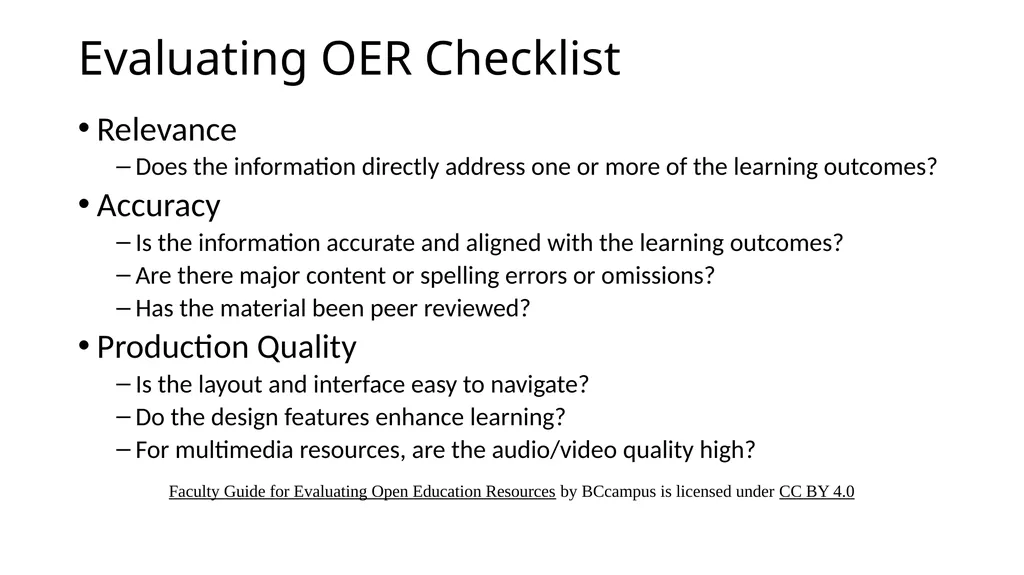
Evaluating OER Checklist Relevance
Does the information directly address one or more of the learning outcomes?
Accuracy
Is the information accurate and aligned with the learning outcomes?
Are there major content or spelling errors or omissions?
Has the material been peer reviewed?
Production Quality
Is the layout and interface easy to navigate?
Do the design features enhance learning?
For multimedia resources, are the audio/video quality high? Faculty Guide for Evaluating Open Education Resources by BCcampus is licensed under CC BY 4.0<br>
22
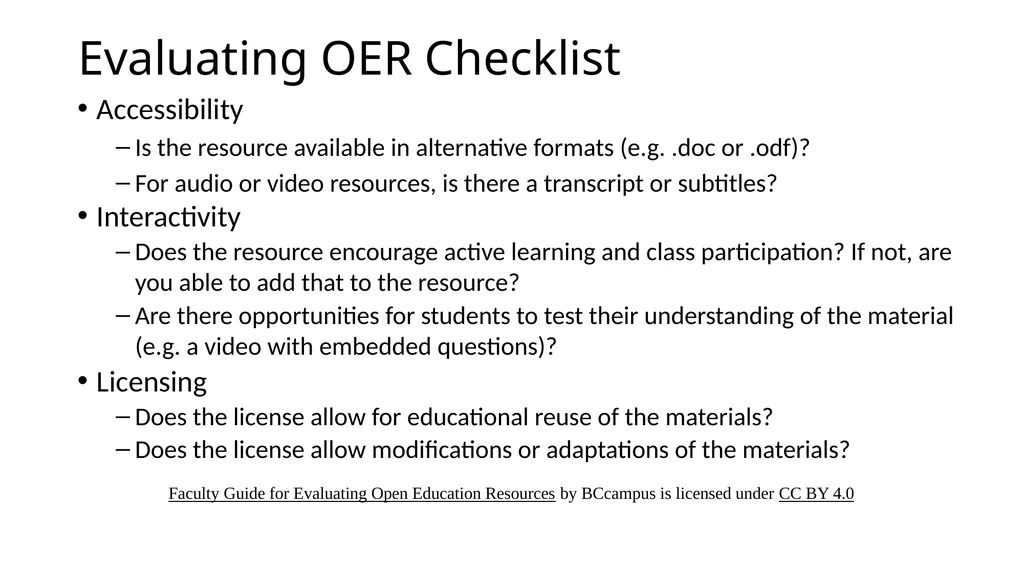
Evaluating OER Checklist Accessibility
Is the resource available in alternative formats (e.g. .doc or .odf)?
For audio or video resources, is there a transcript or subtitles?
Interactivity
Does the resource encourage active learning and class participation? If not, are you able to add that to the resource?
Are there opportunities for students to test their understanding of the material (e.g. a video with embedded questions)?
Licensing
Does the license allow for educational reuse of the materials?
Does the license allow modifications or adaptations of the materials? Faculty Guide for Evaluating Open Education Resources by BCcampus is licensed under CC BY 4.0<br>
23
RAP-OER-IFP Curation Rubric Relevance, Affordance and Pedagogical Practice (RAP) Curation Rubric
3 parameters and 15 indicators
A comprehensive framework to assess the pedagogical potential of OER for use on the Interactive Flat Panel (IFP) devices in schools
Review OER with a view to select, curate and use meaningfully on IFP devices in order to
involve students actively
provide them with opportunities to engage in the learning process
interact with each other and the teacher
enhance overall pedagogy to promote higher order thinking RAP Curation Rubric to Assess the Pedagogical Potential of Open Educational Resources (OER) for use on Interactive Flat Panel (IFP) Devices in Schools Version 1 by CETE, Tata Institute of Social Sciences is licensed under CC BY-SA 4.0 23<br>
25
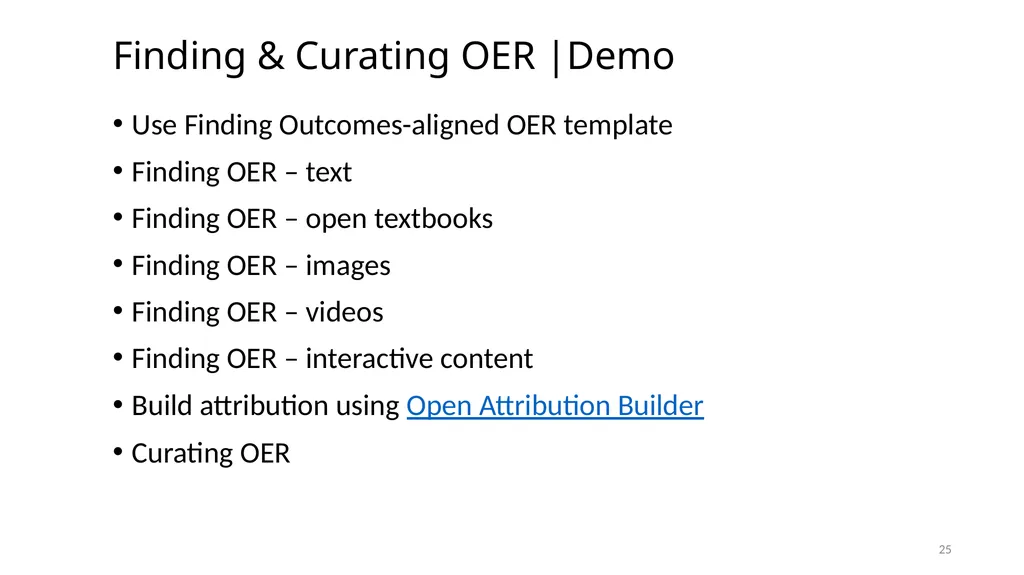
Finding & Curating OER |Demo Use Finding Outcomes-aligned OER template
Finding OER – text
Finding OER – open textbooks
Finding OER – images
Finding OER – videos
Finding OER – interactive content
Build attribution using Open Attribution Builder
Curating OER 25<br>
26
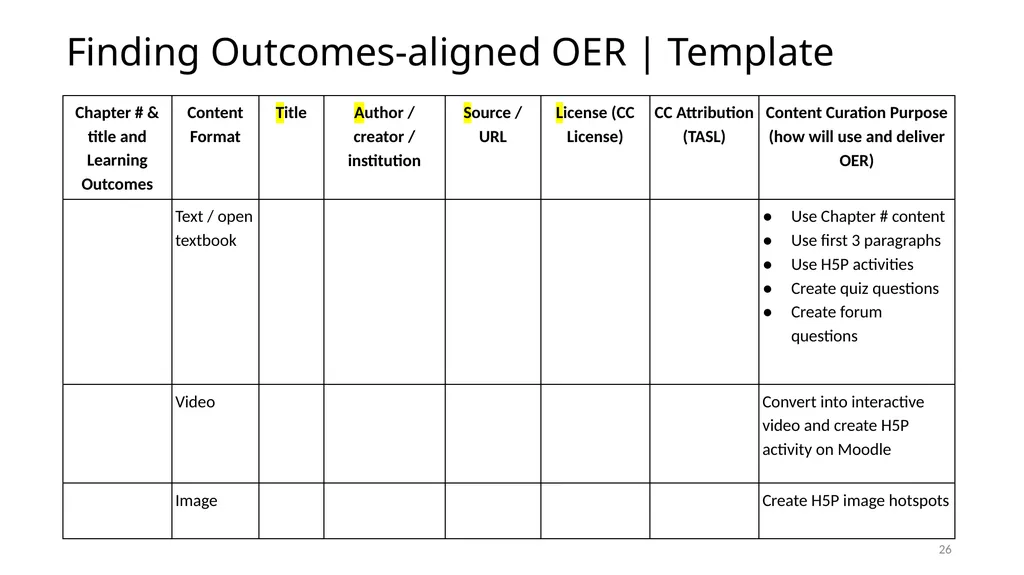
Finding Outcomes-aligned OER | Template 26<br>
27
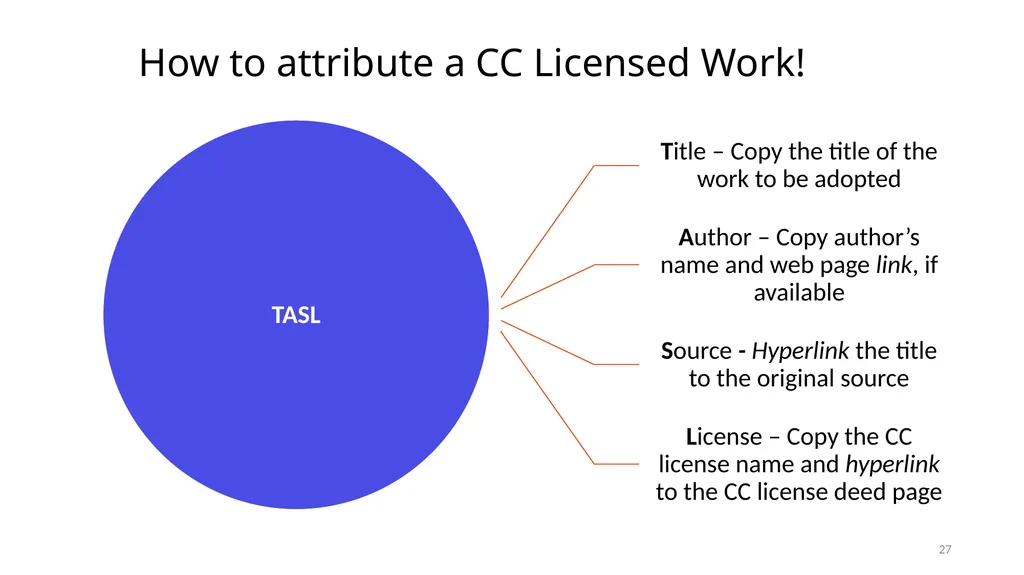
How to attribute a CC Licensed Work! 27<br>
28
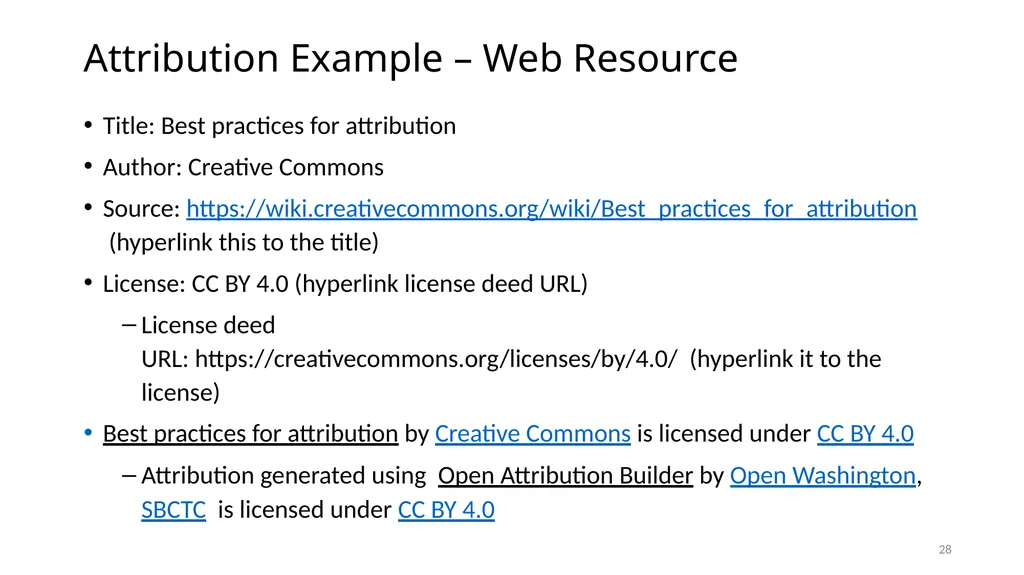
Attribution Example – Web Resource Title: Best practices for attribution
Author: Creative Commons
Source: https://wiki.creativecommons.org/wiki/Best_practices_for_attribution (hyperlink this to the title)
License: CC BY 4.0 (hyperlink license deed URL)
License deed URL: https://creativecommons.org/licenses/by/4.0/ (hyperlink it to the license)
Best practices for attribution by Creative Commons is licensed under CC BY 4.0
Attribution generated using Open Attribution Builder by Open Washington, SBCTC is licensed under CC BY 4.0 28<br>
29
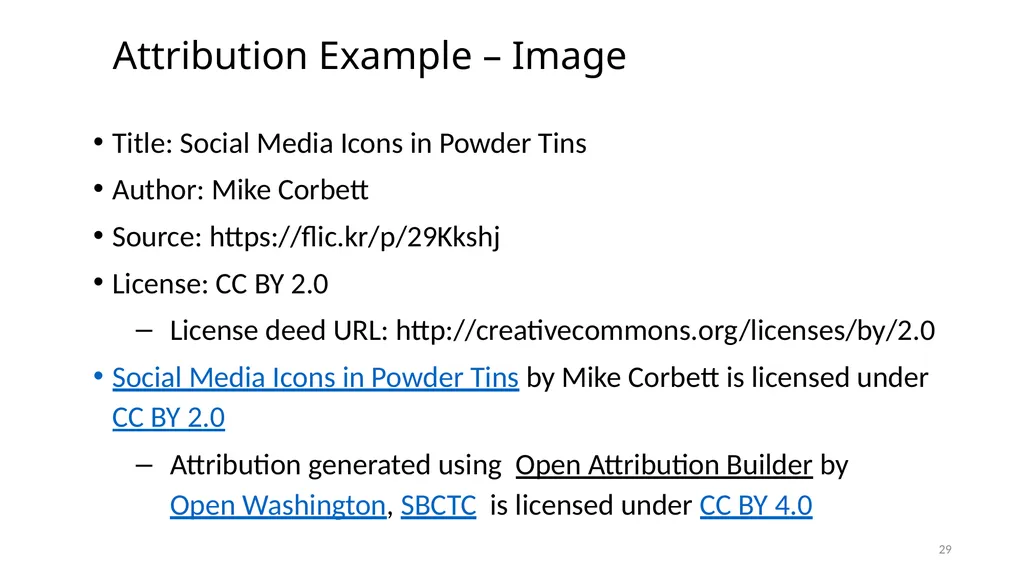
Attribution Example – Image� Title: Social Media Icons in Powder Tins
Author: Mike Corbett
Source: https://flic.kr/p/29Kkshj
License: CC BY 2.0
License deed URL: http://creativecommons.org/licenses/by/2.0
Social Media Icons in Powder Tins by Mike Corbett is licensed under CC BY 2.0
Attribution generated using Open Attribution Builder by Open Washington, SBCTC is licensed under CC BY 4.0 29<br>
30
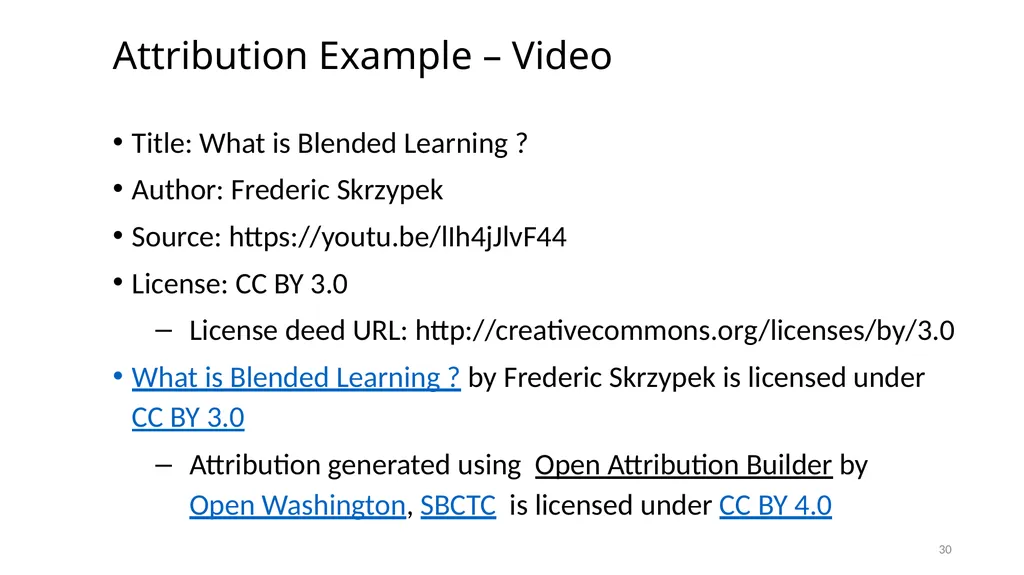
Attribution Example – Video Title: What is Blended Learning ?
Author: Frederic Skrzypek
Source: https://youtu.be/lIh4jJlvF44
License: CC BY 3.0
License deed URL: http://creativecommons.org/licenses/by/3.0
What is Blended Learning ? by Frederic Skrzypek is licensed under CC BY 3.0
Attribution generated using Open Attribution Builder by Open Washington, SBCTC is licensed under CC BY 4.0 30<br>
31
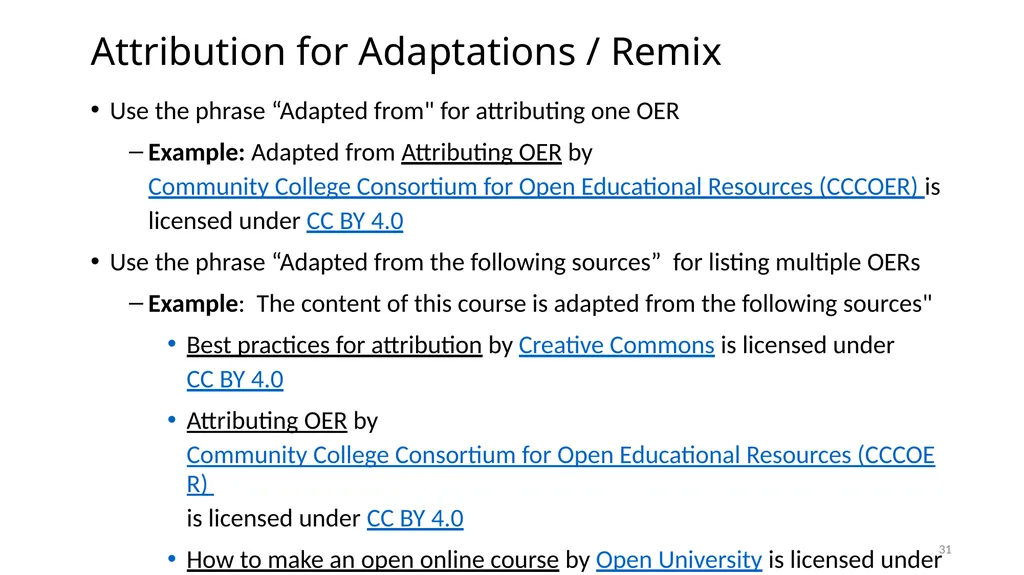
Attribution for Adaptations / Remix Use the phrase “Adapted from" for attributing one OER
Example: Adapted from Attributing OER by Community College Consortium for Open Educational Resources (CCCOER) is licensed under CC BY 4.0
Use the phrase “Adapted from the following sources” for listing multiple OERs
Example: The content of this course is adapted from the following sources"
Best practices for attribution by Creative Commons is licensed under CC BY 4.0
Attributing OER by Community College Consortium for Open Educational Resources (CCCOER) is licensed under CC BY 4.0
How to make an open online course by Open University is licensed under CC BY-NC-SA 4.0 31<br>