Cerebro VASCULAR ACCIDENT(CVA) / STROKE
Description: Cerebro VASCULAR ACCIDENT(CVA) STROKE Lalnuntluangi Hnamte College of Nursing RIPANS WHAT IS CVASTROKE? CVA is the medical term for a stroke. A stroke occurs when there is ischemia(inadequate blood flow) to a part of the brain or
Related Topics
Download Presentation
"Cerebro VASCULAR ACCIDENT(CVA) / STROKE" is the property of its rightful owner. Permission is granted to download and print the materials on this website for personal, non-commercial use only, and to display it on your personal computer provided you do not modify the materials and that you retain all copyright notices contained in the materials. By downloading content from our website, you accept the terms of this agreement.
Presentation Transcript
slide1. CerebroVASCULAR ACCIDENT(CVA) /STROKE Lalnuntluangi Hnamte
College of Nursing
RIPANS<br>
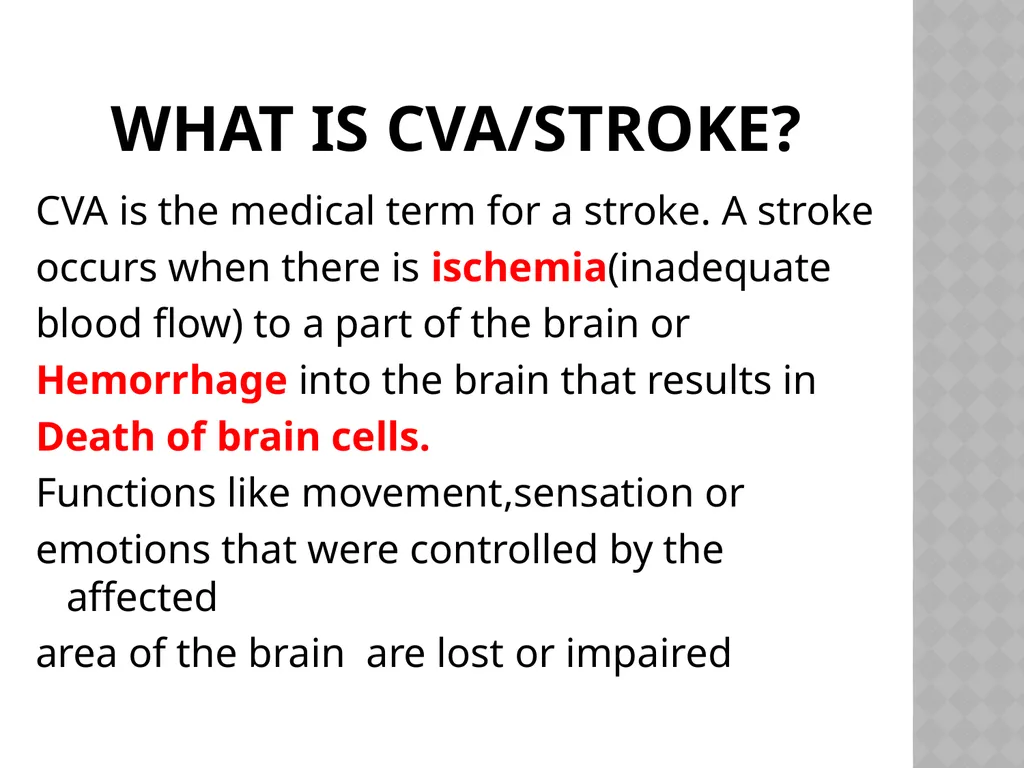
slide2. WHAT IS CVA/STROKE? CVA is the medical term for a stroke. A stroke
occurs when there is ischemia(inadequate
blood flow) to a part of the brain or
Hemorrhage into the brain that results in
Death of brain cells.
Functions like movement,sensation or
emotions that were controlled by the affected
area of the brain are lost or impaired<br>
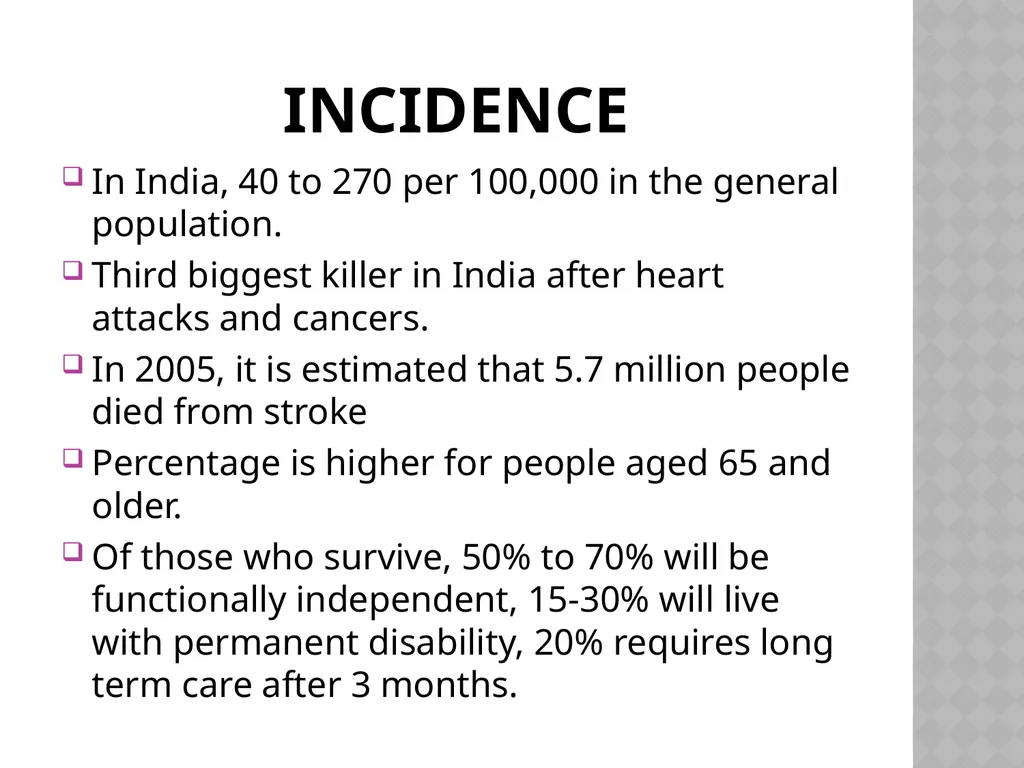
slide3. incidence In India, 40 to 270 per 100,000 in the general population.
Third biggest killer in India after heart attacks and cancers.
In 2005, it is estimated that 5.7 million people died from stroke
Percentage is higher for people aged 65 and older.
Of those who survive, 50% to 70% will be functionally independent, 15-30% will live with permanent disability, 20% requires long term care after 3 months.<br>
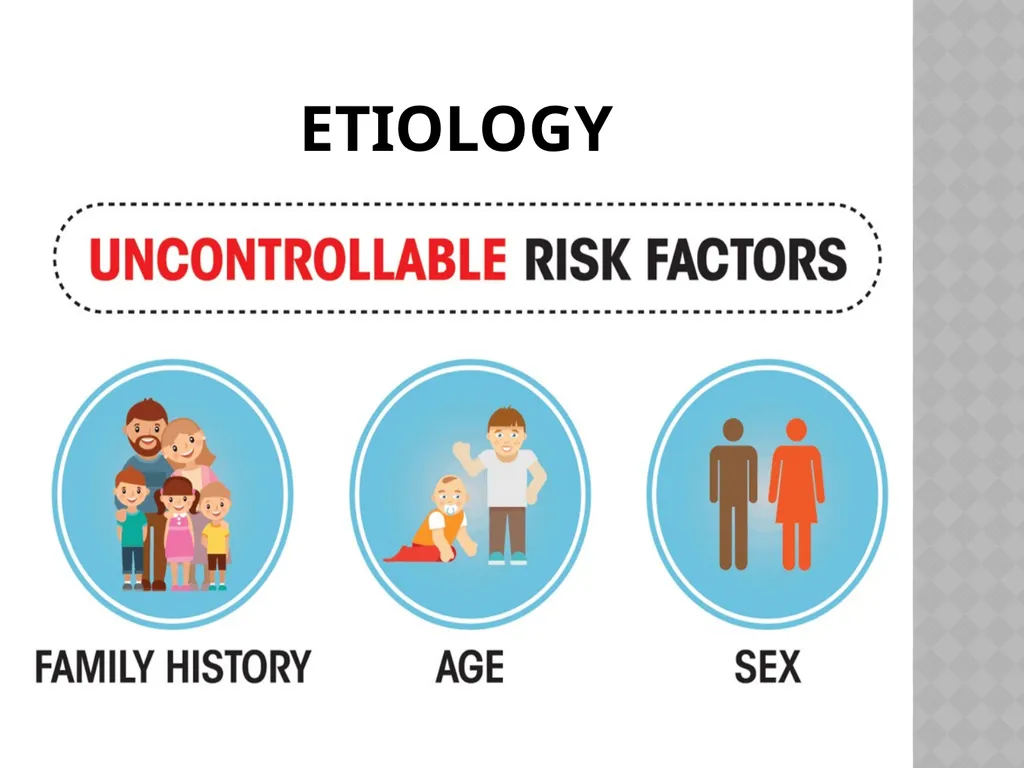
slide4. etiology<br>
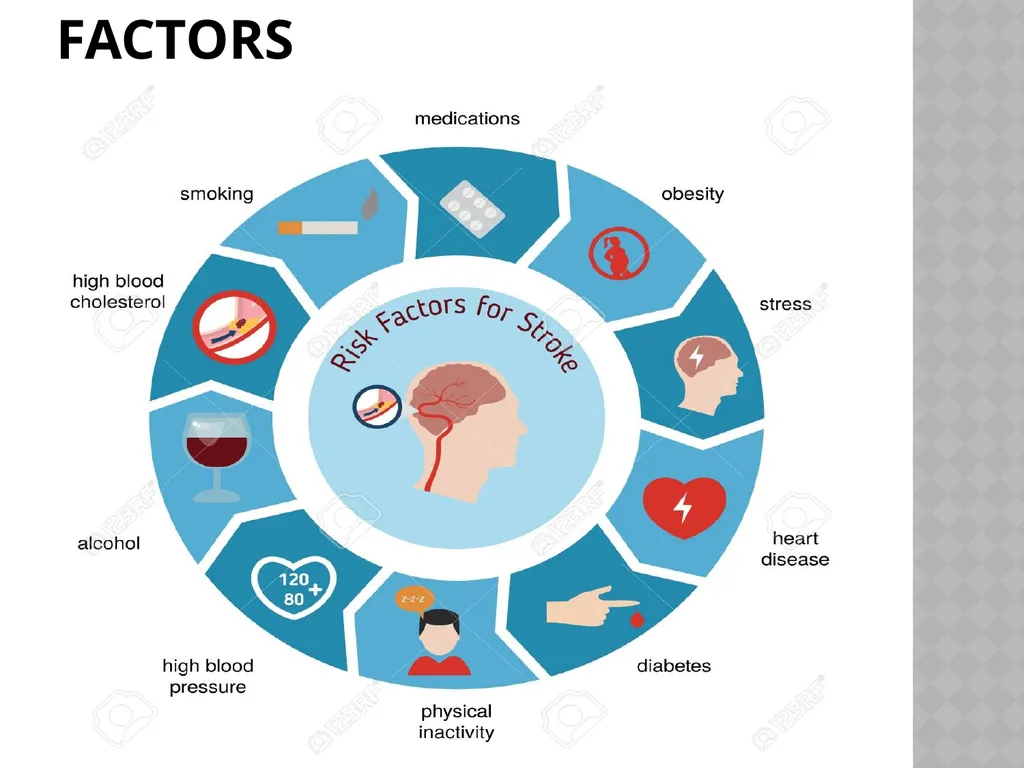
slide5. Controllable risk factors<br>
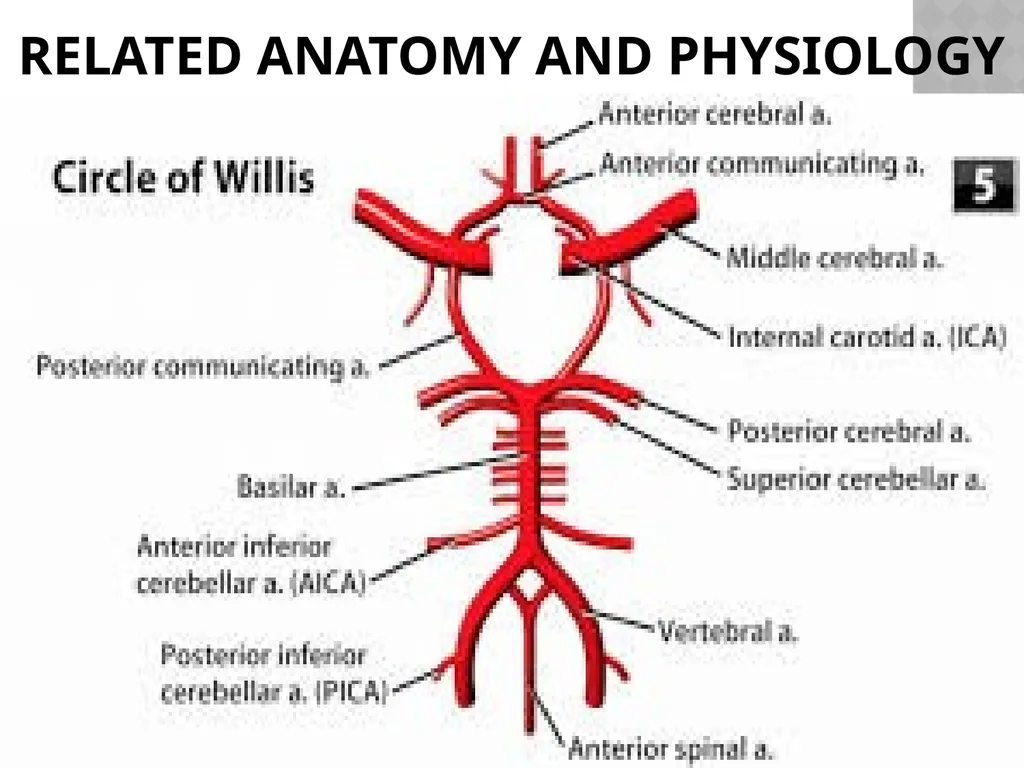
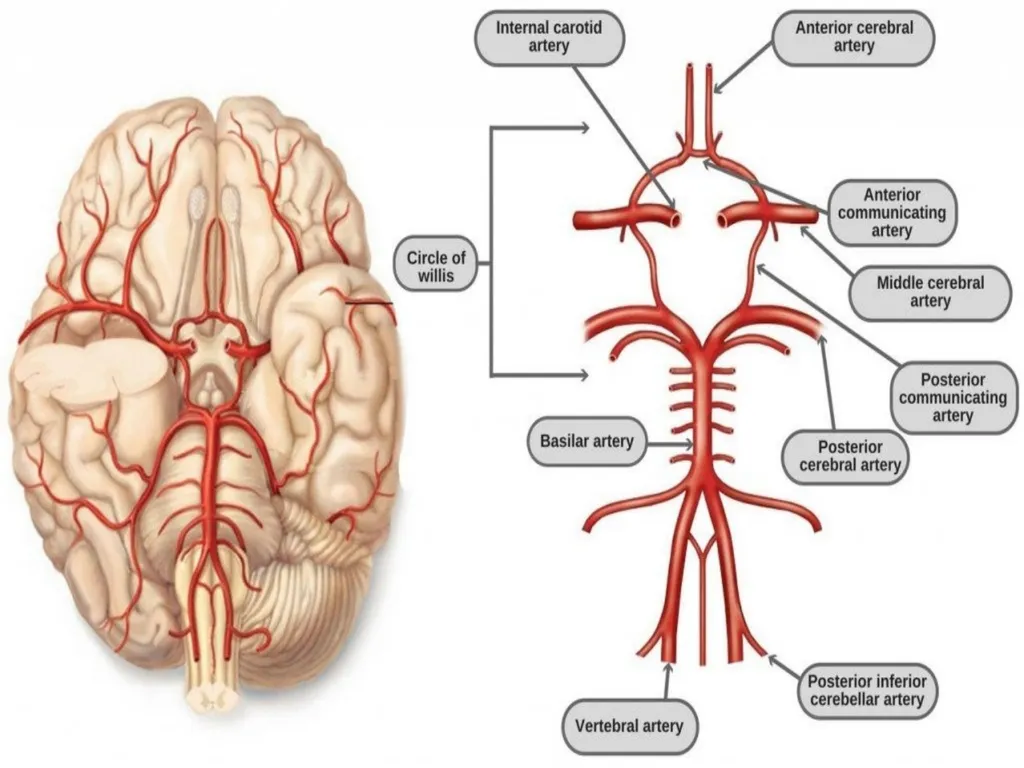
slide6. Related anatomy and physiology<br>
slide8. pathophysiology 1.Regulation of cerebral blood flow
Impairment of cerebral autoregulation
Cerebral ischemia
2.Atherosclerosis
Thrombus formation
Cerebral infarction<br>
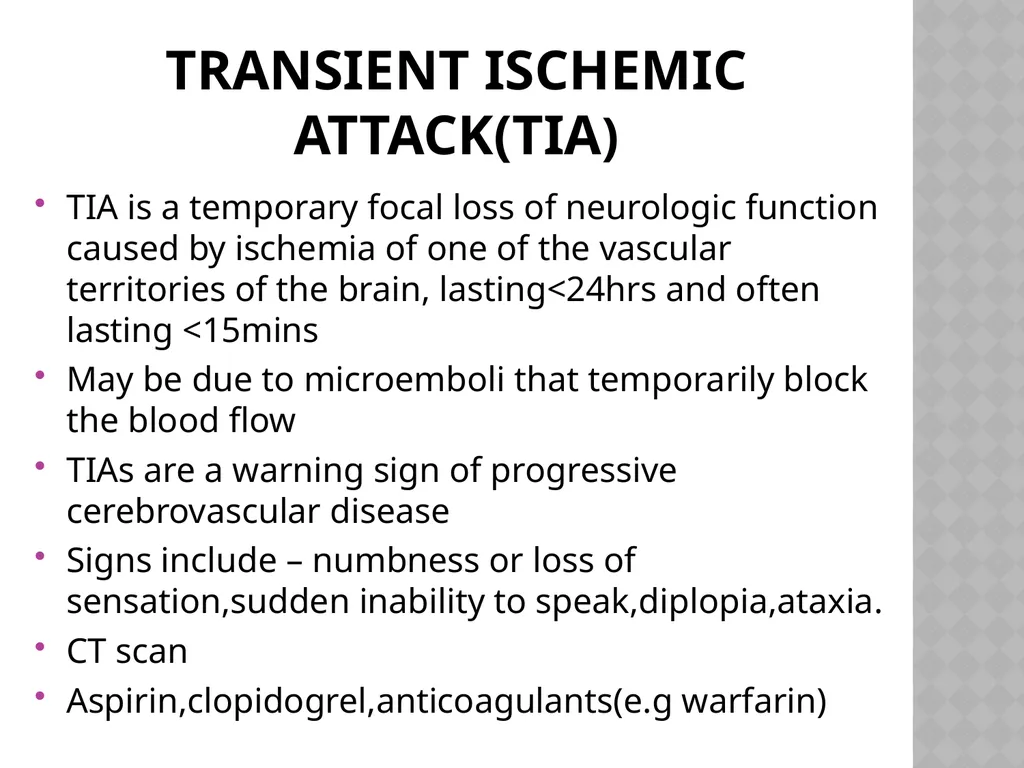
slide9. Transient ischemic attack(Tia) TIA is a temporary focal loss of neurologic function caused by ischemia of one of the vascular territories of the brain, lasting<24hrs and often lasting <15mins
May be due to microemboli that temporarily block the blood flow
TIAs are a warning sign of progressive cerebrovascular disease
Signs include – numbness or loss of sensation,sudden inability to speak,diplopia,ataxia.
CT scan
Aspirin,clopidogrel,anticoagulants(e.g warfarin)<br>
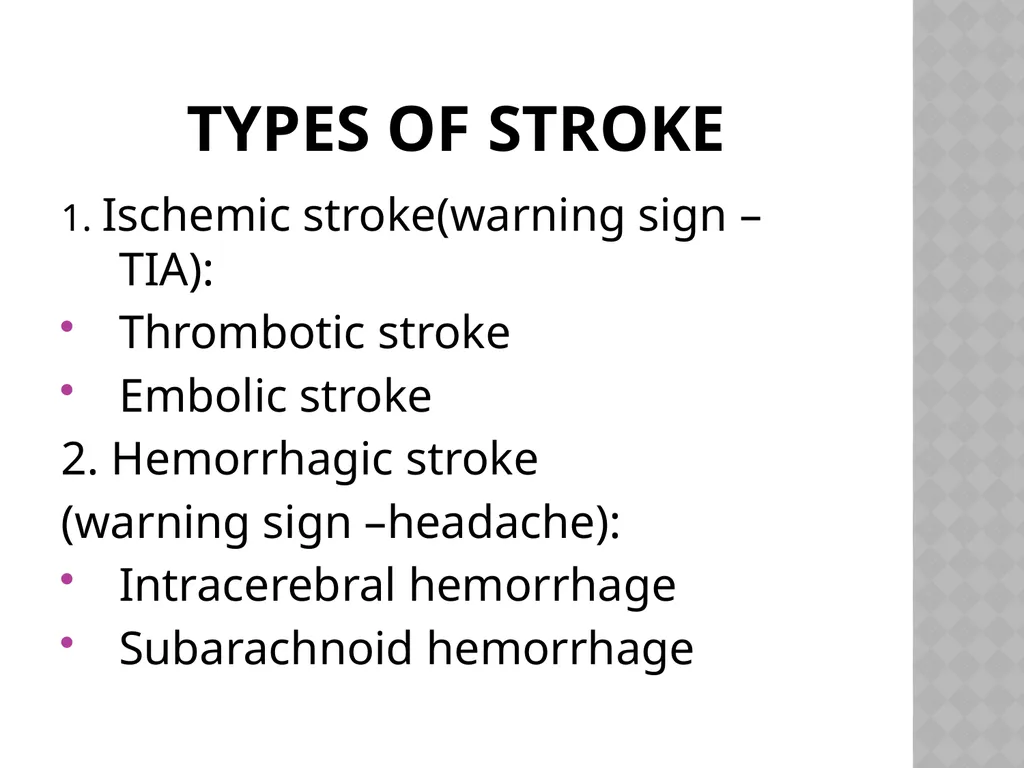
slide10. Types of stroke 1. Ischemic stroke(warning sign –TIA):
Thrombotic stroke
Embolic stroke
2. Hemorrhagic stroke
(warning sign –headache):
Intracerebral hemorrhage
Subarachnoid hemorrhage<br>
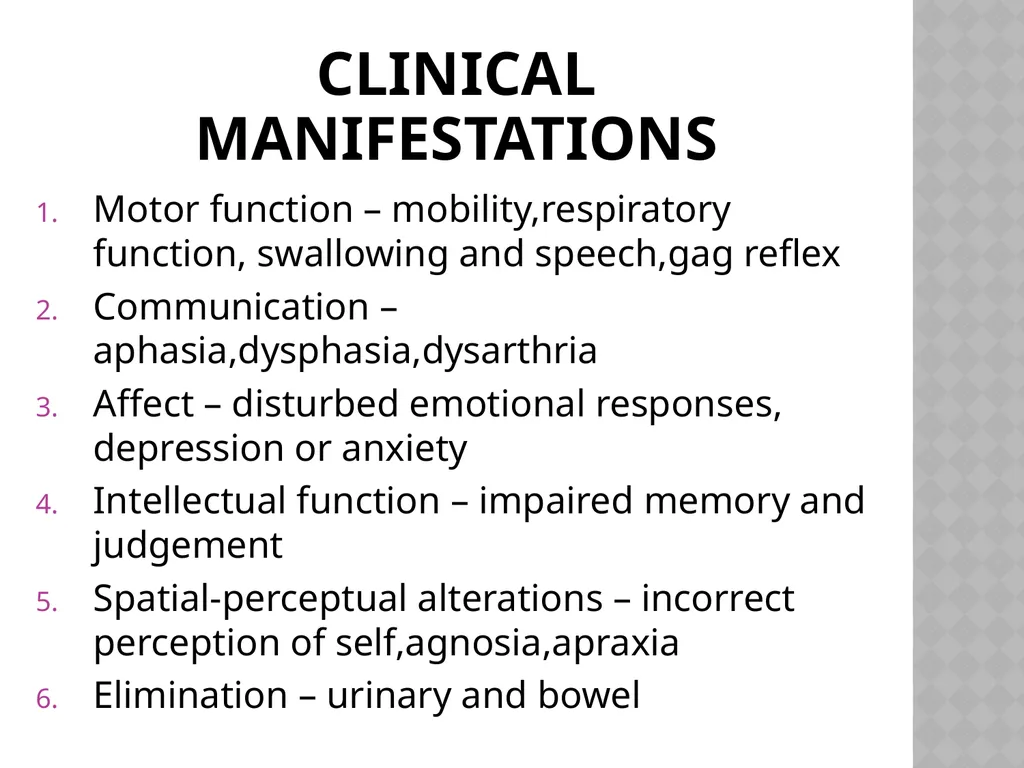
slide11. Clinical manifestations Motor function – mobility,respiratory function, swallowing and speech,gag reflex
Communication – aphasia,dysphasia,dysarthria
Affect – disturbed emotional responses, depression or anxiety
Intellectual function – impaired memory and judgement
Spatial-perceptual alterations – incorrect perception of self,agnosia,apraxia
Elimination – urinary and bowel<br>
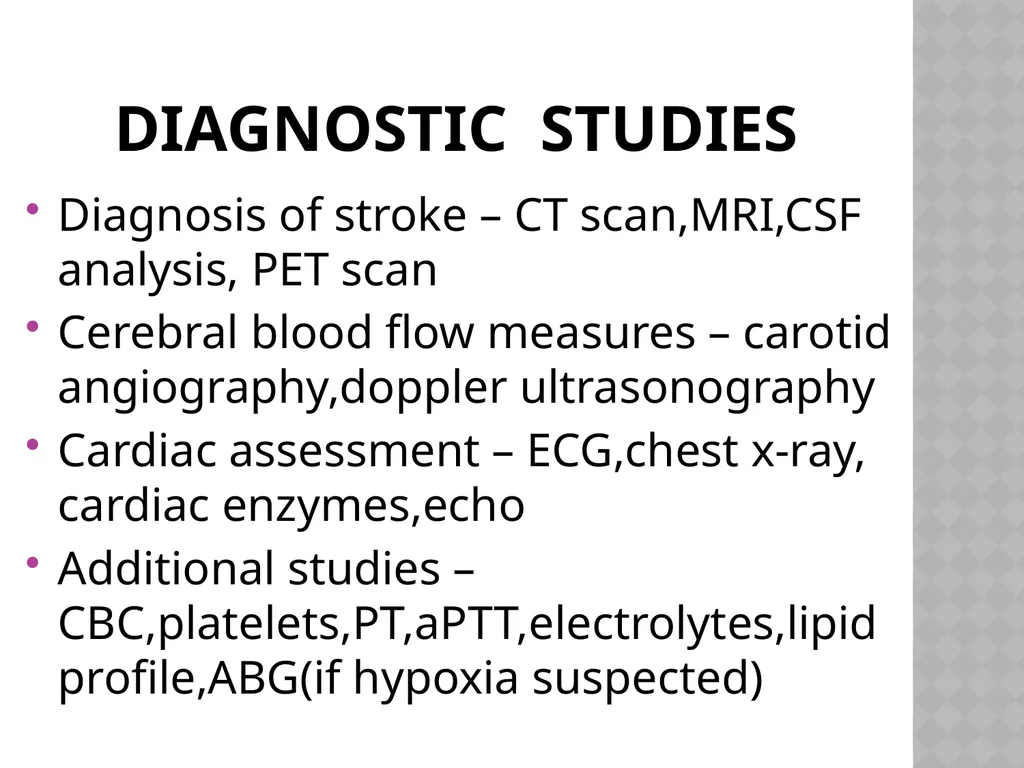
slide13. Diagnostic studies Diagnosis of stroke – CT scan,MRI,CSF analysis, PET scan
Cerebral blood flow measures – carotid angiography,doppler ultrasonography
Cardiac assessment – ECG,chest x-ray, cardiac enzymes,echo
Additional studies – CBC,platelets,PT,aPTT,electrolytes,lipid profile,ABG(if hypoxia suspected)<br>
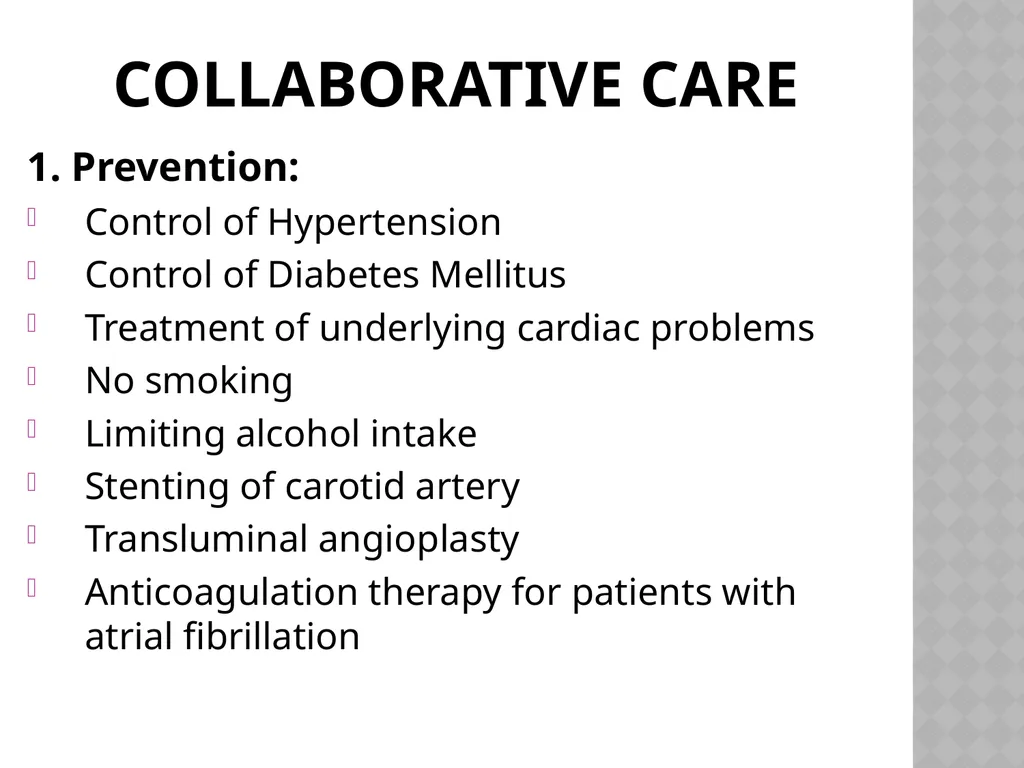
slide14. Collaborative care 1. Prevention:
Control of Hypertension
Control of Diabetes Mellitus
Treatment of underlying cardiac problems
No smoking
Limiting alcohol intake
Stenting of carotid artery
Transluminal angioplasty
Anticoagulation therapy for patients with atrial fibrillation<br>
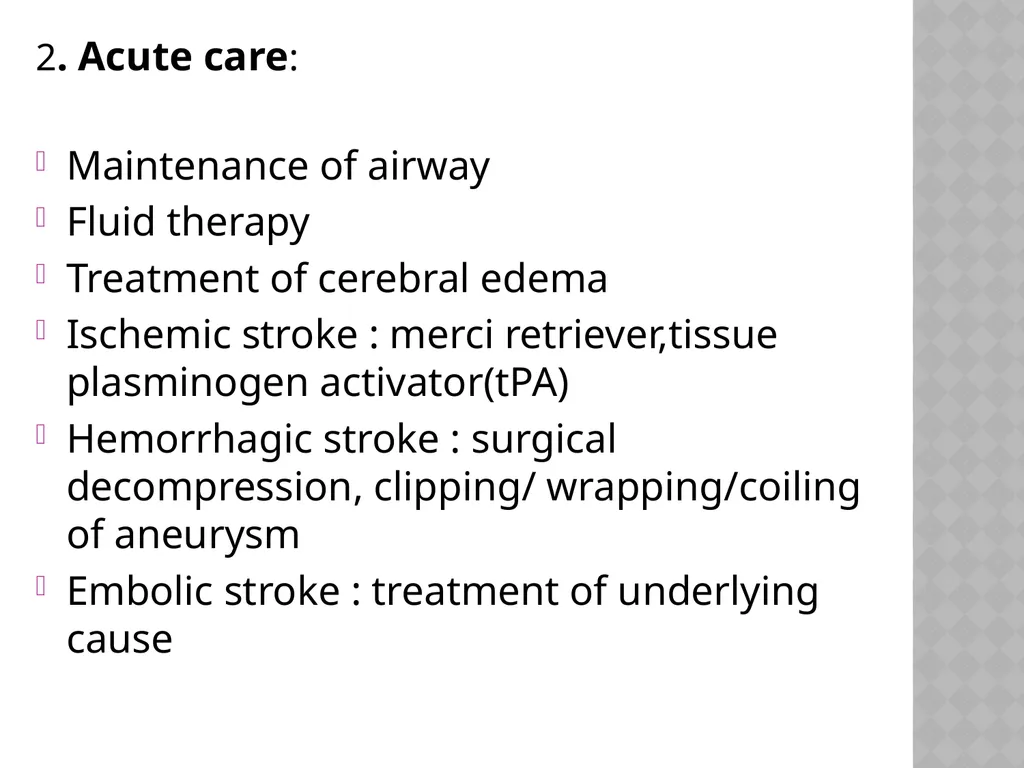
slide15. 2. Acute care:
Maintenance of airway
Fluid therapy
Treatment of cerebral edema
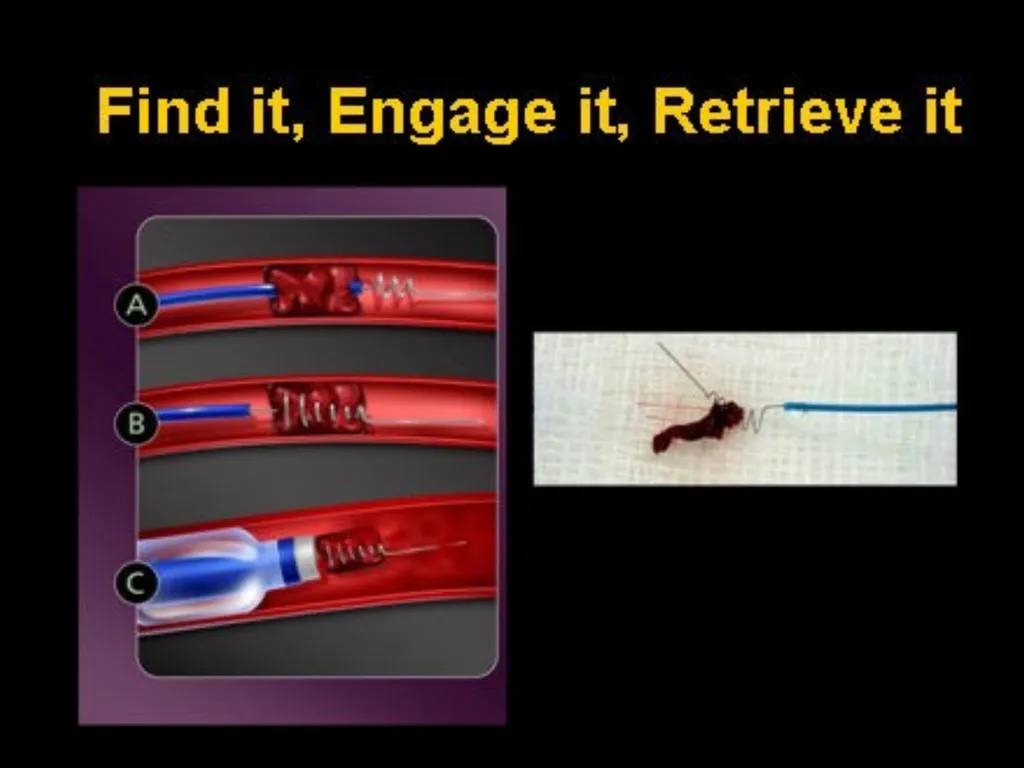
Ischemic stroke : merci retriever,tissue plasminogen activator(tPA)
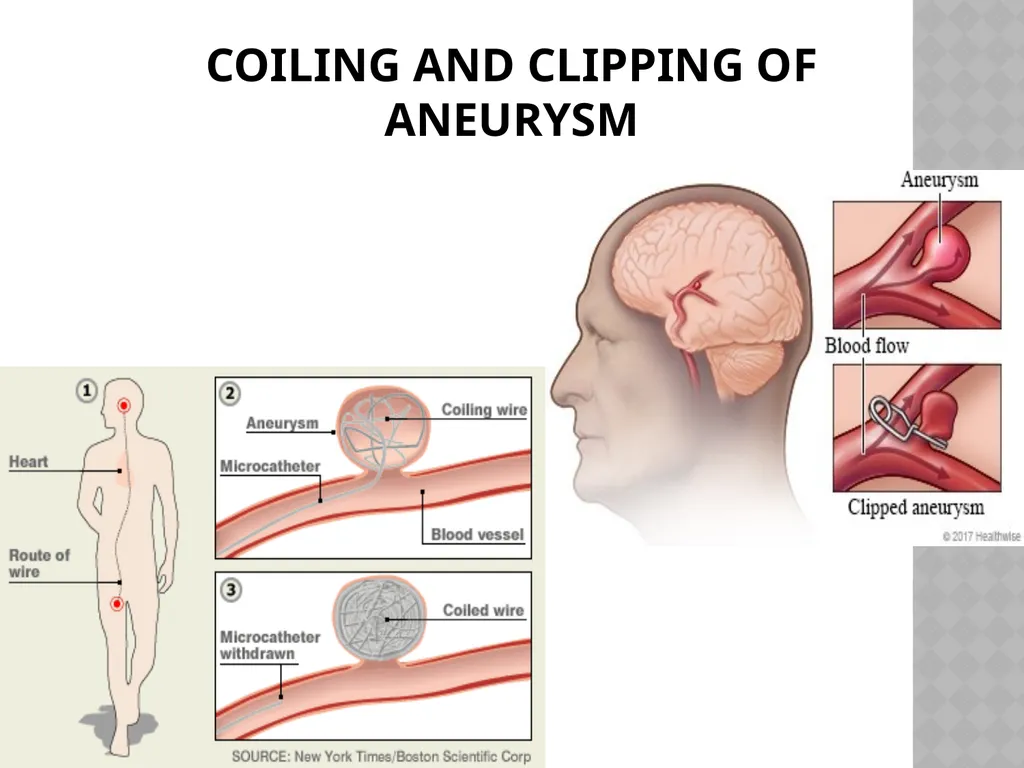
Hemorrhagic stroke : surgical decompression, clipping/ wrapping/coiling of aneurysm
Embolic stroke : treatment of underlying cause<br>
slide16. Merci retriever<br>
slide17. Coiling and clipping of aneurysm<br>
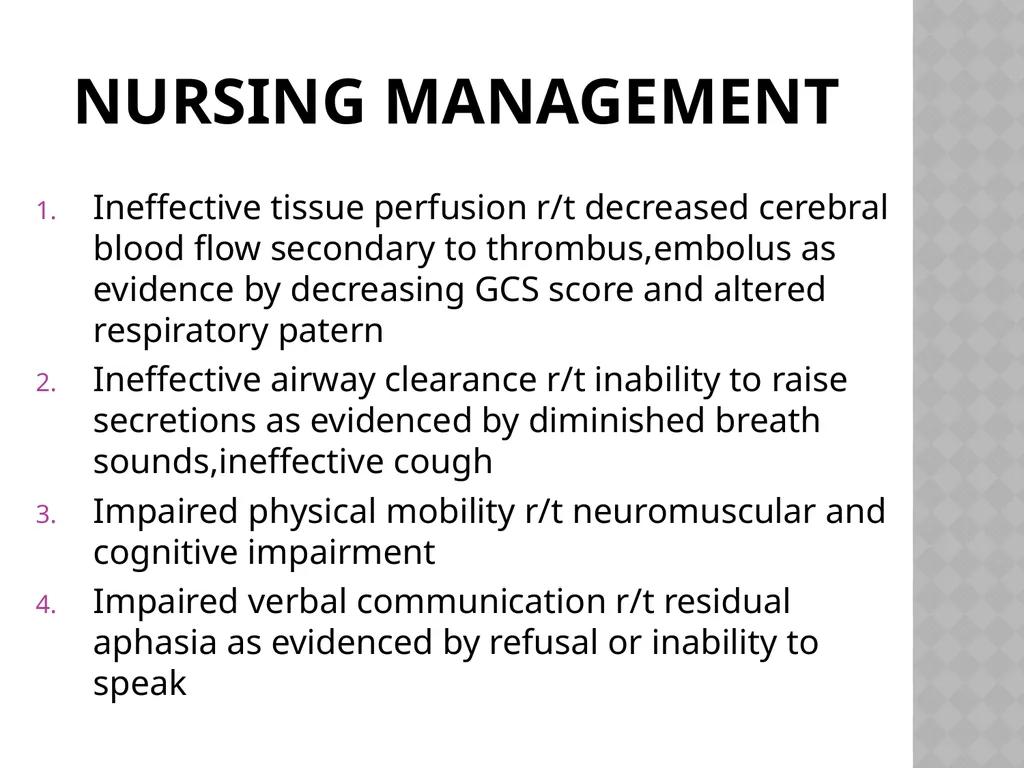
slide18. Nursing management Ineffective tissue perfusion r/t decreased cerebral blood flow secondary to thrombus,embolus as evidence by decreasing GCS score and altered respiratory patern
Ineffective airway clearance r/t inability to raise secretions as evidenced by diminished breath sounds,ineffective cough
Impaired physical mobility r/t neuromuscular and cognitive impairment
Impaired verbal communication r/t residual aphasia as evidenced by refusal or inability to speak<br>

College of Nursing
RIPANS<br>
slide2. WHAT IS CVA/STROKE? CVA is the medical term for a stroke. A stroke
occurs when there is ischemia(inadequate
blood flow) to a part of the brain or
Hemorrhage into the brain that results in
Death of brain cells.
Functions like movement,sensation or
emotions that were controlled by the affected
area of the brain are lost or impaired<br>
slide3. incidence In India, 40 to 270 per 100,000 in the general population.
Third biggest killer in India after heart attacks and cancers.
In 2005, it is estimated that 5.7 million people died from stroke
Percentage is higher for people aged 65 and older.
Of those who survive, 50% to 70% will be functionally independent, 15-30% will live with permanent disability, 20% requires long term care after 3 months.<br>
slide4. etiology<br>
slide5. Controllable risk factors<br>
slide6. Related anatomy and physiology<br>
slide8. pathophysiology 1.Regulation of cerebral blood flow
Impairment of cerebral autoregulation
Cerebral ischemia
2.Atherosclerosis
Thrombus formation
Cerebral infarction<br>
slide9. Transient ischemic attack(Tia) TIA is a temporary focal loss of neurologic function caused by ischemia of one of the vascular territories of the brain, lasting<24hrs and often lasting <15mins
May be due to microemboli that temporarily block the blood flow
TIAs are a warning sign of progressive cerebrovascular disease
Signs include – numbness or loss of sensation,sudden inability to speak,diplopia,ataxia.
CT scan
Aspirin,clopidogrel,anticoagulants(e.g warfarin)<br>
slide10. Types of stroke 1. Ischemic stroke(warning sign –TIA):
Thrombotic stroke
Embolic stroke
2. Hemorrhagic stroke
(warning sign –headache):
Intracerebral hemorrhage
Subarachnoid hemorrhage<br>
slide11. Clinical manifestations Motor function – mobility,respiratory function, swallowing and speech,gag reflex
Communication – aphasia,dysphasia,dysarthria
Affect – disturbed emotional responses, depression or anxiety
Intellectual function – impaired memory and judgement
Spatial-perceptual alterations – incorrect perception of self,agnosia,apraxia
Elimination – urinary and bowel<br>
slide13. Diagnostic studies Diagnosis of stroke – CT scan,MRI,CSF analysis, PET scan
Cerebral blood flow measures – carotid angiography,doppler ultrasonography
Cardiac assessment – ECG,chest x-ray, cardiac enzymes,echo
Additional studies – CBC,platelets,PT,aPTT,electrolytes,lipid profile,ABG(if hypoxia suspected)<br>
slide14. Collaborative care 1. Prevention:
Control of Hypertension
Control of Diabetes Mellitus
Treatment of underlying cardiac problems
No smoking
Limiting alcohol intake
Stenting of carotid artery
Transluminal angioplasty
Anticoagulation therapy for patients with atrial fibrillation<br>
slide15. 2. Acute care:
Maintenance of airway
Fluid therapy
Treatment of cerebral edema
Ischemic stroke : merci retriever,tissue plasminogen activator(tPA)
Hemorrhagic stroke : surgical decompression, clipping/ wrapping/coiling of aneurysm
Embolic stroke : treatment of underlying cause<br>
slide16. Merci retriever<br>
slide17. Coiling and clipping of aneurysm<br>
slide18. Nursing management Ineffective tissue perfusion r/t decreased cerebral blood flow secondary to thrombus,embolus as evidence by decreasing GCS score and altered respiratory patern
Ineffective airway clearance r/t inability to raise secretions as evidenced by diminished breath sounds,ineffective cough
Impaired physical mobility r/t neuromuscular and cognitive impairment
Impaired verbal communication r/t residual aphasia as evidenced by refusal or inability to speak<br>