Cervical Spondylosis: A Case Study Leslie Rainey
Description: Cervical Spondylosis: A Case Study Leslie Rainey What is Cervical Spondylosis1,2? Spondylosis, meaning vertebra in Greek, is a general term for nonspecific, degenerative changes of the spine Degenerative changes occur due to aging in
Related Topics
Download Presentation
"Cervical Spondylosis: A Case Study Leslie Rainey" is the property of its rightful owner. Permission is granted to download and print the materials on this website for personal, non-commercial use only, and to display it on your personal computer provided you do not modify the materials and that you retain all copyright notices contained in the materials. By downloading content from our website, you accept the terms of this agreement.
Presentation Transcript
slide1. Cervical Spondylosis: A Case Study Leslie Rainey<br>
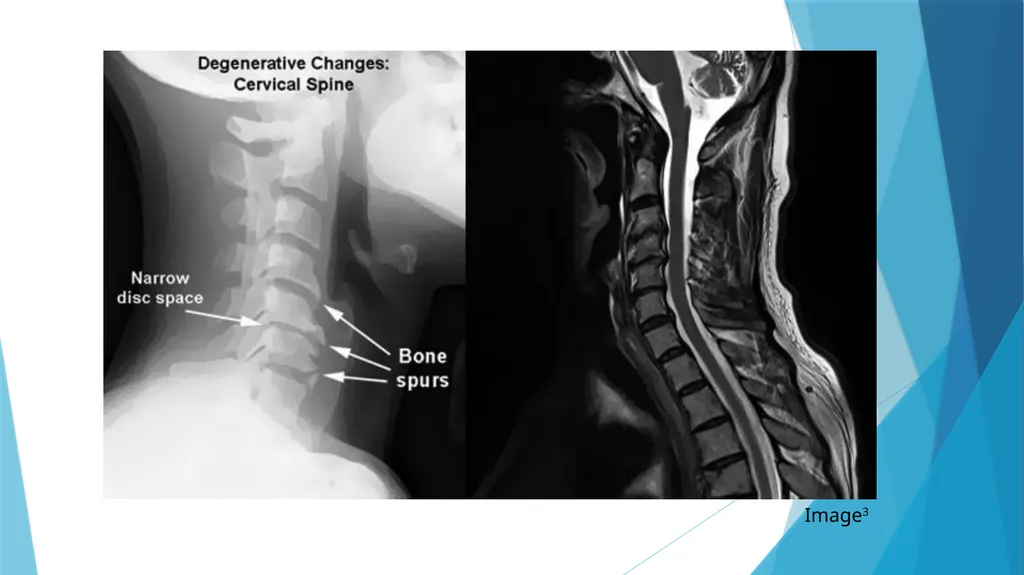
slide2. What is Cervical Spondylosis1,2? “Spondylosis,” meaning “vertebra” in Greek, is a general term for nonspecific, degenerative changes of the spine
Degenerative changes occur due to aging in vertebral discs, facet and uncovertebral joints, and vertebral bodies bone formation or osteophytes due to increased stress
Can result in cervical canal stenosis, narrowing of foramen, compression of nerve roots, and radicular symptoms
Pathophysiology theory: desiccation of vertebral disc (90% water in early adulthood to 69% water by eighth decade of life)
Height of disc decreases and annulus fibrosis is weakened<br>
slide3. Image3<br>
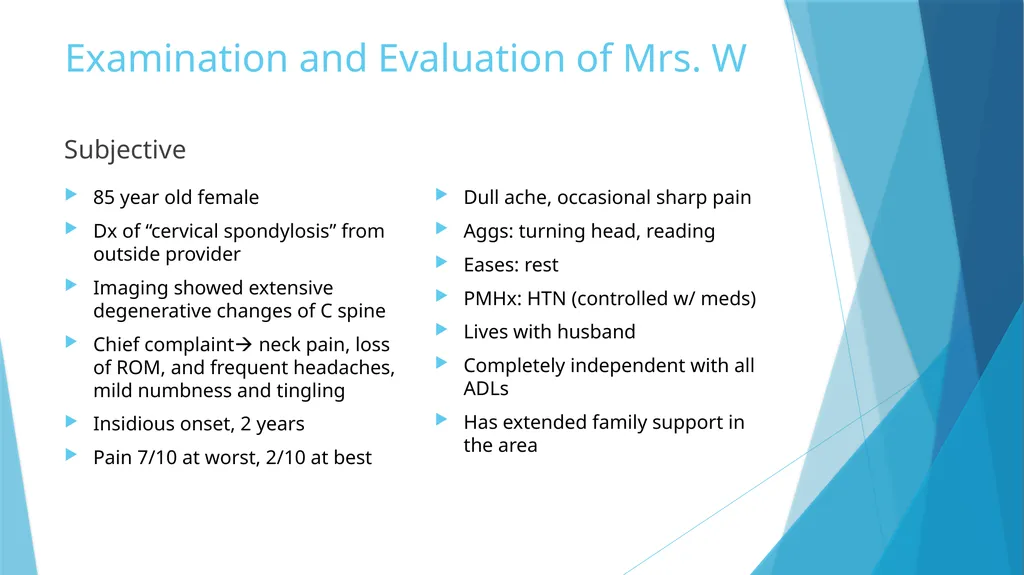
slide4. Examination and Evaluation of Mrs. W Subjective 85 year old female
Dx of “cervical spondylosis” from outside provider
Imaging showed extensive degenerative changes of C spine
Chief complaint neck pain, loss of ROM, and frequent headaches, mild numbness and tingling
Insidious onset, 2 years
Pain 7/10 at worst, 2/10 at best Dull ache, occasional sharp pain
Aggs: turning head, reading
Eases: rest
PMHx: HTN (controlled w/ meds)
Lives with husband
Completely independent with all ADLs
Has extended family support in the area<br>
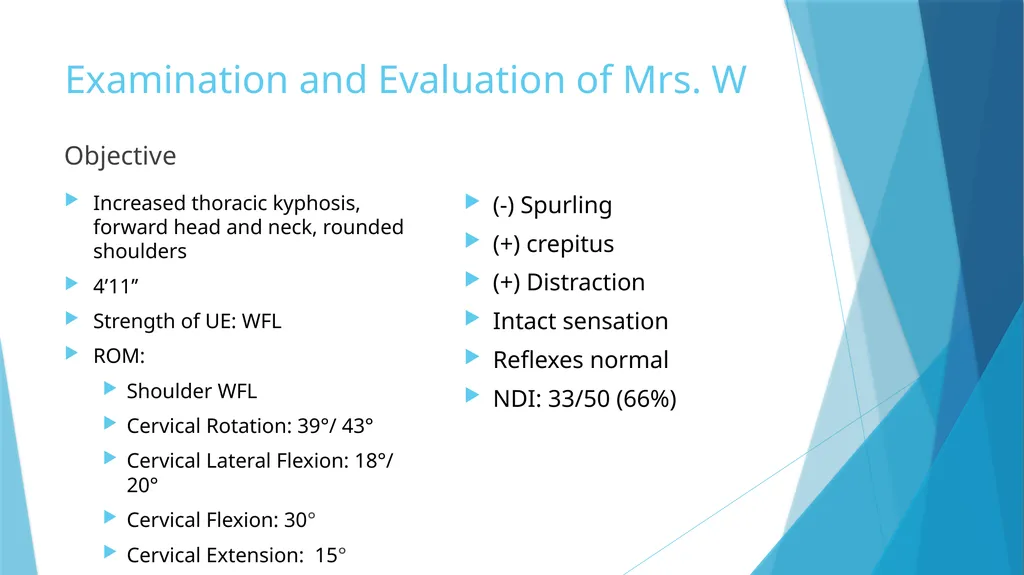
slide5. Examination and Evaluation of Mrs. W Objective Increased thoracic kyphosis, forward head and neck, rounded shoulders
4’11’’
Strength of UE: WFL
ROM:
Shoulder WFL
Cervical Rotation: 39°/ 43°
Cervical Lateral Flexion: 18°/ 20°
Cervical Flexion: 30°
Cervical Extension: 15° (-) Spurling
(+) crepitus
(+) Distraction
Intact sensation
Reflexes normal
NDI: 33/50 (66%)<br>
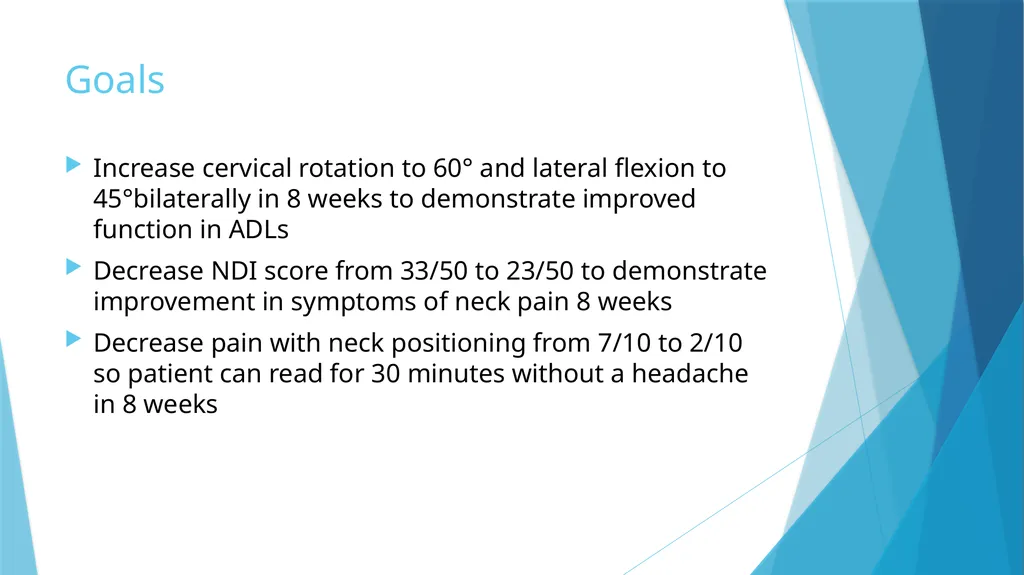
slide6. Goals Increase cervical rotation to 60° and lateral flexion to 45°bilaterally in 8 weeks to demonstrate improved function in ADLs
Decrease NDI score from 33/50 to 23/50 to demonstrate improvement in symptoms of neck pain 8 weeks
Decrease pain with neck positioning from 7/10 to 2/10 so patient can read for 30 minutes without a headache in 8 weeks<br>
slide7. Seems pretty straightforward…<br>
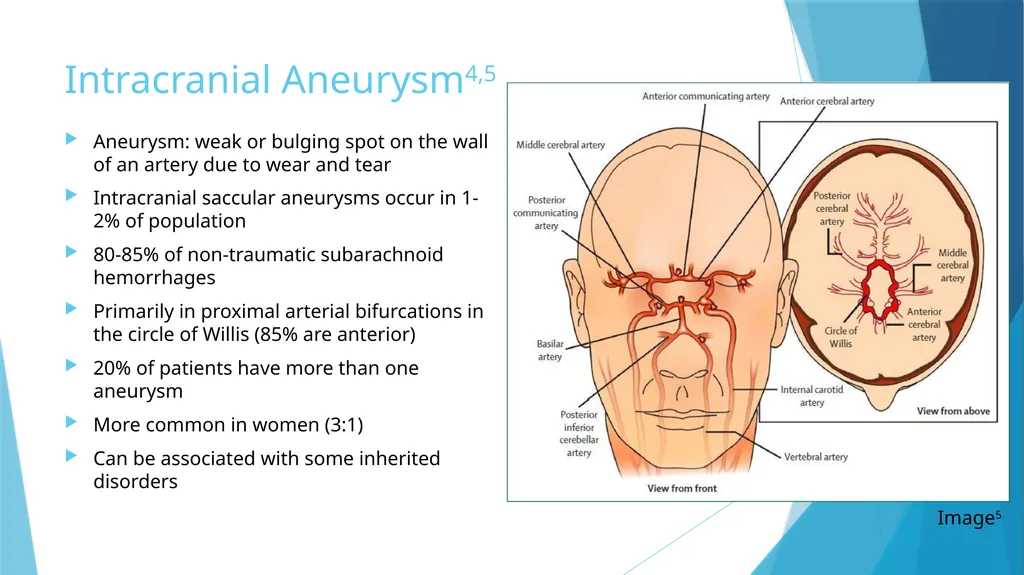
slide8. Intracranial Aneurysm4,5 Aneurysm: weak or bulging spot on the wall of an artery due to wear and tear
Intracranial saccular aneurysms occur in 1-2% of population
80-85% of non-traumatic subarachnoid hemorrhages
Primarily in proximal arterial bifurcations in the circle of Willis (85% are anterior)
20% of patients have more than one aneurysm
More common in women (3:1)
Can be associated with some inherited disorders Image5<br>
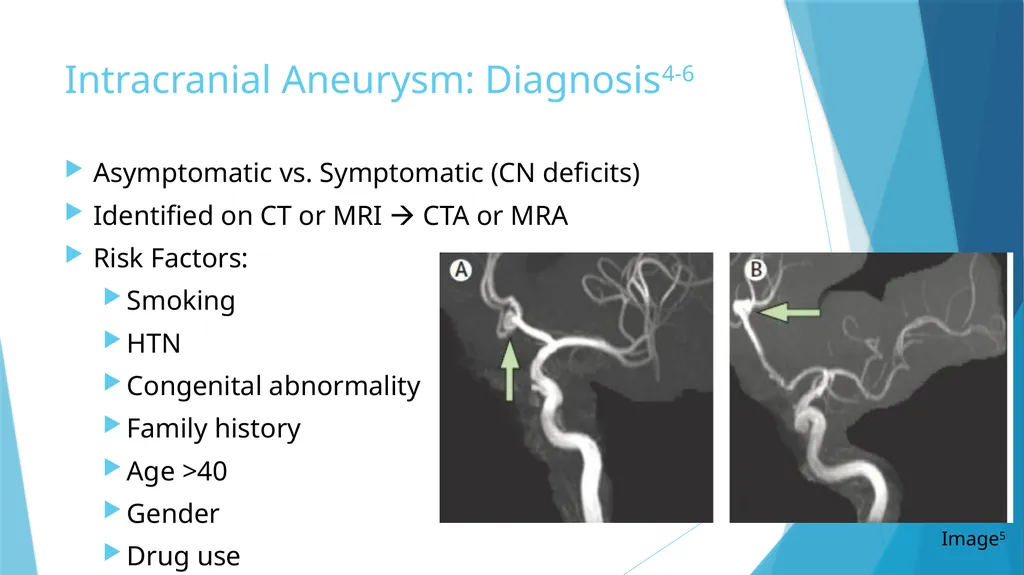
slide9. Intracranial Aneurysm: Diagnosis4-6 Asymptomatic vs. Symptomatic (CN deficits)
Identified on CT or MRI CTA or MRA
Risk Factors:
Smoking
HTN
Congenital abnormality
Family history
Age >40
Gender
Drug use Image5<br>
slide10. Intracranial Aneurysm: Prognosis4,6-8 SAH due to ruptured aneurysm has poor prognosis
Treatment vs serial imaging
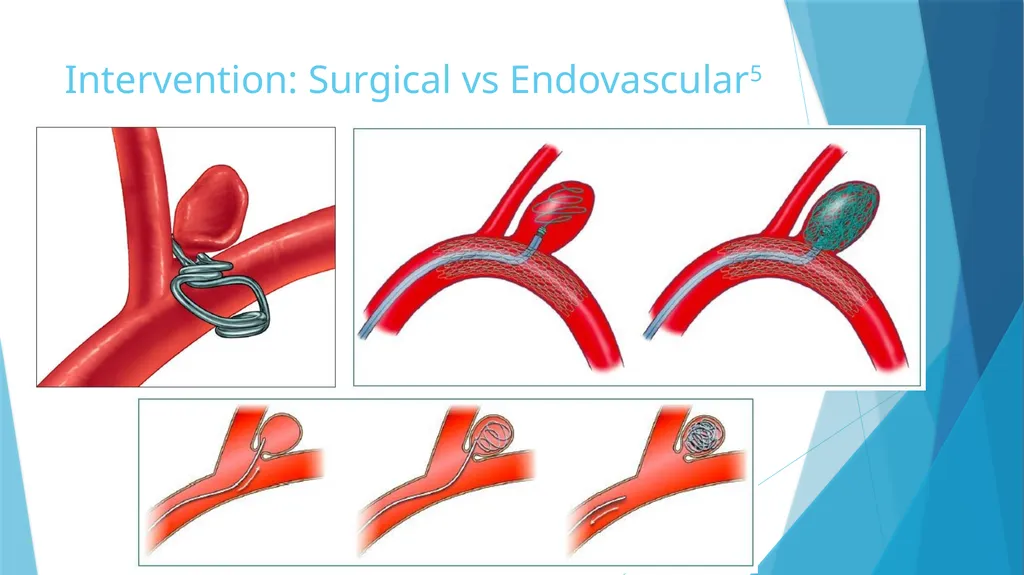
Endovascular coiling vs. open surgical clipping
Considerations: risk of hemorrhage, size and location, age and health of patient, family history, surgical risks, patient preference
Predictors of rupture: smoking, size of aneurysm (>10mm), age
Health-promoting behaviors & perceived stress<br>
slide11. Intervention: Surgical vs Endovascular5<br>
slide12. Back to Mrs. W…<br>
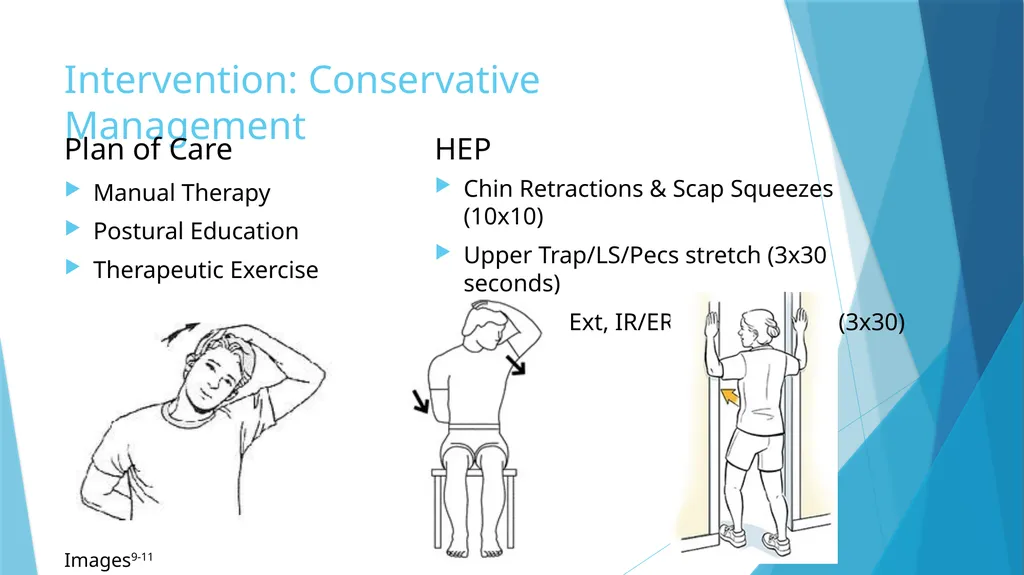
slide13. Intervention: Conservative Management Plan of Care Manual Therapy
Postural Education
Therapeutic Exercise HEP Chin Retractions & Scap Squeezes (10x10)
Upper Trap/LS/Pecs stretch (3x30 seconds)
Shoulder Ext, IR/ER w/ Theraband (3x30) Images9-11<br>
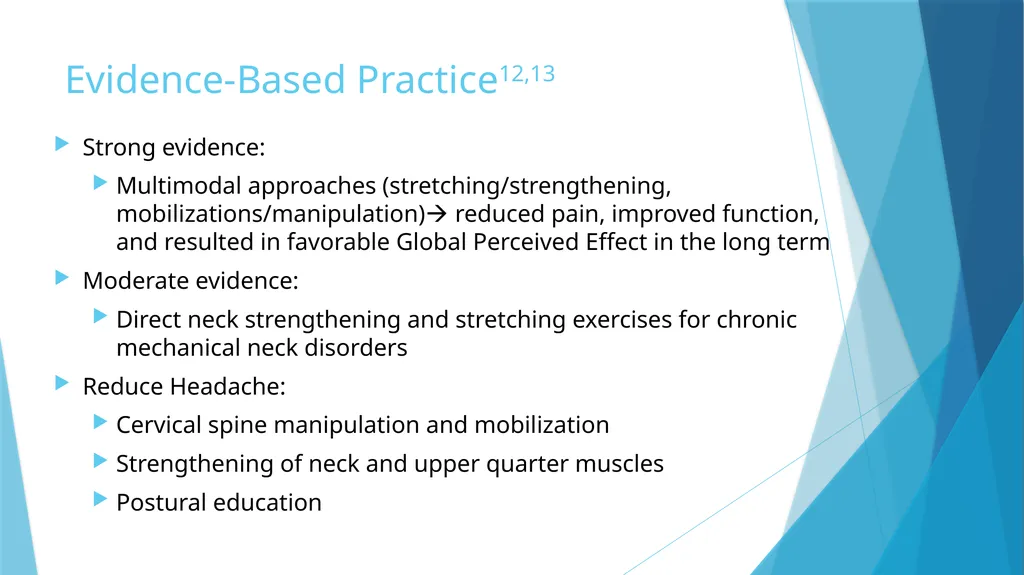
slide14. Evidence-Based Practice12,13 Strong evidence:
Multimodal approaches (stretching/strengthening, mobilizations/manipulation) reduced pain, improved function, and resulted in favorable Global Perceived Effect in the long term
Moderate evidence:
Direct neck strengthening and stretching exercises for chronic mechanical neck disorders
Reduce Headache:
Cervical spine manipulation and mobilization
Strengthening of neck and upper quarter muscles
Postural education<br>
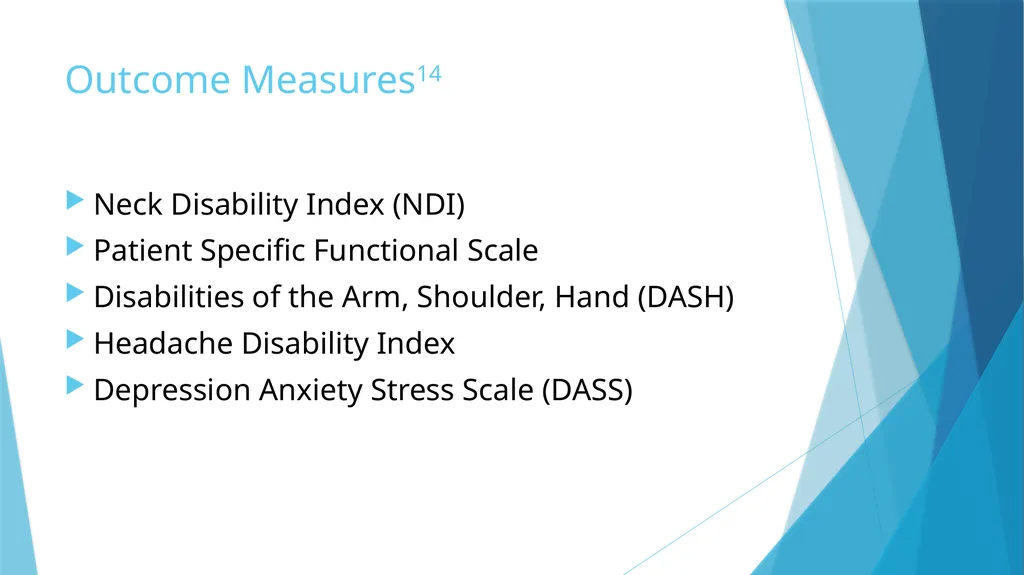
slide15. Outcome Measures14 Neck Disability Index (NDI)
Patient Specific Functional Scale
Disabilities of the Arm, Shoulder, Hand (DASH)
Headache Disability Index
Depression Anxiety Stress Scale (DASS)<br>
slide16. Outcome Mrs. W only came for three visits…
Reported lessening of sx after first couple treatments
Having another MRA in a couple months to monitor aneurysm
Did not have a chance to reassess ROM or progress with any of her goals <br>
slide17. Bibliography 1. Lestini WF, Wiesel SW. The pathogenesis of cervical spondylosis. Clin Orthop Relat Res 1989;(239):69-93.
2. Robinson J, Kothari MJ. Clinical features and diagnosis of cervical radiculopathy. Up To Date 2018. Available at: https://www-uptodate-com.libproxy.lib.unc.edu/contents/clinical-features-and-diagnosis-of-cervical-radiculopathy?search=cervical%20spondylosis§ionRank=1&usage_type=default&anchor=H7&source=machineLearning&selectedTitle=1~33&display_rank=1#H7. Accessed November 27, 2018.
3. Cervical Spondylosis | Neck Pain | Tests and Treatment. Available at: https://www.healthclues.net/cervical-spondylosis. Accessed November 27, 2018.
4. Brain Aneurysm Basics – Brain Aneurysm Foundation. Available at: https://www.bafound.org/about-brain-aneurysms/brain-aneurysm-basics/. Accessed November 25, 2018.
5. Brown RD, Broderick JP. Unruptured intracranial aneurysms: epidemiology, natural history, management options, and familial screening. Lancet Neurol 2014;13(4):393-404. doi:10.1016/S1474-4422(14)70015-8.
6. Juvela S, Porras M, Poussa K. Natural history of unruptured intracranial aneurysms: probability of and risk factors for aneurysm rupture. J Neurosurg 2000;93(3):379-387. doi:10.3171/jns.2000.93.3.0379.<br>
slide18. Bibliography 7. Jeong HW, Seo JH, Kim ST, Jung CK, Suh S-I. Clinical practice guideline for the management of intracranial aneurysms. Neurointervention 2014;9(2):63-71. doi:10.5469/neuroint.2014.9.2.63.
8. Lee M-S, Park CG, Hughes TL, Jun S-E, Whang K, Kim N. The predictive role of health-promoting behaviours and perceived stress in aneurysmal rupture. J Clin Nurs 2018;27(5-6):e1068-e1077. doi:10.1111/jocn.14149.
9. The Center for Total Back Care Top Neck and Shoulder Stretches: Trapezius Stretch - The Center for Total Back Care. Available at: http://totalback.com/top-neck-shoulder-stretches-trapezius-stretch/. Accessed November 27, 2018.
10. Levator scapulae stretch. Available at: http://www.physiowarzish.in/levator-scapulae-stretch.html. Accessed November 27, 2018.
11. Doorway Pectoral Stretch (Flexibility) | Saint Luke’s Health System. Available at: https://www.saintlukeskc.org/health-library/doorway-pectoral-stretch-flexibility. Accessed November 27, 2018.
12. Gross AR, Goldsmith C, Hoving JL, et al. Conservative management of mechanical neck disorders: a systematic review. J Rheumatol 2007;34(5):1083-1102.
13. Childs JD, Fritz JM, Piva SR, Whitman JM. Proposal of a classification system for patients with neck pain. J Orthop Sports Phys Ther 2004;34(11):686-96; discussion 697. doi:10.2519/jospt.2004.34.11.686.
14. Macdermid JC, Walton DM, Côté P, et al. Use of outcome measures in managing neck pain: an international multidisciplinary survey. Open Orthop J 2013;7:506-520. doi:10.2174/1874325001307010506.<br>

slide2. What is Cervical Spondylosis1,2? “Spondylosis,” meaning “vertebra” in Greek, is a general term for nonspecific, degenerative changes of the spine
Degenerative changes occur due to aging in vertebral discs, facet and uncovertebral joints, and vertebral bodies bone formation or osteophytes due to increased stress
Can result in cervical canal stenosis, narrowing of foramen, compression of nerve roots, and radicular symptoms
Pathophysiology theory: desiccation of vertebral disc (90% water in early adulthood to 69% water by eighth decade of life)
Height of disc decreases and annulus fibrosis is weakened<br>
slide3. Image3<br>
slide4. Examination and Evaluation of Mrs. W Subjective 85 year old female
Dx of “cervical spondylosis” from outside provider
Imaging showed extensive degenerative changes of C spine
Chief complaint neck pain, loss of ROM, and frequent headaches, mild numbness and tingling
Insidious onset, 2 years
Pain 7/10 at worst, 2/10 at best Dull ache, occasional sharp pain
Aggs: turning head, reading
Eases: rest
PMHx: HTN (controlled w/ meds)
Lives with husband
Completely independent with all ADLs
Has extended family support in the area<br>
slide5. Examination and Evaluation of Mrs. W Objective Increased thoracic kyphosis, forward head and neck, rounded shoulders
4’11’’
Strength of UE: WFL
ROM:
Shoulder WFL
Cervical Rotation: 39°/ 43°
Cervical Lateral Flexion: 18°/ 20°
Cervical Flexion: 30°
Cervical Extension: 15° (-) Spurling
(+) crepitus
(+) Distraction
Intact sensation
Reflexes normal
NDI: 33/50 (66%)<br>
slide6. Goals Increase cervical rotation to 60° and lateral flexion to 45°bilaterally in 8 weeks to demonstrate improved function in ADLs
Decrease NDI score from 33/50 to 23/50 to demonstrate improvement in symptoms of neck pain 8 weeks
Decrease pain with neck positioning from 7/10 to 2/10 so patient can read for 30 minutes without a headache in 8 weeks<br>
slide7. Seems pretty straightforward…<br>
slide8. Intracranial Aneurysm4,5 Aneurysm: weak or bulging spot on the wall of an artery due to wear and tear
Intracranial saccular aneurysms occur in 1-2% of population
80-85% of non-traumatic subarachnoid hemorrhages
Primarily in proximal arterial bifurcations in the circle of Willis (85% are anterior)
20% of patients have more than one aneurysm
More common in women (3:1)
Can be associated with some inherited disorders Image5<br>
slide9. Intracranial Aneurysm: Diagnosis4-6 Asymptomatic vs. Symptomatic (CN deficits)
Identified on CT or MRI CTA or MRA
Risk Factors:
Smoking
HTN
Congenital abnormality
Family history
Age >40
Gender
Drug use Image5<br>
slide10. Intracranial Aneurysm: Prognosis4,6-8 SAH due to ruptured aneurysm has poor prognosis
Treatment vs serial imaging
Endovascular coiling vs. open surgical clipping
Considerations: risk of hemorrhage, size and location, age and health of patient, family history, surgical risks, patient preference
Predictors of rupture: smoking, size of aneurysm (>10mm), age
Health-promoting behaviors & perceived stress<br>
slide11. Intervention: Surgical vs Endovascular5<br>
slide12. Back to Mrs. W…<br>
slide13. Intervention: Conservative Management Plan of Care Manual Therapy
Postural Education
Therapeutic Exercise HEP Chin Retractions & Scap Squeezes (10x10)
Upper Trap/LS/Pecs stretch (3x30 seconds)
Shoulder Ext, IR/ER w/ Theraband (3x30) Images9-11<br>
slide14. Evidence-Based Practice12,13 Strong evidence:
Multimodal approaches (stretching/strengthening, mobilizations/manipulation) reduced pain, improved function, and resulted in favorable Global Perceived Effect in the long term
Moderate evidence:
Direct neck strengthening and stretching exercises for chronic mechanical neck disorders
Reduce Headache:
Cervical spine manipulation and mobilization
Strengthening of neck and upper quarter muscles
Postural education<br>
slide15. Outcome Measures14 Neck Disability Index (NDI)
Patient Specific Functional Scale
Disabilities of the Arm, Shoulder, Hand (DASH)
Headache Disability Index
Depression Anxiety Stress Scale (DASS)<br>
slide16. Outcome Mrs. W only came for three visits…
Reported lessening of sx after first couple treatments
Having another MRA in a couple months to monitor aneurysm
Did not have a chance to reassess ROM or progress with any of her goals <br>
slide17. Bibliography 1. Lestini WF, Wiesel SW. The pathogenesis of cervical spondylosis. Clin Orthop Relat Res 1989;(239):69-93.
2. Robinson J, Kothari MJ. Clinical features and diagnosis of cervical radiculopathy. Up To Date 2018. Available at: https://www-uptodate-com.libproxy.lib.unc.edu/contents/clinical-features-and-diagnosis-of-cervical-radiculopathy?search=cervical%20spondylosis§ionRank=1&usage_type=default&anchor=H7&source=machineLearning&selectedTitle=1~33&display_rank=1#H7. Accessed November 27, 2018.
3. Cervical Spondylosis | Neck Pain | Tests and Treatment. Available at: https://www.healthclues.net/cervical-spondylosis. Accessed November 27, 2018.
4. Brain Aneurysm Basics – Brain Aneurysm Foundation. Available at: https://www.bafound.org/about-brain-aneurysms/brain-aneurysm-basics/. Accessed November 25, 2018.
5. Brown RD, Broderick JP. Unruptured intracranial aneurysms: epidemiology, natural history, management options, and familial screening. Lancet Neurol 2014;13(4):393-404. doi:10.1016/S1474-4422(14)70015-8.
6. Juvela S, Porras M, Poussa K. Natural history of unruptured intracranial aneurysms: probability of and risk factors for aneurysm rupture. J Neurosurg 2000;93(3):379-387. doi:10.3171/jns.2000.93.3.0379.<br>
slide18. Bibliography 7. Jeong HW, Seo JH, Kim ST, Jung CK, Suh S-I. Clinical practice guideline for the management of intracranial aneurysms. Neurointervention 2014;9(2):63-71. doi:10.5469/neuroint.2014.9.2.63.
8. Lee M-S, Park CG, Hughes TL, Jun S-E, Whang K, Kim N. The predictive role of health-promoting behaviours and perceived stress in aneurysmal rupture. J Clin Nurs 2018;27(5-6):e1068-e1077. doi:10.1111/jocn.14149.
9. The Center for Total Back Care Top Neck and Shoulder Stretches: Trapezius Stretch - The Center for Total Back Care. Available at: http://totalback.com/top-neck-shoulder-stretches-trapezius-stretch/. Accessed November 27, 2018.
10. Levator scapulae stretch. Available at: http://www.physiowarzish.in/levator-scapulae-stretch.html. Accessed November 27, 2018.
11. Doorway Pectoral Stretch (Flexibility) | Saint Luke’s Health System. Available at: https://www.saintlukeskc.org/health-library/doorway-pectoral-stretch-flexibility. Accessed November 27, 2018.
12. Gross AR, Goldsmith C, Hoving JL, et al. Conservative management of mechanical neck disorders: a systematic review. J Rheumatol 2007;34(5):1083-1102.
13. Childs JD, Fritz JM, Piva SR, Whitman JM. Proposal of a classification system for patients with neck pain. J Orthop Sports Phys Ther 2004;34(11):686-96; discussion 697. doi:10.2519/jospt.2004.34.11.686.
14. Macdermid JC, Walton DM, Côté P, et al. Use of outcome measures in managing neck pain: an international multidisciplinary survey. Open Orthop J 2013;7:506-520. doi:10.2174/1874325001307010506.<br>