Ch. 2: Classifying Living Things Why Classify? Classification the placing of things into groups of similar items How living things were classified Linnaean System used to today to classify living things All living things were divided
"Ch. 2: Classifying Living Things Why Classify?" is the property of its rightful owner. Permission is granted to
download and print the materials on this website for personal, non-commercial use only, and to display it
on your personal computer provided you do not modify the materials and that you retain all copyright
notices contained in the materials. By downloading content from our website, you accept the terms of this
agreement.
Presentation Transcript
01
Ch. 2: Classifying Living Things<br>
02
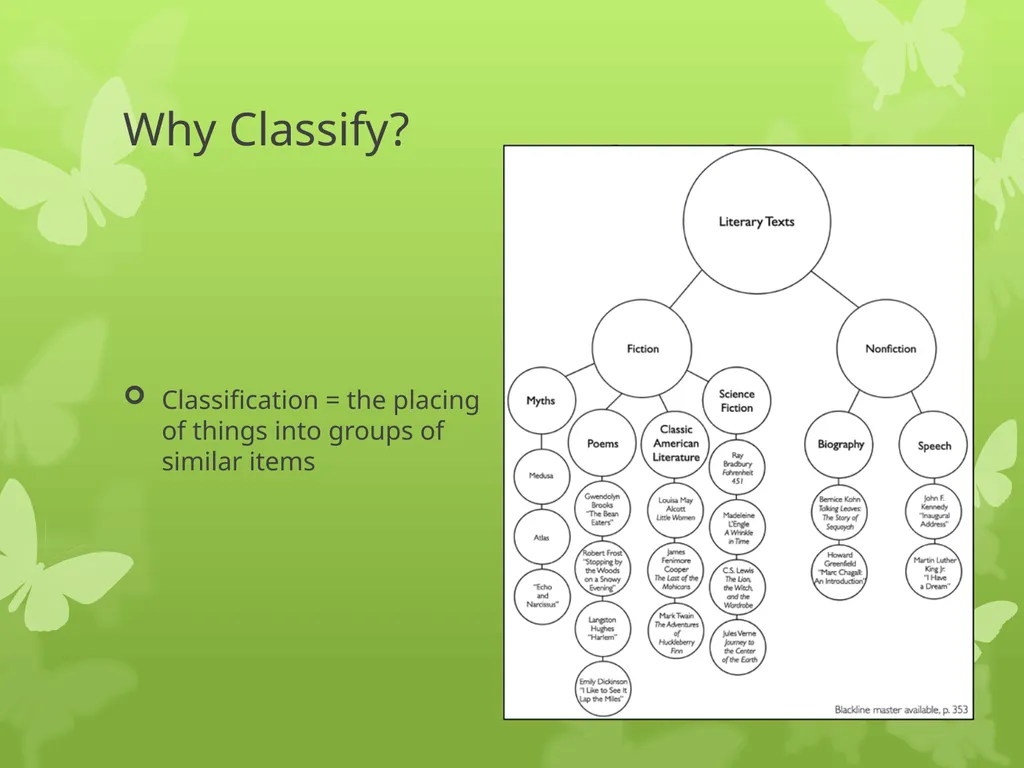
Why Classify? Classification = the placing of things into groups of similar items<br>
03
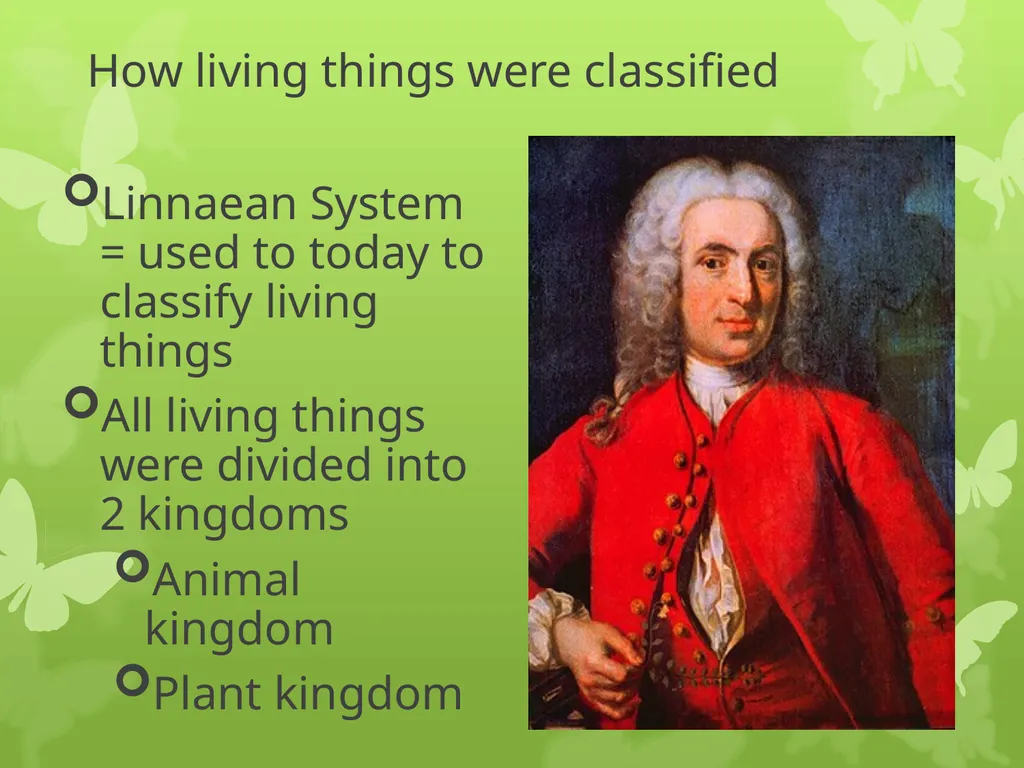
How living things were classified Linnaean System = used to today to classify living things
All living things were divided into 2 kingdoms
Animal kingdom
Plant kingdom<br>
04
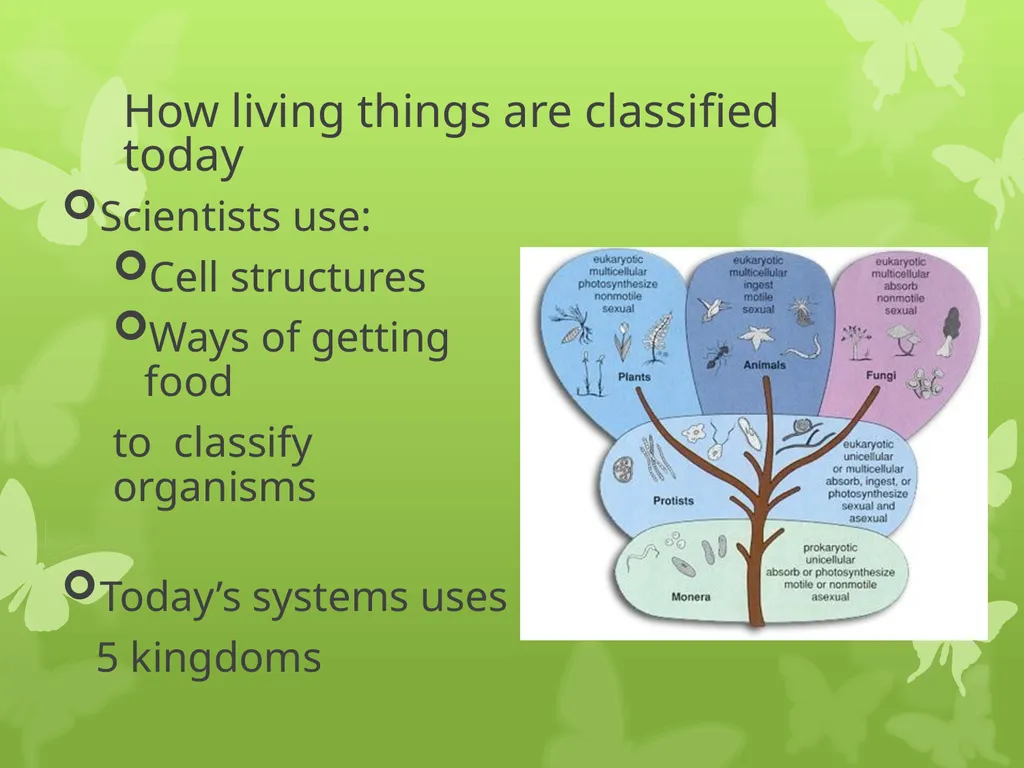
How living things are classified today Scientists use:
Cell structures
Ways of getting food
to classify organisms
Today’s systems uses
5 kingdoms<br>
05
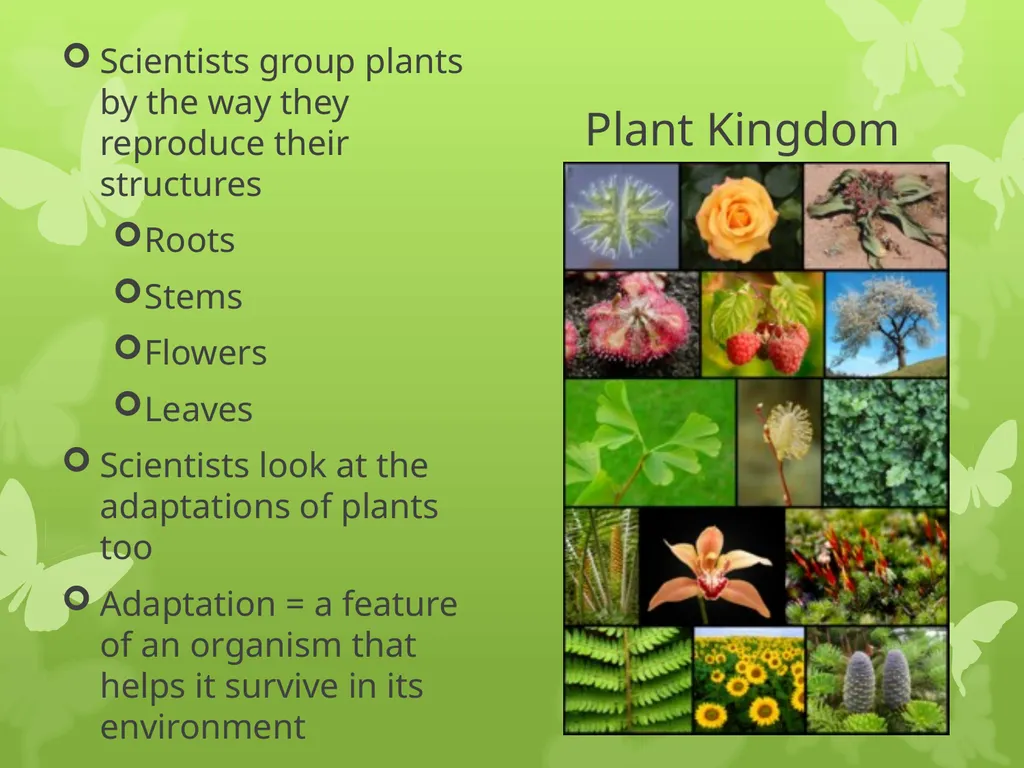
Plant Kingdom Scientists group plants by the way they reproduce their structures
Roots
Stems
Flowers
Leaves
Scientists look at the adaptations of plants too
Adaptation = a feature of an organism that helps it survive in its environment<br>
06
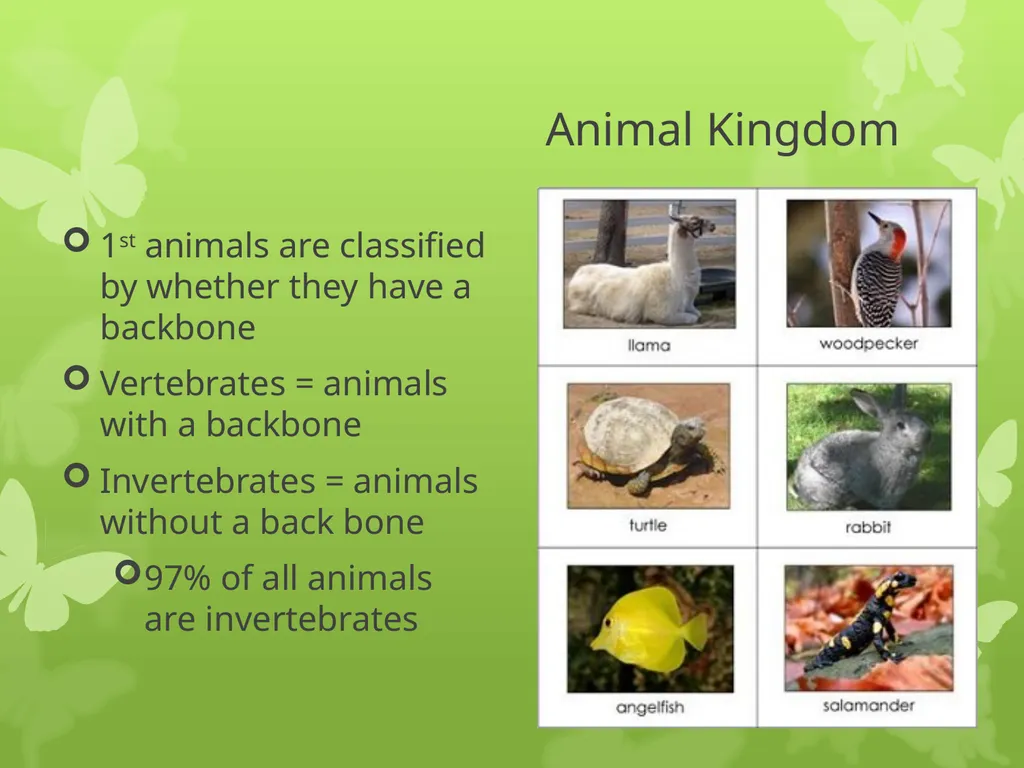
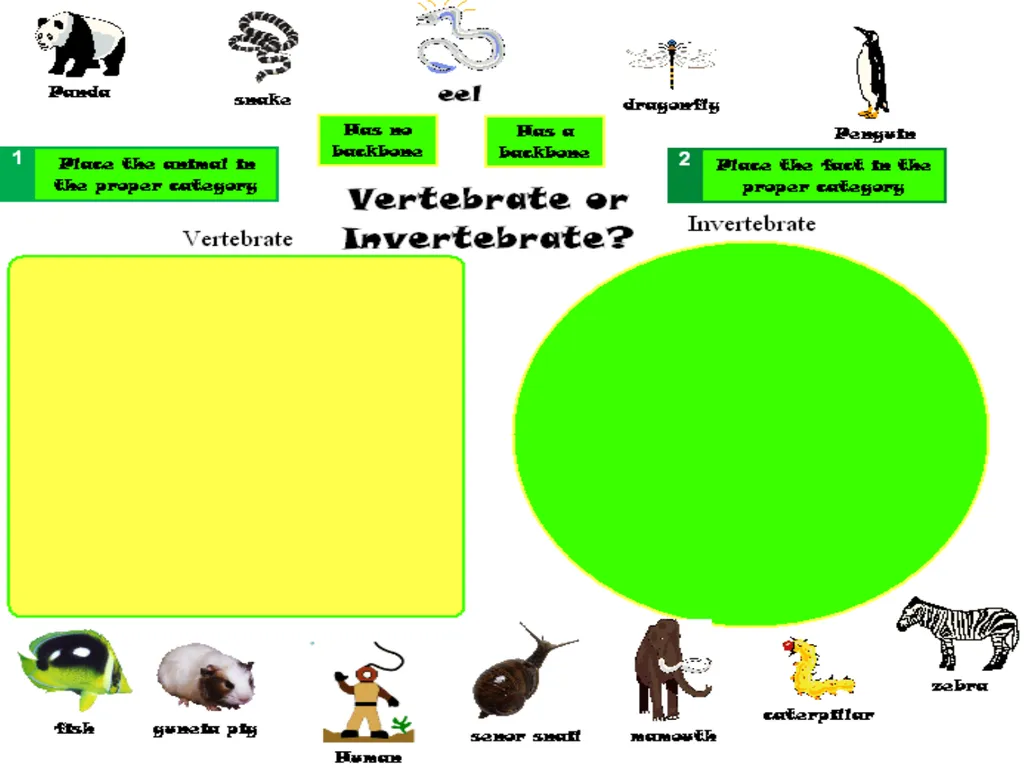
Animal Kingdom 1st animals are classified by whether they have a backbone
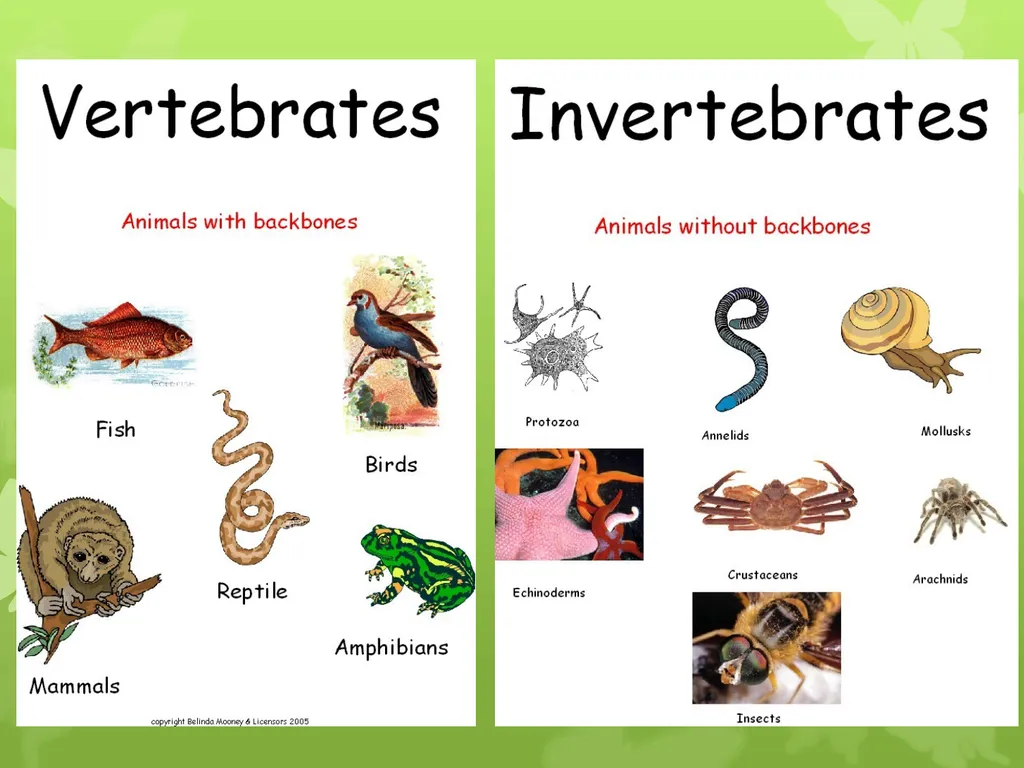
Vertebrates = animals with a backbone
Invertebrates = animals without a back bone
97% of all animals are invertebrates<br>
07
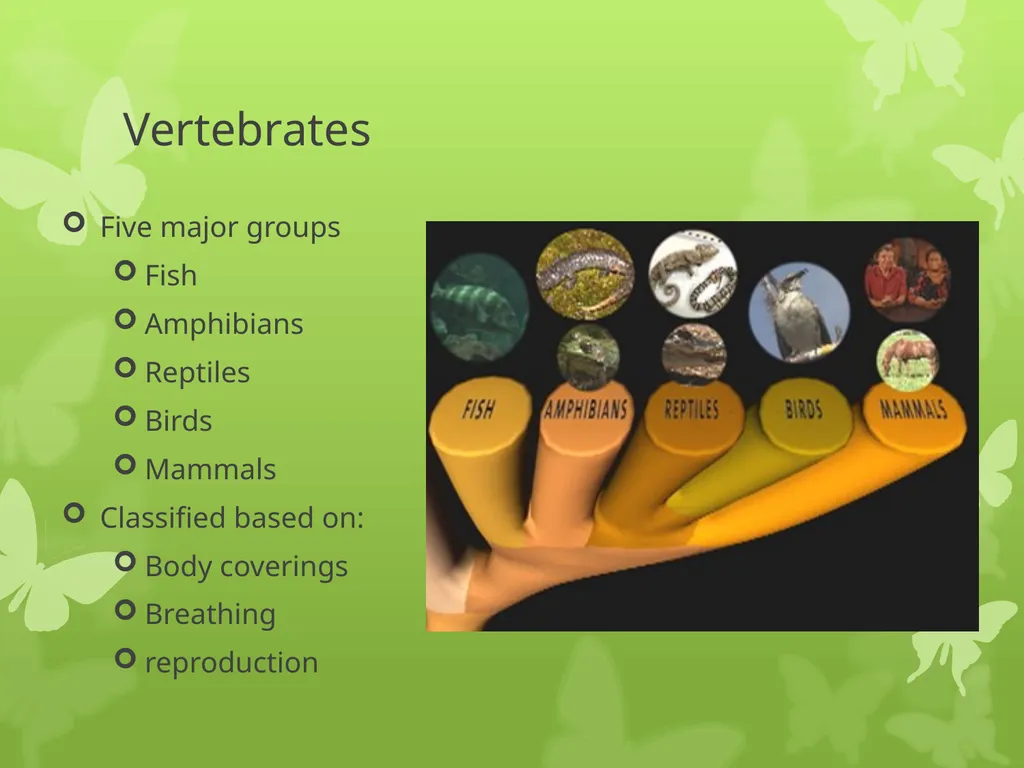
Vertebrates Five major groups
Fish
Amphibians
Reptiles
Birds
Mammals
Classified based on:
Body coverings
Breathing
reproduction<br>
08
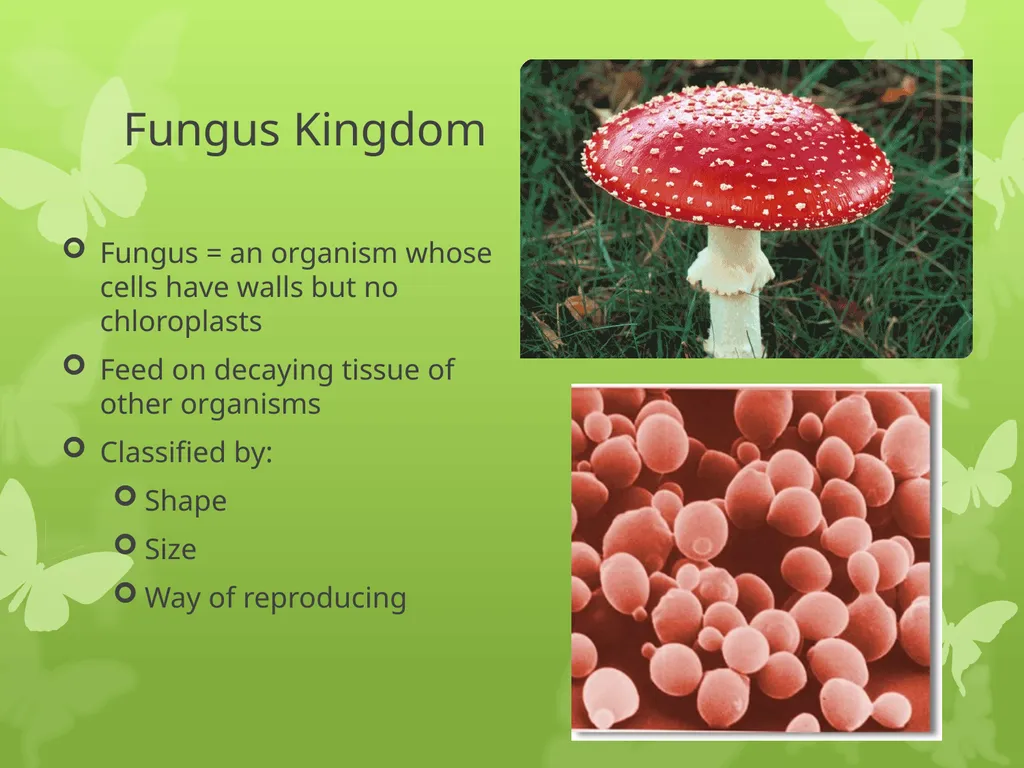
Fungus Kingdom Fungus = an organism whose cells have walls but no chloroplasts
Feed on decaying tissue of other organisms
Classified by:
Shape
Size
Way of reproducing<br>
09
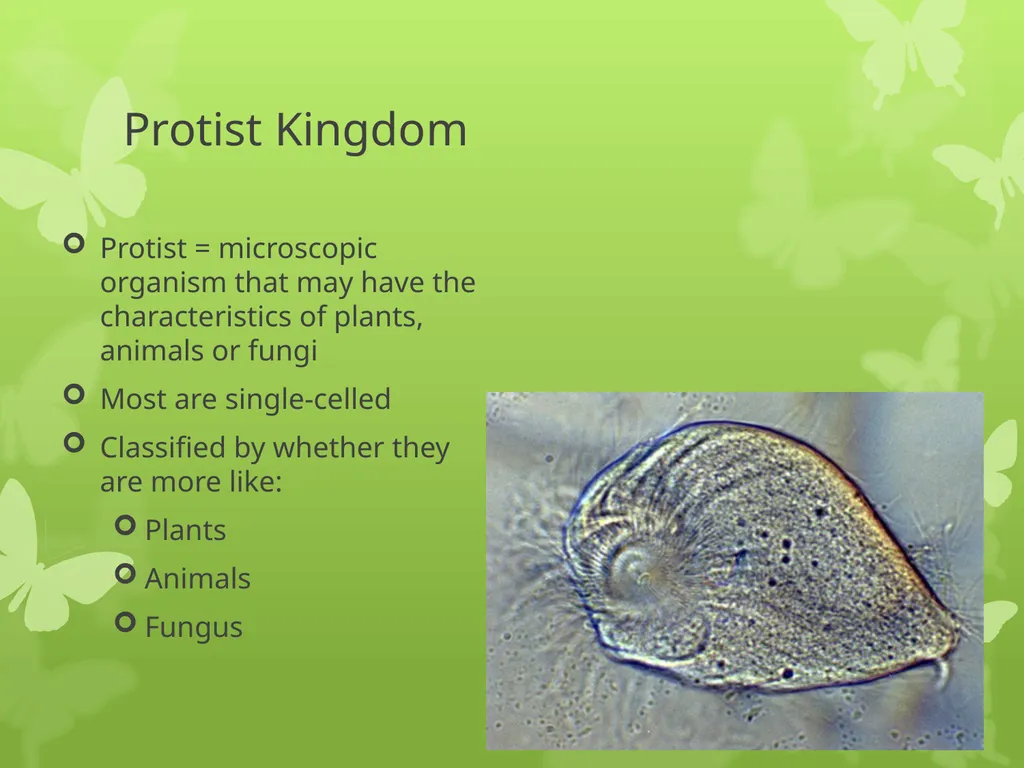
Protist Kingdom Protist = microscopic organism that may have the characteristics of plants, animals or fungi
Most are single-celled
Classified by whether they are more like:
Plants
Animals
Fungus<br>
10
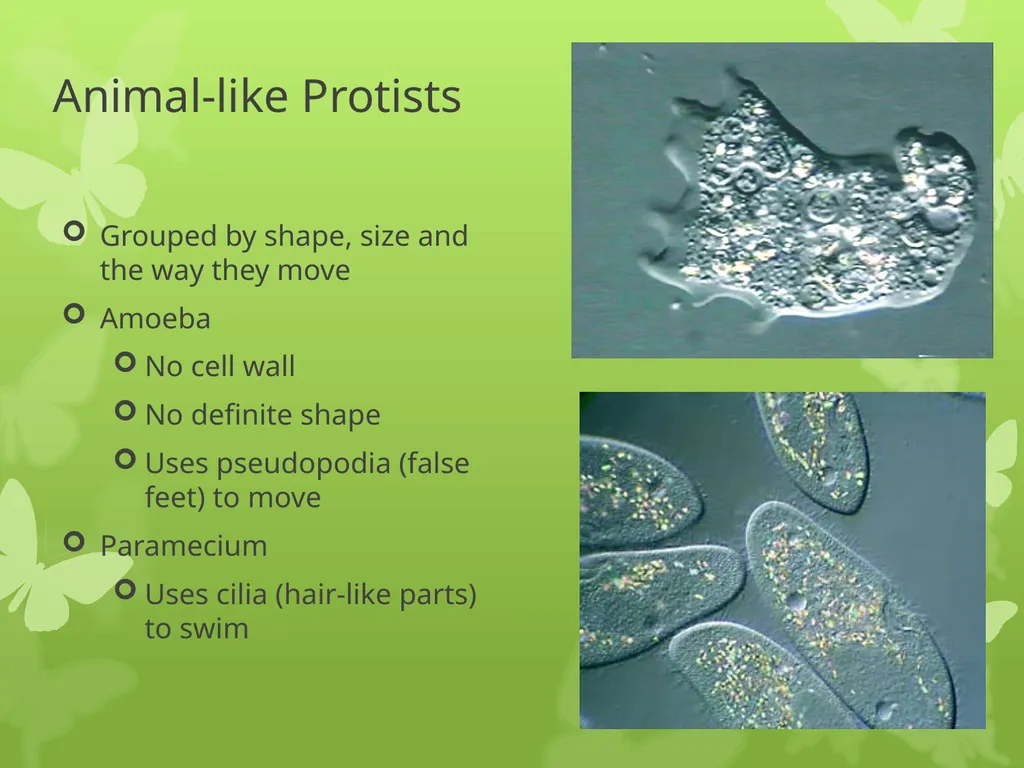
Animal-like Protists Grouped by shape, size and the way they move
Amoeba
No cell wall
No definite shape
Uses pseudopodia (false feet) to move
Paramecium
Uses cilia (hair-like parts) to swim<br>
11
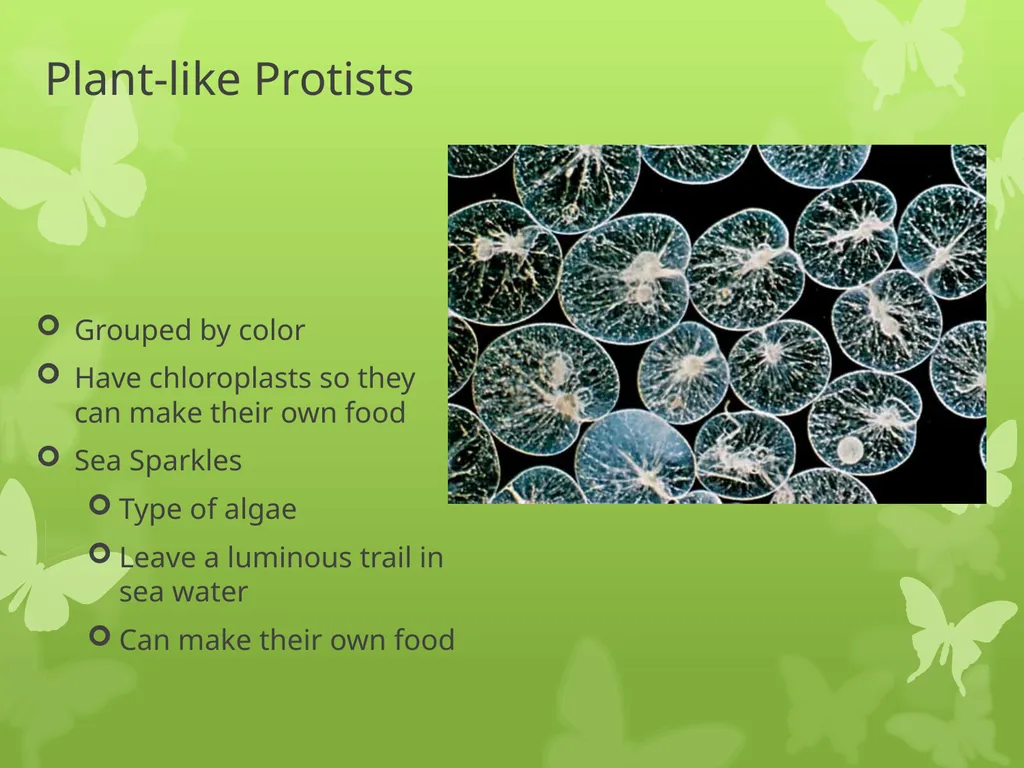
Plant-like Protists Grouped by color
Have chloroplasts so they can make their own food
Sea Sparkles
Type of algae
Leave a luminous trail in sea water
Can make their own food<br>
12
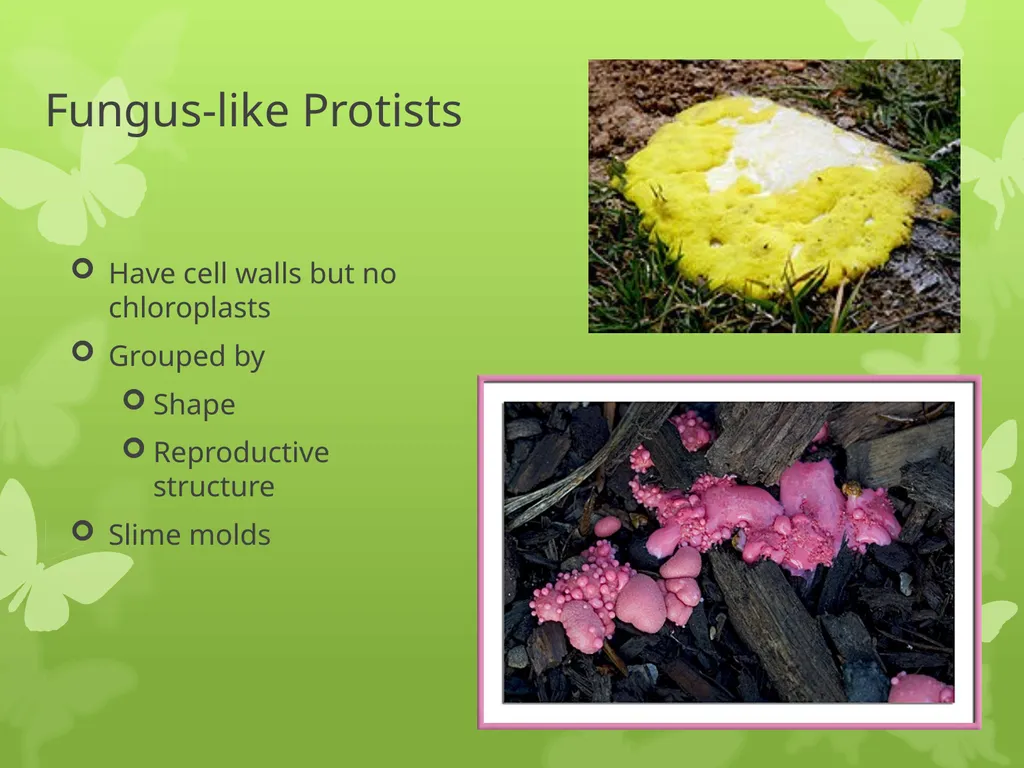
Fungus-like Protists Have cell walls but no chloroplasts
Grouped by
Shape
Reproductive structure
Slime molds<br>
13
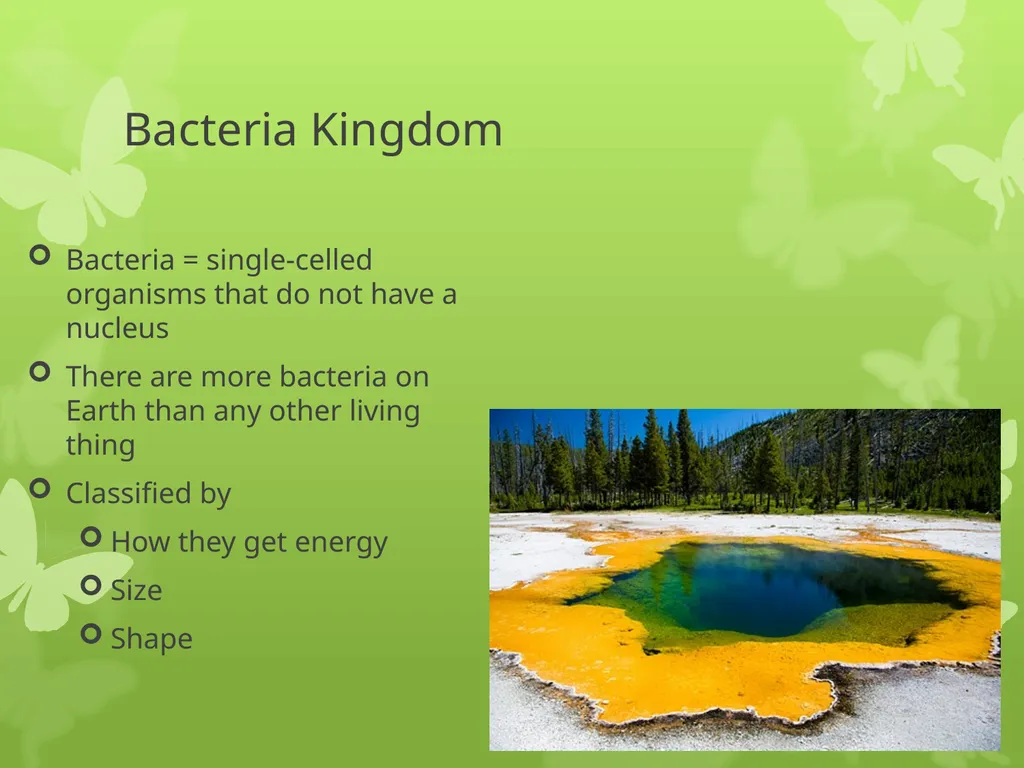
Bacteria Kingdom Bacteria = single-celled organisms that do not have a nucleus
There are more bacteria on Earth than any other living thing
Classified by
How they get energy
Size
Shape<br>
14
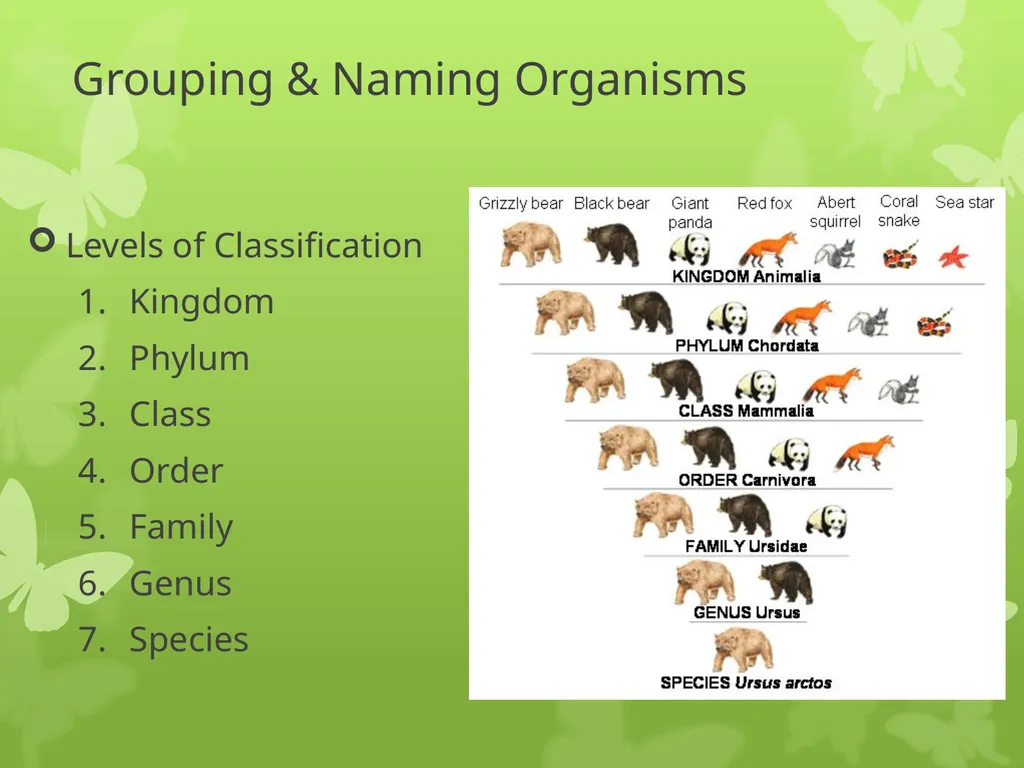
Grouping & Naming Organisms Levels of Classification
Kingdom
Phylum
Class
Order
Family
Genus
Species<br>
15
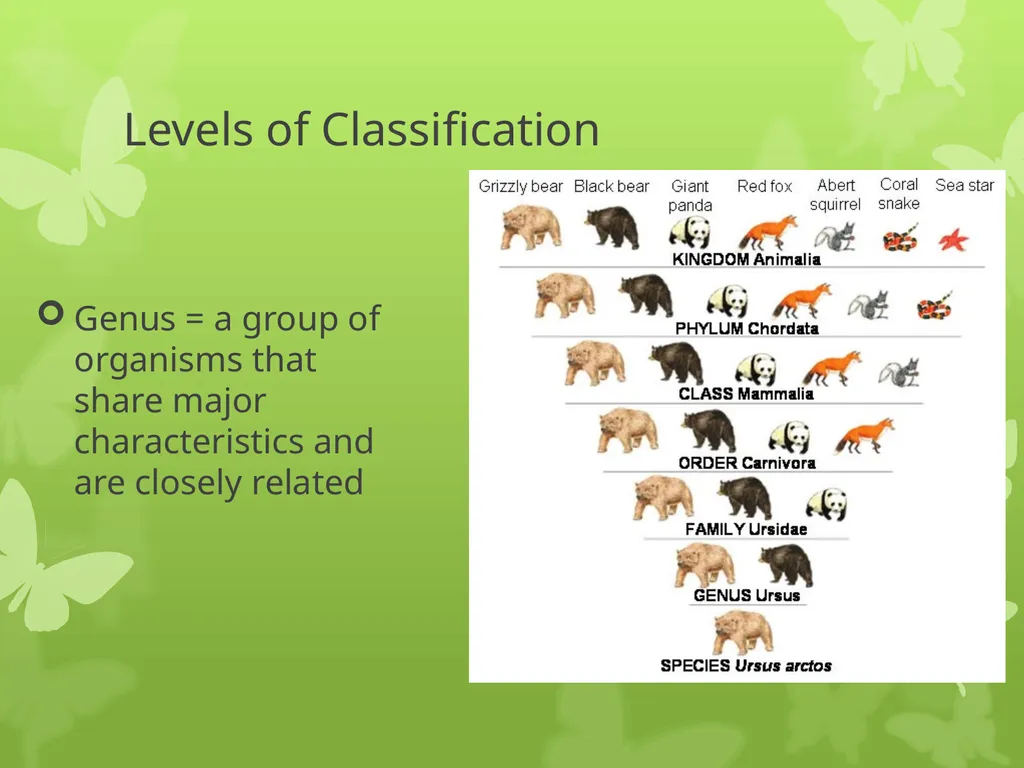
Levels of Classification Genus = a group of organisms that share major characteristics and are closely related<br>
16
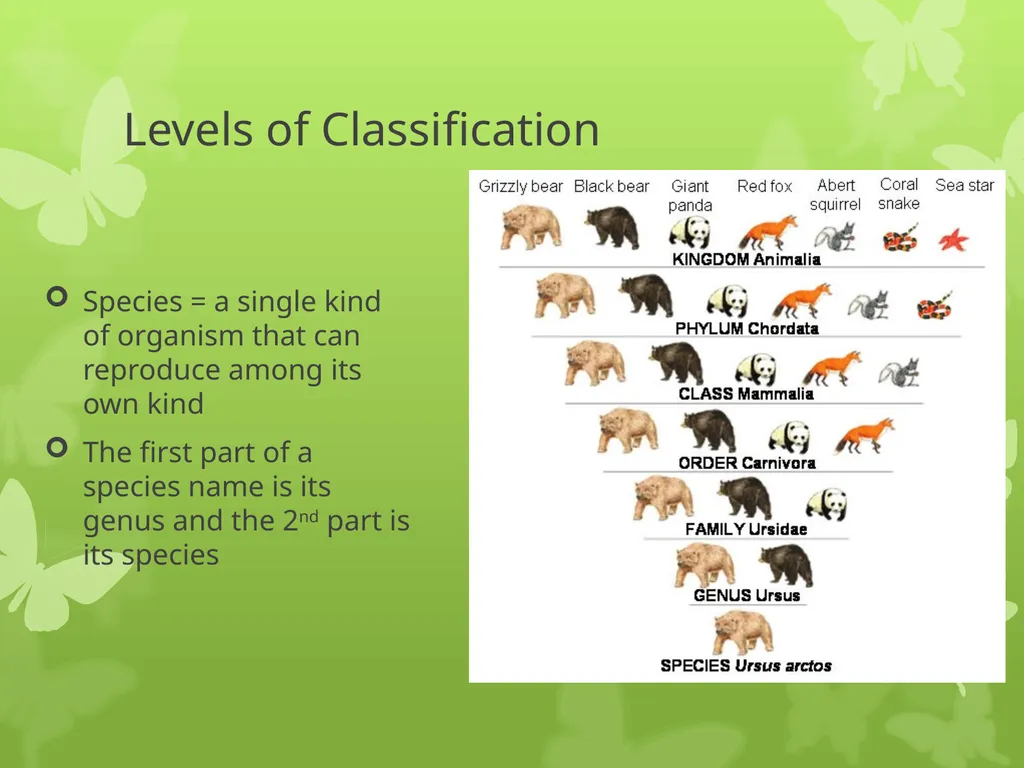
Levels of Classification Species = a single kind of organism that can reproduce among its own kind
The first part of a species name is its genus and the 2nd part is its species<br>
17
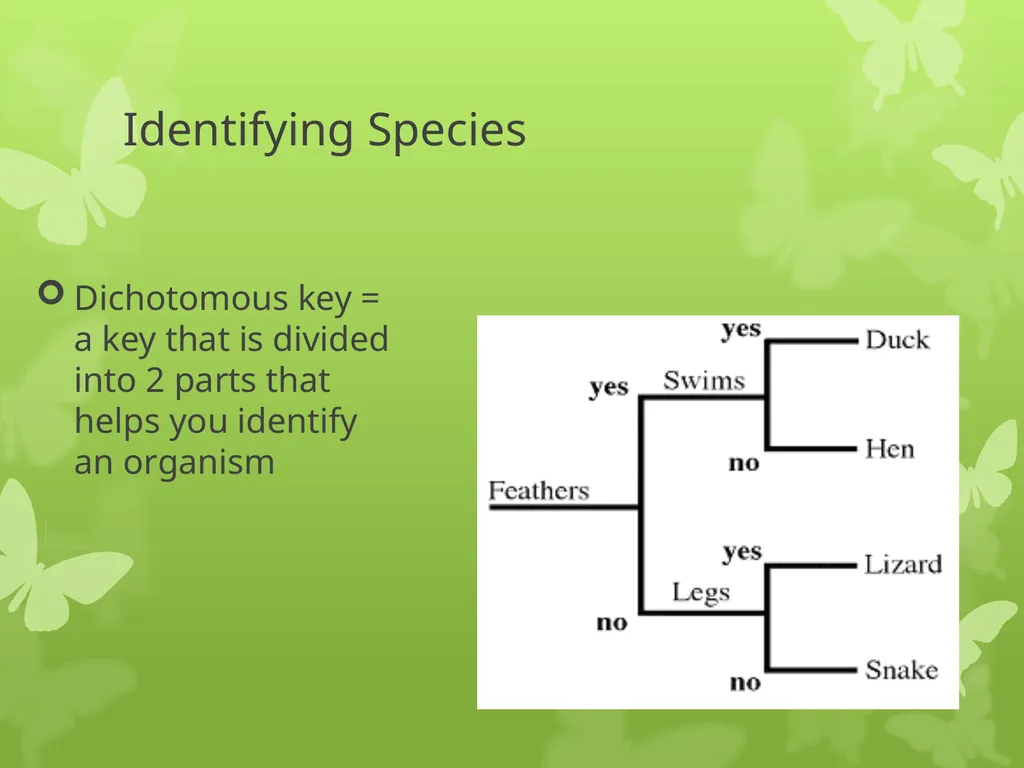
Identifying Species Dichotomous key = a key that is divided into 2 parts that helps you identify an organism<br>