Challenges and Way Forward in Pakistans Power Sector Khalid Saeed Head Energy Research Centre COMSATS Institute of Information Technology, Lahore Campus Introduction Existing Structure of Energy Sector 2 Major Challenges Demand and Supply
Related Topics
Share
Embed code
Download this presentation From Below
"Challenges and Way Forward in Pakistan’s Power" is the property of its rightful owner. Permission is granted to
download and print the materials on this website for personal, non-commercial use only, and to display it
on your personal computer provided you do not modify the materials and that you retain all copyright
notices contained in the materials. By downloading content from our website, you accept the terms of this
agreement.
Presentation Transcript
01
Challenges and Way Forward in Pakistan’s Power Sector Khalid Saeed
Head
Energy Research Centre
COMSATS Institute of Information Technology,
Lahore Campus<br>
02
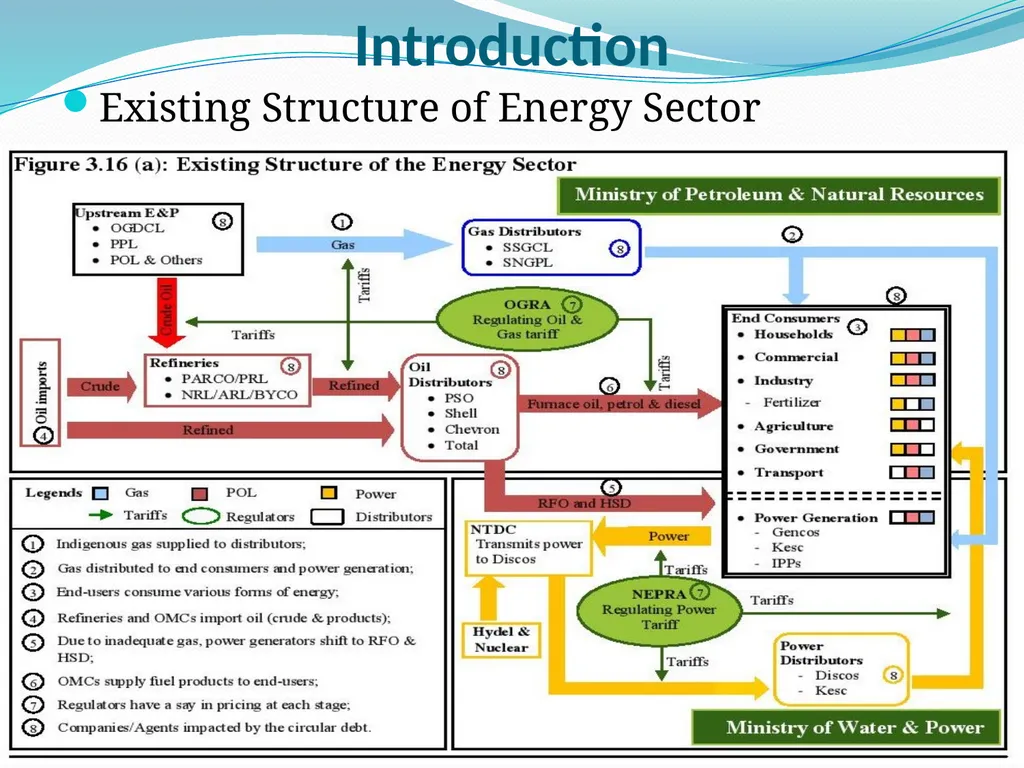
Introduction Existing Structure of Energy Sector 2<br>
03
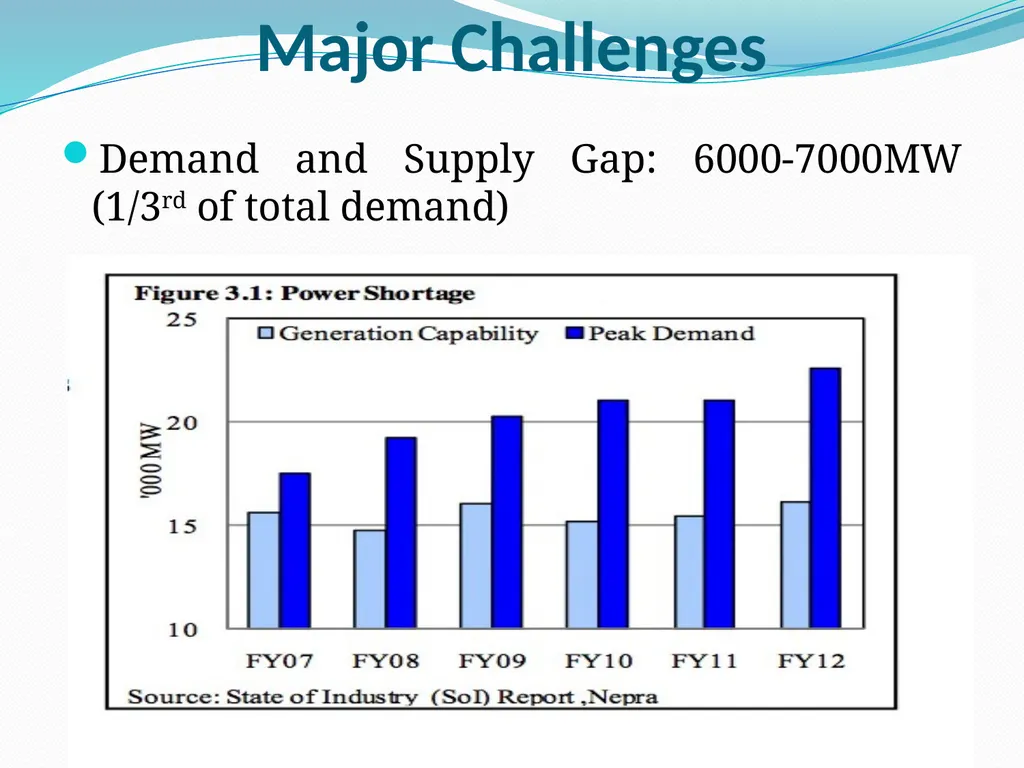
Major Challenges Demand and Supply Gap: 6000-7000MW (1/3rd of total demand) 3<br>
04
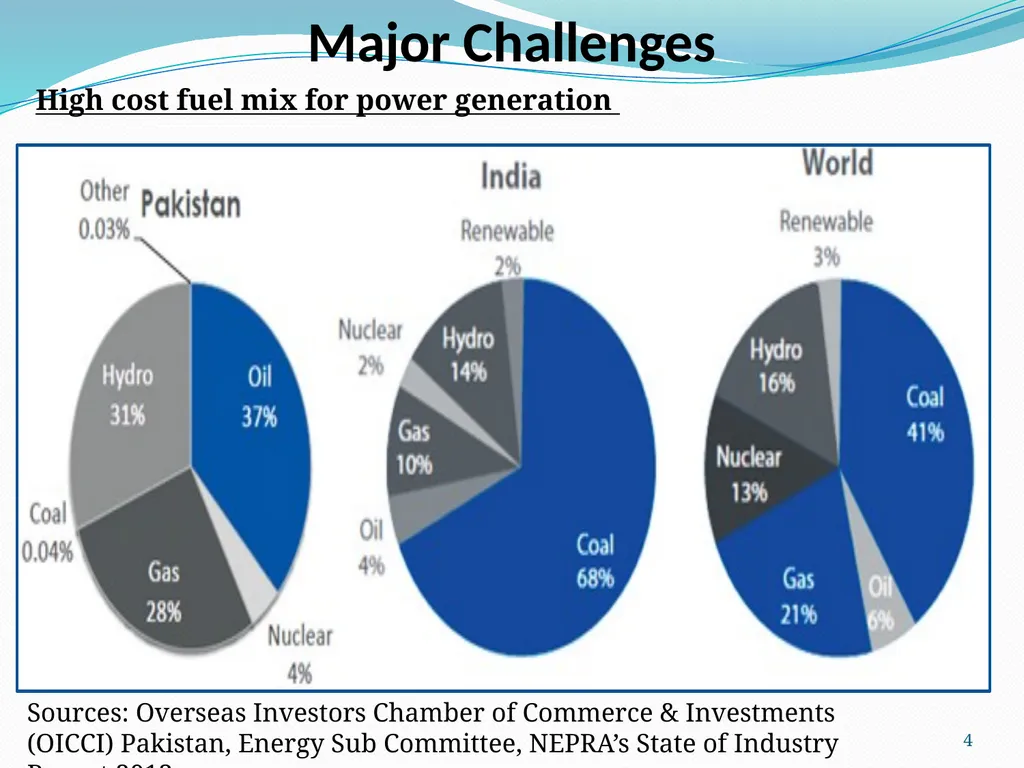
4 Sources: Overseas Investors Chamber of Commerce & Investments (OICCI) Pakistan, Energy Sub Committee, NEPRA’s State of Industry Report 2013 Major Challenges High cost fuel mix for power generation<br>
05
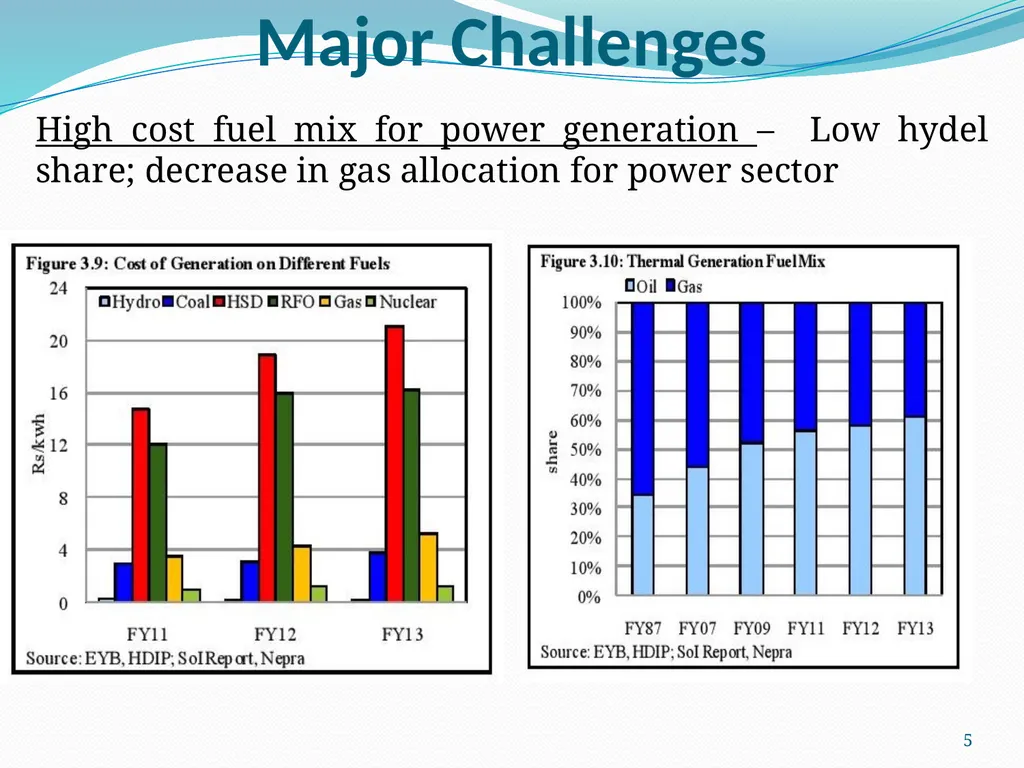
Major Challenges 5 High cost fuel mix for power generation – Low hydel share; decrease in gas allocation for power sector<br>
06
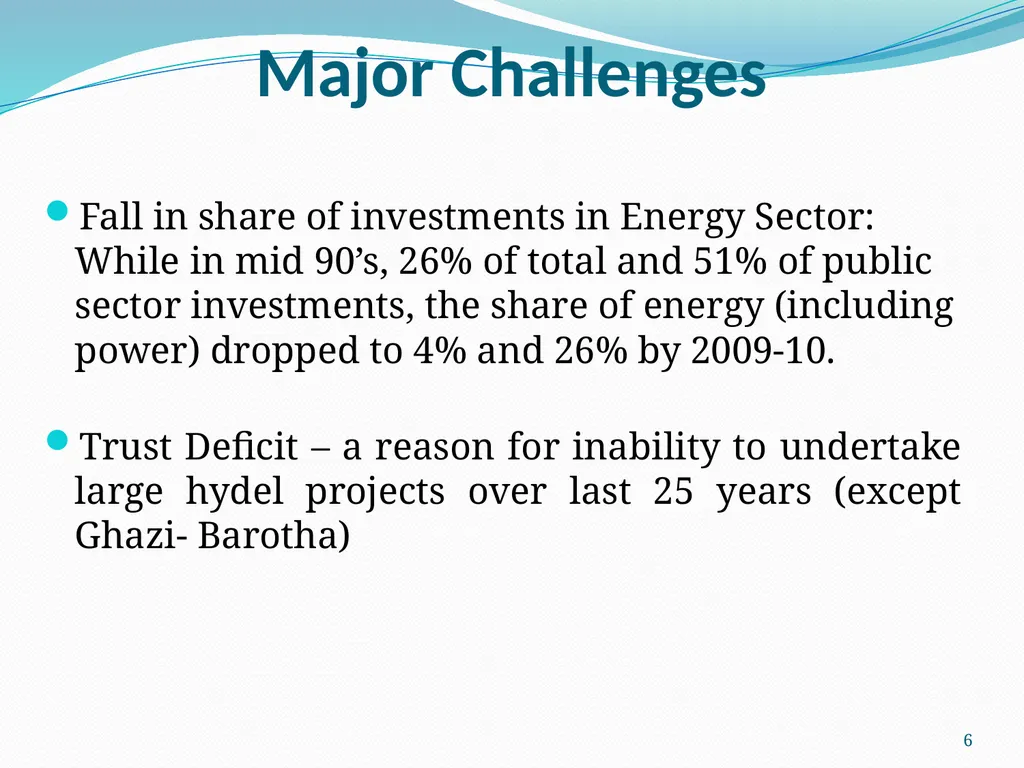
Major Challenges Fall in share of investments in Energy Sector: While in mid 90’s, 26% of total and 51% of public sector investments, the share of energy (including power) dropped to 4% and 26% by 2009-10.
Trust Deficit – a reason for inability to undertake large hydel projects over last 25 years (except Ghazi- Barotha) 6<br>
07
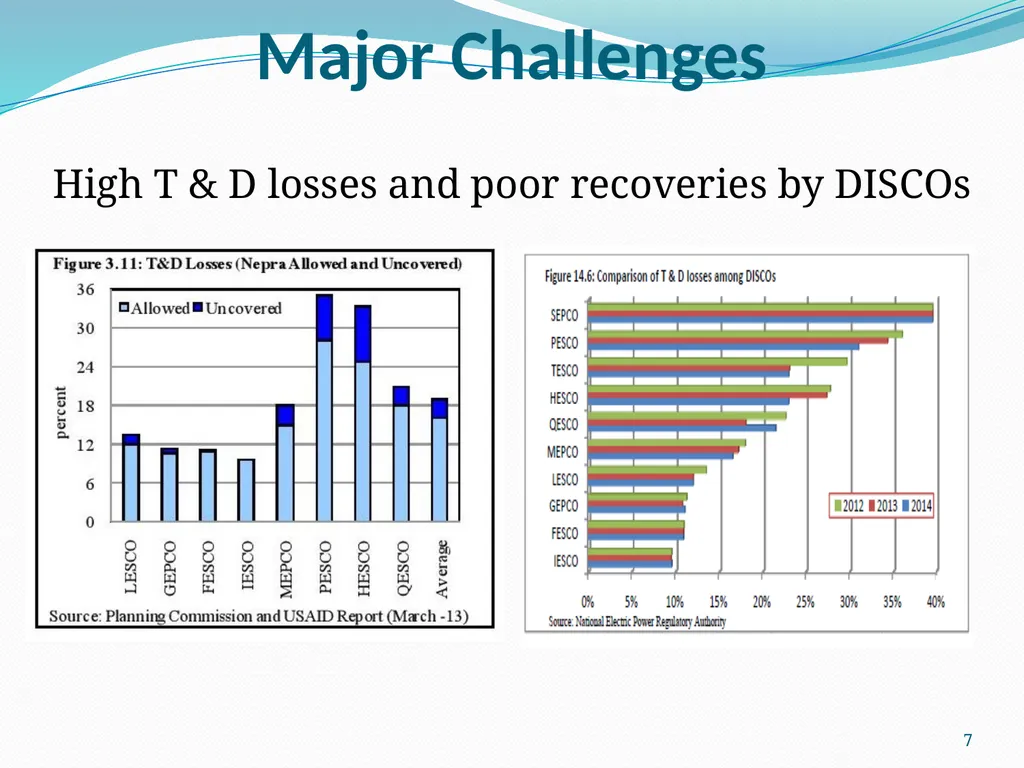
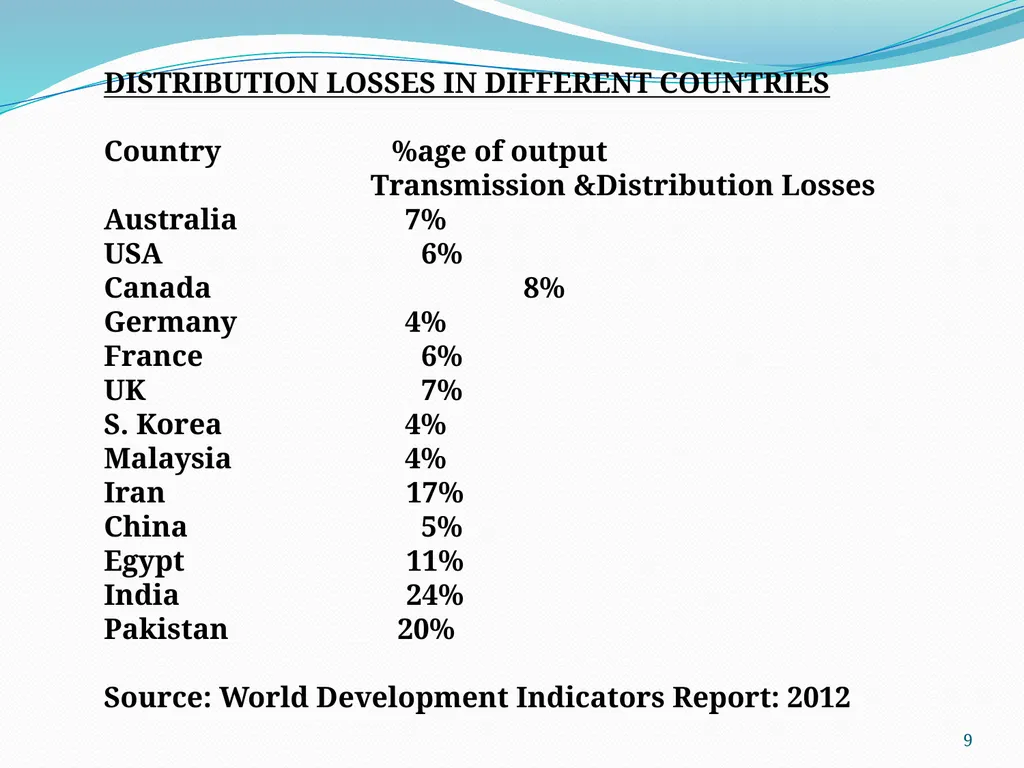
Major Challenges 7 High T & D losses and poor recoveries by DISCOs<br>
08
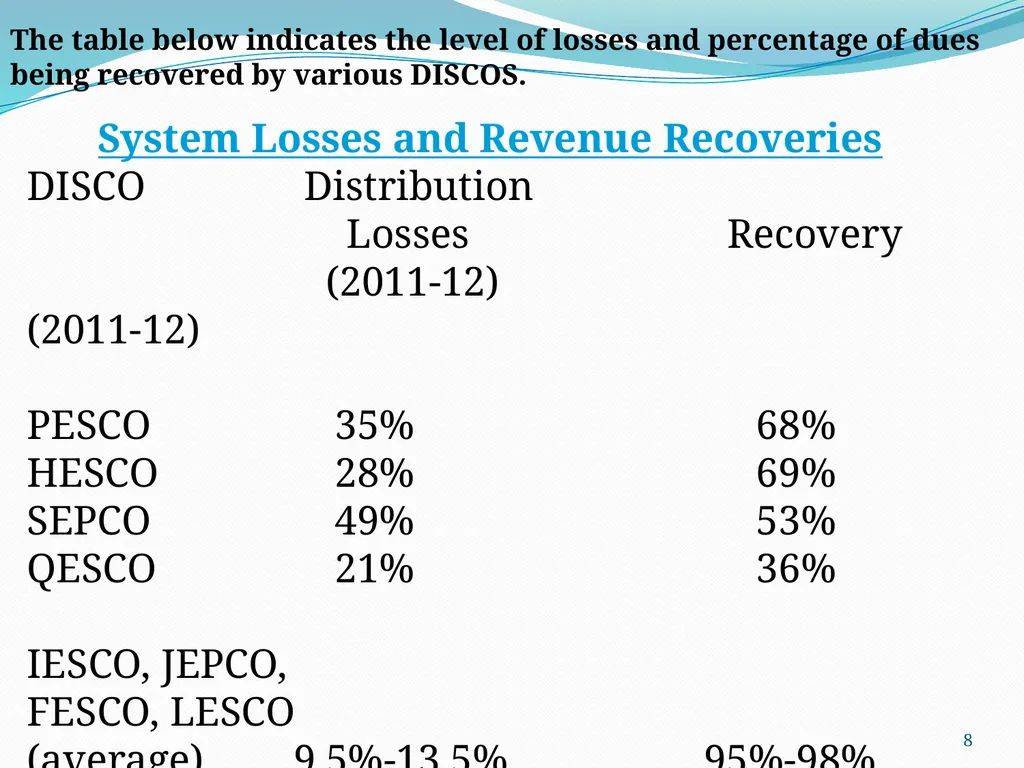
8 System Losses and Revenue Recoveries
DISCO Distribution Losses Recovery (2011-12) (2011-12)
IESCO, JEPCO, FESCO, LESCO (average) 9.5%-13.5% 95%-98%
Source: NEPRA: State of Industry Report: 2012 The table below indicates the level of losses and percentage of dues being recovered by various DISCOS.<br>
09
9 DISTRIBUTION LOSSES IN DIFFERENT COUNTRIES
Country %age of output
Transmission &Distribution Losses
Australia 7%
USA 6%
Canada 8%
Germany 4%
France 6%
UK 7%
S. Korea 4%
Malaysia 4%
Iran 17%
China 5%
Egypt 11%
India 24%
Pakistan 20%
Source: World Development Indicators Report: 2012<br>
10
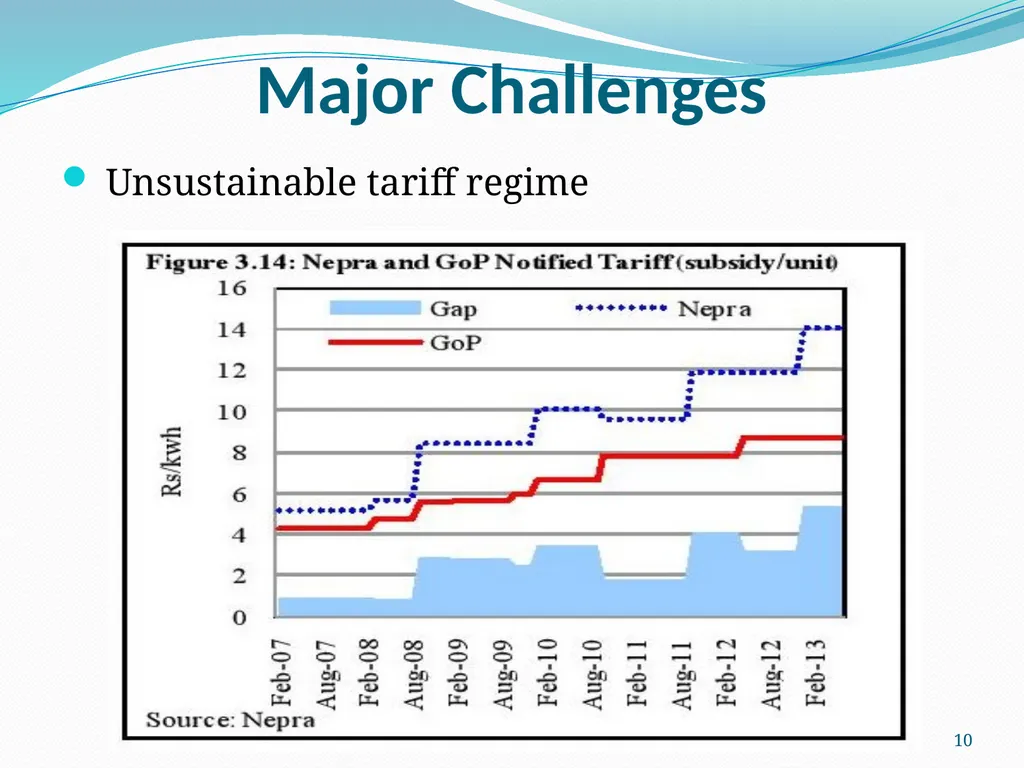
Major Challenges Unsustainable tariff regime 10<br>
11
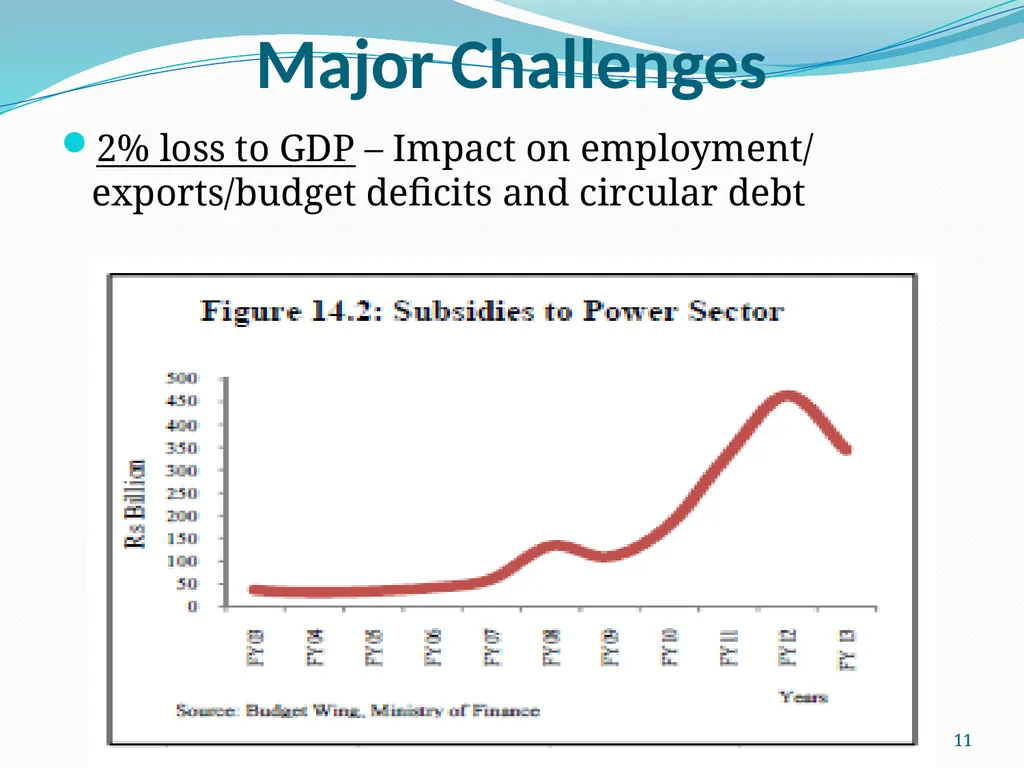
Major Challenges 2% loss to GDP – Impact on employment/ exports/budget deficits and circular debt 11<br>
12
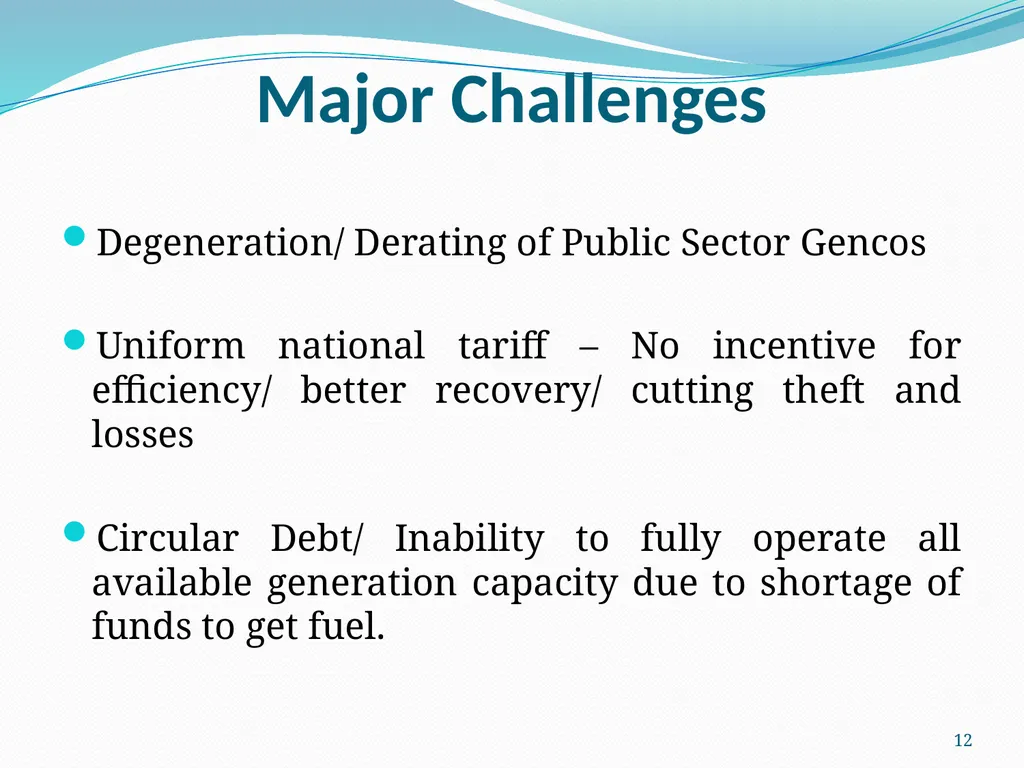
Major Challenges Degeneration/ Derating of Public Sector Gencos
Uniform national tariff – No incentive for efficiency/ better recovery/ cutting theft and losses
Circular Debt/ Inability to fully operate all available generation capacity due to shortage of funds to get fuel. 12<br>
13
Road Ahead: Way Forward Diversity – More reliance on renewable energy (hydel/solar/wind)
More gas allocation – Add coal based power generation
Improve efficiency of public sector Gencos – Also introduce efficiency for industrial machinery, transport and household appliances
Manage demand through conservation measures 13<br>
14
Road Ahead: Way Forward (Cont.) 5.Rationalize tariff regime
6. More investments – Public and Private sector to upgrade Power sector T & D infrastructure
7. Timely payments to avoid circular debts
8. Develop political consensus on energy security issues 14<br>
15
Road Ahead: Way Forward (Cont.) 9. Improve governance to cut theft/corruption and inefficiency
10. Improve governance at policy level inter-ministerial coordination – single Energy Ministry 15<br>
16
Salient Features of National Power Policy 2014 To achieve the long-term vision of the power sector and overcome its challenges, following goals have been set:
Build a power generation capacity that can meet Pakistan’s energy needs in a sustainable manner.
ii. Create a culture of energy conservation and responsibility 16<br>
17
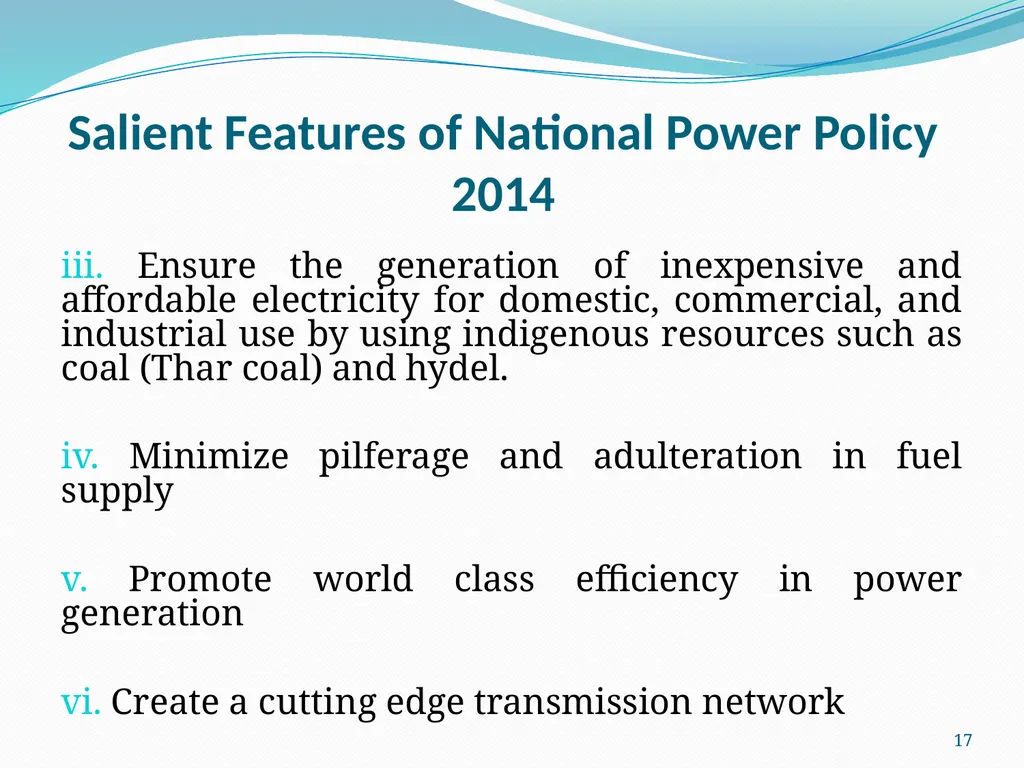
Salient Features of National Power Policy 2014 iii. Ensure the generation of inexpensive and affordable electricity for domestic, commercial, and industrial use by using indigenous resources such as coal (Thar coal) and hydel.
iv. Minimize pilferage and adulteration in fuel supply
v. Promote world class efficiency in power generation
vi. Create a cutting edge transmission network 17<br>
18
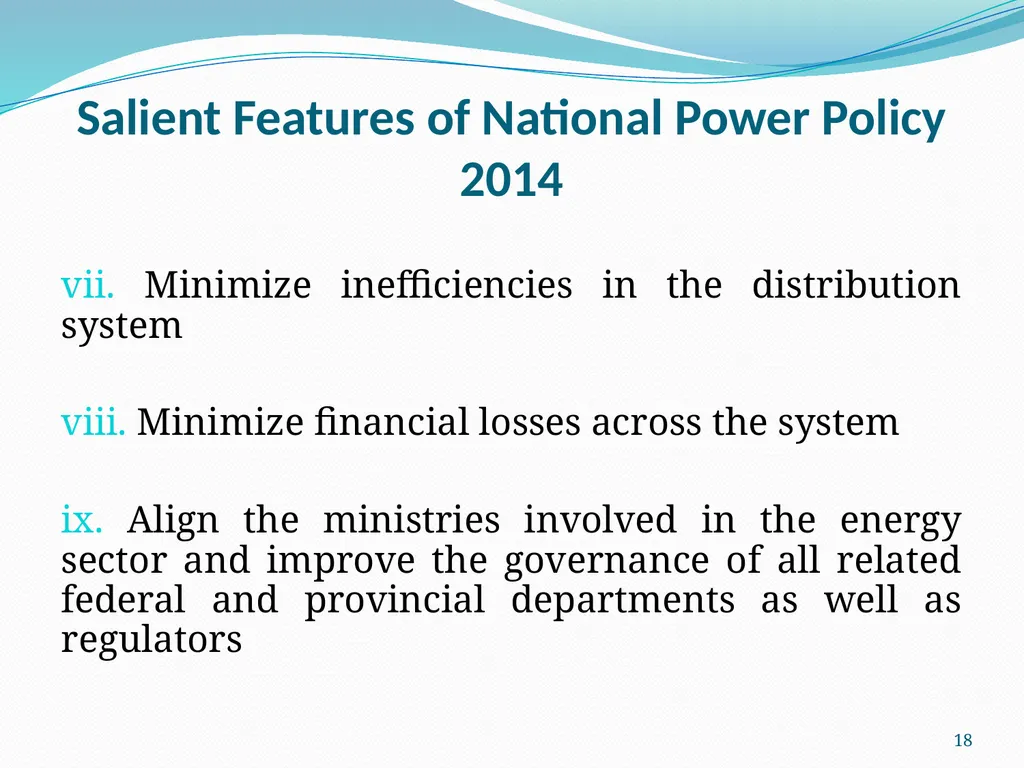
Salient Features of National Power Policy 2014 vii. Minimize inefficiencies in the distribution system
viii. Minimize financial losses across the system
ix. Align the ministries involved in the energy sector and improve the governance of all related federal and provincial departments as well as regulators 18<br>