
Challenges for Regulatory/Insolvency Regimes to
MS
Published · 27 slides · 0 views

1 / 1

Description
Challenges for RegulatoryInsolvency Regimes to Address Resolution Specific Reference to the Caribbean Region 13th IADI Annual Conference Updated Core Principles to Strengthen the Financial Stability Architecture October 22-23, 2014
Related Topics
Share
Embed code
Download this presentation From Below
"Challenges for Regulatory/Insolvency Regimes to" is the property of its rightful owner. Permission is granted to download and print the materials on this website for personal, non-commercial use only, and to display it on your personal computer provided you do not modify the materials and that you retain all copyright notices contained in the materials. By downloading content from our website, you accept the terms of this agreement.
Presentation Transcript
01
Challenges for Regulatory/Insolvency Regimes to Address Resolution Specific Reference to the Caribbean Region
13th IADI Annual Conference
“Updated Core Principles to Strengthen the Financial Stability Architecture”
October 22-23, 2014
Antoinette McKain, CEO
Jamaica Deposit Insurance Corporation 1<br>
13th IADI Annual Conference
“Updated Core Principles to Strengthen the Financial Stability Architecture”
October 22-23, 2014
Antoinette McKain, CEO
Jamaica Deposit Insurance Corporation 1<br>
02
Outline Key elements for an effective resolution regime for Banks
Overview of the banking system in the Caribbean
Bank resolution/failures - last 3 decades in selected Caribbean countries
Resolution and insolvency frameworks in the Caribbean:
Overview
Challenges/ Gaps
Recommendations to enhance the frameworks 2<br>
Overview of the banking system in the Caribbean
Bank resolution/failures - last 3 decades in selected Caribbean countries
Resolution and insolvency frameworks in the Caribbean:
Overview
Challenges/ Gaps
Recommendations to enhance the frameworks 2<br>
03
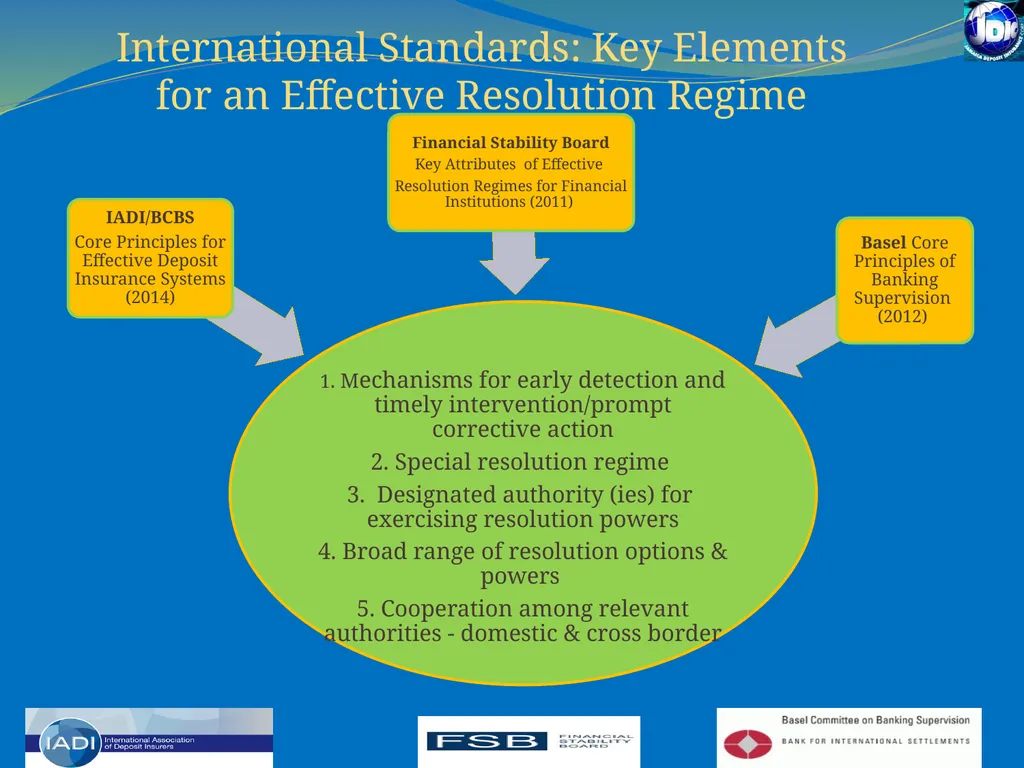
International Standards: Key Elements for an Effective Resolution Regime 3<br>
04
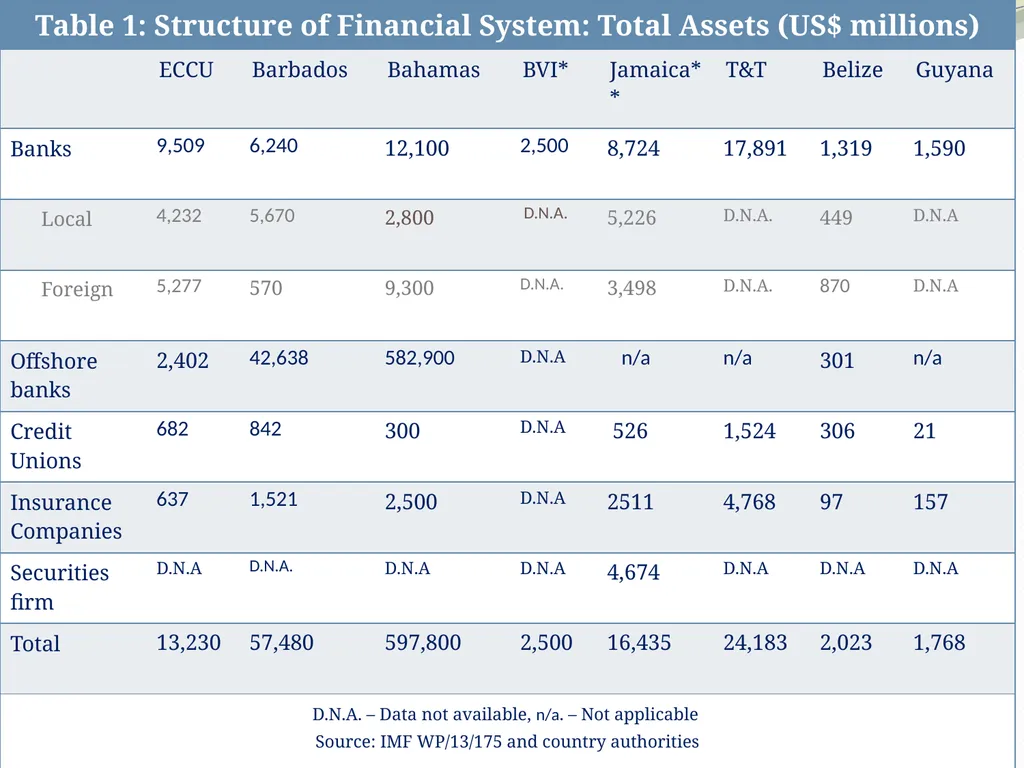
Overview of the Banking System The financial system in the Caribbean is largely bank-based (onshore and offshore banking)
Offshore banking is the largest subsector in the financial system (Barbados , Bahamas, BVI, ECCU & Belize)
Non-bank financial institutions consist of credit unions; insurance companies ; and securities firms 4<br>
Offshore banking is the largest subsector in the financial system (Barbados , Bahamas, BVI, ECCU & Belize)
Non-bank financial institutions consist of credit unions; insurance companies ; and securities firms 4<br>
05
5<br>
06
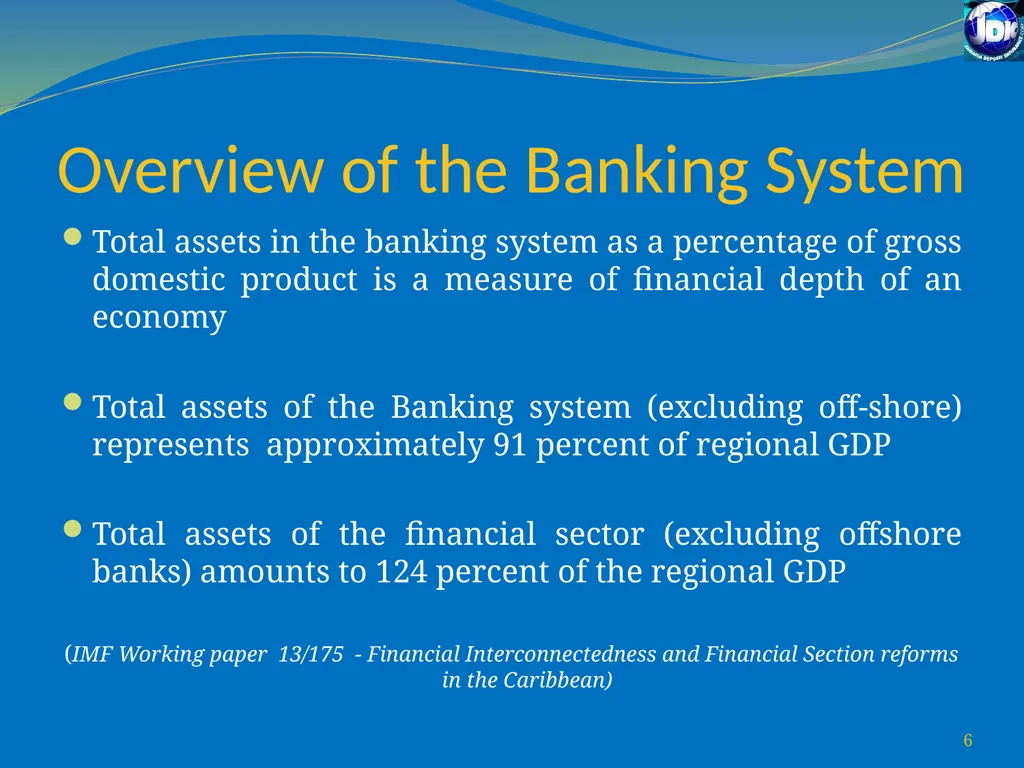
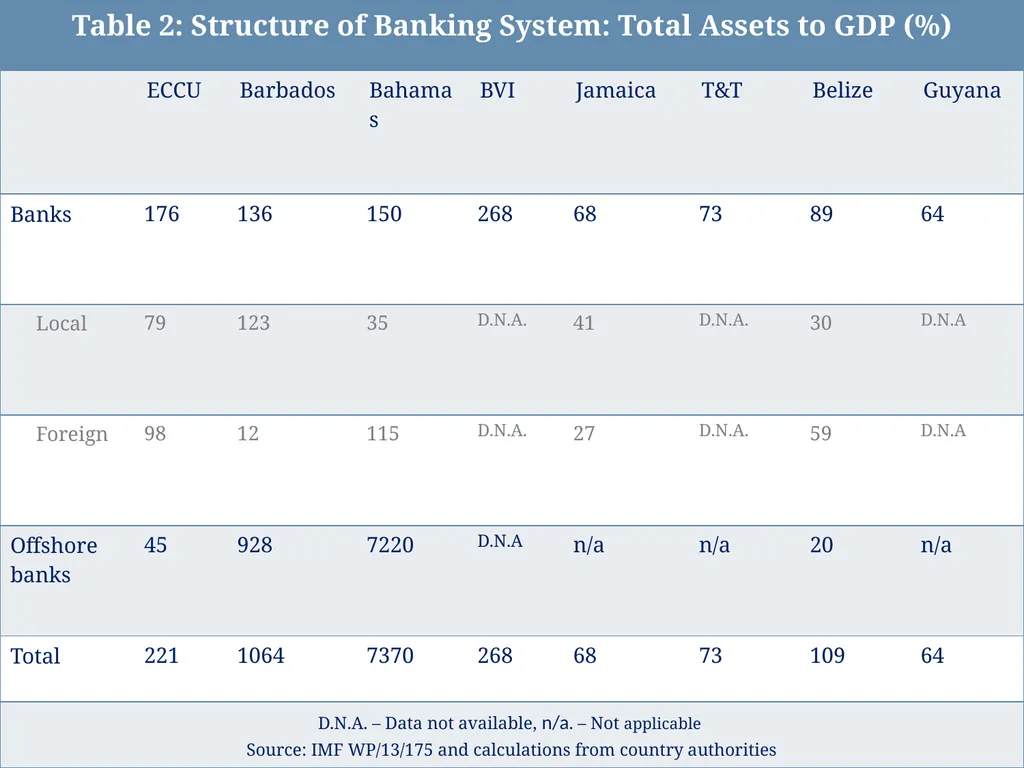
Overview of the Banking System Total assets in the banking system as a percentage of gross domestic product is a measure of financial depth of an economy
Total assets of the Banking system (excluding off-shore) represents approximately 91 percent of regional GDP
Total assets of the financial sector (excluding offshore banks) amounts to 124 percent of the regional GDP
(IMF Working paper 13/175 - Financial Interconnectedness and Financial Section reforms in the Caribbean) 6<br>
07
7<br>
08
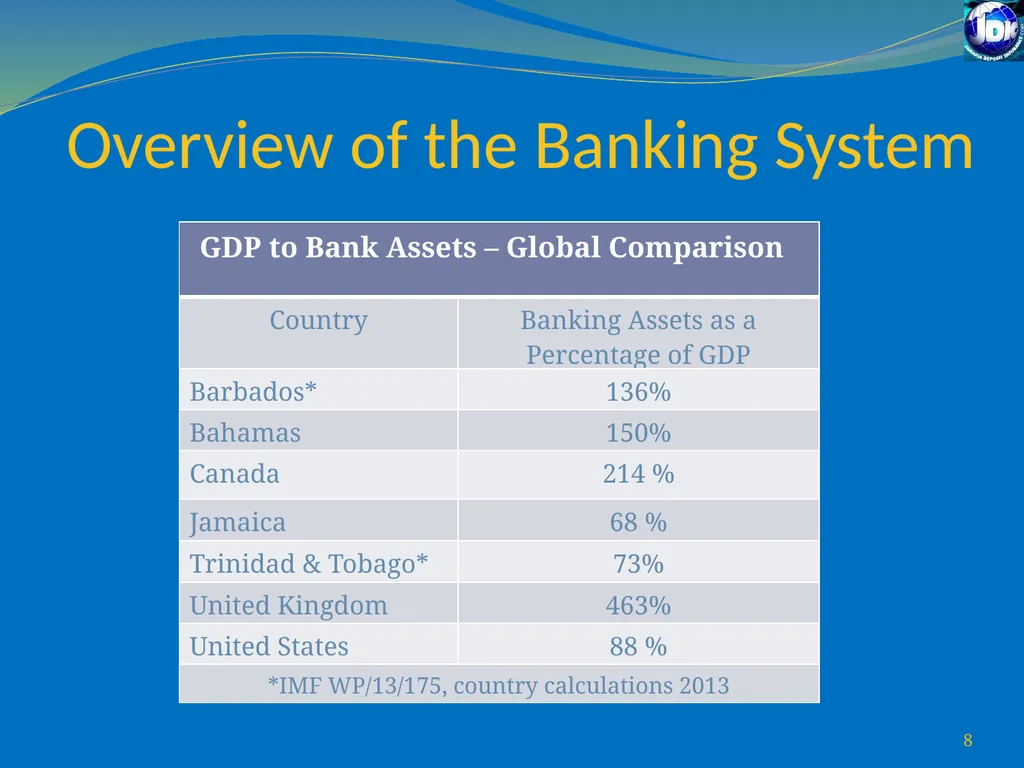
8 Overview of the Banking System<br>
09
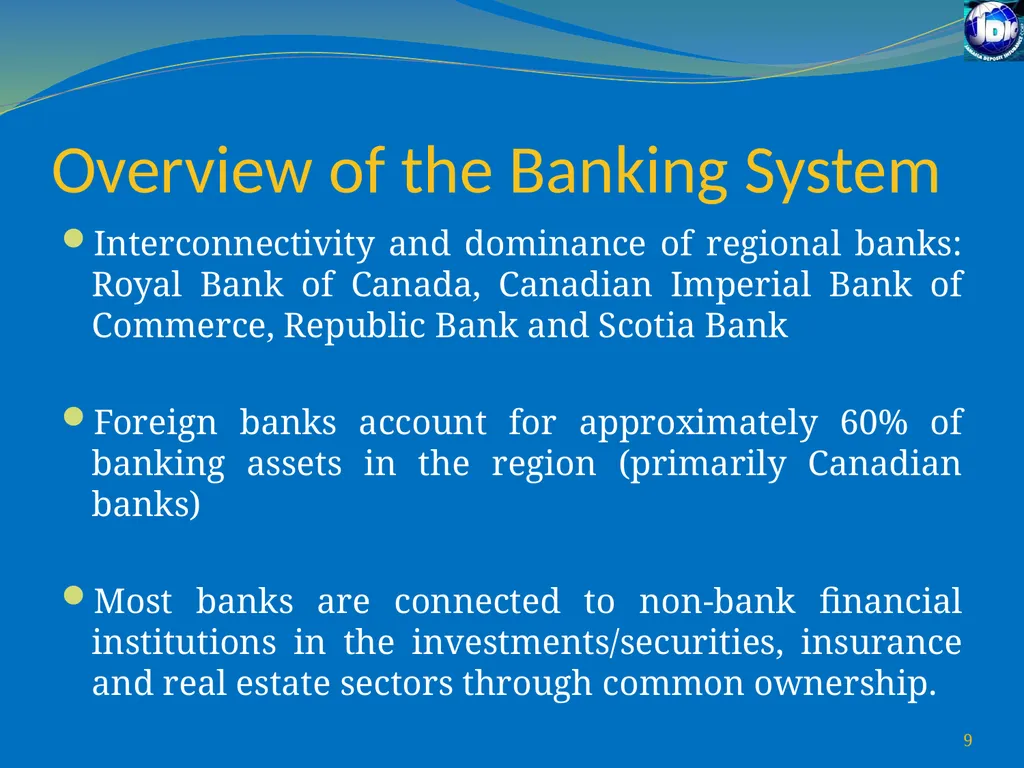
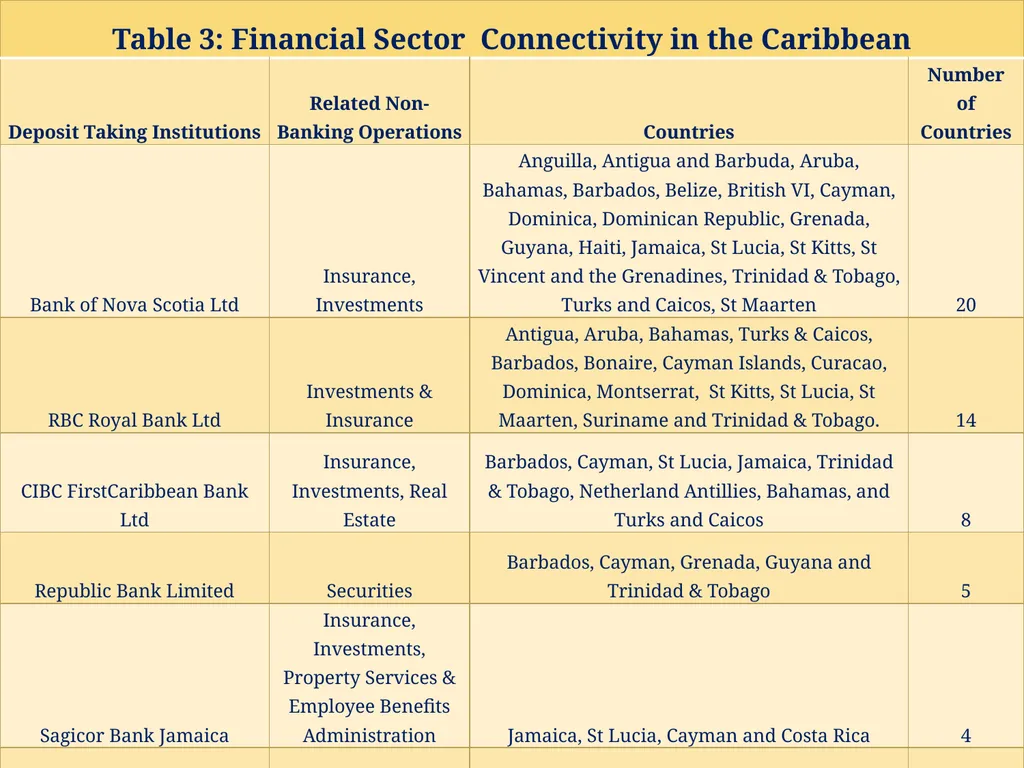
Overview of the Banking System Interconnectivity and dominance of regional banks: Royal Bank of Canada, Canadian Imperial Bank of Commerce, Republic Bank and Scotia Bank
Foreign banks account for approximately 60% of banking assets in the region (primarily Canadian banks)
Most banks are connected to non-bank financial institutions in the investments/securities, insurance and real estate sectors through common ownership. 9<br>
Foreign banks account for approximately 60% of banking assets in the region (primarily Canadian banks)
Most banks are connected to non-bank financial institutions in the investments/securities, insurance and real estate sectors through common ownership. 9<br>
10
10<br>
11
11<br>
12
12<br>
13
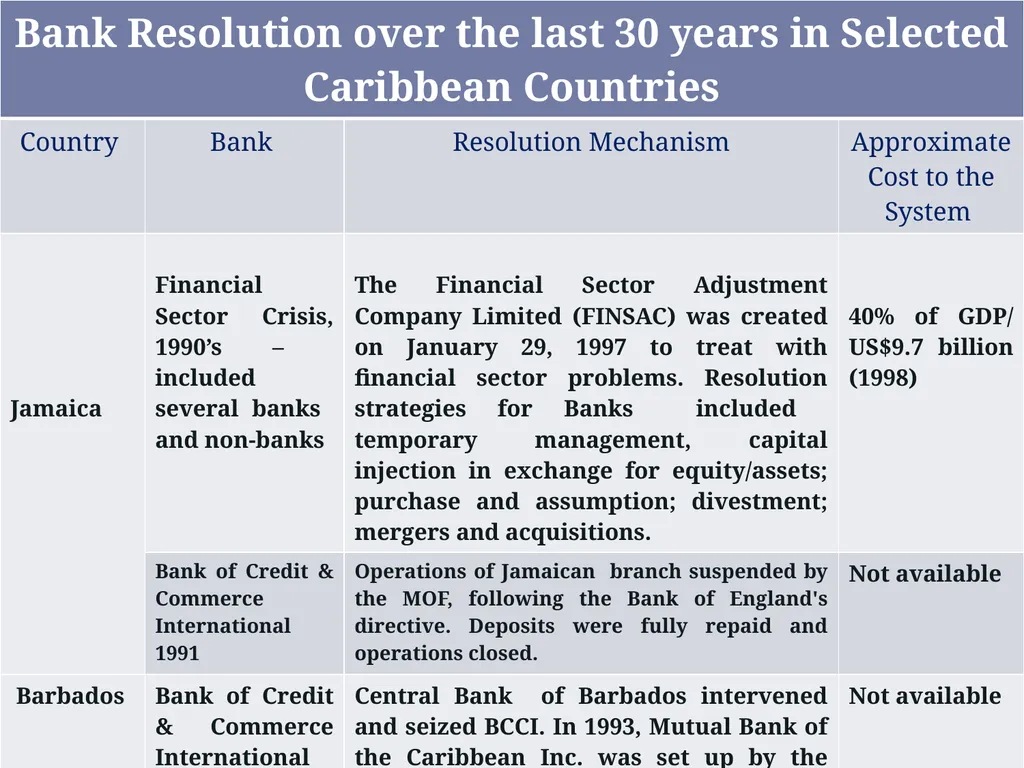
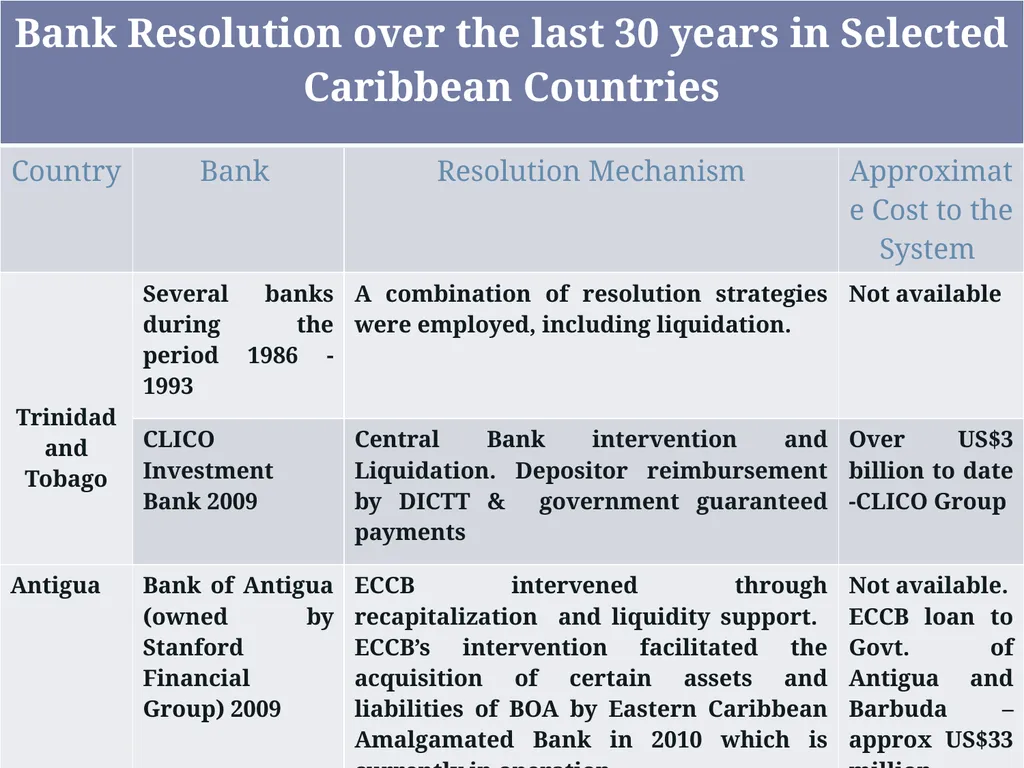
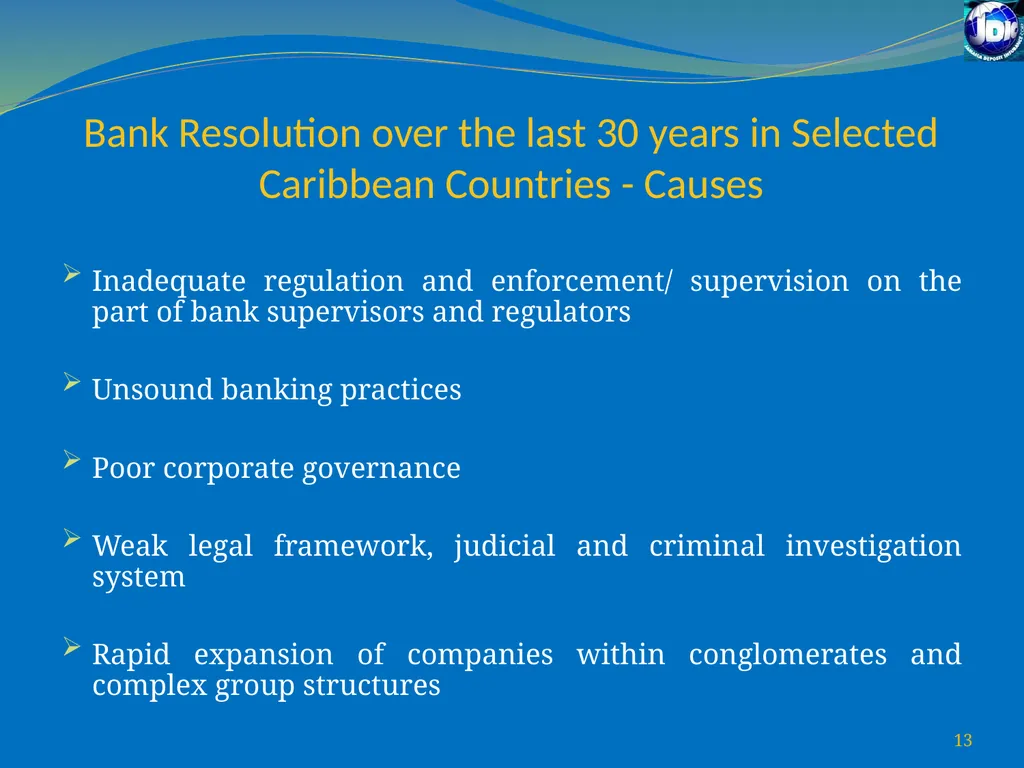
Bank Resolution over the last 30 years in Selected Caribbean Countries - Causes Inadequate regulation and enforcement/ supervision on the part of bank supervisors and regulators
Unsound banking practices
Poor corporate governance
Weak legal framework, judicial and criminal investigation system
Rapid expansion of companies within conglomerates and complex group structures 13<br>
Unsound banking practices
Poor corporate governance
Weak legal framework, judicial and criminal investigation system
Rapid expansion of companies within conglomerates and complex group structures 13<br>
14
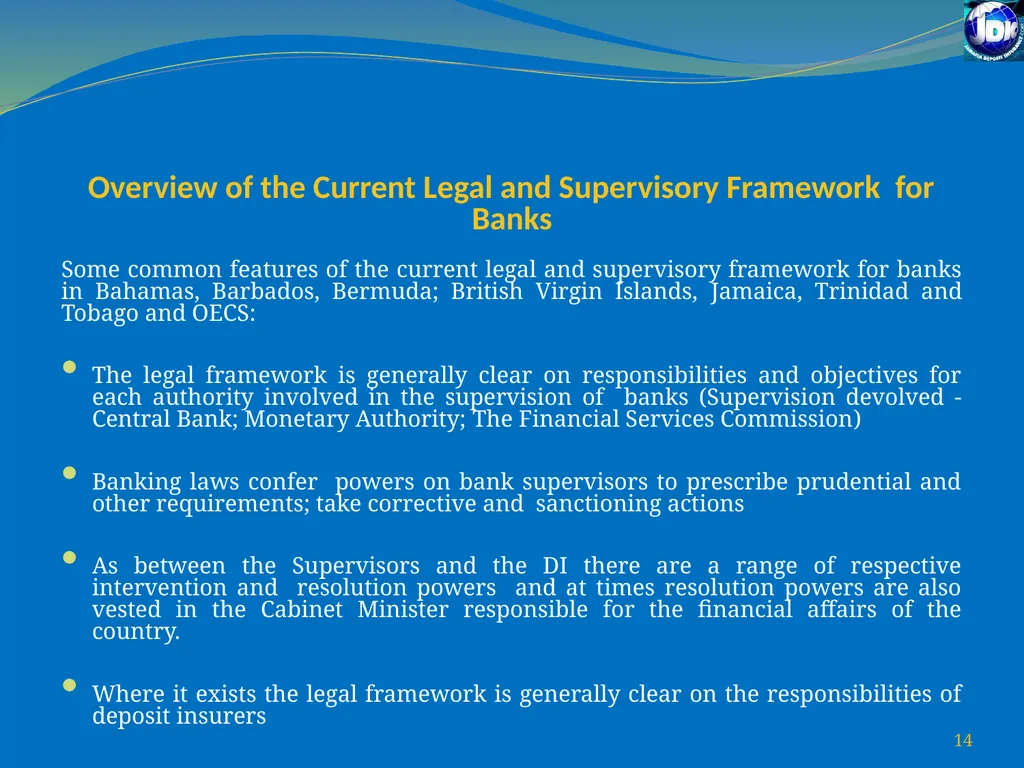
Overview of the Current Legal and Supervisory Framework for Banks Some common features of the current legal and supervisory framework for banks in Bahamas, Barbados, Bermuda; British Virgin Islands, Jamaica, Trinidad and Tobago and OECS:
The legal framework is generally clear on responsibilities and objectives for each authority involved in the supervision of banks (Supervision devolved - Central Bank; Monetary Authority; The Financial Services Commission)
Banking laws confer powers on bank supervisors to prescribe prudential and other requirements; take corrective and sanctioning actions
As between the Supervisors and the DI there are a range of respective intervention and resolution powers and at times resolution powers are also vested in the Cabinet Minister responsible for the financial affairs of the country.
Where it exists the legal framework is generally clear on the responsibilities of deposit insurers 14<br>
15
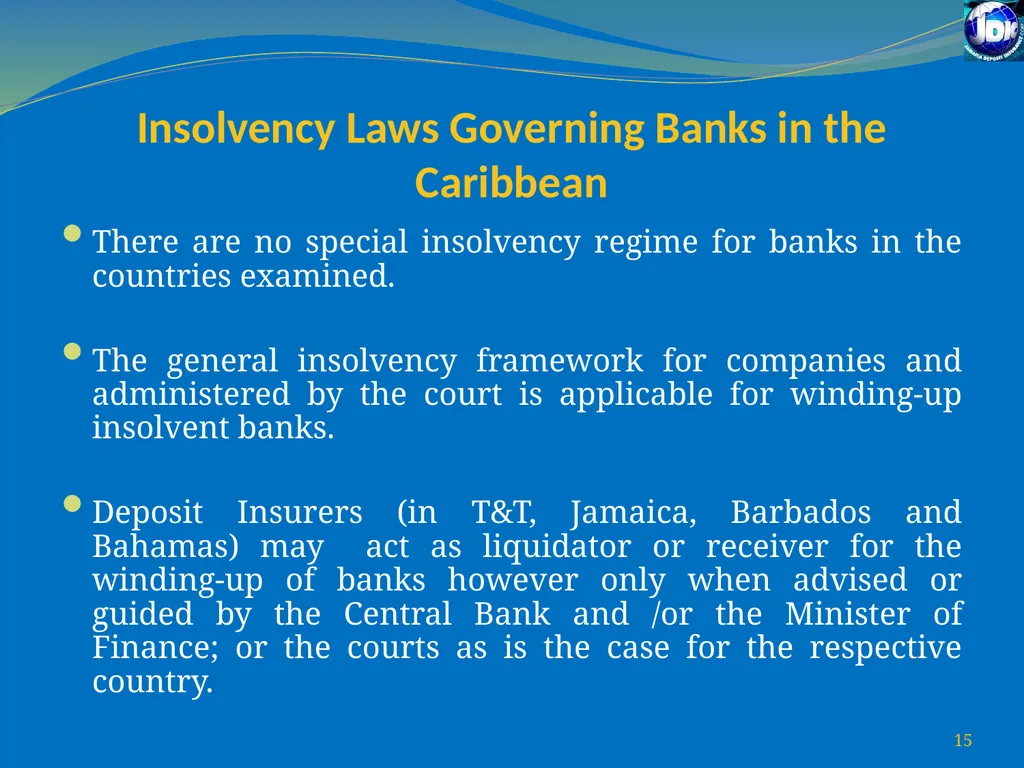
Insolvency Laws Governing Banks in the Caribbean There are no special insolvency regime for banks in the countries examined.
The general insolvency framework for companies and administered by the court is applicable for winding-up insolvent banks.
Deposit Insurers (in T&T, Jamaica, Barbados and Bahamas) may act as liquidator or receiver for the winding-up of banks however only when advised or guided by the Central Bank and /or the Minister of Finance; or the courts as is the case for the respective country. 15<br>
16
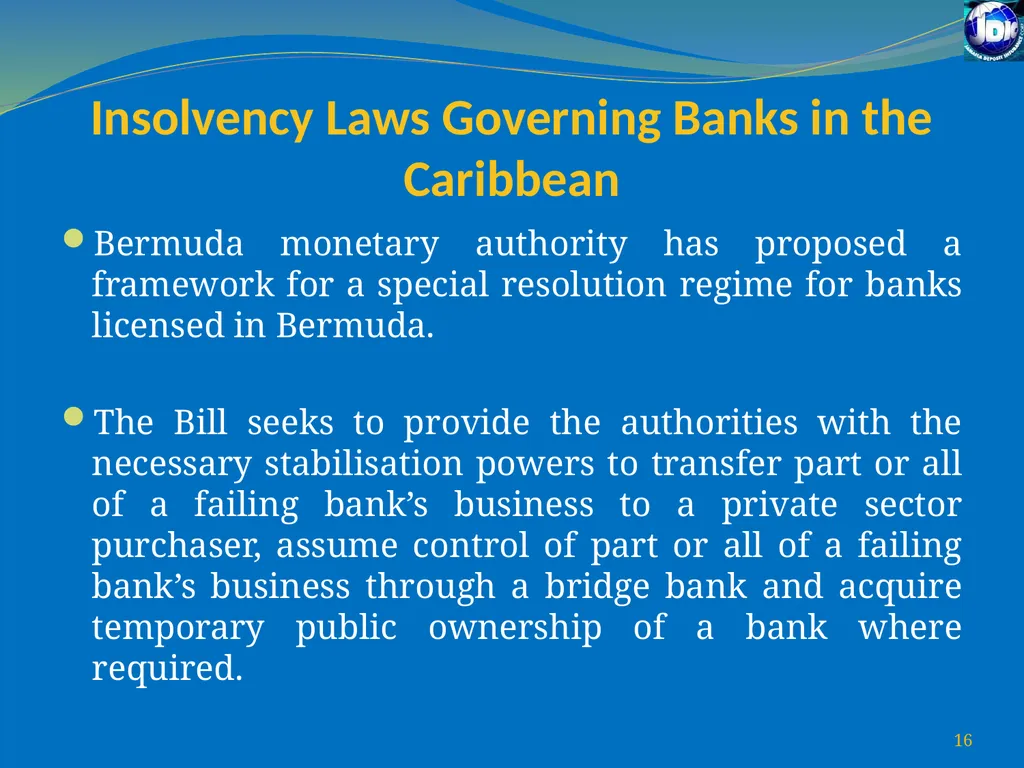
Insolvency Laws Governing Banks in the Caribbean Bermuda monetary authority has proposed a framework for a special resolution regime for banks licensed in Bermuda.
The Bill seeks to provide the authorities with the necessary stabilisation powers to transfer part or all of a failing bank’s business to a private sector purchaser, assume control of part or all of a failing bank’s business through a bridge bank and acquire temporary public ownership of a bank where required. 16<br>
The Bill seeks to provide the authorities with the necessary stabilisation powers to transfer part or all of a failing bank’s business to a private sector purchaser, assume control of part or all of a failing bank’s business through a bridge bank and acquire temporary public ownership of a bank where required. 16<br>
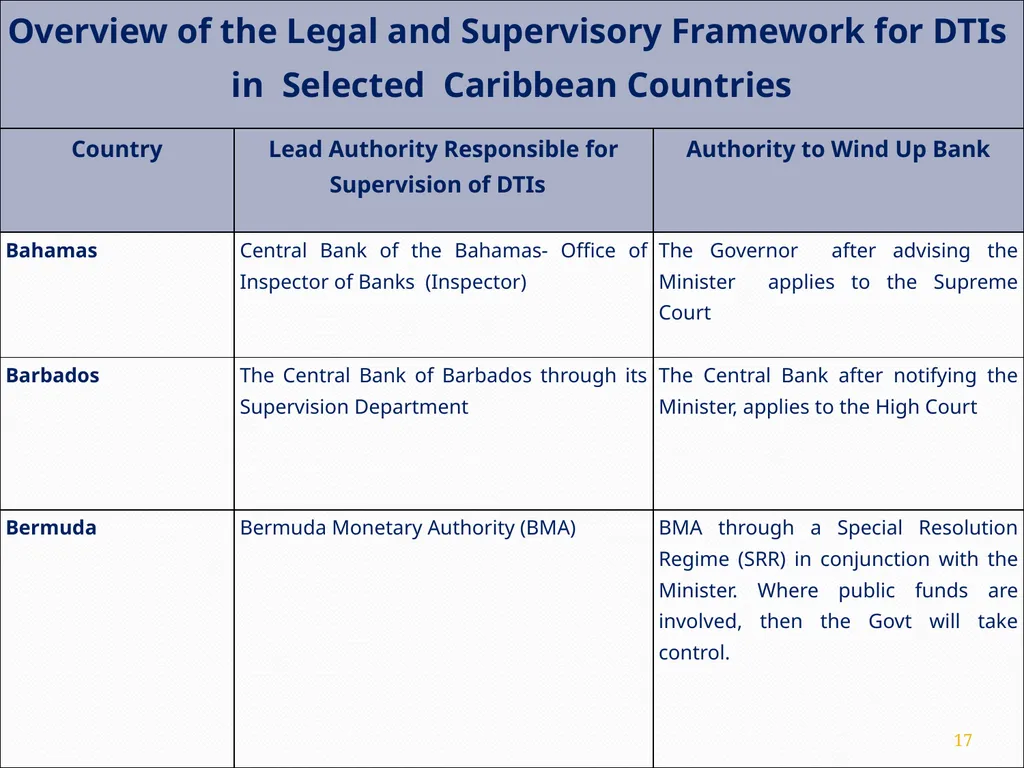
17
17<br>
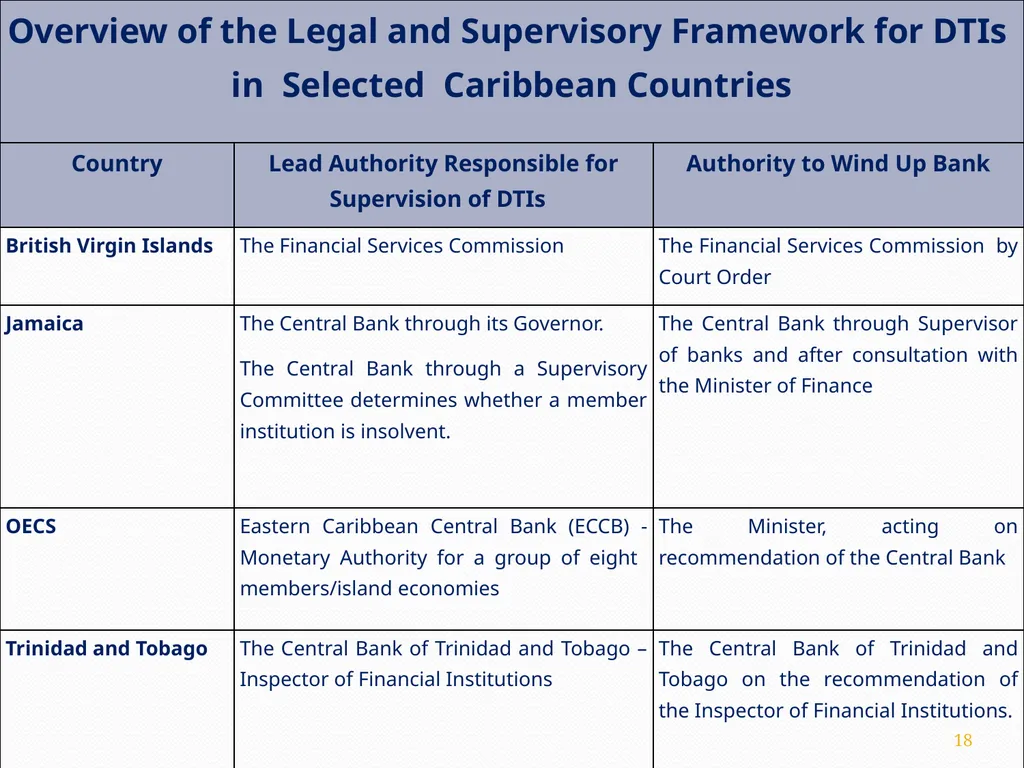
18
18<br>
19
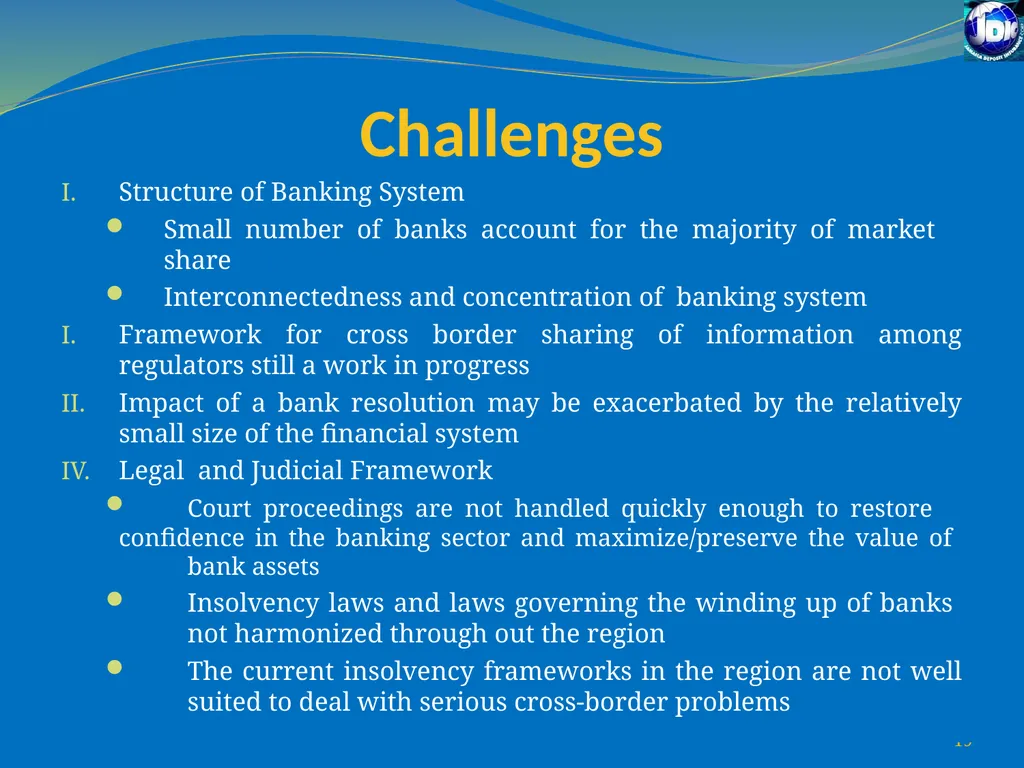
Challenges Structure of Banking System
Small number of banks account for the majority of market share
Interconnectedness and concentration of banking system
Framework for cross border sharing of information among regulators still a work in progress
Impact of a bank resolution may be exacerbated by the relatively small size of the financial system
Legal and Judicial Framework
Court proceedings are not handled quickly enough to restore confidence in the banking sector and maximize/preserve the value of bank assets
Insolvency laws and laws governing the winding up of banks not harmonized through out the region
The current insolvency frameworks in the region are not well suited to deal with serious cross-border problems 19<br>
20
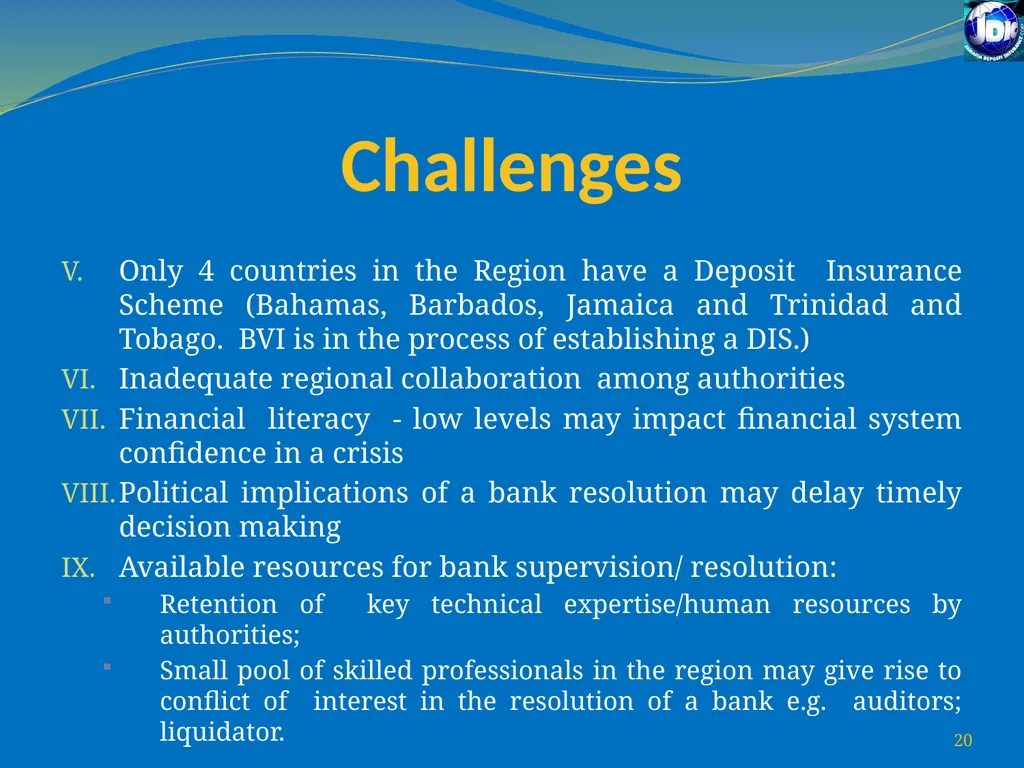
Challenges Only 4 countries in the Region have a Deposit Insurance Scheme (Bahamas, Barbados, Jamaica and Trinidad and Tobago. BVI is in the process of establishing a DIS.)
Inadequate regional collaboration among authorities
Financial literacy - low levels may impact financial system confidence in a crisis
Political implications of a bank resolution may delay timely decision making
Available resources for bank supervision/ resolution:
Retention of key technical expertise/human resources by authorities;
Small pool of skilled professionals in the region may give rise to conflict of interest in the resolution of a bank e.g. auditors; liquidator. 20<br>
21
Recommendations 1. Establishment of deposit insurance schemes
DIS within all the territories will strengthen the regional financial sector; better harmonize the protection of depositors and lessen the propensity for runs on banks
The deposit insurer should be operationally independent
Establish regional DIS resource pool (funding & technical expertise to enhance prompt bank resolution)
Deposit insurance agencies should have statutory powers to act as liquidator or receiver and should be expressly designated the resolution agent 21<br>
22
Recommendations 2. Enhance collaboration among financial system safety net partners (FSSN) – domestic and regional
The roles and responsibilities of the FSSN within each country should be clearly defined
Collaboration should be enhanced among the FSSN specifically for cross border banking groups/regional financial conglomerates
Where a deposit-taking institution has branches in other Caribbean regions, the relevant authorities should clearly and in advance establish (i) which jurisdiction is responsible for providing deposit insurance coverage to the depositors of each branch, and (ii) the rules governing insolvency. 22<br>
23
Recommendations 3. Establish Legal powers for effective resolutions
There should be a set of clearly defined rules based or statutory trigger mechanisms for intervention and resolution of banks
Resolution powers and options for banks should be clearly outlined in legislation
There should be a designated/lead resolution authority and/ or agent 23<br>
There should be a set of clearly defined rules based or statutory trigger mechanisms for intervention and resolution of banks
Resolution powers and options for banks should be clearly outlined in legislation
There should be a designated/lead resolution authority and/ or agent 23<br>
24
Recommendations 4. Create special resolution regime for insolvent banks
Assess adequacy of general insolvency laws/ framework for the timely resolution of banks
Law should allow for designated resolution authority/agent which should have power to enter into cross-jurisdictional arrangements.
Regulatory intervention and resolution actions should be largely administrative and expressly have primacy over court process. Laws should clearly allow for Set-off, netting, the finality of payment and settlement and the prohibition on acceleration of termination rights . 24<br>
25
Recommendations 4. Create special resolution regime for insolvent banks cont’d
National laws and regulations should not discriminate against creditors on the basis of their nationality, the location of their claim or the jurisdiction where it is payable
The statutory mandate of a resolution authority/agent should allow for cooperation with foreign resolution authorities/agents and the treatment of assets in cross border insolvency should be understood in advance
The treatment of creditors and ranking in insolvency should be harmonized across borders and adequately disclosed to depositors, insurance policy holders and other creditors. Equity holders should bear first losses 25<br>
26
Recommendations 5. Establishment of crisis management plans at various levels:
Institutional level – Individual Banks should develop internal recovery strategies for crisis times
Relevant authorities (supervisor, ministry of finance, deposit insurer etc) - Crisis Management Plan
National level – FSSN Partners
Regional level – authorities should have the power in governing legislation to share information. Establish MOU with regional authorities. 26<br>
27
THANK YOU 27<br>