
Changes to Confidential Financial Disclosure




Description: Changes to Confidential Financial Disclosure December 2018 Effective Date: January 1, 2019 The revised: 5 C.F.R part 2634 OGE Form 450 (OGE Optional Form 450-A Discontinued) Confidential Financial Disclosure Guide are applicable to every
Related Topics
Download Presentation
"Changes to Confidential Financial Disclosure" is the property of its rightful owner. Permission is granted to download and print the materials on this website for personal, non-commercial use only, and to display it on your personal computer provided you do not modify the materials and that you retain all copyright notices contained in the materials. By downloading content from our website, you accept the terms of this agreement.
Presentation Transcript
slide1. Changes to Confidential Financial Disclosure December 2018<br>
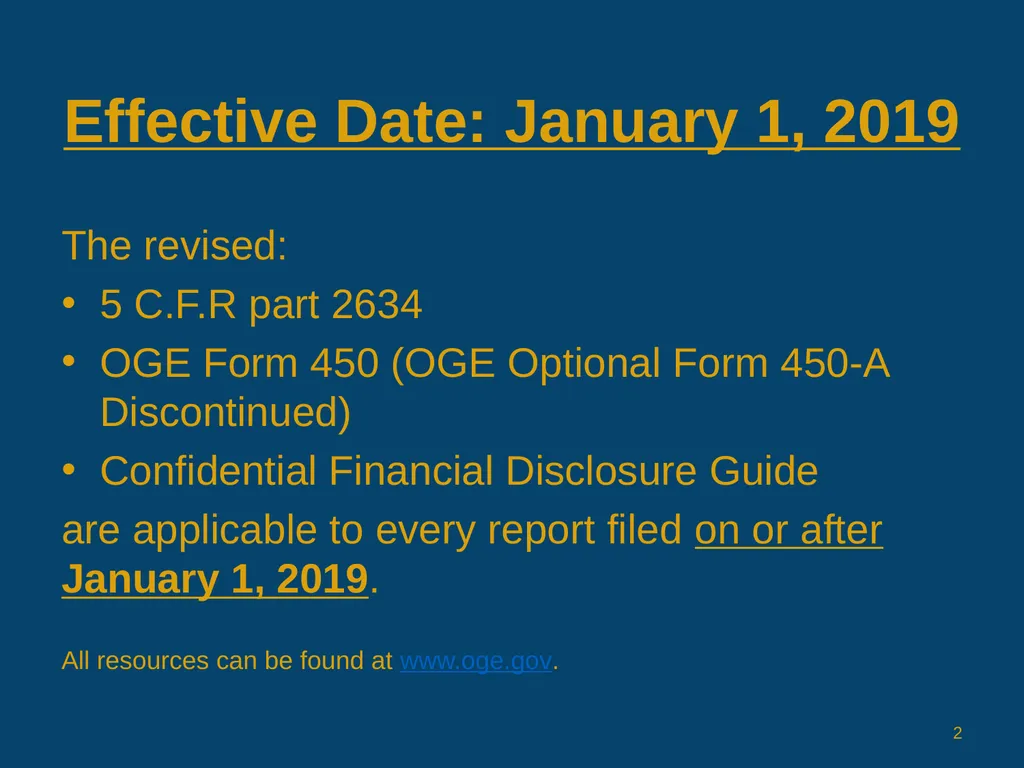
slide2. Effective Date: January 1, 2019 The revised:
5 C.F.R part 2634
OGE Form 450 (OGE Optional Form 450-A Discontinued)
Confidential Financial Disclosure Guide
are applicable to every report filed on or after January 1, 2019.
All resources can be found at www.oge.gov. 2<br>
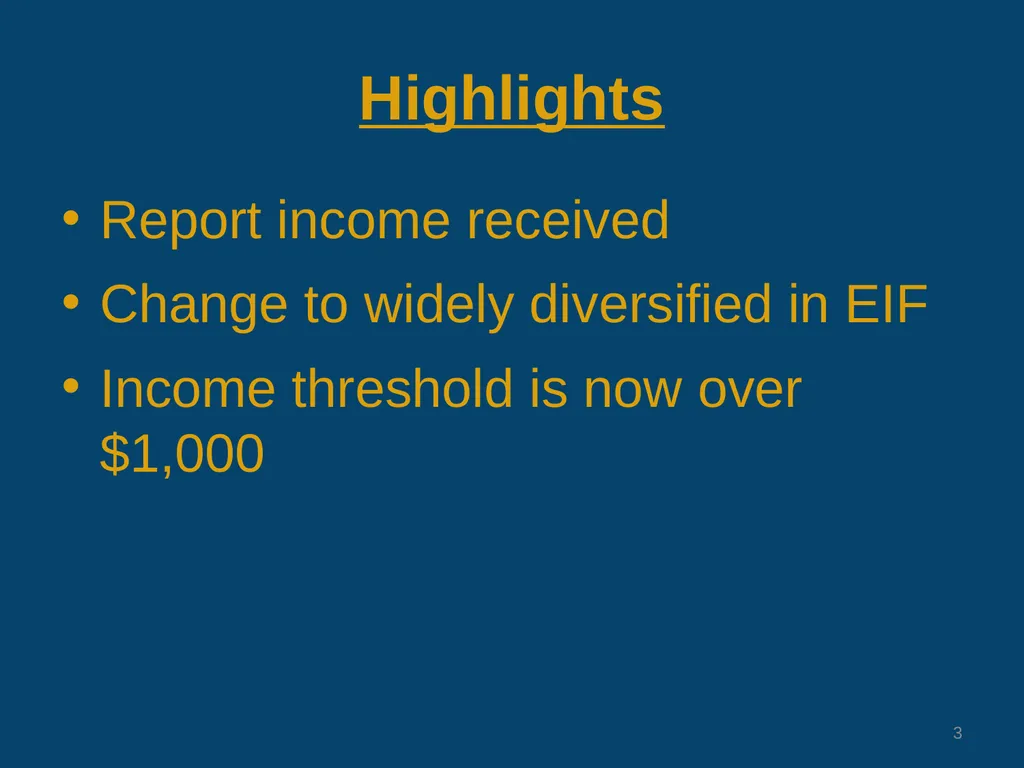
slide3. Highlights Report income received
Change to widely diversified in EIF
Income threshold is now over $1,000 3<br>
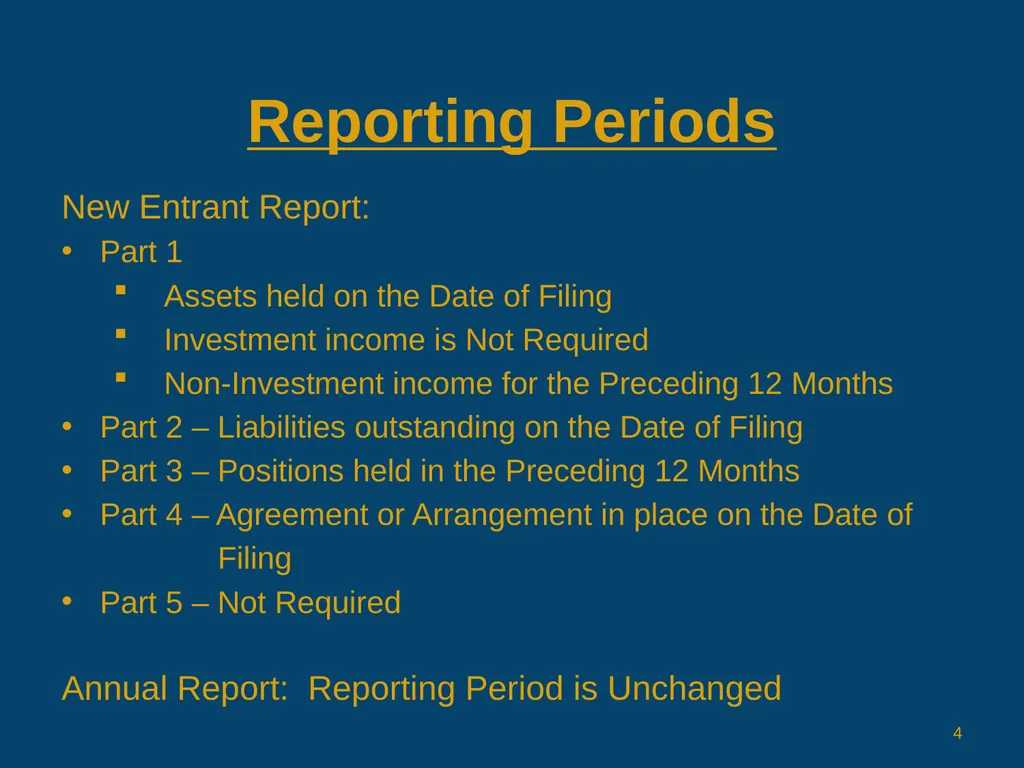
slide4. Reporting Periods New Entrant Report:
Part 1
Assets held on the Date of Filing
Investment income is Not Required
Non-Investment income for the Preceding 12 Months
Part 2 – Liabilities outstanding on the Date of Filing
Part 3 – Positions held in the Preceding 12 Months
Part 4 – Agreement or Arrangement in place on the Date of
Filing
Part 5 – Not Required
Annual Report: Reporting Period is Unchanged 4<br>
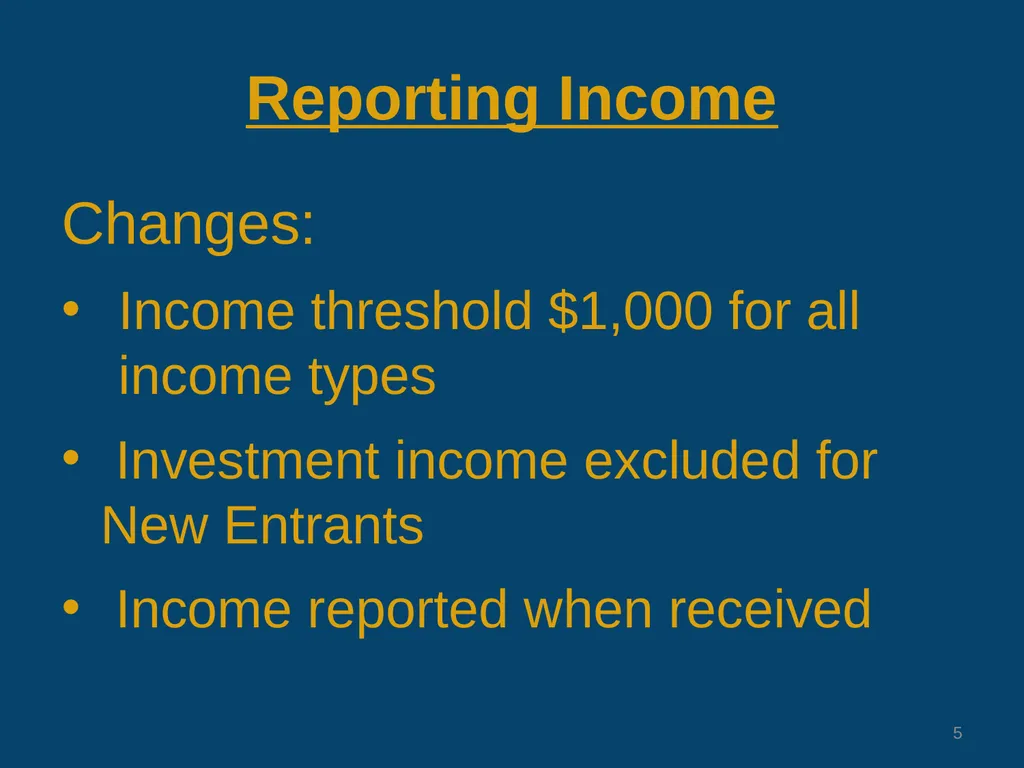
slide5. Reporting Income Changes:
Income threshold $1,000 for all income types
Investment income excluded for New Entrants
Income reported when received 5<br>
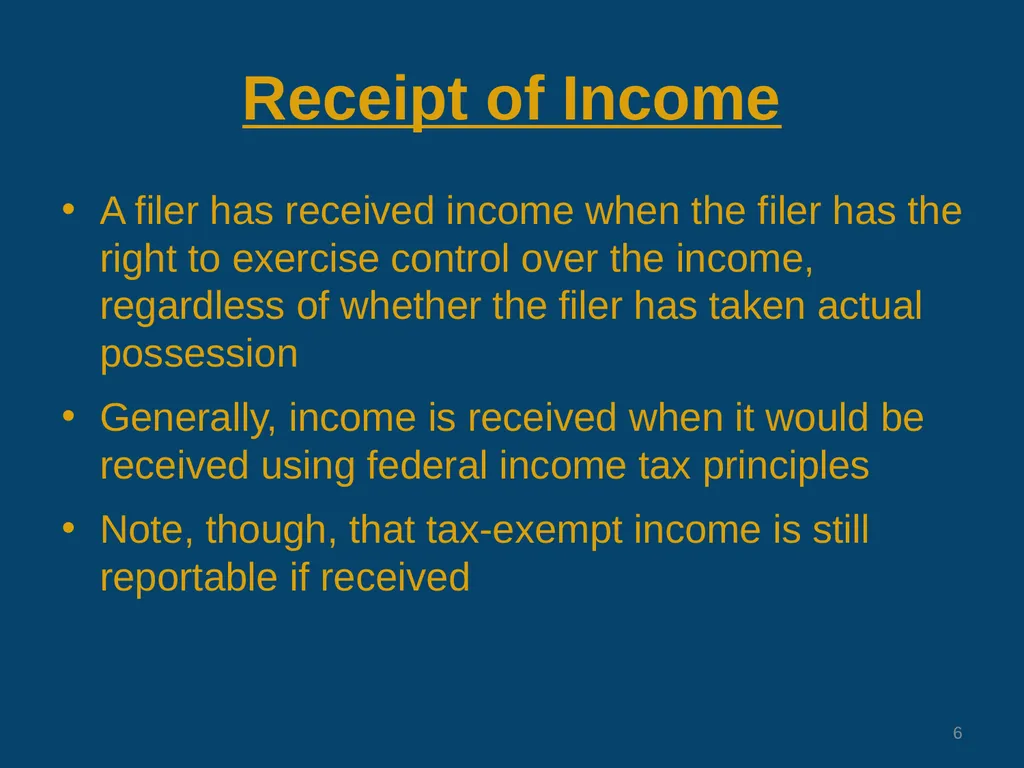
slide6. Receipt of Income A filer has received income when the filer has the right to exercise control over the income, regardless of whether the filer has taken actual possession
Generally, income is received when it would be received using federal income tax principles
Note, though, that tax-exempt income is still reportable if received 6<br>
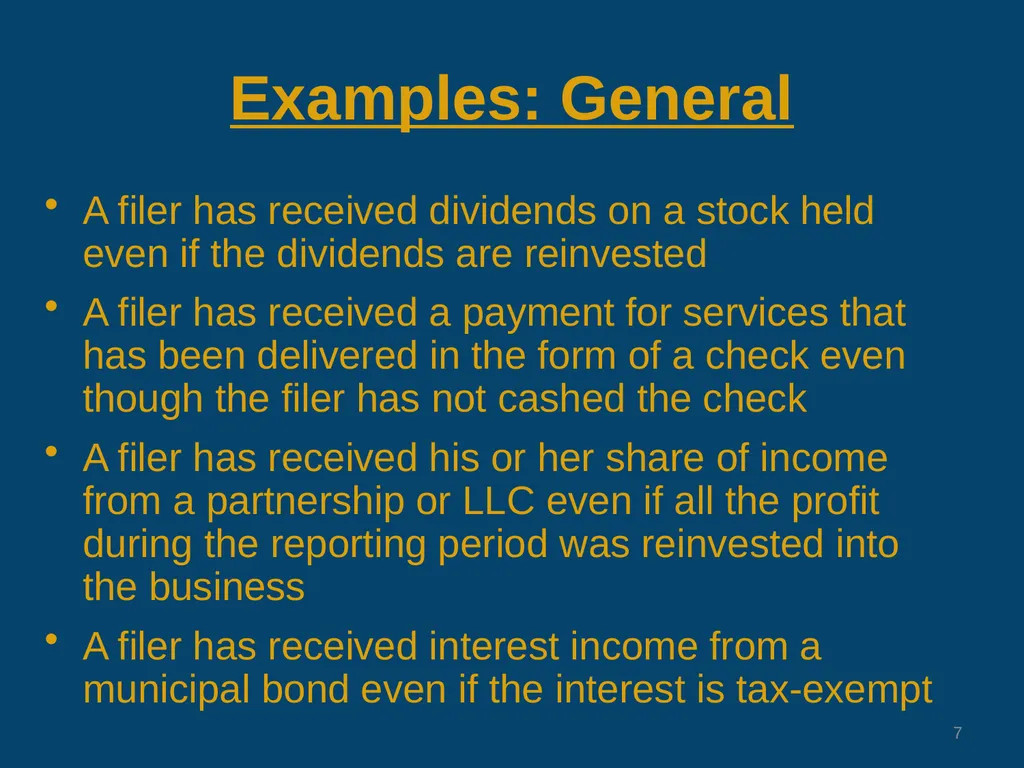
slide7. Examples: General A filer has received dividends on a stock held even if the dividends are reinvested
A filer has received a payment for services that has been delivered in the form of a check even though the filer has not cashed the check
A filer has received his or her share of income from a partnership or LLC even if all the profit during the reporting period was reinvested into the business
A filer has received interest income from a municipal bond even if the interest is tax-exempt 7<br>
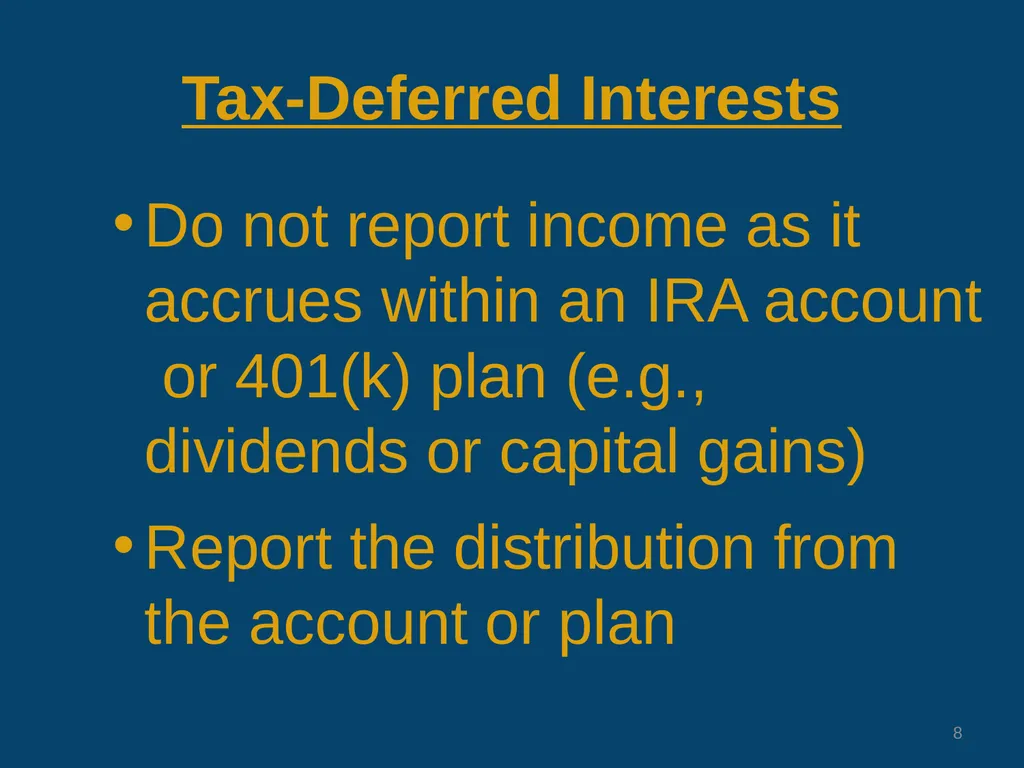
slide8. Tax-Deferred Interests Do not report income as it accrues within an IRA account or 401(k) plan (e.g., dividends or capital gains)
Report the distribution from the account or plan 8<br>
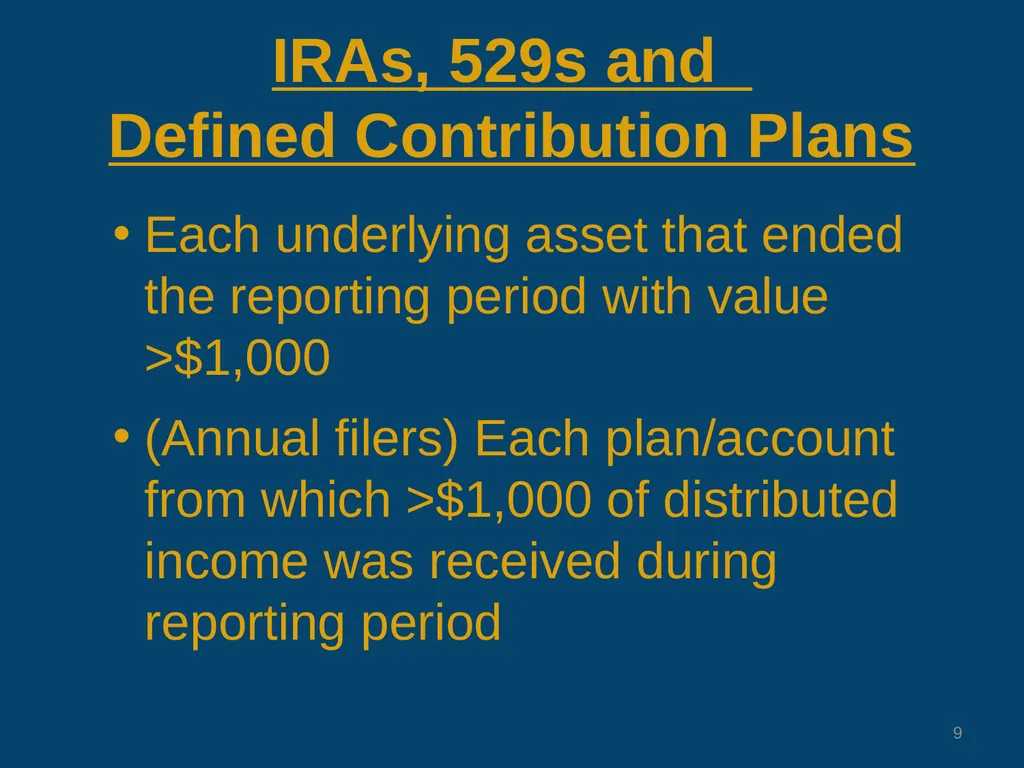
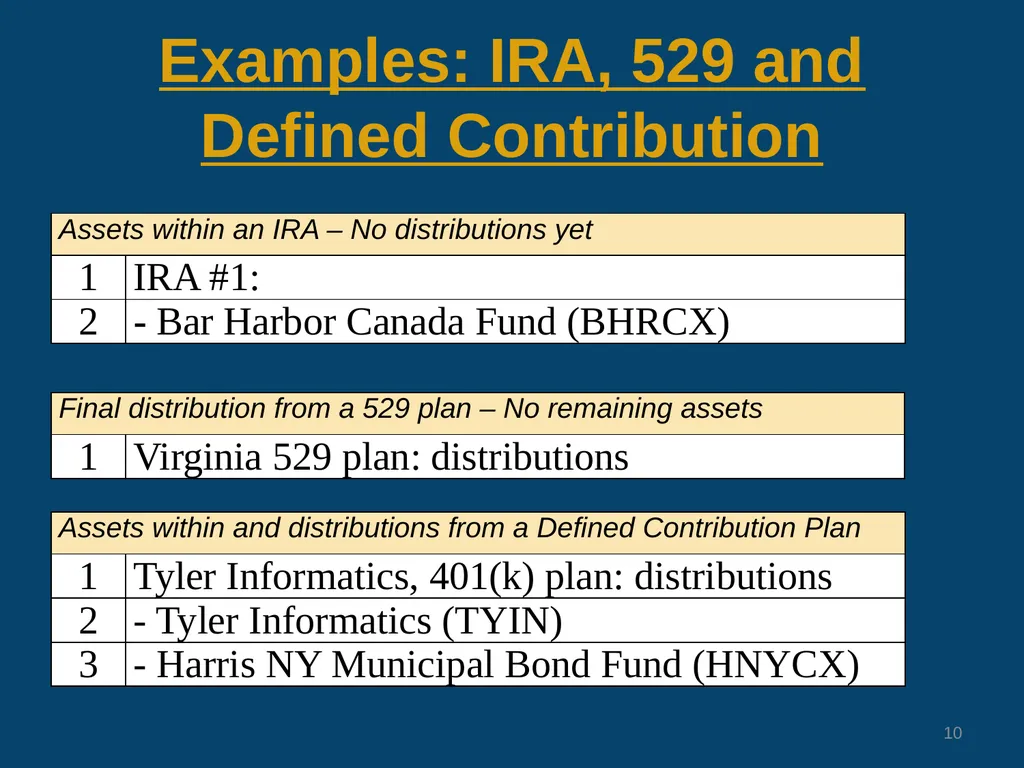
slide9. IRAs, 529s and Defined Contribution Plans Each underlying asset that ended the reporting period with value >$1,000
(Annual filers) Each plan/account from which >$1,000 of distributed income was received during reporting period 9<br>
slide10. Examples: IRA, 529 and Defined Contribution 10<br>
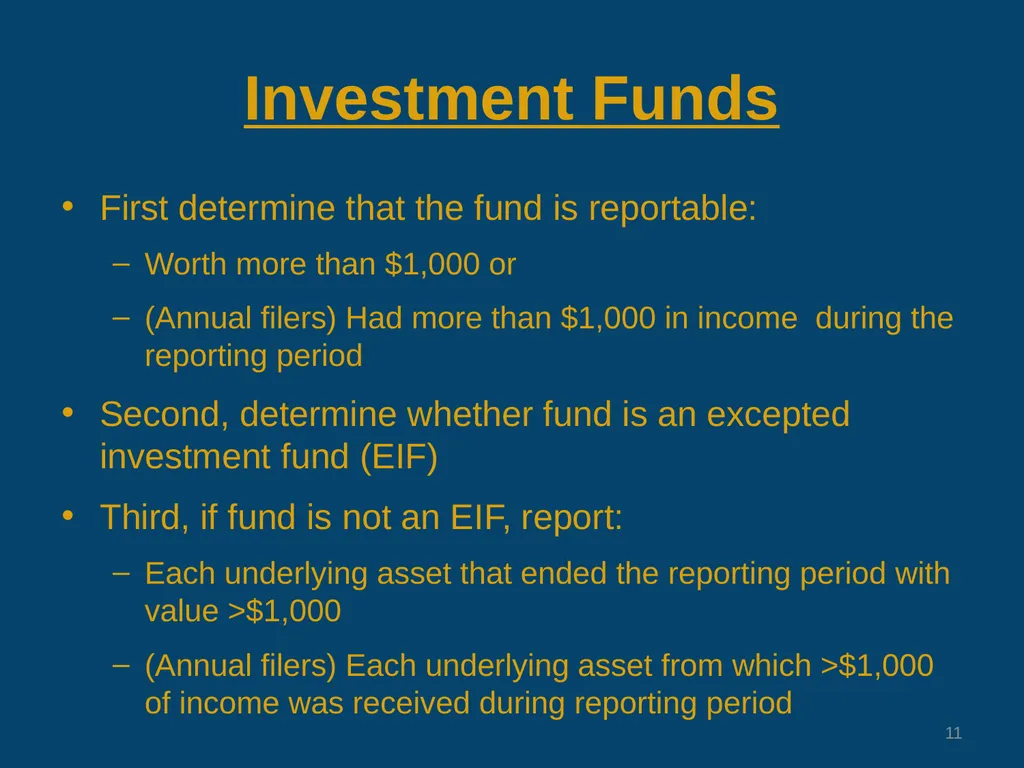
slide11. Investment Funds First determine that the fund is reportable:
Worth more than $1,000 or
(Annual filers) Had more than $1,000 in income during the reporting period
Second, determine whether fund is an excepted investment fund (EIF)
Third, if fund is not an EIF, report:
Each underlying asset that ended the reporting period with value >$1,000
(Annual filers) Each underlying asset from which >$1,000 of income was received during reporting period 11<br>
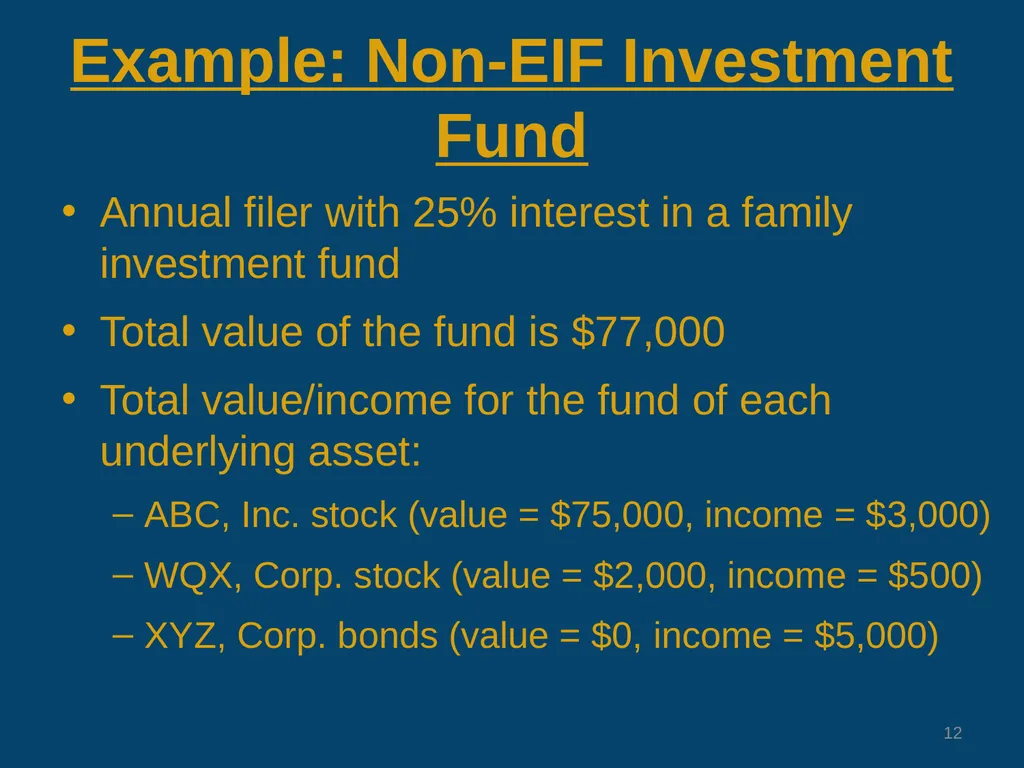
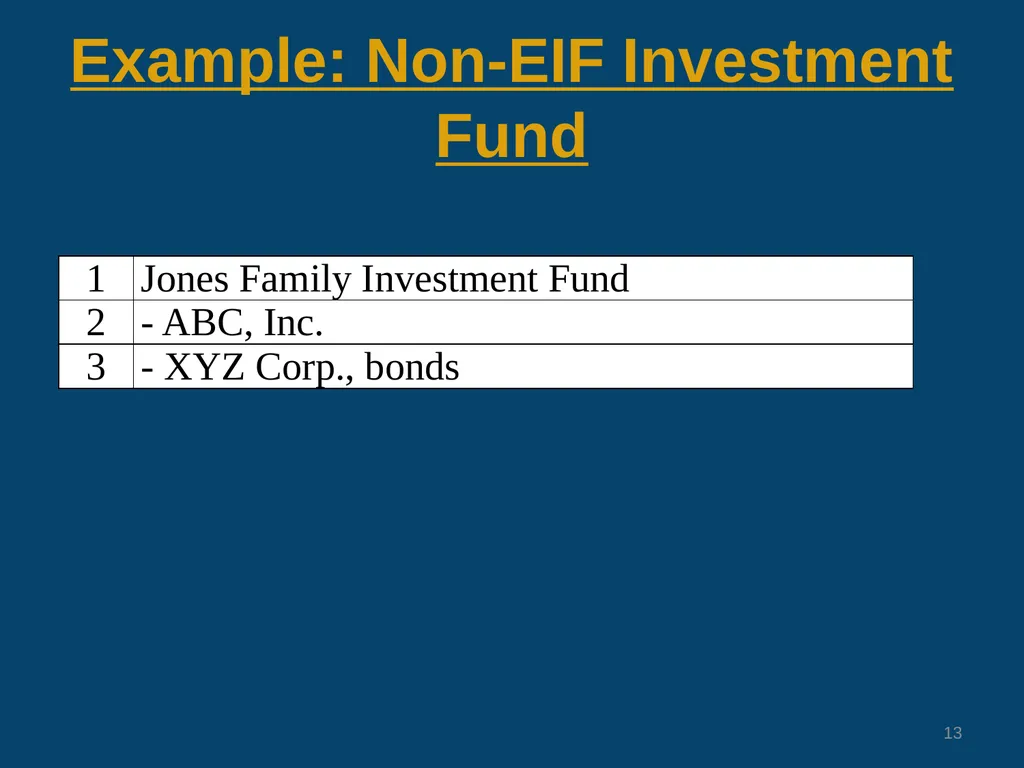
slide12. Example: Non-EIF Investment Fund Annual filer with 25% interest in a family investment fund
Total value of the fund is $77,000
Total value/income for the fund of each underlying asset:
ABC, Inc. stock (value = $75,000, income = $3,000)
WQX, Corp. stock (value = $2,000, income = $500)
XYZ, Corp. bonds (value = $0, income = $5,000) 12<br>
slide13. Example: Non-EIF Investment Fund 13<br>
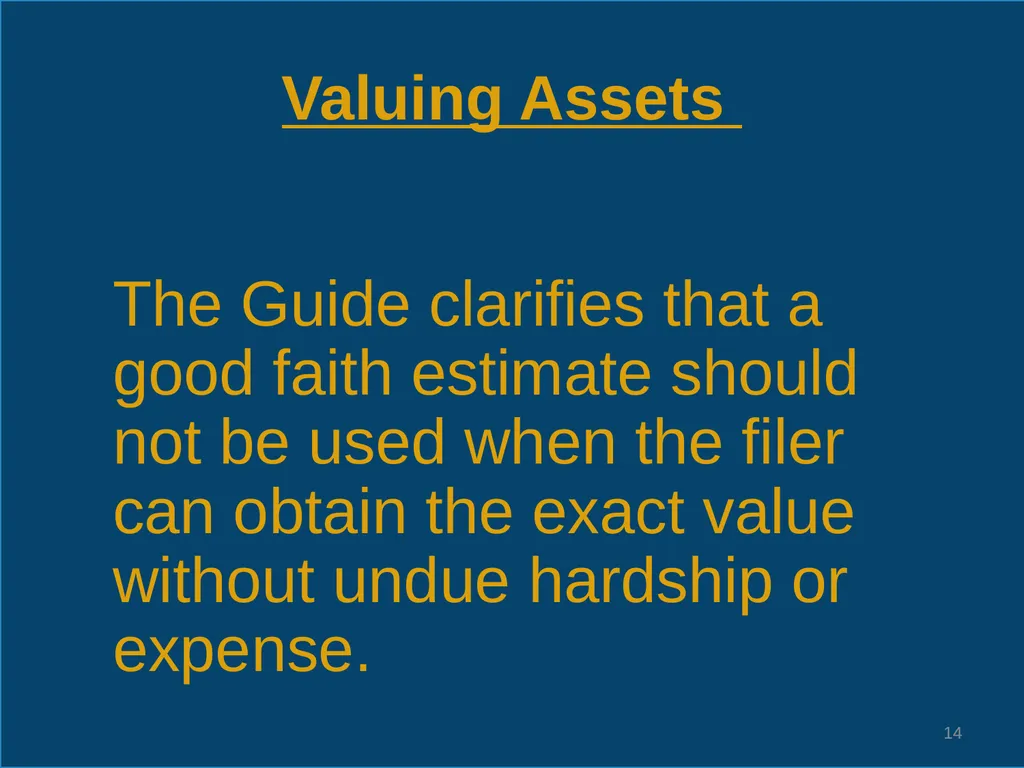
slide14. Valuing Assets The Guide clarifies that a good faith estimate should not be used when the filer can obtain the exact value without undue hardship or expense. 14<br>
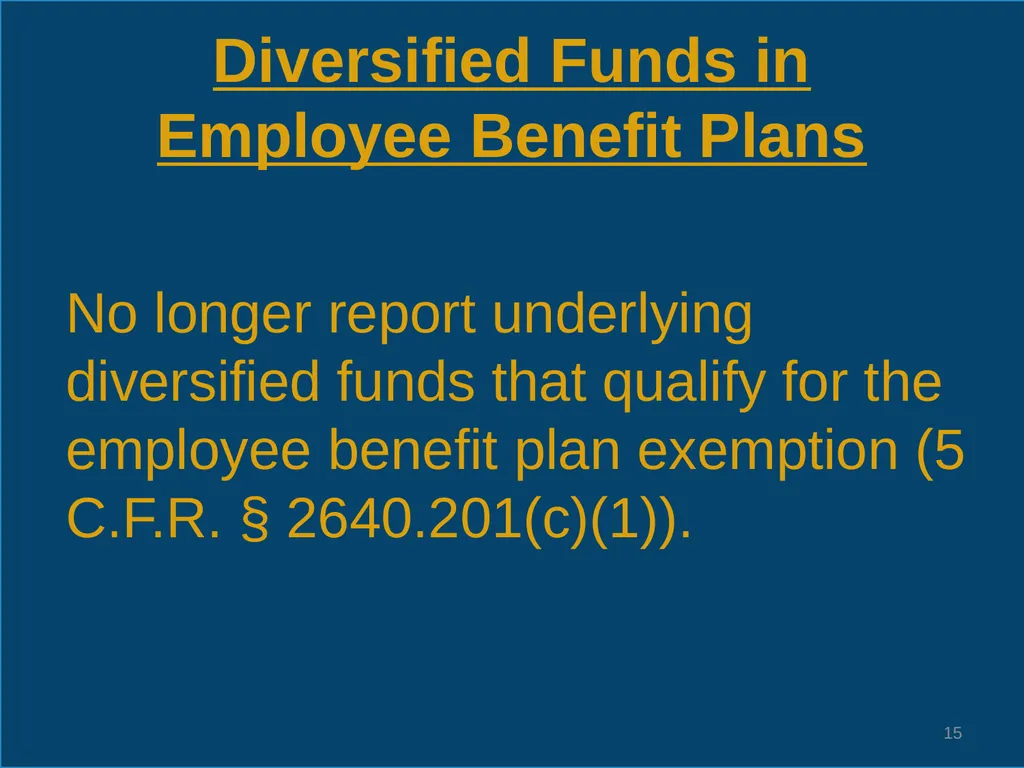
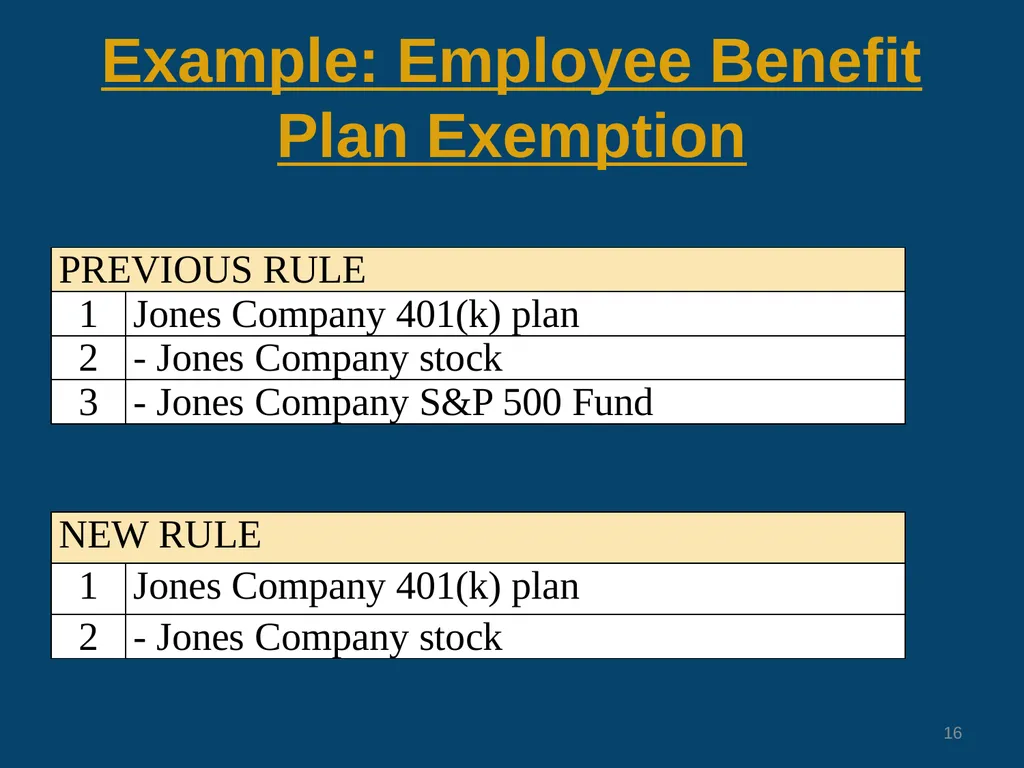
slide15. Diversified Funds in Employee Benefit Plans No longer report underlying diversified funds that qualify for the employee benefit plan exemption (5 C.F.R. § 2640.201(c)(1)). 15<br>
slide16. Example: Employee Benefit Plan Exemption 16<br>
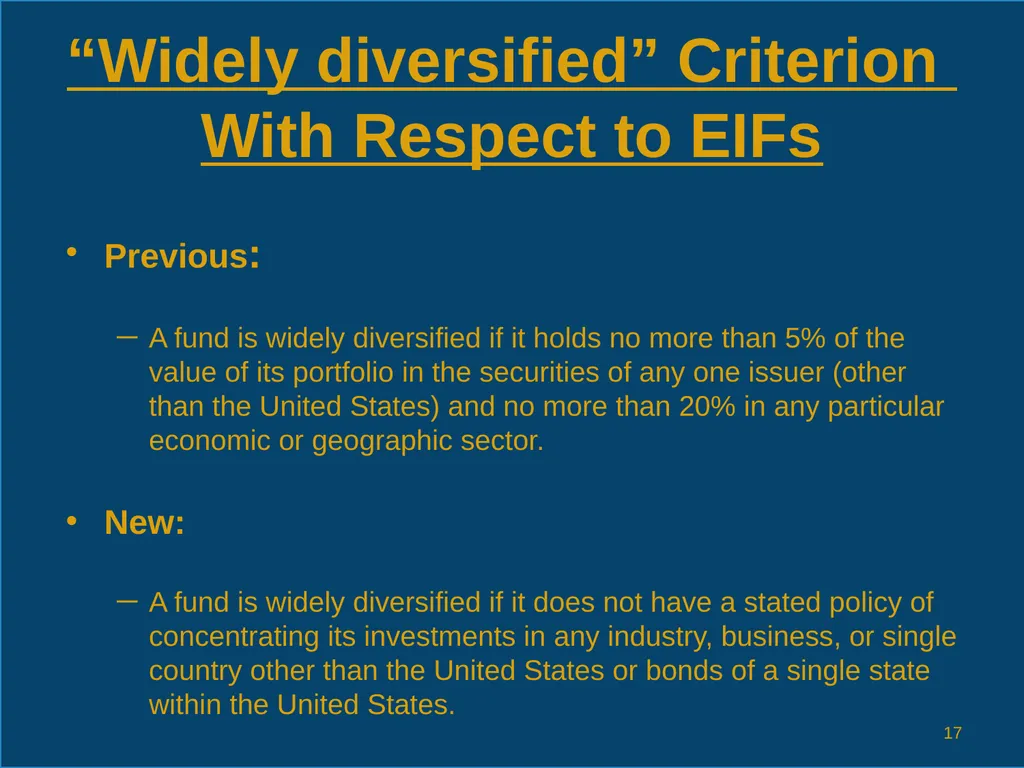
slide17. “Widely diversified” Criterion With Respect to EIFs Previous:
A fund is widely diversified if it holds no more than 5% of the value of its portfolio in the securities of any one issuer (other than the United States) and no more than 20% in any particular economic or geographic sector.
New:
A fund is widely diversified if it does not have a stated policy of concentrating its investments in any industry, business, or single country other than the United States or bonds of a single state within the United States. 17<br>
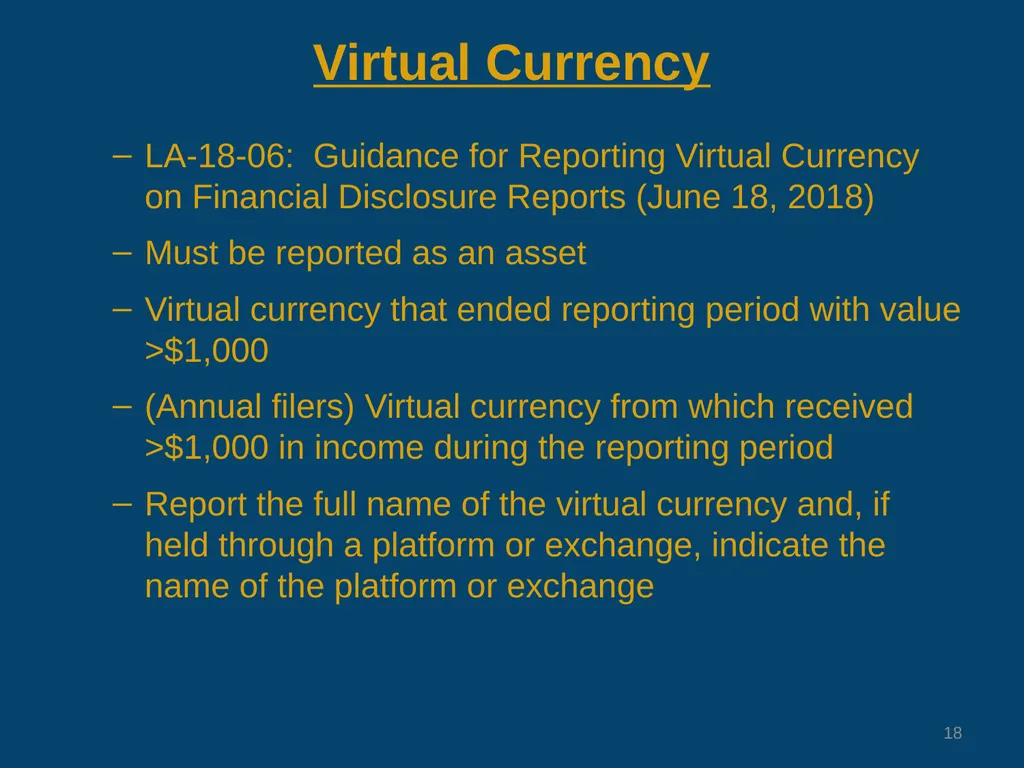
slide18. Virtual Currency LA-18-06: Guidance for Reporting Virtual Currency on Financial Disclosure Reports (June 18, 2018)
Must be reported as an asset
Virtual currency that ended reporting period with value >$1,000
(Annual filers) Virtual currency from which received >$1,000 in income during the reporting period
Report the full name of the virtual currency and, if held through a platform or exchange, indicate the name of the platform or exchange 18<br>
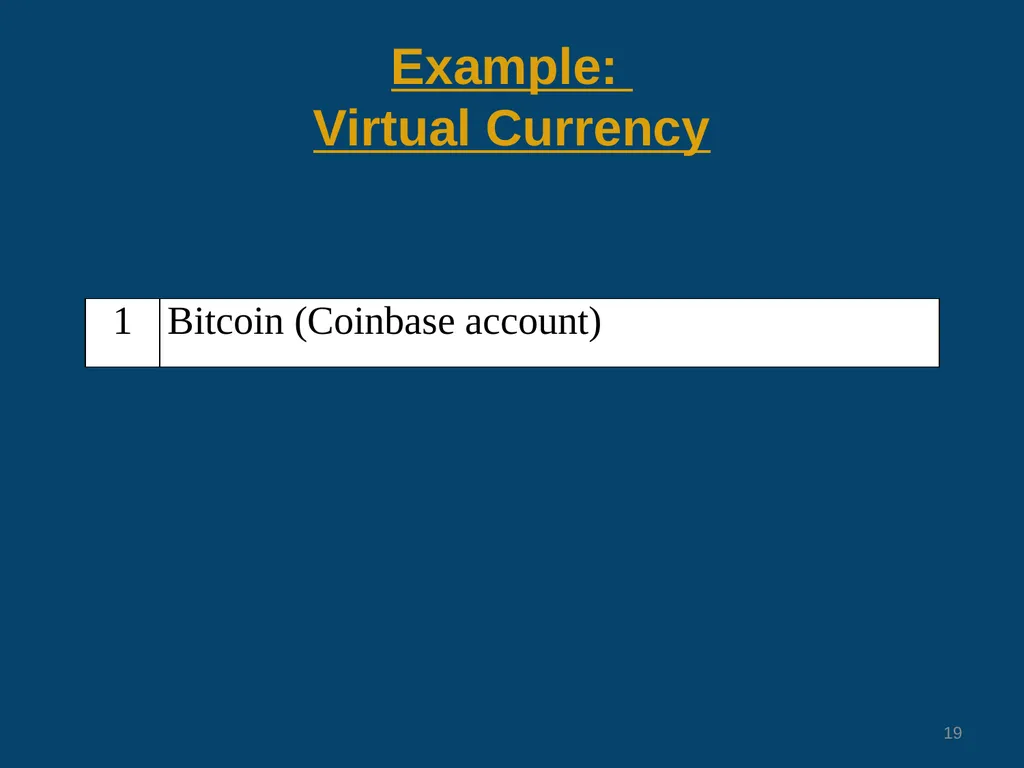
slide19. Example: Virtual Currency 19<br>
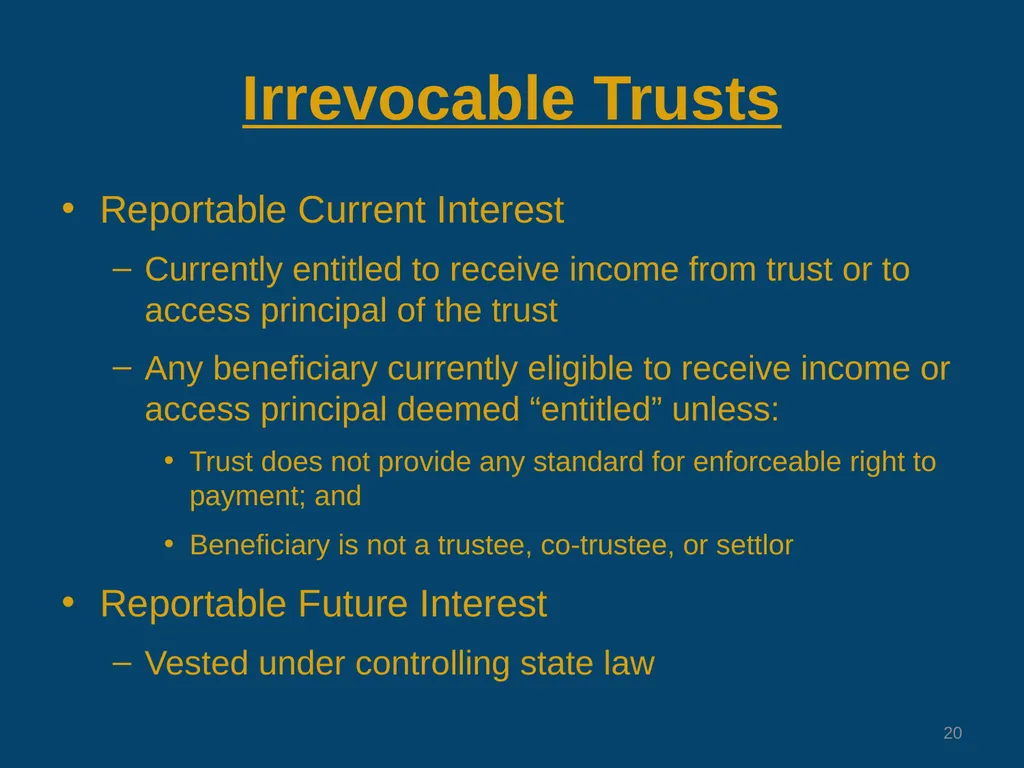
slide20. Irrevocable Trusts Reportable Current Interest
Currently entitled to receive income from trust or to access principal of the trust
Any beneficiary currently eligible to receive income or access principal deemed “entitled” unless:
Trust does not provide any standard for enforceable right to payment; and
Beneficiary is not a trustee, co-trustee, or settlor
Reportable Future Interest
Vested under controlling state law 20<br>
slide21. Reporting of Defined Contribution Plans on Part IV Filers are no longer required to report a defined contribution plan in the agreements and arrangements section (Part IV) to which a former employer is no longer making contributions. 21<br>
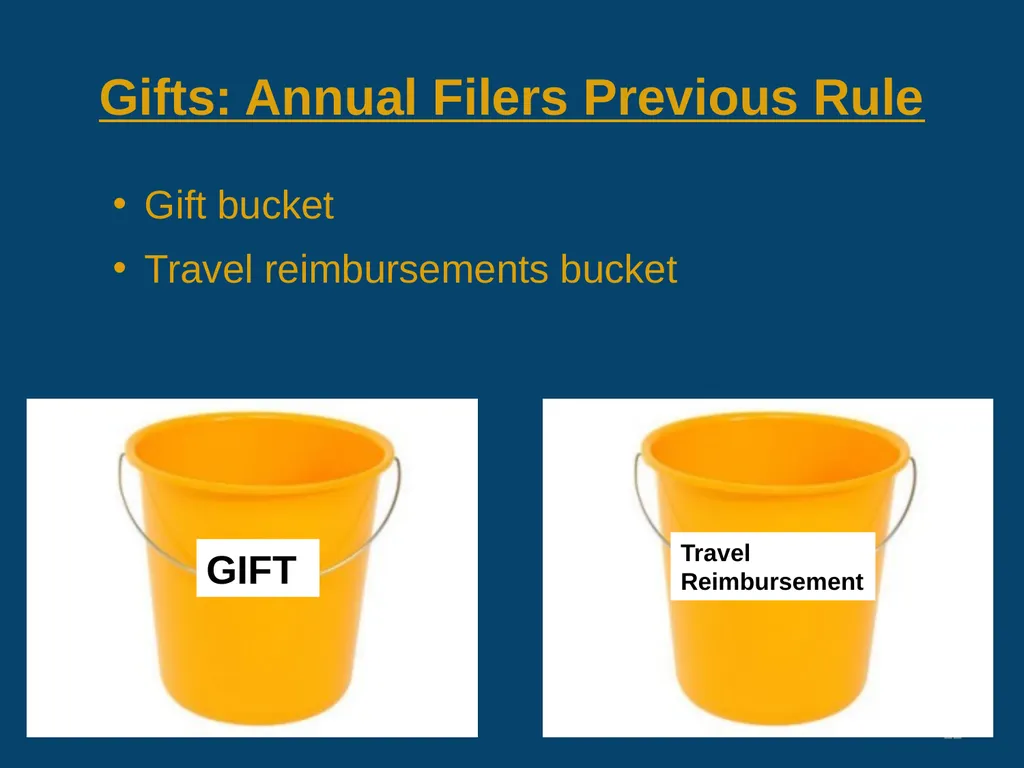
slide22. Gifts: Annual Filers Previous Rule Gift bucket
Travel reimbursements bucket 22 GIFT Travel Reimbursement<br>
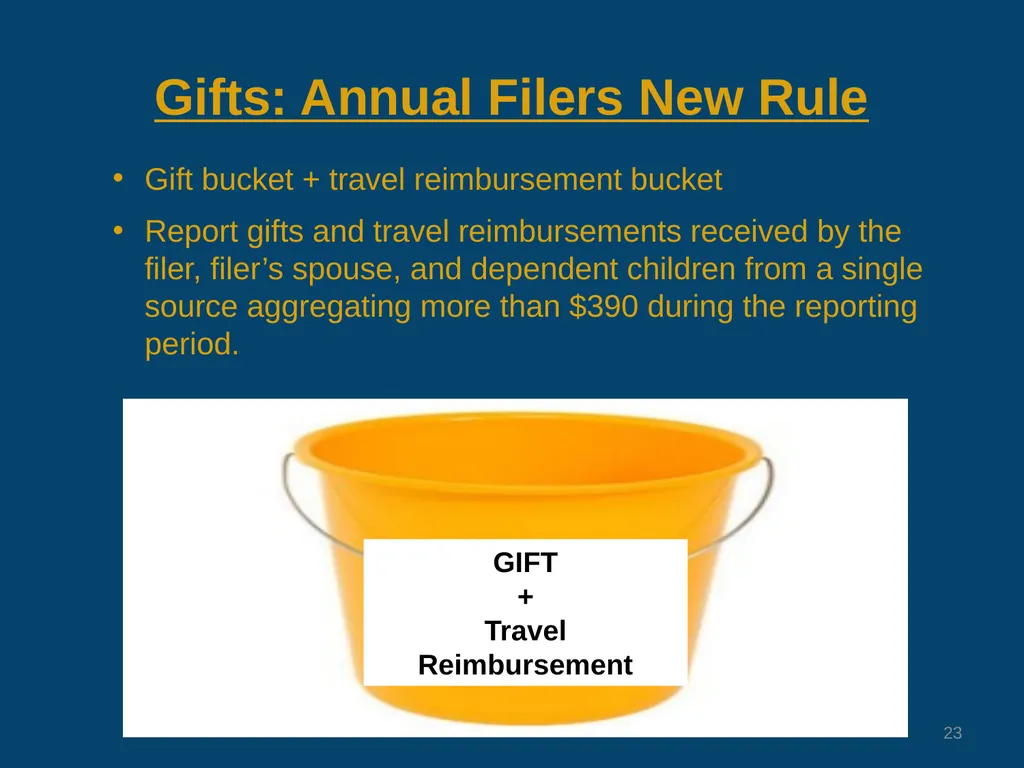
slide23. Gifts: Annual Filers New Rule Gift bucket + travel reimbursement bucket
Report gifts and travel reimbursements received by the filer, filer’s spouse, and dependent children from a single source aggregating more than $390 during the reporting period. 23 GIFT
+
Travel Reimbursement<br>
slide24. Gifts: Market Value of Ticket Market value of ticket = Value of gift
The market value of a ticket entitling the holder to attend an event which includes food, refreshments, entertainment, or other benefits is the face value of the ticket, which may exceed the actual cost of the food and other benefits. Filers should not subtract the cost of food and beverages from the face value of a ticket when determining the value. 24<br>
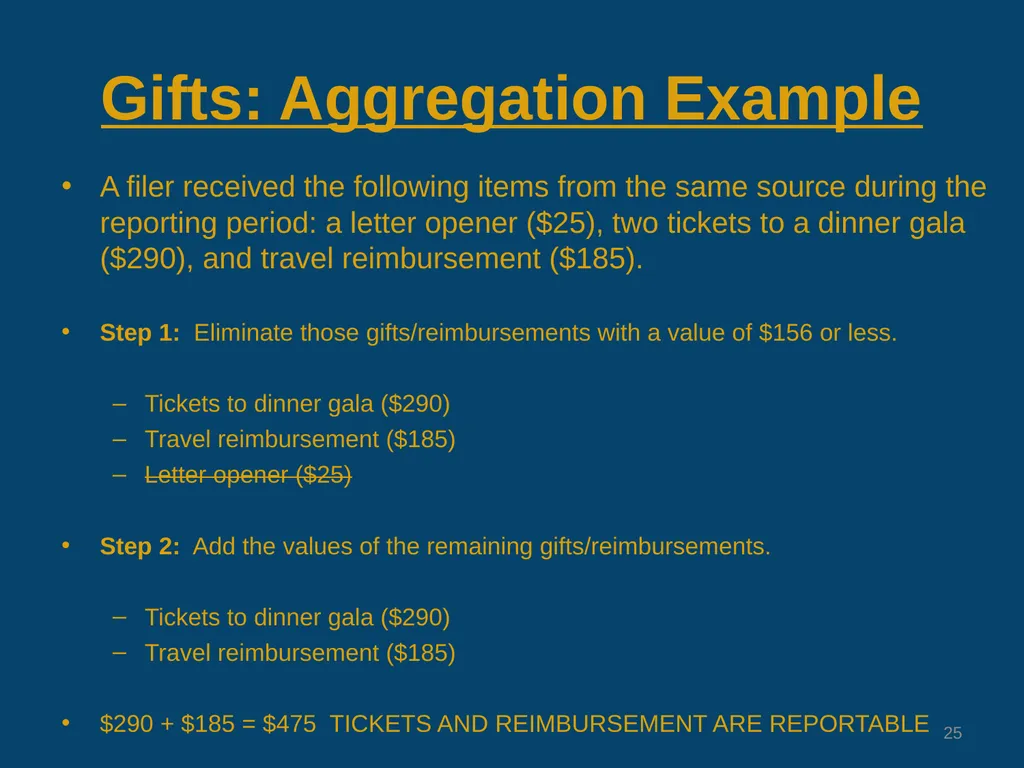
slide25. Gifts: Aggregation Example A filer received the following items from the same source during the reporting period: a letter opener ($25), two tickets to a dinner gala ($290), and travel reimbursement ($185).
Step 1: Eliminate those gifts/reimbursements with a value of $156 or less.
Tickets to dinner gala ($290)
Travel reimbursement ($185)
Letter opener ($25)
Step 2: Add the values of the remaining gifts/reimbursements.
Tickets to dinner gala ($290)
Travel reimbursement ($185)
$290 + $185 = $475 TICKETS AND REIMBURSEMENT ARE REPORTABLE 25<br>
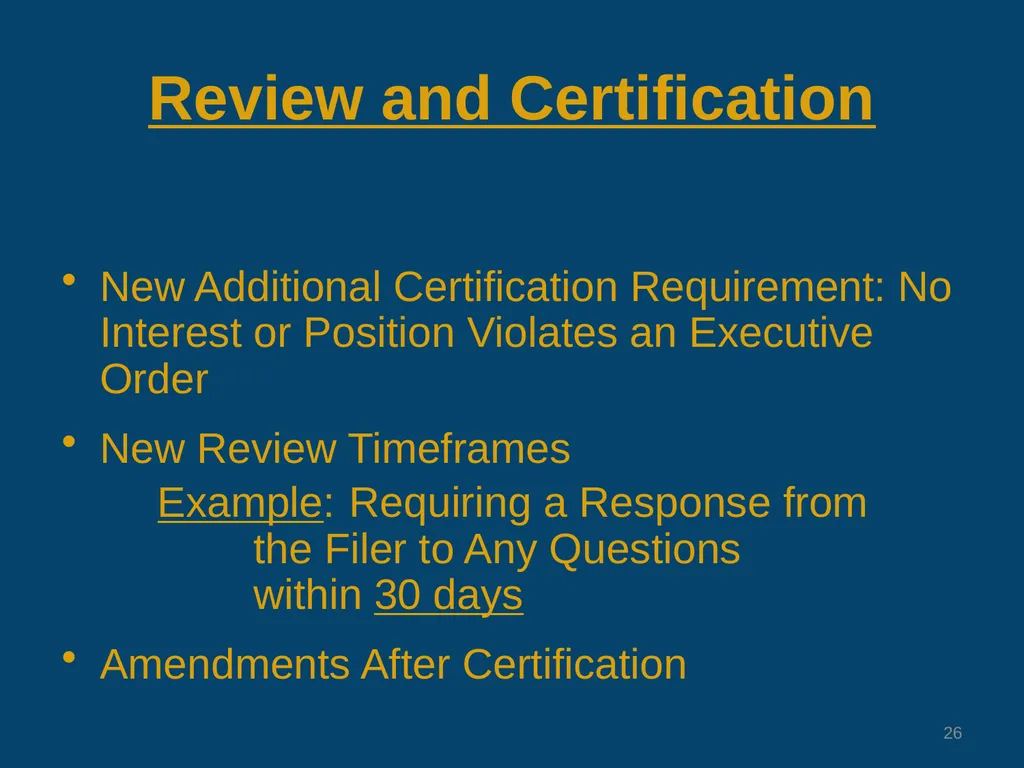
slide26. Review and Certification New Additional Certification Requirement: No Interest or Position Violates an Executive Order
New Review Timeframes
Example: Requiring a Response from the Filer to Any Questions within 30 days
Amendments After Certification 26<br>
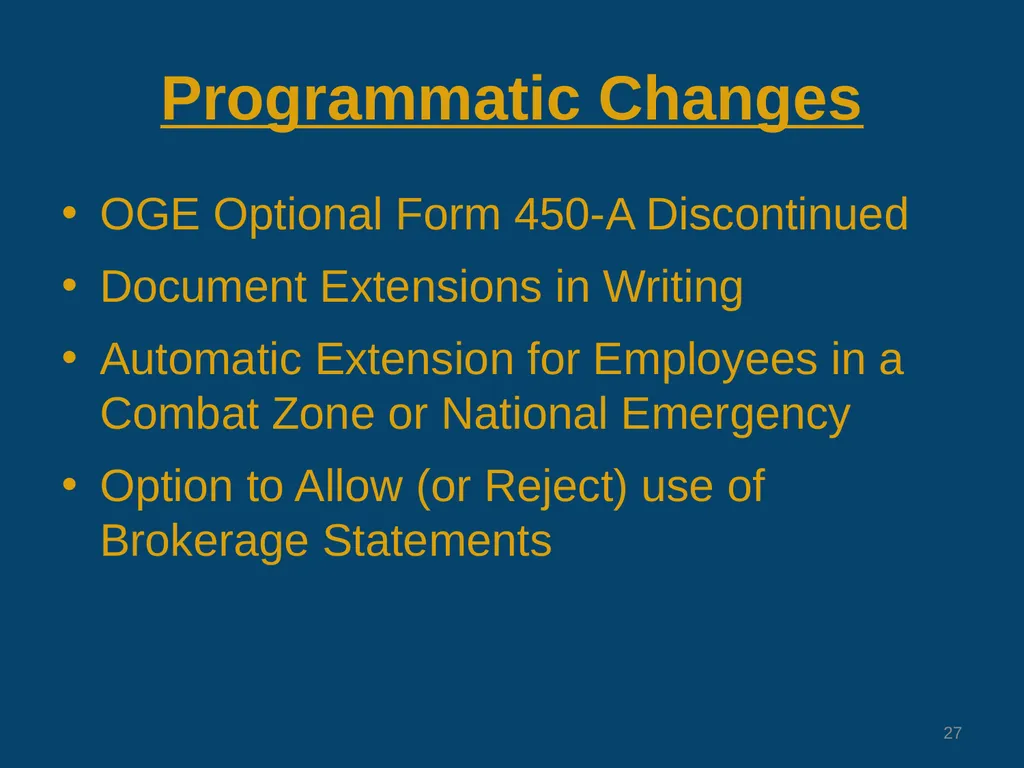
slide27. Programmatic Changes OGE Optional Form 450-A Discontinued
Document Extensions in Writing
Automatic Extension for Employees in a Combat Zone or National Emergency
Option to Allow (or Reject) use of Brokerage Statements 27<br>
slide28. QUESTIONS? 28<br>
slide29. THANK YOU 29<br>
slide2. Effective Date: January 1, 2019 The revised:
5 C.F.R part 2634
OGE Form 450 (OGE Optional Form 450-A Discontinued)
Confidential Financial Disclosure Guide
are applicable to every report filed on or after January 1, 2019.
All resources can be found at www.oge.gov. 2<br>
slide3. Highlights Report income received
Change to widely diversified in EIF
Income threshold is now over $1,000 3<br>
slide4. Reporting Periods New Entrant Report:
Part 1
Assets held on the Date of Filing
Investment income is Not Required
Non-Investment income for the Preceding 12 Months
Part 2 – Liabilities outstanding on the Date of Filing
Part 3 – Positions held in the Preceding 12 Months
Part 4 – Agreement or Arrangement in place on the Date of
Filing
Part 5 – Not Required
Annual Report: Reporting Period is Unchanged 4<br>
slide5. Reporting Income Changes:
Income threshold $1,000 for all income types
Investment income excluded for New Entrants
Income reported when received 5<br>
slide6. Receipt of Income A filer has received income when the filer has the right to exercise control over the income, regardless of whether the filer has taken actual possession
Generally, income is received when it would be received using federal income tax principles
Note, though, that tax-exempt income is still reportable if received 6<br>
slide7. Examples: General A filer has received dividends on a stock held even if the dividends are reinvested
A filer has received a payment for services that has been delivered in the form of a check even though the filer has not cashed the check
A filer has received his or her share of income from a partnership or LLC even if all the profit during the reporting period was reinvested into the business
A filer has received interest income from a municipal bond even if the interest is tax-exempt 7<br>
slide8. Tax-Deferred Interests Do not report income as it accrues within an IRA account or 401(k) plan (e.g., dividends or capital gains)
Report the distribution from the account or plan 8<br>
slide9. IRAs, 529s and Defined Contribution Plans Each underlying asset that ended the reporting period with value >$1,000
(Annual filers) Each plan/account from which >$1,000 of distributed income was received during reporting period 9<br>
slide10. Examples: IRA, 529 and Defined Contribution 10<br>
slide11. Investment Funds First determine that the fund is reportable:
Worth more than $1,000 or
(Annual filers) Had more than $1,000 in income during the reporting period
Second, determine whether fund is an excepted investment fund (EIF)
Third, if fund is not an EIF, report:
Each underlying asset that ended the reporting period with value >$1,000
(Annual filers) Each underlying asset from which >$1,000 of income was received during reporting period 11<br>
slide12. Example: Non-EIF Investment Fund Annual filer with 25% interest in a family investment fund
Total value of the fund is $77,000
Total value/income for the fund of each underlying asset:
ABC, Inc. stock (value = $75,000, income = $3,000)
WQX, Corp. stock (value = $2,000, income = $500)
XYZ, Corp. bonds (value = $0, income = $5,000) 12<br>
slide13. Example: Non-EIF Investment Fund 13<br>
slide14. Valuing Assets The Guide clarifies that a good faith estimate should not be used when the filer can obtain the exact value without undue hardship or expense. 14<br>
slide15. Diversified Funds in Employee Benefit Plans No longer report underlying diversified funds that qualify for the employee benefit plan exemption (5 C.F.R. § 2640.201(c)(1)). 15<br>
slide16. Example: Employee Benefit Plan Exemption 16<br>
slide17. “Widely diversified” Criterion With Respect to EIFs Previous:
A fund is widely diversified if it holds no more than 5% of the value of its portfolio in the securities of any one issuer (other than the United States) and no more than 20% in any particular economic or geographic sector.
New:
A fund is widely diversified if it does not have a stated policy of concentrating its investments in any industry, business, or single country other than the United States or bonds of a single state within the United States. 17<br>
slide18. Virtual Currency LA-18-06: Guidance for Reporting Virtual Currency on Financial Disclosure Reports (June 18, 2018)
Must be reported as an asset
Virtual currency that ended reporting period with value >$1,000
(Annual filers) Virtual currency from which received >$1,000 in income during the reporting period
Report the full name of the virtual currency and, if held through a platform or exchange, indicate the name of the platform or exchange 18<br>
slide19. Example: Virtual Currency 19<br>
slide20. Irrevocable Trusts Reportable Current Interest
Currently entitled to receive income from trust or to access principal of the trust
Any beneficiary currently eligible to receive income or access principal deemed “entitled” unless:
Trust does not provide any standard for enforceable right to payment; and
Beneficiary is not a trustee, co-trustee, or settlor
Reportable Future Interest
Vested under controlling state law 20<br>
slide21. Reporting of Defined Contribution Plans on Part IV Filers are no longer required to report a defined contribution plan in the agreements and arrangements section (Part IV) to which a former employer is no longer making contributions. 21<br>
slide22. Gifts: Annual Filers Previous Rule Gift bucket
Travel reimbursements bucket 22 GIFT Travel Reimbursement<br>
slide23. Gifts: Annual Filers New Rule Gift bucket + travel reimbursement bucket
Report gifts and travel reimbursements received by the filer, filer’s spouse, and dependent children from a single source aggregating more than $390 during the reporting period. 23 GIFT
+
Travel Reimbursement<br>
slide24. Gifts: Market Value of Ticket Market value of ticket = Value of gift
The market value of a ticket entitling the holder to attend an event which includes food, refreshments, entertainment, or other benefits is the face value of the ticket, which may exceed the actual cost of the food and other benefits. Filers should not subtract the cost of food and beverages from the face value of a ticket when determining the value. 24<br>
slide25. Gifts: Aggregation Example A filer received the following items from the same source during the reporting period: a letter opener ($25), two tickets to a dinner gala ($290), and travel reimbursement ($185).
Step 1: Eliminate those gifts/reimbursements with a value of $156 or less.
Tickets to dinner gala ($290)
Travel reimbursement ($185)
Letter opener ($25)
Step 2: Add the values of the remaining gifts/reimbursements.
Tickets to dinner gala ($290)
Travel reimbursement ($185)
$290 + $185 = $475 TICKETS AND REIMBURSEMENT ARE REPORTABLE 25<br>
slide26. Review and Certification New Additional Certification Requirement: No Interest or Position Violates an Executive Order
New Review Timeframes
Example: Requiring a Response from the Filer to Any Questions within 30 days
Amendments After Certification 26<br>
slide27. Programmatic Changes OGE Optional Form 450-A Discontinued
Document Extensions in Writing
Automatic Extension for Employees in a Combat Zone or National Emergency
Option to Allow (or Reject) use of Brokerage Statements 27<br>
slide28. QUESTIONS? 28<br>
slide29. THANK YOU 29<br>