
Chapter 1 Introduction to Tourism and Information

Description: Chapter 1 Introduction to Tourism and Information Technology Chapter 1 Learning Objectives After studying this chapter you should be able to: define key terms and concepts in information technology; describe the evolution of information
Related Topics
Download Presentation
"Chapter 1 Introduction to Tourism and Information" is the property of its rightful owner. Permission is granted to download and print the materials on this website for personal, non-commercial use only, and to display it on your personal computer provided you do not modify the materials and that you retain all copyright notices contained in the materials. By downloading content from our website, you accept the terms of this agreement.
Presentation Transcript
slide2. Chapter 1 Introduction to Tourism and Information Technology<br>
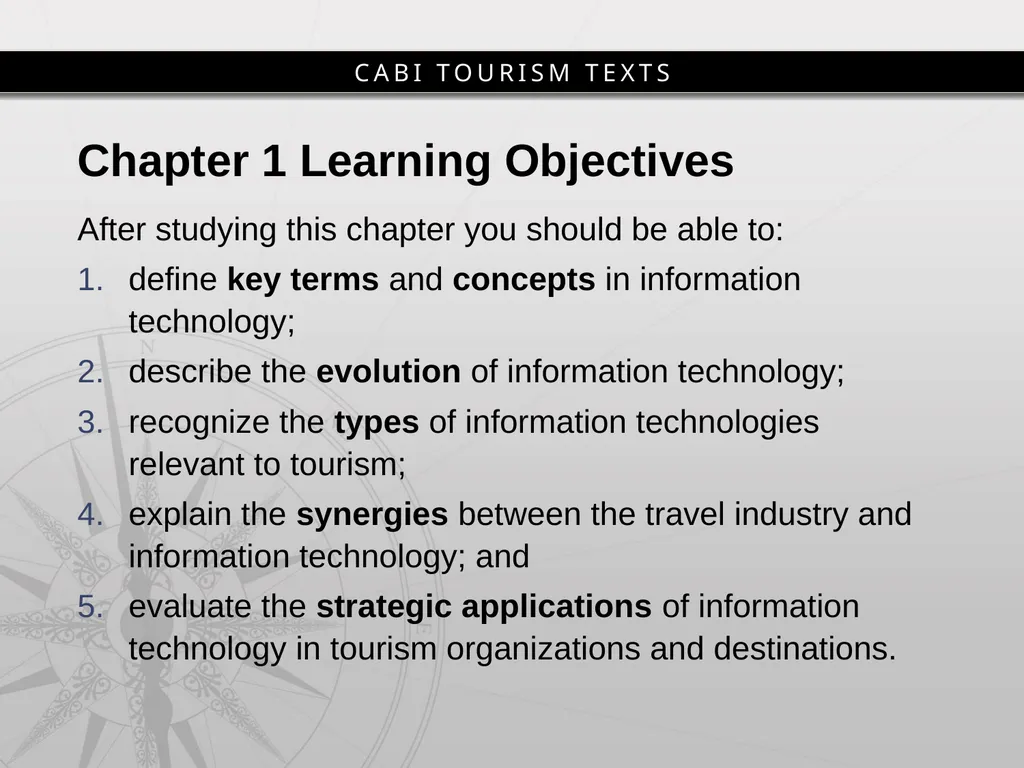
slide3. Chapter 1 Learning Objectives After studying this chapter you should be able to:
define key terms and concepts in information technology;
describe the evolution of information technology;
recognize the types of information technologies relevant to tourism;
explain the synergies between the travel industry and information technology; and
evaluate the strategic applications of information technology in tourism organizations and destinations.<br>
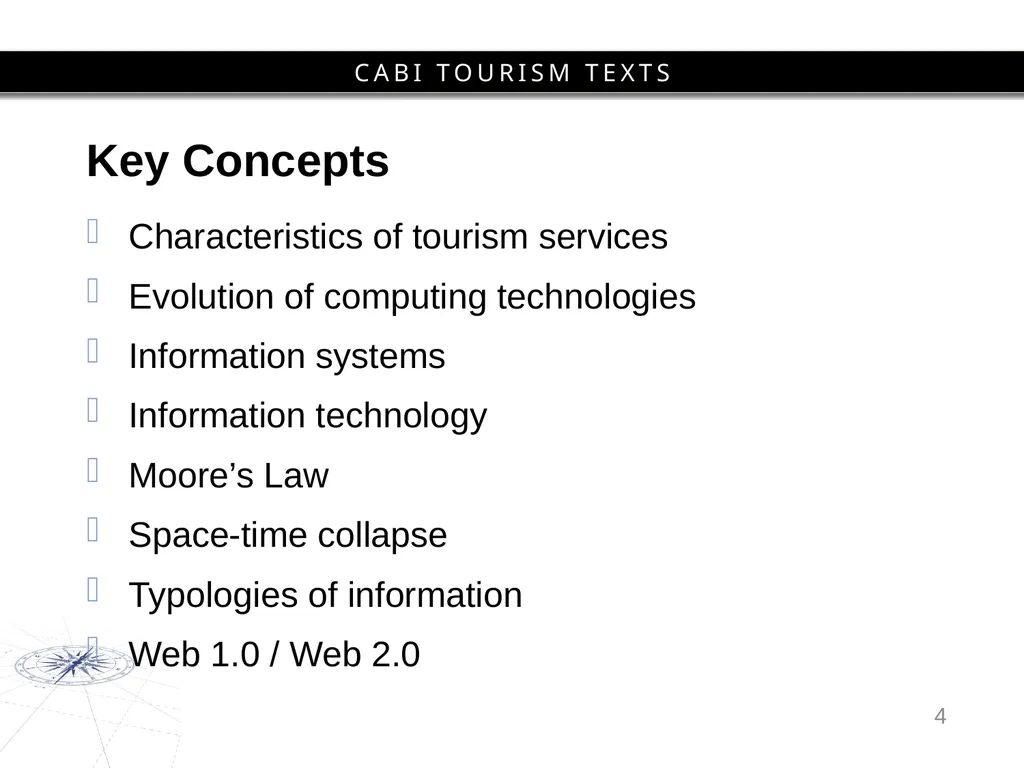
slide4. Key Concepts Characteristics of tourism services
Evolution of computing technologies
Information systems
Information technology
Moore’s Law
Space-time collapse
Typologies of information
Web 1.0 / Web 2.0 4<br>
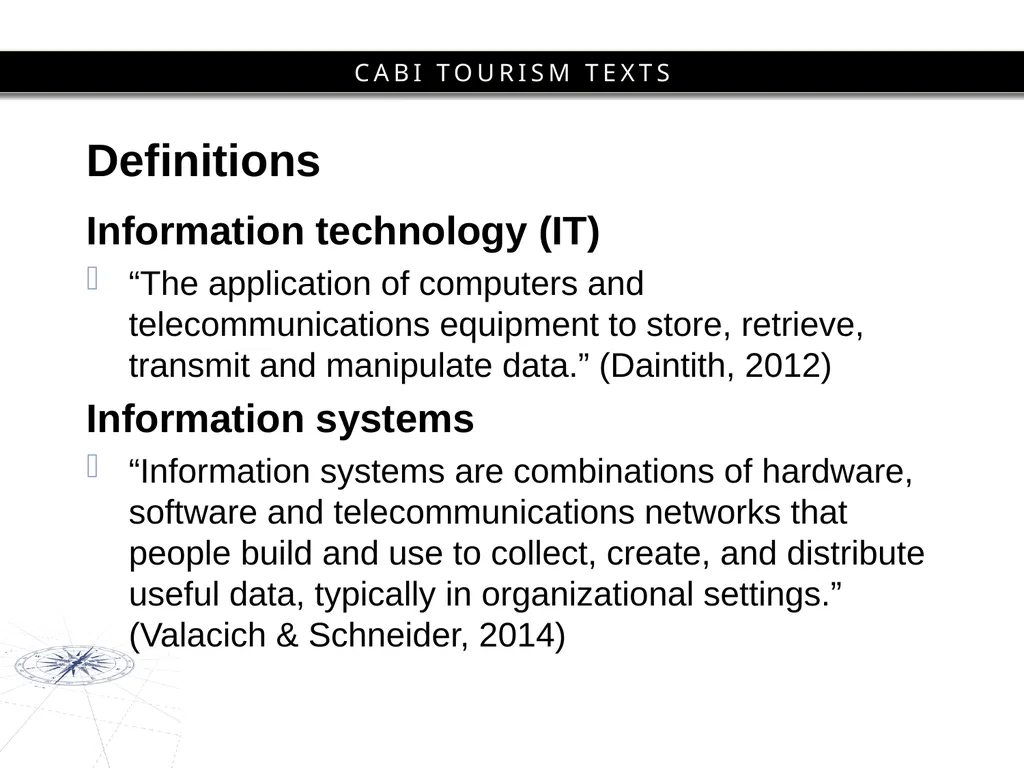
slide5. Definitions Information technology (IT)
“The application of computers and telecommunications equipment to store, retrieve, transmit and manipulate data.” (Daintith, 2012)
Information systems
“Information systems are combinations of hardware, software and telecommunications networks that people build and use to collect, create, and distribute useful data, typically in organizational settings.” (Valacich & Schneider, 2014)<br>
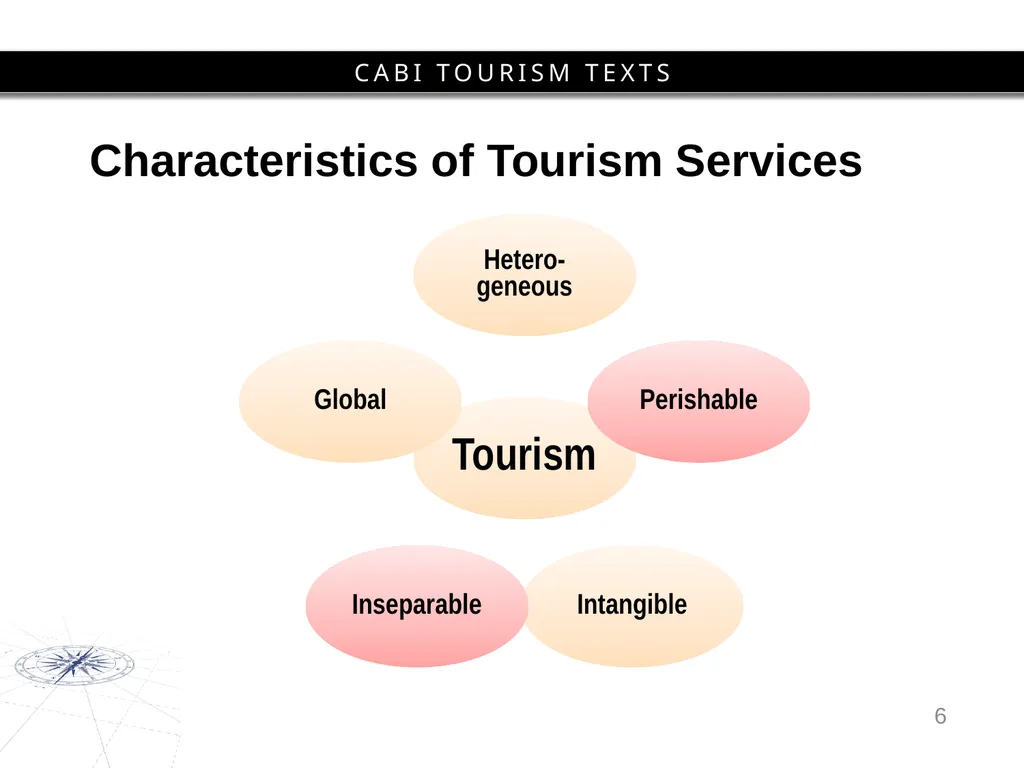
slide6. Characteristics of Tourism Services 6<br>
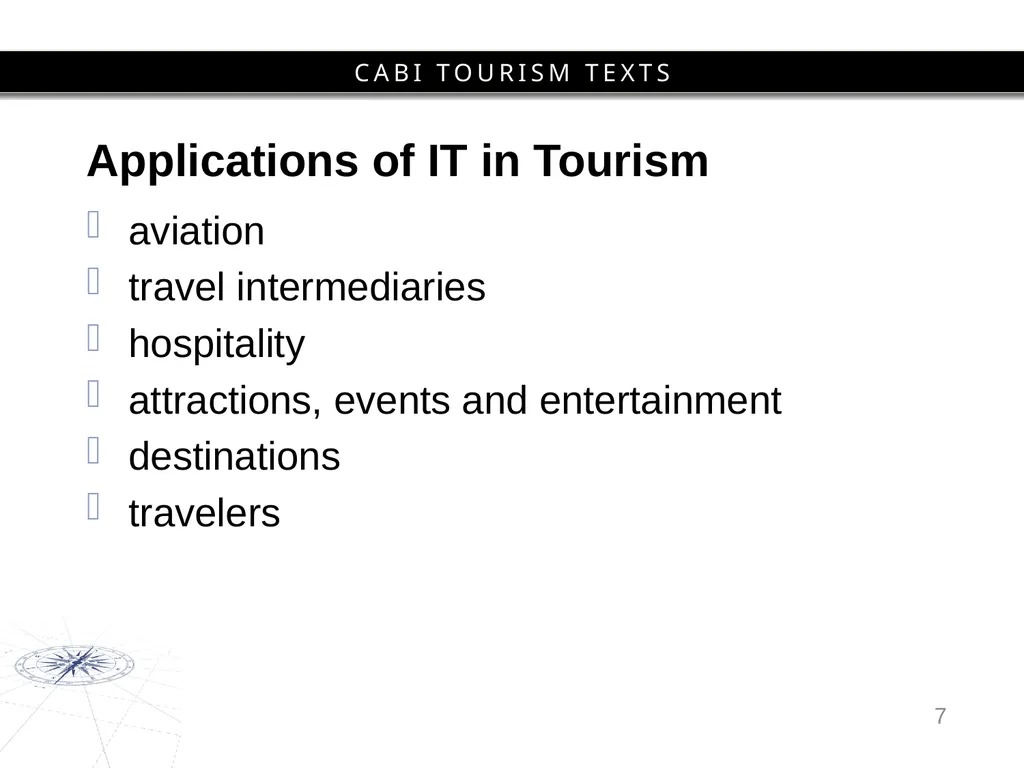
slide7. Applications of IT in Tourism aviation
travel intermediaries
hospitality
attractions, events and entertainment
destinations
travelers 7<br>
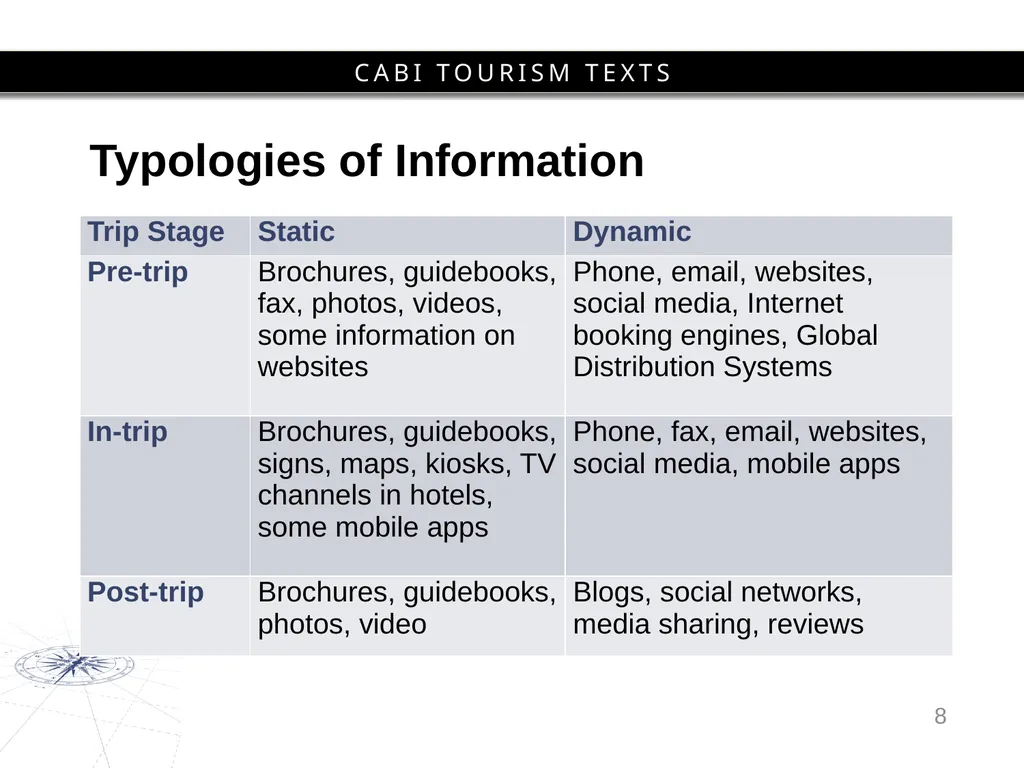
slide8. Typologies of Information 8<br>
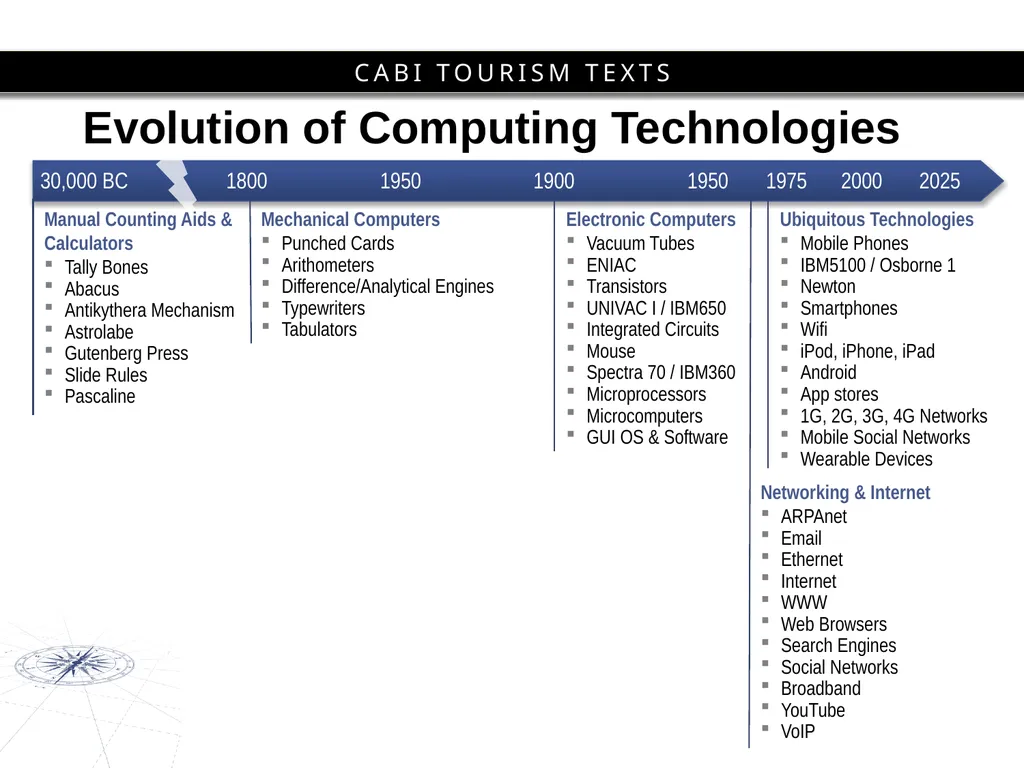
slide9. 30,000 BC 1800 1900 1950 1975 2000 2025 1950 Manual Counting Aids & Calculators
Tally Bones
Abacus
Antikythera Mechanism
Astrolabe
Gutenberg Press
Slide Rules
Pascaline Mechanical Computers
Punched Cards
Arithometers
Difference/Analytical Engines
Typewriters
Tabulators Ubiquitous Technologies
Mobile Phones
IBM5100 / Osborne 1
Newton
Smartphones
Wifi
iPod, iPhone, iPad
Android
App stores
1G, 2G, 3G, 4G Networks
Mobile Social Networks
Wearable Devices Electronic Computers
Vacuum Tubes
ENIAC
Transistors
UNIVAC I / IBM650
Integrated Circuits
Mouse
Spectra 70 / IBM360
Microprocessors
Microcomputers
GUI OS & Software Networking & Internet
ARPAnet
Email
Ethernet
Internet
WWW
Web Browsers
Search Engines
Social Networks
Broadband
YouTube
VoIP Evolution of Computing Technologies<br>
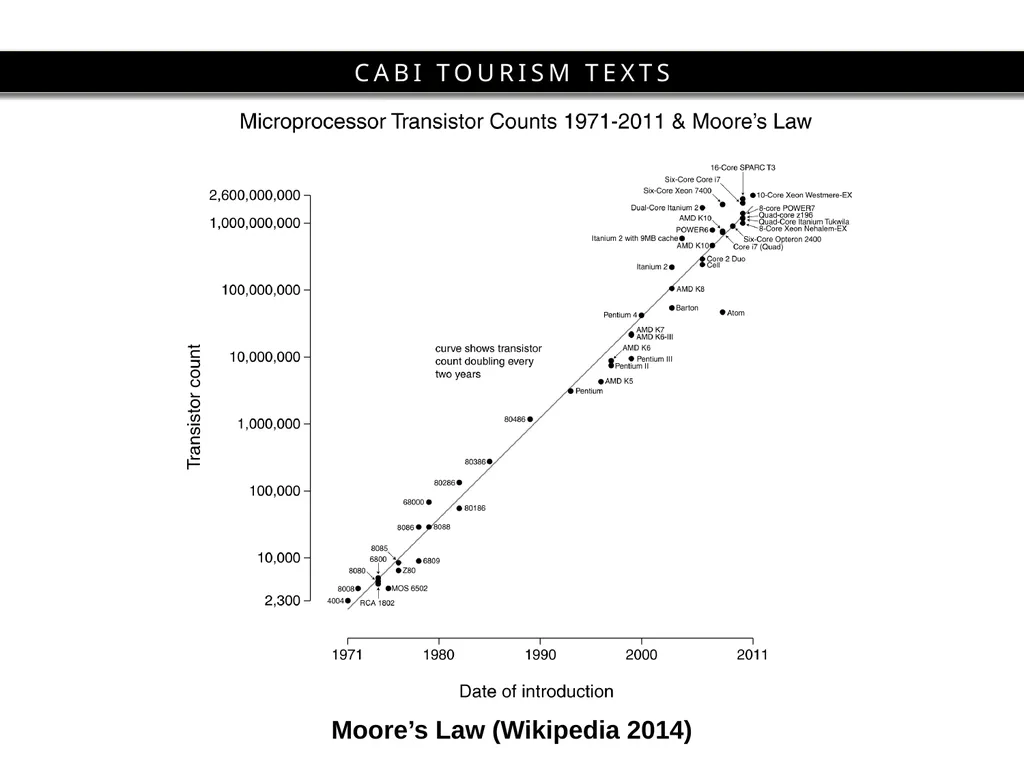
slide10. Moore’s Law (Wikipedia 2014)<br>
slide11. Airlines Paper High
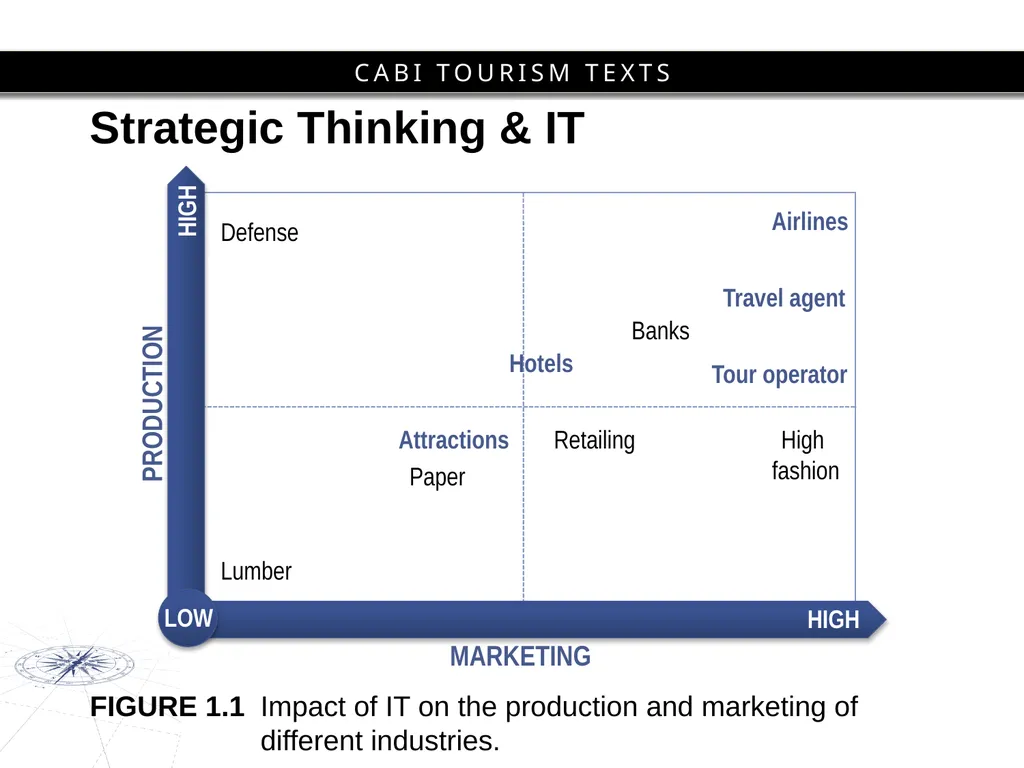
fashion Defense Lumber Banks Hotels Attractions Travel agent Tour operator Retailing PRODUCTION MARKETING LOW HIGH HIGH FIGURE 1.1 Impact of IT on the production and marketing of different industries. Strategic Thinking & IT<br>
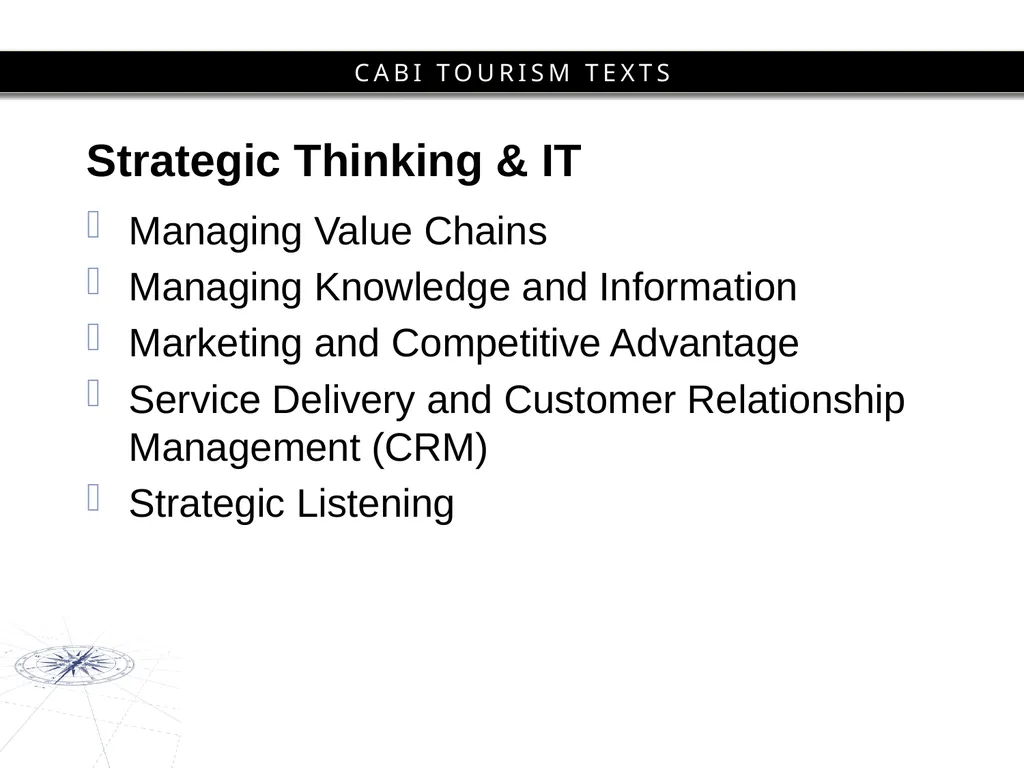
slide12. Strategic Thinking & IT Managing Value Chains
Managing Knowledge and Information
Marketing and Competitive Advantage
Service Delivery and Customer Relationship Management (CRM)
Strategic Listening<br>
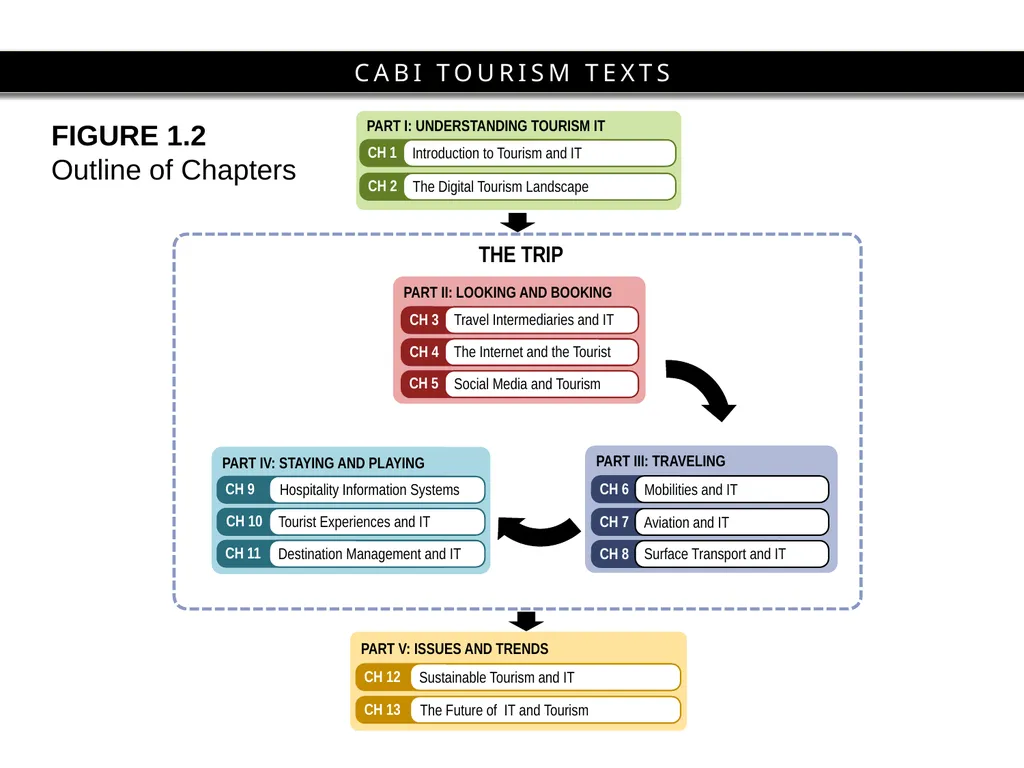
slide13. PART I: UNDERSTANDING TOURISM IT CH 1 Introduction to Tourism and IT CH 2 The Digital Tourism Landscape PART IV: STAYING AND PLAYING CH 9 Hospitality Information Systems CH 10 Tourist Experiences and IT CH 11 Destination Management and IT PART III: TRAVELING CH 7 Aviation and IT CH 8 Surface Transport and IT CH 6 Mobilities and IT CH 3 Travel Intermediaries and IT CH 4 The Internet and the Tourist CH 5 Social Media and Tourism PART II: LOOKING AND BOOKING CH 12 Sustainable Tourism and IT CH 13 The Future of IT and Tourism PART V: ISSUES AND TRENDS THE TRIP FIGURE 1.2 Outline of Chapters<br>
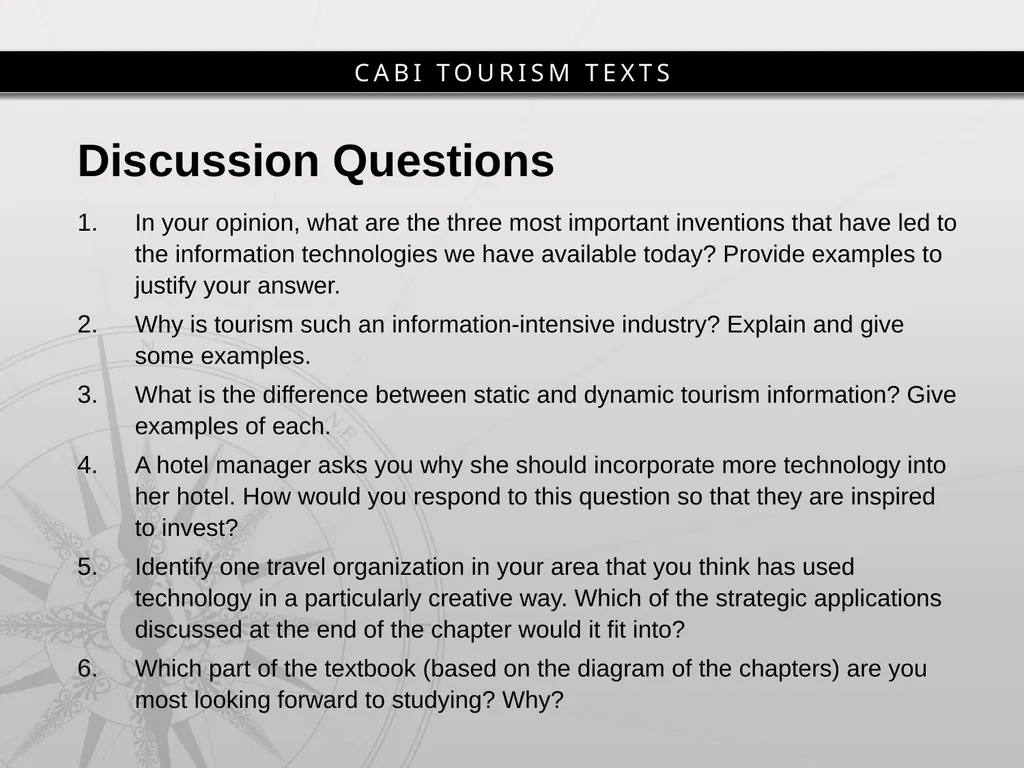
slide14. Discussion Questions In your opinion, what are the three most important inventions that have led to the information technologies we have available today? Provide examples to justify your answer.
Why is tourism such an information-intensive industry? Explain and give some examples.
What is the difference between static and dynamic tourism information? Give examples of each.
A hotel manager asks you why she should incorporate more technology into her hotel. How would you respond to this question so that they are inspired to invest?
Identify one travel organization in your area that you think has used technology in a particularly creative way. Which of the strategic applications discussed at the end of the chapter would it fit into?
Which part of the textbook (based on the diagram of the chapters) are you most looking forward to studying? Why?<br>
slide15. Useful Websites 15<br>
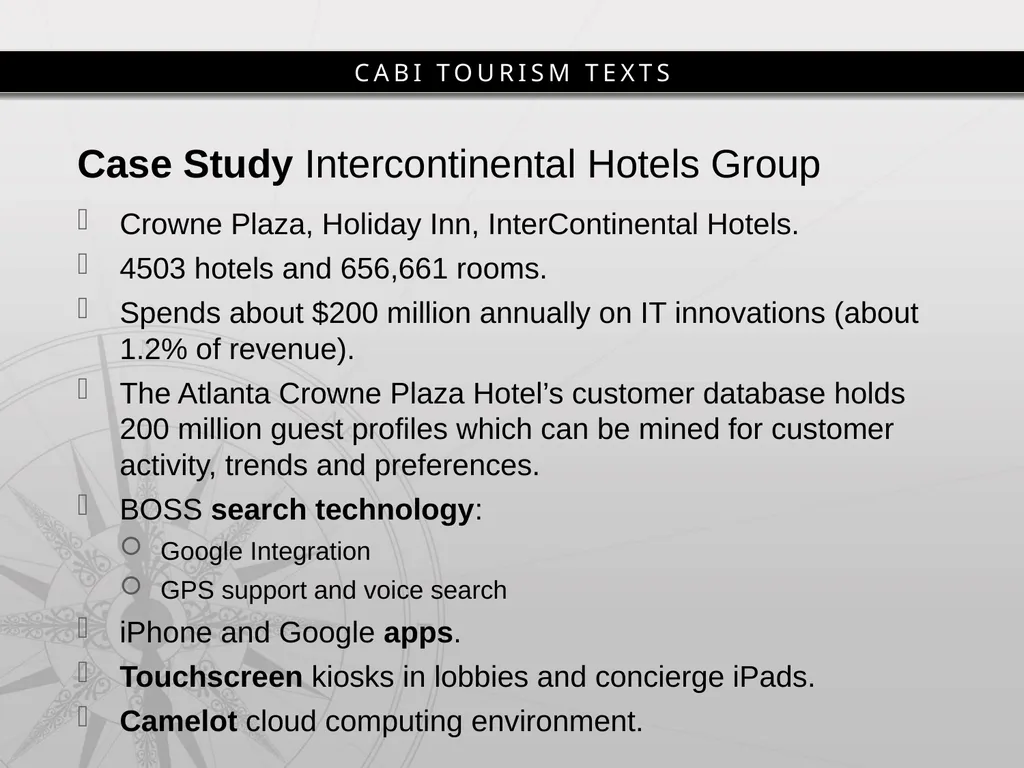
slide16. Case Study Intercontinental Hotels Group Crowne Plaza, Holiday Inn, InterContinental Hotels.
4503 hotels and 656,661 rooms.
Spends about $200 million annually on IT innovations (about 1.2% of revenue).
The Atlanta Crowne Plaza Hotel’s customer database holds 200 million guest profiles which can be mined for customer activity, trends and preferences.
BOSS search technology:
Google Integration
GPS support and voice search
iPhone and Google apps.
Touchscreen kiosks in lobbies and concierge iPads.
Camelot cloud computing environment.<br>
slide3. Chapter 1 Learning Objectives After studying this chapter you should be able to:
define key terms and concepts in information technology;
describe the evolution of information technology;
recognize the types of information technologies relevant to tourism;
explain the synergies between the travel industry and information technology; and
evaluate the strategic applications of information technology in tourism organizations and destinations.<br>
slide4. Key Concepts Characteristics of tourism services
Evolution of computing technologies
Information systems
Information technology
Moore’s Law
Space-time collapse
Typologies of information
Web 1.0 / Web 2.0 4<br>
slide5. Definitions Information technology (IT)
“The application of computers and telecommunications equipment to store, retrieve, transmit and manipulate data.” (Daintith, 2012)
Information systems
“Information systems are combinations of hardware, software and telecommunications networks that people build and use to collect, create, and distribute useful data, typically in organizational settings.” (Valacich & Schneider, 2014)<br>
slide6. Characteristics of Tourism Services 6<br>
slide7. Applications of IT in Tourism aviation
travel intermediaries
hospitality
attractions, events and entertainment
destinations
travelers 7<br>
slide8. Typologies of Information 8<br>
slide9. 30,000 BC 1800 1900 1950 1975 2000 2025 1950 Manual Counting Aids & Calculators
Tally Bones
Abacus
Antikythera Mechanism
Astrolabe
Gutenberg Press
Slide Rules
Pascaline Mechanical Computers
Punched Cards
Arithometers
Difference/Analytical Engines
Typewriters
Tabulators Ubiquitous Technologies
Mobile Phones
IBM5100 / Osborne 1
Newton
Smartphones
Wifi
iPod, iPhone, iPad
Android
App stores
1G, 2G, 3G, 4G Networks
Mobile Social Networks
Wearable Devices Electronic Computers
Vacuum Tubes
ENIAC
Transistors
UNIVAC I / IBM650
Integrated Circuits
Mouse
Spectra 70 / IBM360
Microprocessors
Microcomputers
GUI OS & Software Networking & Internet
ARPAnet
Ethernet
Internet
WWW
Web Browsers
Search Engines
Social Networks
Broadband
YouTube
VoIP Evolution of Computing Technologies<br>
slide10. Moore’s Law (Wikipedia 2014)<br>
slide11. Airlines Paper High
fashion Defense Lumber Banks Hotels Attractions Travel agent Tour operator Retailing PRODUCTION MARKETING LOW HIGH HIGH FIGURE 1.1 Impact of IT on the production and marketing of different industries. Strategic Thinking & IT<br>
slide12. Strategic Thinking & IT Managing Value Chains
Managing Knowledge and Information
Marketing and Competitive Advantage
Service Delivery and Customer Relationship Management (CRM)
Strategic Listening<br>
slide13. PART I: UNDERSTANDING TOURISM IT CH 1 Introduction to Tourism and IT CH 2 The Digital Tourism Landscape PART IV: STAYING AND PLAYING CH 9 Hospitality Information Systems CH 10 Tourist Experiences and IT CH 11 Destination Management and IT PART III: TRAVELING CH 7 Aviation and IT CH 8 Surface Transport and IT CH 6 Mobilities and IT CH 3 Travel Intermediaries and IT CH 4 The Internet and the Tourist CH 5 Social Media and Tourism PART II: LOOKING AND BOOKING CH 12 Sustainable Tourism and IT CH 13 The Future of IT and Tourism PART V: ISSUES AND TRENDS THE TRIP FIGURE 1.2 Outline of Chapters<br>
slide14. Discussion Questions In your opinion, what are the three most important inventions that have led to the information technologies we have available today? Provide examples to justify your answer.
Why is tourism such an information-intensive industry? Explain and give some examples.
What is the difference between static and dynamic tourism information? Give examples of each.
A hotel manager asks you why she should incorporate more technology into her hotel. How would you respond to this question so that they are inspired to invest?
Identify one travel organization in your area that you think has used technology in a particularly creative way. Which of the strategic applications discussed at the end of the chapter would it fit into?
Which part of the textbook (based on the diagram of the chapters) are you most looking forward to studying? Why?<br>
slide15. Useful Websites 15<br>
slide16. Case Study Intercontinental Hotels Group Crowne Plaza, Holiday Inn, InterContinental Hotels.
4503 hotels and 656,661 rooms.
Spends about $200 million annually on IT innovations (about 1.2% of revenue).
The Atlanta Crowne Plaza Hotel’s customer database holds 200 million guest profiles which can be mined for customer activity, trends and preferences.
BOSS search technology:
Google Integration
GPS support and voice search
iPhone and Google apps.
Touchscreen kiosks in lobbies and concierge iPads.
Camelot cloud computing environment.<br>