
Chapter 10 Narrative research Lewis P and Adney R.
A
Published · 30 slides · 0 views

1 / 1
Description
Chapter 10 Narrative research Lewis P and Adney R. (2014). In: Mills J and Birks M (eds) Qualitative methodologies: A practical guide. London: Sage Publications Learning objectives Discuss the philosophical underpinnings of narrative
Related Topics
Share
Embed code
Download this presentation From Below
"Chapter 10 Narrative research Lewis P and Adney R." is the property of its rightful owner. Permission is granted to download and print the materials on this website for personal, non-commercial use only, and to display it on your personal computer provided you do not modify the materials and that you retain all copyright notices contained in the materials. By downloading content from our website, you accept the terms of this agreement.
Presentation Transcript
01
Chapter 10
Narrative research Lewis P and Adney R. (2014). In: Mills J and Birks M (eds) Qualitative methodologies: A practical guide. London: Sage Publications<br>
02
Learning objectives Discuss the philosophical underpinnings of narrative inquiry
Outline the key philosophies involved in the development of narrative inquiry
Describe the different types of narrative inquiry
Reflect on the ethical responsibility of the positioning of the researcher undertaking narrative inquiry
Summarize strategies for data generation and analysis in narrative inquiry
Critique mechanisms for ensuring rigour and quality in narrative inquiry<br>
03
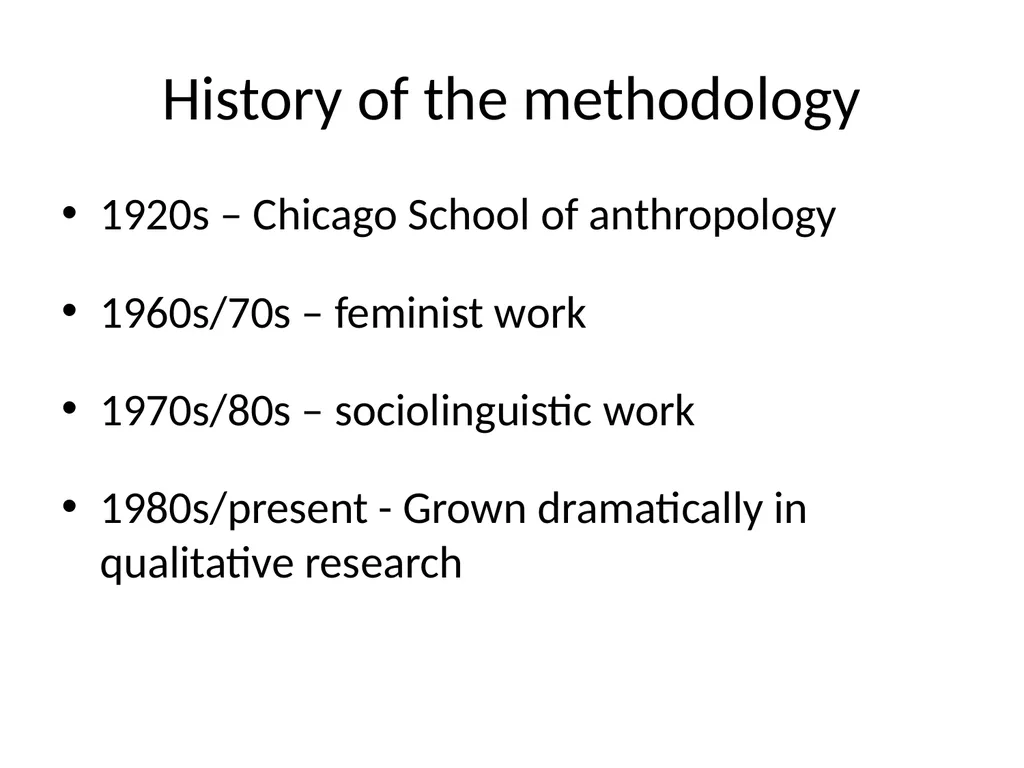
History of the methodology 1920s – Chicago School of anthropology
1960s/70s – feminist work
1970s/80s – sociolinguistic work
1980s/present - Grown dramatically in qualitative research<br>
1960s/70s – feminist work
1970s/80s – sociolinguistic work
1980s/present - Grown dramatically in qualitative research<br>
04
History of the methodology Story is our primary mode of making meaning and understanding of lived experience
Narrative work involves different methods: autobiography, auto-ethnography, narrative performance & narrative inquiry
Story is the common thread<br>
Narrative work involves different methods: autobiography, auto-ethnography, narrative performance & narrative inquiry
Story is the common thread<br>
05
History of the methodology Narrative inquiry as a methodology
Can be used in multiple disciplines
Well suited to social science questions and human inquiries
Inquiry into stories creates an educative experience as individuals interpret their own and others’ experiences<br>
Can be used in multiple disciplines
Well suited to social science questions and human inquiries
Inquiry into stories creates an educative experience as individuals interpret their own and others’ experiences<br>
06
History of the methodology Narrative inquiry should not be confused with narrative analysis
Narrative analysis predates narrative inquiry
Emerged in the 1960s post-positivist movement<br>
Narrative analysis predates narrative inquiry
Emerged in the 1960s post-positivist movement<br>
07
History of the methodology Narrative analysis positions the researcher as the sole interpreter of narratives
Narrative analysis discounts the meanings that readers/listeners bring to text
Narrative analysis discounts “the fact that language [stories] creates rather that mirrors reality” (Denzin, 1997: 224)<br>
Narrative analysis discounts the meanings that readers/listeners bring to text
Narrative analysis discounts “the fact that language [stories] creates rather that mirrors reality” (Denzin, 1997: 224)<br>
08
History of the methodology Narrative inquirers structure a self-narrative through living, telling, re-telling and reliving (Connelly and Clandinin, 2006)
Narratives are not fixed temporally
Inherent reflexivity demands the researcher’s attention as story emerges and changes through multiple iterations<br>
Narratives are not fixed temporally
Inherent reflexivity demands the researcher’s attention as story emerges and changes through multiple iterations<br>
09
Philosophical underpinnings Influenced by ethnography, phenomenology, phenomenological hermeneutics, narrative psychology & literary studies
Espouses the belief that humans and non-humans are best studied in their natural settings
Individuals’ stories often disrupt or run counter to larger, accepted dominant narratives<br>
Espouses the belief that humans and non-humans are best studied in their natural settings
Individuals’ stories often disrupt or run counter to larger, accepted dominant narratives<br>
10
Philosophical underpinnings Distinct features of narrative inquiry include:
Oral and written narrative are treated as distinct forms of discourse
Communicates the narrator’s point of view
Explain why the narrative is worth telling
Pay attention to emotions, thoughts and interpretations (Chase, 2005)<br>
Oral and written narrative are treated as distinct forms of discourse
Communicates the narrator’s point of view
Explain why the narrative is worth telling
Pay attention to emotions, thoughts and interpretations (Chase, 2005)<br>
11
Positioning of the researcher Fundamental to ask: How am I positioned in this narrative?
Researcher and co-researcher(s) are intimately engaged in the story of relationship
Researcher – participant relationships may be intense, personal and conflicting<br>
Researcher and co-researcher(s) are intimately engaged in the story of relationship
Researcher – participant relationships may be intense, personal and conflicting<br>
12
Positioning of the researcher Narratives promote social justice
Enable historically marginalized and silenced peoples to tell their stories
Need to consider how the hierarchy of power can be negotiated, balanced, flattened, disrupted or exacerbated<br>
Enable historically marginalized and silenced peoples to tell their stories
Need to consider how the hierarchy of power can be negotiated, balanced, flattened, disrupted or exacerbated<br>
13
Aligning philosophy and methodology with purpose Need firstly to determine what is your research question?
Research methodology should not be predetermined
Need to ask if narrative research fits your research question<br>
Research methodology should not be predetermined
Need to ask if narrative research fits your research question<br>
14
Aligning philosophy and methodology with purpose Narrative inquirers are interested in inclusion in research
Enable stories and observations to be revealed by participants telling their own stories
Study the unremarkable, routine and ordinary and raise awareness and questions around practice<br>
Enable stories and observations to be revealed by participants telling their own stories
Study the unremarkable, routine and ordinary and raise awareness and questions around practice<br>
15
Data generation and collection Data collection may include one or more of the following:
participant stories
conversation
field notes poetry
imagined dialogue
artwork<br>
participant stories
conversation
field notes poetry
imagined dialogue
artwork<br>
16
Data generation and collection Managing data may include concurrent data collection and analysis
Enables new insights, questions and connections to emerge
Recruiting participants may require preliminary relationship building
No required sample size - may range from one to many<br>
Enables new insights, questions and connections to emerge
Recruiting participants may require preliminary relationship building
No required sample size - may range from one to many<br>
17
Data generation and collection Means of collecting data: personal journal, digital audio-visual, digital camera, observation notebook, artwork, artifacts
Think broadly and creatively about what defines data: photographs, poetry, artwork, playlets, digital media, imagined dialogue<br>
Think broadly and creatively about what defines data: photographs, poetry, artwork, playlets, digital media, imagined dialogue<br>
18
Data generation and collection Questions around quantity of data
Better to see small and understand a piece of the puzzle and then fit that into a larger picture
Consider how your own data collection (writing notes, taking photos etc.) may interrupt relationships with participants<br>
Better to see small and understand a piece of the puzzle and then fit that into a larger picture
Consider how your own data collection (writing notes, taking photos etc.) may interrupt relationships with participants<br>
19
Analysis of data How do you write about ‘other’?
Develop your own voice even as you construct others’ voices and realities (Chase, 2005)
Temporality, sociality and place underpin narrative studies (Clandinin and Connelly, 2000)
Use as checkpoints, especially for novice researchers (refer box 10.1 in textbook)<br>
Develop your own voice even as you construct others’ voices and realities (Chase, 2005)
Temporality, sociality and place underpin narrative studies (Clandinin and Connelly, 2000)
Use as checkpoints, especially for novice researchers (refer box 10.1 in textbook)<br>
20
Analysis of data Attend to the small seemingly routine or ordinary occurrences while watching the larger picture
Read and re-read fieldnotes
Look for commonalities, patterns & connections
Be prepared for surprises<br>
Read and re-read fieldnotes
Look for commonalities, patterns & connections
Be prepared for surprises<br>
21
Quality and rigour “that’s a good story, but is it really research” (Ceglowski, 1997: 195)
Researchers often challenged on the authenticity of their narrative inquiries
Human science approaches are concerned with finding meaning not measurements
Need for evidence, interpretive plausibility, logical construction and disciplined thought (Connelly and Clandinin, 2006)<br>
Researchers often challenged on the authenticity of their narrative inquiries
Human science approaches are concerned with finding meaning not measurements
Need for evidence, interpretive plausibility, logical construction and disciplined thought (Connelly and Clandinin, 2006)<br>
22
Quality and rigour Narrative inquiry does not claim some bold TRUTH but provides some truths about human beings and being human
Believability, authenticity, quality, power and authority are at the nexus of validity in narrative research
Believability means: to hold dear, love; to like, desire
Authenticity means: original, principal and genuine<br>
Believability, authenticity, quality, power and authority are at the nexus of validity in narrative research
Believability means: to hold dear, love; to like, desire
Authenticity means: original, principal and genuine<br>
23
Quality and rigour When we tell a story we are making a bid for power (Toolan, 1988)
Shifting researchers’ sense of trust from method to relationship
“We invest our trust in our methods not in out relationships” (Hendry, 2007: 493)
Story is relationships not methods<br>
Shifting researchers’ sense of trust from method to relationship
“We invest our trust in our methods not in out relationships” (Hendry, 2007: 493)
Story is relationships not methods<br>
24
Quality and rigour Narrative is the methodology
Storytelling is the method
Stories and storytelling are the authentic form of research<br>
Storytelling is the method
Stories and storytelling are the authentic form of research<br>
25
Ethical concerns and relational responsibility Centrality of relationship in the research process
Respect for participants offering of stories
Research is less about interpretation and more about faith – trust the stories and the storyteller (Hendry, 2007)<br>
Respect for participants offering of stories
Research is less about interpretation and more about faith – trust the stories and the storyteller (Hendry, 2007)<br>
26
Ethical concerns and relational responsibility Relational responsibility begins before the inquiry, grows and develops during the inquiry and continues after the inquiry
Represent stories so that they do no harm
Listen the storyteller’s narrative into being<br>
Represent stories so that they do no harm
Listen the storyteller’s narrative into being<br>
27
Presentation and dissemination of findings Think about your audience
Think about the format you will use to present your findings i.e. poetry, theatre, film, video, imagined dialogue, creating a website
Determine a writing genre that is fair and genuine<br>
Think about the format you will use to present your findings i.e. poetry, theatre, film, video, imagined dialogue, creating a website
Determine a writing genre that is fair and genuine<br>
28
Presentation and dissemination of findings Narrative research does not result in one definitive finding or conclusion
Findings cannot be predicted
Narrative inquiry looks for understanding and meaning<br>
Findings cannot be predicted
Narrative inquiry looks for understanding and meaning<br>
29
Summary Developed in the early 20th century
In and through narrative meaning making we gain insight and understanding of lived experience
“We are stories and stories are us” (Lewis and Adeney, 2014)<br>
In and through narrative meaning making we gain insight and understanding of lived experience
“We are stories and stories are us” (Lewis and Adeney, 2014)<br>
30
References Ceglowski D. (1997) That’s a good story, but is it really research? Qualitative Inquiry 3: 188-201.
Chase S. (2005) Narrative Inquiry: Multiple lenses, approaches, voices In: Denzin N and Linclon Y (eds) Handbook of Qualitative Research Thousand Oaks: Sage, 651-679.
Clandinin D and Connelly M. (2000) Narrative inquiry: Experience and story in qualitative research, San Francisco: Jossey-Bass.
Connelly F and Clandinin D. (2006) Narrative Inquiry In: Green J, Camilli G and Elmore P (eds) Handbook of complementary methods in education research. Mahwah, NJ: Lawrence Erlbaum, 375-385.
Denzin N. (1997) Interpretive ethnography: Ethnographic practices for the 21st century, Thousand Oaks: Sage.
Hendry M. (2007) The future of narrative. Qualitative Inquiry 13: 487-498.
Toolan M. (1988) Narrative: a critical linguistic introduction, New York: Routledge.<br>