Chapter 10 Tourist Experiences and Information Technology Chapter 10 Learning Objectives After studying this chapter you should be able to: explain the role that IT plays in attracting visitors to attractions and events; analyze the
"Chapter 10 Tourist Experiences and Information" is the property of its rightful owner. Permission is granted to
download and print the materials on this website for personal, non-commercial use only, and to display it
on your personal computer provided you do not modify the materials and that you retain all copyright
notices contained in the materials. By downloading content from our website, you accept the terms of this
agreement.
Presentation Transcript
01
Chapter 10 Tourist Experiences and Information Technology<br>
02
Chapter 10 Learning Objectives After studying this chapter you should be able to:
explain the role that IT plays in attracting visitors to attractions and events;
analyze the different roles of IT in the staging of memorable attraction and event experiences;
understand how It can disrupt or destroy some visitor experiences; and
apply various IT solutions to the management of visitors in attraction and event settings.<br>
03
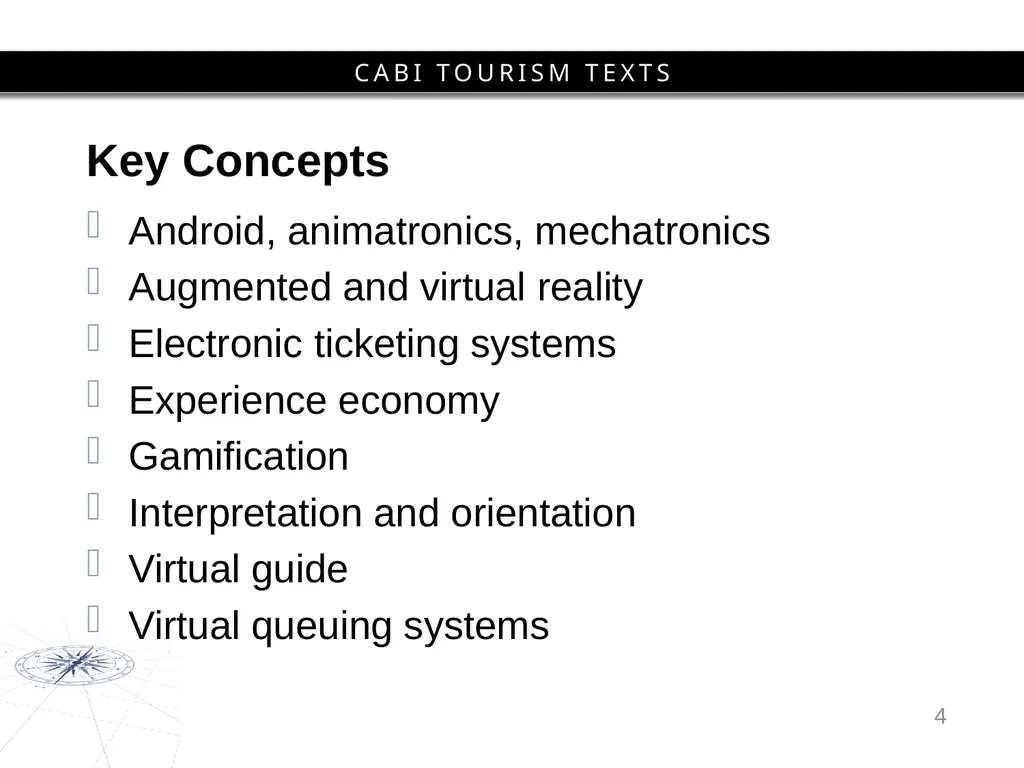
Key Concepts Android, animatronics, mechatronics
Augmented and virtual reality
Electronic ticketing systems
Experience economy
Gamification
Interpretation and orientation
Virtual guide
Virtual queuing systems 4<br>
04
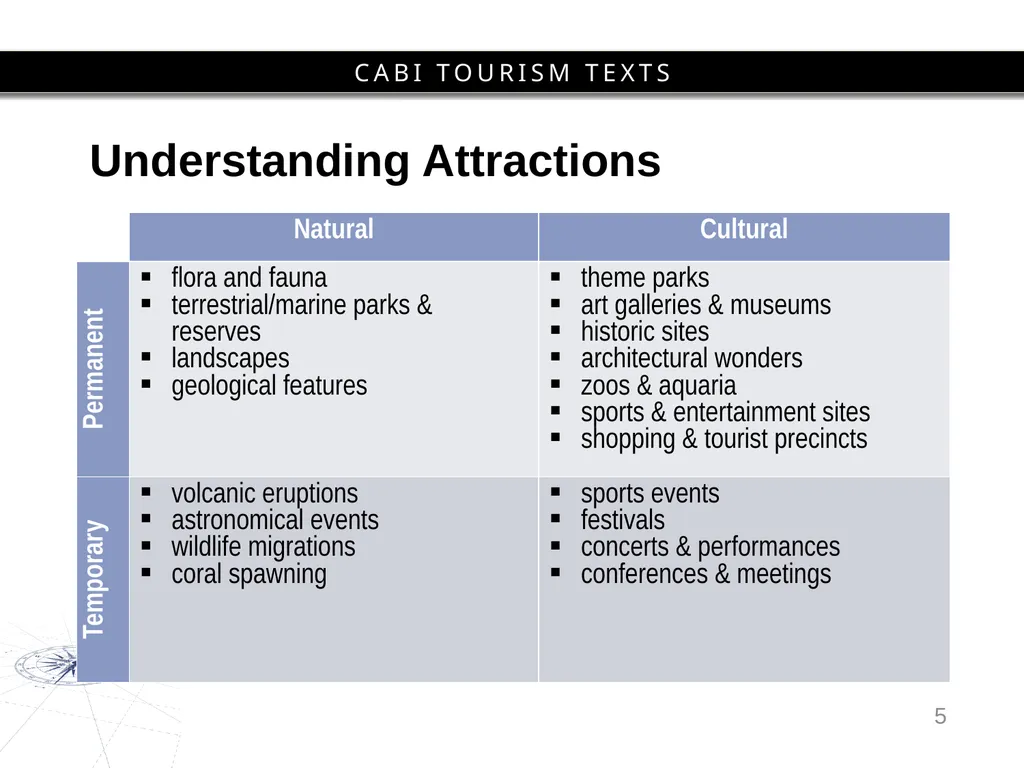
Understanding Attractions 5<br>
05
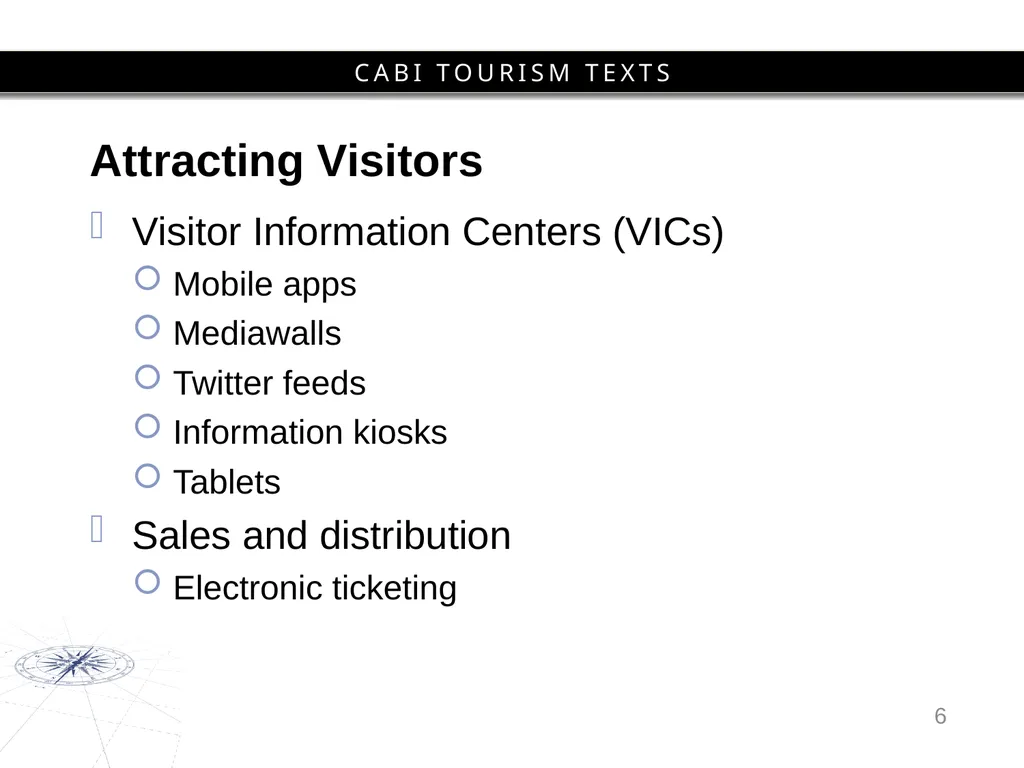
Visitor Information Centers (VICs)
Mobile apps
Mediawalls
Twitter feeds
Information kiosks
Tablets
Sales and distribution
Electronic ticketing Attracting Visitors 6<br>
06
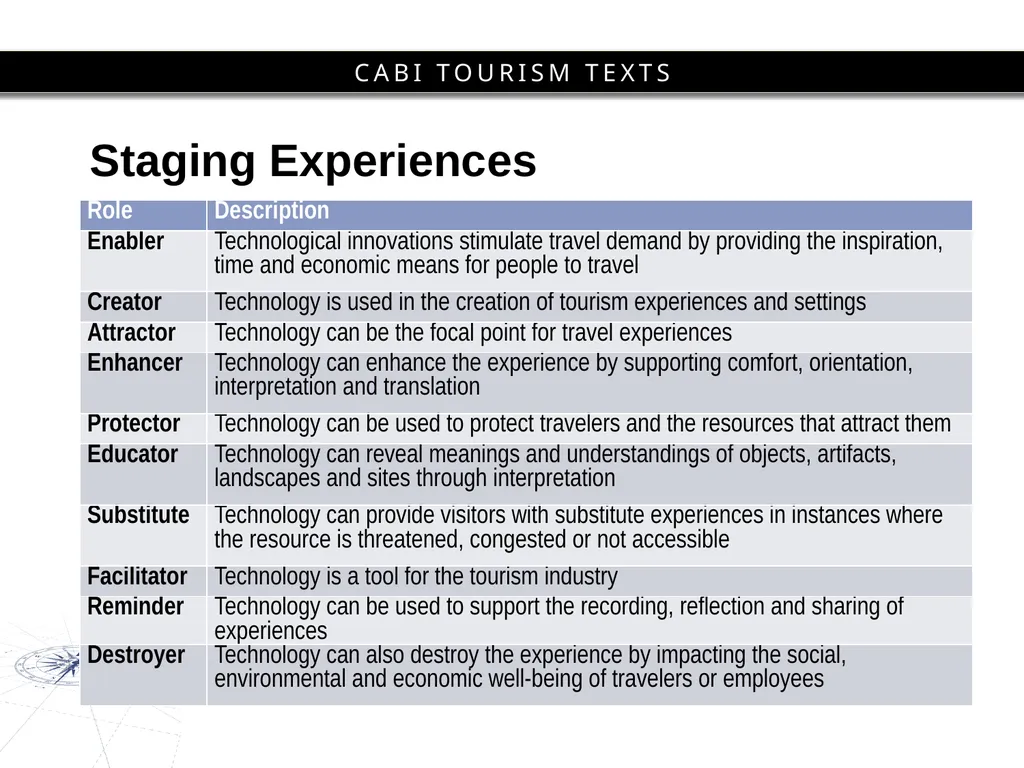
Staging Experiences<br>
07
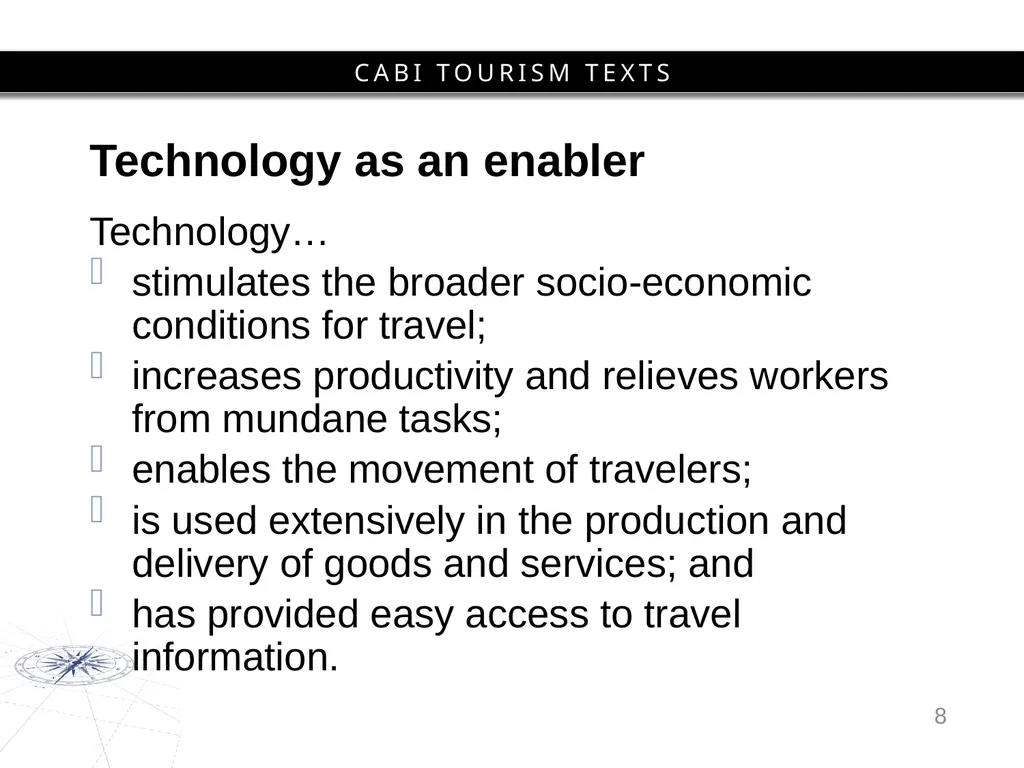
Technology…
stimulates the broader socio-economic conditions for travel;
increases productivity and relieves workers from mundane tasks;
enables the movement of travelers;
is used extensively in the production and delivery of goods and services; and
has provided easy access to travel information. Technology as an enabler 8<br>
08
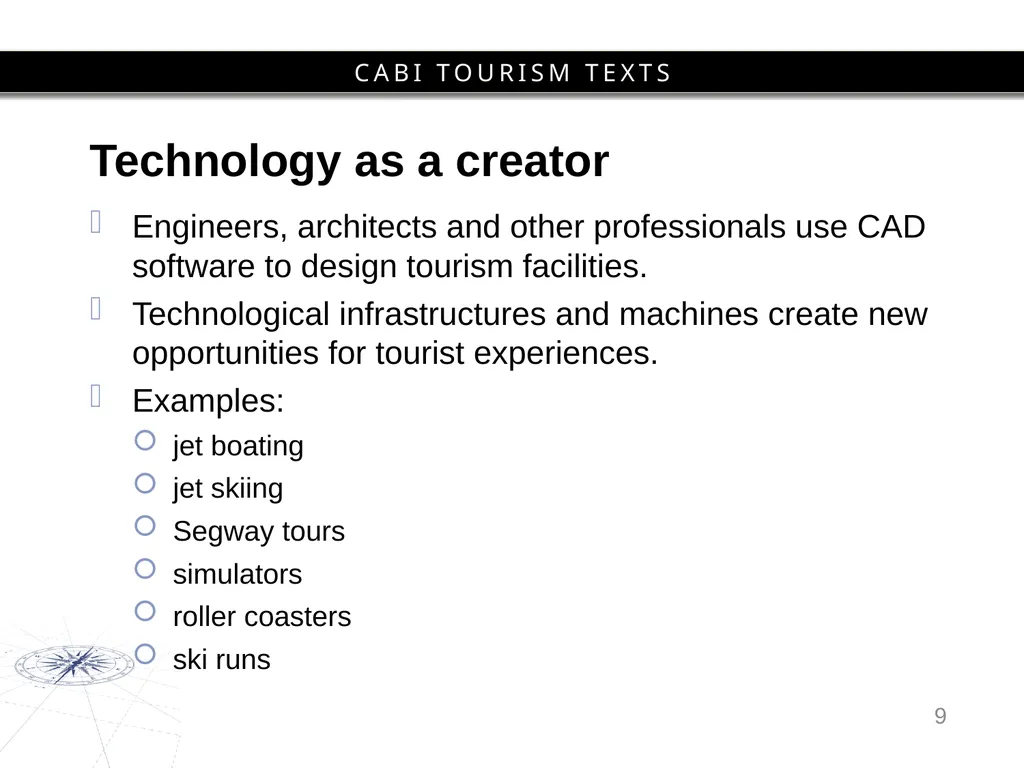
Engineers, architects and other professionals use CAD software to design tourism facilities.
Technological infrastructures and machines create new opportunities for tourist experiences.
Examples:
jet boating
jet skiing
Segway tours
simulators
roller coasters
ski runs Technology as a creator 9<br>
09
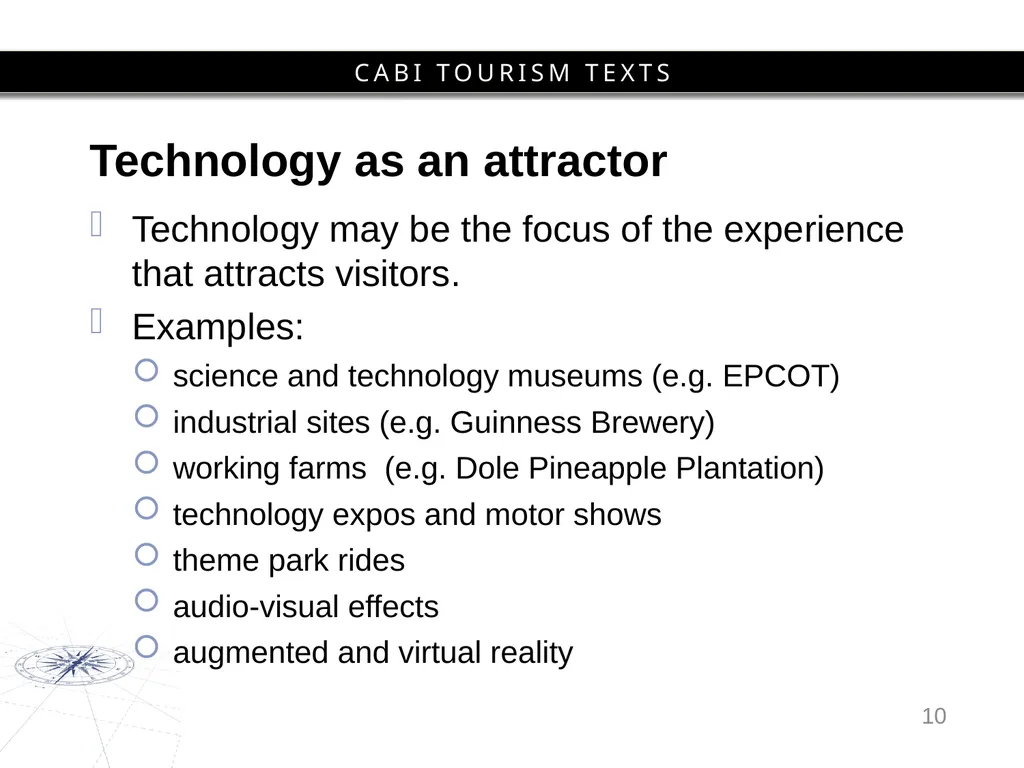
Technology may be the focus of the experience that attracts visitors.
Examples:
science and technology museums (e.g. EPCOT)
industrial sites (e.g. Guinness Brewery)
working farms (e.g. Dole Pineapple Plantation)
technology expos and motor shows
theme park rides
audio-visual effects
augmented and virtual reality Technology as an attractor 10<br>
10
visitor orientation
translation
communication and translation
planning and scheduling Technology as an enhancer 11<br>
11
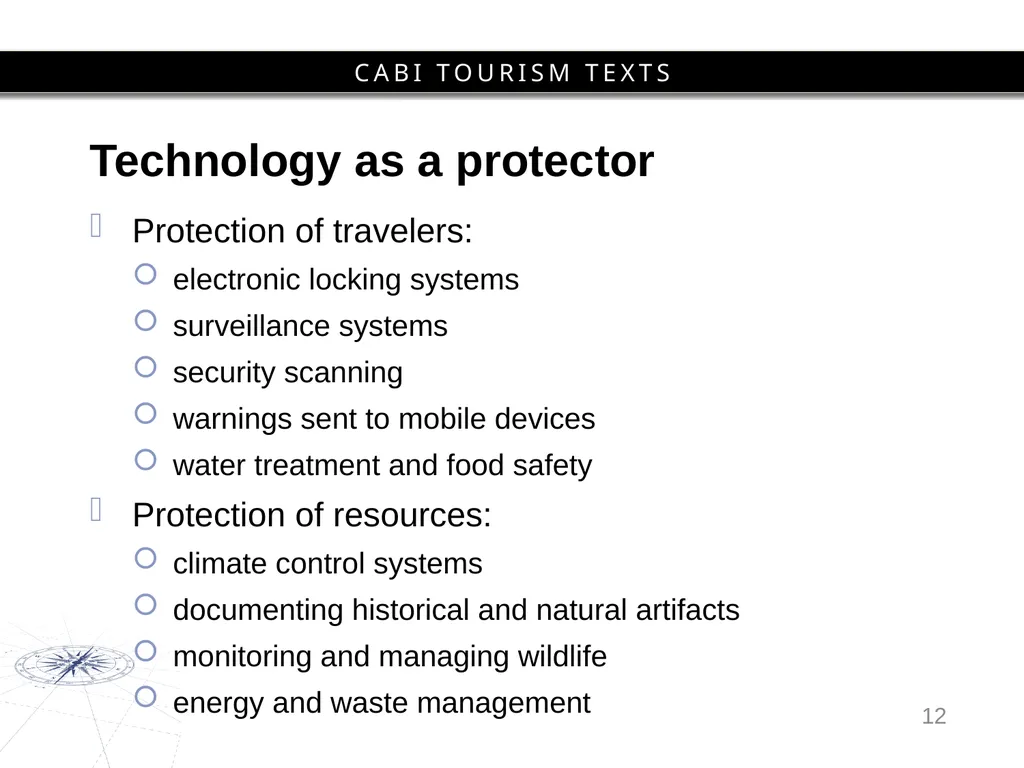
Protection of travelers:
electronic locking systems
surveillance systems
security scanning
warnings sent to mobile devices
water treatment and food safety
Protection of resources:
climate control systems
documenting historical and natural artifacts
monitoring and managing wildlife
energy and waste management Technology as a protector 12<br>
12
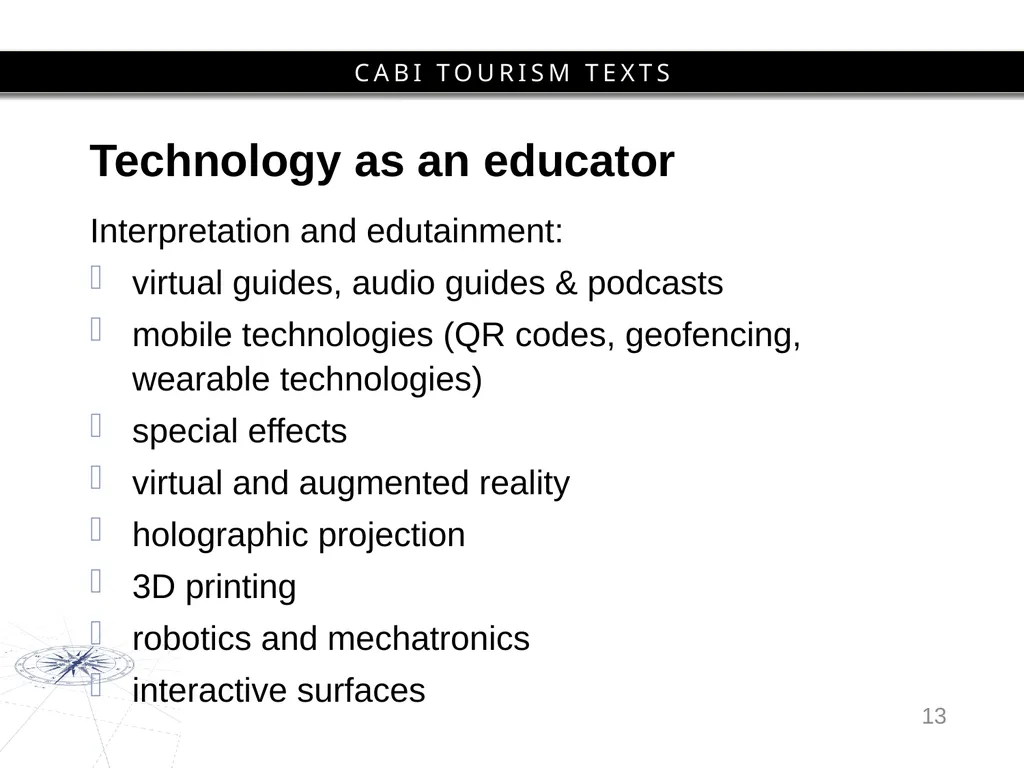
Interpretation and edutainment:
virtual guides, audio guides & podcasts
mobile technologies (QR codes, geofencing, wearable technologies)
special effects
virtual and augmented reality
holographic projection
3D printing
robotics and mechatronics
interactive surfaces Technology as an educator 13<br>
13
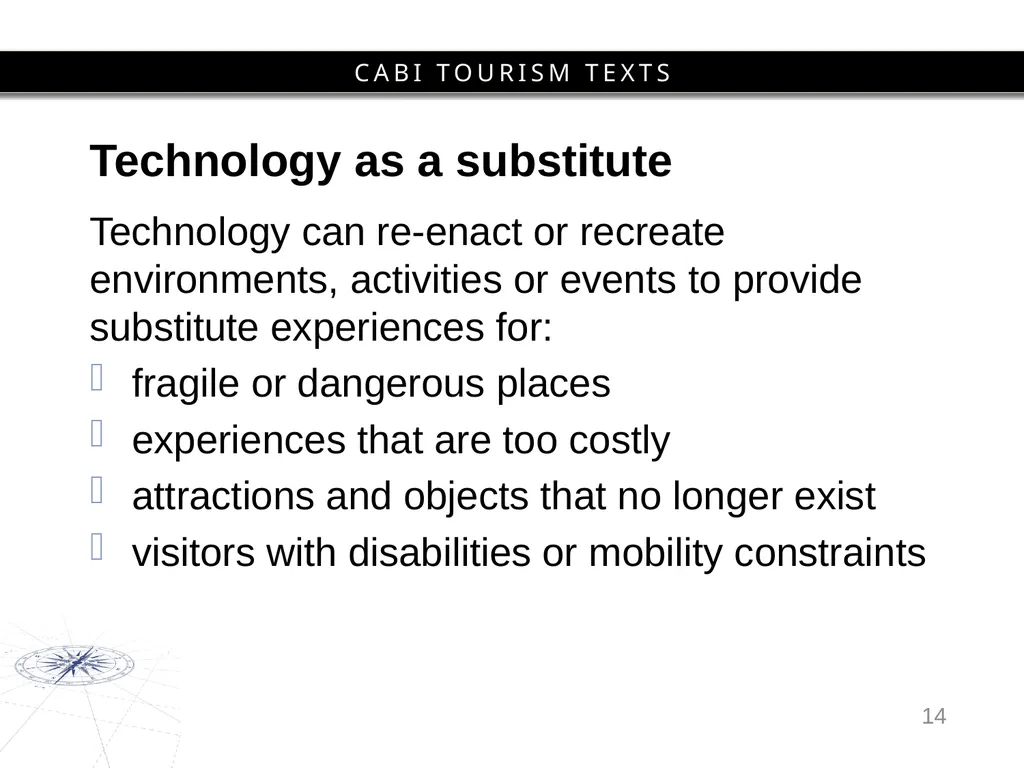
Technology can re-enact or recreate environments, activities or events to provide substitute experiences for:
fragile or dangerous places
experiences that are too costly
attractions and objects that no longer exist
visitors with disabilities or mobility constraints Technology as a substitute 14<br>
14
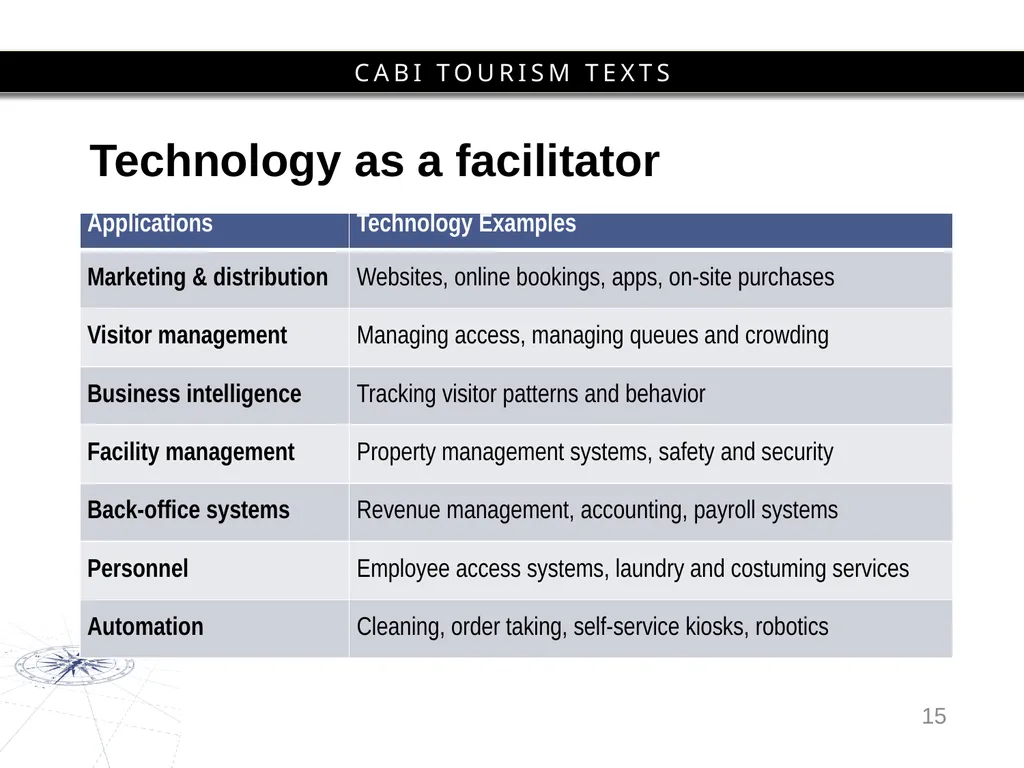
Technology as a facilitator 15<br>
15
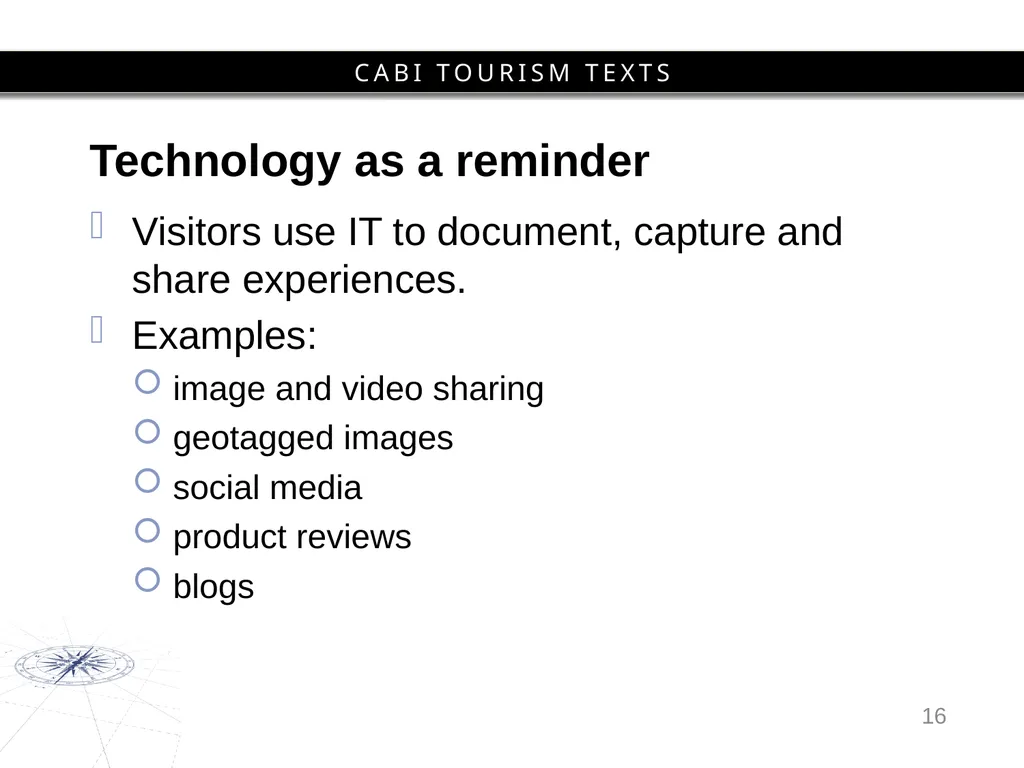
Visitors use IT to document, capture and share experiences.
Examples:
image and video sharing
geotagged images
social media
product reviews
blogs Technology as a reminder 16<br>
16
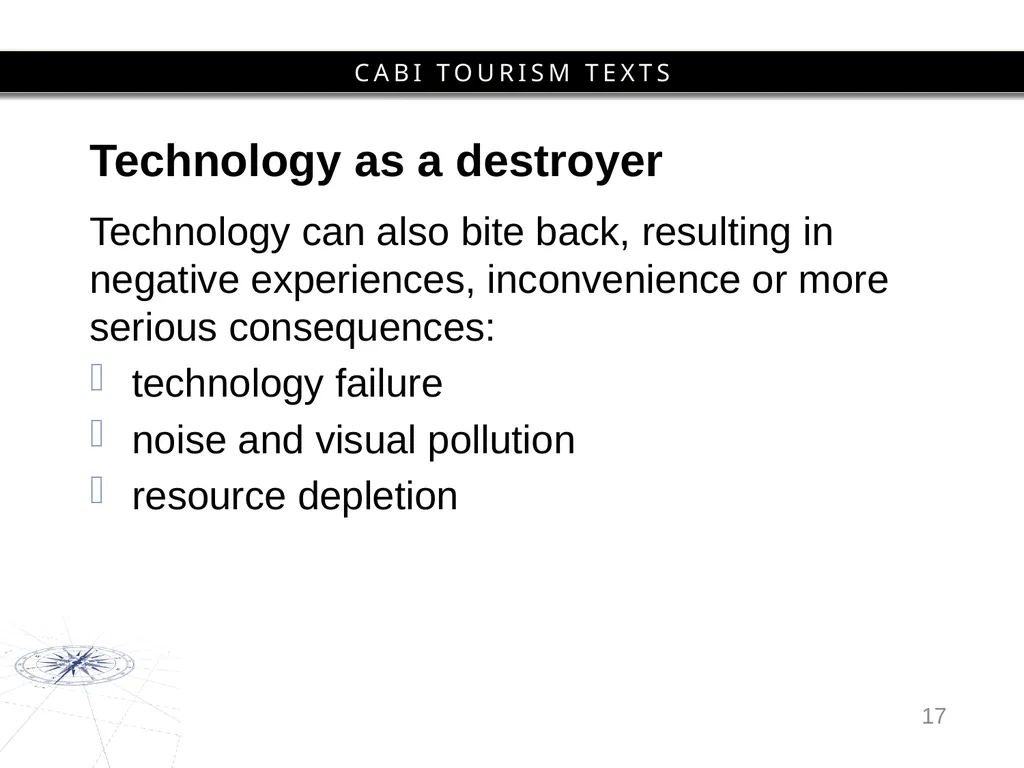
Technology can also bite back, resulting in negative experiences, inconvenience or more serious consequences:
technology failure
noise and visual pollution
resource depletion Technology as a destroyer 17<br>
17
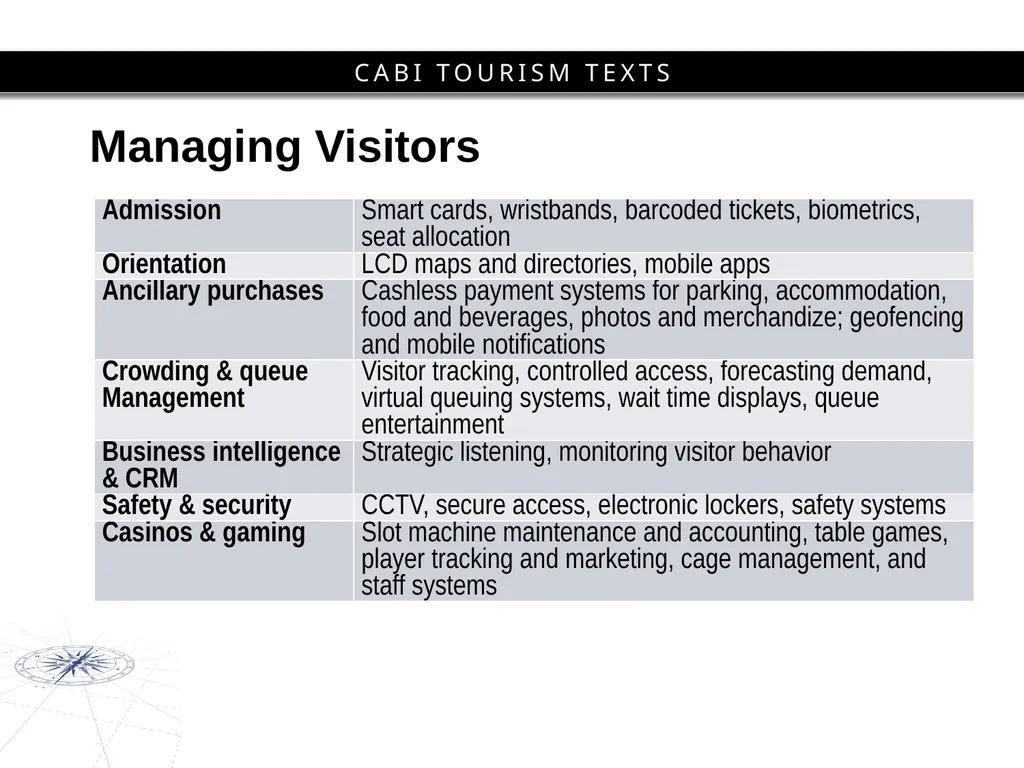
Managing Visitors<br>
18
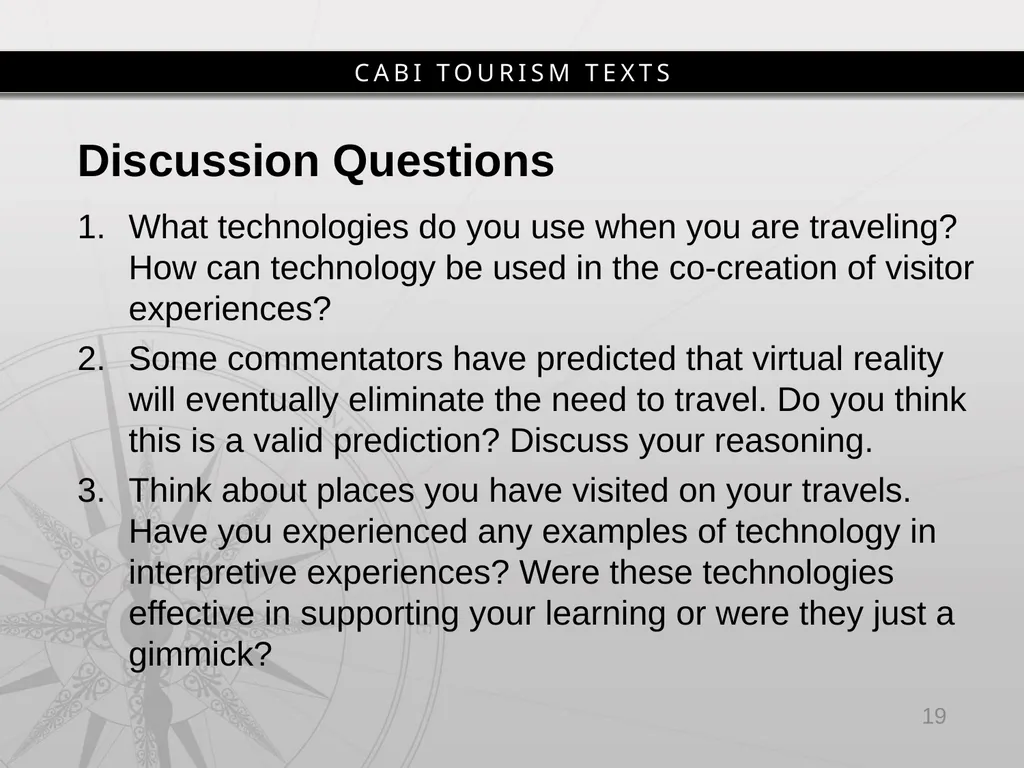
Discussion Questions What technologies do you use when you are traveling? How can technology be used in the co-creation of visitor experiences?
Some commentators have predicted that virtual reality will eventually eliminate the need to travel. Do you think this is a valid prediction? Discuss your reasoning.
Think about places you have visited on your travels. Have you experienced any examples of technology in interpretive experiences? Were these technologies effective in supporting your learning or were they just a gimmick? 19<br>
19
Discussion Questions In this chapter we explored some of the challenges and opportunities of using IT for interpretation. What are some of the operational advantages and disadvantages of using technology in the creation of experiences?
Does the use of technology in attractions erode or enhance opportunities for high touch experiences? Discuss your reasoning and compare your points with other students. 20<br>
20
Useful Websites 21<br>
21
Case Study: Walt Disney Company Any sufficiently advanced technology is indistinguishable from magic (Arthur C. Clarke).
Walt Disney Parks and Resorts include six destinations with 13 theme parks and 46 resorts in North America, Europe and Asia.
Walt Disney was an early pioneer in the adoption of new technologies for animation, live action films, nature documentaries, special exhibits, theme park rides and city planning.
MyMagic+
My Disney Experience website and mobile app.
MagicBand RFID wristband.
Provides theme park entry, hotel room access, purchases, dinner reservations, fastpass and photopass access, and various interactive experiences. 22<br>