
Chapter 12 Happiness Learning Objectives 12.1






Description: Chapter 12 Happiness Learning Objectives 12.1 Define hedonism and discuss its key assumptions. 12.2 Define Epicureanism and discuss its key assumptions. 12.3 Define stoicism and discuss its key assumptions. 12.4 Summarize Aristotles theory
Related Topics
Download Presentation
"Chapter 12 Happiness Learning Objectives 12.1" is the property of its rightful owner. Permission is granted to download and print the materials on this website for personal, non-commercial use only, and to display it on your personal computer provided you do not modify the materials and that you retain all copyright notices contained in the materials. By downloading content from our website, you accept the terms of this agreement.
Presentation Transcript
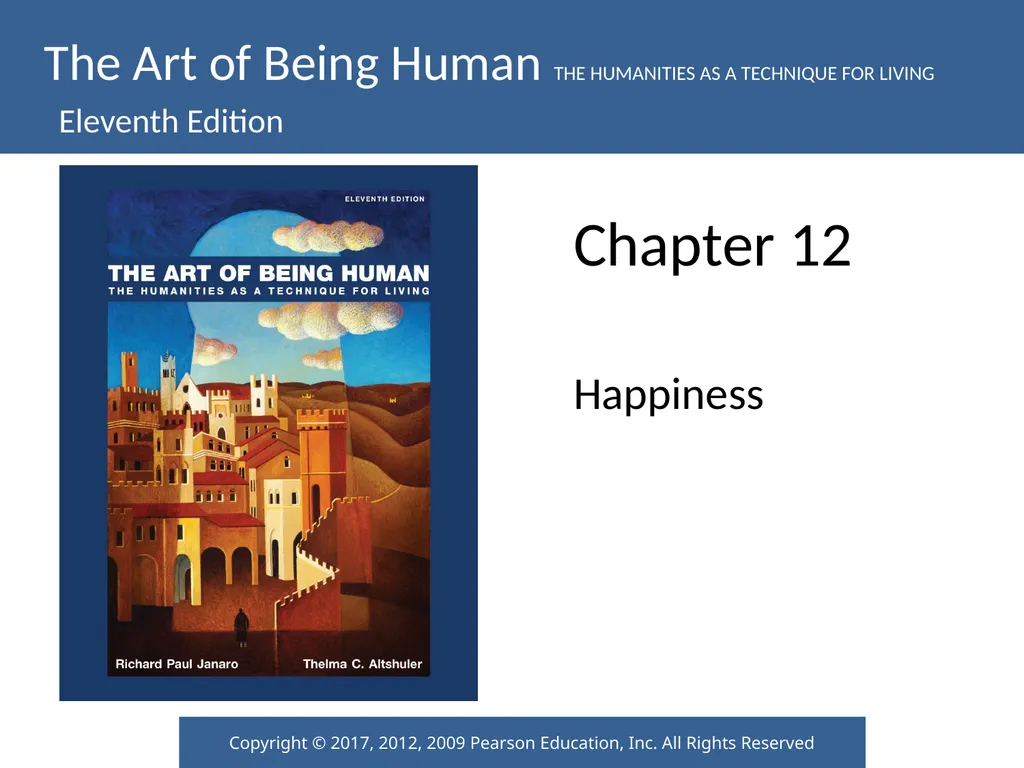
slide1. Chapter 12 Happiness<br>
slide2. Learning Objectives 12.1 Define hedonism and discuss its key assumptions.
12.2 Define Epicureanism and discuss its key assumptions.
12.3 Define stoicism and discuss its key assumptions.
12.4 Summarize Aristotle’s theory of happiness.
12.5 Explain why some tragic lives may also be considered happy ones.
12.6 Distinguish the Buddhist path to happiness and its implications for contemporary life.
12.7 Identify and describe some examples of happiness and unhappiness as portrayed in the arts.<br>
slide3. Hedonism: Happiness is Pleasure 12.1 Define hedonism and discuss its key assumptions. (1 of 5) Literary Hedonism
Hedonist Assumptions
Hedonism Reconsidered<br>
slide4. Hedonism: Happiness is Pleasure 12.1 Define hedonism and discuss its key assumptions (2 of 5) Literary Hedonism
Robert Herrick—“To the Virgins to Make Much of Time”
Andrew Marvell—“To His Coy Mistress”
Carpe diem<br>
slide5. Hedonism: Happiness is Pleasure 12.1 Define hedonism and discuss its key assumptions. (3 of 5) Hedonist Assumptions
Maximize pleasure
Pleasure is deserved
No amount pleasure is ever enough
Big earnings theory
Hedonism Reconsidered
A sobering consideration: Is pleasure all there is to life?<br>
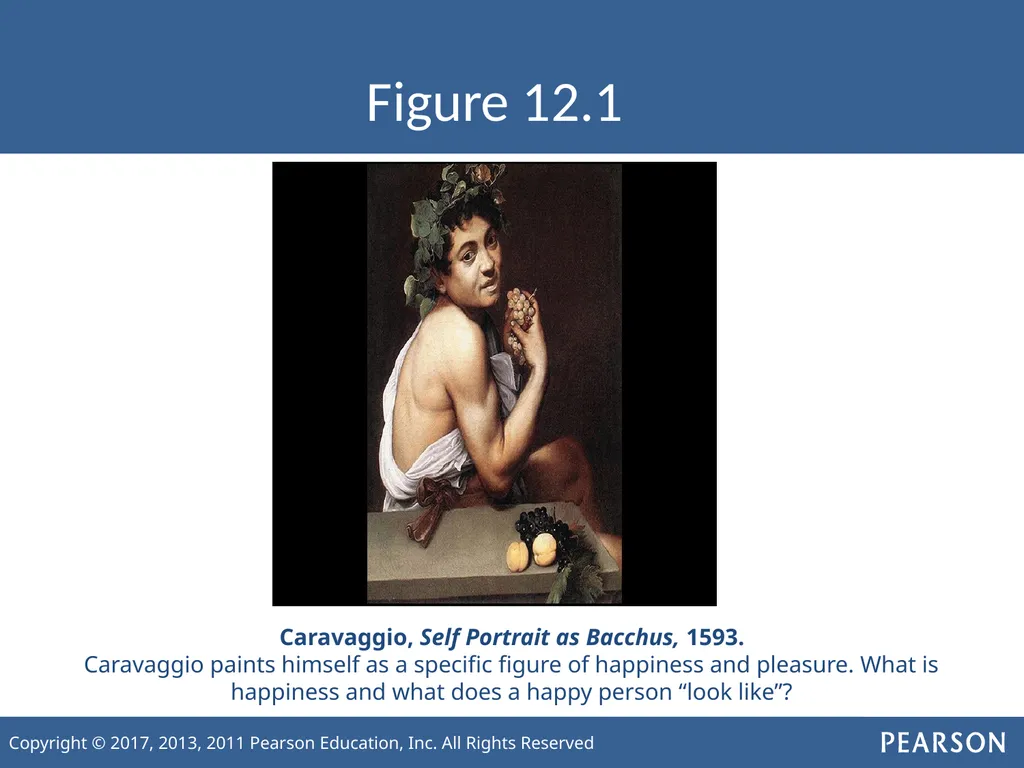
slide6. Caravaggio, Self Portrait as Bacchus, 1593. Caravaggio paints himself as a specific figure of happiness and pleasure. What is happiness and what does a happy person “look like”? Figure 12.1<br>
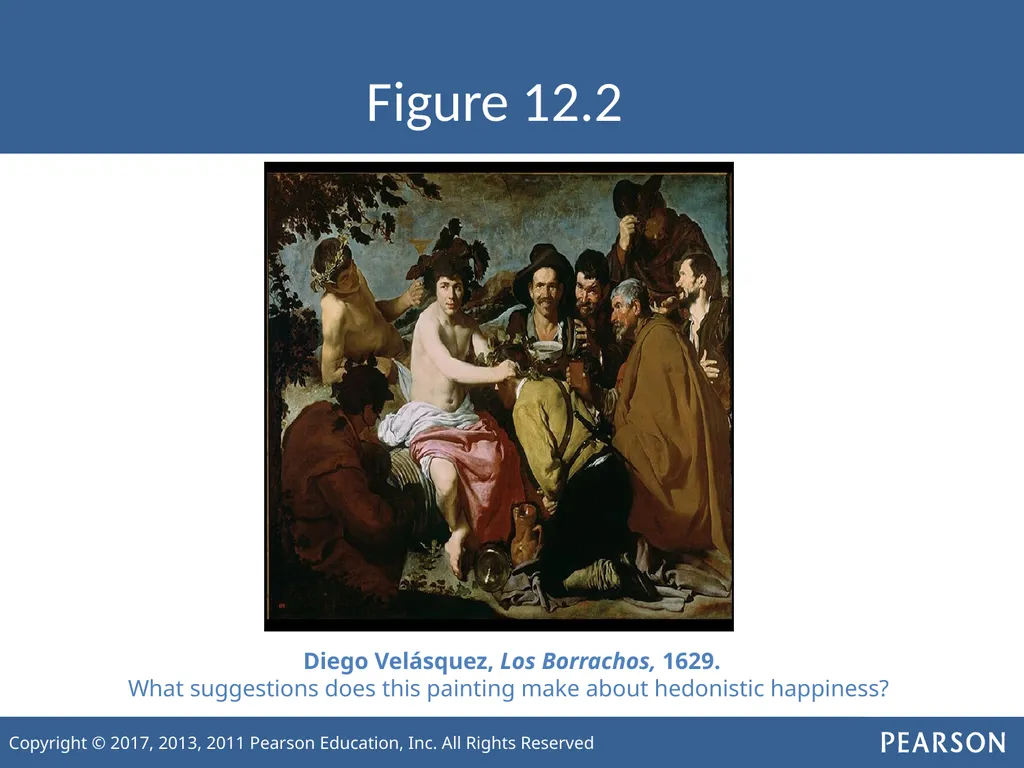
slide7. Diego Velásquez, Los Borrachos, 1629. What suggestions does this painting make about hedonistic happiness? Figure 12.2<br>
slide8. Epicureanism: Happiness Is Living Moderately and Avoiding Pain 12.2 Define Epicureanism and discuss its key assumptions. Epicurus: Greek Philosopher
Epicurean Assumptions
Critical of hedonism
Seek readily attainable pleasures
Avoid excess
Epicureanism Reconsidered
A selfish or self-involved happiness<br>
slide9. Stoicism: Happiness Is Survival 12.3 Define stoicism and discuss its key assumptions. (1 of 3) Zeno—Greek Philosopher
Stoa—the porch where he taught
Stoic Assumption
Pain is inevitable
Happiness is in our response to pain and good fortune.
Roman Christianity
Christian martyrdom<br>
slide10. Stoicism: Happiness Is Survival 12.3 Define stoicism and discuss its key assumptions. (2 of 3) Stoic Reconsidered
Reason? Or rationalizing?
Does stoicism equal passivity?<br>
slide11. Illustration of Becket’s Martyrdom, date unknown. In the face of suffering, stoicism seems appealing. Is such an attitude as attractive in times of good fortune? Figure 12.4<br>
slide12. Discussion Points: Of the three forms of happiness discussed so far (hedonism, Epicureanism, and stoicism) which seems to be the most accurate description to large-scale unhappiness?
Which seems to be the best prescription for curing large-scale unhappiness?<br>
slide13. Aristotle on Happiness 12.4 Summarize Aristotle’s theory of happiness. (1 of 2) Aristotle—Happiness is not a condition, but a way of characterizing a life.
Nicomachean Ethics—Happiness equals the good and the highest good at that.
Reason and virtue
Happiness—a government’s responsibility
Aristotle reconsidered<br>
slide14. Aristotle on Happiness 12.4 Summarize Aristotle’s theory of happiness. (2 of 2) Reason and Virtue
Happiness as retrospection and a measurement of a total
Happiness—still exists in absence of pleasure
Happiness—A Government’s Responsibility
The drafters of the Declaration of Independence
Aristotle Reconsidered
Is the idea of happiness as good insensitive to the plight of the truly oppressed and unhappy?<br>
slide15. Discussion Points: “Aristotle proposed that the purpose of government was to see to it that citizens were happy.” —p. 398
Is his idea accurate?
Do you think that our current government has its citizens’ happiness in mind when decisions are being made?
As citizens, do we have a moral obligation to consider the happiness of our fellow citizens?<br>
slide16. Models of the Happy Life 12.5 Explain why some tragic lives may also be considered happy ones. (1 of 2) Anne Frank
Precocious transcendence and forgiveness
Martin Luther King, Jr.
Service at great personal risk
Mahatma Gandhi
Embodiment of Hindu beliefs of Brahmin<br>
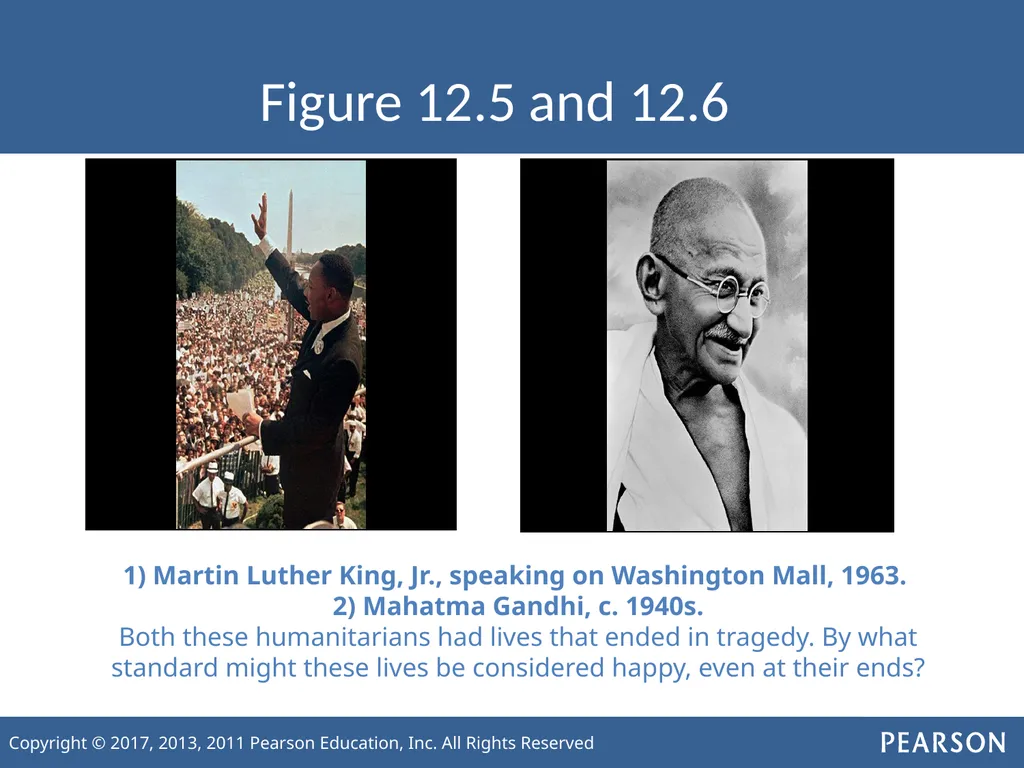
slide17. 1) Martin Luther King, Jr., speaking on Washington Mall, 1963. 2) Mahatma Gandhi, c. 1940s. Both these humanitarians had lives that ended in tragedy. By what standard might these lives be considered happy, even at their ends? Figure 12.5 and 12.6<br>
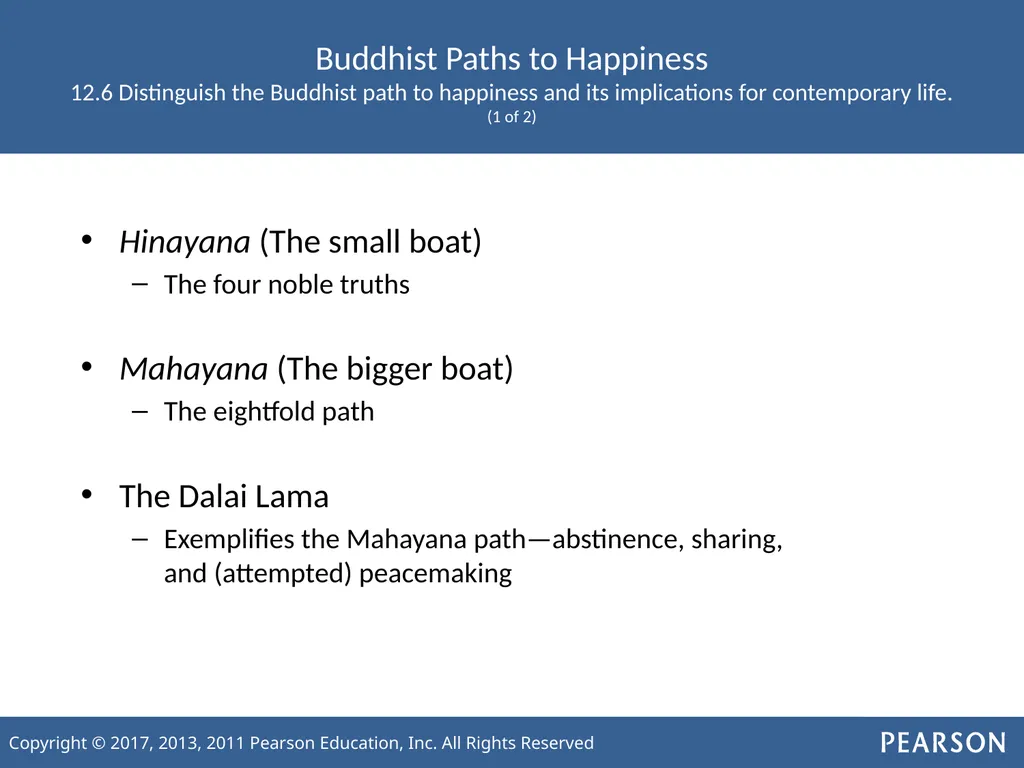
slide18. Buddhist Paths to Happiness 12.6 Distinguish the Buddhist path to happiness and its implications for contemporary life. (1 of 2) Hinayana (The small boat)
The four noble truths
Mahayana (The bigger boat)
The eightfold path
The Dalai Lama
Exemplifies the Mahayana path—abstinence, sharing, and (attempted) peacemaking<br>
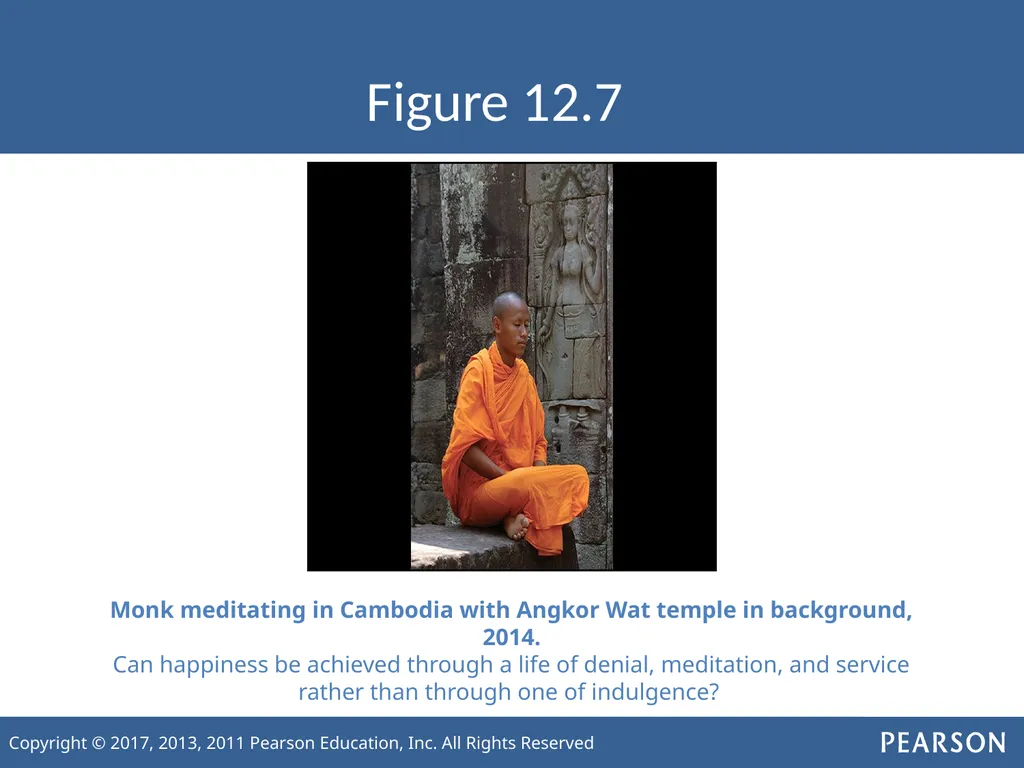
slide19. Monk meditating in Cambodia with Angkor Wat temple in background, 2014. Can happiness be achieved through a life of denial, meditation, and service rather than through one of indulgence? Figure 12.7<br>
slide20. Happiness and (Unhappiness) in the Arts 12.7 Identify and describe some examples of happiness and unhappiness as portrayed in the arts. Comedy and Tragedy
Is one of these art forms more “true” to life experience?
Portraying Unhappiness
The escape from unhappiness—Les Misérables<br>
slide21. Key Terms Big earnings theory
Carpe diem
Epicureanism
Hedonism
Hinayana
Mahatma
Mahayana
Stoicism<br>
slide2. Learning Objectives 12.1 Define hedonism and discuss its key assumptions.
12.2 Define Epicureanism and discuss its key assumptions.
12.3 Define stoicism and discuss its key assumptions.
12.4 Summarize Aristotle’s theory of happiness.
12.5 Explain why some tragic lives may also be considered happy ones.
12.6 Distinguish the Buddhist path to happiness and its implications for contemporary life.
12.7 Identify and describe some examples of happiness and unhappiness as portrayed in the arts.<br>
slide3. Hedonism: Happiness is Pleasure 12.1 Define hedonism and discuss its key assumptions. (1 of 5) Literary Hedonism
Hedonist Assumptions
Hedonism Reconsidered<br>
slide4. Hedonism: Happiness is Pleasure 12.1 Define hedonism and discuss its key assumptions (2 of 5) Literary Hedonism
Robert Herrick—“To the Virgins to Make Much of Time”
Andrew Marvell—“To His Coy Mistress”
Carpe diem<br>
slide5. Hedonism: Happiness is Pleasure 12.1 Define hedonism and discuss its key assumptions. (3 of 5) Hedonist Assumptions
Maximize pleasure
Pleasure is deserved
No amount pleasure is ever enough
Big earnings theory
Hedonism Reconsidered
A sobering consideration: Is pleasure all there is to life?<br>
slide6. Caravaggio, Self Portrait as Bacchus, 1593. Caravaggio paints himself as a specific figure of happiness and pleasure. What is happiness and what does a happy person “look like”? Figure 12.1<br>
slide7. Diego Velásquez, Los Borrachos, 1629. What suggestions does this painting make about hedonistic happiness? Figure 12.2<br>
slide8. Epicureanism: Happiness Is Living Moderately and Avoiding Pain 12.2 Define Epicureanism and discuss its key assumptions. Epicurus: Greek Philosopher
Epicurean Assumptions
Critical of hedonism
Seek readily attainable pleasures
Avoid excess
Epicureanism Reconsidered
A selfish or self-involved happiness<br>
slide9. Stoicism: Happiness Is Survival 12.3 Define stoicism and discuss its key assumptions. (1 of 3) Zeno—Greek Philosopher
Stoa—the porch where he taught
Stoic Assumption
Pain is inevitable
Happiness is in our response to pain and good fortune.
Roman Christianity
Christian martyrdom<br>
slide10. Stoicism: Happiness Is Survival 12.3 Define stoicism and discuss its key assumptions. (2 of 3) Stoic Reconsidered
Reason? Or rationalizing?
Does stoicism equal passivity?<br>
slide11. Illustration of Becket’s Martyrdom, date unknown. In the face of suffering, stoicism seems appealing. Is such an attitude as attractive in times of good fortune? Figure 12.4<br>
slide12. Discussion Points: Of the three forms of happiness discussed so far (hedonism, Epicureanism, and stoicism) which seems to be the most accurate description to large-scale unhappiness?
Which seems to be the best prescription for curing large-scale unhappiness?<br>
slide13. Aristotle on Happiness 12.4 Summarize Aristotle’s theory of happiness. (1 of 2) Aristotle—Happiness is not a condition, but a way of characterizing a life.
Nicomachean Ethics—Happiness equals the good and the highest good at that.
Reason and virtue
Happiness—a government’s responsibility
Aristotle reconsidered<br>
slide14. Aristotle on Happiness 12.4 Summarize Aristotle’s theory of happiness. (2 of 2) Reason and Virtue
Happiness as retrospection and a measurement of a total
Happiness—still exists in absence of pleasure
Happiness—A Government’s Responsibility
The drafters of the Declaration of Independence
Aristotle Reconsidered
Is the idea of happiness as good insensitive to the plight of the truly oppressed and unhappy?<br>
slide15. Discussion Points: “Aristotle proposed that the purpose of government was to see to it that citizens were happy.” —p. 398
Is his idea accurate?
Do you think that our current government has its citizens’ happiness in mind when decisions are being made?
As citizens, do we have a moral obligation to consider the happiness of our fellow citizens?<br>
slide16. Models of the Happy Life 12.5 Explain why some tragic lives may also be considered happy ones. (1 of 2) Anne Frank
Precocious transcendence and forgiveness
Martin Luther King, Jr.
Service at great personal risk
Mahatma Gandhi
Embodiment of Hindu beliefs of Brahmin<br>
slide17. 1) Martin Luther King, Jr., speaking on Washington Mall, 1963. 2) Mahatma Gandhi, c. 1940s. Both these humanitarians had lives that ended in tragedy. By what standard might these lives be considered happy, even at their ends? Figure 12.5 and 12.6<br>
slide18. Buddhist Paths to Happiness 12.6 Distinguish the Buddhist path to happiness and its implications for contemporary life. (1 of 2) Hinayana (The small boat)
The four noble truths
Mahayana (The bigger boat)
The eightfold path
The Dalai Lama
Exemplifies the Mahayana path—abstinence, sharing, and (attempted) peacemaking<br>
slide19. Monk meditating in Cambodia with Angkor Wat temple in background, 2014. Can happiness be achieved through a life of denial, meditation, and service rather than through one of indulgence? Figure 12.7<br>
slide20. Happiness and (Unhappiness) in the Arts 12.7 Identify and describe some examples of happiness and unhappiness as portrayed in the arts. Comedy and Tragedy
Is one of these art forms more “true” to life experience?
Portraying Unhappiness
The escape from unhappiness—Les Misérables<br>
slide21. Key Terms Big earnings theory
Carpe diem
Epicureanism
Hedonism
Hinayana
Mahatma
Mahayana
Stoicism<br>