
Chapter 15 Training and Development:
PM
Published · 30 slides · 0 views
1 / 1
Description
Chapter 15 Training and Development: Considerations in Design Cascio Aguinis, Applied Psychology in Talent Management, 8e. SAGE Publishing, 2019. Learning Goals (1 of 3) 15-1: Identify key factors that are driving the demand for
Related Topics
Share
Embed code
Download this presentation From Below
"Chapter 15 Training and Development:" is the property of its rightful owner. Permission is granted to download and print the materials on this website for personal, non-commercial use only, and to display it on your personal computer provided you do not modify the materials and that you retain all copyright notices contained in the materials. By downloading content from our website, you accept the terms of this agreement.
Presentation Transcript
01
Chapter 15
Training and Development: Considerations in Design<br>
Training and Development: Considerations in Design<br>
02
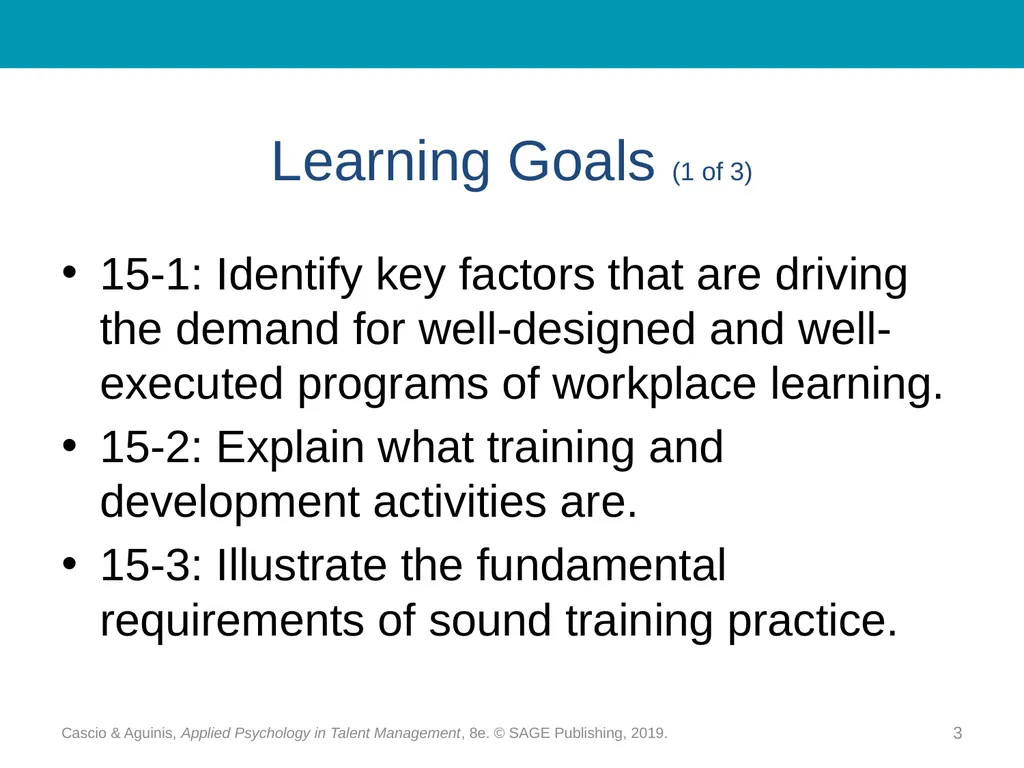
Cascio & Aguinis, Applied Psychology in Talent Management, 8e. © SAGE Publishing, 2019. Learning Goals (1 of 3) 15-1: Identify key factors that are driving the demand for well-designed and well-executed programs of workplace learning.
15-2: Explain what training and development activities are.
15-3: Illustrate the fundamental requirements of sound training practice. 3<br>
15-2: Explain what training and development activities are.
15-3: Illustrate the fundamental requirements of sound training practice. 3<br>
03
Cascio & Aguinis, Applied Psychology in Talent Management, 8e. © SAGE Publishing, 2019. Learning Goals (2 of 3) 15-4: Assess training needs and specify training objectives.
15-5: Describe features of the learning environment that facilitate learning and transfer.
15-6: Specify key elements of successful team training. 4<br>
15-5: Describe features of the learning environment that facilitate learning and transfer.
15-6: Specify key elements of successful team training. 4<br>
04
Cascio & Aguinis, Applied Psychology in Talent Management, 8e. © SAGE Publishing, 2019. Learning Goals (3 of 3) 15-7: Incorporate classic principles of learning into all training designs.
15-8: Integrate key elements that will maximize positive transfer of training to the job. 5<br>
15-8: Integrate key elements that will maximize positive transfer of training to the job. 5<br>
05
Cascio & Aguinis, Applied Psychology in Talent Management, 8e. © SAGE Publishing, 2019. Factors Driving the Increasing Demand for Workplace Training (1 of 2) Factors
Growing demands for personal and professional development
Effects of digital technology on work
Increased training opportunities for nonstandard workers
Teams 6<br>
Growing demands for personal and professional development
Effects of digital technology on work
Increased training opportunities for nonstandard workers
Teams 6<br>
06
Cascio & Aguinis, Applied Psychology in Talent Management, 8e. © SAGE Publishing, 2019. Factors Driving the Increasing Demand for Workplace Training (2 of 2) Training and development activities
Learning experiences
Planned by organization
Occur after individual has joined organization
Intended to further organization’s goals 7<br>
Learning experiences
Planned by organization
Occur after individual has joined organization
Intended to further organization’s goals 7<br>
07
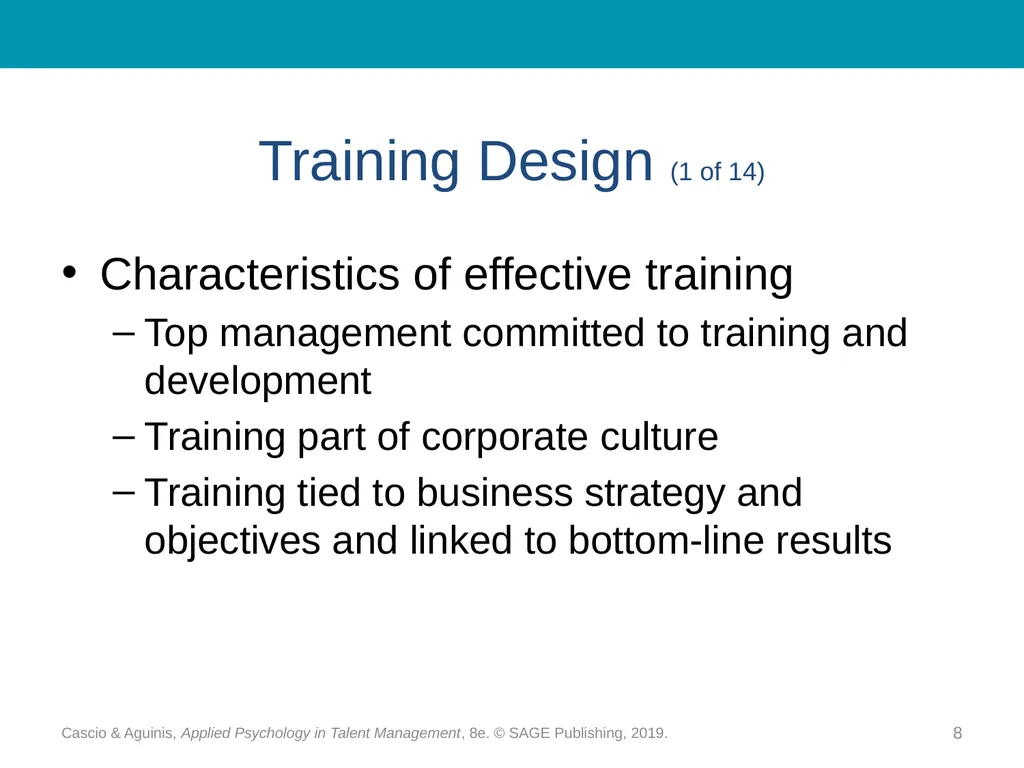
Cascio & Aguinis, Applied Psychology in Talent Management, 8e. © SAGE Publishing, 2019. Training Design (1 of 14) Characteristics of effective training
Top management committed to training and development
Training part of corporate culture
Training tied to business strategy and objectives and linked to bottom-line results 8<br>
Top management committed to training and development
Training part of corporate culture
Training tied to business strategy and objectives and linked to bottom-line results 8<br>
08
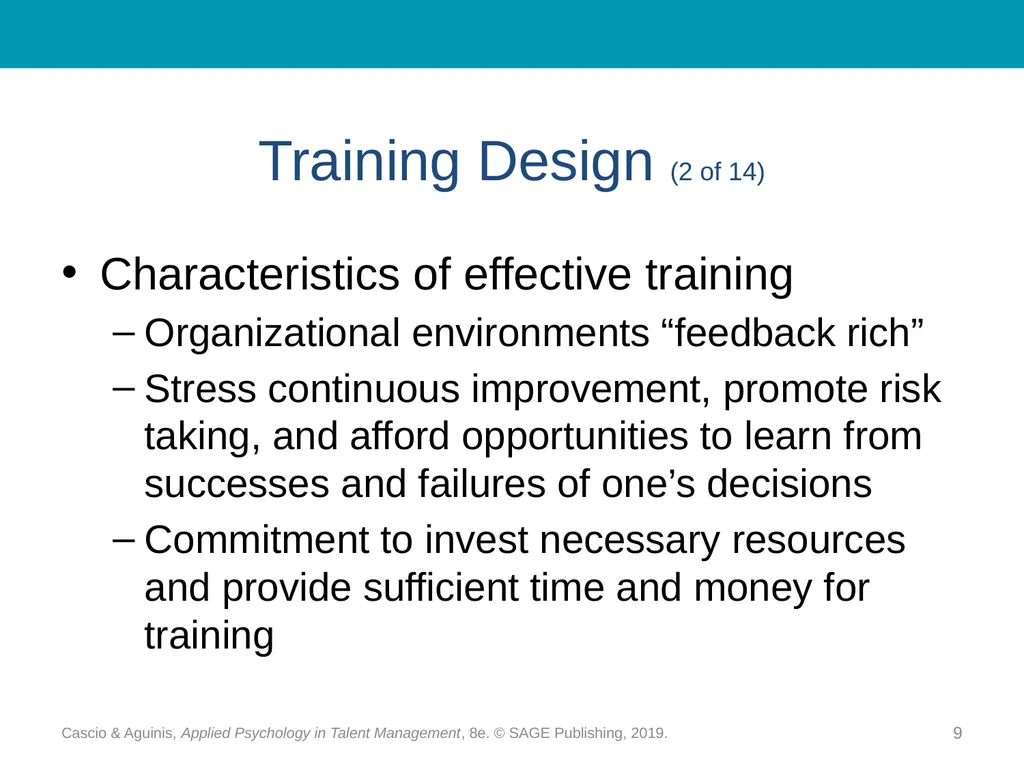
Cascio & Aguinis, Applied Psychology in Talent Management, 8e. © SAGE Publishing, 2019. Training Design (2 of 14) Characteristics of effective training
Organizational environments “feedback rich”
Stress continuous improvement, promote risk taking, and afford opportunities to learn from successes and failures of one’s decisions
Commitment to invest necessary resources and provide sufficient time and money for training 9<br>
Organizational environments “feedback rich”
Stress continuous improvement, promote risk taking, and afford opportunities to learn from successes and failures of one’s decisions
Commitment to invest necessary resources and provide sufficient time and money for training 9<br>
09
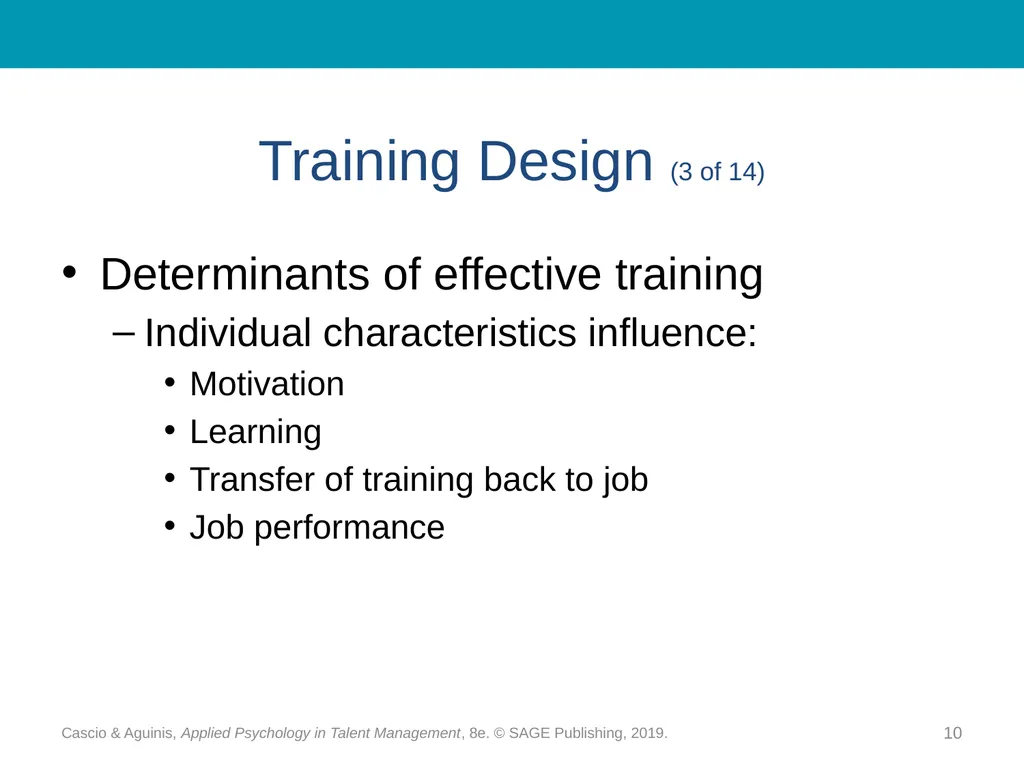
Cascio & Aguinis, Applied Psychology in Talent Management, 8e. © SAGE Publishing, 2019. Training Design (3 of 14) Determinants of effective training
Individual characteristics influence:
Motivation
Learning
Transfer of training back to job
Job performance 10<br>
Individual characteristics influence:
Motivation
Learning
Transfer of training back to job
Job performance 10<br>
10
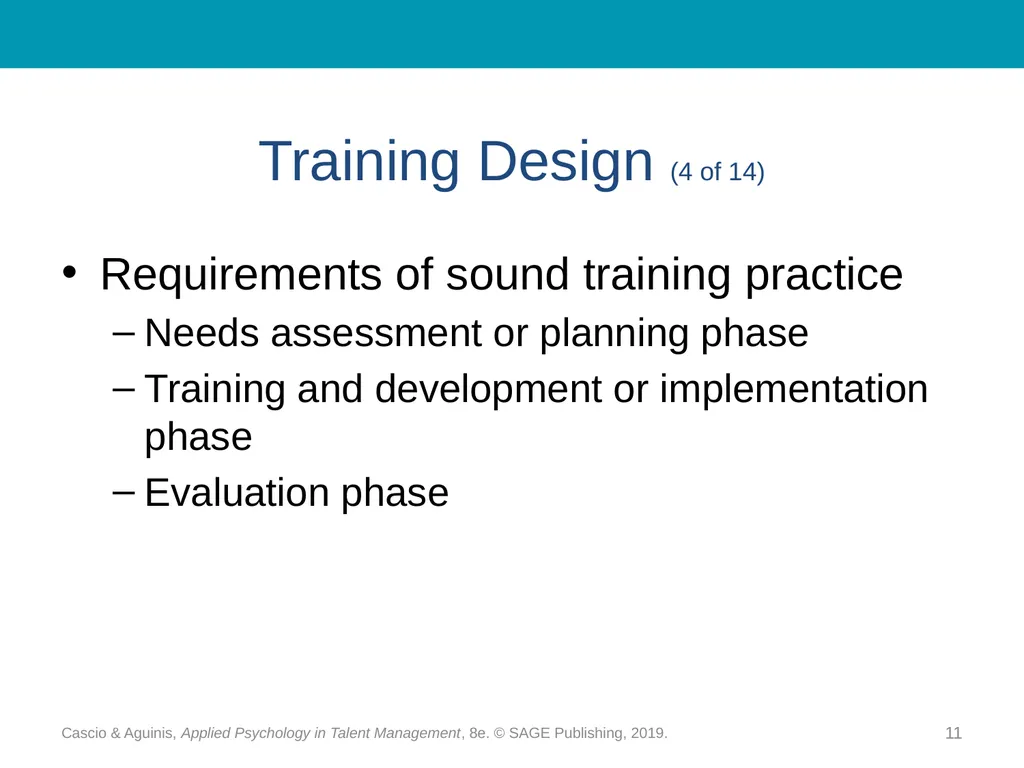
Cascio & Aguinis, Applied Psychology in Talent Management, 8e. © SAGE Publishing, 2019. Training Design (4 of 14) Requirements of sound training practice
Needs assessment or planning phase
Training and development or implementation phase
Evaluation phase 11<br>
Needs assessment or planning phase
Training and development or implementation phase
Evaluation phase 11<br>
11
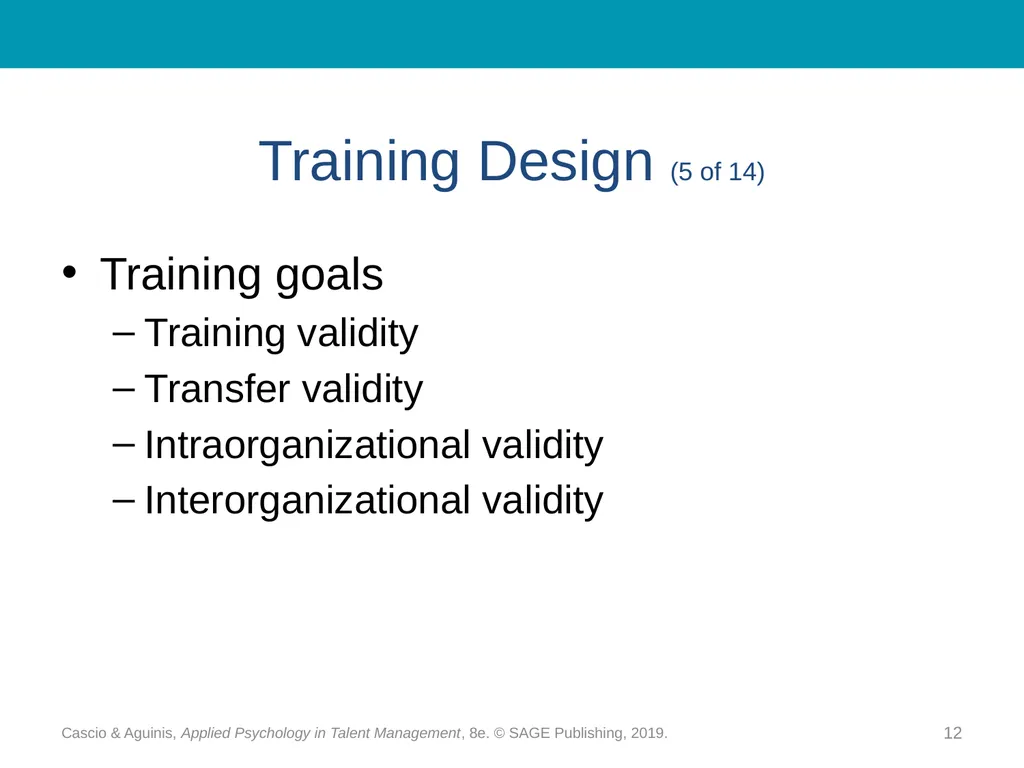
Cascio & Aguinis, Applied Psychology in Talent Management, 8e. © SAGE Publishing, 2019. Training Design (5 of 14) Training goals
Training validity
Transfer validity
Intraorganizational validity
Interorganizational validity 12<br>
Training validity
Transfer validity
Intraorganizational validity
Interorganizational validity 12<br>
12
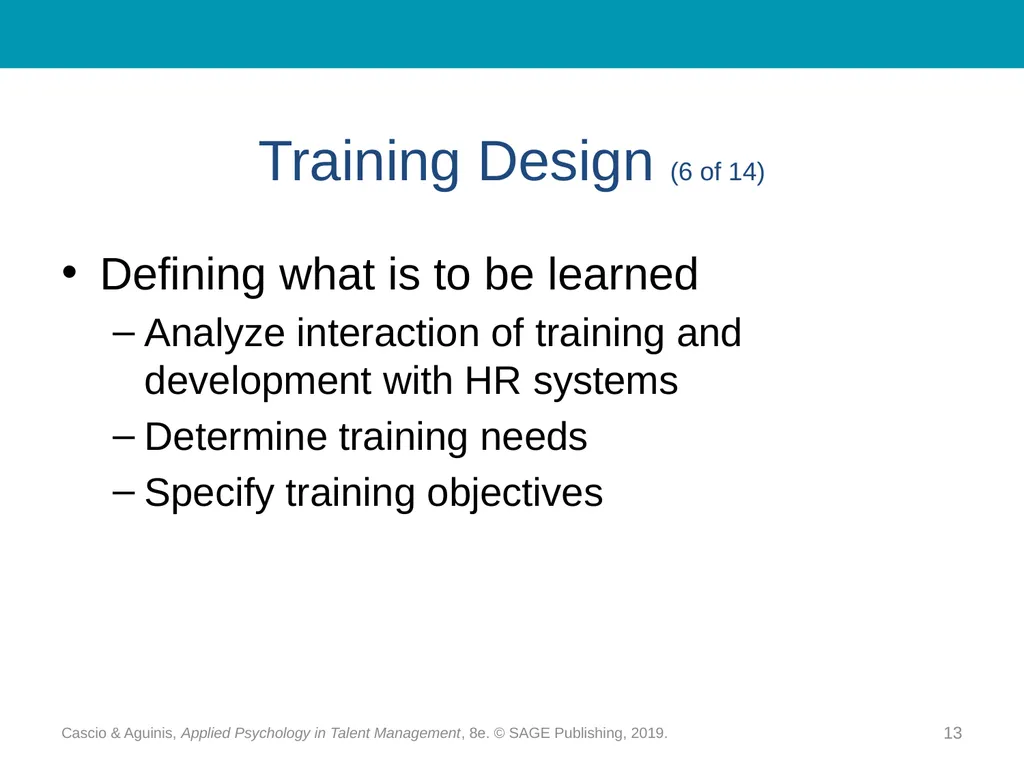
Cascio & Aguinis, Applied Psychology in Talent Management, 8e. © SAGE Publishing, 2019. Training Design (6 of 14) Defining what is to be learned
Analyze interaction of training and development with HR systems
Determine training needs
Specify training objectives 13<br>
Analyze interaction of training and development with HR systems
Determine training needs
Specify training objectives 13<br>
13
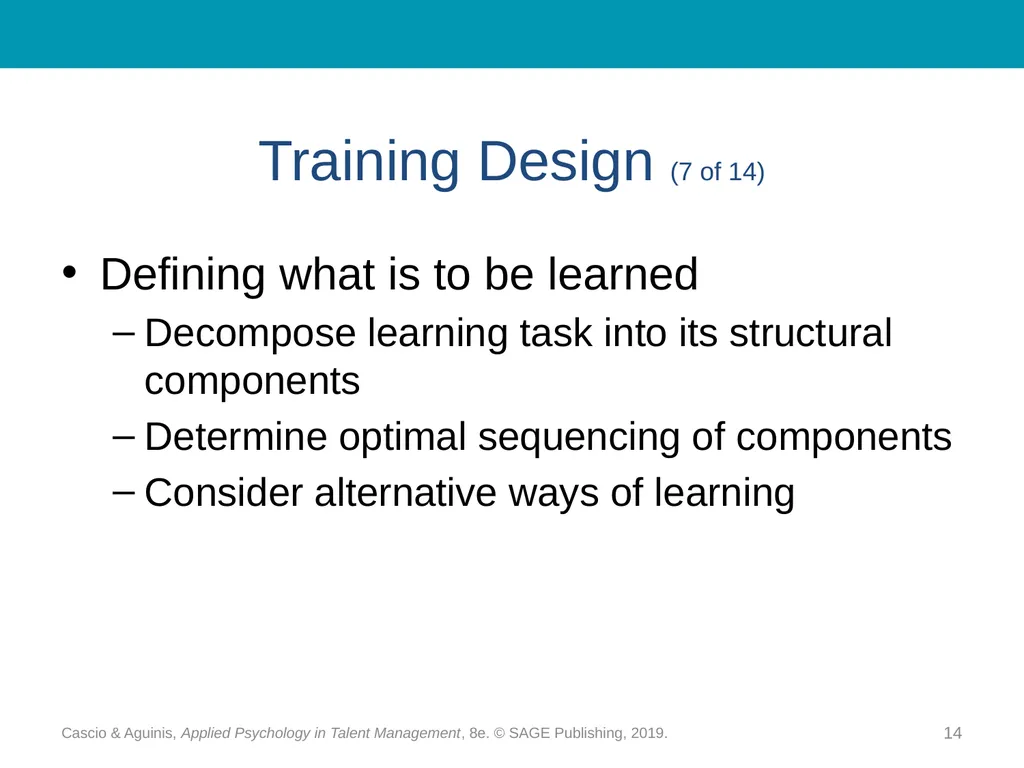
Cascio & Aguinis, Applied Psychology in Talent Management, 8e. © SAGE Publishing, 2019. Training Design (7 of 14) Defining what is to be learned
Decompose learning task into its structural components
Determine optimal sequencing of components
Consider alternative ways of learning 14<br>
Decompose learning task into its structural components
Determine optimal sequencing of components
Consider alternative ways of learning 14<br>
14
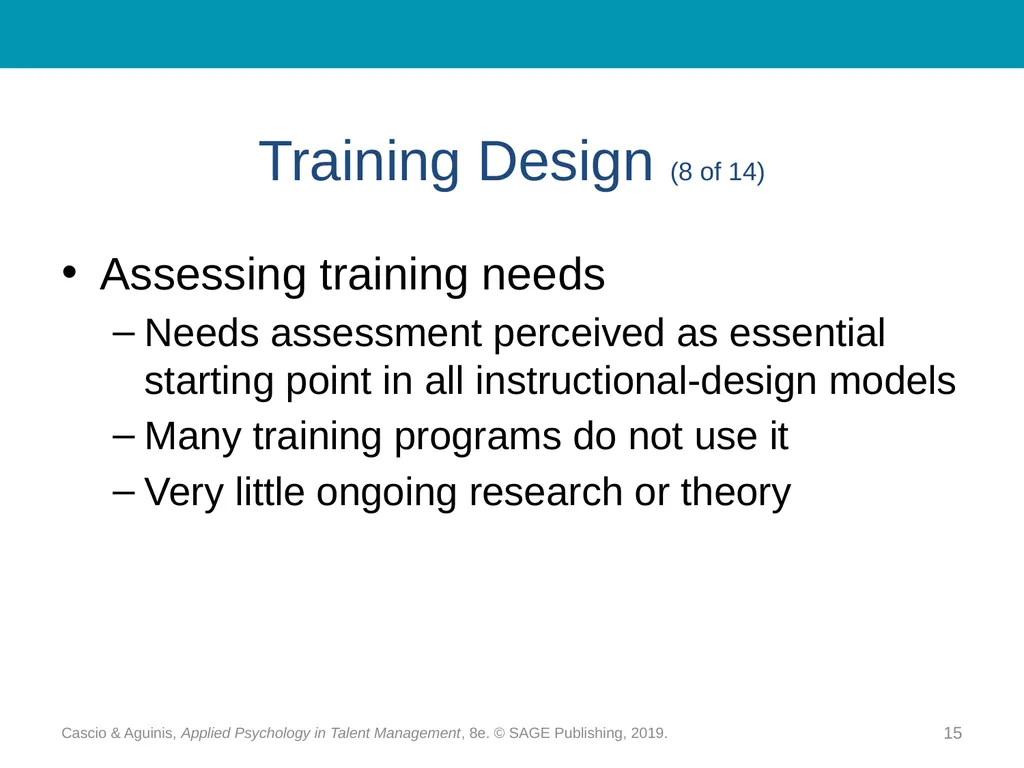
Cascio & Aguinis, Applied Psychology in Talent Management, 8e. © SAGE Publishing, 2019. Training Design (8 of 14) Assessing training needs
Needs assessment perceived as essential starting point in all instructional-design models
Many training programs do not use it
Very little ongoing research or theory 15<br>
Needs assessment perceived as essential starting point in all instructional-design models
Many training programs do not use it
Very little ongoing research or theory 15<br>
15
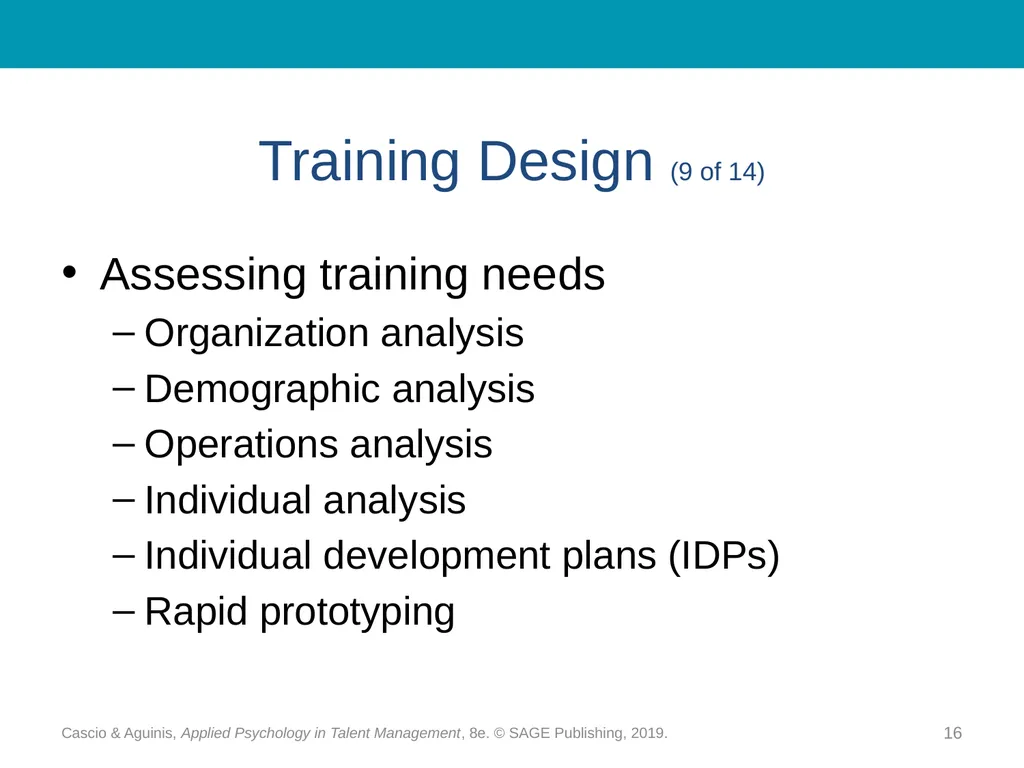
Cascio & Aguinis, Applied Psychology in Talent Management, 8e. © SAGE Publishing, 2019. Training Design (9 of 14) Assessing training needs
Organization analysis
Demographic analysis
Operations analysis
Individual analysis
Individual development plans (IDPs)
Rapid prototyping 16<br>
Organization analysis
Demographic analysis
Operations analysis
Individual analysis
Individual development plans (IDPs)
Rapid prototyping 16<br>
16
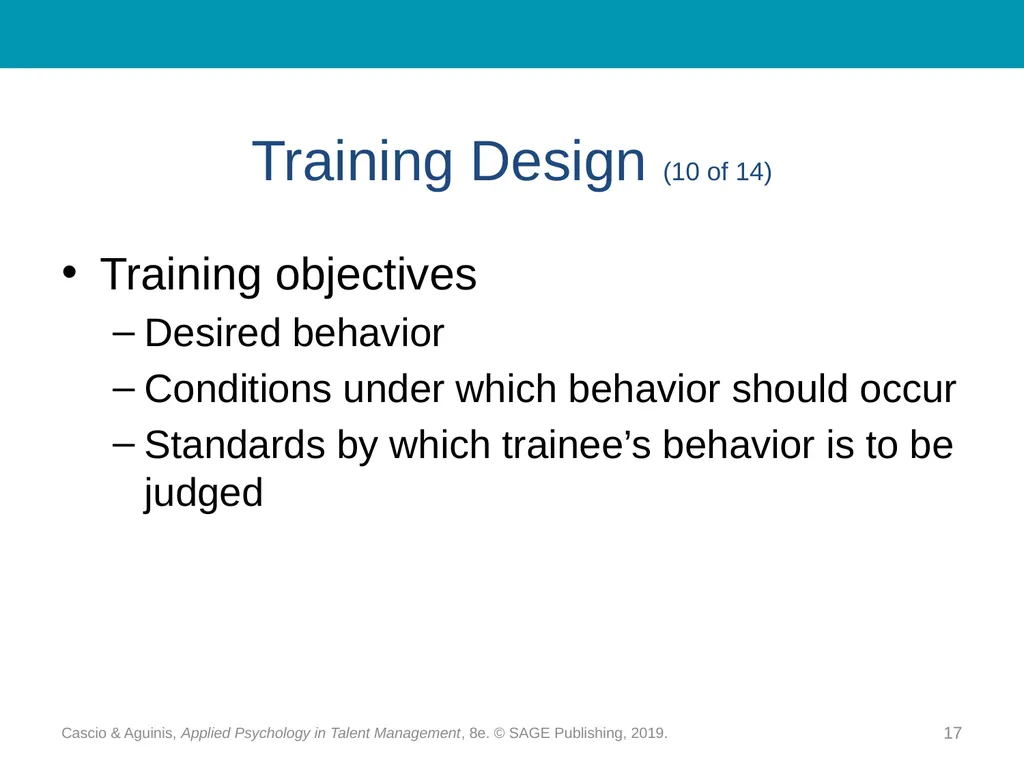
Cascio & Aguinis, Applied Psychology in Talent Management, 8e. © SAGE Publishing, 2019. Training Design (10 of 14) Training objectives
Desired behavior
Conditions under which behavior should occur
Standards by which trainee’s behavior is to be judged 17<br>
Desired behavior
Conditions under which behavior should occur
Standards by which trainee’s behavior is to be judged 17<br>
17
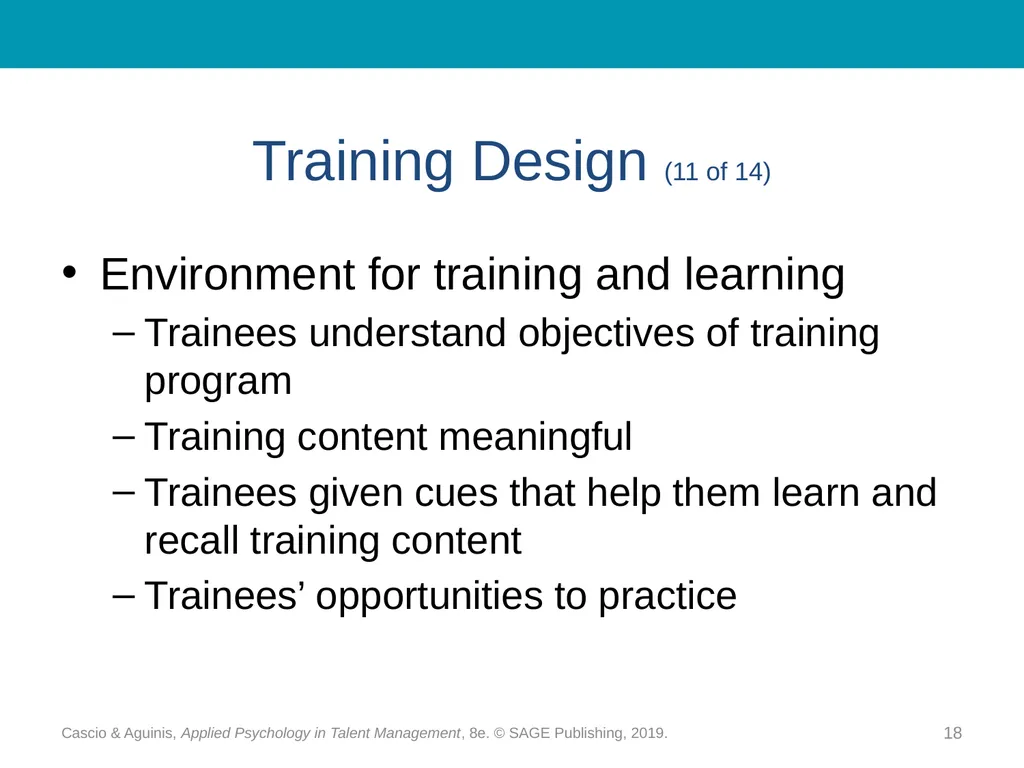
Cascio & Aguinis, Applied Psychology in Talent Management, 8e. © SAGE Publishing, 2019. Training Design (11 of 14) Environment for training and learning
Trainees understand objectives of training program
Training content meaningful
Trainees given cues that help them learn and recall training content
Trainees’ opportunities to practice 18<br>
Trainees understand objectives of training program
Training content meaningful
Trainees given cues that help them learn and recall training content
Trainees’ opportunities to practice 18<br>
18
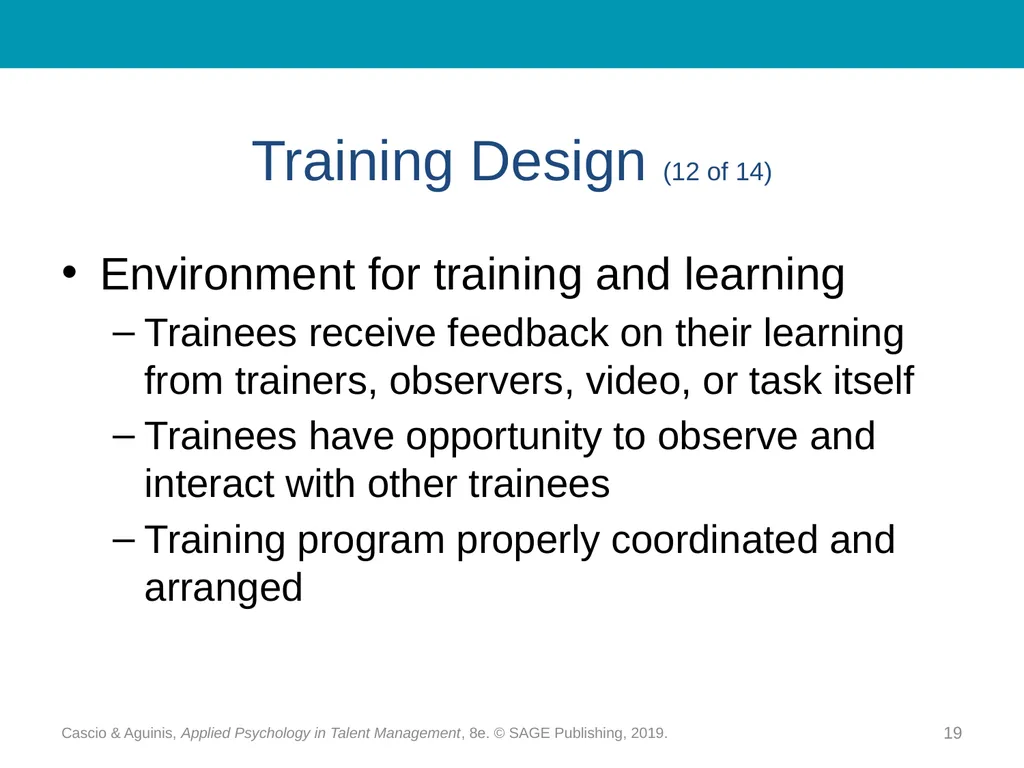
Cascio & Aguinis, Applied Psychology in Talent Management, 8e. © SAGE Publishing, 2019. Training Design (12 of 14) Environment for training and learning
Trainees receive feedback on their learning from trainers, observers, video, or task itself
Trainees have opportunity to observe and interact with other trainees
Training program properly coordinated and arranged 19<br>
Trainees receive feedback on their learning from trainers, observers, video, or task itself
Trainees have opportunity to observe and interact with other trainees
Training program properly coordinated and arranged 19<br>
19
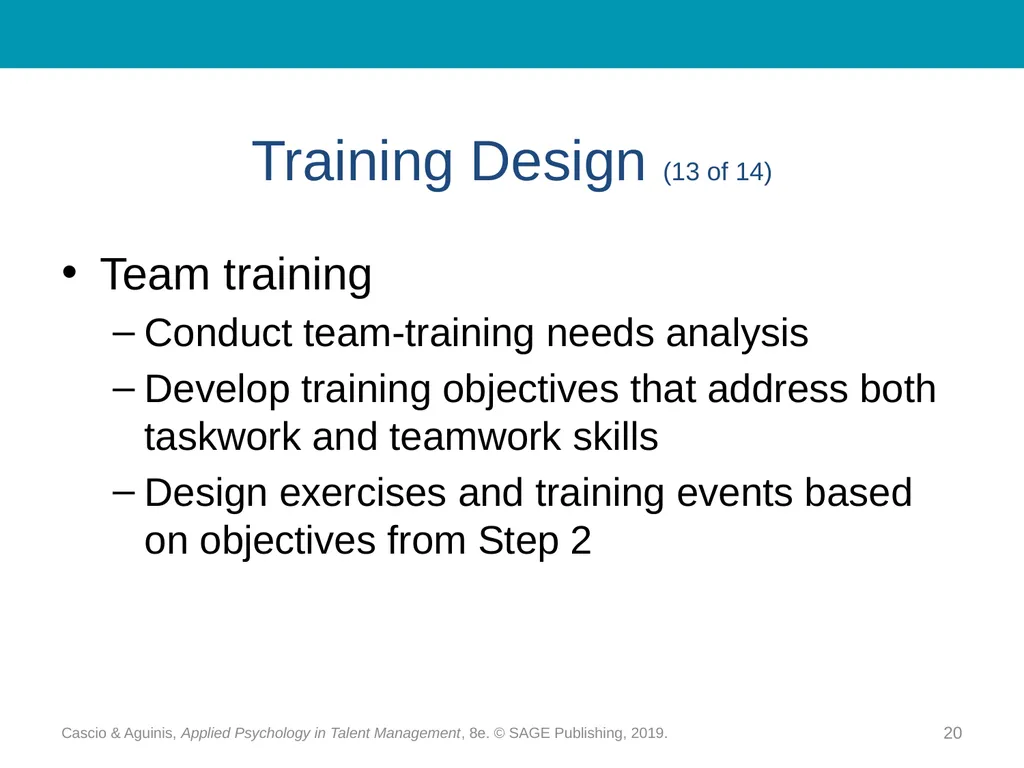
Cascio & Aguinis, Applied Psychology in Talent Management, 8e. © SAGE Publishing, 2019. Training Design (13 of 14) Team training
Conduct team-training needs analysis
Develop training objectives that address both taskwork and teamwork skills
Design exercises and training events based on objectives from Step 2 20<br>
Conduct team-training needs analysis
Develop training objectives that address both taskwork and teamwork skills
Design exercises and training events based on objectives from Step 2 20<br>
20
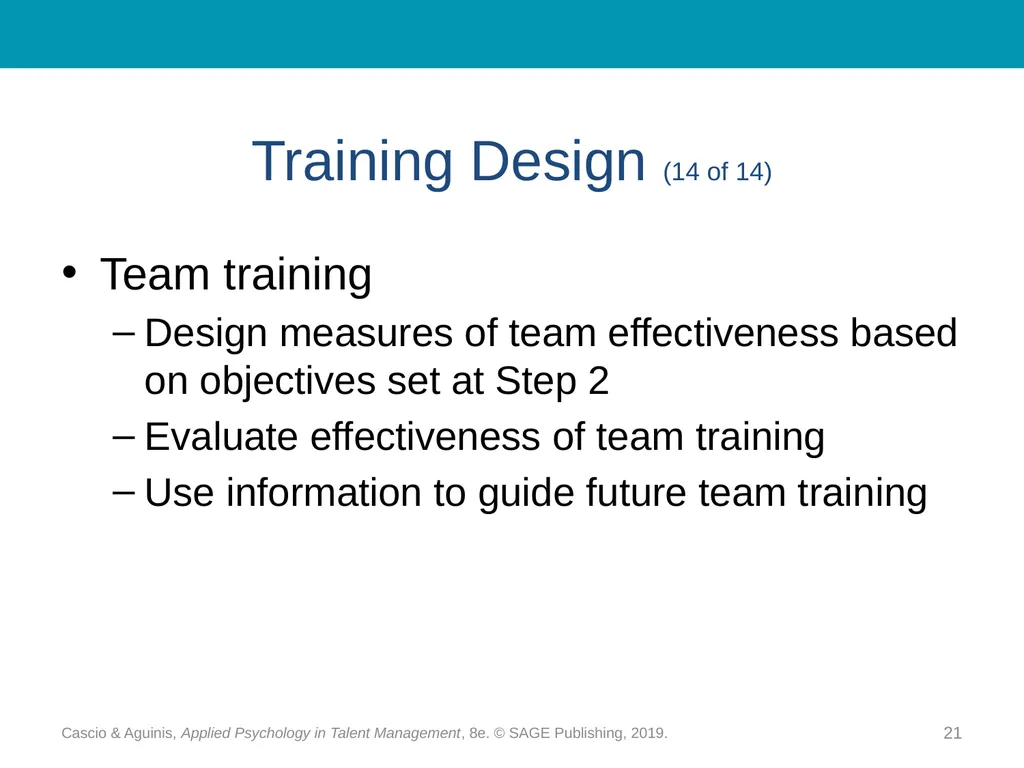
Cascio & Aguinis, Applied Psychology in Talent Management, 8e. © SAGE Publishing, 2019. Training Design (14 of 14) Team training
Design measures of team effectiveness based on objectives set at Step 2
Evaluate effectiveness of team training
Use information to guide future team training 21<br>
Design measures of team effectiveness based on objectives set at Step 2
Evaluate effectiveness of team training
Use information to guide future team training 21<br>
21
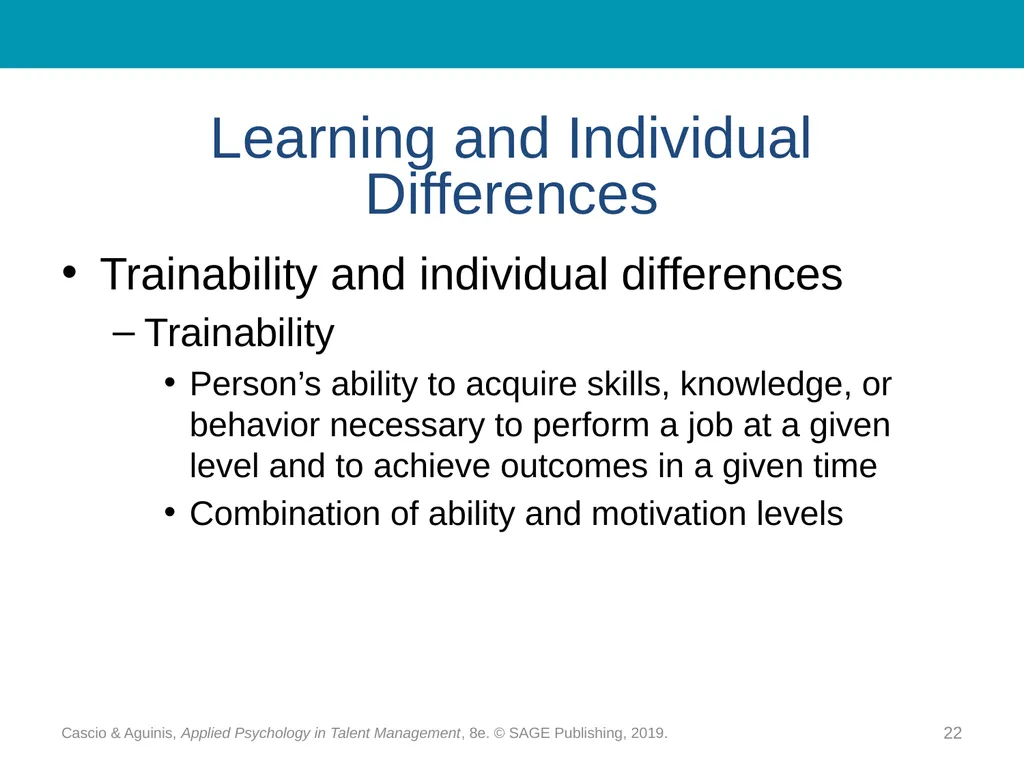
Cascio & Aguinis, Applied Psychology in Talent Management, 8e. © SAGE Publishing, 2019. Learning and Individual Differences Trainability and individual differences
Trainability
Person’s ability to acquire skills, knowledge, or behavior necessary to perform a job at a given level and to achieve outcomes in a given time
Combination of ability and motivation levels 22<br>
Trainability
Person’s ability to acquire skills, knowledge, or behavior necessary to perform a job at a given level and to achieve outcomes in a given time
Combination of ability and motivation levels 22<br>
22
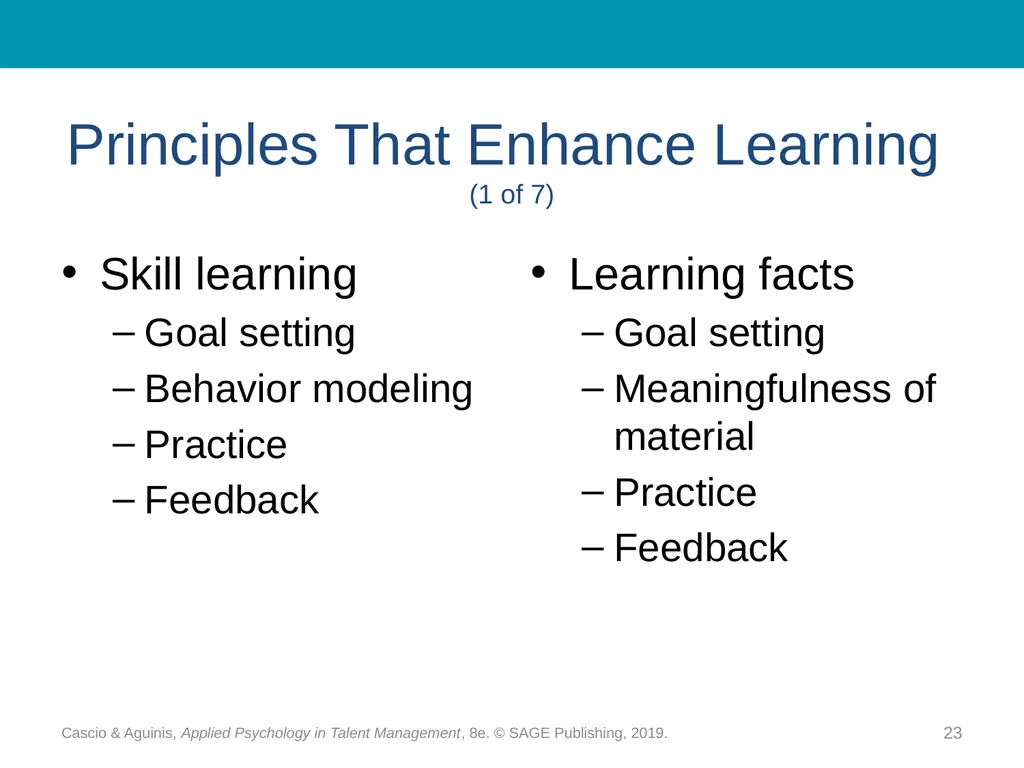
Cascio & Aguinis, Applied Psychology in Talent Management, 8e. © SAGE Publishing, 2019. Principles That Enhance Learning
(1 of 7) Skill learning
Goal setting
Behavior modeling
Practice
Feedback Learning facts
Goal setting
Meaningfulness of material
Practice
Feedback 23<br>
Goal setting
Behavior modeling
Practice
Feedback Learning facts
Goal setting
Meaningfulness of material
Practice
Feedback 23<br>
23
Cascio & Aguinis, Applied Psychology in Talent Management, 8e. © SAGE Publishing, 2019. Principles That Enhance Learning
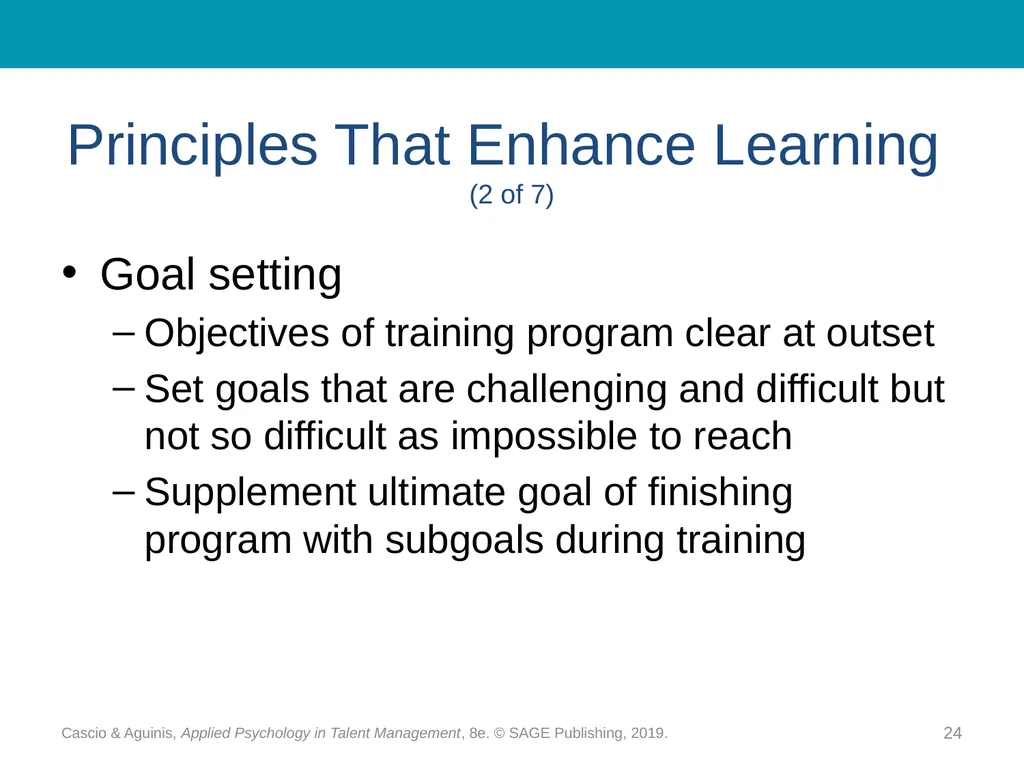
(2 of 7) Goal setting
Objectives of training program clear at outset
Set goals that are challenging and difficult but not so difficult as impossible to reach
Supplement ultimate goal of finishing program with subgoals during training 24<br>
Objectives of training program clear at outset
Set goals that are challenging and difficult but not so difficult as impossible to reach
Supplement ultimate goal of finishing program with subgoals during training 24<br>
24
Cascio & Aguinis, Applied Psychology in Talent Management, 8e. © SAGE Publishing, 2019. Principles That Enhance Learning
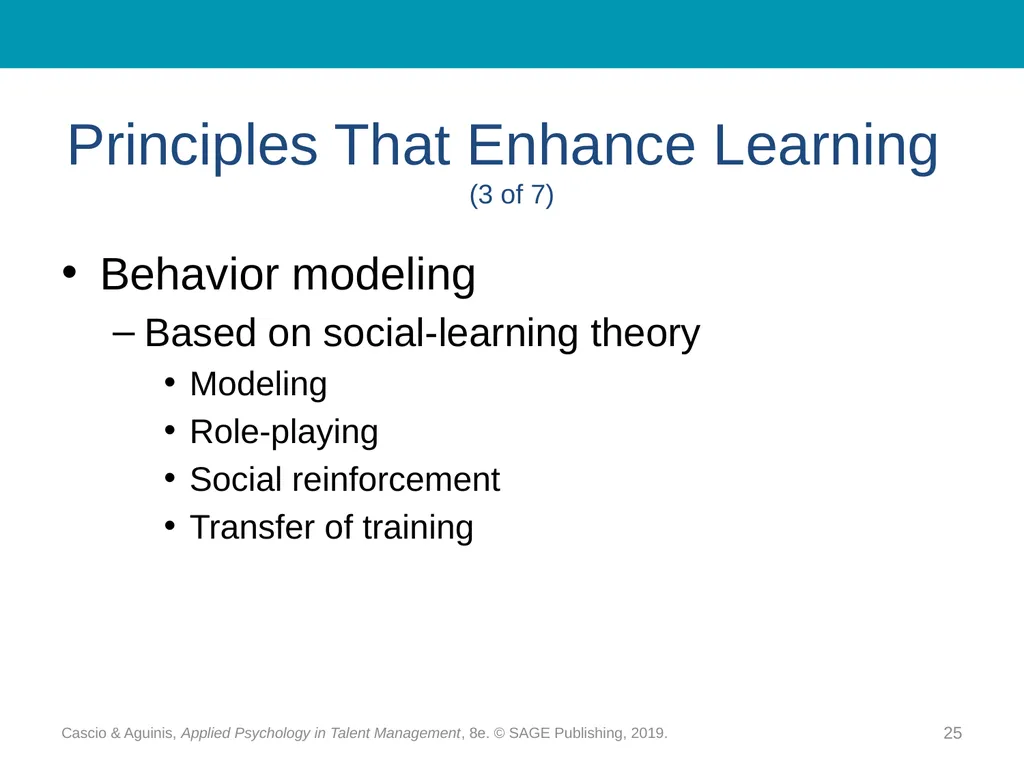
(3 of 7) Behavior modeling
Based on social-learning theory
Modeling
Role-playing
Social reinforcement
Transfer of training 25<br>
Based on social-learning theory
Modeling
Role-playing
Social reinforcement
Transfer of training 25<br>
25
Cascio & Aguinis, Applied Psychology in Talent Management, 8e. © SAGE Publishing, 2019. Principles That Enhance Learning
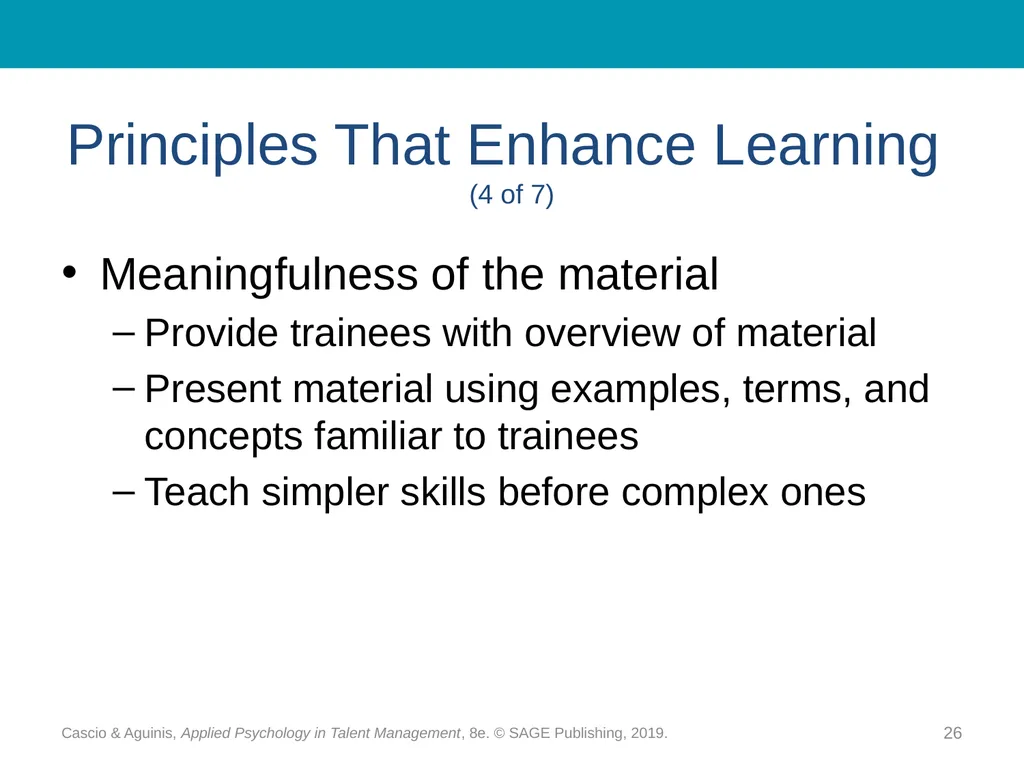
(4 of 7) Meaningfulness of the material
Provide trainees with overview of material
Present material using examples, terms, and concepts familiar to trainees
Teach simpler skills before complex ones 26<br>
Provide trainees with overview of material
Present material using examples, terms, and concepts familiar to trainees
Teach simpler skills before complex ones 26<br>
26
Cascio & Aguinis, Applied Psychology in Talent Management, 8e. © SAGE Publishing, 2019. Principles That Enhance Learning
(5 of 7) Practice
Active practice
Overlearning
Length of practice session 27<br>
Active practice
Overlearning
Length of practice session 27<br>
27
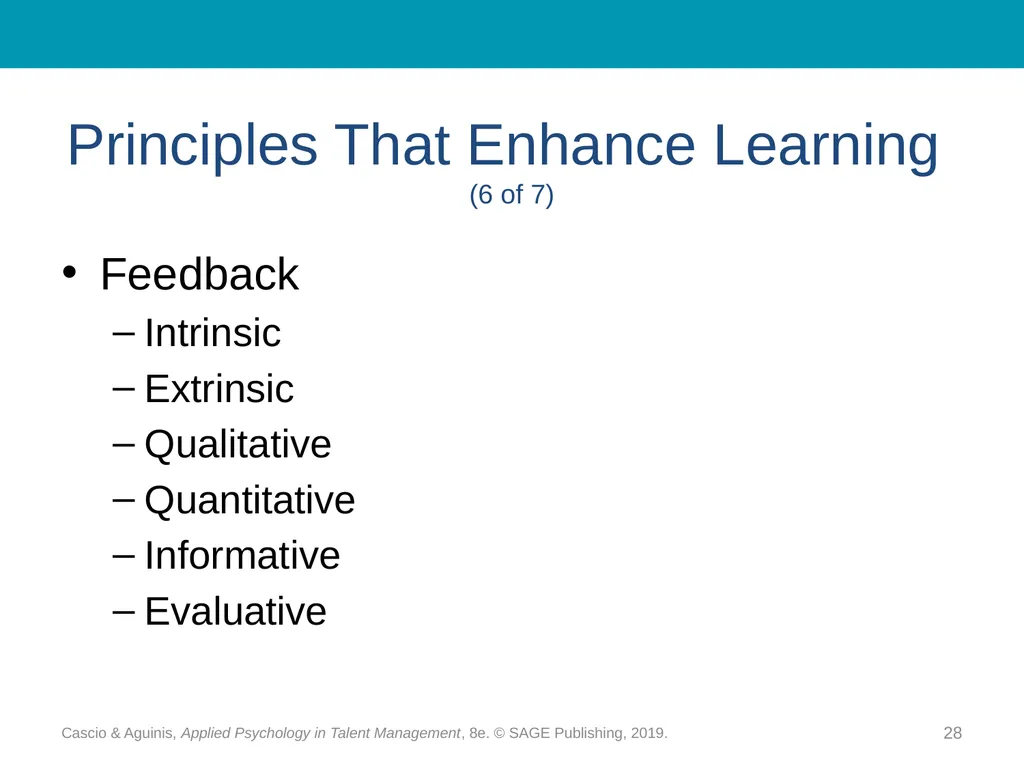
Cascio & Aguinis, Applied Psychology in Talent Management, 8e. © SAGE Publishing, 2019. Principles That Enhance Learning
(6 of 7) Feedback
Intrinsic
Extrinsic
Qualitative
Quantitative
Informative
Evaluative 28<br>
Intrinsic
Extrinsic
Qualitative
Quantitative
Informative
Evaluative 28<br>
28
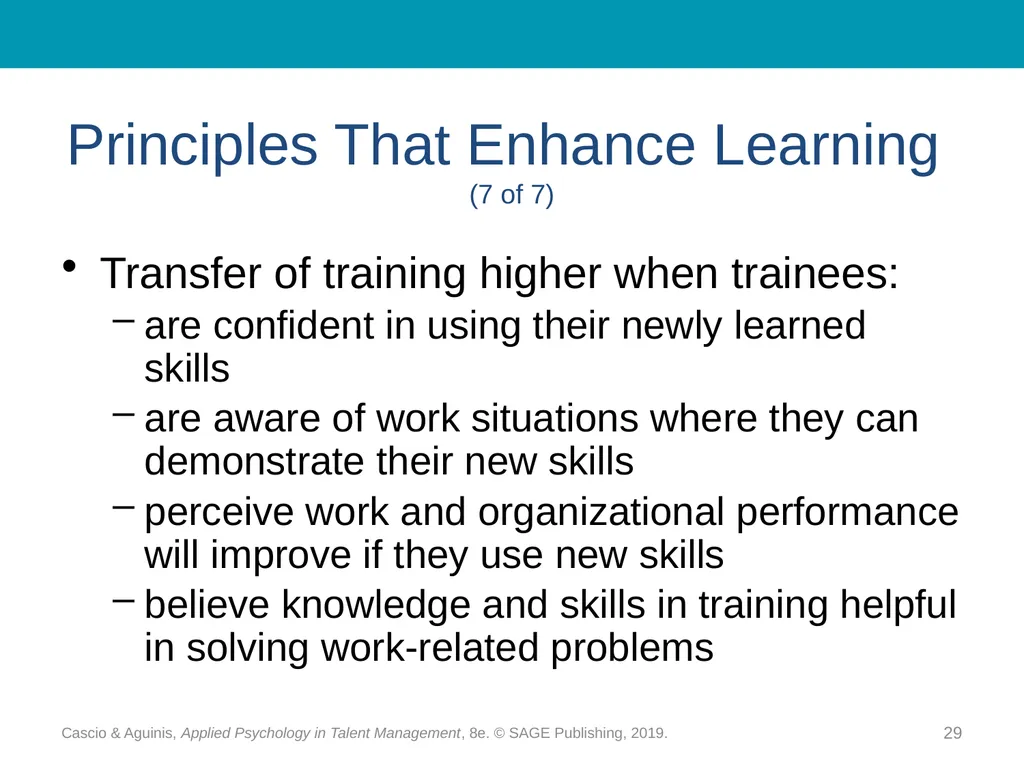
Cascio & Aguinis, Applied Psychology in Talent Management, 8e. © SAGE Publishing, 2019. Principles That Enhance Learning
(7 of 7) Transfer of training higher when trainees:
are confident in using their newly learned skills
are aware of work situations where they can demonstrate their new skills
perceive work and organizational performance will improve if they use new skills
believe knowledge and skills in training helpful in solving work-related problems 29<br>
are confident in using their newly learned skills
are aware of work situations where they can demonstrate their new skills
perceive work and organizational performance will improve if they use new skills
believe knowledge and skills in training helpful in solving work-related problems 29<br>
29
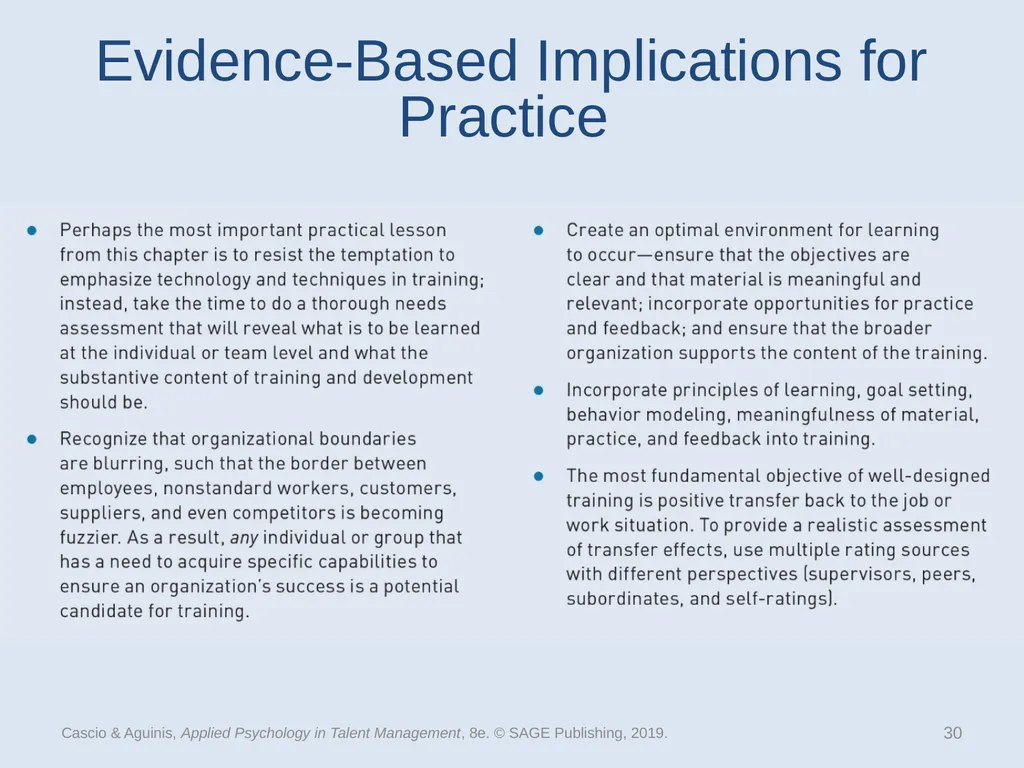
Cascio & Aguinis, Applied Psychology in Talent Management, 8e. © SAGE Publishing, 2019. 30 Evidence-Based Implications for Practice<br>