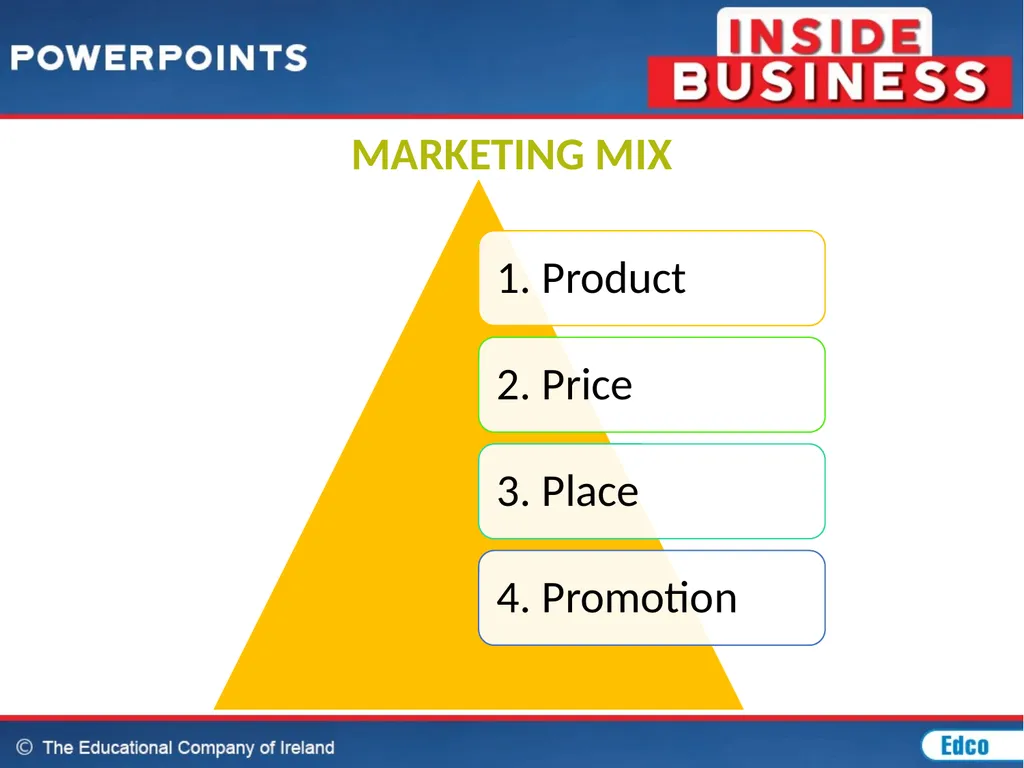
04
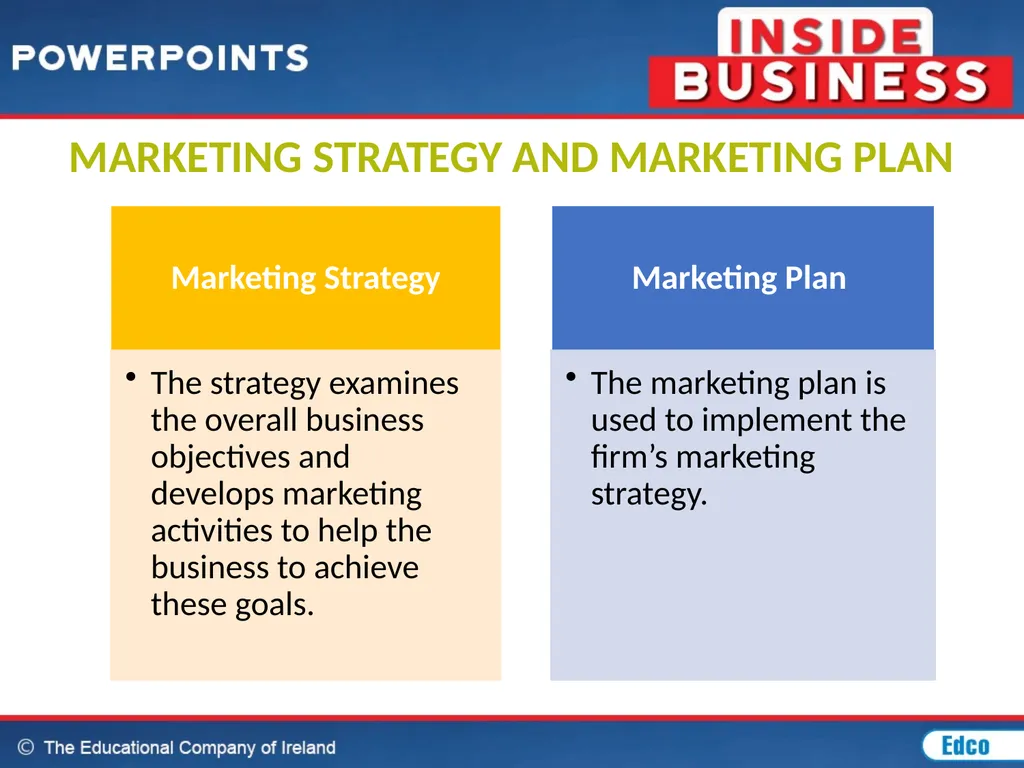
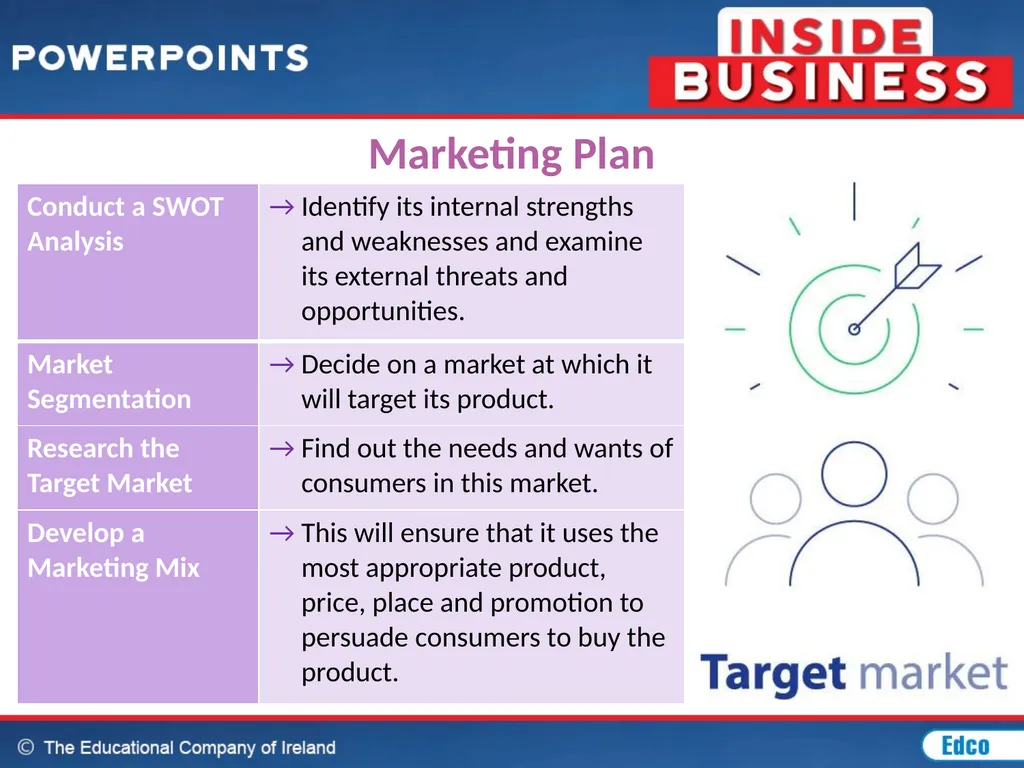
MARKETING STRATEGY AND MARKETING PLAN<br>
06
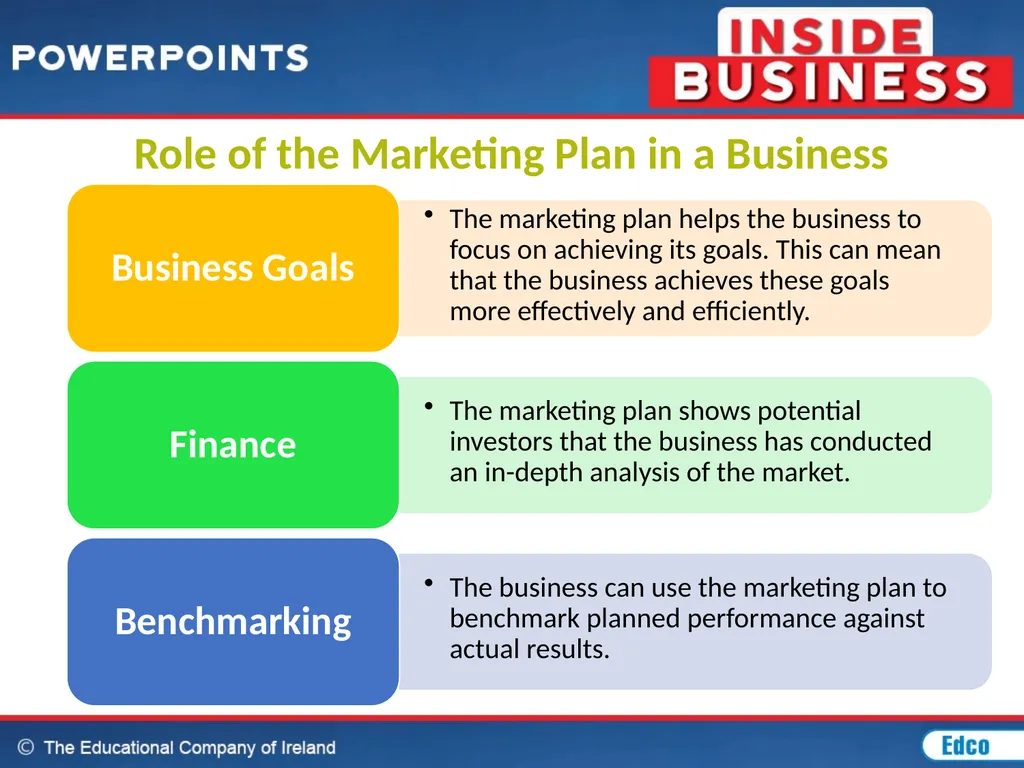
Role of the Marketing Plan in a Business<br>
07
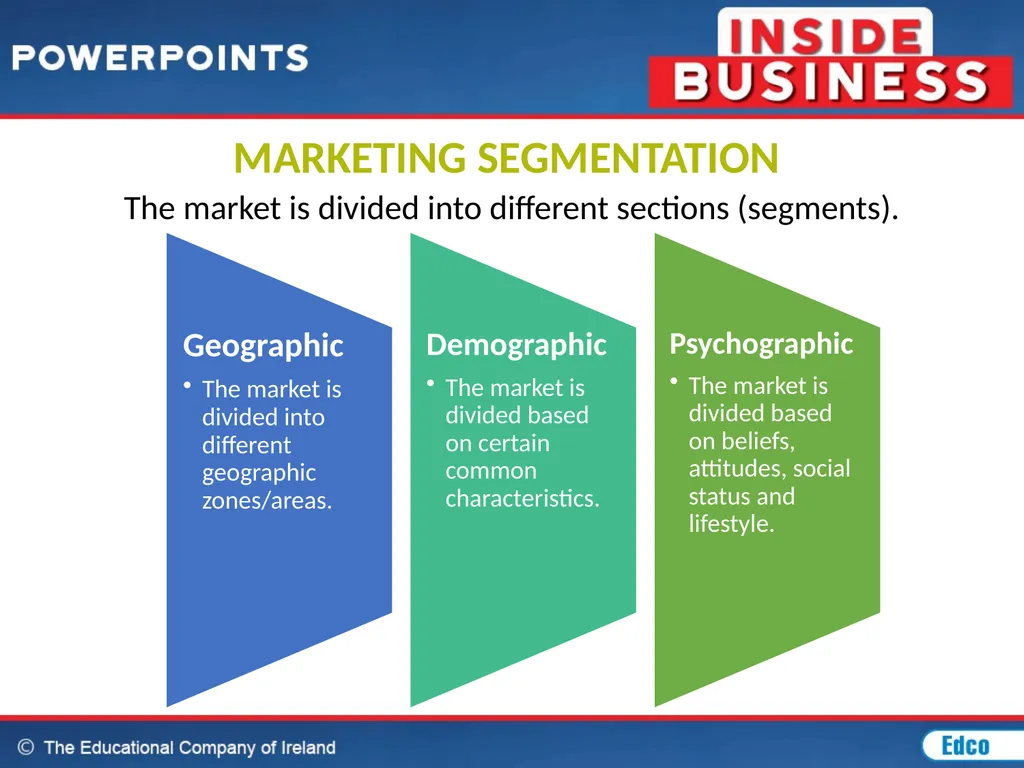
MARKETING SEGMENTATION The market is divided into different sections (segments).<br>
08
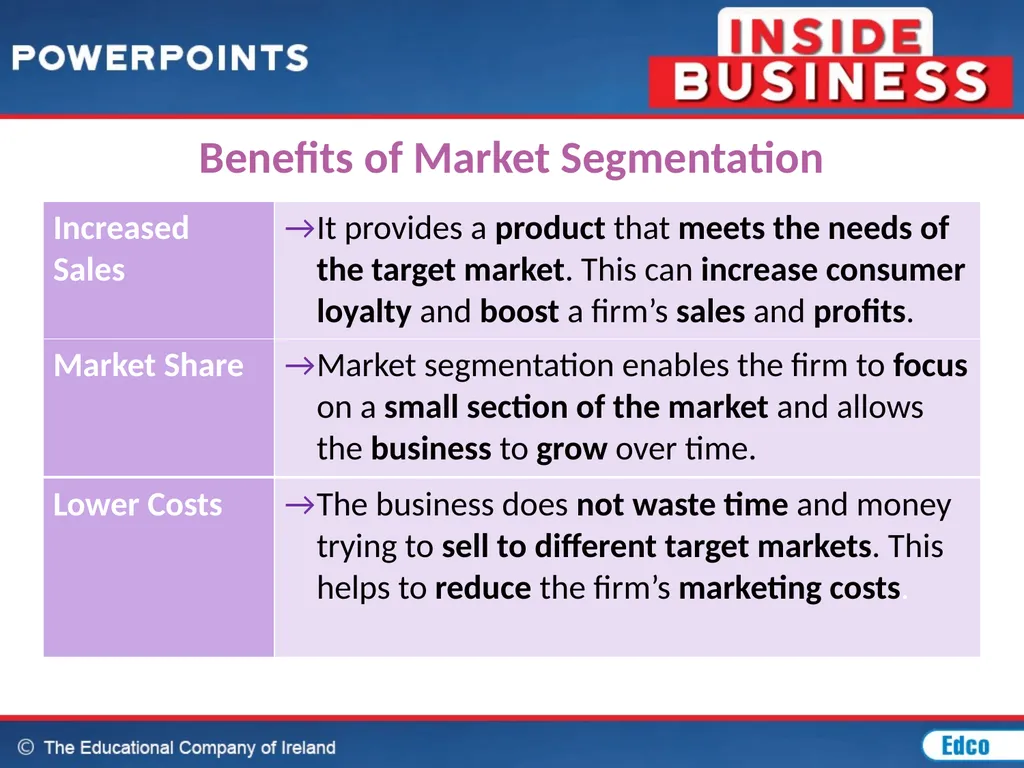
Benefits of Market Segmentation<br>
09
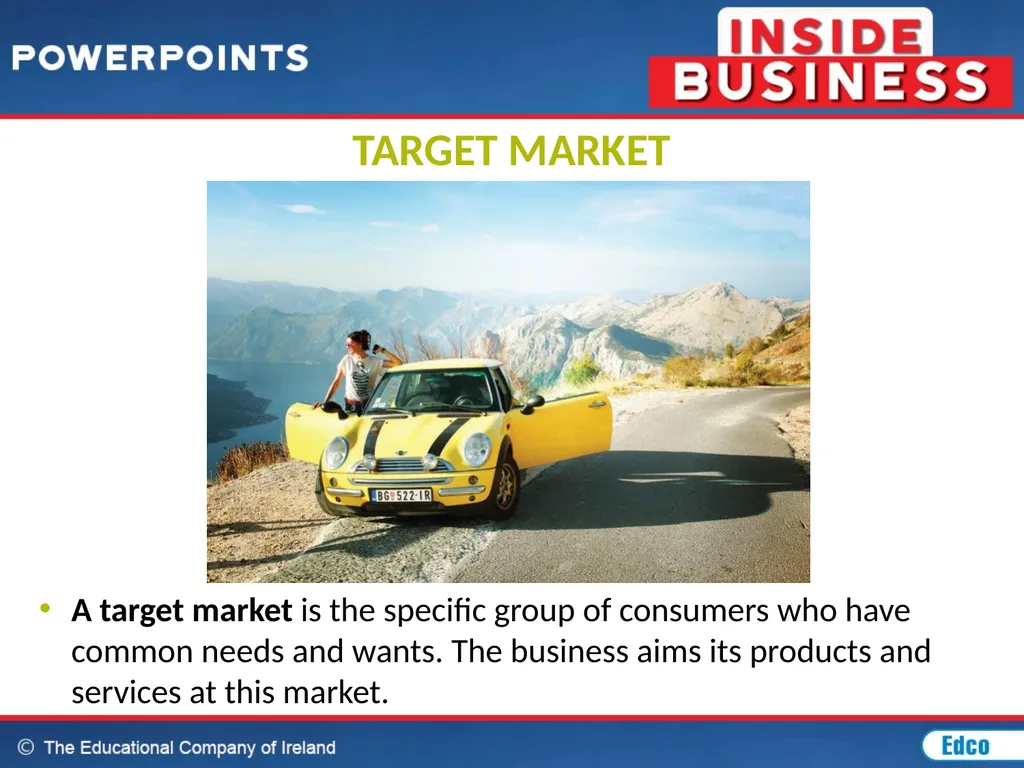
TARGET MARKET A target market is the specific group of consumers who have common needs and wants. The business aims its products and services at this market.<br>
10
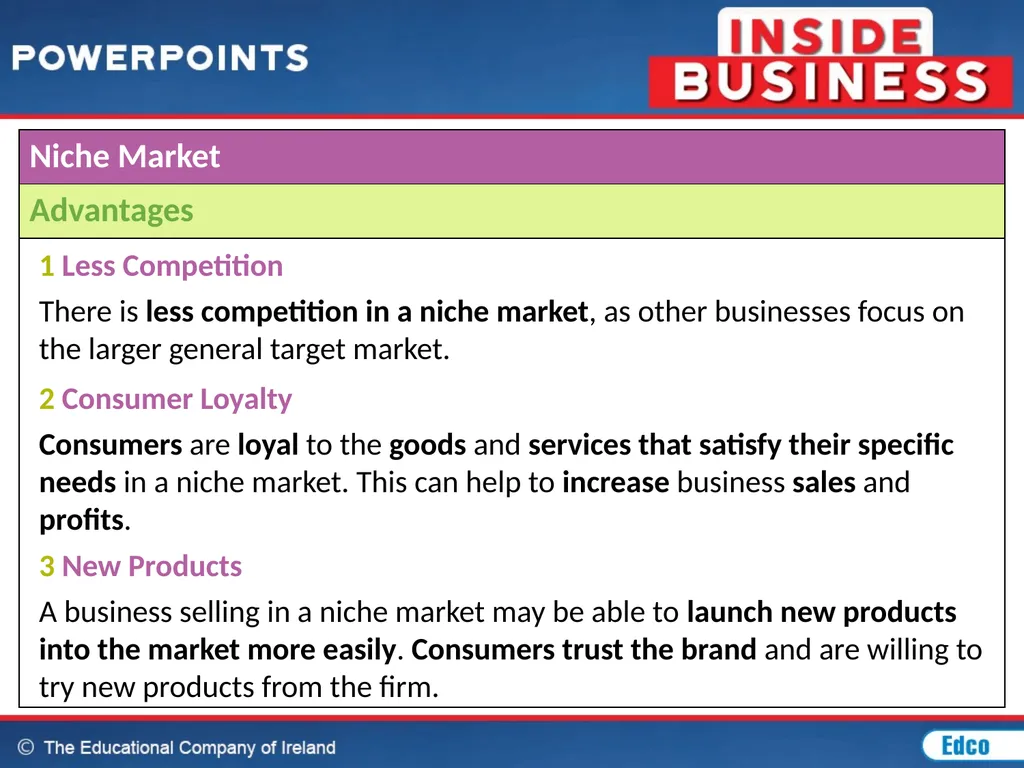
1 Less Competition
There is less competition in a niche market, as other businesses focus on the larger general target market. 2 Consumer Loyalty
Consumers are loyal to the goods and services that satisfy their specific needs in a niche market. This can help to increase business sales and profits. 3 New Products
A business selling in a niche market may be able to launch new products into the market more easily. Consumers trust the brand and are willing to try new products from the firm.<br>
11
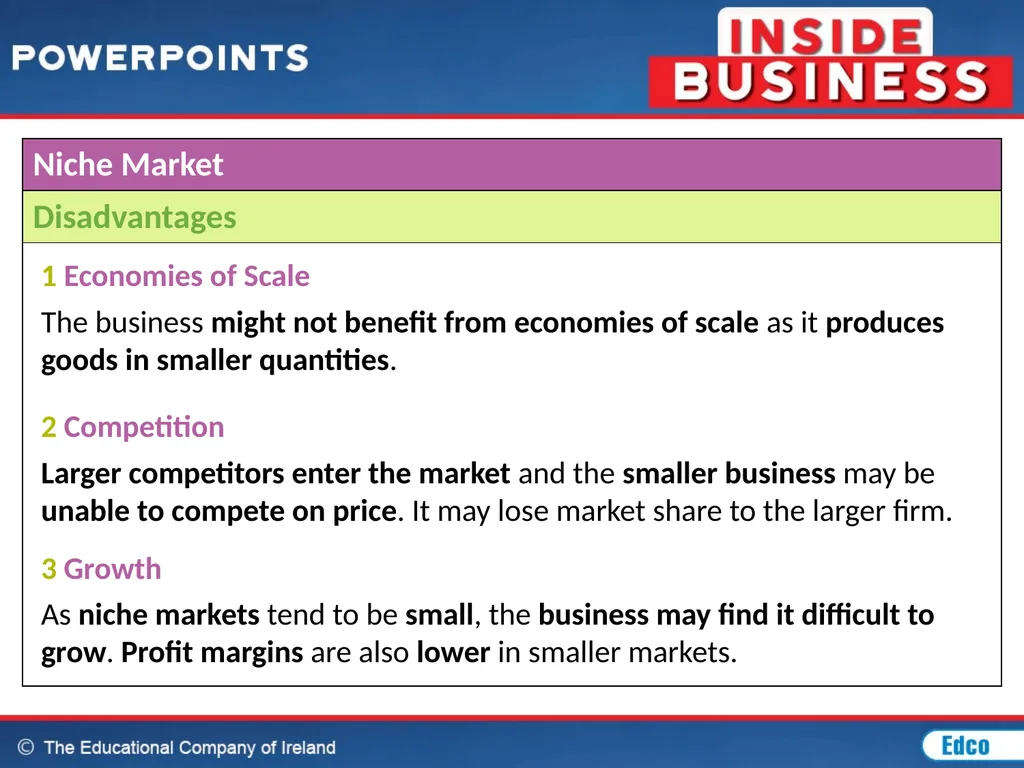
1 Economies of Scale
The business might not benefit from economies of scale as it produces goods in smaller quantities. 2 Competition
Larger competitors enter the market and the smaller business may be unable to compete on price. It may lose market share to the larger firm. 3 Growth
As niche markets tend to be small, the business may find it difficult to grow. Profit margins are also lower in smaller markets.<br>
12
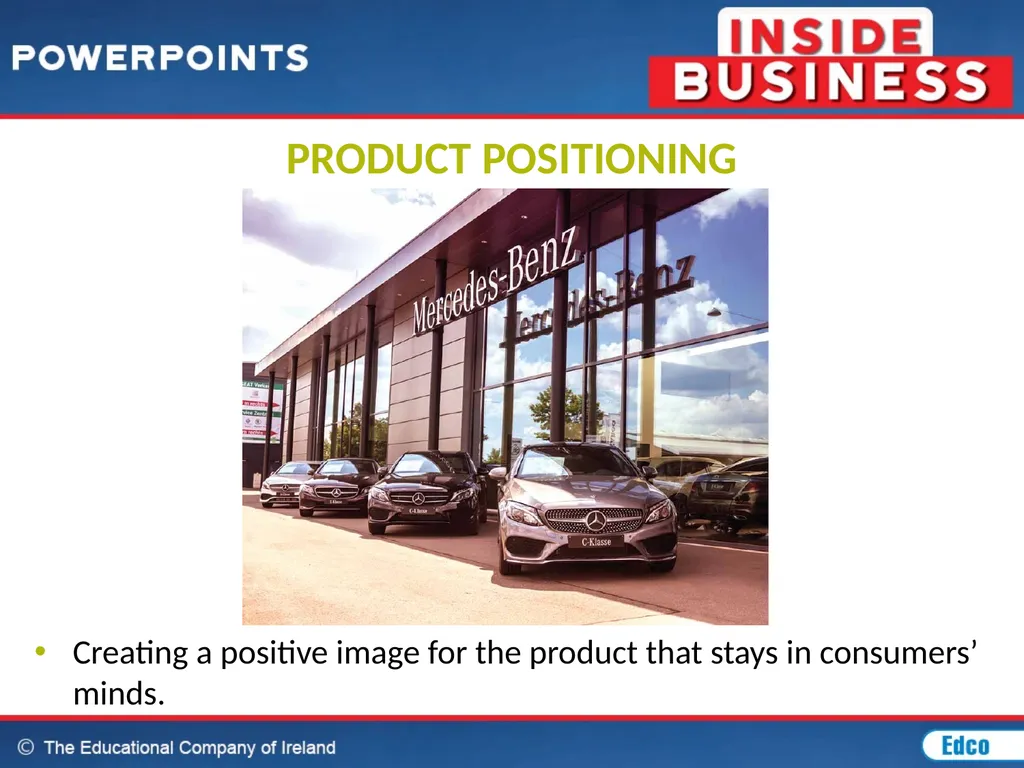
PRODUCT POSITIONING Creating a positive image for the product that stays in consumers’ minds.<br>
14
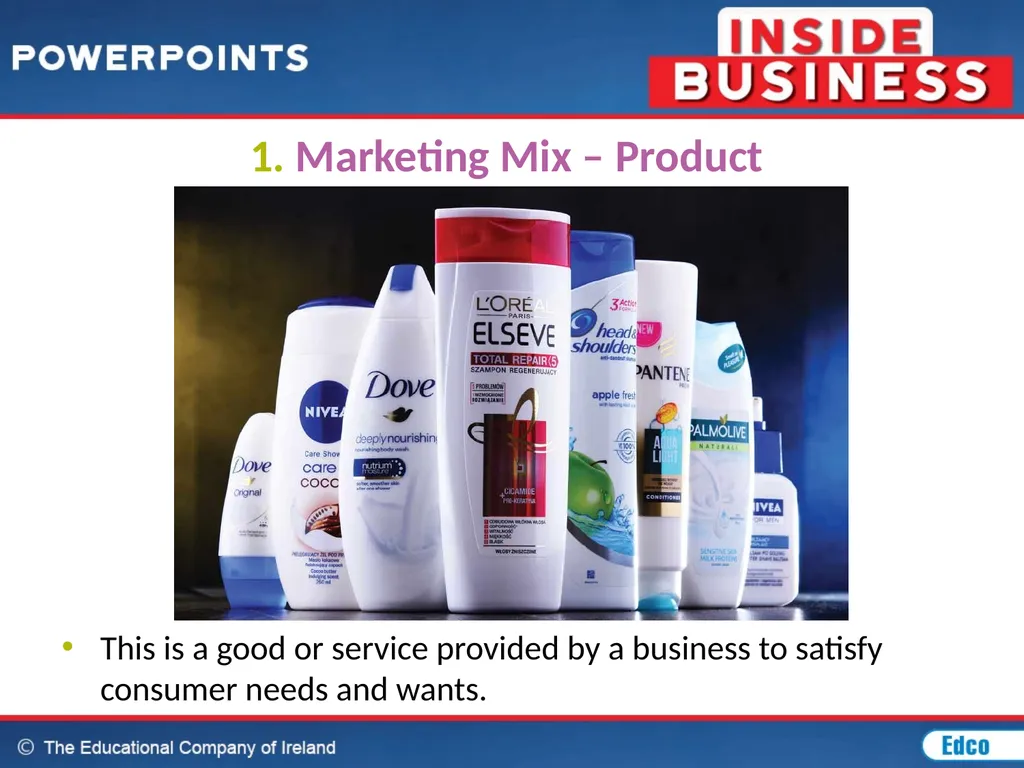
1. Marketing Mix – Product This is a good or service provided by a business to satisfy consumer needs and wants.<br>
15
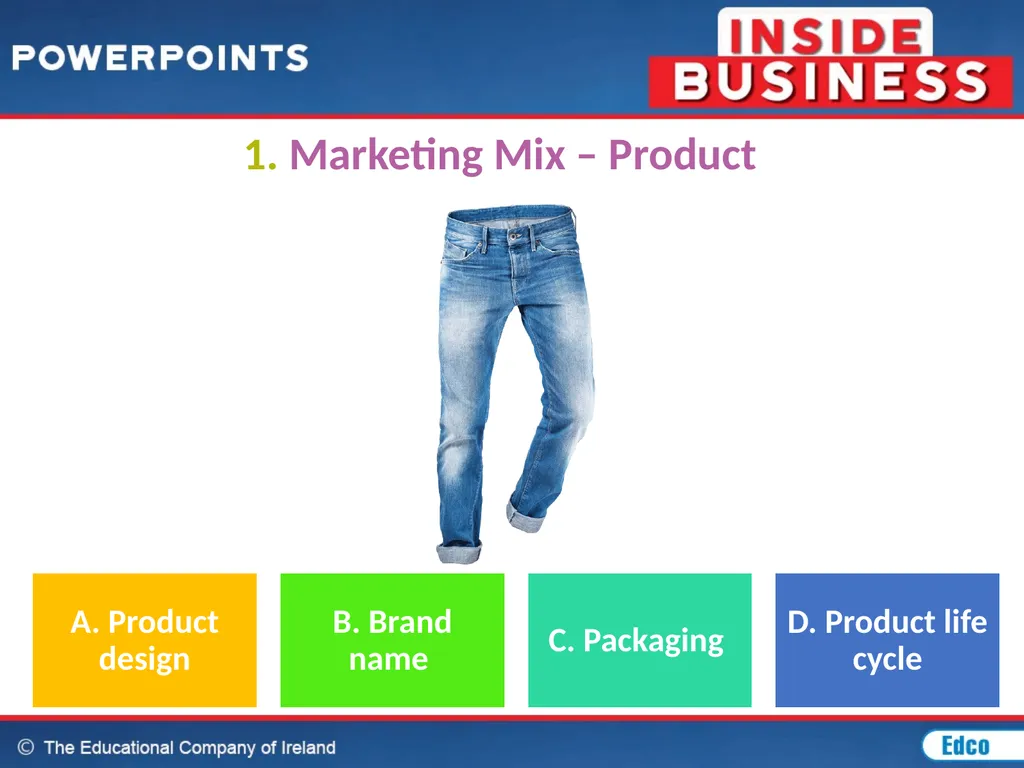
1. Marketing Mix – Product<br>
16
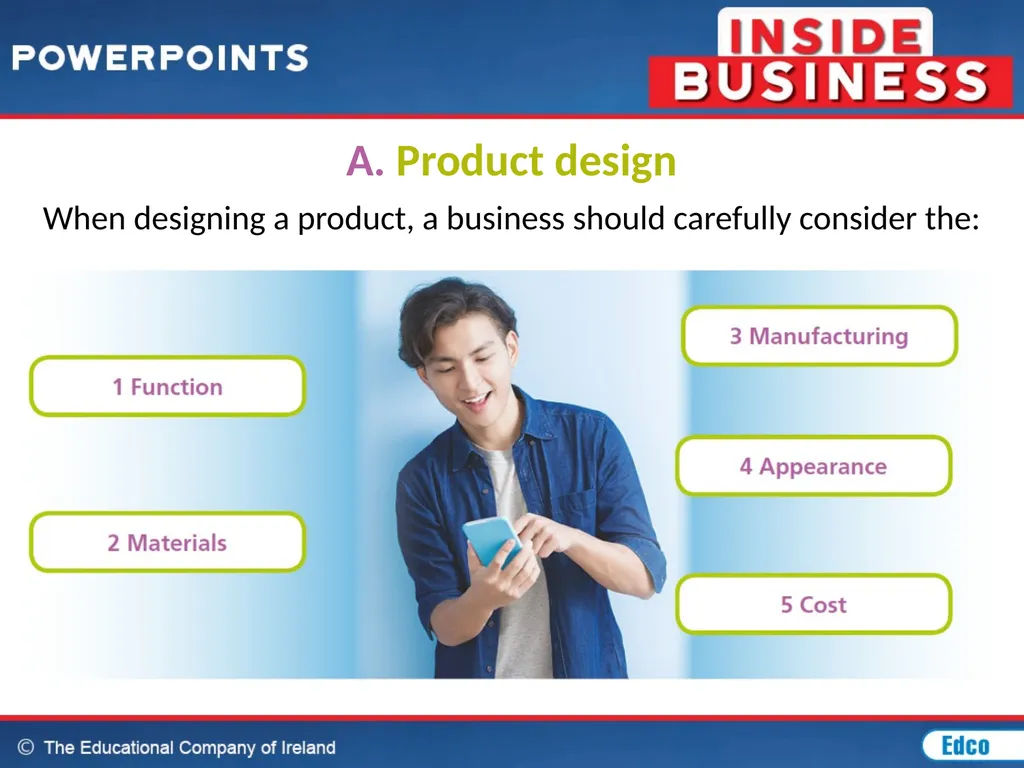
A. Product design When designing a product, a business should carefully consider the:<br>
17
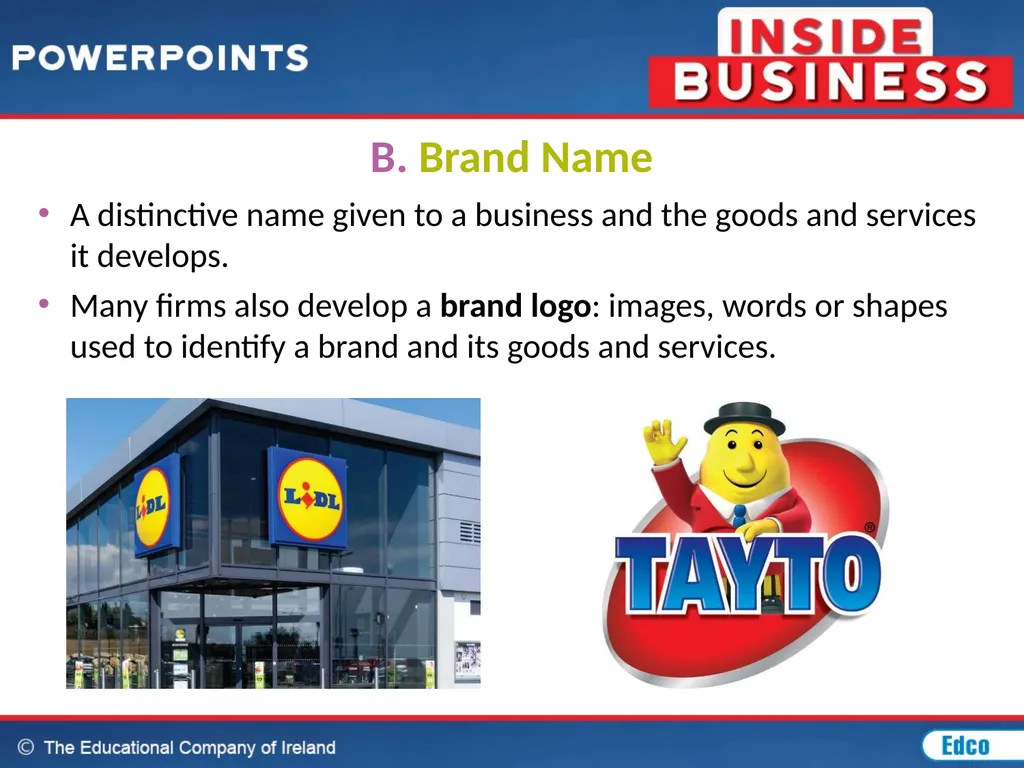
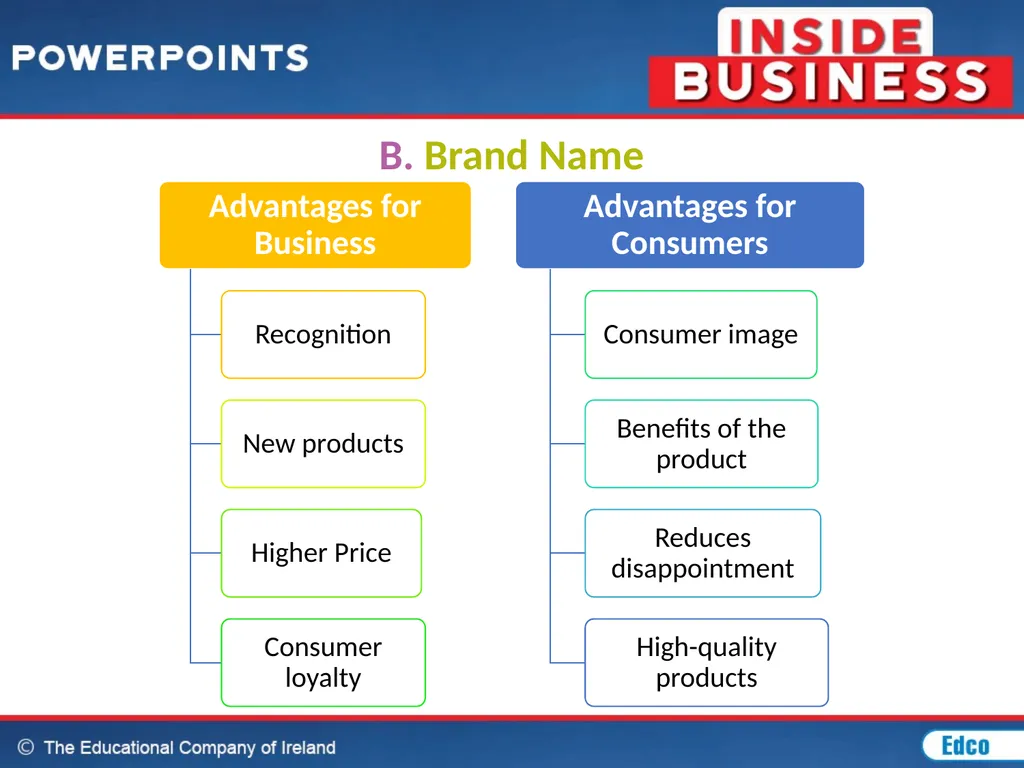
B. Brand Name A distinctive name given to a business and the goods and services it develops.
Many firms also develop a brand logo: images, words or shapes used to identify a brand and its goods and services.<br>
19
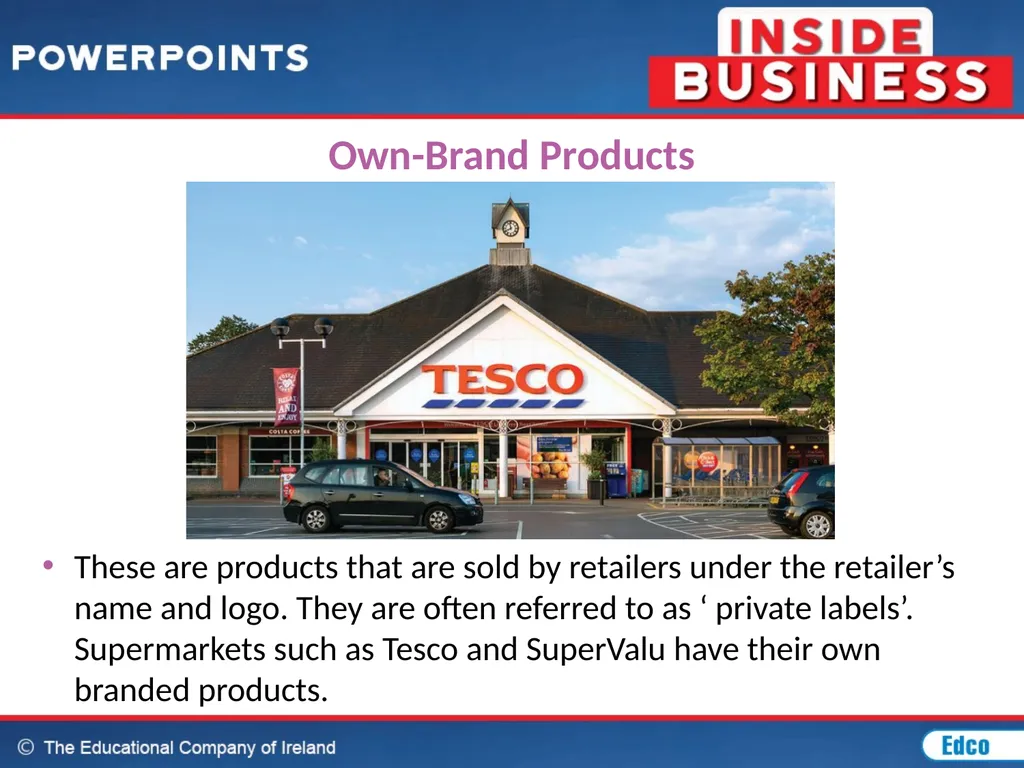
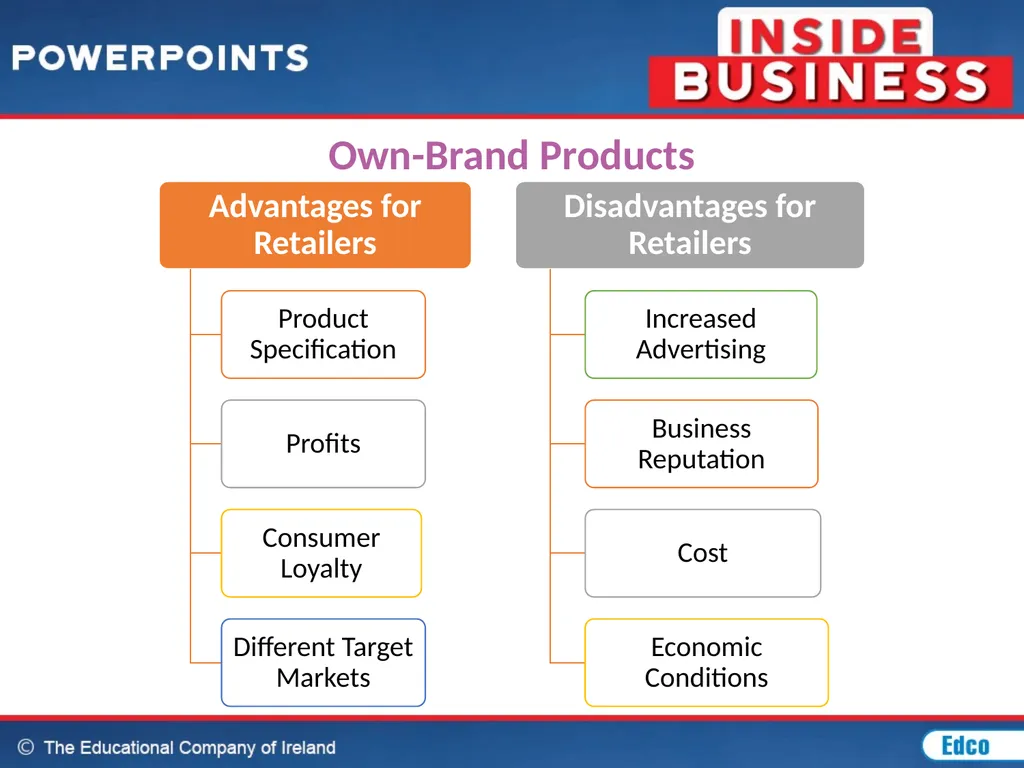
Own-Brand Products These are products that are sold by retailers under the retailer’s name and logo. They are often referred to as ‘ private labels’. Supermarkets such as Tesco and SuperValu have their own branded products.<br>
20
Own-Brand Products<br>
22
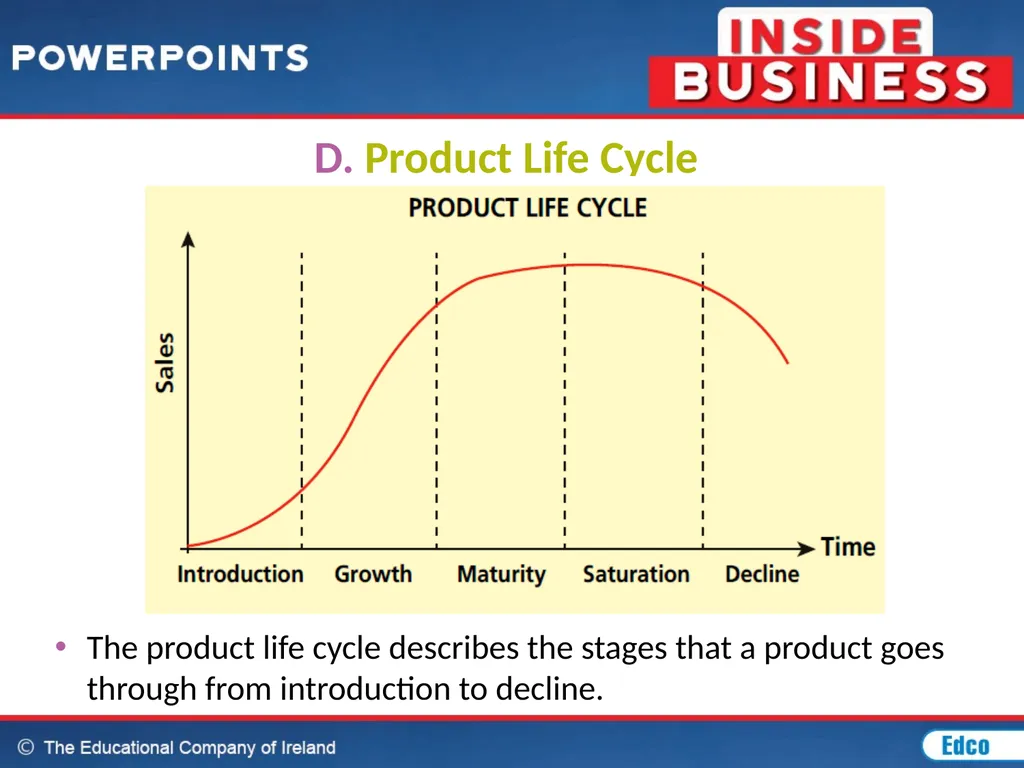
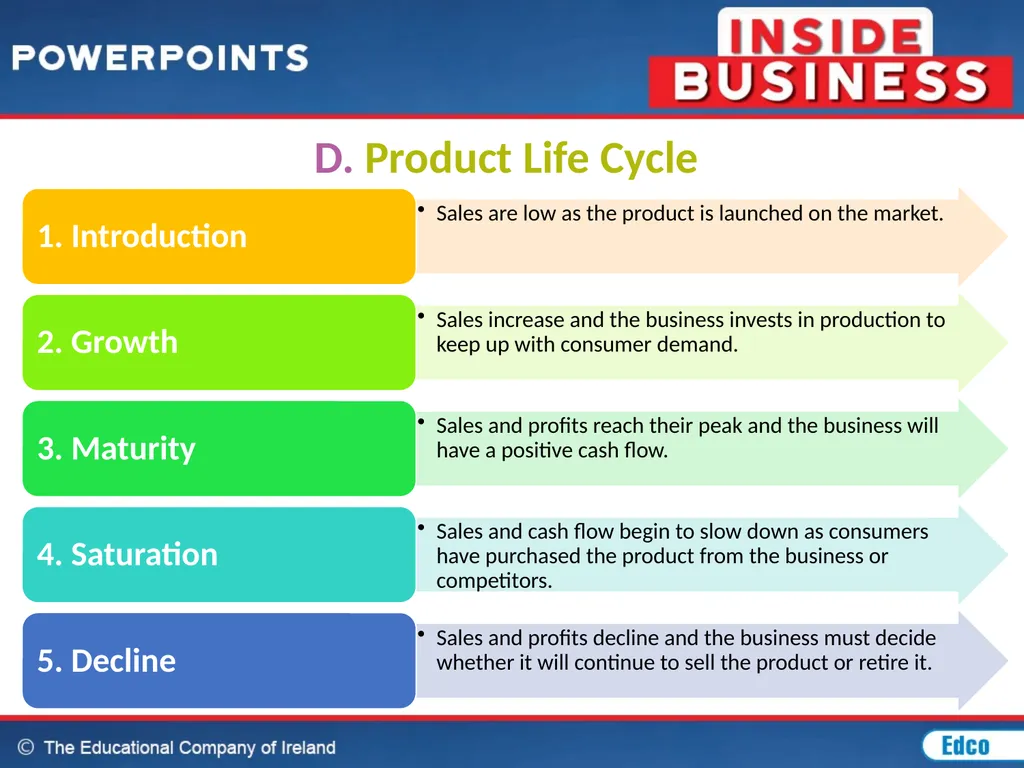
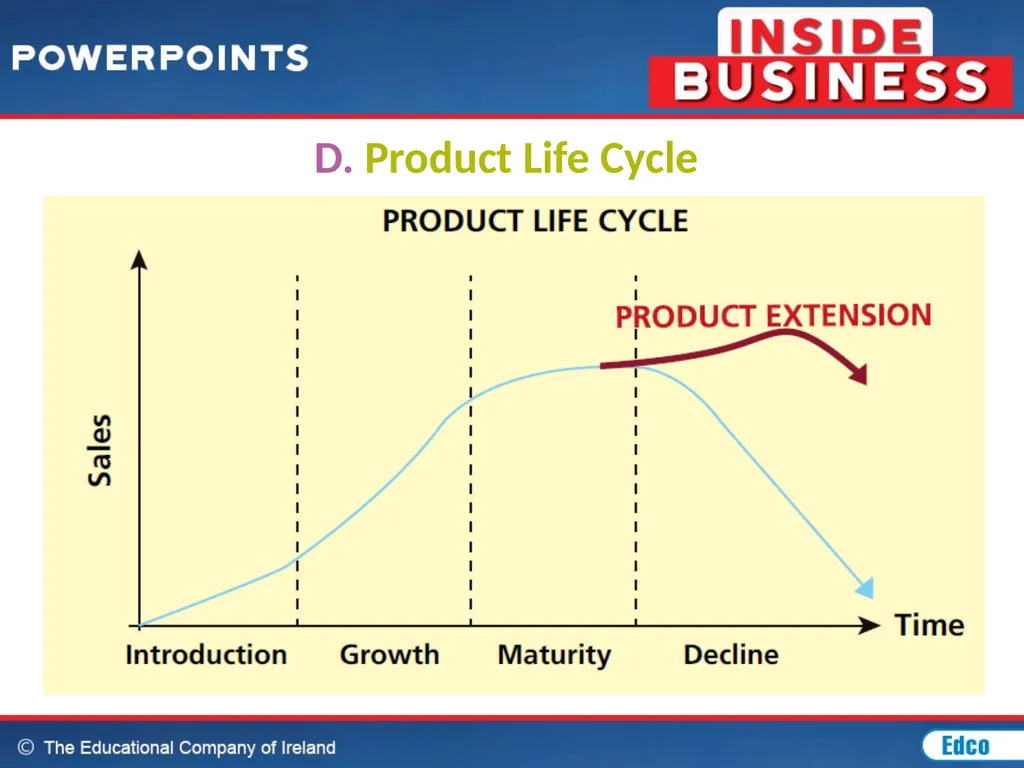
D. Product Life Cycle The product life cycle describes the stages that a product goes through from introduction to decline.<br>
23
D. Product Life Cycle<br>
24
D. Product Life Cycle<br>
25
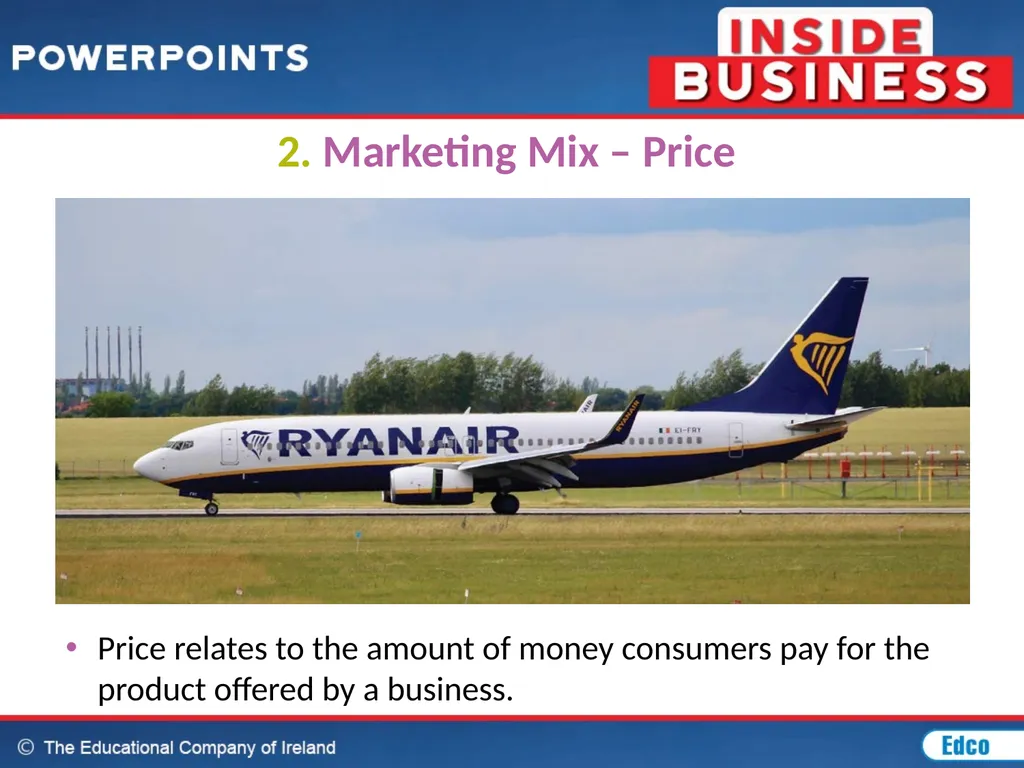
2. Marketing Mix – Price Price relates to the amount of money consumers pay for the product offered by a business.<br>
26
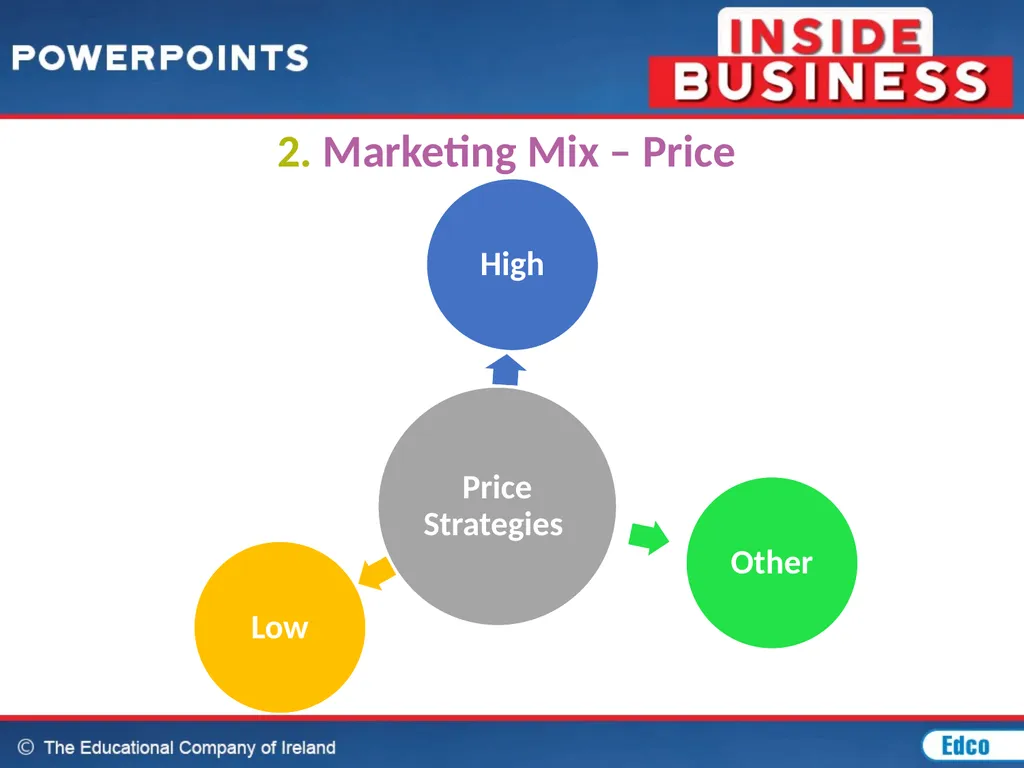
2. Marketing Mix – Price<br>
27
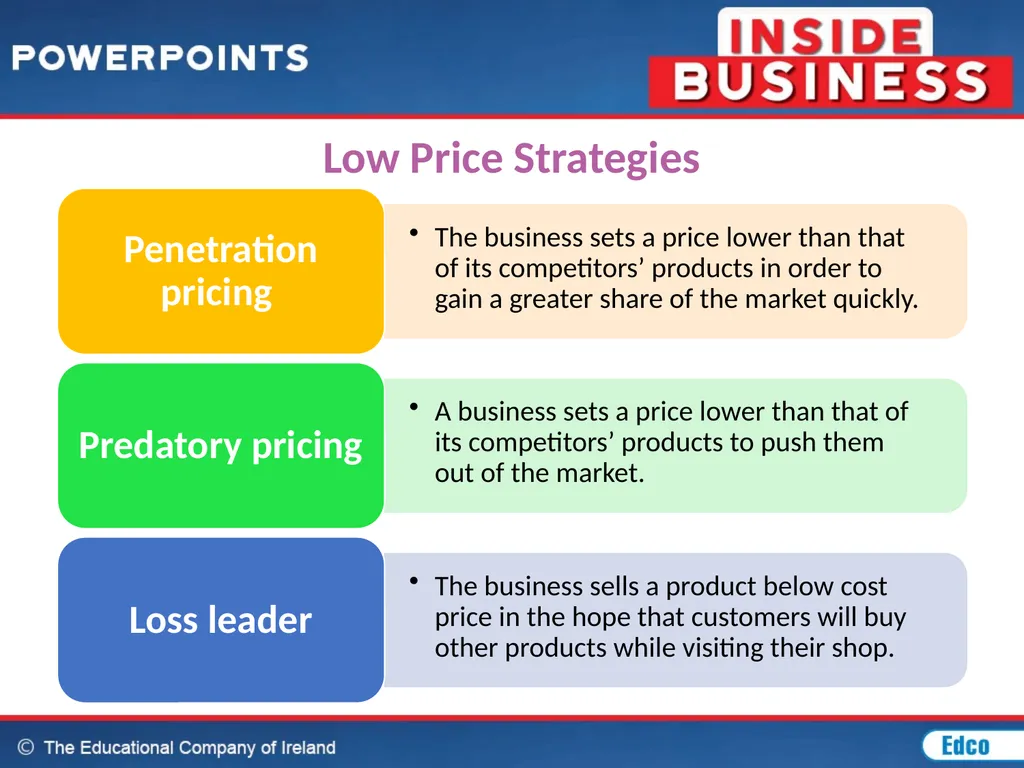
Low Price Strategies<br>
28
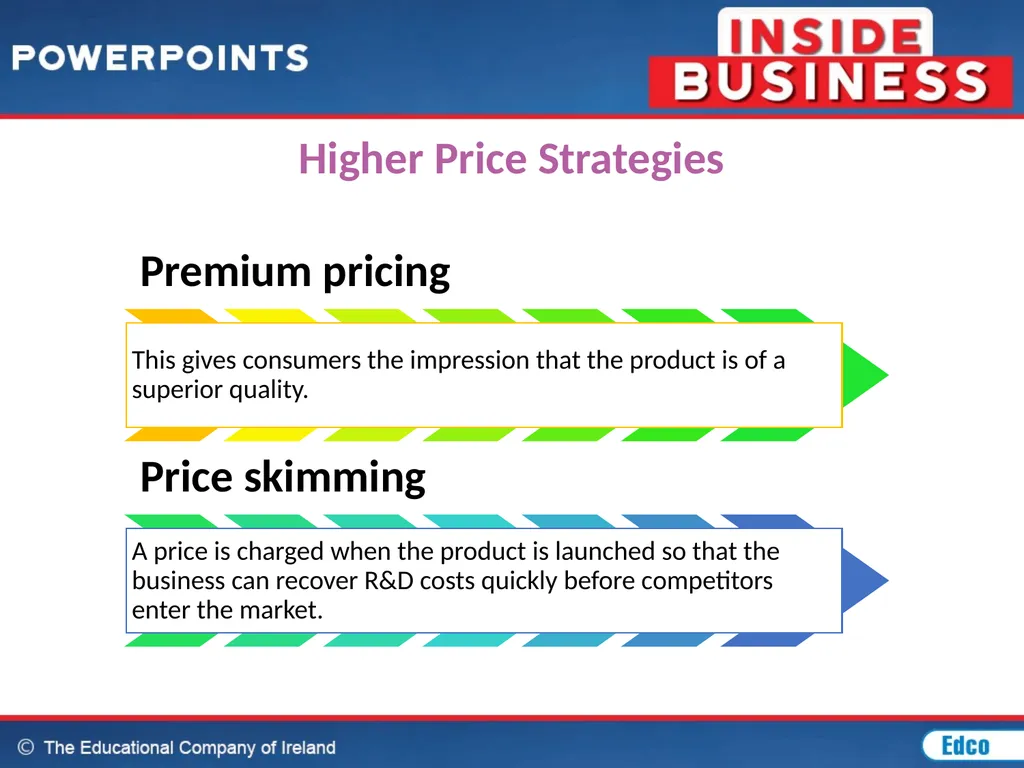
Higher Price Strategies<br>
29
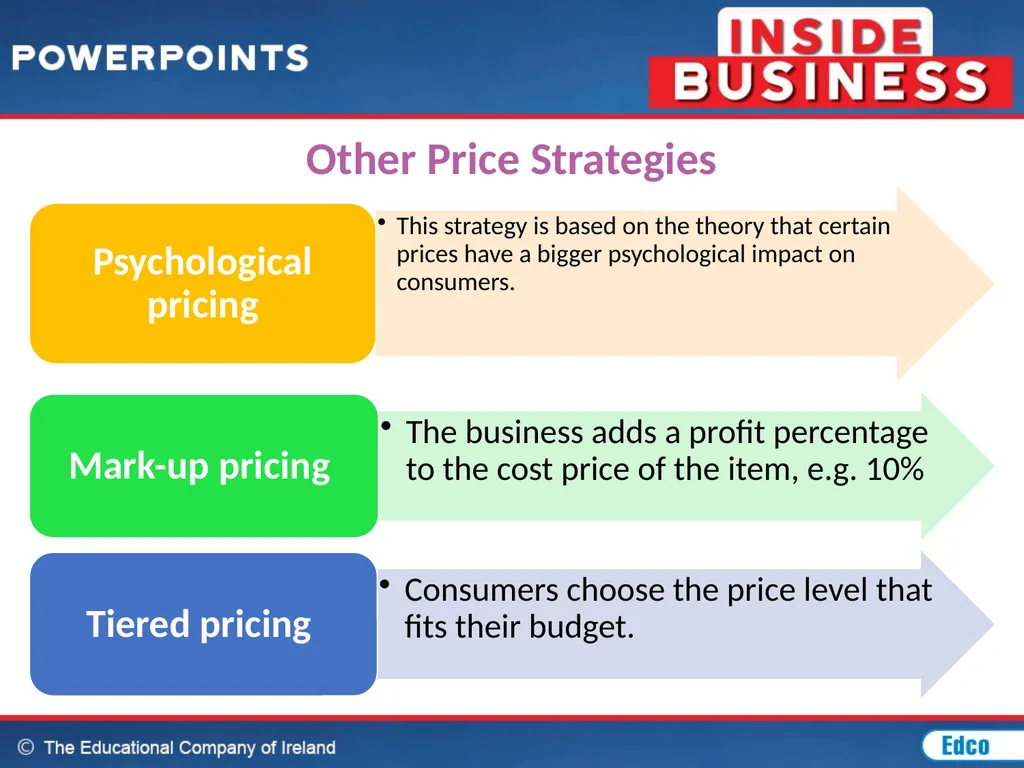
Other Price Strategies<br>
30
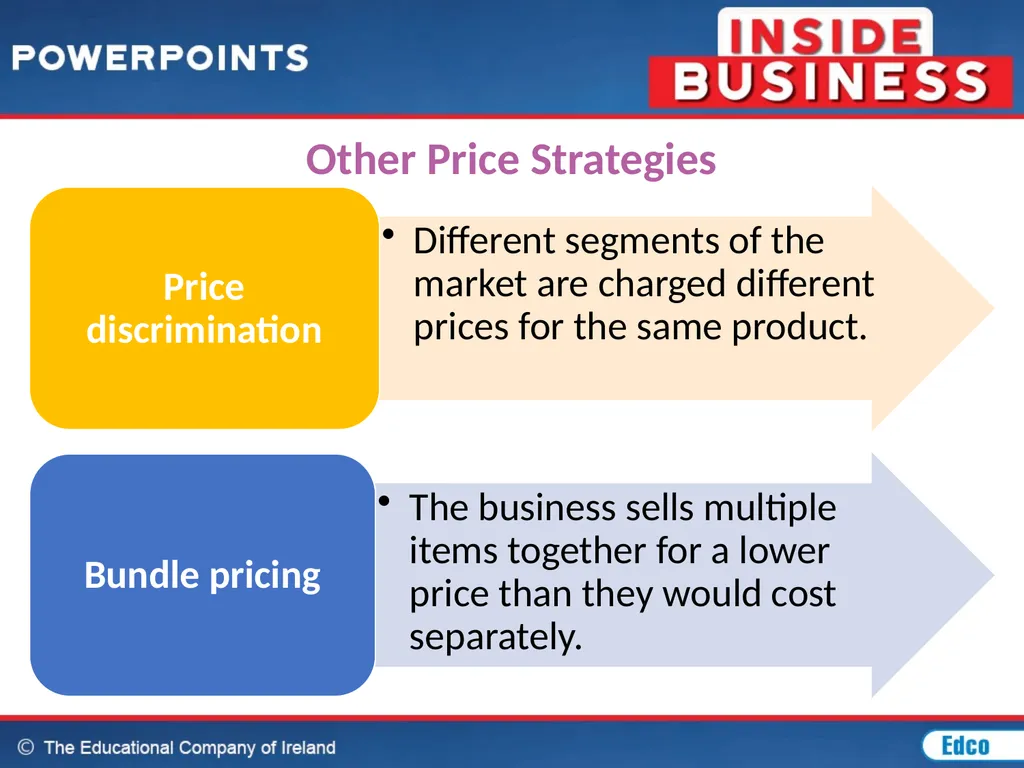
Other Price Strategies<br>
31
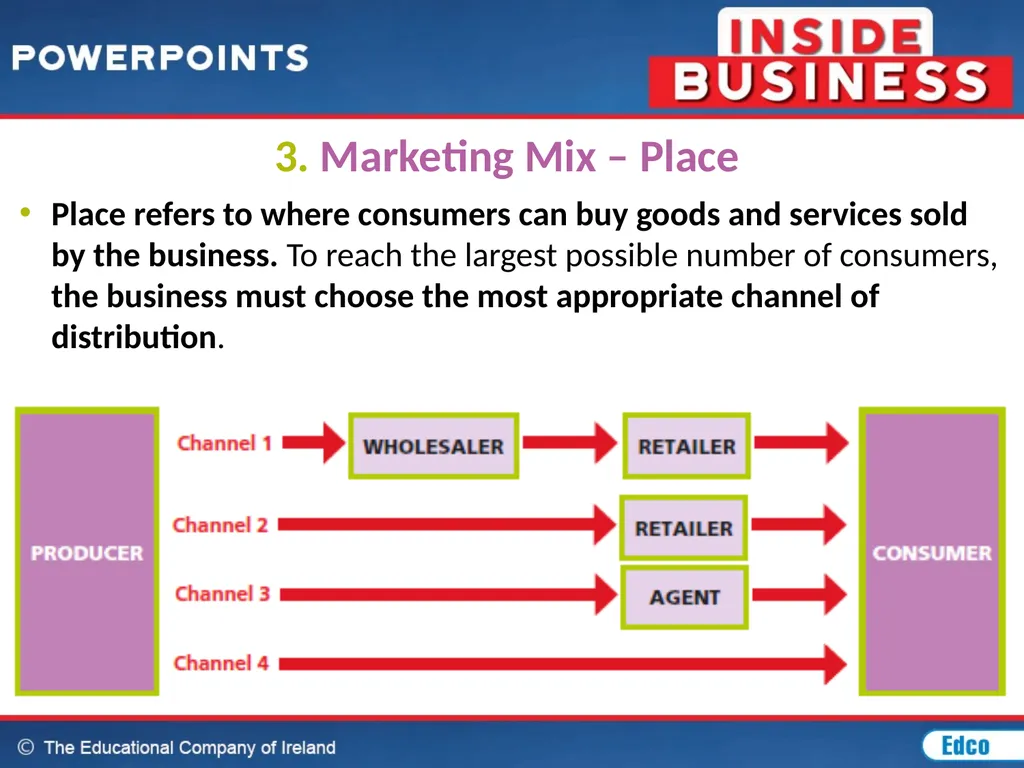
3. Marketing Mix – Place Place refers to where consumers can buy goods and services sold by the business. To reach the largest possible number of consumers, the business must choose the most appropriate channel of distribution.<br>
32
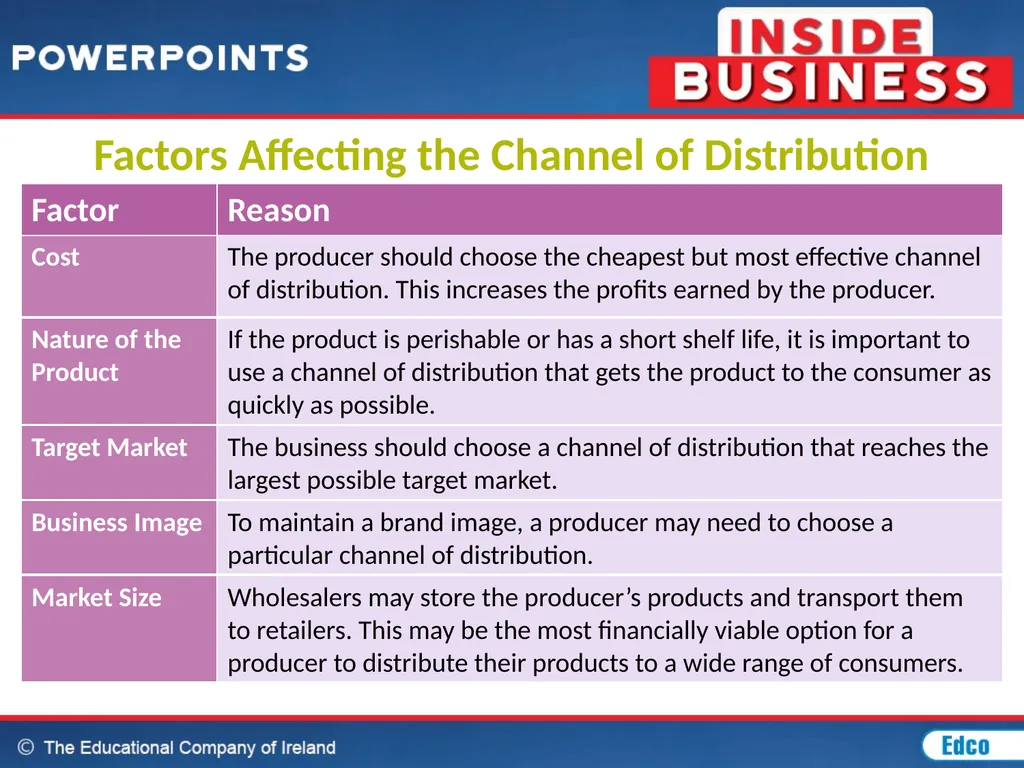
Factors Affecting the Channel of Distribution<br>
33
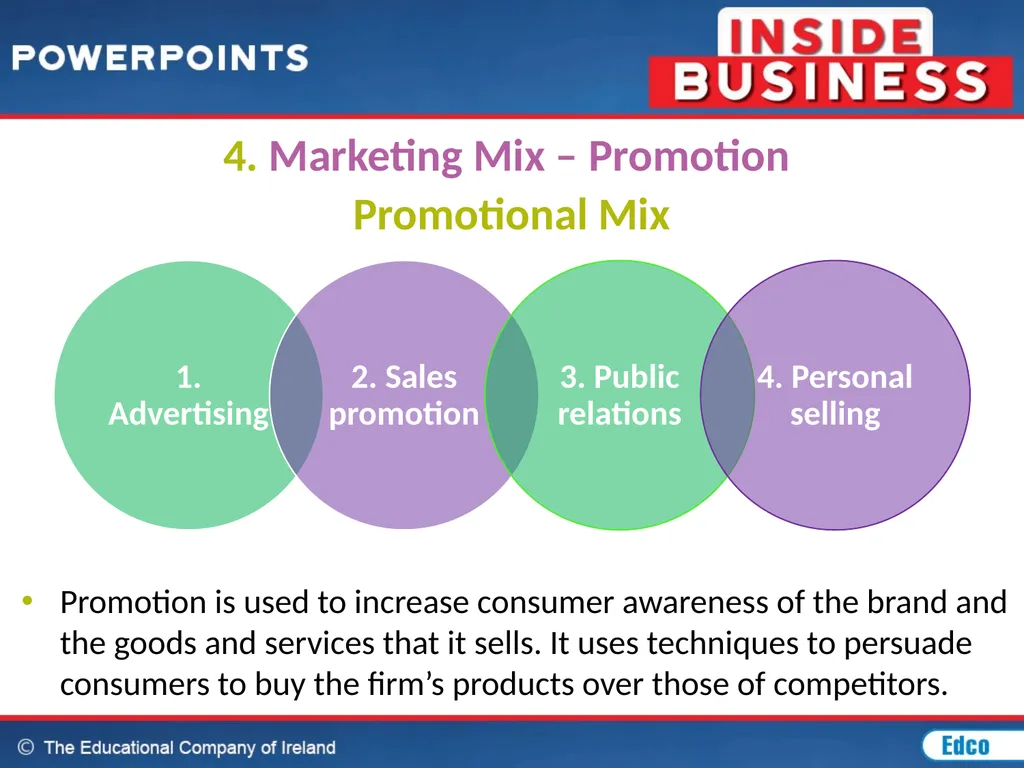
4. Marketing Mix – Promotion Promotion is used to increase consumer awareness of the brand and the goods and services that it sells. It uses techniques to persuade consumers to buy the firm’s products over those of competitors. Promotional Mix<br>
34
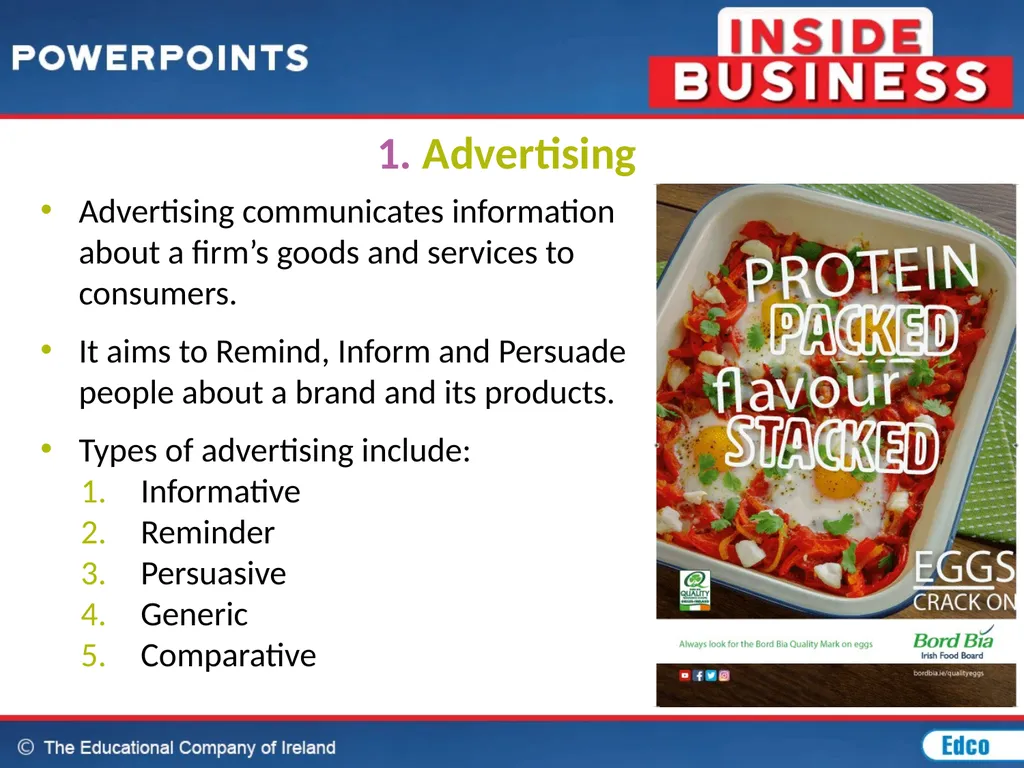
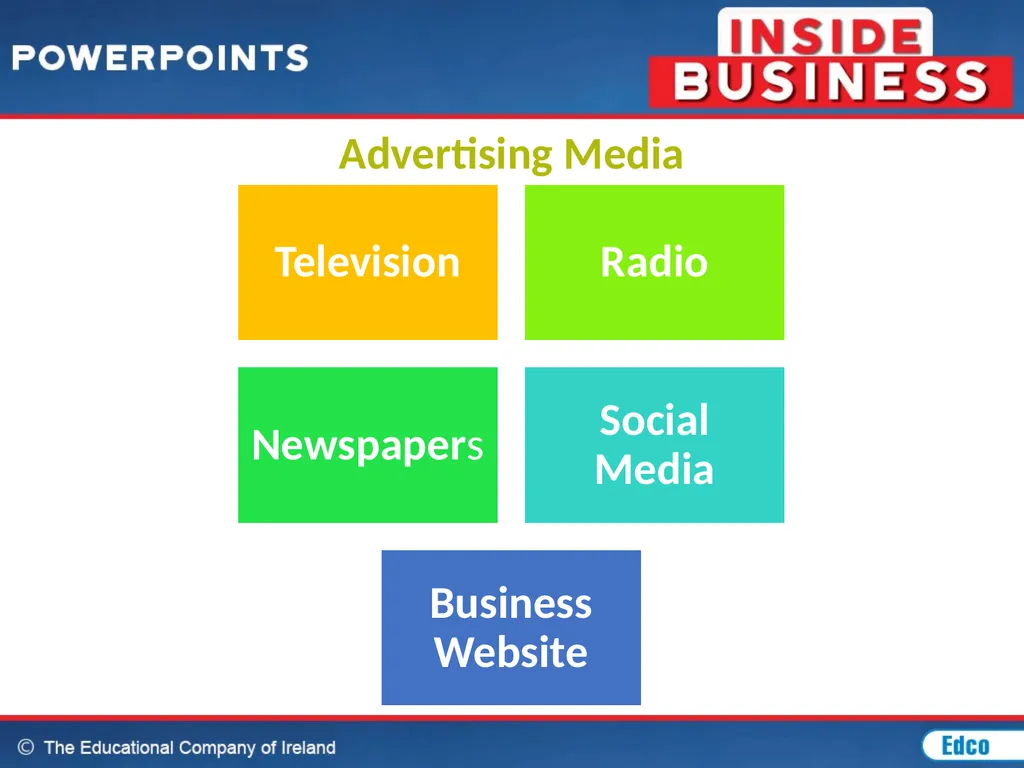
1. Advertising Advertising communicates information about a firm’s goods and services to consumers.
It aims to Remind, Inform and Persuade people about a brand and its products.
Types of advertising include:
Informative
Reminder
Persuasive
Generic
Comparative<br>
36
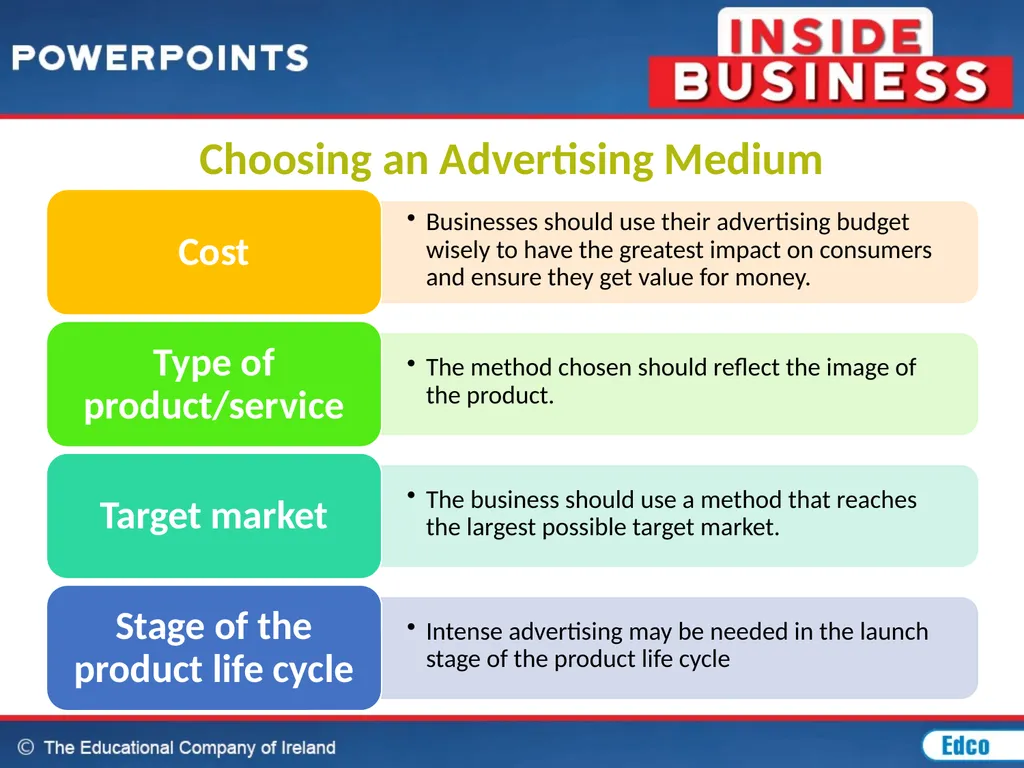
Choosing an Advertising Medium<br>
37
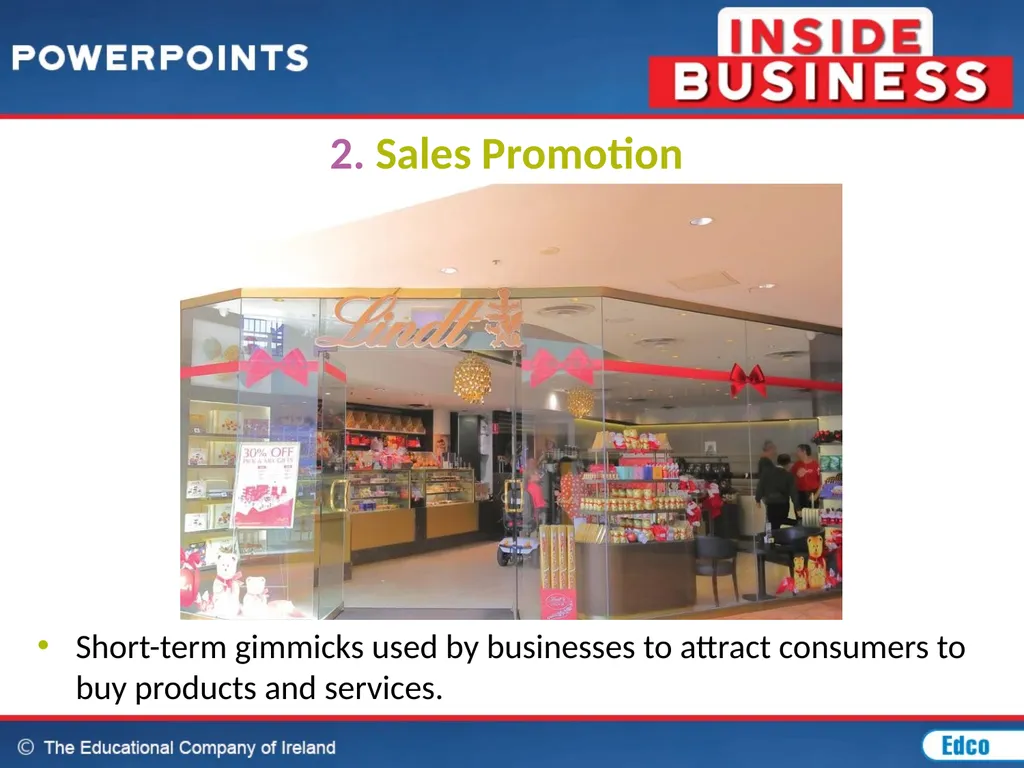
2. Sales Promotion Short-term gimmicks used by businesses to attract consumers to buy products and services.<br>
38
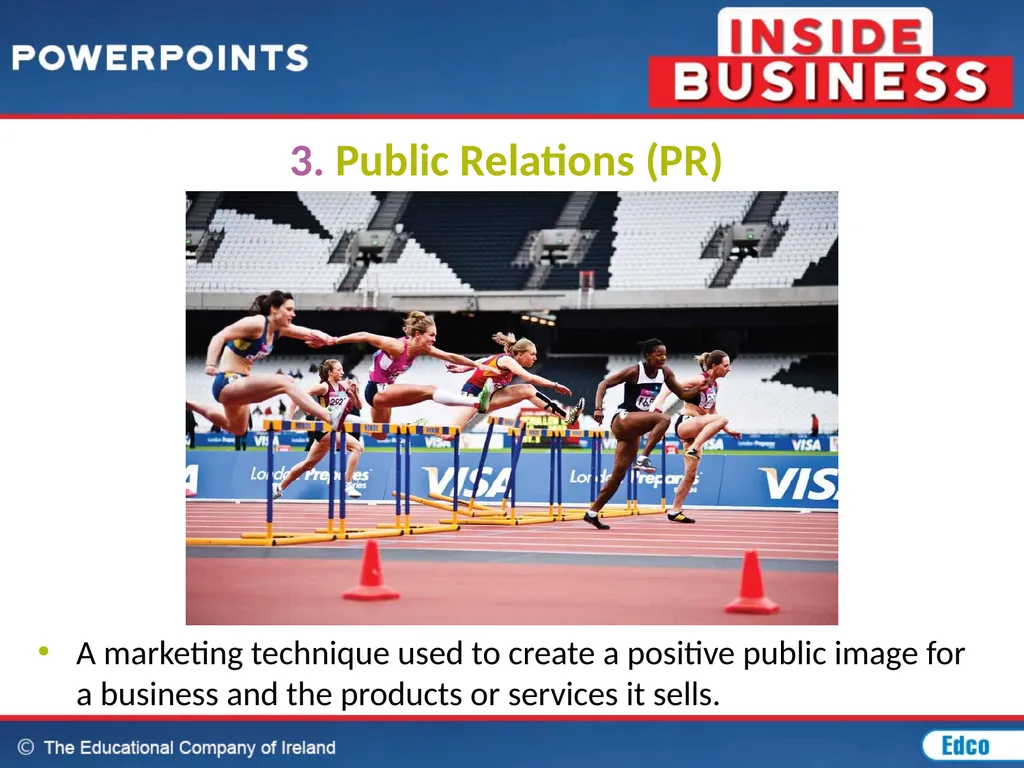
3. Public Relations (PR) A marketing technique used to create a positive public image for a business and the products or services it sells.<br>
39
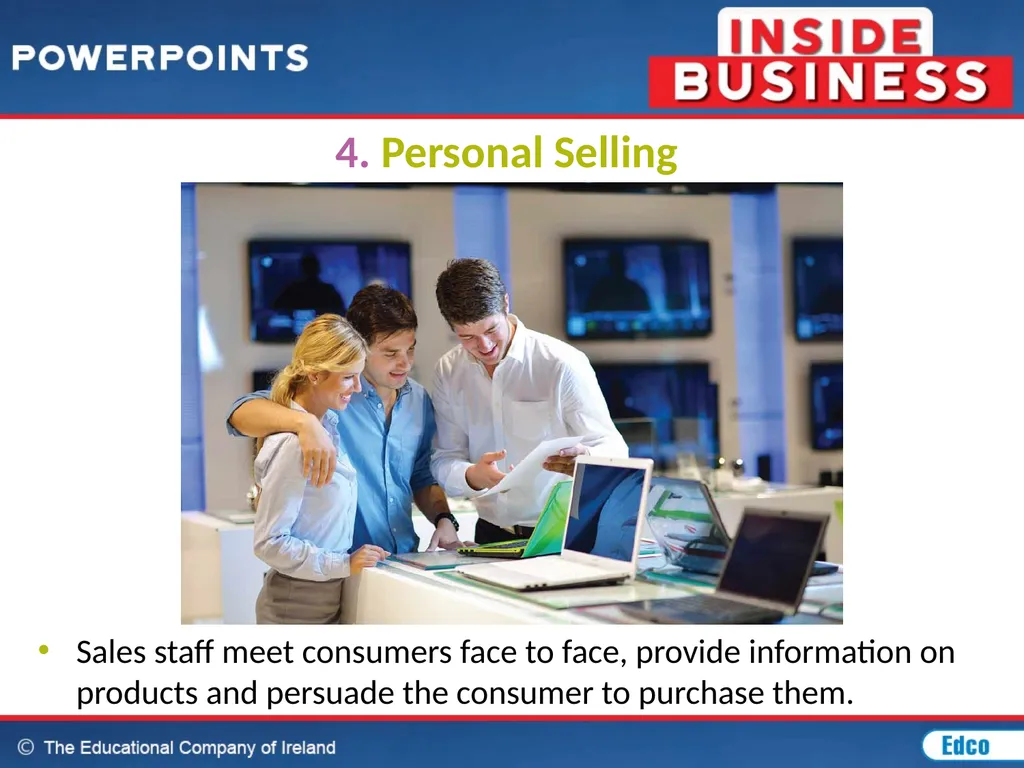
4. Personal Selling Sales staff meet consumers face to face, provide information on products and persuade the consumer to purchase them.<br>
40
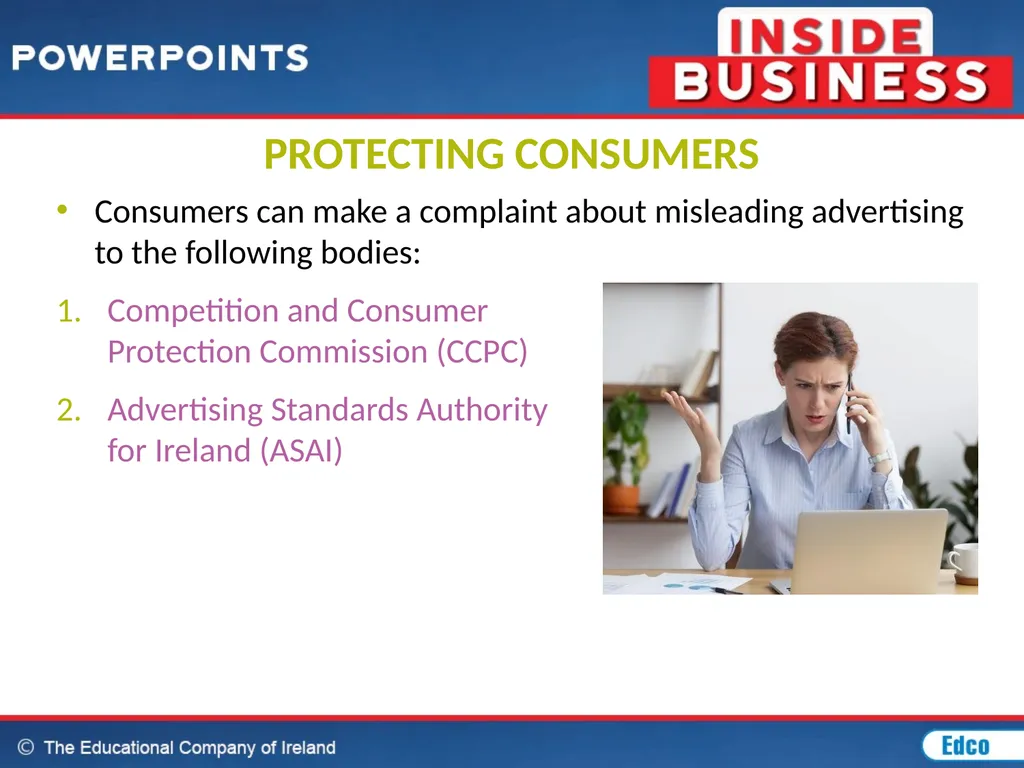
PROTECTING CONSUMERS Competition and Consumer Protection Commission (CCPC)
Advertising Standards Authority for Ireland (ASAI) Consumers can make a complaint about misleading advertising to the following bodies:<br>
41
EVALUATION OF THE MARKETING MIX<br>
42
Key Terms marketing
marketing concept
marketing strategy
marketing plan
market segmentation
geographic segmentation
demographic segmentation
psychographic segmentation
target market
niche market
product positioning
marketing mix
product
product portfolio patent
brand name
brand logo
brand slogan
trademark
own-brand products
packaging
product life cycle
price
pricing strategies
penetration pricing
predatory pricing
loss leader
premium pricing<br>
43
Key Terms price skimming
psychological pricing
tiered pricing
price discrimination
bundle pricing
place
channel of distribution
wholesaler
retailer
agent
promotion
promotional mix
advertising informative advertising
reminder advertising
persuasive advertising
generic advertising
comparative advertising
sales promotion
merchandising
public relations
sponsorship
endorsements
personal selling
Advertising Standards Authority for Ireland (ASAI)<br>
44
CREDIT SLIDE Shutterstock
iStockphotos.com
Alamy.com
Bord Bia<br>