
Chapter 5: Information Systems for the Enterprise
Description: Chapter 5: Information Systems for the Enterprise Copyright 2013 Pearson Education, Inc. publishing as Prentice Hall Chapter 5 - 1 Learning objectives Information systems in organizations Human capital management (HCM) Supply chain
Related Topics
Download Presentation
"Chapter 5: Information Systems for the Enterprise" is the property of its rightful owner. Permission is granted to download and print the materials on this website for personal, non-commercial use only, and to display it on your personal computer provided you do not modify the materials and that you retain all copyright notices contained in the materials. By downloading content from our website, you accept the terms of this agreement.
Presentation Transcript
slide1. Chapter 5:
Information Systems for the Enterprise Copyright © 2013 Pearson Education, Inc. publishing as Prentice Hall Chapter 5 - 1<br>
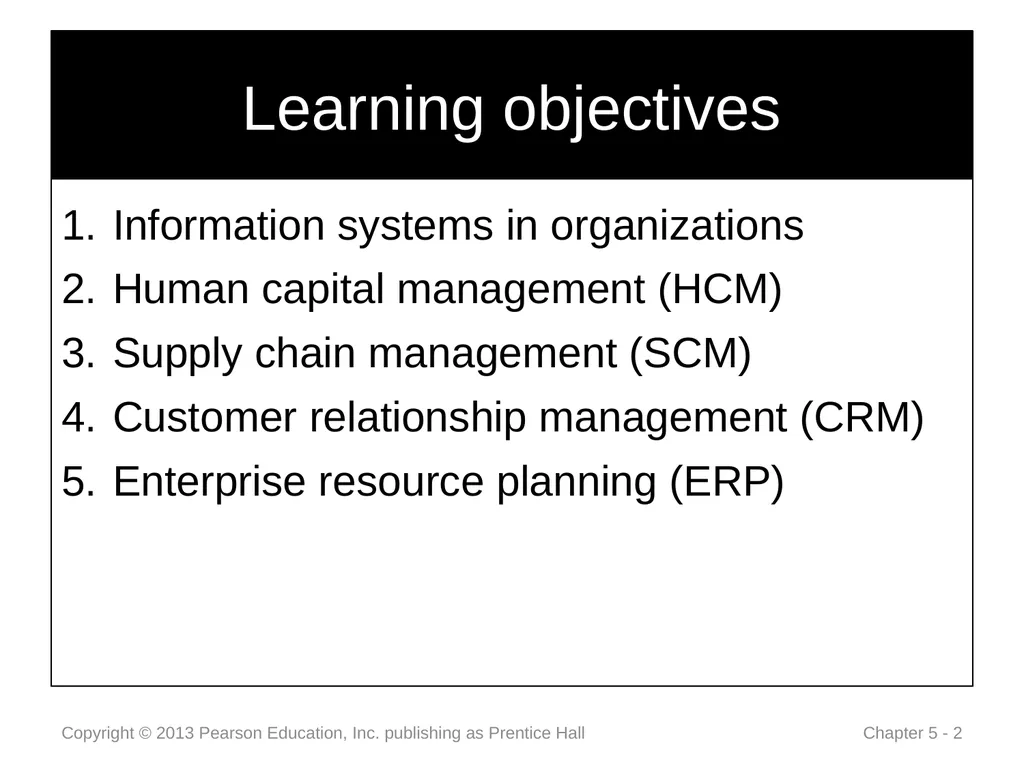
slide2. Learning objectives Information systems in organizations
Human capital management (HCM)
Supply chain management (SCM)
4. Customer relationship management (CRM)
5. Enterprise resource planning (ERP) Copyright © 2013 Pearson Education, Inc. publishing as Prentice Hall Chapter 5 - 2<br>
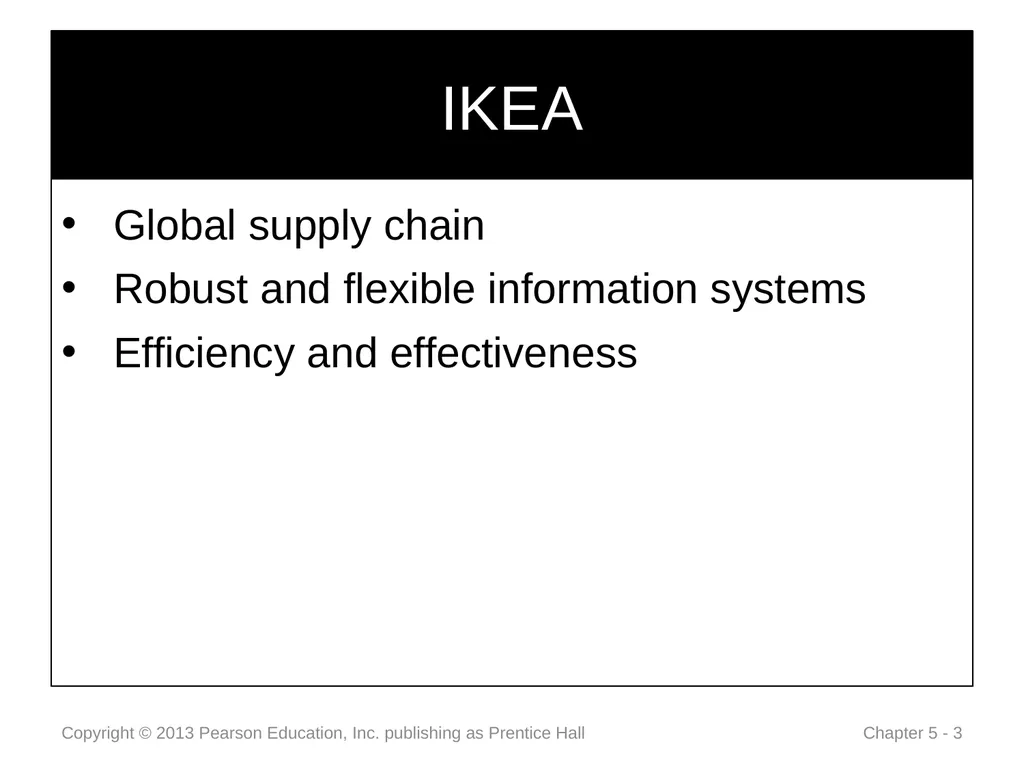
slide3. IKEA Global supply chain
Robust and flexible information systems
Efficiency and effectiveness Copyright © 2013 Pearson Education, Inc. publishing as Prentice Hall Chapter 5 - 3<br>
slide4. Finance management Components
Integration
Workflow Copyright © 2013 Pearson Education, Inc. publishing as Prentice Hall Chapter 5 - 4<br>
slide5. Reporting and compliance Exception reporting
Compliance reporting
eXtensible Business Reporting Language (XBRL) Copyright © 2013 Pearson Education, Inc. publishing as Prentice Hall Chapter 5 - 5<br>
slide6. Human capital management Human resources management
Workforce management
Talent management Copyright © 2013 Pearson Education, Inc. publishing as Prentice Hall Chapter 5 - 6<br>
slide7. Human capital metrics Do we have the talent we need?
Can we afford to lose star employees?
How productive are our employees? Copyright © 2013 Pearson Education, Inc. publishing as Prentice Hall Chapter 5 - 7<br>
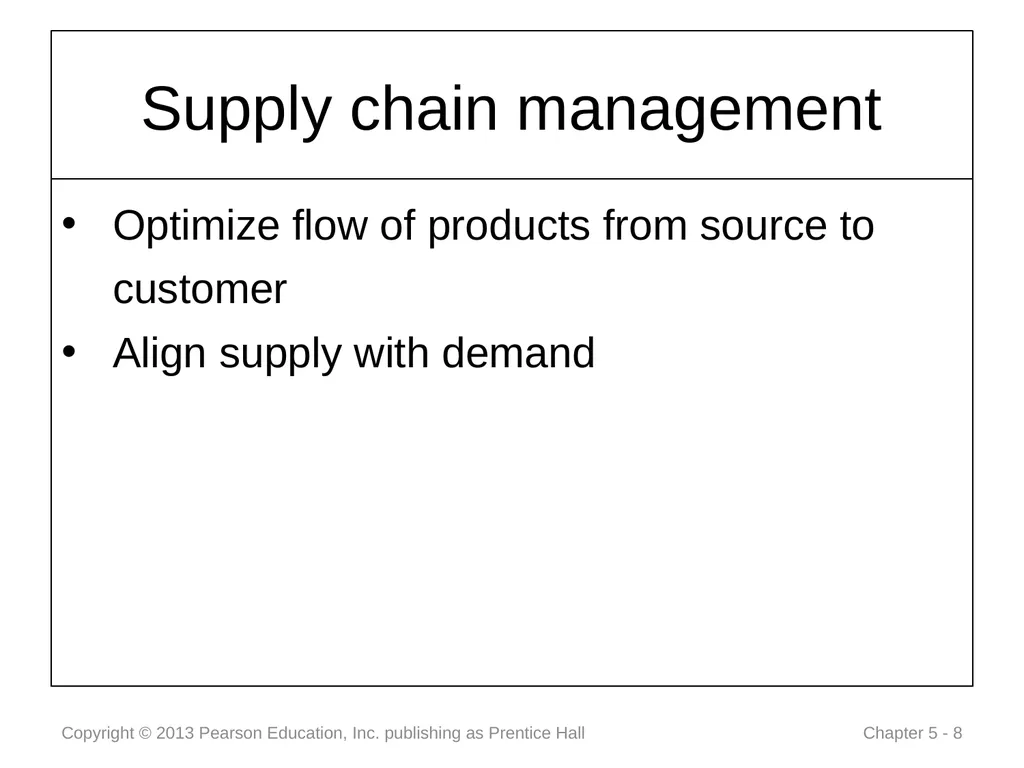
slide8. Supply chain management Optimize flow of products from source to customer
Align supply with demand Copyright © 2013 Pearson Education, Inc. publishing as Prentice Hall Chapter 5 - 8<br>
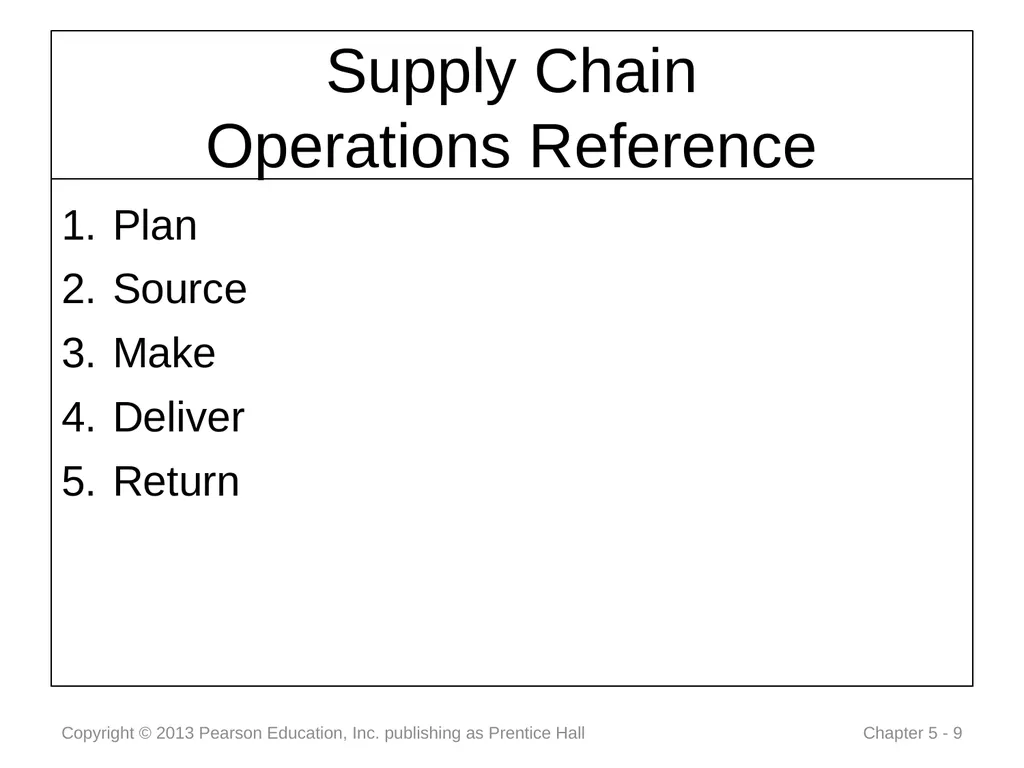
slide9. Supply Chain Operations Reference Plan
Source
Make
Deliver
Return Copyright © 2013 Pearson Education, Inc. publishing as Prentice Hall Chapter 5 - 9<br>
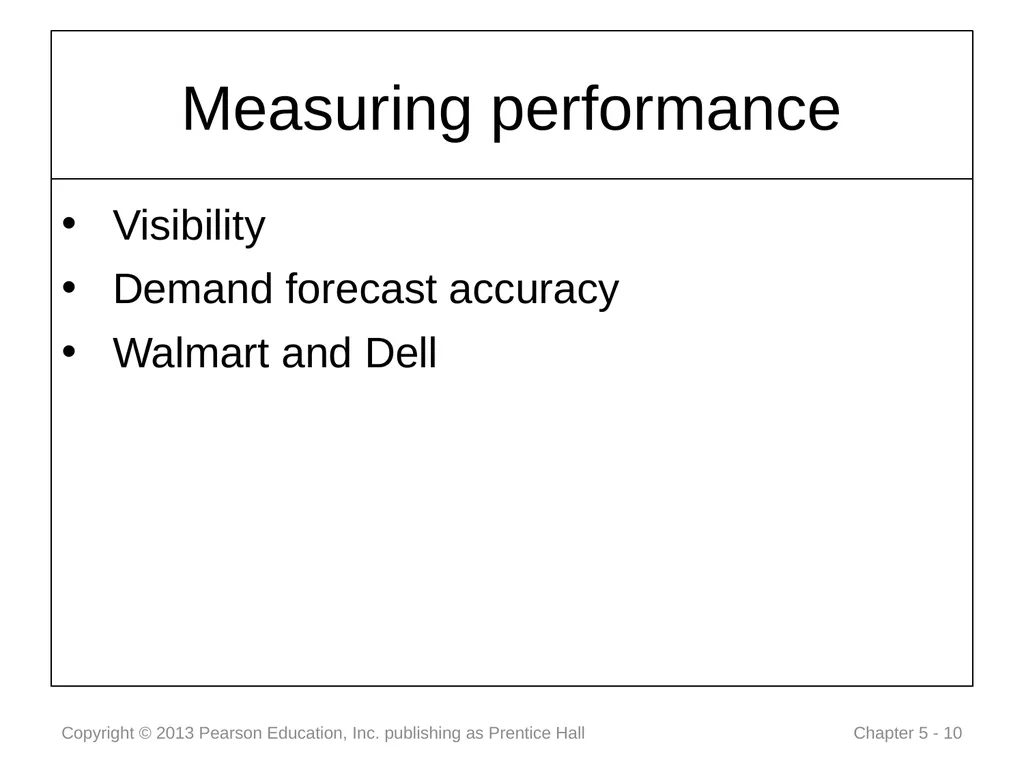
slide10. Measuring performance Visibility
Demand forecast accuracy
Walmart and Dell Copyright © 2013 Pearson Education, Inc. publishing as Prentice Hall Chapter 5 - 10<br>
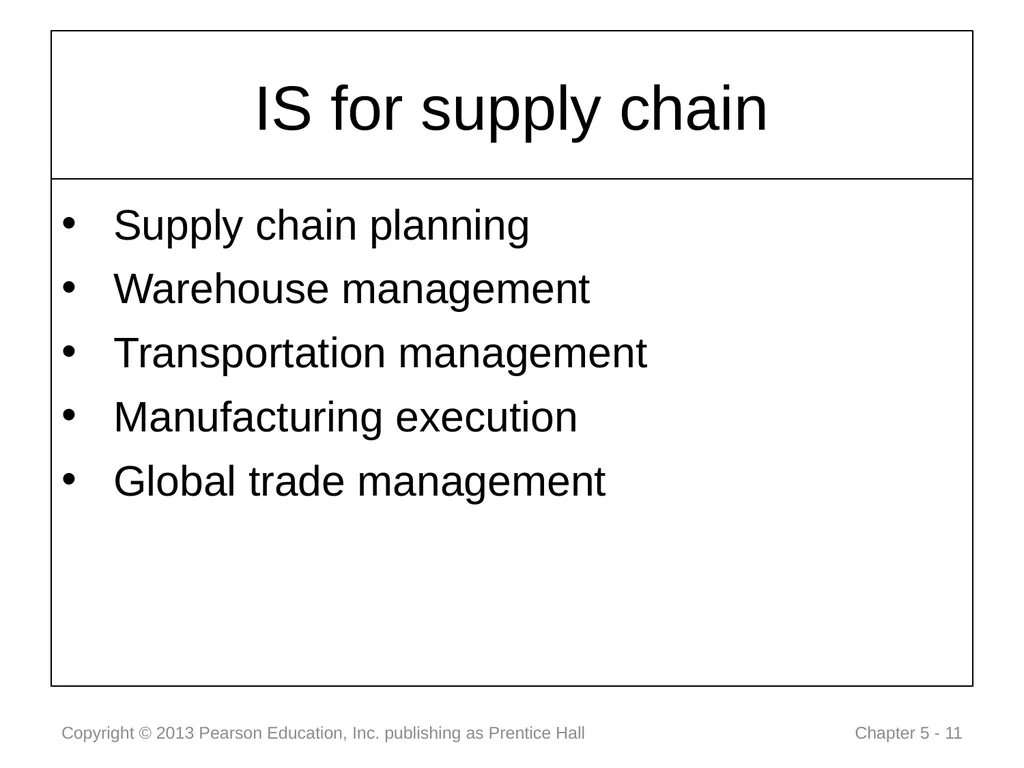
slide11. IS for supply chain Supply chain planning
Warehouse management
Transportation management
Manufacturing execution
Global trade management Copyright © 2013 Pearson Education, Inc. publishing as Prentice Hall Chapter 5 - 11<br>
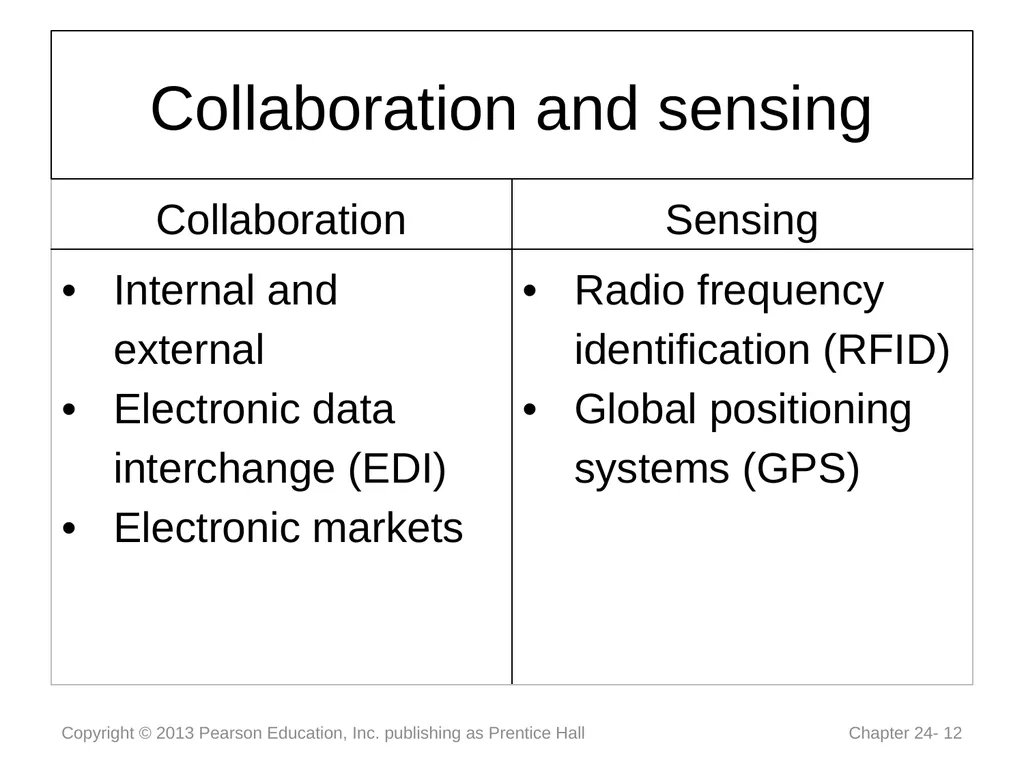
slide12. Copyright © 2013 Pearson Education, Inc. publishing as Prentice Hall Chapter 24- 12 Collaboration and sensing<br>
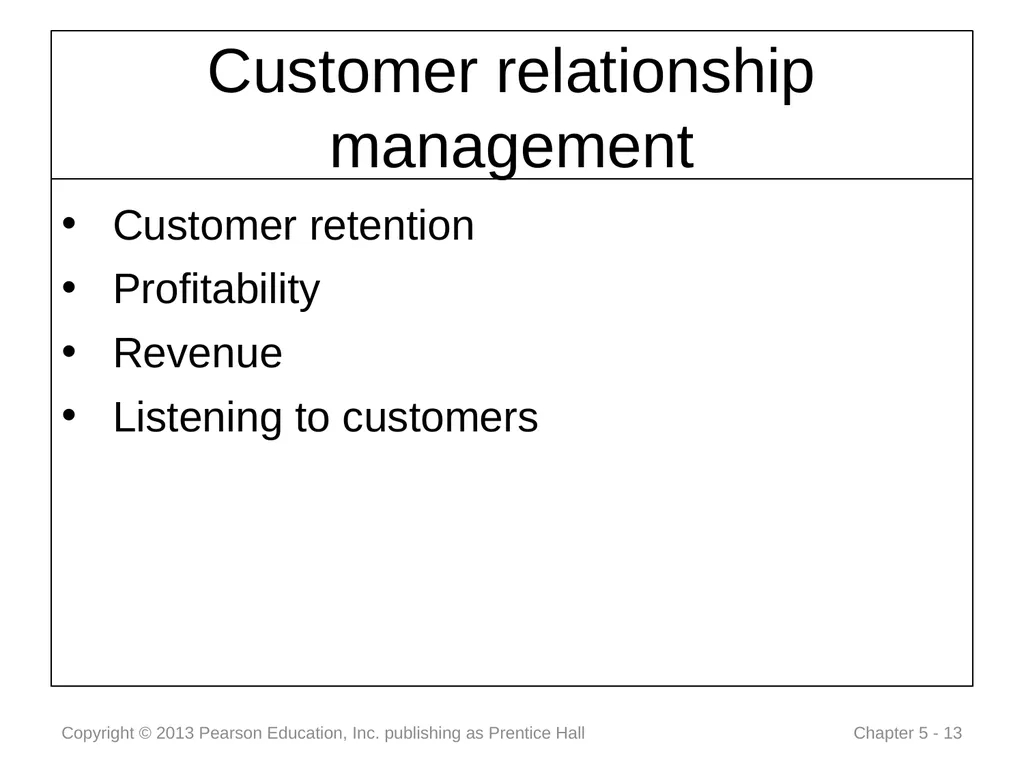
slide13. Customer relationship management Customer retention
Profitability
Revenue
Listening to customers Copyright © 2013 Pearson Education, Inc. publishing as Prentice Hall Chapter 5 - 13<br>
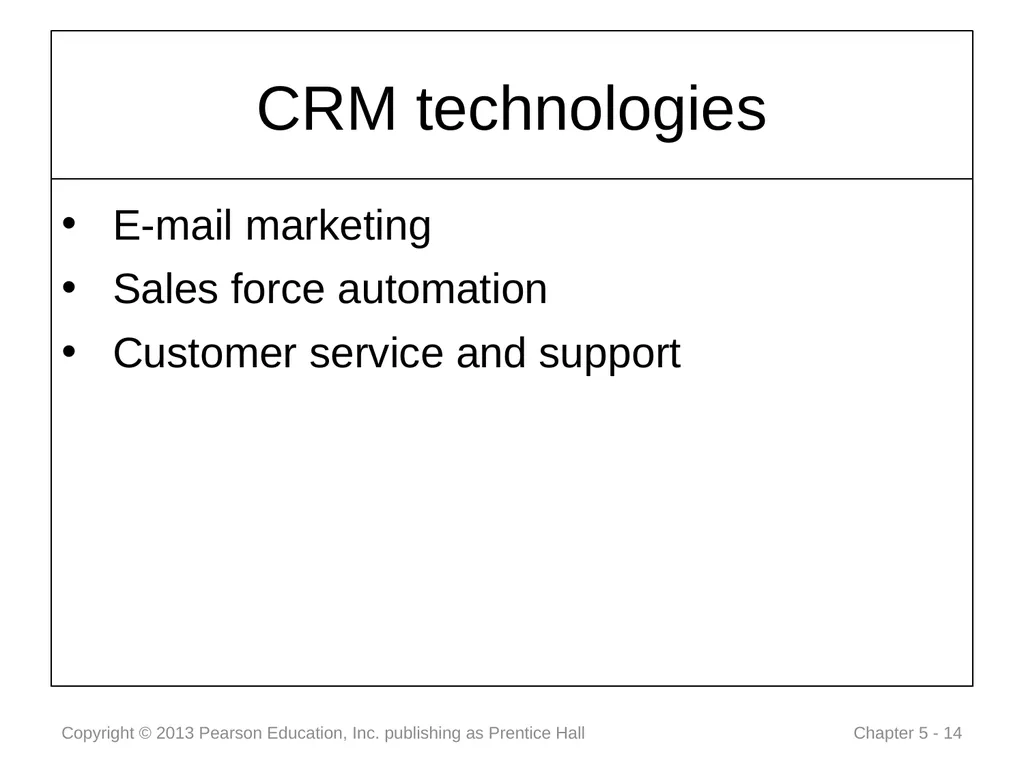
slide14. CRM technologies E-mail marketing
Sales force automation
Customer service and support Copyright © 2013 Pearson Education, Inc. publishing as Prentice Hall Chapter 5 - 14<br>
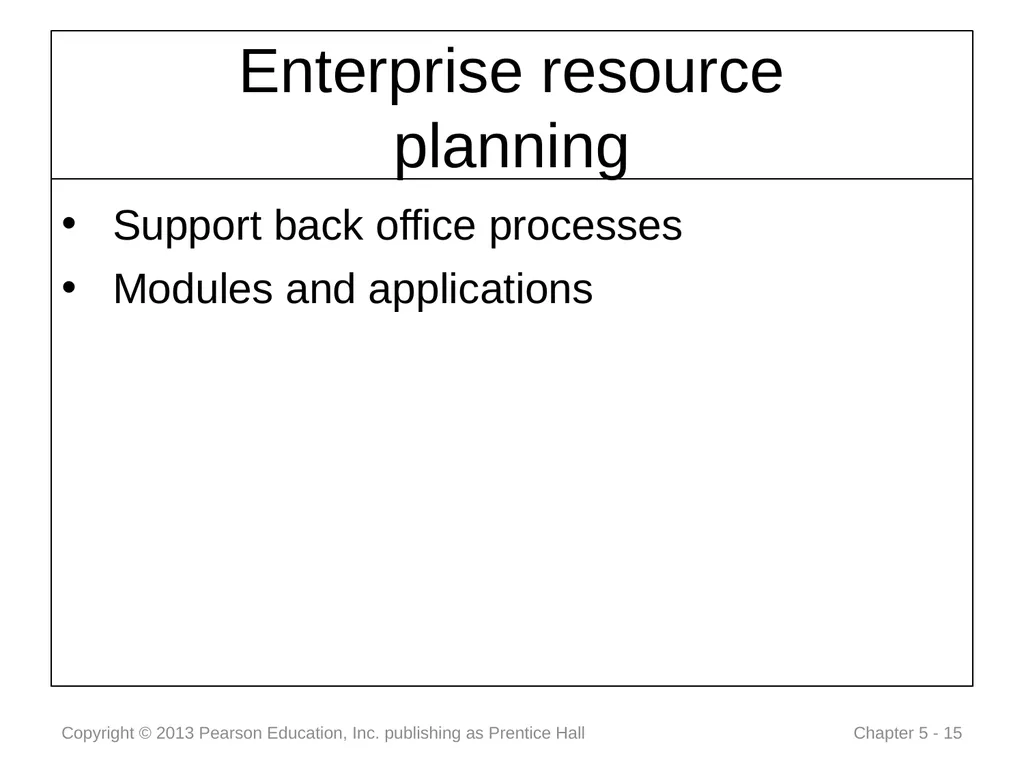
slide15. Enterprise resource planning Support back office processes
Modules and applications Copyright © 2013 Pearson Education, Inc. publishing as Prentice Hall Chapter 5 - 15<br>
slide16. Integration strategies Suite
Best of breed
Middleware Copyright © 2013 Pearson Education, Inc. publishing as Prentice Hall Chapter 5 - 16<br>
slide17. Implementation issues Complexity
Process change
Location differences Copyright © 2013 Pearson Education, Inc. publishing as Prentice Hall Chapter 5 - 17<br>
slide18. Software-as-a-service Subscription-based
ERP advantages and disadvantages Copyright © 2013 Pearson Education, Inc. publishing as Prentice Hall Chapter 5 - 18<br>
slide19. Summary Information systems in organizations
Human capital management (HCM)
Supply chain management (SCM)
4. Customer relationship management (CRM)
5. Enterprise resource planning (ERP) Copyright © 2013 Pearson Education, Inc. publishing as Prentice Hall Chapter 5 - 19<br>
slide20. Human Services case Washington, DC Human Services
Different agencies, separate information systems
Information gaps, lack of follow-up
CRM software
Funding and privacy challenges Copyright © 2013 Pearson Education, Inc. publishing as Prentice Hall Chapter 5 - 20<br>
slide21. Mandarin Oriental case 40 properties in 25 countries
Unique properties, consistent performance standards
Global approach to talent, 10,000 colleagues on four continents
Talent management system
Assess performance, determine career path and training Copyright © 2013 Pearson Education, Inc. publishing as Prentice Hall Chapter 5 - 21<br>
slide22. Copyright © 2013 Pearson Education, Inc. publishing as Prentice Hall Chapter 5 - 22<br>
slide2. Learning objectives Information systems in organizations
Human capital management (HCM)
Supply chain management (SCM)
4. Customer relationship management (CRM)
5. Enterprise resource planning (ERP) Copyright © 2013 Pearson Education, Inc. publishing as Prentice Hall Chapter 5 - 2<br>
slide3. IKEA Global supply chain
Robust and flexible information systems
Efficiency and effectiveness Copyright © 2013 Pearson Education, Inc. publishing as Prentice Hall Chapter 5 - 3<br>
slide4. Finance management Components
Integration
Workflow Copyright © 2013 Pearson Education, Inc. publishing as Prentice Hall Chapter 5 - 4<br>
slide5. Reporting and compliance Exception reporting
Compliance reporting
eXtensible Business Reporting Language (XBRL) Copyright © 2013 Pearson Education, Inc. publishing as Prentice Hall Chapter 5 - 5<br>
slide6. Human capital management Human resources management
Workforce management
Talent management Copyright © 2013 Pearson Education, Inc. publishing as Prentice Hall Chapter 5 - 6<br>
slide7. Human capital metrics Do we have the talent we need?
Can we afford to lose star employees?
How productive are our employees? Copyright © 2013 Pearson Education, Inc. publishing as Prentice Hall Chapter 5 - 7<br>
slide8. Supply chain management Optimize flow of products from source to customer
Align supply with demand Copyright © 2013 Pearson Education, Inc. publishing as Prentice Hall Chapter 5 - 8<br>
slide9. Supply Chain Operations Reference Plan
Source
Make
Deliver
Return Copyright © 2013 Pearson Education, Inc. publishing as Prentice Hall Chapter 5 - 9<br>
slide10. Measuring performance Visibility
Demand forecast accuracy
Walmart and Dell Copyright © 2013 Pearson Education, Inc. publishing as Prentice Hall Chapter 5 - 10<br>
slide11. IS for supply chain Supply chain planning
Warehouse management
Transportation management
Manufacturing execution
Global trade management Copyright © 2013 Pearson Education, Inc. publishing as Prentice Hall Chapter 5 - 11<br>
slide12. Copyright © 2013 Pearson Education, Inc. publishing as Prentice Hall Chapter 24- 12 Collaboration and sensing<br>
slide13. Customer relationship management Customer retention
Profitability
Revenue
Listening to customers Copyright © 2013 Pearson Education, Inc. publishing as Prentice Hall Chapter 5 - 13<br>
slide14. CRM technologies E-mail marketing
Sales force automation
Customer service and support Copyright © 2013 Pearson Education, Inc. publishing as Prentice Hall Chapter 5 - 14<br>
slide15. Enterprise resource planning Support back office processes
Modules and applications Copyright © 2013 Pearson Education, Inc. publishing as Prentice Hall Chapter 5 - 15<br>
slide16. Integration strategies Suite
Best of breed
Middleware Copyright © 2013 Pearson Education, Inc. publishing as Prentice Hall Chapter 5 - 16<br>
slide17. Implementation issues Complexity
Process change
Location differences Copyright © 2013 Pearson Education, Inc. publishing as Prentice Hall Chapter 5 - 17<br>
slide18. Software-as-a-service Subscription-based
ERP advantages and disadvantages Copyright © 2013 Pearson Education, Inc. publishing as Prentice Hall Chapter 5 - 18<br>
slide19. Summary Information systems in organizations
Human capital management (HCM)
Supply chain management (SCM)
4. Customer relationship management (CRM)
5. Enterprise resource planning (ERP) Copyright © 2013 Pearson Education, Inc. publishing as Prentice Hall Chapter 5 - 19<br>
slide20. Human Services case Washington, DC Human Services
Different agencies, separate information systems
Information gaps, lack of follow-up
CRM software
Funding and privacy challenges Copyright © 2013 Pearson Education, Inc. publishing as Prentice Hall Chapter 5 - 20<br>
slide21. Mandarin Oriental case 40 properties in 25 countries
Unique properties, consistent performance standards
Global approach to talent, 10,000 colleagues on four continents
Talent management system
Assess performance, determine career path and training Copyright © 2013 Pearson Education, Inc. publishing as Prentice Hall Chapter 5 - 21<br>
slide22. Copyright © 2013 Pearson Education, Inc. publishing as Prentice Hall Chapter 5 - 22<br>