
Chapter 6: The Integumentary System Overview Key




Description: Chapter 6: The Integumentary System Overview Key Terms apocrine epidermis melanin alopecia erythema melanocyte arrector pili exfoliation scar cerumen hair follicle sebaceous gland cicatrix integumentary system sebum cyanosis jaundice
Related Topics
Download Presentation
"Chapter 6: The Integumentary System Overview Key" is the property of its rightful owner. Permission is granted to download and print the materials on this website for personal, non-commercial use only, and to display it on your personal computer provided you do not modify the materials and that you retain all copyright notices contained in the materials. By downloading content from our website, you accept the terms of this agreement.
Presentation Transcript
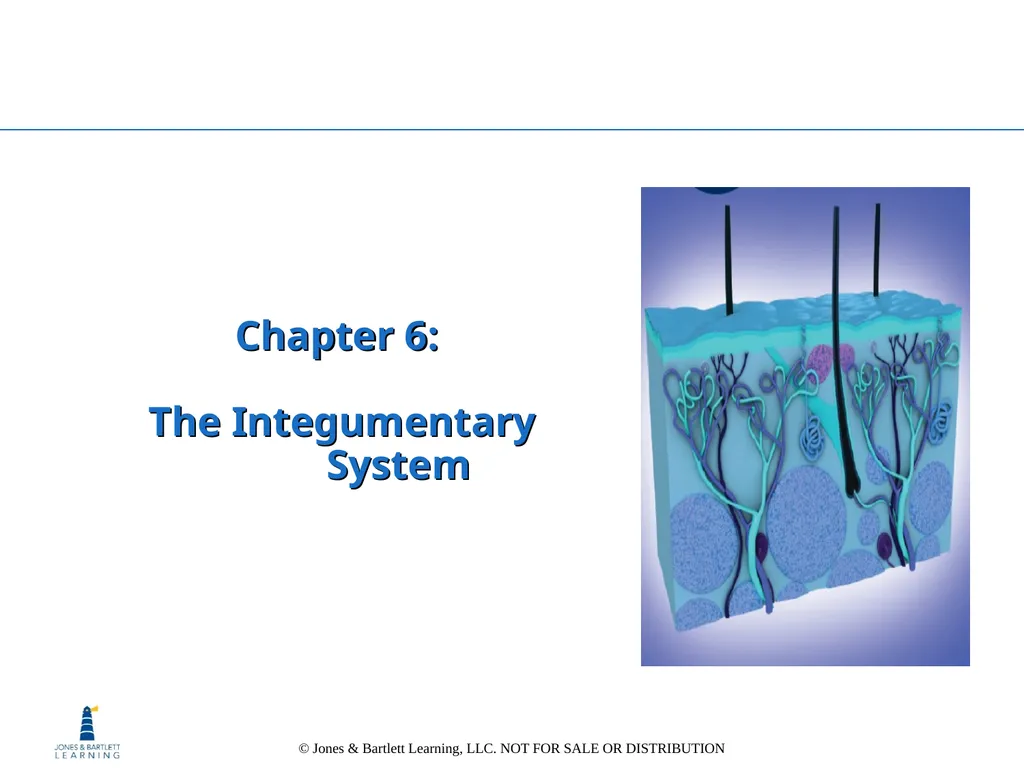
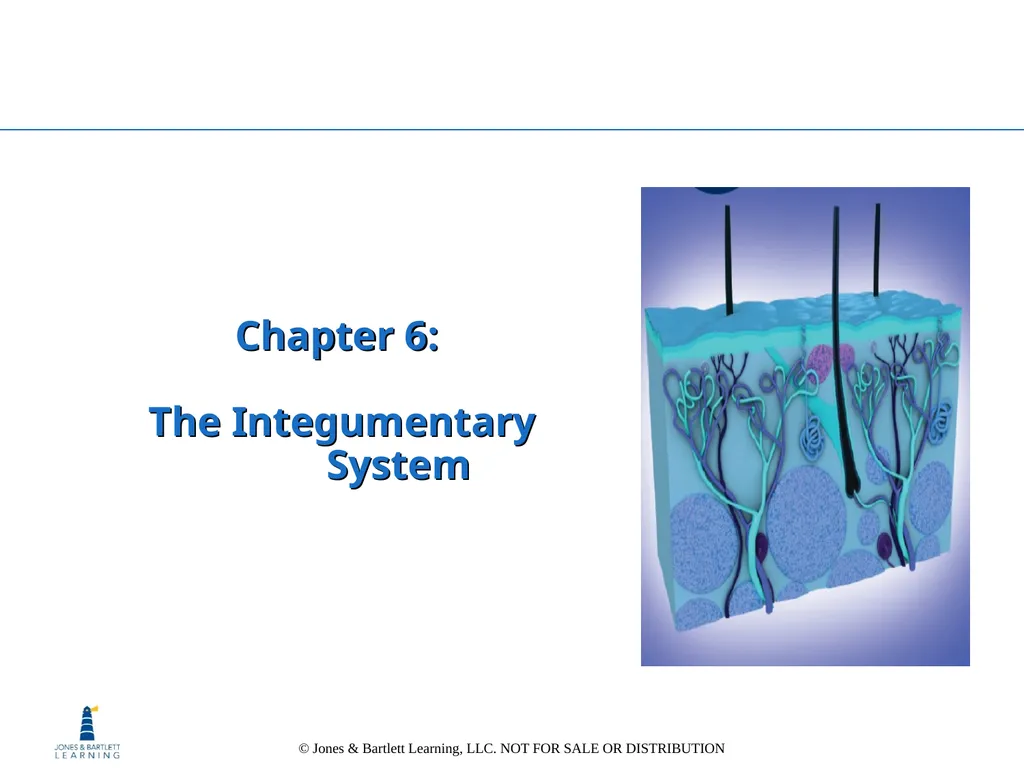
slide1. Chapter 6:
The Integumentary
System<br>
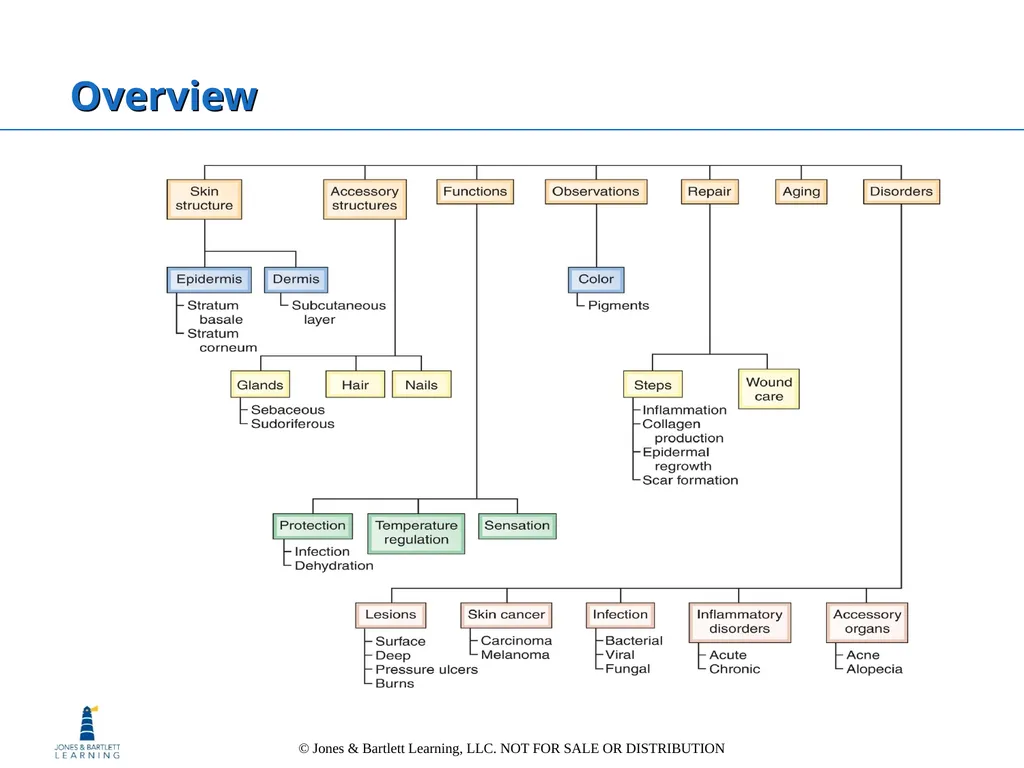
slide2. Overview<br>
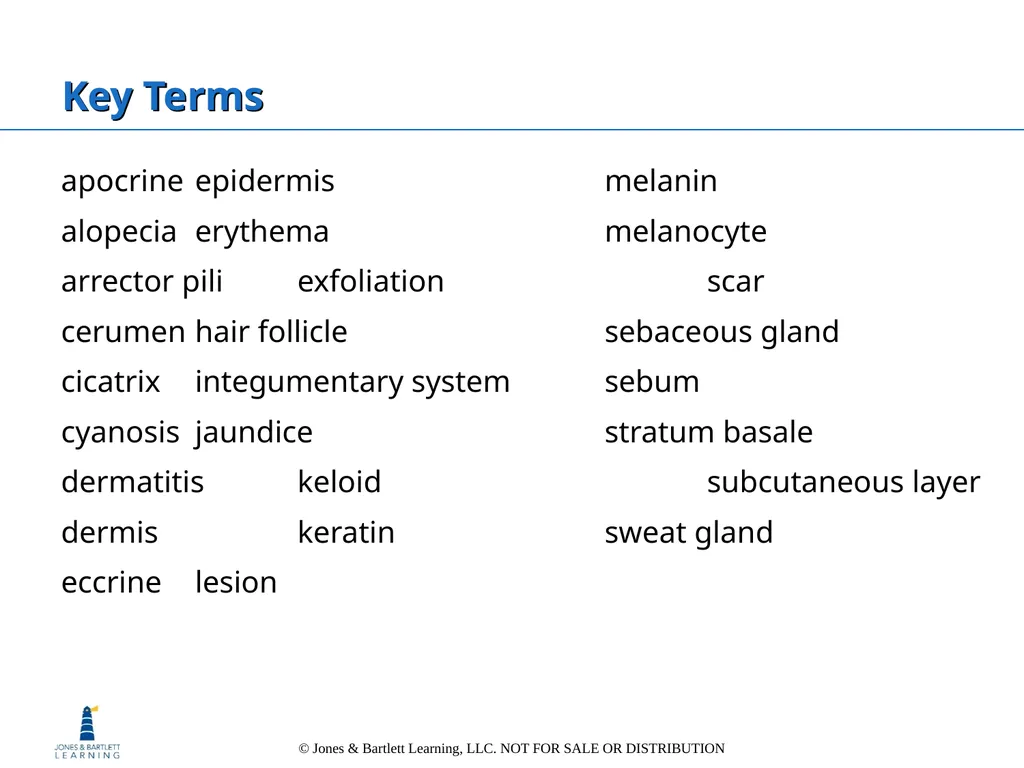
slide3. Key Terms apocrine epidermis melanin
alopecia erythema melanocyte
arrector pili exfoliation scar
cerumen hair follicle sebaceous gland
cicatrix integumentary system sebum
cyanosis jaundice stratum basale
dermatitis keloid subcutaneous layer
dermis keratin sweat gland
eccrine lesion<br>
slide4. Chapter 6 Key Ideas Chapter 6 introduces the key idea of adaptation<br>
slide5. Structure of the Skin #1 Learning Objectives
Name and describe the layers of the skin.
Describe the subcutaneous layer.<br>
slide6. Accessory Structures of the Skin Learning Objectives (cont.)
Give the locations and functions of the accessory structures of the integumentary system.<br>
slide7. Functions of the Integumentary System Learning Objectives (cont.)
List the main functions of the integumentary system.<br>
slide8. Observations of the Skin #1 Learning Objectives (cont.)
Summarize the information to be gained by observation of the skin.<br>
slide9. Repair of the Integument #1 Learning Objectives (cont.)
Cite the steps in repair of skin wounds and the factors that affect healing.<br>
slide10. Effects of Aging on the Integumentary System Learning Objectives (cont.)
Describe how the skin changes with age.<br>
slide11. Disorders of the Integumentary System #1 Learning Objectives (cont.)
List the main disorders of the integumentary system.<br>
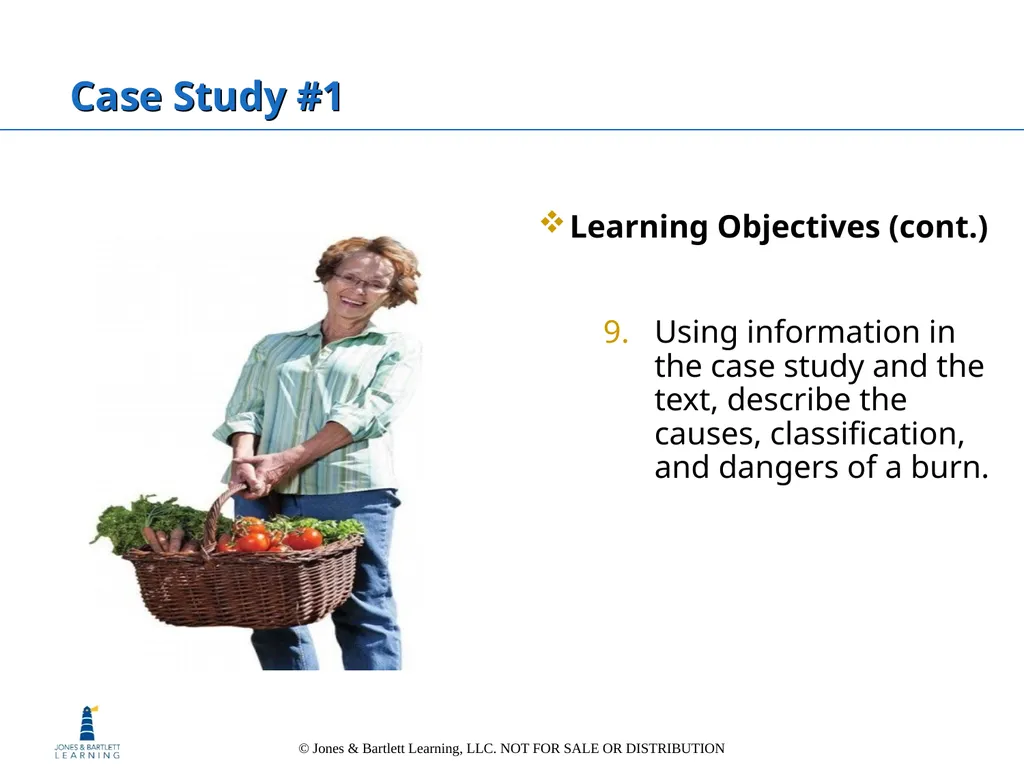
slide12. Case Study #1 Learning Objectives (cont.)
Using information in the case study and the text, describe the causes, classification, and dangers of a burn.<br>
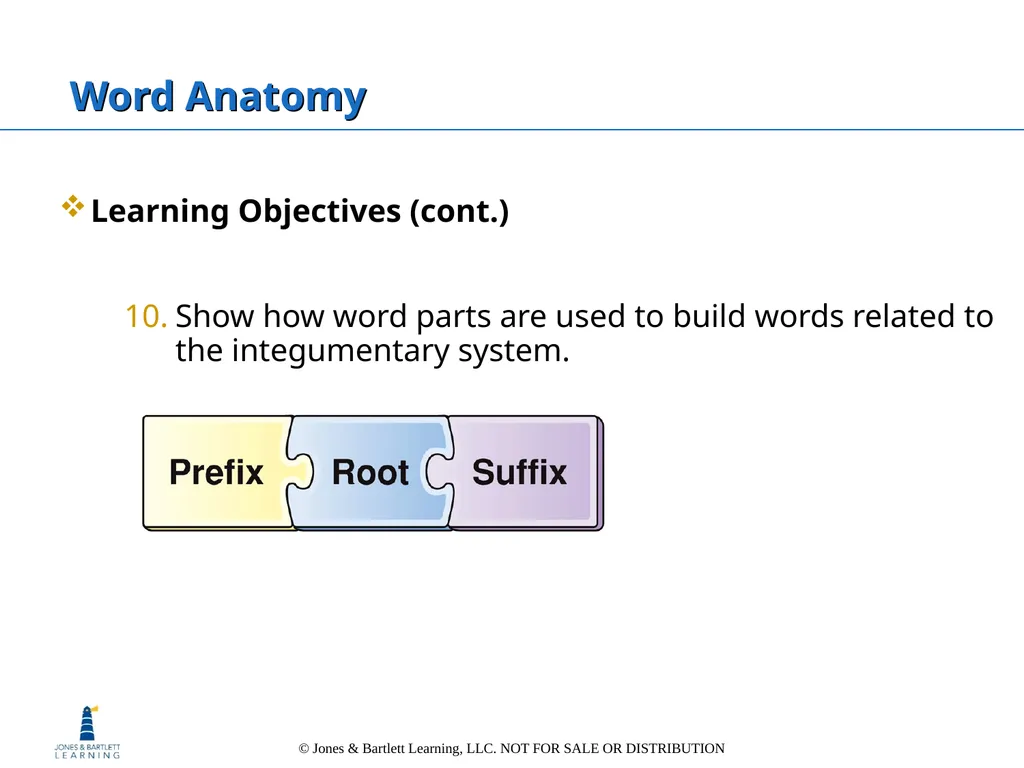
slide13. Word Anatomy Learning Objectives (cont.)
Show how word parts are used to build words related to the integumentary system.<br>
slide14. Structure of the Skin #2 Learning Objectives
Name and describe the layers of the skin.
Describe the subcutaneous layer.<br>
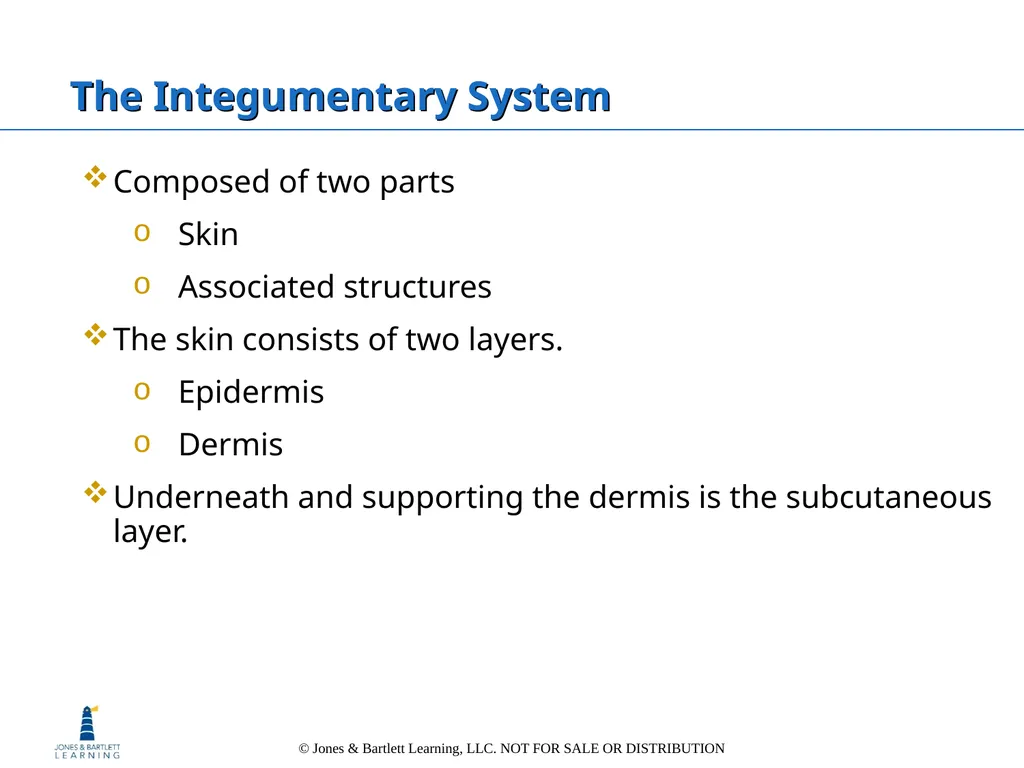
slide15. The Integumentary System Composed of two parts
Skin
Associated structures
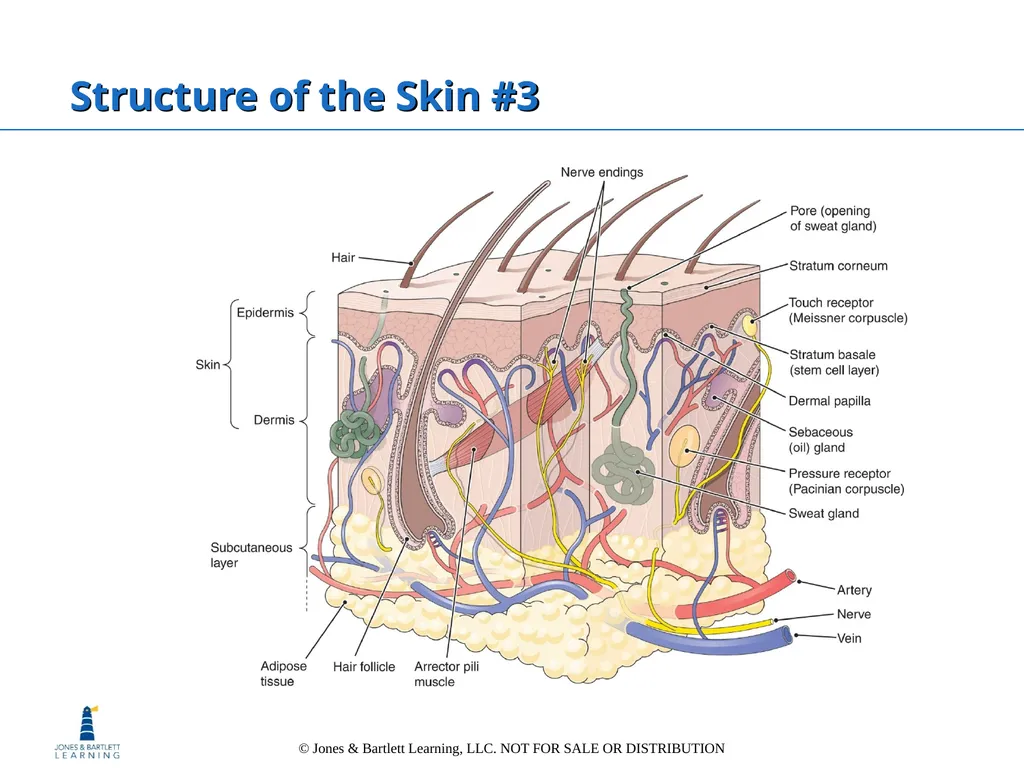
The skin consists of two layers.
Epidermis
Dermis
Underneath and supporting the dermis is the subcutaneous layer.<br>
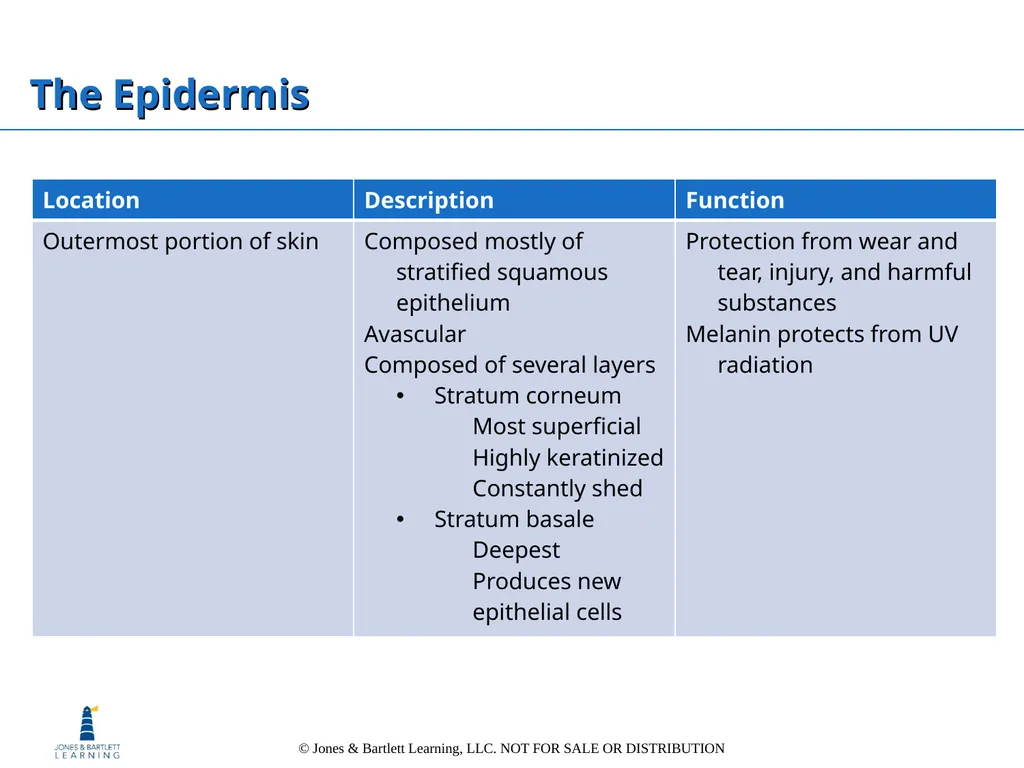
slide16. The Epidermis<br>
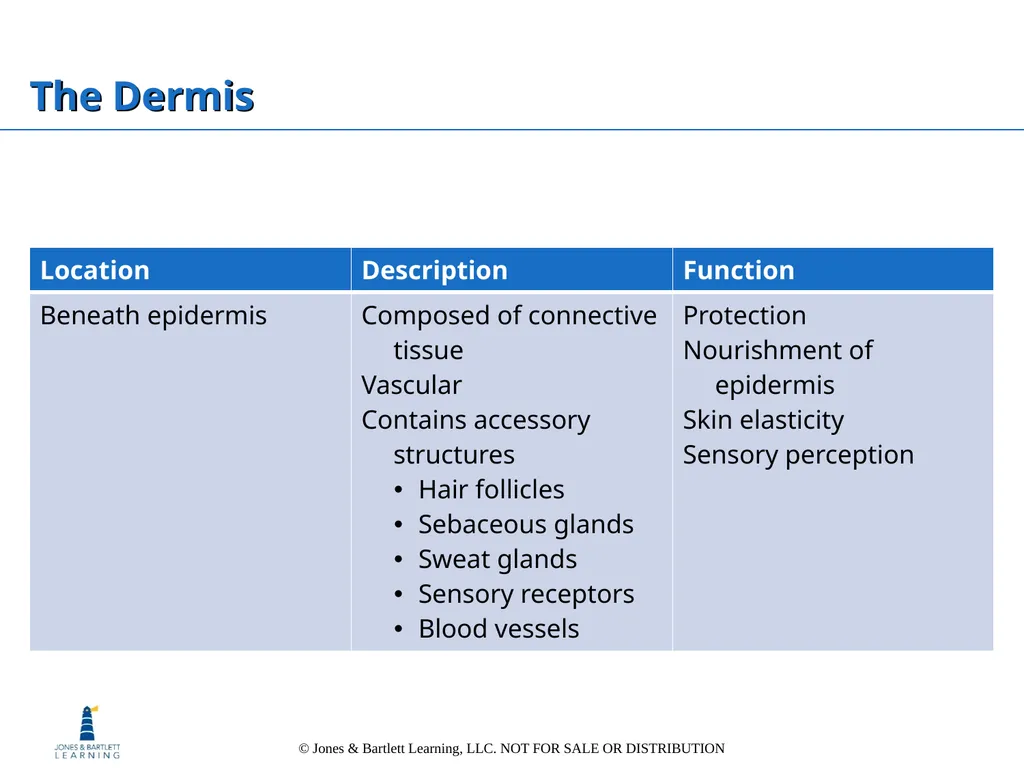
slide17. The Dermis<br>
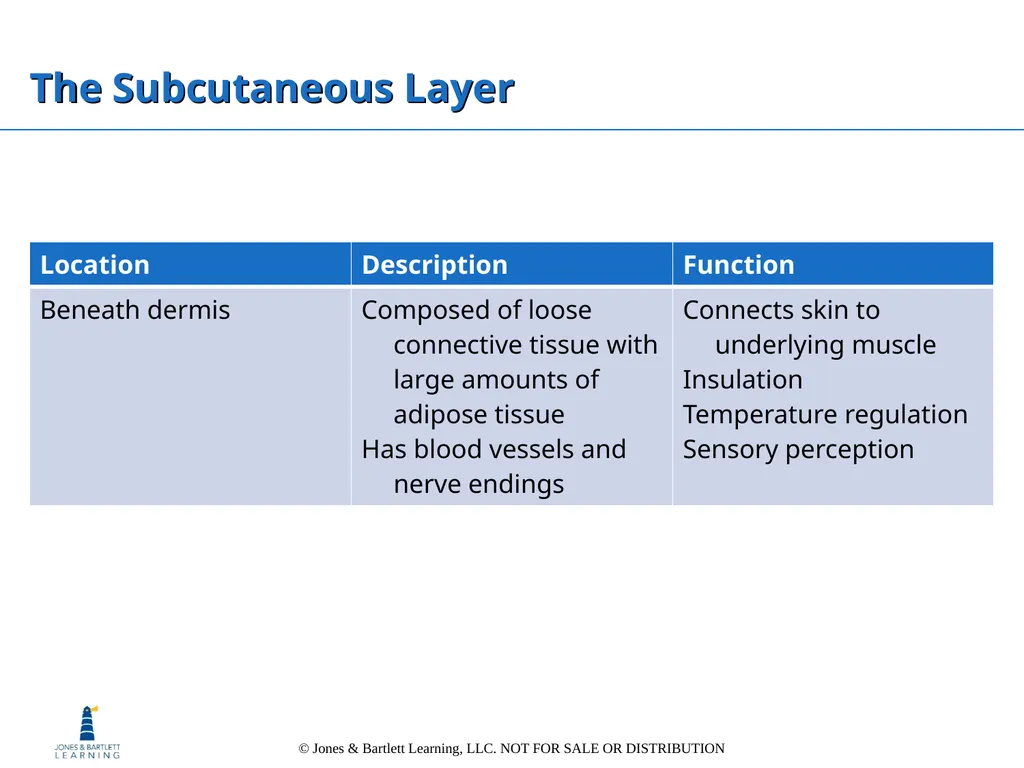
slide18. The Subcutaneous Layer<br>
slide19. Structure of the Skin #3<br>
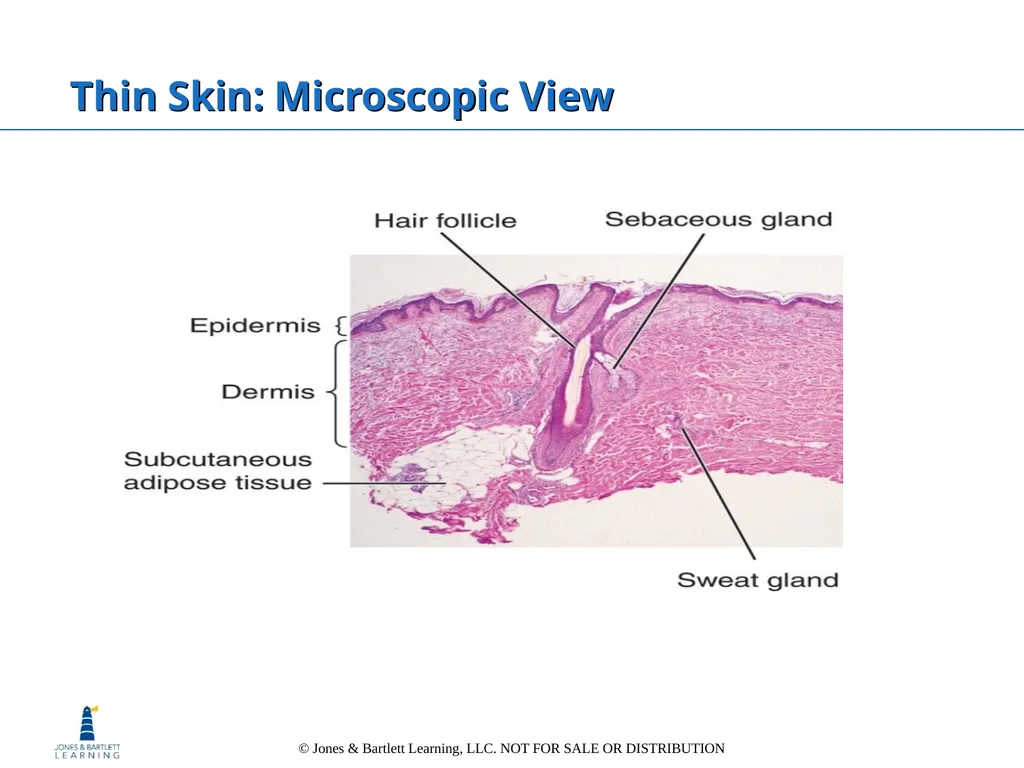
slide20. Thin Skin: Microscopic View<br>
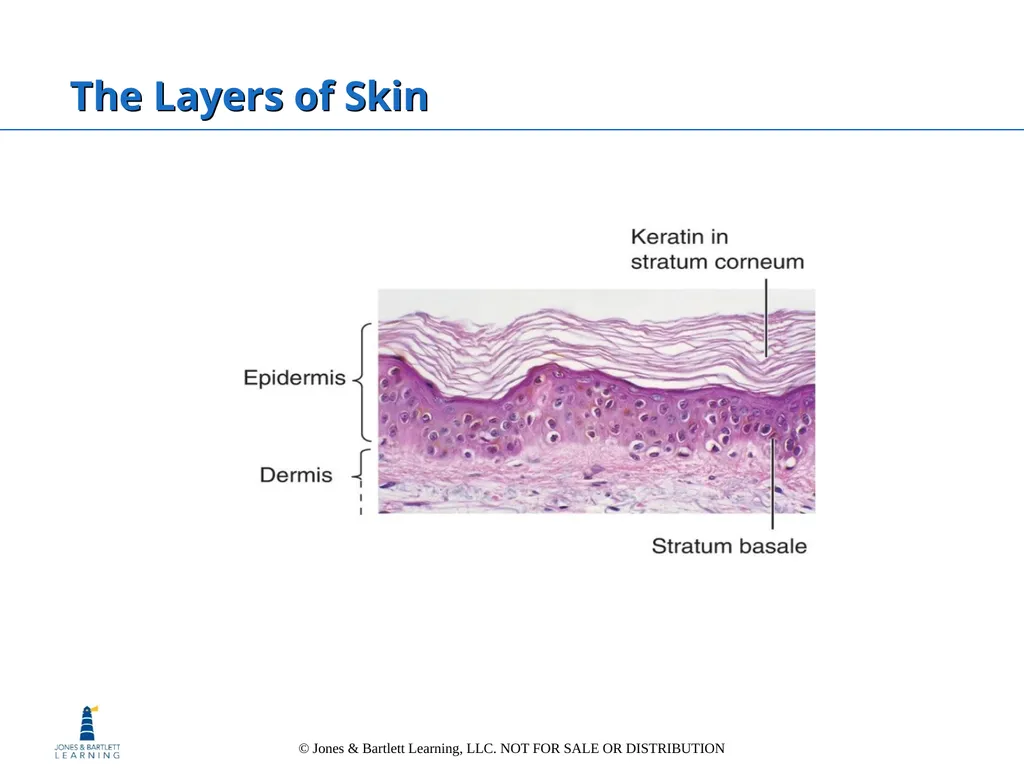
slide21. The Layers of Skin<br>
slide22. Structure of the Skin (review) #1 ✓ Checkpoints
6-1 What is the name of the system that comprises the skin and all its associated structures?
6-2 Moving from the superficial to the deeper layer, what are the names of the two layers of the skin?
6-3 What is the composition of the subcutaneous layer?<br>
slide23. Structure of the Skin (review) #2 ? Pop Quiz
6.1 Where do new epidermal cells come from?
Subcutaneous layer
Stratum basale
Stratum corneum
Dermis<br>
slide24. Structure of the Skin (review) #3 ? Pop Quiz Answer
6.1 Where do new epidermal cells come from?
Subcutaneous layer
Stratum basale
Stratum corneum
Dermis<br>
slide25. Accessory Structures of the Skin #1 Learning Objectives
Give the locations and functions of the accessory structures of the integumentary system.<br>
slide26. Accessory Structures of the Skin #2 Help protect the skin and give it more functions
Include:
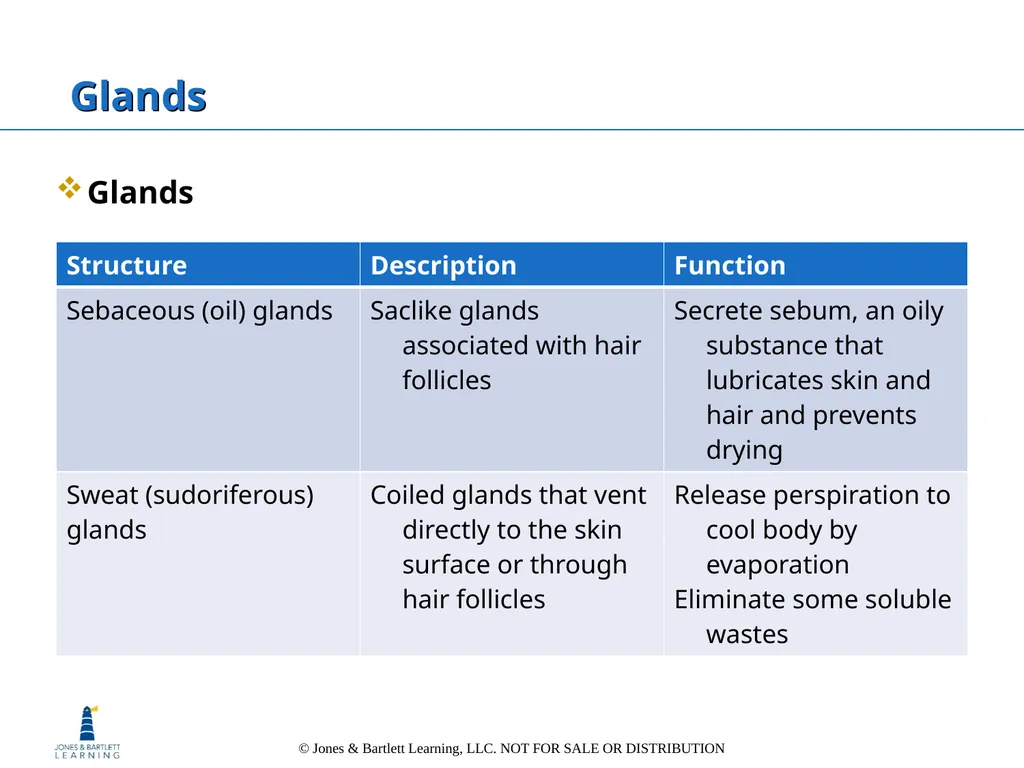
Sebaceous oil glands
Sweat (sudoriferous) glands
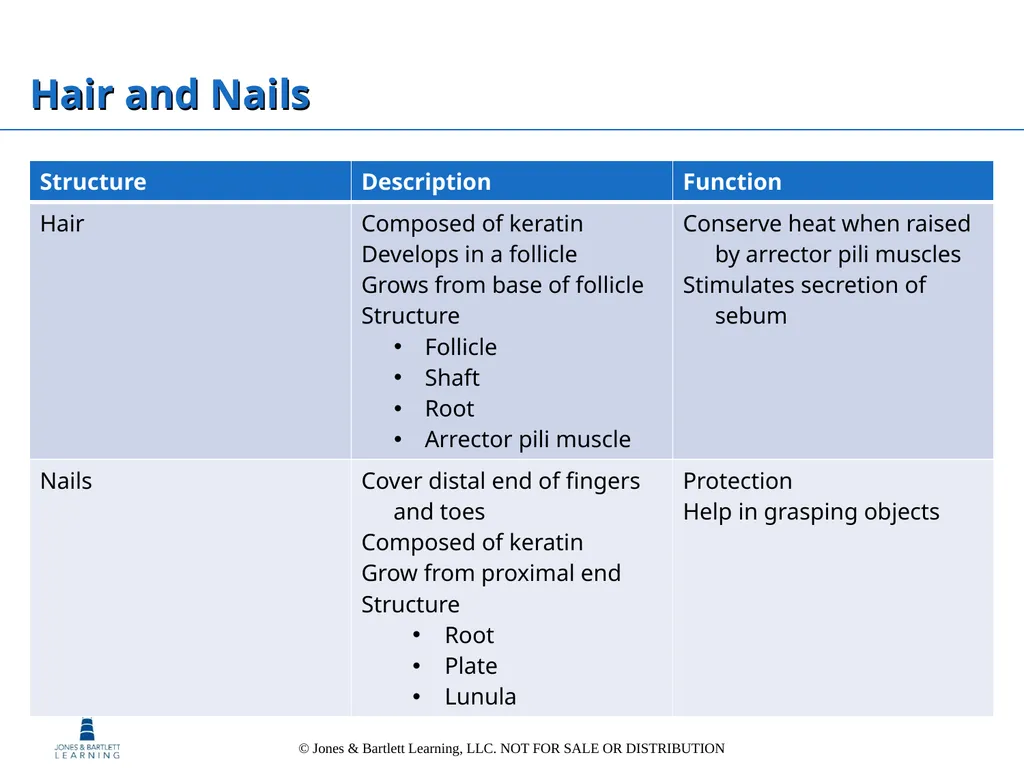
Hair
Nails<br>
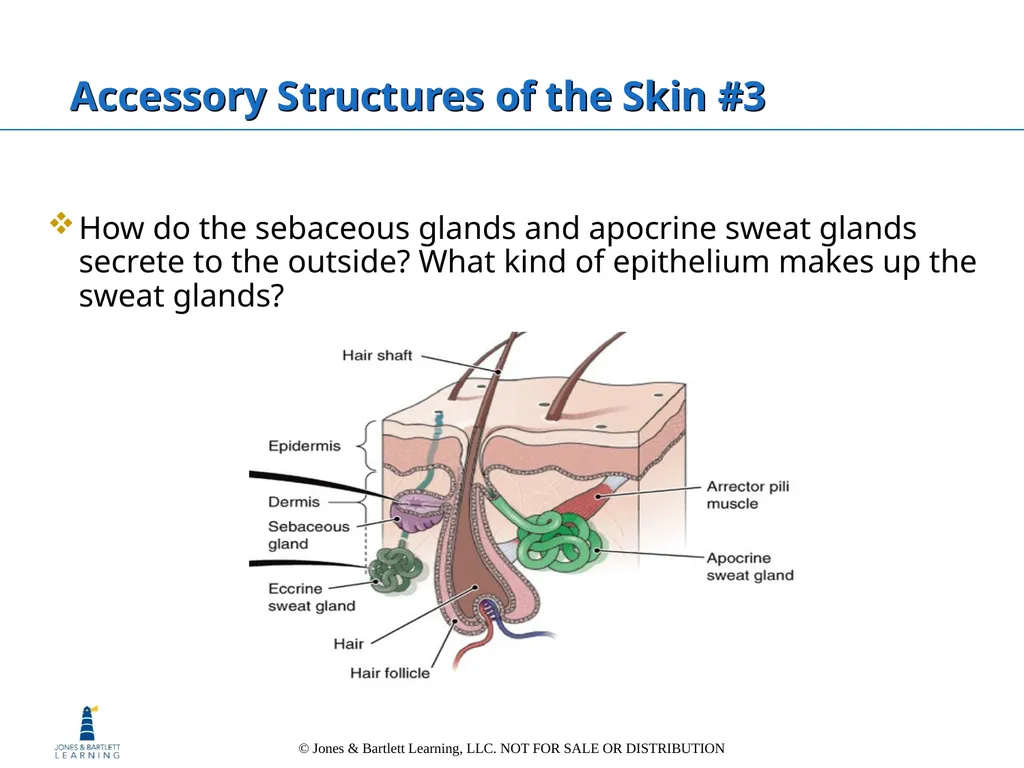
slide27. Accessory Structures of the Skin #3 How do the sebaceous glands and apocrine sweat glands secrete to the outside? What kind of epithelium makes up the sweat glands?<br>
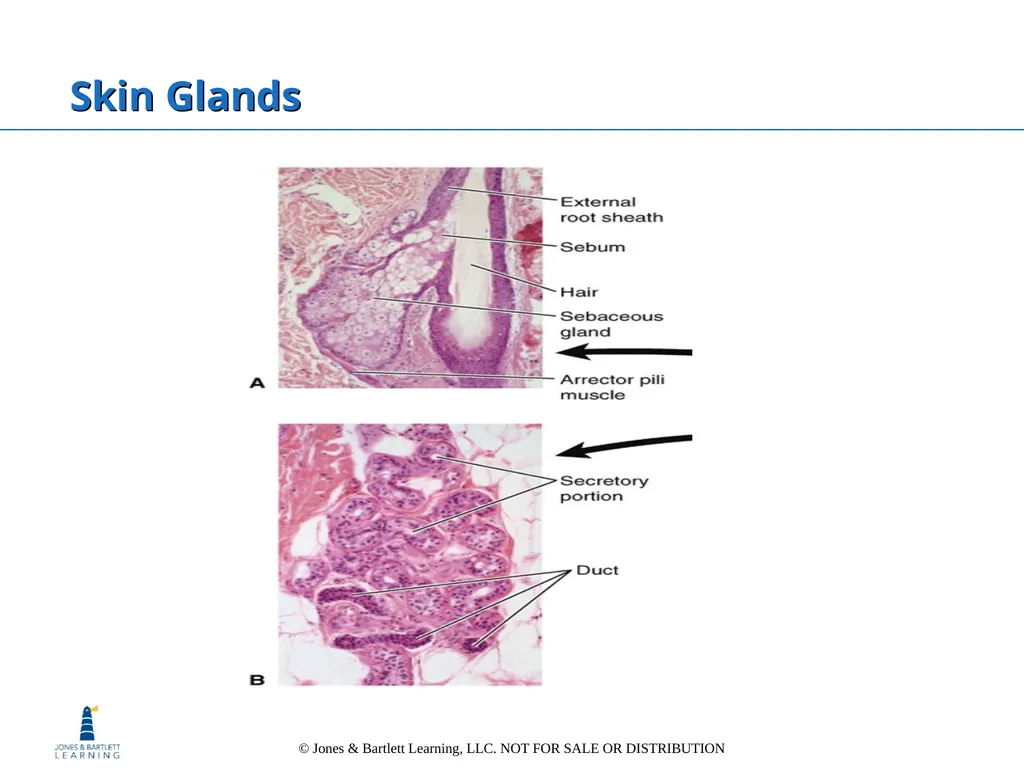
slide28. Skin Glands<br>
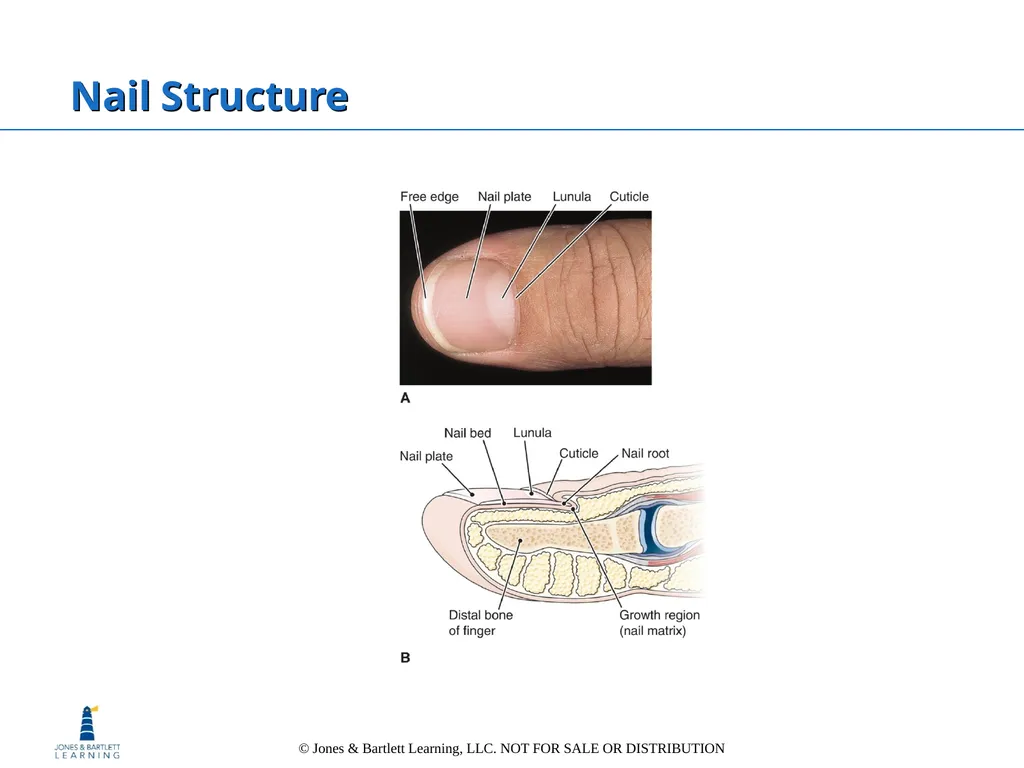
slide29. Nail Structure<br>
slide30. Glands Glands<br>
slide31. Hair and Nails<br>
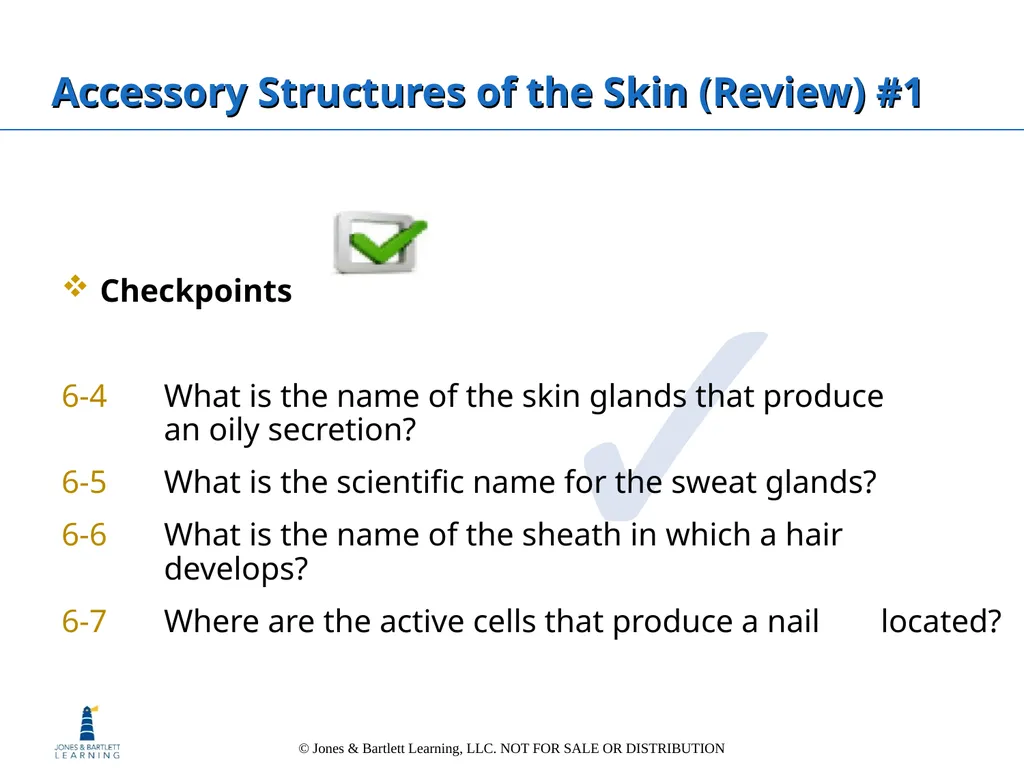
slide32. Accessory Structures of the Skin (Review) #1 ✓ Checkpoints
6-4 What is the name of the skin glands that produce an oily secretion?
6-5 What is the scientific name for the sweat glands?
6-6 What is the name of the sheath in which a hair develops?
6-7 Where are the active cells that produce a nail located?<br>
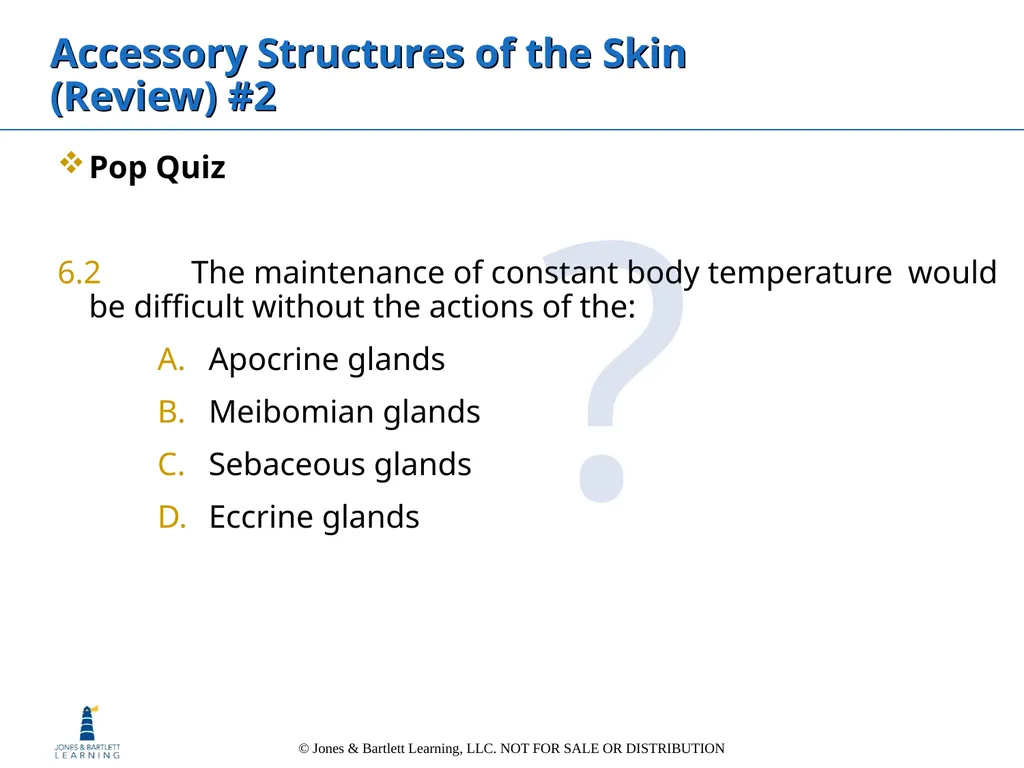
slide33. Accessory Structures of the Skin (Review) #2 ? Pop Quiz
6.2 The maintenance of constant body temperature would be difficult without the actions of the:
Apocrine glands
Meibomian glands
Sebaceous glands
Eccrine glands<br>
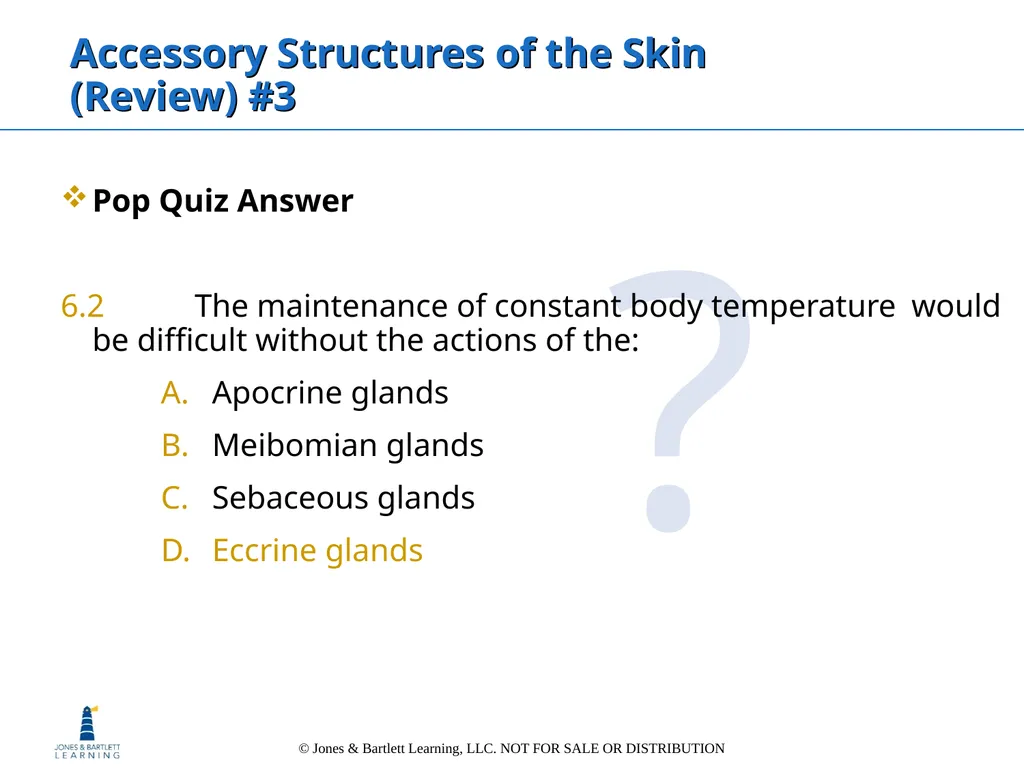
slide34. Accessory Structures of the Skin (Review) #3 ? Pop Quiz Answer
6.2 The maintenance of constant body temperature would be difficult without the actions of the:
Apocrine glands
Meibomian glands
Sebaceous glands
Eccrine glands<br>
slide35. Functions of the Integumentary System #1 Learning Objectives
List the main functions of the integumentary system.<br>
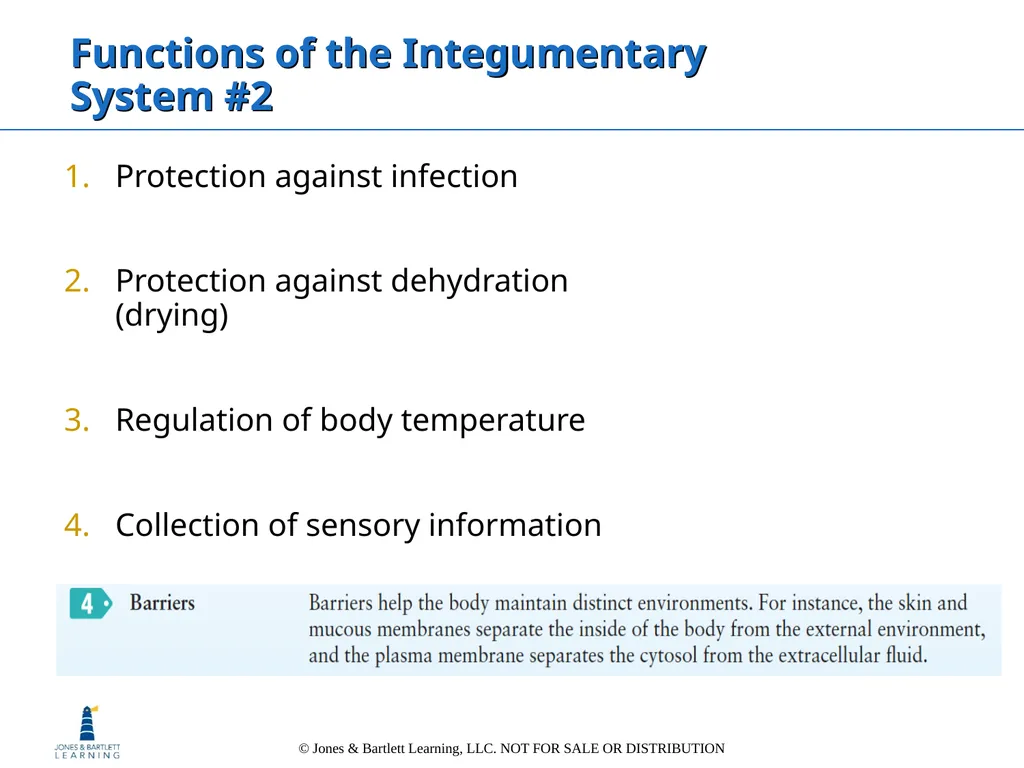
slide36. Functions of the Integumentary System #2 Protection against infection
Protection against dehydration (drying)
Regulation of body temperature
Collection of sensory information<br>
slide37. Skin Protects Against Infection Intact skin forms a primary barrier against invasion.
Interlocking pattern resists penetration.
Shedding removes pathogens.
Protects against bacterial toxins.
Protects against some harmful environmental chemicals.<br>
slide38. Skin Protects Against Dehydration Skin prevents water loss by evaporation.
Keratin in the epidermis
Sebum release from the sebaceous glands<br>
slide39. Skin Helps Regulate Body Temperature Constriction of blood vessels conserves heat.
Dilation of blood vessels increases heat loss.
Evaporation of perspiration sheds heat.<br>
slide40. Skin Collects Sensory Information Skin has many nerve endings and other special receptors.
Free nerve endings
Touch receptors (Meissner corpuscle)
Deep pressure receptors (Pacinian corpuscle)<br>
slide41. Other Activities of Skin Absorption of substances such as medications
Excretion in sweat (minor)
Water
Electrolytes
Wastes
Manufacture of vitamin D<br>
slide42. Functions of the Integumentary System (Review) #1 ✓ Checkpoints
6-8 What two substances produced in the skin help to prevent dehydration?
6-9 What two mechanisms involving the skin are used to regulate temperature?<br>
slide43. Functions of the Integumentary System (Review) #2 ? Pop Quiz
6.3 Which of the following is NOT a function of skin?
Respiration
Excretion
Sensation
Thermoregulation<br>
slide44. Functions of the Integumentary System (Review) #3 ? Pop Quiz Answer
6.3 Which of the following is NOT a function of skin?
Respiration
Excretion
Sensation
Thermoregulation<br>
slide45. Observations of the Skin #2 Learning Objectives
Summarize the information to be gained by observation of the skin.<br>
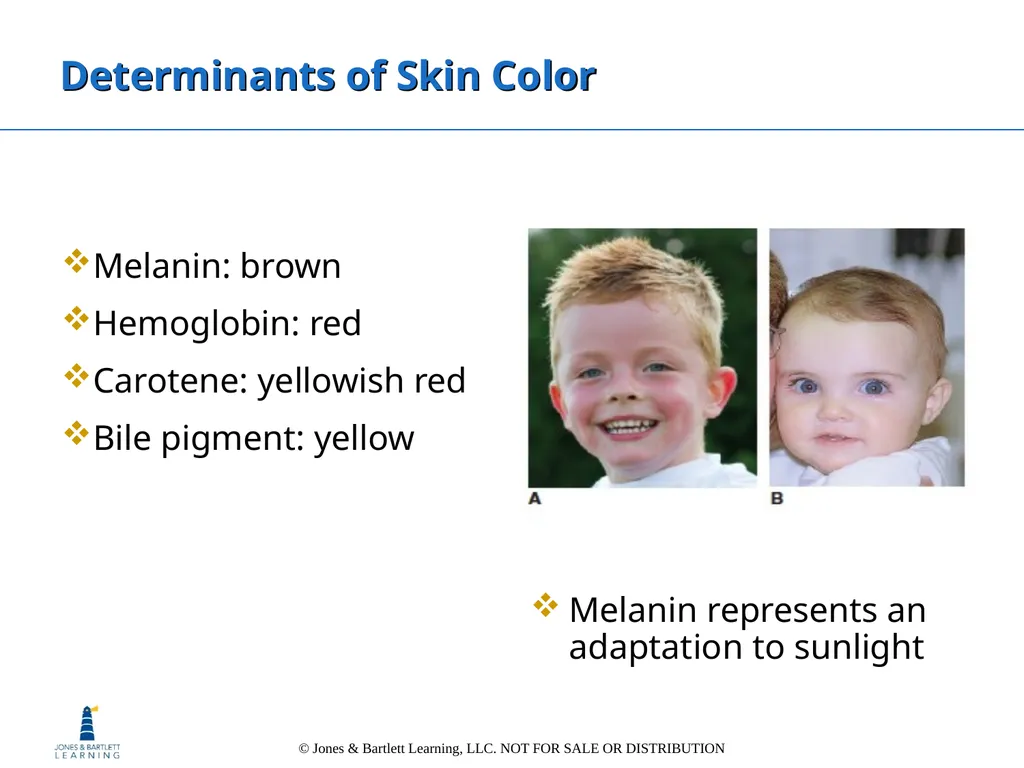
slide46. Determinants of Skin Color Melanin: brown
Hemoglobin: red
Carotene: yellowish red
Bile pigment: yellow Melanin represents an adaptation to sunlight<br>
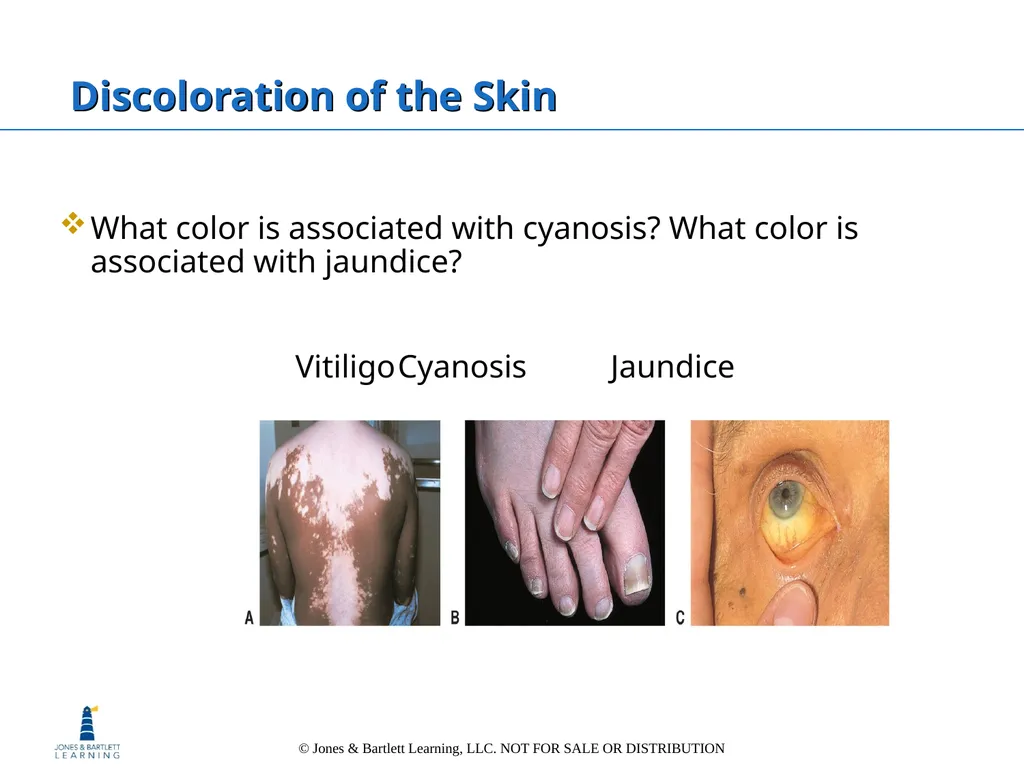
slide47. Discoloration of the Skin What color is associated with cyanosis? What color is associated with jaundice?
Vitiligo Cyanosis Jaundice<br>
slide48. Observations of the Skin (Review) #1 ✓ Checkpoints
6-10 Name some pigments that give color to the skin.
6-11 What is the term for a bluish skin discoloration caused by insufficient oxygen?<br>
slide49. Observations of the Skin (Review) #2 ? Pop Quiz
6.4 Which pigment is responsible for a tan-brown color?
Melanin
Carotene
Hemoglobin
Bile<br>
slide50. Observations of the Skin (Review) #3 ? Pop Quiz Answer
6.4 Which pigment is responsible for a tan-brown color?
Melanin
Carotene
Hemoglobin
Bile<br>
slide51. Repair of the Integument #2 Learning Objectives
Cite the steps in repair of skin wounds and the factors that affect healing.<br>
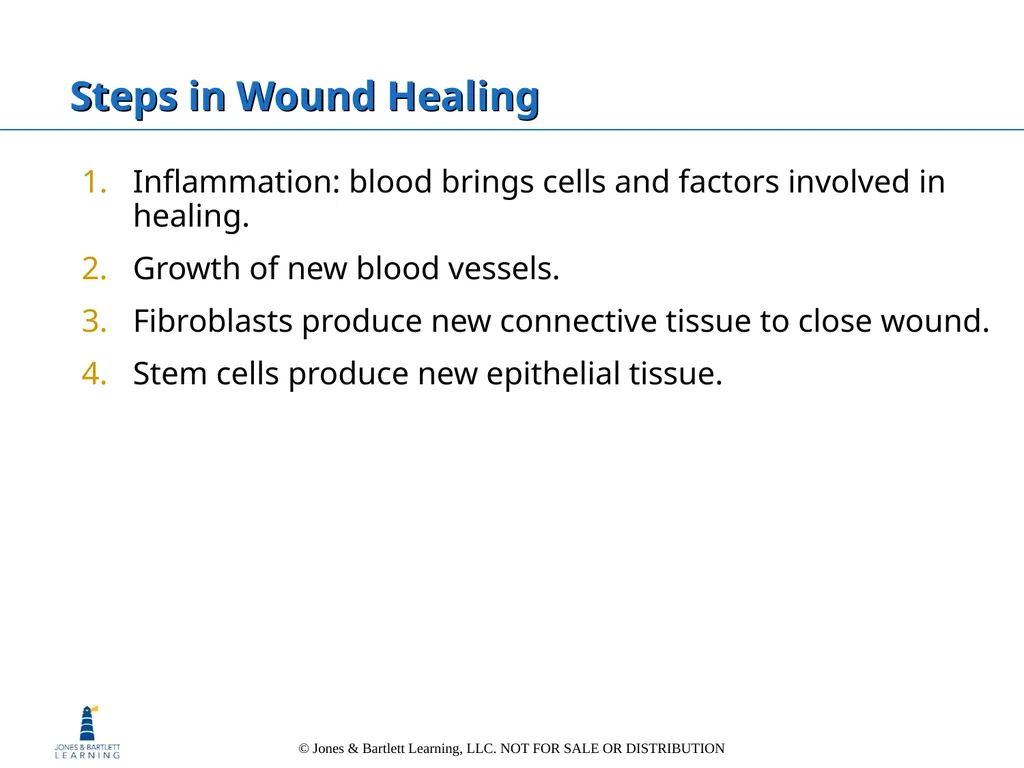
slide52. Steps in Wound Healing Inflammation: blood brings cells and factors involved in healing.
Growth of new blood vessels.
Fibroblasts produce new connective tissue to close wound.
Stem cells produce new epithelial tissue.<br>
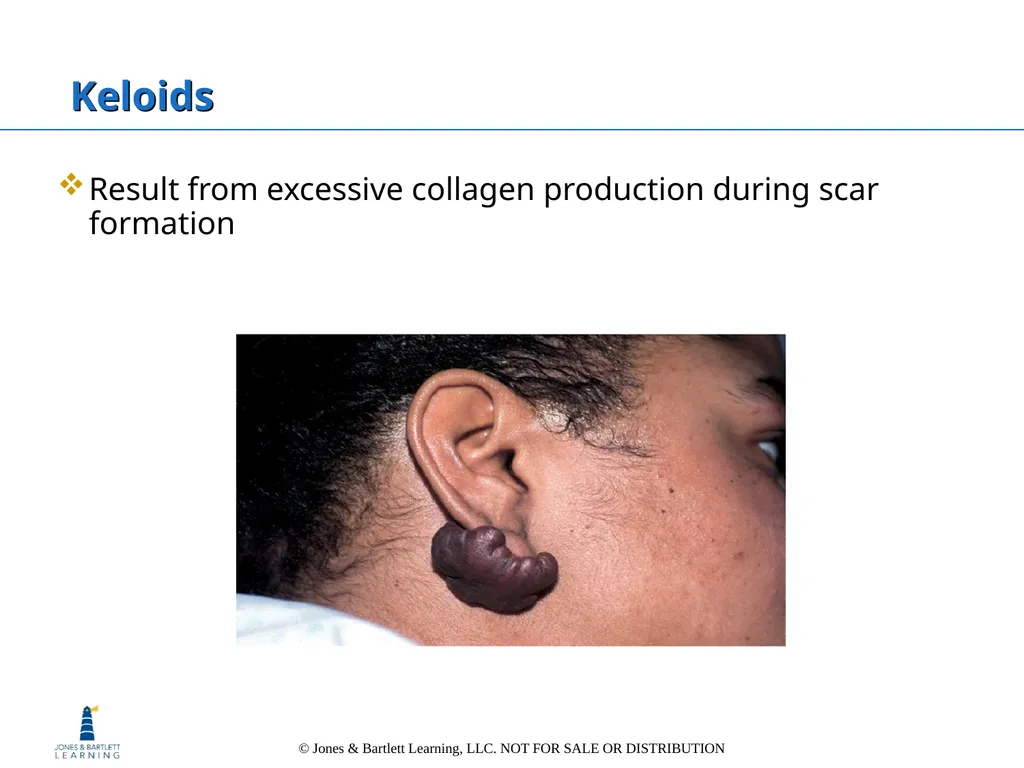
slide53. Keloids Result from excessive collagen production during scar formation<br>
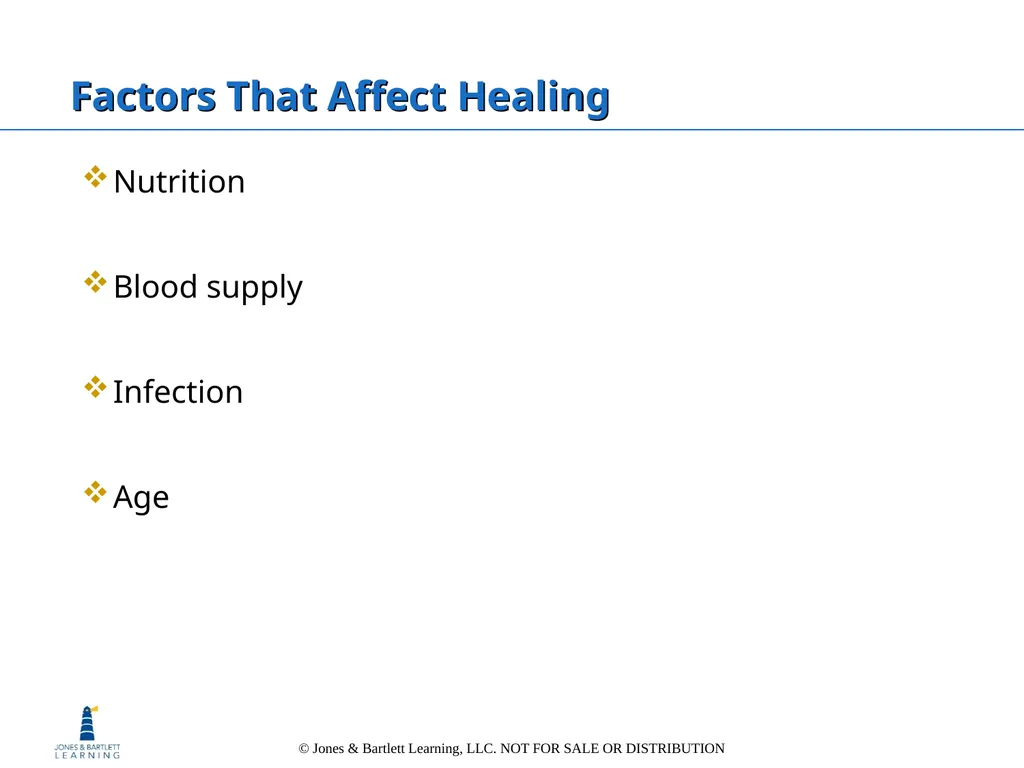
slide54. Factors That Affect Healing Nutrition
Blood supply
Infection
Age<br>
slide55. ✓ Repair of the Integument (Review) Checkpoints
6-12 Name four factors that affect skin healing.<br>
slide56. Effects of Aging on the Integumentary System #1 Learning Objectives
Describe how the skin changes with age.<br>
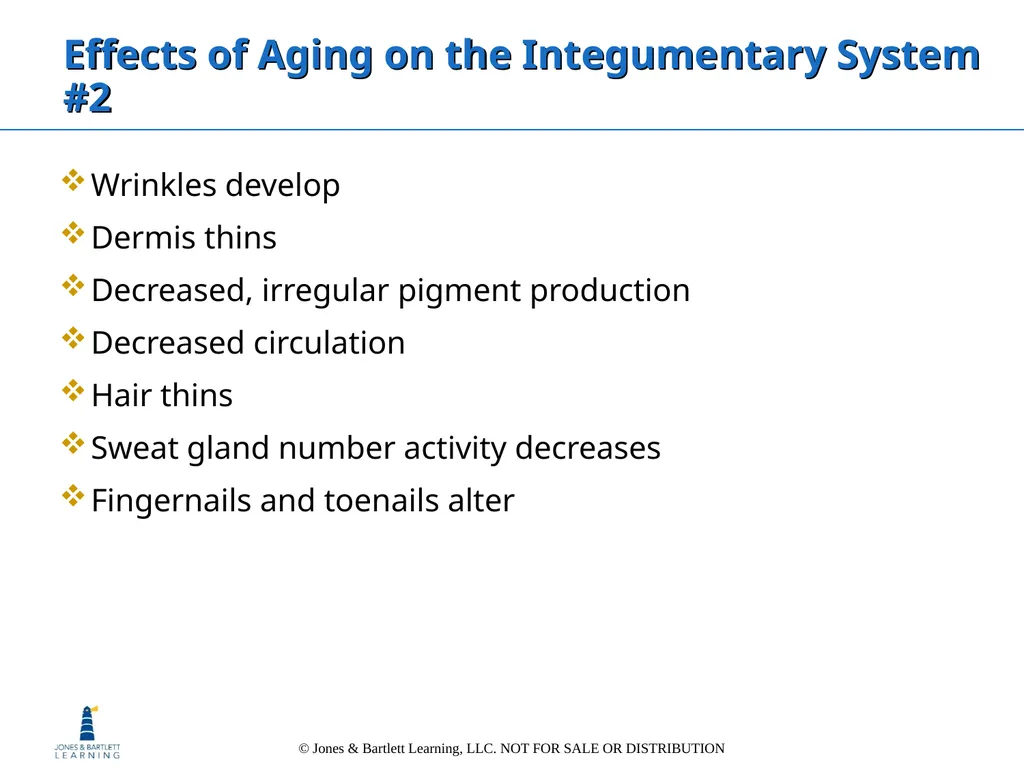
slide57. Effects of Aging on the Integumentary System #2 Wrinkles develop
Dermis thins
Decreased, irregular pigment production
Decreased circulation
Hair thins
Sweat gland number activity decreases
Fingernails and toenails alter<br>
slide58. Disorders of the Integumentary System #2 Learning Objectives
List the main disorders of the integumentary system.<br>
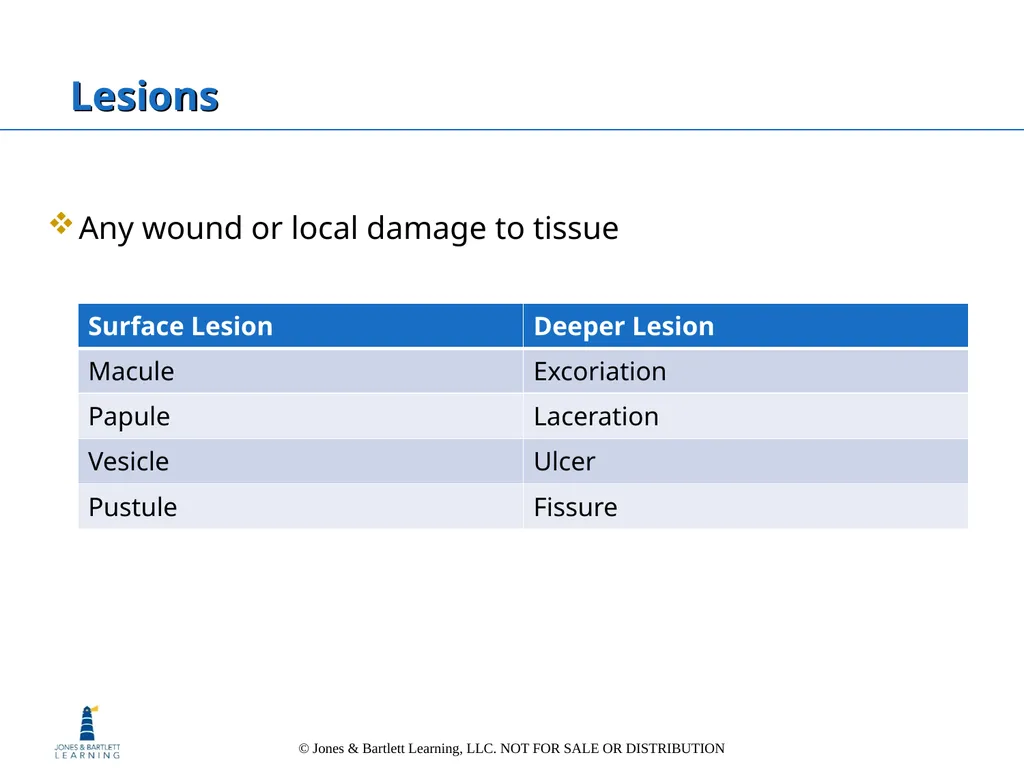
slide59. Lesions Any wound or local damage to tissue<br>
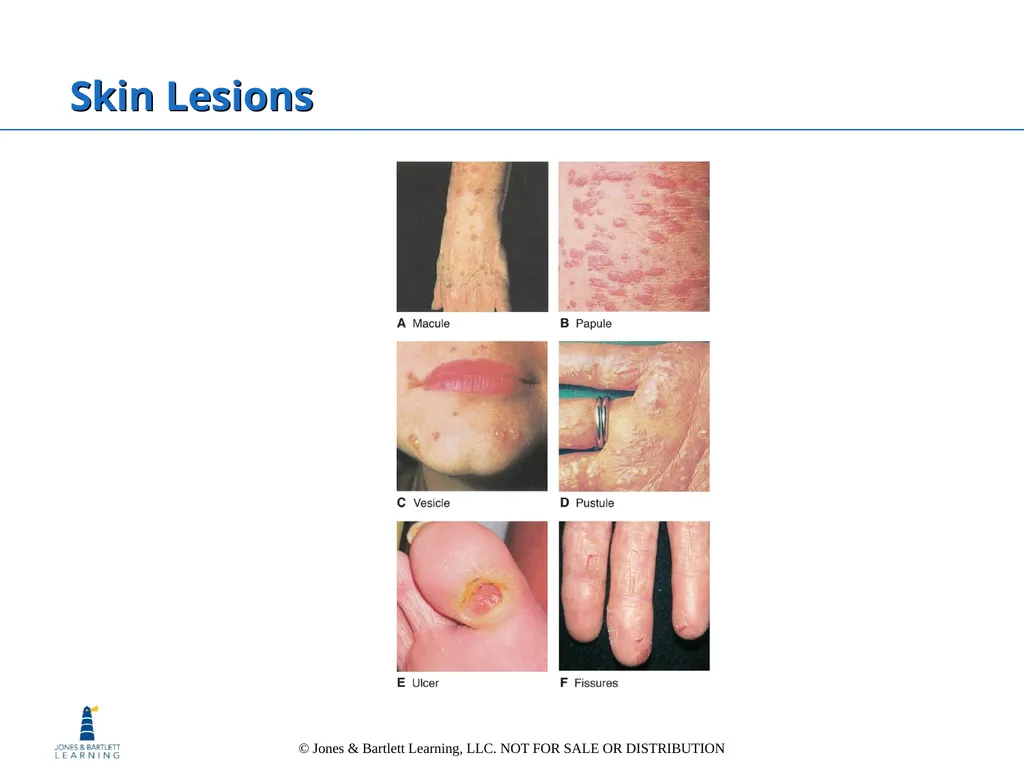
slide60. Skin Lesions<br>
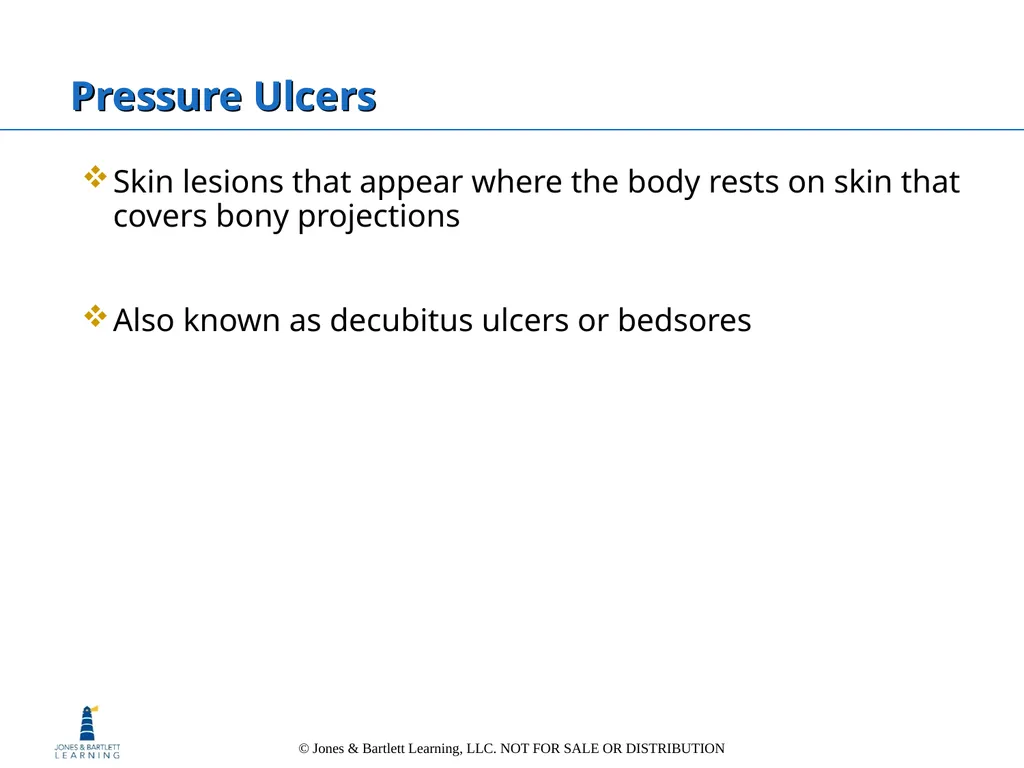
slide61. Pressure Ulcers Skin lesions that appear where the body rests on skin that covers bony projections
Also known as decubitus ulcers or bedsores<br>
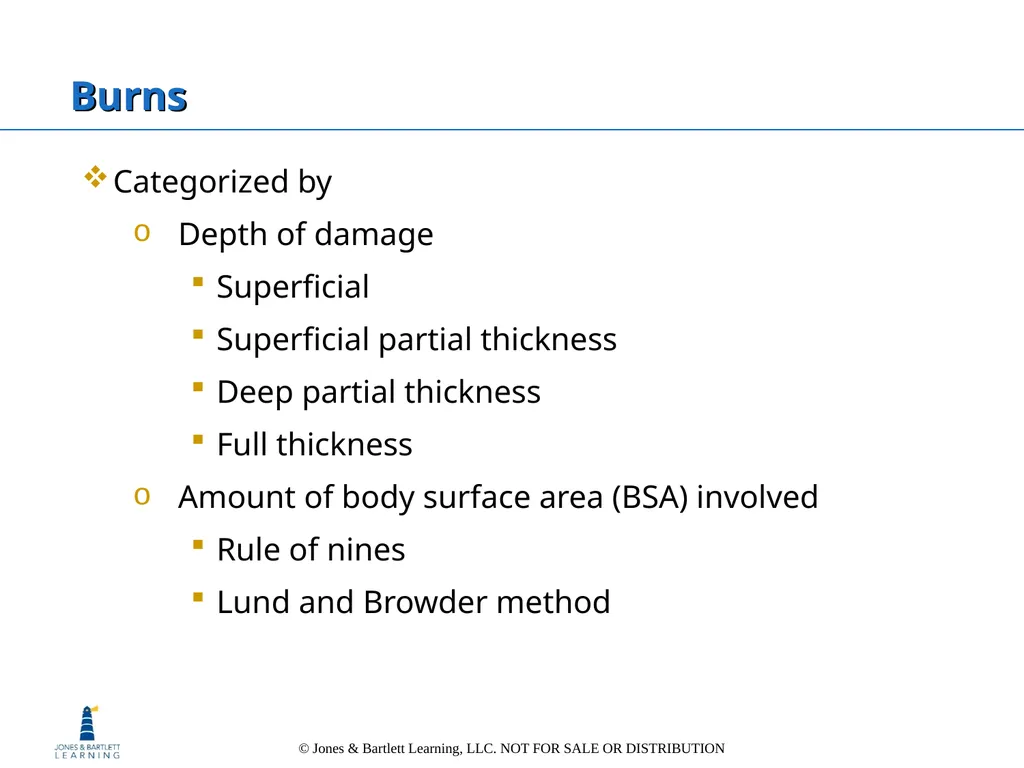
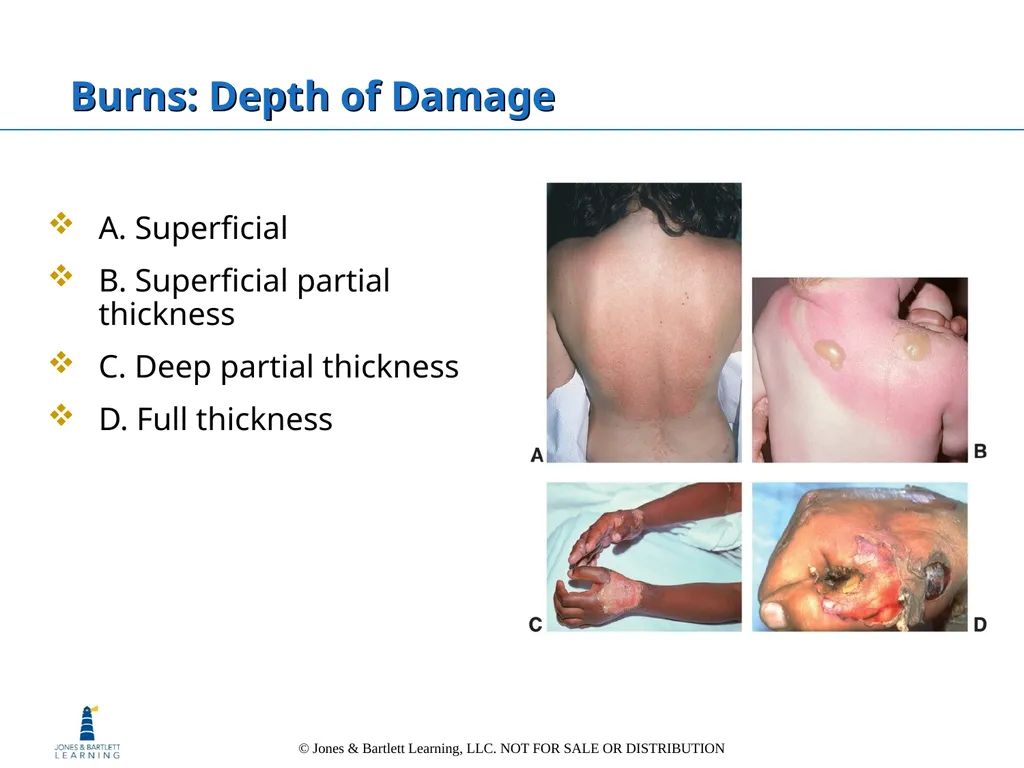
slide62. Burns Categorized by
Depth of damage
Superficial
Superficial partial thickness
Deep partial thickness
Full thickness
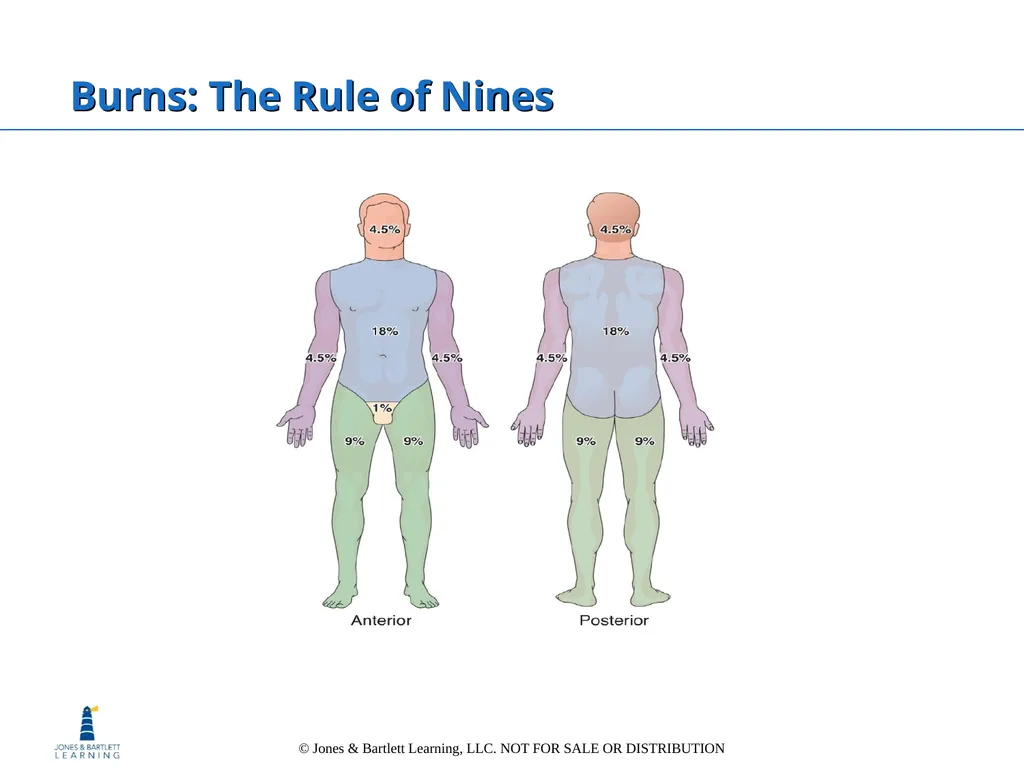
Amount of body surface area (BSA) involved
Rule of nines
Lund and Browder method<br>
slide63. Burns: Depth of Damage A. Superficial
B. Superficial partial thickness
C. Deep partial thickness
D. Full thickness<br>
slide64. Burns: The Rule of Nines<br>
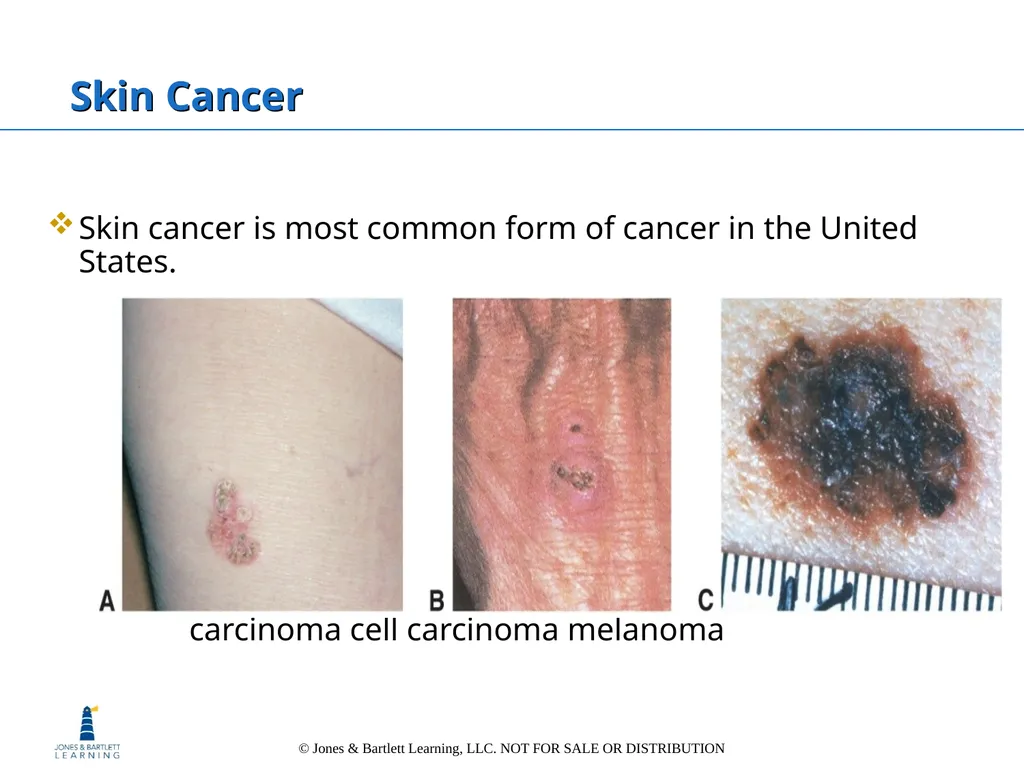
slide65. Skin Cancer Skin cancer is most common form of cancer in the United States.
Basal cell Squamous Malignant
carcinoma cell carcinoma melanoma<br>
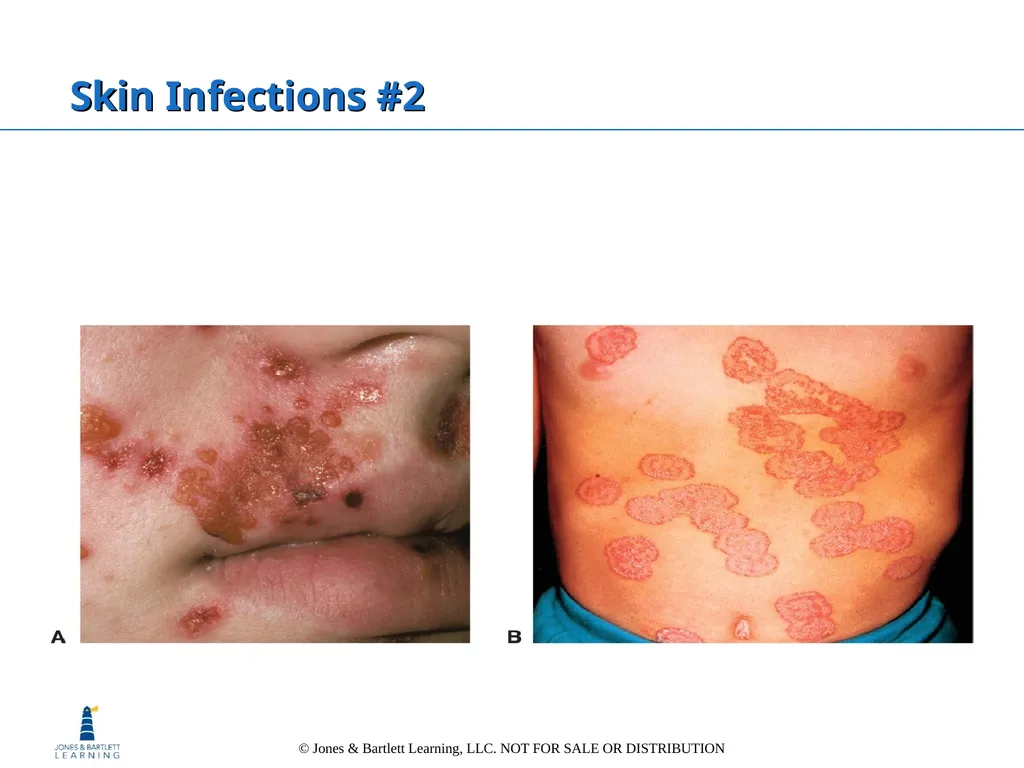
slide66. Skin Infections #1 Bacterial infections
Impetigo
Staphylococcal or streptococcal origin
Viral infections
Herpes simplex virus
Herpes zoster virus (shingles)
Human papillomavirus (HPV) (wart or verruca)
Fungal infection
Tinea or ringworm<br>
slide67. Skin Infections #2 Impetigo Tinea corpora (ringworm)<br>
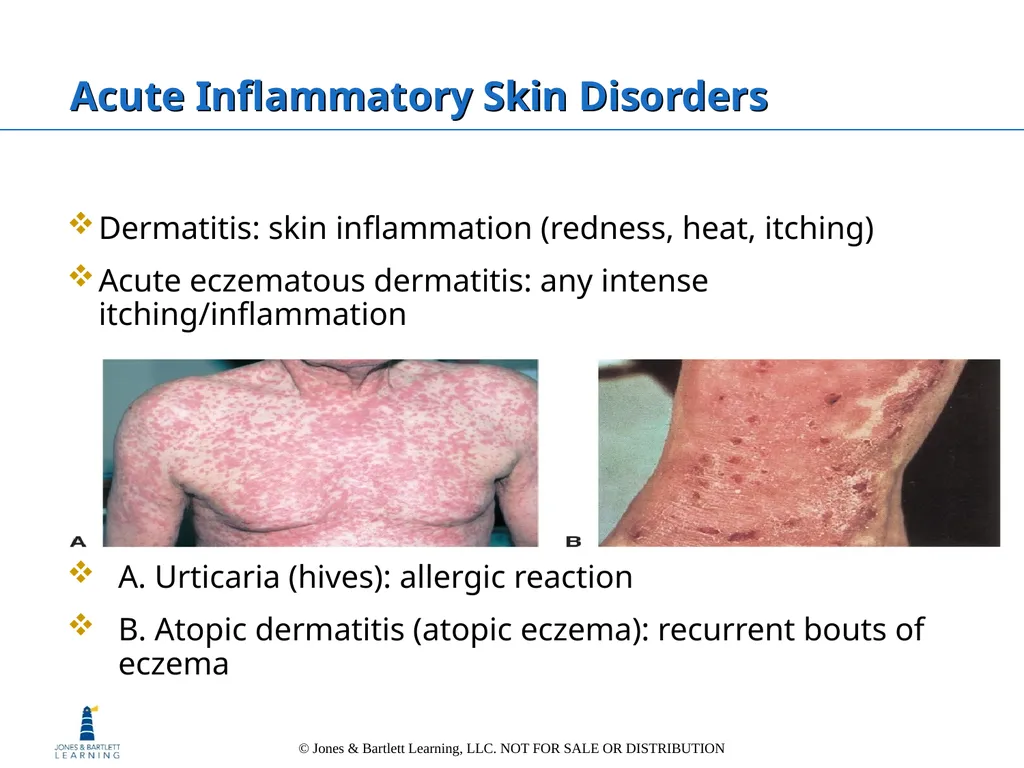
slide68. Acute Inflammatory Skin Disorders Dermatitis: skin inflammation (redness, heat, itching)
Acute eczematous dermatitis: any intense itching/inflammation
A. Urticaria (hives): allergic reaction
B. Atopic dermatitis (atopic eczema): recurrent bouts of eczema<br>
slide69. Psoriasis Chronic, recurrent overgrowth of epidermis
Sharply outlined red (erythematous) areas
Flat areas (plaques) covered with silvery scales
Hereditary pattern sometimes present
Immune disorder may be involved<br>
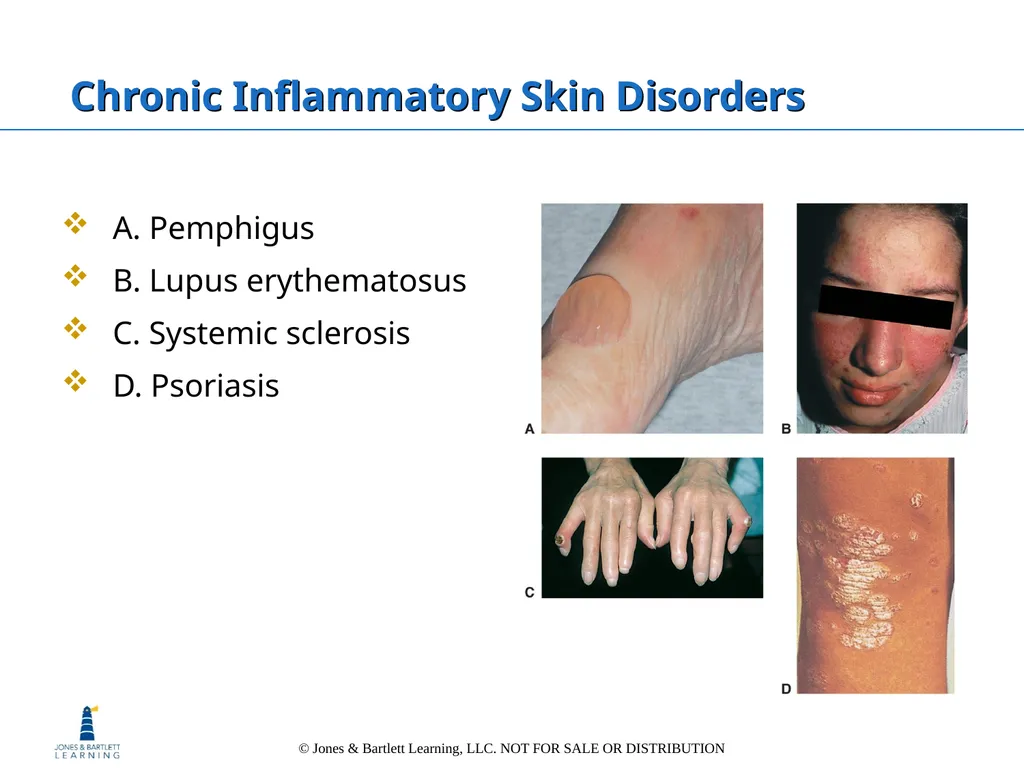
slide70. Chronic Inflammatory Skin Disorders A. Pemphigus
B. Lupus erythematosus
C. Systemic sclerosis
D. Psoriasis<br>
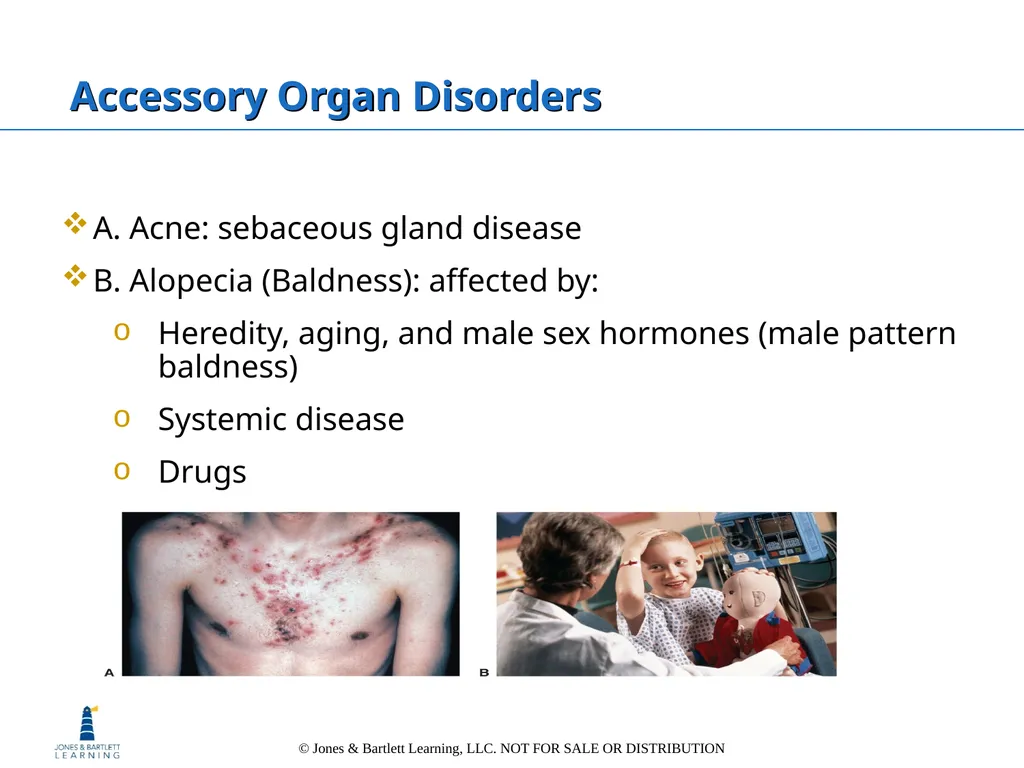
slide71. Accessory Organ Disorders A. Acne: sebaceous gland disease
B. Alopecia (Baldness): affected by:
Heredity, aging, and male sex hormones (male pattern baldness)
Systemic disease
Drugs<br>
slide72. Disorders of the Integumentary System (Review) #1 ✓ Checkpoints
6-14 What is a lesion?
6-15 What two factors are used to assess the severity of burns?
6-16 What are some microorganisms that affect the skin?
6-17 What is the general term for inflammation of the skin?
6-18 What is the probable cause of chronic inflammatory skin diseases?
6-19 What skin disorder results from overactivity of the sebaceous glands?
6-20 What is the technical term for baldness?<br>
slide73. Disorders of the Integumentary System (Review) #2 ? Pop Quiz
6.5 What is redness of the skin called?
Pallor
Carotenemia
Erythema
Jaundice<br>
slide74. Disorders of the Integumentary System (Review) #3 ? Pop Quiz Answer
6.5 What is redness of the skin called?
Pallor
Carotenemia
Erythema
Jaundice<br>
slide75. ? Pop Quiz
6.6 What is an autoimmune disease of unknown cause that involves overproduction of collagen with thickening and tightening of the skin?
Pemphigus
Scleroderma
Psoriasis
Lupus erythematosus Disorders of the Integumentary System (Review) #4<br>
slide76. ? Pop Quiz Answer
6.6 What is an autoimmune disease of unknown cause that involves overproduction of collagen with thickening and tightening of the skin?
Pemphigus
Scleroderma
Psoriasis
Lupus erythematosus Disorders of the Integumentary System (Review) #5<br>
slide77. Case Study #2 Learning Objectives
Using information in the case study and the text, describe the causes, classification and dangers of a burn.<br>
slide78. Case Study #3 Causes of Burns
Hazel’s burn: scalding with hot liquid
Other causes: contact with hot objects, explosions, electrical injuries, sunlight, chemicals, abrasions
Classification of Burns
Hazel’s burn: deep partial thickness (involved the epidermis and portions of the dermis)
Dangers of Burns
Infection (loss of skin’s immune function)
Dehydration and circulatory problems (loss of skin’s waterproofing function)
Shivering (loss of skin’s insulating function)<br>
slide79. Casepoints
6-1 Name the skin layers involved in Hazel’s burns.
6-2 Which skin layer will produce new cells to replace Hazel’s damaged epidermis?
6-3 Why did the physician use antibacterial cream in treating Hazel’s burn?
6-4 Why was pain a positive sign for Hazel?
6-5 Which pigment gave Hazel’s skin its color when she suffered a burn? Case Study: Review<br>
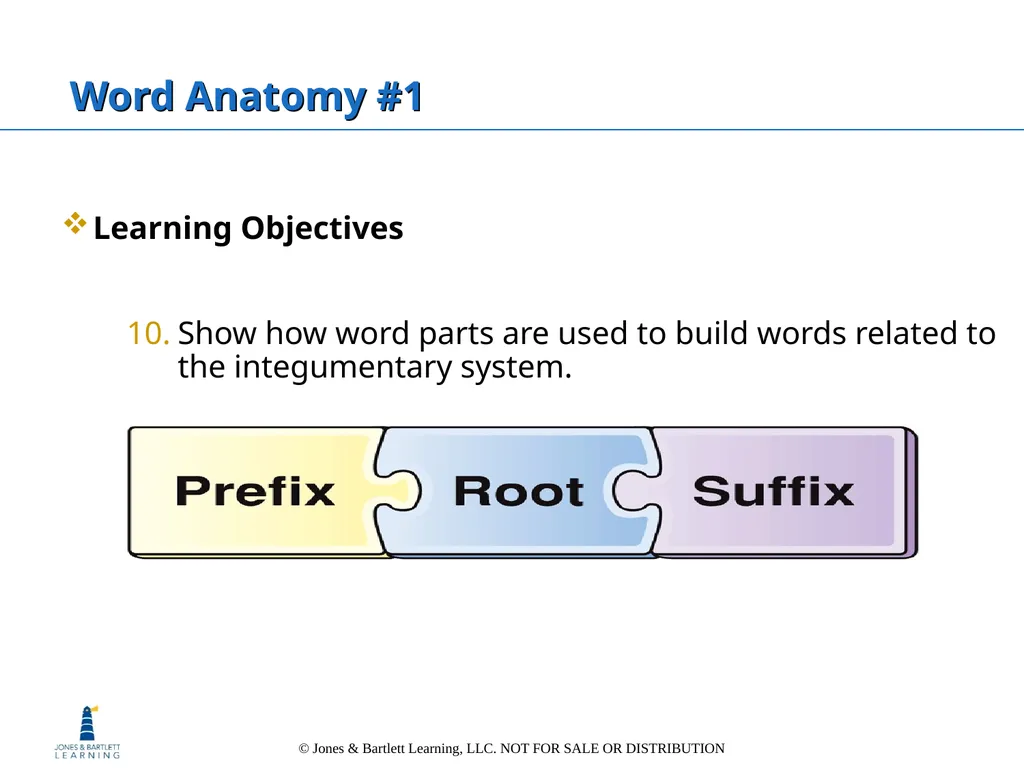
slide80. Word Anatomy #1 Learning Objectives
Show how word parts are used to build words related to the integumentary system.<br>
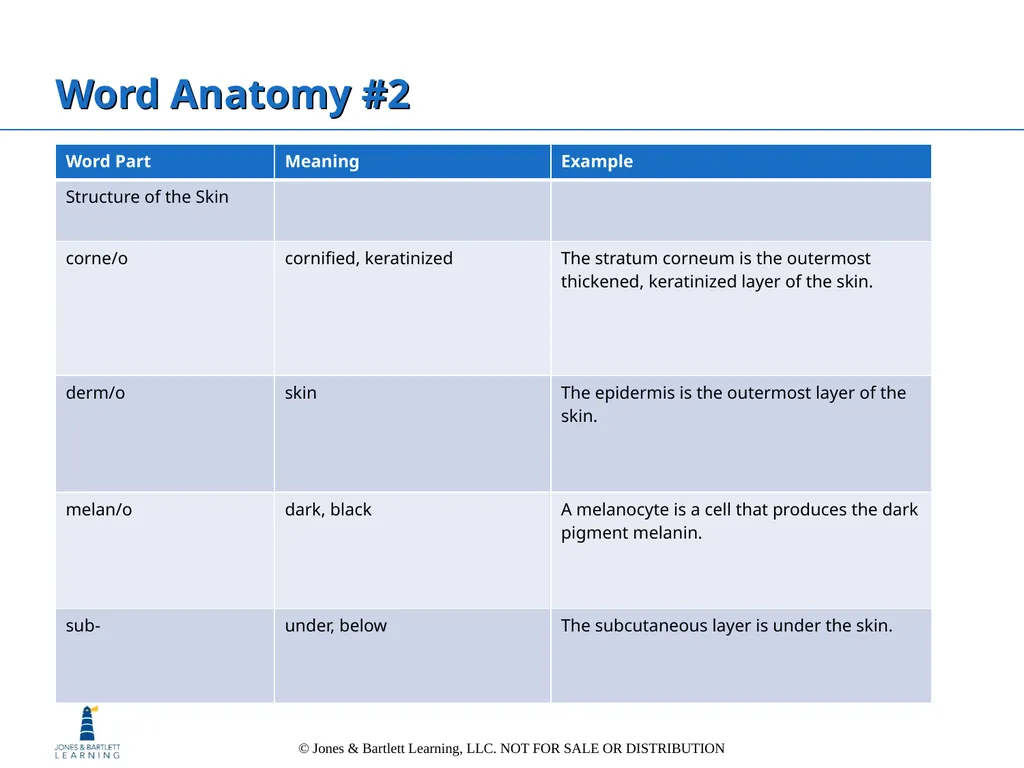
slide81. Word Anatomy #2<br>
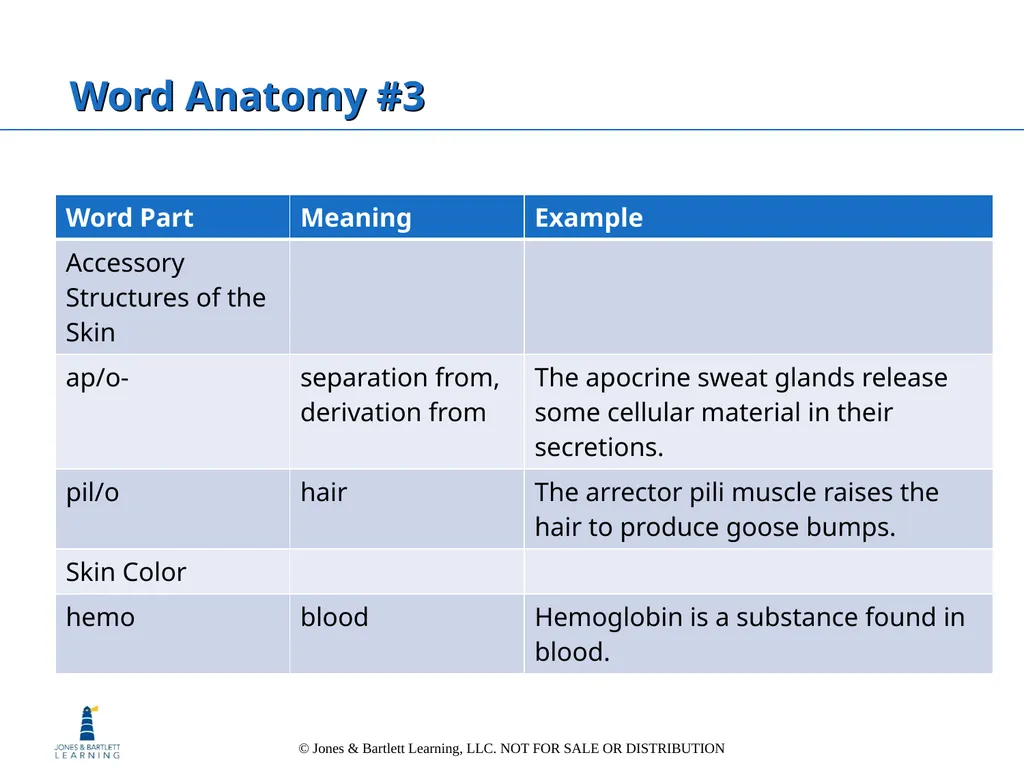
slide82. Word Anatomy #3<br>
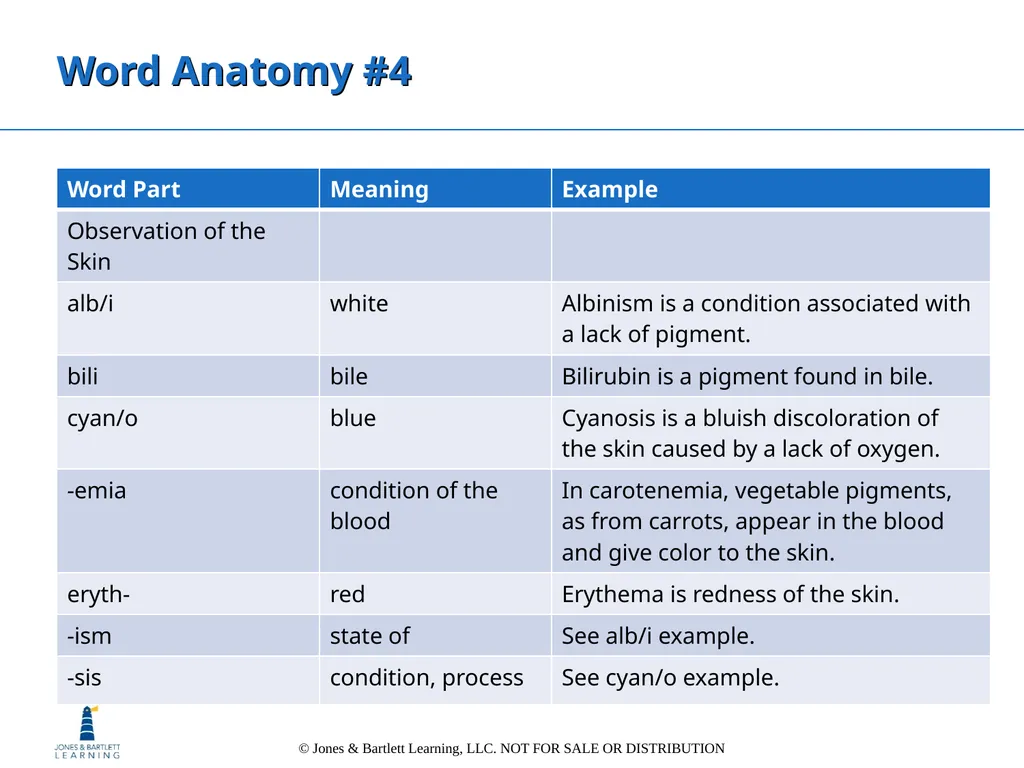
slide83. Word Anatomy #4<br>
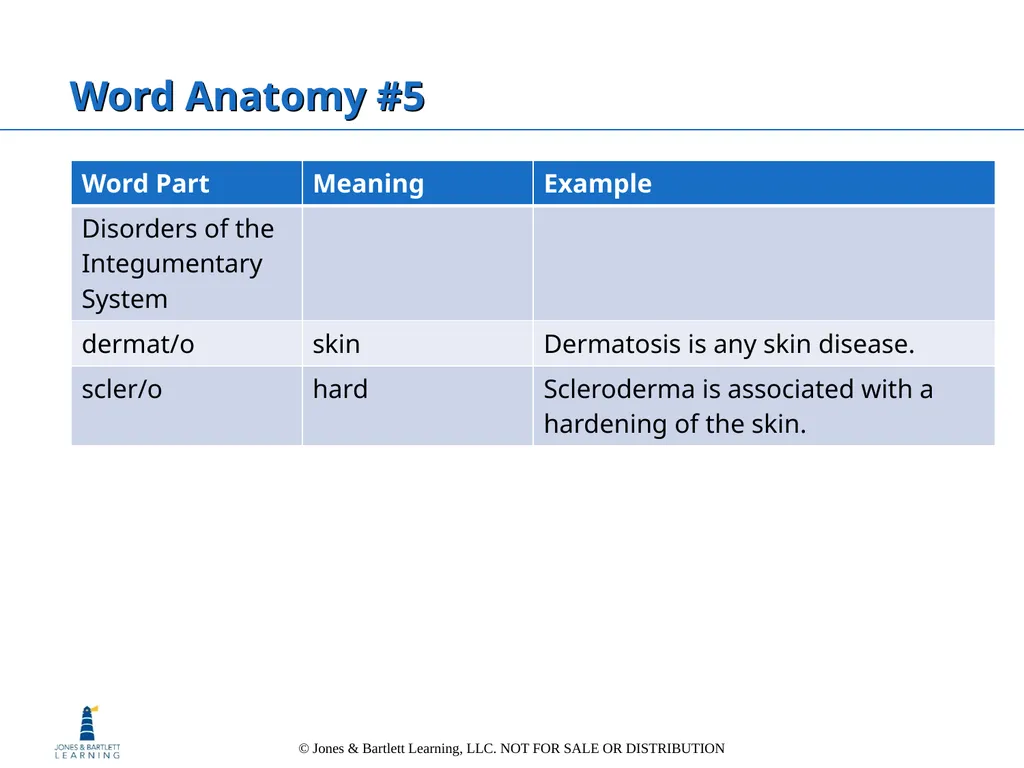
slide84. Word Anatomy #5<br>
slide2. Overview<br>
slide3. Key Terms apocrine epidermis melanin
alopecia erythema melanocyte
arrector pili exfoliation scar
cerumen hair follicle sebaceous gland
cicatrix integumentary system sebum
cyanosis jaundice stratum basale
dermatitis keloid subcutaneous layer
dermis keratin sweat gland
eccrine lesion<br>
slide4. Chapter 6 Key Ideas Chapter 6 introduces the key idea of adaptation<br>
slide5. Structure of the Skin #1 Learning Objectives
Name and describe the layers of the skin.
Describe the subcutaneous layer.<br>
slide6. Accessory Structures of the Skin Learning Objectives (cont.)
Give the locations and functions of the accessory structures of the integumentary system.<br>
slide7. Functions of the Integumentary System Learning Objectives (cont.)
List the main functions of the integumentary system.<br>
slide8. Observations of the Skin #1 Learning Objectives (cont.)
Summarize the information to be gained by observation of the skin.<br>
slide9. Repair of the Integument #1 Learning Objectives (cont.)
Cite the steps in repair of skin wounds and the factors that affect healing.<br>
slide10. Effects of Aging on the Integumentary System Learning Objectives (cont.)
Describe how the skin changes with age.<br>
slide11. Disorders of the Integumentary System #1 Learning Objectives (cont.)
List the main disorders of the integumentary system.<br>
slide12. Case Study #1 Learning Objectives (cont.)
Using information in the case study and the text, describe the causes, classification, and dangers of a burn.<br>
slide13. Word Anatomy Learning Objectives (cont.)
Show how word parts are used to build words related to the integumentary system.<br>
slide14. Structure of the Skin #2 Learning Objectives
Name and describe the layers of the skin.
Describe the subcutaneous layer.<br>
slide15. The Integumentary System Composed of two parts
Skin
Associated structures
The skin consists of two layers.
Epidermis
Dermis
Underneath and supporting the dermis is the subcutaneous layer.<br>
slide16. The Epidermis<br>
slide17. The Dermis<br>
slide18. The Subcutaneous Layer<br>
slide19. Structure of the Skin #3<br>
slide20. Thin Skin: Microscopic View<br>
slide21. The Layers of Skin<br>
slide22. Structure of the Skin (review) #1 ✓ Checkpoints
6-1 What is the name of the system that comprises the skin and all its associated structures?
6-2 Moving from the superficial to the deeper layer, what are the names of the two layers of the skin?
6-3 What is the composition of the subcutaneous layer?<br>
slide23. Structure of the Skin (review) #2 ? Pop Quiz
6.1 Where do new epidermal cells come from?
Subcutaneous layer
Stratum basale
Stratum corneum
Dermis<br>
slide24. Structure of the Skin (review) #3 ? Pop Quiz Answer
6.1 Where do new epidermal cells come from?
Subcutaneous layer
Stratum basale
Stratum corneum
Dermis<br>
slide25. Accessory Structures of the Skin #1 Learning Objectives
Give the locations and functions of the accessory structures of the integumentary system.<br>
slide26. Accessory Structures of the Skin #2 Help protect the skin and give it more functions
Include:
Sebaceous oil glands
Sweat (sudoriferous) glands
Hair
Nails<br>
slide27. Accessory Structures of the Skin #3 How do the sebaceous glands and apocrine sweat glands secrete to the outside? What kind of epithelium makes up the sweat glands?<br>
slide28. Skin Glands<br>
slide29. Nail Structure<br>
slide30. Glands Glands<br>
slide31. Hair and Nails<br>
slide32. Accessory Structures of the Skin (Review) #1 ✓ Checkpoints
6-4 What is the name of the skin glands that produce an oily secretion?
6-5 What is the scientific name for the sweat glands?
6-6 What is the name of the sheath in which a hair develops?
6-7 Where are the active cells that produce a nail located?<br>
slide33. Accessory Structures of the Skin (Review) #2 ? Pop Quiz
6.2 The maintenance of constant body temperature would be difficult without the actions of the:
Apocrine glands
Meibomian glands
Sebaceous glands
Eccrine glands<br>
slide34. Accessory Structures of the Skin (Review) #3 ? Pop Quiz Answer
6.2 The maintenance of constant body temperature would be difficult without the actions of the:
Apocrine glands
Meibomian glands
Sebaceous glands
Eccrine glands<br>
slide35. Functions of the Integumentary System #1 Learning Objectives
List the main functions of the integumentary system.<br>
slide36. Functions of the Integumentary System #2 Protection against infection
Protection against dehydration (drying)
Regulation of body temperature
Collection of sensory information<br>
slide37. Skin Protects Against Infection Intact skin forms a primary barrier against invasion.
Interlocking pattern resists penetration.
Shedding removes pathogens.
Protects against bacterial toxins.
Protects against some harmful environmental chemicals.<br>
slide38. Skin Protects Against Dehydration Skin prevents water loss by evaporation.
Keratin in the epidermis
Sebum release from the sebaceous glands<br>
slide39. Skin Helps Regulate Body Temperature Constriction of blood vessels conserves heat.
Dilation of blood vessels increases heat loss.
Evaporation of perspiration sheds heat.<br>
slide40. Skin Collects Sensory Information Skin has many nerve endings and other special receptors.
Free nerve endings
Touch receptors (Meissner corpuscle)
Deep pressure receptors (Pacinian corpuscle)<br>
slide41. Other Activities of Skin Absorption of substances such as medications
Excretion in sweat (minor)
Water
Electrolytes
Wastes
Manufacture of vitamin D<br>
slide42. Functions of the Integumentary System (Review) #1 ✓ Checkpoints
6-8 What two substances produced in the skin help to prevent dehydration?
6-9 What two mechanisms involving the skin are used to regulate temperature?<br>
slide43. Functions of the Integumentary System (Review) #2 ? Pop Quiz
6.3 Which of the following is NOT a function of skin?
Respiration
Excretion
Sensation
Thermoregulation<br>
slide44. Functions of the Integumentary System (Review) #3 ? Pop Quiz Answer
6.3 Which of the following is NOT a function of skin?
Respiration
Excretion
Sensation
Thermoregulation<br>
slide45. Observations of the Skin #2 Learning Objectives
Summarize the information to be gained by observation of the skin.<br>
slide46. Determinants of Skin Color Melanin: brown
Hemoglobin: red
Carotene: yellowish red
Bile pigment: yellow Melanin represents an adaptation to sunlight<br>
slide47. Discoloration of the Skin What color is associated with cyanosis? What color is associated with jaundice?
Vitiligo Cyanosis Jaundice<br>
slide48. Observations of the Skin (Review) #1 ✓ Checkpoints
6-10 Name some pigments that give color to the skin.
6-11 What is the term for a bluish skin discoloration caused by insufficient oxygen?<br>
slide49. Observations of the Skin (Review) #2 ? Pop Quiz
6.4 Which pigment is responsible for a tan-brown color?
Melanin
Carotene
Hemoglobin
Bile<br>
slide50. Observations of the Skin (Review) #3 ? Pop Quiz Answer
6.4 Which pigment is responsible for a tan-brown color?
Melanin
Carotene
Hemoglobin
Bile<br>
slide51. Repair of the Integument #2 Learning Objectives
Cite the steps in repair of skin wounds and the factors that affect healing.<br>
slide52. Steps in Wound Healing Inflammation: blood brings cells and factors involved in healing.
Growth of new blood vessels.
Fibroblasts produce new connective tissue to close wound.
Stem cells produce new epithelial tissue.<br>
slide53. Keloids Result from excessive collagen production during scar formation<br>
slide54. Factors That Affect Healing Nutrition
Blood supply
Infection
Age<br>
slide55. ✓ Repair of the Integument (Review) Checkpoints
6-12 Name four factors that affect skin healing.<br>
slide56. Effects of Aging on the Integumentary System #1 Learning Objectives
Describe how the skin changes with age.<br>
slide57. Effects of Aging on the Integumentary System #2 Wrinkles develop
Dermis thins
Decreased, irregular pigment production
Decreased circulation
Hair thins
Sweat gland number activity decreases
Fingernails and toenails alter<br>
slide58. Disorders of the Integumentary System #2 Learning Objectives
List the main disorders of the integumentary system.<br>
slide59. Lesions Any wound or local damage to tissue<br>
slide60. Skin Lesions<br>
slide61. Pressure Ulcers Skin lesions that appear where the body rests on skin that covers bony projections
Also known as decubitus ulcers or bedsores<br>
slide62. Burns Categorized by
Depth of damage
Superficial
Superficial partial thickness
Deep partial thickness
Full thickness
Amount of body surface area (BSA) involved
Rule of nines
Lund and Browder method<br>
slide63. Burns: Depth of Damage A. Superficial
B. Superficial partial thickness
C. Deep partial thickness
D. Full thickness<br>
slide64. Burns: The Rule of Nines<br>
slide65. Skin Cancer Skin cancer is most common form of cancer in the United States.
Basal cell Squamous Malignant
carcinoma cell carcinoma melanoma<br>
slide66. Skin Infections #1 Bacterial infections
Impetigo
Staphylococcal or streptococcal origin
Viral infections
Herpes simplex virus
Herpes zoster virus (shingles)
Human papillomavirus (HPV) (wart or verruca)
Fungal infection
Tinea or ringworm<br>
slide67. Skin Infections #2 Impetigo Tinea corpora (ringworm)<br>
slide68. Acute Inflammatory Skin Disorders Dermatitis: skin inflammation (redness, heat, itching)
Acute eczematous dermatitis: any intense itching/inflammation
A. Urticaria (hives): allergic reaction
B. Atopic dermatitis (atopic eczema): recurrent bouts of eczema<br>
slide69. Psoriasis Chronic, recurrent overgrowth of epidermis
Sharply outlined red (erythematous) areas
Flat areas (plaques) covered with silvery scales
Hereditary pattern sometimes present
Immune disorder may be involved<br>
slide70. Chronic Inflammatory Skin Disorders A. Pemphigus
B. Lupus erythematosus
C. Systemic sclerosis
D. Psoriasis<br>
slide71. Accessory Organ Disorders A. Acne: sebaceous gland disease
B. Alopecia (Baldness): affected by:
Heredity, aging, and male sex hormones (male pattern baldness)
Systemic disease
Drugs<br>
slide72. Disorders of the Integumentary System (Review) #1 ✓ Checkpoints
6-14 What is a lesion?
6-15 What two factors are used to assess the severity of burns?
6-16 What are some microorganisms that affect the skin?
6-17 What is the general term for inflammation of the skin?
6-18 What is the probable cause of chronic inflammatory skin diseases?
6-19 What skin disorder results from overactivity of the sebaceous glands?
6-20 What is the technical term for baldness?<br>
slide73. Disorders of the Integumentary System (Review) #2 ? Pop Quiz
6.5 What is redness of the skin called?
Pallor
Carotenemia
Erythema
Jaundice<br>
slide74. Disorders of the Integumentary System (Review) #3 ? Pop Quiz Answer
6.5 What is redness of the skin called?
Pallor
Carotenemia
Erythema
Jaundice<br>
slide75. ? Pop Quiz
6.6 What is an autoimmune disease of unknown cause that involves overproduction of collagen with thickening and tightening of the skin?
Pemphigus
Scleroderma
Psoriasis
Lupus erythematosus Disorders of the Integumentary System (Review) #4<br>
slide76. ? Pop Quiz Answer
6.6 What is an autoimmune disease of unknown cause that involves overproduction of collagen with thickening and tightening of the skin?
Pemphigus
Scleroderma
Psoriasis
Lupus erythematosus Disorders of the Integumentary System (Review) #5<br>
slide77. Case Study #2 Learning Objectives
Using information in the case study and the text, describe the causes, classification and dangers of a burn.<br>
slide78. Case Study #3 Causes of Burns
Hazel’s burn: scalding with hot liquid
Other causes: contact with hot objects, explosions, electrical injuries, sunlight, chemicals, abrasions
Classification of Burns
Hazel’s burn: deep partial thickness (involved the epidermis and portions of the dermis)
Dangers of Burns
Infection (loss of skin’s immune function)
Dehydration and circulatory problems (loss of skin’s waterproofing function)
Shivering (loss of skin’s insulating function)<br>
slide79. Casepoints
6-1 Name the skin layers involved in Hazel’s burns.
6-2 Which skin layer will produce new cells to replace Hazel’s damaged epidermis?
6-3 Why did the physician use antibacterial cream in treating Hazel’s burn?
6-4 Why was pain a positive sign for Hazel?
6-5 Which pigment gave Hazel’s skin its color when she suffered a burn? Case Study: Review<br>
slide80. Word Anatomy #1 Learning Objectives
Show how word parts are used to build words related to the integumentary system.<br>
slide81. Word Anatomy #2<br>
slide82. Word Anatomy #3<br>
slide83. Word Anatomy #4<br>
slide84. Word Anatomy #5<br>