
Charles Darwin Primary School Reading at Home KS1


Description: Charles Darwin Primary School Reading at Home KS1 September 2024 The Power of Reading! Creating a love of reading in children is potentially one of the most powerful ways of improving academic standards in school. There can be few
Related Topics
Download Presentation
"Charles Darwin Primary School Reading at Home KS1" is the property of its rightful owner. Permission is granted to download and print the materials on this website for personal, non-commercial use only, and to display it on your personal computer provided you do not modify the materials and that you retain all copyright notices contained in the materials. By downloading content from our website, you accept the terms of this agreement.
Presentation Transcript
slide1. Charles Darwin Primary School
Reading at Home
KS1
September 2024<br>
slide2. The Power of Reading!
• Creating a love of reading in children is potentially one of the most powerful ways of improving academic standards in school.
• There can be few better ways to improve pupils chances in school, or beyond in the wider world than to enable them to become truly independent readers.<br>
slide3. There is a difference in reading performance equivalent to just over a year’s schooling between young people who never read for enjoyment and those who read for up to 30 minutes per day.
Children who read books often at age 10 gain higher results in maths, vocabulary and spelling tests at 16 than those who read less regularly. (Reading Agency)<br>
slide4. Fun ways to read with your child
Experts in literacy are unanimous in their belief that parents should read with their children.
The power of the parent-child bond has a positive effect on a child’s attitude towards reading and their ability to read.
Try the following suggestions that you will hear about today to help make reading both a pleasure and a learning experience!<br>
slide5. Set aside a specific time for reading every day and make reading a priority.
Try not to do the reading when you are both tired!
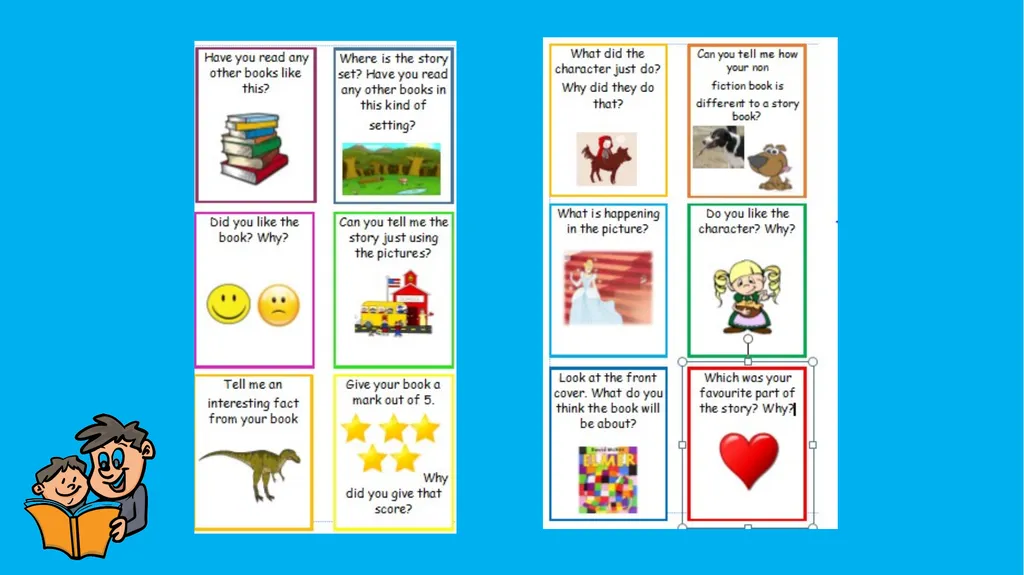
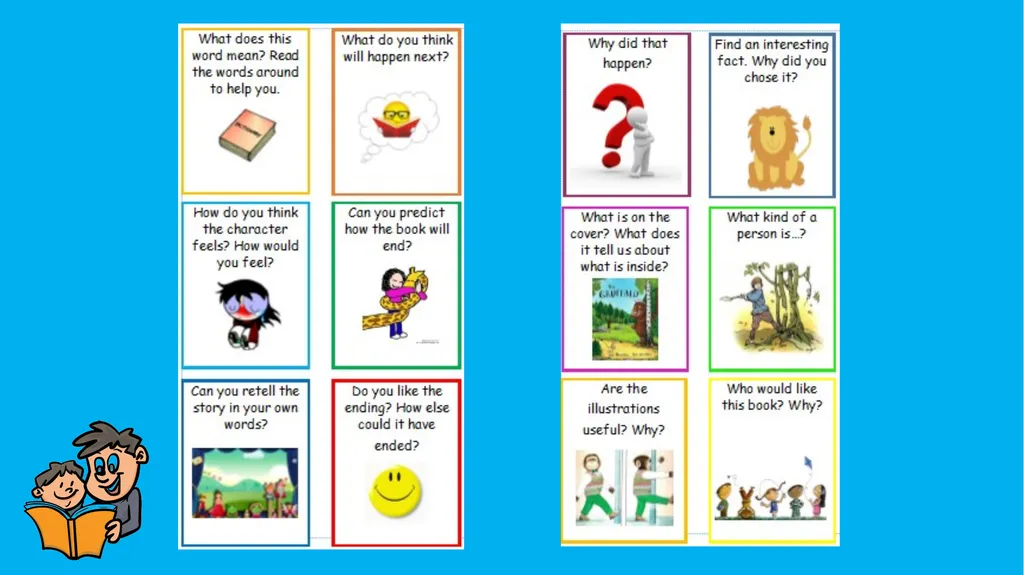
Walk through the book first and discuss the pictures and the important words.
Always remember to keep reading aloud to your child even when they can read independently.
Be positive. Praise your child for trying hard at their reading. Let them know it is alright to make mistakes.<br>
slide6. Reading
• Success in reading is fundamental to success in school.
• Reading is all about acquiring meaning; for enjoyment, information and understanding.
• It is not a performance.
• It is not a test.<br>
slide7. Understanding (Comprehension)
• Being able to read does not mean you understand what you read.
• Your child might sound like a good reader but may not necessarily understand what the text means.
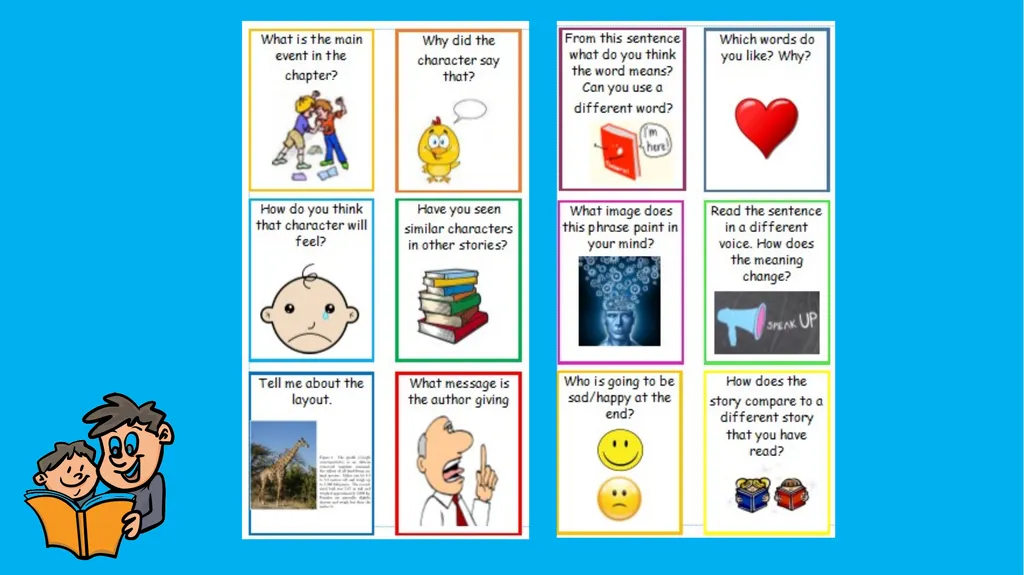
• The best way to develop understanding is to talk about texts.<br>
slide8. Reception Class<br>
slide10. Year 1 Class<br>
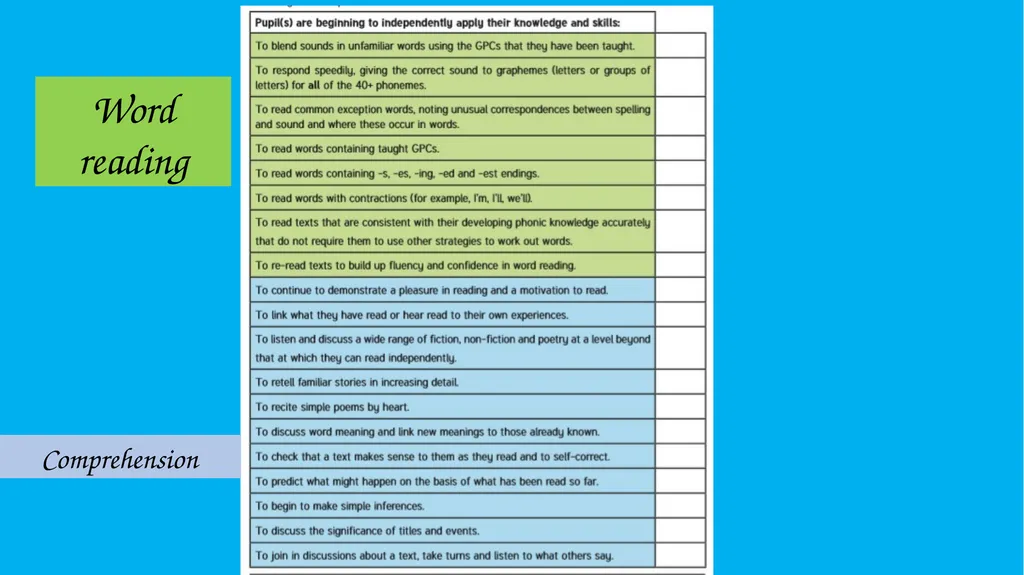
slide11. Word reading Comprehension<br>
slide14. Year 2 Class<br>
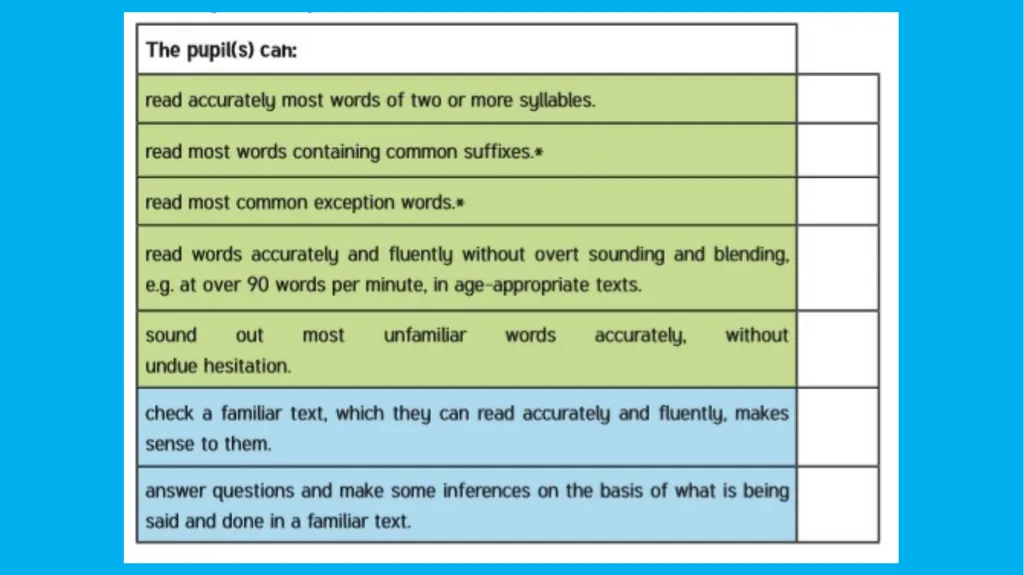
slide18. Watch the clip to see how a child in Year 2 should be reading to reach expected levels by the end of the year
https://youtu.be/HXfgMv5hTrs<br>
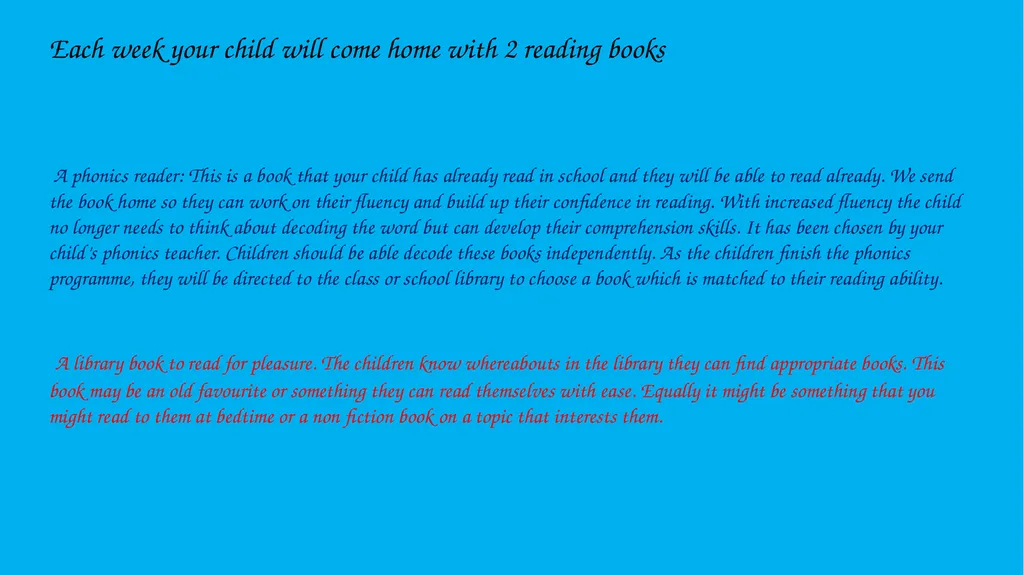
slide19. Each week your child will come home with 2 reading books
A phonics reader: This is a book that your child has already read in school and they will be able to read already. We send the book home so they can work on their fluency and build up their confidence in reading. With increased fluency the child no longer needs to think about decoding the word but can develop their comprehension skills. It has been chosen by your child’s phonics teacher. Children should be able decode these books independently. As the children finish the phonics programme, they will be directed to the class or school library to choose a book which is matched to their reading ability.
A library book to read for pleasure. The children know whereabouts in the library they can find appropriate books. This book may be an old favourite or something they can read themselves with ease. Equally it might be something that you might read to them at bedtime or a non fiction book on a topic that interests them.<br>
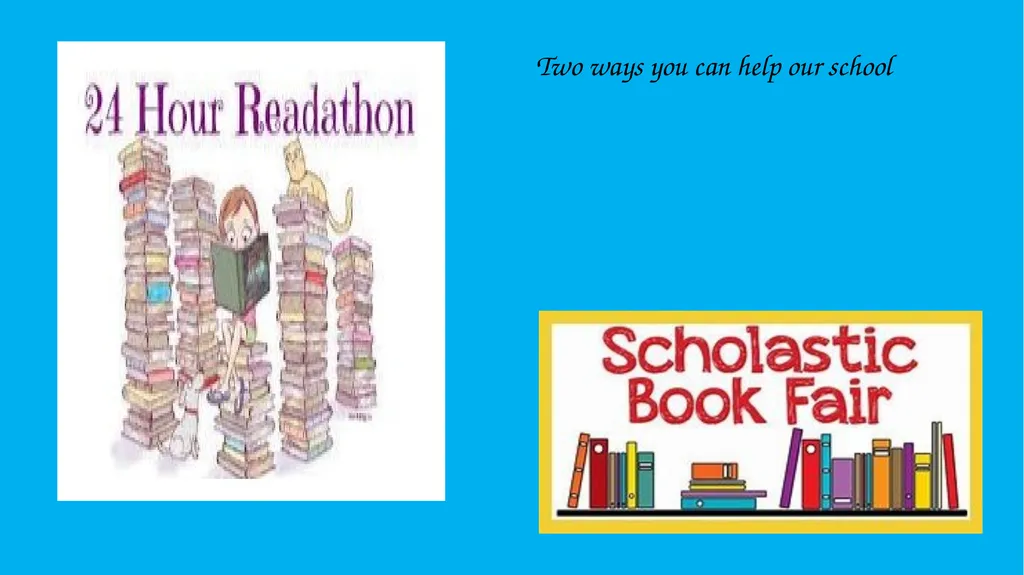
slide20. Two ways you can help our school<br>
slide21. Happy reading!<br>
Reading at Home
KS1
September 2024<br>
slide2. The Power of Reading!
• Creating a love of reading in children is potentially one of the most powerful ways of improving academic standards in school.
• There can be few better ways to improve pupils chances in school, or beyond in the wider world than to enable them to become truly independent readers.<br>
slide3. There is a difference in reading performance equivalent to just over a year’s schooling between young people who never read for enjoyment and those who read for up to 30 minutes per day.
Children who read books often at age 10 gain higher results in maths, vocabulary and spelling tests at 16 than those who read less regularly. (Reading Agency)<br>
slide4. Fun ways to read with your child
Experts in literacy are unanimous in their belief that parents should read with their children.
The power of the parent-child bond has a positive effect on a child’s attitude towards reading and their ability to read.
Try the following suggestions that you will hear about today to help make reading both a pleasure and a learning experience!<br>
slide5. Set aside a specific time for reading every day and make reading a priority.
Try not to do the reading when you are both tired!
Walk through the book first and discuss the pictures and the important words.
Always remember to keep reading aloud to your child even when they can read independently.
Be positive. Praise your child for trying hard at their reading. Let them know it is alright to make mistakes.<br>
slide6. Reading
• Success in reading is fundamental to success in school.
• Reading is all about acquiring meaning; for enjoyment, information and understanding.
• It is not a performance.
• It is not a test.<br>
slide7. Understanding (Comprehension)
• Being able to read does not mean you understand what you read.
• Your child might sound like a good reader but may not necessarily understand what the text means.
• The best way to develop understanding is to talk about texts.<br>
slide8. Reception Class<br>
slide10. Year 1 Class<br>
slide11. Word reading Comprehension<br>
slide14. Year 2 Class<br>
slide18. Watch the clip to see how a child in Year 2 should be reading to reach expected levels by the end of the year
https://youtu.be/HXfgMv5hTrs<br>
slide19. Each week your child will come home with 2 reading books
A phonics reader: This is a book that your child has already read in school and they will be able to read already. We send the book home so they can work on their fluency and build up their confidence in reading. With increased fluency the child no longer needs to think about decoding the word but can develop their comprehension skills. It has been chosen by your child’s phonics teacher. Children should be able decode these books independently. As the children finish the phonics programme, they will be directed to the class or school library to choose a book which is matched to their reading ability.
A library book to read for pleasure. The children know whereabouts in the library they can find appropriate books. This book may be an old favourite or something they can read themselves with ease. Equally it might be something that you might read to them at bedtime or a non fiction book on a topic that interests them.<br>
slide20. Two ways you can help our school<br>
slide21. Happy reading!<br>