
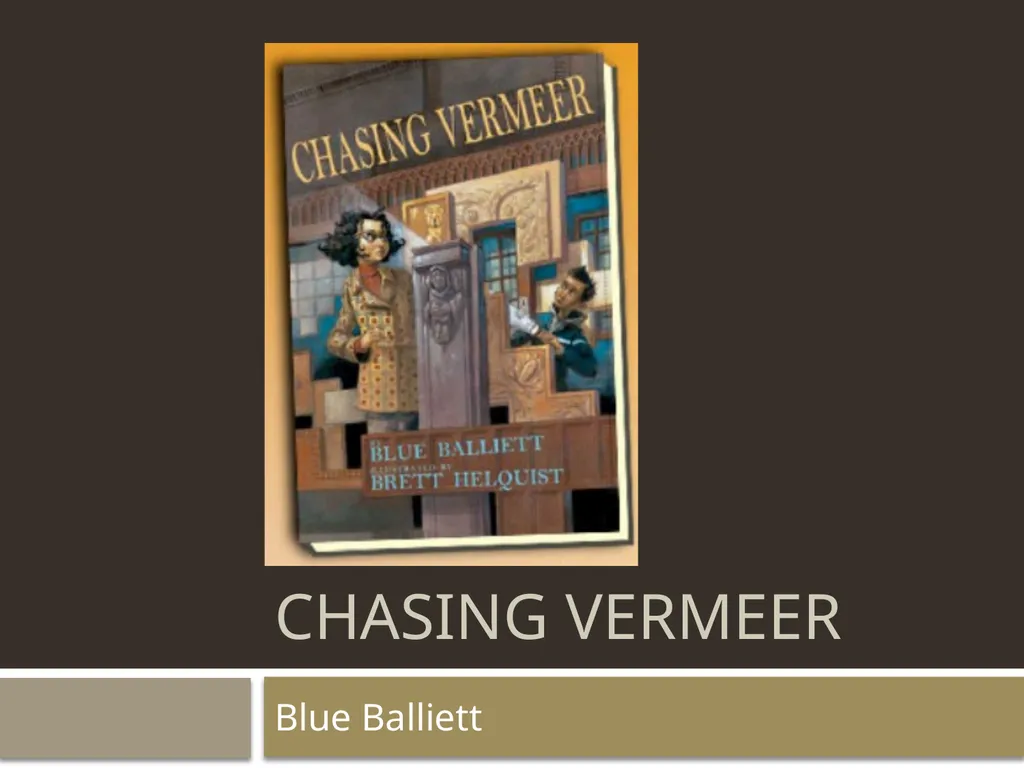
Chasing Vermeer Blue Balliett Author & Illustrator

Description: Chasing Vermeer Blue Balliett Author Illustrator Biographies Blue Balliett Brett Helquist Chapter 1: Three Deliveries pp1-5 Vocabulary discriminating conventions amply pretentious agitated gullible alter Figurative Language Explain how
Related Topics
Download Presentation
"Chasing Vermeer Blue Balliett Author & Illustrator" is the property of its rightful owner. Permission is granted to download and print the materials on this website for personal, non-commercial use only, and to display it on your personal computer provided you do not modify the materials and that you retain all copyright notices contained in the materials. By downloading content from our website, you accept the terms of this agreement.
Presentation Transcript
slide1. Chasing Vermeer Blue Balliett<br>
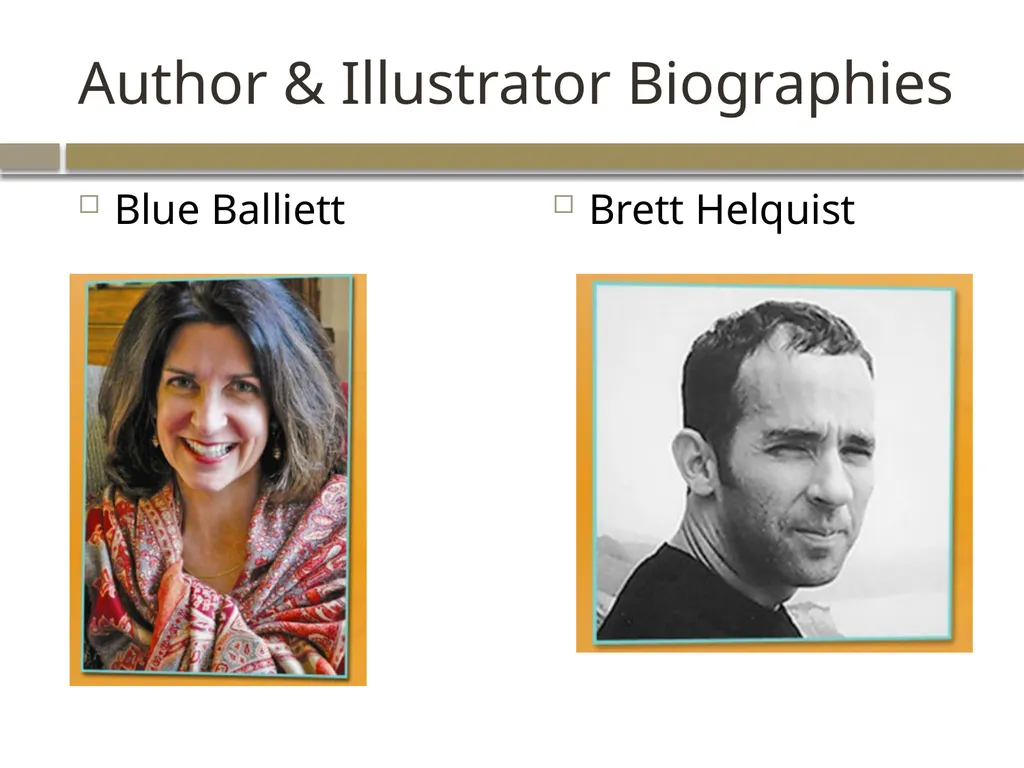
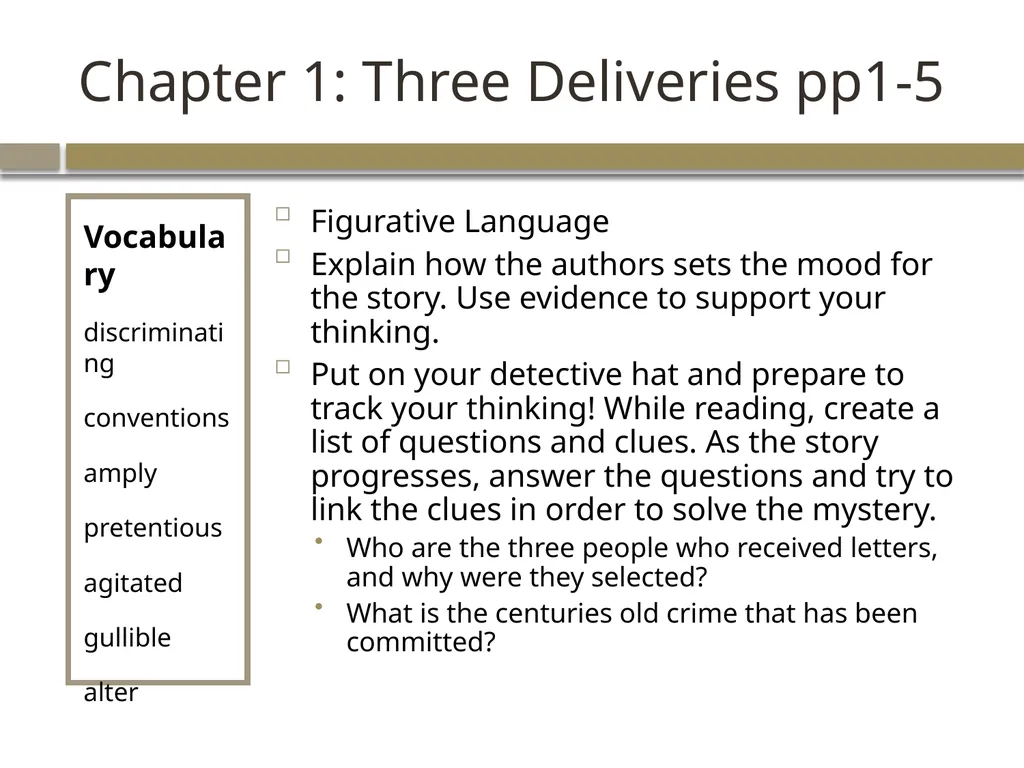
slide2. Author & Illustrator Biographies Blue Balliett Brett Helquist<br>
slide3. Chapter 1: Three Deliveries pp1-5 Vocabulary
discriminating
conventions
amply
pretentious
agitated
gullible
alter Figurative Language
Explain how the authors sets the mood for the story. Use evidence to support your thinking.
Put on your detective hat and prepare to track your thinking! While reading, create a list of questions and clues. As the story progresses, answer the questions and try to link the clues in order to solve the mystery.
Who are the three people who received letters, and why were they selected?
What is the centuries old crime that has been committed?<br>
slide4. Chapter 2: The Letter Is Dead pp6-17 Vocabulary
brutal
mediocre
labyrinth Figurative Language
Research John Dewey.
Ask an adult to tell you about a letter they will never forget, a piece of mail that changed their life.
Draw an illustration of Ms. Hussey.
Write me a letter I won’t be able to forget.
Who are you more like, Petra or Calder? Explain why using details from the story.
Who wrote the novel Kidnapped? Why did the author choose to include this book?
Why was Ms. Hussey at Powell’s book store?<br>
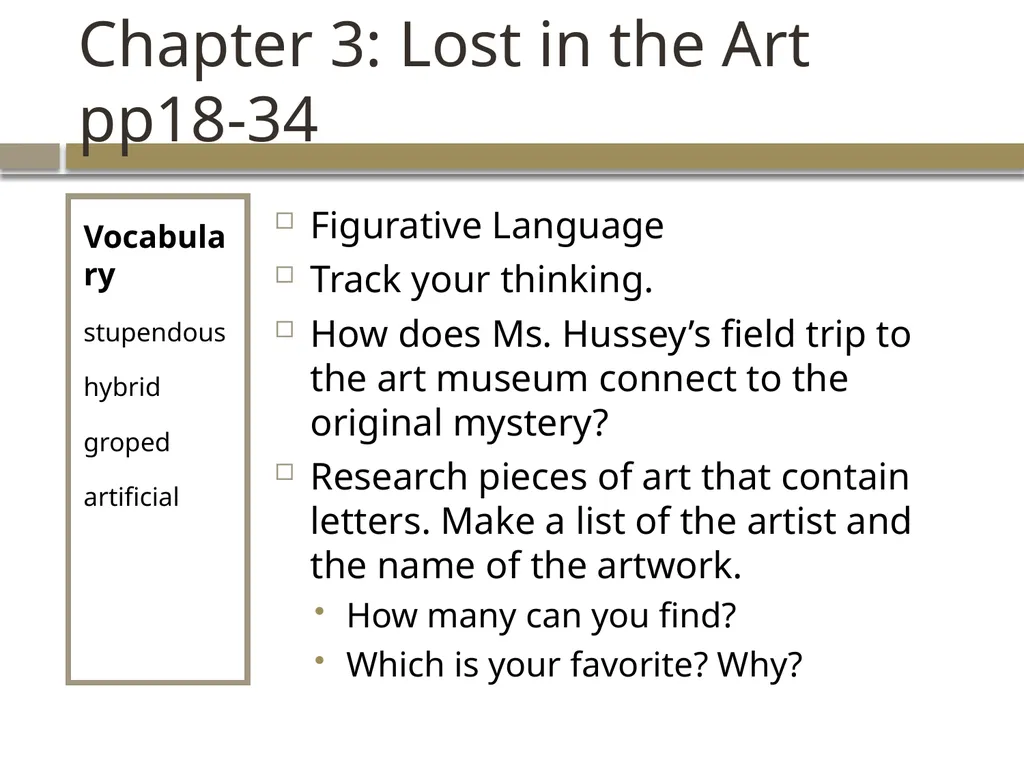
slide5. Chapter 3: Lost in the Art pp18-34 Vocabulary
stupendous
hybrid
groped
artificial Figurative Language
Track your thinking.
How does Ms. Hussey’s field trip to the art museum connect to the original mystery?
Research pieces of art that contain letters. Make a list of the artist and the name of the artwork.
How many can you find?
Which is your favorite? Why?<br>
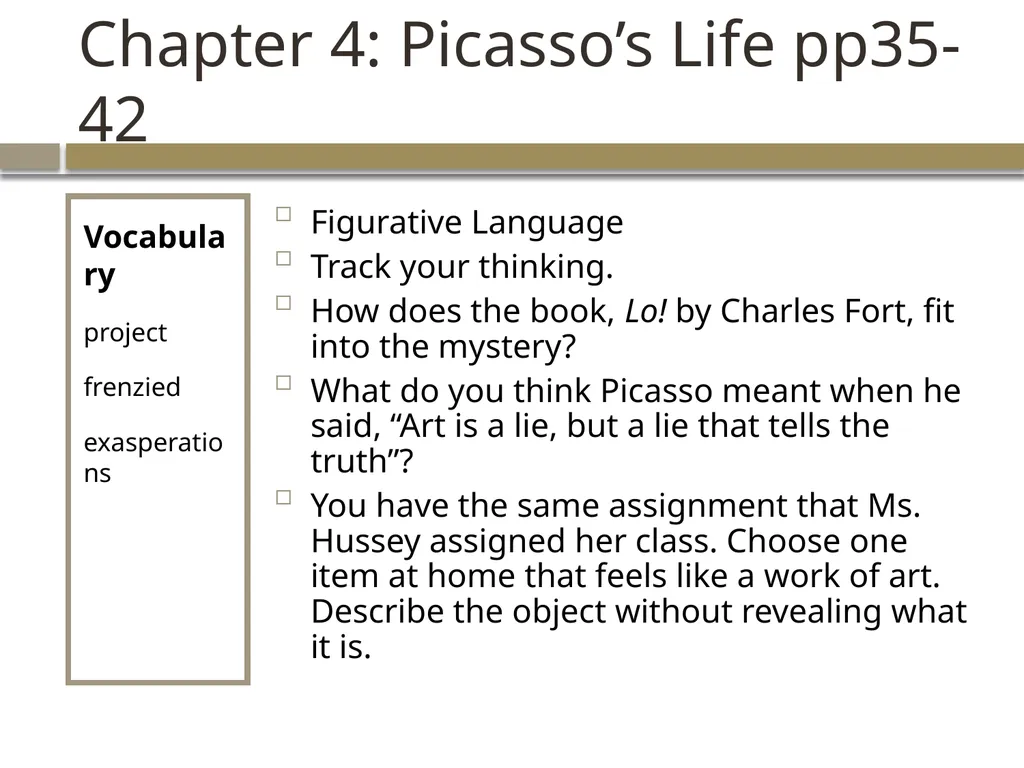
slide6. Chapter 4: Picasso’s Life pp35-42 Vocabulary
project
frenzied
exasperations Figurative Language
Track your thinking.
How does the book, Lo! by Charles Fort, fit into the mystery?
What do you think Picasso meant when he said, “Art is a lie, but a lie that tells the truth”?
You have the same assignment that Ms. Hussey assigned her class. Choose one item at home that feels like a work of art. Describe the object without revealing what it is.<br>
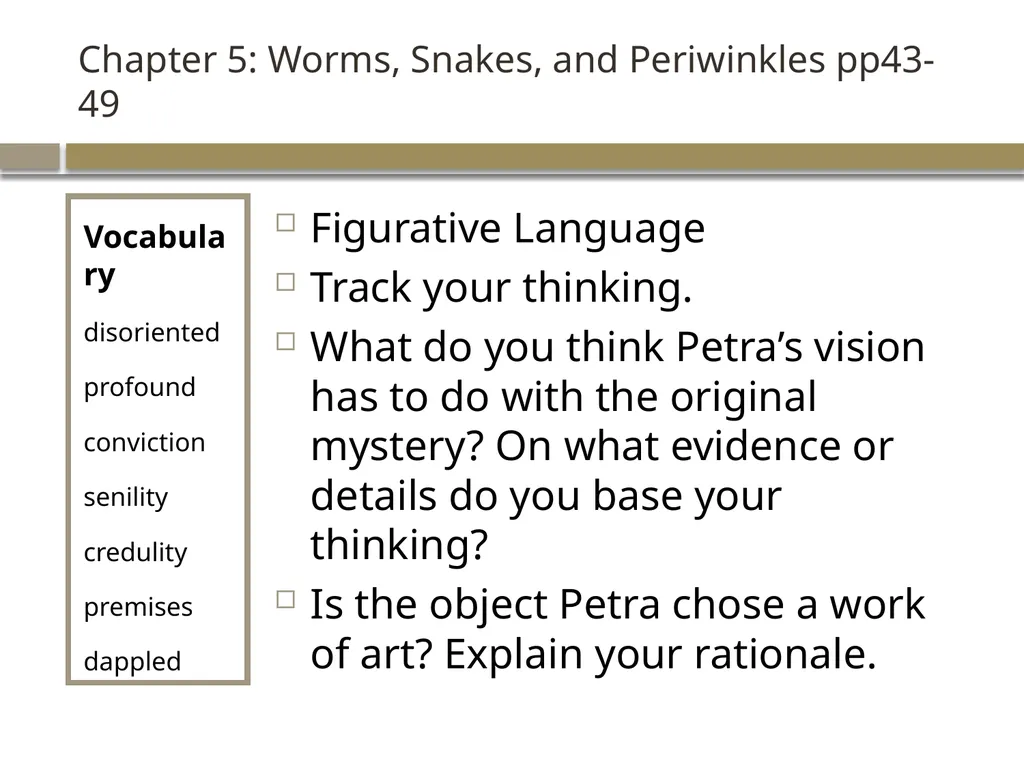
slide7. Chapter 5: Worms, Snakes, and Periwinkles pp43-49 Vocabulary
disoriented
profound
conviction
senility
credulity
premises
dappled Figurative Language
Track your thinking.
What do you think Petra’s vision has to do with the original mystery? On what evidence or details do you base your thinking?
Is the object Petra chose a work of art? Explain your rationale.<br>
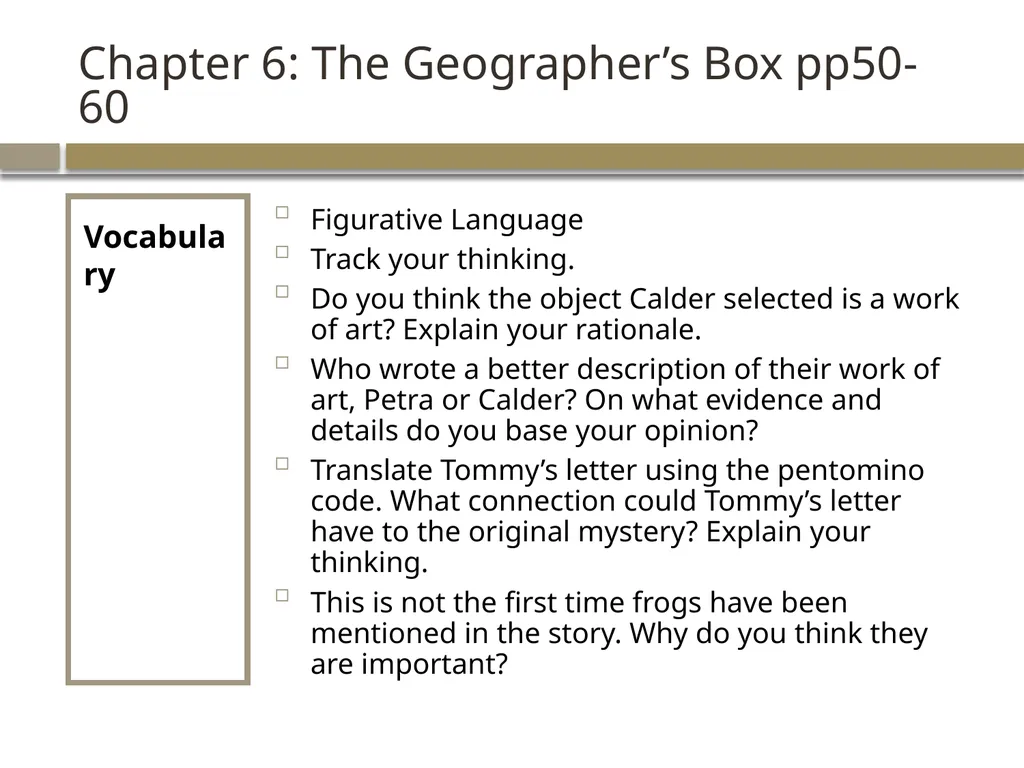
slide8. Chapter 6: The Geographer’s Box pp50-60 Vocabulary Figurative Language
Track your thinking.
Do you think the object Calder selected is a work of art? Explain your rationale.
Who wrote a better description of their work of art, Petra or Calder? On what evidence and details do you base your opinion?
Translate Tommy’s letter using the pentomino code. What connection could Tommy’s letter have to the original mystery? Explain your thinking.
This is not the first time frogs have been mentioned in the story. Why do you think they are important?<br>
slide9. Chapter 7: The Man on the Wall pp61-75 Vocabulary
scoured
rubbish
confided Figurative Language
Track your thinking.
Research the artist Vermeer and his painting The Geographer. Create a journal entry based on your research.<br>
slide10. Chapter 8: A Halloween Surprise pp76-80 Vocabulary
lurch Figurative Language
Track your thinking.
What could Vermeer’s connection be to the original mysterious letter?<br>
slide11. Chapter 9: The Blue Ones pp81-89 Vocabulary
lute
guild Figurative Language
Track your thinking.
Hmmm. . . frogs keep being mentioned in this story. Why?
Research the city of Delft.<br>
slide12. Chapter 10: Inside the Puzzle pp90-98 Vocabulary
bounded Figurative Language
Track your thinking.
Research an art museum. Discover how art installations are created and how paintings travel.<br>
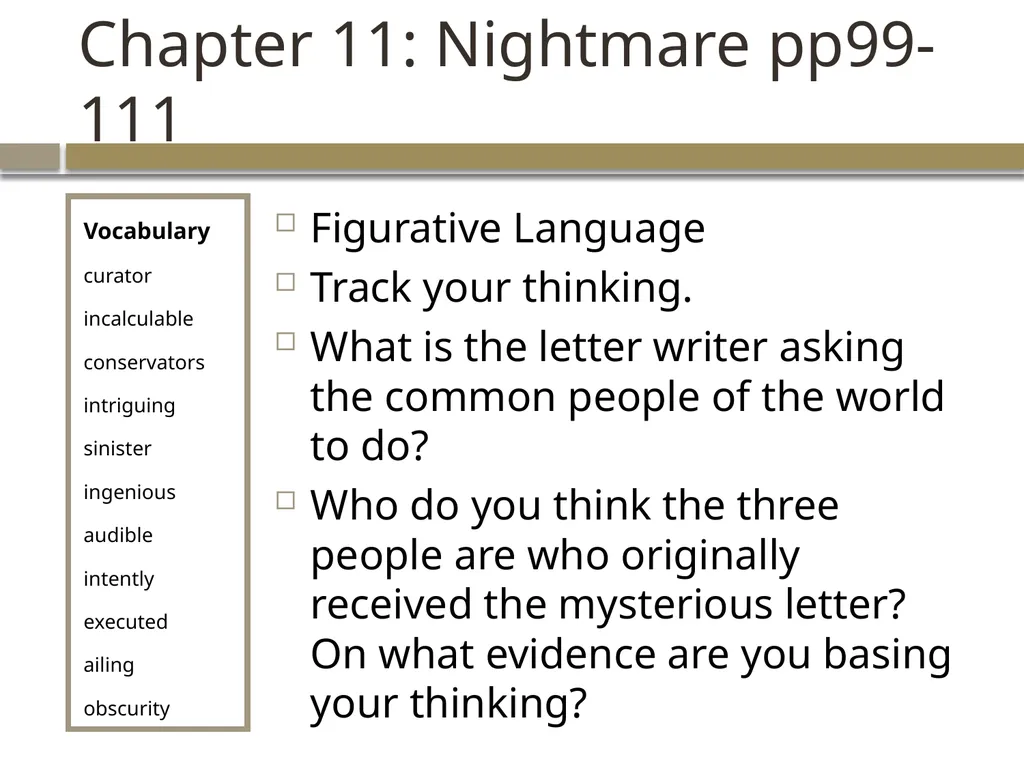
slide13. Chapter 11: Nightmare pp99-111 Vocabulary
curator
incalculable
conservators
intriguing
sinister
ingenious
audible
intently
executed
ailing
obscurity Figurative Language
Track your thinking.
What is the letter writer asking the common people of the world to do?
Who do you think the three people are who originally received the mysterious letter? On what evidence are you basing your thinking?<br>
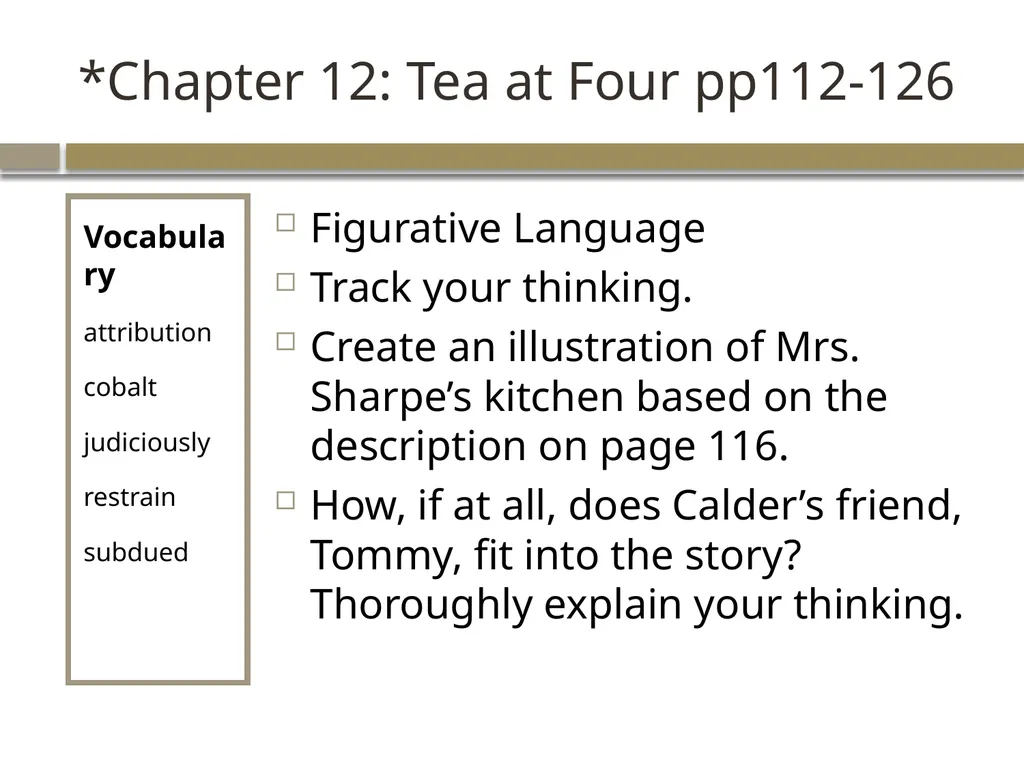
slide14. *Chapter 12: Tea at Four pp112-126 Vocabulary
attribution
cobalt
judiciously
restrain
subdued Figurative Language
Track your thinking.
Create an illustration of Mrs. Sharpe’s kitchen based on the description on page 116.
How, if at all, does Calder’s friend, Tommy, fit into the story? Thoroughly explain your thinking.<br>
slide15. Chapter 13: X the Experts pp127-133 Vocabulary Figurative Language
Track your thinking.
Create your own question for this chapter. Swap questions with a partner and answer.<br>
slide16. Chapter 14: Flashing Lights pp134-143 Vocabulary Figurative Language
Track your thinking.
Do you think Mrs. Sharpe framed herself? How does her husband, the Vermeer scholar, fit into the mystery?
Is Ms. Hussey involved in the crime? Explain your position using evidence from the text.<br>
slide17. Chapter 15: Murder and Hot Chocolate pp144-153 Vocabulary
glowered
plodded
turret Figurative Language
Track your thinking.
Do you think it is wise for Calder and Petra to actively hunt for the missing Vermeer painting?
Who is the third person to receive the mysterious letter? Explain your thinking.<br>
slide18. Chapter 16: A Morning in the Dark pp154-166 Vocabulary
quadrangle
bust
reminiscing Figurative Language
Track your thinking.
Research Francis Parker.
Research the Great Chicago Fire.
Describe how you might feel if you were locked in a dark and dusty basement believing you might be holding a priceless, stolen piece of art.<br>
slide19. Chapter 17: What Happens Now? pp167-173 Vocabulary Figurative Language
Track your thinking.
Make a list of lacy words.
Do you think the theft of the Vermeer painting was a gift? Was the thief’s mission a success? Explain.<br>
slide20. Chapter 18: A Bad Fall pp174-187 Vocabulary
imperious
jostled
correspondence
brusque
frigid Figurative Language
Track your thinking.
Do you believe in coincidences? If so, explain why and use personal examples. If not, explain what you believe.
Now that you have more clues, do you think Tommy is involved in the mystery, or is his story just a side plot?<br>
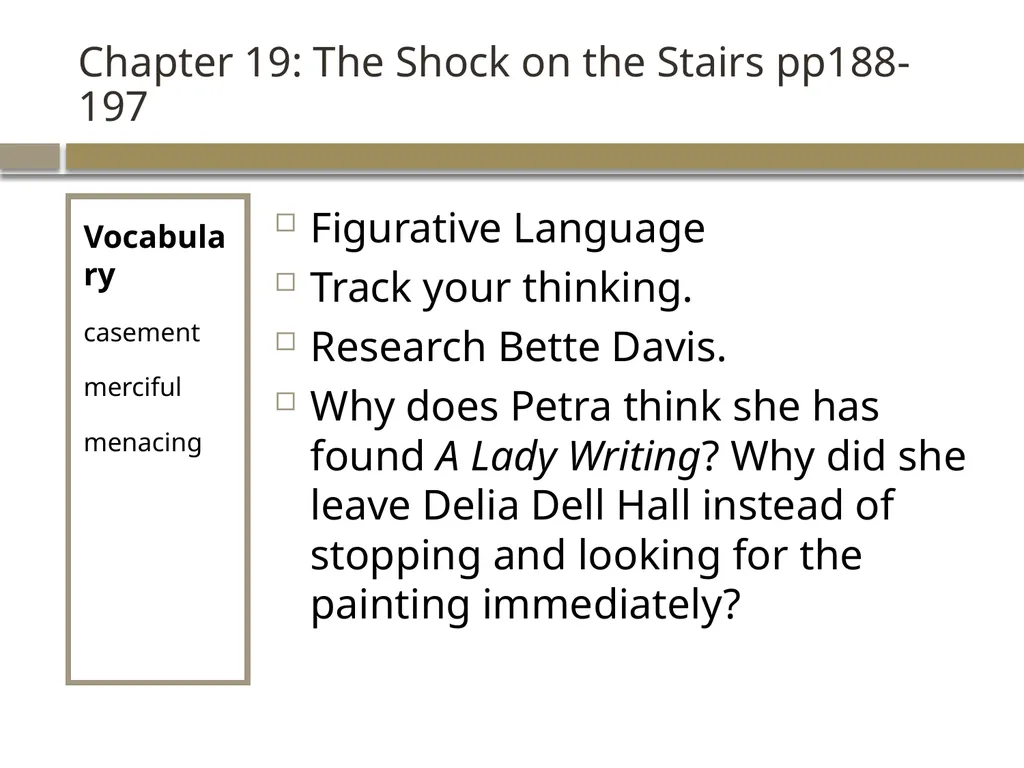
slide21. Chapter 19: The Shock on the Stairs pp188-197 Vocabulary
casement
merciful
menacing Figurative Language
Track your thinking.
Research Bette Davis.
Why does Petra think she has found A Lady Writing? Why did she leave Delia Dell Hall instead of stopping and looking for the painting immediately?<br>
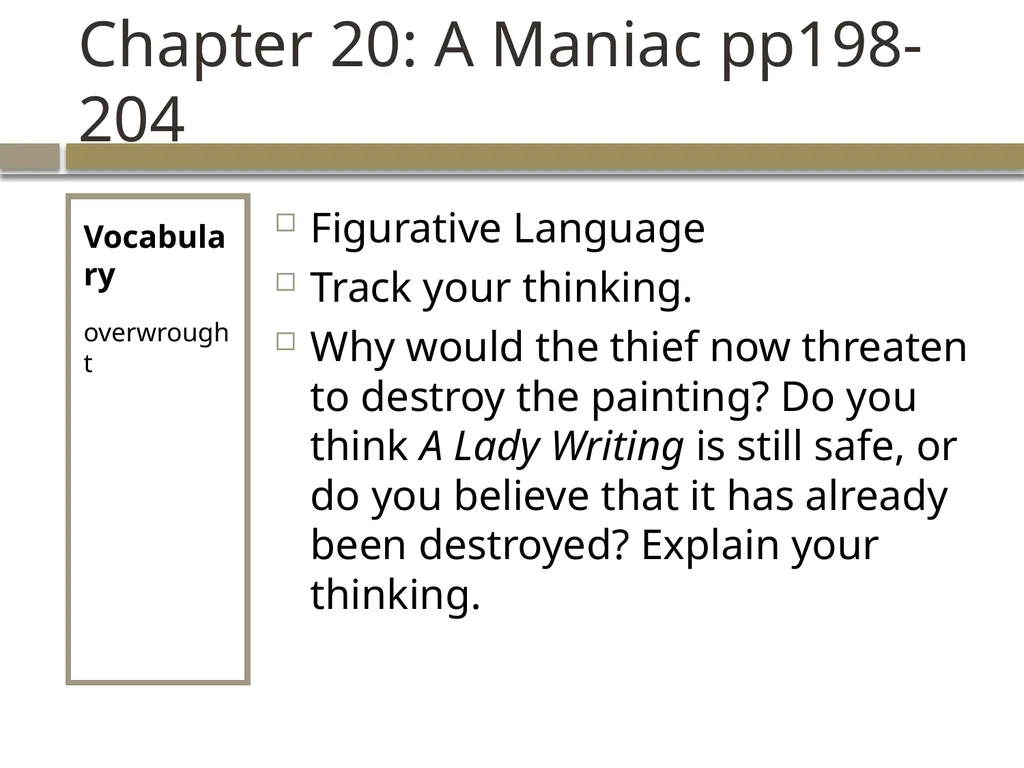
slide22. Chapter 20: A Maniac pp198-204 Vocabulary
overwrought Figurative Language
Track your thinking.
Why would the thief now threaten to destroy the painting? Do you think A Lady Writing is still safe, or do you believe that it has already been destroyed? Explain your thinking.<br>
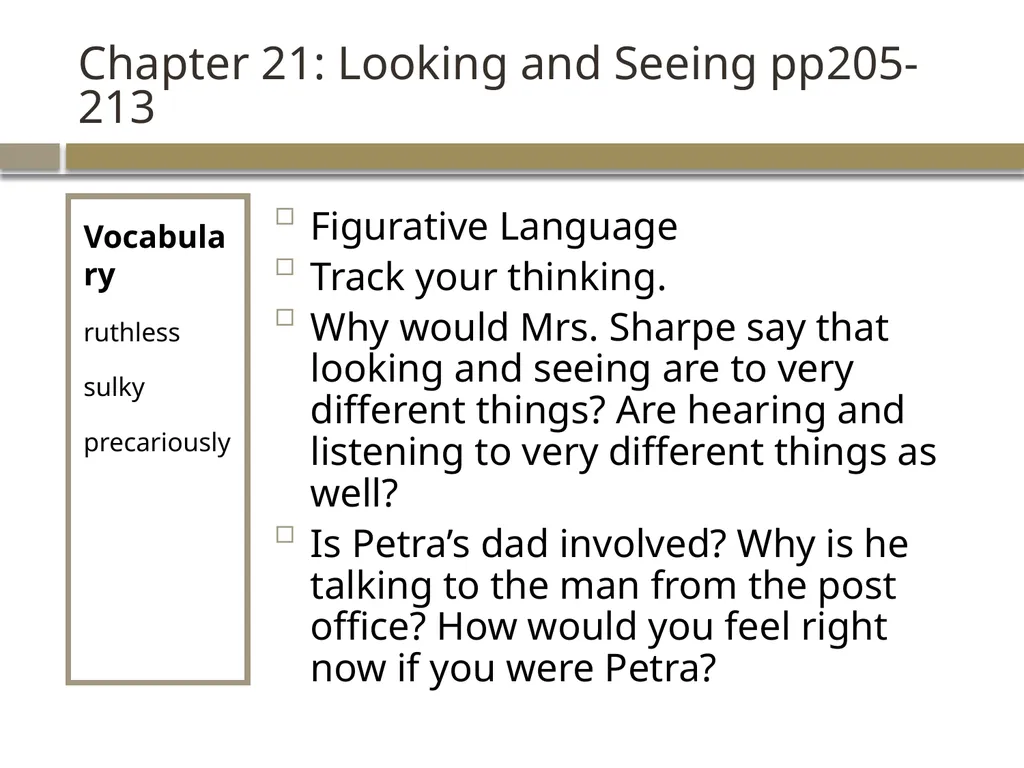
slide23. Chapter 21: Looking and Seeing pp205-213 Vocabulary
ruthless
sulky
precariously Figurative Language
Track your thinking.
Why would Mrs. Sharpe say that looking and seeing are to very different things? Are hearing and listening to very different things as well?
Is Petra’s dad involved? Why is he talking to the man from the post office? How would you feel right now if you were Petra?<br>
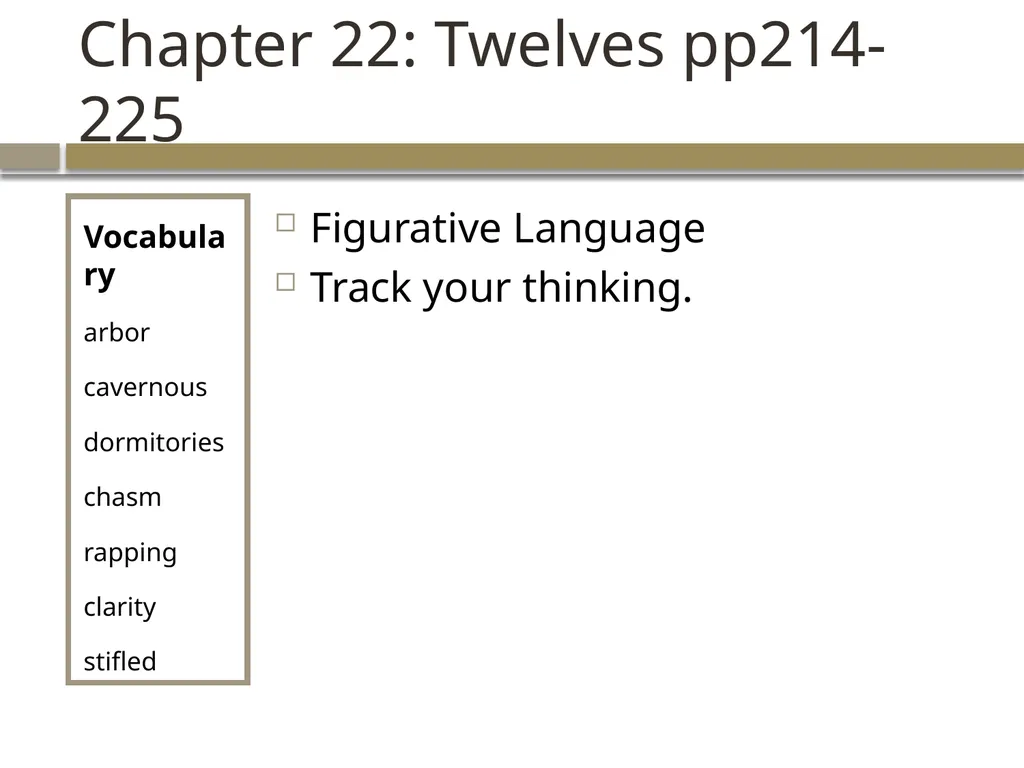
slide24. Chapter 22: Twelves pp214-225 Vocabulary
arbor
cavernous
dormitories
chasm
rapping
clarity
stifled Figurative Language
Track your thinking.<br>
slide25. Chapter 23: Help! pp226-235 Vocabulary
assault
indulgently Figurative Language
Track your thinking.
You’ll never guess what?<br>
slide26. Chapter 24: The Pieces pp236-254 Vocabulary
reclusive
steely
confide
wistful
sober Figurative Language
Research one of the following: Sorbonne, Princeton, Harvard, Oxford, McGill, or the University of Salamanca.
Research the Rijksmuseum.<br>
slide27. Novel Projects Select a portrait. Interview the person in the portrait. Explain what you have learned about the person in the portrait based on clues from the painting.
Select a painting. Research the artist. Write your own mystery based on the painting. Try to weave in facts about the artist into your mystery.
Visit an art museum. Write a story, poem, or description about your visit or about a specific piece of art you liked.<br>
slide2. Author & Illustrator Biographies Blue Balliett Brett Helquist<br>
slide3. Chapter 1: Three Deliveries pp1-5 Vocabulary
discriminating
conventions
amply
pretentious
agitated
gullible
alter Figurative Language
Explain how the authors sets the mood for the story. Use evidence to support your thinking.
Put on your detective hat and prepare to track your thinking! While reading, create a list of questions and clues. As the story progresses, answer the questions and try to link the clues in order to solve the mystery.
Who are the three people who received letters, and why were they selected?
What is the centuries old crime that has been committed?<br>
slide4. Chapter 2: The Letter Is Dead pp6-17 Vocabulary
brutal
mediocre
labyrinth Figurative Language
Research John Dewey.
Ask an adult to tell you about a letter they will never forget, a piece of mail that changed their life.
Draw an illustration of Ms. Hussey.
Write me a letter I won’t be able to forget.
Who are you more like, Petra or Calder? Explain why using details from the story.
Who wrote the novel Kidnapped? Why did the author choose to include this book?
Why was Ms. Hussey at Powell’s book store?<br>
slide5. Chapter 3: Lost in the Art pp18-34 Vocabulary
stupendous
hybrid
groped
artificial Figurative Language
Track your thinking.
How does Ms. Hussey’s field trip to the art museum connect to the original mystery?
Research pieces of art that contain letters. Make a list of the artist and the name of the artwork.
How many can you find?
Which is your favorite? Why?<br>
slide6. Chapter 4: Picasso’s Life pp35-42 Vocabulary
project
frenzied
exasperations Figurative Language
Track your thinking.
How does the book, Lo! by Charles Fort, fit into the mystery?
What do you think Picasso meant when he said, “Art is a lie, but a lie that tells the truth”?
You have the same assignment that Ms. Hussey assigned her class. Choose one item at home that feels like a work of art. Describe the object without revealing what it is.<br>
slide7. Chapter 5: Worms, Snakes, and Periwinkles pp43-49 Vocabulary
disoriented
profound
conviction
senility
credulity
premises
dappled Figurative Language
Track your thinking.
What do you think Petra’s vision has to do with the original mystery? On what evidence or details do you base your thinking?
Is the object Petra chose a work of art? Explain your rationale.<br>
slide8. Chapter 6: The Geographer’s Box pp50-60 Vocabulary Figurative Language
Track your thinking.
Do you think the object Calder selected is a work of art? Explain your rationale.
Who wrote a better description of their work of art, Petra or Calder? On what evidence and details do you base your opinion?
Translate Tommy’s letter using the pentomino code. What connection could Tommy’s letter have to the original mystery? Explain your thinking.
This is not the first time frogs have been mentioned in the story. Why do you think they are important?<br>
slide9. Chapter 7: The Man on the Wall pp61-75 Vocabulary
scoured
rubbish
confided Figurative Language
Track your thinking.
Research the artist Vermeer and his painting The Geographer. Create a journal entry based on your research.<br>
slide10. Chapter 8: A Halloween Surprise pp76-80 Vocabulary
lurch Figurative Language
Track your thinking.
What could Vermeer’s connection be to the original mysterious letter?<br>
slide11. Chapter 9: The Blue Ones pp81-89 Vocabulary
lute
guild Figurative Language
Track your thinking.
Hmmm. . . frogs keep being mentioned in this story. Why?
Research the city of Delft.<br>
slide12. Chapter 10: Inside the Puzzle pp90-98 Vocabulary
bounded Figurative Language
Track your thinking.
Research an art museum. Discover how art installations are created and how paintings travel.<br>
slide13. Chapter 11: Nightmare pp99-111 Vocabulary
curator
incalculable
conservators
intriguing
sinister
ingenious
audible
intently
executed
ailing
obscurity Figurative Language
Track your thinking.
What is the letter writer asking the common people of the world to do?
Who do you think the three people are who originally received the mysterious letter? On what evidence are you basing your thinking?<br>
slide14. *Chapter 12: Tea at Four pp112-126 Vocabulary
attribution
cobalt
judiciously
restrain
subdued Figurative Language
Track your thinking.
Create an illustration of Mrs. Sharpe’s kitchen based on the description on page 116.
How, if at all, does Calder’s friend, Tommy, fit into the story? Thoroughly explain your thinking.<br>
slide15. Chapter 13: X the Experts pp127-133 Vocabulary Figurative Language
Track your thinking.
Create your own question for this chapter. Swap questions with a partner and answer.<br>
slide16. Chapter 14: Flashing Lights pp134-143 Vocabulary Figurative Language
Track your thinking.
Do you think Mrs. Sharpe framed herself? How does her husband, the Vermeer scholar, fit into the mystery?
Is Ms. Hussey involved in the crime? Explain your position using evidence from the text.<br>
slide17. Chapter 15: Murder and Hot Chocolate pp144-153 Vocabulary
glowered
plodded
turret Figurative Language
Track your thinking.
Do you think it is wise for Calder and Petra to actively hunt for the missing Vermeer painting?
Who is the third person to receive the mysterious letter? Explain your thinking.<br>
slide18. Chapter 16: A Morning in the Dark pp154-166 Vocabulary
quadrangle
bust
reminiscing Figurative Language
Track your thinking.
Research Francis Parker.
Research the Great Chicago Fire.
Describe how you might feel if you were locked in a dark and dusty basement believing you might be holding a priceless, stolen piece of art.<br>
slide19. Chapter 17: What Happens Now? pp167-173 Vocabulary Figurative Language
Track your thinking.
Make a list of lacy words.
Do you think the theft of the Vermeer painting was a gift? Was the thief’s mission a success? Explain.<br>
slide20. Chapter 18: A Bad Fall pp174-187 Vocabulary
imperious
jostled
correspondence
brusque
frigid Figurative Language
Track your thinking.
Do you believe in coincidences? If so, explain why and use personal examples. If not, explain what you believe.
Now that you have more clues, do you think Tommy is involved in the mystery, or is his story just a side plot?<br>
slide21. Chapter 19: The Shock on the Stairs pp188-197 Vocabulary
casement
merciful
menacing Figurative Language
Track your thinking.
Research Bette Davis.
Why does Petra think she has found A Lady Writing? Why did she leave Delia Dell Hall instead of stopping and looking for the painting immediately?<br>
slide22. Chapter 20: A Maniac pp198-204 Vocabulary
overwrought Figurative Language
Track your thinking.
Why would the thief now threaten to destroy the painting? Do you think A Lady Writing is still safe, or do you believe that it has already been destroyed? Explain your thinking.<br>
slide23. Chapter 21: Looking and Seeing pp205-213 Vocabulary
ruthless
sulky
precariously Figurative Language
Track your thinking.
Why would Mrs. Sharpe say that looking and seeing are to very different things? Are hearing and listening to very different things as well?
Is Petra’s dad involved? Why is he talking to the man from the post office? How would you feel right now if you were Petra?<br>
slide24. Chapter 22: Twelves pp214-225 Vocabulary
arbor
cavernous
dormitories
chasm
rapping
clarity
stifled Figurative Language
Track your thinking.<br>
slide25. Chapter 23: Help! pp226-235 Vocabulary
assault
indulgently Figurative Language
Track your thinking.
You’ll never guess what?<br>
slide26. Chapter 24: The Pieces pp236-254 Vocabulary
reclusive
steely
confide
wistful
sober Figurative Language
Research one of the following: Sorbonne, Princeton, Harvard, Oxford, McGill, or the University of Salamanca.
Research the Rijksmuseum.<br>
slide27. Novel Projects Select a portrait. Interview the person in the portrait. Explain what you have learned about the person in the portrait based on clues from the painting.
Select a painting. Research the artist. Write your own mystery based on the painting. Try to weave in facts about the artist into your mystery.
Visit an art museum. Write a story, poem, or description about your visit or about a specific piece of art you liked.<br>