
Chemical and Physical Changes A physical property

Description: Chemical and Physical Changes A physical property is an aspect of matter that can be observed or measured without changing it. Examples of physical properties include colour, state and volume. Physical Property A chemical property may only
Related Topics
Download Presentation
"Chemical and Physical Changes A physical property" is the property of its rightful owner. Permission is granted to download and print the materials on this website for personal, non-commercial use only, and to display it on your personal computer provided you do not modify the materials and that you retain all copyright notices contained in the materials. By downloading content from our website, you accept the terms of this agreement.
Presentation Transcript
slide1. Chemical and Physical Changes<br>
slide2. A physical property is an aspect of matter that can be observed or measured without changing it. Examples of physical properties include colour, state and volume. Physical Property<br>
slide3. A chemical property may only be observed by changing the chemical identity of a substance. This property measures the potential for a substance to undergo a chemical change. Examples of chemical properties include reactivity with acids and flammability. Chemical Property<br>
slide4. Changes in matter can be classified into three main categories: Physical, Chemical and Nuclear.
To determine the type of change that has occurred, consider the following definitions. Changes in Matter<br>
slide5. A physical change does NOT produce a new substance.
Physical changes are concerned with energy and states of matter.
Changes in state or phase (melting, freezing, vaporization, condensation, sublimation) are physical changes.
Examples of physical changes include crushing a can, melting an ice cube, and breaking a bottle. Physical Change<br>
slide6. A chemical change produces a new substance.
Chemical changes take place on the molecular level.
Examples of chemical changes include combustion (burning), cooking an egg, rusting of an iron pan, and mixing hydrochloric acid and sodium hydroxide to make salt and water. Chemical Change<br>
slide7. A nuclear change occurs at the atomic level.
It involves changes in nuclear structure, such as fission (splitting) of a nucleus or an atom, or fusion (combining) of neutrons and protons to form heavier atoms. Read more: http://wiki.answers.com/Q/What_is_a_nuclear_change#ixzz1bFUIqtuJ
We won’t be focusing on this type of change. Nuclear Changes<br>
slide8. A chemical change makes a substance that wasn't there before (substance with new properties is formed)
In a physical change, the starting and ending materials are the same, even though they may look different. How Can You Tell What Changes is Occurring?<br>
slide9. Please watch the following demonstration and try to determine what type of change is being shown. Examples of Changes<br>
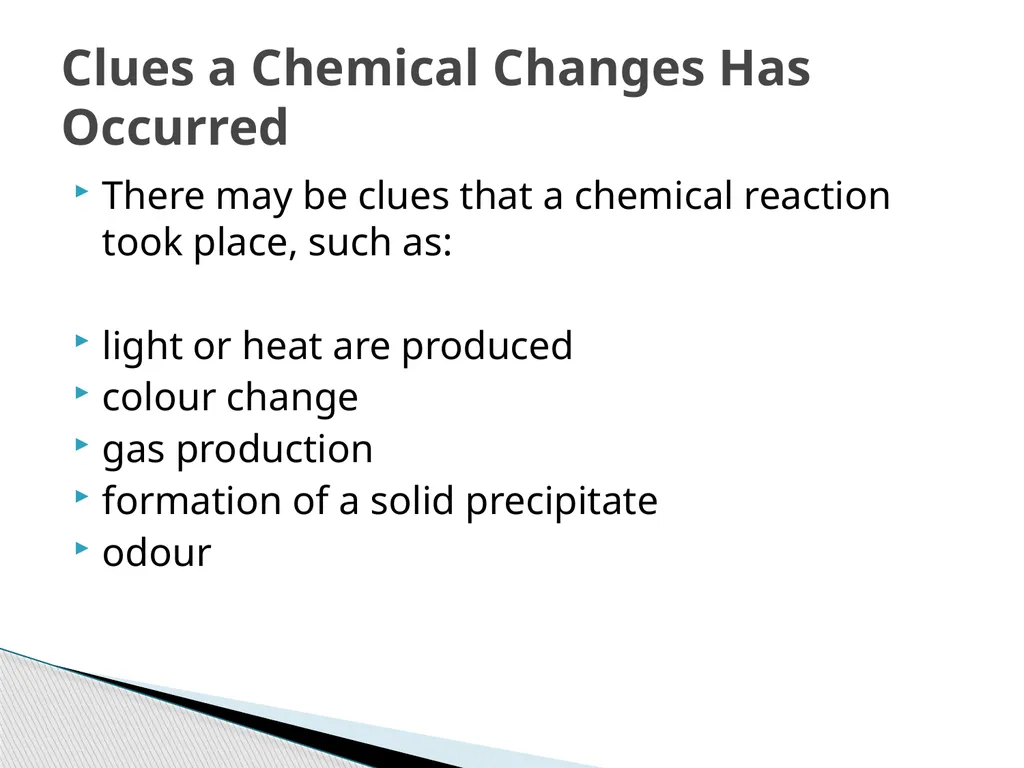
slide10. There may be clues that a chemical reaction took place, such as:
light or heat are produced
colour change
gas production
formation of a solid precipitate
odour Clues a Chemical Changes Has Occurred<br>
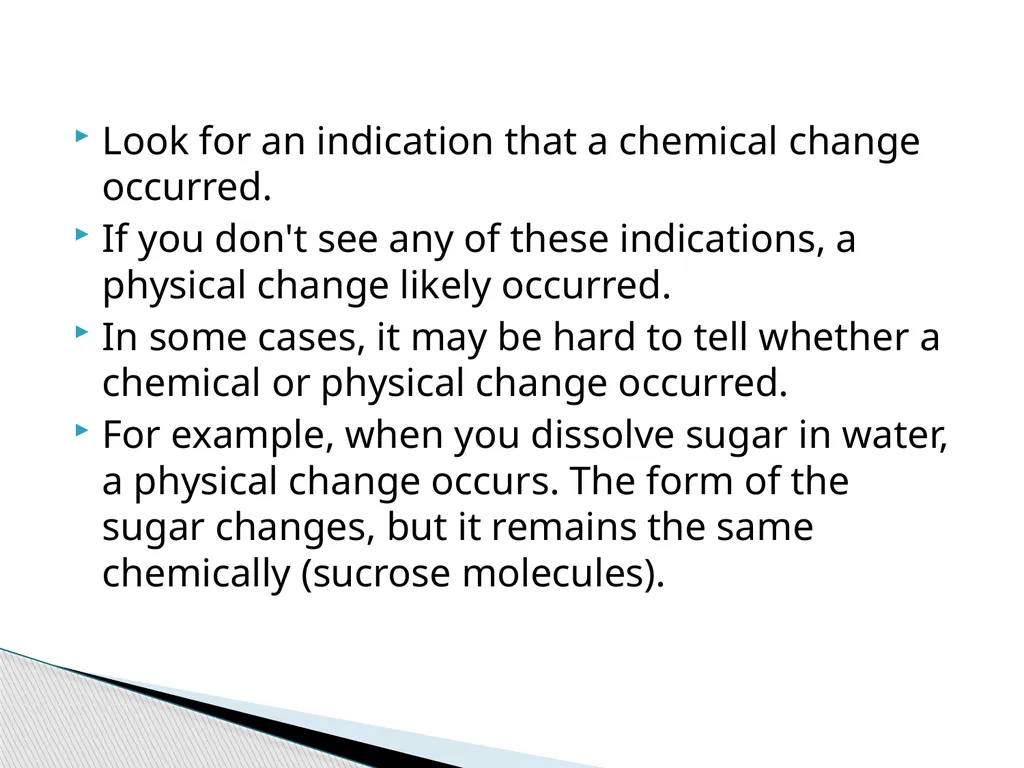
slide11. Look for an indication that a chemical change occurred.
If you don't see any of these indications, a physical change likely occurred.
In some cases, it may be hard to tell whether a chemical or physical change occurred.
For example, when you dissolve sugar in water, a physical change occurs. The form of the sugar changes, but it remains the same chemically (sucrose molecules).<br>
slide12. In a nutshell, a chemical change produces a new substance, while a physical change does not.
A material may change shapes or forms while undergoing a physical change, but no chemical reactions occur and no new compounds are produced.<br>
slide2. A physical property is an aspect of matter that can be observed or measured without changing it. Examples of physical properties include colour, state and volume. Physical Property<br>
slide3. A chemical property may only be observed by changing the chemical identity of a substance. This property measures the potential for a substance to undergo a chemical change. Examples of chemical properties include reactivity with acids and flammability. Chemical Property<br>
slide4. Changes in matter can be classified into three main categories: Physical, Chemical and Nuclear.
To determine the type of change that has occurred, consider the following definitions. Changes in Matter<br>
slide5. A physical change does NOT produce a new substance.
Physical changes are concerned with energy and states of matter.
Changes in state or phase (melting, freezing, vaporization, condensation, sublimation) are physical changes.
Examples of physical changes include crushing a can, melting an ice cube, and breaking a bottle. Physical Change<br>
slide6. A chemical change produces a new substance.
Chemical changes take place on the molecular level.
Examples of chemical changes include combustion (burning), cooking an egg, rusting of an iron pan, and mixing hydrochloric acid and sodium hydroxide to make salt and water. Chemical Change<br>
slide7. A nuclear change occurs at the atomic level.
It involves changes in nuclear structure, such as fission (splitting) of a nucleus or an atom, or fusion (combining) of neutrons and protons to form heavier atoms. Read more: http://wiki.answers.com/Q/What_is_a_nuclear_change#ixzz1bFUIqtuJ
We won’t be focusing on this type of change. Nuclear Changes<br>
slide8. A chemical change makes a substance that wasn't there before (substance with new properties is formed)
In a physical change, the starting and ending materials are the same, even though they may look different. How Can You Tell What Changes is Occurring?<br>
slide9. Please watch the following demonstration and try to determine what type of change is being shown. Examples of Changes<br>
slide10. There may be clues that a chemical reaction took place, such as:
light or heat are produced
colour change
gas production
formation of a solid precipitate
odour Clues a Chemical Changes Has Occurred<br>
slide11. Look for an indication that a chemical change occurred.
If you don't see any of these indications, a physical change likely occurred.
In some cases, it may be hard to tell whether a chemical or physical change occurred.
For example, when you dissolve sugar in water, a physical change occurs. The form of the sugar changes, but it remains the same chemically (sucrose molecules).<br>
slide12. In a nutshell, a chemical change produces a new substance, while a physical change does not.
A material may change shapes or forms while undergoing a physical change, but no chemical reactions occur and no new compounds are produced.<br>