
Child Dose Calculations: Common Formulae and
Description: Child Dose Calculations: Common Formulae and Practical Applications Miss.Vaishnavi A.Mane Assistant Professor Department of Pharmaceutics, Krishna Institute of Pharmacy, Krishna Vishwa Vidyapeeth (Deemed to be University), Karad,
Related Topics
Download Presentation
"Child Dose Calculations: Common Formulae and" is the property of its rightful owner. Permission is granted to download and print the materials on this website for personal, non-commercial use only, and to display it on your personal computer provided you do not modify the materials and that you retain all copyright notices contained in the materials. By downloading content from our website, you accept the terms of this agreement.
Presentation Transcript
slide1. Child Dose Calculations: Common Formulae and Practical Applications Miss.Vaishnavi A.Mane
Assistant Professor
Department of Pharmaceutics,
Krishna Institute of Pharmacy,
Krishna Vishwa Vidyapeeth (Deemed to be University), Karad, Maharashtra, INDIA<br>
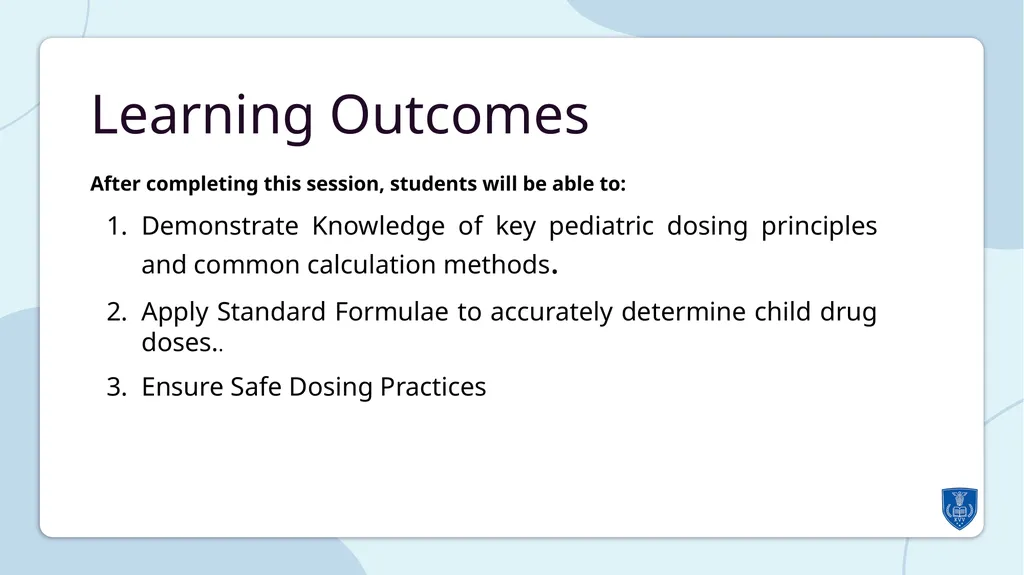
slide2. Learning Outcomes After completing this session, students will be able to:
Demonstrate Knowledge of key pediatric dosing principles and common calculation methods.
Apply Standard Formulae to accurately determine child drug doses..
Ensure Safe Dosing Practices<br>
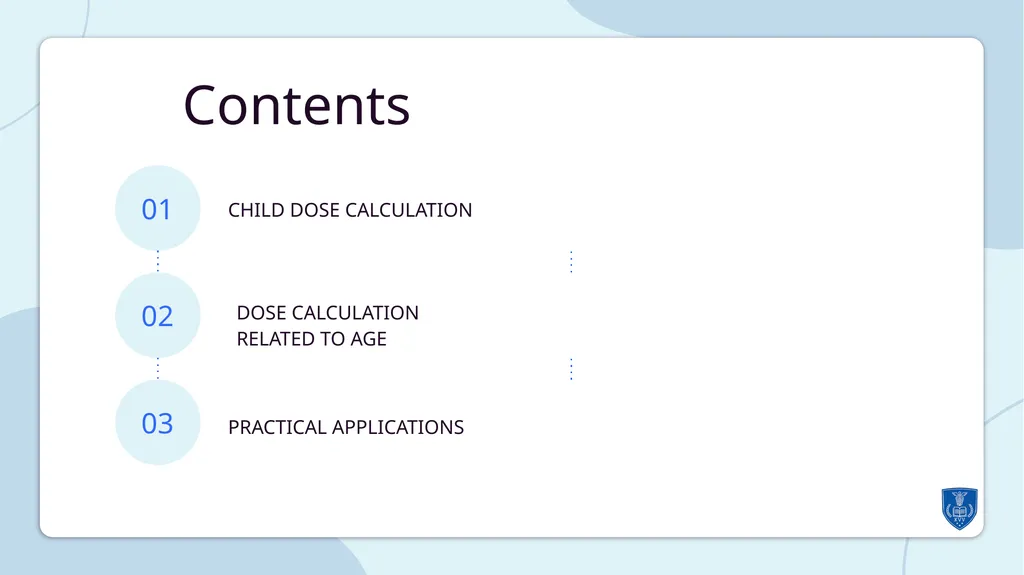
slide3. Contents CHILD DOSE CALCULATION 01 DOSE CALCULATION RELATED TO AGE 02 PRACTICAL APPLICATIONS 03<br>
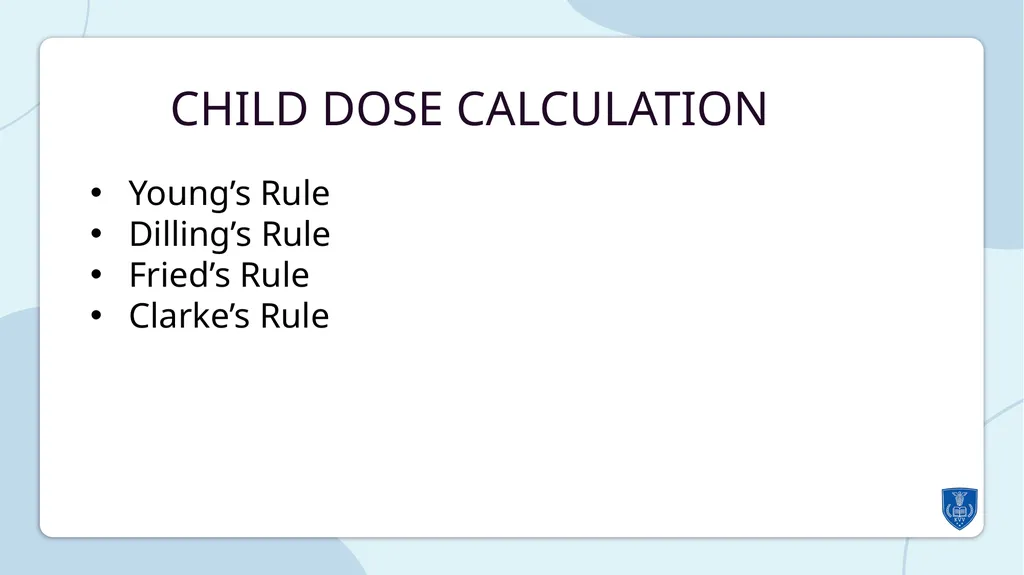
slide4. CHILD DOSE CALCULATION Young’s Rule
Dilling’s Rule
Fried’s Rule
Clarke’s Rule<br>
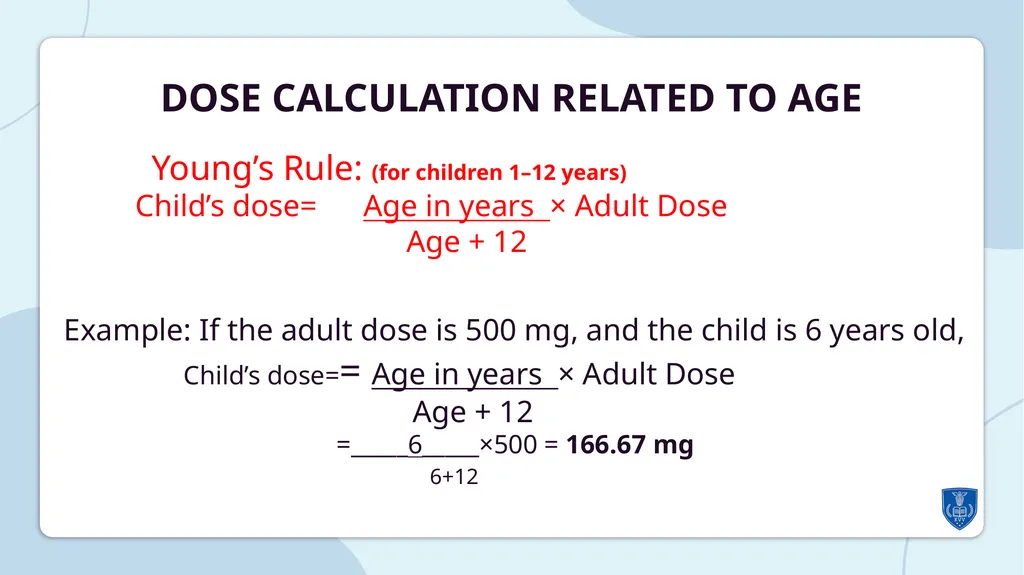
slide5. DOSE CALCULATION RELATED TO AGE Young’s Rule: (for children 1–12 years)
Child’s dose= Age in years × Adult Dose
Age + 12 Example: If the adult dose is 500 mg, and the child is 6 years old,
Child’s dose== Age in years × Adult Dose
Age + 12
=_____6_____×500 = 166.67 mg
6+12<br>
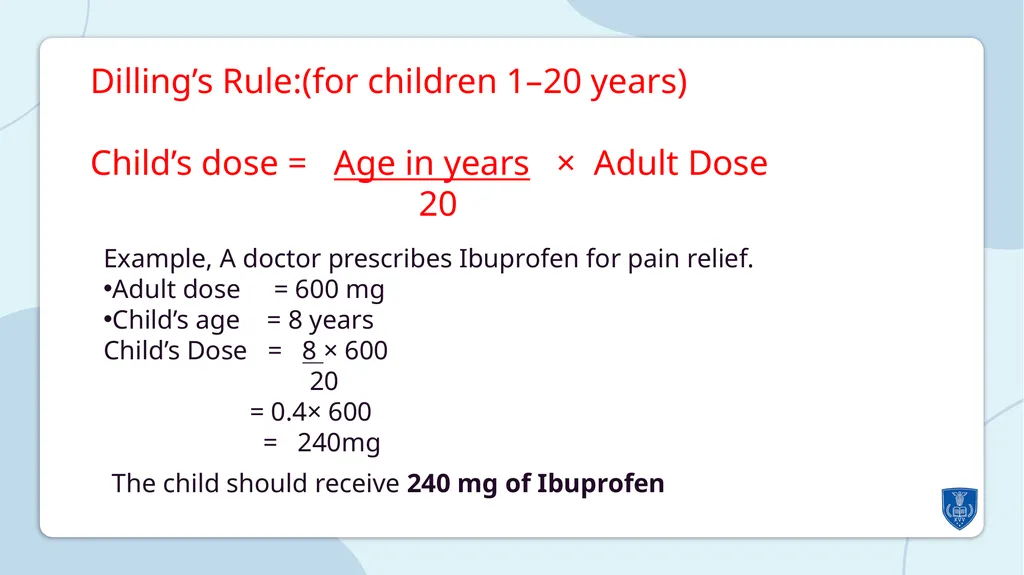
slide6. Dilling’s Rule:(for children 1–20 years)
Child’s dose = Age in years × Adult Dose
20 Example, A doctor prescribes Ibuprofen for pain relief.
Adult dose = 600 mg
Child’s age = 8 years
Child’s Dose = 8 × 600
20
= 0.4× 600
= 240mg The child should receive 240 mg of Ibuprofen<br>
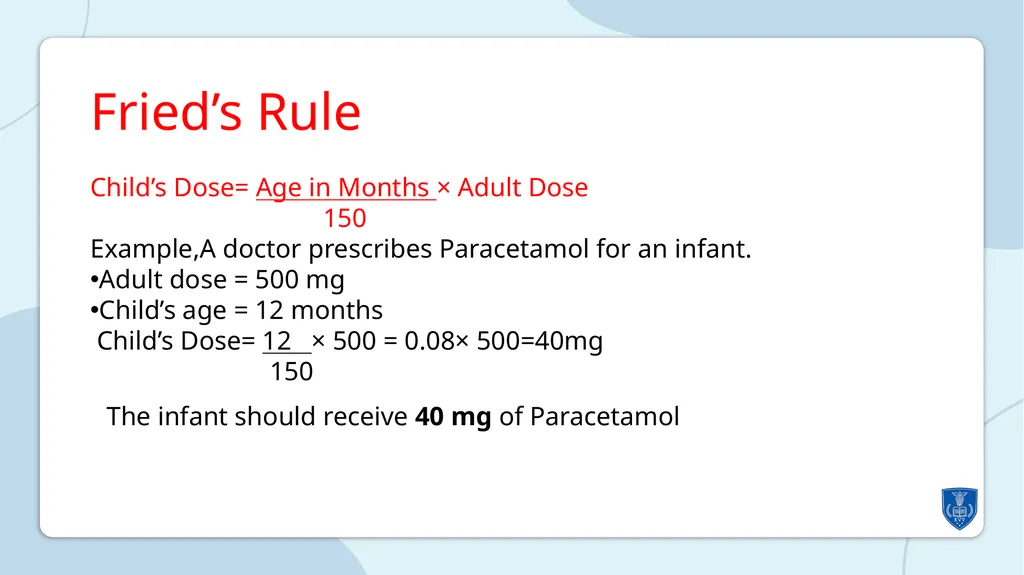
slide7. Fried’s Rule Child’s Dose= Age in Months × Adult Dose
150
Example,A doctor prescribes Paracetamol for an infant.
Adult dose = 500 mg
Child’s age = 12 months
Child’s Dose= 12 × 500 = 0.08× 500=40mg
150
The infant should receive 40 mg of Paracetamol<br>
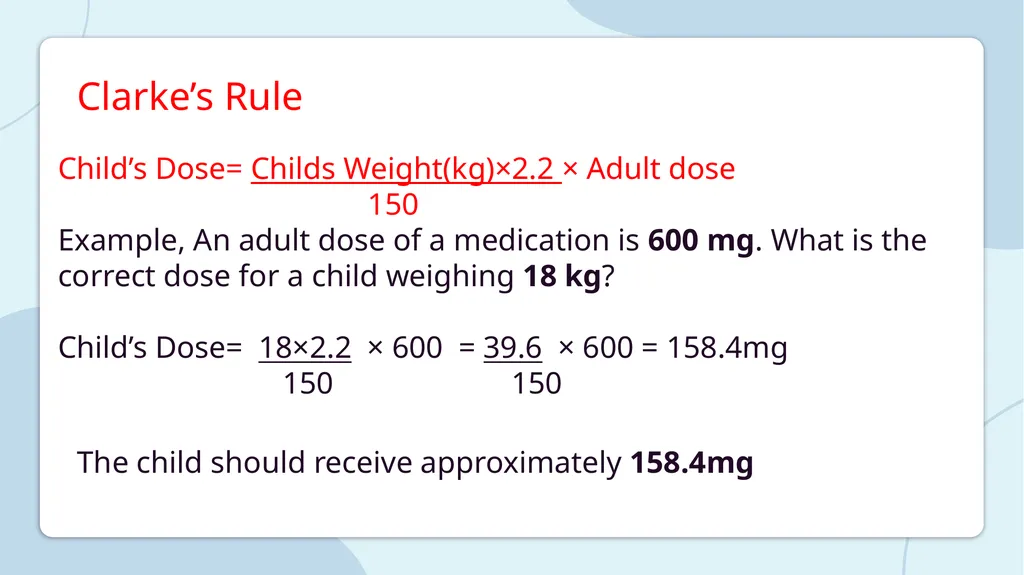
slide8. Child’s Dose= Childs Weight(kg)×2.2 × Adult dose
150
Example, An adult dose of a medication is 600 mg. What is the correct dose for a child weighing 18 kg?
Child’s Dose= 18×2.2 × 600 = 39.6 × 600 = 158.4mg
150 150 The child should receive approximately 158.4mg Clarke’s Rule<br>
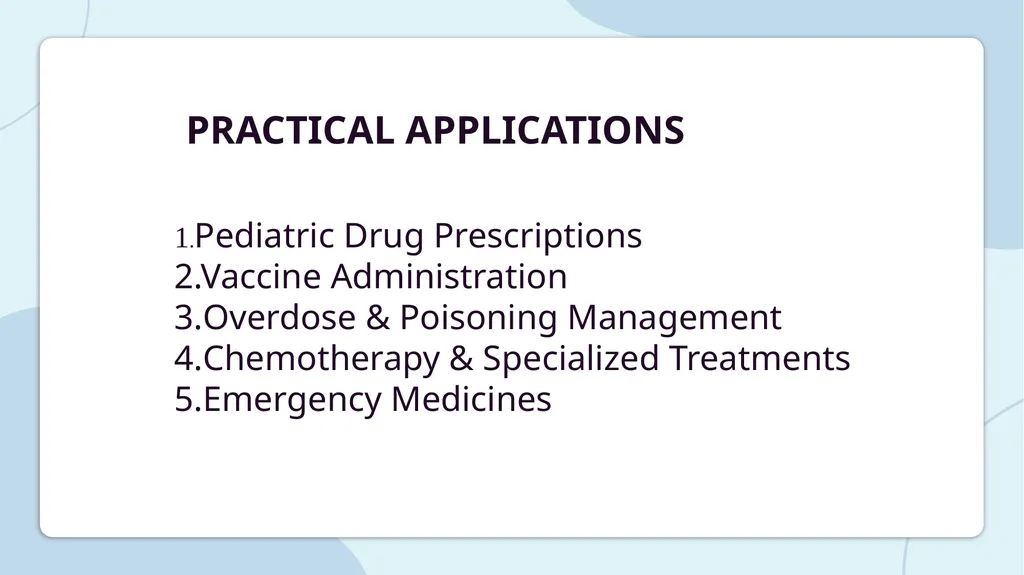
slide9. PRACTICAL APPLICATIONS 1.Pediatric Drug Prescriptions
2.Vaccine Administration
3.Overdose & Poisoning Management
4.Chemotherapy & Specialized Treatments
5.Emergency Medicines<br>
Assistant Professor
Department of Pharmaceutics,
Krishna Institute of Pharmacy,
Krishna Vishwa Vidyapeeth (Deemed to be University), Karad, Maharashtra, INDIA<br>
slide2. Learning Outcomes After completing this session, students will be able to:
Demonstrate Knowledge of key pediatric dosing principles and common calculation methods.
Apply Standard Formulae to accurately determine child drug doses..
Ensure Safe Dosing Practices<br>
slide3. Contents CHILD DOSE CALCULATION 01 DOSE CALCULATION RELATED TO AGE 02 PRACTICAL APPLICATIONS 03<br>
slide4. CHILD DOSE CALCULATION Young’s Rule
Dilling’s Rule
Fried’s Rule
Clarke’s Rule<br>
slide5. DOSE CALCULATION RELATED TO AGE Young’s Rule: (for children 1–12 years)
Child’s dose= Age in years × Adult Dose
Age + 12 Example: If the adult dose is 500 mg, and the child is 6 years old,
Child’s dose== Age in years × Adult Dose
Age + 12
=_____6_____×500 = 166.67 mg
6+12<br>
slide6. Dilling’s Rule:(for children 1–20 years)
Child’s dose = Age in years × Adult Dose
20 Example, A doctor prescribes Ibuprofen for pain relief.
Adult dose = 600 mg
Child’s age = 8 years
Child’s Dose = 8 × 600
20
= 0.4× 600
= 240mg The child should receive 240 mg of Ibuprofen<br>
slide7. Fried’s Rule Child’s Dose= Age in Months × Adult Dose
150
Example,A doctor prescribes Paracetamol for an infant.
Adult dose = 500 mg
Child’s age = 12 months
Child’s Dose= 12 × 500 = 0.08× 500=40mg
150
The infant should receive 40 mg of Paracetamol<br>
slide8. Child’s Dose= Childs Weight(kg)×2.2 × Adult dose
150
Example, An adult dose of a medication is 600 mg. What is the correct dose for a child weighing 18 kg?
Child’s Dose= 18×2.2 × 600 = 39.6 × 600 = 158.4mg
150 150 The child should receive approximately 158.4mg Clarke’s Rule<br>
slide9. PRACTICAL APPLICATIONS 1.Pediatric Drug Prescriptions
2.Vaccine Administration
3.Overdose & Poisoning Management
4.Chemotherapy & Specialized Treatments
5.Emergency Medicines<br>