
Childhood Influenza (flu) Immunisation Programme
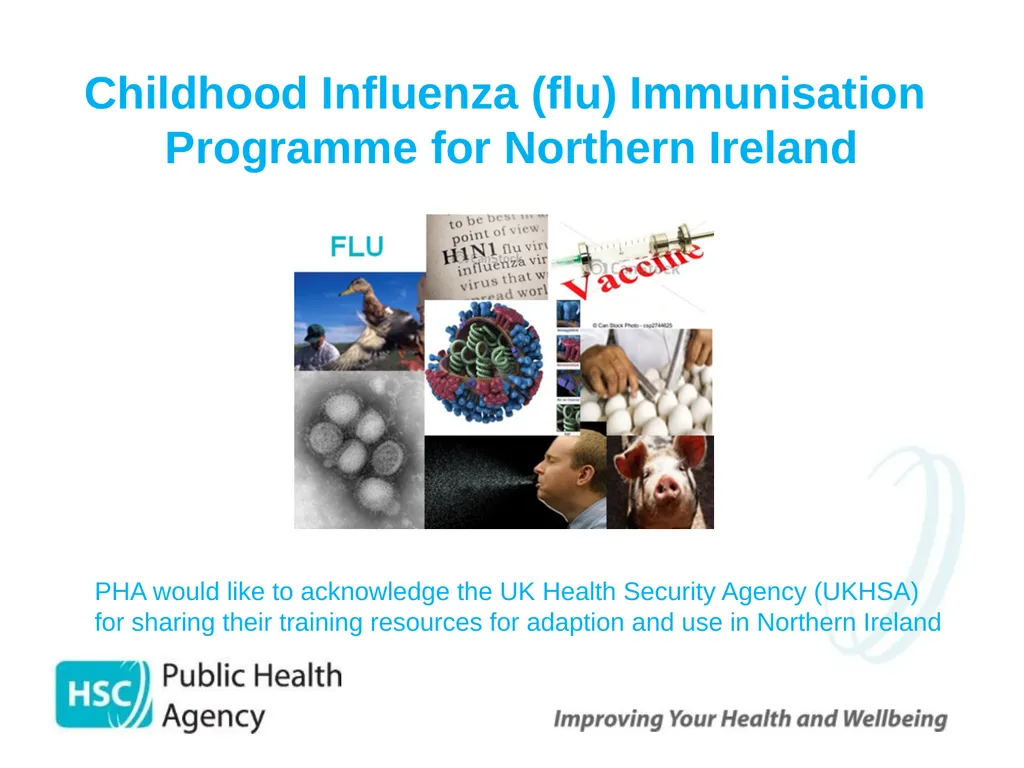
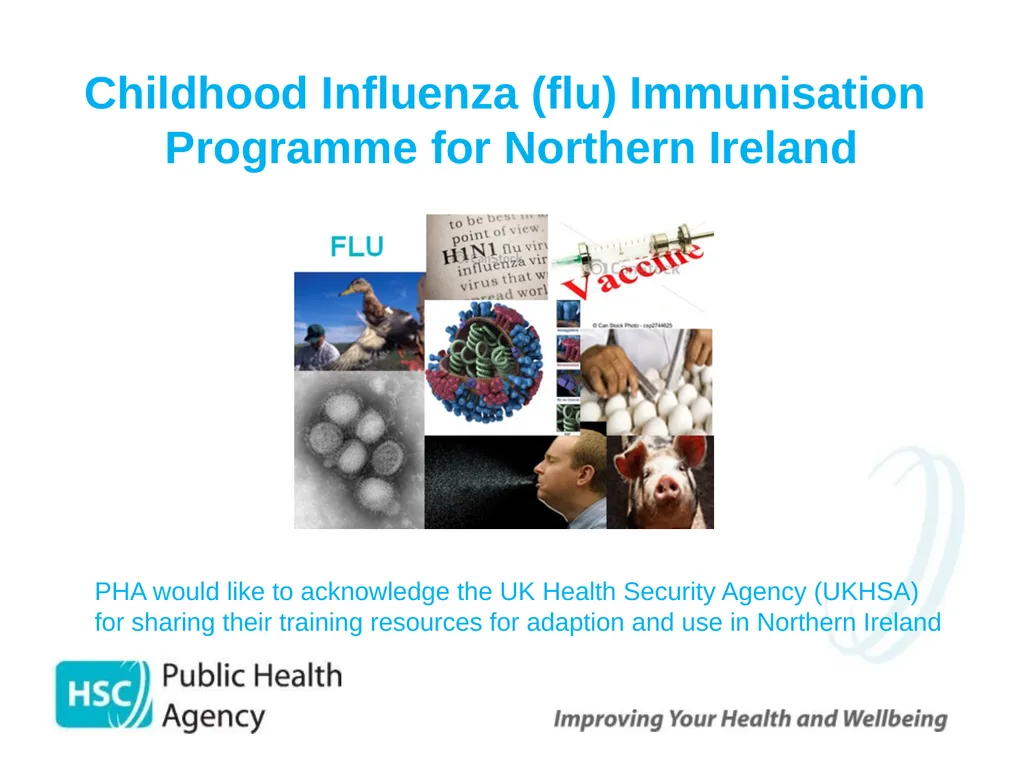

Description: Childhood Influenza (flu) Immunisation Programme for Northern Ireland PHA would like to acknowledge the UK Health Security Agency (UKHSA) for sharing their training resources for adaption and use in Northern Ireland Key messages the
Related Topics
Download Presentation
"Childhood Influenza (flu) Immunisation Programme" is the property of its rightful owner. Permission is granted to download and print the materials on this website for personal, non-commercial use only, and to display it on your personal computer provided you do not modify the materials and that you retain all copyright notices contained in the materials. By downloading content from our website, you accept the terms of this agreement.
Presentation Transcript
slide1. Childhood Influenza (flu) Immunisation
Programme for Northern Ireland PHA would like to acknowledge the UK Health Security Agency (UKHSA) for sharing their training resources for adaption and use in Northern Ireland<br>
slide2. Key messages the childhood influenza (flu) programme reduces the impact of seasonal influenza on children and reduces transmission of influenza within the community
by reducing transmission of influenza, the programme should also avert many cases of severe influenza and influenza-related deaths in older adults and individuals in clinical risk groups<br>
slide3. Learning outcomes The purpose of this training resource is to:
develop the knowledge base of healthcare practitioners regarding the 2026/27 flu vaccination programme for children
support healthcare practitioners involved in discussing flu vaccination for children with parents and carers by providing evidence based information
promote high uptake of flu vaccine in children through increasing the knowledge of those involved in delivering the vaccination programme
provide information on the administration of the live attenuated intranasal influenza vaccine (LAIV) 3<br>
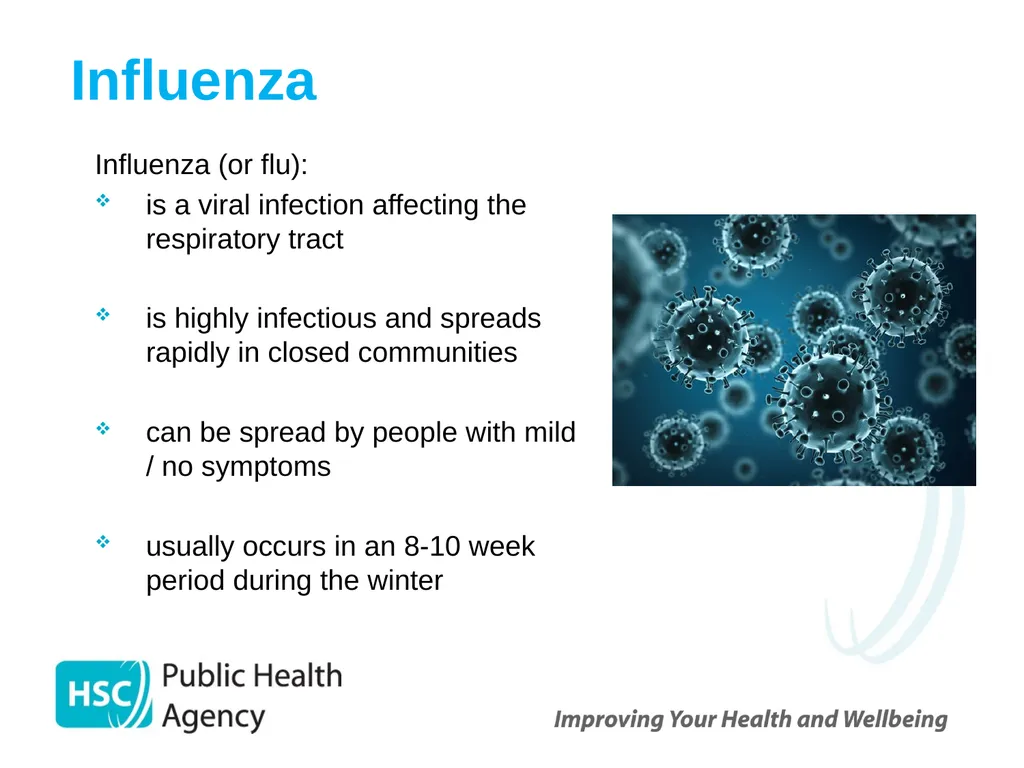
slide4. Influenza Influenza (or flu):
is a viral infection affecting the respiratory tract
is highly infectious and spreads rapidly in closed communities
can be spread by people with mild / no symptoms
usually occurs in an 8-10 week period during the winter<br>
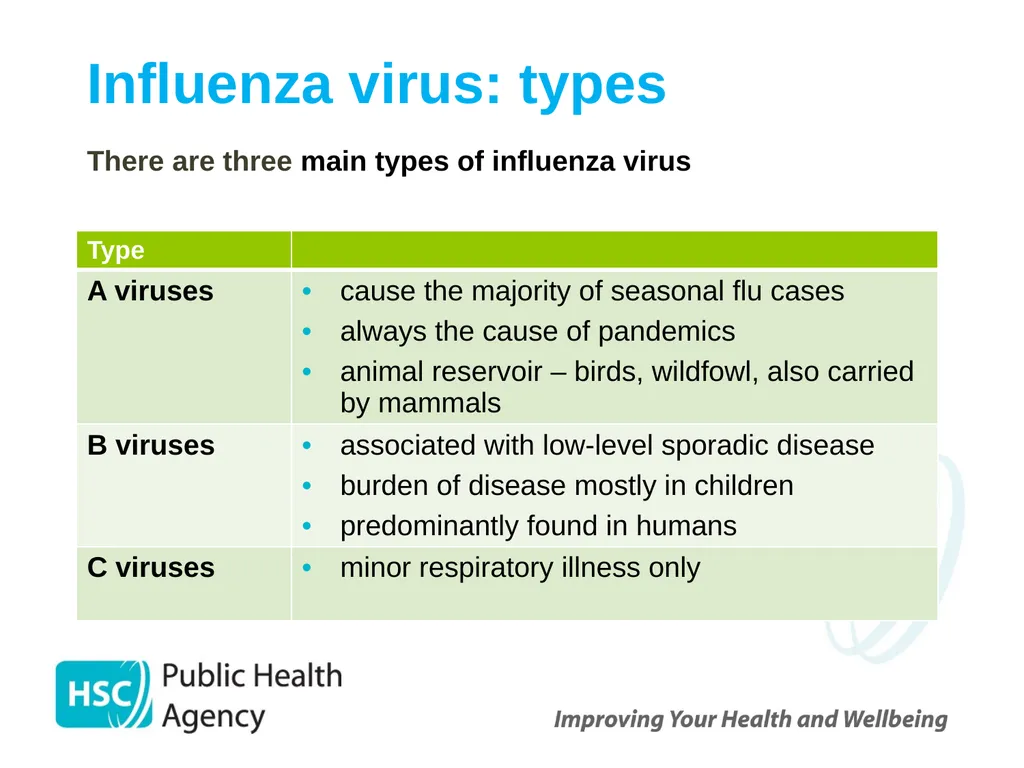
slide5. Influenza virus: types There are three main types of influenza virus<br>
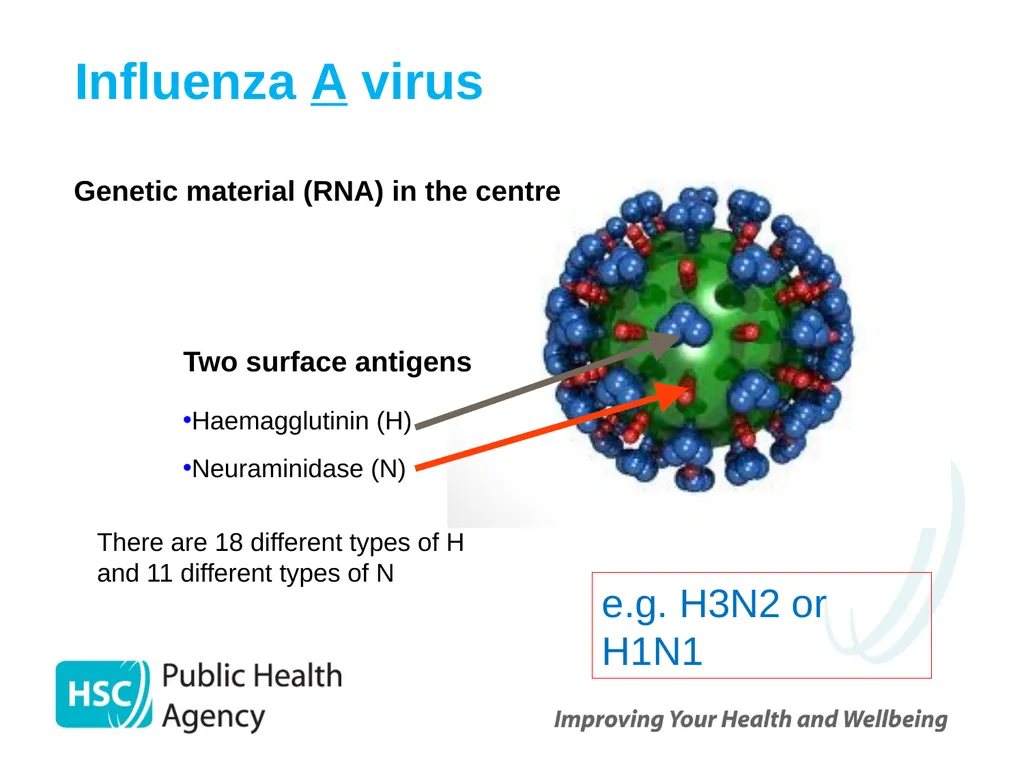
slide6. Influenza A virus Two surfce antigens:
Haemagglutinin (H)
Neuraminidase (N) Genetic material (RNA) in the centre
Two surface antigens There are 18 different types of H and 11 different types of N e.g. H3N2 or H1N1<br>
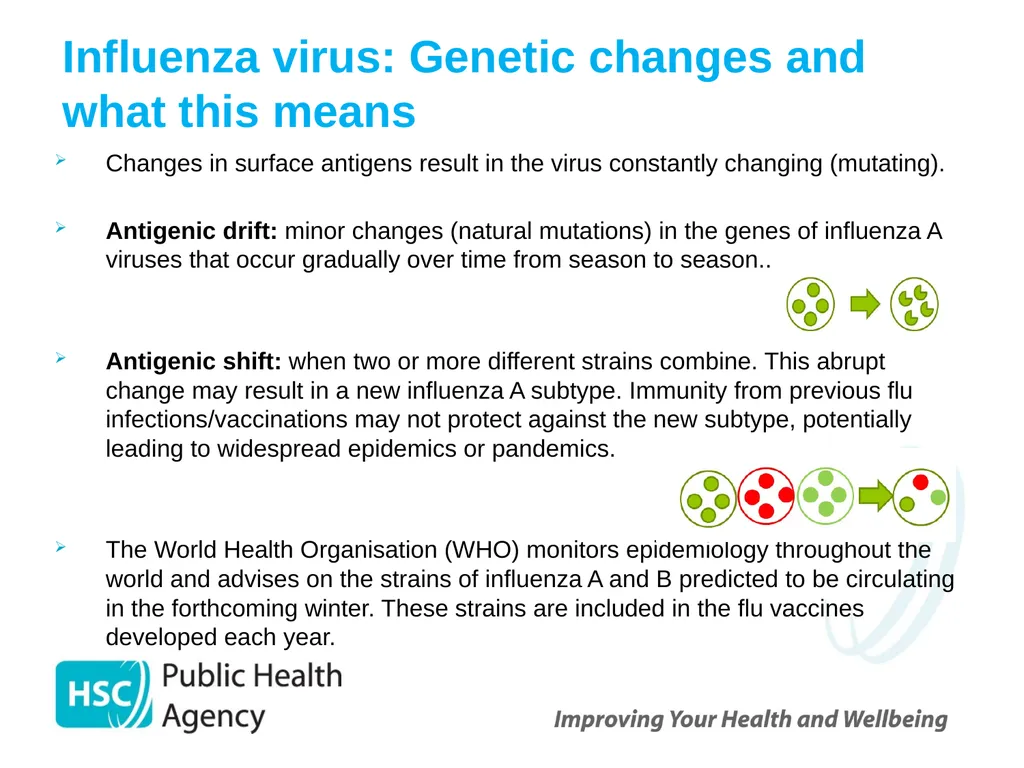
slide7. Influenza virus: Genetic changes and what this means Changes in surface antigens result in the virus constantly changing (mutating).
Antigenic drift: minor changes (natural mutations) in the genes of influenza A viruses that occur gradually over time from season to season..
Antigenic shift: when two or more different strains combine. This abrupt change may result in a new influenza A subtype. Immunity from previous flu infections/vaccinations may not protect against the new subtype, potentially leading to widespread epidemics or pandemics.
The World Health Organisation (WHO) monitors epidemiology throughout the world and advises on the strains of influenza A and B predicted to be circulating in the forthcoming winter. These strains are included in the flu vaccines developed each year.<br>
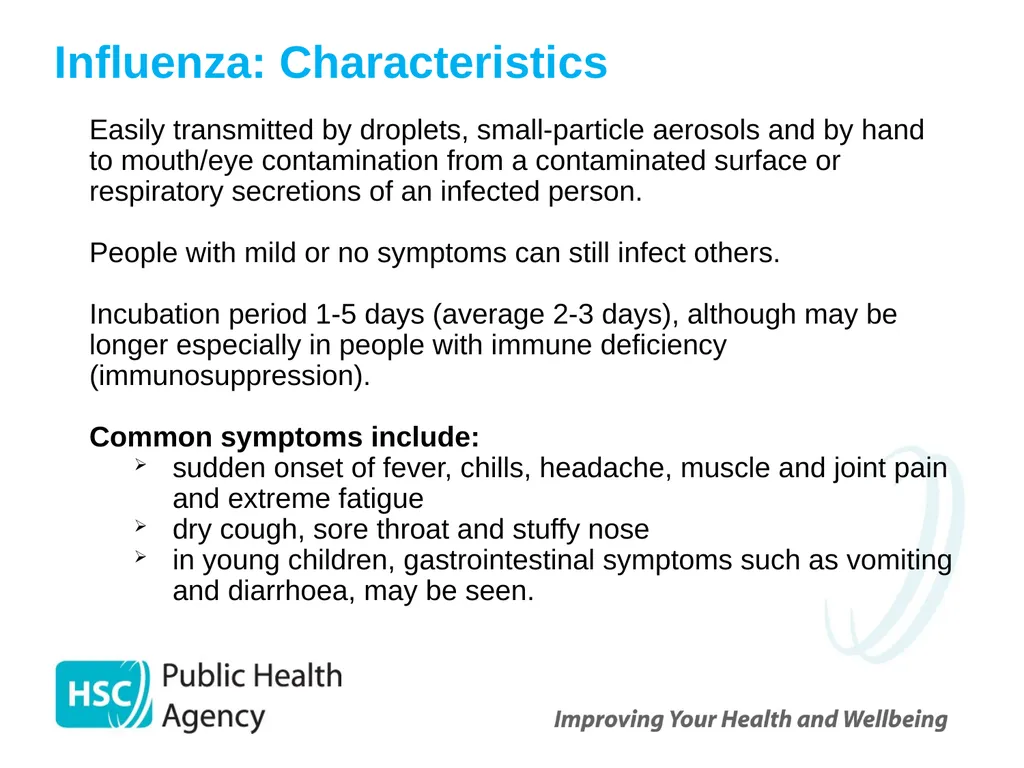
slide8. Influenza: Characteristics Easily transmitted by droplets, small-particle aerosols and by hand to mouth/eye contamination from a contaminated surface or respiratory secretions of an infected person.
People with mild or no symptoms can still infect others.
Incubation period 1-5 days (average 2-3 days), although may be longer especially in people with immune deficiency (immunosuppression).
Common symptoms include:
sudden onset of fever, chills, headache, muscle and joint pain and extreme fatigue
dry cough, sore throat and stuffy nose
in young children, gastrointestinal symptoms such as vomiting and diarrhoea, may be seen.<br>
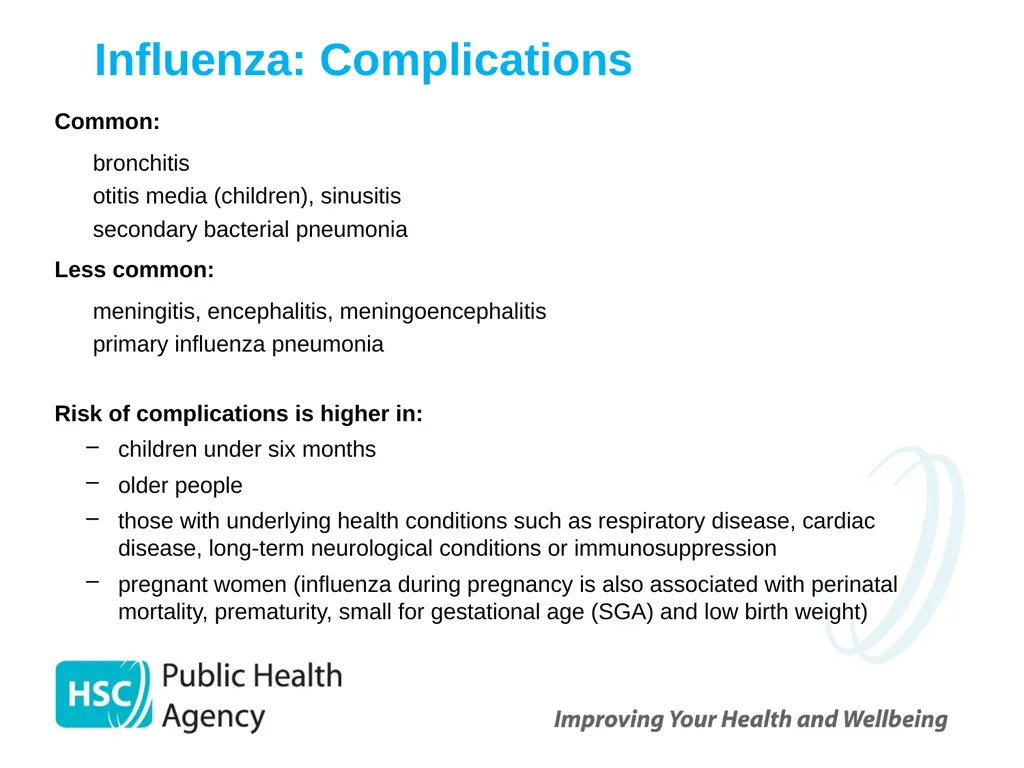
slide9. Influenza: Complications Common:
bronchitis
otitis media (children), sinusitis
secondary bacterial pneumonia
Less common:
meningitis, encephalitis, meningoencephalitis
primary influenza pneumonia
Risk of complications is higher in:
children under six months
older people
those with underlying health conditions such as respiratory disease, cardiac disease, long-term neurological conditions or immunosuppression
pregnant women (influenza during pregnancy is also associated with perinatal mortality, prematurity, small for gestational age (SGA) and low birth weight) 9<br>
slide10. Flu epidemiology<br>
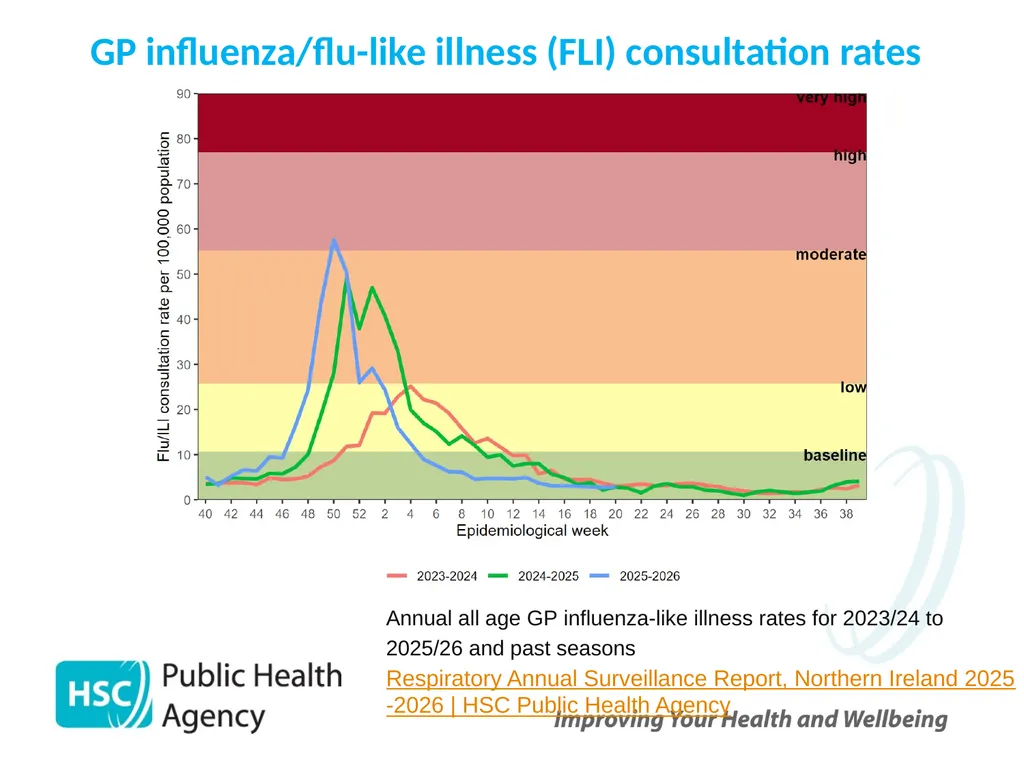
slide11. GP influenza/flu-like illness (FLI) consultation rates Annual all age GP influenza-like illness rates for 2023/24 to 2025/26 and past seasons Respiratory Annual Surveillance Report, Northern Ireland 2025-2026 | HSC Public Health Agency<br>
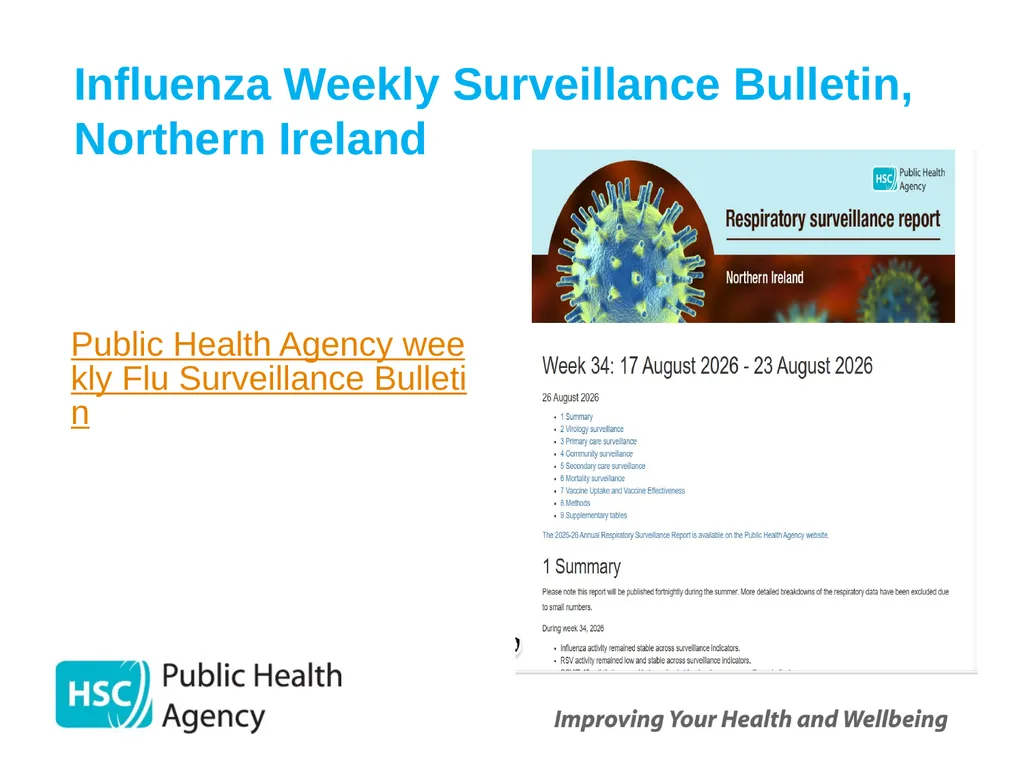
slide12. Influenza Weekly Surveillance Bulletin, Northern Ireland Public Health Agency weekly Flu Surveillance Bulletin<br>
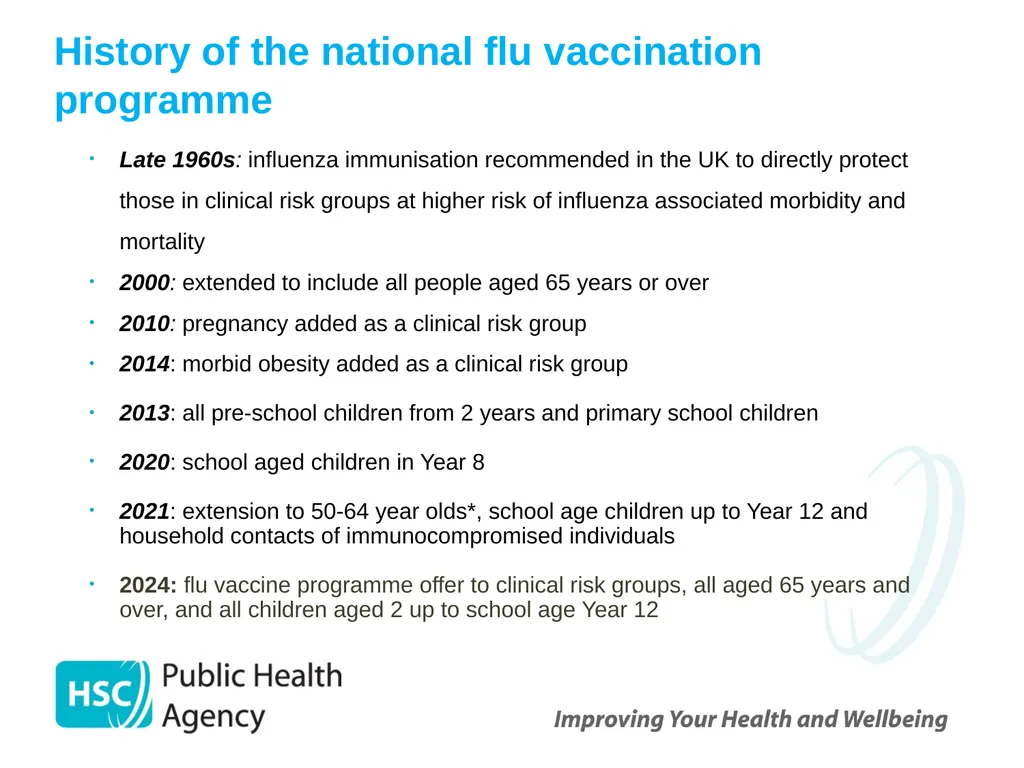
slide13. History of the national flu vaccination programme Late 1960s: influenza immunisation recommended in the UK to directly protect those in clinical risk groups at higher risk of influenza associated morbidity and mortality
2000: extended to include all people aged 65 years or over
2010: pregnancy added as a clinical risk group
2014: morbid obesity added as a clinical risk group
2013: all pre-school children from 2 years and primary school children
2020: school aged children in Year 8
2021: extension to 50-64 year olds*, school age children up to Year 12 and household contacts of immunocompromised individuals
2024: flu vaccine programme offer to clinical risk groups, all aged 65 years and over, and all children aged 2 up to school age Year 12<br>
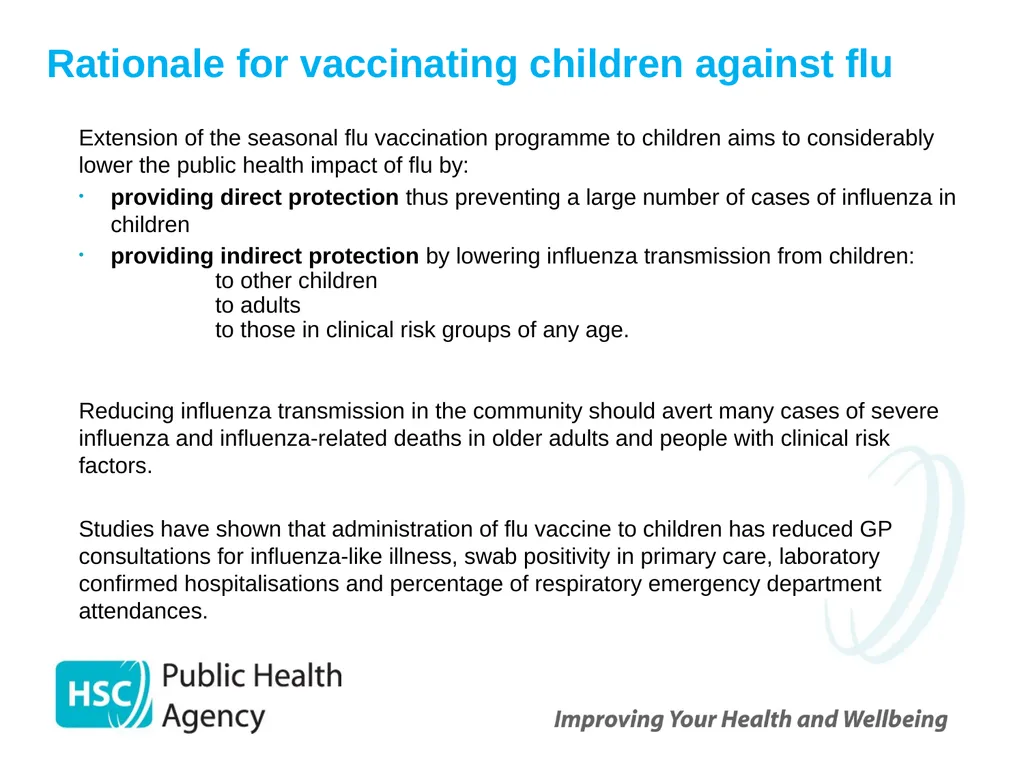
slide14. Rationale for vaccinating children against flu Extension of the seasonal flu vaccination programme to children aims to considerably lower the public health impact of flu by:
providing direct protection thus preventing a large number of cases of influenza in children
providing indirect protection by lowering influenza transmission from children:
to other children
to adults
to those in clinical risk groups of any age.
Reducing influenza transmission in the community should avert many cases of severe influenza and influenza-related deaths in older adults and people with clinical risk factors.
Studies have shown that administration of flu vaccine to children has reduced GP consultations for influenza-like illness, swab positivity in primary care, laboratory confirmed hospitalisations and percentage of respiratory emergency department attendances. 14<br>
slide15. Childhood flu vaccination programme 2026/27<br>
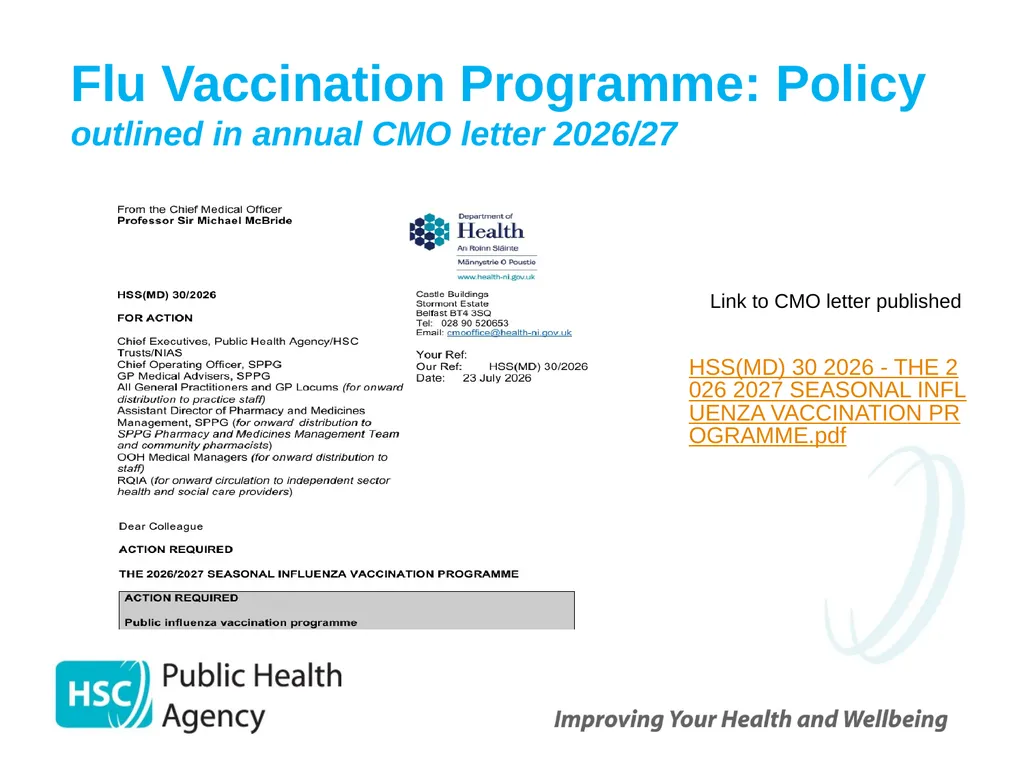
slide16. Flu Vaccination Programme: Policy outlined in annual CMO letter 2026/27 Link to CMO letter published HSS(MD) 30 2026 - THE 2026 2027 SEASONAL INFLUENZA VACCINATION PROGRAMME.pdf<br>
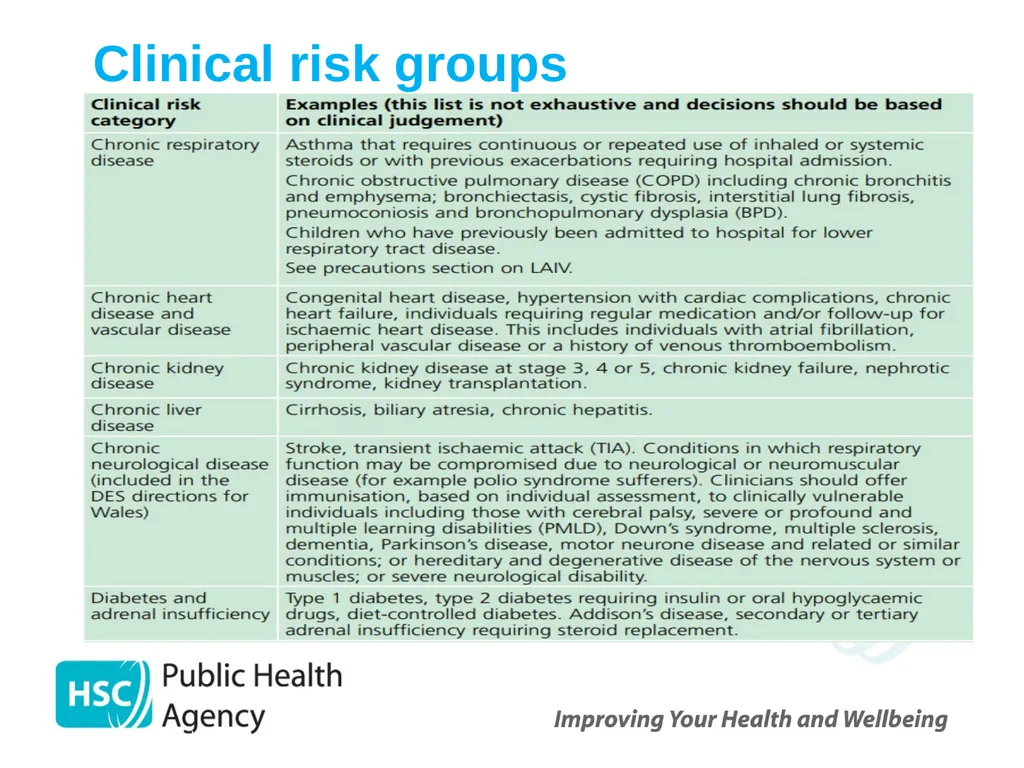
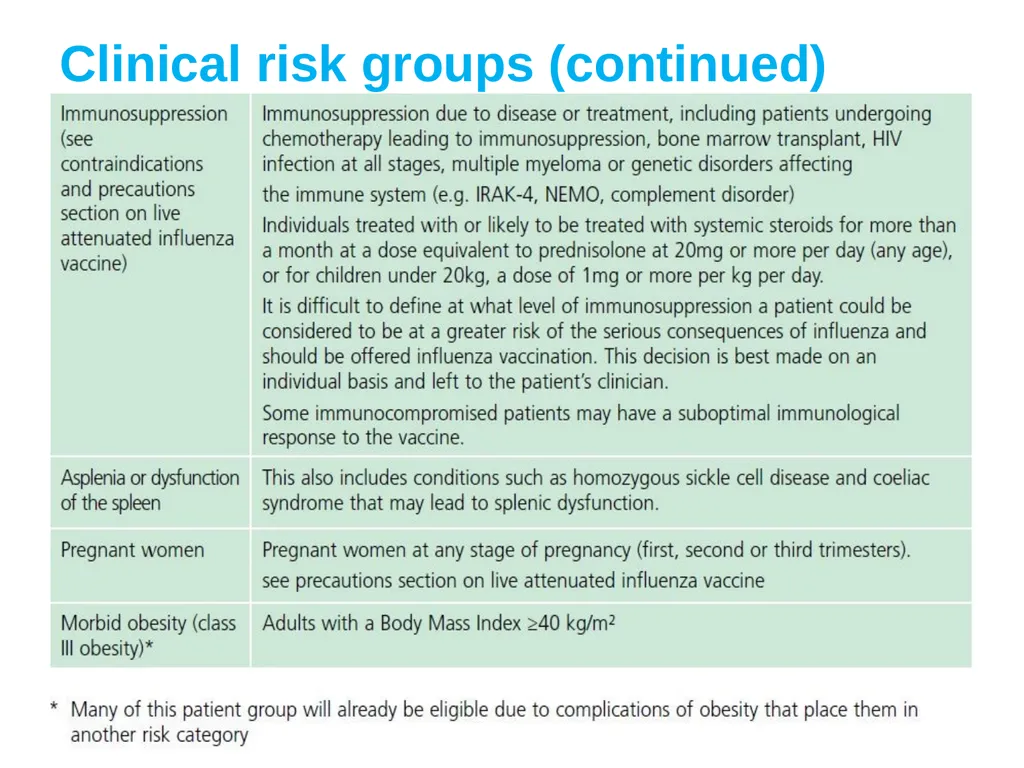
slide17. Flu Vaccination Programme: Eligibility Childhood criteria for 2026/27 those aged 6 months to 17 years in clinical risk groups (as defined by the influenza chapter in ‘Immunisation against infectious disease’ (the ‘Green Book’)
all preschool children aged 2 to 4 years on 1 September 2026
all primary and secondary school children (up to year 12)
those aged 6 months to 17 years who are household contacts of immunocompromised individuals*
16 – 17 year olds who are health and social care workers (HSCWs) and are directly involved in the care of patients or clients
16 – 17 year olds who are in receipt of a carer’s allowance, or those who are the main carer of an elderly or disabled person whose welfare may be at risk if the carer falls ill 17<br>
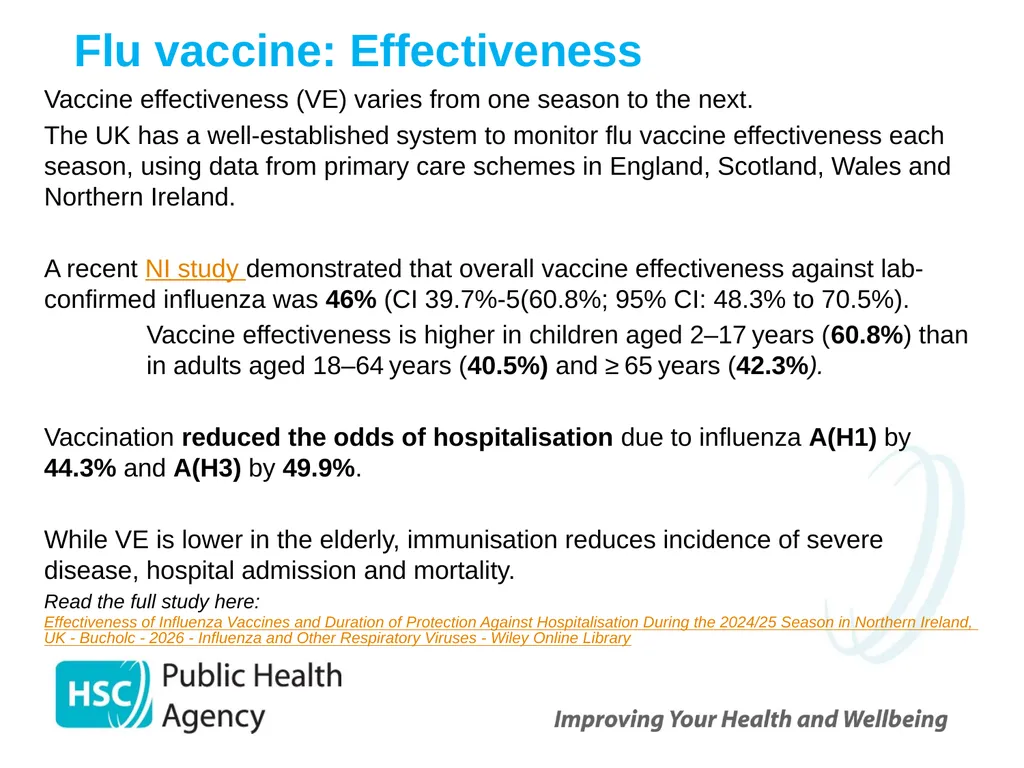
slide18. Flu vaccine: Effectiveness Vaccine effectiveness (VE) varies from one season to the next.
The UK has a well-established system to monitor flu vaccine effectiveness each season, using data from primary care schemes in England, Scotland, Wales and Northern Ireland.
A recent NI study demonstrated that overall vaccine effectiveness against lab-confirmed influenza was 46% (CI 39.7%-5(60.8%; 95% CI: 48.3% to 70.5%).
Vaccine effectiveness is higher in children aged 2–17 years (60.8%) than in adults aged 18–64 years (40.5%) and ≥ 65 years (42.3%).
Vaccination reduced the odds of hospitalisation due to influenza A(H1) by 44.3% and A(H3) by 49.9%.
While VE is lower in the elderly, immunisation reduces incidence of severe disease, hospital admission and mortality.
Read the full study here: Effectiveness of Influenza Vaccines and Duration of Protection Against Hospitalisation During the 2024/25 Season in Northern Ireland, UK - Bucholc - 2026 - Influenza and Other Respiratory Viruses - Wiley Online Library<br>
slide19. Flu Vaccination Programme: 2026/27 childhood programme the list of eligible groups is not exhaustive
clinical judgement should be applied to take account the risk of exacerbating any underlying disease with influenza, as well as the risk of serious illness from influenza itself
those involved in delivering flu vaccine programmes should be familiar with the updated chapter of The Green Book and the HSS CMO seasonal flu letter link .<br>
slide20. Clinical risk groups The national flu immunisation programme 2017/18<br>
slide21. Clinical risk groups (continued)<br>
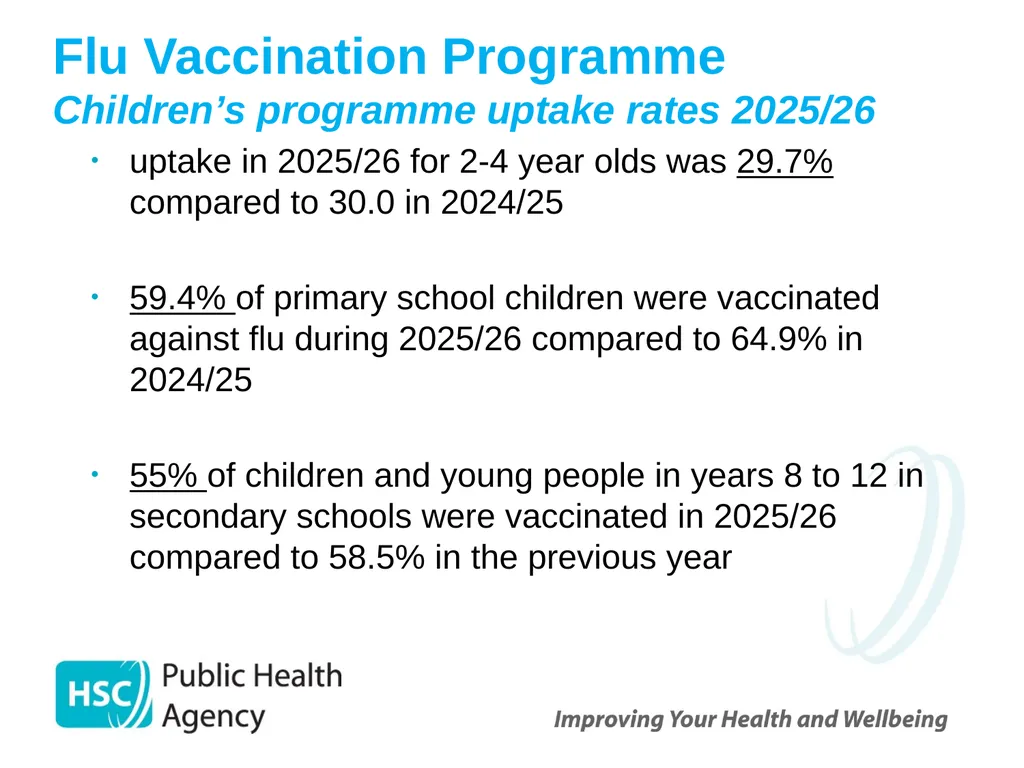
slide22. Flu Vaccination Programme Children’s programme uptake rates 2025/26 uptake in 2025/26 for 2-4 year olds was 29.7% compared to 30.0 in 2024/25
59.4% of primary school children were vaccinated against flu during 2025/26 compared to 64.9% in 2024/25
55% of children and young people in years 8 to 12 in secondary schools were vaccinated in 2025/26 compared to 58.5% in the previous year<br>
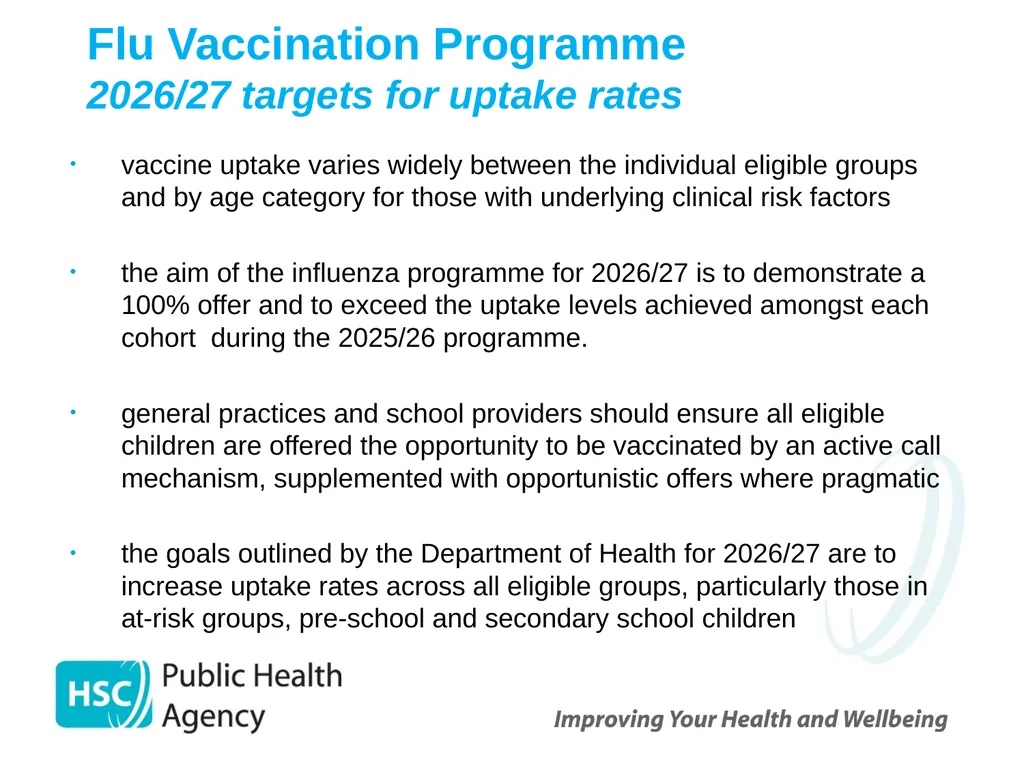
slide23. Flu Vaccination Programme 2026/27 targets for uptake rates vaccine uptake varies widely between the individual eligible groups and by age category for those with underlying clinical risk factors
the aim of the influenza programme for 2026/27 is to demonstrate a 100% offer and to exceed the uptake levels achieved amongst each cohort during the 2025/26 programme.
general practices and school providers should ensure all eligible children are offered the opportunity to be vaccinated by an active call mechanism, supplemented with opportunistic offers where pragmatic
the goals outlined by the Department of Health for 2026/27 are to increase uptake rates across all eligible groups, particularly those in at-risk groups, pre-school and secondary school children<br>
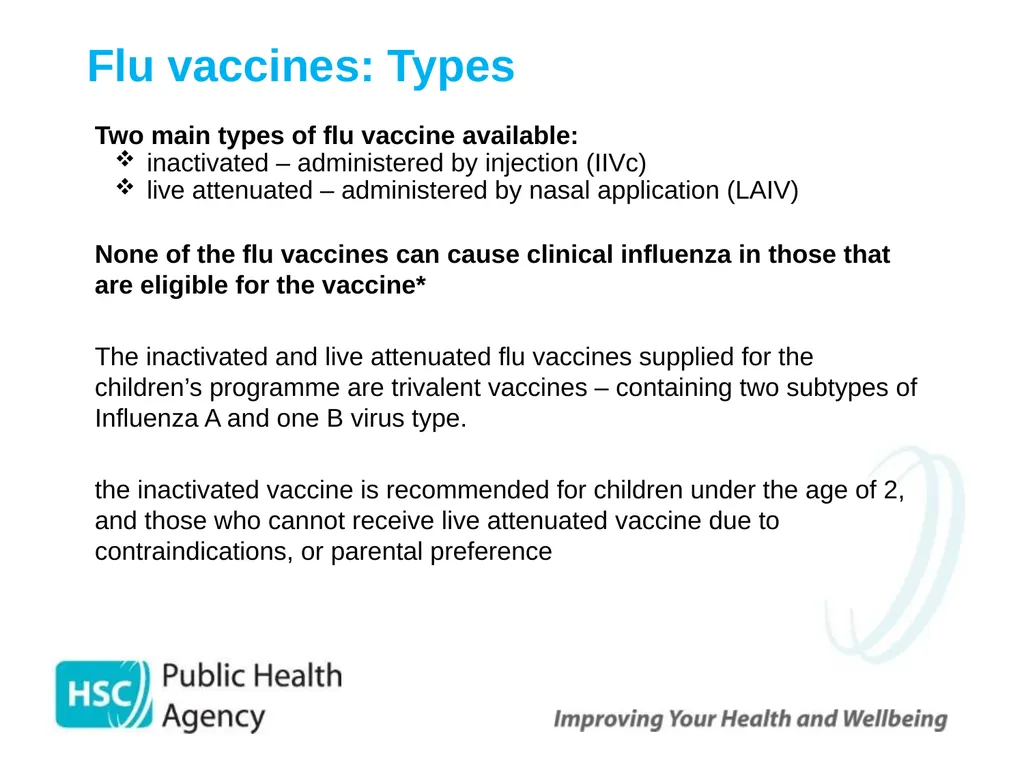
slide24. Flu vaccines: Types Two main types of flu vaccine available:
inactivated – administered by injection (IIVc)
live attenuated – administered by nasal application (LAIV)
None of the flu vaccines can cause clinical influenza in those that are eligible for the vaccine*
The inactivated and live attenuated flu vaccines supplied for the children’s programme are trivalent vaccines – containing two subtypes of Influenza A and one B virus type.
the inactivated vaccine is recommended for children under the age of 2, and those who cannot receive live attenuated vaccine due to contraindications, or parental preference 24<br>
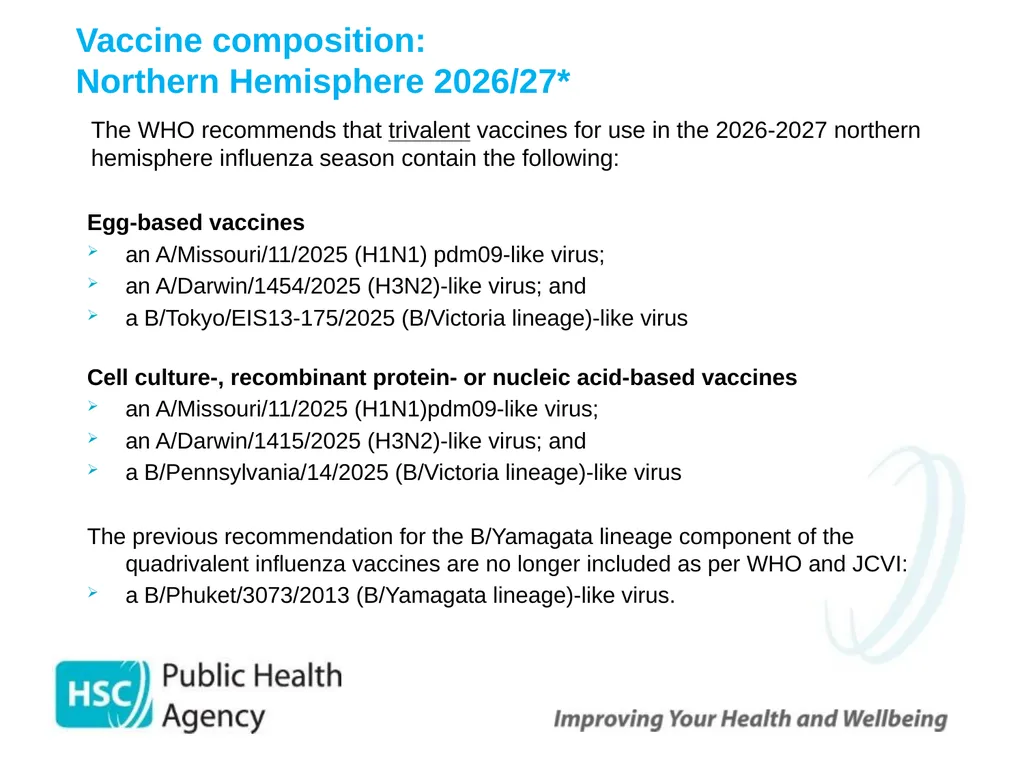
slide25. Vaccine composition: Northern Hemisphere 2026/27* The WHO recommends that trivalent vaccines for use in the 2026-2027 northern hemisphere influenza season contain the following:
Egg-based vaccines
an A/Missouri/11/2025 (H1N1) pdm09-like virus;
an A/Darwin/1454/2025 (H3N2)-like virus; and
a B/Tokyo/EIS13-175/2025 (B/Victoria lineage)-like virus
Cell culture-, recombinant protein- or nucleic acid-based vaccines
an A/Missouri/11/2025 (H1N1)pdm09-like virus;
an A/Darwin/1415/2025 (H3N2)-like virus; and
a B/Pennsylvania/14/2025 (B/Victoria lineage)-like virus
The previous recommendation for the B/Yamagata lineage component of the quadrivalent influenza vaccines are no longer included as per WHO and JCVI:
a B/Phuket/3073/2013 (B/Yamagata lineage)-like virus.<br>
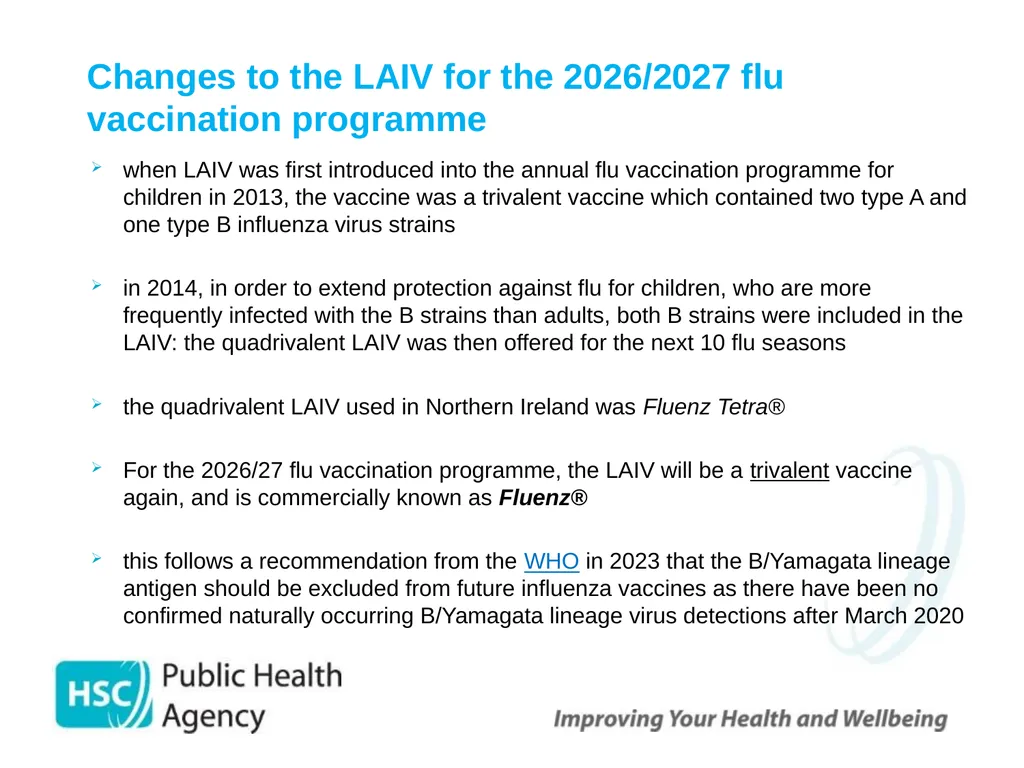
slide26. Changes to the LAIV for the 2026/2027 flu vaccination programme when LAIV was first introduced into the annual flu vaccination programme for children in 2013, the vaccine was a trivalent vaccine which contained two type A and one type B influenza virus strains
in 2014, in order to extend protection against flu for children, who are more frequently infected with the B strains than adults, both B strains were included in the LAIV: the quadrivalent LAIV was then offered for the next 10 flu seasons
the quadrivalent LAIV used in Northern Ireland was Fluenz Tetra®
For the 2026/27 flu vaccination programme, the LAIV will be a trivalent vaccine again, and is commercially known as Fluenz®
this follows a recommendation from the WHO in 2023 that the B/Yamagata lineage antigen should be excluded from future influenza vaccines as there have been no confirmed naturally occurring B/Yamagata lineage virus detections after March 2020<br>
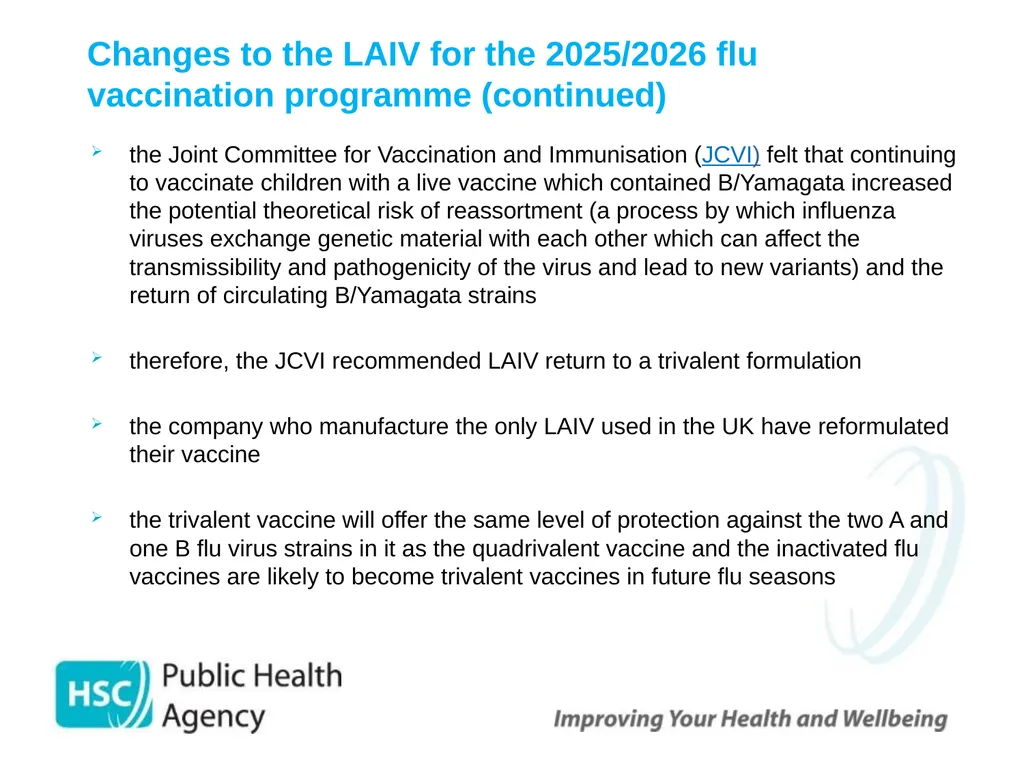
slide27. Changes to the LAIV for the 2025/2026 flu vaccination programme (continued) the Joint Committee for Vaccination and Immunisation (JCVI) felt that continuing to vaccinate children with a live vaccine which contained B/Yamagata increased the potential theoretical risk of reassortment (a process by which influenza viruses exchange genetic material with each other which can affect the transmissibility and pathogenicity of the virus and lead to new variants) and the return of circulating B/Yamagata strains
therefore, the JCVI recommended LAIV return to a trivalent formulation
the company who manufacture the only LAIV used in the UK have reformulated their vaccine
the trivalent vaccine will offer the same level of protection against the two A and one B flu virus strains in it as the quadrivalent vaccine and the inactivated flu vaccines are likely to become trivalent vaccines in future flu seasons<br>
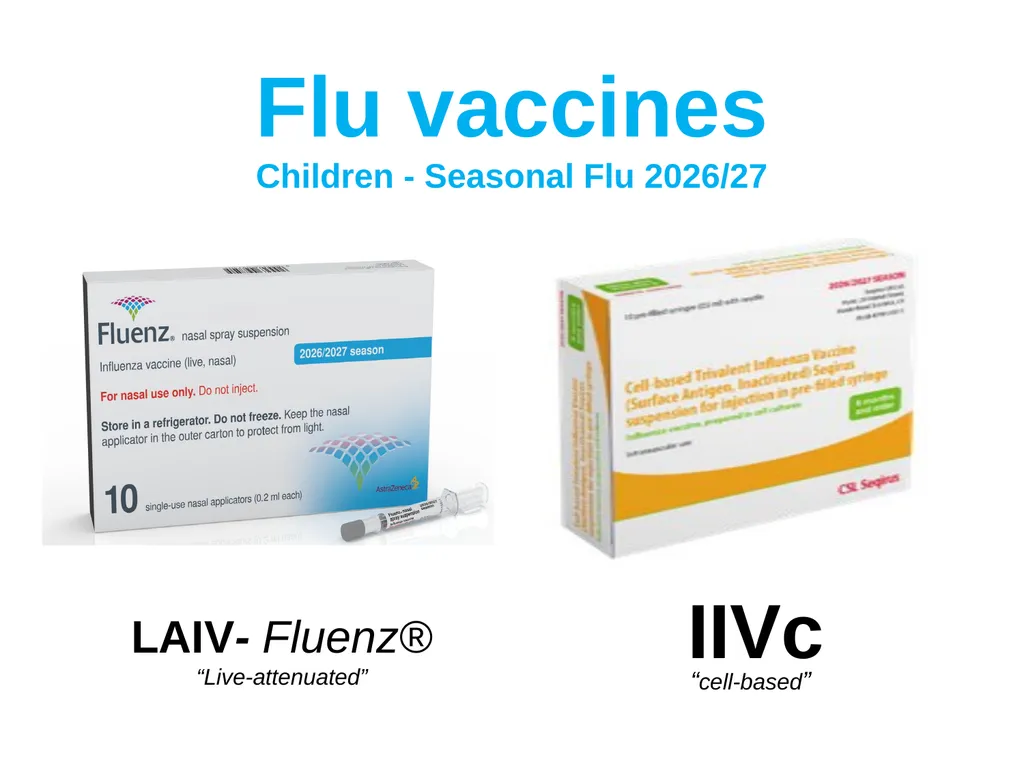
slide28. Flu vaccines
Children - Seasonal Flu 2026/27 LAIV- Fluenz®
“Live-attenuated”<br>
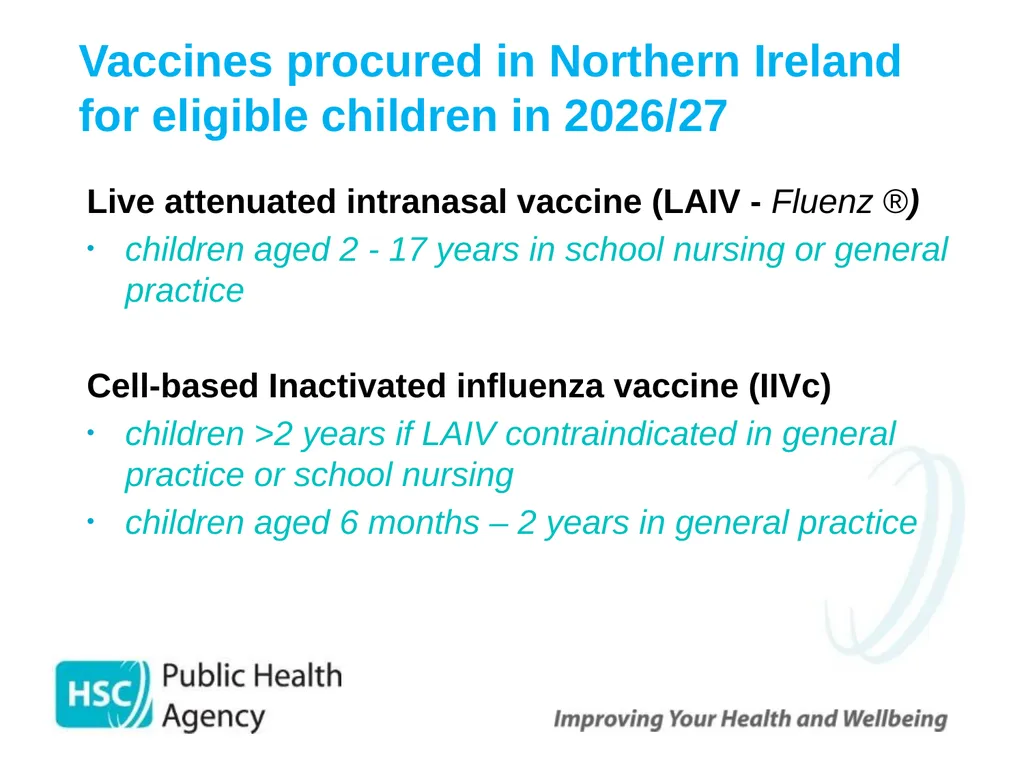
slide29. Vaccines procured in Northern Ireland for eligible children in 2026/27 Live attenuated intranasal vaccine (LAIV - Fluenz ®)
children aged 2 - 17 years in school nursing or general practice
Cell-based Inactivated influenza vaccine (IIVc)
children >2 years if LAIV contraindicated in general practice or school nursing
children aged 6 months – 2 years in general practice<br>
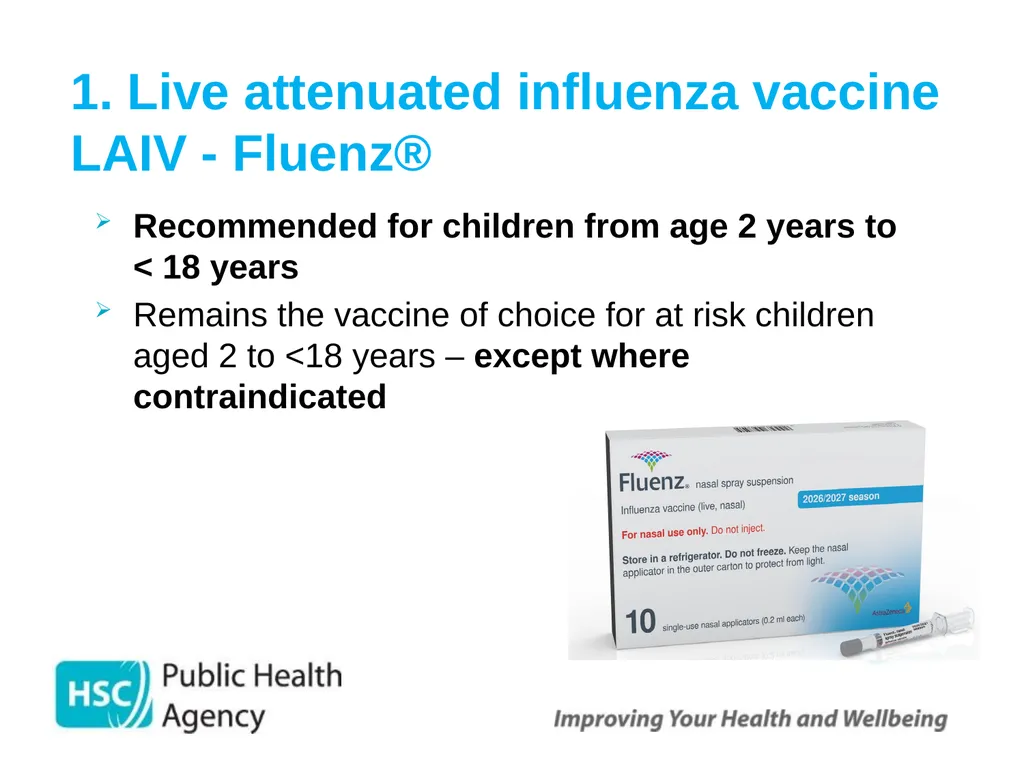
slide30. 1. Live attenuated influenza vaccine LAIV - Fluenz® Recommended for children from age 2 years to < 18 years
Remains the vaccine of choice for at risk children aged 2 to <18 years – except where contraindicated<br>
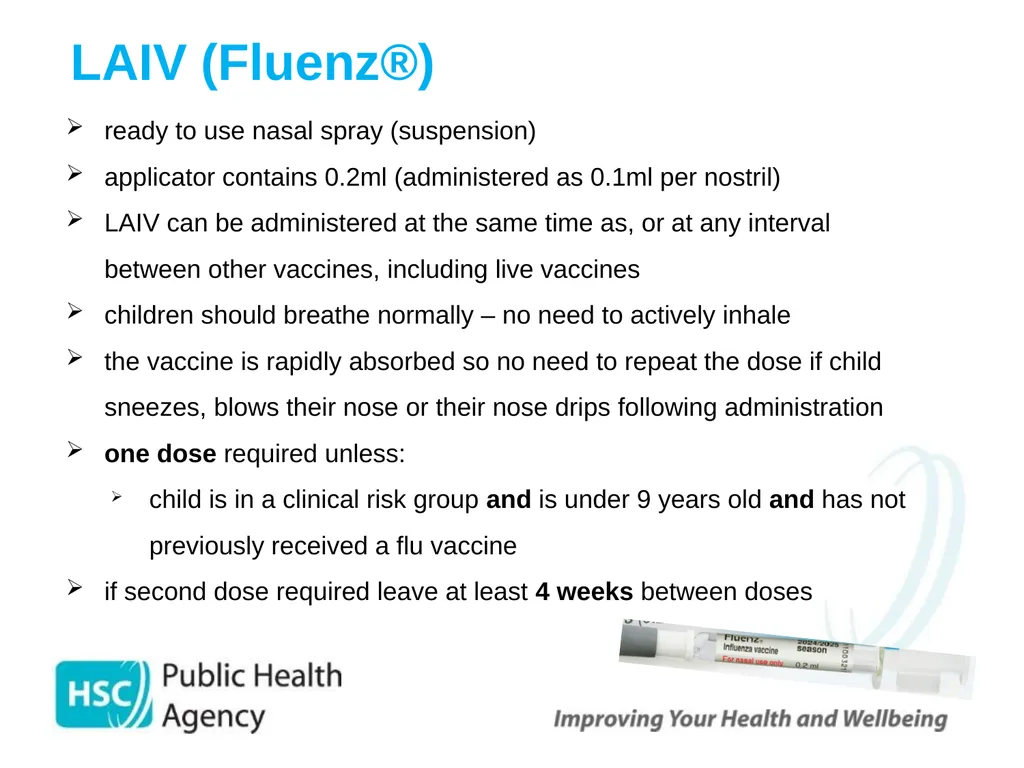
slide31. LAIV (Fluenz®) ready to use nasal spray (suspension)
applicator contains 0.2ml (administered as 0.1ml per nostril)
LAIV can be administered at the same time as, or at any interval between other vaccines, including live vaccines
children should breathe normally – no need to actively inhale
the vaccine is rapidly absorbed so no need to repeat the dose if child sneezes, blows their nose or their nose drips following administration
one dose required unless:
child is in a clinical risk group and is under 9 years old and has not previously received a flu vaccine
if second dose required leave at least 4 weeks between doses<br>
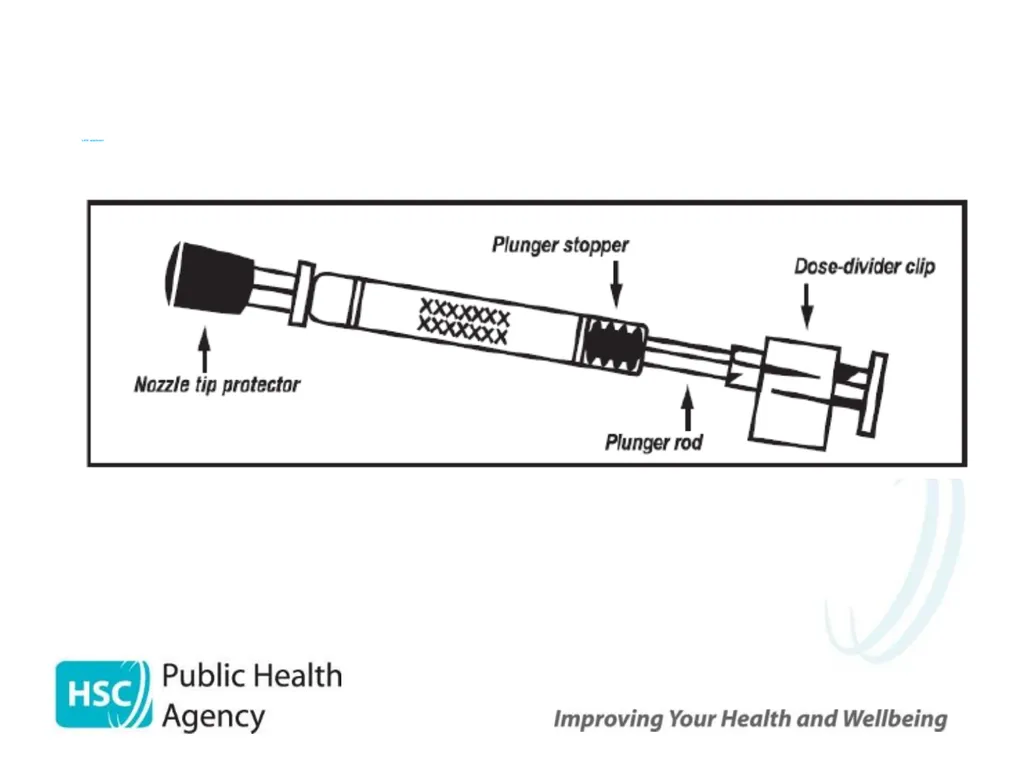
slide32. 32 LAIV: applicator Image taken from Fluenz Tetra® SPC<br>
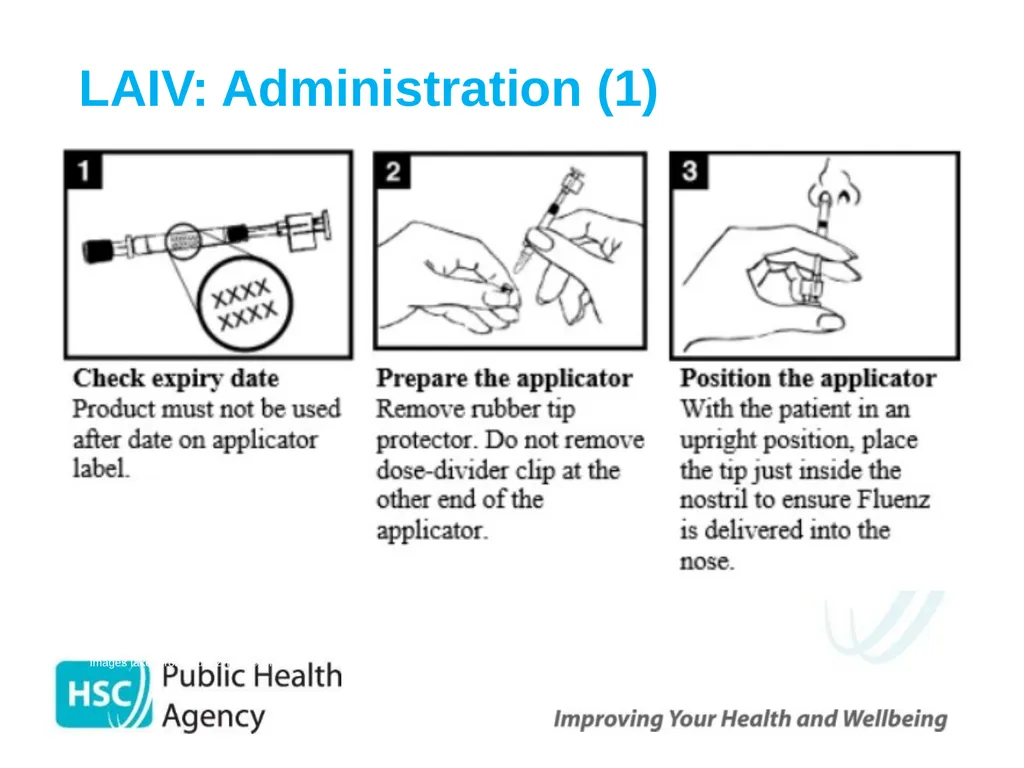
slide33. 33 LAIV: Administration (1) Images taken from Fluenz Tetra® SPC<br>
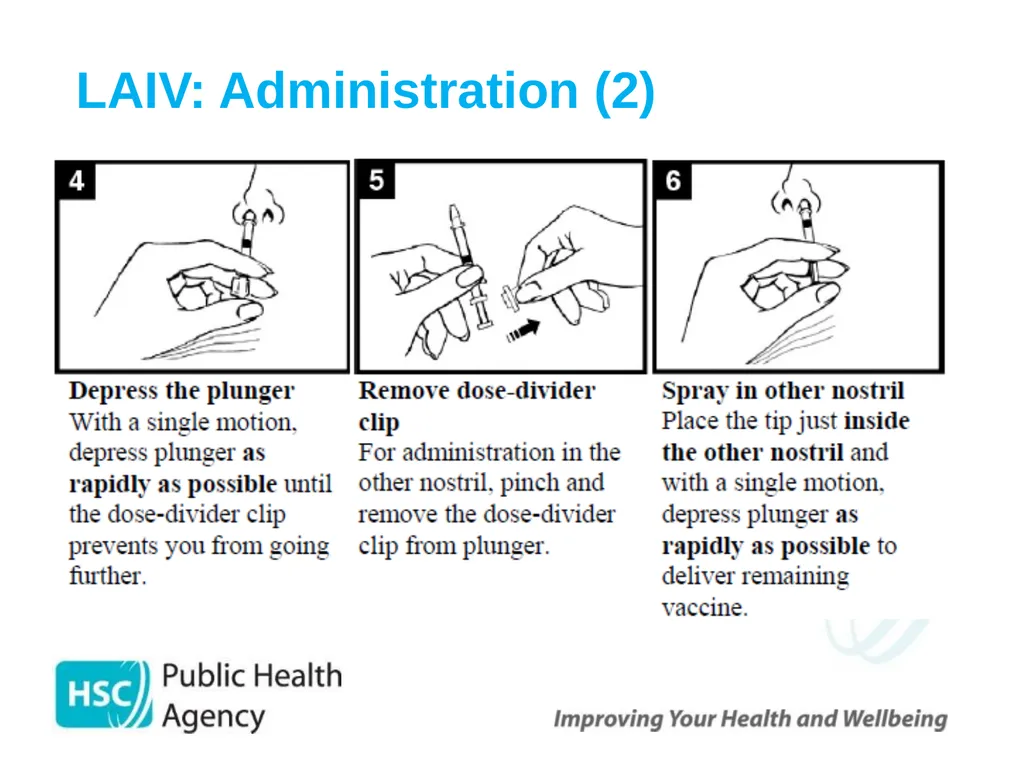
slide34. 34 LAIV: Administration (2) Images taken from Fluenz Tetra® SPC<br>
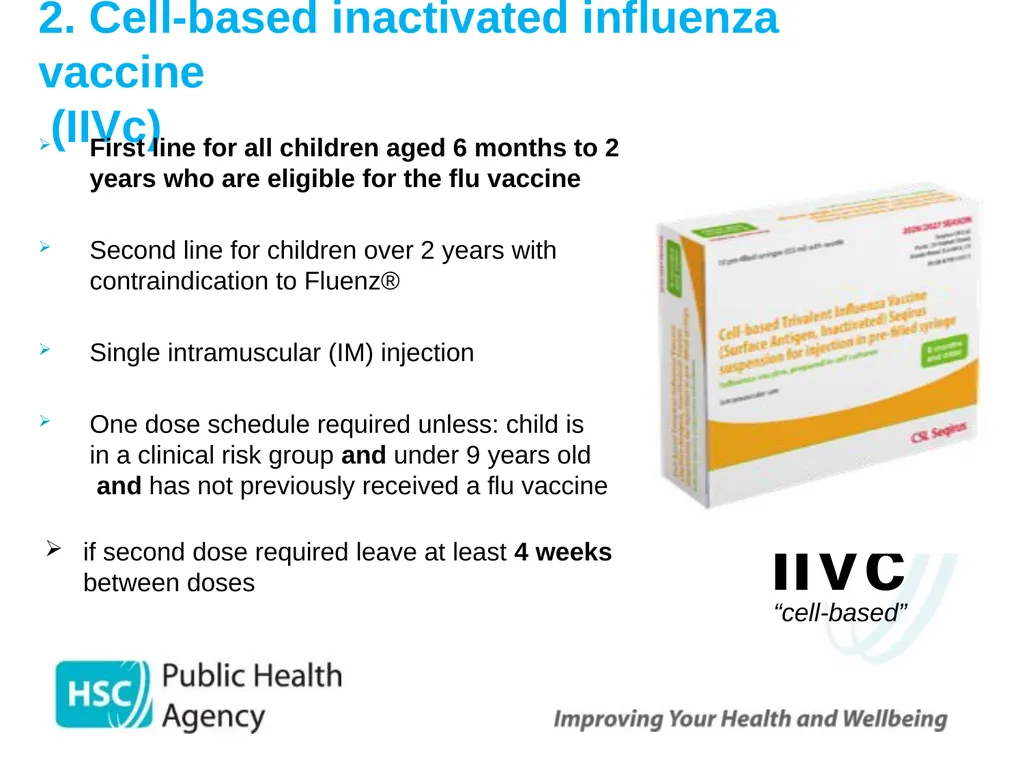
slide35. 2. Cell-based inactivated influenza vaccine (IIVc) First line for all children aged 6 months to 2 years who are eligible for the flu vaccine
Second line for children over 2 years with contraindication to Fluenz®
Single intramuscular (IM) injection
One dose schedule required unless: child is in a clinical risk group and under 9 years old and has not previously received a flu vaccine
if second dose required leave at least 4 weeks between doses<br>
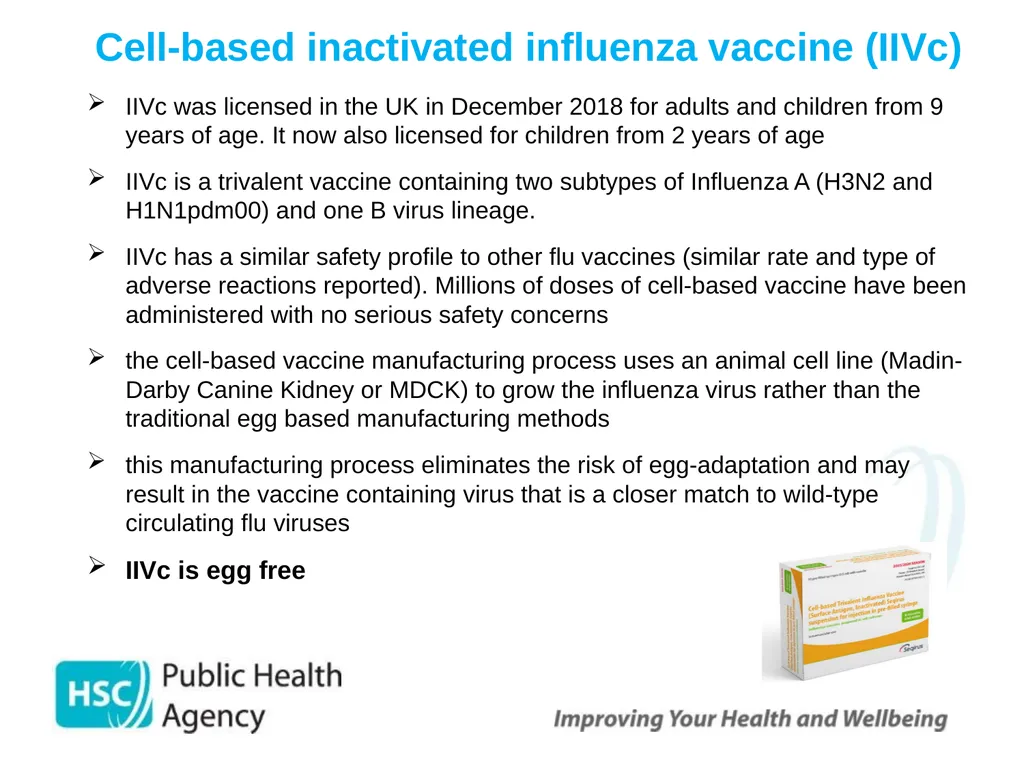
slide36. Cell-based inactivated influenza vaccine (IIVc) IIVc was licensed in the UK in December 2018 for adults and children from 9 years of age. It now also licensed for children from 2 years of age
IIVc is a trivalent vaccine containing two subtypes of Influenza A (H3N2 and H1N1pdm00) and one B virus lineage.
IIVc has a similar safety profile to other flu vaccines (similar rate and type of adverse reactions reported). Millions of doses of cell-based vaccine have been administered with no serious safety concerns
the cell-based vaccine manufacturing process uses an animal cell line (Madin-Darby Canine Kidney or MDCK) to grow the influenza virus rather than the traditional egg based manufacturing methods
this manufacturing process eliminates the risk of egg-adaptation and may result in the vaccine containing virus that is a closer match to wild-type circulating flu viruses
IIVc is egg free<br>
slide37. Administration of flu vaccines given by injection The inactivated influenza vaccines should normally be administered by intramuscular (IM) injection into the deltoid muscle in the upper arm (or anterolateral aspect of the thigh in infants).
IIVc is supplied in a single-dose prefilled syringe, containing a 0.5ml dose, and does not require reconstitution.
Patients taking anticoagulants / with bleeding disorder
individuals on stable anticoagulation therapy (including individuals on warfarin who are up-to-date with their scheduled INR testing and whose latest INR was below the upper threshold of their therapeutic range) can receive intramuscular (IM) vaccination
if in any doubt, consult with the clinician responsible for prescribing or monitoring the individual’s anticoagulant therapy. 37<br>
slide38. Storage of all flu vaccine Efficacy, safety and quality may be adversely affected if vaccines are not stored at the temperatures specified in the licence.
Must be stored in accordance with manufacturer’s instructions:
store between +2⁰C and +8⁰C
do not freeze
store in original packaging
protect from light.
Check expiry dates regularly:
LAIV has an expiry date 15 weeks after manufacture – this is much shorter than inactivated flu vaccines
it is important that the expiry date on the nasal spray applicator is checked before use. 38<br>
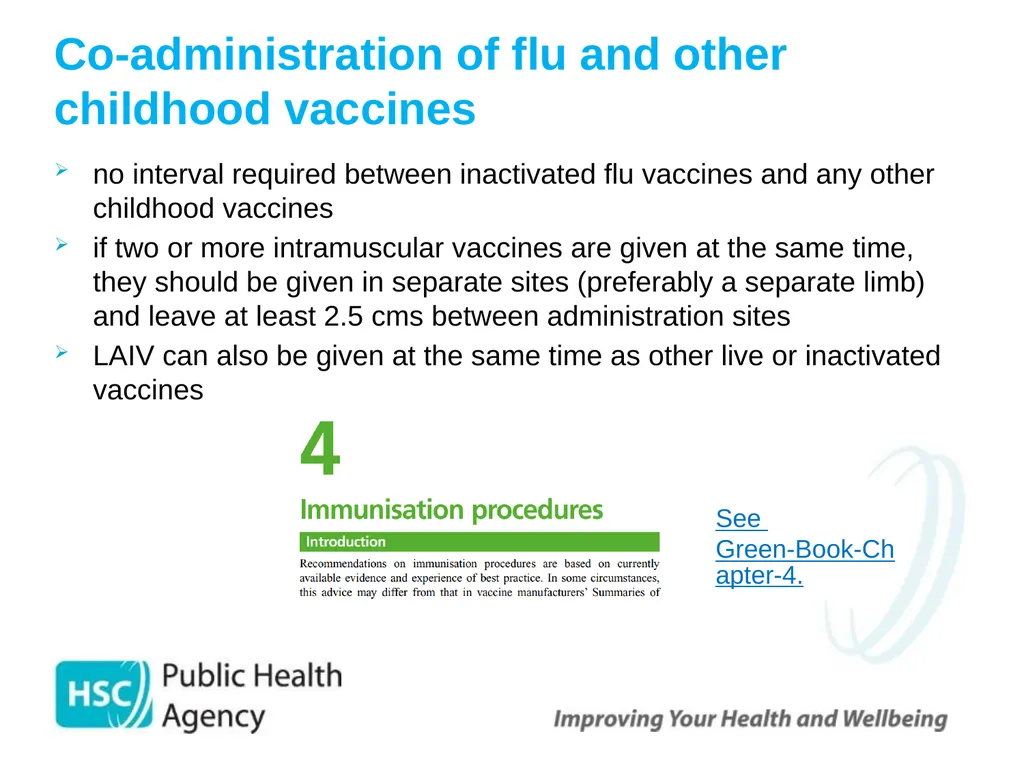
slide39. Co-administration of flu and other childhood vaccines no interval required between inactivated flu vaccines and any other childhood vaccines
if two or more intramuscular vaccines are given at the same time, they should be given in separate sites (preferably a separate limb) and leave at least 2.5 cms between administration sites
LAIV can also be given at the same time as other live or inactivated vaccines See Green-Book-Chapter-4.<br>
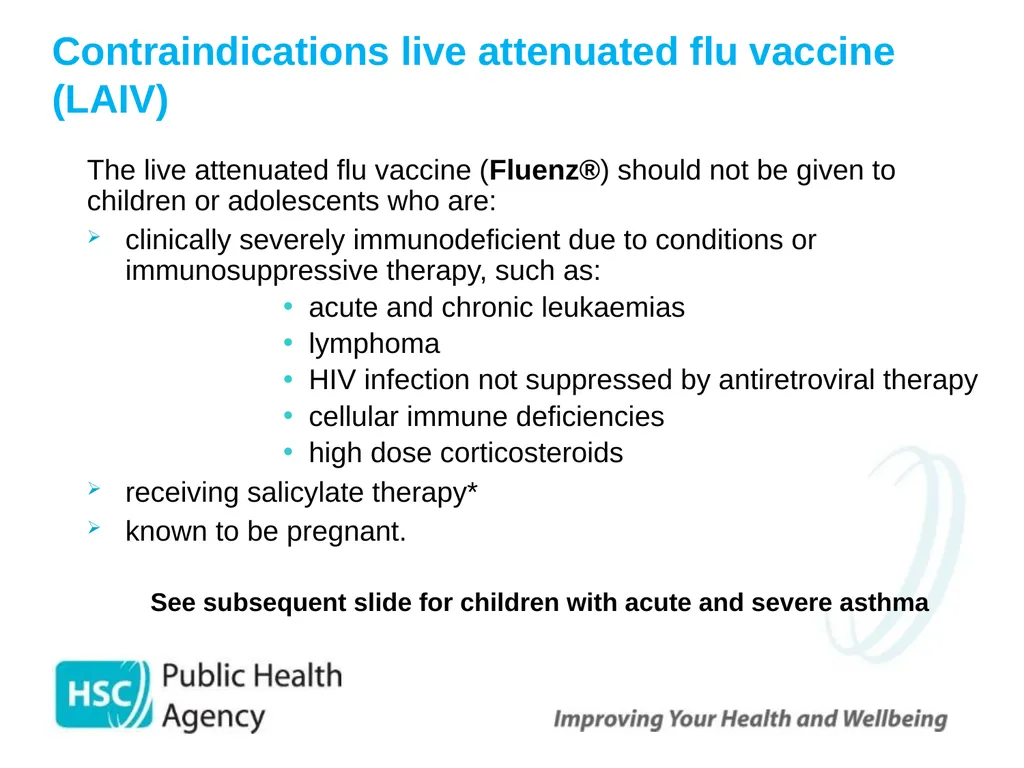
slide40. The live attenuated flu vaccine (Fluenz®) should not be given to children or adolescents who are:
clinically severely immunodeficient due to conditions or immunosuppressive therapy, such as:
acute and chronic leukaemias
lymphoma
HIV infection not suppressed by antiretroviral therapy
cellular immune deficiencies
high dose corticosteroids
receiving salicylate therapy*
known to be pregnant.
See subsequent slide for children with acute and severe asthma Contraindications live attenuated flu vaccine (LAIV)<br>
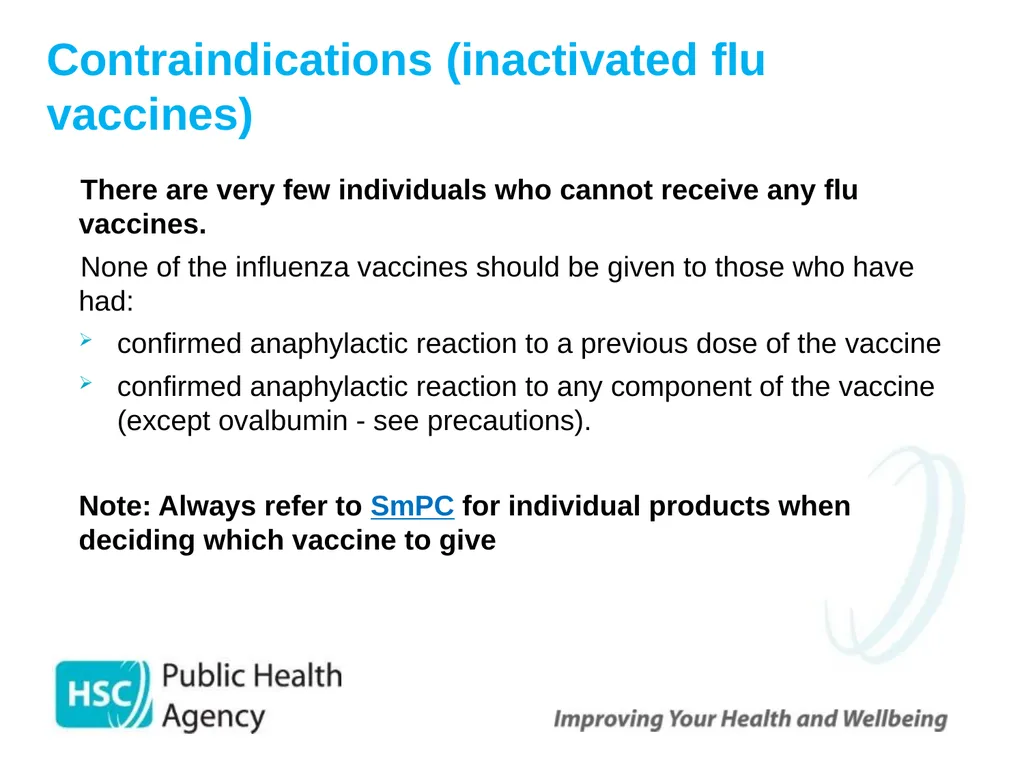
slide41. There are very few individuals who cannot receive any flu vaccines.
None of the influenza vaccines should be given to those who have had:
confirmed anaphylactic reaction to a previous dose of the vaccine
confirmed anaphylactic reaction to any component of the vaccine (except ovalbumin - see precautions).
Note: Always refer to SmPC for individual products when deciding which vaccine to give Contraindications (inactivated flu vaccines)<br>
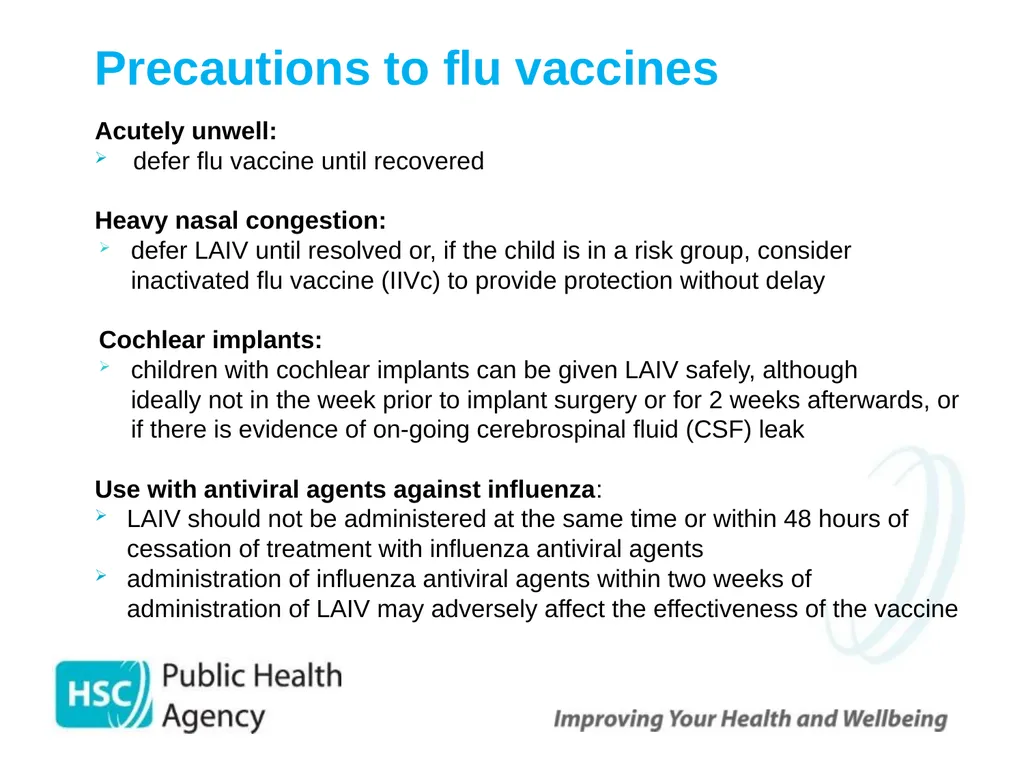
slide42. Acutely unwell:
defer flu vaccine until recovered
Heavy nasal congestion:
defer LAIV until resolved or, if the child is in a risk group, consider inactivated flu vaccine (IIVc) to provide protection without delay
Cochlear implants:
children with cochlear implants can be given LAIV safely, although ideally not in the week prior to implant surgery or for 2 weeks afterwards, or if there is evidence of on-going cerebrospinal fluid (CSF) leak
Use with antiviral agents against influenza:
LAIV should not be administered at the same time or within 48 hours of cessation of treatment with influenza antiviral agents
administration of influenza antiviral agents within two weeks of administration of LAIV may adversely affect the effectiveness of the vaccine 42 Precautions to flu vaccines<br>
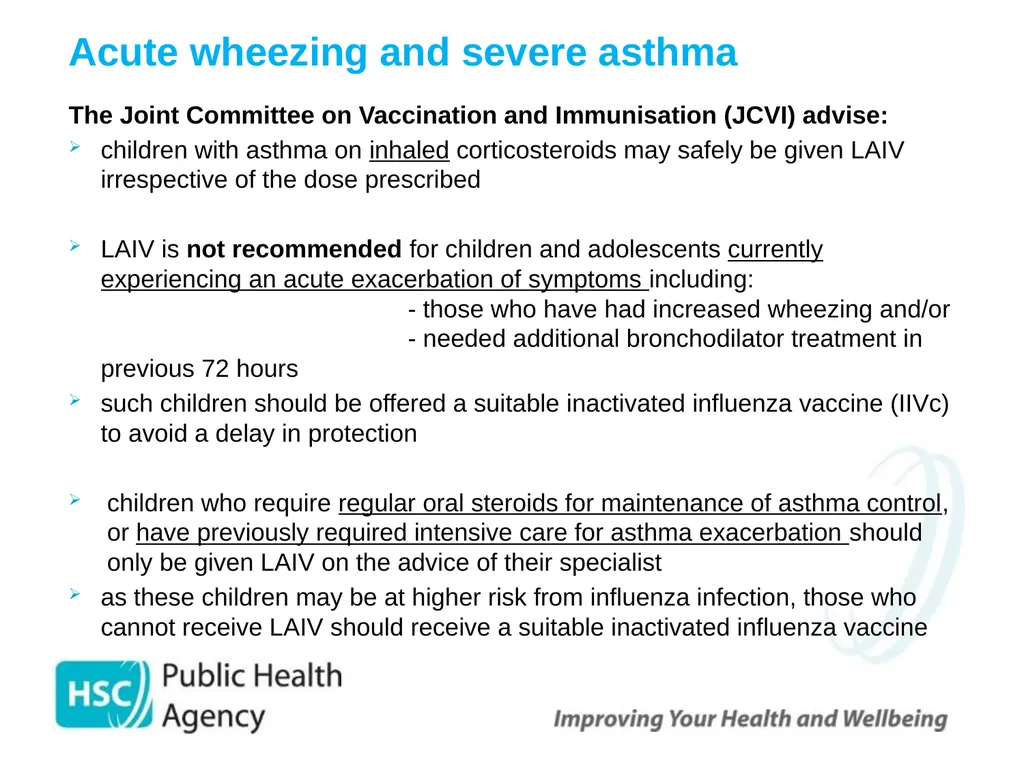
slide43. Acute wheezing and severe asthma The Joint Committee on Vaccination and Immunisation (JCVI) advise:
children with asthma on inhaled corticosteroids may safely be given LAIV irrespective of the dose prescribed
LAIV is not recommended for children and adolescents currently experiencing an acute exacerbation of symptoms including: - those who have had increased wheezing and/or - needed additional bronchodilator treatment in previous 72 hours
such children should be offered a suitable inactivated influenza vaccine (IIVc) to avoid a delay in protection
children who require regular oral steroids for maintenance of asthma control, or have previously required intensive care for asthma exacerbation should only be given LAIV on the advice of their specialist
as these children may be at higher risk from influenza infection, those who cannot receive LAIV should receive a suitable inactivated influenza vaccine<br>
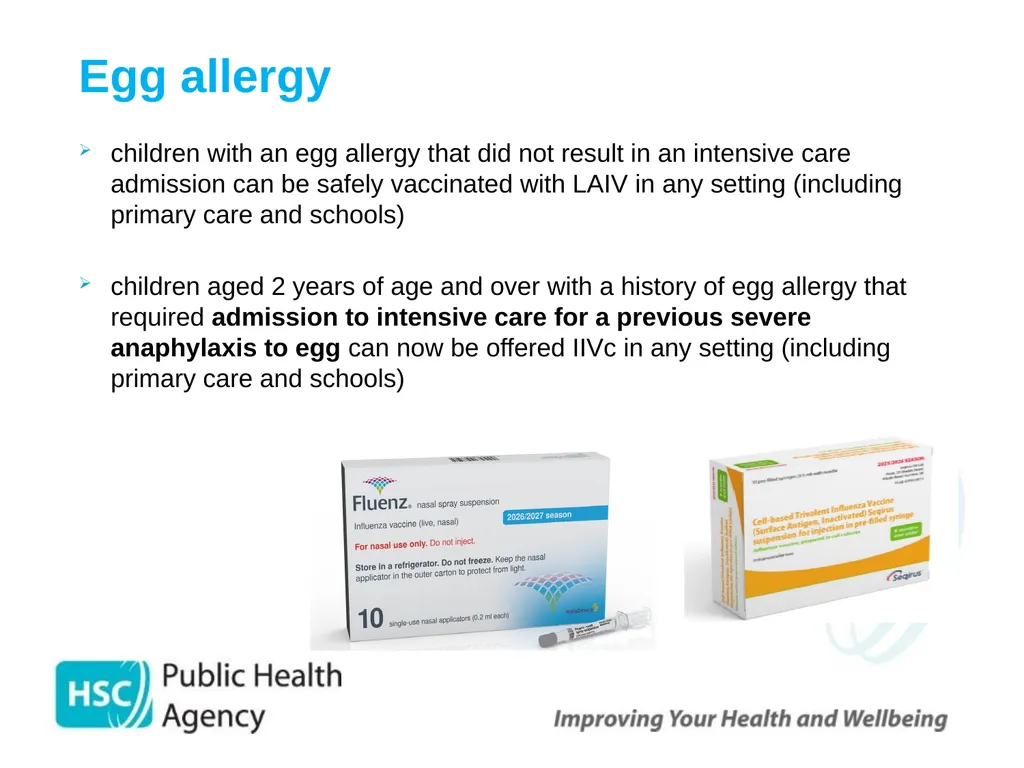
slide44. Egg allergy children with an egg allergy that did not result in an intensive care admission can be safely vaccinated with LAIV in any setting (including primary care and schools)
children aged 2 years of age and over with a history of egg allergy that required admission to intensive care for a previous severe anaphylaxis to egg can now be offered IIVc in any setting (including primary care and schools)<br>
slide45. Porcine gelatine LAIV contains a highly purified form of gelatine derived from pigs
gelatine is used in LAIV as a stabiliser - it protects the live viruses from the effects of temperature
gelatine is commonly used in a range of pharmaceutical products, including many capsules and some vaccines
there is no other live attenuated flu vaccine available that does not contain porcine gelatine. The manufacturer of LAIV (Fluenz®) tested 40 potential stabilisers – gelatine was chosen because without it, stability was significantly reduced
for eligible children whose parents refuse LAIV due to the porcine gelatine content, the injectable IIVc can be offered<br>
slide46. LAIV and ‘viral shedding’ LAIV does not create an external mist of vaccine virus in the air when children are being vaccinated and others in the room should not be at risk of ‘catching’ the vaccine virus
administration of the intranasal vaccine delivers just 0.1ml of fluid straight into each nostril and almost all the fluid is immediately absorbed into the child’s nose
although vaccinated children are known to shed virus a few days after vaccination, the vaccine virus that is shed is less able to spread from person to person than natural flu infection
the amount of virus shed is normally below the levels needed to pass on infection to others and the virus does not survive for long outside of the body. This is in contrast to natural flu infection, which spreads easily during the flu season<br>
slide47. there is a theoretical potential for transmission of live attenuated virus to immunocompromised contacts - risk is for one to two weeks following vaccination with LAIV
extensive use of LAIV in the UK (over 25 million doses) – no reports of illness among immunocompromised patients inadvertently exposed to vaccinated children
however, where close contact with severely immunocompromised patients (e.g. bone marrow transplant patients requiring isolation) is likely/unavoidable (e.g. household members) consider an appropriate inactivated flu vaccine instead
no reports of transmission of vaccine virus in healthcare settings
as a precaution, however, very severely immunosuppressed healthcare workers should not administer LAIV Transmission risk from live vaccine<br>
slide48. Inadvertent administration of LAIV if an immunocompromised individual receives LAIV the degree of immunosuppression should be assessed
if patient is severely immunocompromised, antiviral prophylaxis should be considered
otherwise they should be advised to seek medical advice if they develop flu-like symptoms in the four days following administration of the vaccine
if antivirals are used for prophylaxis or treatment, patient should also be offered inactivated flu vaccine in order to maximise their protection (this can be given straight away) 48<br>
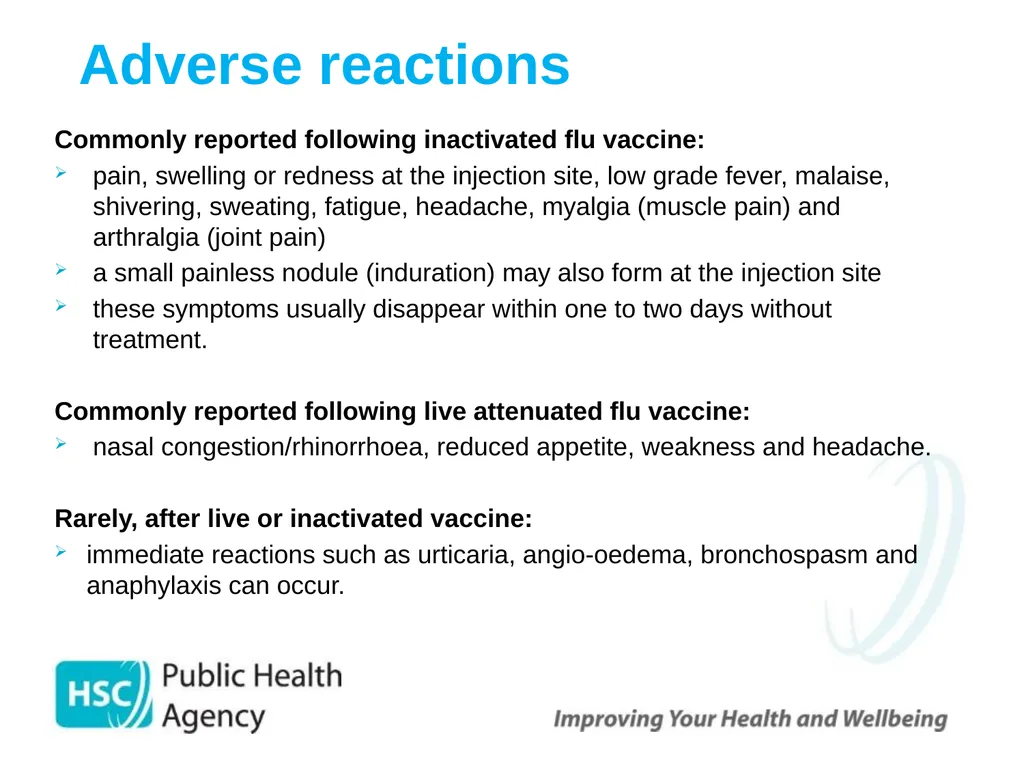
slide49. Adverse reactions Commonly reported following inactivated flu vaccine:
pain, swelling or redness at the injection site, low grade fever, malaise, shivering, sweating, fatigue, headache, myalgia (muscle pain) and arthralgia (joint pain)
a small painless nodule (induration) may also form at the injection site
these symptoms usually disappear within one to two days without treatment.
Commonly reported following live attenuated flu vaccine:
nasal congestion/rhinorrhoea, reduced appetite, weakness and headache.
Rarely, after live or inactivated vaccine:
immediate reactions such as urticaria, angio-oedema, bronchospasm and anaphylaxis can occur. 49<br>
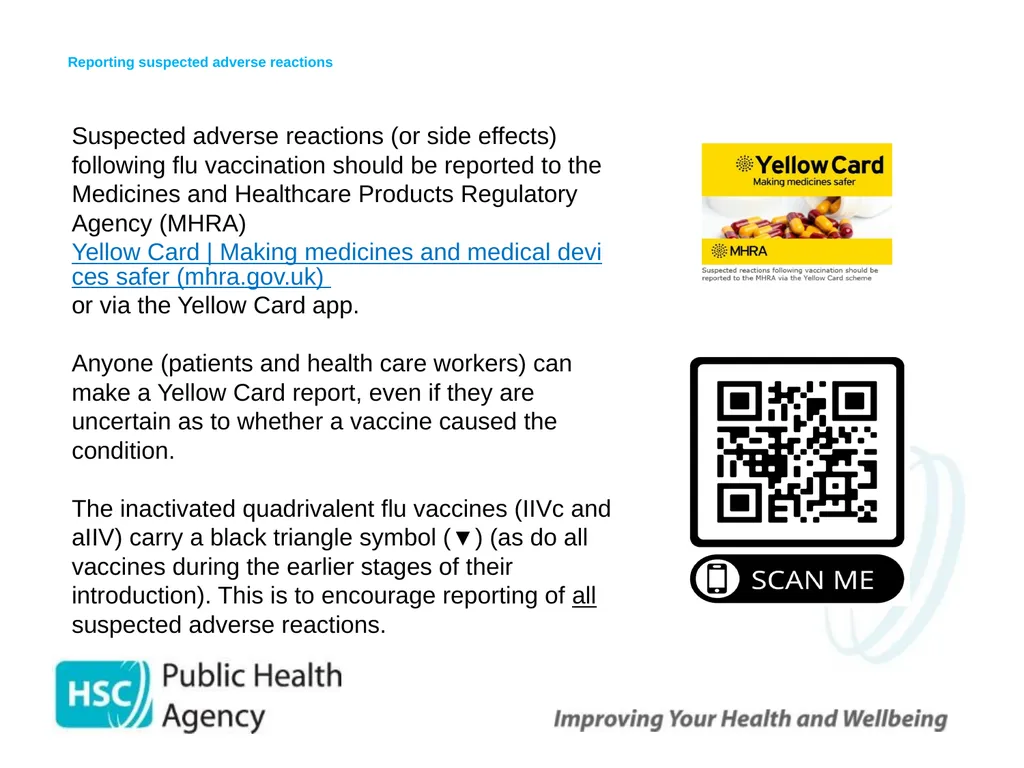
slide50. 50 Reporting suspected adverse reactions Suspected adverse reactions (or side effects) following flu vaccination should be reported to the Medicines and Healthcare Products Regulatory Agency (MHRA) Yellow Card | Making medicines and medical devices safer (mhra.gov.uk) or via the Yellow Card app.
Anyone (patients and health care workers) can make a Yellow Card report, even if they are uncertain as to whether a vaccine caused the condition.
The inactivated quadrivalent flu vaccines (IIVc and aIIV) carry a black triangle symbol (▼) (as do all vaccines during the earlier stages of their introduction). This is to encourage reporting of all suspected adverse reactions.<br>
slide51. Programme delivery 2026/27<br>
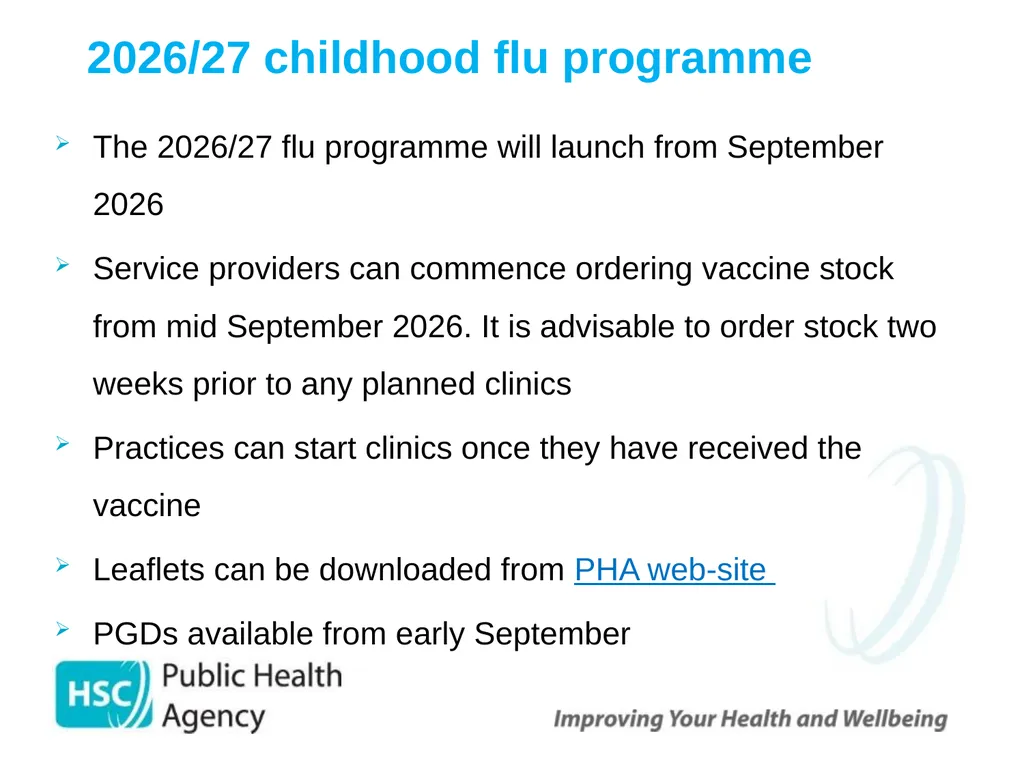
slide52. 2026/27 childhood flu programme The 2026/27 flu programme will launch from September 2026
Service providers can commence ordering vaccine stock from mid September 2026. It is advisable to order stock two weeks prior to any planned clinics
Practices can start clinics once they have received the vaccine
Leaflets can be downloaded from PHA web-site
PGDs available from early September<br>
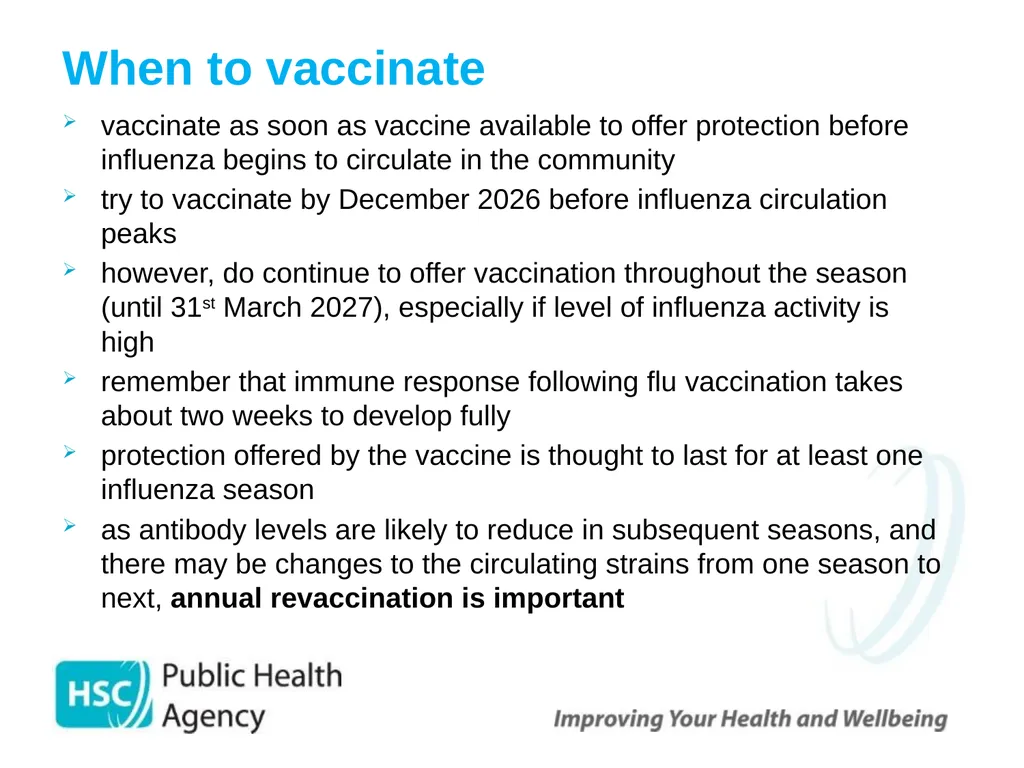
slide53. When to vaccinate vaccinate as soon as vaccine available to offer protection before influenza begins to circulate in the community
try to vaccinate by December 2026 before influenza circulation peaks
however, do continue to offer vaccination throughout the season (until 31st March 2027), especially if level of influenza activity is high
remember that immune response following flu vaccination takes about two weeks to develop fully
protection offered by the vaccine is thought to last for at least one influenza season
as antibody levels are likely to reduce in subsequent seasons, and there may be changes to the circulating strains from one season to next, annual revaccination is important 53<br>
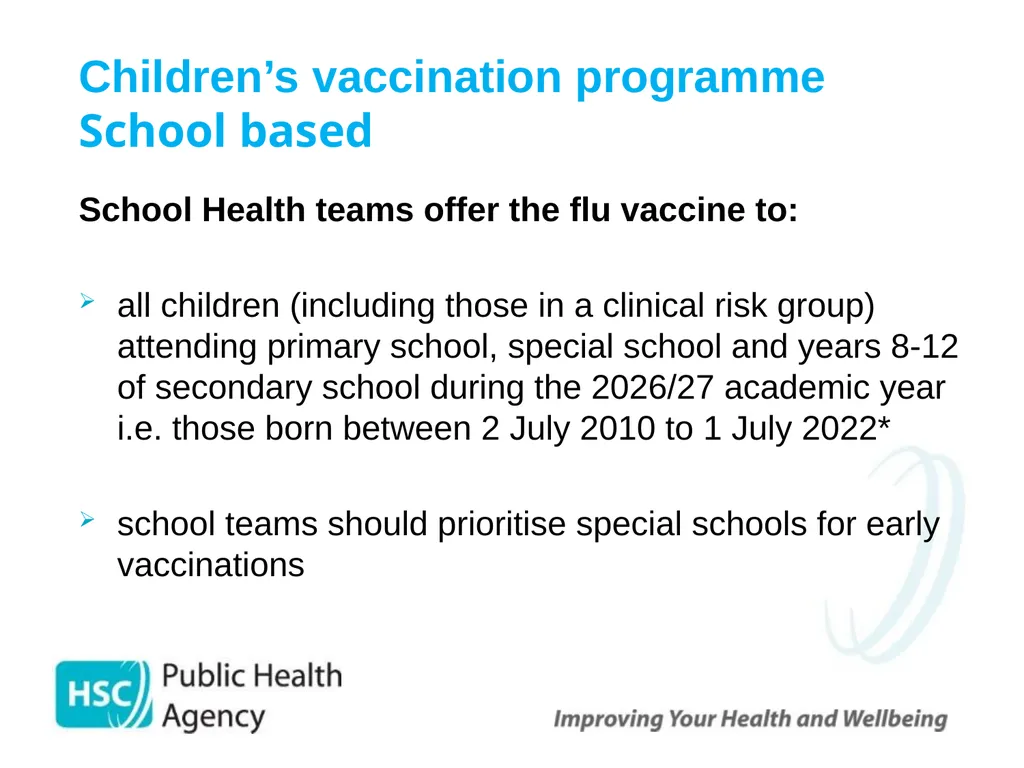
slide54. Children’s vaccination programme School based School Health teams offer the flu vaccine to:
all children (including those in a clinical risk group) attending primary school, special school and years 8-12 of secondary school during the 2026/27 academic year i.e. those born between 2 July 2010 to 1 July 2022*
school teams should prioritise special schools for early vaccinations<br>
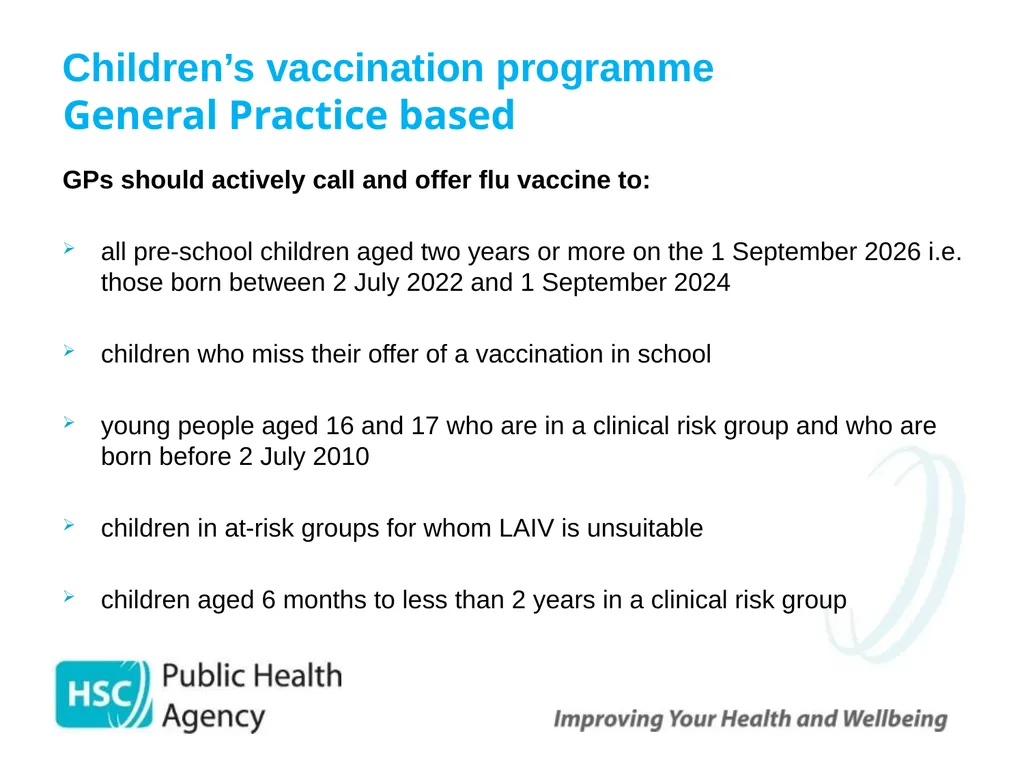
slide55. Children’s vaccination programme General Practice based GPs should actively call and offer flu vaccine to:
all pre-school children aged two years or more on the 1 September 2026 i.e. those born between 2 July 2022 and 1 September 2024
children who miss their offer of a vaccination in school
young people aged 16 and 17 who are in a clinical risk group and who are born before 2 July 2010
children in at-risk groups for whom LAIV is unsuitable
children aged 6 months to less than 2 years in a clinical risk group<br>
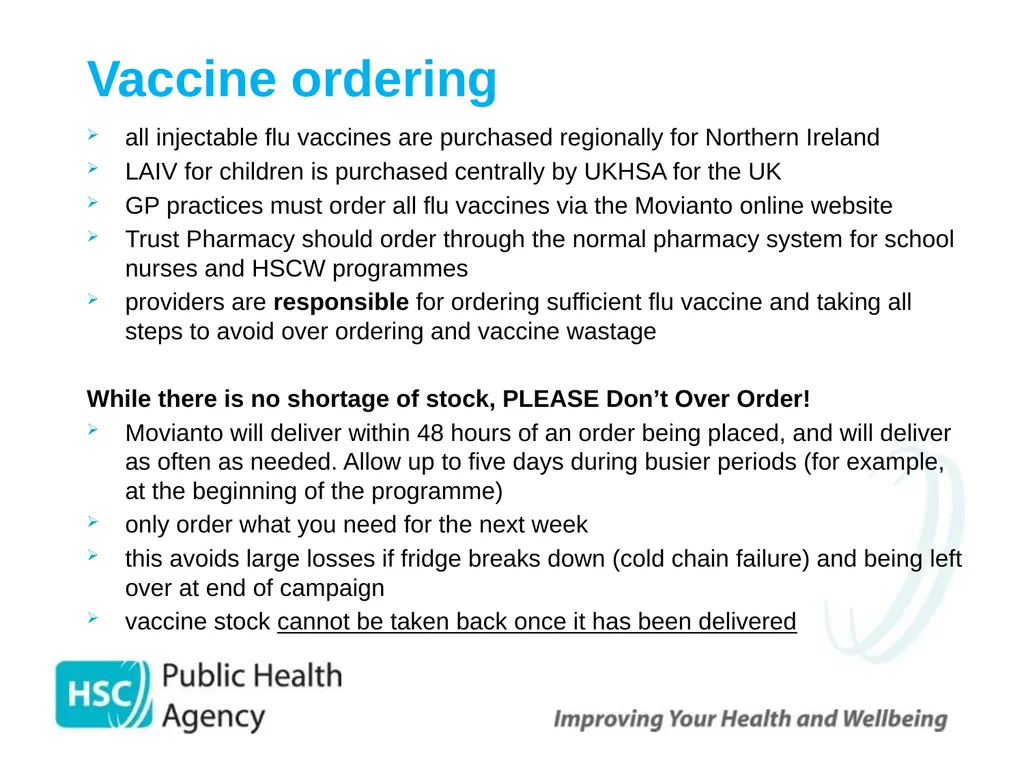
slide56. Vaccine ordering all injectable flu vaccines are purchased regionally for Northern Ireland
LAIV for children is purchased centrally by UKHSA for the UK
GP practices must order all flu vaccines via the Movianto online website
Trust Pharmacy should order through the normal pharmacy system for school nurses and HSCW programmes
providers are responsible for ordering sufficient flu vaccine and taking all steps to avoid over ordering and vaccine wastage
While there is no shortage of stock, PLEASE Don’t Over Order!
Movianto will deliver within 48 hours of an order being placed, and will deliver as often as needed. Allow up to five days during busier periods (for example, at the beginning of the programme)
only order what you need for the next week
this avoids large losses if fridge breaks down (cold chain failure) and being left over at end of campaign
vaccine stock cannot be taken back once it has been delivered<br>
slide57. Further resources HSS(MD) 30 2026 - THE 2026 2027 SEASONAL INFLUENZA VACCINATION PROGRAMME.pdf
Flu healthcare worker’s factsheet
PHA flu page
The Green Book: Influenza Chapter
Flu Immunisation - elearning for healthcare (e-lfh.org.uk)
Flu patient information leaflets
Public Health Agency weekly Flu Surveillance Bulletin
Guidance on vaccine handling and storage in GP practices
Flu immunisation training recommendations - GOV.UK (www.gov.uk)
UKHSA_National_Minimum_Standards_for_immunisation_training_2025.pdf<br>
slide2. Key messages the childhood influenza (flu) programme reduces the impact of seasonal influenza on children and reduces transmission of influenza within the community
by reducing transmission of influenza, the programme should also avert many cases of severe influenza and influenza-related deaths in older adults and individuals in clinical risk groups<br>
slide3. Learning outcomes The purpose of this training resource is to:
develop the knowledge base of healthcare practitioners regarding the 2026/27 flu vaccination programme for children
support healthcare practitioners involved in discussing flu vaccination for children with parents and carers by providing evidence based information
promote high uptake of flu vaccine in children through increasing the knowledge of those involved in delivering the vaccination programme
provide information on the administration of the live attenuated intranasal influenza vaccine (LAIV) 3<br>
slide4. Influenza Influenza (or flu):
is a viral infection affecting the respiratory tract
is highly infectious and spreads rapidly in closed communities
can be spread by people with mild / no symptoms
usually occurs in an 8-10 week period during the winter<br>
slide5. Influenza virus: types There are three main types of influenza virus<br>
slide6. Influenza A virus Two surfce antigens:
Haemagglutinin (H)
Neuraminidase (N) Genetic material (RNA) in the centre
Two surface antigens There are 18 different types of H and 11 different types of N e.g. H3N2 or H1N1<br>
slide7. Influenza virus: Genetic changes and what this means Changes in surface antigens result in the virus constantly changing (mutating).
Antigenic drift: minor changes (natural mutations) in the genes of influenza A viruses that occur gradually over time from season to season..
Antigenic shift: when two or more different strains combine. This abrupt change may result in a new influenza A subtype. Immunity from previous flu infections/vaccinations may not protect against the new subtype, potentially leading to widespread epidemics or pandemics.
The World Health Organisation (WHO) monitors epidemiology throughout the world and advises on the strains of influenza A and B predicted to be circulating in the forthcoming winter. These strains are included in the flu vaccines developed each year.<br>
slide8. Influenza: Characteristics Easily transmitted by droplets, small-particle aerosols and by hand to mouth/eye contamination from a contaminated surface or respiratory secretions of an infected person.
People with mild or no symptoms can still infect others.
Incubation period 1-5 days (average 2-3 days), although may be longer especially in people with immune deficiency (immunosuppression).
Common symptoms include:
sudden onset of fever, chills, headache, muscle and joint pain and extreme fatigue
dry cough, sore throat and stuffy nose
in young children, gastrointestinal symptoms such as vomiting and diarrhoea, may be seen.<br>
slide9. Influenza: Complications Common:
bronchitis
otitis media (children), sinusitis
secondary bacterial pneumonia
Less common:
meningitis, encephalitis, meningoencephalitis
primary influenza pneumonia
Risk of complications is higher in:
children under six months
older people
those with underlying health conditions such as respiratory disease, cardiac disease, long-term neurological conditions or immunosuppression
pregnant women (influenza during pregnancy is also associated with perinatal mortality, prematurity, small for gestational age (SGA) and low birth weight) 9<br>
slide10. Flu epidemiology<br>
slide11. GP influenza/flu-like illness (FLI) consultation rates Annual all age GP influenza-like illness rates for 2023/24 to 2025/26 and past seasons Respiratory Annual Surveillance Report, Northern Ireland 2025-2026 | HSC Public Health Agency<br>
slide12. Influenza Weekly Surveillance Bulletin, Northern Ireland Public Health Agency weekly Flu Surveillance Bulletin<br>
slide13. History of the national flu vaccination programme Late 1960s: influenza immunisation recommended in the UK to directly protect those in clinical risk groups at higher risk of influenza associated morbidity and mortality
2000: extended to include all people aged 65 years or over
2010: pregnancy added as a clinical risk group
2014: morbid obesity added as a clinical risk group
2013: all pre-school children from 2 years and primary school children
2020: school aged children in Year 8
2021: extension to 50-64 year olds*, school age children up to Year 12 and household contacts of immunocompromised individuals
2024: flu vaccine programme offer to clinical risk groups, all aged 65 years and over, and all children aged 2 up to school age Year 12<br>
slide14. Rationale for vaccinating children against flu Extension of the seasonal flu vaccination programme to children aims to considerably lower the public health impact of flu by:
providing direct protection thus preventing a large number of cases of influenza in children
providing indirect protection by lowering influenza transmission from children:
to other children
to adults
to those in clinical risk groups of any age.
Reducing influenza transmission in the community should avert many cases of severe influenza and influenza-related deaths in older adults and people with clinical risk factors.
Studies have shown that administration of flu vaccine to children has reduced GP consultations for influenza-like illness, swab positivity in primary care, laboratory confirmed hospitalisations and percentage of respiratory emergency department attendances. 14<br>
slide15. Childhood flu vaccination programme 2026/27<br>
slide16. Flu Vaccination Programme: Policy outlined in annual CMO letter 2026/27 Link to CMO letter published HSS(MD) 30 2026 - THE 2026 2027 SEASONAL INFLUENZA VACCINATION PROGRAMME.pdf<br>
slide17. Flu Vaccination Programme: Eligibility Childhood criteria for 2026/27 those aged 6 months to 17 years in clinical risk groups (as defined by the influenza chapter in ‘Immunisation against infectious disease’ (the ‘Green Book’)
all preschool children aged 2 to 4 years on 1 September 2026
all primary and secondary school children (up to year 12)
those aged 6 months to 17 years who are household contacts of immunocompromised individuals*
16 – 17 year olds who are health and social care workers (HSCWs) and are directly involved in the care of patients or clients
16 – 17 year olds who are in receipt of a carer’s allowance, or those who are the main carer of an elderly or disabled person whose welfare may be at risk if the carer falls ill 17<br>
slide18. Flu vaccine: Effectiveness Vaccine effectiveness (VE) varies from one season to the next.
The UK has a well-established system to monitor flu vaccine effectiveness each season, using data from primary care schemes in England, Scotland, Wales and Northern Ireland.
A recent NI study demonstrated that overall vaccine effectiveness against lab-confirmed influenza was 46% (CI 39.7%-5(60.8%; 95% CI: 48.3% to 70.5%).
Vaccine effectiveness is higher in children aged 2–17 years (60.8%) than in adults aged 18–64 years (40.5%) and ≥ 65 years (42.3%).
Vaccination reduced the odds of hospitalisation due to influenza A(H1) by 44.3% and A(H3) by 49.9%.
While VE is lower in the elderly, immunisation reduces incidence of severe disease, hospital admission and mortality.
Read the full study here: Effectiveness of Influenza Vaccines and Duration of Protection Against Hospitalisation During the 2024/25 Season in Northern Ireland, UK - Bucholc - 2026 - Influenza and Other Respiratory Viruses - Wiley Online Library<br>
slide19. Flu Vaccination Programme: 2026/27 childhood programme the list of eligible groups is not exhaustive
clinical judgement should be applied to take account the risk of exacerbating any underlying disease with influenza, as well as the risk of serious illness from influenza itself
those involved in delivering flu vaccine programmes should be familiar with the updated chapter of The Green Book and the HSS CMO seasonal flu letter link .<br>
slide20. Clinical risk groups The national flu immunisation programme 2017/18<br>
slide21. Clinical risk groups (continued)<br>
slide22. Flu Vaccination Programme Children’s programme uptake rates 2025/26 uptake in 2025/26 for 2-4 year olds was 29.7% compared to 30.0 in 2024/25
59.4% of primary school children were vaccinated against flu during 2025/26 compared to 64.9% in 2024/25
55% of children and young people in years 8 to 12 in secondary schools were vaccinated in 2025/26 compared to 58.5% in the previous year<br>
slide23. Flu Vaccination Programme 2026/27 targets for uptake rates vaccine uptake varies widely between the individual eligible groups and by age category for those with underlying clinical risk factors
the aim of the influenza programme for 2026/27 is to demonstrate a 100% offer and to exceed the uptake levels achieved amongst each cohort during the 2025/26 programme.
general practices and school providers should ensure all eligible children are offered the opportunity to be vaccinated by an active call mechanism, supplemented with opportunistic offers where pragmatic
the goals outlined by the Department of Health for 2026/27 are to increase uptake rates across all eligible groups, particularly those in at-risk groups, pre-school and secondary school children<br>
slide24. Flu vaccines: Types Two main types of flu vaccine available:
inactivated – administered by injection (IIVc)
live attenuated – administered by nasal application (LAIV)
None of the flu vaccines can cause clinical influenza in those that are eligible for the vaccine*
The inactivated and live attenuated flu vaccines supplied for the children’s programme are trivalent vaccines – containing two subtypes of Influenza A and one B virus type.
the inactivated vaccine is recommended for children under the age of 2, and those who cannot receive live attenuated vaccine due to contraindications, or parental preference 24<br>
slide25. Vaccine composition: Northern Hemisphere 2026/27* The WHO recommends that trivalent vaccines for use in the 2026-2027 northern hemisphere influenza season contain the following:
Egg-based vaccines
an A/Missouri/11/2025 (H1N1) pdm09-like virus;
an A/Darwin/1454/2025 (H3N2)-like virus; and
a B/Tokyo/EIS13-175/2025 (B/Victoria lineage)-like virus
Cell culture-, recombinant protein- or nucleic acid-based vaccines
an A/Missouri/11/2025 (H1N1)pdm09-like virus;
an A/Darwin/1415/2025 (H3N2)-like virus; and
a B/Pennsylvania/14/2025 (B/Victoria lineage)-like virus
The previous recommendation for the B/Yamagata lineage component of the quadrivalent influenza vaccines are no longer included as per WHO and JCVI:
a B/Phuket/3073/2013 (B/Yamagata lineage)-like virus.<br>
slide26. Changes to the LAIV for the 2026/2027 flu vaccination programme when LAIV was first introduced into the annual flu vaccination programme for children in 2013, the vaccine was a trivalent vaccine which contained two type A and one type B influenza virus strains
in 2014, in order to extend protection against flu for children, who are more frequently infected with the B strains than adults, both B strains were included in the LAIV: the quadrivalent LAIV was then offered for the next 10 flu seasons
the quadrivalent LAIV used in Northern Ireland was Fluenz Tetra®
For the 2026/27 flu vaccination programme, the LAIV will be a trivalent vaccine again, and is commercially known as Fluenz®
this follows a recommendation from the WHO in 2023 that the B/Yamagata lineage antigen should be excluded from future influenza vaccines as there have been no confirmed naturally occurring B/Yamagata lineage virus detections after March 2020<br>
slide27. Changes to the LAIV for the 2025/2026 flu vaccination programme (continued) the Joint Committee for Vaccination and Immunisation (JCVI) felt that continuing to vaccinate children with a live vaccine which contained B/Yamagata increased the potential theoretical risk of reassortment (a process by which influenza viruses exchange genetic material with each other which can affect the transmissibility and pathogenicity of the virus and lead to new variants) and the return of circulating B/Yamagata strains
therefore, the JCVI recommended LAIV return to a trivalent formulation
the company who manufacture the only LAIV used in the UK have reformulated their vaccine
the trivalent vaccine will offer the same level of protection against the two A and one B flu virus strains in it as the quadrivalent vaccine and the inactivated flu vaccines are likely to become trivalent vaccines in future flu seasons<br>
slide28. Flu vaccines
Children - Seasonal Flu 2026/27 LAIV- Fluenz®
“Live-attenuated”<br>
slide29. Vaccines procured in Northern Ireland for eligible children in 2026/27 Live attenuated intranasal vaccine (LAIV - Fluenz ®)
children aged 2 - 17 years in school nursing or general practice
Cell-based Inactivated influenza vaccine (IIVc)
children >2 years if LAIV contraindicated in general practice or school nursing
children aged 6 months – 2 years in general practice<br>
slide30. 1. Live attenuated influenza vaccine LAIV - Fluenz® Recommended for children from age 2 years to < 18 years
Remains the vaccine of choice for at risk children aged 2 to <18 years – except where contraindicated<br>
slide31. LAIV (Fluenz®) ready to use nasal spray (suspension)
applicator contains 0.2ml (administered as 0.1ml per nostril)
LAIV can be administered at the same time as, or at any interval between other vaccines, including live vaccines
children should breathe normally – no need to actively inhale
the vaccine is rapidly absorbed so no need to repeat the dose if child sneezes, blows their nose or their nose drips following administration
one dose required unless:
child is in a clinical risk group and is under 9 years old and has not previously received a flu vaccine
if second dose required leave at least 4 weeks between doses<br>
slide32. 32 LAIV: applicator Image taken from Fluenz Tetra® SPC<br>
slide33. 33 LAIV: Administration (1) Images taken from Fluenz Tetra® SPC<br>
slide34. 34 LAIV: Administration (2) Images taken from Fluenz Tetra® SPC<br>
slide35. 2. Cell-based inactivated influenza vaccine (IIVc) First line for all children aged 6 months to 2 years who are eligible for the flu vaccine
Second line for children over 2 years with contraindication to Fluenz®
Single intramuscular (IM) injection
One dose schedule required unless: child is in a clinical risk group and under 9 years old and has not previously received a flu vaccine
if second dose required leave at least 4 weeks between doses<br>
slide36. Cell-based inactivated influenza vaccine (IIVc) IIVc was licensed in the UK in December 2018 for adults and children from 9 years of age. It now also licensed for children from 2 years of age
IIVc is a trivalent vaccine containing two subtypes of Influenza A (H3N2 and H1N1pdm00) and one B virus lineage.
IIVc has a similar safety profile to other flu vaccines (similar rate and type of adverse reactions reported). Millions of doses of cell-based vaccine have been administered with no serious safety concerns
the cell-based vaccine manufacturing process uses an animal cell line (Madin-Darby Canine Kidney or MDCK) to grow the influenza virus rather than the traditional egg based manufacturing methods
this manufacturing process eliminates the risk of egg-adaptation and may result in the vaccine containing virus that is a closer match to wild-type circulating flu viruses
IIVc is egg free<br>
slide37. Administration of flu vaccines given by injection The inactivated influenza vaccines should normally be administered by intramuscular (IM) injection into the deltoid muscle in the upper arm (or anterolateral aspect of the thigh in infants).
IIVc is supplied in a single-dose prefilled syringe, containing a 0.5ml dose, and does not require reconstitution.
Patients taking anticoagulants / with bleeding disorder
individuals on stable anticoagulation therapy (including individuals on warfarin who are up-to-date with their scheduled INR testing and whose latest INR was below the upper threshold of their therapeutic range) can receive intramuscular (IM) vaccination
if in any doubt, consult with the clinician responsible for prescribing or monitoring the individual’s anticoagulant therapy. 37<br>
slide38. Storage of all flu vaccine Efficacy, safety and quality may be adversely affected if vaccines are not stored at the temperatures specified in the licence.
Must be stored in accordance with manufacturer’s instructions:
store between +2⁰C and +8⁰C
do not freeze
store in original packaging
protect from light.
Check expiry dates regularly:
LAIV has an expiry date 15 weeks after manufacture – this is much shorter than inactivated flu vaccines
it is important that the expiry date on the nasal spray applicator is checked before use. 38<br>
slide39. Co-administration of flu and other childhood vaccines no interval required between inactivated flu vaccines and any other childhood vaccines
if two or more intramuscular vaccines are given at the same time, they should be given in separate sites (preferably a separate limb) and leave at least 2.5 cms between administration sites
LAIV can also be given at the same time as other live or inactivated vaccines See Green-Book-Chapter-4.<br>
slide40. The live attenuated flu vaccine (Fluenz®) should not be given to children or adolescents who are:
clinically severely immunodeficient due to conditions or immunosuppressive therapy, such as:
acute and chronic leukaemias
lymphoma
HIV infection not suppressed by antiretroviral therapy
cellular immune deficiencies
high dose corticosteroids
receiving salicylate therapy*
known to be pregnant.
See subsequent slide for children with acute and severe asthma Contraindications live attenuated flu vaccine (LAIV)<br>
slide41. There are very few individuals who cannot receive any flu vaccines.
None of the influenza vaccines should be given to those who have had:
confirmed anaphylactic reaction to a previous dose of the vaccine
confirmed anaphylactic reaction to any component of the vaccine (except ovalbumin - see precautions).
Note: Always refer to SmPC for individual products when deciding which vaccine to give Contraindications (inactivated flu vaccines)<br>
slide42. Acutely unwell:
defer flu vaccine until recovered
Heavy nasal congestion:
defer LAIV until resolved or, if the child is in a risk group, consider inactivated flu vaccine (IIVc) to provide protection without delay
Cochlear implants:
children with cochlear implants can be given LAIV safely, although ideally not in the week prior to implant surgery or for 2 weeks afterwards, or if there is evidence of on-going cerebrospinal fluid (CSF) leak
Use with antiviral agents against influenza:
LAIV should not be administered at the same time or within 48 hours of cessation of treatment with influenza antiviral agents
administration of influenza antiviral agents within two weeks of administration of LAIV may adversely affect the effectiveness of the vaccine 42 Precautions to flu vaccines<br>
slide43. Acute wheezing and severe asthma The Joint Committee on Vaccination and Immunisation (JCVI) advise:
children with asthma on inhaled corticosteroids may safely be given LAIV irrespective of the dose prescribed
LAIV is not recommended for children and adolescents currently experiencing an acute exacerbation of symptoms including: - those who have had increased wheezing and/or - needed additional bronchodilator treatment in previous 72 hours
such children should be offered a suitable inactivated influenza vaccine (IIVc) to avoid a delay in protection
children who require regular oral steroids for maintenance of asthma control, or have previously required intensive care for asthma exacerbation should only be given LAIV on the advice of their specialist
as these children may be at higher risk from influenza infection, those who cannot receive LAIV should receive a suitable inactivated influenza vaccine<br>
slide44. Egg allergy children with an egg allergy that did not result in an intensive care admission can be safely vaccinated with LAIV in any setting (including primary care and schools)
children aged 2 years of age and over with a history of egg allergy that required admission to intensive care for a previous severe anaphylaxis to egg can now be offered IIVc in any setting (including primary care and schools)<br>
slide45. Porcine gelatine LAIV contains a highly purified form of gelatine derived from pigs
gelatine is used in LAIV as a stabiliser - it protects the live viruses from the effects of temperature
gelatine is commonly used in a range of pharmaceutical products, including many capsules and some vaccines
there is no other live attenuated flu vaccine available that does not contain porcine gelatine. The manufacturer of LAIV (Fluenz®) tested 40 potential stabilisers – gelatine was chosen because without it, stability was significantly reduced
for eligible children whose parents refuse LAIV due to the porcine gelatine content, the injectable IIVc can be offered<br>
slide46. LAIV and ‘viral shedding’ LAIV does not create an external mist of vaccine virus in the air when children are being vaccinated and others in the room should not be at risk of ‘catching’ the vaccine virus
administration of the intranasal vaccine delivers just 0.1ml of fluid straight into each nostril and almost all the fluid is immediately absorbed into the child’s nose
although vaccinated children are known to shed virus a few days after vaccination, the vaccine virus that is shed is less able to spread from person to person than natural flu infection
the amount of virus shed is normally below the levels needed to pass on infection to others and the virus does not survive for long outside of the body. This is in contrast to natural flu infection, which spreads easily during the flu season<br>
slide47. there is a theoretical potential for transmission of live attenuated virus to immunocompromised contacts - risk is for one to two weeks following vaccination with LAIV
extensive use of LAIV in the UK (over 25 million doses) – no reports of illness among immunocompromised patients inadvertently exposed to vaccinated children
however, where close contact with severely immunocompromised patients (e.g. bone marrow transplant patients requiring isolation) is likely/unavoidable (e.g. household members) consider an appropriate inactivated flu vaccine instead
no reports of transmission of vaccine virus in healthcare settings
as a precaution, however, very severely immunosuppressed healthcare workers should not administer LAIV Transmission risk from live vaccine<br>
slide48. Inadvertent administration of LAIV if an immunocompromised individual receives LAIV the degree of immunosuppression should be assessed
if patient is severely immunocompromised, antiviral prophylaxis should be considered
otherwise they should be advised to seek medical advice if they develop flu-like symptoms in the four days following administration of the vaccine
if antivirals are used for prophylaxis or treatment, patient should also be offered inactivated flu vaccine in order to maximise their protection (this can be given straight away) 48<br>
slide49. Adverse reactions Commonly reported following inactivated flu vaccine:
pain, swelling or redness at the injection site, low grade fever, malaise, shivering, sweating, fatigue, headache, myalgia (muscle pain) and arthralgia (joint pain)
a small painless nodule (induration) may also form at the injection site
these symptoms usually disappear within one to two days without treatment.
Commonly reported following live attenuated flu vaccine:
nasal congestion/rhinorrhoea, reduced appetite, weakness and headache.
Rarely, after live or inactivated vaccine:
immediate reactions such as urticaria, angio-oedema, bronchospasm and anaphylaxis can occur. 49<br>
slide50. 50 Reporting suspected adverse reactions Suspected adverse reactions (or side effects) following flu vaccination should be reported to the Medicines and Healthcare Products Regulatory Agency (MHRA) Yellow Card | Making medicines and medical devices safer (mhra.gov.uk) or via the Yellow Card app.
Anyone (patients and health care workers) can make a Yellow Card report, even if they are uncertain as to whether a vaccine caused the condition.
The inactivated quadrivalent flu vaccines (IIVc and aIIV) carry a black triangle symbol (▼) (as do all vaccines during the earlier stages of their introduction). This is to encourage reporting of all suspected adverse reactions.<br>
slide51. Programme delivery 2026/27<br>
slide52. 2026/27 childhood flu programme The 2026/27 flu programme will launch from September 2026
Service providers can commence ordering vaccine stock from mid September 2026. It is advisable to order stock two weeks prior to any planned clinics
Practices can start clinics once they have received the vaccine
Leaflets can be downloaded from PHA web-site
PGDs available from early September<br>
slide53. When to vaccinate vaccinate as soon as vaccine available to offer protection before influenza begins to circulate in the community
try to vaccinate by December 2026 before influenza circulation peaks
however, do continue to offer vaccination throughout the season (until 31st March 2027), especially if level of influenza activity is high
remember that immune response following flu vaccination takes about two weeks to develop fully
protection offered by the vaccine is thought to last for at least one influenza season
as antibody levels are likely to reduce in subsequent seasons, and there may be changes to the circulating strains from one season to next, annual revaccination is important 53<br>
slide54. Children’s vaccination programme School based School Health teams offer the flu vaccine to:
all children (including those in a clinical risk group) attending primary school, special school and years 8-12 of secondary school during the 2026/27 academic year i.e. those born between 2 July 2010 to 1 July 2022*
school teams should prioritise special schools for early vaccinations<br>
slide55. Children’s vaccination programme General Practice based GPs should actively call and offer flu vaccine to:
all pre-school children aged two years or more on the 1 September 2026 i.e. those born between 2 July 2022 and 1 September 2024
children who miss their offer of a vaccination in school
young people aged 16 and 17 who are in a clinical risk group and who are born before 2 July 2010
children in at-risk groups for whom LAIV is unsuitable
children aged 6 months to less than 2 years in a clinical risk group<br>
slide56. Vaccine ordering all injectable flu vaccines are purchased regionally for Northern Ireland
LAIV for children is purchased centrally by UKHSA for the UK
GP practices must order all flu vaccines via the Movianto online website
Trust Pharmacy should order through the normal pharmacy system for school nurses and HSCW programmes
providers are responsible for ordering sufficient flu vaccine and taking all steps to avoid over ordering and vaccine wastage
While there is no shortage of stock, PLEASE Don’t Over Order!
Movianto will deliver within 48 hours of an order being placed, and will deliver as often as needed. Allow up to five days during busier periods (for example, at the beginning of the programme)
only order what you need for the next week
this avoids large losses if fridge breaks down (cold chain failure) and being left over at end of campaign
vaccine stock cannot be taken back once it has been delivered<br>
slide57. Further resources HSS(MD) 30 2026 - THE 2026 2027 SEASONAL INFLUENZA VACCINATION PROGRAMME.pdf
Flu healthcare worker’s factsheet
PHA flu page
The Green Book: Influenza Chapter
Flu Immunisation - elearning for healthcare (e-lfh.org.uk)
Flu patient information leaflets
Public Health Agency weekly Flu Surveillance Bulletin
Guidance on vaccine handling and storage in GP practices
Flu immunisation training recommendations - GOV.UK (www.gov.uk)
UKHSA_National_Minimum_Standards_for_immunisation_training_2025.pdf<br>