Citizen Participation in Heating Projects Decarbonisation of heating systems needs to accelerate Renewable targets for heating and cooling systems will gradually increase, with a binding increase of 0.8 per year at the national level until
"Citizen Participation in Heating Projects" is the property of its rightful owner. Permission is granted to
download and print the materials on this website for personal, non-commercial use only, and to display it
on your personal computer provided you do not modify the materials and that you retain all copyright
notices contained in the materials. By downloading content from our website, you accept the terms of this
agreement.
Presentation Transcript
01
Citizen Participation in Heating Projects Decarbonisation of heating systems needs to accelerate
Renewable targets for heating and cooling systems will gradually increase, with a binding increase of 0.8% per year at the national level until 2026 and 1.1% from 2026 to 2030 - RED III
Under REDII Member states have to enable renewable energy communities developing heating projects Benefits of energy communities
Energy democracy
Reduction of costs
Vulnerable consumers needs are adressed
Energy security
Green jobs<br>
02
Heating Energy Communities in Germany Energy communities in Germany engage primarily in electricity energy production (electricity (photovoltaics, wind) and heat (biomass)). Most popular legal form for energy communities: cooperative.
Challenges:
The regulatory framework and the bureaucracy
Lack of RED II transposition
Initial investments costs
Reliance on voluntary work; lack of professional experience
Lack of support of local politicians
Energy market dynamics<br>
03
Heating Energy Communities in Poland None of the 33 registered energy cooperatives conducts heating projects.
Energy clusters focuse mostly on electricity Challenges:
Lack of support system for heating energy communities
Lack of cooperation with municipalities and DSOs
Financial costs
Lack of professional knowledge
Lack of attractive public funding and mentoring programme<br>
04
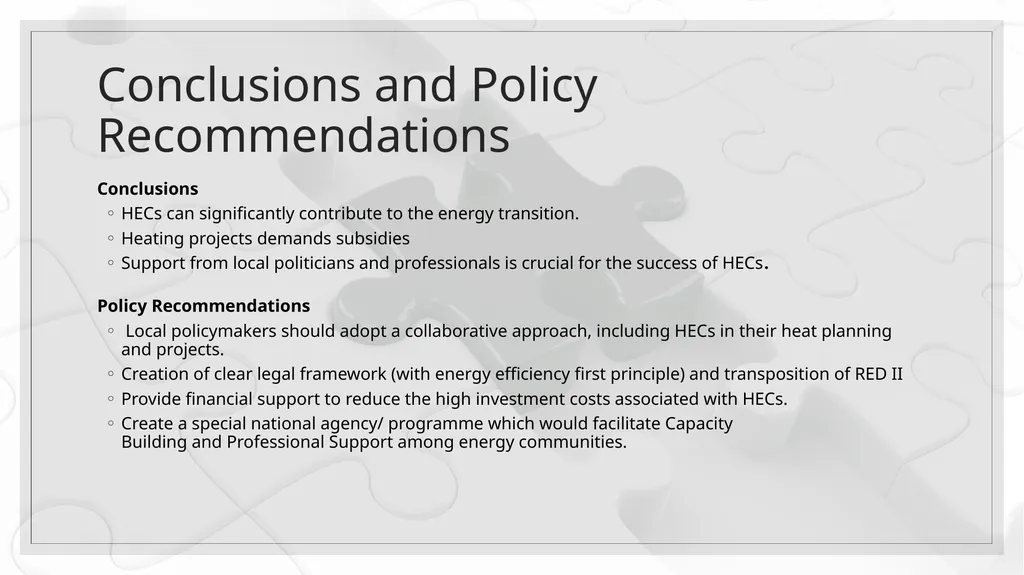
Conclusions and Policy Recommendations Conclusions
HECs can significantly contribute to the energy transition.
Heating projects demands subsidies
Support from local politicians and professionals is crucial for the success of HECs.
Policy Recommendations
Local policymakers should adopt a collaborative approach, including HECs in their heat planning and projects.
Creation of clear legal framework (with energy efficiency first principle) and transposition of RED II
Provide financial support to reduce the high investment costs associated with HECs.
Create a special national agency/ programme which would facilitate Capacity Building and Professional Support among energy communities.<br>