CLASS 12 SUBJECT BIOLOGY CHAPTER 8 CONCEPT MICROBES IN HUMAN WELFARE PPT 1 MICROBES OR MICROORGANISMS Microbes are diverse-protozoa, bacteria, fungi and microscopic plants viruses, viroid and also prions that are proteinaceous
"CLASS – 12 SUBJECT – BIOLOGY CHAPTER – 8 CONCEPT" is the property of its rightful owner. Permission is granted to
download and print the materials on this website for personal, non-commercial use only, and to display it
on your personal computer provided you do not modify the materials and that you retain all copyright
notices contained in the materials. By downloading content from our website, you accept the terms of this
agreement.
Presentation Transcript
01
CLASS – 12
SUBJECT – BIOLOGY
CHAPTER – 8
CONCEPT – MICROBES IN HUMAN WELFARE
PPT – 1<br>
02
MICROBES OR MICROORGANISMS Microbes are diverse-protozoa, bacteria, fungi and microscopic plants viruses, viroid and also prions that are proteinaceous infectious agents. They are found everywhere on earth ranging from soil, air water and some inhabitable places.
Bacteria and fungi can be grown on nutritive media to form colonies, which can be seen by necked eyes and very useful in study of microorganisms.
Microbes cause many diseases in human beings, plants and animals. Several microorganisms are useful to man in diverse ways.<br>
03
Microbes in household products Microbes in household products
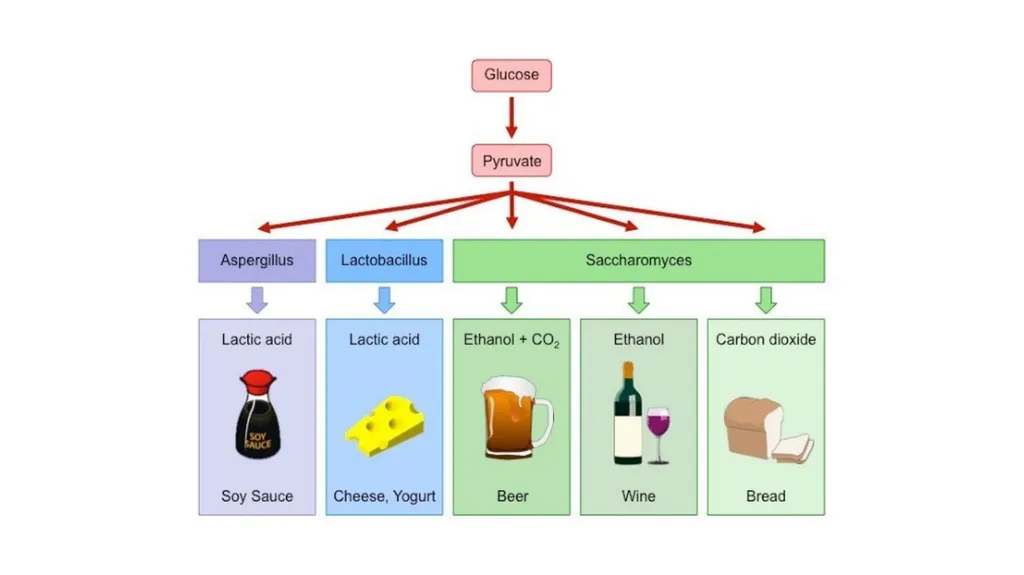
a. Microorganisms like Lactobacillus and other commonly called lactic acid bacteria (LAB) grow in milk and convert it to curd. The LAB produces acids that coagulate and partially digest the milk proteins. It also improves its nutritional quality by increasing vitamin B12. In our stomach too, the LAB play very beneficial role in checking disease-causing microbes.
b. The dough is used for making foods such as dosa and idli is fermented by bacteria. The puffed-up appearance of dough is due to the production of CO2 gas. The dough used for making bread is fermented using baker’s yeast (Saccharomyces cervisiae).
c. Cheese, is one of the oldest food items in which microbes were used. The large holes in ‘Swiss cheese’ are due to production of a large amount of CO2 by a bacterium named Propionibacterium sharmanii. The ‘Roquefort cheese’ is ripened by growing a specific fungus on them for a particular flavour.<br>
04
Microbes in household products<br>
05
Microbes in industrial production Microbes in industrial production
A number of products like beverages and antibiotics involve uses of microbes. Production on large scale requires growing microbes in very large vessels called fermenters.
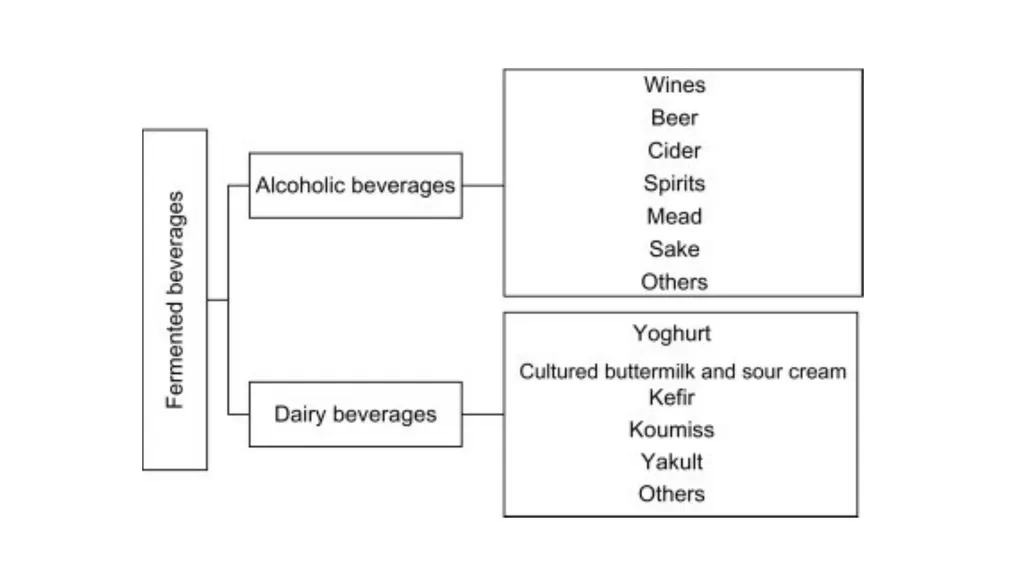
a. Fermented Beverages- Saccharomyces cerevisiae used for bread-making and commonly called brewer’s yeast, is used for fermenting malted cereals and fruit juices, to produce beverages like wine, bear, whisky and rum.. Wine and bear are produced without distillation whereas whisky, brandy and rum are produced by distillation of the fermented broth.<br>
06
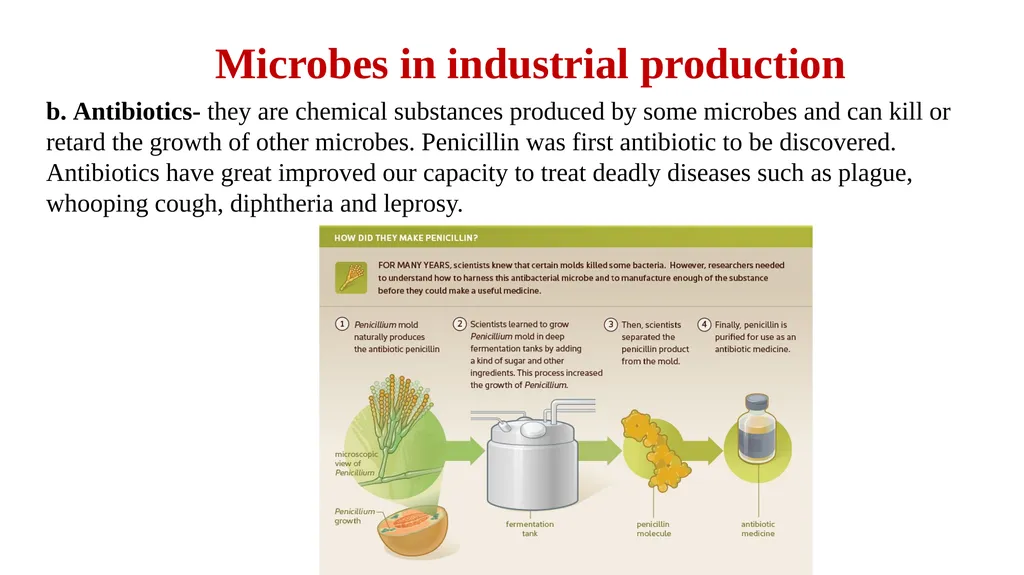
Microbes in industrial production b. Antibiotics- they are chemical substances produced by some microbes and can kill or retard the growth of other microbes. Penicillin was first antibiotic to be discovered. Antibiotics have great improved our capacity to treat deadly diseases such as plague, whooping cough, diphtheria and leprosy.<br>
07
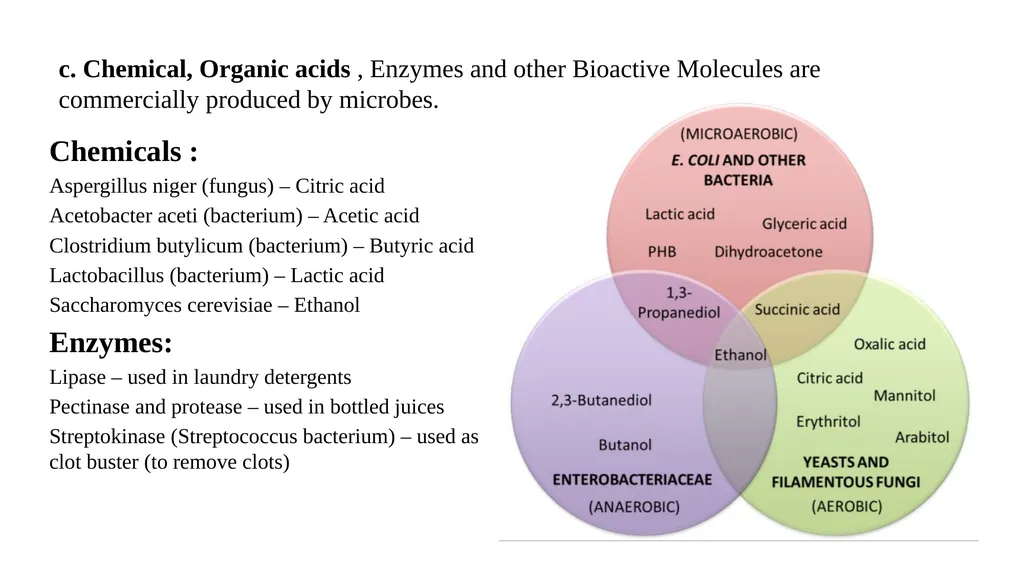
Chemicals :
Aspergillus niger (fungus) – Citric acid
Acetobacter aceti (bacterium) – Acetic acid
Clostridium butylicum (bacterium) – Butyric acid
Lactobacillus (bacterium) – Lactic acid
Saccharomyces cerevisiae – Ethanol
Enzymes:
Lipase – used in laundry detergents
Pectinase and protease – used in bottled juices
Streptokinase (Streptococcus bacterium) – used as clot buster (to remove clots) c. Chemical, Organic acids , Enzymes and other Bioactive Molecules are commercially produced by microbes.<br>
08
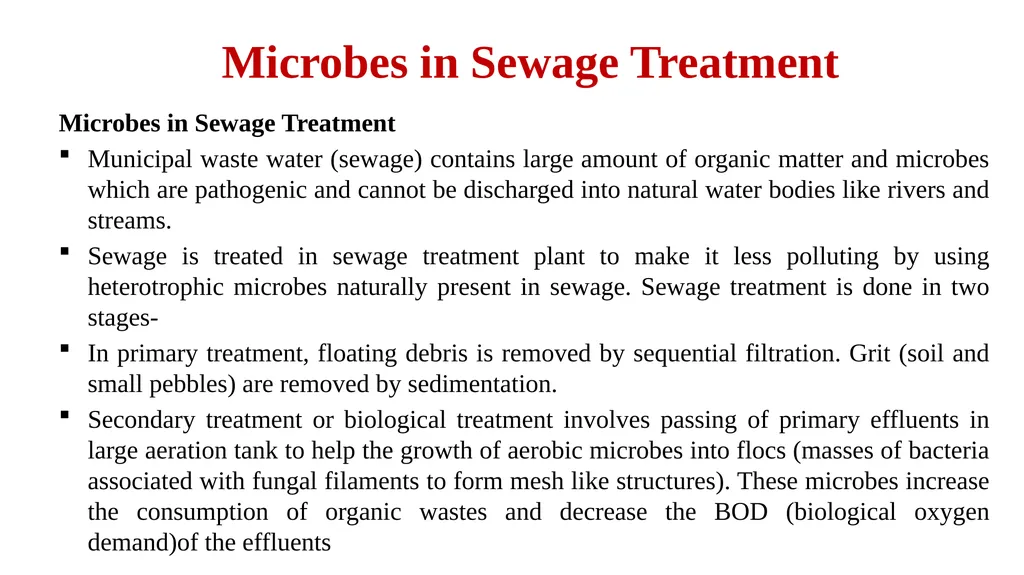
Microbes in Sewage Treatment Microbes in Sewage Treatment
Municipal waste water (sewage) contains large amount of organic matter and microbes which are pathogenic and cannot be discharged into natural water bodies like rivers and streams.
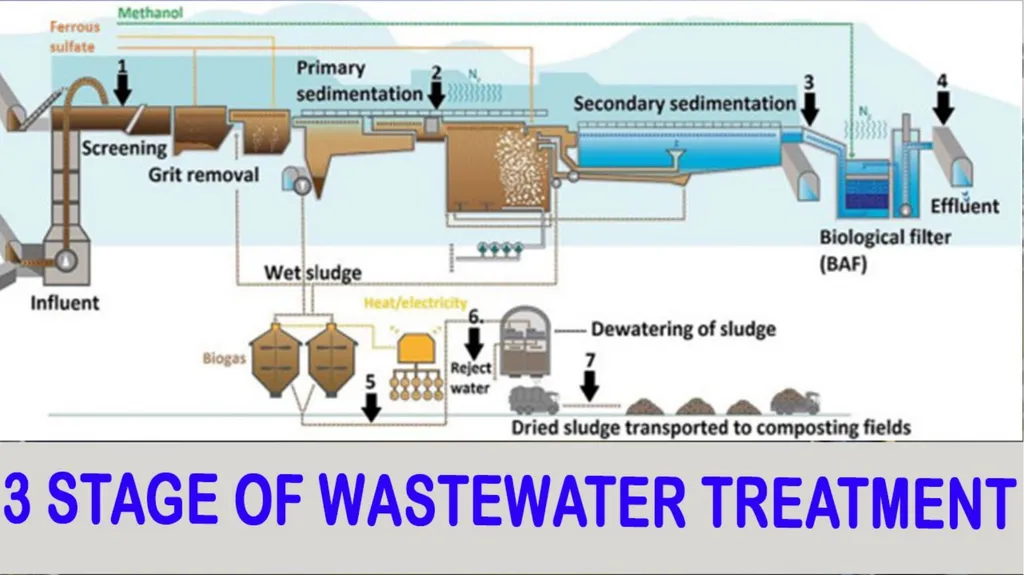
Sewage is treated in sewage treatment plant to make it less polluting by using heterotrophic microbes naturally present in sewage. Sewage treatment is done in two stages-
In primary treatment, floating debris is removed by sequential filtration. Grit (soil and small pebbles) are removed by sedimentation.
Secondary treatment or biological treatment involves passing of primary effluents in large aeration tank to help the growth of aerobic microbes into flocs (masses of bacteria associated with fungal filaments to form mesh like structures). These microbes increase the consumption of organic wastes and decrease the BOD (biological oxygen demand)of the effluents<br>
09
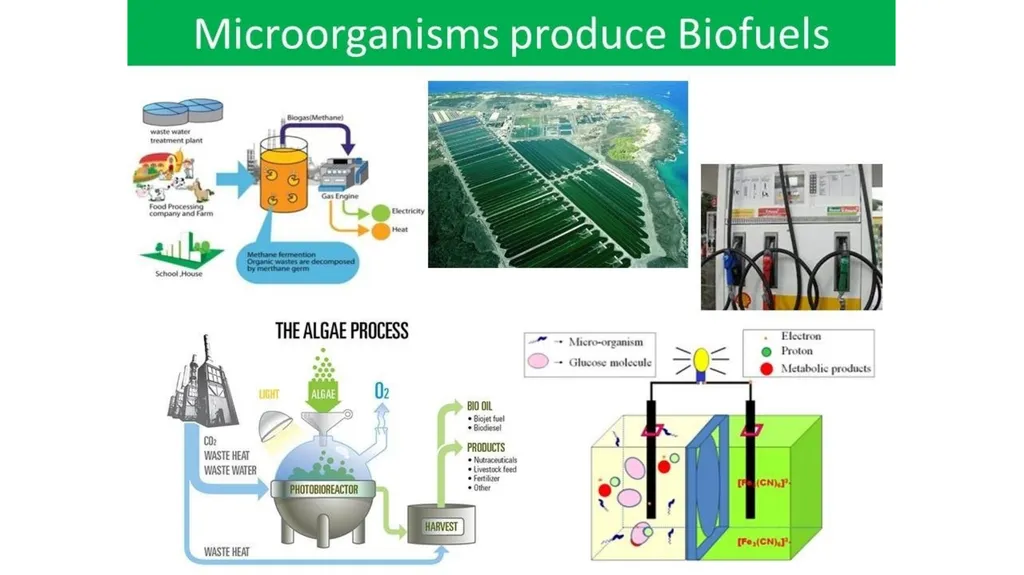
Microbes in Production of Biogas Microbes in Production of Biogas
Biogas is a mixture of gases produced by the microbial activity that can be used as fuel. Certain bacteria that grows anaerobically on cellulosic material produce large amount of methane along with CO2and H2. These bacteria are collectively called methanogens (Methanobacterium).<br>
10
Biogas Plant Biogas Plant – the excreta of cattle (gobar) is rich in methanogens bacteria and is used for generation of biogas also called as gobar gas.
The technology of biogas production was developed in India mainly due to the efforts of Indian Agricultural Research Institute (IARI) and Khadi and Village Industries Commission (KVIC).
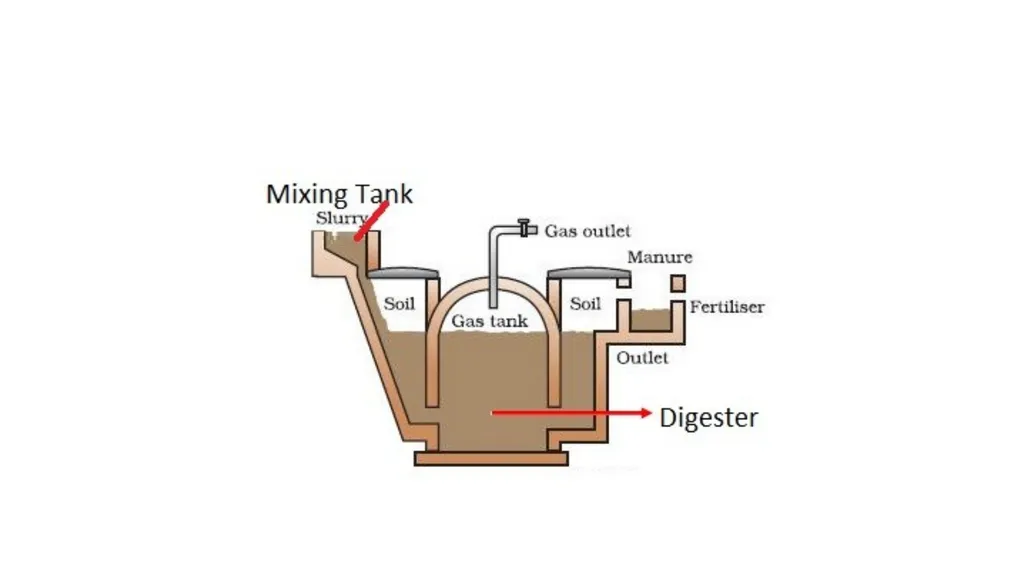
Biogas plant consists of a concrete tank in which bio-wastes are collected and slurry of dung is fed.
A floating cover is placed over digester that moves upward when gas is produced. The gas produced is removed and supplied through an outlet pipe for consumption.<br>
11
Microbes as Biocontrol agent Microbes as Biocontrol agent
Biocontrol means use of biochemical method for controlling plant disease and pests. The chemical used as pesticides and insecticides are harmful to human beings and animals.
Biological control of pests and disease is a method of controlling pest on natural prediction rather than chemicals. The organic farmer creates a system where the pests are not eradicated but kept at manageable level by complex system of check and balance within the living and vibrant ecosystem. For example, the Ladybird and Dragonflies are used to get rid of aphids and mosquitoes respectively. On brassicas and fruit tree, to control butterfly caterpillars bacteria Bacillus thuringiensis is used.<br>
12
Microbes as Biocontrol agent Microbes as Biocontrol agent
Biological control developed for use in the treatment of plant disease is the fungus Trichoderma. Trichoderma are free-living fungi that are very common in the root systems that control several plant pathogens.
Baculoviruses are pathogens that attack insects and other arthropods. The majority of baculoviruses used as biological control agents are in the genus Nucleopolyhedrovirus. These viruses are excellent candidates for species-specific, narrow spectrum insecticidal applications.<br>
13
Microbes as Bio fertilisers Microbes as Bio fertilisers
Bio fertilisers are organisms that enrich the nutrient quality of the soil. The main sources includes bacteria, fungi and cyanobacteria.
The root nodule formed by Rhizobium bacteria on root of leguminous plants increase the nitrogen level of soil, necessary for various metabolic processes. Azotobacter and Azospirillum are free living bacteria that live in soil and fix atmospheric nitrogen into organic forms.<br>
14
Microbes as Bio fertilisers Microbes as Bio fertilisers
Symbiotic association of fungi with angiosperm plants (mycorrhiza) also increase the fertility of soil. Glomus form mycorrhiza that absorbs phosphorus from the soil and passes it to the plant. These microbes also provide benefits like resistance to root-borne pathogens, tolerance to salinity and drought.
Cyanobacteria (Nostoc, Anabaena), an autotrophic microbes found in aquatic and terrestrial environment fix atmospheric nitrogen. In paddy field this acts as important bio-fertiliser. Blue green algae also add organic matter to the soil and increase its fertility.<br>