Class: The Vikings: Language and Lore (History) Workshop 1: Viking History What do you already know about the Vikings? Think about not only what you know, but also where this knowledge comes from and how confident you are in its accuracy.
"Class: The Vikings: Language and Lore (History)" is the property of its rightful owner. Permission is granted to
download and print the materials on this website for personal, non-commercial use only, and to display it
on your personal computer provided you do not modify the materials and that you retain all copyright
notices contained in the materials. By downloading content from our website, you accept the terms of this
agreement.
Presentation Transcript
01
Class: The Vikings: Language and Lore (History) Workshop 1: Viking History<br>
02
What do you already know about the Vikings? Think about not only what you know, but also where this knowledge comes from and how confident you are in its accuracy.<br>
03
What does the word
Viking mean? Horned helmets? Where do Vikings come from? What did the
Vikings do? What do you already know about the Vikings? Ruthless raiders and pillagers?<br>
04
The History of the Viking Age<br>
05
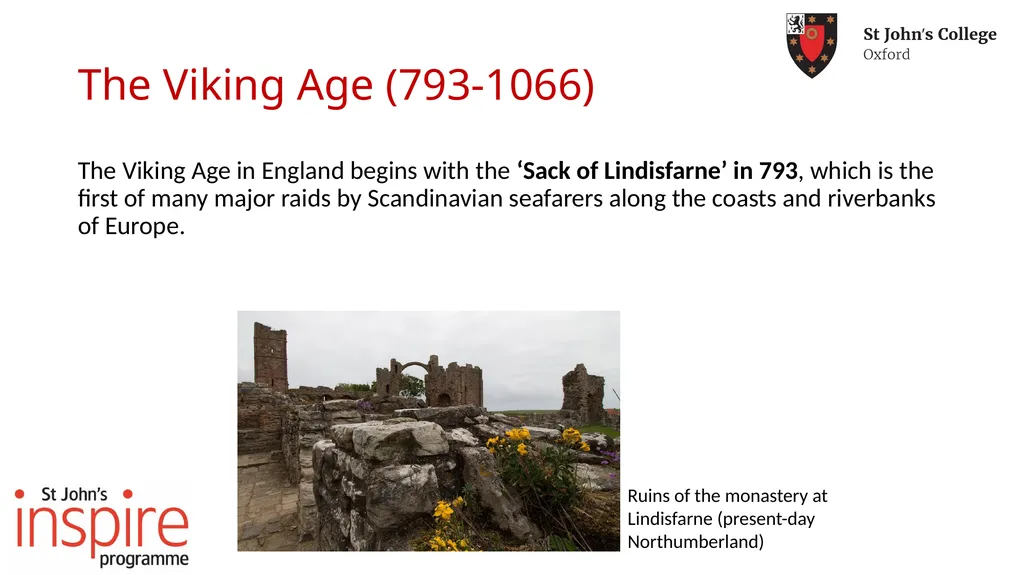
The Viking Age (793-1066) The Viking Age in England begins with the ‘Sack of Lindisfarne’ in 793, which is the first of many major raids by Scandinavian seafarers along the coasts and riverbanks of Europe. Ruins of the monastery at Lindisfarne (present-day Northumberland)<br>
06
What do you now know about the Vikings? Think about what you have learnt in today’s session so far.
Has anything changed about your view of the Vikings? What has stayed the same? How accurate do you think modern portrayals of the Vikings in films, books, comics, etc. really are?<br>
07
The Language of the Medieval Scandinavians<br>
08
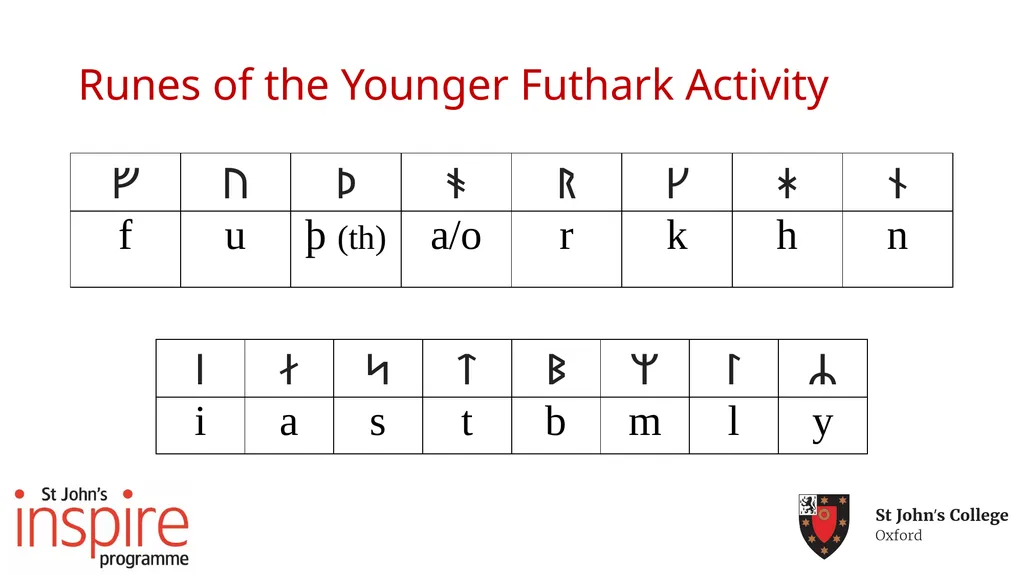
Runes of the Younger Futhark Activity<br>
09
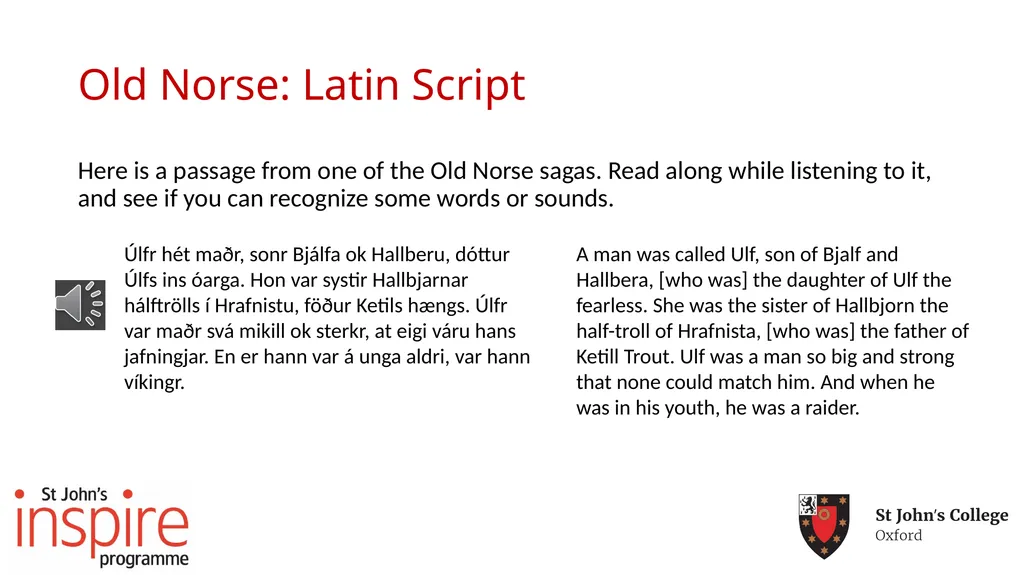
Old Norse: Latin Script Here is a passage from one of the Old Norse sagas. Read along while listening to it, and see if you can recognize some words or sounds. Úlfr hét maðr, sonr Bjálfa ok Hallberu, dóttur Úlfs ins óarga. Hon var systir Hallbjarnar hálftrölls í Hrafnistu, föður Ketils hængs. Úlfr var maðr svá mikill ok sterkr, at eigi váru hans jafningjar. En er hann var á unga aldri, var hann víkingr. A man was called Ulf, son of Bjalf and Hallbera, [who was] the daughter of Ulf the fearless. She was the sister of Hallbjorn the half-troll of Hrafnista, [who was] the father of Ketill Trout. Ulf was a man so big and strong that none could match him. And when he was in his youth, he was a raider.<br>
10
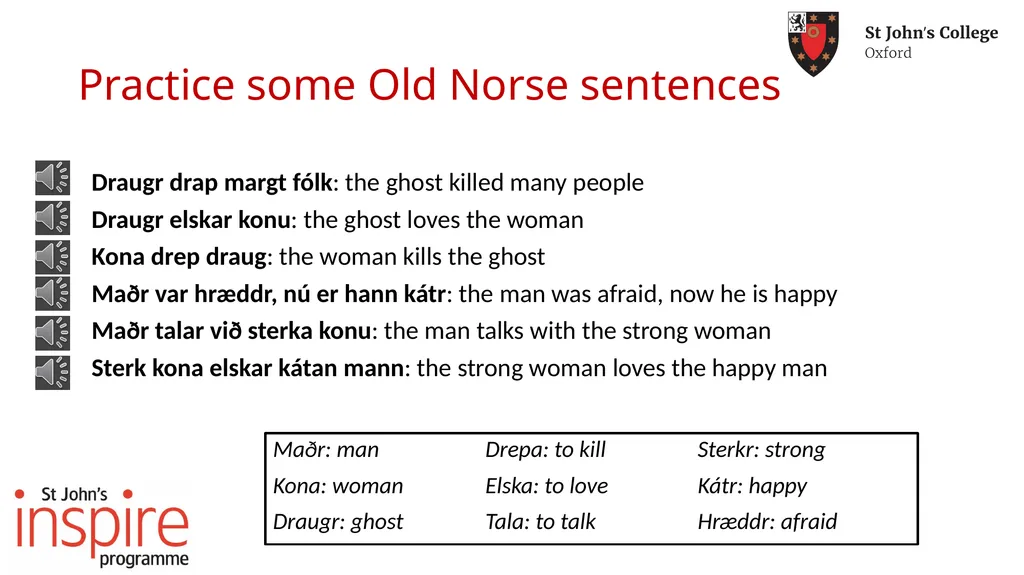
Practice some Old Norse sentences Maðr: man
Kona: woman
Draugr: ghost
Drepa: to kill
Elska: to love
Tala: to talk
Sterkr: strong
Kátr: happy
Hræddr: afraid Draugr drap margt fólk: the ghost killed many people
Draugr elskar konu: the ghost loves the woman
Kona drep draug: the woman kills the ghost
Maðr var hræddr, nú er hann kátr: the man was afraid, now he is happy
Maðr talar við sterka konu: the man talks with the strong woman
Sterk kona elskar kátan mann: the strong woman loves the happy man<br>