Classification of Magnetic materials The origin of magnetism lies in the orbital and spin motions of electrons and how the electrons interact with one another. The best way to introduce the different types of magnetism is to describe how
"Classification of Magnetic materials The origin of" is the property of its rightful owner. Permission is granted to
download and print the materials on this website for personal, non-commercial use only, and to display it
on your personal computer provided you do not modify the materials and that you retain all copyright
notices contained in the materials. By downloading content from our website, you accept the terms of this
agreement.
Presentation Transcript
01
Classification of Magnetic materials<br>
02
The origin of magnetism lies in the orbital and spin motions of electrons and how the electrons interact with one another.
The best way to introduce the different types of magnetism is to describe how materials respond to magnetic fields.
This may be surprising to some, but all matter is magnetic.
It's just that some materials are much more magnetic than others.<br>
03
All substances show some kind of magnetic behaviour.
After all, they are made up of charged particles: electrons and protons.
It is the way in which electron clouds arrange themselves in atoms and how groups of these atoms behave that determines the magnetic properties of the material.
The net effect of all these dipoles determines the magnetic properties of the Magnetic Materials.<br>
04
Types of Magnetic Materials To study magnetic properties of Magnetic Materials, the material is usually placed in a uniform magnetic field and then the magnetic field is varied.
There are three major kinds of magnetic behaviour:
Diamagnetism
Paramagnetism
Ferromagnetism<br>
05
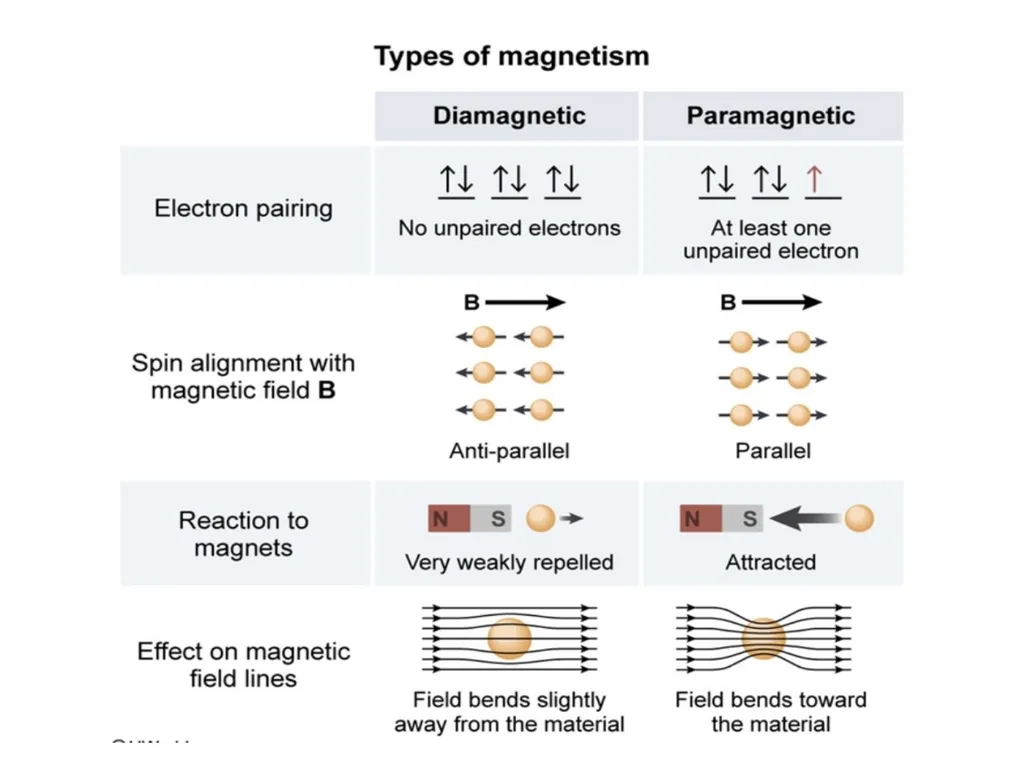
Diamagnetic materials These materials are barely (அரிதாகவே)magnetized when placed in a magnetic field.
In fact, magnetic dipoles in these substances tend to align in opposition to the applied field.
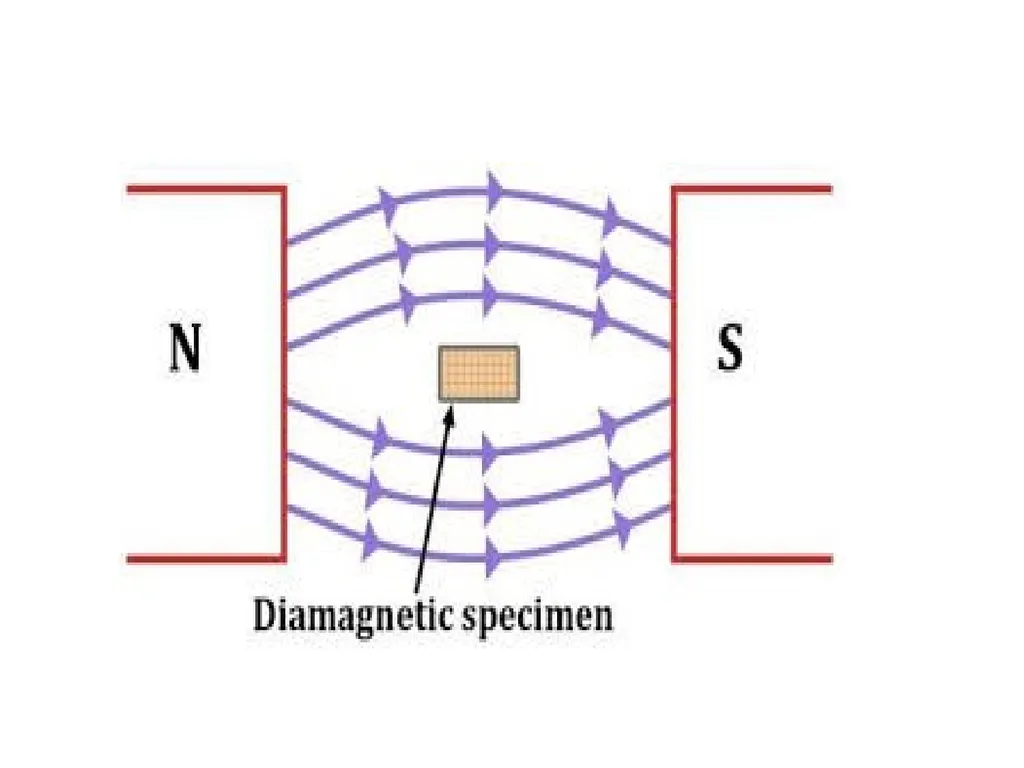
In effect, they produce an internal magnetic field that opposes the applied field and the substance tends to repel the external field around it.
This opposing field disappears as soon as the external field is removed.<br>
06
Examples Gold, water, mercury and even animals<br>
07
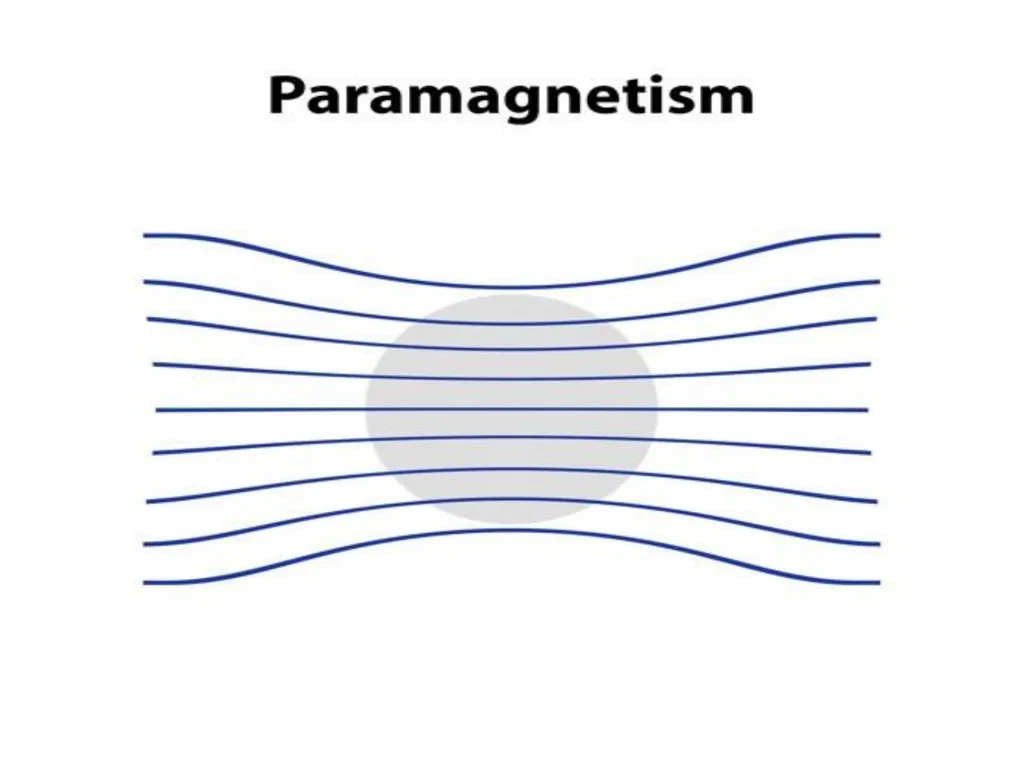
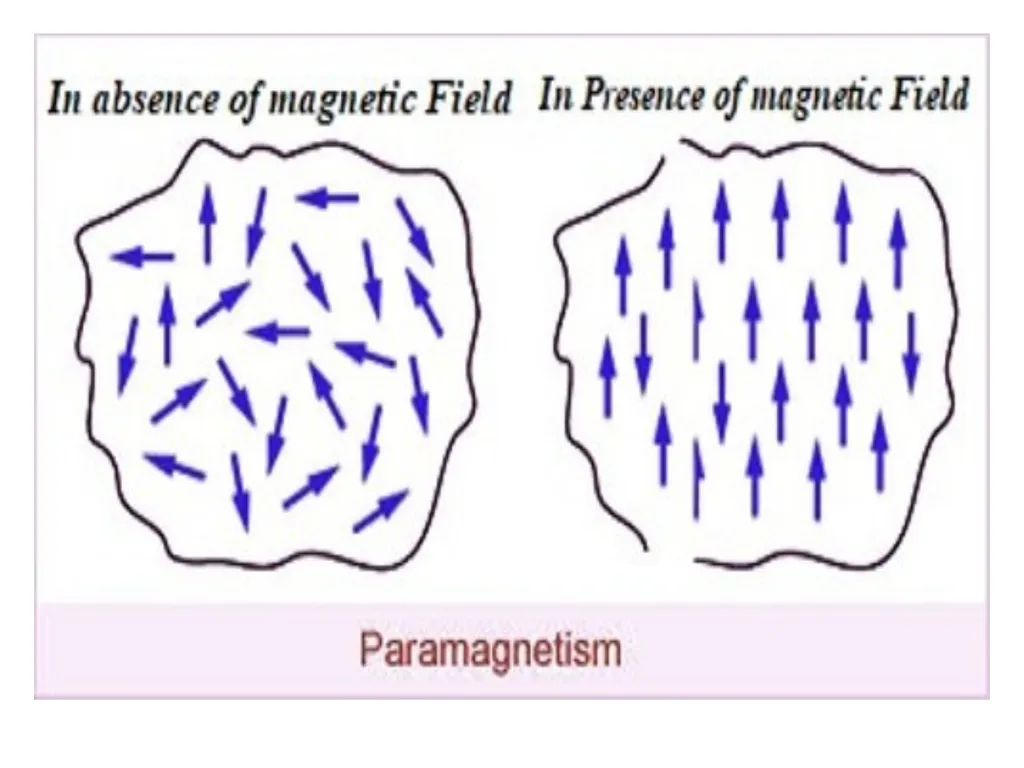
Paramagnetic materials In these materials the magnetic dipoles in the Magnetic Materials tend to align along the applied magnetic field and thus reinforcing (strengthen) the applied magnetic field.
Such substances are attracted by a magnet if it applies a sufficiently strong field.
It must be noted that such materials are still feeble (பலவீனமான) magnetized and the magnetization disappears as soon as the external field is removed.<br>
08
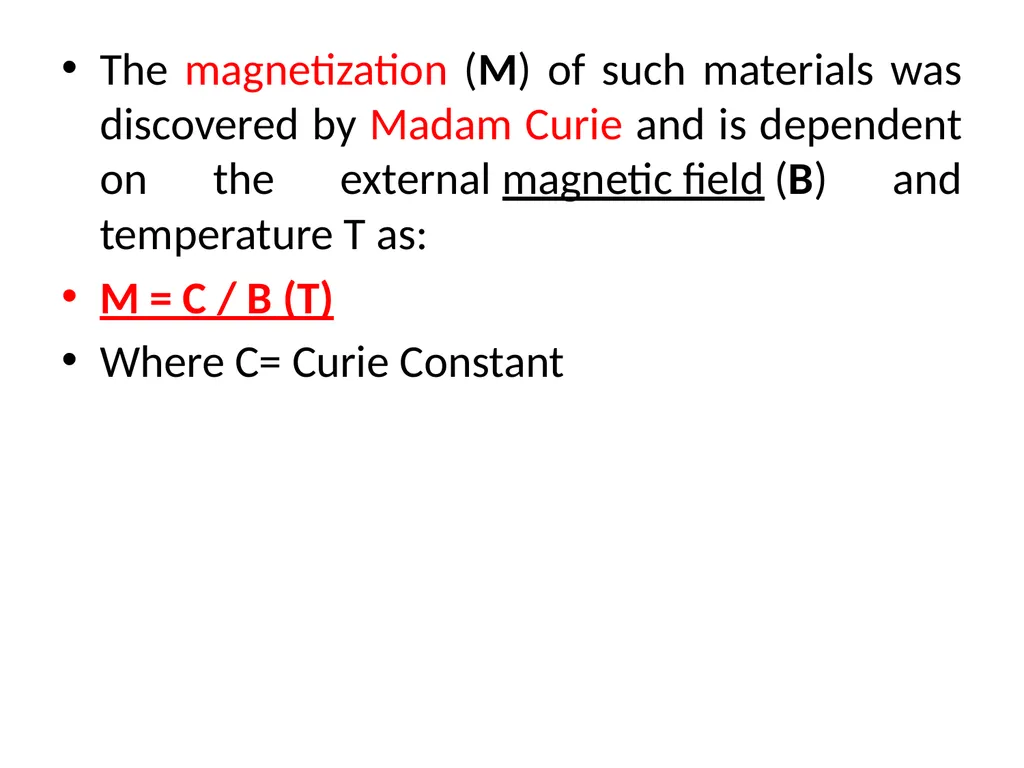
The magnetization (M) of such materials was discovered by Madam Curie and is dependent on the external magnetic field (B) and temperature T as:
M = C / B (T)
Where C= Curie Constant<br>
09
Examples Liquid oxygen, sodium, platinum, salts of iron and nickel<br>
10
Ferromagnetic materials We are most familiar with these materials as they exhibit the strongest magnetic behavior.
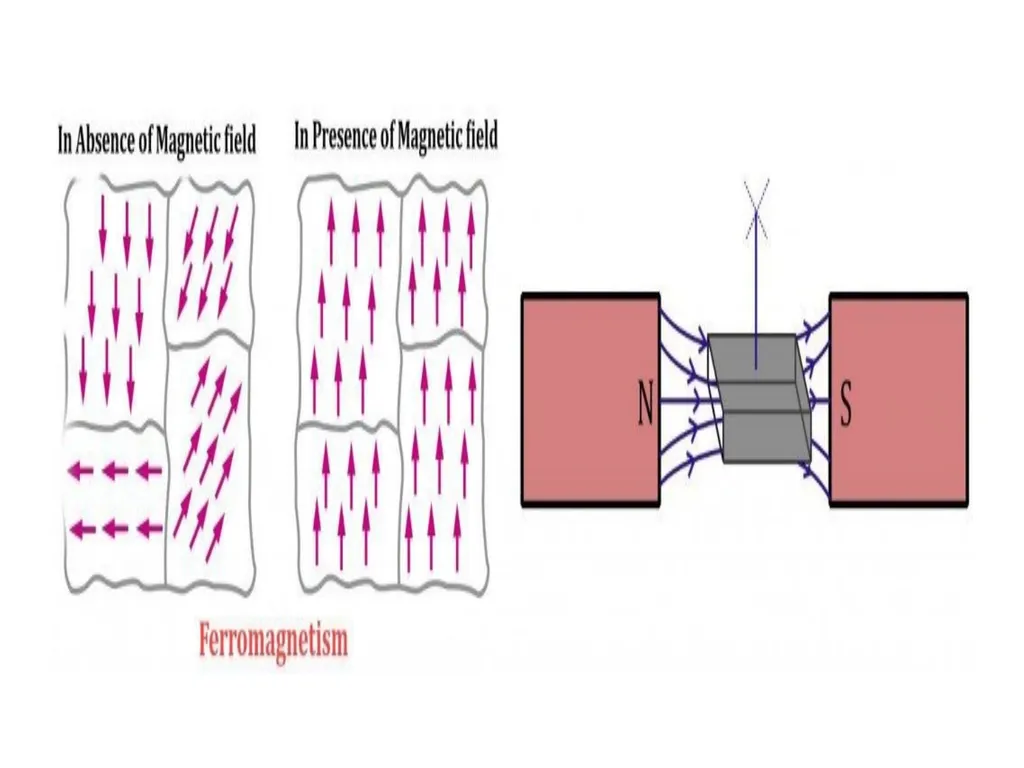
Magnetic dipoles in these materials are arranged into domains where the arrangements of individual magnetic dipoles are essentially perfect that can produce strong magnetic fields.
Normally, these domains are usually randomly arranged and thus the magnetic field of each domain is cancelled by another and the entire material does not show any magnetic behaviour.<br>
11
However when an external field is applied, the domains reorient themselves to reinforce the external field and produce a strong internal magnetic field that is along the external field.
Upon, removal of the external field, most of the domains stay put and continues to be aligned in the direction of the magnetic field.<br>
12
Thus, the magnetic field of the Magnetic Materials persists even when the external field disappears.
This property is used to produce Permanent magnets that we use every day.<br>
13
Examples Iron, cobalt, nickel, neodymium and their alloys are usually highly ferromagnetic and are used to make permanent magnets.<br>
14
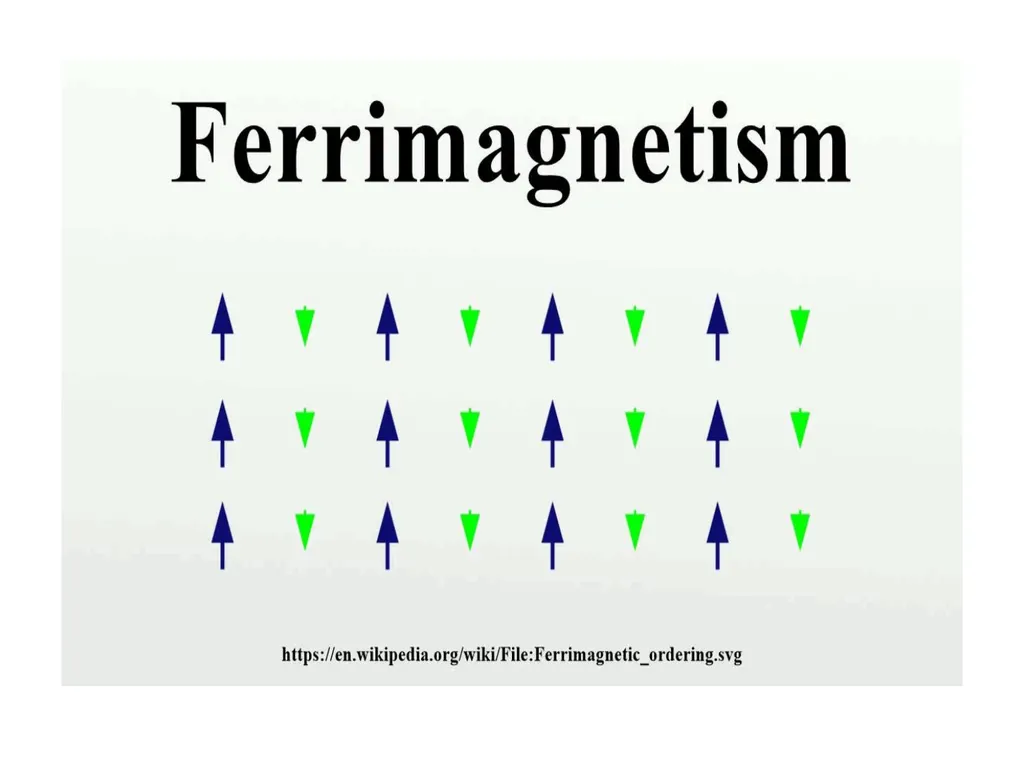
Ferrimagnetism Ferrimagnetism, type of permanent magnetism that occurs in solids in which the magnetic fields associated with individual atoms spontaneously align themselves.
some parallel, or in the same direction (as in ferromagnetism), and others generally antiparallel, or paired off in opposite directions (as in antiferromagnetism).<br>
15
The magnetic behaviour of single crystals of ferrimagnetic materials may be attributed to the parallel alignment.
The diluting effect of those atoms in the antiparallel arrangement keeps the magnetic strength of these materials generally less than that of purely ferromagnetic solids such as metallic iron.<br>
16
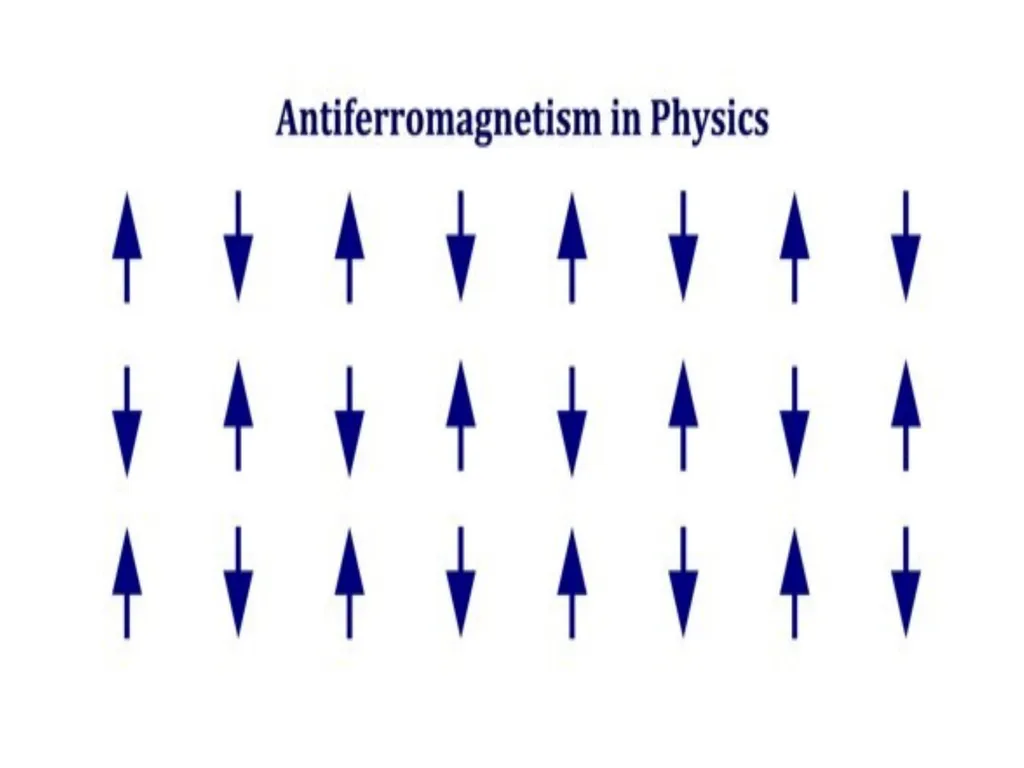
Antiferromagnetism Antiferromagnetism, type of magnetism in solids such as manganese oxide (MnO) in which adjacent ions that behave as tiny magnets (in this case manganese ions, Mn2+).
It spontaneously align themselves at relatively low temperatures into opposite, or antiparallel, arrangements throughout the material so that it exhibits almost no gross external magnetism.<br>
17
In antiferromagnetic materials, which include certain metals and alloys in addition to some ionic solids, the magnetism from magnetic atoms or ions oriented in one direction is canceled out by the set of magnetic atoms or ions that are aligned in the reverse direction.<br>