03
Classification On the basis of origin, resources may be divided into:
Biotic – Biotic resources are obtained from the biosphere, such as forests and their products, animals, birds and their products, fish and other marine organisms. Mineral fuels such as coal and petroleum are also included in this category because they are formed from decayed organic matter.
Abiotic – Abiotic resources include non-living things. Examples include land, water, air andminerals including ores such as gold, iron, copper, silver etc.<br>
04
Considering their stage of development, natural resources may be referred to in the following ways: Potential Resources – Potential resources are those that exist in a region and may be used in the future. For example, petroleum may exist in many parts of India, having sedimentary rocks but until the time it is actually drilled out and put into use, it remains a potential resource.
Actual Resources – Actual resources are those that have been surveyed, their quantity and quality determined and are being used in present times. The development of an actual resource, such as wood processing depends upon the technology available and the cost involved.
Reserve Resources – The part of an actual resource which can be developed profitably in the future is called a reserve resource
Stock Resources – Stock resources are those that have been surveyed but cannot be used by organisms due to lack of technology. For example.hydrogen<br>
05
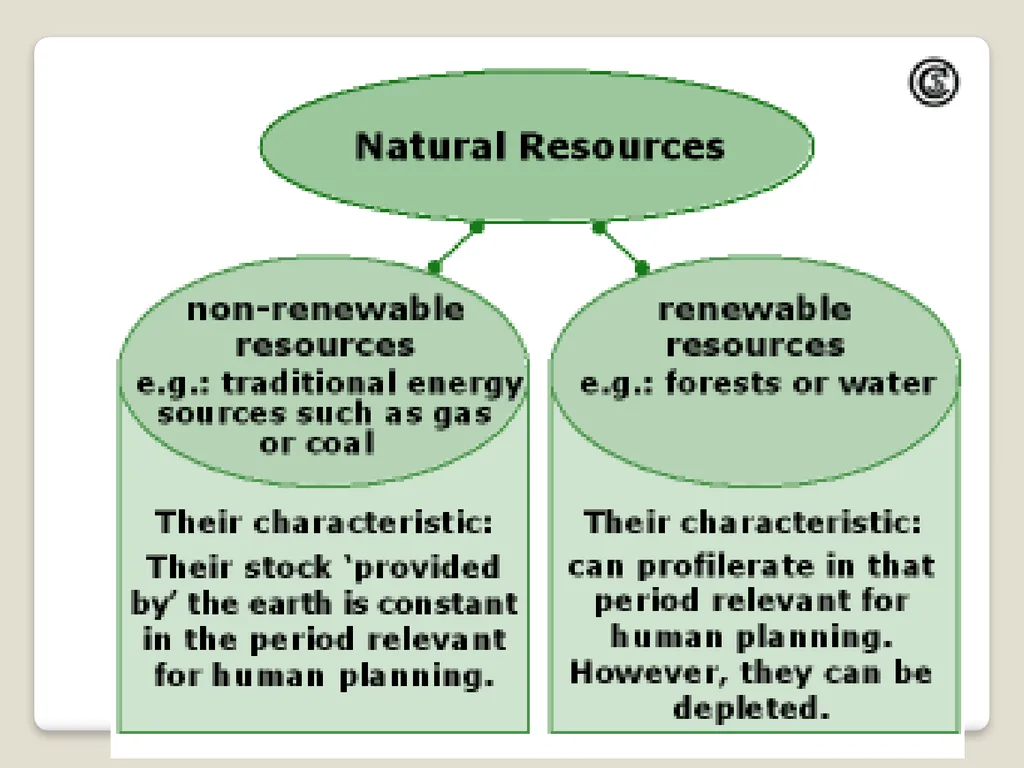
With respect to renewability, natural resources can be categorized as follows: Renewable resources are ones that can be replenished or reproduced easily. Some of them, like sunlight, air, wind, etc., are continuously available and their quantity is not affected by human consumption. Many renewable resources can be depleted by human use, but may also be replenished, thus maintaining a flow. Some of these, like agricultural crops, take a short time for renewal; others, like water, take a comparatively longer time, while still others, like forests, take even longer.
Non-renewable resources are formed over very long geological periods. Minerals and fossil fuels are included in this category. Since their rate of formation is extremely slow, they cannot be replenished once they get depleted. Of these, the metallic minerals can be re-used by recycling them.[1] But coal and petroleum cannot be recycled.[2]<br>
06
On the basis of availability, natural resources can be categorised as follows: Inexhaustible natural resources- Those resources which are present in unlimited quantity in nature and are not likely to be exhausted easily by human activity are inexhaustible natural resources (sunlight, air etc.)
Exhaustible natural resources- The amount of these resources are limited. They can be exhausted by human activity in the long run (coal, petroleum, natural gas, etc.)<br>
07
On the basis of distribution, natural resources can be classified as follows: Ubiquitous resources- Resources that are found everywhere are called ubiquitous resources. For example land, air
Localized resources- Resources that are found only at certain places are called localized resources. For example minerals, fossil fuels<br>
08
What are the major functions of natural resources? Inputs into production and consumption
Amenity
Life sustenance
Sink for waste<br>
09
What are the major natural resource problems in agriculture? Soil erosion, desertification, salinity, water-logging, and flooding
Chemical pollution
Depletion of forest resources
Need for new energy sources
Emission of greenhouse gases and climate change<br>
10
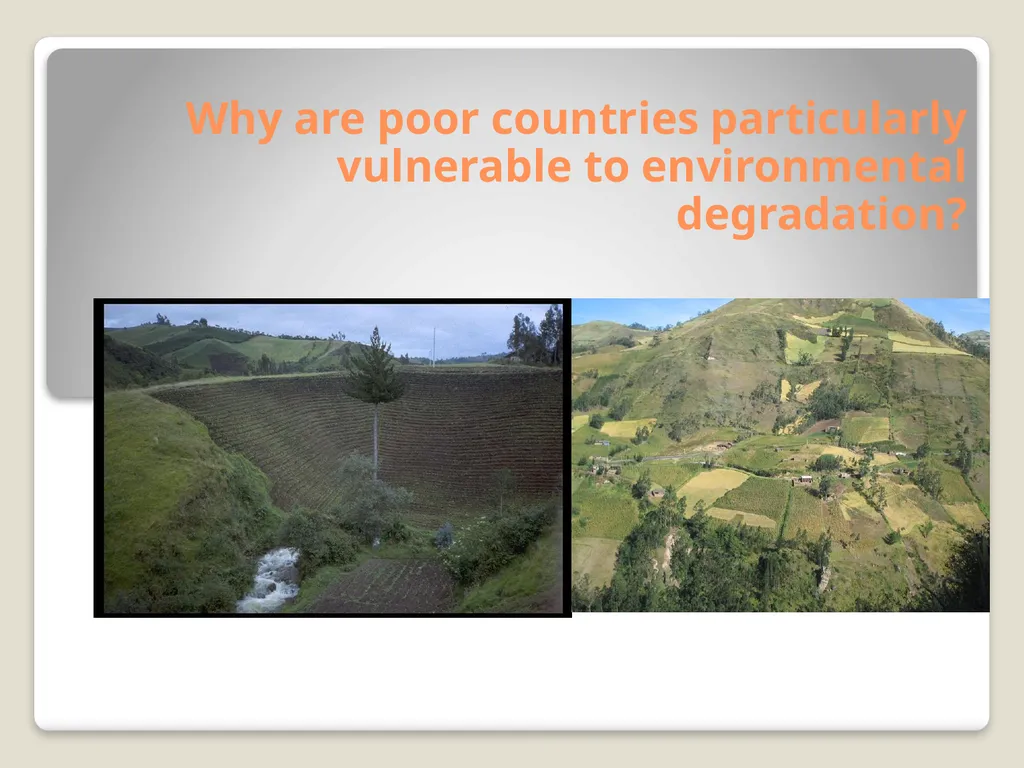
Why are poor countries particularly vulnerable to environmental degradation?<br>
11
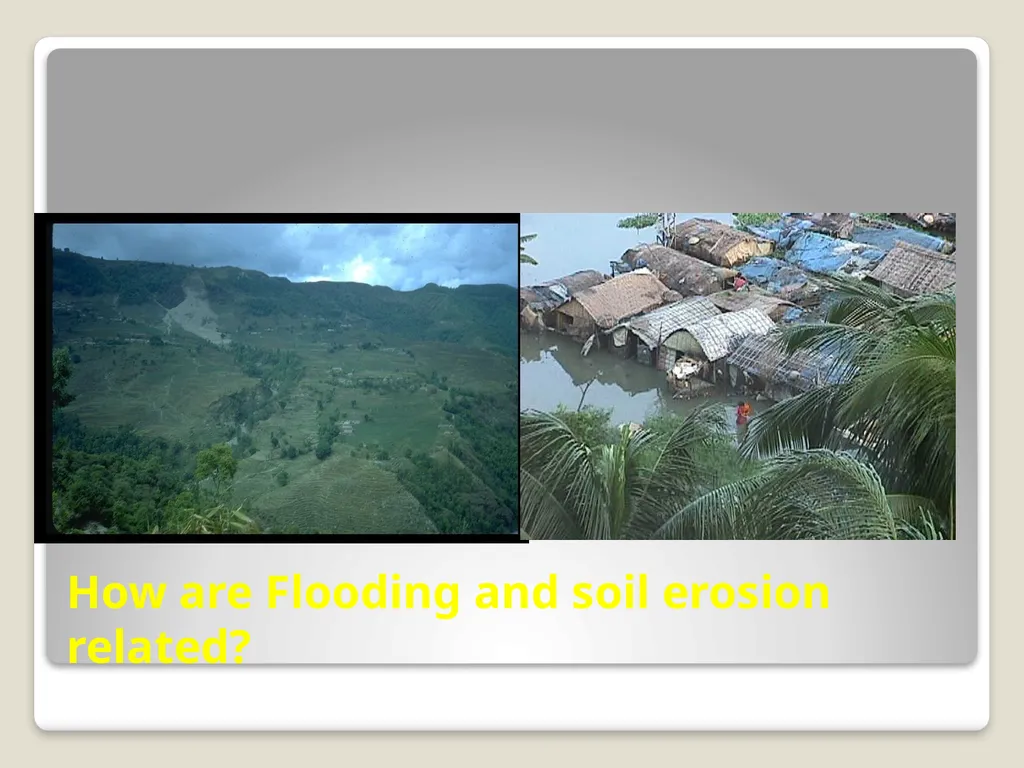
How are Flooding and soil erosion related?<br>
12
Causes can be technical, economic, or social (institutional) Examples of technical causes:
Overgrazing and droughts
Soil erosion leads to silting of rivers which leads to flooding
Irrigation leads to waterlogging & salinity
Deforestation leads to emission of CO2 and reduced capacity to absorb carbon<br>
13
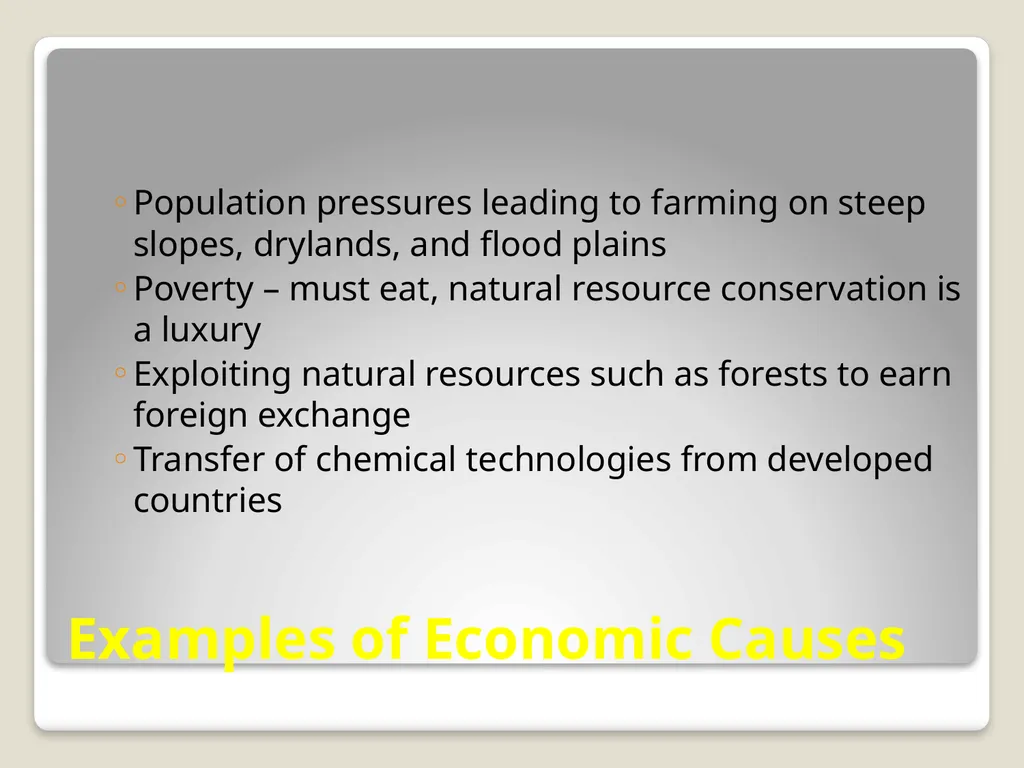
Examples of Economic Causes Population pressures leading to farming on steep slopes, drylands, and flood plains
Poverty – must eat, natural resource conservation is a luxury
Exploiting natural resources such as forests to earn foreign exchange
Transfer of chemical technologies from developed countries<br>
14
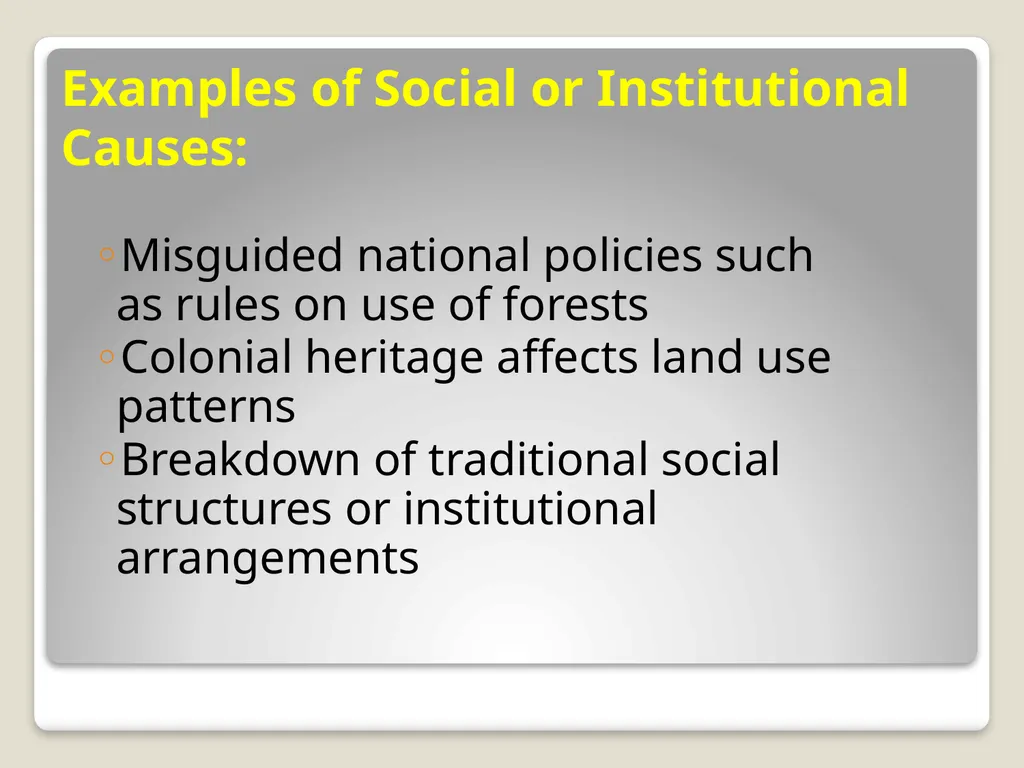
Examples of Social or Institutional Causes: Misguided national policies such as rules on use of forests
Colonial heritage affects land use patterns
Breakdown of traditional social structures or institutional arrangements<br>
15
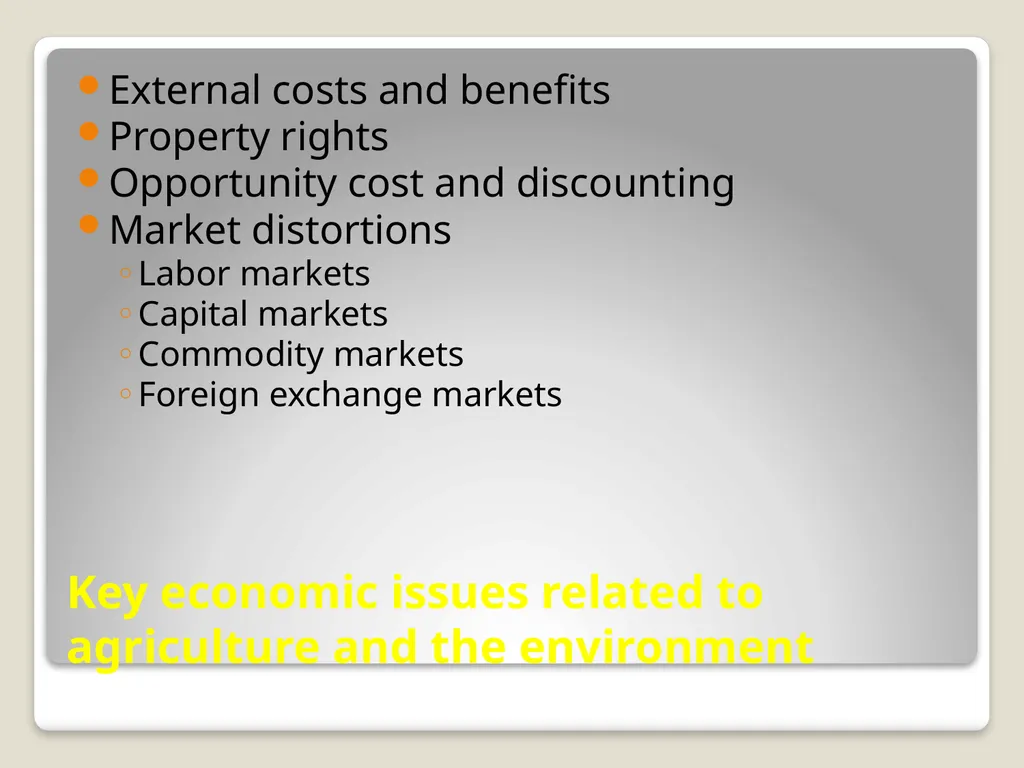
Key economic issues related to agriculture and the environment External costs and benefits
Property rights
Opportunity cost and discounting
Market distortions
Labor markets
Capital markets
Commodity markets
Foreign exchange markets<br>
16
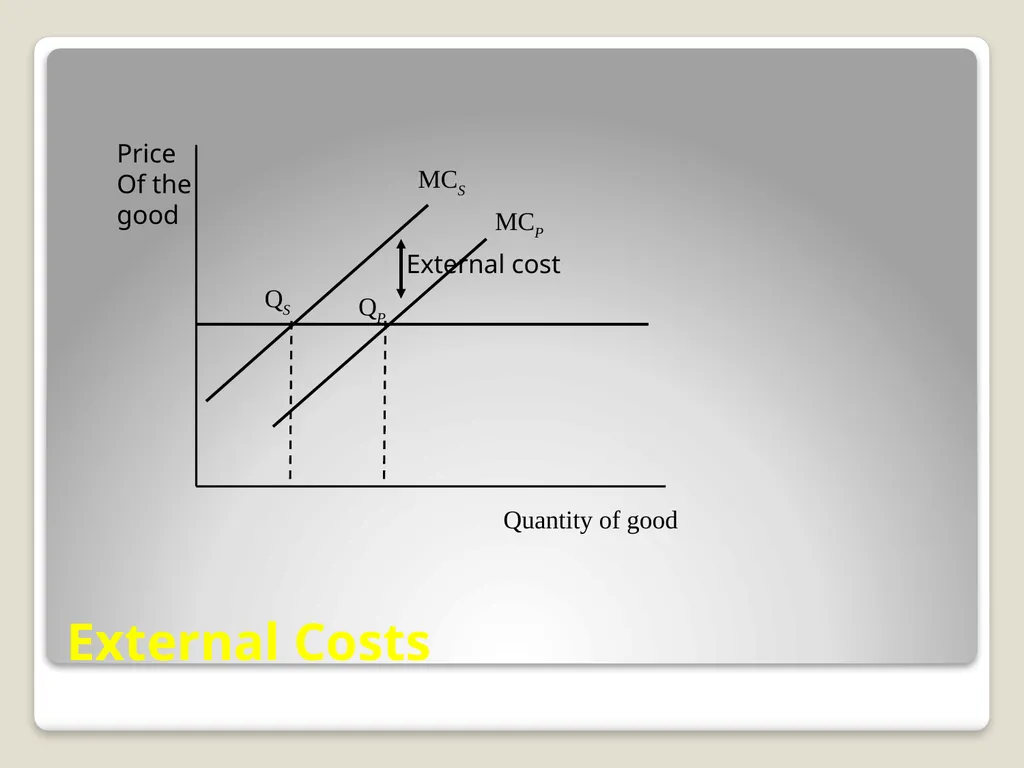
MCS MCP QS QP Quantity of good Price
Of the
good External cost External Costs<br>
17
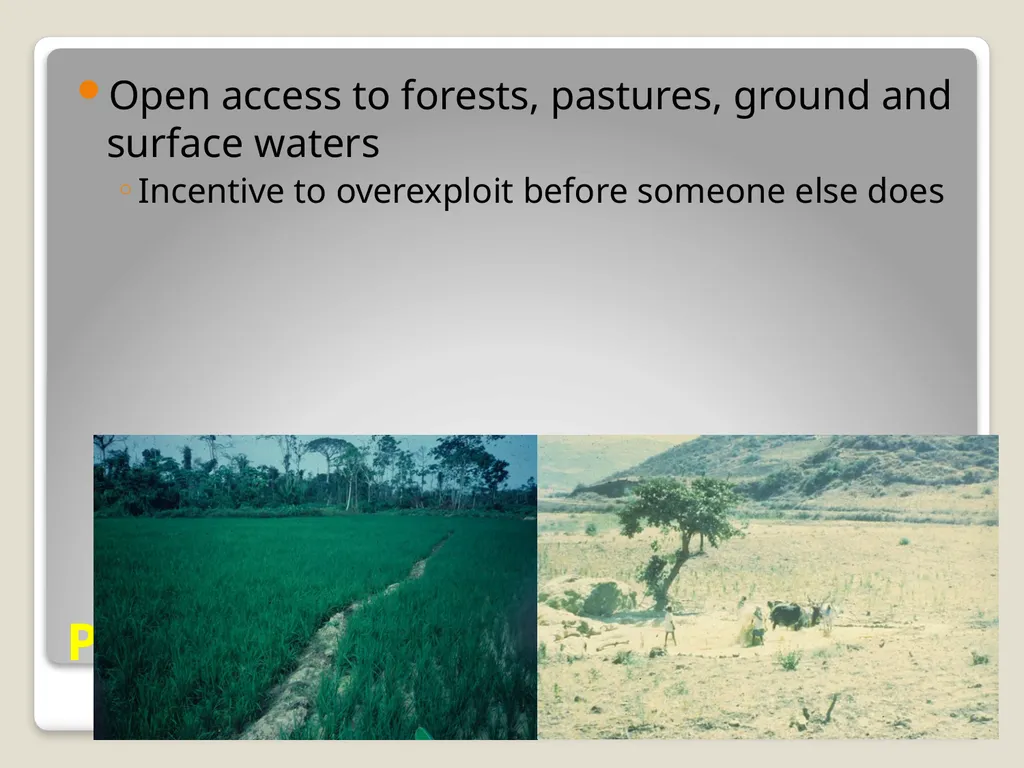
Property Rights Open access to forests, pastures, ground and surface waters
Incentive to overexploit before someone else does<br>
18
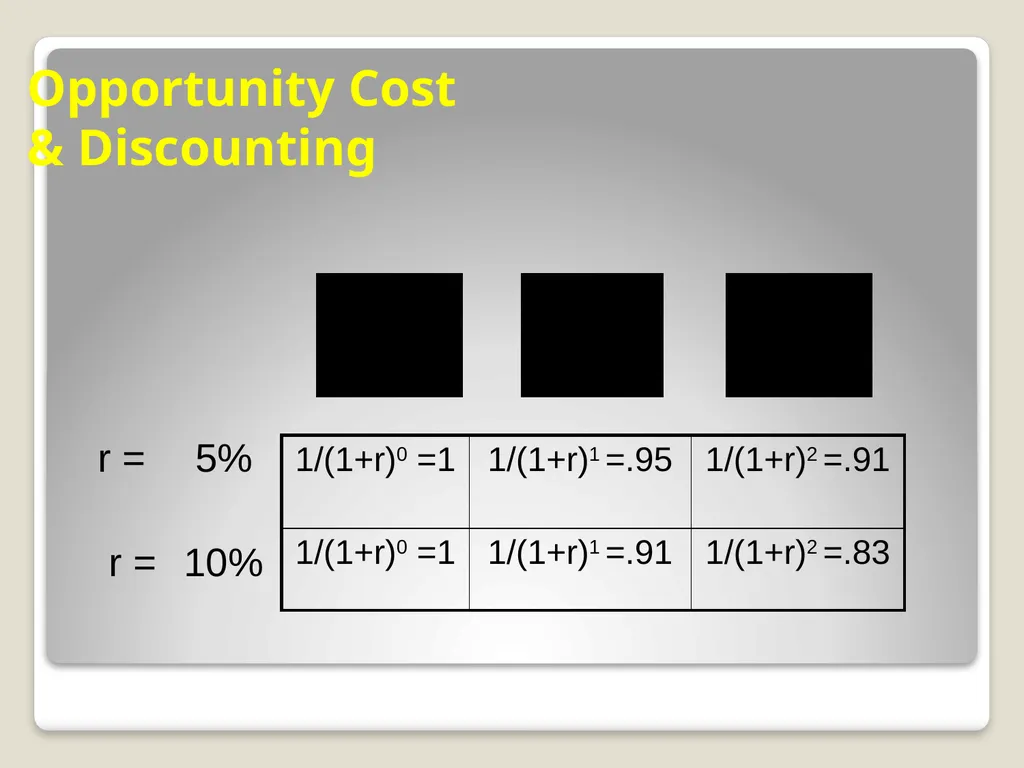
Opportunity Cost �& Discounting<br>
19
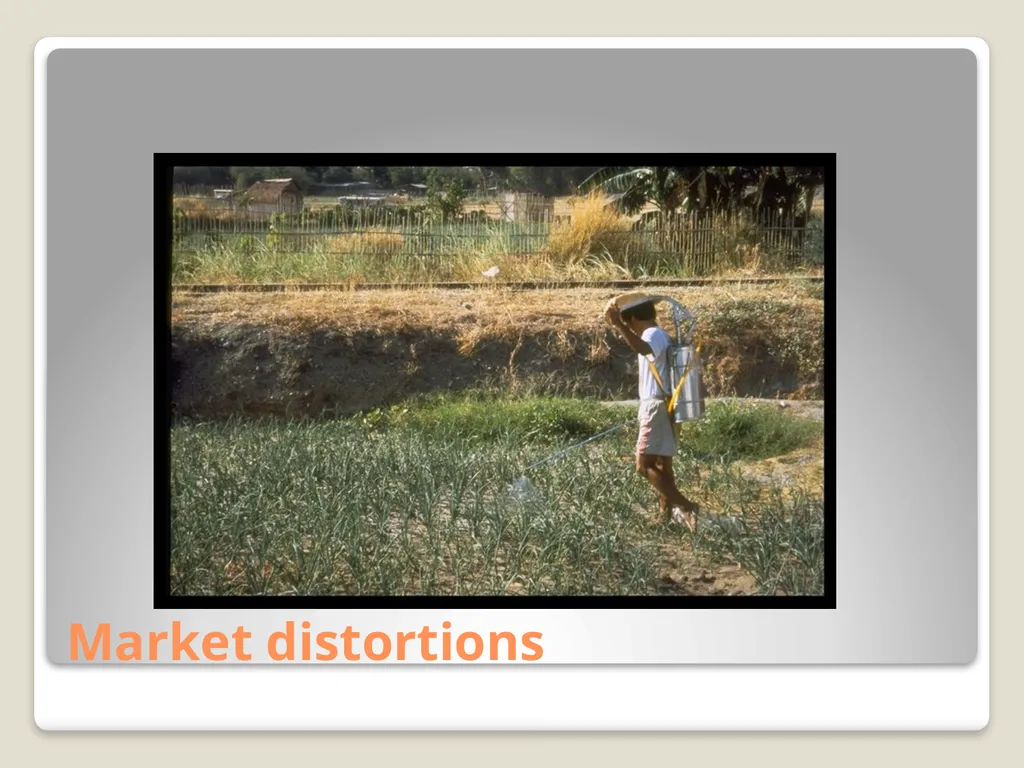
Market distortions<br>
20
Potential solutions to natural resource problems: Technical: conservation tillage, strip cropping, contour plowing, reforestation, legume fallow crops, build dams, revegetation, rotational grazing, integrated pest management, solar pumps, biogas generator, fuel efficient stoves, deferred grazing, managed woodlots, cellulosic biofuel crops, etc.<br>
21
Solutions (continued) Institutional and economic:
Subsidies and taxes (for conservation)
Regulations – prohibit logging in certain areas, pesticide regulations, etc.
Land reform
Improved information & infrastructure
Education
Economic growth – reduces population growth, income elasticity of demand for conservation is high
Pollution permit trading<br>
22
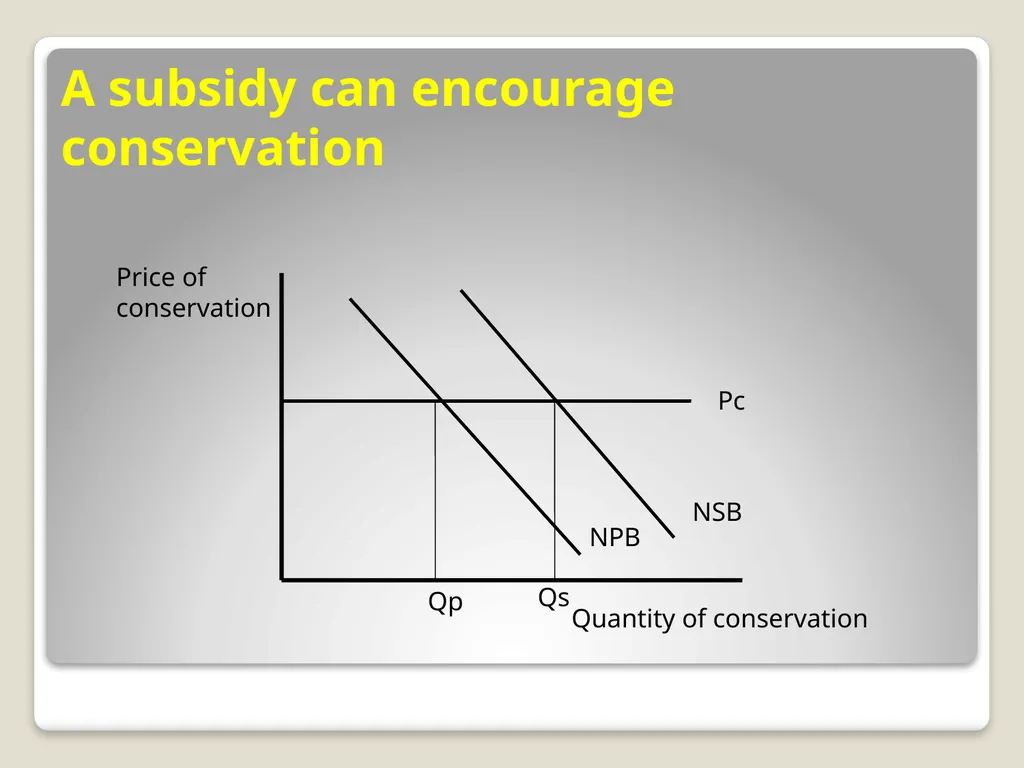
A subsidy can encourage conservation Price of
conservation Quantity of conservation Pc NSB NPB Qp Qs<br>
23
Three principles for successful institutional change to improve sustainability of natural resources Assess costs and benefits of the change, including externalities
Obtain local input
Compensation for losers<br>
24
Global Warming Primarily due to Carbon dioxide emissions
Economic effects?
Higher temperatures affect what is grown where and affects livestock
Changes in rainfall patterns
Increased risk of extreme weather events causing problems such as flooding<br>
25
Global warming effects (continued) 2 degree C rise in temperature would cost about 1% of world GDP
Malaria and Dengue areas would expand with temperature rise
IFPRI study (October 2009) finds that South Asian agriculture would suffer the most, particularly wheat and rice<br>
26
Effects of agriculture on global warming 20% of green house gases (especially methane) from rice fields as organic matter decomposes, from livestock
Nitrous oxide emissions from fertilizer<br>
27
What can be done? Lower nitrogen fertilizer (how?)
Agro-forestry as carbon sinks
Bio-fuels can help to some extent to reduce fossil fuel use (which emits carbon dioxide)
Carbon trading (What is it?)<br>
28
Biofuels Food versus fuel, and what does it mean for the environment?
High energy prices and extensive subsidies have spurred increased use of food crops for fuel production
Many offsetting effects: biofuels tend to be cleaner; higher crop prices tend to encourage deforestation and greenhouse gas emissions; income effects on poor influence can have offsetting effects on the environment<br>
29
Conclusions Sound environmental management is essential for sustained agricultural and economic development
Both technical and institutional solutions are needed to solve environmental problems<br>