
Clayton Leishman, Academic Program Manager Defense
GB
Published · 28 slides · 0 views
1 / 1


Description
Clayton Leishman, Academic Program Manager Defense Language Institute English Language Center-DLIELC Needs Analysis: Connecting Curriculum and Assessment in a Language for Special Purposes Setting Agenda Curriculum and Assessment Background
Related Topics
Share
Embed code
Download this presentation From Below
"Clayton Leishman, Academic Program Manager Defense" is the property of its rightful owner. Permission is granted to download and print the materials on this website for personal, non-commercial use only, and to display it on your personal computer provided you do not modify the materials and that you retain all copyright notices contained in the materials. By downloading content from our website, you accept the terms of this agreement.
Presentation Transcript
01
Clayton Leishman, Academic Program Manager Defense Language Institute English Language Center-DLIELC<br>
02
Needs Analysis: Connecting Curriculum and Assessment in a Language for Special Purposes Setting<br>
03
Agenda
Curriculum and Assessment Background
Curriculum Design
Assessment Design
Validation<br>
Curriculum Design
Assessment Design
Validation<br>
04
Background<br>
05
Background
Needs/Gap Analysis Identify whether there is a learning or performance gap by comparing current and desired states
Specify the nature of the gap to understand how to best close the gap or align the current and desired states
Evaluate potential solutions (e.g., recruiting, selection, training)
Conduct a training needs assessment to support training development<br>
Specify the nature of the gap to understand how to best close the gap or align the current and desired states
Evaluate potential solutions (e.g., recruiting, selection, training)
Conduct a training needs assessment to support training development<br>
06
Background
Specified Training Need Increase alignment of curriculum to capability requirements
Curriculum should focus on developing required capabilities
Minimize negative impacts of “teaching to the test” by aligning curriculum with the required capabilities<br>
Curriculum should focus on developing required capabilities
Minimize negative impacts of “teaching to the test” by aligning curriculum with the required capabilities<br>
07
Background
Specified Assessment Need Increase alignment of assessment to capability requirements
Test should measure examinees’ ability to conduct individual tasks related to enduring capabilities
Minimize negative impacts of “teaching to the test” by purposely aligning assessment with the curriculum and required capabilities (i.e., create positive washback)<br>
Test should measure examinees’ ability to conduct individual tasks related to enduring capabilities
Minimize negative impacts of “teaching to the test” by purposely aligning assessment with the curriculum and required capabilities (i.e., create positive washback)<br>
08
Background
Operational Gap A gap exists between how an Operator needs to use language and how an Operator is trained.
A gap exists between how an Operator needs to use language and how an Operator’s language ability is assessed.
Need a curriculum and aligned assessment which answer the question:
Are Members ready to use the target language to accomplish their unique missions effectively?<br>
A gap exists between how an Operator needs to use language and how an Operator’s language ability is assessed.
Need a curriculum and aligned assessment which answer the question:
Are Members ready to use the target language to accomplish their unique missions effectively?<br>
09
Curriculum Design<br>
10
Curriculum Design
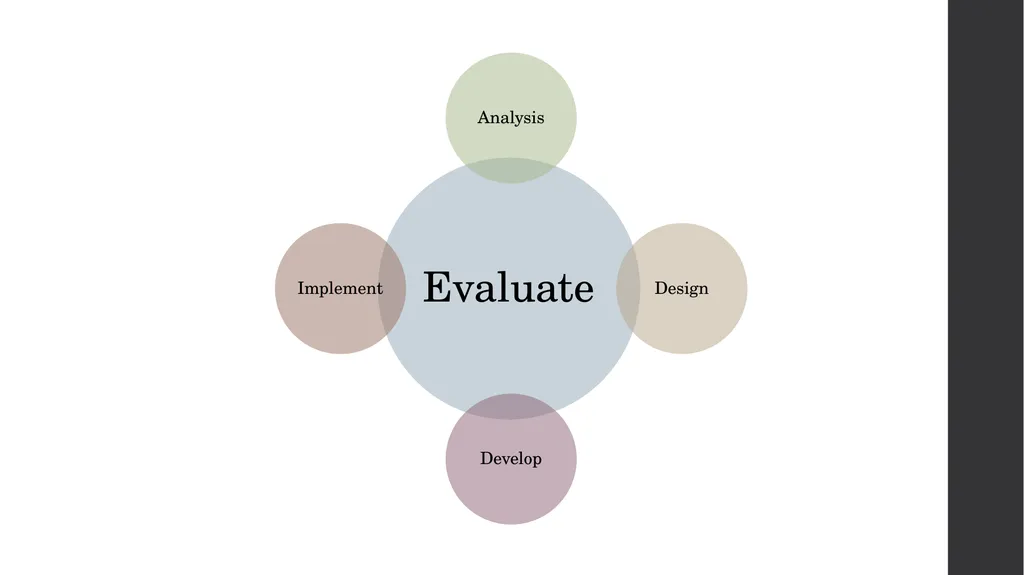
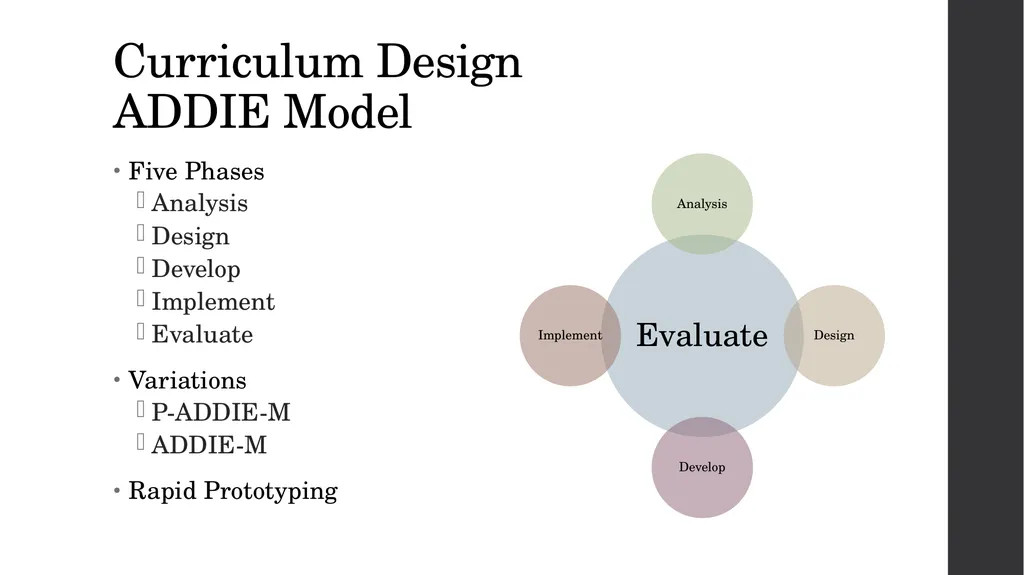
ADDIE Model Five Phases
Analysis
Design
Develop
Implement
Evaluate
Variations
P-ADDIE-M
ADDIE-M
Rapid Prototyping<br>
Analysis
Design
Develop
Implement
Evaluate
Variations
P-ADDIE-M
ADDIE-M
Rapid Prototyping<br>
11
Curriculum Design
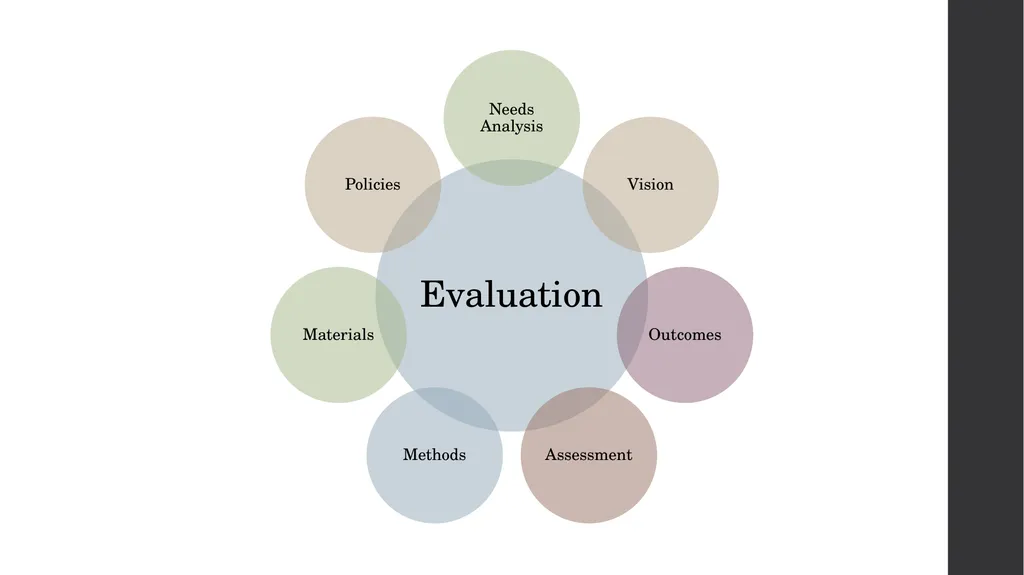
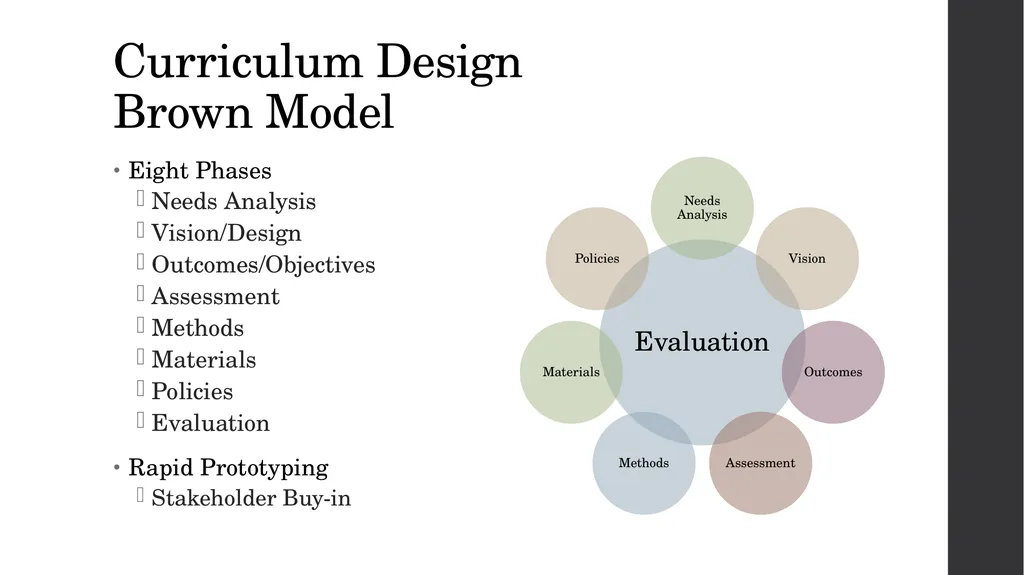
Brown Model Eight Phases
Needs Analysis
Vision/Design
Outcomes/Objectives
Assessment
Methods
Materials
Policies
Evaluation
Rapid Prototyping
Stakeholder Buy-in<br>
Needs Analysis
Vision/Design
Outcomes/Objectives
Assessment
Methods
Materials
Policies
Evaluation
Rapid Prototyping
Stakeholder Buy-in<br>
12
Curriculum Design
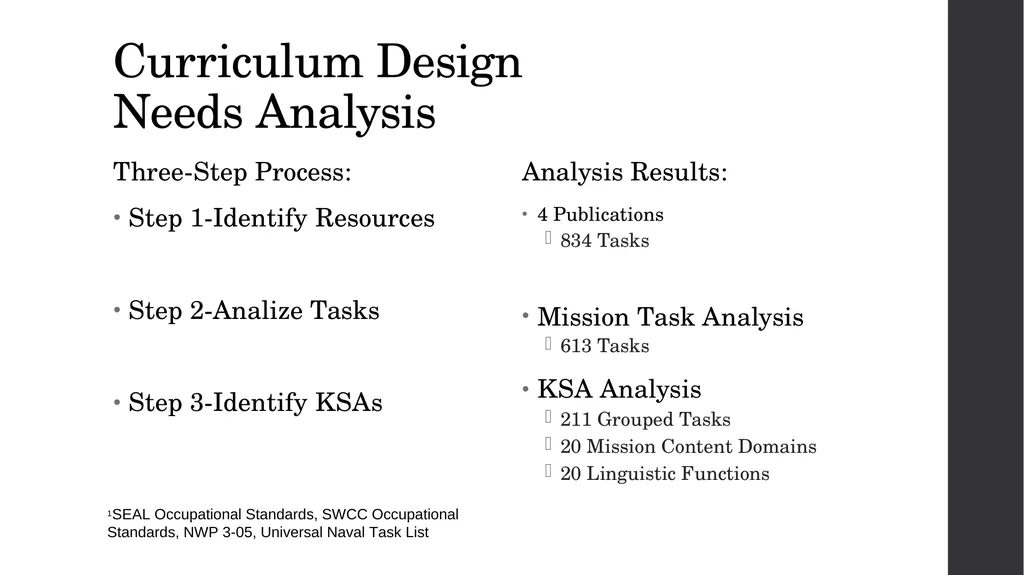
Needs Analysis Three-Step Process:
Step 1-Identify Resources
Step 2-Analize Tasks
Step 3-Identify KSAs Analysis Results:
4 Publications
834 Tasks
Mission Task Analysis
613 Tasks
KSA Analysis
211 Grouped Tasks
20 Mission Content Domains
20 Linguistic Functions 1SEAL Occupational Standards, SWCC Occupational Standards, NWP 3-05, Universal Naval Task List<br>
13
Curriculum Design
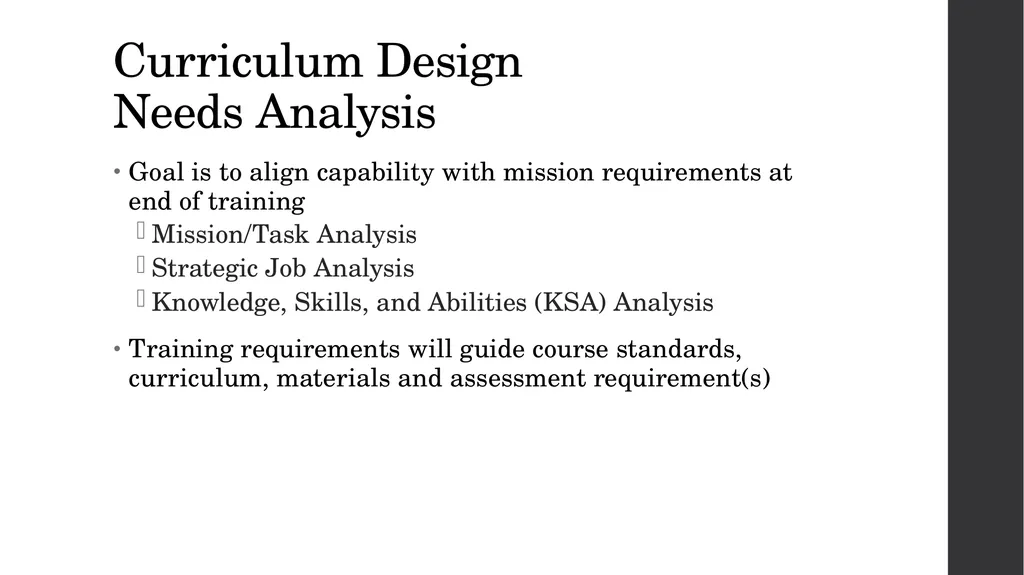
Needs Analysis Goal is to align capability with mission requirements at end of training
Mission/Task Analysis
Strategic Job Analysis
Knowledge, Skills, and Abilities (KSA) Analysis
Training requirements will guide course standards, curriculum, materials and assessment requirement(s)<br>
Mission/Task Analysis
Strategic Job Analysis
Knowledge, Skills, and Abilities (KSA) Analysis
Training requirements will guide course standards, curriculum, materials and assessment requirement(s)<br>
14
Curriculum Design
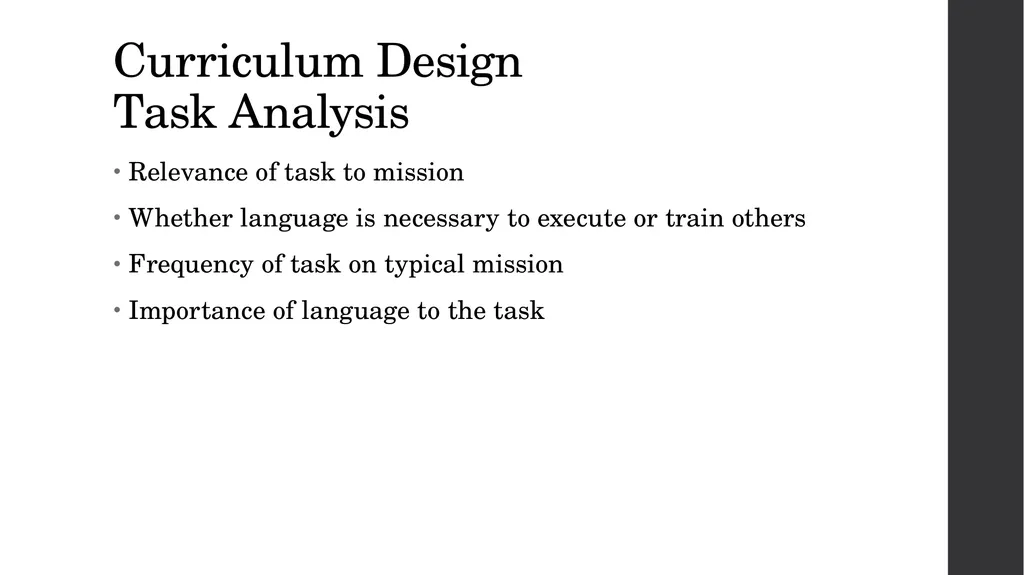
Task Analysis Relevance of task to mission
Whether language is necessary to execute or train others
Frequency of task on typical mission
Importance of language to the task<br>
Whether language is necessary to execute or train others
Frequency of task on typical mission
Importance of language to the task<br>
15
Curriculum Design
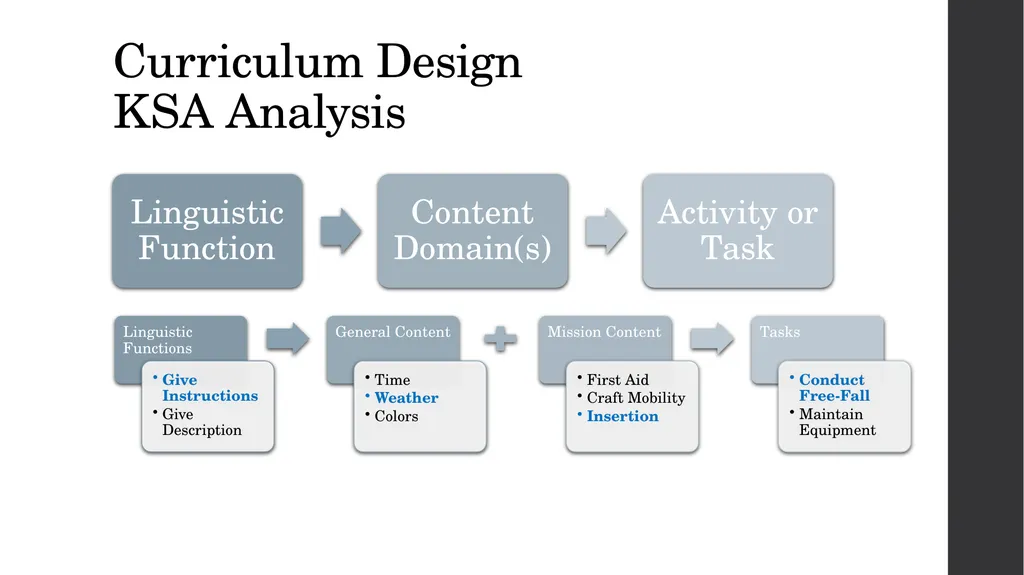
KSA Analysis<br>
16
Curriculum Design
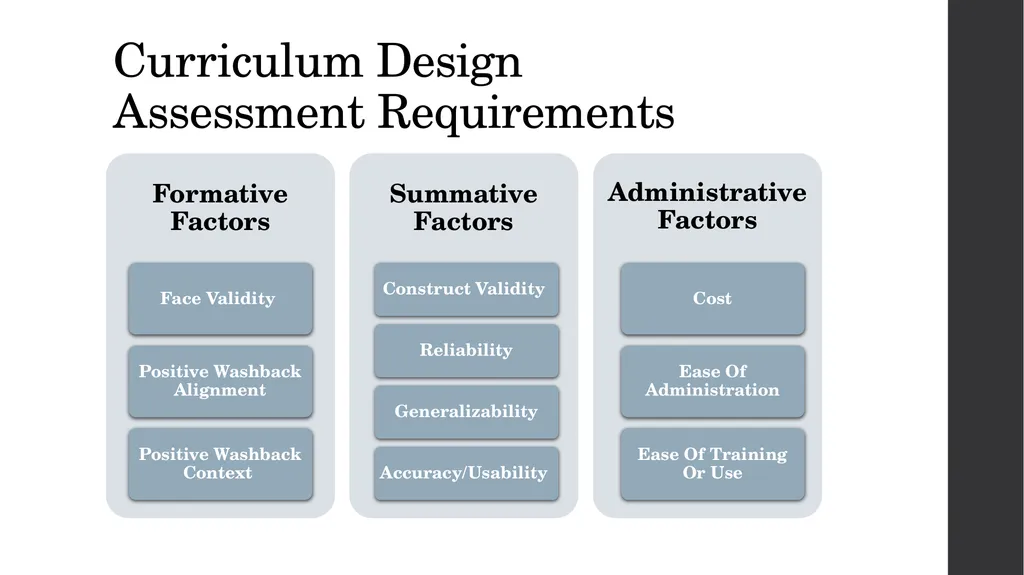
Assessment Requirements Formative Requirements: Link for students between operational need, learning objectives, classroom learning, assessment, real-life
Summative Requirements: Ability to measure degree to which Members are capable of using the target language flexibly/adaptively to accomplish their unique missions effectively
Administrative Requirements: Cost, administration, training, certification<br>
Summative Requirements: Ability to measure degree to which Members are capable of using the target language flexibly/adaptively to accomplish their unique missions effectively
Administrative Requirements: Cost, administration, training, certification<br>
17
Curriculum Design
Assessment Requirements<br>
18
Curriculum Design
Assessment Plan Task Performance Level Expectations
Constructive Feedback/Error Correction
Reflection/Self-Assessment-Daily
Consolidation Block
Formative Quizzes-Weekly
Summative Unit Test-Monthly
Defense Language Proficiency Test (DLPT) and Oral Proficiency Interview (OPI)-Final Week
Capstone Summative Assessment-Final Week<br>
Constructive Feedback/Error Correction
Reflection/Self-Assessment-Daily
Consolidation Block
Formative Quizzes-Weekly
Summative Unit Test-Monthly
Defense Language Proficiency Test (DLPT) and Oral Proficiency Interview (OPI)-Final Week
Capstone Summative Assessment-Final Week<br>
19
Assessment Design<br>
20
Assessment Design
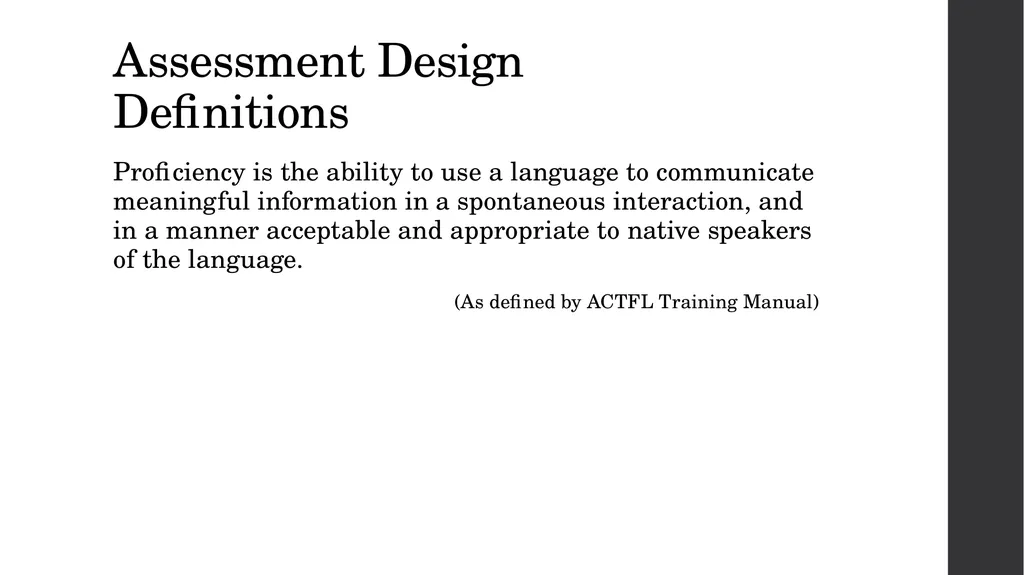
Definitions Proficiency is the ability to use a language to communicate meaningful information in a spontaneous interaction, and in a manner acceptable and appropriate to native speakers of the language.
(As defined by ACTFL Training Manual)<br>
(As defined by ACTFL Training Manual)<br>
21
Assessment Design
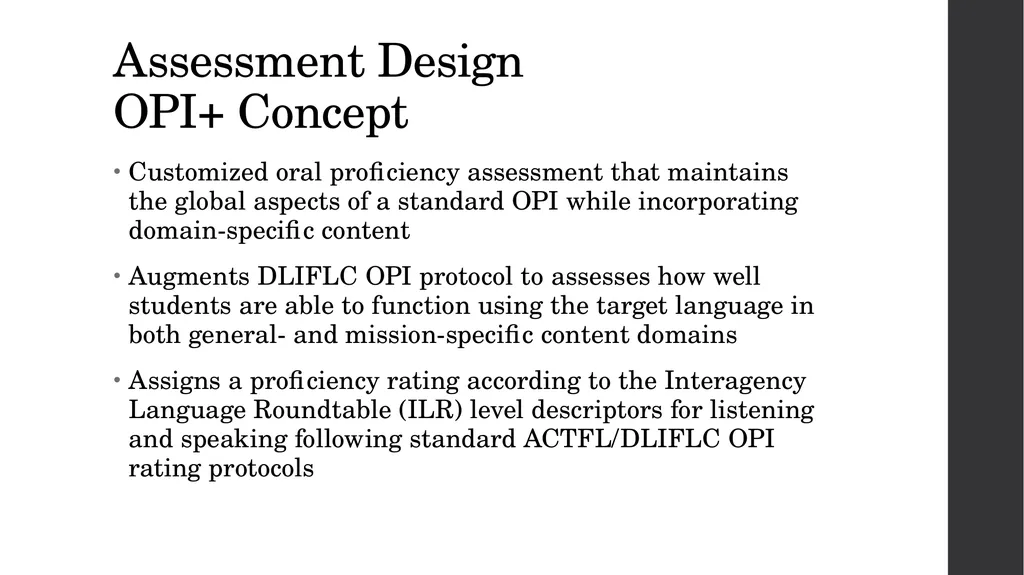
OPI+ Concept Customized oral proficiency assessment that maintains the global aspects of a standard OPI while incorporating domain-specific content
Augments DLIFLC OPI protocol to assesses how well students are able to function using the target language in both general- and mission-specific content domains
Assigns a proficiency rating according to the Interagency Language Roundtable (ILR) level descriptors for listening and speaking following standard ACTFL/DLIFLC OPI rating protocols<br>
22
Assessment Design
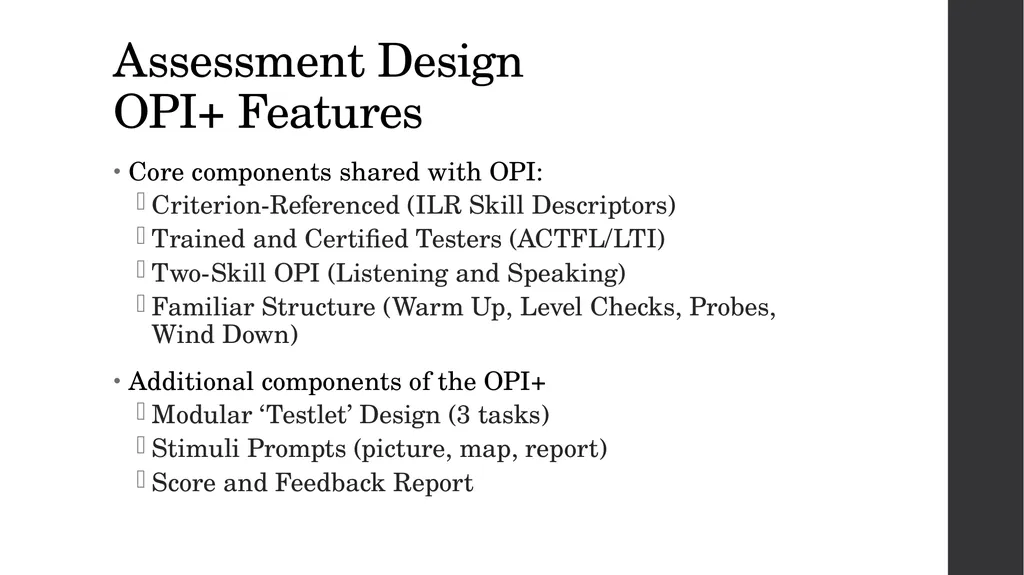
OPI+ Features Core components shared with OPI:
Criterion-Referenced (ILR Skill Descriptors)
Trained and Certified Testers (ACTFL/LTI)
Two-Skill OPI (Listening and Speaking)
Familiar Structure (Warm Up, Level Checks, Probes, Wind Down)
Additional components of the OPI+
Modular ‘Testlet’ Design (3 tasks)
Stimuli Prompts (picture, map, report)
Score and Feedback Report<br>
23
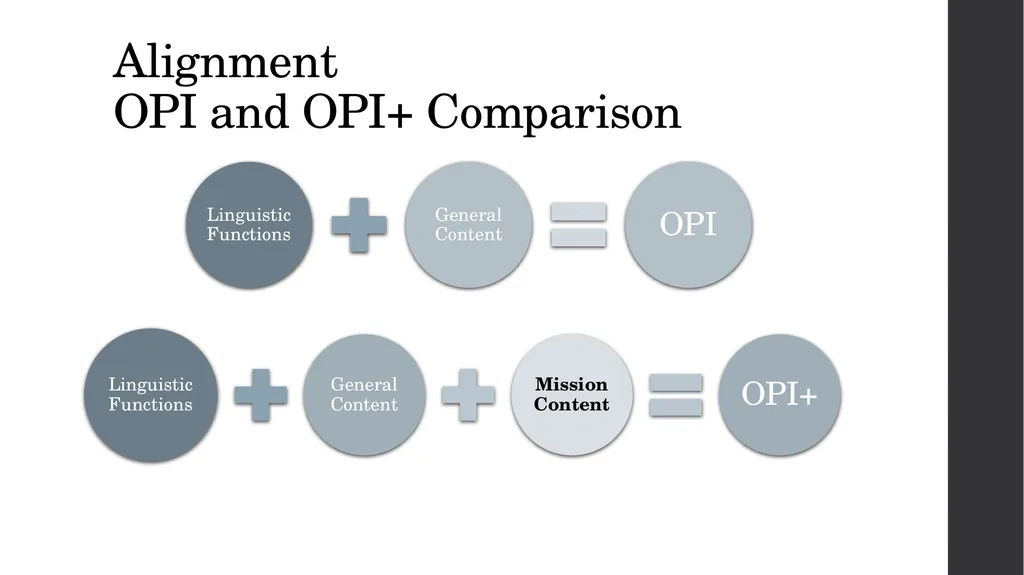
Alignment
OPI and OPI+ Comparison<br>
24
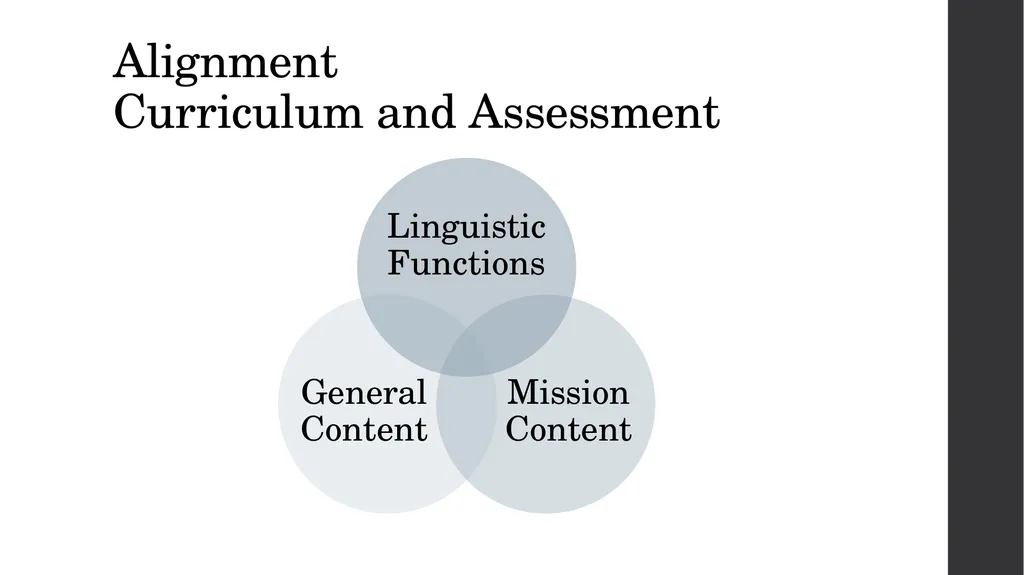
Alignment
Curriculum and Assessment<br>
25
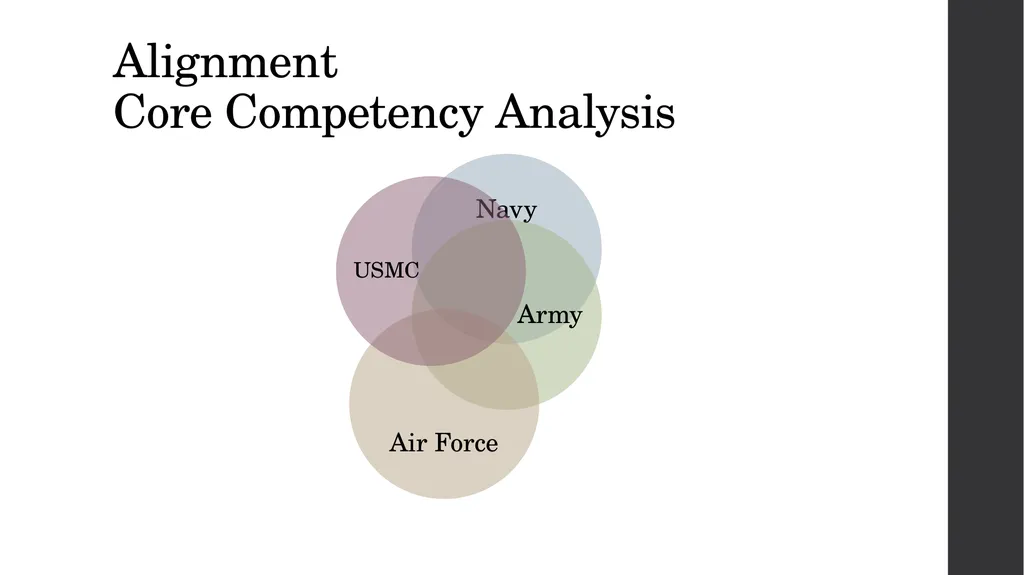
Alignment
Core Competency Analysis<br>
26
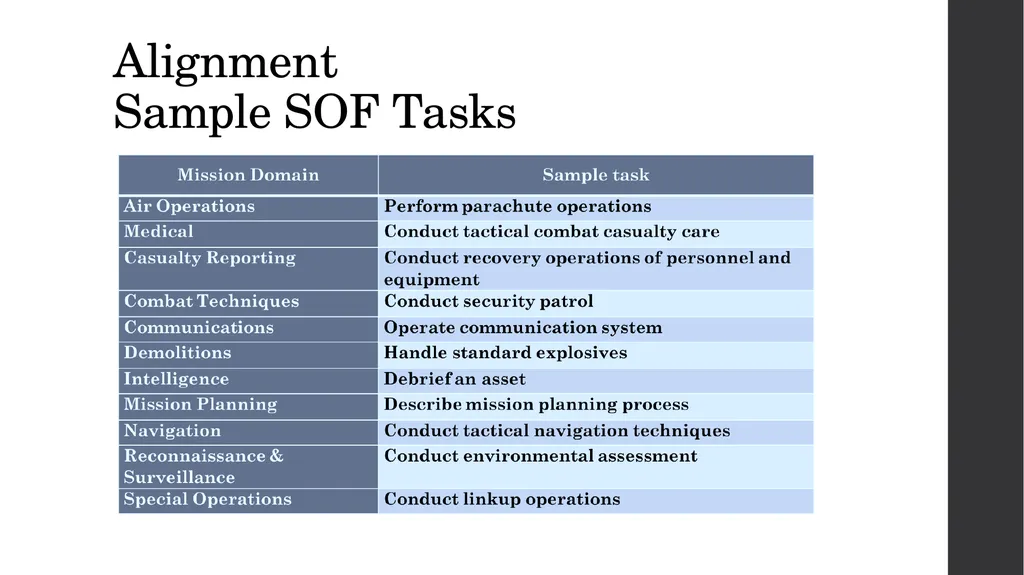
Alignment
Sample SOF Tasks<br>
27
Research Design<br>
28
Research Design
Goals Verify that the OPI+ addresses the needs of the stakeholders
Verify that OPI+ test results provide a sound basis for decisions
Verify that consequences related to the use of the OPI+ are beneficial
Make the theoretical framework of the OPI+ solid and supported
Verify the test related documents are comprehensive and adequate
Check that test routines are efficient and reliable<br>
29
Research Design
Claims Claim 1: Assessment records are consistent across the assessment tasks, different aspects of the assessment procedure, and across different groups of test takers.
Claim 2: The interpretations about the abilities to be assessed are meaningful, impartial, generalizable, relevant, and sufficient.
Claim 3: The decisions made on the basis of the assessment-based interpretations take into consideration existing educational/societal values, relevant legal requirements, and are equitable for stakeholders who are affected by the decision.
Claim 4: The consequences of using the OPI+ and of the decisions that are made are beneficial to all stakeholders.<br>
30
Research Design
Rater Study Are ratings of different raters consistent (inter-rater reliability)?
Are different ratings by the same rater consistent (intra-rater reliability)?
Are scores from different forms of the test consistent (equivalence)?
Are scores from different test administrations of the test consistent (stability)?
Are assessment records of comparable consistency across different groups of test takers?<br>
31
Research Design
Benchmarking Study To what extent do the assessment task specifications clearly identify the conditions under which performance will be observed or elicited and from which inferences about the construct to be assessed can be made?
Do the procedures for administering the assessment enable test takers to perform at their highest level with regard to the ability to be assessed?
Do the procedures for administering the assessment record focus on those aspects of the performance that are relevant to the construct to be assessed?<br>
32
Select Findings<br>
33
Select Findings
Inter-Rater Reliability<br>
34
Select Findings
Test Reliability<br>
35
Select Findings
Construct Validity<br>
36
Select Findings
Construct Validity<br>
37
Select Findings
Face-Validity<br>
38
Select Findings
Face-Validity<br>
39
Select Findings
Face-Validity<br>
40
Select Findings
Noteworthy Comments “Good idea. Language training should be geared towards work. OPIs like this would make language training tend toward our job. Not language in general”
“I thought that the OPI+ was better and more relevant than the traditional OPI”
“[The OPI+ is] much longer [than the traditional OPI] but I believe it does a better job of getting the core of what we need”
“This [the OPI+] is an effective test for MARSOC and with this, teachers will teach a more military based curriculum to prepare for the final test”<br>
41
Implications<br>
42
Implications
OPI+ Conclusions The OPI+ is a reliable and valid assessment of both general and mission-relevant speaking proficiency for use by the services and government agencies
The OPI+ has the benefit of increased construct validity and positive test- and curriculum-washback
What’s your +?<br>
The OPI+ has the benefit of increased construct validity and positive test- and curriculum-washback
What’s your +?<br>
43
Questions<br>
44
Select Findings
Inter-Rater Reliability Study I
Two Arabic TLEs and two Spanish TLEs re-rated 30 OPI+ interviews in their respective languages
Rater and correlation measures calculated separately by language and also combined
TLE confidence was high with 91.3% indicating they were “very confident” and 6.5% were “confident” in their ratings for a combined total of 97.8%
Study II
Eleven Spanish TLEs re-rated the same 15 Spanish OPI+ interviews
Rater and correlation measures calculated separately for the 11 Spanish TLE’s and cross-tabulated by test sample<br>