
Clinical Guidance: Stimulant Use

Description: Clinical Guidance: Stimulant Use www.suguidelinesnys.org NOVEMBER 2025 NYSDOH AIDS Institute Clinical Guidelines Program Purpose of This Guidance Inform clinicians about different types of stimulants and current terminology for describing
Related Topics
Download Presentation
"Clinical Guidance: Stimulant Use" is the property of its rightful owner. Permission is granted to download and print the materials on this website for personal, non-commercial use only, and to display it on your personal computer provided you do not modify the materials and that you retain all copyright notices contained in the materials. By downloading content from our website, you accept the terms of this agreement.
Presentation Transcript
slide1. Clinical Guidance:
Stimulant Use
www.suguidelinesnys.org NOVEMBER 2025 NYSDOH AIDS Institute Clinical Guidelines Program<br>
slide2. Purpose of This Guidance Inform clinicians about different types of stimulants and current terminology for describing stimulants and their use.
Provide strategies for talking with patients about stimulant use and the associated risks, including opioid overdose due to concomitant use of opioids and stimulants or to contamination of illicitly manufactured stimulants with synthetic opioids.
Summarize the treatment options for stimulant use disorder. NYSDOH AIDS Institute Clinical Guidelines Program www.suguidelinesnys.org NOVEMBER 2025<br>
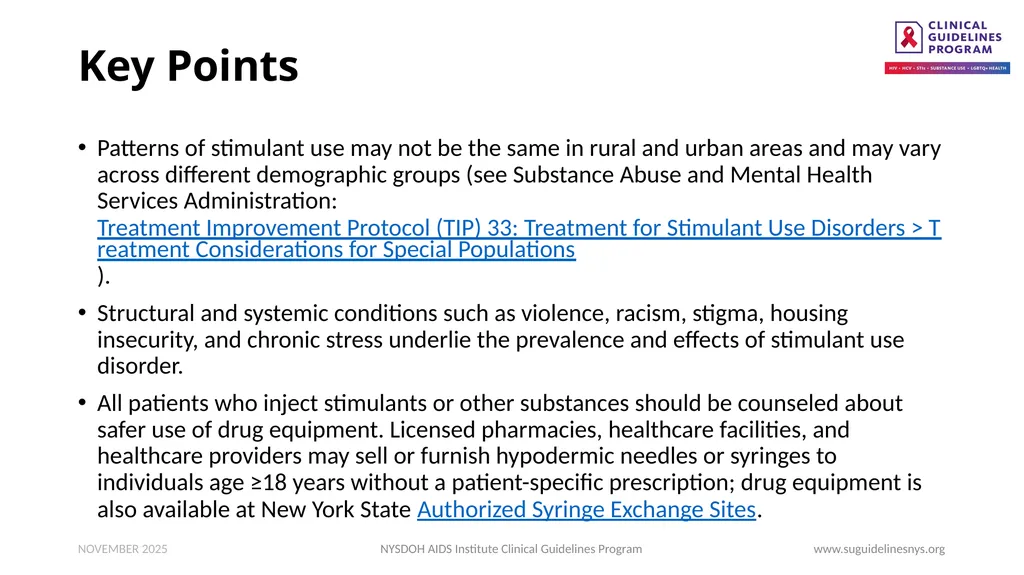
slide3. Key Points Patterns of stimulant use may not be the same in rural and urban areas and may vary across different demographic groups (see Substance Abuse and Mental Health Services Administration: Treatment Improvement Protocol (TIP) 33: Treatment for Stimulant Use Disorders > Treatment Considerations for Special Populations).
Structural and systemic conditions such as violence, racism, stigma, housing insecurity, and chronic stress underlie the prevalence and effects of stimulant use disorder.
All patients who inject stimulants or other substances should be counseled about safer use of drug equipment. Licensed pharmacies, healthcare facilities, and healthcare providers may sell or furnish hypodermic needles or syringes to individuals age ≥18 years without a patient-specific prescription; drug equipment is also available at New York State Authorized Syringe Exchange Sites. NYSDOH AIDS Institute Clinical Guidelines Program www.suguidelinesnys.org NOVEMBER 2025<br>
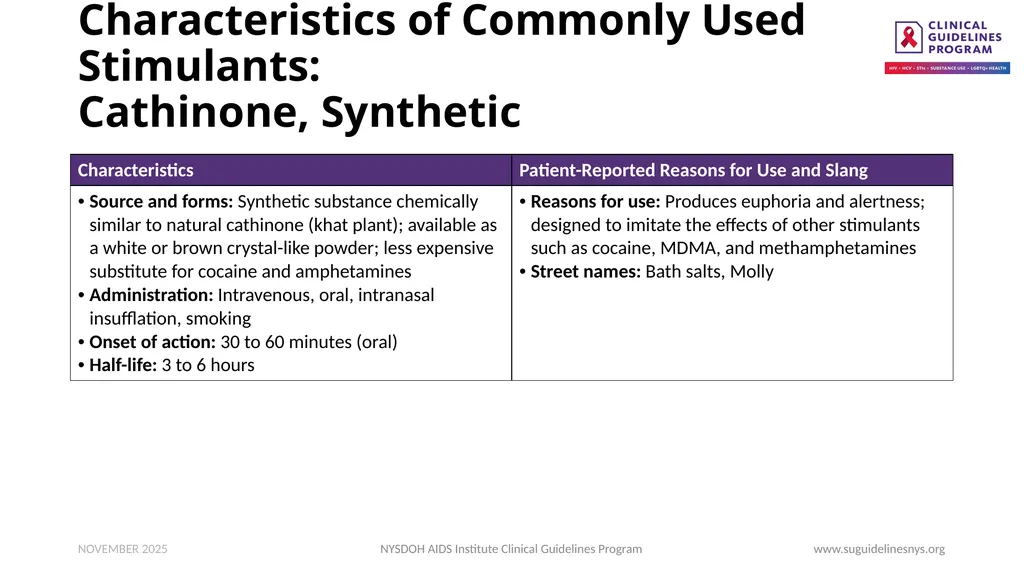
slide4. Characteristics of Commonly Used Stimulants: Cathinone, Synthetic NYSDOH AIDS Institute Clinical Guidelines Program www.suguidelinesnys.org NOVEMBER 2025<br>
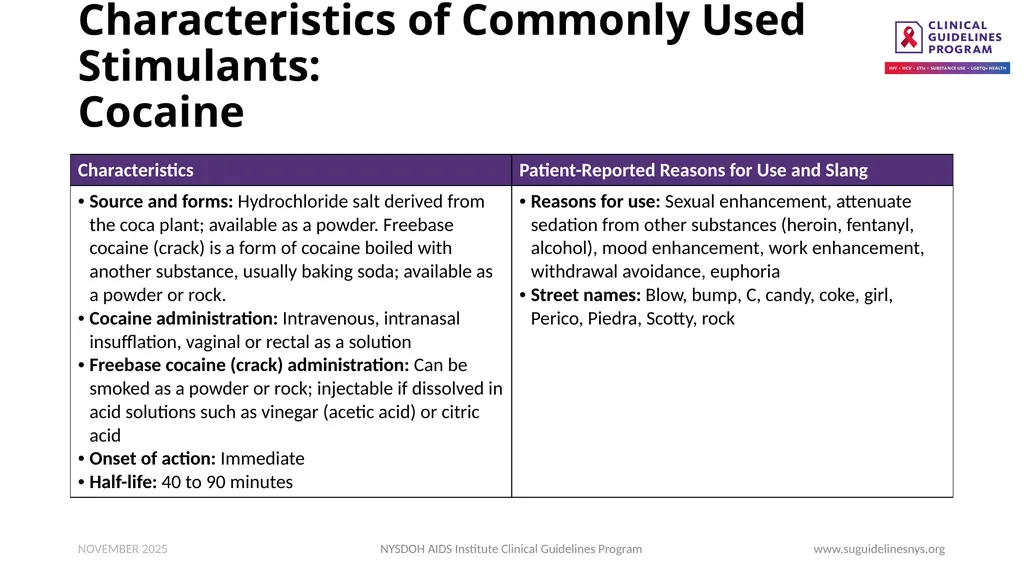
slide5. Characteristics of Commonly Used Stimulants: Cocaine NYSDOH AIDS Institute Clinical Guidelines Program www.suguidelinesnys.org NOVEMBER 2025<br>
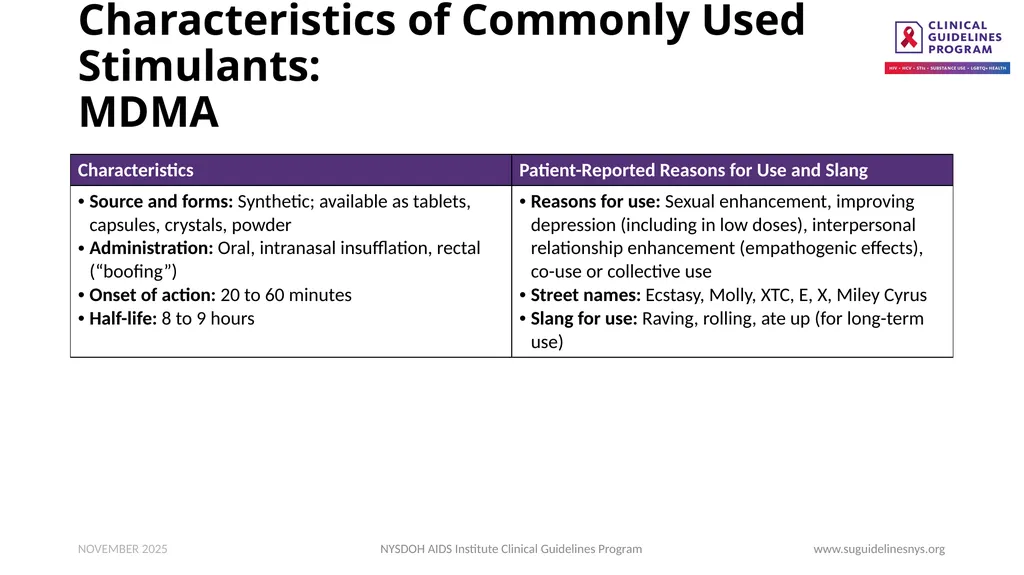
slide6. Characteristics of Commonly Used Stimulants: MDMA NYSDOH AIDS Institute Clinical Guidelines Program www.suguidelinesnys.org NOVEMBER 2025<br>
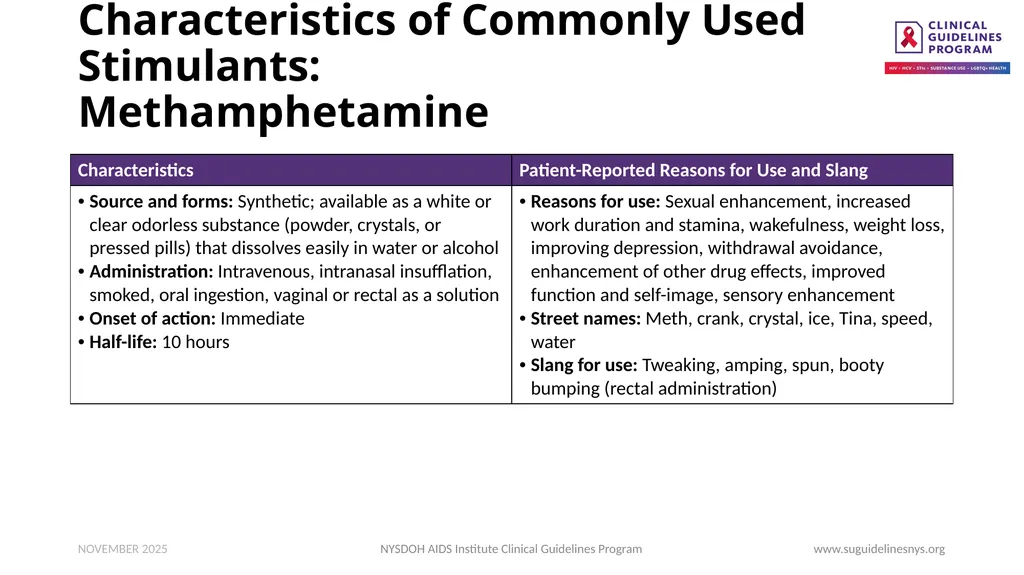
slide7. Characteristics of Commonly Used Stimulants: Methamphetamine NYSDOH AIDS Institute Clinical Guidelines Program www.suguidelinesnys.org NOVEMBER 2025<br>
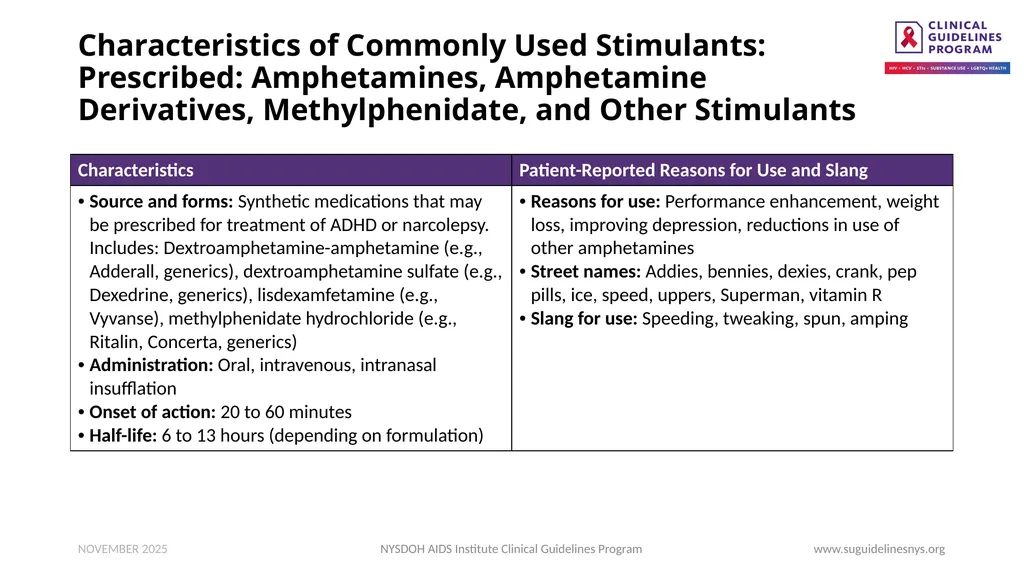
slide8. Characteristics of Commonly Used Stimulants: Prescribed: Amphetamines, Amphetamine Derivatives, Methylphenidate, and Other Stimulants NYSDOH AIDS Institute Clinical Guidelines Program www.suguidelinesnys.org NOVEMBER 2025<br>
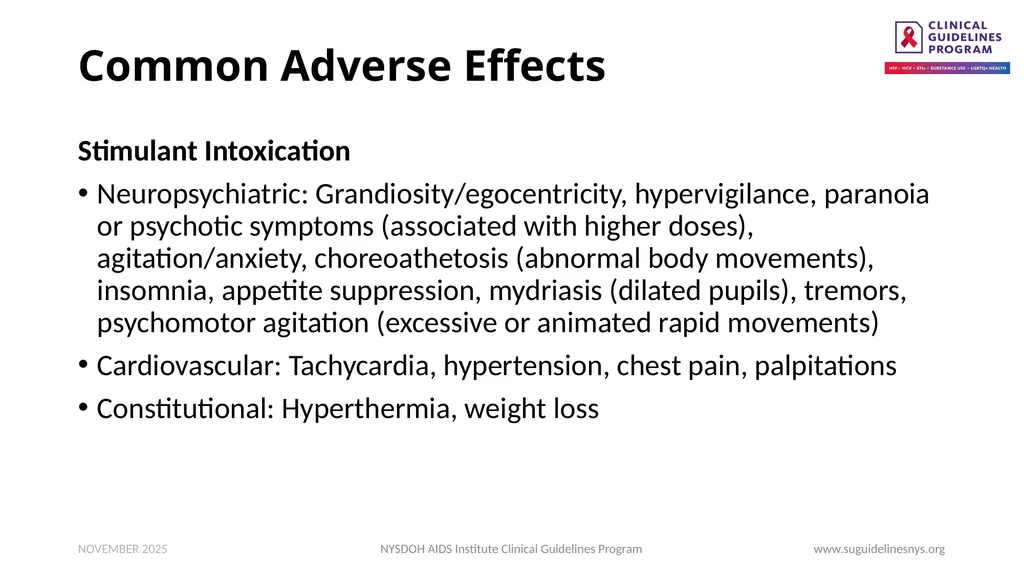
slide9. Common Adverse Effects Stimulant Intoxication
Neuropsychiatric: Grandiosity/egocentricity, hypervigilance, paranoia or psychotic symptoms (associated with higher doses), agitation/anxiety, choreoathetosis (abnormal body movements), insomnia, appetite suppression, mydriasis (dilated pupils), tremors, psychomotor agitation (excessive or animated rapid movements)
Cardiovascular: Tachycardia, hypertension, chest pain, palpitations
Constitutional: Hyperthermia, weight loss NYSDOH AIDS Institute Clinical Guidelines Program www.suguidelinesnys.org NOVEMBER 2025<br>
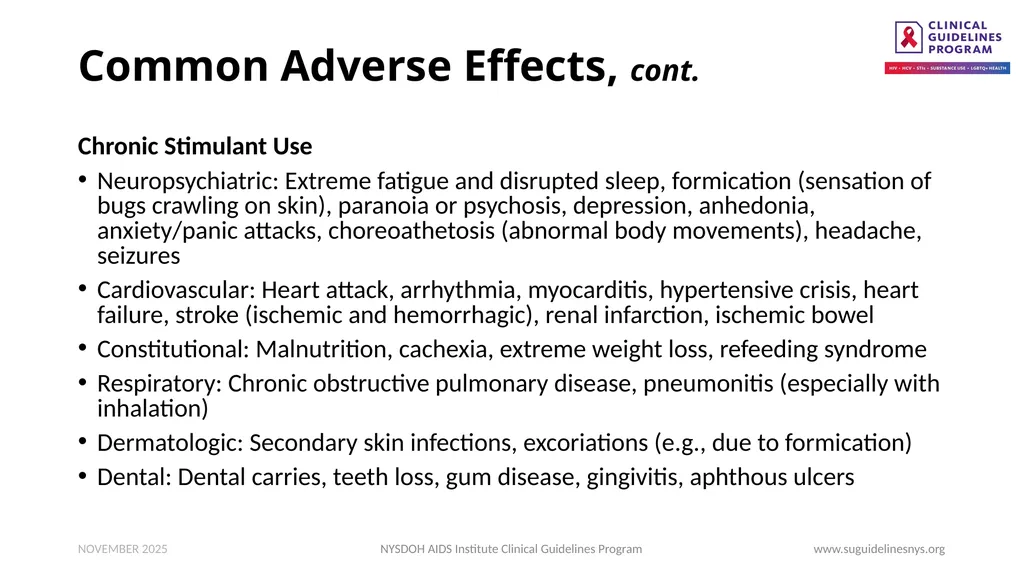
slide10. Common Adverse Effects, cont. Chronic Stimulant Use
Neuropsychiatric: Extreme fatigue and disrupted sleep, formication (sensation of bugs crawling on skin), paranoia or psychosis, depression, anhedonia, anxiety/panic attacks, choreoathetosis (abnormal body movements), headache, seizures
Cardiovascular: Heart attack, arrhythmia, myocarditis, hypertensive crisis, heart failure, stroke (ischemic and hemorrhagic), renal infarction, ischemic bowel
Constitutional: Malnutrition, cachexia, extreme weight loss, refeeding syndrome
Respiratory: Chronic obstructive pulmonary disease, pneumonitis (especially with inhalation)
Dermatologic: Secondary skin infections, excoriations (e.g., due to formication)
Dental: Dental carries, teeth loss, gum disease, gingivitis, aphthous ulcers NYSDOH AIDS Institute Clinical Guidelines Program www.suguidelinesnys.org NOVEMBER 2025<br>
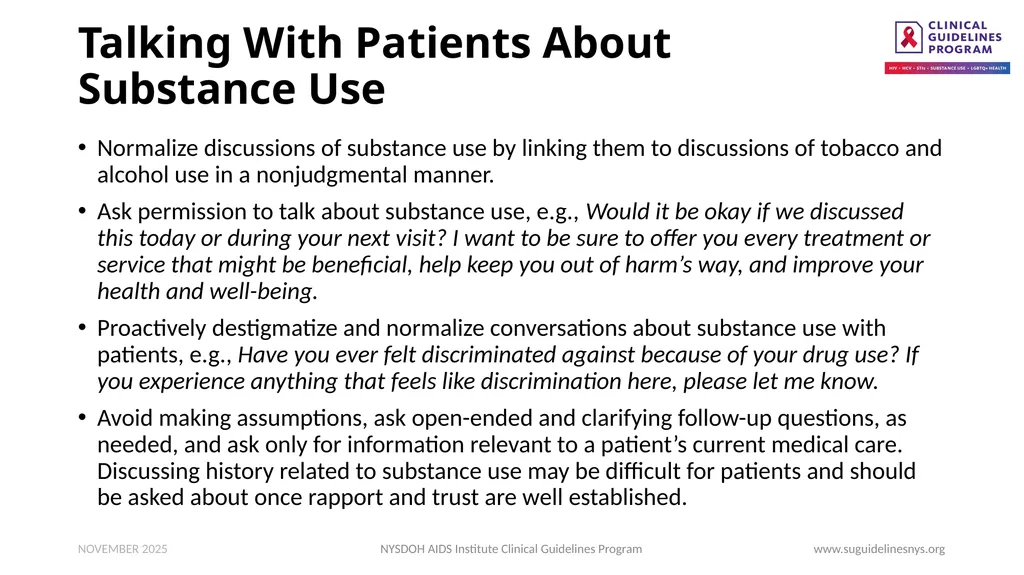
slide11. Talking With Patients About Substance Use Normalize discussions of substance use by linking them to discussions of tobacco and alcohol use in a nonjudgmental manner.
Ask permission to talk about substance use, e.g., Would it be okay if we discussed this today or during your next visit? I want to be sure to offer you every treatment or service that might be beneficial, help keep you out of harm’s way, and improve your health and well-being.
Proactively destigmatize and normalize conversations about substance use with patients, e.g., Have you ever felt discriminated against because of your drug use? If you experience anything that feels like discrimination here, please let me know.
Avoid making assumptions, ask open-ended and clarifying follow-up questions, as needed, and ask only for information relevant to a patient’s current medical care. Discussing history related to substance use may be difficult for patients and should be asked about once rapport and trust are well established. NYSDOH AIDS Institute Clinical Guidelines Program www.suguidelinesnys.org NOVEMBER 2025<br>
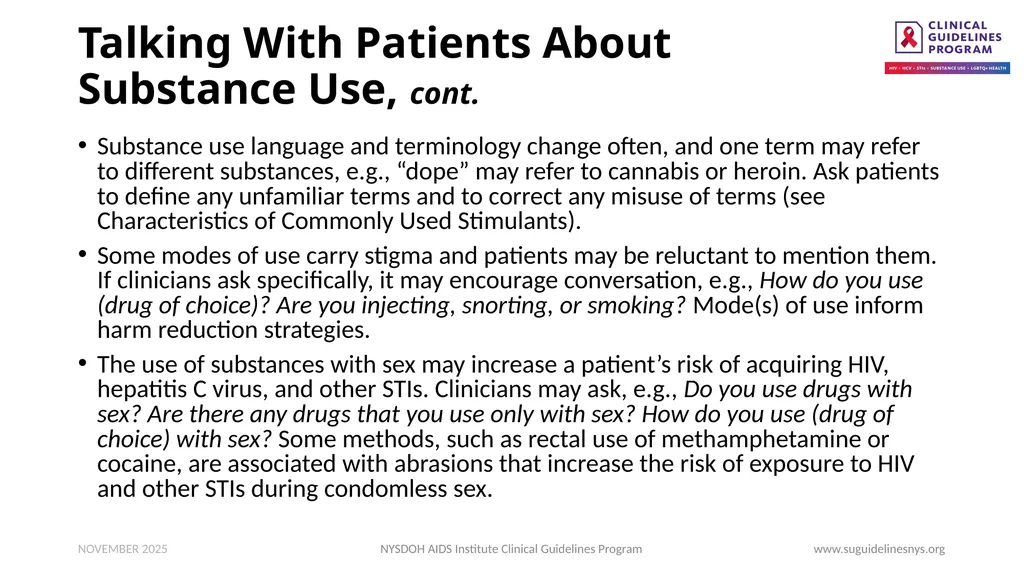
slide12. Talking With Patients About Substance Use, cont. Substance use language and terminology change often, and one term may refer to different substances, e.g., “dope” may refer to cannabis or heroin. Ask patients to define any unfamiliar terms and to correct any misuse of terms (see Characteristics of Commonly Used Stimulants).
Some modes of use carry stigma and patients may be reluctant to mention them. If clinicians ask specifically, it may encourage conversation, e.g., How do you use (drug of choice)? Are you injecting, snorting, or smoking? Mode(s) of use inform harm reduction strategies.
The use of substances with sex may increase a patient’s risk of acquiring HIV, hepatitis C virus, and other STIs. Clinicians may ask, e.g., Do you use drugs with sex? Are there any drugs that you use only with sex? How do you use (drug of choice) with sex? Some methods, such as rectal use of methamphetamine or cocaine, are associated with abrasions that increase the risk of exposure to HIV and other STIs during condomless sex. NYSDOH AIDS Institute Clinical Guidelines Program www.suguidelinesnys.org NOVEMBER 2025<br>
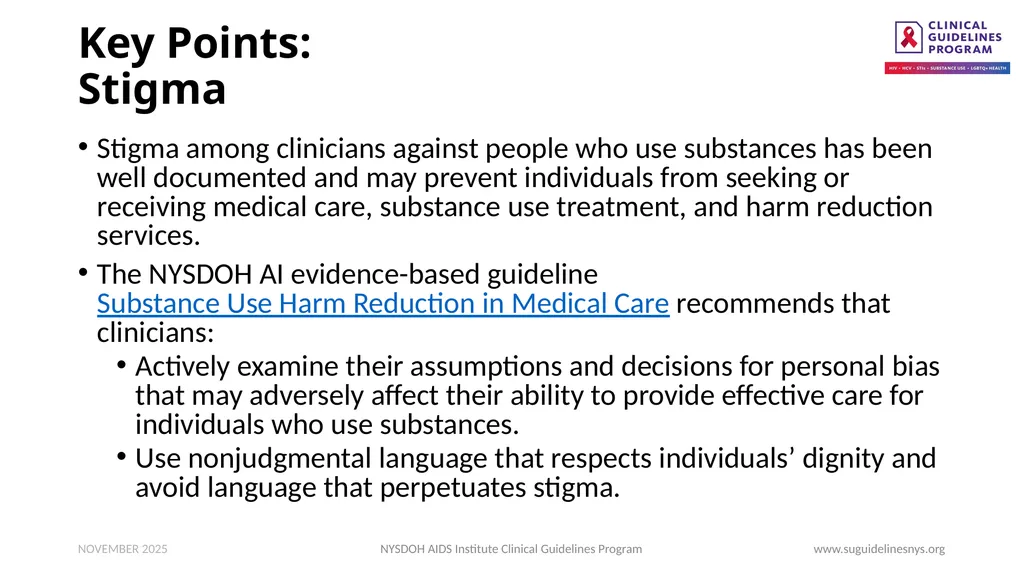
slide13. Key Points: Stigma Stigma among clinicians against people who use substances has been well documented and may prevent individuals from seeking or receiving medical care, substance use treatment, and harm reduction services.
The NYSDOH AI evidence-based guideline Substance Use Harm Reduction in Medical Care recommends that clinicians:
Actively examine their assumptions and decisions for personal bias that may adversely affect their ability to provide effective care for individuals who use substances.
Use nonjudgmental language that respects individuals’ dignity and avoid language that perpetuates stigma. NYSDOH AIDS Institute Clinical Guidelines Program www.suguidelinesnys.org NOVEMBER 2025<br>
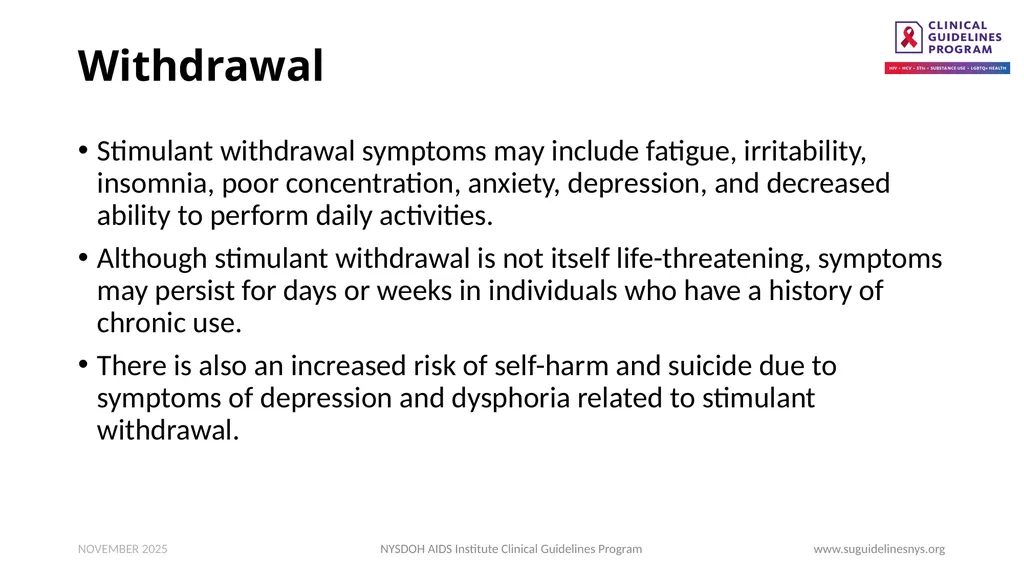
slide14. Withdrawal Stimulant withdrawal symptoms may include fatigue, irritability, insomnia, poor concentration, anxiety, depression, and decreased ability to perform daily activities.
Although stimulant withdrawal is not itself life-threatening, symptoms may persist for days or weeks in individuals who have a history of chronic use.
There is also an increased risk of self-harm and suicide due to symptoms of depression and dysphoria related to stimulant withdrawal. NYSDOH AIDS Institute Clinical Guidelines Program www.suguidelinesnys.org NOVEMBER 2025<br>
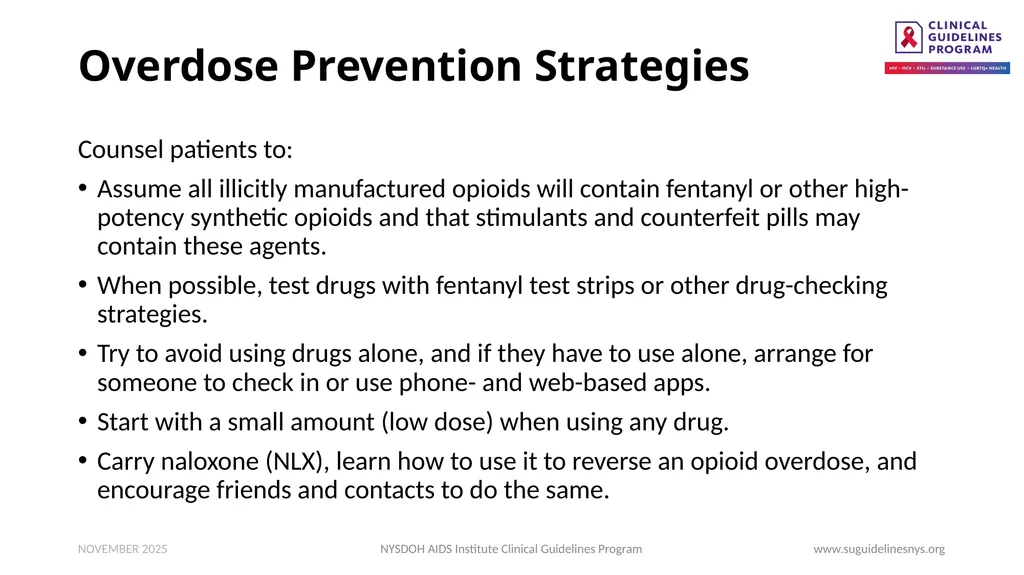
slide15. Overdose Prevention Strategies Counsel patients to:
Assume all illicitly manufactured opioids will contain fentanyl or other high-potency synthetic opioids and that stimulants and counterfeit pills may contain these agents.
When possible, test drugs with fentanyl test strips or other drug-checking strategies.
Try to avoid using drugs alone, and if they have to use alone, arrange for someone to check in or use phone- and web-based apps.
Start with a small amount (low dose) when using any drug.
Carry naloxone (NLX), learn how to use it to reverse an opioid overdose, and encourage friends and contacts to do the same. NYSDOH AIDS Institute Clinical Guidelines Program www.suguidelinesnys.org NOVEMBER 2025<br>
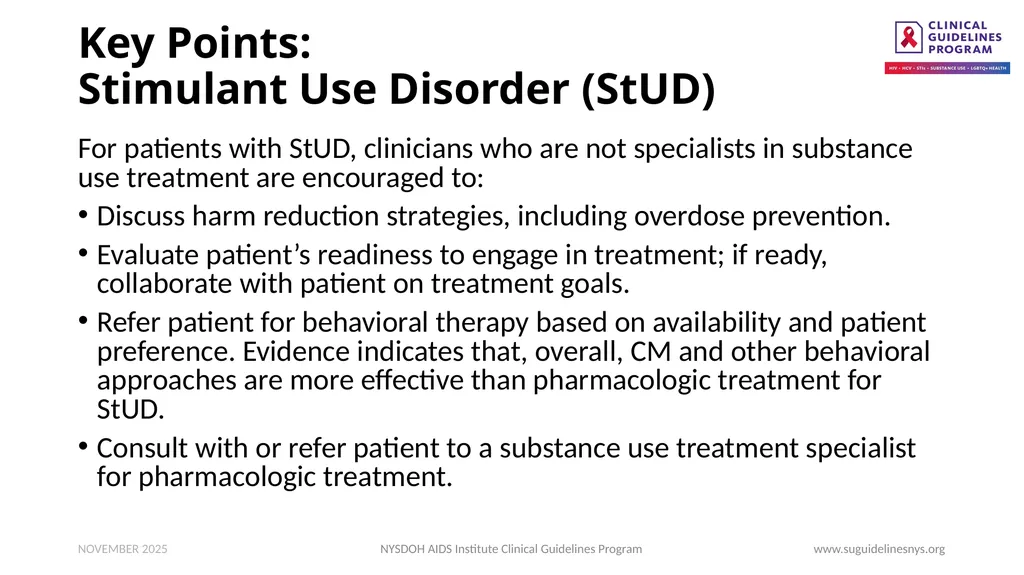
slide16. Key Points: Stimulant Use Disorder (StUD) For patients with StUD, clinicians who are not specialists in substance use treatment are encouraged to:
Discuss harm reduction strategies, including overdose prevention.
Evaluate patient’s readiness to engage in treatment; if ready, collaborate with patient on treatment goals.
Refer patient for behavioral therapy based on availability and patient preference. Evidence indicates that, overall, CM and other behavioral approaches are more effective than pharmacologic treatment for StUD.
Consult with or refer patient to a substance use treatment specialist for pharmacologic treatment. NYSDOH AIDS Institute Clinical Guidelines Program www.suguidelinesnys.org NOVEMBER 2025<br>
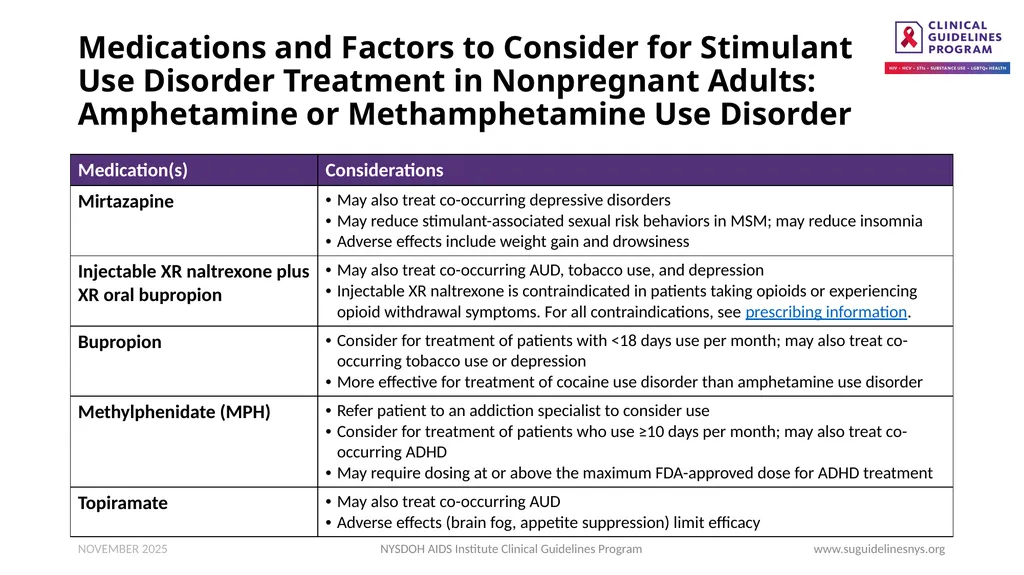
slide17. Medications and Factors to Consider for Stimulant Use Disorder Treatment in Nonpregnant Adults: Amphetamine or Methamphetamine Use Disorder NYSDOH AIDS Institute Clinical Guidelines Program www.suguidelinesnys.org NOVEMBER 2025<br>
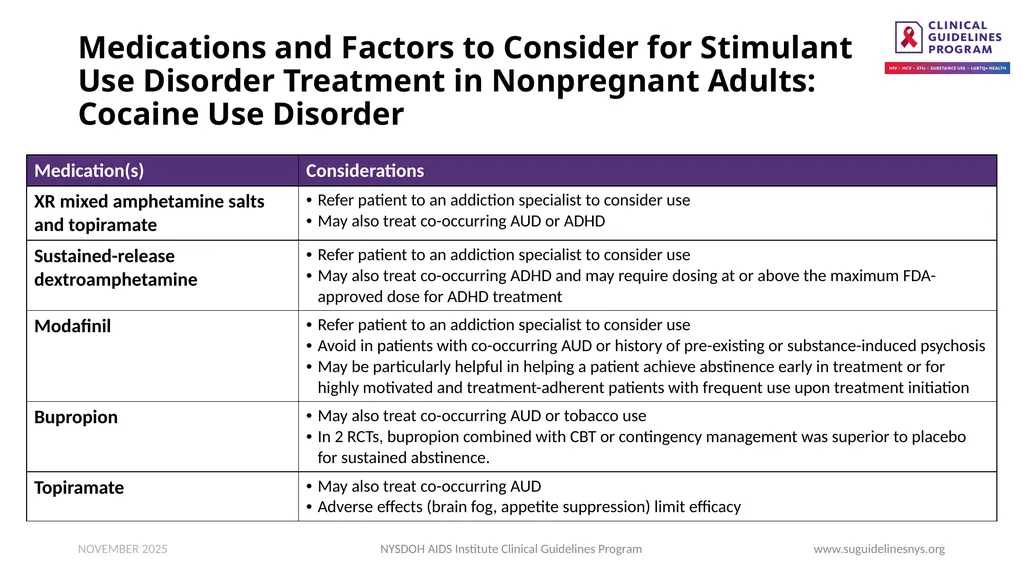
slide18. Medications and Factors to Consider for Stimulant Use Disorder Treatment in Nonpregnant Adults: Cocaine Use Disorder NYSDOH AIDS Institute Clinical Guidelines Program www.suguidelinesnys.org NOVEMBER 2025<br>
slide19. NYSDOH AIDS Institute Clinical Guidelines Program www.hivguidelines.org Need Help?<br>
slide20. NYSDOH AIDS Institute Clinical Guidelines Program www.suguidelinesnys.org Access the Guidance www.suguidelinesnys.org > Clinical Guidance: Stimulant Use
Also available: Printable PDF Podcast: Viremic—Cases in HIV
Find all episodes at viremic.org<br>
www.suguidelinesnys.org NOVEMBER 2025 NYSDOH AIDS Institute Clinical Guidelines Program<br>
slide2. Purpose of This Guidance Inform clinicians about different types of stimulants and current terminology for describing stimulants and their use.
Provide strategies for talking with patients about stimulant use and the associated risks, including opioid overdose due to concomitant use of opioids and stimulants or to contamination of illicitly manufactured stimulants with synthetic opioids.
Summarize the treatment options for stimulant use disorder. NYSDOH AIDS Institute Clinical Guidelines Program www.suguidelinesnys.org NOVEMBER 2025<br>
slide3. Key Points Patterns of stimulant use may not be the same in rural and urban areas and may vary across different demographic groups (see Substance Abuse and Mental Health Services Administration: Treatment Improvement Protocol (TIP) 33: Treatment for Stimulant Use Disorders > Treatment Considerations for Special Populations).
Structural and systemic conditions such as violence, racism, stigma, housing insecurity, and chronic stress underlie the prevalence and effects of stimulant use disorder.
All patients who inject stimulants or other substances should be counseled about safer use of drug equipment. Licensed pharmacies, healthcare facilities, and healthcare providers may sell or furnish hypodermic needles or syringes to individuals age ≥18 years without a patient-specific prescription; drug equipment is also available at New York State Authorized Syringe Exchange Sites. NYSDOH AIDS Institute Clinical Guidelines Program www.suguidelinesnys.org NOVEMBER 2025<br>
slide4. Characteristics of Commonly Used Stimulants: Cathinone, Synthetic NYSDOH AIDS Institute Clinical Guidelines Program www.suguidelinesnys.org NOVEMBER 2025<br>
slide5. Characteristics of Commonly Used Stimulants: Cocaine NYSDOH AIDS Institute Clinical Guidelines Program www.suguidelinesnys.org NOVEMBER 2025<br>
slide6. Characteristics of Commonly Used Stimulants: MDMA NYSDOH AIDS Institute Clinical Guidelines Program www.suguidelinesnys.org NOVEMBER 2025<br>
slide7. Characteristics of Commonly Used Stimulants: Methamphetamine NYSDOH AIDS Institute Clinical Guidelines Program www.suguidelinesnys.org NOVEMBER 2025<br>
slide8. Characteristics of Commonly Used Stimulants: Prescribed: Amphetamines, Amphetamine Derivatives, Methylphenidate, and Other Stimulants NYSDOH AIDS Institute Clinical Guidelines Program www.suguidelinesnys.org NOVEMBER 2025<br>
slide9. Common Adverse Effects Stimulant Intoxication
Neuropsychiatric: Grandiosity/egocentricity, hypervigilance, paranoia or psychotic symptoms (associated with higher doses), agitation/anxiety, choreoathetosis (abnormal body movements), insomnia, appetite suppression, mydriasis (dilated pupils), tremors, psychomotor agitation (excessive or animated rapid movements)
Cardiovascular: Tachycardia, hypertension, chest pain, palpitations
Constitutional: Hyperthermia, weight loss NYSDOH AIDS Institute Clinical Guidelines Program www.suguidelinesnys.org NOVEMBER 2025<br>
slide10. Common Adverse Effects, cont. Chronic Stimulant Use
Neuropsychiatric: Extreme fatigue and disrupted sleep, formication (sensation of bugs crawling on skin), paranoia or psychosis, depression, anhedonia, anxiety/panic attacks, choreoathetosis (abnormal body movements), headache, seizures
Cardiovascular: Heart attack, arrhythmia, myocarditis, hypertensive crisis, heart failure, stroke (ischemic and hemorrhagic), renal infarction, ischemic bowel
Constitutional: Malnutrition, cachexia, extreme weight loss, refeeding syndrome
Respiratory: Chronic obstructive pulmonary disease, pneumonitis (especially with inhalation)
Dermatologic: Secondary skin infections, excoriations (e.g., due to formication)
Dental: Dental carries, teeth loss, gum disease, gingivitis, aphthous ulcers NYSDOH AIDS Institute Clinical Guidelines Program www.suguidelinesnys.org NOVEMBER 2025<br>
slide11. Talking With Patients About Substance Use Normalize discussions of substance use by linking them to discussions of tobacco and alcohol use in a nonjudgmental manner.
Ask permission to talk about substance use, e.g., Would it be okay if we discussed this today or during your next visit? I want to be sure to offer you every treatment or service that might be beneficial, help keep you out of harm’s way, and improve your health and well-being.
Proactively destigmatize and normalize conversations about substance use with patients, e.g., Have you ever felt discriminated against because of your drug use? If you experience anything that feels like discrimination here, please let me know.
Avoid making assumptions, ask open-ended and clarifying follow-up questions, as needed, and ask only for information relevant to a patient’s current medical care. Discussing history related to substance use may be difficult for patients and should be asked about once rapport and trust are well established. NYSDOH AIDS Institute Clinical Guidelines Program www.suguidelinesnys.org NOVEMBER 2025<br>
slide12. Talking With Patients About Substance Use, cont. Substance use language and terminology change often, and one term may refer to different substances, e.g., “dope” may refer to cannabis or heroin. Ask patients to define any unfamiliar terms and to correct any misuse of terms (see Characteristics of Commonly Used Stimulants).
Some modes of use carry stigma and patients may be reluctant to mention them. If clinicians ask specifically, it may encourage conversation, e.g., How do you use (drug of choice)? Are you injecting, snorting, or smoking? Mode(s) of use inform harm reduction strategies.
The use of substances with sex may increase a patient’s risk of acquiring HIV, hepatitis C virus, and other STIs. Clinicians may ask, e.g., Do you use drugs with sex? Are there any drugs that you use only with sex? How do you use (drug of choice) with sex? Some methods, such as rectal use of methamphetamine or cocaine, are associated with abrasions that increase the risk of exposure to HIV and other STIs during condomless sex. NYSDOH AIDS Institute Clinical Guidelines Program www.suguidelinesnys.org NOVEMBER 2025<br>
slide13. Key Points: Stigma Stigma among clinicians against people who use substances has been well documented and may prevent individuals from seeking or receiving medical care, substance use treatment, and harm reduction services.
The NYSDOH AI evidence-based guideline Substance Use Harm Reduction in Medical Care recommends that clinicians:
Actively examine their assumptions and decisions for personal bias that may adversely affect their ability to provide effective care for individuals who use substances.
Use nonjudgmental language that respects individuals’ dignity and avoid language that perpetuates stigma. NYSDOH AIDS Institute Clinical Guidelines Program www.suguidelinesnys.org NOVEMBER 2025<br>
slide14. Withdrawal Stimulant withdrawal symptoms may include fatigue, irritability, insomnia, poor concentration, anxiety, depression, and decreased ability to perform daily activities.
Although stimulant withdrawal is not itself life-threatening, symptoms may persist for days or weeks in individuals who have a history of chronic use.
There is also an increased risk of self-harm and suicide due to symptoms of depression and dysphoria related to stimulant withdrawal. NYSDOH AIDS Institute Clinical Guidelines Program www.suguidelinesnys.org NOVEMBER 2025<br>
slide15. Overdose Prevention Strategies Counsel patients to:
Assume all illicitly manufactured opioids will contain fentanyl or other high-potency synthetic opioids and that stimulants and counterfeit pills may contain these agents.
When possible, test drugs with fentanyl test strips or other drug-checking strategies.
Try to avoid using drugs alone, and if they have to use alone, arrange for someone to check in or use phone- and web-based apps.
Start with a small amount (low dose) when using any drug.
Carry naloxone (NLX), learn how to use it to reverse an opioid overdose, and encourage friends and contacts to do the same. NYSDOH AIDS Institute Clinical Guidelines Program www.suguidelinesnys.org NOVEMBER 2025<br>
slide16. Key Points: Stimulant Use Disorder (StUD) For patients with StUD, clinicians who are not specialists in substance use treatment are encouraged to:
Discuss harm reduction strategies, including overdose prevention.
Evaluate patient’s readiness to engage in treatment; if ready, collaborate with patient on treatment goals.
Refer patient for behavioral therapy based on availability and patient preference. Evidence indicates that, overall, CM and other behavioral approaches are more effective than pharmacologic treatment for StUD.
Consult with or refer patient to a substance use treatment specialist for pharmacologic treatment. NYSDOH AIDS Institute Clinical Guidelines Program www.suguidelinesnys.org NOVEMBER 2025<br>
slide17. Medications and Factors to Consider for Stimulant Use Disorder Treatment in Nonpregnant Adults: Amphetamine or Methamphetamine Use Disorder NYSDOH AIDS Institute Clinical Guidelines Program www.suguidelinesnys.org NOVEMBER 2025<br>
slide18. Medications and Factors to Consider for Stimulant Use Disorder Treatment in Nonpregnant Adults: Cocaine Use Disorder NYSDOH AIDS Institute Clinical Guidelines Program www.suguidelinesnys.org NOVEMBER 2025<br>
slide19. NYSDOH AIDS Institute Clinical Guidelines Program www.hivguidelines.org Need Help?<br>
slide20. NYSDOH AIDS Institute Clinical Guidelines Program www.suguidelinesnys.org Access the Guidance www.suguidelinesnys.org > Clinical Guidance: Stimulant Use
Also available: Printable PDF Podcast: Viremic—Cases in HIV
Find all episodes at viremic.org<br>