Clinical Microbiology- An Introduction Dr Deborah
Description: Clinical Microbiology- An Introduction Dr Deborah Gnana Selvam A Assistant Professor, Dept. Of Microbiology, The American College MIC 2531- Clinical bacteriology and Mycology UNIT - I Concepts of pathogenicity Epidemiology- scope and
Related Topics
Download Presentation
"Clinical Microbiology- An Introduction Dr Deborah" is the property of its rightful owner. Permission is granted to download and print the materials on this website for personal, non-commercial use only, and to display it on your personal computer provided you do not modify the materials and that you retain all copyright notices contained in the materials. By downloading content from our website, you accept the terms of this agreement.
Presentation Transcript
slide1. Clinical Microbiology- An Introduction Dr Deborah Gnana Selvam A
Assistant Professor, Dept. Of Microbiology,
The American College<br>
slide2. MIC 2531- Clinical bacteriology and Mycology UNIT - I Concepts of pathogenicity Epidemiology- scope and applications , Normal Microbial flora of human body .Infection- stages and transmission . Factors predisposing to microbial pathogenicity - mechanism of adhesion, colonization and invasion of mucous membranes. Nosocomial infection.<br>
slide3. UNIT–II Bacterial Pathogens I: Study of Morphology, cultural characteristics, pathogenesis/disease caused & laboratory diagnosis, Prophylaxis and Chemotherapy for Staphylococcus, Streptococcus, Neisseiria gonorrhoea, Cornybacterium diptheriae, Mycobacterium. MIC 2531 CLINICAL BACTERIOLOGY AND MYCOLOGY<br>
slide4. UNIT –III Bacterial Pathogens II: Study of Morphology, cultural characteristics, pathogenesis s& lab diagnosis, Prophylaxis and Chemotherapy for E. coli, Salmonella, Vibrio, Mycoplasma & Spirochaetes. MIC 2531 CLINICAL BACTERIOLOGY AND MYCOLOGY<br>
slide5. UNIT–IV Fungal Pathogens I: General characteristics, Tissue reactions to fungi, pathogenicity, Laboratory diagnosis, prophylaxis and chemotherapy Cutaneous, Sub cutaneous, superficial and Systemic Mycosis, Opportunistic fungal infections and yeast like fungi including Candida, Cryptococcus and Malassezia. MIC 2531 CLINICAL BACTERIOLOGY AND MYCOLOGY<br>
slide6. UNIT -V Fungal pathogens II: Pathogenicity, Pathogenesis, Laboratory diagnosis, Prophylaxis and Chemotherapy of Mycelial fungi including Aspergillus, Fusarium, & Dimorphic fungi -Histoplasma, Blastomyces. MIC 2531 CLINICAL BACTERIOLOGY AND MYCOLOGY<br>
slide7. UNIT -V Fungal pathogens II: Pathogenicity, Pathogenesis, Laboratory diagnosis, Prophylaxis and Chemotherapy of Mycelial fungi including Aspergillus, Fusarium, & Dimorphic fungi -Histoplasma, Blastomyces. MIC 2531 CLINICAL BACTERIOLOGY AND MYCOLOGY<br>
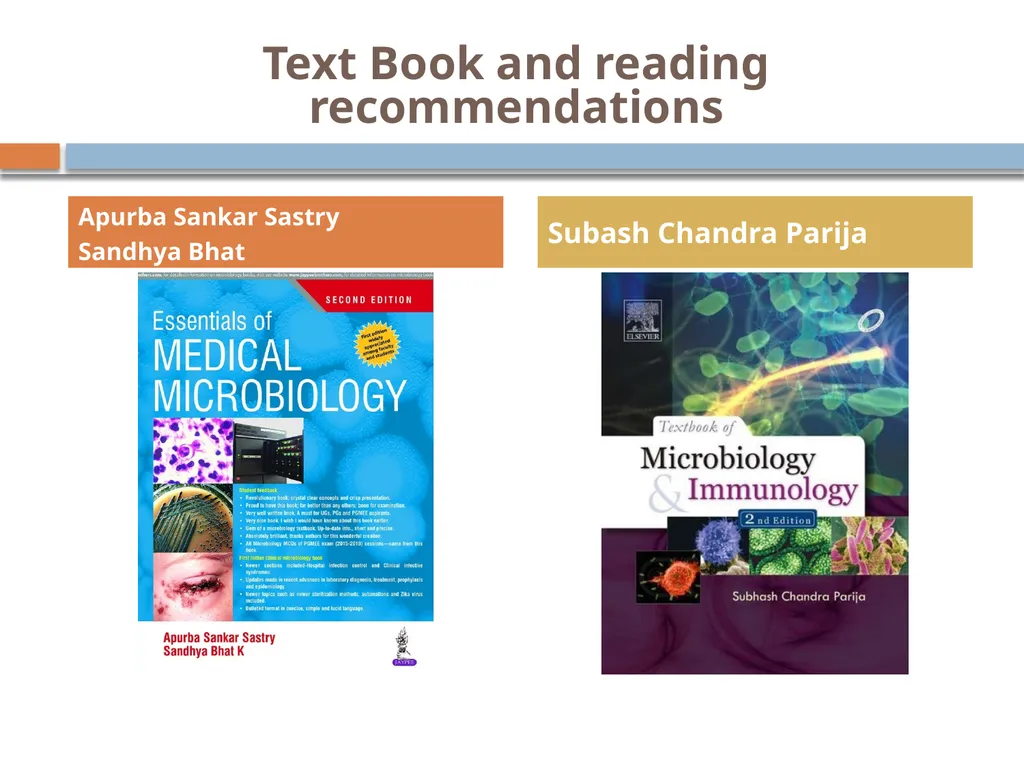
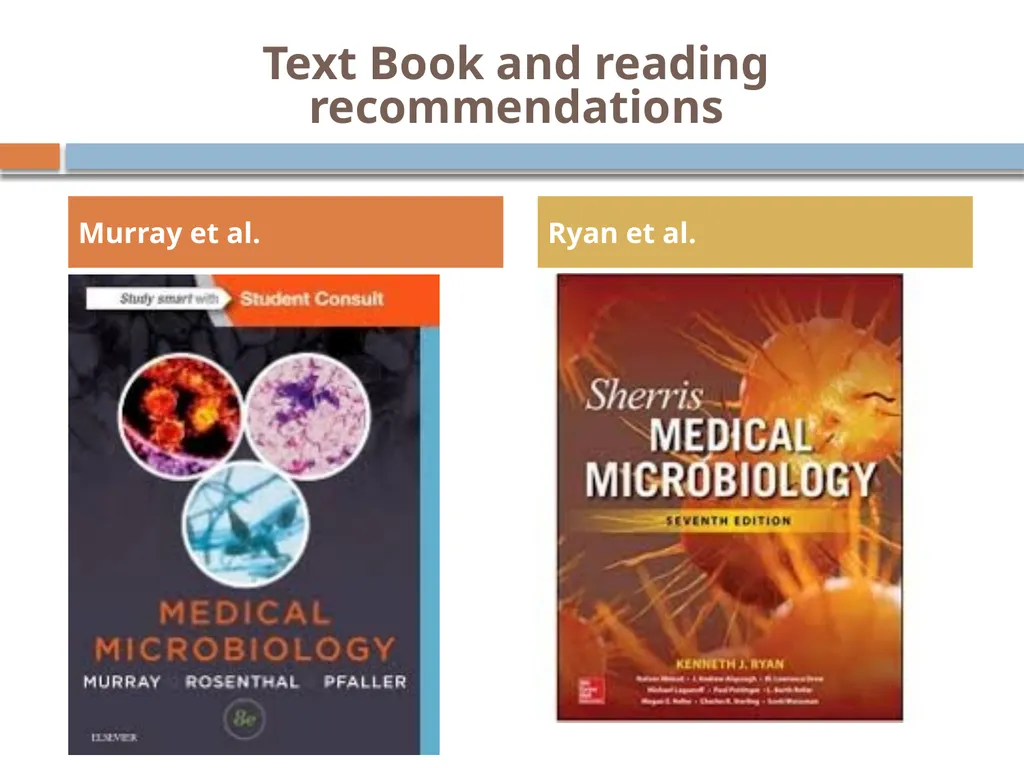
slide8. Text Book and reading recommendations Apurba Sankar Sastry
Sandhya Bhat Subash Chandra Parija<br>
slide9. Murray et al. Ryan et al. Text Book and reading recommendations<br>
slide10. Humanity has but three great enemies: fever, famine and war; of these by far the greatest, by far the most terrible, is fever.
— Sir William Osler, 1896.<br>
slide11. On this day tradition allots to taking stock of our lives,
my greetings to all of you, Yeasts, Bacteria, Viruses, Aerobics and Anaerobics:
A Very Happy New Year
to all for whom my ectoderm is as Middle Earth to me.
For creatures your size I offer a free choice of habitat,
so settle yourselves in the zone that suits you best, in the pools
of my pores or the tropical forests of arm-pit and crotch,
in the deserts of my fore-arms, or the cool woods of my scalp.
Build colonies: I will supply adequate warmth and moisture
the sebum and lipids you need, on condition you never do me annoy with your presence,
but behave as good guests should, not rioting into acne or athlete’s-foot or a boil.
—W.H. Auden, “A New Year Greeting”<br>
slide12. Microbiology is a science defined by smallness. Its creation was made possible by the invention of the microscope (Gr. micro, small + skop, to look, see), which allowed visualization of structures too small to see with the naked eye.<br>
slide13. The science of medical microbiology dates back to the pioneering studies of Pasteur and Koch, who isolated specific agents and proved that they could cause disease by introducing the experimental method
Semmelweis and Lister - showed how these diseases spread, led to the great advances in public health that initiated the decline in disease and death<br>
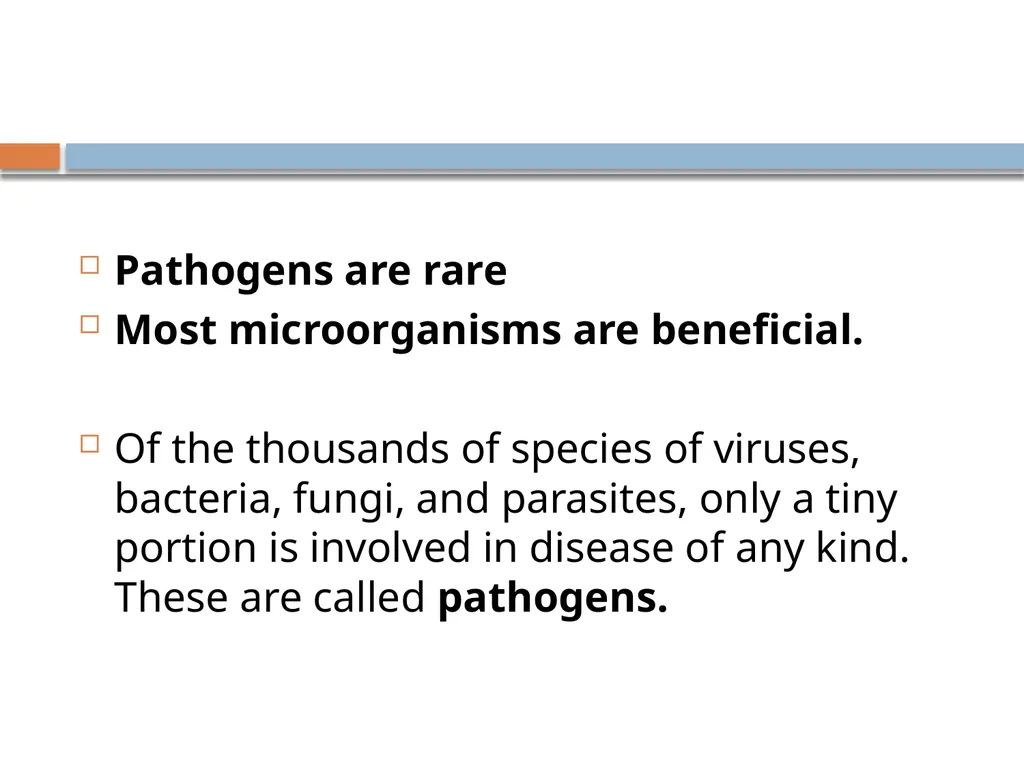
slide14. Pathogens are rare
Most microorganisms are beneficial.
Of the thousands of species of viruses, bacteria, fungi, and parasites, only a tiny portion is involved in disease of any kind. These are called pathogens.<br>
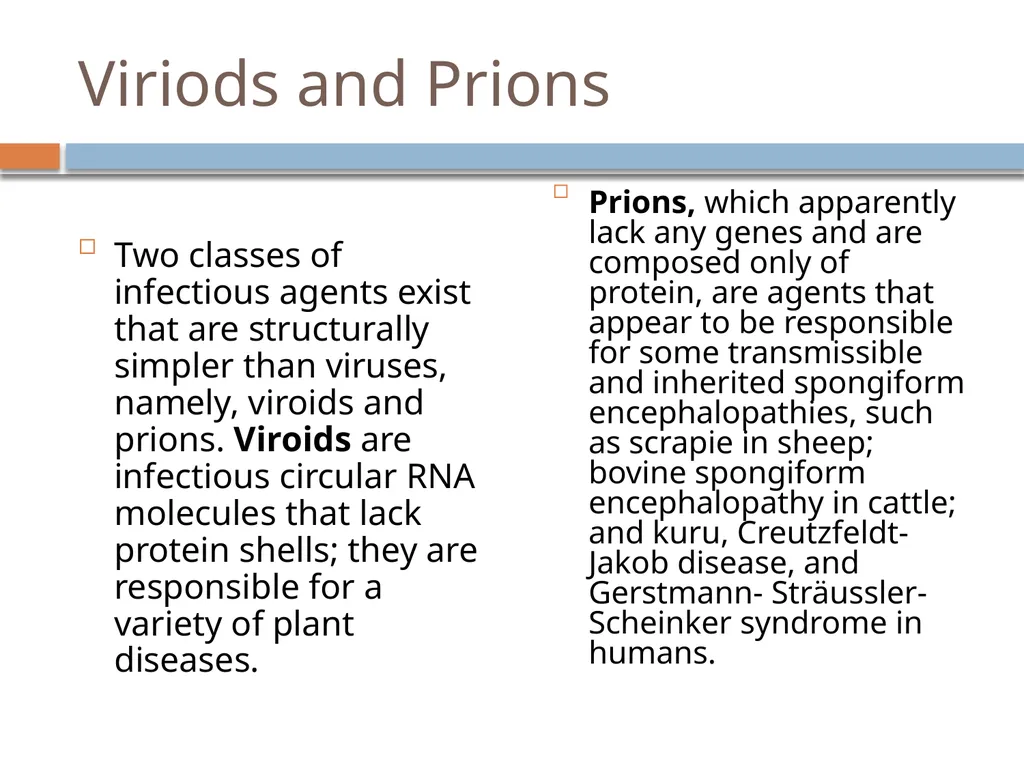
slide17. Viriods and Prions Two classes of infectious agents exist that are structurally simpler than viruses, namely, viroids and prions. Viroids are infectious circular RNA molecules that lack protein shells; they are responsible for a variety of plant diseases. Prions, which apparently lack any genes and are composed only of protein, are agents that appear to be responsible for some transmissible and inherited spongiform encephalopathies, such as scrapie in sheep; bovine spongiform encephalopathy in cattle; and kuru, Creutzfeldt-Jakob disease, and Gerstmann- Sträussler-Scheinker syndrome in humans.<br>
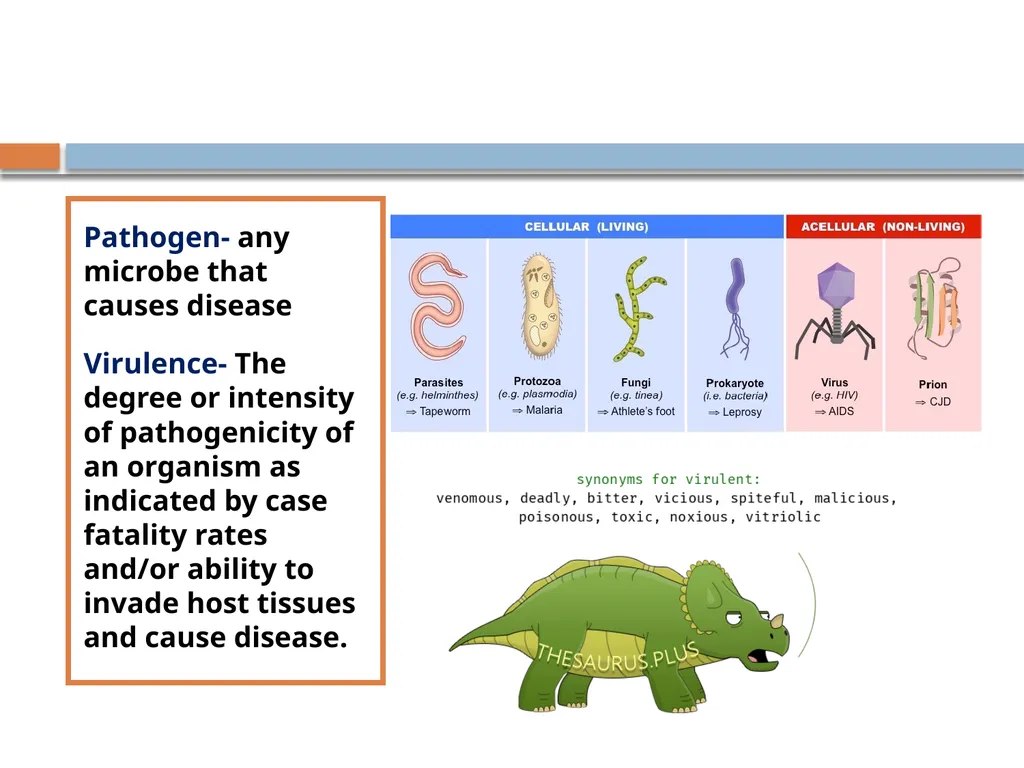
slide18. Pathogen- any microbe that causes disease
Virulence- The degree or intensity of pathogenicity of an organism as indicated by case fatality rates and/or ability to invade host tissues and cause disease.<br>
slide19. virulence factor -A product, usually a protein or carbohydrate, that contributes to virulence or pathogenicity<br>
slide20. Vector- it is a living organism, usually an arthropod or other animal, that transfers an infective agent between hosts
vector-borne transmission- The transmission of an infectious pathogen between hosts bymeans of a vector.<br>
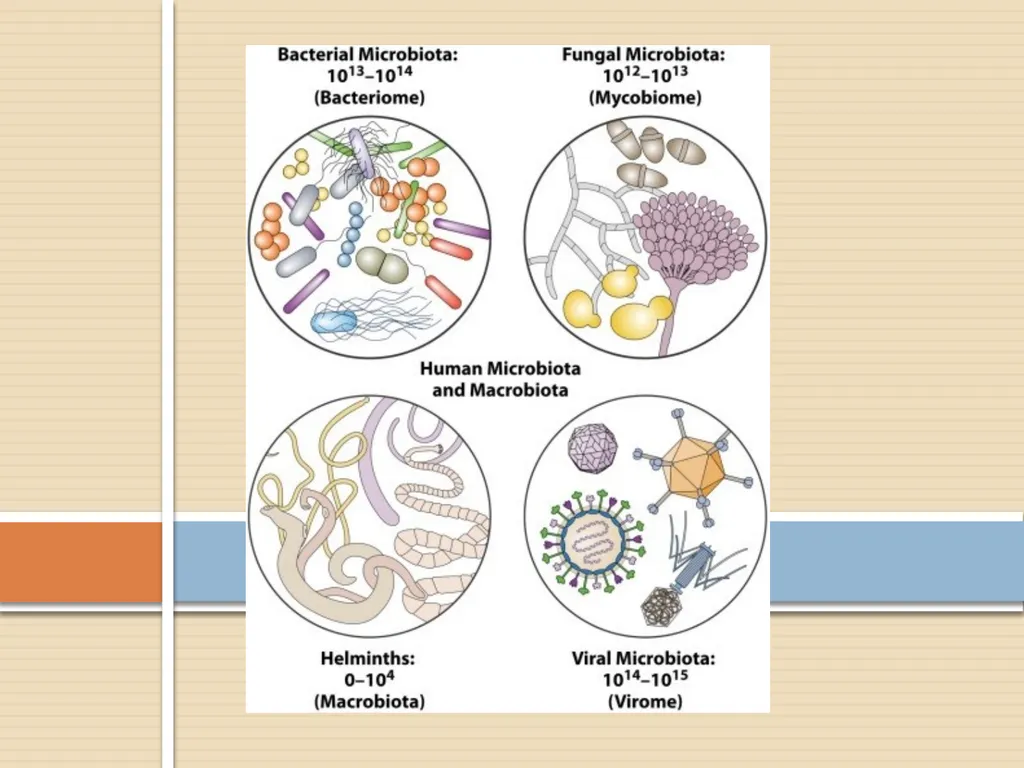
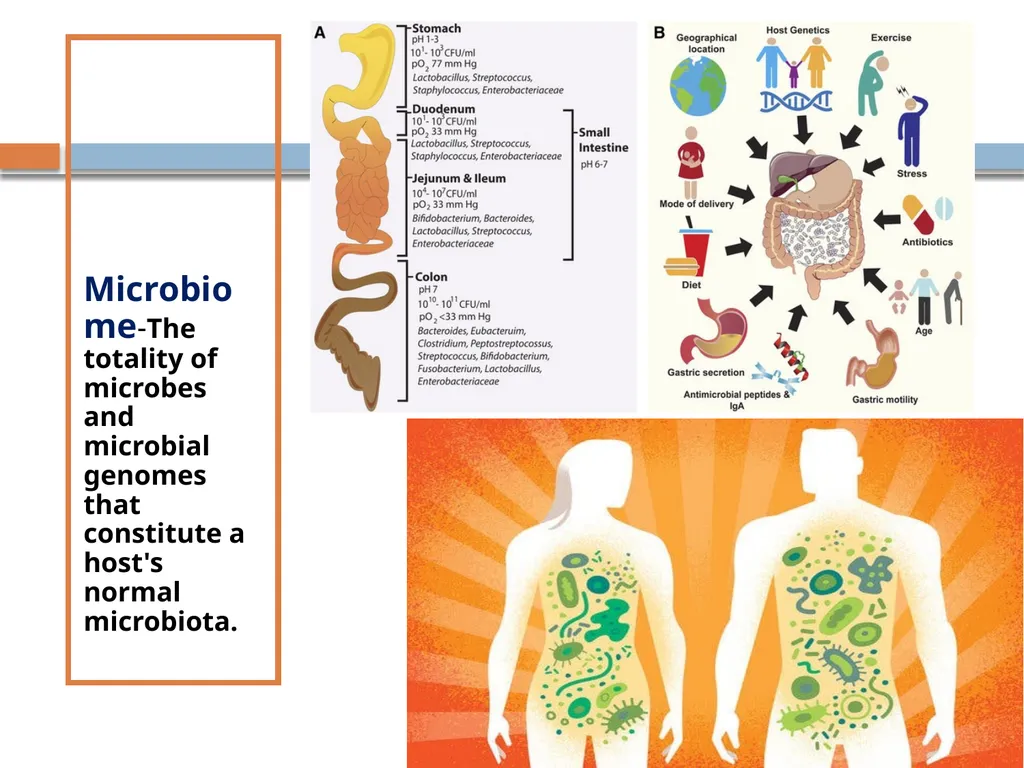
slide21. Microbiome-The totality of microbes and microbial genomes that constitute a host's normal microbiota.<br>
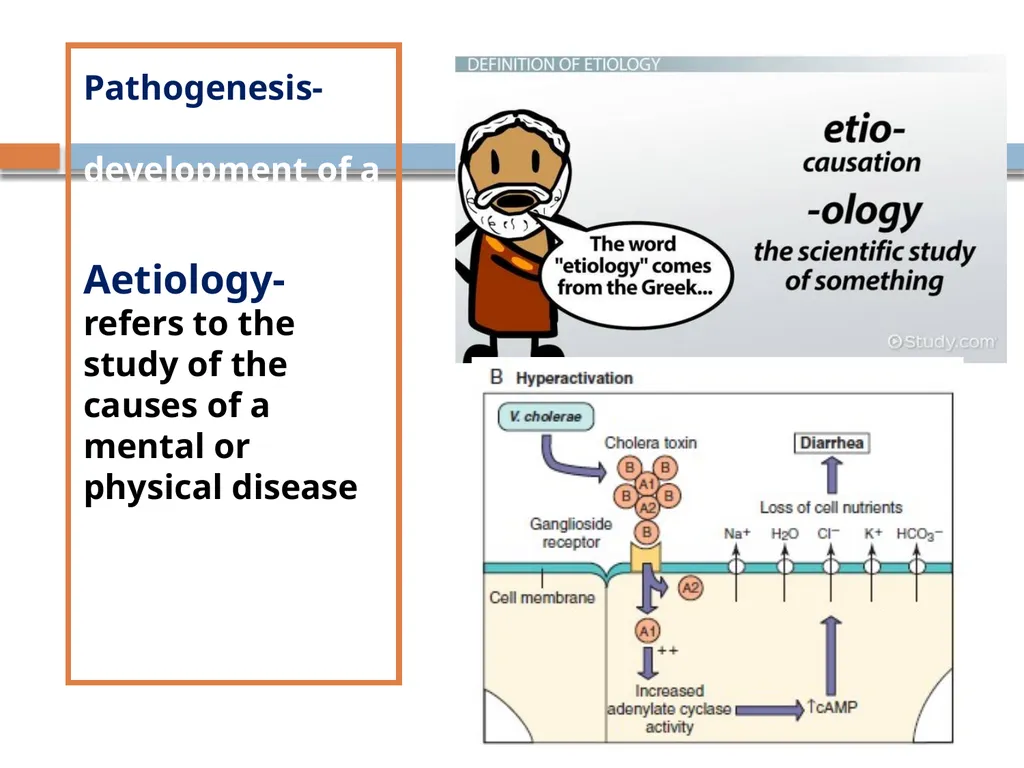
slide22. Pathogenesis- the manner of development of a disease
Aetiology- refers to the study of the causes of a mental or physical disease -<br>
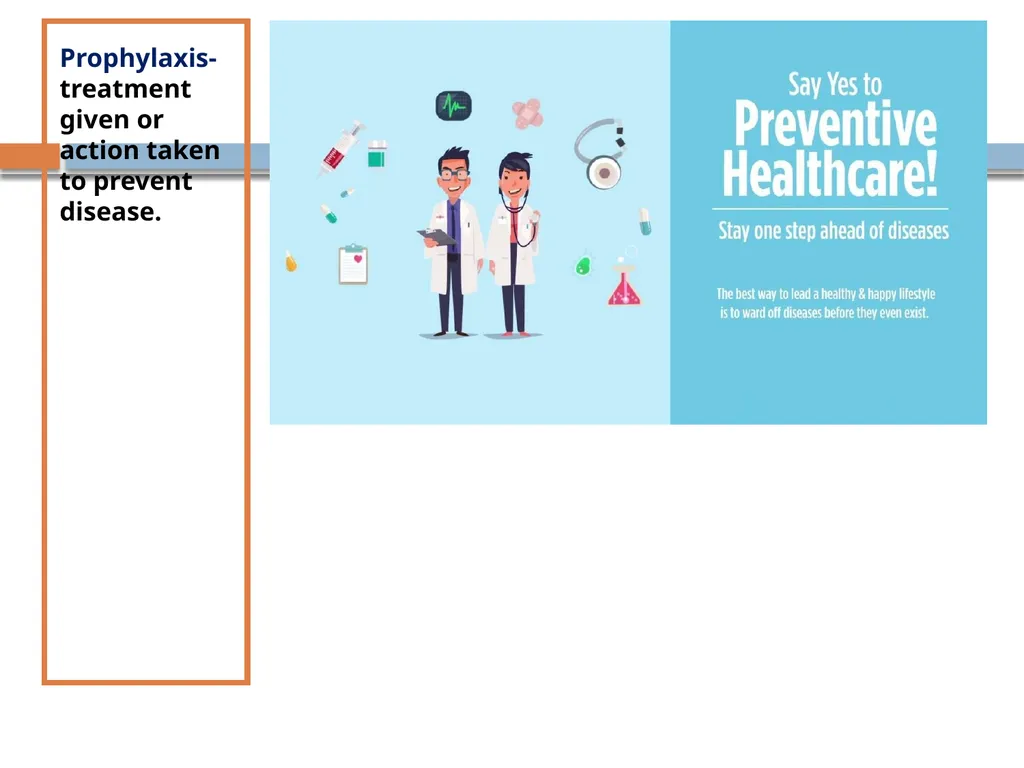
slide23. Prophylaxis- treatment given or action taken to prevent disease.<br>
slide24. Diagnosis- the identification of the nature of an illness or other problem by examination of the symptoms<br>

Assistant Professor, Dept. Of Microbiology,
The American College<br>
slide2. MIC 2531- Clinical bacteriology and Mycology UNIT - I Concepts of pathogenicity Epidemiology- scope and applications , Normal Microbial flora of human body .Infection- stages and transmission . Factors predisposing to microbial pathogenicity - mechanism of adhesion, colonization and invasion of mucous membranes. Nosocomial infection.<br>
slide3. UNIT–II Bacterial Pathogens I: Study of Morphology, cultural characteristics, pathogenesis/disease caused & laboratory diagnosis, Prophylaxis and Chemotherapy for Staphylococcus, Streptococcus, Neisseiria gonorrhoea, Cornybacterium diptheriae, Mycobacterium. MIC 2531 CLINICAL BACTERIOLOGY AND MYCOLOGY<br>
slide4. UNIT –III Bacterial Pathogens II: Study of Morphology, cultural characteristics, pathogenesis s& lab diagnosis, Prophylaxis and Chemotherapy for E. coli, Salmonella, Vibrio, Mycoplasma & Spirochaetes. MIC 2531 CLINICAL BACTERIOLOGY AND MYCOLOGY<br>
slide5. UNIT–IV Fungal Pathogens I: General characteristics, Tissue reactions to fungi, pathogenicity, Laboratory diagnosis, prophylaxis and chemotherapy Cutaneous, Sub cutaneous, superficial and Systemic Mycosis, Opportunistic fungal infections and yeast like fungi including Candida, Cryptococcus and Malassezia. MIC 2531 CLINICAL BACTERIOLOGY AND MYCOLOGY<br>
slide6. UNIT -V Fungal pathogens II: Pathogenicity, Pathogenesis, Laboratory diagnosis, Prophylaxis and Chemotherapy of Mycelial fungi including Aspergillus, Fusarium, & Dimorphic fungi -Histoplasma, Blastomyces. MIC 2531 CLINICAL BACTERIOLOGY AND MYCOLOGY<br>
slide7. UNIT -V Fungal pathogens II: Pathogenicity, Pathogenesis, Laboratory diagnosis, Prophylaxis and Chemotherapy of Mycelial fungi including Aspergillus, Fusarium, & Dimorphic fungi -Histoplasma, Blastomyces. MIC 2531 CLINICAL BACTERIOLOGY AND MYCOLOGY<br>
slide8. Text Book and reading recommendations Apurba Sankar Sastry
Sandhya Bhat Subash Chandra Parija<br>
slide9. Murray et al. Ryan et al. Text Book and reading recommendations<br>
slide10. Humanity has but three great enemies: fever, famine and war; of these by far the greatest, by far the most terrible, is fever.
— Sir William Osler, 1896.<br>
slide11. On this day tradition allots to taking stock of our lives,
my greetings to all of you, Yeasts, Bacteria, Viruses, Aerobics and Anaerobics:
A Very Happy New Year
to all for whom my ectoderm is as Middle Earth to me.
For creatures your size I offer a free choice of habitat,
so settle yourselves in the zone that suits you best, in the pools
of my pores or the tropical forests of arm-pit and crotch,
in the deserts of my fore-arms, or the cool woods of my scalp.
Build colonies: I will supply adequate warmth and moisture
the sebum and lipids you need, on condition you never do me annoy with your presence,
but behave as good guests should, not rioting into acne or athlete’s-foot or a boil.
—W.H. Auden, “A New Year Greeting”<br>
slide12. Microbiology is a science defined by smallness. Its creation was made possible by the invention of the microscope (Gr. micro, small + skop, to look, see), which allowed visualization of structures too small to see with the naked eye.<br>
slide13. The science of medical microbiology dates back to the pioneering studies of Pasteur and Koch, who isolated specific agents and proved that they could cause disease by introducing the experimental method
Semmelweis and Lister - showed how these diseases spread, led to the great advances in public health that initiated the decline in disease and death<br>
slide14. Pathogens are rare
Most microorganisms are beneficial.
Of the thousands of species of viruses, bacteria, fungi, and parasites, only a tiny portion is involved in disease of any kind. These are called pathogens.<br>
slide17. Viriods and Prions Two classes of infectious agents exist that are structurally simpler than viruses, namely, viroids and prions. Viroids are infectious circular RNA molecules that lack protein shells; they are responsible for a variety of plant diseases. Prions, which apparently lack any genes and are composed only of protein, are agents that appear to be responsible for some transmissible and inherited spongiform encephalopathies, such as scrapie in sheep; bovine spongiform encephalopathy in cattle; and kuru, Creutzfeldt-Jakob disease, and Gerstmann- Sträussler-Scheinker syndrome in humans.<br>
slide18. Pathogen- any microbe that causes disease
Virulence- The degree or intensity of pathogenicity of an organism as indicated by case fatality rates and/or ability to invade host tissues and cause disease.<br>
slide19. virulence factor -A product, usually a protein or carbohydrate, that contributes to virulence or pathogenicity<br>
slide20. Vector- it is a living organism, usually an arthropod or other animal, that transfers an infective agent between hosts
vector-borne transmission- The transmission of an infectious pathogen between hosts bymeans of a vector.<br>
slide21. Microbiome-The totality of microbes and microbial genomes that constitute a host's normal microbiota.<br>
slide22. Pathogenesis- the manner of development of a disease
Aetiology- refers to the study of the causes of a mental or physical disease -<br>
slide23. Prophylaxis- treatment given or action taken to prevent disease.<br>
slide24. Diagnosis- the identification of the nature of an illness or other problem by examination of the symptoms<br>