Clinical Pharmacists are increasingly working as part of general practice teams. They are highly qualified experts in medicines and can help patients in a range of ways. In 2015, a successful pilot demonstrated how patients benefited from
"Clinical Pharmacists are increasingly working as" is the property of its rightful owner. Permission is granted to
download and print the materials on this website for personal, non-commercial use only, and to display it
on your personal computer provided you do not modify the materials and that you retain all copyright
notices contained in the materials. By downloading content from our website, you accept the terms of this
agreement.
Presentation Transcript
01
Clinical Pharmacists are increasingly working as part of general practice teams.
They are highly qualified experts in medicines and can help patients in a range of ways.
In 2015, a successful pilot demonstrated how patients benefited from having pharmacists work in general practice.
NHS Long Term Plan commits to increasing the number of pharmacists working in primary care over the next coming years making it easier for patients to get convenient appointments with the right expert health professional for their needs. Primary Care Network Pharmacists at St John's Medical Centre St John’s Medical Centre is part of<br>
02
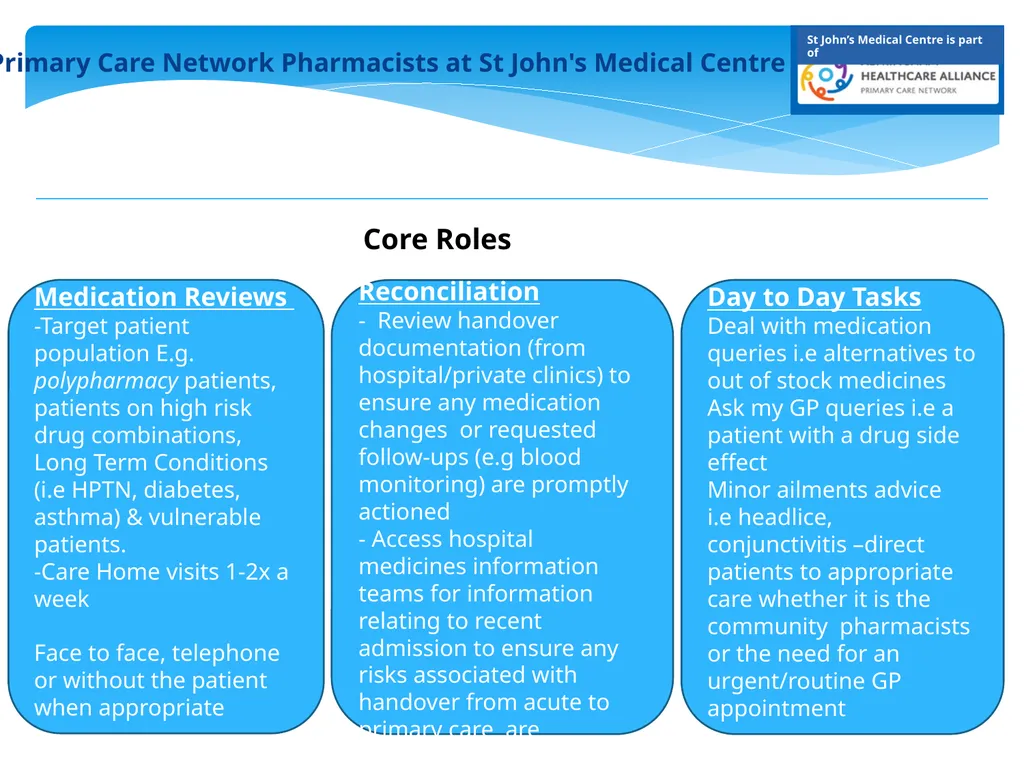
Primary Care Network Pharmacists at St John's Medical Centre Core Roles Medication Reviews
-Target patient population E.g. polypharmacy patients, patients on high risk drug combinations, Long Term Conditions (i.e HPTN, diabetes, asthma) & vulnerable patients.
-Care Home visits 1-2x a week
Face to face, telephone or without the patient when appropriate Medicines Reconciliation
- Review handover documentation (from hospital/private clinics) to ensure any medication changes or requested follow-ups (e.g blood monitoring) are promptly actioned
- Access hospital medicines information teams for information relating to recent admission to ensure any risks associated with handover from acute to primary care are managed Day to Day Tasks
Deal with medication queries i.e alternatives to out of stock medicines
Ask my GP queries i.e a patient with a drug side effect
Minor ailments advice i.e headlice, conjunctivitis –direct patients to appropriate care whether it is the community pharmacists or the need for an urgent/routine GP appointment St John’s Medical Centre is part of<br>
03
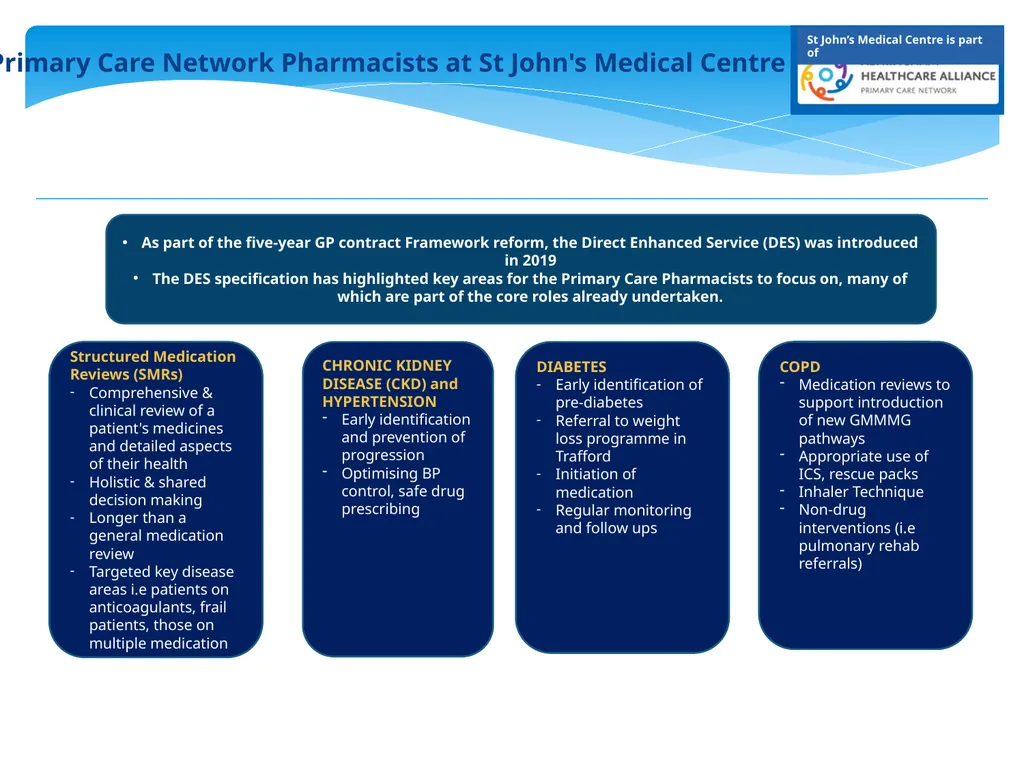
Primary Care Network Pharmacists at St John's Medical Centre As part of the five-year GP contract Framework reform, the Direct Enhanced Service (DES) was introduced in 2019
The DES specification has highlighted key areas for the Primary Care Pharmacists to focus on, many of which are part of the core roles already undertaken. CHRONIC KIDNEY DISEASE (CKD) and HYPERTENSION
Early identification and prevention of progression
Optimising BP control, safe drug prescribing DIABETES
Early identification of pre-diabetes
Referral to weight loss programme in Trafford
Initiation of medication
Regular monitoring and follow ups COPD
Medication reviews to support introduction of new GMMMG pathways
Appropriate use of ICS, rescue packs
Inhaler Technique
Non-drug interventions (i.e pulmonary rehab referrals) Structured Medication Reviews (SMRs)
Comprehensive & clinical review of a patient's medicines and detailed aspects of their health
Holistic & shared decision making
Longer than a general medication review
Targeted key disease areas i.e patients on anticoagulants, frail patients, those on multiple medication St John’s Medical Centre is part of<br>
04
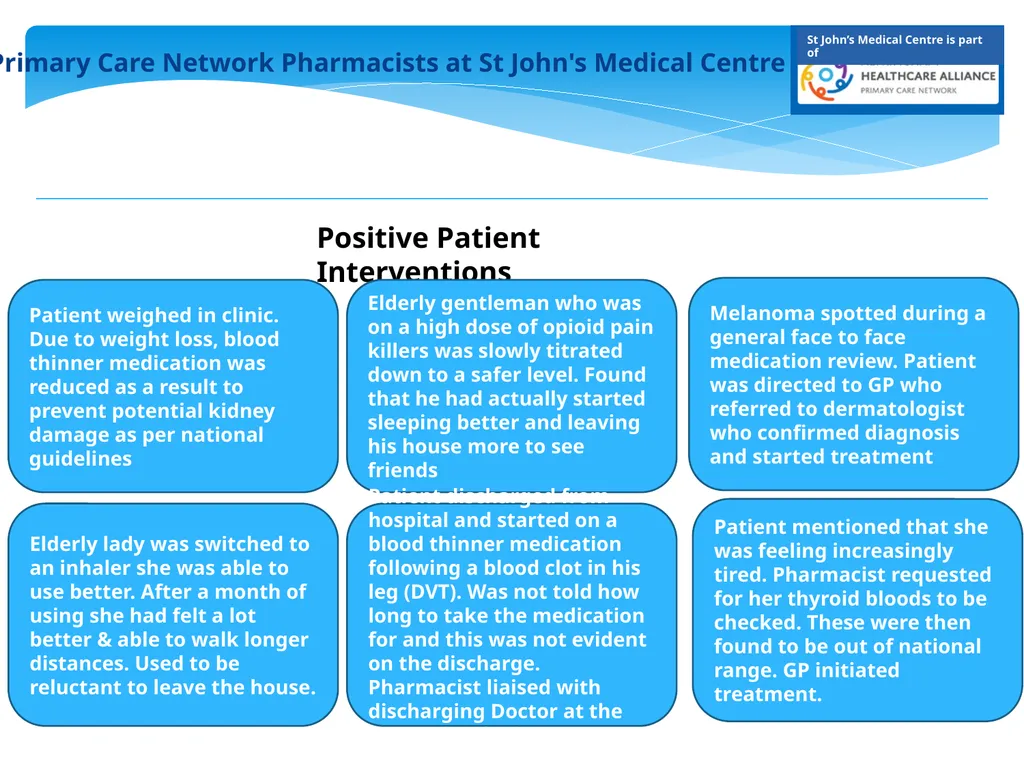
Positive Patient Interventions Primary Care Network Pharmacists at St John's Medical Centre Patient weighed in clinic. Due to weight loss, blood thinner medication was reduced as a result to prevent potential kidney damage as per national guidelines Elderly gentleman who was on a high dose of opioid pain killers was slowly titrated down to a safer level. Found that he had actually started sleeping better and leaving his house more to see friends Melanoma spotted during a general face to face medication review. Patient was directed to GP who referred to dermatologist who confirmed diagnosis and started treatment Elderly lady was switched to an inhaler she was able to use better. After a month of using she had felt a lot better & able to walk longer distances. Used to be reluctant to leave the house. Patient discharged from hospital and started on a blood thinner medication following a blood clot in his leg (DVT). Was not told how long to take the medication for and this was not evident on the discharge. Pharmacist liaised with discharging Doctor at the hospital to find out. Patient mentioned that she was feeling increasingly tired. Pharmacist requested for her thyroid bloods to be checked. These were then found to be out of national range. GP initiated treatment. St John’s Medical Centre is part of St John’s Medical Centre is part of<br>