Clinical Scenario: Cellulitis People with dark skin tones may present with painful swollen legs with change in colour and altered texture 77 year old lady, contacted by carer: Has inflamed, painful, swollen lower legs, out of sorts and not
"Clinical Scenario: Cellulitis People with dark" is the property of its rightful owner. Permission is granted to
download and print the materials on this website for personal, non-commercial use only, and to display it
on your personal computer provided you do not modify the materials and that you retain all copyright
notices contained in the materials. By downloading content from our website, you accept the terms of this
agreement.
Presentation Transcript
01
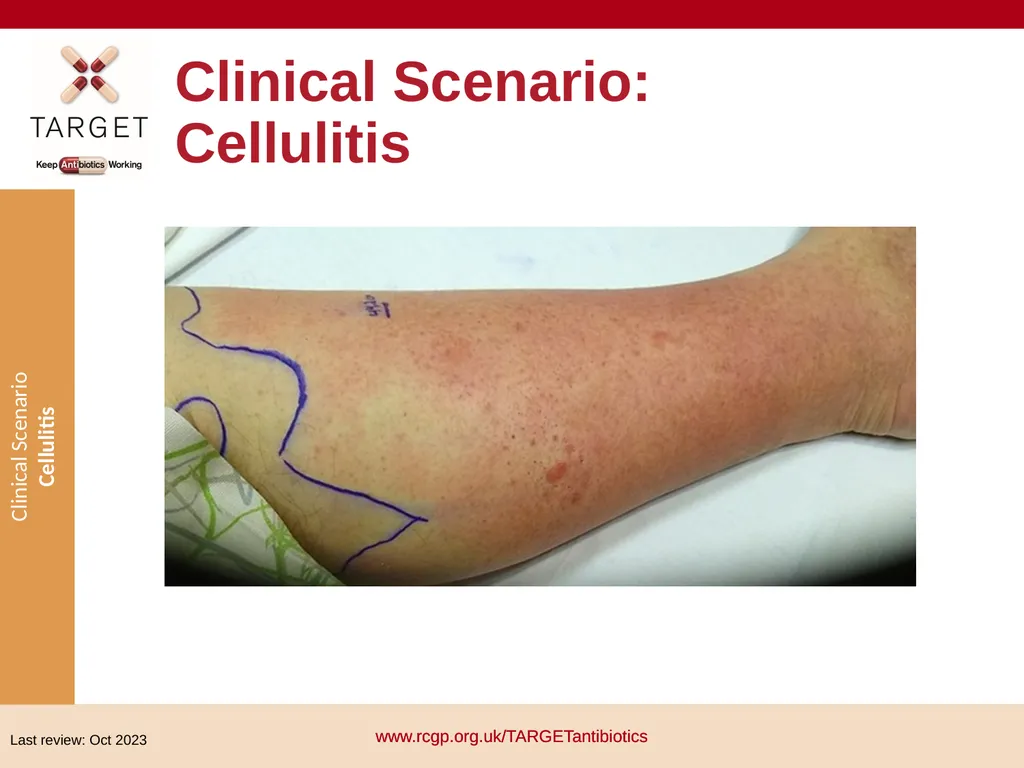
Clinical Scenario:
Cellulitis<br>
02
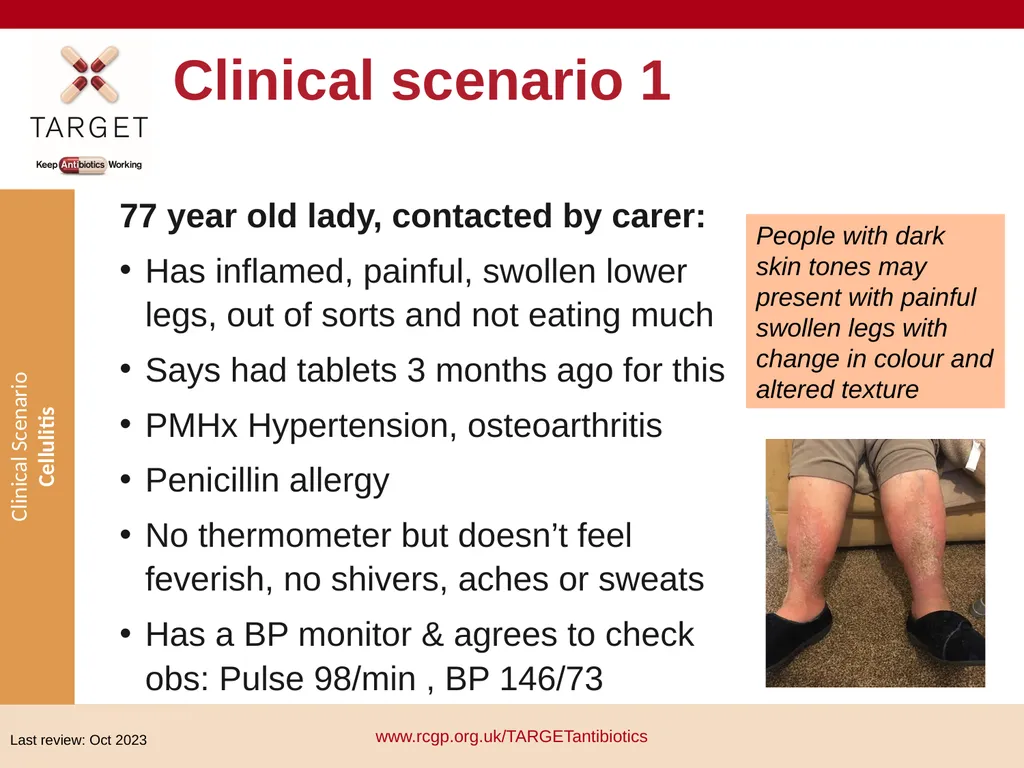
People with dark skin tones may present with painful swollen legs with change in colour and altered texture 77 year old lady, contacted by carer:
Has inflamed, painful, swollen lower legs, out of sorts and not eating much
Says had tablets 3 months ago for this
PMHx Hypertension, osteoarthritis
Penicillin allergy
No thermometer but doesn’t feel feverish, no shivers, aches or sweats
Has a BP monitor & agrees to check obs: Pulse 98/min , BP 146/73 Clinical scenario 1<br>
03
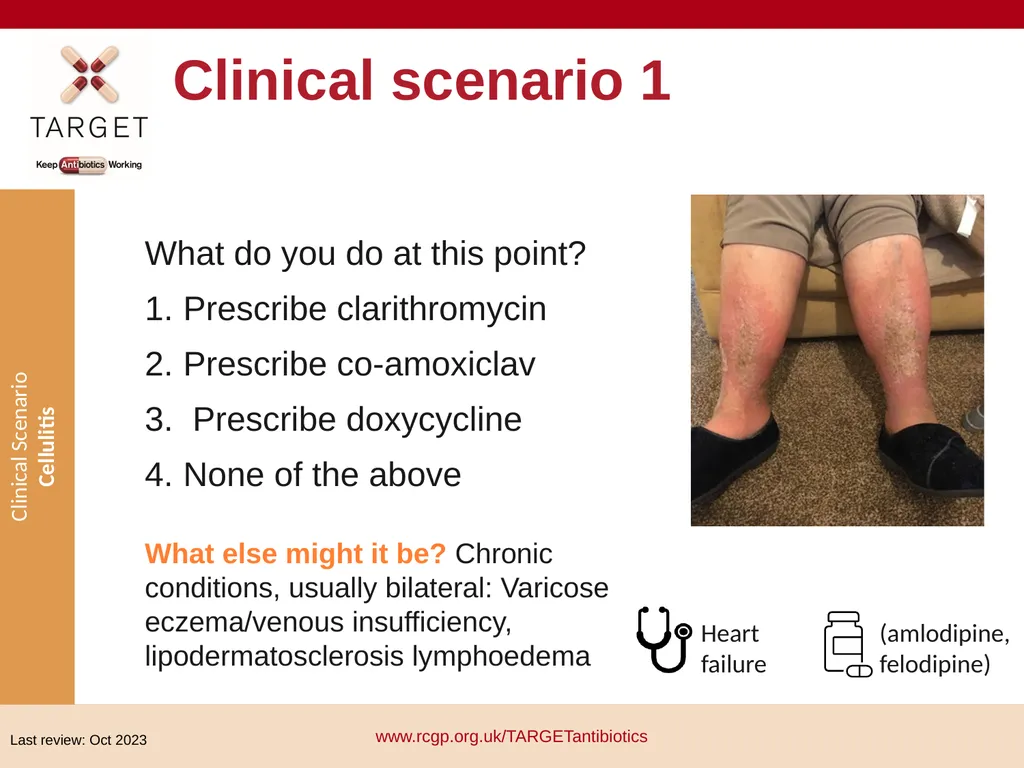
What do you do at this point?
Prescribe clarithromycin
Prescribe co-amoxiclav
Prescribe doxycycline
None of the above Clinical scenario 1<br>
04
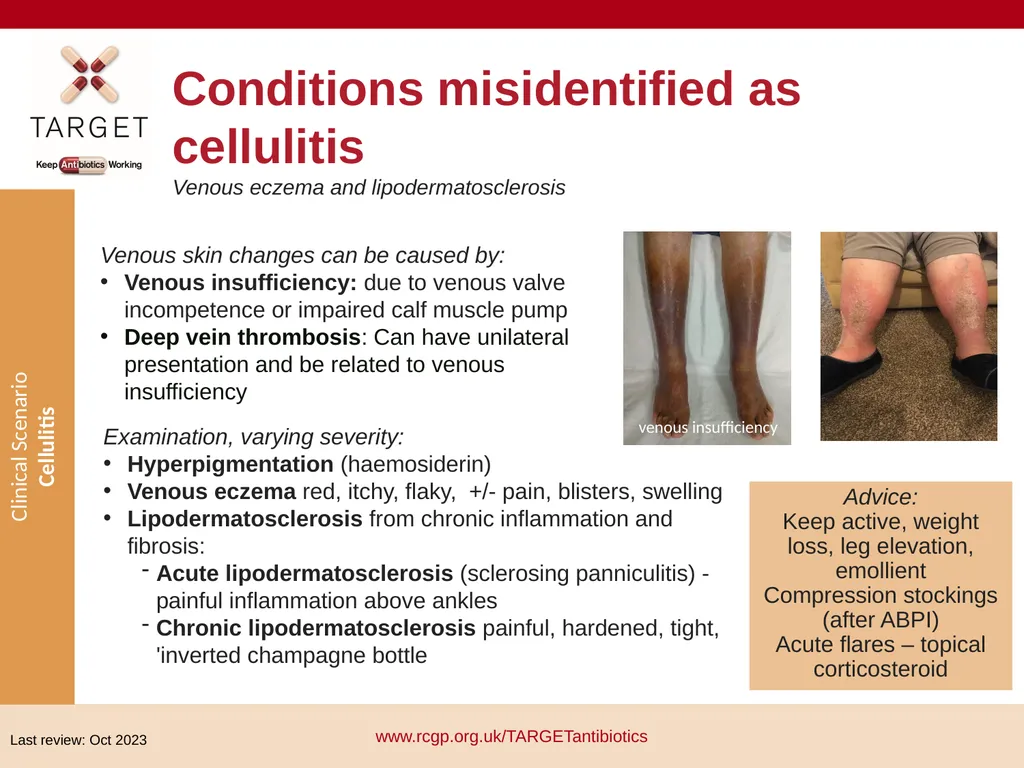
Conditions misidentified as cellulitis Venous eczema and lipodermatosclerosis Examination, varying severity:
Hyperpigmentation (haemosiderin)
Venous eczema red, itchy, flaky, +/- pain, blisters, swelling
Lipodermatosclerosis from chronic inflammation and fibrosis:
Acute lipodermatosclerosis (sclerosing panniculitis) - painful inflammation above ankles
Chronic lipodermatosclerosis painful, hardened, tight, 'inverted champagne bottle Venous skin changes can be caused by:
Venous insufficiency: due to venous valve incompetence or impaired calf muscle pump
Deep vein thrombosis: Can have unilateral presentation and be related to venous insufficiency Advice:
Keep active, weight loss, leg elevation, emollient
Compression stockings (after ABPI)
Acute flares – topical corticosteroid<br>
05
83-year old male:
A warm red swollen and painful left lower leg, and now covers a 15cm area
You notice a small abrasion on the side of his foot (he remembers he had knocked it in the garden)
O/E Temp 37.7
PMHx: Ischemic heart disease, atrial fibrillation, hypertension Clinical scenario 2<br>
06
What antibiotic course length would you give?
5 days
7 days
10 days
14 days Clinical scenario 2<br>
07
Diagnosis and risk factors Usually unilateral. Bilateral leg cellulitis is rare.
Acute onset: red, painful, hot, swollen, and tender skin, that spreads rapidly, fever & malaise
Check for skin break/organism entry site e.g. wound/trauma, macerated skin, fungal skin infection, concomitant skin disorder Other Risk factors & comorbidities which may complicate or delay resolution of infection:
Oedema, venous insufficiency, obesity
Diabetes
Peripheral vascular disease
Immunosuppression See CKS for further information<br>
08
Acute complications Necrotizing fasciitis:
Destructive, severe, rapidly progressive soft tissue infection
Involves the deep subcutaneous tissues and fascia (and occasionally muscles), which is characterized by extensive necrosis and gangrene of the skin and underlying structures.
Early symptoms – intense pain out of proportion to skin damage
Group A streptococcus is a major causative agent in Type II necrotizing fasciitis.
Rapid progression, skin discolouration , crepitus, bulla, gangrene
Refer – IV antibiotics & surgical
Myositis: inflammation of muscle due to infection.
Sepsis (potentially fatal).
Subcutaneous abscesses.
Post-streptococcal nephritis<br>
09
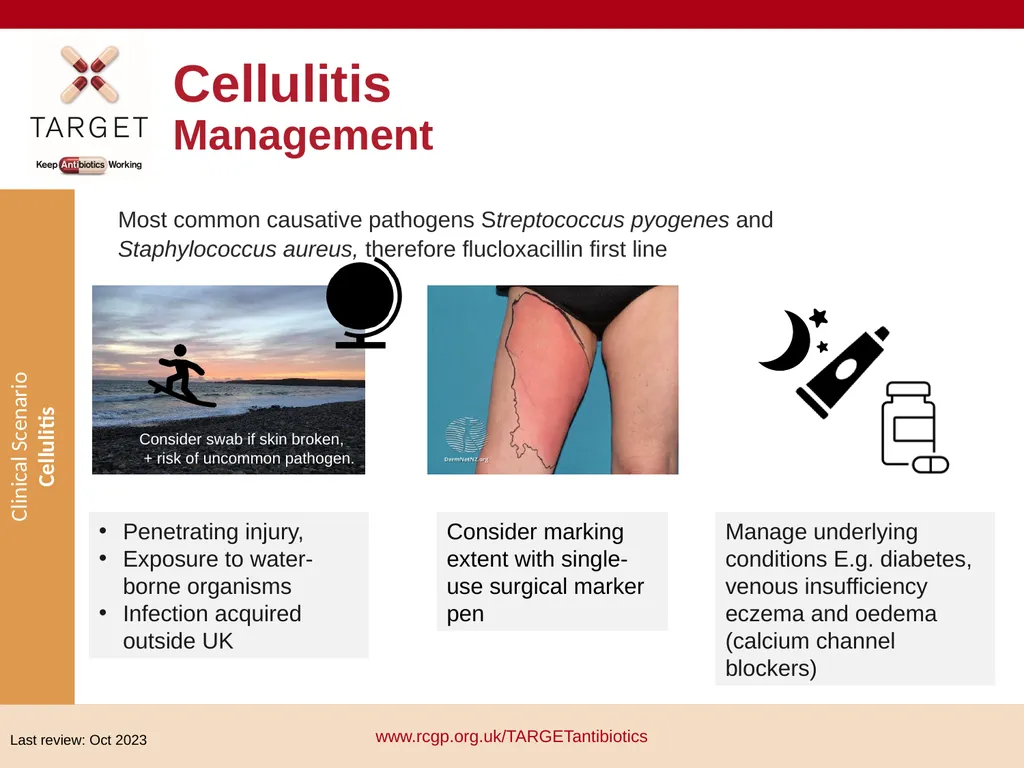
Cellulitis Management Most common causative pathogens Streptococcus pyogenes and Staphylococcus aureus, therefore flucloxacillin first line Penetrating injury,
Exposure to water-borne organisms
Infection acquired outside UK Consider marking extent with single-use surgical marker pen Consider swab if skin broken,
+ risk of uncommon pathogen. Manage underlying conditions E.g. diabetes, venous insufficiency eczema and oedema
(calcium channel blockers)<br>
10
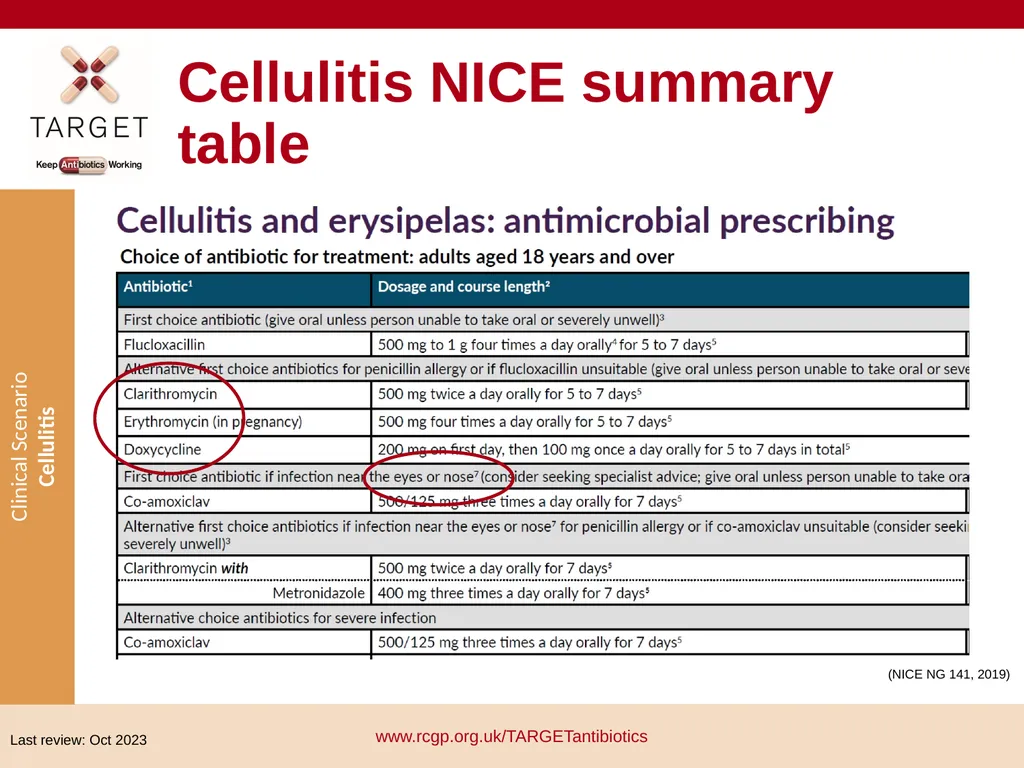
(NICE NG 141, 2019) Cellulitis NICE summary table<br>
11
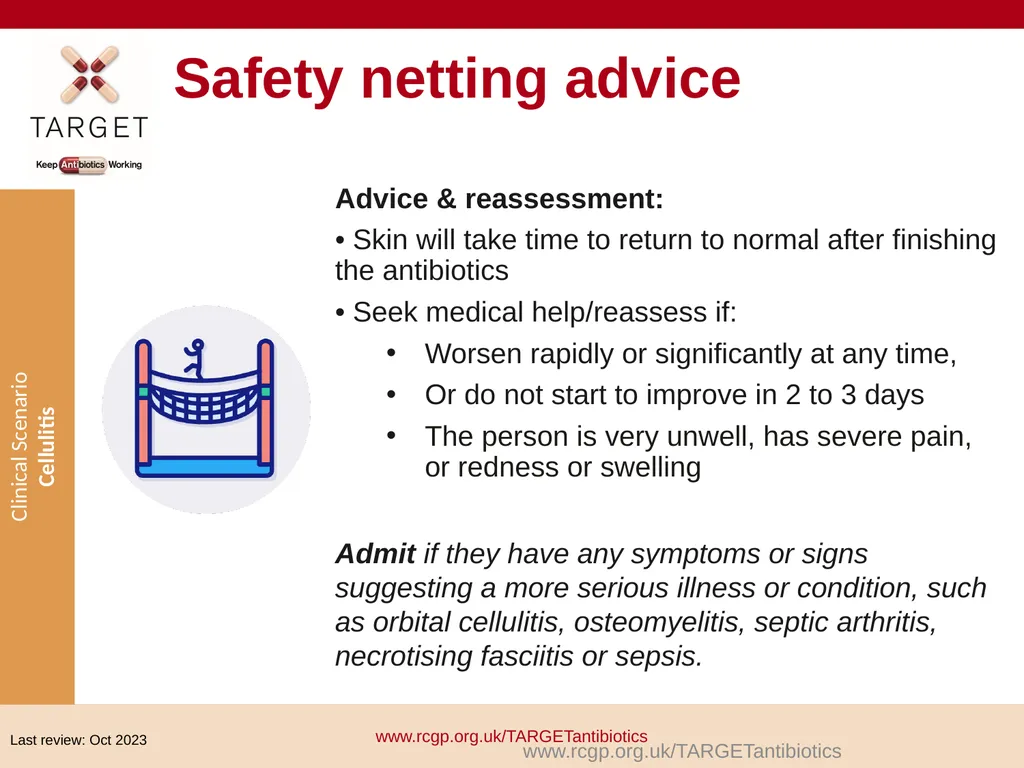
Safety netting advice Advice & reassessment:
• Skin will take time to return to normal after finishing the antibiotics
• Seek medical help/reassess if:
Worsen rapidly or significantly at any time,
Or do not start to improve in 2 to 3 days
The person is very unwell, has severe pain, or redness or swelling
Admit if they have any symptoms or signs suggesting a more serious illness or condition, such as orbital cellulitis, osteomyelitis, septic arthritis, necrotising fasciitis or sepsis. www.rcgp.org.uk/TARGETantibiotics<br>
12
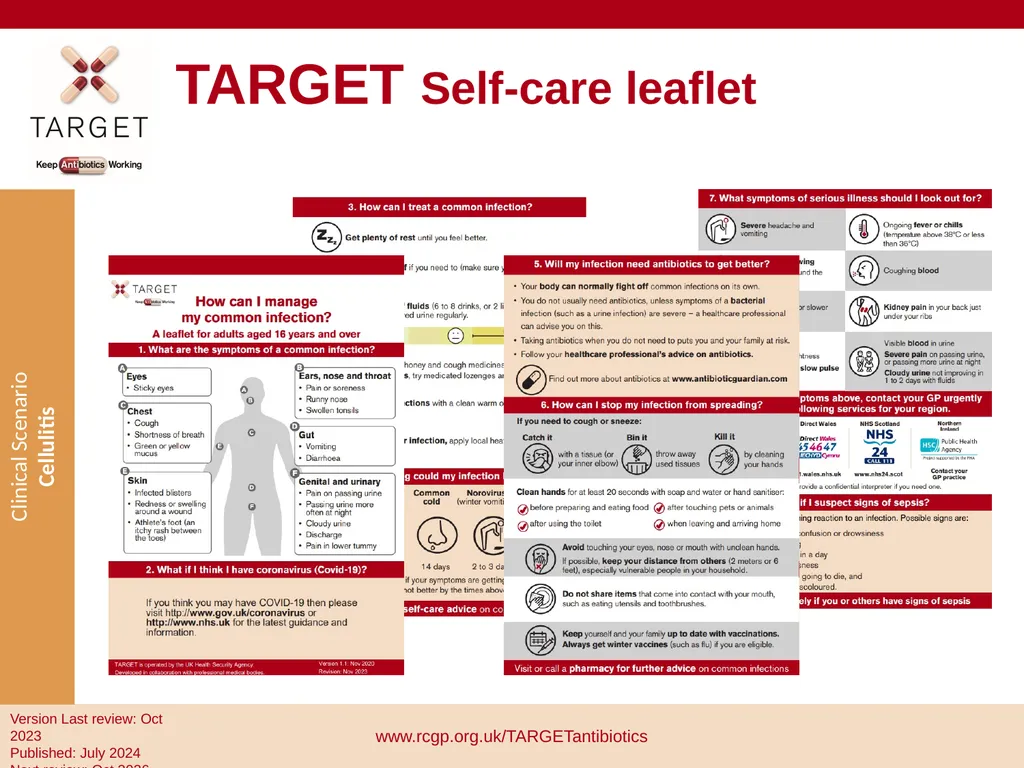
TARGET Self-care leaflet<br>
13
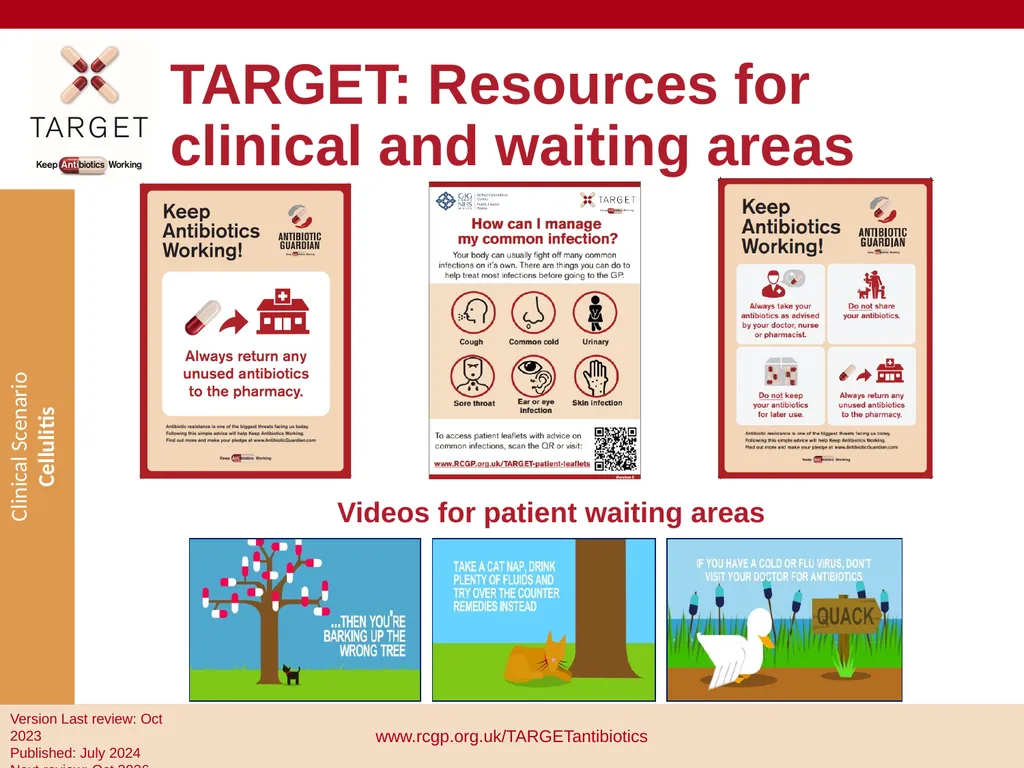
TARGET: Resources for clinical and waiting areas Videos for patient waiting areas<br>
14
Reduce Antibiotic Prescribing Reducing antibiotic prescribing in your practice Makes difference to resistance in your patients Helps to slow future antibiotic resistance Increase patient
self-care Helps to reduce future consultations<br>
15
How can we fit together the evidence and change behaviour during consultation with our patients to improve antibiotic prescribing? Possible solution for you Use the TARGET antibiotics toolkit<br>
16
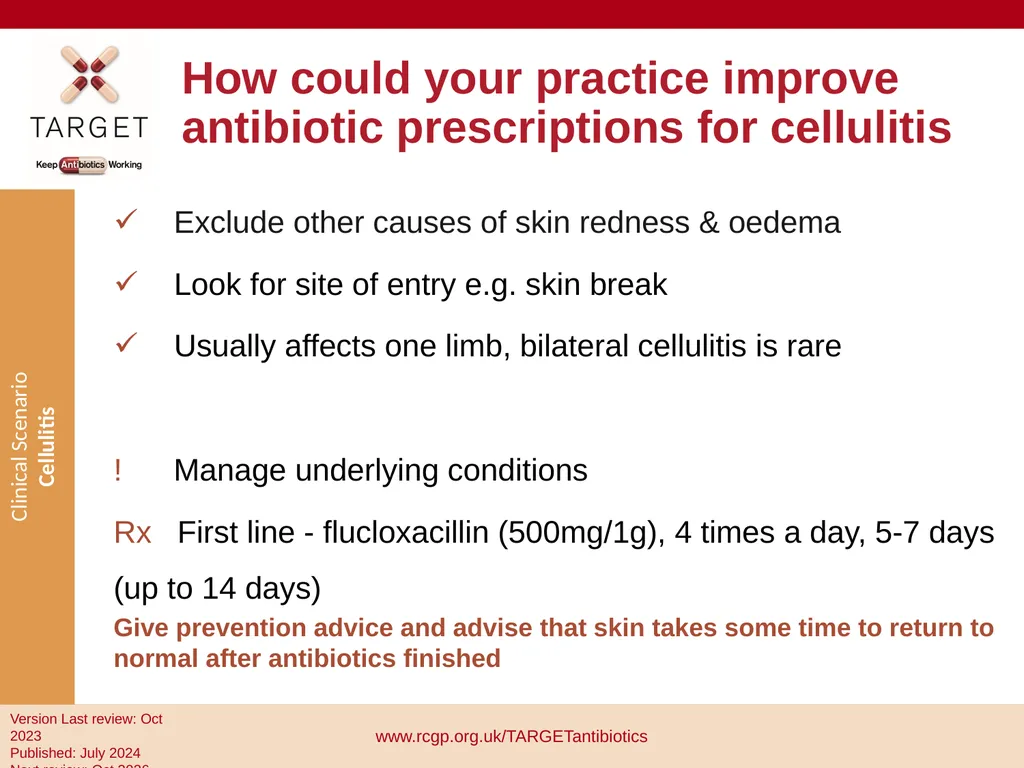
How could your practice improve antibiotic prescriptions for cellulitis Exclude other causes of skin redness & oedema
Look for site of entry e.g. skin break
Usually affects one limb, bilateral cellulitis is rare
! Manage underlying conditions
Rx First line - flucloxacillin (500mg/1g), 4 times a day, 5-7 days (up to 14 days)
Give prevention advice and advise that skin takes some time to return to normal after antibiotics finished<br>
17
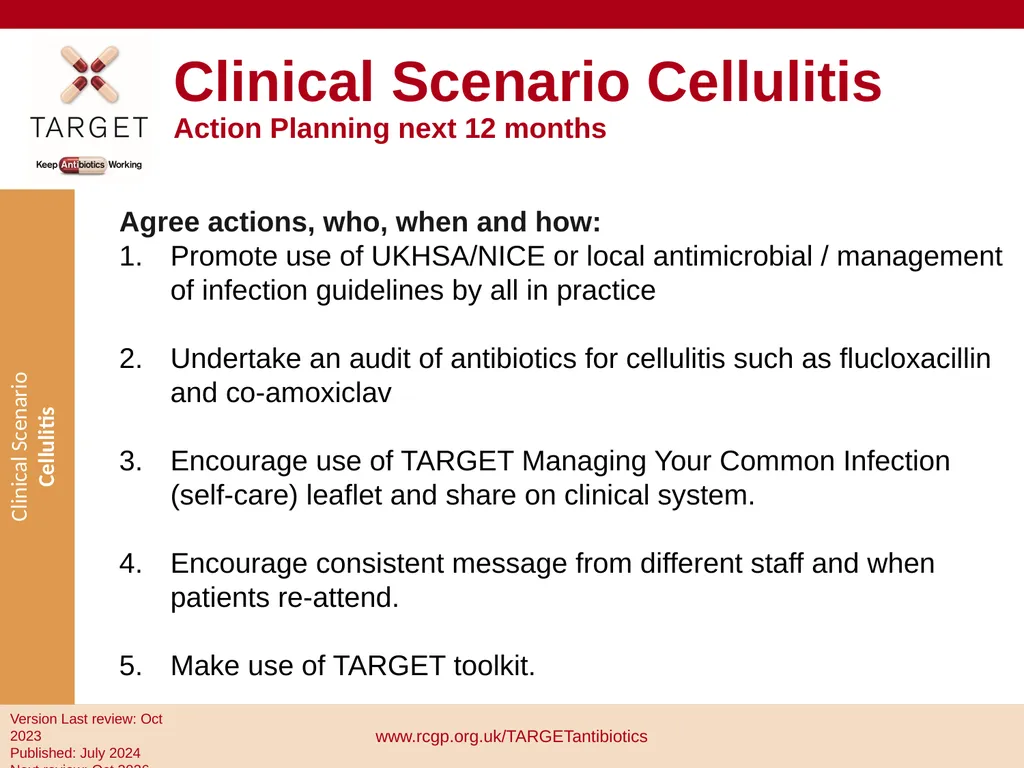
Clinical Scenario Cellulitis Action Planning next 12 months Agree actions, who, when and how:
Promote use of UKHSA/NICE or local antimicrobial / management of infection guidelines by all in practice
Undertake an audit of antibiotics for cellulitis such as flucloxacillin and co-amoxiclav
Encourage use of TARGET Managing Your Common Infection (self-care) leaflet and share on clinical system.
Encourage consistent message from different staff and when patients re-attend.