
Coalition Games: A Lesson in Multiagent System
Description: Coalition Games: A Lesson in Multiagent System Based on Jose Vidals book Fundamentals of Multiagent Systems Henry Hexmoor SIUC Coalition game characteristic from game Agents vector of utilities one for each agent payoffs for teaming V(s)
Related Topics
Download Presentation
"Coalition Games: A Lesson in Multiagent System" is the property of its rightful owner. Permission is granted to download and print the materials on this website for personal, non-commercial use only, and to display it on your personal computer provided you do not modify the materials and that you retain all copyright notices contained in the materials. By downloading content from our website, you accept the terms of this agreement.
Presentation Transcript
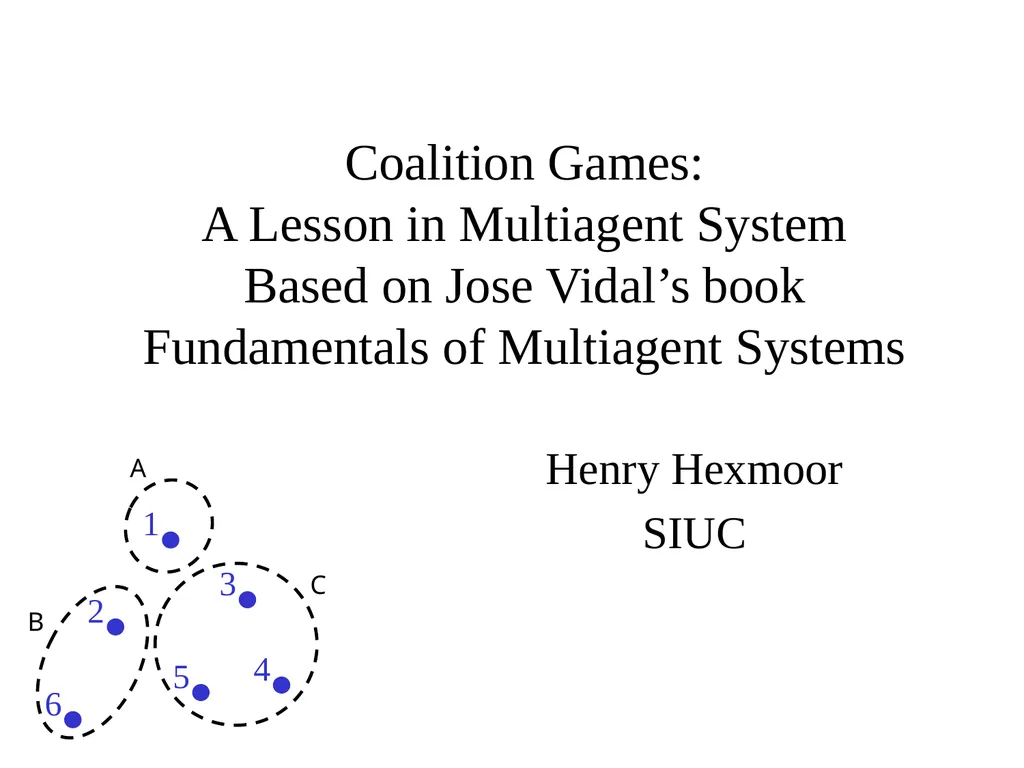
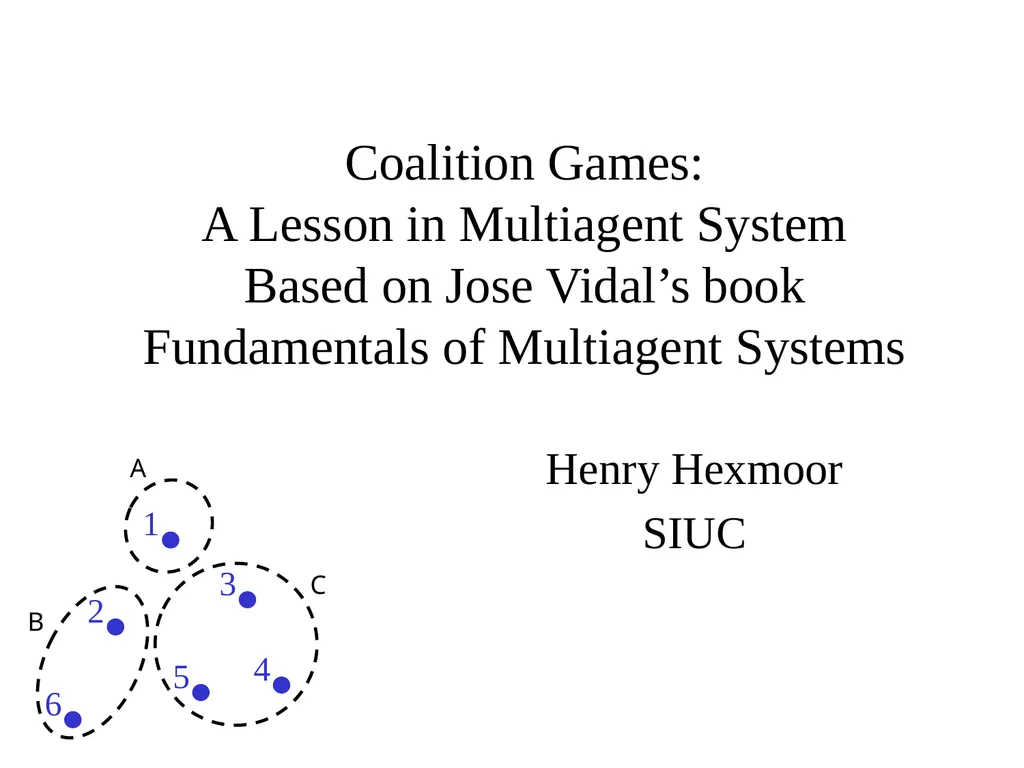
slide1. Coalition Games:
A Lesson in Multiagent System
Based on Jose Vidal’s book
Fundamentals of Multiagent Systems Henry Hexmoor
SIUC<br>
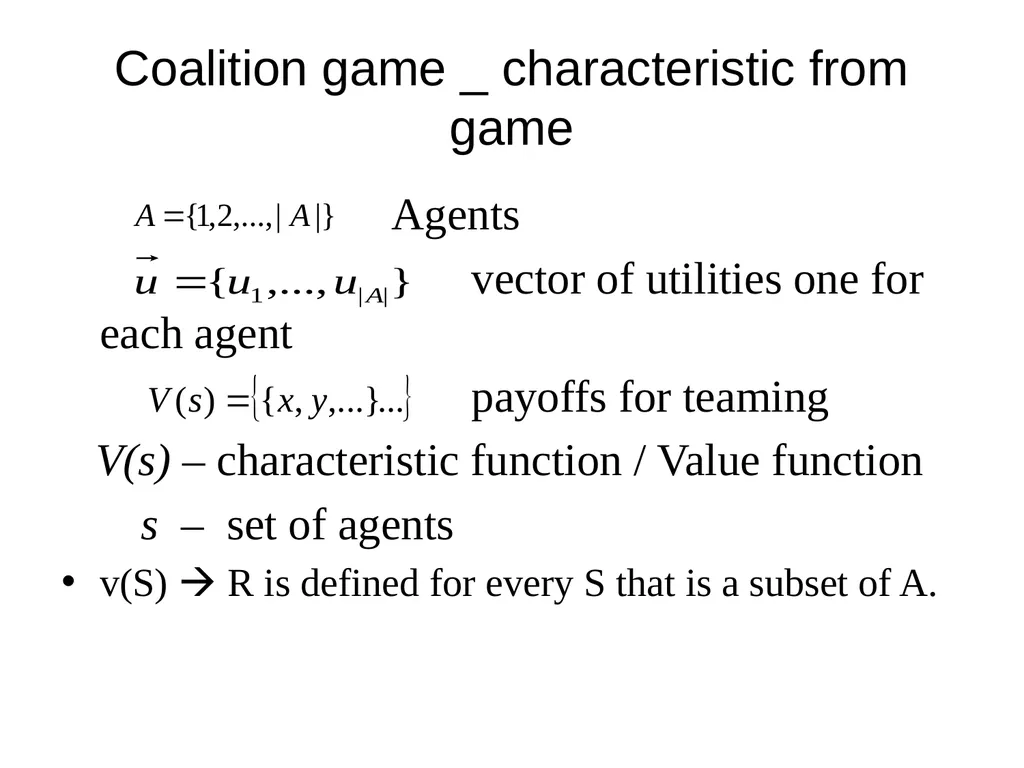
slide2. Coalition game _ characteristic from game Agents
vector of utilities one for each agent
payoffs for teaming
V(s) – characteristic function / Value function
s – set of agents
v(S) R is defined for every S that is a subset of A.<br>
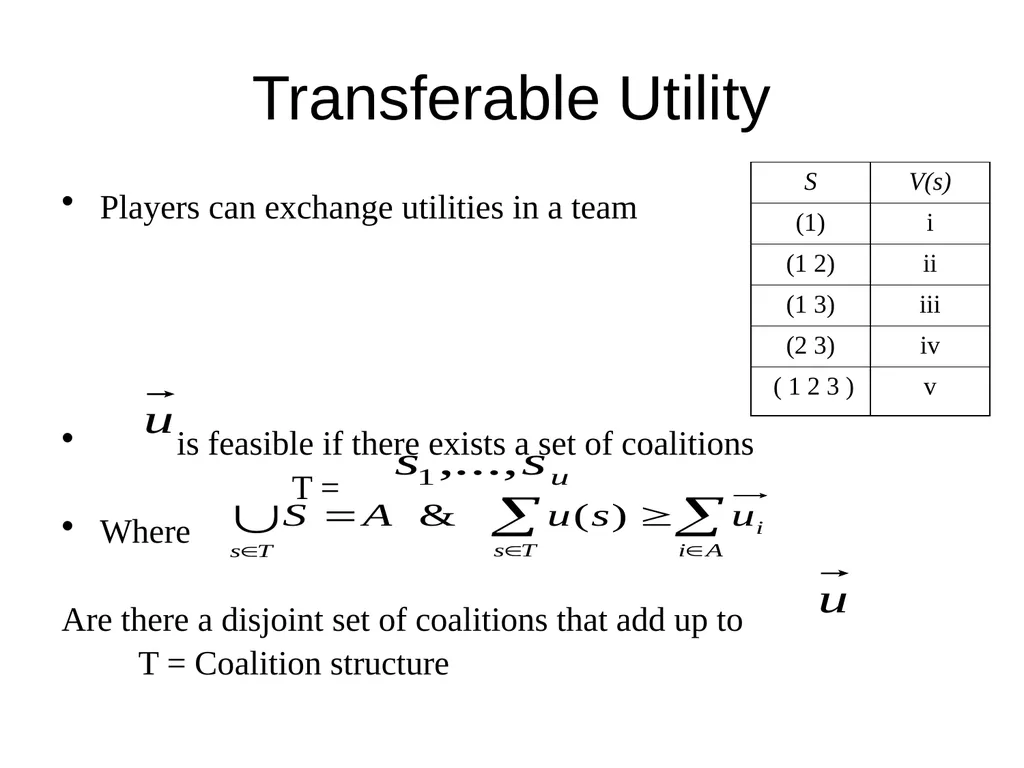
slide3. Transferable Utility Players can exchange utilities in a team
is feasible if there exists a set of coalitions
T =
Where
Are there a disjoint set of coalitions that add up to
T = Coalition structure<br>
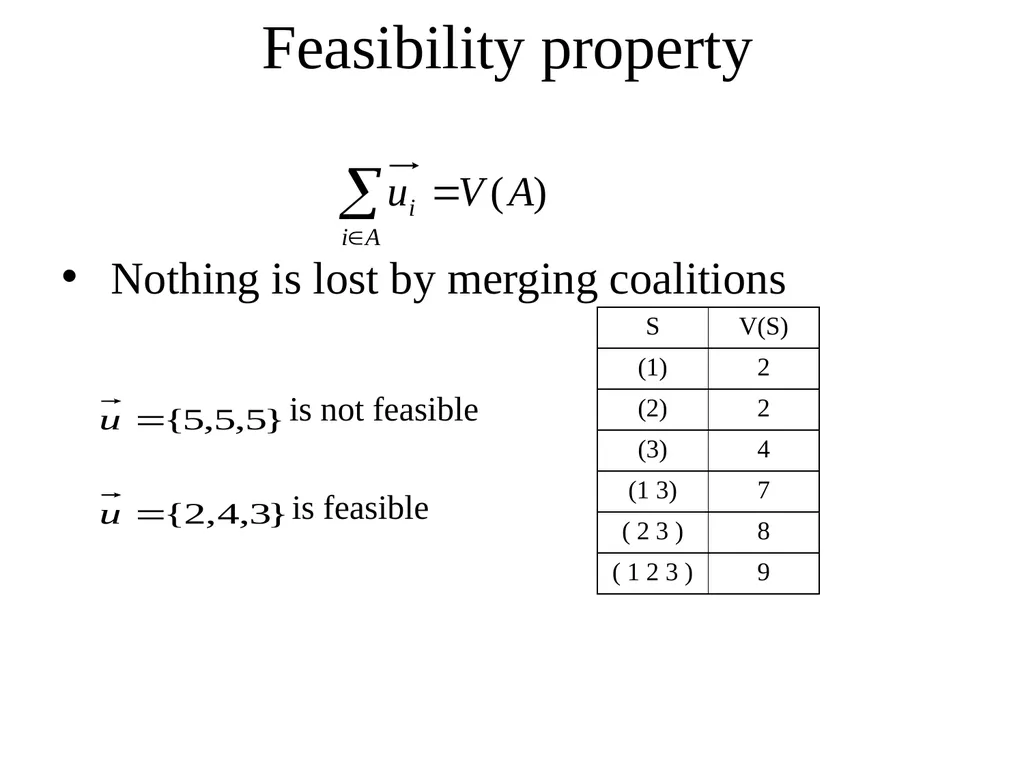
slide4. Feasibility property Nothing is lost by merging coalitions
is not feasible
is feasible<br>
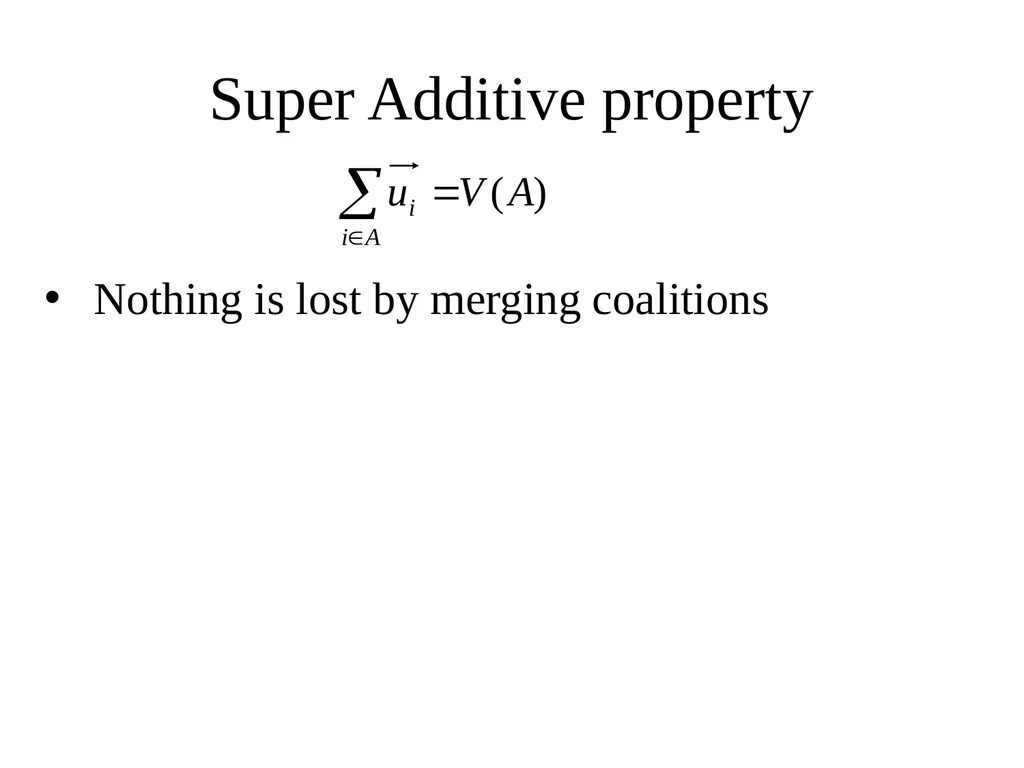
slide5. Super Additive property Nothing is lost by merging coalitions<br>
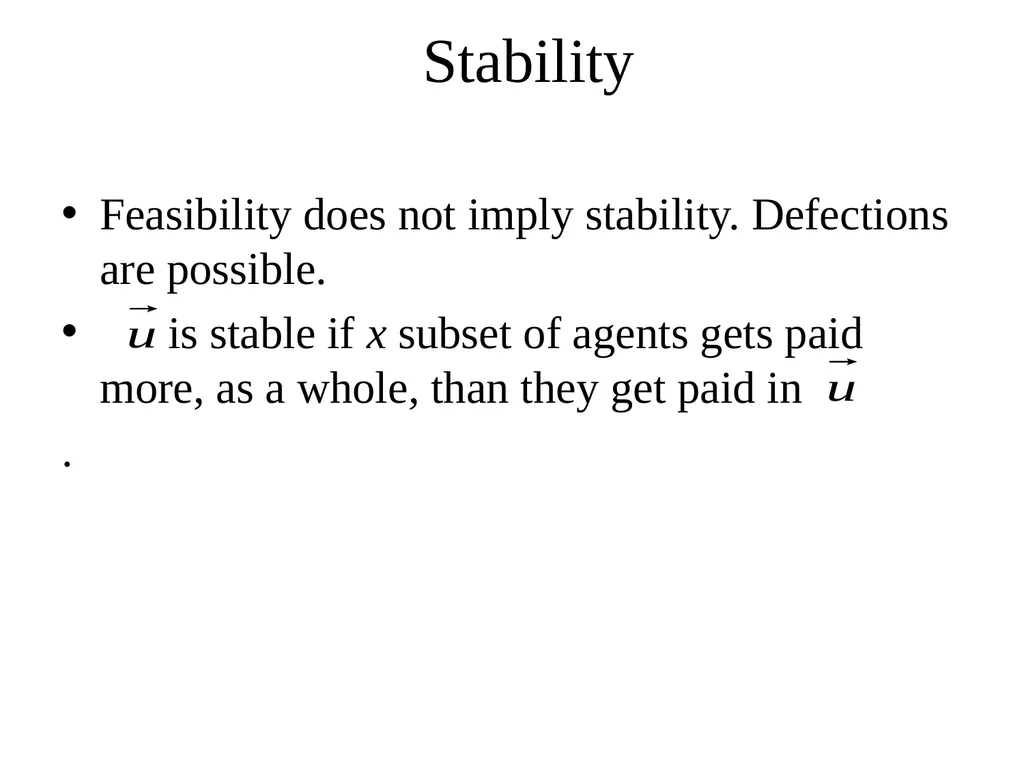
slide6. Stability Feasibility does not imply stability. Defections are possible.
is stable if x subset of agents gets paid more, as a whole, than they get paid in
.<br>
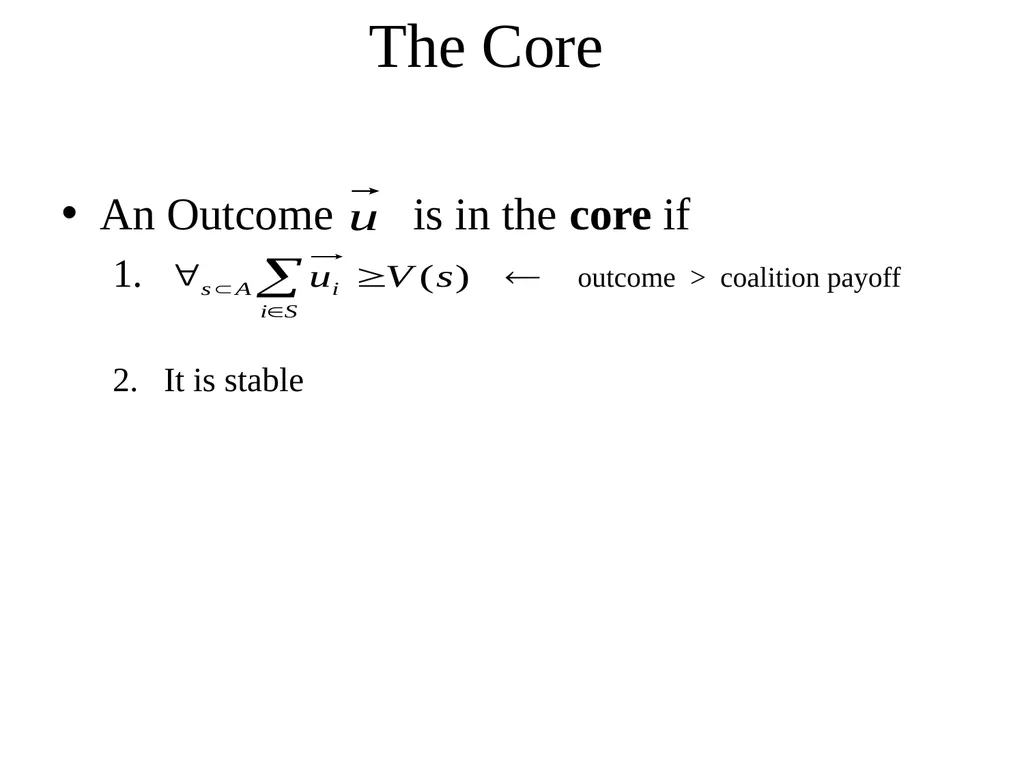
slide7. The Core An Outcome is in the core if
outcome > coalition payoff
It is stable<br>
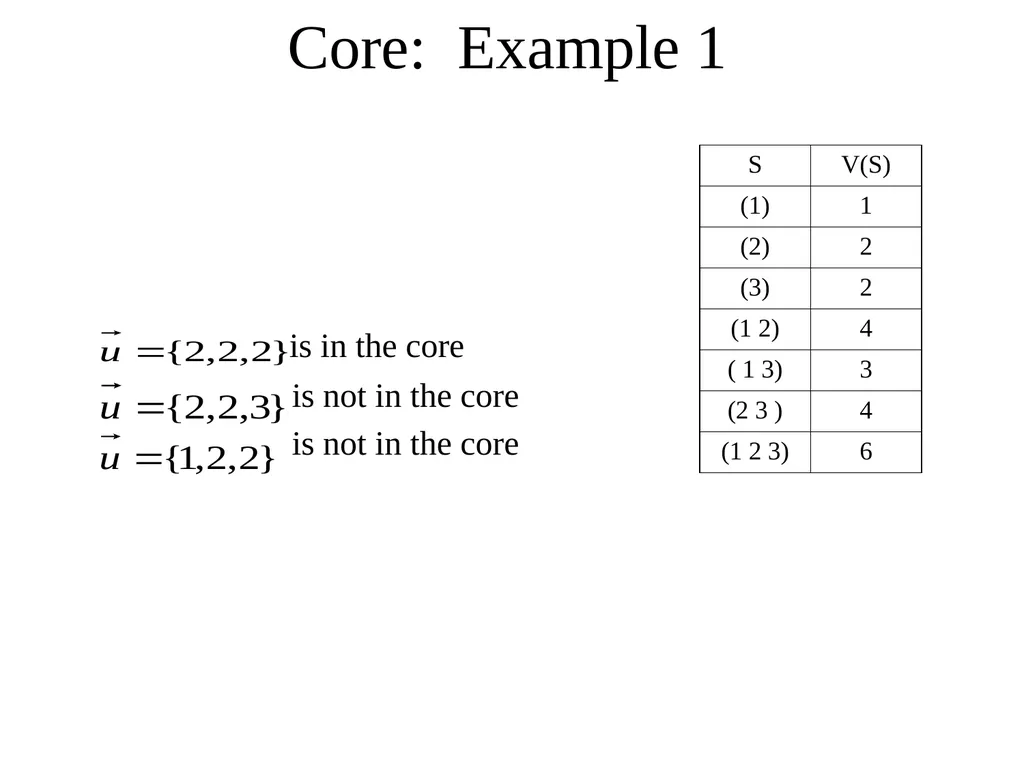
slide8. Core: Example 1 is in the core
is not in the core
is not in the core<br>
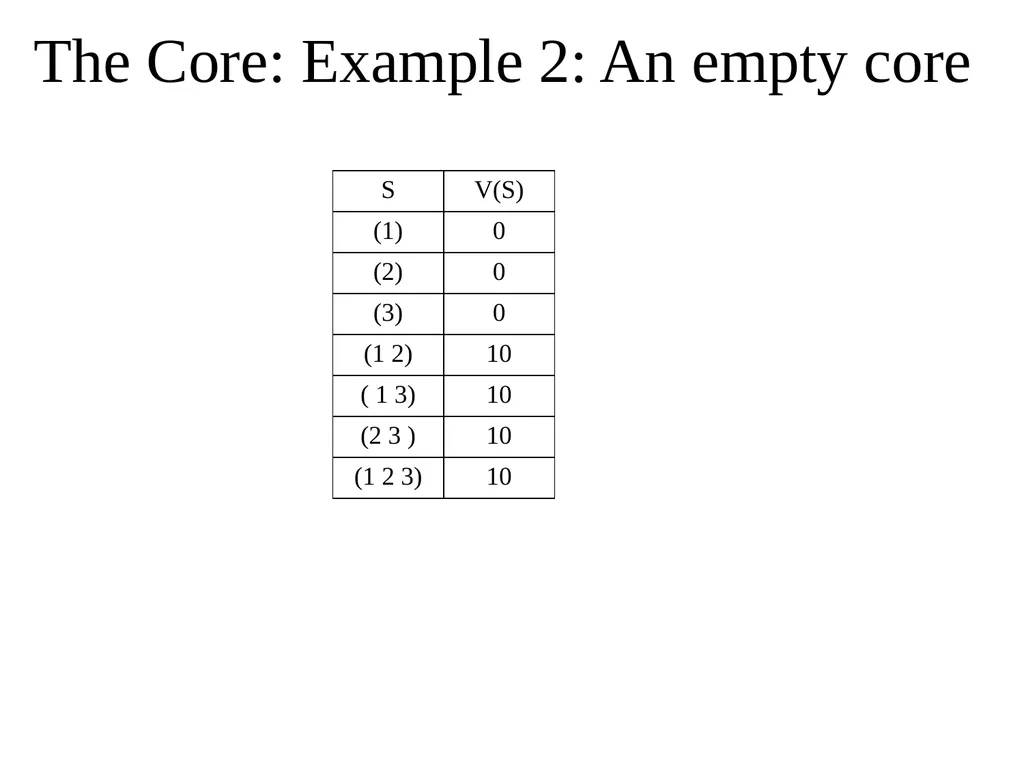
slide9. The Core: Example 2: An empty core<br>
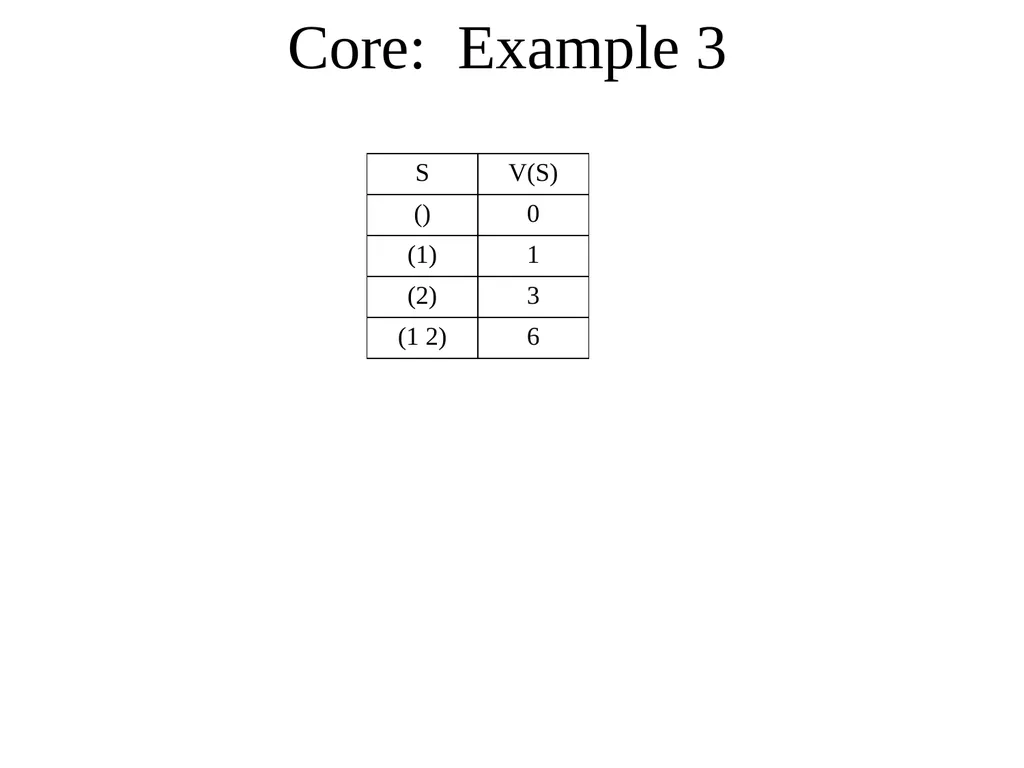
slide10. Core: Example 3<br>
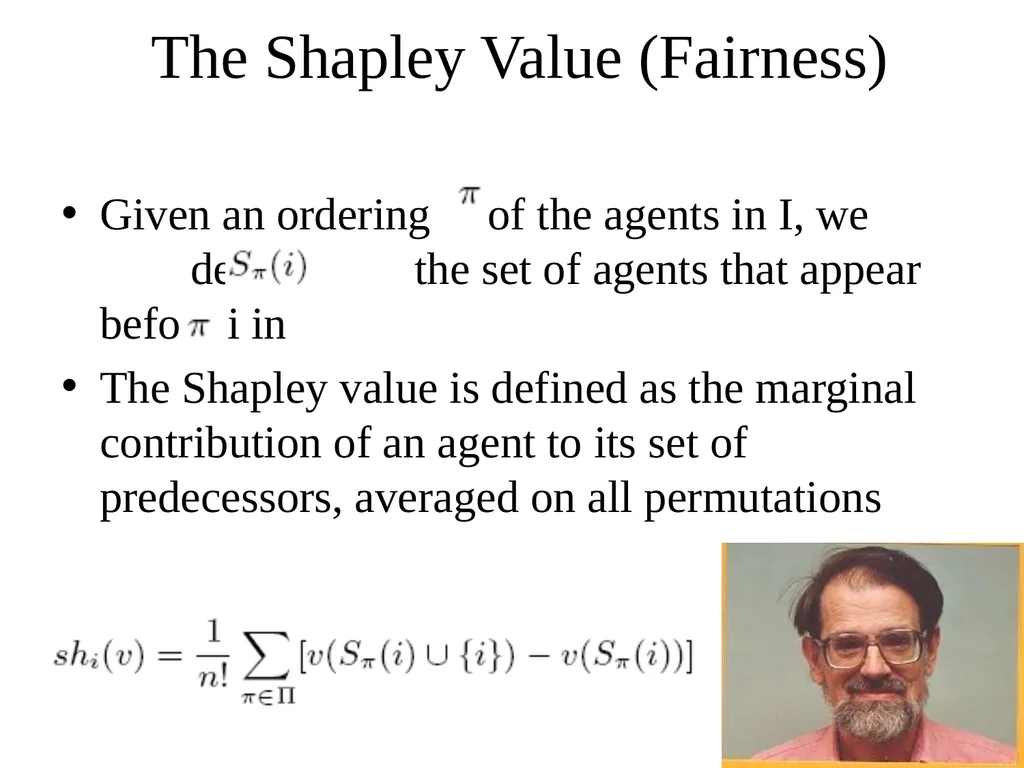
slide11. The Shapley Value (Fairness) Given an ordering of the agents in I, we denote the set of agents that appear before i in
The Shapley value is defined as the marginal contribution of an agent to its set of predecessors, averaged on all permutations<br>
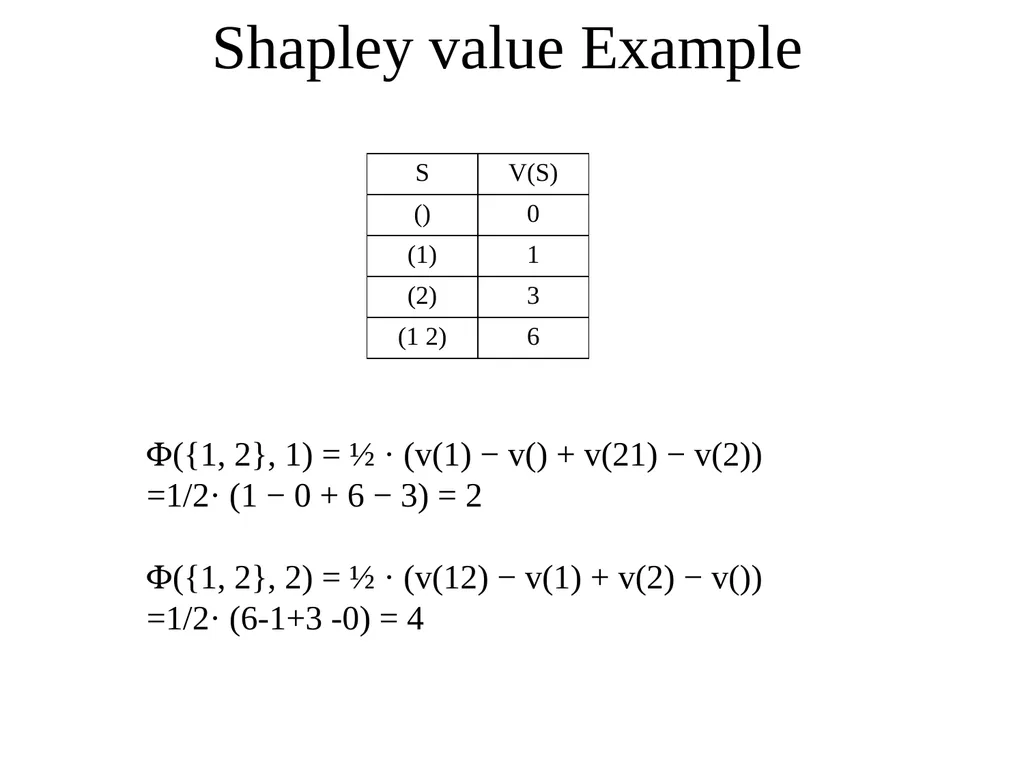
slide12. Shapley value Example F({1, 2}, 1) = ½ · (v(1) − v() + v(21) − v(2))
=1/2· (1 − 0 + 6 − 3) = 2
F({1, 2}, 2) = ½ · (v(12) − v(1) + v(2) − v())
=1/2· (6-1+3 -0) = 4<br>
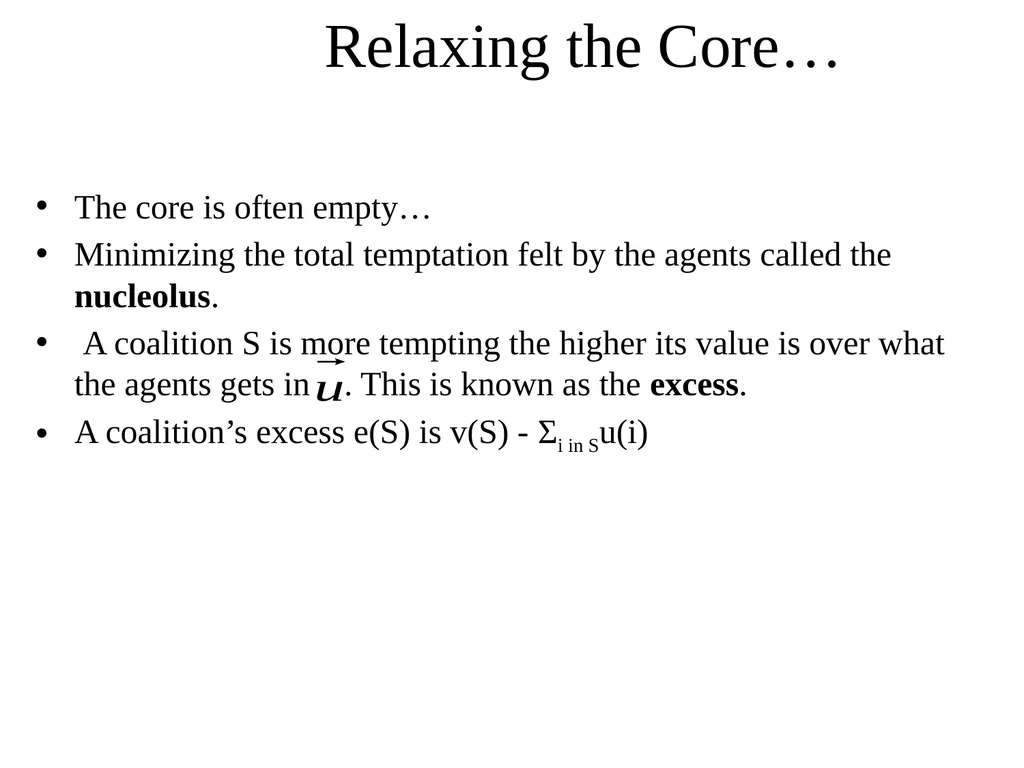
slide13. Relaxing the Core… The core is often empty…
Minimizing the total temptation felt by the agents called the nucleolus.
A coalition S is more tempting the higher its value is over what the agents gets in . This is known as the excess.
A coalition’s excess e(S) is v(S) - Σi in Su(i)<br>
slide14. References Shapley (1953,1967,1971)
Aumann & Dreze (1974)<br>
SIUC<br>
slide2. Coalition game _ characteristic from game Agents
vector of utilities one for each agent
payoffs for teaming
V(s) – characteristic function / Value function
s – set of agents
v(S) R is defined for every S that is a subset of A.<br>
slide3. Transferable Utility Players can exchange utilities in a team
is feasible if there exists a set of coalitions
T =
Where
Are there a disjoint set of coalitions that add up to
T = Coalition structure<br>
slide4. Feasibility property Nothing is lost by merging coalitions
is not feasible
is feasible<br>
slide5. Super Additive property Nothing is lost by merging coalitions<br>
slide6. Stability Feasibility does not imply stability. Defections are possible.
is stable if x subset of agents gets paid more, as a whole, than they get paid in
.<br>
slide7. The Core An Outcome is in the core if
outcome > coalition payoff
It is stable<br>
slide8. Core: Example 1 is in the core
is not in the core
is not in the core<br>
slide9. The Core: Example 2: An empty core<br>
slide10. Core: Example 3<br>
slide11. The Shapley Value (Fairness) Given an ordering of the agents in I, we denote the set of agents that appear before i in
The Shapley value is defined as the marginal contribution of an agent to its set of predecessors, averaged on all permutations<br>
slide12. Shapley value Example F({1, 2}, 1) = ½ · (v(1) − v() + v(21) − v(2))
=1/2· (1 − 0 + 6 − 3) = 2
F({1, 2}, 2) = ½ · (v(12) − v(1) + v(2) − v())
=1/2· (6-1+3 -0) = 4<br>
slide13. Relaxing the Core… The core is often empty…
Minimizing the total temptation felt by the agents called the nucleolus.
A coalition S is more tempting the higher its value is over what the agents gets in . This is known as the excess.
A coalition’s excess e(S) is v(S) - Σi in Su(i)<br>
slide14. References Shapley (1953,1967,1971)
Aumann & Dreze (1974)<br>