
Coast-down conditions issues arising from of
Description: Coast-down conditions issues arising from of TUG-TNO correction algorithms project variations in tyre pressure and road surface Correction algorithms for variations in the WLTP testing Correcting of the test results for the execution of the
Related Topics
Download Presentation
"Coast-down conditions issues arising from of" is the property of its rightful owner. Permission is granted to download and print the materials on this website for personal, non-commercial use only, and to display it on your personal computer provided you do not modify the materials and that you retain all copyright notices contained in the materials. By downloading content from our website, you accept the terms of this agreement.
Presentation Transcript
slide1. Coast-down conditions
issues arising from of TUG-TNO correction algorithms project variations in tyre pressure and road surface<br>
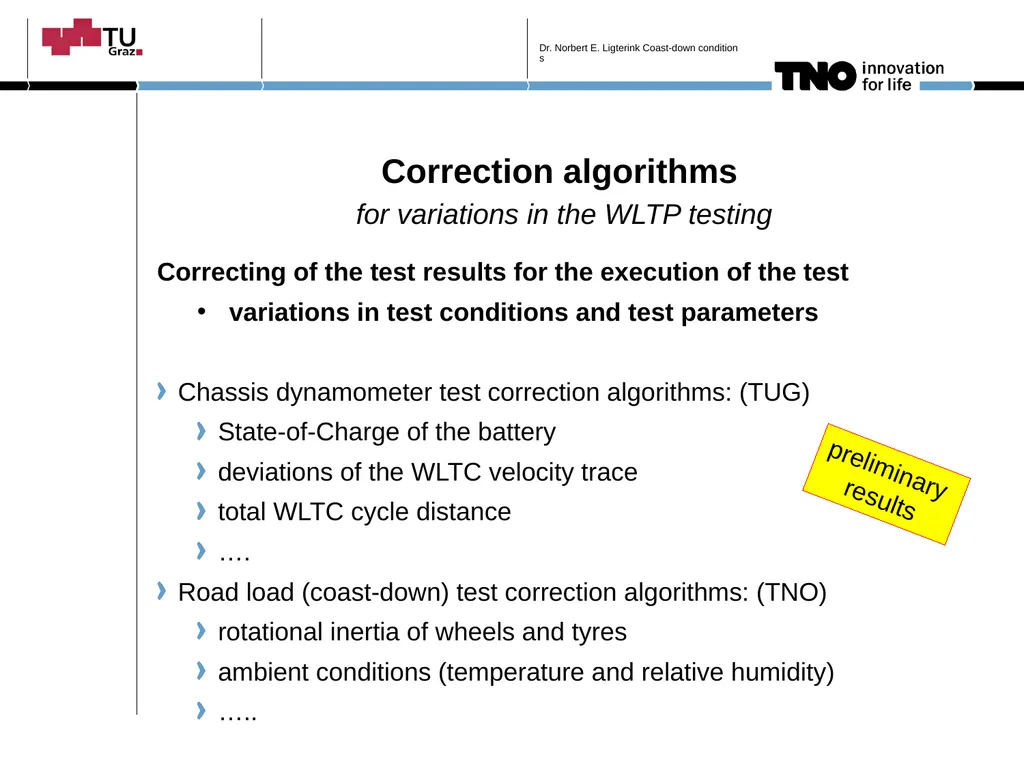
slide2. Correction algorithms for variations in the WLTP testing Correcting of the test results for the execution of the test
variations in test conditions and test parameters
Chassis dynamometer test correction algorithms: (TUG)
State-of-Charge of the battery
deviations of the WLTC velocity trace
total WLTC cycle distance
….
Road load (coast-down) test correction algorithms: (TNO)
rotational inertia of wheels and tyres
ambient conditions (temperature and relative humidity)
….. Dr. Norbert E. Ligterink
Coast-down conditions preliminary
results<br>
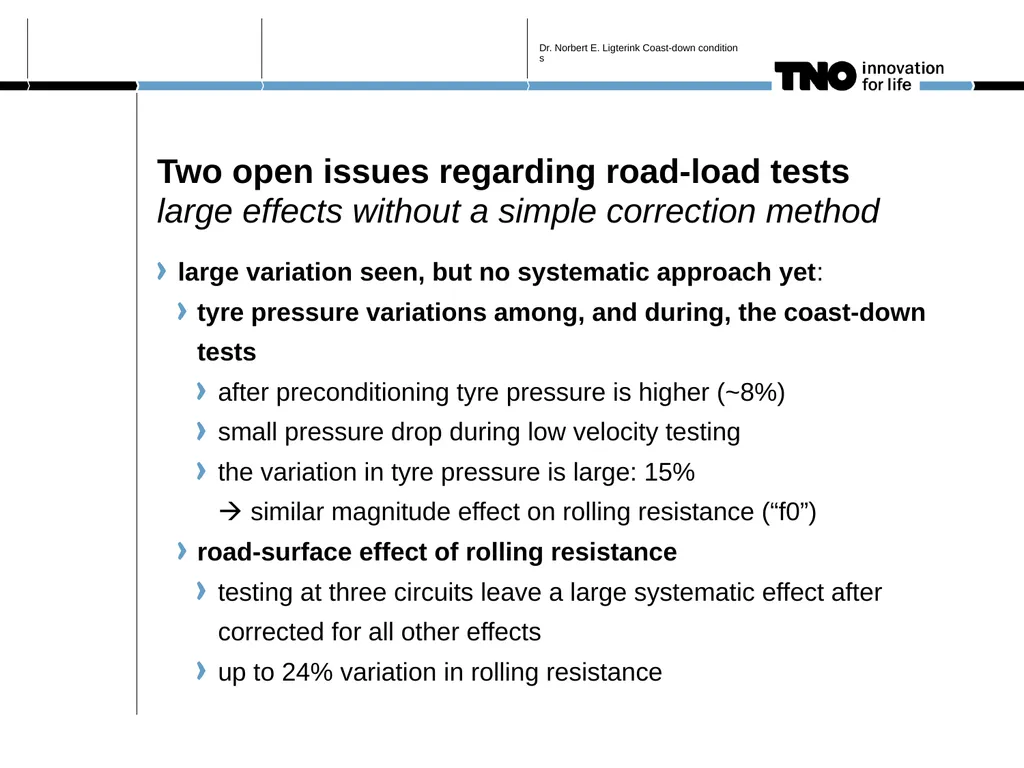
slide3. Two open issues regarding road-load tests large effects without a simple correction method large variation seen, but no systematic approach yet:
tyre pressure variations among, and during, the coast-down tests
after preconditioning tyre pressure is higher (~8%)
small pressure drop during low velocity testing
the variation in tyre pressure is large: 15%
similar magnitude effect on rolling resistance (“f0”)
road-surface effect of rolling resistance
testing at three circuits leave a large systematic effect after corrected for all other effects
up to 24% variation in rolling resistance Dr. Norbert E. Ligterink
Coast-down conditions<br>
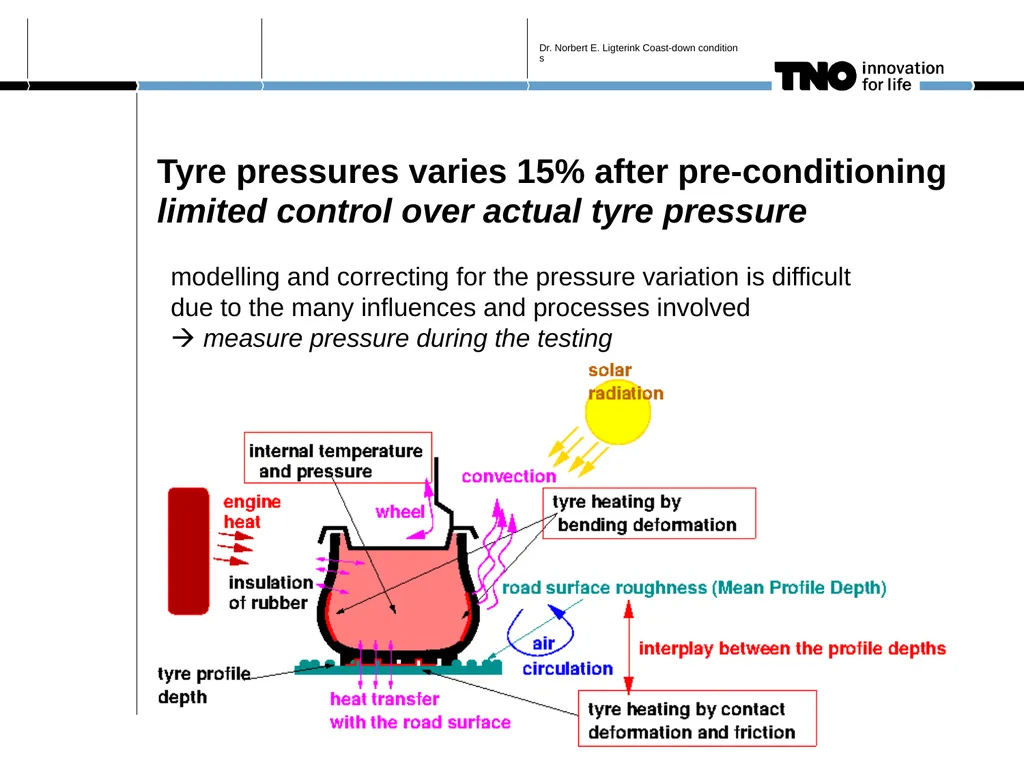
slide4. Tyre pressures varies 15% after pre-conditioning limited control over actual tyre pressure Dr. Norbert E. Ligterink
Coast-down conditions modelling and correcting for the pressure variation is difficult
due to the many influences and processes involved
measure pressure during the testing<br>
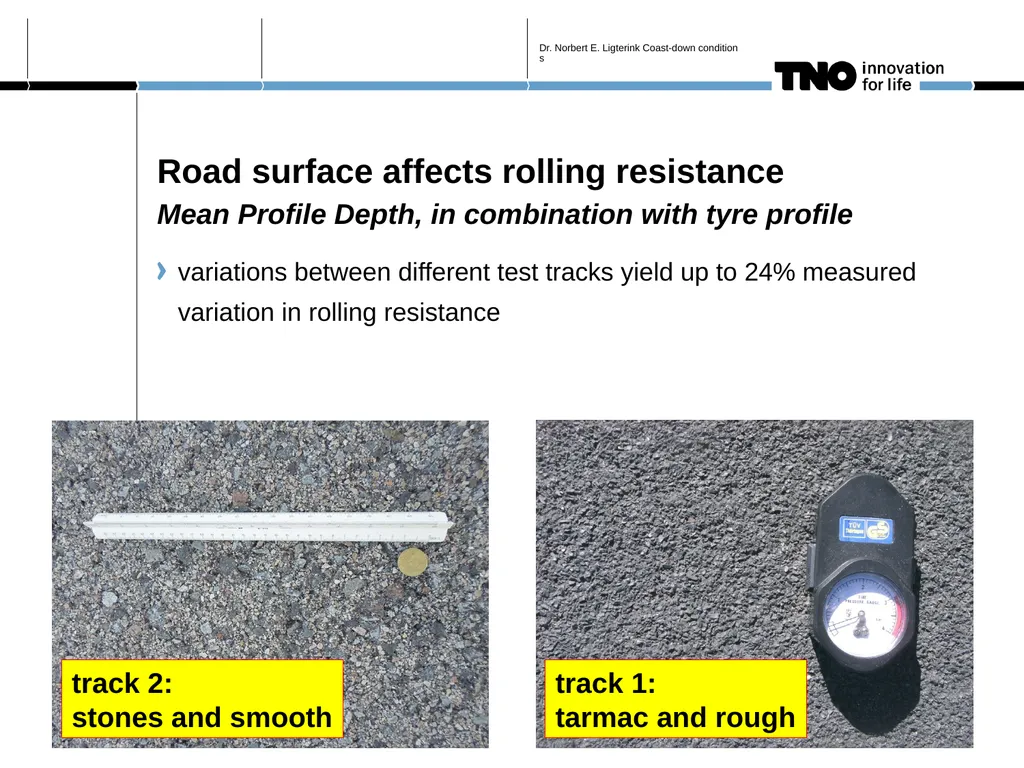
slide5. Road surface affects rolling resistance Mean Profile Depth, in combination with tyre profile variations between different test tracks yield up to 24% measured variation in rolling resistance Dr. Norbert E. Ligterink
Coast-down conditions track 1:
tarmac and rough track 2:
stones and smooth<br>
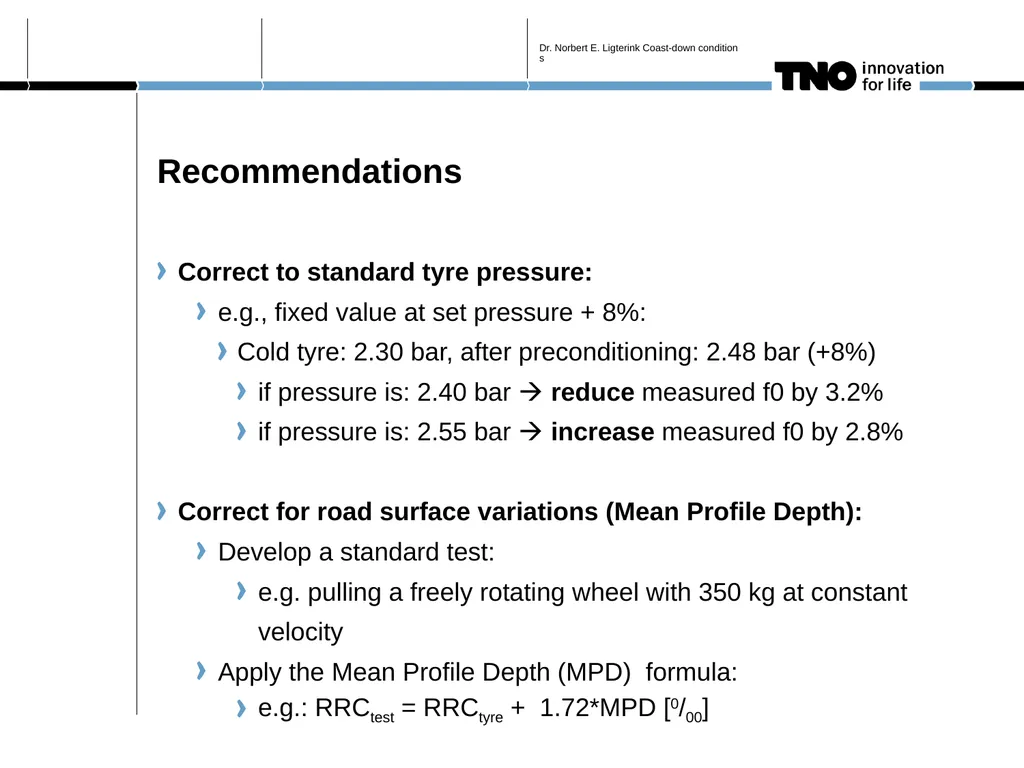
slide6. Recommendations Correct to standard tyre pressure:
e.g., fixed value at set pressure + 8%:
Cold tyre: 2.30 bar, after preconditioning: 2.48 bar (+8%)
if pressure is: 2.40 bar reduce measured f0 by 3.2%
if pressure is: 2.55 bar increase measured f0 by 2.8%
Correct for road surface variations (Mean Profile Depth):
Develop a standard test:
e.g. pulling a freely rotating wheel with 350 kg at constant velocity
Apply the Mean Profile Depth (MPD) formula:
e.g.: RRCtest = RRCtyre + 1.72*MPD [0/00] Dr. Norbert E. Ligterink
Coast-down conditions<br>
slide2. Correction algorithms for variations in the WLTP testing Correcting of the test results for the execution of the test
variations in test conditions and test parameters
Chassis dynamometer test correction algorithms: (TUG)
State-of-Charge of the battery
deviations of the WLTC velocity trace
total WLTC cycle distance
….
Road load (coast-down) test correction algorithms: (TNO)
rotational inertia of wheels and tyres
ambient conditions (temperature and relative humidity)
….. Dr. Norbert E. Ligterink
Coast-down conditions preliminary
results<br>
slide3. Two open issues regarding road-load tests large effects without a simple correction method large variation seen, but no systematic approach yet:
tyre pressure variations among, and during, the coast-down tests
after preconditioning tyre pressure is higher (~8%)
small pressure drop during low velocity testing
the variation in tyre pressure is large: 15%
similar magnitude effect on rolling resistance (“f0”)
road-surface effect of rolling resistance
testing at three circuits leave a large systematic effect after corrected for all other effects
up to 24% variation in rolling resistance Dr. Norbert E. Ligterink
Coast-down conditions<br>
slide4. Tyre pressures varies 15% after pre-conditioning limited control over actual tyre pressure Dr. Norbert E. Ligterink
Coast-down conditions modelling and correcting for the pressure variation is difficult
due to the many influences and processes involved
measure pressure during the testing<br>
slide5. Road surface affects rolling resistance Mean Profile Depth, in combination with tyre profile variations between different test tracks yield up to 24% measured variation in rolling resistance Dr. Norbert E. Ligterink
Coast-down conditions track 1:
tarmac and rough track 2:
stones and smooth<br>
slide6. Recommendations Correct to standard tyre pressure:
e.g., fixed value at set pressure + 8%:
Cold tyre: 2.30 bar, after preconditioning: 2.48 bar (+8%)
if pressure is: 2.40 bar reduce measured f0 by 3.2%
if pressure is: 2.55 bar increase measured f0 by 2.8%
Correct for road surface variations (Mean Profile Depth):
Develop a standard test:
e.g. pulling a freely rotating wheel with 350 kg at constant velocity
Apply the Mean Profile Depth (MPD) formula:
e.g.: RRCtest = RRCtyre + 1.72*MPD [0/00] Dr. Norbert E. Ligterink
Coast-down conditions<br>