Coastal Processes and Landforms How do waves operate? What are sub-aerial processes and why are they important? What processes of erosion operate at the coast? What landforms are created by erosion? What processes of transport operate at
"Coastal Processes and Landforms How do waves" is the property of its rightful owner. Permission is granted to
download and print the materials on this website for personal, non-commercial use only, and to display it
on your personal computer provided you do not modify the materials and that you retain all copyright
notices contained in the materials. By downloading content from our website, you accept the terms of this
agreement.
Presentation Transcript
01
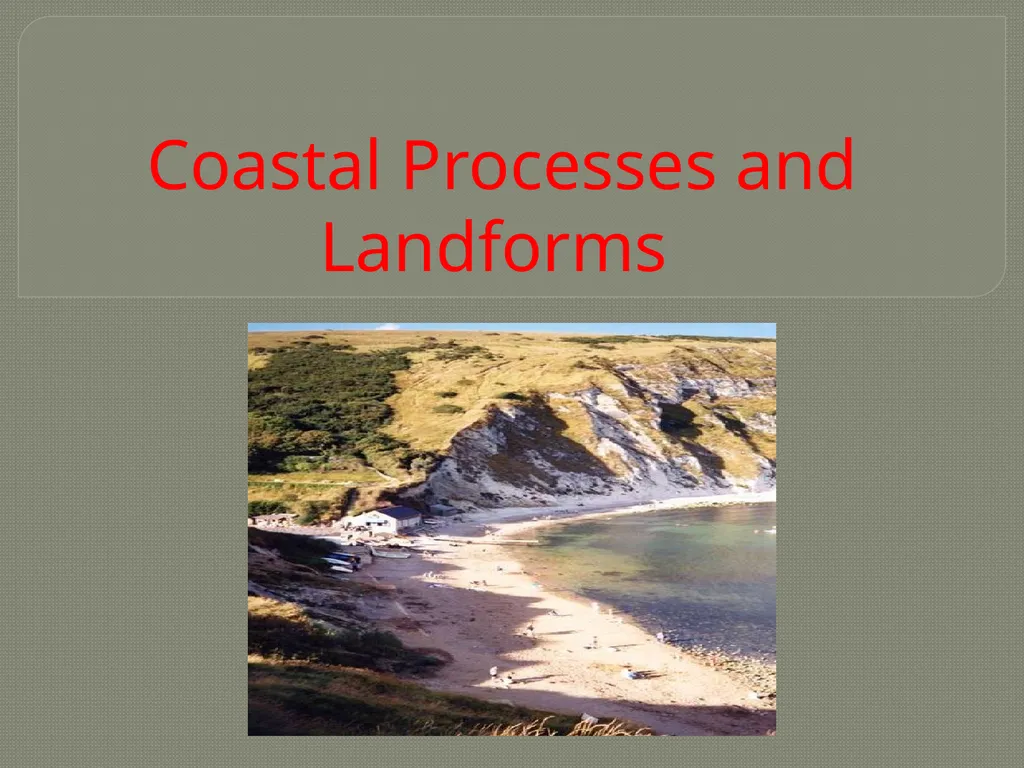
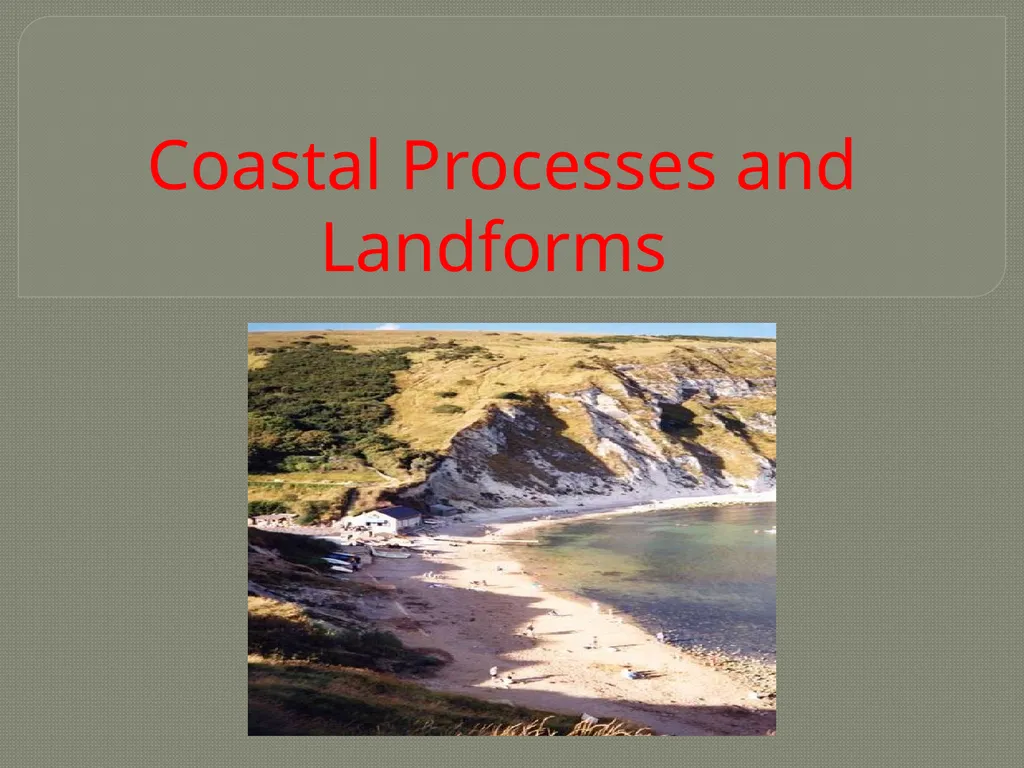
Coastal Processes and Landforms<br>
02
How do waves operate? What are sub-aerial processes and why are they important?
What processes of erosion operate at the coast?
What landforms are created by erosion?
What processes of transport operate at the coast?
What landforms are created by deposition?<br>
03
Why do waves break? Waves are the result of the wind blowing over the sea. As they approach land they break. The bottom of the wave touches the sand and slows down due to increased friction. The top of the wave becomes higher and steeper until it topples over.<br>
04
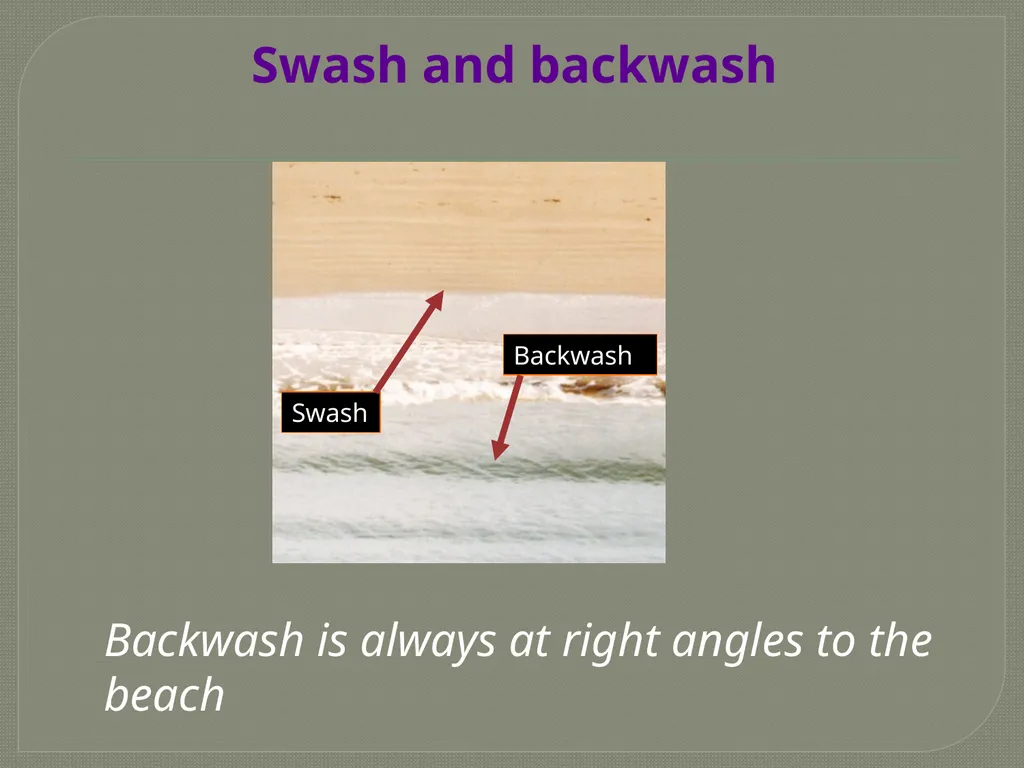
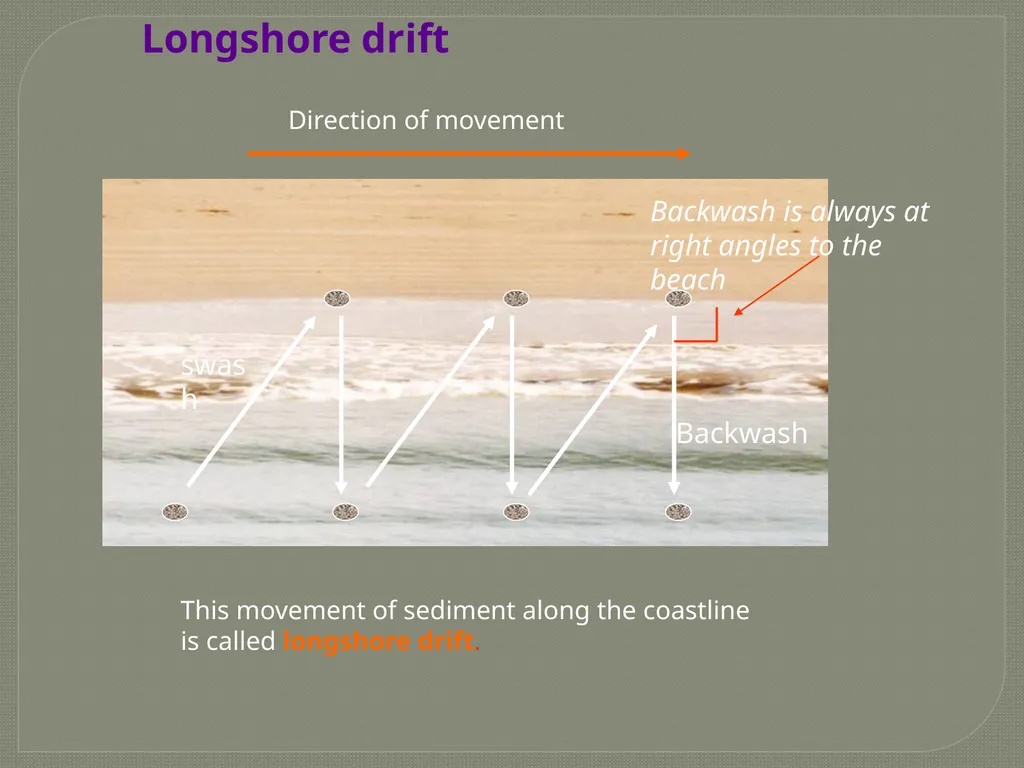
Swash and backwash Backwash Swash Backwash is always at right angles to the beach<br>
05
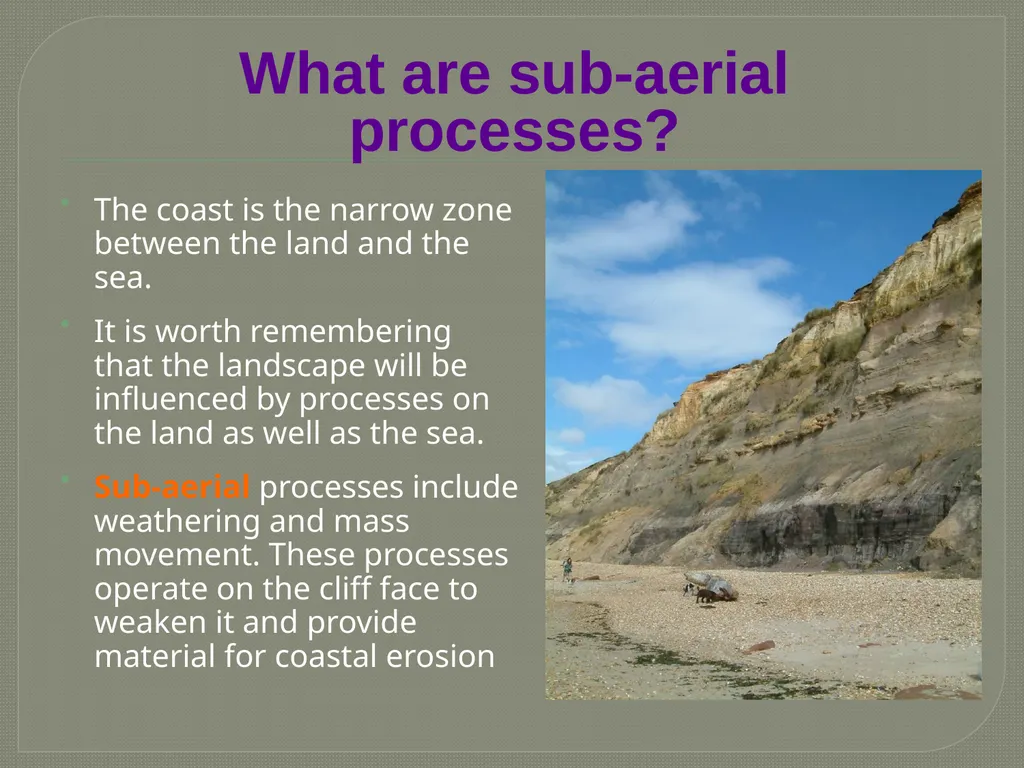
What are sub-aerial processes? The coast is the narrow zone between the land and the sea.
It is worth remembering that the landscape will be influenced by processes on the land as well as the sea.
Sub-aerial processes include weathering and mass movement. These processes operate on the cliff face to weaken it and provide material for coastal erosion<br>
06
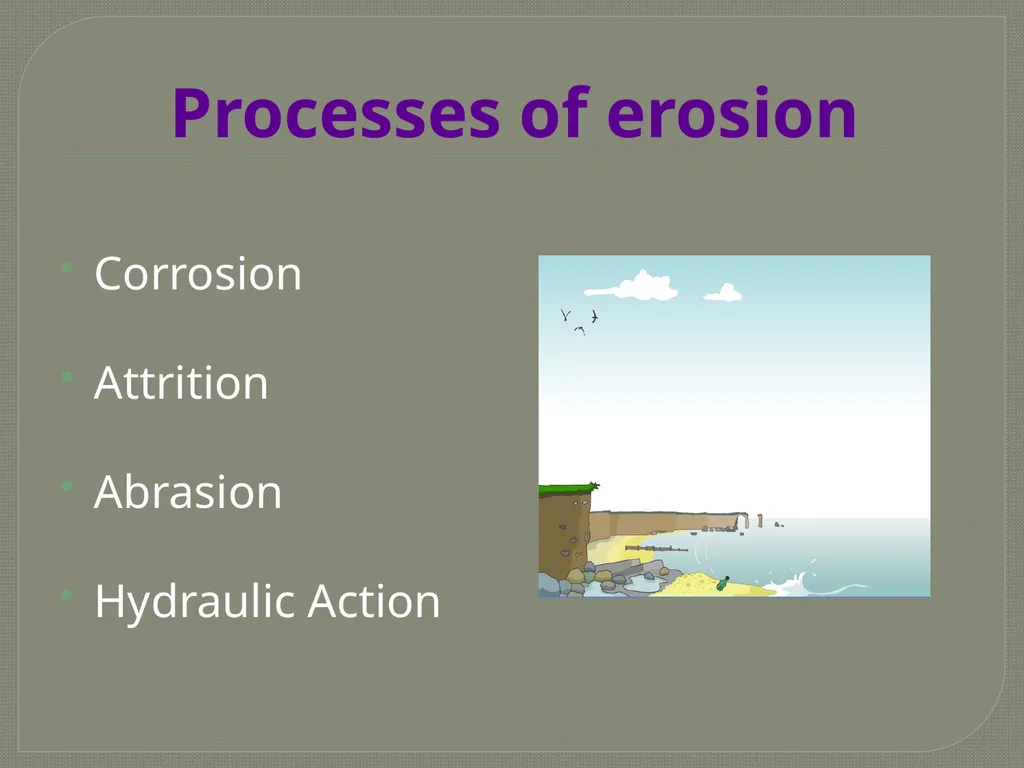
Processes of erosion Corrosion
Attrition
Abrasion
Hydraulic Action<br>
07
Processes of erosion Attrition Materials carried by the waves bump into each other and so are smoothed and broken down into smaller particles.
Hydraulic action This process involves the force of water against the coast. The waves enter cracks (faults) in the coastline and compress the air within the crack. When the wave retreats, the air in the crack expands quickly, causing a minor explosion. This process is repeated continuously.
Corrosion This is the chemical action of sea water. The acids in the salt water slowly dissolve rocks on the coast. Limestone and chalk are particularly prone to this process.
Abrasion This is the process by which the coast is worn down by material carried by the waves. Waves throw these particles against the rock, sometimes at high velocity.<br>
08
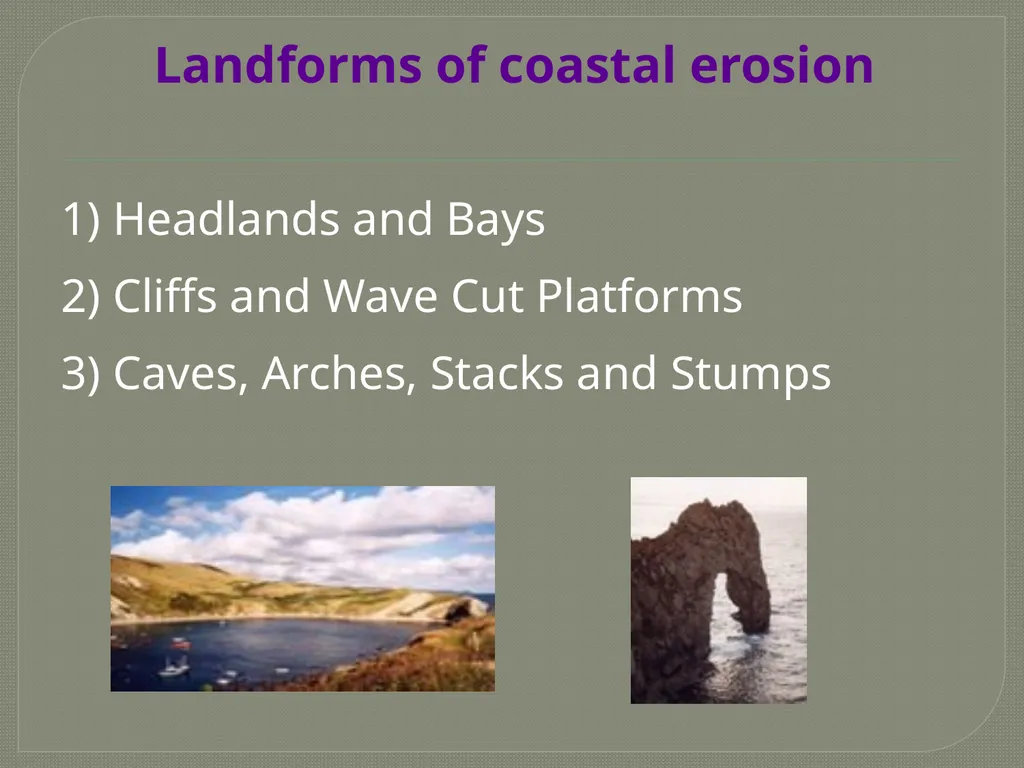
Landforms of coastal erosion 1) Headlands and Bays
2) Cliffs and Wave Cut Platforms
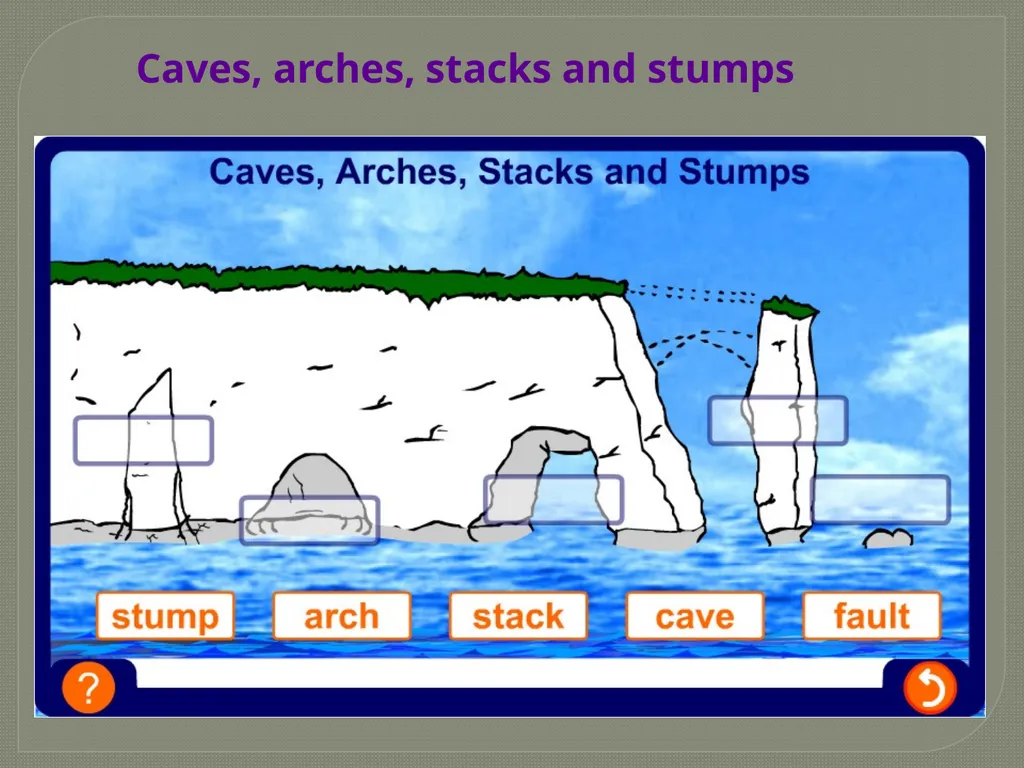
3) Caves, Arches, Stacks and Stumps<br>
09
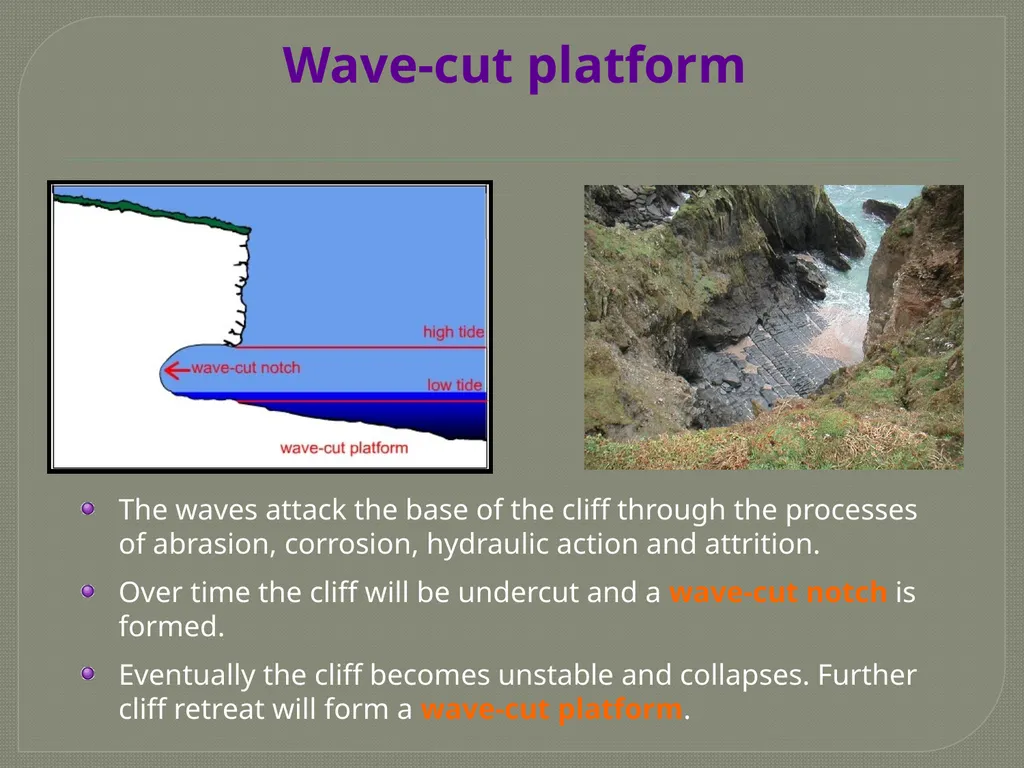
Wave-cut platform The waves attack the base of the cliff through the processes of abrasion, corrosion, hydraulic action and attrition.
Over time the cliff will be undercut and a wave-cut notch is formed.
Eventually the cliff becomes unstable and collapses. Further cliff retreat will form a wave-cut platform.<br>
10
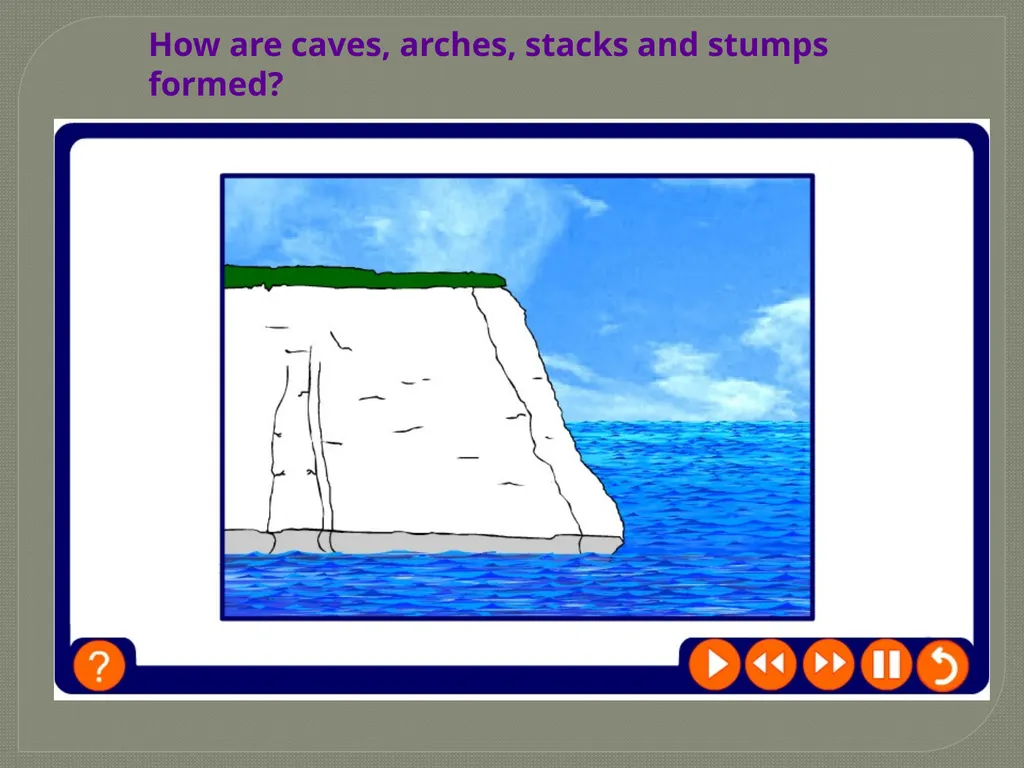
How are caves, arches, stacks and stumps formed?<br>
11
Caves, arches, stacks and stumps<br>
12
This movement of sediment along the coastline is called longshore drift. Direction of movement swash Backwash Backwash is always at right angles to the beach Longshore drift<br>
13
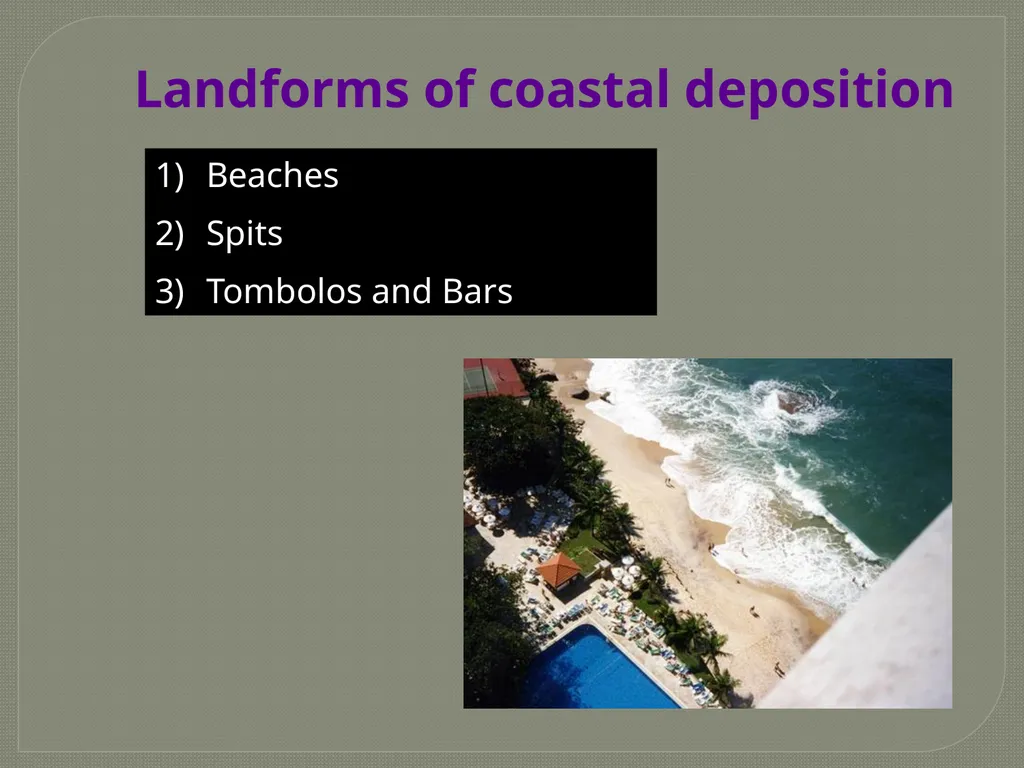
Landforms of coastal deposition Beaches
Spits
Tombolos and Bars<br>
14
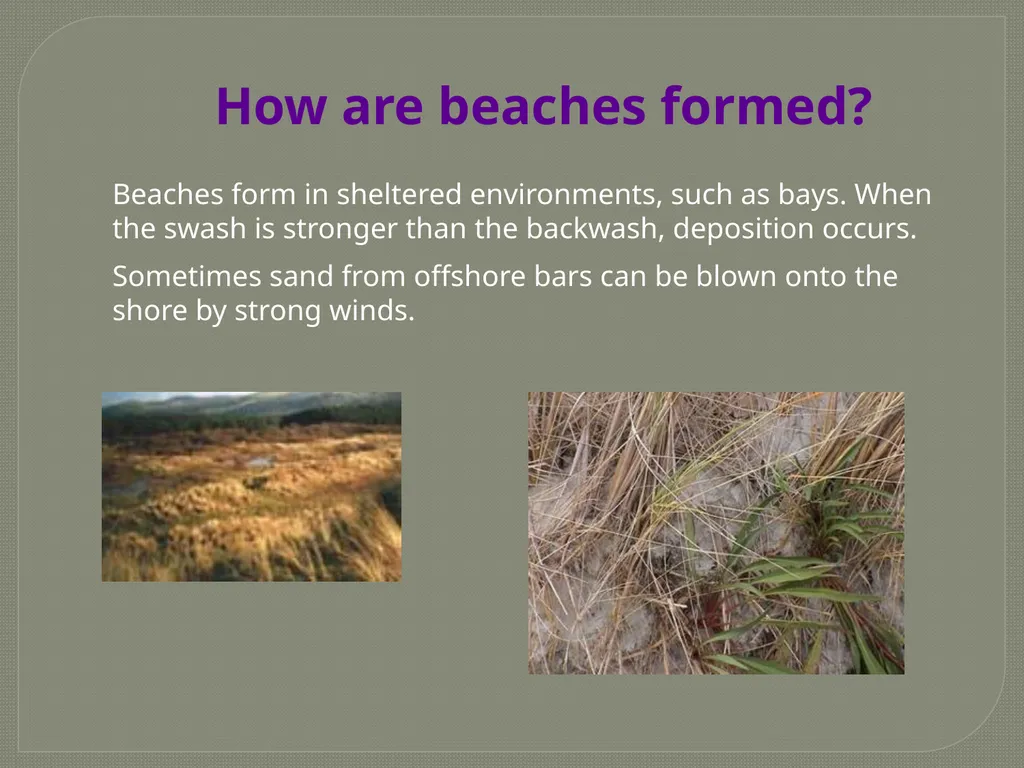
How are beaches formed? Beaches form in sheltered environments, such as bays. When the swash is stronger than the backwash, deposition occurs.
Sometimes sand from offshore bars can be blown onto the shore by strong winds.<br>
15
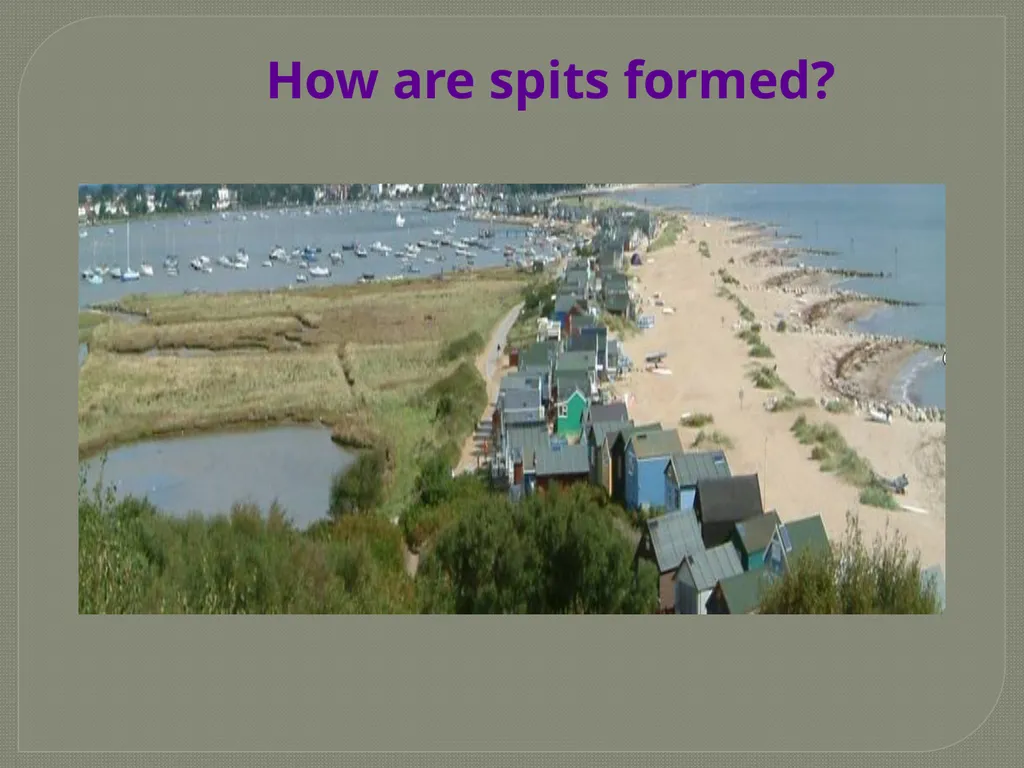
How are spits formed?<br>
16
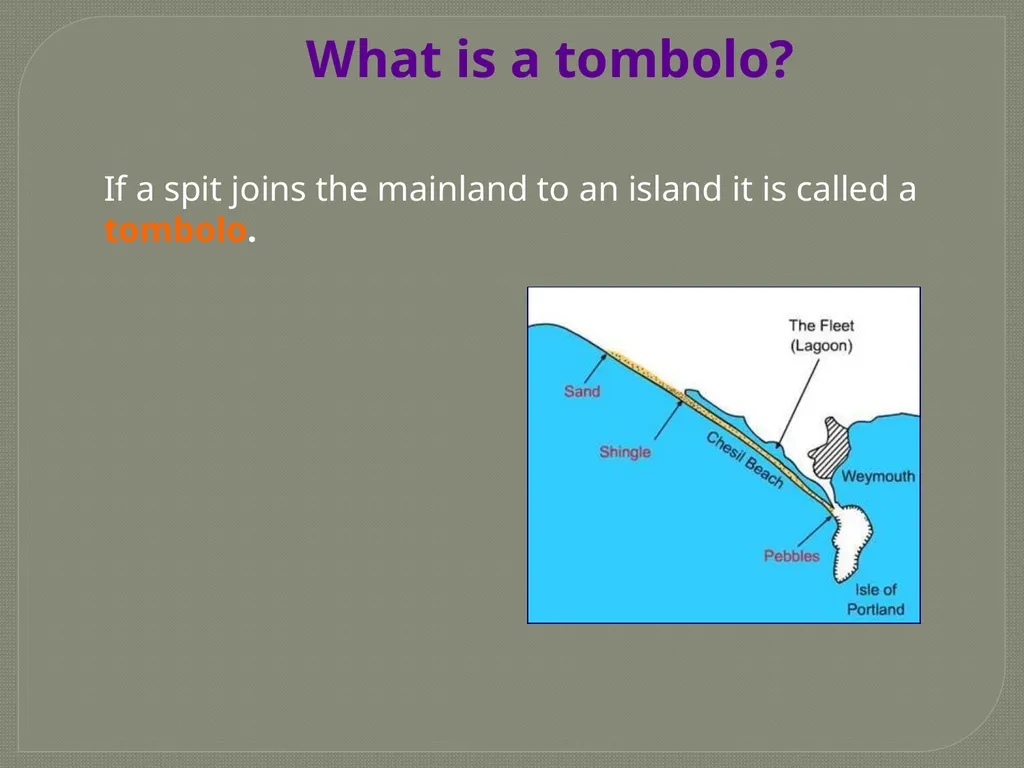
What is a tombolo? If a spit joins the mainland to an island it is called a tombolo.<br>
17
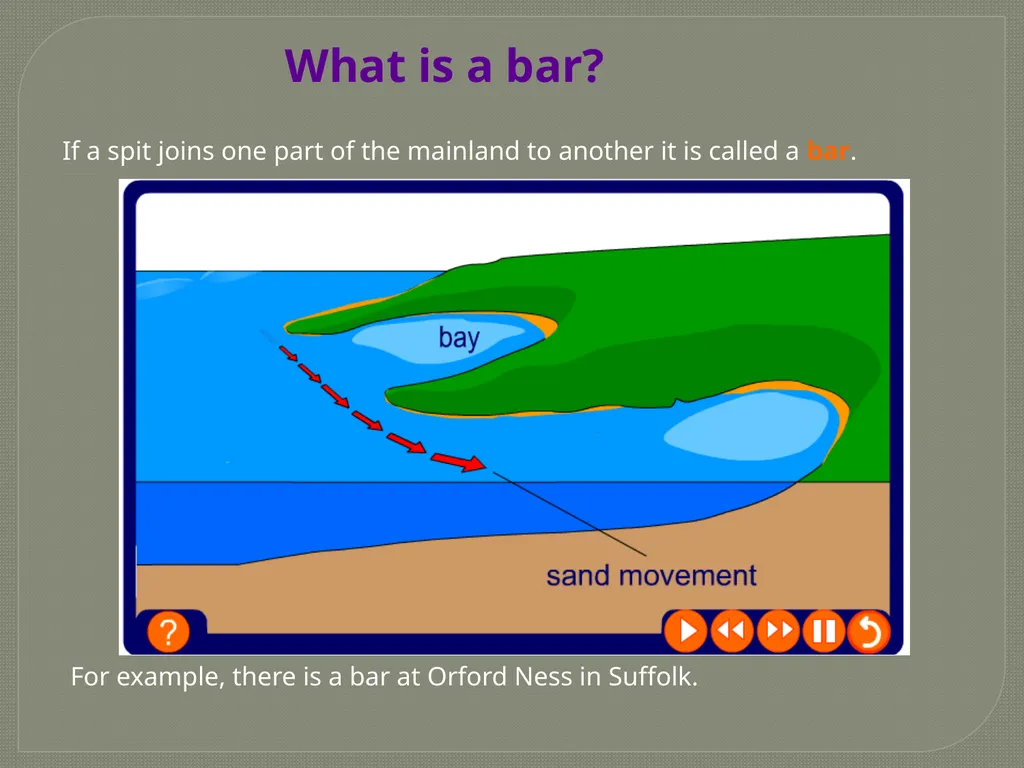
If a spit joins one part of the mainland to another it is called a bar. For example, there is a bar at Orford Ness in Suffolk. What is a bar?<br>
18
Key Ideas Waves are the result of the wind blowing over the sea. They break as they approach land.
Swash and backwash describe the movement of a wave on the beach. Fetch is the distance that the wind has travelled.
Sub-aerial processes such as weathering and mass movement occur on the cliff face.
Coastal processes of erosion include hydraulic action, attrition, corrosion and solution.
Landforms created by erosion include headlands and bays, caves, arches, stacks and stumps.
Longshore drift is a method of coastal transport.
Landforms created by deposition include beaches, spits, tombolos and bars.<br>