
Common Back Pain Issues Presented by Brian Walker,
CM
Published · 47 slides · 0 views
1 / 1
Description
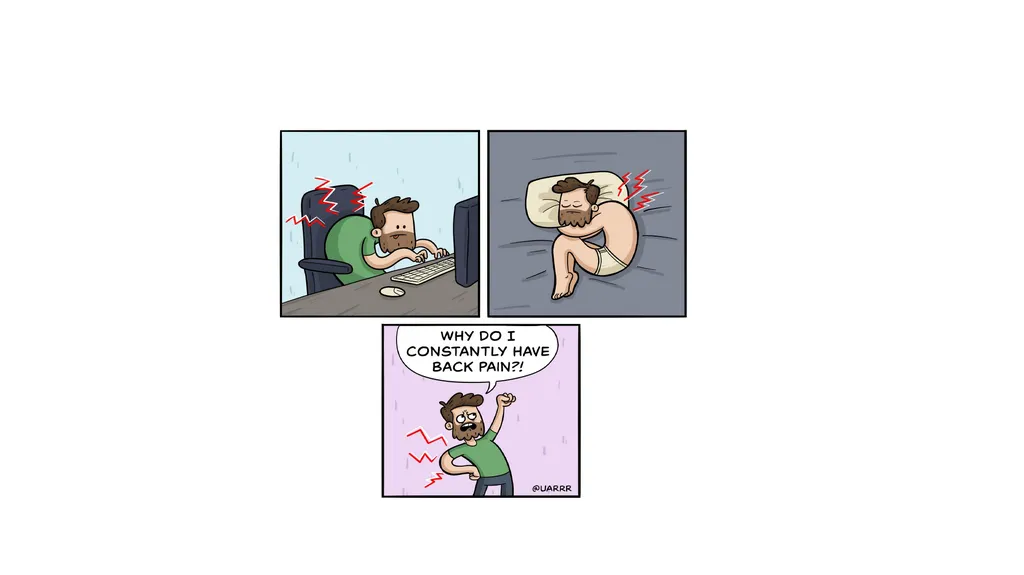
Common Back Pain Issues Presented by Brian Walker, DO, FAAFP Common Back Pain Issues Common Risk Factors Aging. Up to 60 yrs- MaleFemale. After age 60 yrs FemaleMale due to Osteoporosis Obesity Sedentary jobs Smoking Stressother
Related Topics
Share
Embed code
Download this presentation From Below
"Common Back Pain Issues Presented by Brian Walker," is the property of its rightful owner. Permission is granted to download and print the materials on this website for personal, non-commercial use only, and to display it on your personal computer provided you do not modify the materials and that you retain all copyright notices contained in the materials. By downloading content from our website, you accept the terms of this agreement.
Presentation Transcript
01
Common Back Pain Issues Presented by Brian Walker, DO, FAAFP<br>
02
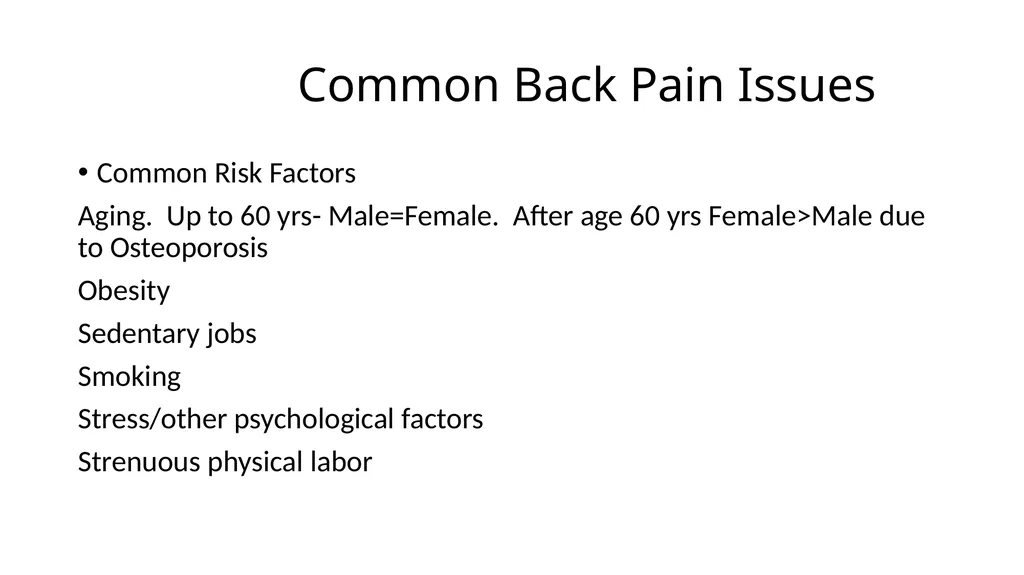
Common Back Pain Issues Common Risk Factors
Aging. Up to 60 yrs- Male=Female. After age 60 yrs Female>Male due to Osteoporosis
Obesity
Sedentary jobs
Smoking
Stress/other psychological factors
Strenuous physical labor<br>
Aging. Up to 60 yrs- Male=Female. After age 60 yrs Female>Male due to Osteoporosis
Obesity
Sedentary jobs
Smoking
Stress/other psychological factors
Strenuous physical labor<br>
03
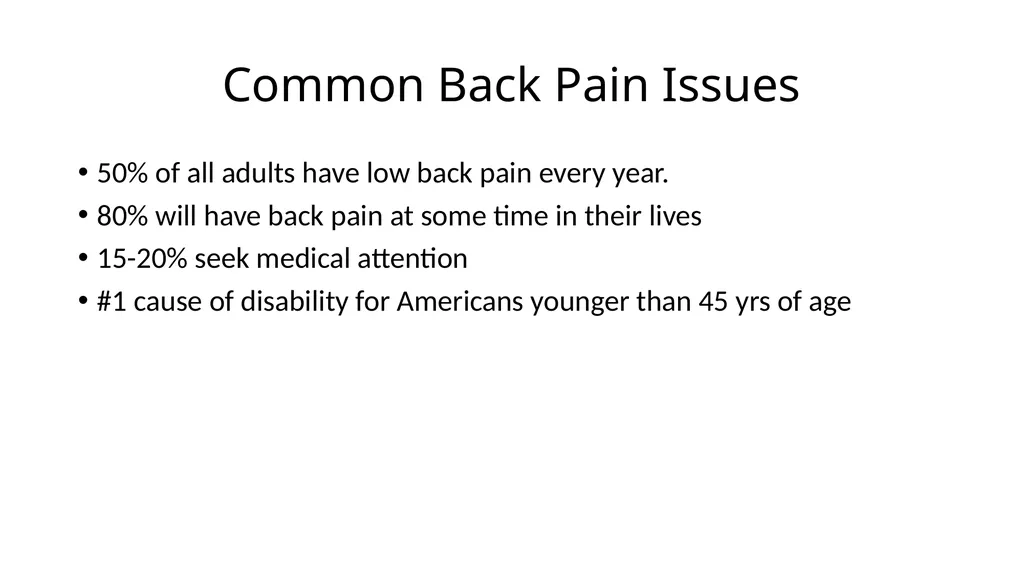
Common Back Pain Issues 50% of all adults have low back pain every year.
80% will have back pain at some time in their lives
15-20% seek medical attention
#1 cause of disability for Americans younger than 45 yrs of age<br>
80% will have back pain at some time in their lives
15-20% seek medical attention
#1 cause of disability for Americans younger than 45 yrs of age<br>
04
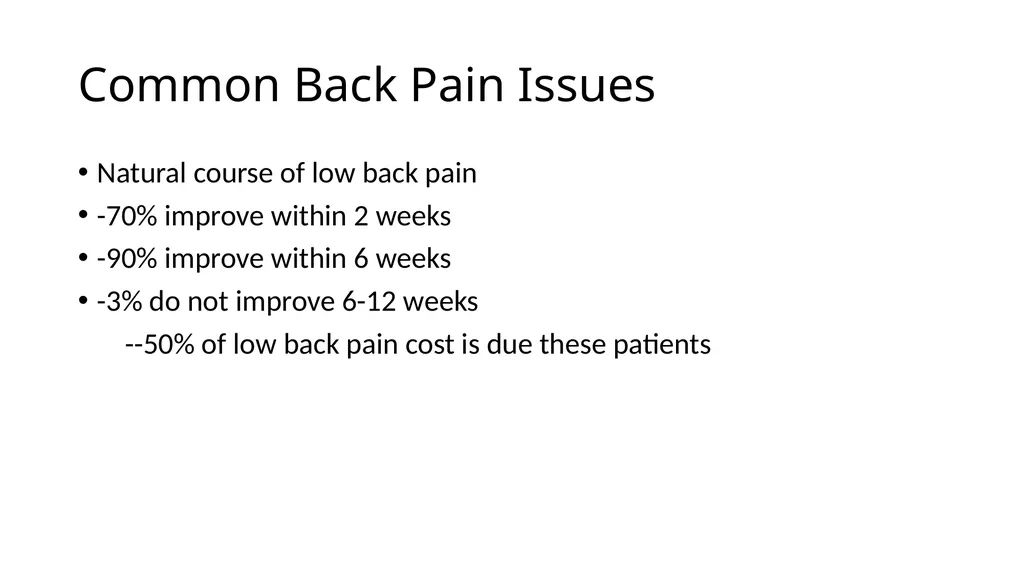
Common Back Pain Issues Natural course of low back pain
-70% improve within 2 weeks
-90% improve within 6 weeks
-3% do not improve 6-12 weeks
--50% of low back pain cost is due these patients<br>
-70% improve within 2 weeks
-90% improve within 6 weeks
-3% do not improve 6-12 weeks
--50% of low back pain cost is due these patients<br>
05
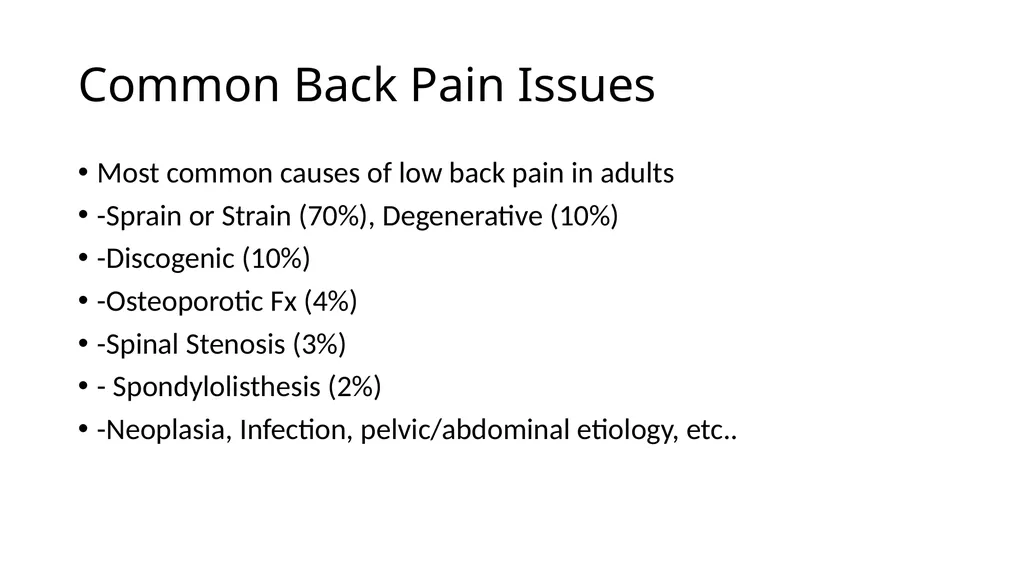
Common Back Pain Issues Most common causes of low back pain in adults
-Sprain or Strain (70%), Degenerative (10%)
-Discogenic (10%)
-Osteoporotic Fx (4%)
-Spinal Stenosis (3%)
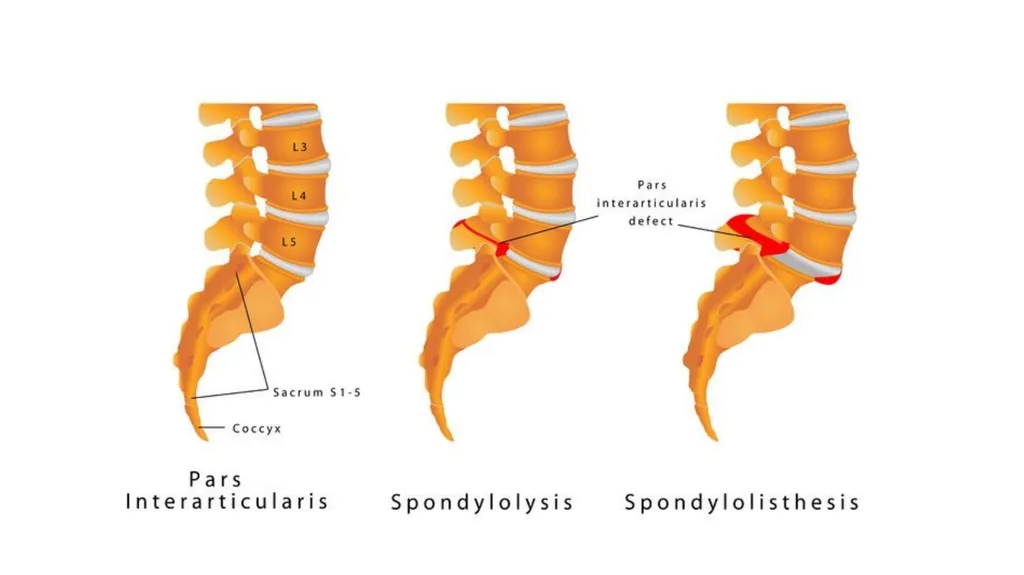
- Spondylolisthesis (2%)
-Neoplasia, Infection, pelvic/abdominal etiology, etc..<br>
-Sprain or Strain (70%), Degenerative (10%)
-Discogenic (10%)
-Osteoporotic Fx (4%)
-Spinal Stenosis (3%)
- Spondylolisthesis (2%)
-Neoplasia, Infection, pelvic/abdominal etiology, etc..<br>
06
Who is on the front lines for treating pain?
We are!! Urgent Care, Primary Care, ER
PM&R
Chiropractors
Neurologists
Pain specialists
Spine surgeons<br>
We are!! Urgent Care, Primary Care, ER
PM&R
Chiropractors
Neurologists
Pain specialists
Spine surgeons<br>
07
Key Questions When did the pain begin?
What precipitated it? Was there an injury, or did it occur spontaneously?
Does it stay in the back, or does it travel down the leg/foot, and if so, where in the leg/foot does it go to?
What makes it better or worse?
Is there any weakness associated with it?
Is there loss of bowel/bladder control? Numbness in the anal area/perineum?<br>
What precipitated it? Was there an injury, or did it occur spontaneously?
Does it stay in the back, or does it travel down the leg/foot, and if so, where in the leg/foot does it go to?
What makes it better or worse?
Is there any weakness associated with it?
Is there loss of bowel/bladder control? Numbness in the anal area/perineum?<br>
08
Physical Exam Starts with inspection—This can tell you a great deal
-Note the contour of the spine. Do you see a normal posterior curvature of the thoracic spine? (Kyphosis)
-Do you see a normal anterior curvature of the lumbar spine? (Lordosis)
-A lack of lumbar lordosis is often associated with low back pain<br>
-Note the contour of the spine. Do you see a normal posterior curvature of the thoracic spine? (Kyphosis)
-Do you see a normal anterior curvature of the lumbar spine? (Lordosis)
-A lack of lumbar lordosis is often associated with low back pain<br>
09
Exam Inspection is best done by observing the patient upright and then again bending forward while still standing.
--examples of findings you can see-- scoliosis, excess kyphosis, or lack or lordosis
Palpation
--Center of the back of spinal region suggests pain from the vertebra
--Paraspinal region pain suggests pain from a muscle strain of the paraspinal muscles<br>
--examples of findings you can see-- scoliosis, excess kyphosis, or lack or lordosis
Palpation
--Center of the back of spinal region suggests pain from the vertebra
--Paraspinal region pain suggests pain from a muscle strain of the paraspinal muscles<br>
10
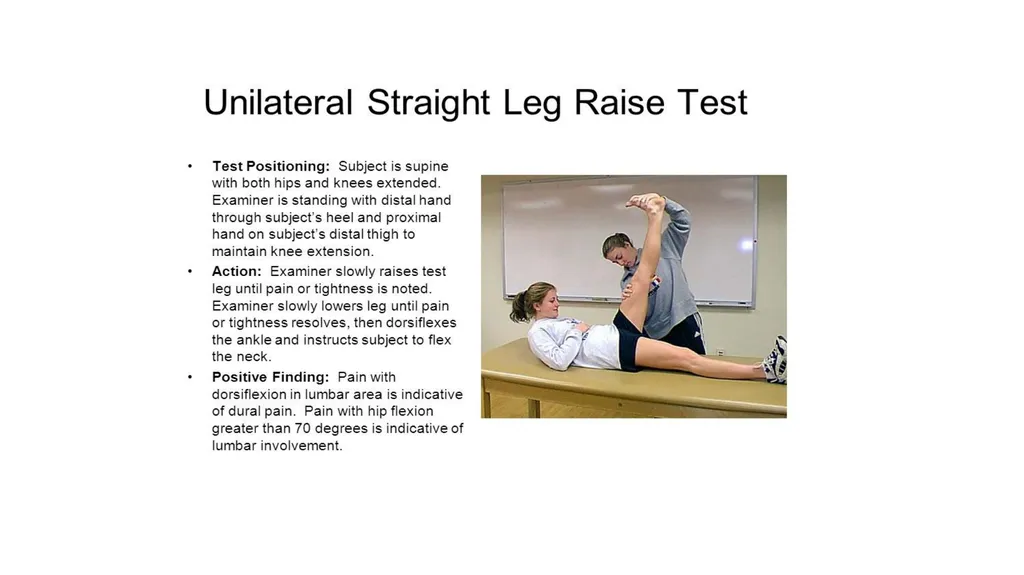
Provocative tests Straight leg raise test
--have the patient lay supine and passively elevate the fully extended leg of the affected side 30-60 degrees. You may need to extend greater than 60 degrees
--A positive test test will elicit pain in the region where the patient was complaining of pain in the back, and will often radiate down the leg.
--Variant straight leg raise test—passively extend leg of the affected side 30 degrees and then dorsiflex the foot. A positive test will elicit pain , often radiating down leg<br>
--have the patient lay supine and passively elevate the fully extended leg of the affected side 30-60 degrees. You may need to extend greater than 60 degrees
--A positive test test will elicit pain in the region where the patient was complaining of pain in the back, and will often radiate down the leg.
--Variant straight leg raise test—passively extend leg of the affected side 30 degrees and then dorsiflex the foot. A positive test will elicit pain , often radiating down leg<br>
11
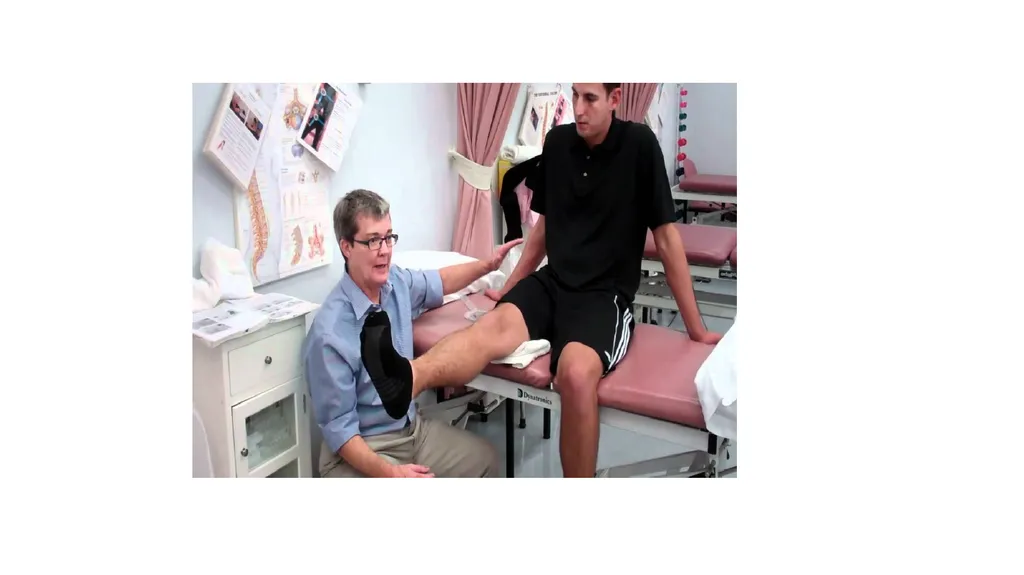
Exam Tripod sign
--patient is in seated position
--Elevate one of the legs
--positive sign will elicit pain in the back—again, often radiating pain down the leg.
--should accompany by the patient's natural tendency to decrease the pain by leaning back and resting both arms on the table to support him or herself, creating a tripod
--Good to use if you suspect malingering. Failure to lean back and rest both arms on the table may suggest the pain is not present or not related to irritation to the nerve roots<br>
--patient is in seated position
--Elevate one of the legs
--positive sign will elicit pain in the back—again, often radiating pain down the leg.
--should accompany by the patient's natural tendency to decrease the pain by leaning back and resting both arms on the table to support him or herself, creating a tripod
--Good to use if you suspect malingering. Failure to lean back and rest both arms on the table may suggest the pain is not present or not related to irritation to the nerve roots<br>
12
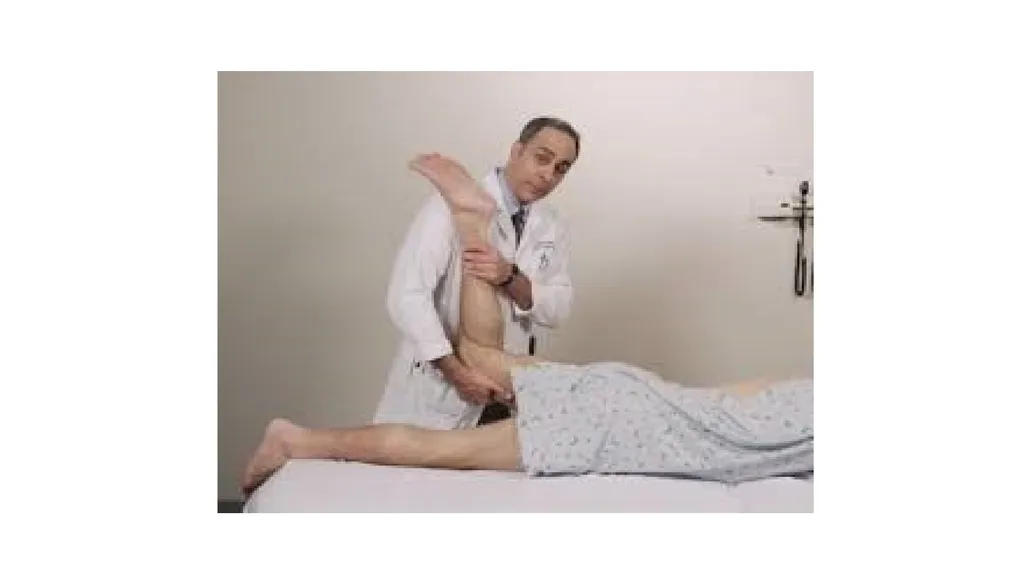
Exam Femoral stretch (L2-L4)
-- if suspecting pain in the L2-4 region you can use this test
--Have the patient lie prone on the stomach.
--Flex leg at the knee while holding the knee and leg.
--Lift the whole leg up
--positive test suggests pain in the L2-4 region if the patient complains of pain in the anterior thigh while the leg is lifted up.<br>
-- if suspecting pain in the L2-4 region you can use this test
--Have the patient lie prone on the stomach.
--Flex leg at the knee while holding the knee and leg.
--Lift the whole leg up
--positive test suggests pain in the L2-4 region if the patient complains of pain in the anterior thigh while the leg is lifted up.<br>
13
Exam L4 motor exam
--Have the patient slightly bend the knee and kick out while you keep pressure against the leg.
--Be sure to compare both sides to see if one side has more weakness than the other
L5 motor exam
--Hold pressure over the big toes and have the pt dorsiflex big toes and foot. Compare both sides for relative weakness<br>
--Have the patient slightly bend the knee and kick out while you keep pressure against the leg.
--Be sure to compare both sides to see if one side has more weakness than the other
L5 motor exam
--Hold pressure over the big toes and have the pt dorsiflex big toes and foot. Compare both sides for relative weakness<br>
14
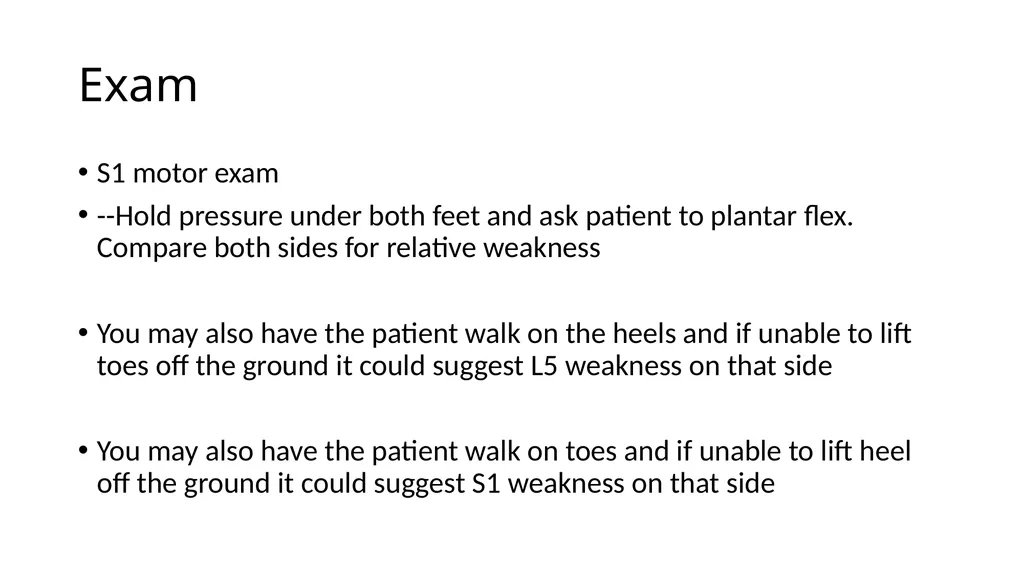
Exam S1 motor exam
--Hold pressure under both feet and ask patient to plantar flex. Compare both sides for relative weakness
You may also have the patient walk on the heels and if unable to lift toes off the ground it could suggest L5 weakness on that side
You may also have the patient walk on toes and if unable to lift heel off the ground it could suggest S1 weakness on that side<br>
--Hold pressure under both feet and ask patient to plantar flex. Compare both sides for relative weakness
You may also have the patient walk on the heels and if unable to lift toes off the ground it could suggest L5 weakness on that side
You may also have the patient walk on toes and if unable to lift heel off the ground it could suggest S1 weakness on that side<br>
15
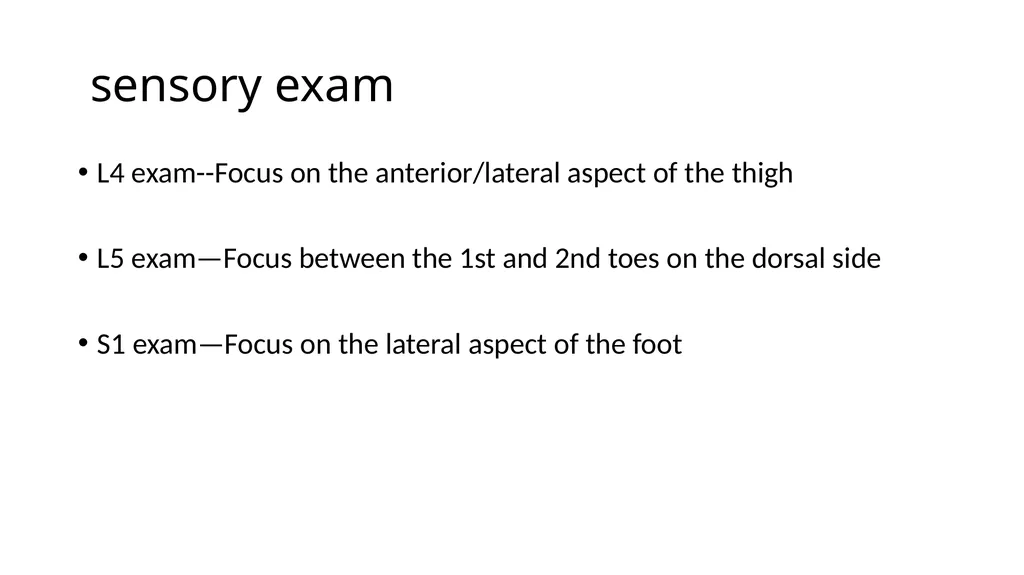
sensory exam L4 exam--Focus on the anterior/lateral aspect of the thigh
L5 exam—Focus between the 1st and 2nd toes on the dorsal side
S1 exam—Focus on the lateral aspect of the foot<br>
L5 exam—Focus between the 1st and 2nd toes on the dorsal side
S1 exam—Focus on the lateral aspect of the foot<br>
16
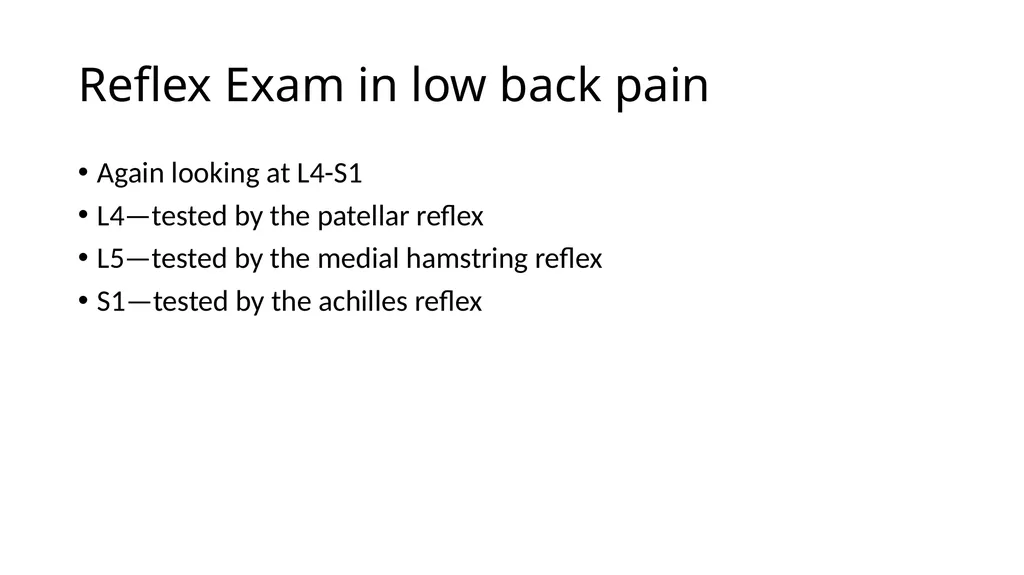
Reflex Exam in low back pain Again looking at L4-S1
L4—tested by the patellar reflex
L5—tested by the medial hamstring reflex
S1—tested by the achilles reflex<br>
L4—tested by the patellar reflex
L5—tested by the medial hamstring reflex
S1—tested by the achilles reflex<br>
17
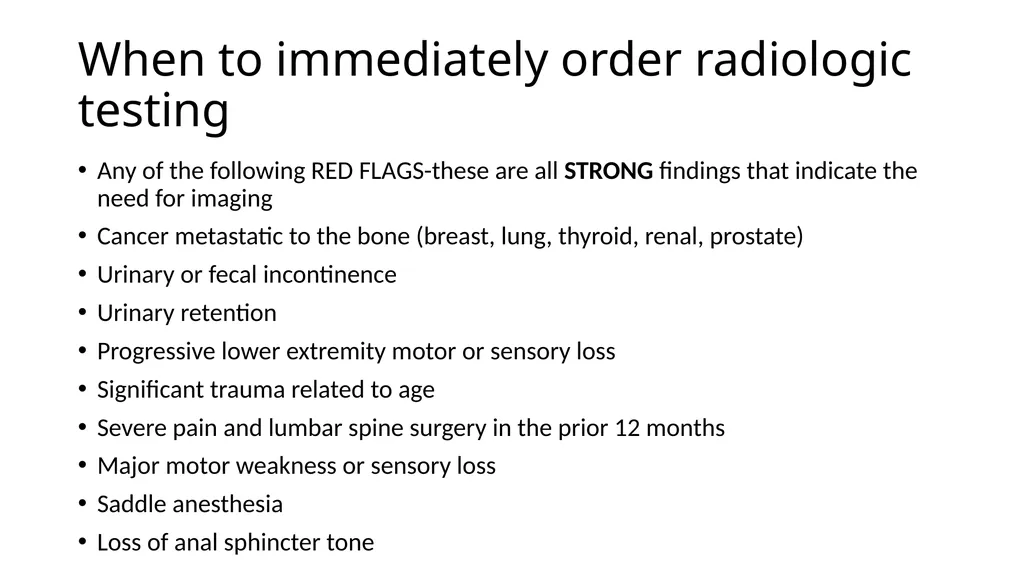
When to immediately order radiologic testing Any of the following RED FLAGS-these are all STRONG findings that indicate the need for imaging
Cancer metastatic to the bone (breast, lung, thyroid, renal, prostate)
Urinary or fecal incontinence
Urinary retention
Progressive lower extremity motor or sensory loss
Significant trauma related to age
Severe pain and lumbar spine surgery in the prior 12 months
Major motor weakness or sensory loss
Saddle anesthesia
Loss of anal sphincter tone<br>
Cancer metastatic to the bone (breast, lung, thyroid, renal, prostate)
Urinary or fecal incontinence
Urinary retention
Progressive lower extremity motor or sensory loss
Significant trauma related to age
Severe pain and lumbar spine surgery in the prior 12 months
Major motor weakness or sensory loss
Saddle anesthesia
Loss of anal sphincter tone<br>
18
American College of Physicians—Best Practice advice for diagnostic imaging for low back pain
--If no red flags, no need for imaging/labs in first 4-6 weeks of conservative therapy for LBP as 90% recover within one month
Repeat imaging only recommended with low back symptoms that have changed<br>
--If no red flags, no need for imaging/labs in first 4-6 weeks of conservative therapy for LBP as 90% recover within one month
Repeat imaging only recommended with low back symptoms that have changed<br>
19
Acute vs. Low Back Pain Acute—less than 3 months
Chronic greater than 3 months
Whether radiating or non-radiating, initial treatment is usually the same, except with loss of bowel, urine, or having numbness in genital area<br>
Chronic greater than 3 months
Whether radiating or non-radiating, initial treatment is usually the same, except with loss of bowel, urine, or having numbness in genital area<br>
20
Case study #1 A 43 year old male was moving a dresser 2 days ago and felt pain in his lower back. Pain persists and radiates to the left buttock. No radiation of symptoms below the level of the knee. His lower extremity neurologic exam is normal. Of the following recommendations, which has been shown to be helpful for recovery?
A) Bed rest until pain resolves
B) Referral to back school
C) Use of an NSAID
D) Early imaging<br>
A) Bed rest until pain resolves
B) Referral to back school
C) Use of an NSAID
D) Early imaging<br>
21
Acute Low Back Pain Management Beneficial Therapies
--NSAIDS
--Advice to remain active
Likely Beneficial Therapies
--Skeletal muscle relaxants—weigh side effects
--Epidural steroids
--Physical therapy—directed home exercise program<br>
--NSAIDS
--Advice to remain active
Likely Beneficial Therapies
--Skeletal muscle relaxants—weigh side effects
--Epidural steroids
--Physical therapy—directed home exercise program<br>
22
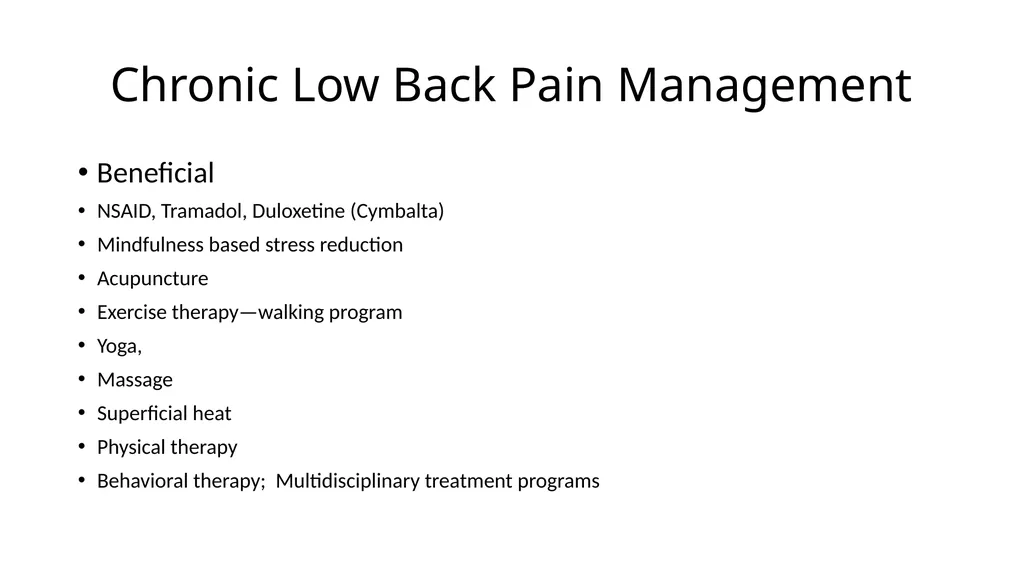
Chronic Low Back Pain Management Beneficial
NSAID, Tramadol, Duloxetine (Cymbalta)
Mindfulness based stress reduction
Acupuncture
Exercise therapy—walking program
Yoga,
Massage
Superficial heat
Physical therapy
Behavioral therapy; Multidisciplinary treatment programs<br>
NSAID, Tramadol, Duloxetine (Cymbalta)
Mindfulness based stress reduction
Acupuncture
Exercise therapy—walking program
Yoga,
Massage
Superficial heat
Physical therapy
Behavioral therapy; Multidisciplinary treatment programs<br>
23
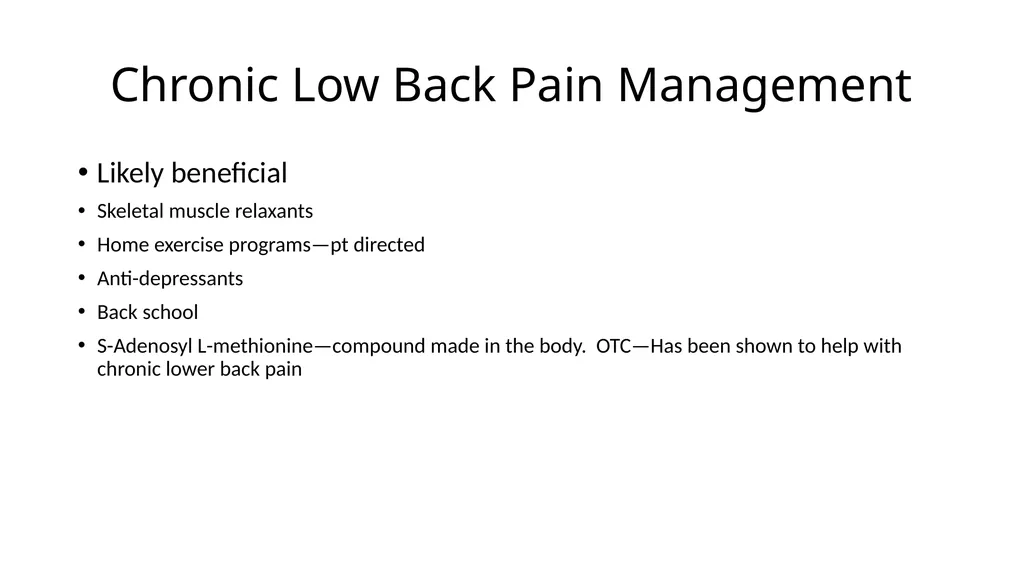
Chronic Low Back Pain Management Likely beneficial
Skeletal muscle relaxants
Home exercise programs—pt directed
Anti-depressants
Back school
S-Adenosyl L-methionine—compound made in the body. OTC—Has been shown to help with chronic lower back pain<br>
Skeletal muscle relaxants
Home exercise programs—pt directed
Anti-depressants
Back school
S-Adenosyl L-methionine—compound made in the body. OTC—Has been shown to help with chronic lower back pain<br>
24
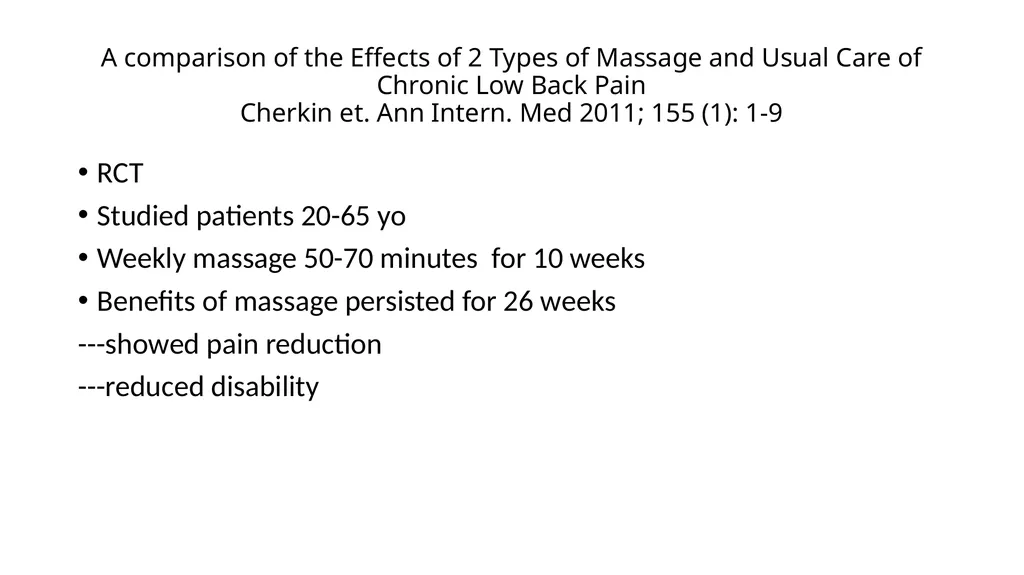
A comparison of the Effects of 2 Types of Massage and Usual Care of Chronic Low Back Pain
Cherkin et. Ann Intern. Med 2011; 155 (1): 1-9 RCT
Studied patients 20-65 yo
Weekly massage 50-70 minutes for 10 weeks
Benefits of massage persisted for 26 weeks
---showed pain reduction
---reduced disability<br>
Studied patients 20-65 yo
Weekly massage 50-70 minutes for 10 weeks
Benefits of massage persisted for 26 weeks
---showed pain reduction
---reduced disability<br>
25
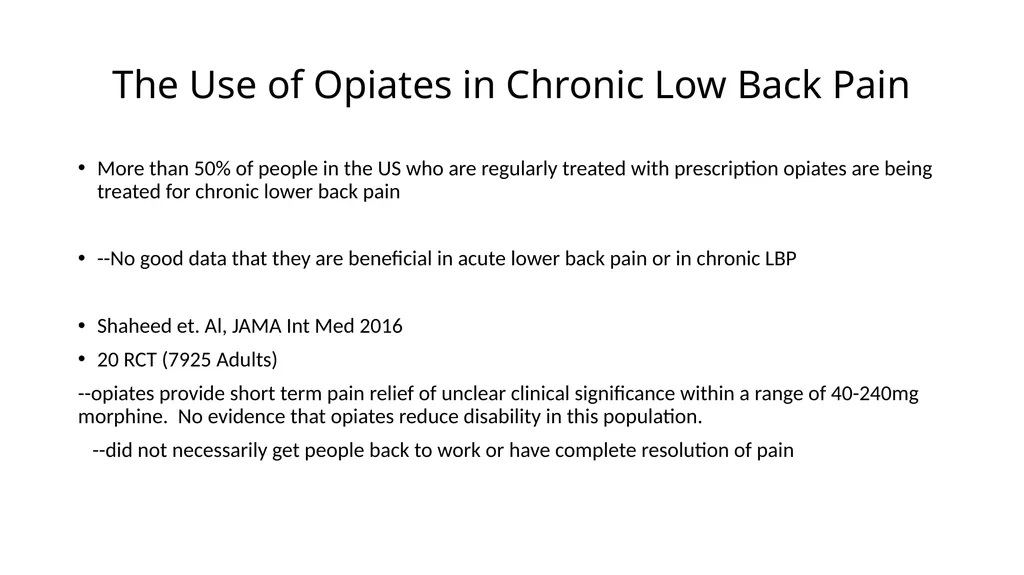
The Use of Opiates in Chronic Low Back Pain More than 50% of people in the US who are regularly treated with prescription opiates are being treated for chronic lower back pain
--No good data that they are beneficial in acute lower back pain or in chronic LBP
Shaheed et. Al, JAMA Int Med 2016
20 RCT (7925 Adults)
--opiates provide short term pain relief of unclear clinical significance within a range of 40-240mg morphine. No evidence that opiates reduce disability in this population.
--did not necessarily get people back to work or have complete resolution of pain<br>
--No good data that they are beneficial in acute lower back pain or in chronic LBP
Shaheed et. Al, JAMA Int Med 2016
20 RCT (7925 Adults)
--opiates provide short term pain relief of unclear clinical significance within a range of 40-240mg morphine. No evidence that opiates reduce disability in this population.
--did not necessarily get people back to work or have complete resolution of pain<br>
26
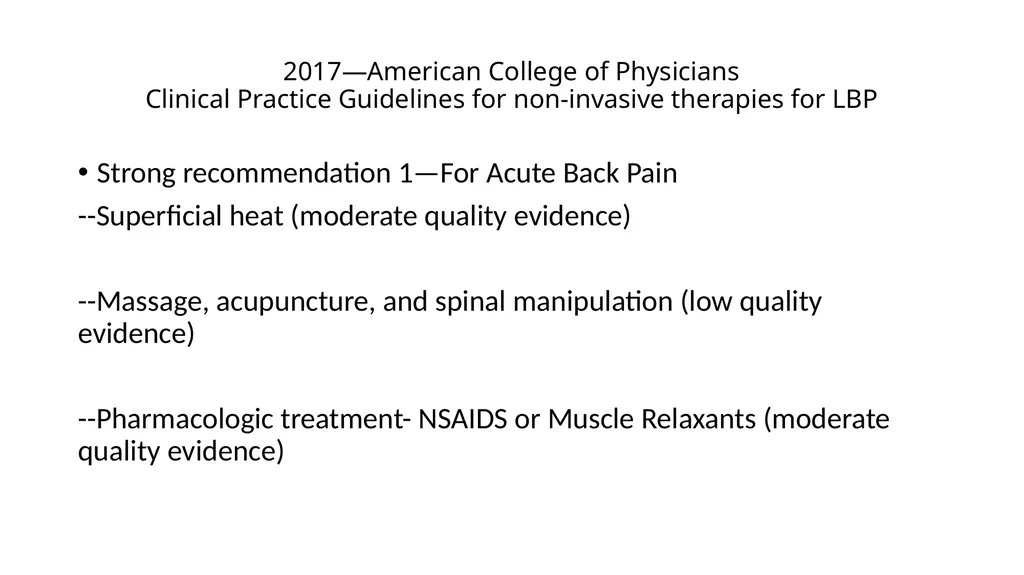
2017—American College of Physicians
Clinical Practice Guidelines for non-invasive therapies for LBP Strong recommendation 1—For Acute Back Pain
--Superficial heat (moderate quality evidence)
--Massage, acupuncture, and spinal manipulation (low quality evidence)
--Pharmacologic treatment- NSAIDS or Muscle Relaxants (moderate quality evidence)<br>
--Superficial heat (moderate quality evidence)
--Massage, acupuncture, and spinal manipulation (low quality evidence)
--Pharmacologic treatment- NSAIDS or Muscle Relaxants (moderate quality evidence)<br>
27
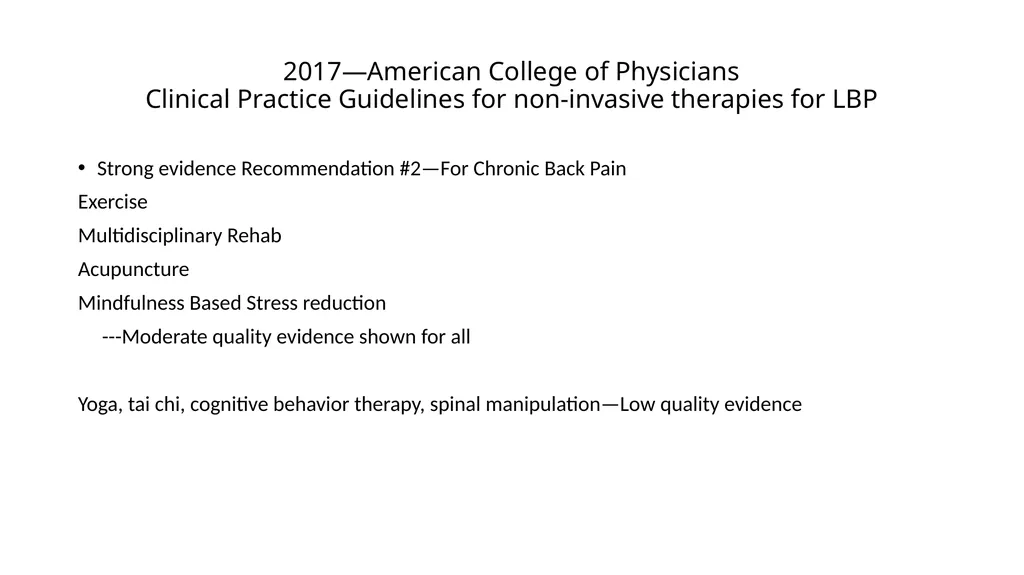
2017—American College of Physicians
Clinical Practice Guidelines for non-invasive therapies for LBP Strong evidence Recommendation #2—For Chronic Back Pain
Exercise
Multidisciplinary Rehab
Acupuncture
Mindfulness Based Stress reduction
---Moderate quality evidence shown for all
Yoga, tai chi, cognitive behavior therapy, spinal manipulation—Low quality evidence<br>
Exercise
Multidisciplinary Rehab
Acupuncture
Mindfulness Based Stress reduction
---Moderate quality evidence shown for all
Yoga, tai chi, cognitive behavior therapy, spinal manipulation—Low quality evidence<br>
28
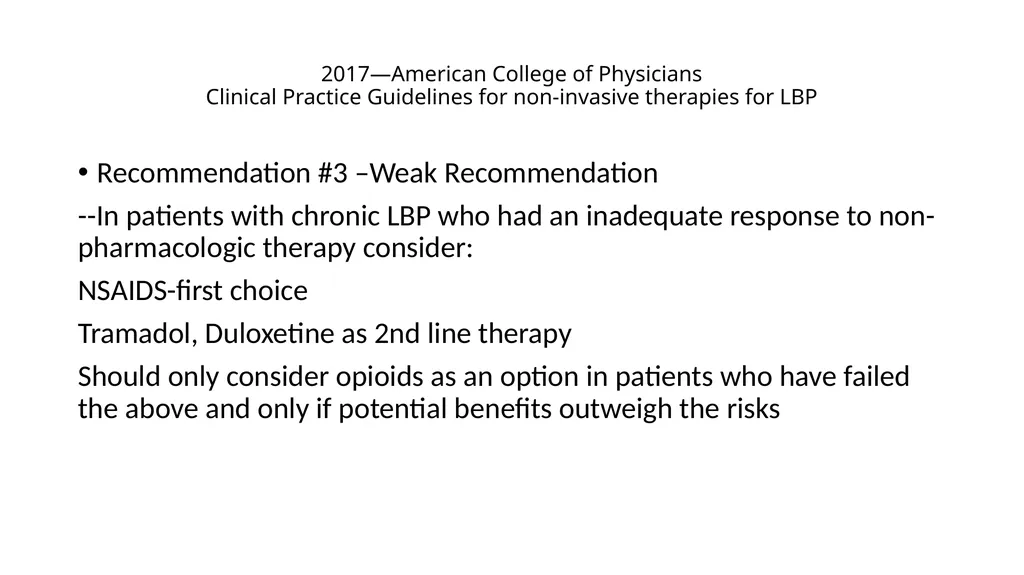
2017—American College of Physicians
Clinical Practice Guidelines for non-invasive therapies for LBP Recommendation #3 –Weak Recommendation
--In patients with chronic LBP who had an inadequate response to non-pharmacologic therapy consider:
NSAIDS-first choice
Tramadol, Duloxetine as 2nd line therapy
Should only consider opioids as an option in patients who have failed the above and only if potential benefits outweigh the risks<br>
--In patients with chronic LBP who had an inadequate response to non-pharmacologic therapy consider:
NSAIDS-first choice
Tramadol, Duloxetine as 2nd line therapy
Should only consider opioids as an option in patients who have failed the above and only if potential benefits outweigh the risks<br>
29
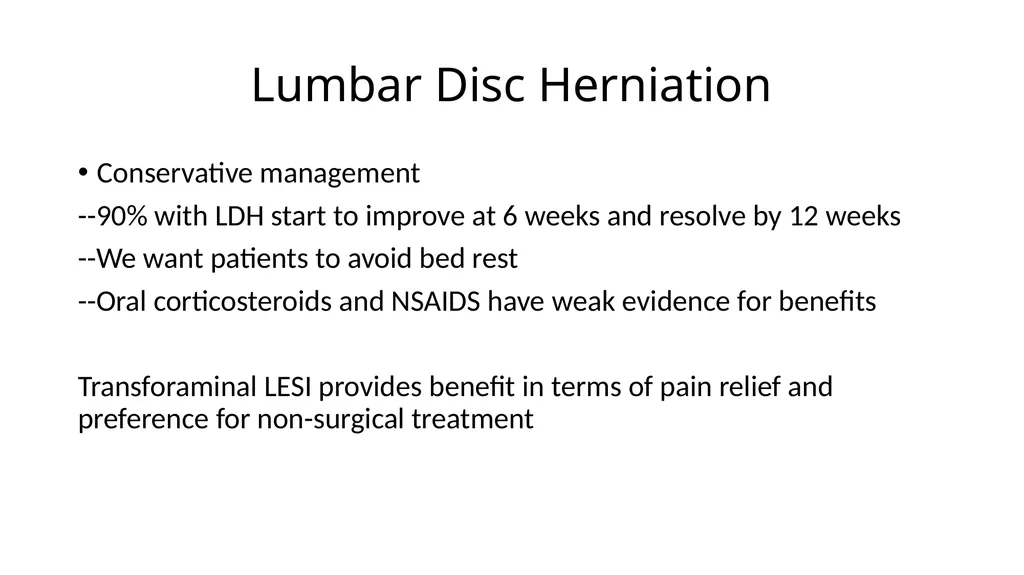
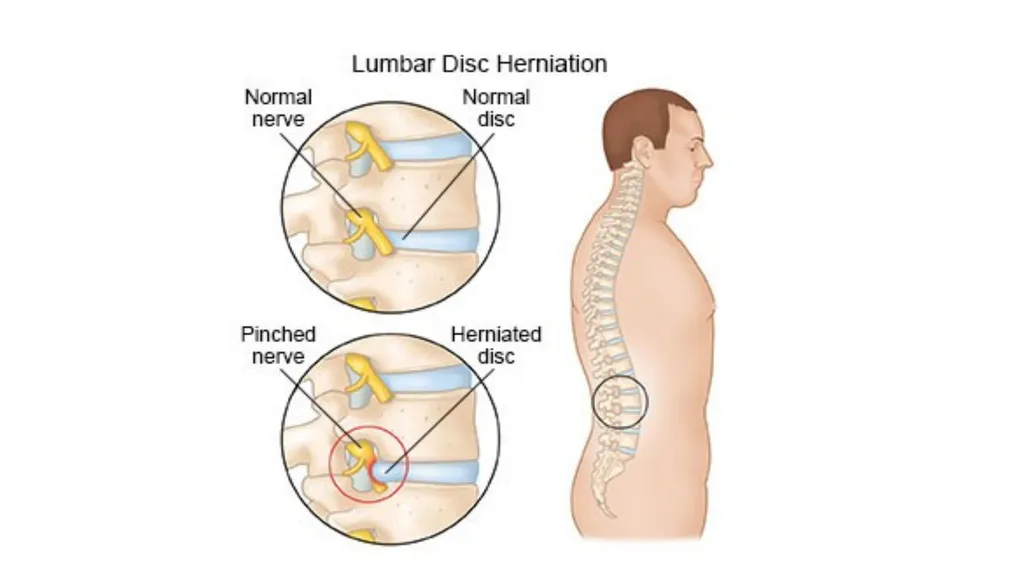
Lumbar Disc Herniation Conservative management
--90% with LDH start to improve at 6 weeks and resolve by 12 weeks
--We want patients to avoid bed rest
--Oral corticosteroids and NSAIDS have weak evidence for benefits
Transforaminal LESI provides benefit in terms of pain relief and preference for non-surgical treatment<br>
--90% with LDH start to improve at 6 weeks and resolve by 12 weeks
--We want patients to avoid bed rest
--Oral corticosteroids and NSAIDS have weak evidence for benefits
Transforaminal LESI provides benefit in terms of pain relief and preference for non-surgical treatment<br>
30
Lumbar Disc Herniation Surgical treatment
--indications:
Severe, progressive, motor deficits
Cauda Equina Syndrome
Unrelenting radiculopathy at 6 weeks<br>
--indications:
Severe, progressive, motor deficits
Cauda Equina Syndrome
Unrelenting radiculopathy at 6 weeks<br>
31
Spine Patient Outcomes Research Trial (SPORT) Trial Surgery provides improvements in pain and disability in the first 2 years vs. Non-surgical treatment
Microdiscectomy as effective as open discectomy<br>
Microdiscectomy as effective as open discectomy<br>
32
Sum Up of Evidence Based Practice--LDH Advise to remain active
Oral steroids and NSAIDS have limited benefit
ESI provides short term symptom improvement
If no red flags, then radiculopathy can be managed conservatively, without imaging for up to 6 weeks
Radiculopathy not improving after 6 weeks of conservative management may benefit from discectomy for more rapid clinical relief<br>
Oral steroids and NSAIDS have limited benefit
ESI provides short term symptom improvement
If no red flags, then radiculopathy can be managed conservatively, without imaging for up to 6 weeks
Radiculopathy not improving after 6 weeks of conservative management may benefit from discectomy for more rapid clinical relief<br>
33
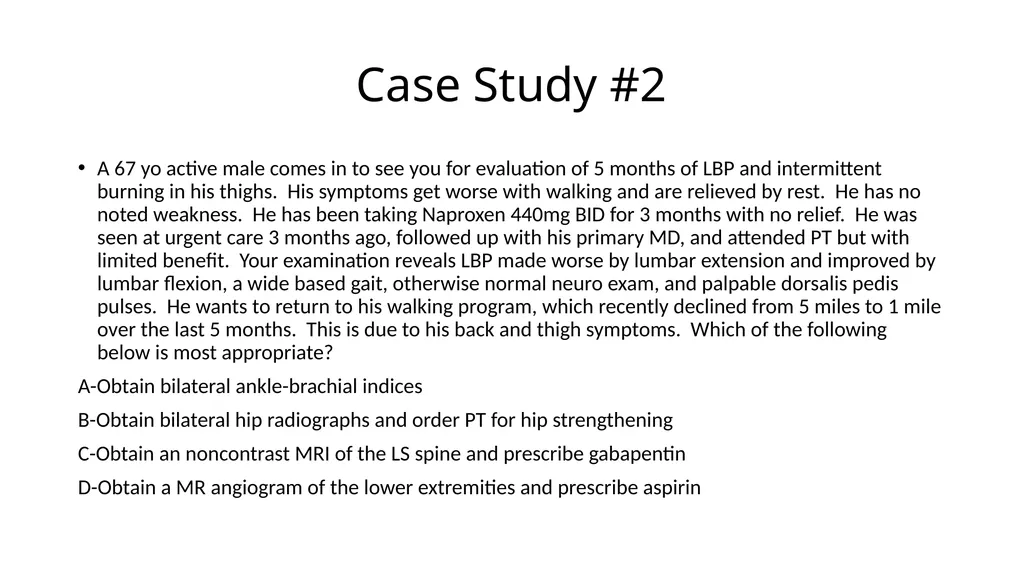
Case Study #2 A 67 yo active male comes in to see you for evaluation of 5 months of LBP and intermittent burning in his thighs. His symptoms get worse with walking and are relieved by rest. He has no noted weakness. He has been taking Naproxen 440mg BID for 3 months with no relief. He was seen at urgent care 3 months ago, followed up with his primary MD, and attended PT but with limited benefit. Your examination reveals LBP made worse by lumbar extension and improved by lumbar flexion, a wide based gait, otherwise normal neuro exam, and palpable dorsalis pedis pulses. He wants to return to his walking program, which recently declined from 5 miles to 1 mile over the last 5 months. This is due to his back and thigh symptoms. Which of the following below is most appropriate?
A-Obtain bilateral ankle-brachial indices
B-Obtain bilateral hip radiographs and order PT for hip strengthening
C-Obtain an noncontrast MRI of the LS spine and prescribe gabapentin
D-Obtain a MR angiogram of the lower extremities and prescribe aspirin<br>
A-Obtain bilateral ankle-brachial indices
B-Obtain bilateral hip radiographs and order PT for hip strengthening
C-Obtain an noncontrast MRI of the LS spine and prescribe gabapentin
D-Obtain a MR angiogram of the lower extremities and prescribe aspirin<br>
34
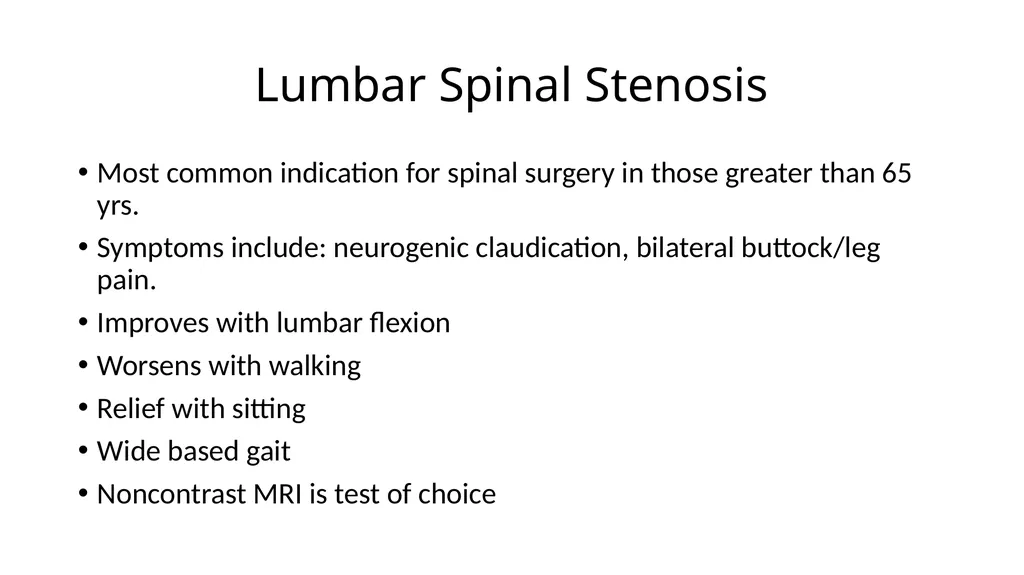
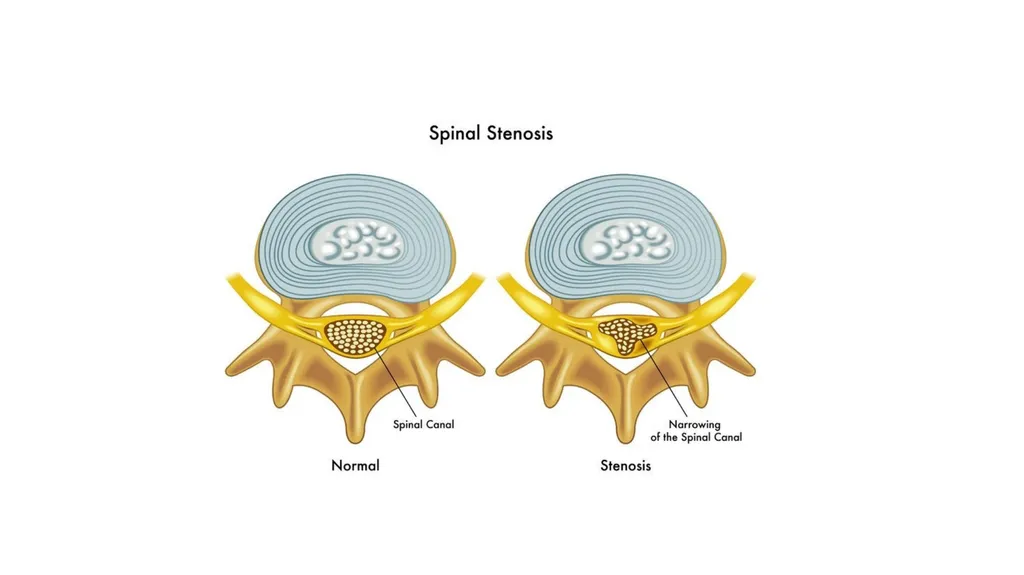
Lumbar Spinal Stenosis Most common indication for spinal surgery in those greater than 65 yrs.
Symptoms include: neurogenic claudication, bilateral buttock/leg pain.
Improves with lumbar flexion
Worsens with walking
Relief with sitting
Wide based gait
Noncontrast MRI is test of choice<br>
Symptoms include: neurogenic claudication, bilateral buttock/leg pain.
Improves with lumbar flexion
Worsens with walking
Relief with sitting
Wide based gait
Noncontrast MRI is test of choice<br>
35
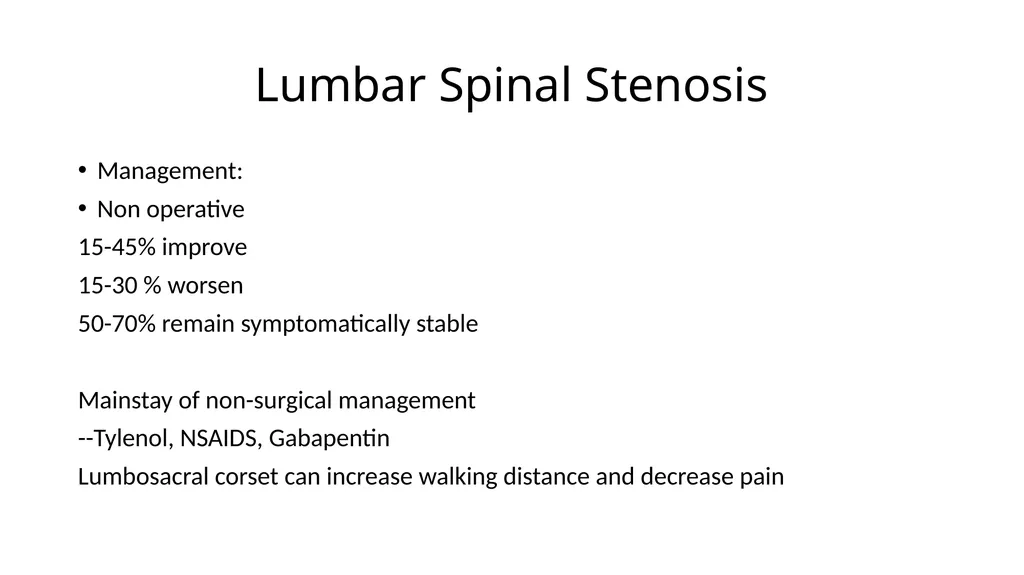
Lumbar Spinal Stenosis Management:
Non operative
15-45% improve
15-30 % worsen
50-70% remain symptomatically stable
Mainstay of non-surgical management
--Tylenol, NSAIDS, Gabapentin
Lumbosacral corset can increase walking distance and decrease pain<br>
Non operative
15-45% improve
15-30 % worsen
50-70% remain symptomatically stable
Mainstay of non-surgical management
--Tylenol, NSAIDS, Gabapentin
Lumbosacral corset can increase walking distance and decrease pain<br>
36
Communication Opportunities Provide clear communication
--The good news is based on your history and normal physical exam I don't think you need an x-ray
--I would not xray at this point given these findings and the fact that except for having pain in the back from muscle spasm your exam is normal<br>
--The good news is based on your history and normal physical exam I don't think you need an x-ray
--I would not xray at this point given these findings and the fact that except for having pain in the back from muscle spasm your exam is normal<br>
37
Communication Opportunites Try to understand the patient's treatment goals and perspectives
--it can increase satisfaction and can shorten visits
Find out where the patient is coming from
--Is there anything you are worried about?
--What do you think is going on and wha are you worried about
Provide empathy/partnership
--more likely to adhere to your recommendations when they feel understood and supported with a sense of partnership<br>
--it can increase satisfaction and can shorten visits
Find out where the patient is coming from
--Is there anything you are worried about?
--What do you think is going on and wha are you worried about
Provide empathy/partnership
--more likely to adhere to your recommendations when they feel understood and supported with a sense of partnership<br>
38
Communication Opportunities Confirm Agreement/Overcome Barriers
--I want to be sure you are comfortable with this plan
-- Xrays will show a boney problem which is unlikely to be the issue
CT is not particularly helpful and exposes you to a lot moe radiation
An MRI does shwo a great deal, but even in healthy patients we can see an abnormal disc which my not be related to your problem
I expect most people with low badk pain such as yourself will start to feel better<br>
--I want to be sure you are comfortable with this plan
-- Xrays will show a boney problem which is unlikely to be the issue
CT is not particularly helpful and exposes you to a lot moe radiation
An MRI does shwo a great deal, but even in healthy patients we can see an abnormal disc which my not be related to your problem
I expect most people with low badk pain such as yourself will start to feel better<br>
39
Sources Cazazza et.al. Diagnosis and Treatment of Acute Low Back Pain-American Family Physician 2012 Feb 15;85(4):343-350
Foster et.al. Prevention and Treatment of Low Back Pain:Evidence, Challenges, and Promising Directions. The Lancet Volume 391,Issue 10137,P2368-2368-2383 June 9,2018
Last et.al. Chronic Low Back Pain:Evaluation and Management-American Family Physician 2009 June 15;79(12):1067-1074
Scott et.al. Mechanical Low Back Pain-American Family Physician-2018 Oct 1;98(7):421-428<br>
Foster et.al. Prevention and Treatment of Low Back Pain:Evidence, Challenges, and Promising Directions. The Lancet Volume 391,Issue 10137,P2368-2368-2383 June 9,2018
Last et.al. Chronic Low Back Pain:Evaluation and Management-American Family Physician 2009 June 15;79(12):1067-1074
Scott et.al. Mechanical Low Back Pain-American Family Physician-2018 Oct 1;98(7):421-428<br>