COMPARATIVE AND SUPERLATIVE ADJECTIVES SOME RULES ABOUT FORMING COMPARATIVES AND SUPERLATIVES One syllable adjectives generally form the comparative by adding -er and the superlative by adding -est, e.g.: SPELLING RULES Note that if a one
"COMPARATIVE AND SUPERLATIVE ADJECTIVES SOME RULES" is the property of its rightful owner. Permission is granted to
download and print the materials on this website for personal, non-commercial use only, and to display it
on your personal computer provided you do not modify the materials and that you retain all copyright
notices contained in the materials. By downloading content from our website, you accept the terms of this
agreement.
Presentation Transcript
01
COMPARATIVE AND SUPERLATIVE ADJECTIVES<br>
02
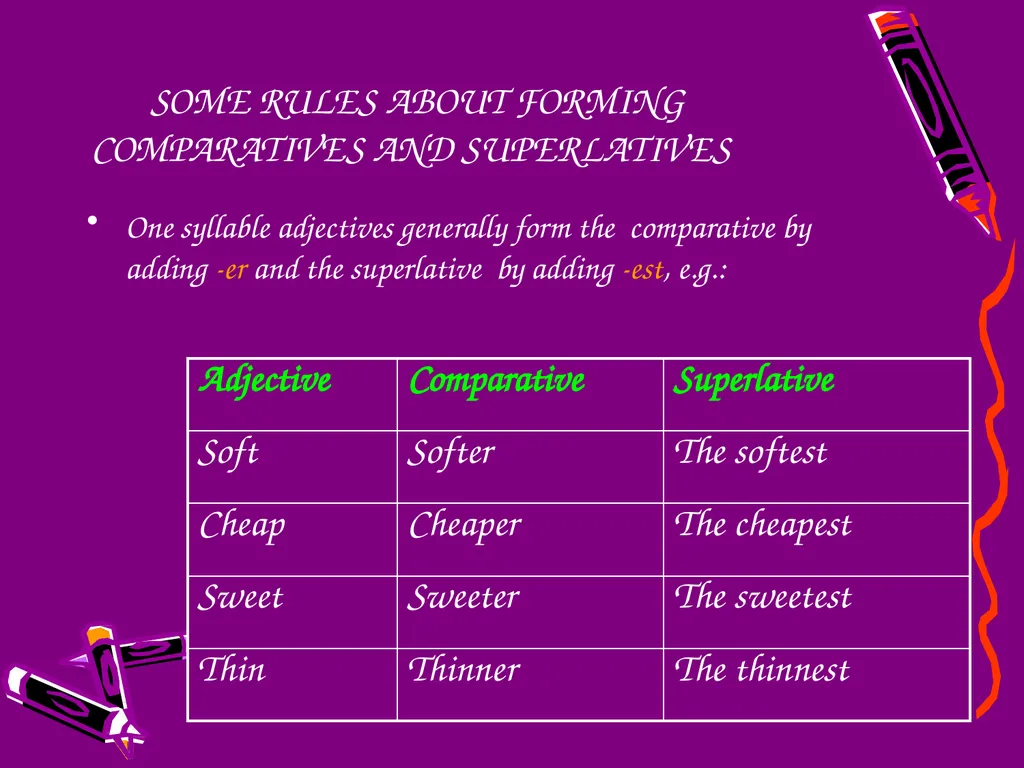
SOME RULES ABOUT FORMING COMPARATIVES AND SUPERLATIVES One syllable adjectives generally form the comparative by adding -er and the superlative by adding -est, e.g.:<br>
03
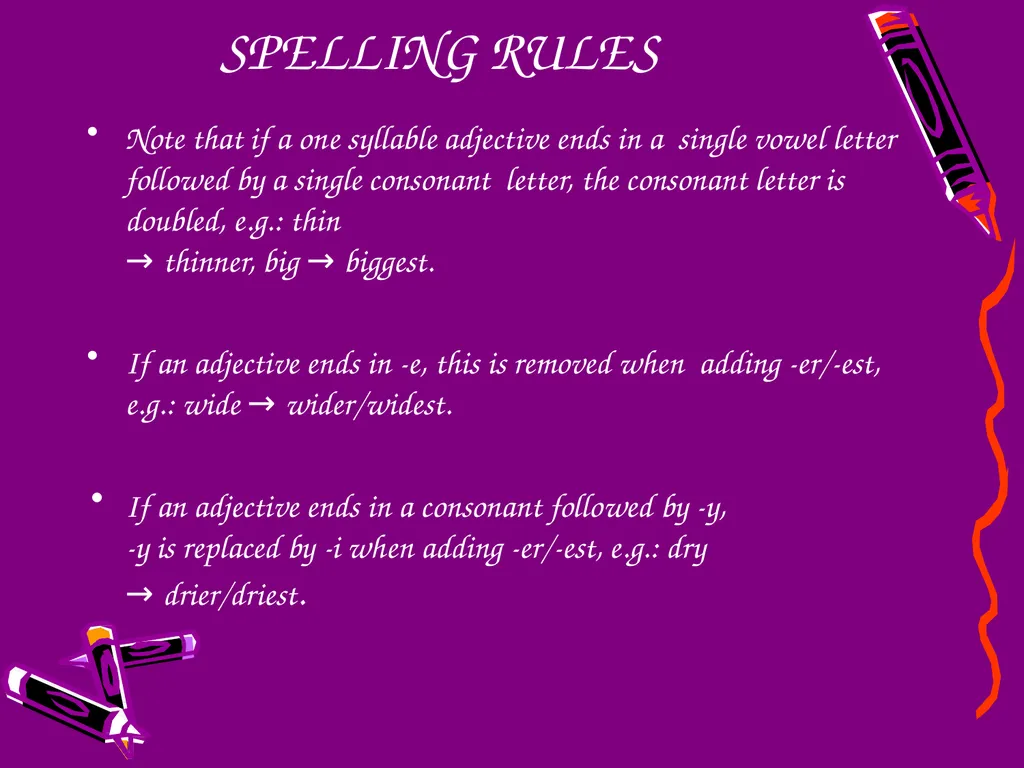
SPELLING RULES Note that if a one syllable adjective ends in a single vowel letter followed by a single consonant letter, the consonant letter is doubled, e.g.: thin
→ thinner, big → biggest.
If an adjective ends in -e, this is removed when adding -er/-est, e.g.: wide → wider/widest.
If an adjective ends in a consonant followed by -y,
-y is replaced by -i when adding -er/-est, e.g.: dry
→ drier/driest.<br>
04
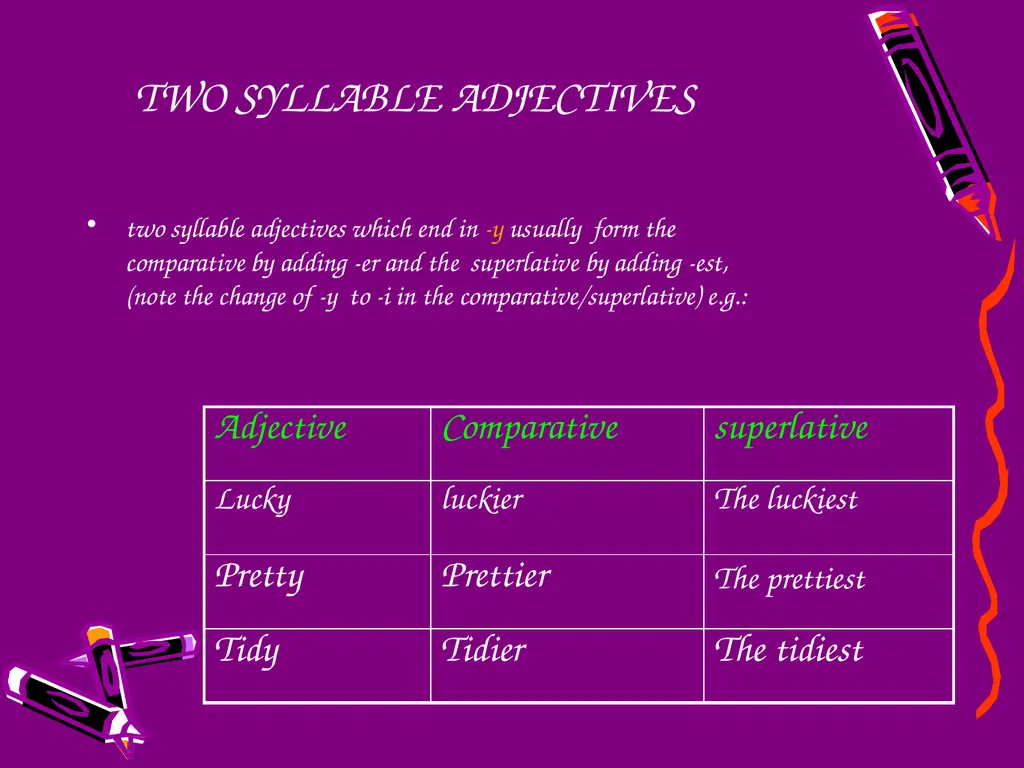
TWO SYLLABLE ADJECTIVES two syllable adjectives which end in -y usually form the comparative by adding -er and the superlative by adding -est, (note the change of -y to -i in the comparative/superlative) e.g.:<br>
05
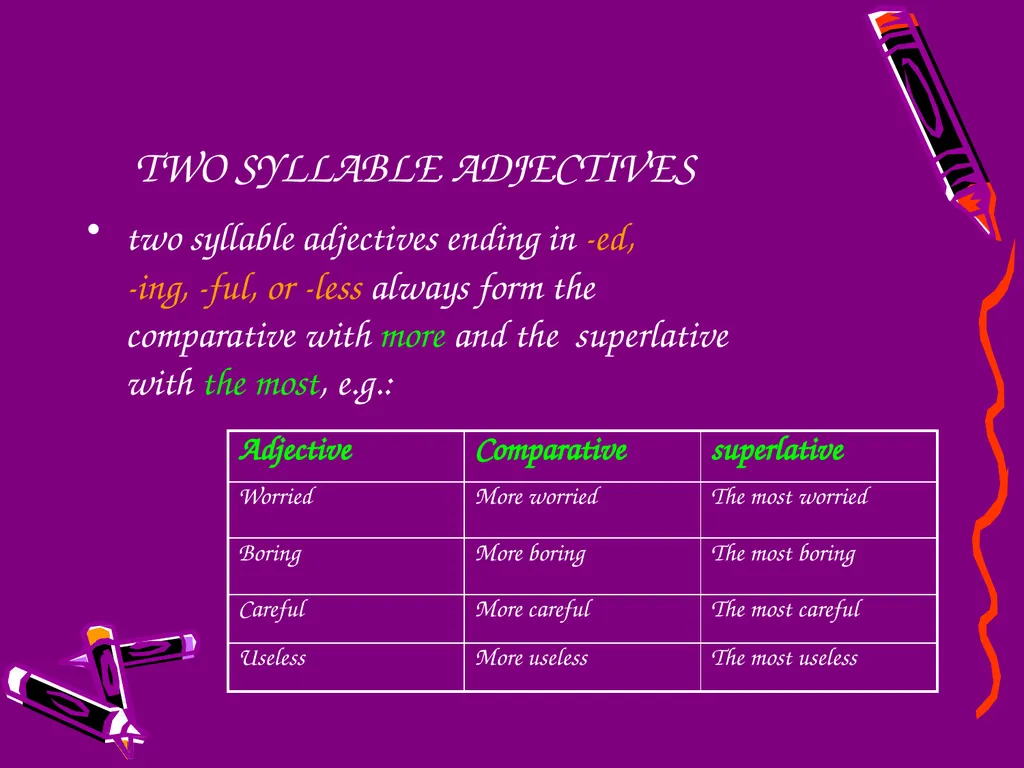
TWO SYLLABLE ADJECTIVES two syllable adjectives ending in -ed,
-ing, -ful, or -less always form the comparative with more and the superlative with the most, e.g.:<br>
06
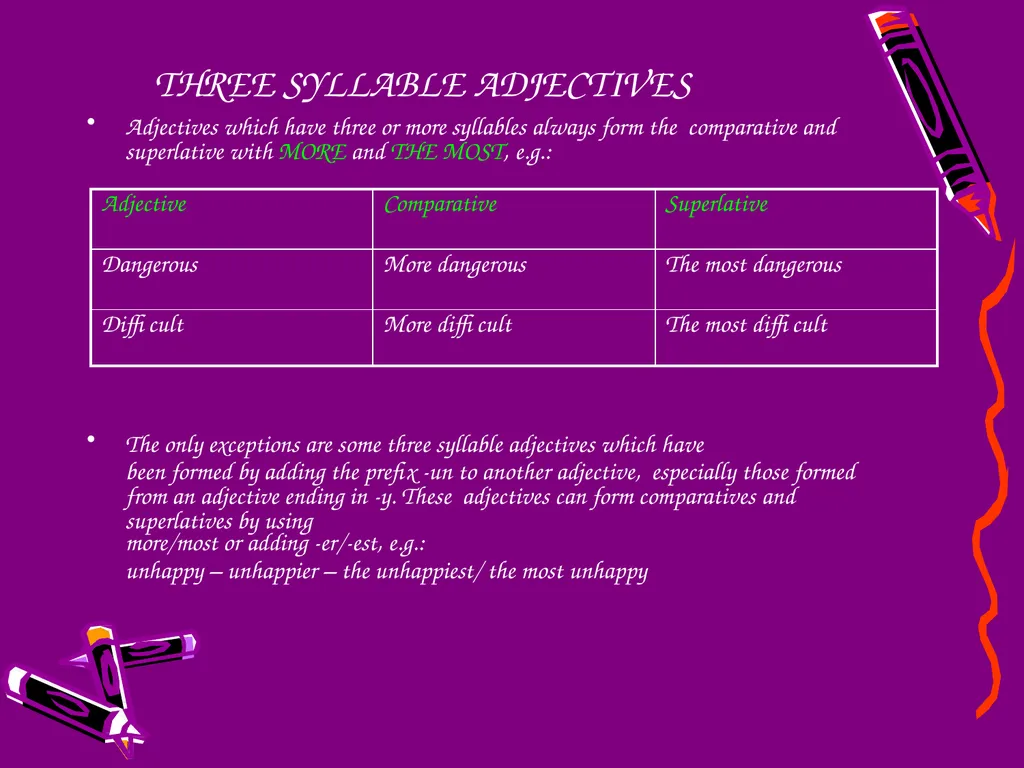
THREE SYLLABLE ADJECTIVES Adjectives which have three or more syllables always form the comparative and superlative with MORE and THE MOST, e.g.: The only exceptions are some three syllable adjectives which have
been formed by adding the prefix -un to another adjective, especially those formed from an adjective ending in -y. These adjectives can form comparatives and superlatives by using
more/most or adding -er/-est, e.g.:
unhappy – unhappier – the unhappiest/ the most unhappy<br>
07
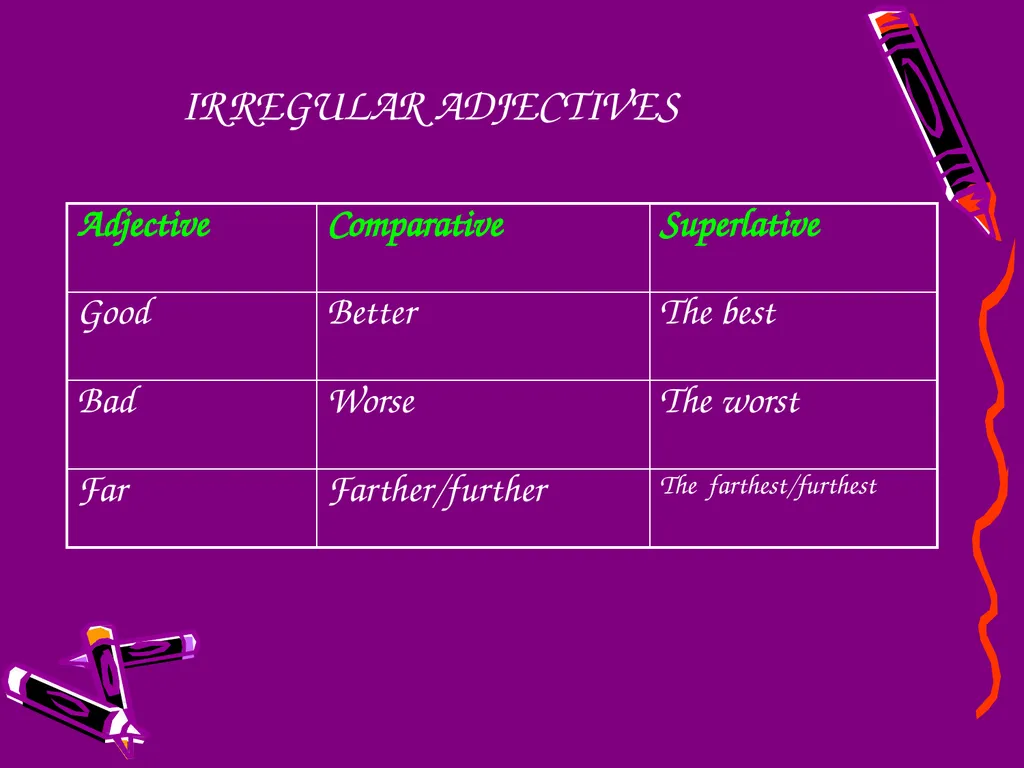
IRREGULAR ADJECTIVES<br>
08
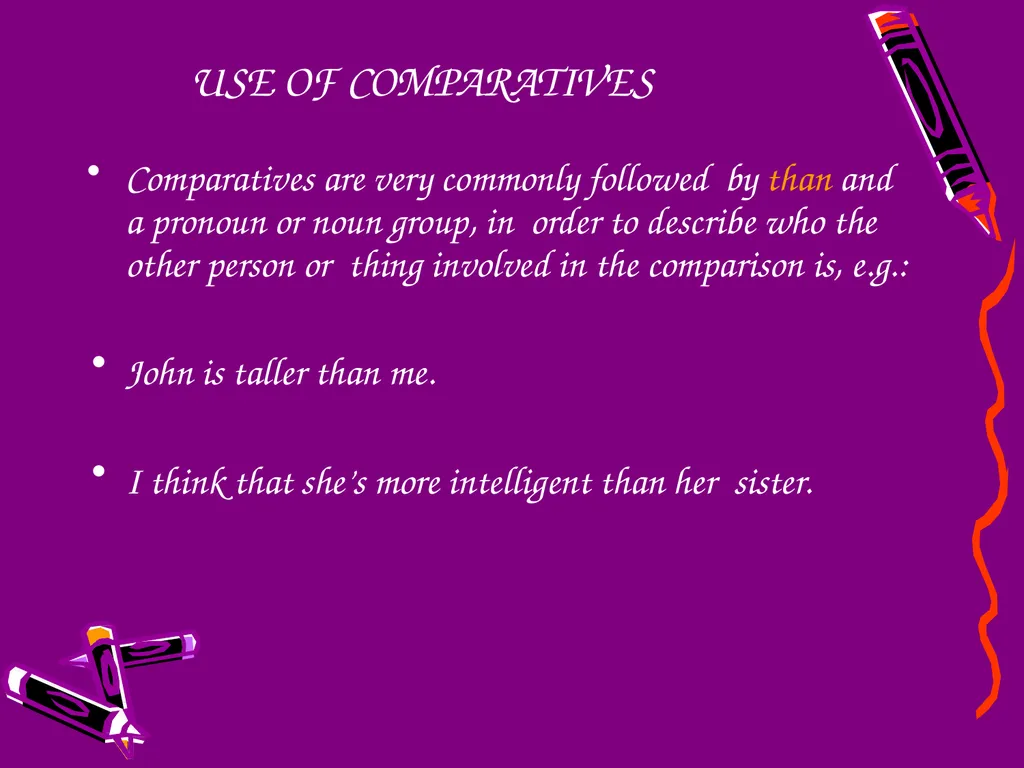
USE OF COMPARATIVES Comparatives are very commonly followed by than and a pronoun or noun group, in order to describe who the other person or thing involved in the comparison is, e.g.:
John is taller than me.
I think that she’s more intelligent than her sister.<br>
09
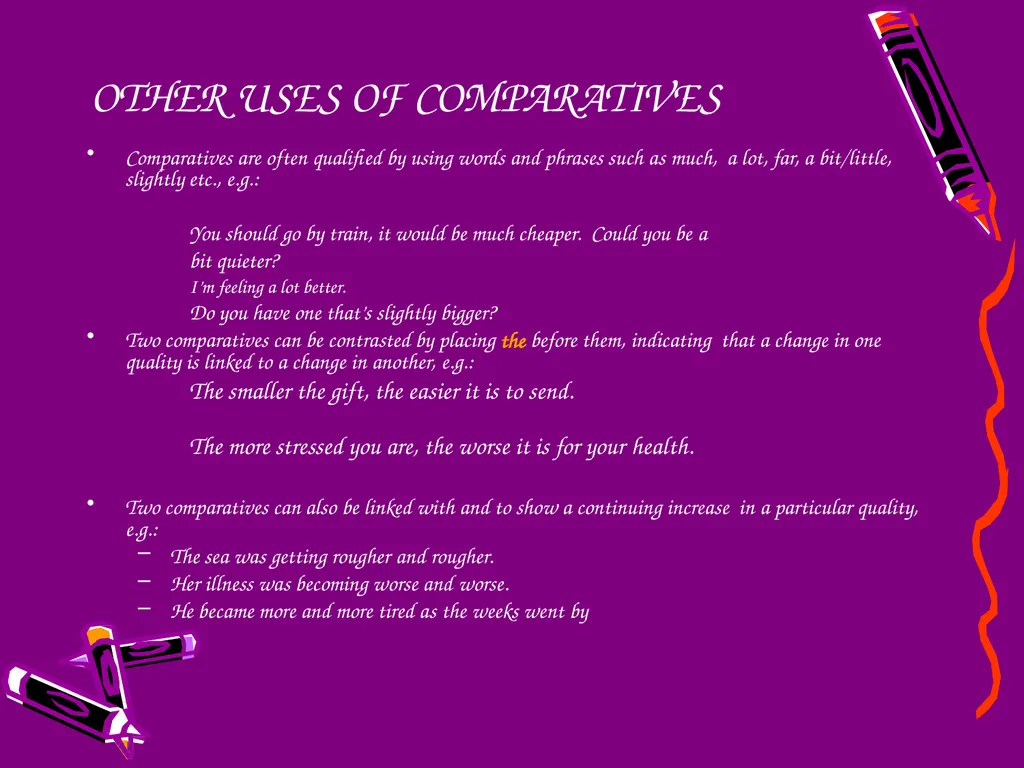
OTHER USES OF COMPARATIVES Comparatives are often qualified by using words and phrases such as much, a lot, far, a bit/little, slightly etc., e.g.:
You should go by train, it would be much cheaper. Could you be a bit quieter?
I’m feeling a lot better.
Do you have one that’s slightly bigger?
Two comparatives can be contrasted by placing the before them, indicating that a change in one quality is linked to a change in another, e.g.:
The smaller the gift, the easier it is to send.
The more stressed you are, the worse it is for your health.
Two comparatives can also be linked with and to show a continuing increase in a particular quality, e.g.:
The sea was getting rougher and rougher.
Her illness was becoming worse and worse.
He became more and more tired as the weeks went by<br>
10
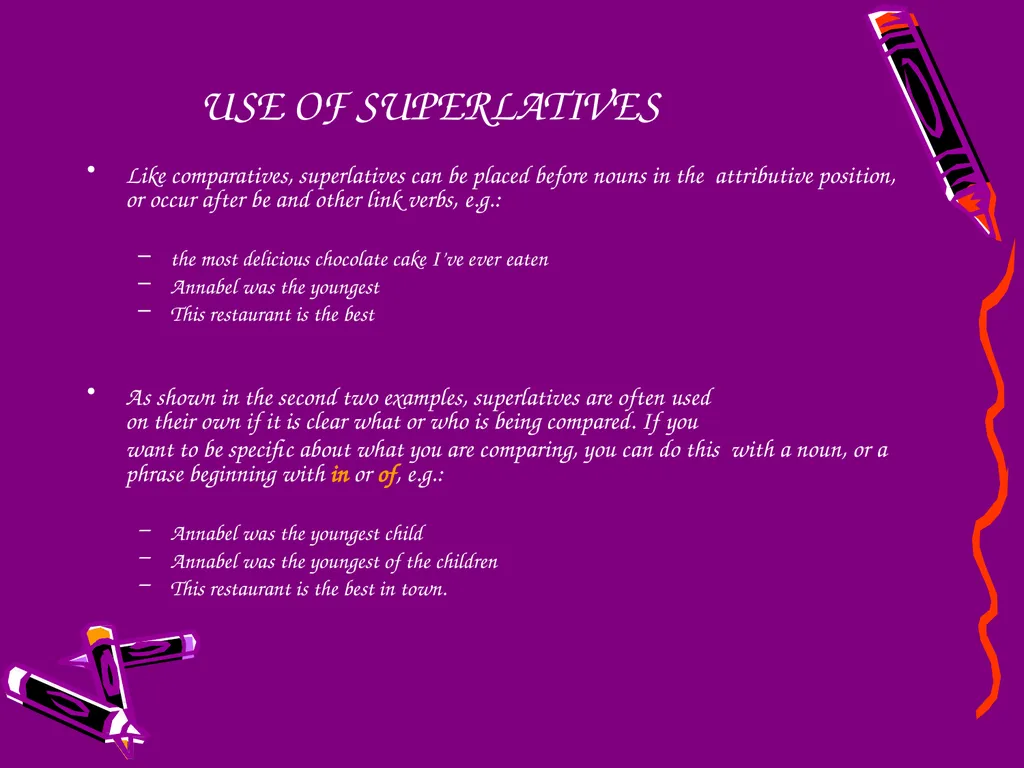
USE OF SUPERLATIVES Like comparatives, superlatives can be placed before nouns in the attributive position, or occur after be and other link verbs, e.g.:
the most delicious chocolate cake I’ve ever eaten
Annabel was the youngest
This restaurant is the best
As shown in the second two examples, superlatives are often used
on their own if it is clear what or who is being compared. If you
want to be specific about what you are comparing, you can do this with a noun, or a phrase beginning with in or of, e.g.:
Annabel was the youngest child
Annabel was the youngest of the children
This restaurant is the best in town.<br>
11
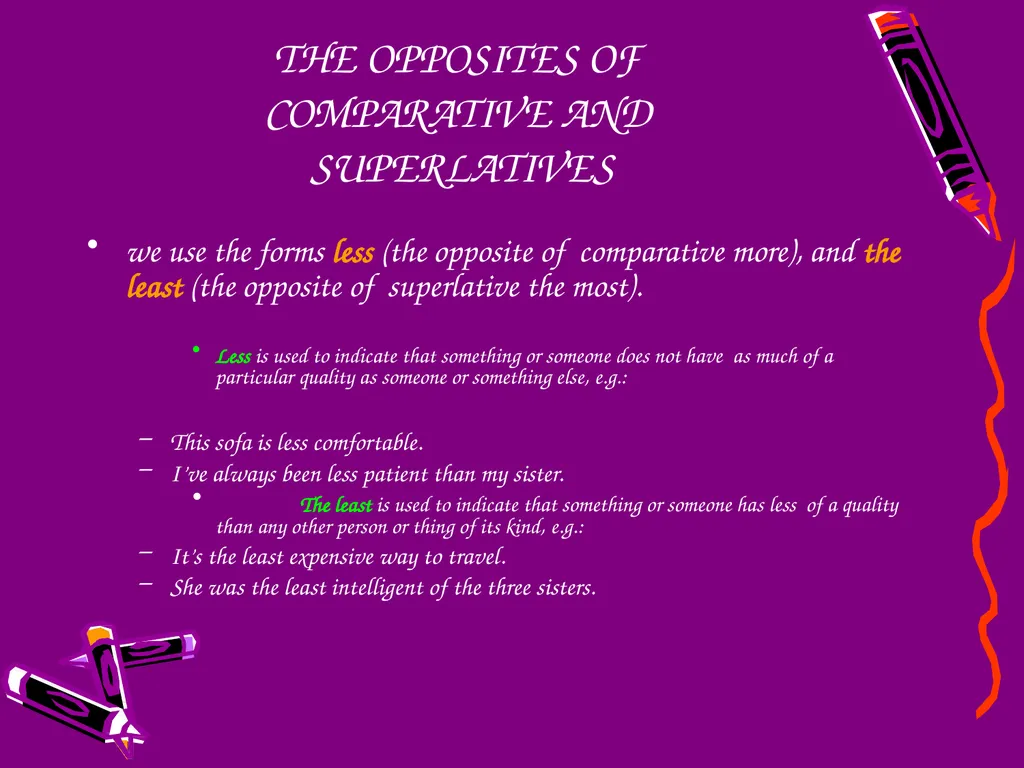
THE OPPOSITES OF COMPARATIVE AND SUPERLATIVES we use the forms less (the opposite of comparative more), and the least (the opposite of superlative the most). Less is used to indicate that something or someone does not have as much of a particular quality as someone or something else, e.g.:
This sofa is less comfortable.
I’ve always been less patient than my sister.
The least is used to indicate that something or someone has less of a quality than any other person or thing of its kind, e.g.:
It’s the least expensive way to travel.
She was the least intelligent of the three sisters.<br>