04
Emergency Airway Management: �Indications for Intubation Loss of Airway Protection
Loss of gag/cough (GCS ≤ 8)
Airway obstruction (i.e. edema)
Anticipated loss of airway control (i.e. worsening stridor, burns)<br>
05
Emergency Airway Management: �Indications for Intubation Failure of Ventilation (PaCO2 > 50 mmHg)
Neurological problems
Sedation, narcosis, brain or spinal cord injury, peripheral nerve disease (i.e. Guillian-Barre)
Muscular problems
Myasthenia gravis, steroid-induced myopathy
Anatomical problems
Rib fractures, pneumothorax, abdominal hypertension
Gas exchange Problems
Acute lung injury, lung contusion<br>
06
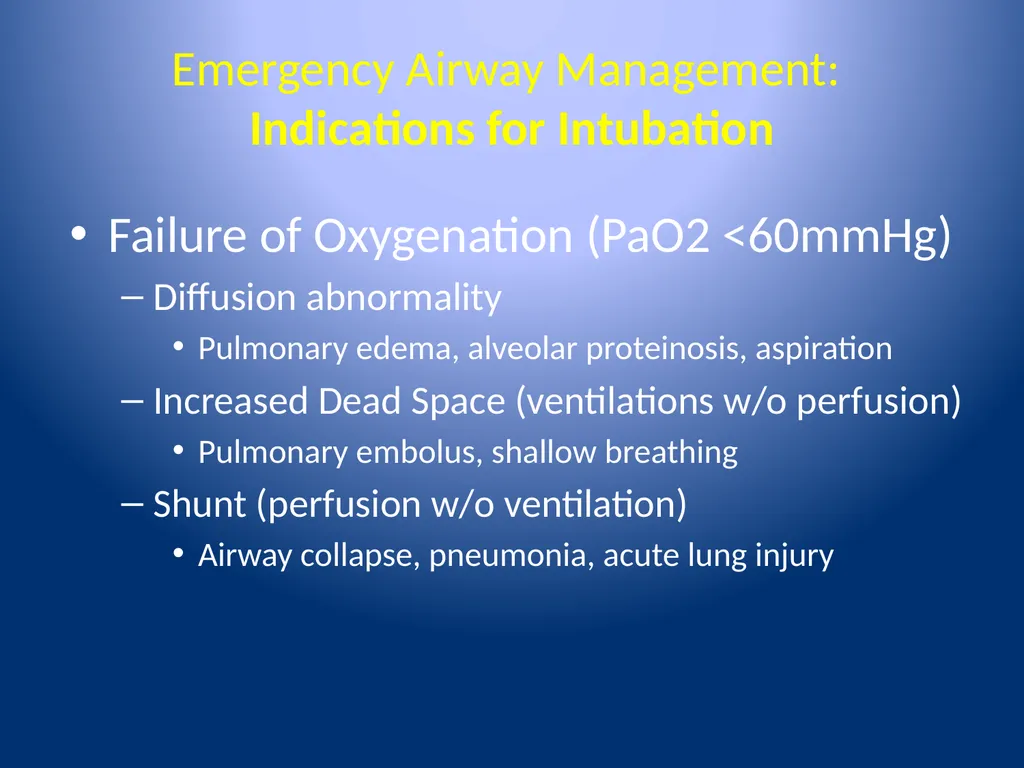
Emergency Airway Management: �Indications for Intubation Failure of Oxygenation (PaO2 <60mmHg)
Diffusion abnormality
Pulmonary edema, alveolar proteinosis, aspiration
Increased Dead Space (ventilations w/o perfusion)
Pulmonary embolus, shallow breathing
Shunt (perfusion w/o ventilation)
Airway collapse, pneumonia, acute lung injury<br>
07
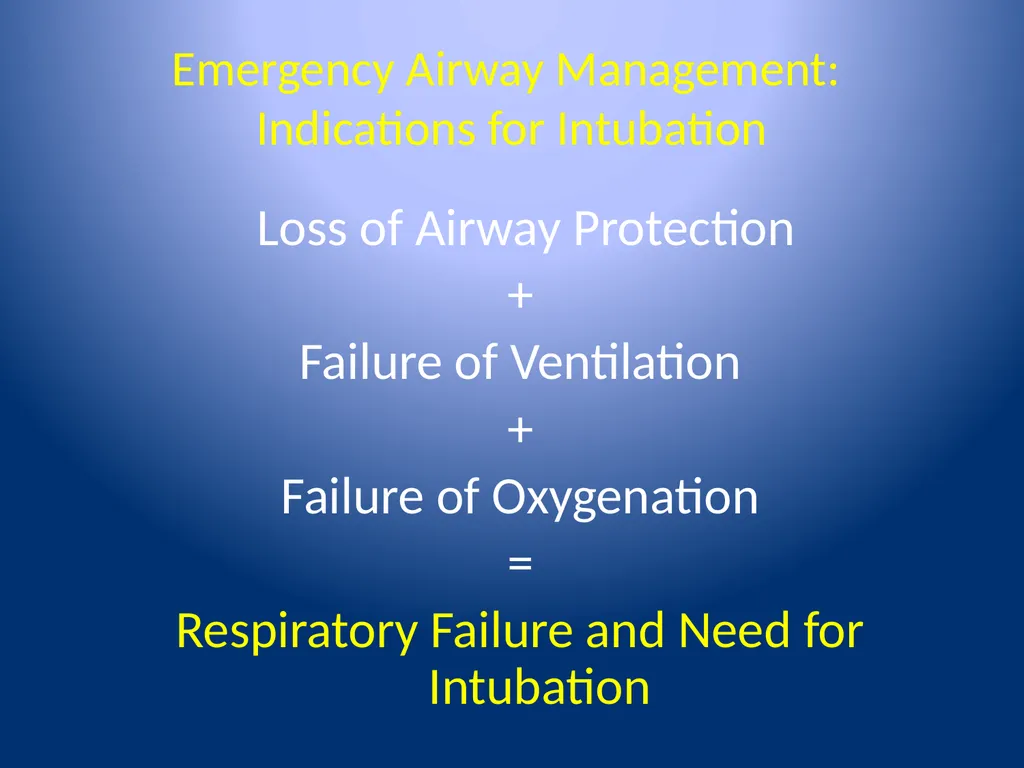
Loss of Airway Protection
+
Failure of Ventilation
+
Failure of Oxygenation
=
Respiratory Failure and Need for Intubation Emergency Airway Management: �Indications for Intubation<br>
08
Airway Assessment Goals:
Assess for risk of difficult mask ventilation
Assess for risk of difficult intubation<br>
09
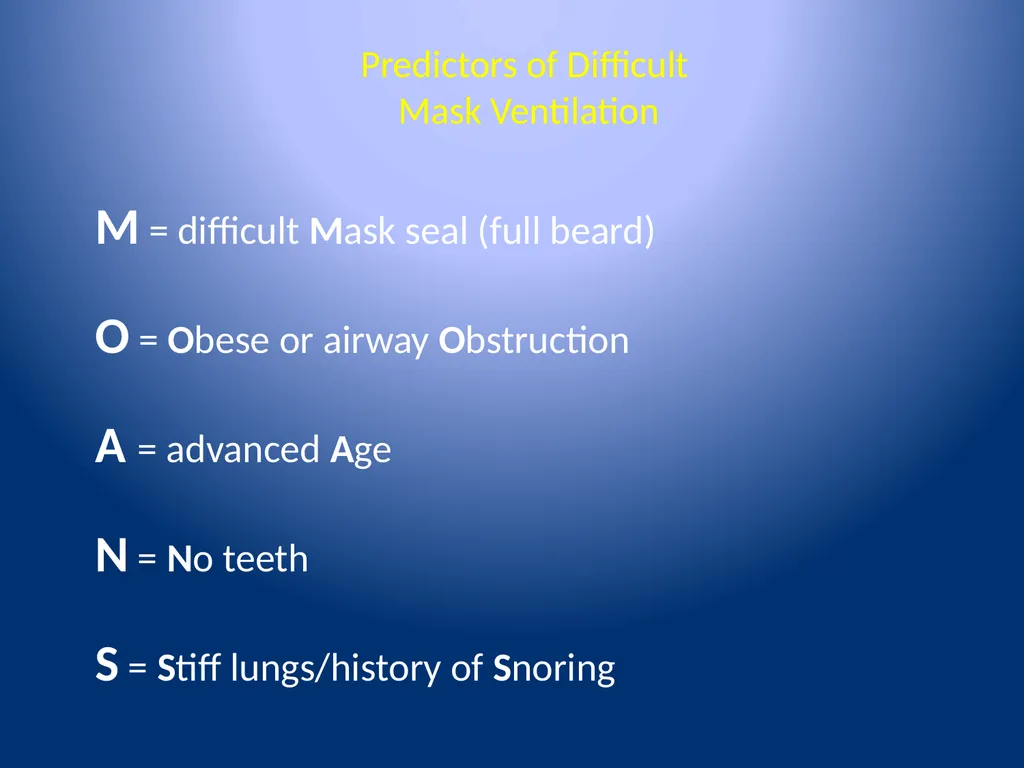
Predictors of Difficult �Mask Ventilation M = difficult Mask seal (full beard)
O = Obese or airway Obstruction
A = advanced Age
N = No teeth
S = Stiff lungs/history of Snoring<br>
10
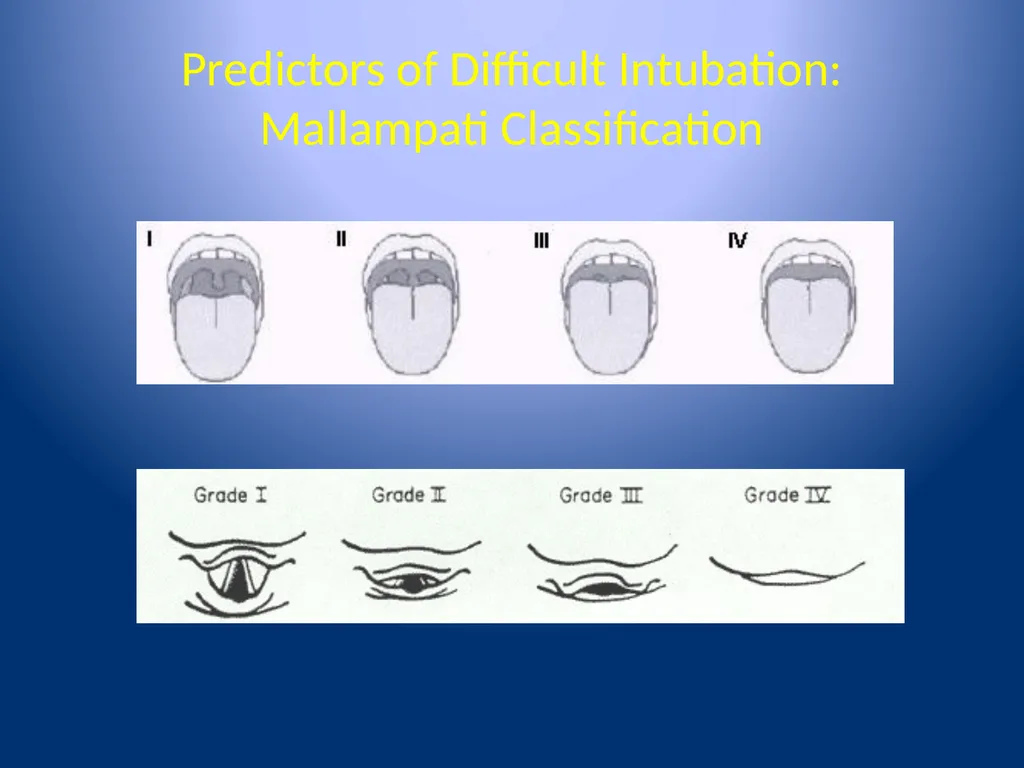
Predictors of Difficult Intubation:�Mallampati Classification<br>
11
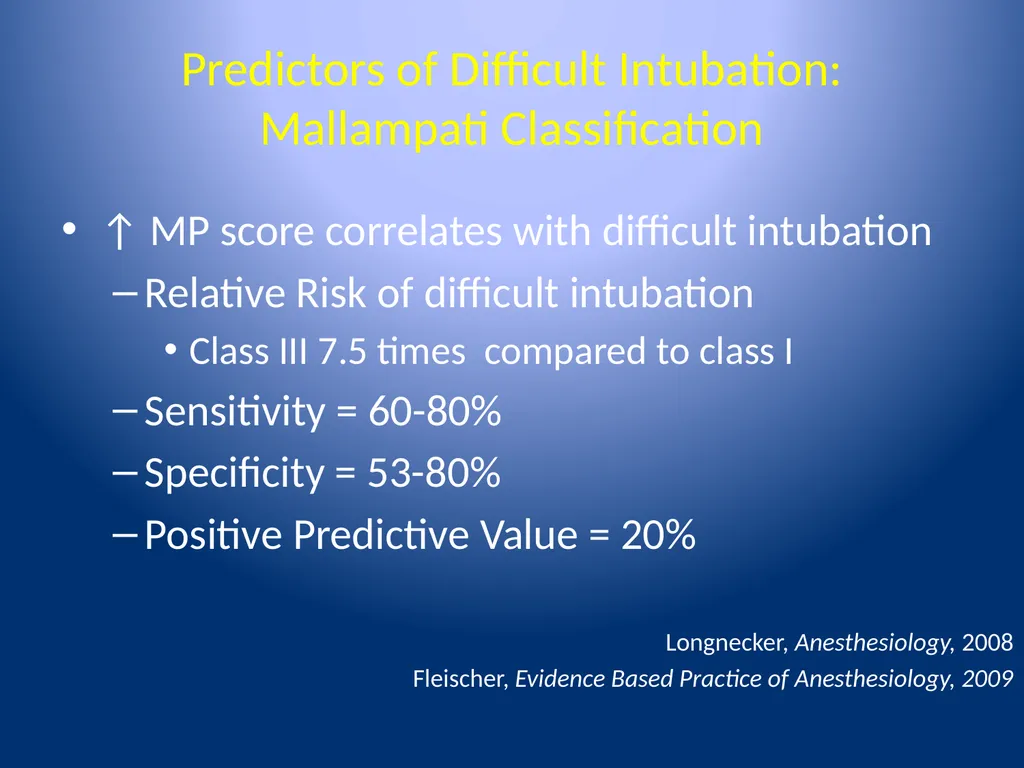
Predictors of Difficult Intubation:�Mallampati Classification ↑ MP score correlates with difficult intubation
Relative Risk of difficult intubation
Class III 7.5 times compared to class I
Sensitivity = 60-80%
Specificity = 53-80%
Positive Predictive Value = 20%
Longnecker, Anesthesiology, 2008
Fleischer, Evidence Based Practice of Anesthesiology, 2009<br>
12
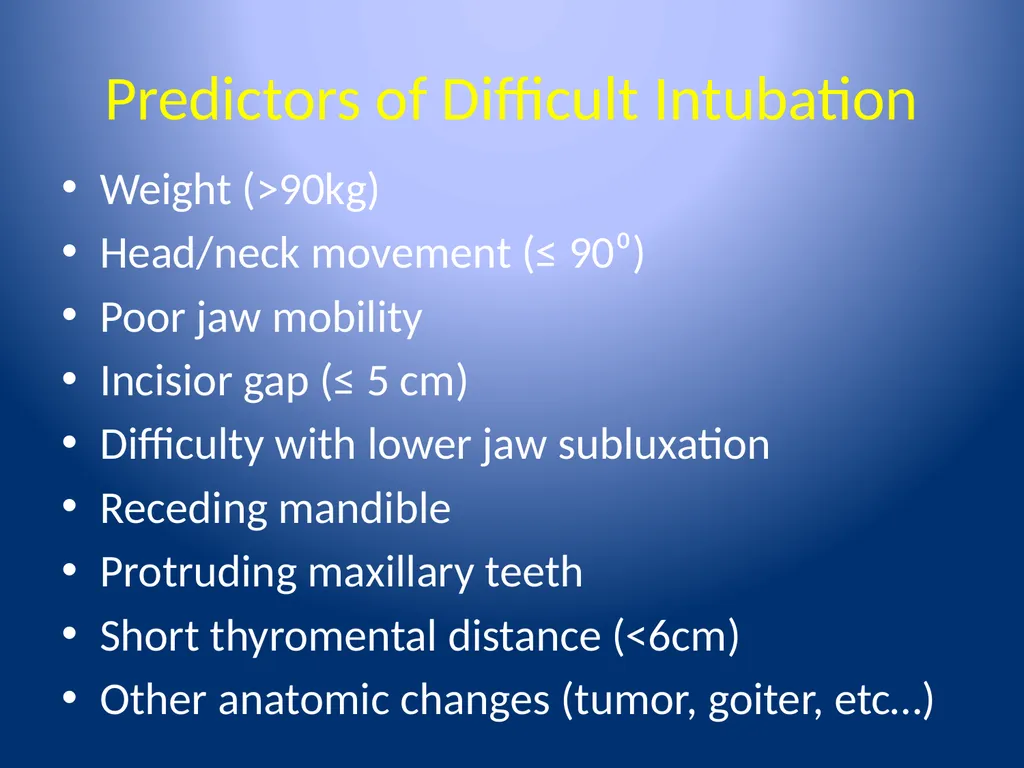
Weight (>90kg)
Head/neck movement (≤ 90⁰)
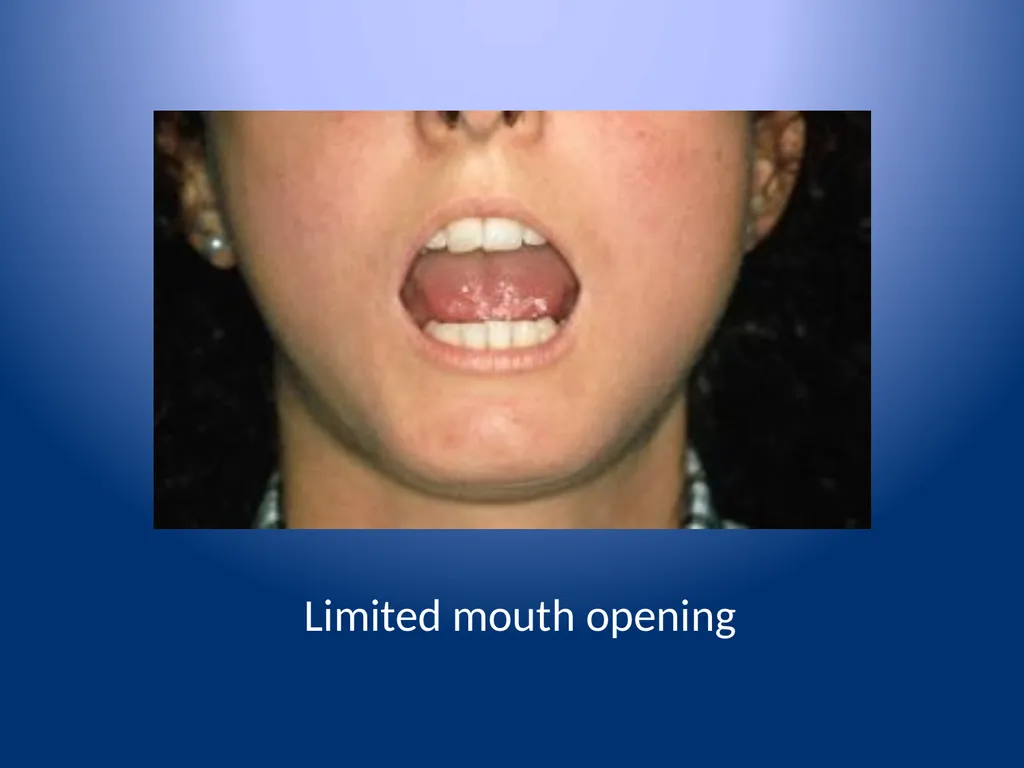
Poor jaw mobility
Incisior gap (≤ 5 cm)
Difficulty with lower jaw subluxation
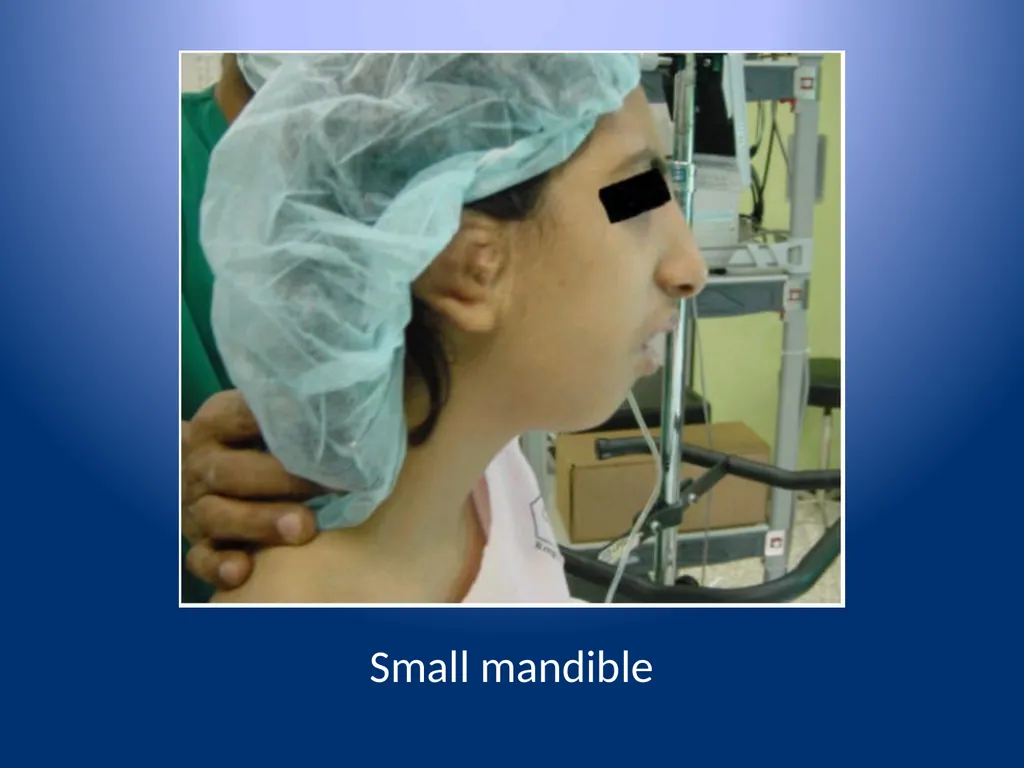
Receding mandible
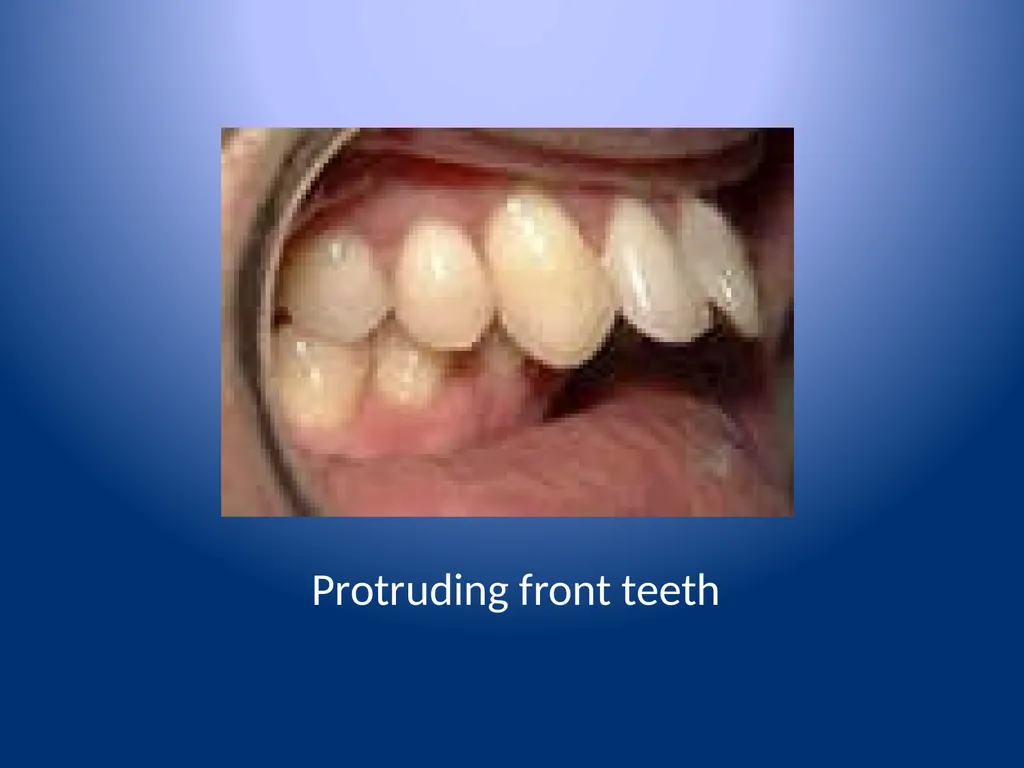
Protruding maxillary teeth
Short thyromental distance (<6cm)
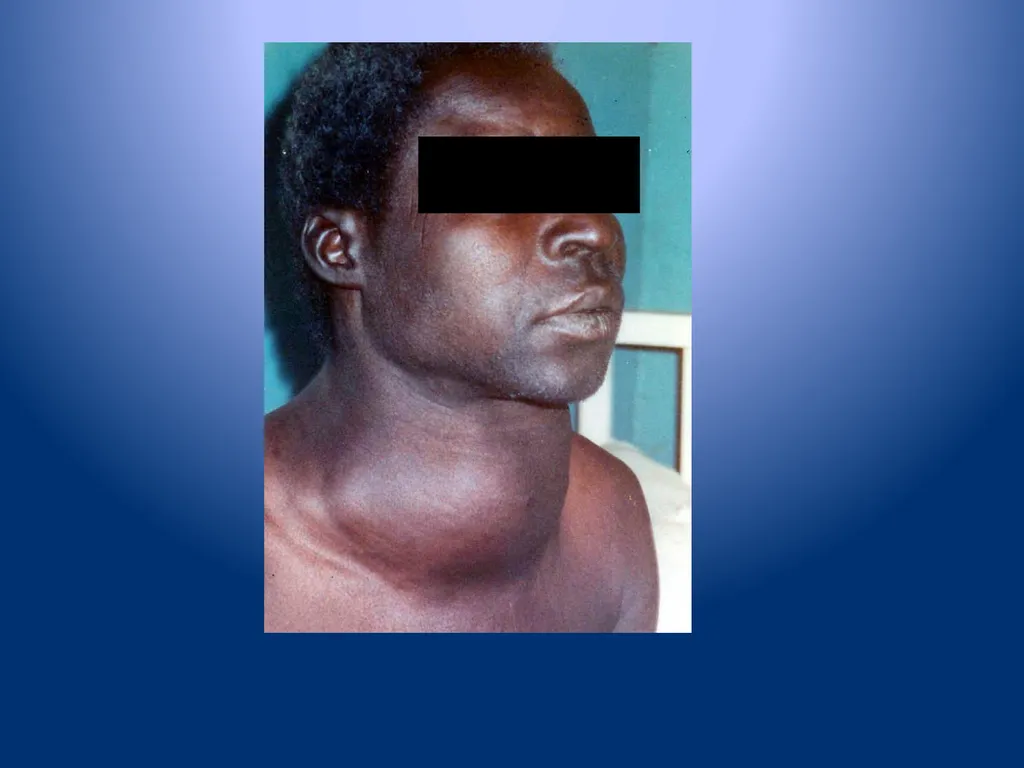
Other anatomic changes (tumor, goiter, etc…) Predictors of Difficult Intubation<br>
14
Large tongue, airway edema<br>
15
Limited mouth opening<br>
16
Protruding front teeth<br>
17
Airway Assessment: �Helping to Prevent Complications Identify patients who might be difficult to ventilate and intubate prior to proceeding
Call for assistance and have back-up plans
Know potential complications
Prevent potential complications
PREPARATION<br>
18
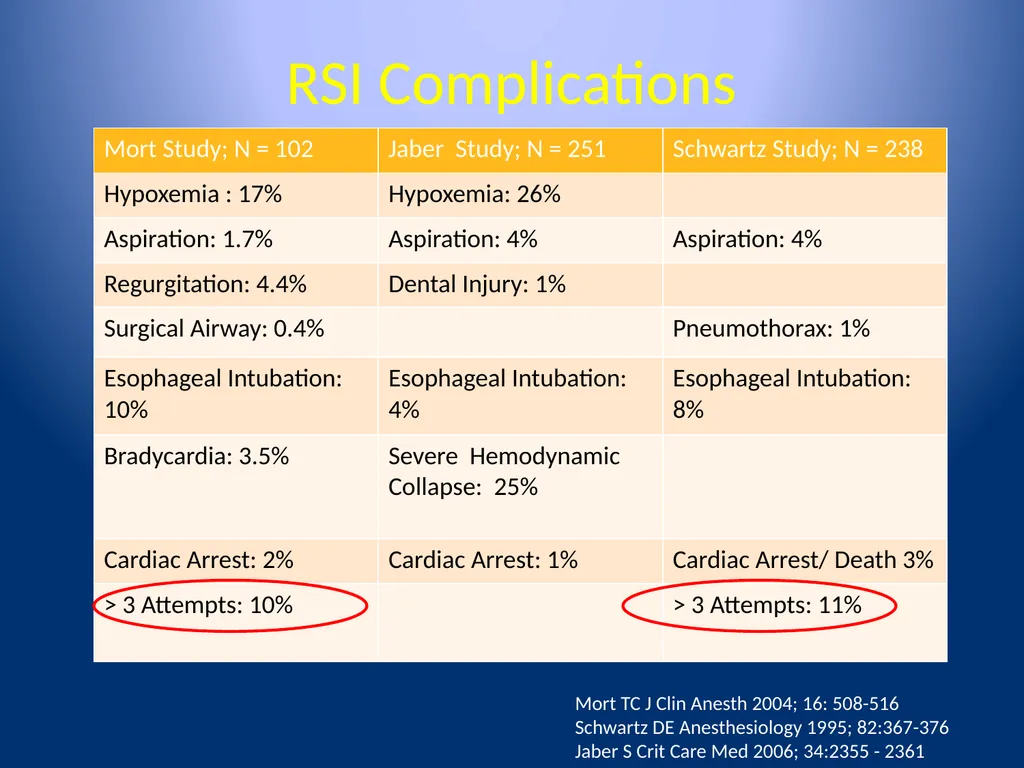
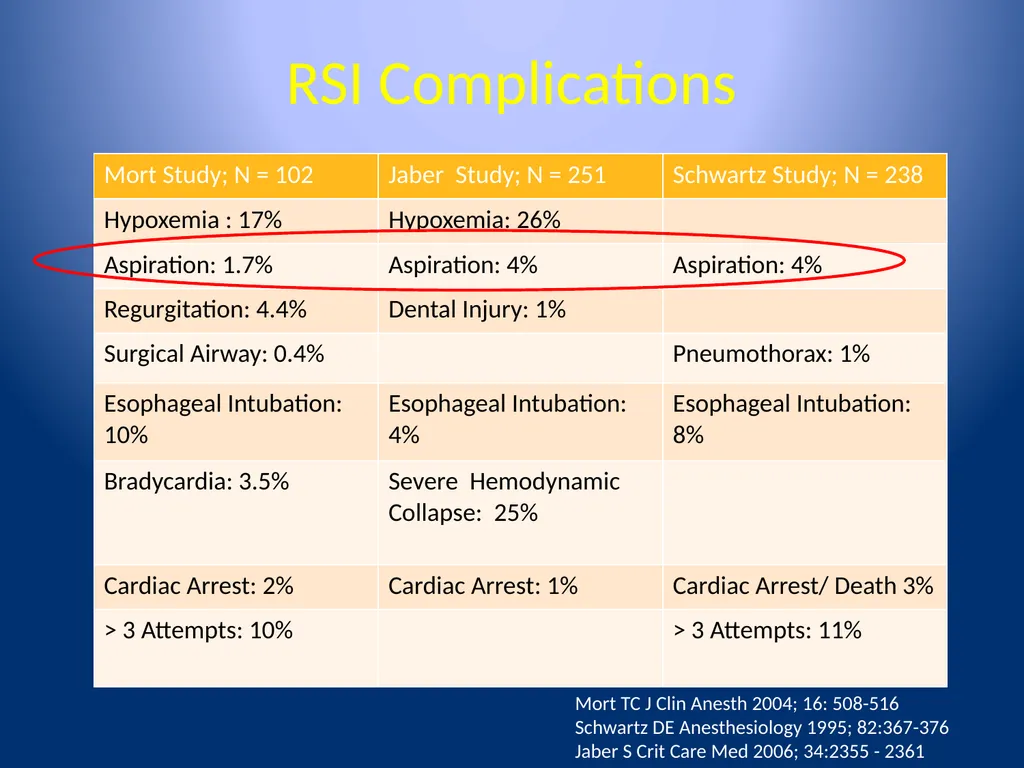
RSI Complications Mort TC J Clin Anesth 2004; 16: 508-516
Schwartz DE Anesthesiology 1995; 82:367-376
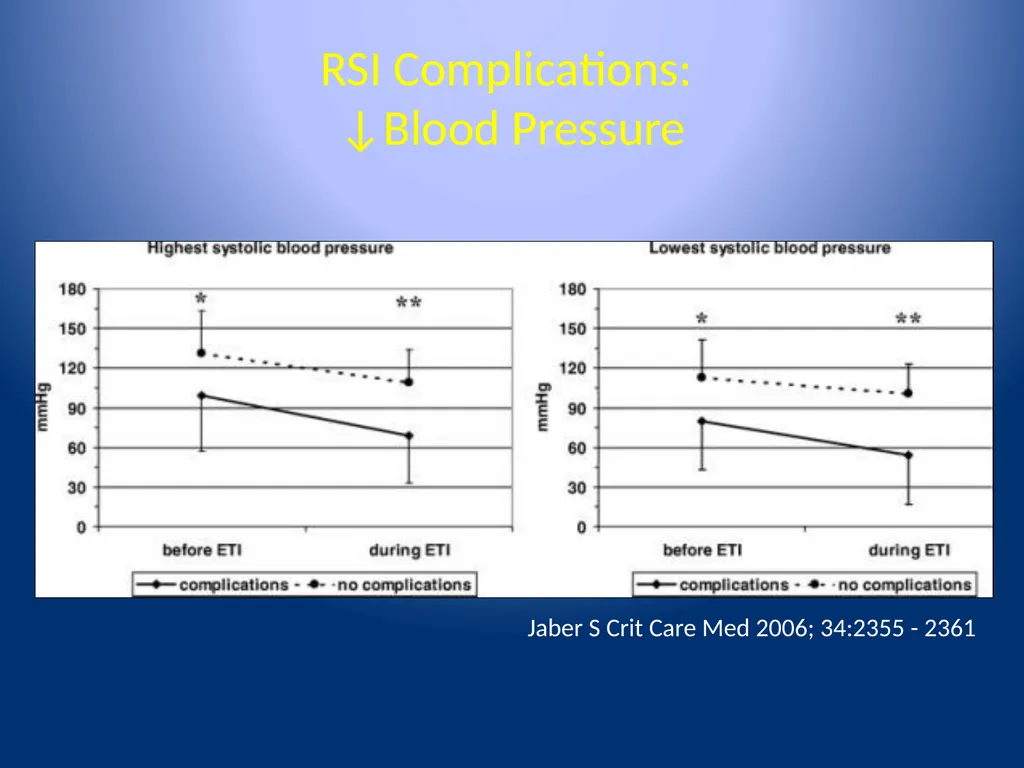
Jaber S Crit Care Med 2006; 34:2355 - 2361<br>
19
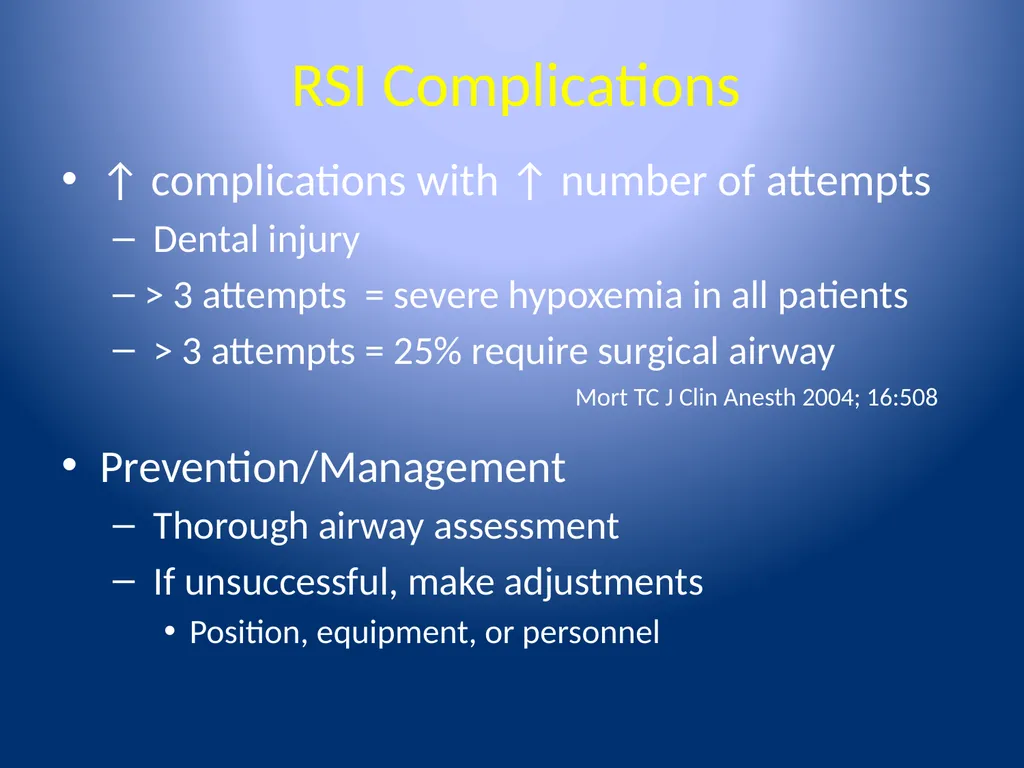
RSI Complications ↑ complications with ↑ number of attempts
Dental injury
> 3 attempts = severe hypoxemia in all patients
> 3 attempts = 25% require surgical airway
Prevention/Management
Thorough airway assessment
If unsuccessful, make adjustments
Position, equipment, or personnel Mort TC J Clin Anesth 2004; 16:508<br>
20
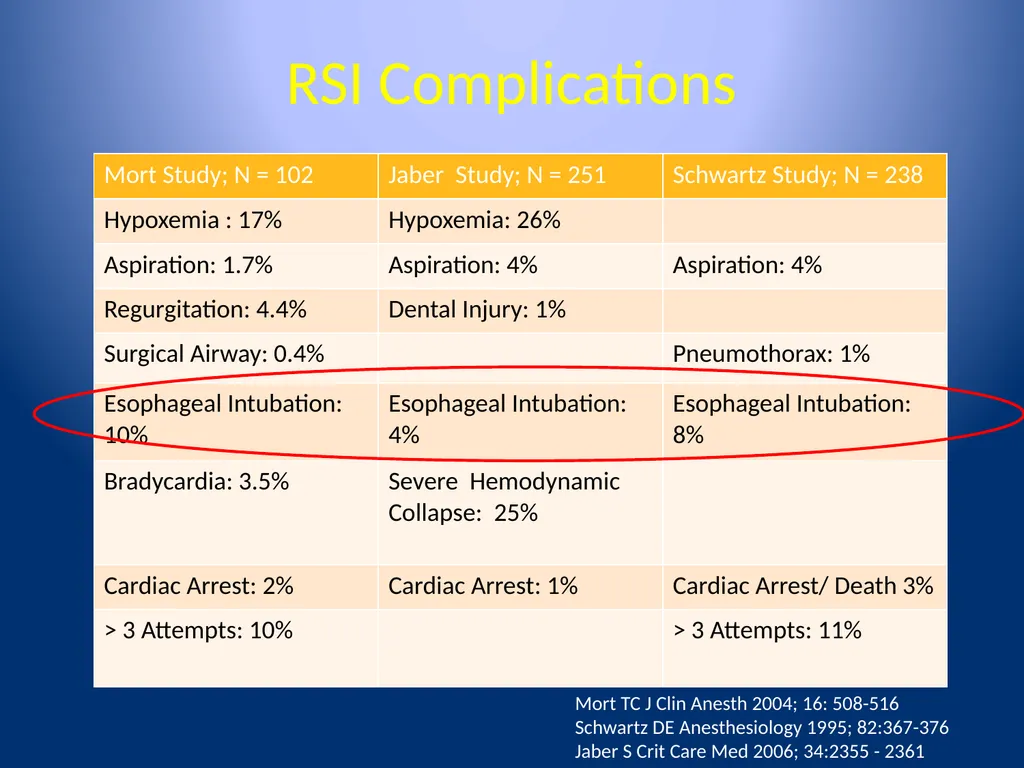
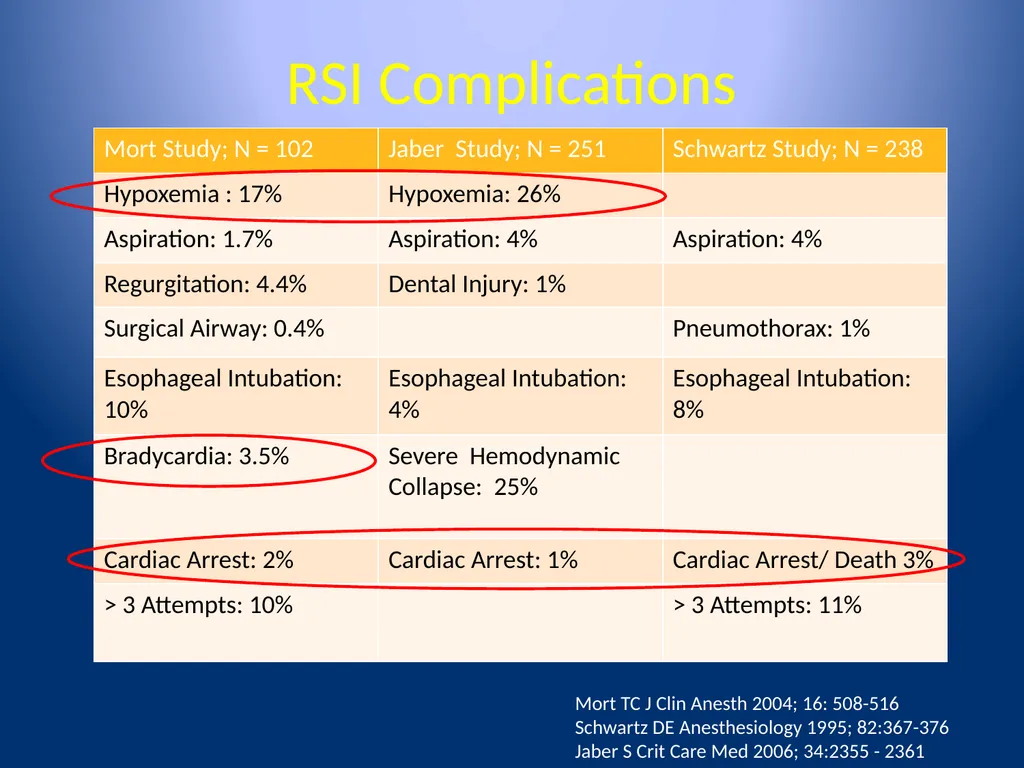
RSI Complications Mort TC J Clin Anesth 2004; 16: 508-516
Schwartz DE Anesthesiology 1995; 82:367-376
Jaber S Crit Care Med 2006; 34:2355 - 2361<br>
21
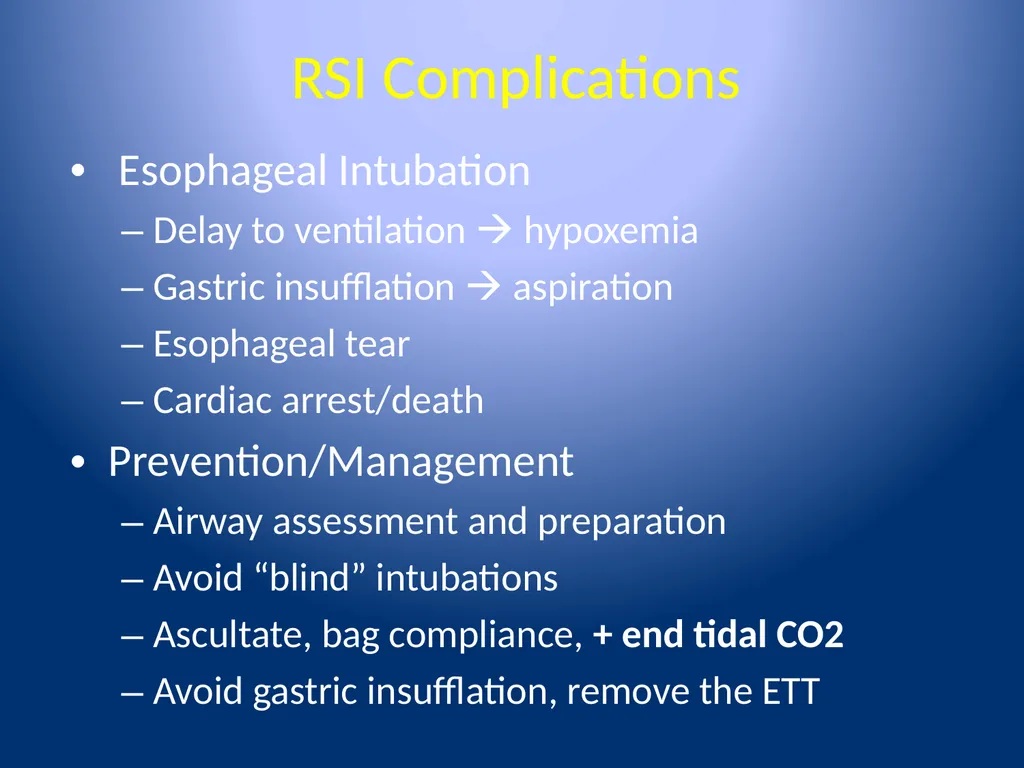
RSI Complications Esophageal Intubation
Delay to ventilation hypoxemia
Gastric insufflation aspiration
Esophageal tear
Cardiac arrest/death
Prevention/Management
Airway assessment and preparation
Avoid “blind” intubations
Ascultate, bag compliance, + end tidal CO2
Avoid gastric insufflation, remove the ETT<br>
22
RSI Complications Mort TC J Clin Anesth 2004; 16: 508-516
Schwartz DE Anesthesiology 1995; 82:367-376
Jaber S Crit Care Med 2006; 34:2355 - 2361<br>
23
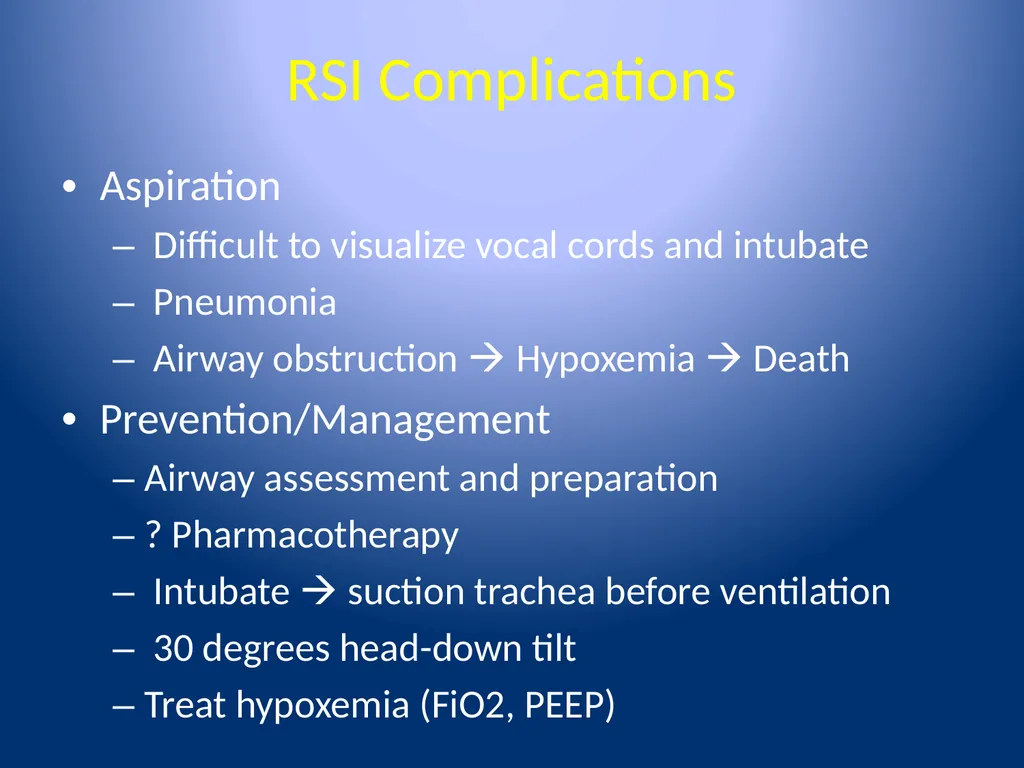
Aspiration
Difficult to visualize vocal cords and intubate
Pneumonia
Airway obstruction Hypoxemia Death
Prevention/Management
Airway assessment and preparation
? Pharmacotherapy
Intubate suction trachea before ventilation
30 degrees head-down tilt
Treat hypoxemia (FiO2, PEEP) RSI Complications<br>
24
RSI Complications Mort TC J Clin Anesth 2004; 16: 508-516
Schwartz DE Anesthesiology 1995; 82:367-376
Jaber S Crit Care Med 2006; 34:2355 - 2361<br>
25
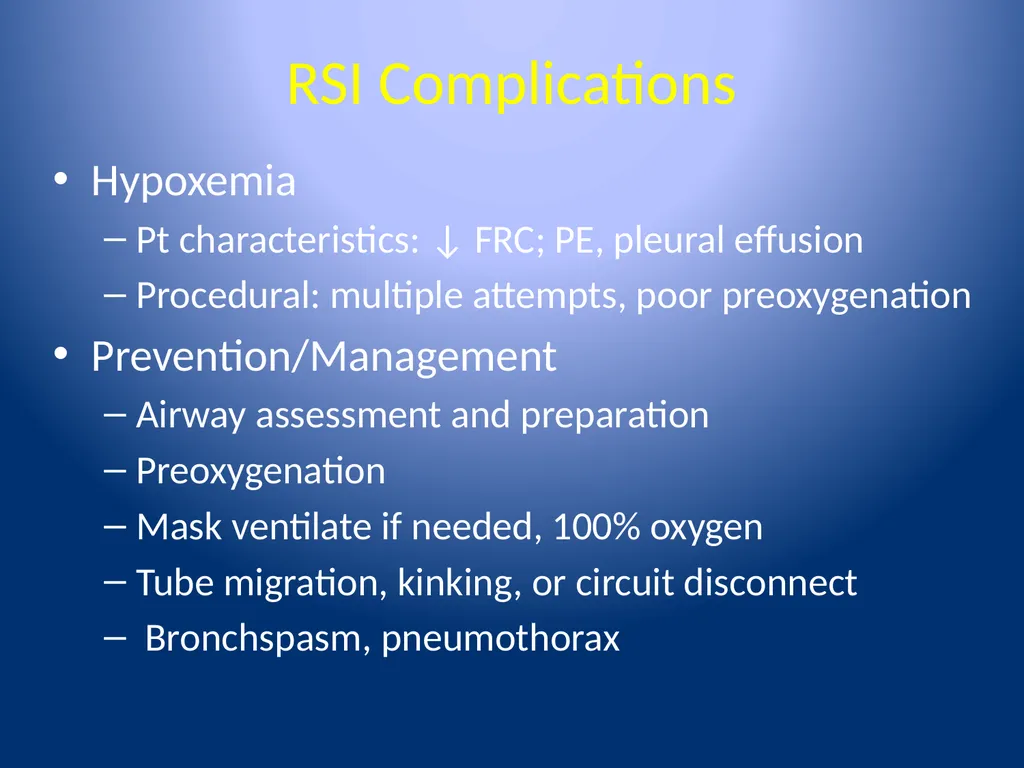
Hypoxemia
Pt characteristics: ↓ FRC; PE, pleural effusion
Procedural: multiple attempts, poor preoxygenation
Prevention/Management
Airway assessment and preparation
Preoxygenation
Mask ventilate if needed, 100% oxygen
Tube migration, kinking, or circuit disconnect
Bronchspasm, pneumothorax RSI Complications<br>
26
RSI Complications: �↓Blood Pressure Jaber S Crit Care Med 2006; 34:2355 - 2361<br>
27
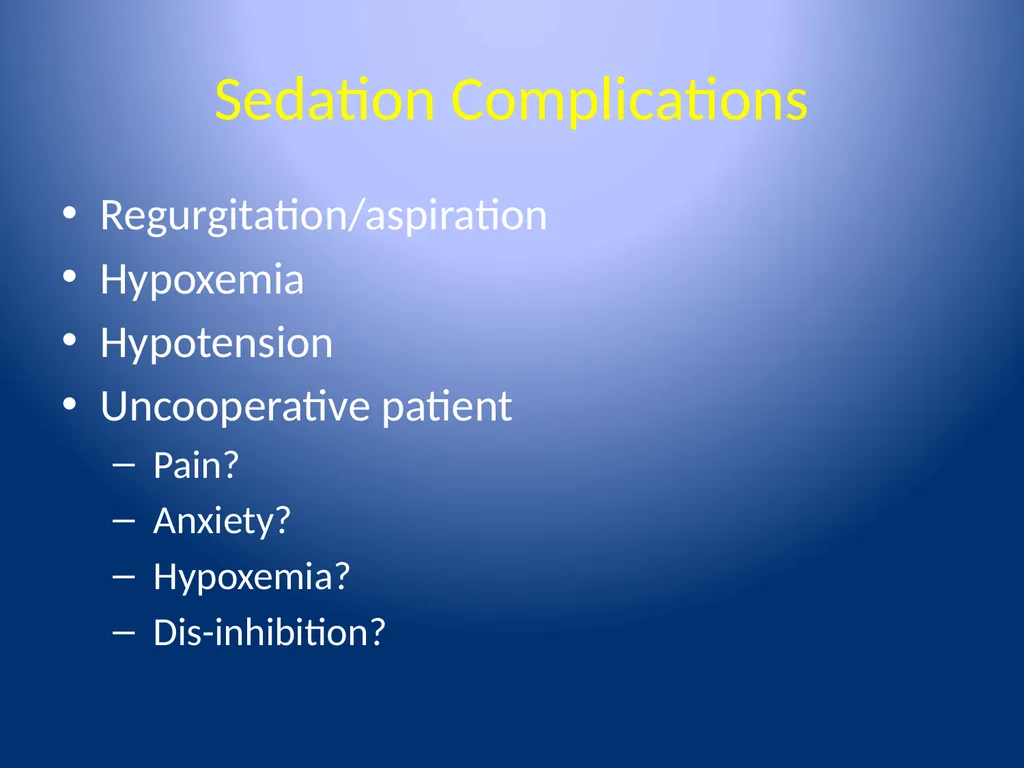
Sedation Complications Regurgitation/aspiration
Hypoxemia
Hypotension
Uncooperative patient
Pain?
Anxiety?
Hypoxemia?
Dis-inhibition?<br>
28
RSI and Sedation Complications and �the Difficult Airway Algorithm<br>
29
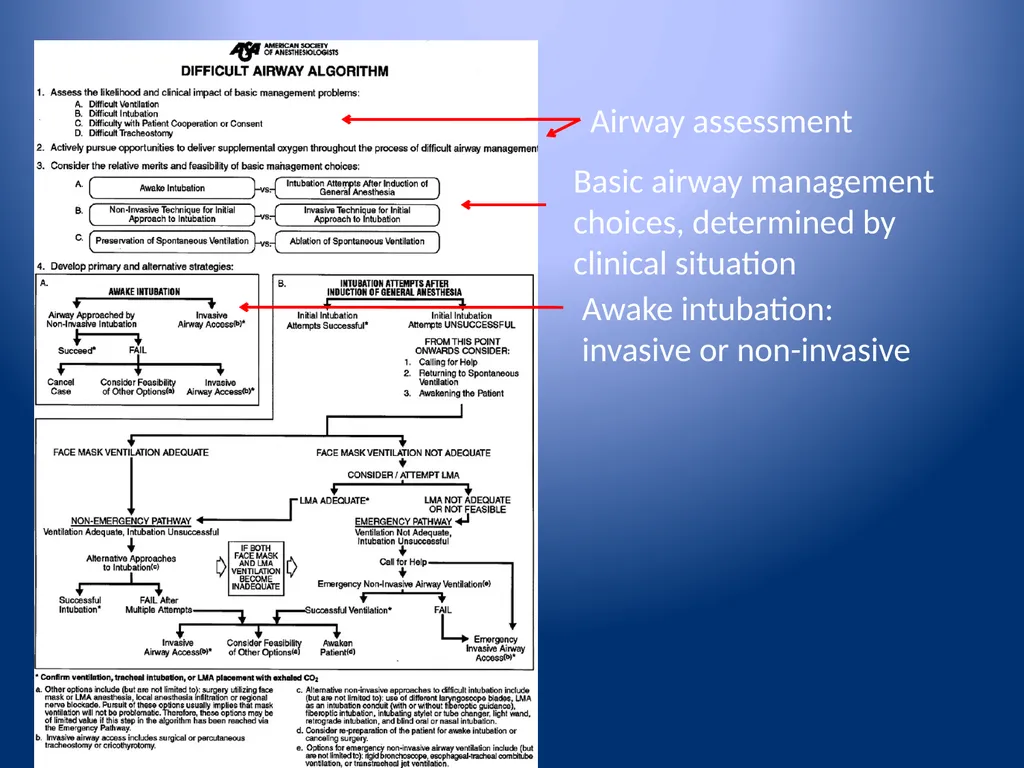
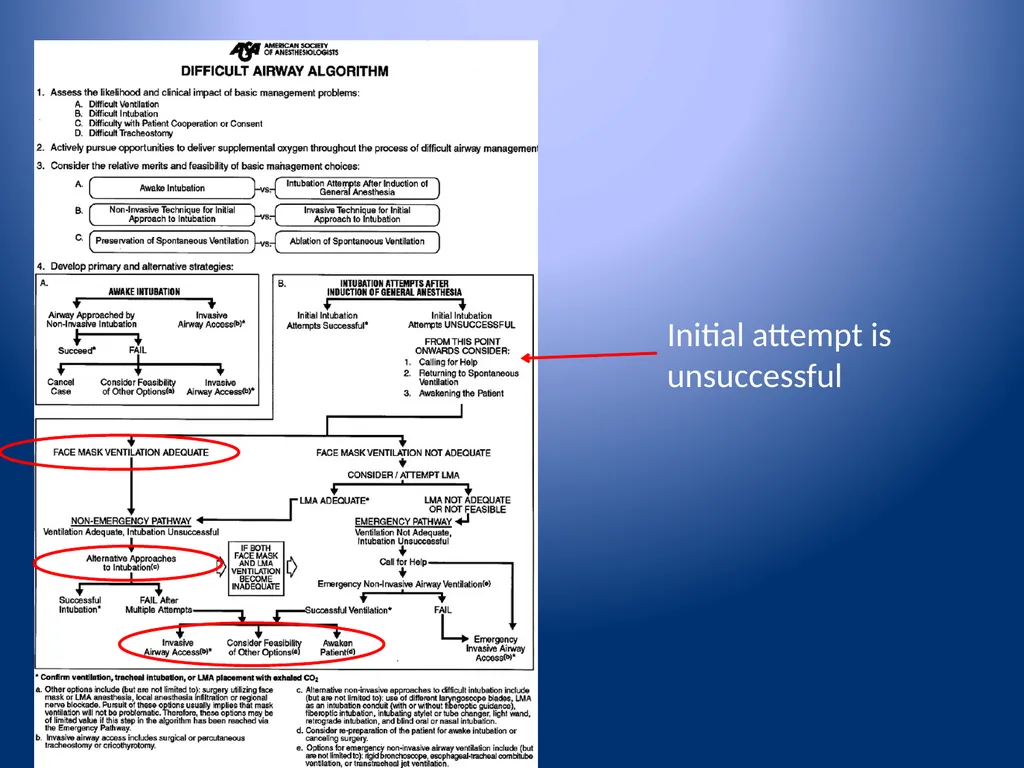
Airway assessment Basic airway management choices, determined by clinical situation Awake intubation: invasive or non-invasive<br>
30
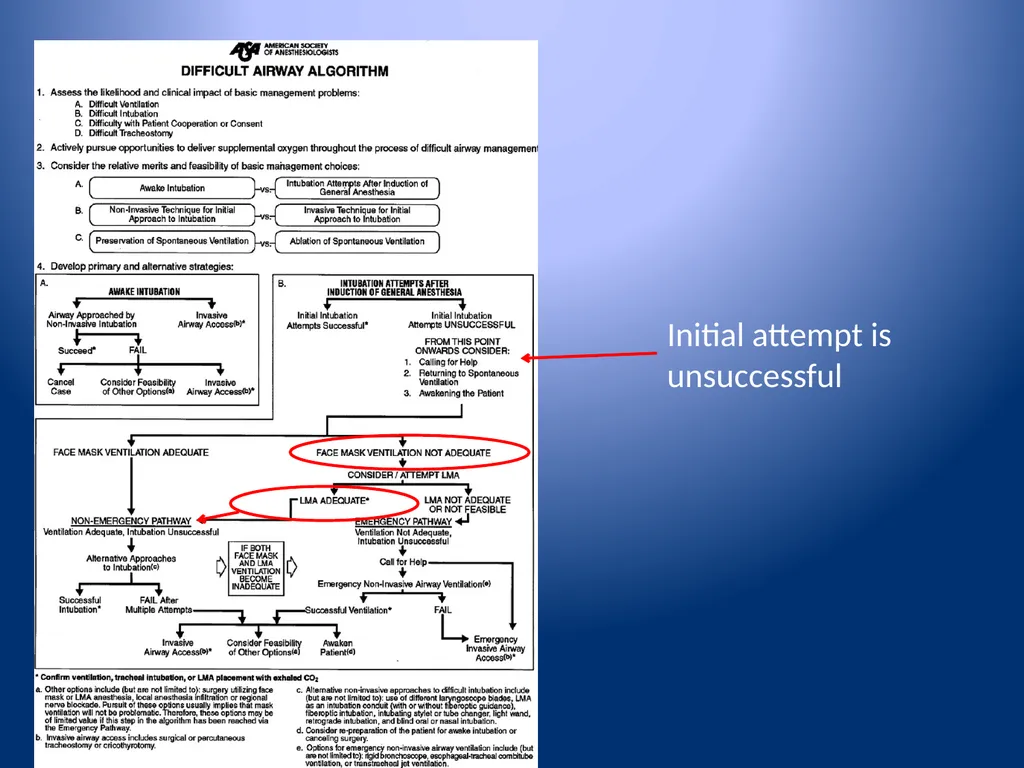
Initial attempt is unsuccessful<br>
31
Initial attempt is unsuccessful<br>
32
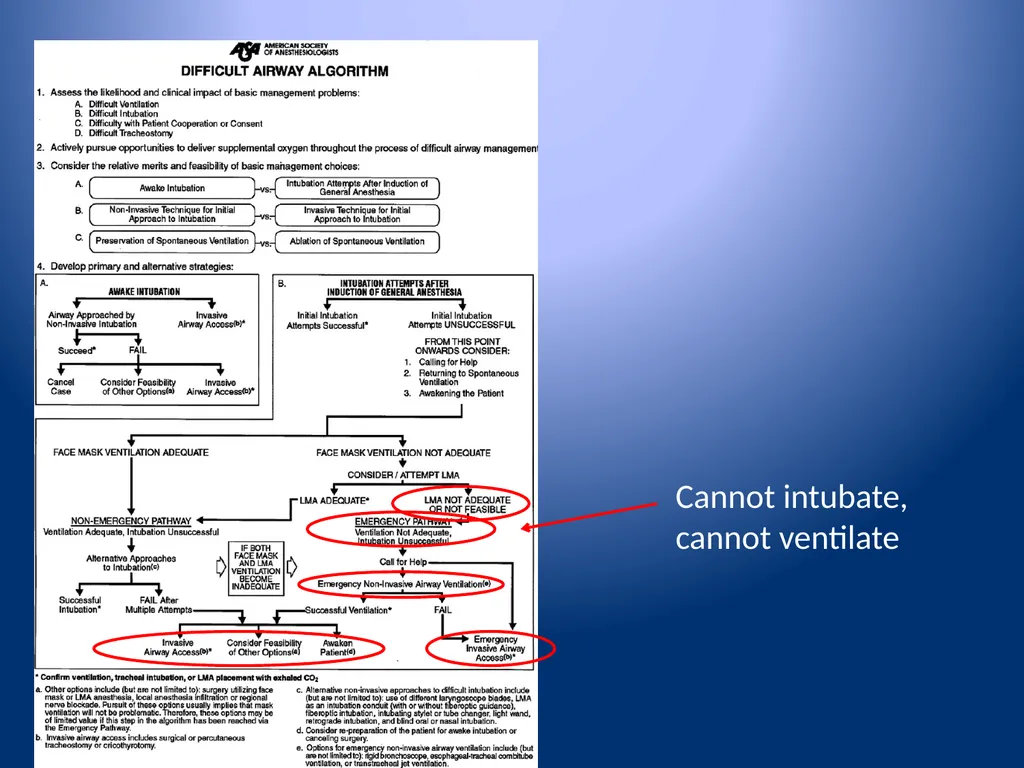
Cannot intubate, cannot ventilate<br>
33
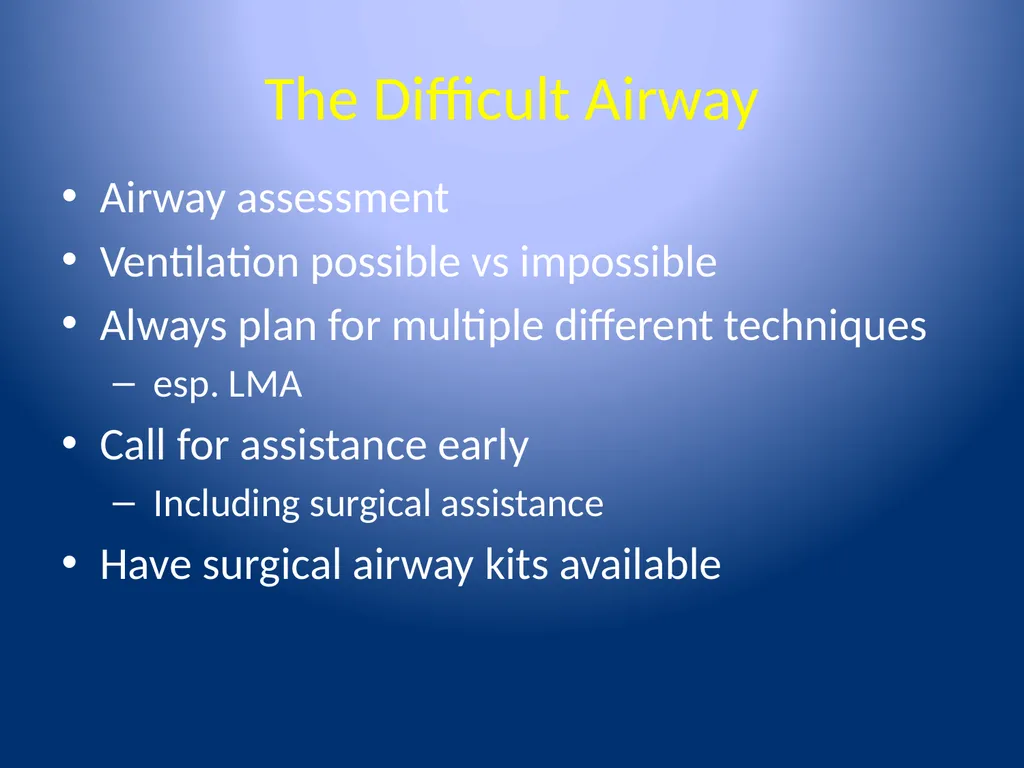
The Difficult Airway Airway assessment
Ventilation possible vs impossible
Always plan for multiple different techniques
esp. LMA
Call for assistance early
Including surgical assistance
Have surgical airway kits available<br>
34
Conclusions Complications of RSI and sedation are similar
Thorough airway assessment is a must
Plan for intubation must be individualized
Have back-up plans available
Be sure equipment is working properly
Call for help early if needed<br>