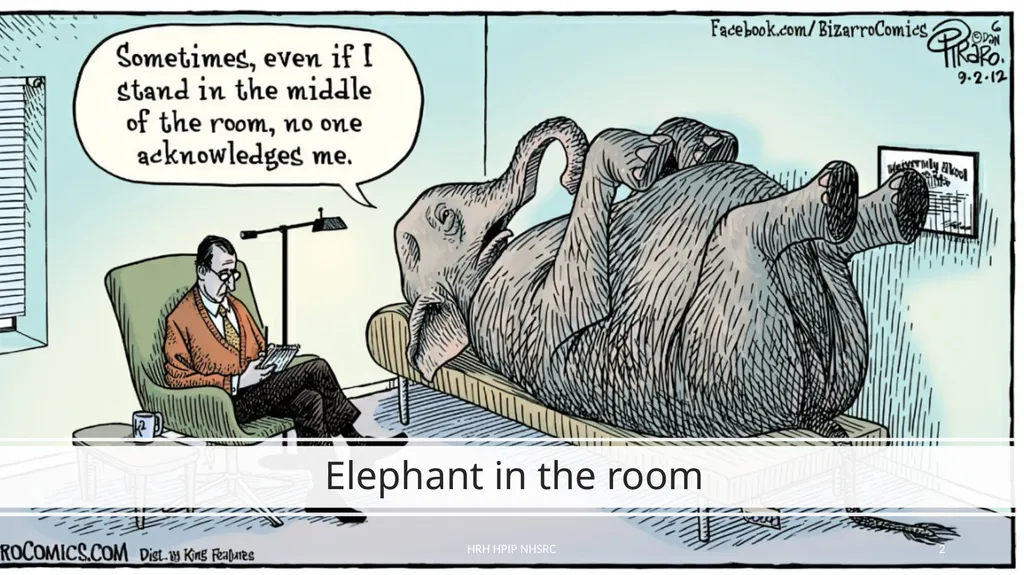
Comprehensive Planning for HRH Mona Gupta Advisor HRH HPIP NHSRC HRH HPIP NHSRC 1 Elephant in the room HRH HPIP NHSRC 2 Why HRH Must for moving other pillars of Health systems: Service delivery, Access to Medicines, Leadership and
"Comprehensive Planning for HRH Mona Gupta Advisor" is the property of its rightful owner. Permission is granted to
download and print the materials on this website for personal, non-commercial use only, and to display it
on your personal computer provided you do not modify the materials and that you retain all copyright
notices contained in the materials. By downloading content from our website, you accept the terms of this
agreement.
Why HRH Must for moving other pillars of Health systems: Service delivery, Access to Medicines, Leadership and Governance, Health Information System, Finance
Not only for health but poverty reduction, quality education, decent work, inclusive economic growth and gender equality HRH HPIP NHSRC 3<br>
04
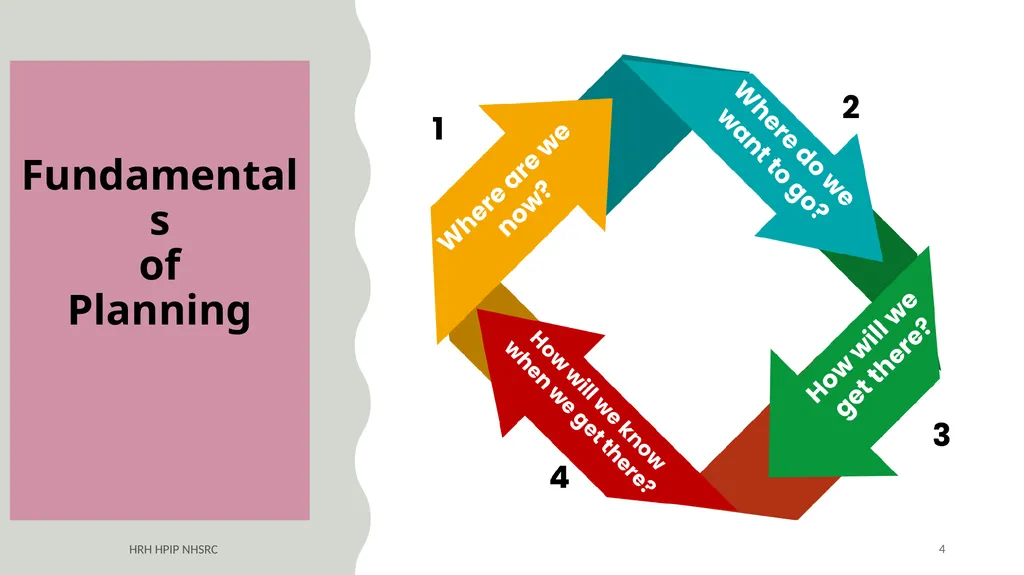
Fundamentals of Planning HRH HPIP NHSRC 4<br>
05
Where are we now? Data :
How reliable
How updated
Time to get it reasonably robust: e-Samiksha, Pragati, NITI SHI,
Conditionalities HRH HPIP NHSRC 5<br>
06
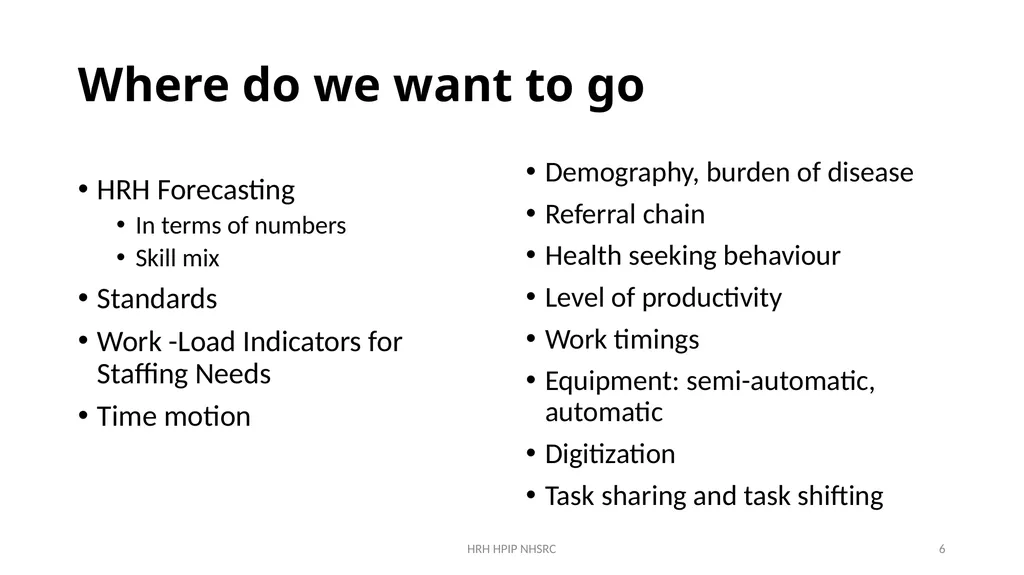
Where do we want to go HRH Forecasting
In terms of numbers
Skill mix
Standards
Work -Load Indicators for Staffing Needs
Time motion Demography, burden of disease
Referral chain
Health seeking behaviour
Level of productivity
Work timings
Equipment: semi-automatic, automatic
Digitization
Task sharing and task shifting HRH HPIP NHSRC 6<br>
07
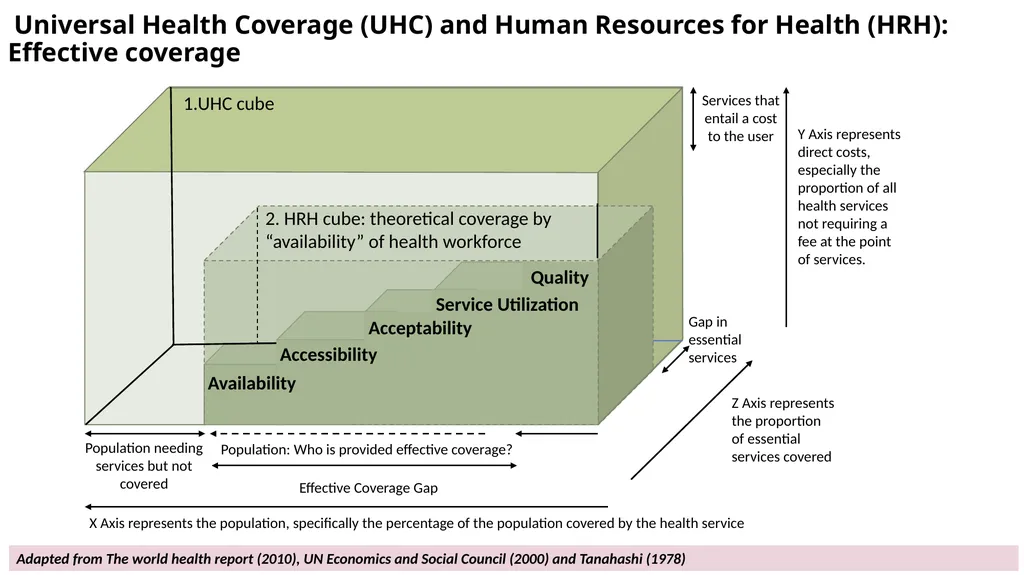
Universal Health Coverage (UHC) and Human Resources for Health (HRH): Effective coverage 1.UHC cube Quality Service Utilization Acceptability Accessibility Availability 2. HRH cube: theoretical coverage by “availability” of health workforce Population needing services but not covered Population: Who is provided effective coverage? Effective Coverage Gap X Axis represents the population, specifically the percentage of the population covered by the health service Services that entail a cost to the user Y Axis represents direct costs, especially the proportion of all health services not requiring a fee at the point of services. Gap in essential services Z Axis represents the proportion of essential services covered Adapted from The world health report (2010), UN Economics and Social Council (2000) and Tanahashi (1978)<br>
08
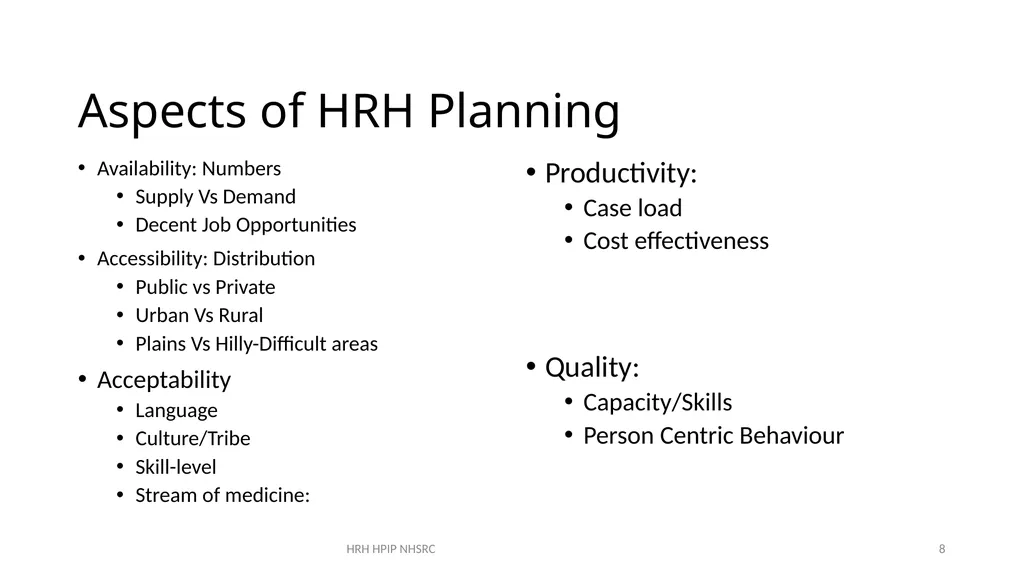
Aspects of HRH Planning Availability: Numbers
Supply Vs Demand
Decent Job Opportunities
Accessibility: Distribution
Public vs Private
Urban Vs Rural
Plains Vs Hilly-Difficult areas
Acceptability
Language
Culture/Tribe
Skill-level
Stream of medicine: Productivity:
Case load
Cost effectiveness
Quality:
Capacity/Skills
Person Centric Behaviour HRH HPIP NHSRC 8<br>
09
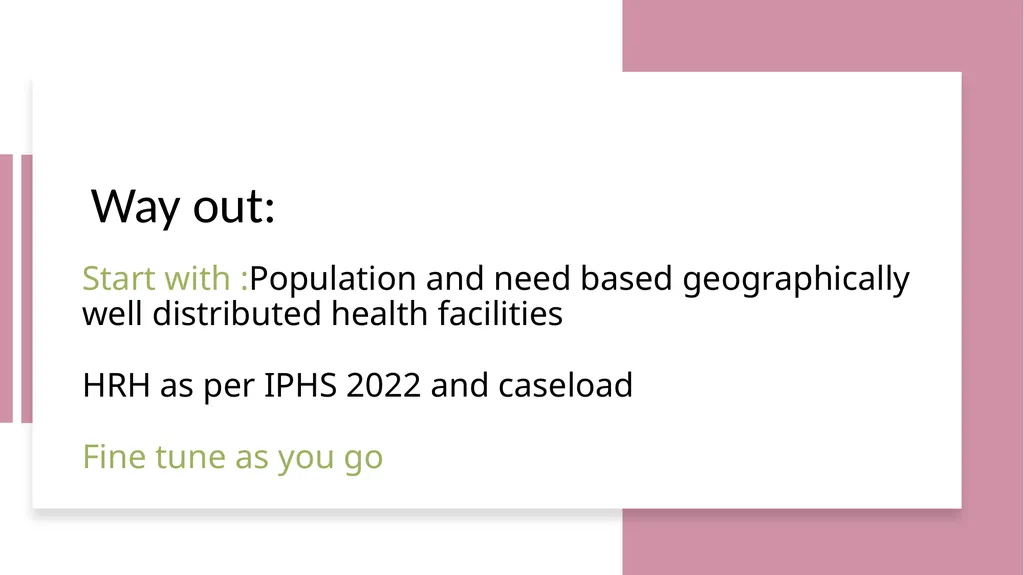
Start with :Population and need based geographically well distributed health facilities HRH as per IPHS 2022 and caseload Fine tune as you go Way out: HRH HPIP NHSRC 9<br>
10
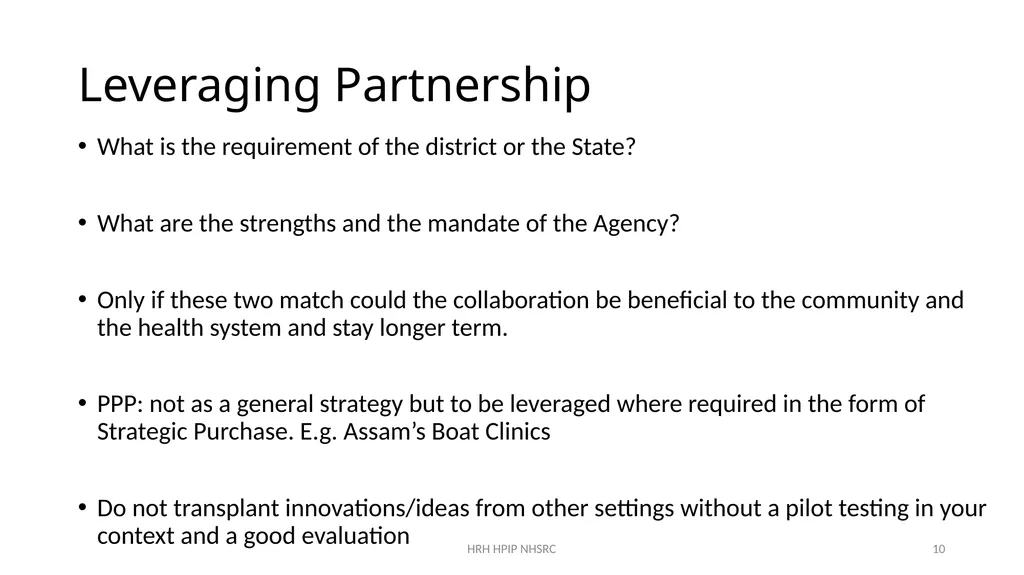
Leveraging Partnership What is the requirement of the district or the State?
What are the strengths and the mandate of the Agency?
Only if these two match could the collaboration be beneficial to the community and the health system and stay longer term.
PPP: not as a general strategy but to be leveraged where required in the form of Strategic Purchase. E.g. Assam’s Boat Clinics
Do not transplant innovations/ideas from other settings without a pilot testing in your context and a good evaluation
Communicate with your teams in district, blocks and facilities. Letters are not enough. It may not be grievance all the time. It could be a rumour or worry. Uncertainty will drain talent. HRH HPIP NHSRC 10<br>
11
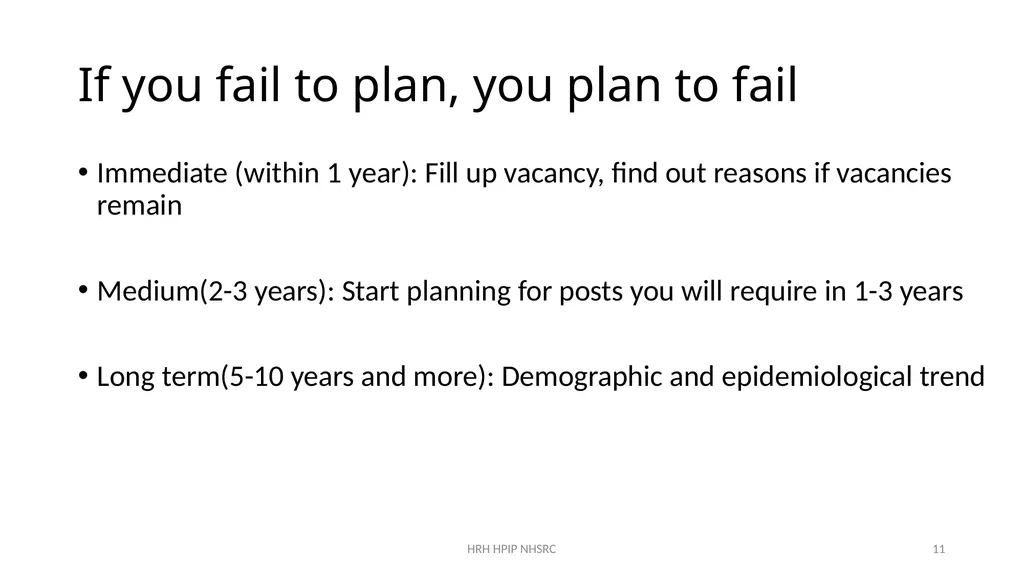
If you fail to plan, you plan to fail Immediate (within 1 year): Fill up vacancy, find out reasons if vacancies remain
Medium(2-3 years): Start planning for posts you will require in 1-3 years
Long term(5-10 years and more): Demographic and epidemiological trend HRH HPIP NHSRC 11<br>
12
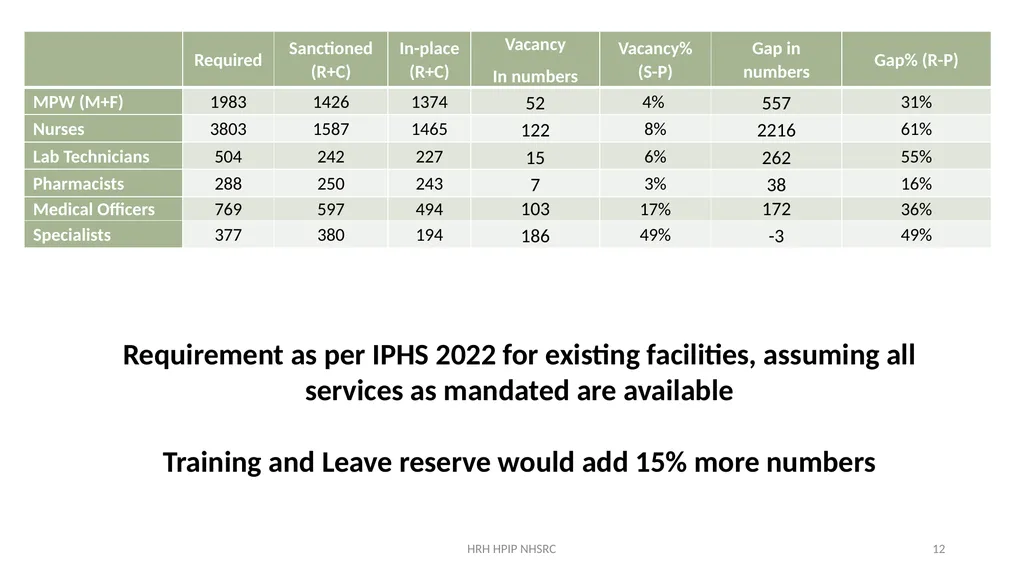
HRH HPIP NHSRC 12 Requirement as per IPHS 2022 for existing facilities, assuming all services as mandated are available
Training and Leave reserve would add 15% more numbers<br>
13
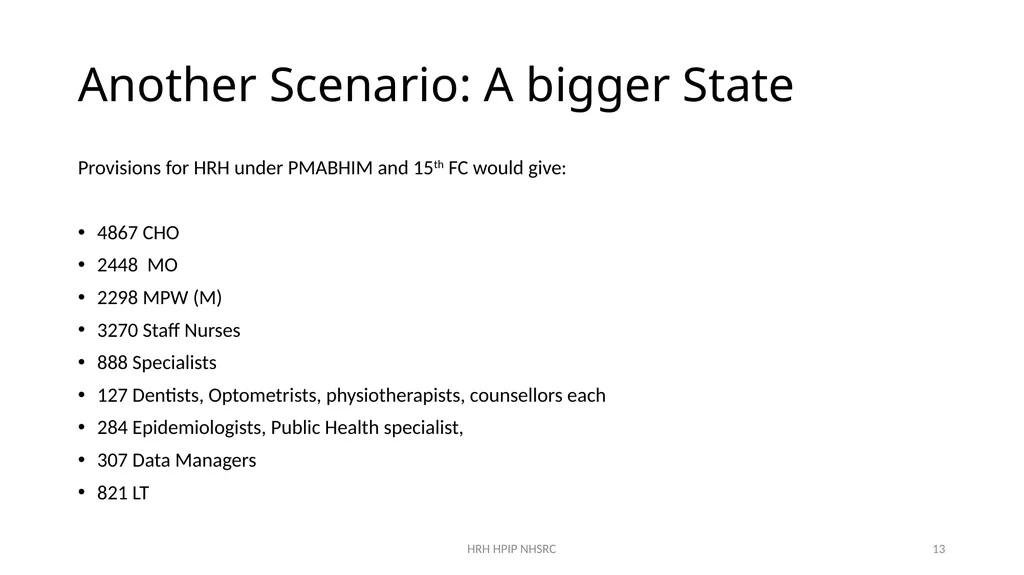
Another Scenario: A bigger State Provisions for HRH under PMABHIM and 15th FC would give:
4867 CHO
2448 MO
2298 MPW (M)
3270 Staff Nurses
888 Specialists
127 Dentists, Optometrists, physiotherapists, counsellors each
284 Epidemiologists, Public Health specialist,
307 Data Managers
821 LT HRH HPIP NHSRC 13<br>
14
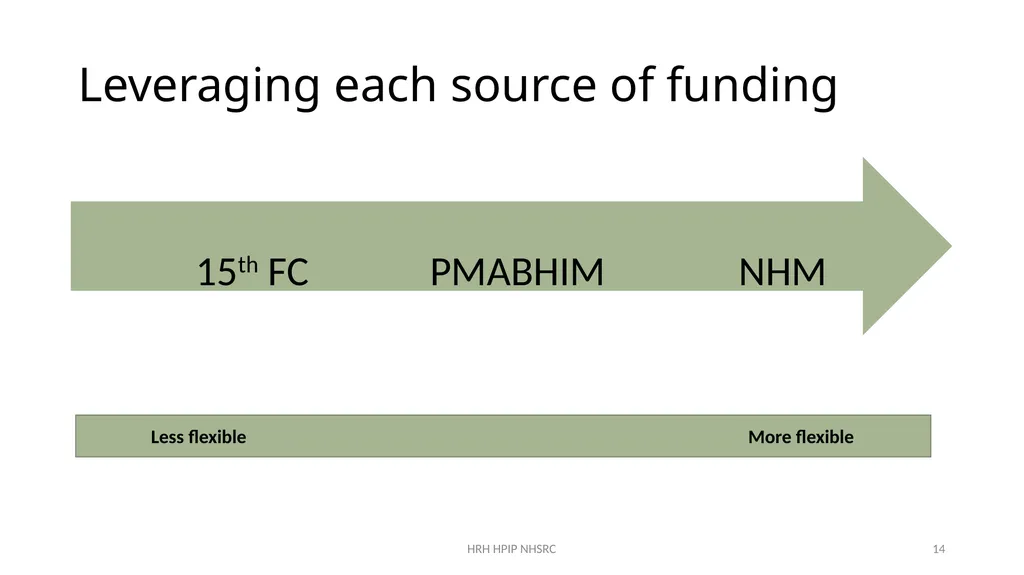
Leveraging each source of funding HRH HPIP NHSRC 14 Less flexible More flexible<br>