Concussion Conversation Presentation by National Concussion Awareness Day is September 20! Why Concussion Education and Awareness is Important to Me Use this space to customize your personal connection to concussion and why you work
"Concussion Conversation Presentation by ______" is the property of its rightful owner. Permission is granted to
download and print the materials on this website for personal, non-commercial use only, and to display it
on your personal computer provided you do not modify the materials and that you retain all copyright
notices contained in the materials. By downloading content from our website, you accept the terms of this
agreement.
Presentation Transcript
01
Concussion Conversation Presentation by ______<br>
02
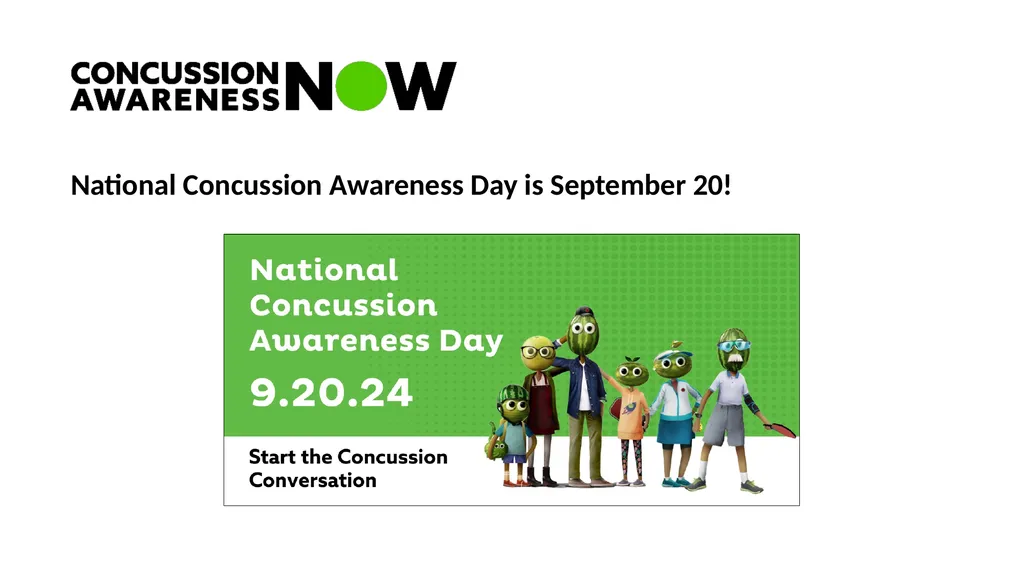
National Concussion Awareness Day is September 20!<br>
03
Why Concussion Education and Awareness is Important to Me
Use this space to customize your personal connection to concussion and why you work to educate and raise awareness
Add your photo on the right side<br>
04
Concussion Overview & Statistics<br>
05
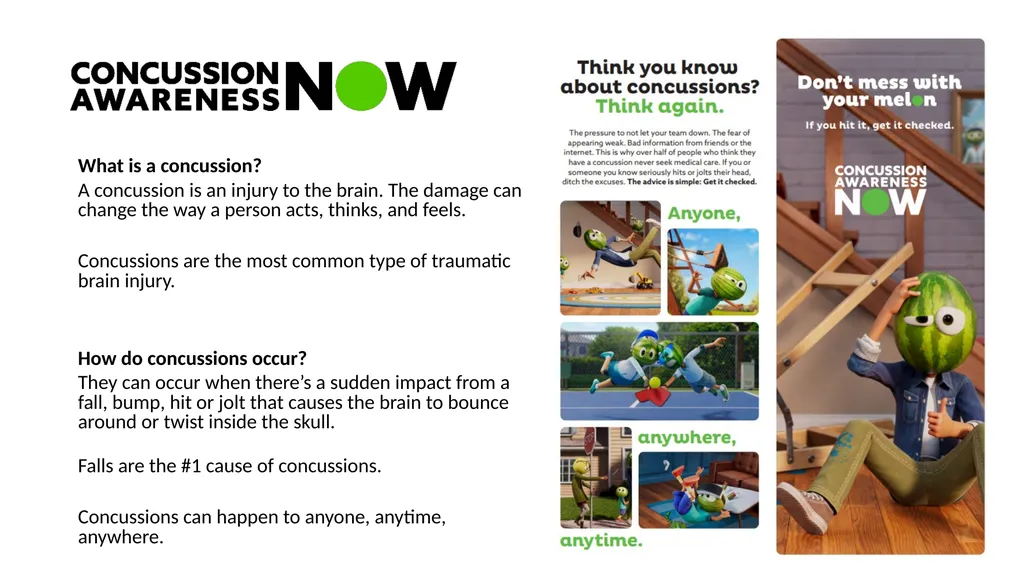
What is a concussion?
A concussion is an injury to the brain. The damage can change the way a person acts, thinks, and feels.
Concussions are the most common type of traumatic brain injury.
How do concussions occur?
They can occur when there’s a sudden impact from a fall, bump, hit or jolt that causes the brain to bounce around or twist inside the skull.
Falls are the #1 cause of concussions.
Concussions can happen to anyone, anytime, anywhere.<br>
06
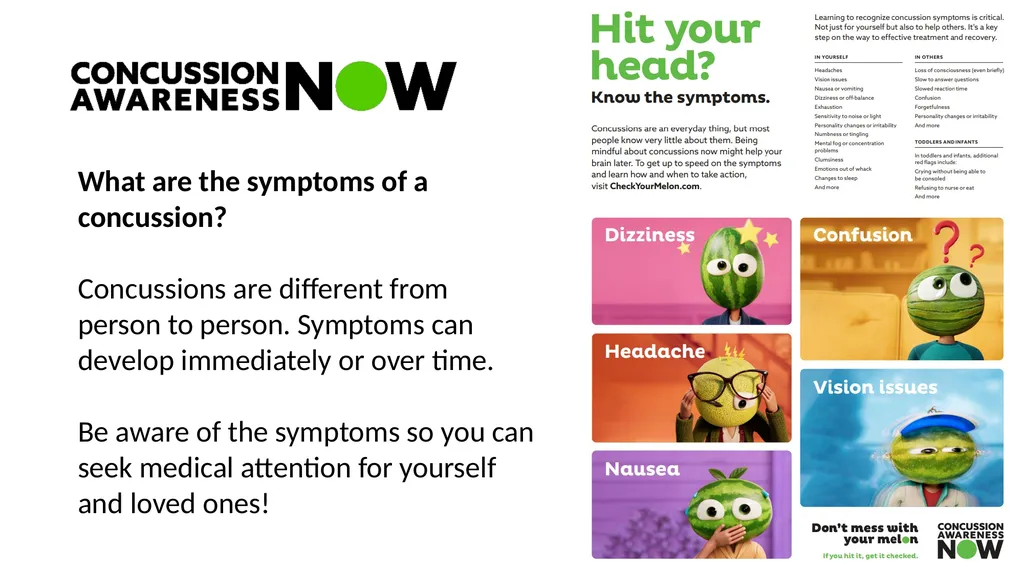
What are the symptoms of a concussion?
Concussions are different from person to person. Symptoms can develop immediately or over time.
Be aware of the symptoms so you can seek medical attention for yourself and loved ones!<br>
07
Did you know?
1 in 2 people who suspect a concussion do not get it checked.
The #1 reason for this is that people don’t believe symptoms are severe enough.<br>
08
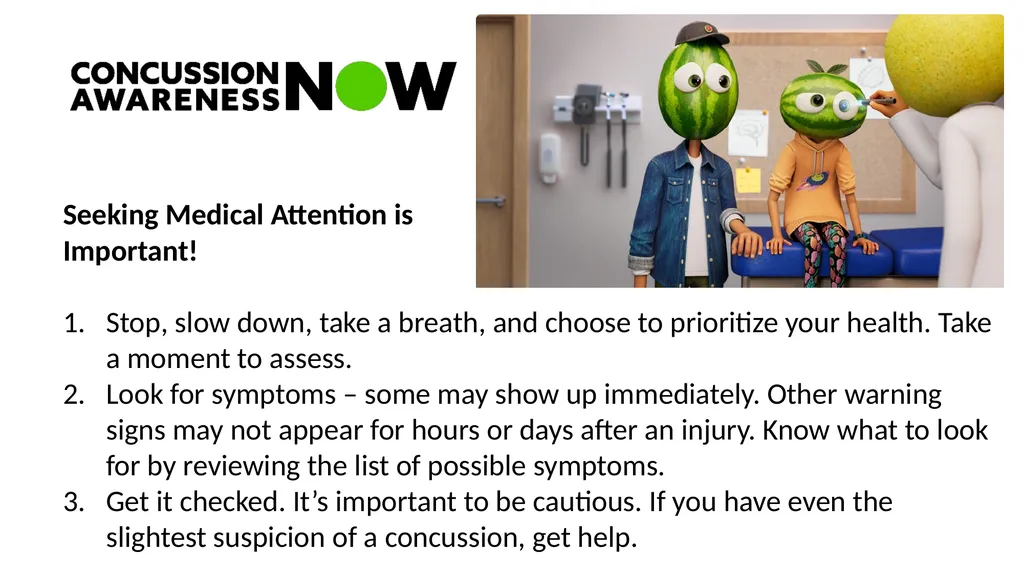
Seeking Medical Attention is
Important!
Stop, slow down, take a breath, and choose to prioritize your health. Take a moment to assess.
Look for symptoms – some may show up immediately. Other warning signs may not appear for hours or days after an injury. Know what to look for by reviewing the list of possible symptoms.
Get it checked. It’s important to be cautious. If you have even the slightest suspicion of a concussion, get help.<br>
09
Test Your Concussion Knowledge!
Myth or Fact?
You’ll know you have a concussion, because you’ll notice the symptoms right away.<br>
10
Test Your Concussion Knowledge!
Myth or Fact?
Every concussion is different, and symptoms can develop immediately, or over time. For some people, hours or even days may pass before they experience symptoms.<br>
11
Test Your Concussion Knowledge!
Myth or Fact?
Sports related injuries are the leading cause of concussions.<br>
12
Test Your Concussion Knowledge!
Myth or Fact?
The leading cause of concussions are falls during every day activities. Only 3% of concussions the present at the emergency room are sports-related.<br>
13
Test Your Concussion Knowledge!
Myth or Fact?
You can suffer a concussion even if you don’t hit your head.<br>
14
Test Your Concussion Knowledge!
Myth or Fact?
Concussions can result from a sudden jolt to the body or from any rapid movement in the head. You don’t have to hit your head to sustain a concussion.<br>
15
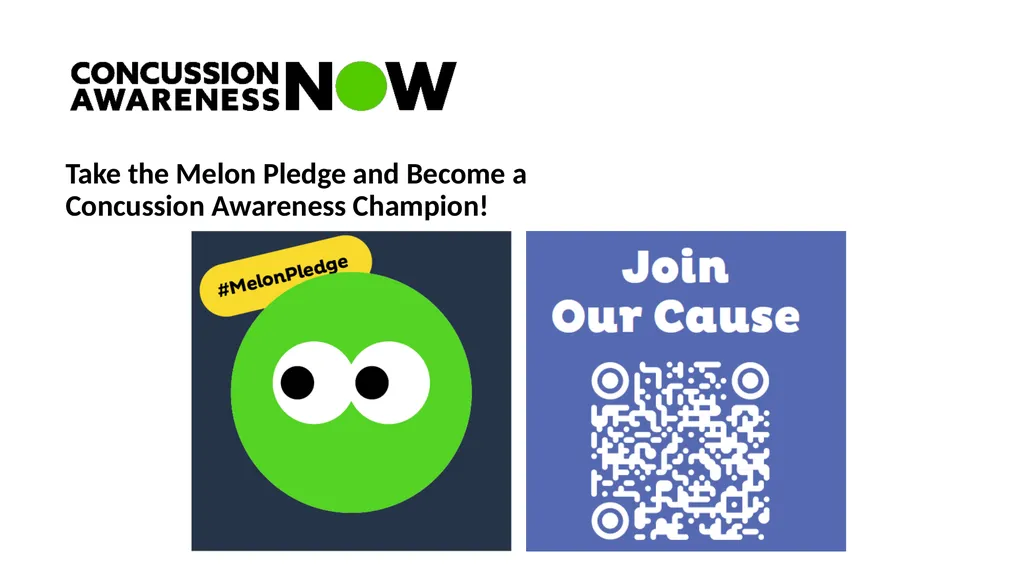
Take the Melon Pledge and Become a Concussion Awareness Champion!<br>
16
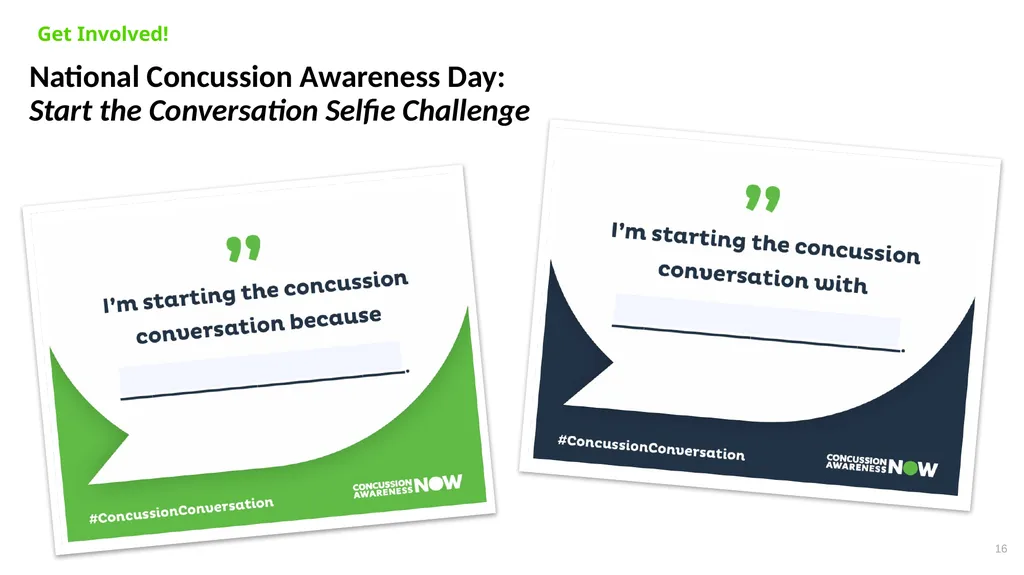
National Concussion Awareness Day: Start the Conversation Selfie Challenge Get Involved! 16<br>
17
National Brain Injury Information Center Resources 17 Have additional questions or need support?
Professionals at the National Brain Injury Information Center (NBIIC) are ready to answer your questions.
Dial 1-800-444-6443<br>
18
Thank you for helping us Start the Concussion Conversation! #ConcussionConversation #NationalConcussionAwarenessDay #StartTheConversation #ConcussionAwarenessNow Visit concussionawarenessnow.org for more tools, resources and ways to get involved!<br>