Congenital Hand Abnormalities Nick Sheppard AO AF BSSH Hand Trauma Workshop Consultant Reconstructive Plastic Blantyre, Malawi and Hand Surgeon 16 October 2018 Norfolk and Norwich Hospital, UK Assessment Look feel move Function is
"Congenital Hand Abnormalities Nick Sheppard AO AF" is the property of its rightful owner. Permission is granted to
download and print the materials on this website for personal, non-commercial use only, and to display it
on your personal computer provided you do not modify the materials and that you retain all copyright
notices contained in the materials. By downloading content from our website, you accept the terms of this
agreement.
Presentation Transcript
01
Congenital Hand Abnormalities Nick Sheppard AO AF / BSSH Hand Trauma Workshop
Consultant Reconstructive Plastic Blantyre, Malawi
and Hand Surgeon 16 October 2018
Norfolk and Norwich Hospital, UK<br>
02
Assessment Look feel move
Function is all-important
Plan intervention targeted to specific goals
Consider the whole patient<br>
03
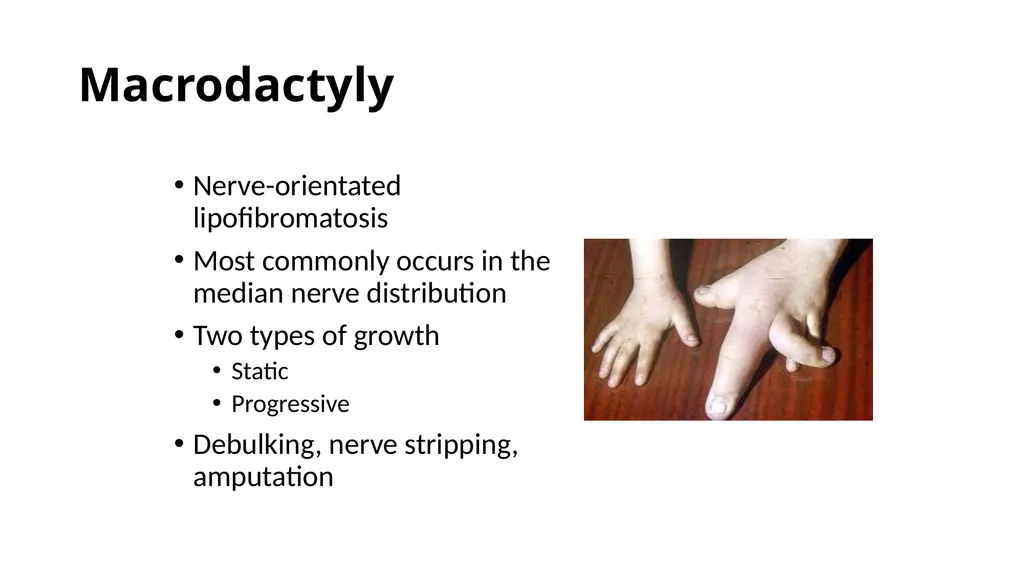
Macrodactyly Nerve-orientated lipofibromatosis
Most commonly occurs in the median nerve distribution
Two types of growth
Static
Progressive
Debulking, nerve stripping, amputation<br>
04
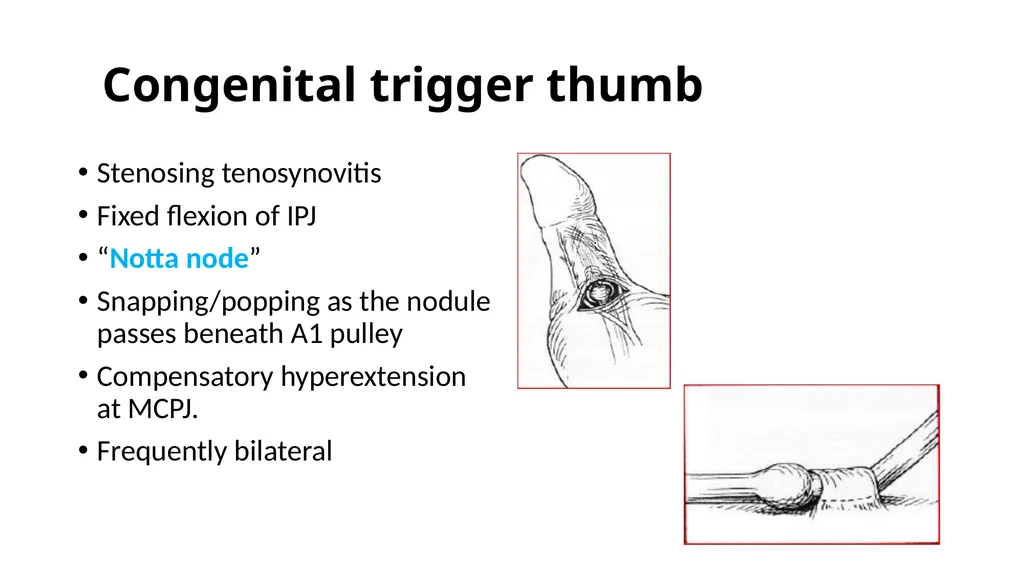
Congenital trigger thumb Stenosing tenosynovitis
Fixed flexion of IPJ
“Notta node”
Snapping/popping as the nodule passes beneath A1 pulley
Compensatory hyperextension at MCPJ.
Frequently bilateral<br>
05
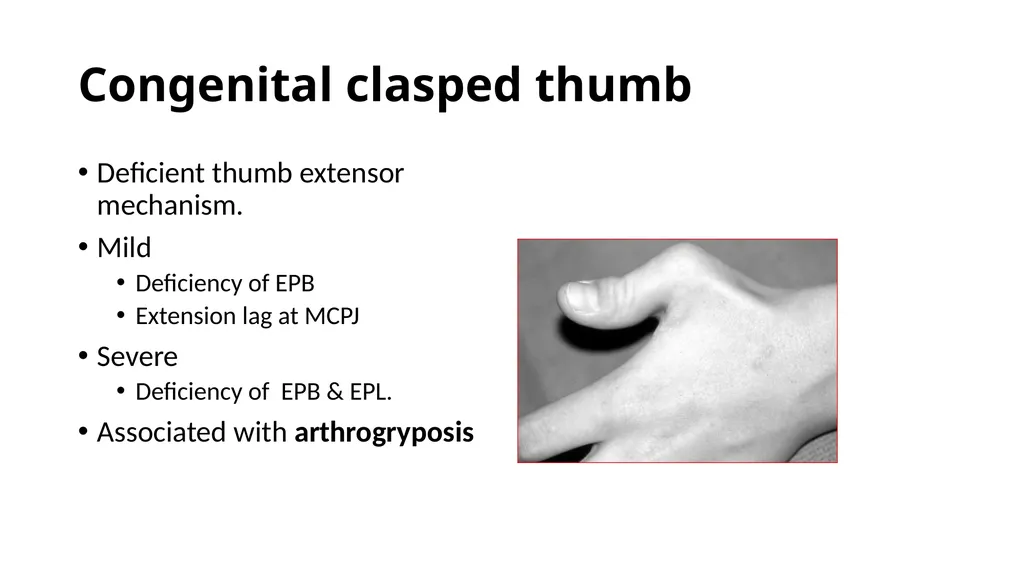
Congenital clasped thumb Deficient thumb extensor mechanism.
Mild
Deficiency of EPB
Extension lag at MCPJ
Severe
Deficiency of EPB & EPL.
Associated with arthrogryposis<br>
06
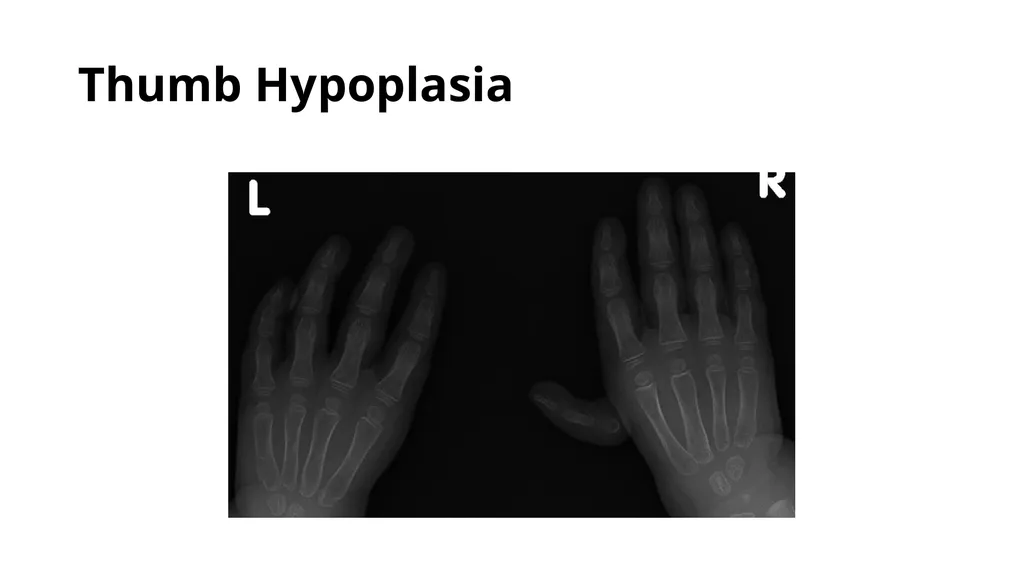
Preaxial deficiency Minor abnormalities to complete absence of thumb
Commonly short radius, hypoplasia of the thumb
Bilateral almost as common as unilateral
Bilateral : part of a syndrome in 77% of patients<br>
07
Syndromes associated with preaxial deficiency Holt-Oram Syndrome Heart defects (ASD)
Thrombocytopenia-absent radius (TAR) syndrome
Thrombocytopenia present at birth
Fanconi anemia
Aplastic anaemia present at birth<br>
08
Fanconi Anaemia 1 in 350,000 births
Autosomal recessive
Ashkenazi Jews , South Africans
20% develop AML
90% develop bone marrow failure by age 40
60-75% have developmental defects
Median age of death was 30 years (2000)<br>
09
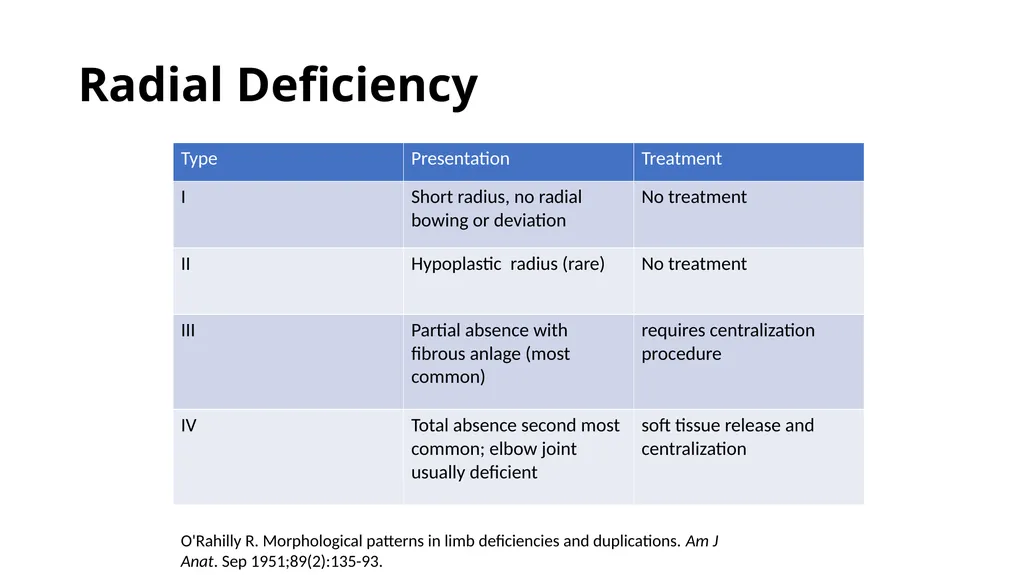
Radial Deficiency O'Rahilly R. Morphological patterns in limb deficiencies and duplications. Am J Anat. Sep 1951;89(2):135-93.<br>
10
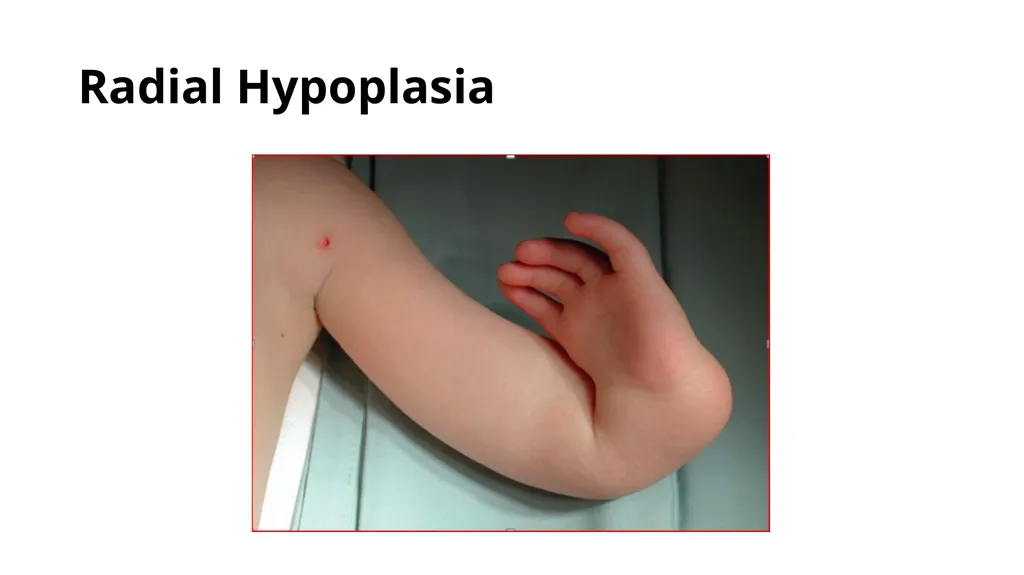
Radial Hypoplasia<br>
11
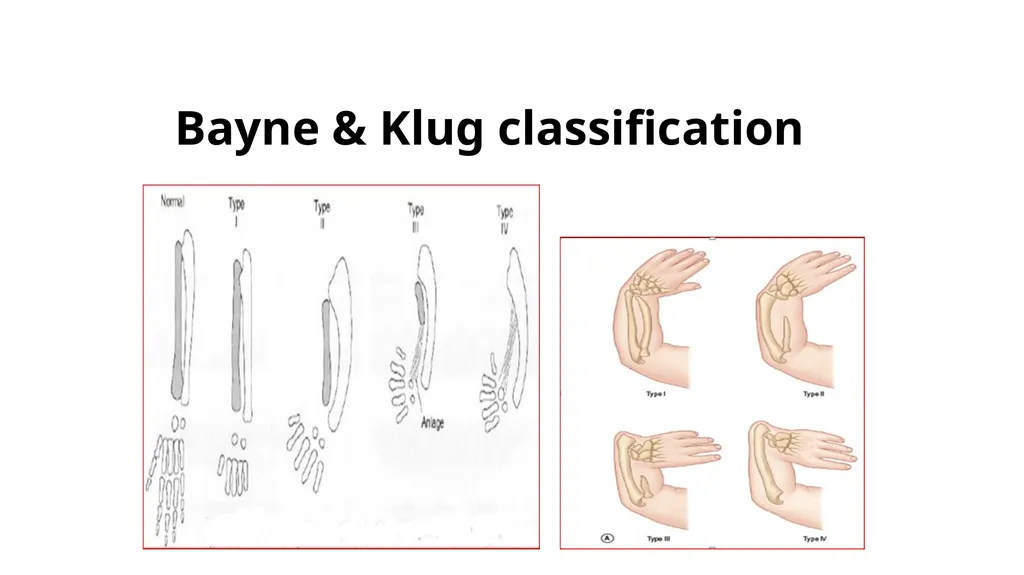
Bayne & Klug classification<br>
12
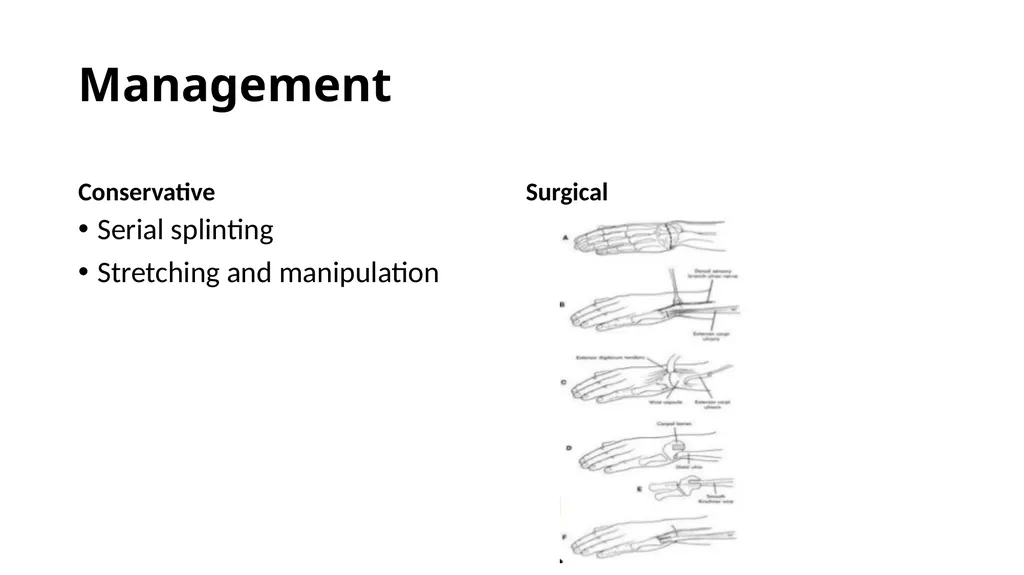
Management Conservative Serial splinting
Stretching and manipulation Surgical<br>
13
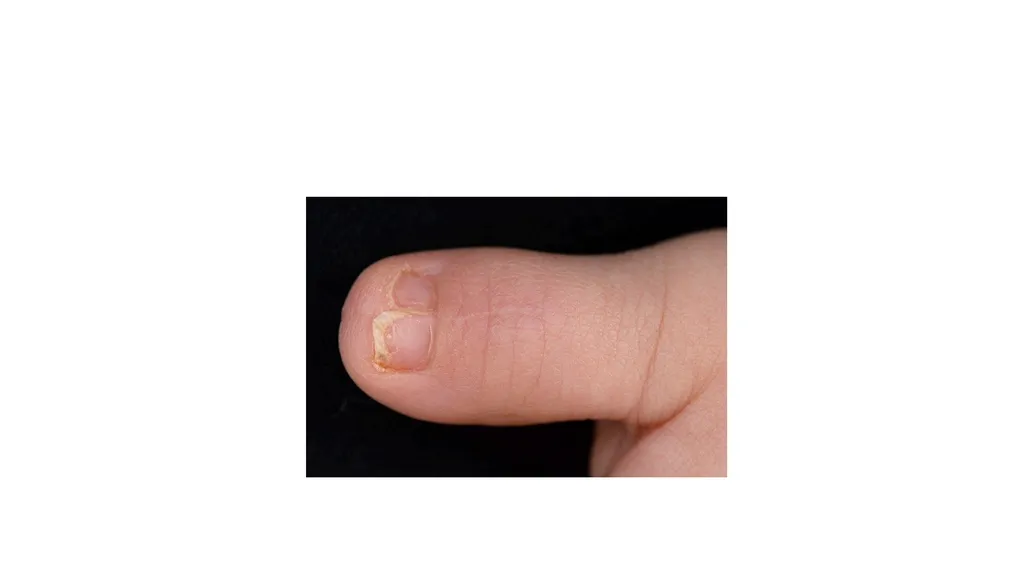
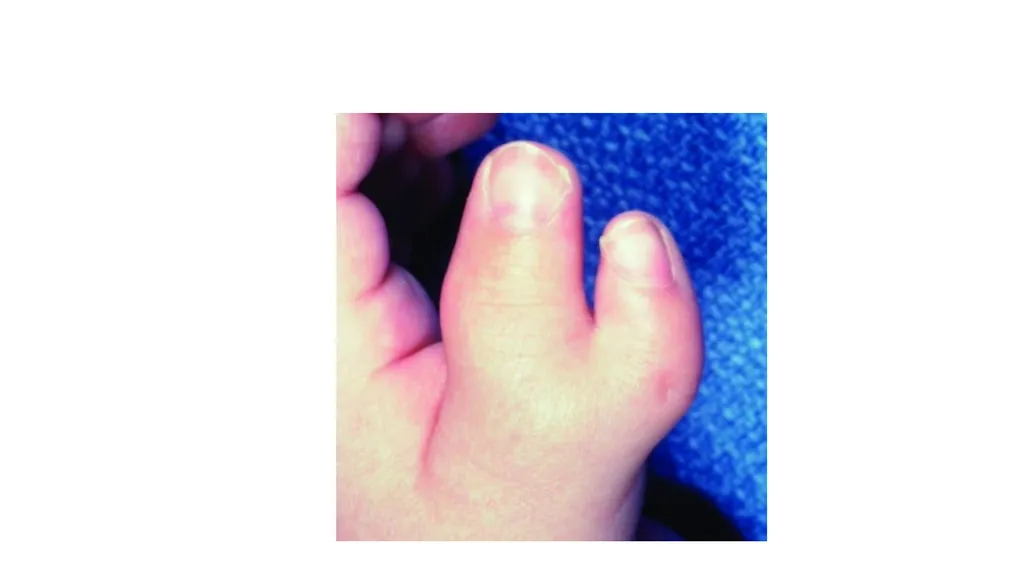
Polydactyly Polydactyly is one of the most common congenital anomaly of the upper limb.
Total duplication of the hand and forearm is ulnar dimelia (rare).
Central duplication may be termed polysyndactyly.
Isolated postaxial polydactyly has a strong autosomal dominant inheritance pattern and is common in individuals of African descent<br>
14
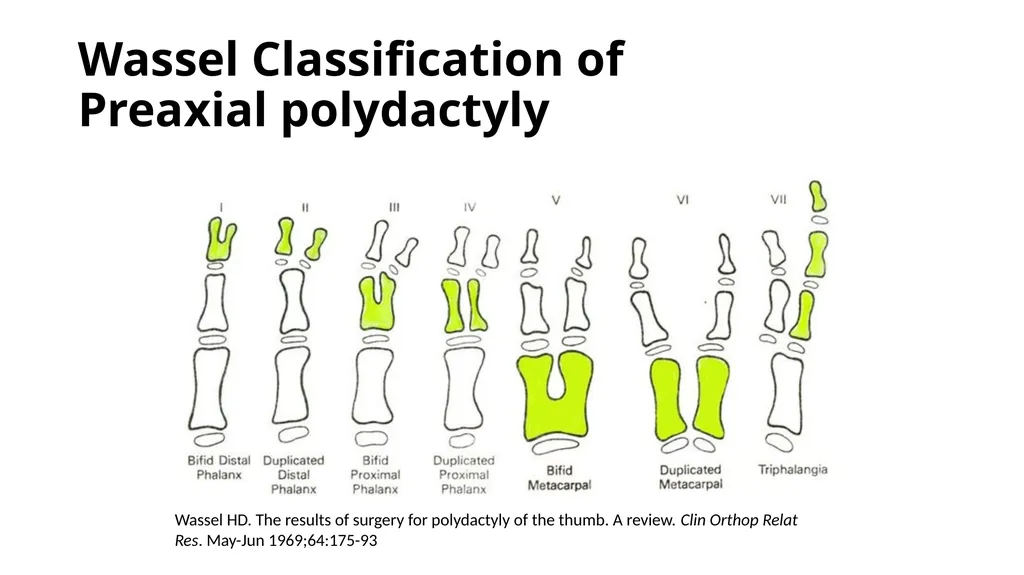
Wassel Classification of Preaxial polydactyly Wassel HD. The results of surgery for polydactyly of the thumb. A review. Clin Orthop Relat Res. May-Jun 1969;64:175-93<br>
15
Thumb Hypoplasia<br>
16
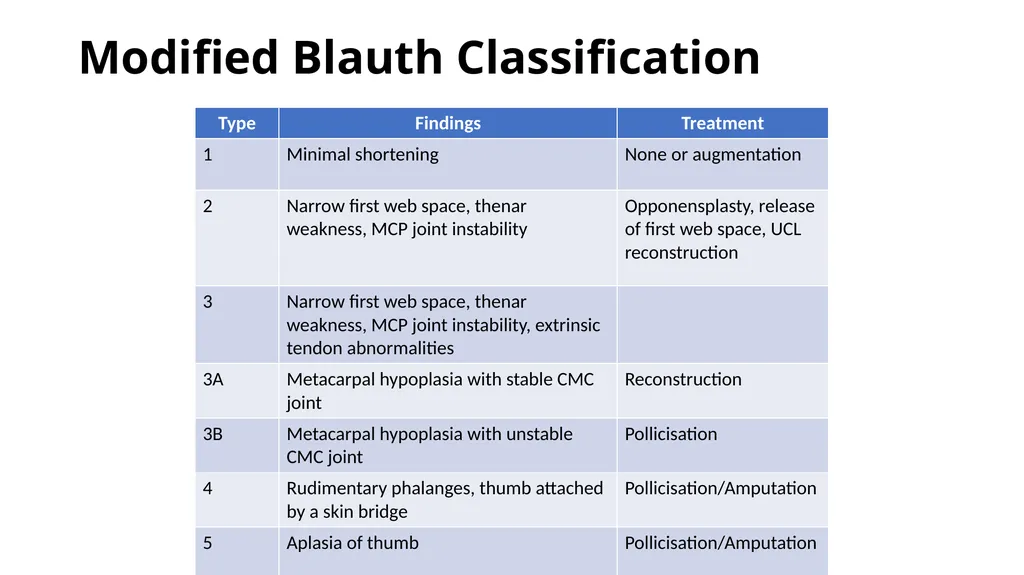
Modified Blauth Classification<br>
17
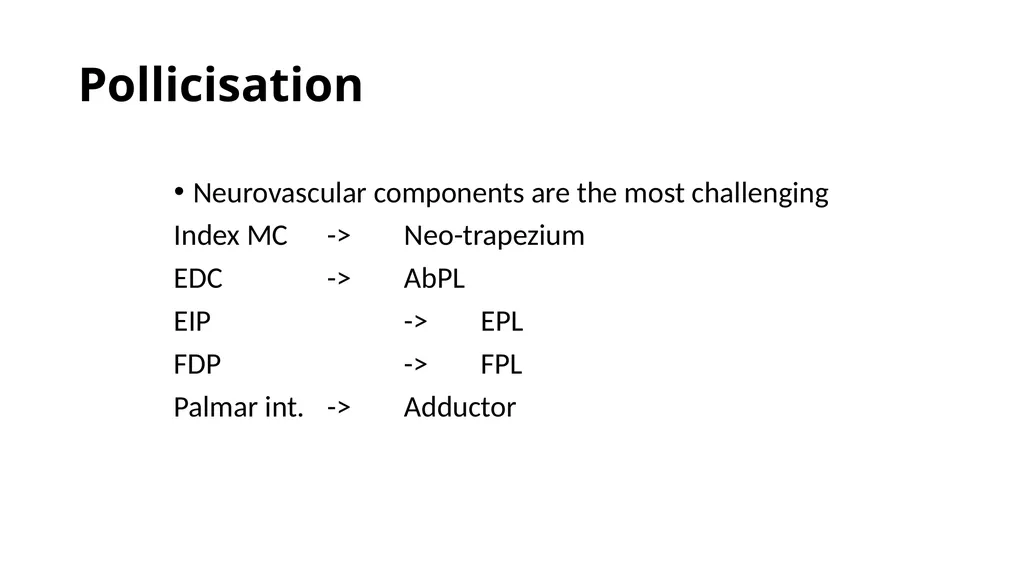
Pollicisation Neurovascular components are the most challenging
Index MC -> Neo-trapezium
EDC -> AbPL
EIP -> EPL
FDP -> FPL
Palmar int. -> Adductor<br>
18
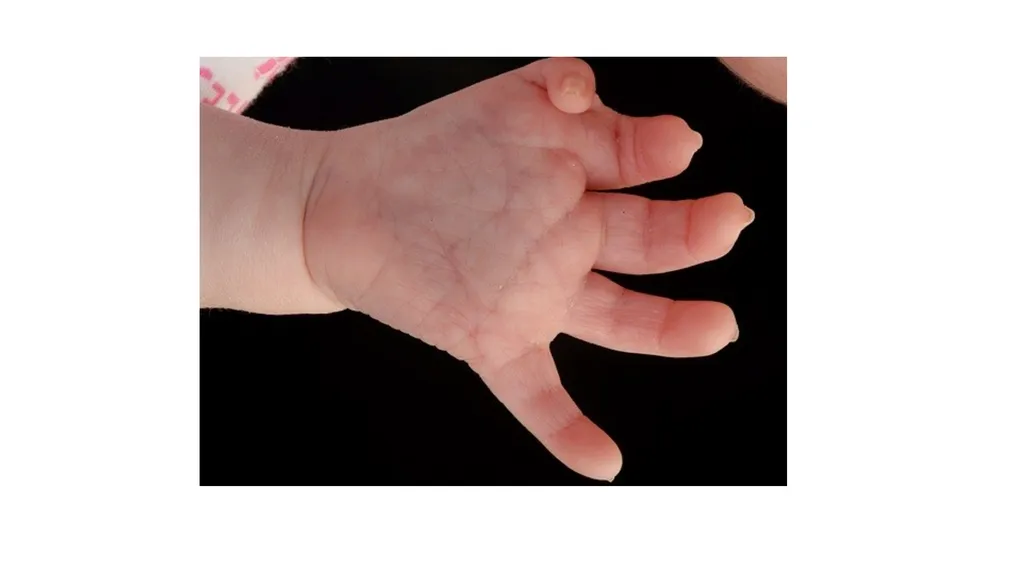
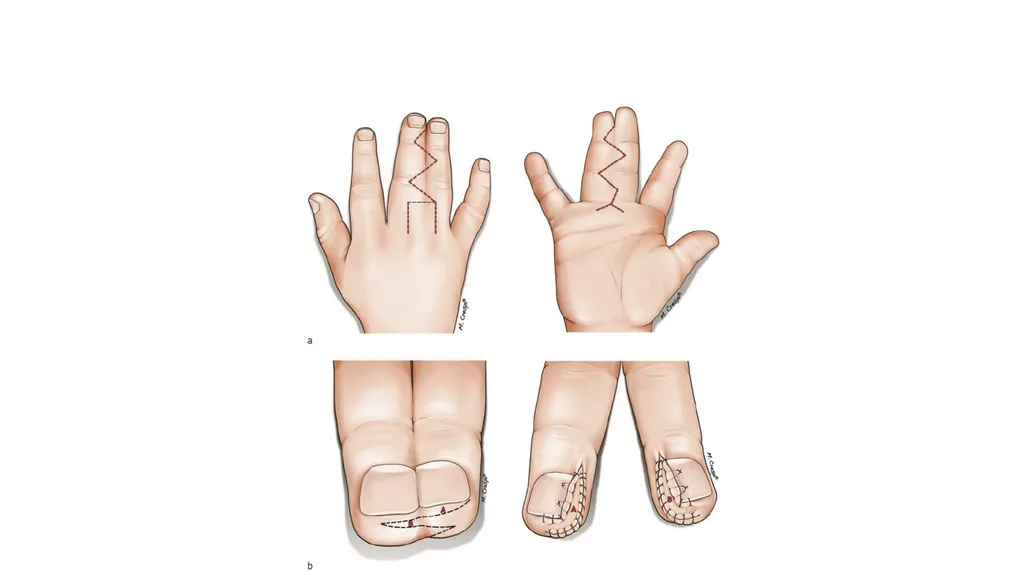
Syndactyly one of the most common congenital anomalies in the hand
1 in 2000
bilateral, and males are affected more commonly than females
third and then fourth web – most affected
associated with at least 28 syndromes<br>
19
Classification Completeness
Complete – skin joined all the way to the finger-tip
Incomplete – skin is joined part of the distance to the tip of the finger
Presence of bony union
Simple - adjacent fingers are joined by soft tissue
Complex - bones of adjacent digits are fused
Complicated - more than simple side-side bony fusion<br>
20
Congenital Hand Abnormalities Nick Sheppard AO AF / BSSH Hand Trauma Workshop
Consultant Reconstructive Plastic Blantyre, Malawi
and Hand Surgeon 16 October 2018
Norfolk and Norwich Hospital, UK<br>