
Connecticut’s Response to Child Trafficking
CB
Published · 80 slides · 0 views

1 / 1




Description
Connecticuts Response to Child Trafficking Introduction Rosie Gomez Child Welfare Program Specialist Administration for Children and Families, ACYF, CB Trafficking from a National Perspective Vanessa Chauhan Polaris Federal Law
Related Topics
Share
Embed code
Download this presentation From Below
"Connecticut’s Response to Child Trafficking" is the property of its rightful owner. Permission is granted to download and print the materials on this website for personal, non-commercial use only, and to display it on your personal computer provided you do not modify the materials and that you retain all copyright notices contained in the materials. By downloading content from our website, you accept the terms of this agreement.
Presentation Transcript
01
Connecticut’s Response
to
Child Trafficking<br>
to
Child Trafficking<br>
02
Introduction Rosie Gomez
Child Welfare Program Specialist
Administration for Children and Families, ACYF, CB<br>
Child Welfare Program Specialist
Administration for Children and Families, ACYF, CB<br>
03
Trafficking from a National Perspective Vanessa Chauhan
Polaris<br>
Polaris<br>
04
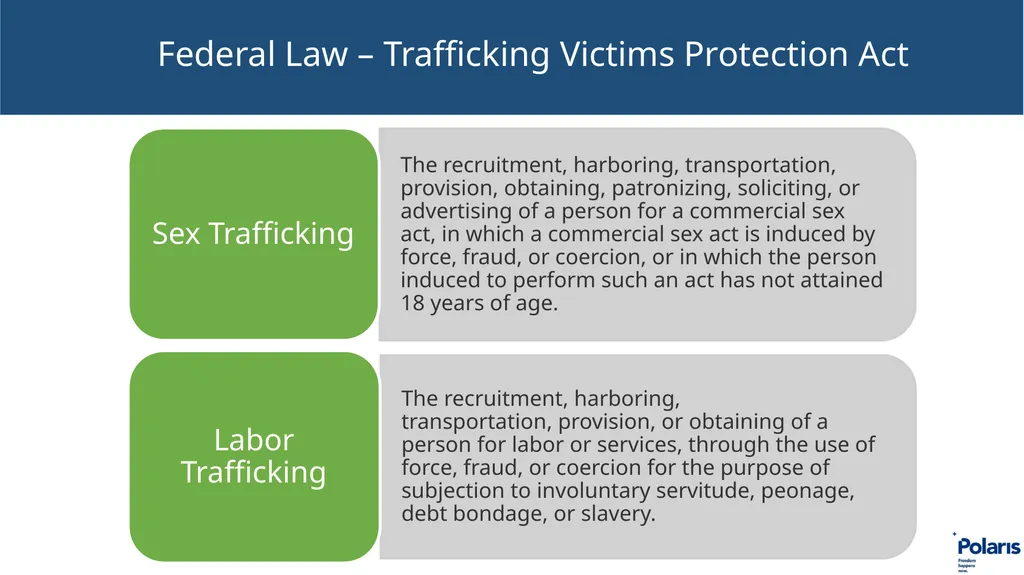
Federal Law – Trafficking Victims Protection Act<br>
05
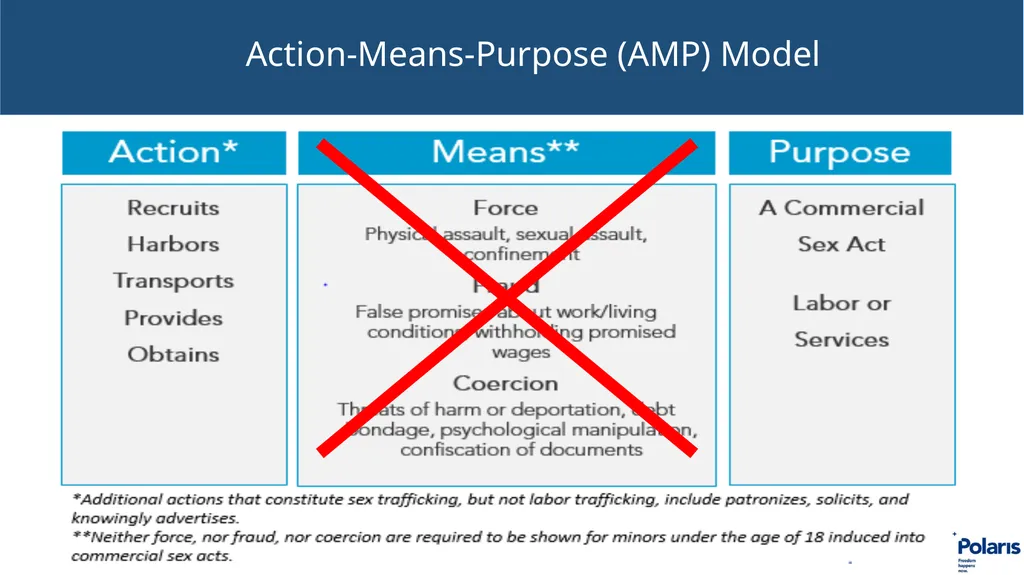
Action-Means-Purpose (AMP) Model<br>
06
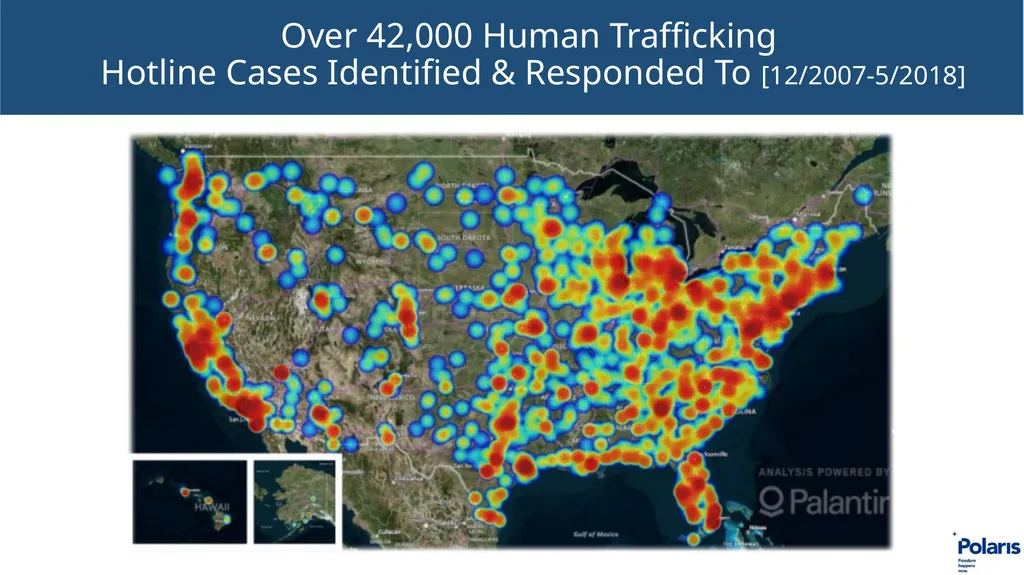
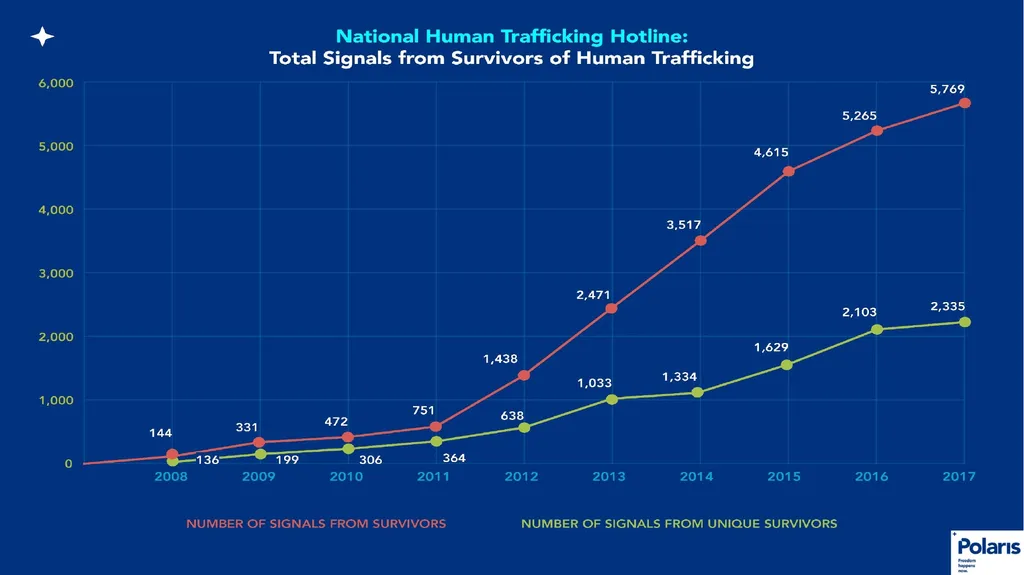
Over 42,000 Human Trafficking
Hotline Cases Identified & Responded To [12/2007-5/2018]<br>
07
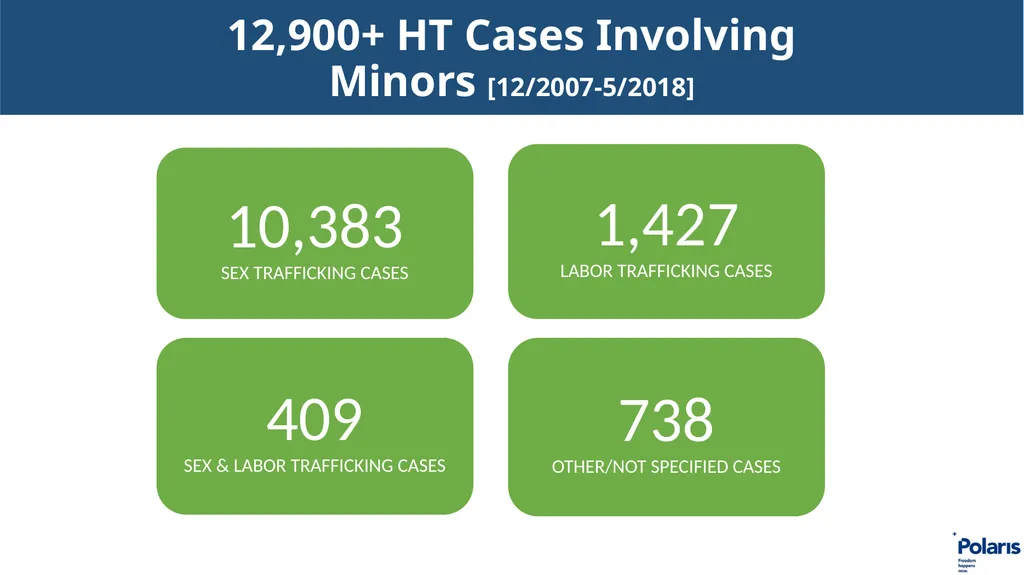
12,900+ HT Cases Involving Minors [12/2007-5/2018] 10,383
SEX TRAFFICKING CASES 1,427
LABOR TRAFFICKING CASES 409
SEX & LABOR TRAFFICKING CASES 738
OTHER/NOT SPECIFIED CASES<br>
SEX TRAFFICKING CASES 1,427
LABOR TRAFFICKING CASES 409
SEX & LABOR TRAFFICKING CASES 738
OTHER/NOT SPECIFIED CASES<br>
08
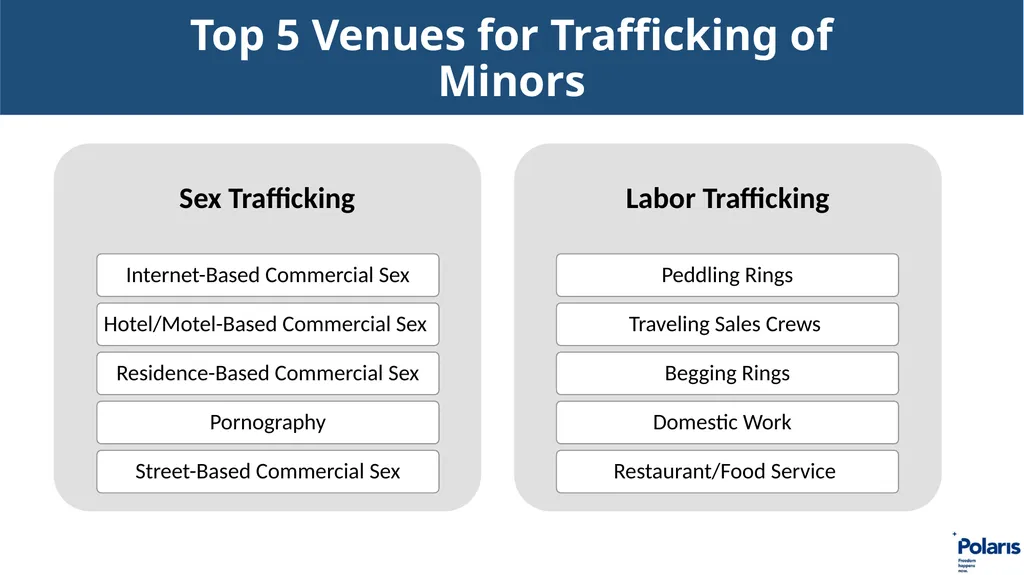
Top 5 Venues for Trafficking of Minors<br>
09
Connecticut’s Response to Trafficking Tammy Sneed
Department of Children & Families<br>
Department of Children & Families<br>
10
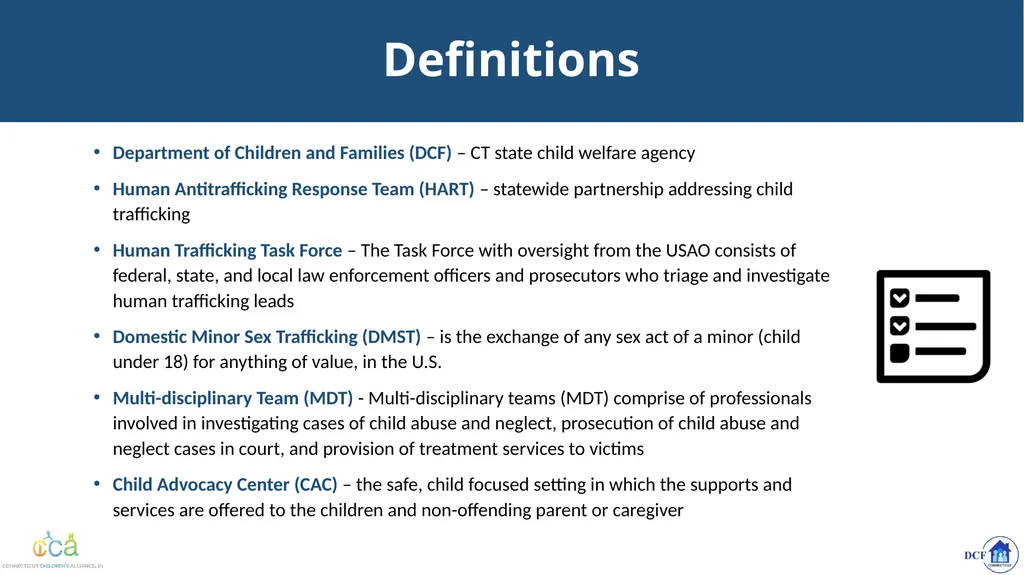
Definitions Department of Children and Families (DCF) – CT state child welfare agency
Human Antitrafficking Response Team (HART) – statewide partnership addressing child trafficking
Human Trafficking Task Force – The Task Force with oversight from the USAO consists of federal, state, and local law enforcement officers and prosecutors who triage and investigate human trafficking leads
Domestic Minor Sex Trafficking (DMST) – is the exchange of any sex act of a minor (child under 18) for anything of value, in the U.S.
Multi-disciplinary Team (MDT) - Multi-disciplinary teams (MDT) comprise of professionals involved in investigating cases of child abuse and neglect, prosecution of child abuse and neglect cases in court, and provision of treatment services to victims
Child Advocacy Center (CAC) – the safe, child focused setting in which the supports and services are offered to the children and non-offending parent or caregiver<br>
Human Antitrafficking Response Team (HART) – statewide partnership addressing child trafficking
Human Trafficking Task Force – The Task Force with oversight from the USAO consists of federal, state, and local law enforcement officers and prosecutors who triage and investigate human trafficking leads
Domestic Minor Sex Trafficking (DMST) – is the exchange of any sex act of a minor (child under 18) for anything of value, in the U.S.
Multi-disciplinary Team (MDT) - Multi-disciplinary teams (MDT) comprise of professionals involved in investigating cases of child abuse and neglect, prosecution of child abuse and neglect cases in court, and provision of treatment services to victims
Child Advocacy Center (CAC) – the safe, child focused setting in which the supports and services are offered to the children and non-offending parent or caregiver<br>
11
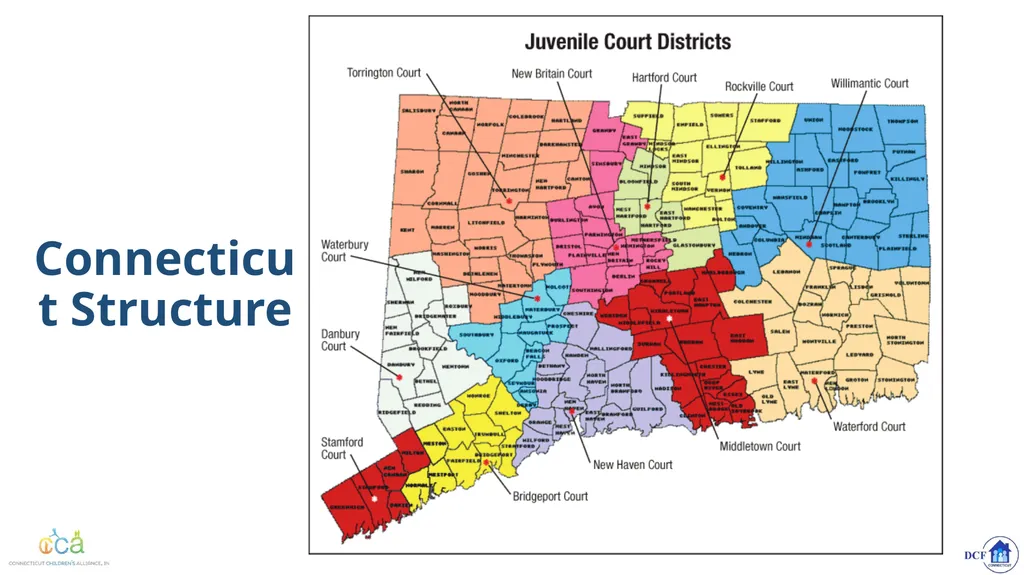
Connecticut Structure<br>
12
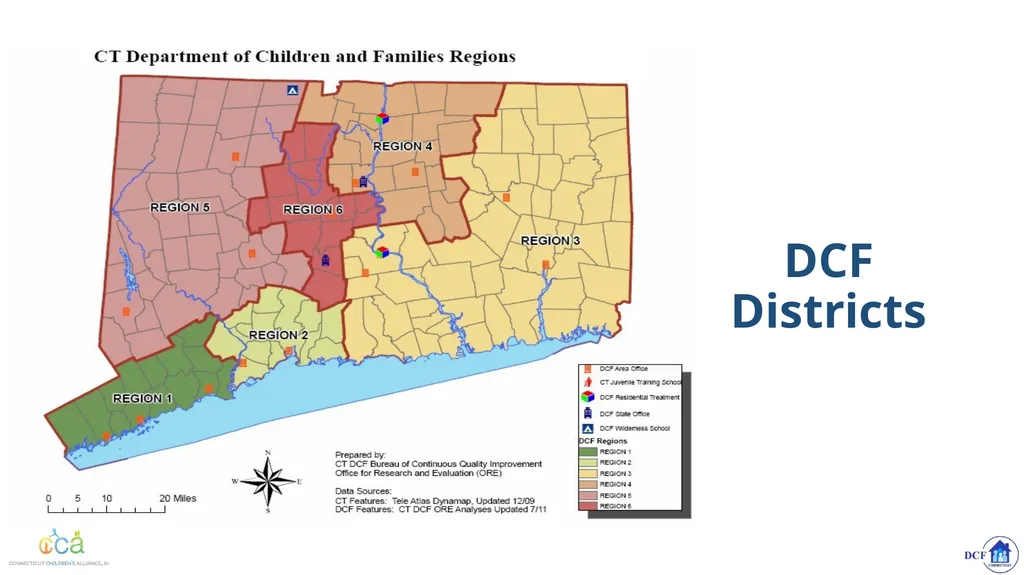
DCF Districts<br>
13
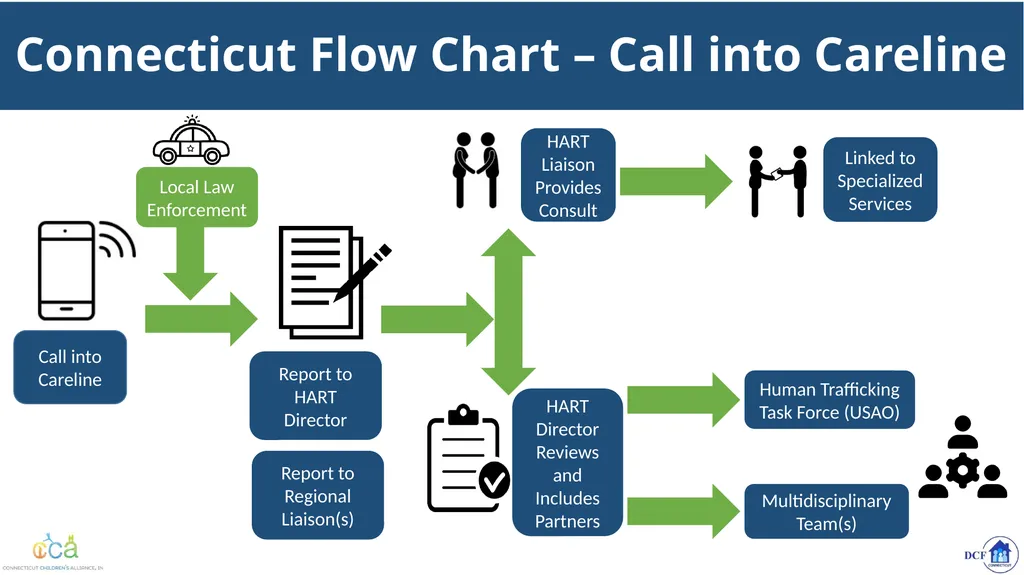
Connecticut Flow Chart – Call into Careline Call into Careline Report to HART Director HART Director Reviews and Includes Partners HART Liaison Provides Consult Multidisciplinary Team(s) Linked to Specialized Services Human Trafficking Task Force (USAO) Local Law Enforcement Report to Regional Liaison(s)<br>
14
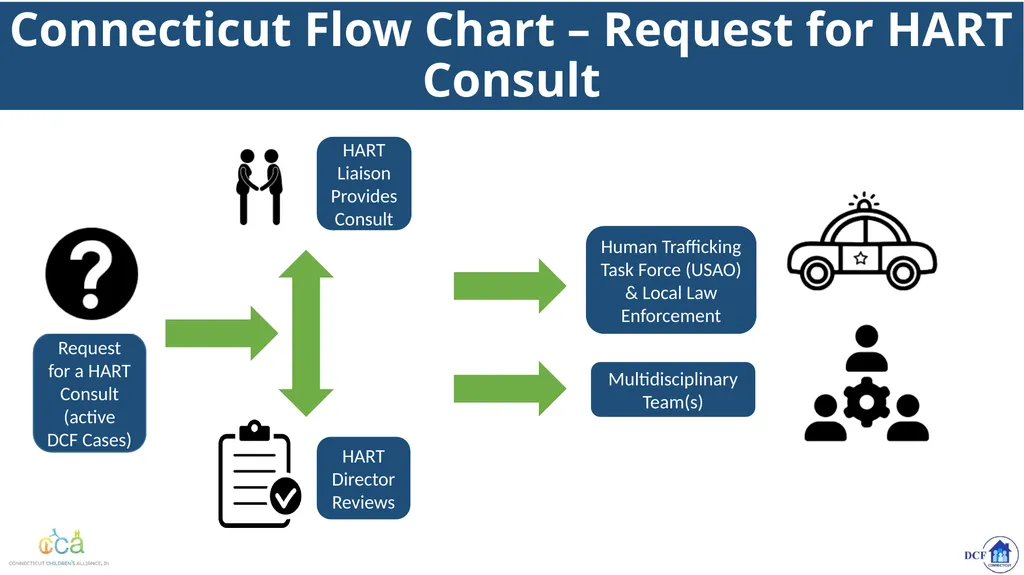
Connecticut Flow Chart – Request for HART Consult Request for a HART Consult (active DCF Cases) HART Director Reviews HART Liaison Provides Consult Multidisciplinary Team(s) Human Trafficking Task Force (USAO) & Local Law Enforcement<br>
15
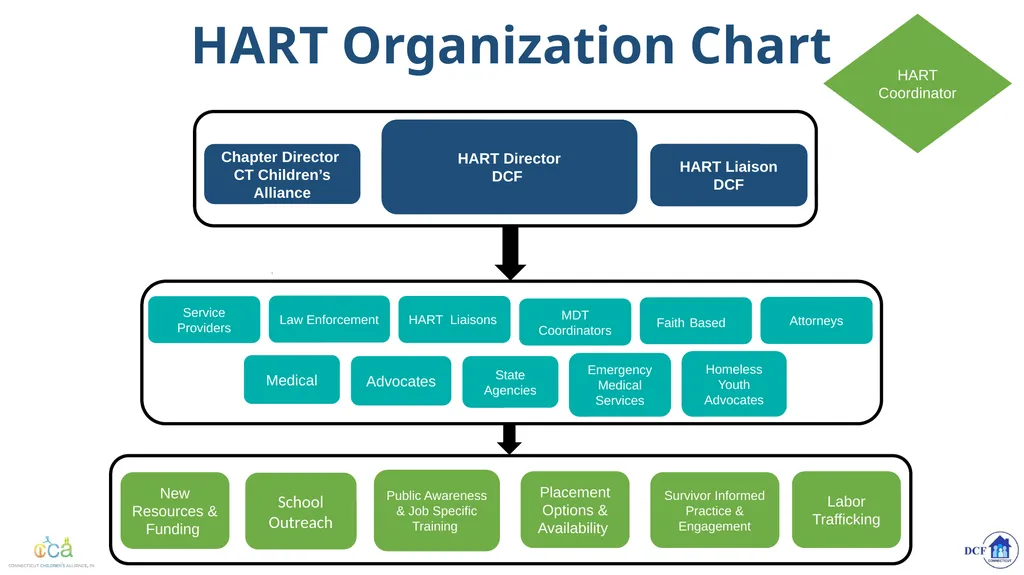
HART Organization Chart Public Awareness & Job Specific
Training Labor Trafficking HART Coordinator School
Outreach Medical Advocates State Agencies Emergency Medical Services Homeless Youth
Advocates Survivor Informed Practice & Engagement Placement Options & Availability New Resources & Funding<br>
Training Labor Trafficking HART Coordinator School
Outreach Medical Advocates State Agencies Emergency Medical Services Homeless Youth
Advocates Survivor Informed Practice & Engagement Placement Options & Availability New Resources & Funding<br>
16
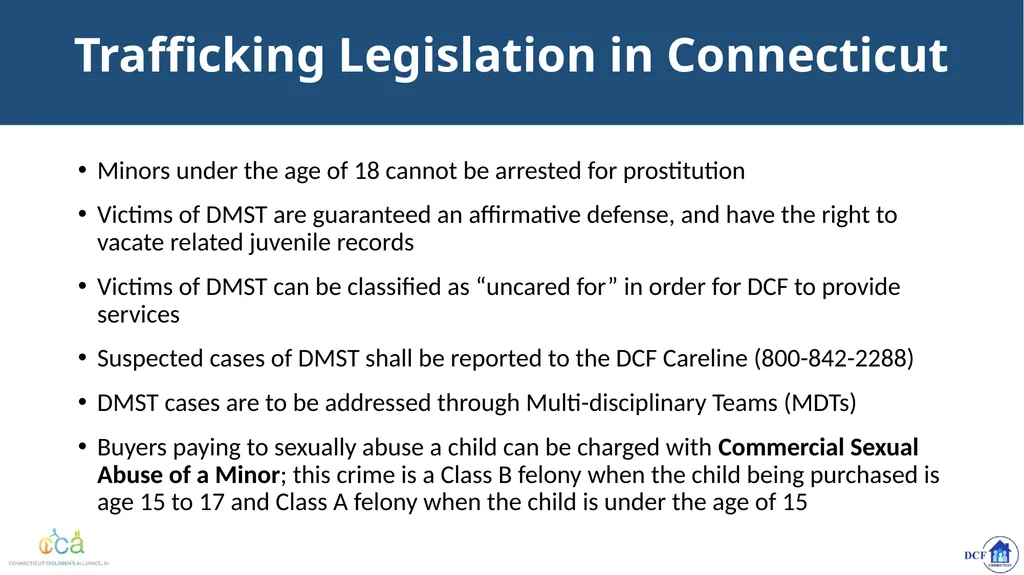
Trafficking Legislation in Connecticut Minors under the age of 18 cannot be arrested for prostitution
Victims of DMST are guaranteed an affirmative defense, and have the right to vacate related juvenile records
Victims of DMST can be classified as “uncared for” in order for DCF to provide services
Suspected cases of DMST shall be reported to the DCF Careline (800-842-2288)
DMST cases are to be addressed through Multi-disciplinary Teams (MDTs)
Buyers paying to sexually abuse a child can be charged with Commercial Sexual Abuse of a Minor; this crime is a Class B felony when the child being purchased is age 15 to 17 and Class A felony when the child is under the age of 15<br>
Victims of DMST are guaranteed an affirmative defense, and have the right to vacate related juvenile records
Victims of DMST can be classified as “uncared for” in order for DCF to provide services
Suspected cases of DMST shall be reported to the DCF Careline (800-842-2288)
DMST cases are to be addressed through Multi-disciplinary Teams (MDTs)
Buyers paying to sexually abuse a child can be charged with Commercial Sexual Abuse of a Minor; this crime is a Class B felony when the child being purchased is age 15 to 17 and Class A felony when the child is under the age of 15<br>
17
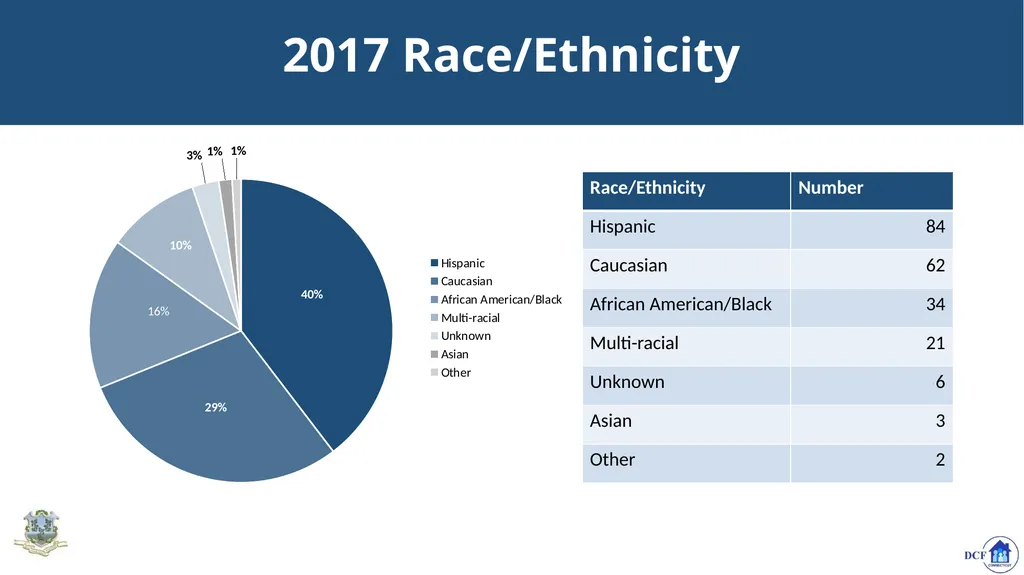
2017 Race/Ethnicity 2017 Race/Ethnicity<br>
18
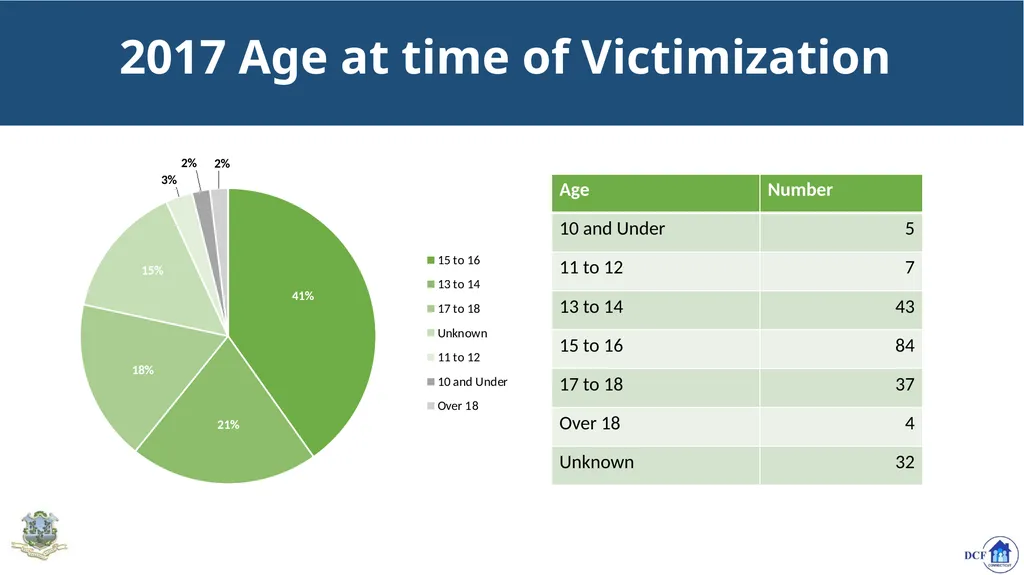
2017 Age at time of Victimization 2017 Age at time of Victimization<br>
19
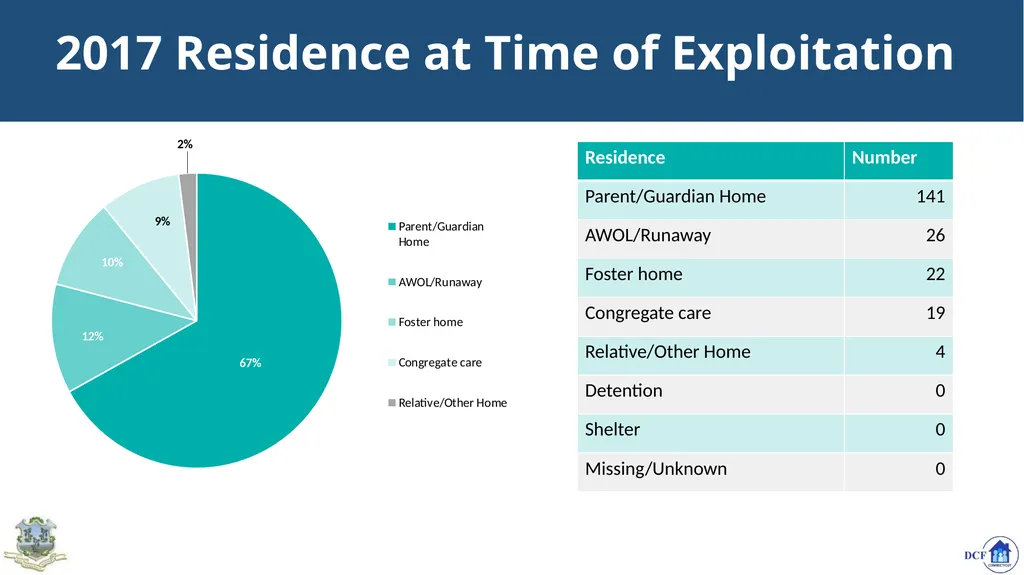
2017 Residence at Time of Exploitation 2017 Residence at Time of Exploitation<br>
20
HART Response and Resources Christa Rider
Department of Children & Families<br>
Department of Children & Families<br>
21
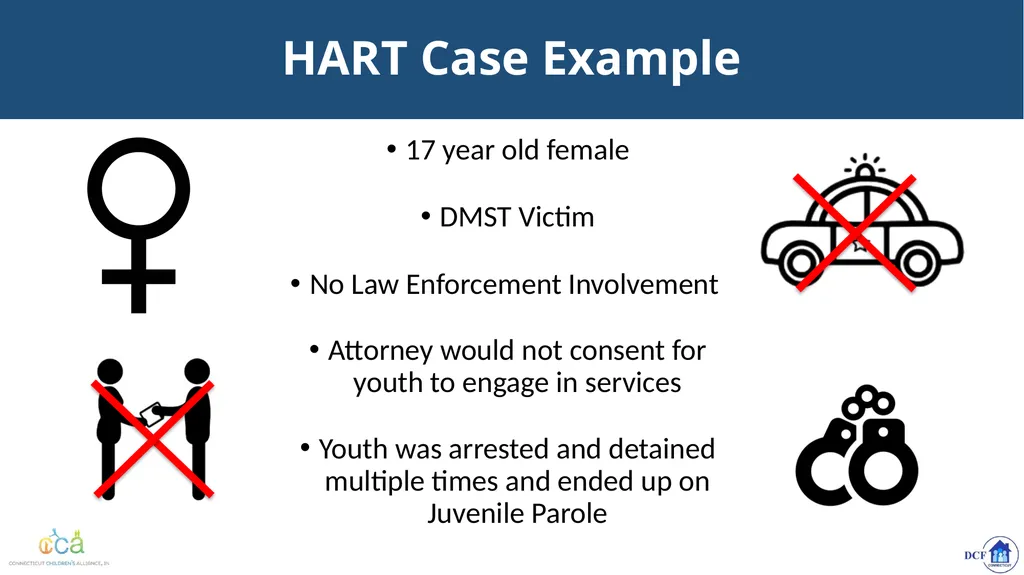
HART Case Example 17 year old female
DMST Victim
No Law Enforcement Involvement
Attorney would not consent for youth to engage in services
Youth was arrested and detained multiple times and ended up on Juvenile Parole<br>
DMST Victim
No Law Enforcement Involvement
Attorney would not consent for youth to engage in services
Youth was arrested and detained multiple times and ended up on Juvenile Parole<br>
22
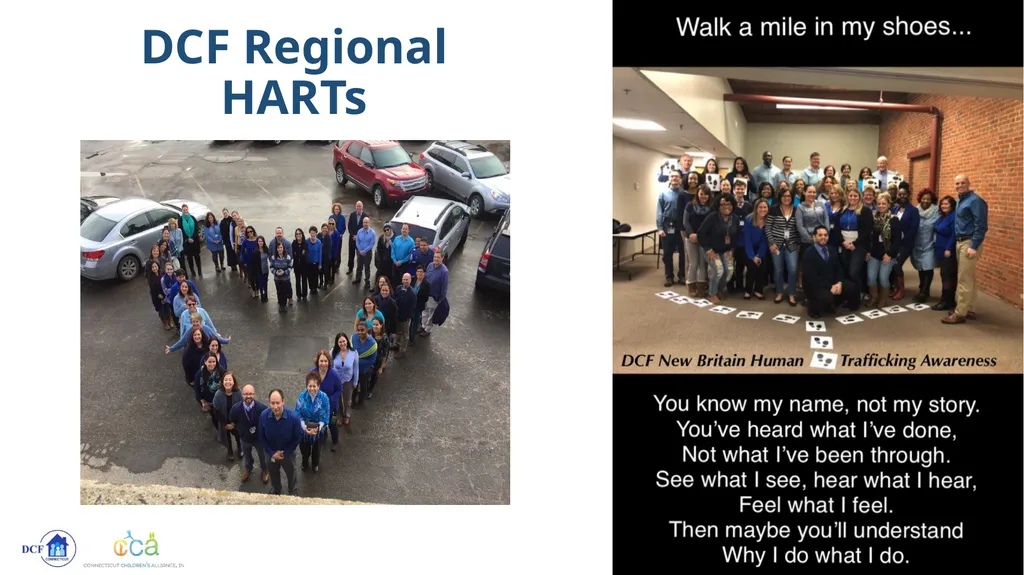
DCF Regional HARTs<br>
23
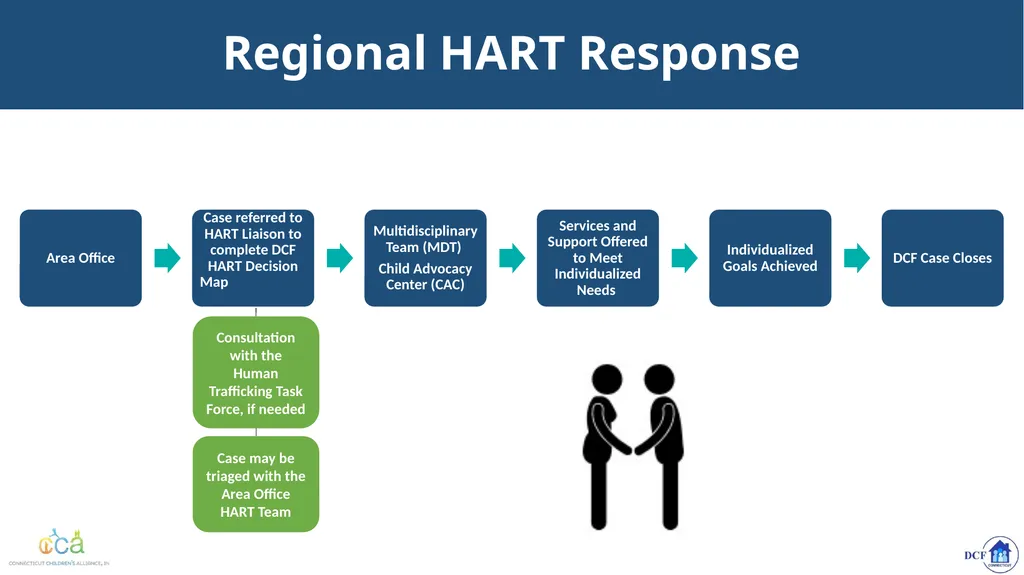
Regional HART Response Case may be triaged with the Area Office HART Team Consultation with the Human Trafficking Task Force, if needed<br>
24
Youth Awareness: 45 to 60 minute Youth Awareness presentation to educate youth ages 12 to 18 on child trafficking; can be done in assembly format
Not a #Number: 5 session prevention curriculum developed by Love 146 on Human Trafficking for girls, boys and LGBTQI youth, ages 12 to 18
My Life My Choice: 10-session Exploitation Prevention Curriculum designed to change girls’ (ages 12 to 18) perceptions of the commercial sex industry, as well as build self-esteem and personal empowerment
Survivor Care – Rapid Response: Rapid Responses are one-time interventions designed to target the unique risk factors and needs of individual youth who have been identified as confirmed victims, or highly suspected victims of human trafficking
Survivor Care – Long Term: Love146’s Survivor Care Therapeutic Case Management Program journeys with and provides support services to youth who are confirmed survivors of human trafficking Existing Resources in CT<br>
Not a #Number: 5 session prevention curriculum developed by Love 146 on Human Trafficking for girls, boys and LGBTQI youth, ages 12 to 18
My Life My Choice: 10-session Exploitation Prevention Curriculum designed to change girls’ (ages 12 to 18) perceptions of the commercial sex industry, as well as build self-esteem and personal empowerment
Survivor Care – Rapid Response: Rapid Responses are one-time interventions designed to target the unique risk factors and needs of individual youth who have been identified as confirmed victims, or highly suspected victims of human trafficking
Survivor Care – Long Term: Love146’s Survivor Care Therapeutic Case Management Program journeys with and provides support services to youth who are confirmed survivors of human trafficking Existing Resources in CT<br>
25
Foster Care: there are Therapeutic Foster Parents who are trained to provide support and placement for youth at high risk and/or confirmed victims of DMST in CT
Mentoring: there are DMST trained mentors in CT
Wilderness School: specialized events in partnership with Love146/ Survivor Care
Connecticut’s Provider Network: providers are trained on child trafficking, service provision is based on the need of each individual youth Existing Resources in CT<br>
Mentoring: there are DMST trained mentors in CT
Wilderness School: specialized events in partnership with Love146/ Survivor Care
Connecticut’s Provider Network: providers are trained on child trafficking, service provision is based on the need of each individual youth Existing Resources in CT<br>
26
Collaboration in CT: Child Advocacy Centers and MDTs Krystal Rich
Connecticut Children’s Alliance<br>
Connecticut Children’s Alliance<br>
27
Child Advocacy Centers and
Multi-disciplinary Teams What is a MDT?
Multi-disciplinary teams (MDT) comprise of professionals involved in investigating cases of child abuse and neglect, prosecution of child abuse and neglect cases in court, and provision of treatment services to victims.
What is a CAC?
The safe, child focused setting in which the supports and services are offered to the children and non-offending parent or caregiver.
What is the purpose of this model?
To ensure better collaboration
Reducing the risk of breakdown in communication
Ensure the system set up to protect and respond to kids doesn’t revictimize them by reducing duplication of services and work to achieve a best practice response<br>
Multi-disciplinary teams (MDT) comprise of professionals involved in investigating cases of child abuse and neglect, prosecution of child abuse and neglect cases in court, and provision of treatment services to victims.
What is a CAC?
The safe, child focused setting in which the supports and services are offered to the children and non-offending parent or caregiver.
What is the purpose of this model?
To ensure better collaboration
Reducing the risk of breakdown in communication
Ensure the system set up to protect and respond to kids doesn’t revictimize them by reducing duplication of services and work to achieve a best practice response<br>
28
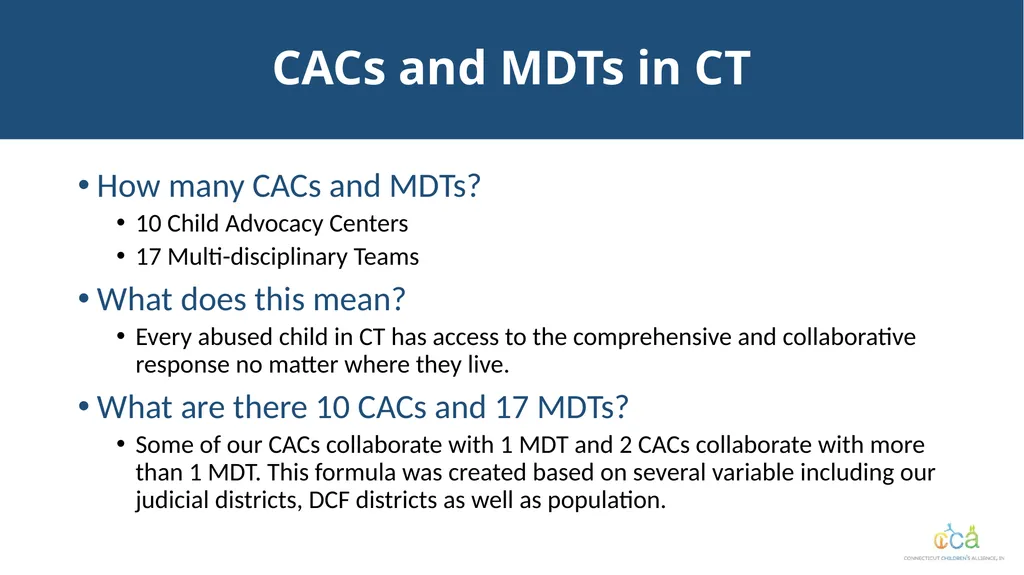
CACs and MDTs in CT How many CACs and MDTs?
10 Child Advocacy Centers
17 Multi-disciplinary Teams
What does this mean?
Every abused child in CT has access to the comprehensive and collaborative response no matter where they live.
What are there 10 CACs and 17 MDTs?
Some of our CACs collaborate with 1 MDT and 2 CACs collaborate with more than 1 MDT. This formula was created based on several variable including our judicial districts, DCF districts as well as population.<br>
10 Child Advocacy Centers
17 Multi-disciplinary Teams
What does this mean?
Every abused child in CT has access to the comprehensive and collaborative response no matter where they live.
What are there 10 CACs and 17 MDTs?
Some of our CACs collaborate with 1 MDT and 2 CACs collaborate with more than 1 MDT. This formula was created based on several variable including our judicial districts, DCF districts as well as population.<br>
29
CAC Standards Multi-disciplinary Team
Cultural Competency and Diversity
Forensic Interviews
Victim Support and Advocacy
Medical Evaluation
Mental Health
Case Review
Case Tracking
Organizational Capacity
Child-Focused Setting<br>
Cultural Competency and Diversity
Forensic Interviews
Victim Support and Advocacy
Medical Evaluation
Mental Health
Case Review
Case Tracking
Organizational Capacity
Child-Focused Setting<br>
30
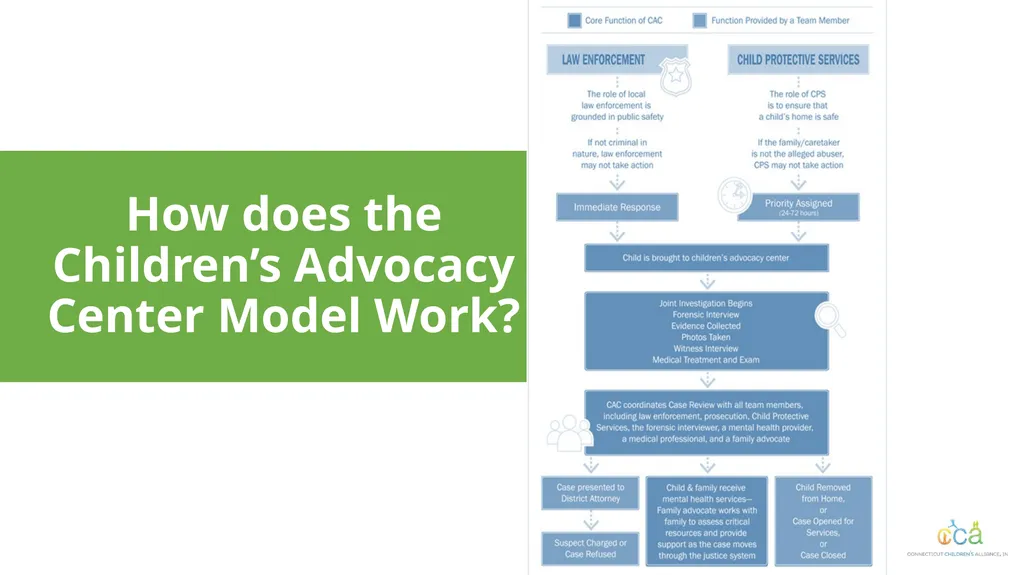
How does the Children’s Advocacy Center Model Work?<br>
31
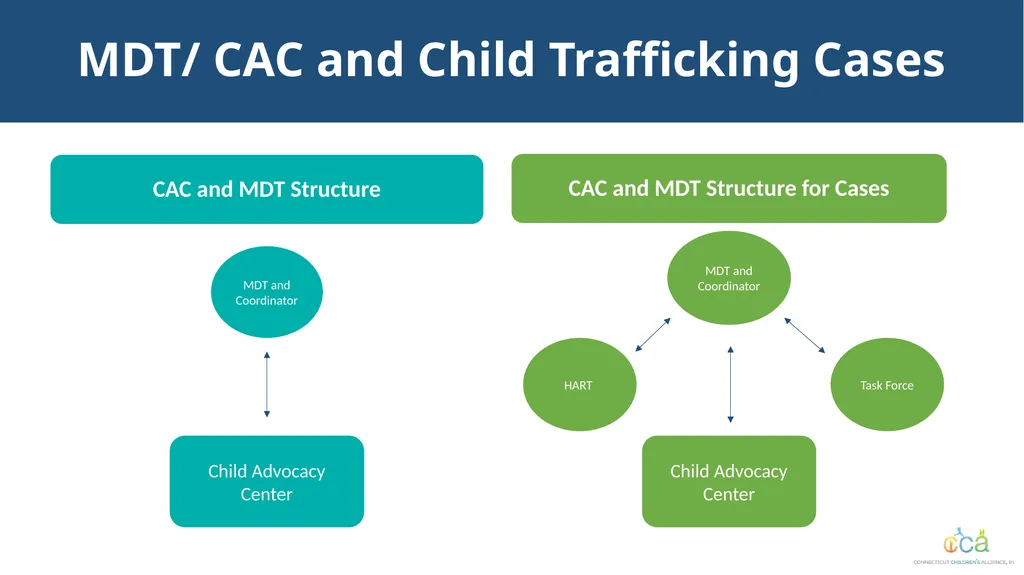
MDT/ CAC and Child Trafficking Cases CAC and MDT Structure CAC and MDT Structure for Cases Child Advocacy Center MDT and Coordinator MDT and Coordinator HART Task Force Child Advocacy Center<br>
32
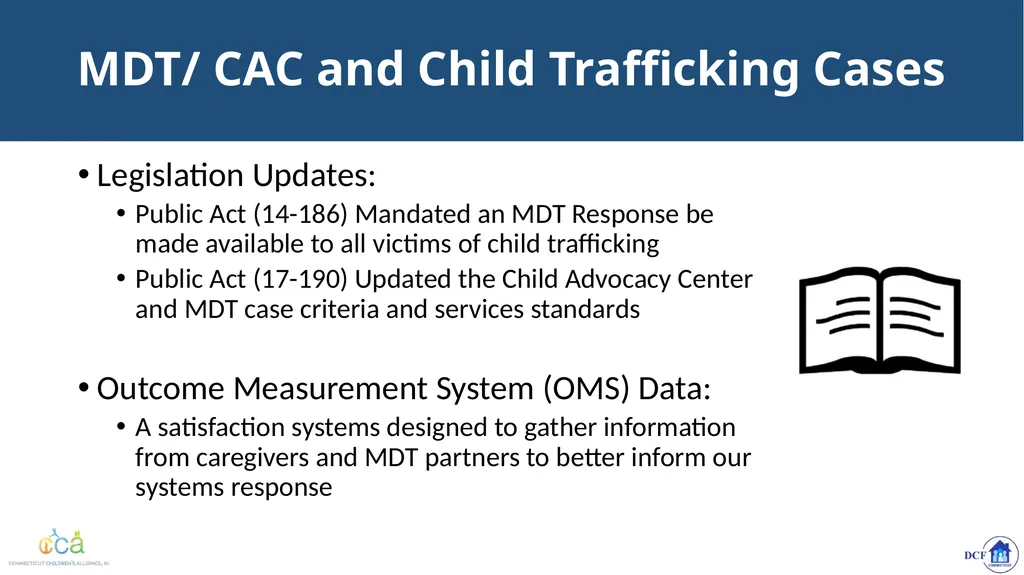
MDT/ CAC and Child Trafficking Cases Legislation Updates:
Public Act (14-186) Mandated an MDT Response be made available to all victims of child trafficking
Public Act (17-190) Updated the Child Advocacy Center and MDT case criteria and services standards
Outcome Measurement System (OMS) Data:
A satisfaction systems designed to gather information from caregivers and MDT partners to better inform our systems response<br>
Public Act (14-186) Mandated an MDT Response be made available to all victims of child trafficking
Public Act (17-190) Updated the Child Advocacy Center and MDT case criteria and services standards
Outcome Measurement System (OMS) Data:
A satisfaction systems designed to gather information from caregivers and MDT partners to better inform our systems response<br>
33
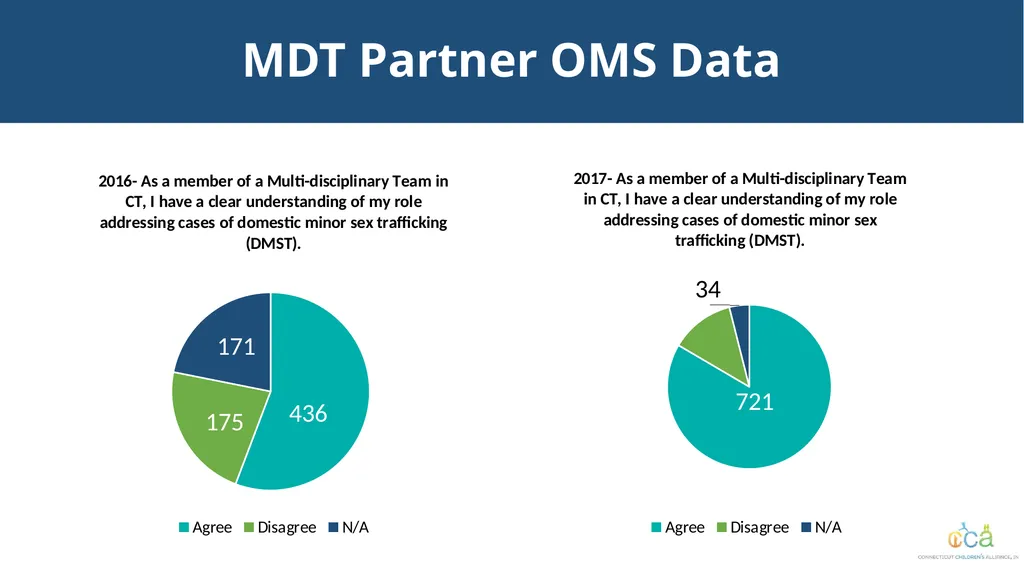
MDT Partner OMS Data<br>
34
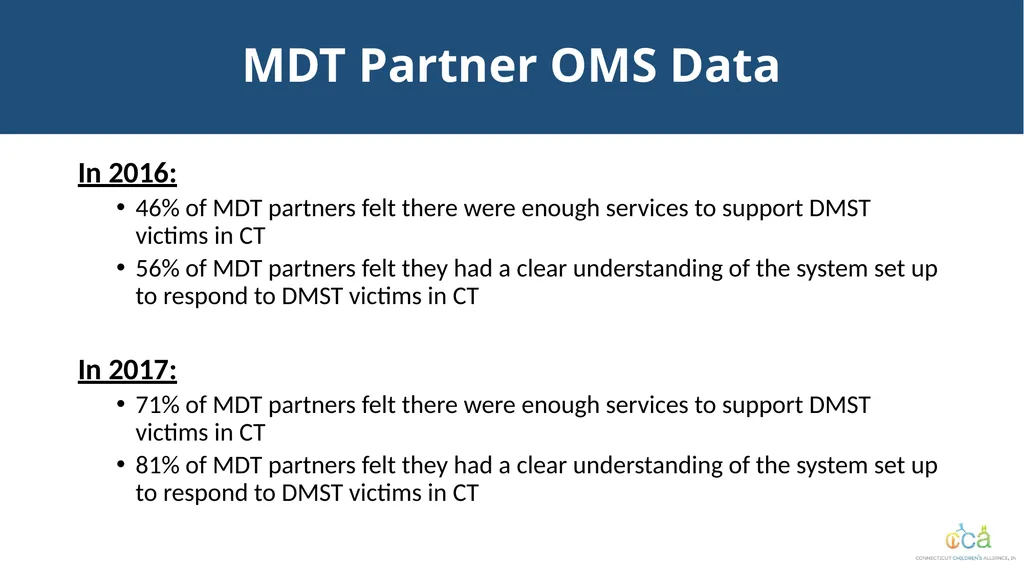
MDT Partner OMS Data In 2016:
46% of MDT partners felt there were enough services to support DMST victims in CT
56% of MDT partners felt they had a clear understanding of the system set up to respond to DMST victims in CT
In 2017:
71% of MDT partners felt there were enough services to support DMST victims in CT
81% of MDT partners felt they had a clear understanding of the system set up to respond to DMST victims in CT<br>
46% of MDT partners felt there were enough services to support DMST victims in CT
56% of MDT partners felt they had a clear understanding of the system set up to respond to DMST victims in CT
In 2017:
71% of MDT partners felt there were enough services to support DMST victims in CT
81% of MDT partners felt they had a clear understanding of the system set up to respond to DMST victims in CT<br>
35
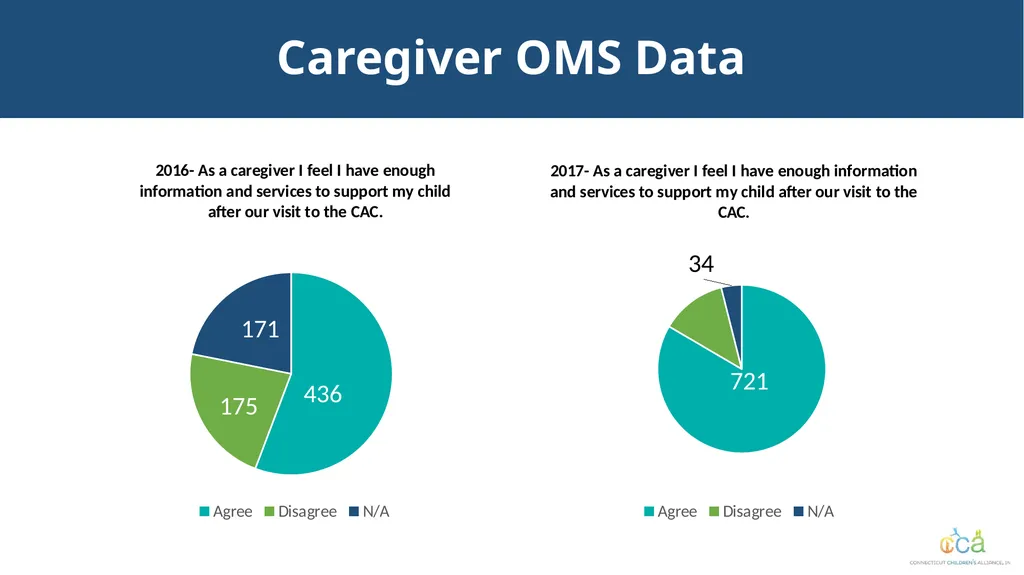
Caregiver OMS Data<br>
36
HART Response and Case Experiences Christa Rider
Department of Children & Families<br>
Department of Children & Families<br>
37
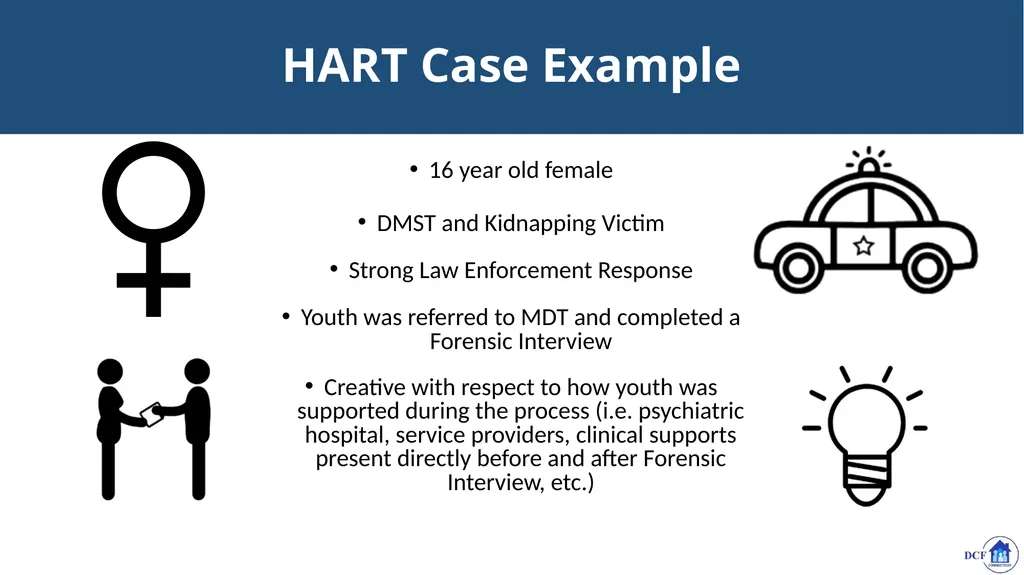
HART Case Example 16 year old female
DMST and Kidnapping Victim
Strong Law Enforcement Response
Youth was referred to MDT and completed a Forensic Interview
Creative with respect to how youth was supported during the process (i.e. psychiatric hospital, service providers, clinical supports present directly before and after Forensic Interview, etc.)<br>
DMST and Kidnapping Victim
Strong Law Enforcement Response
Youth was referred to MDT and completed a Forensic Interview
Creative with respect to how youth was supported during the process (i.e. psychiatric hospital, service providers, clinical supports present directly before and after Forensic Interview, etc.)<br>
38
Youth Perspective Samantha Lowry
ICF<br>
ICF<br>
39
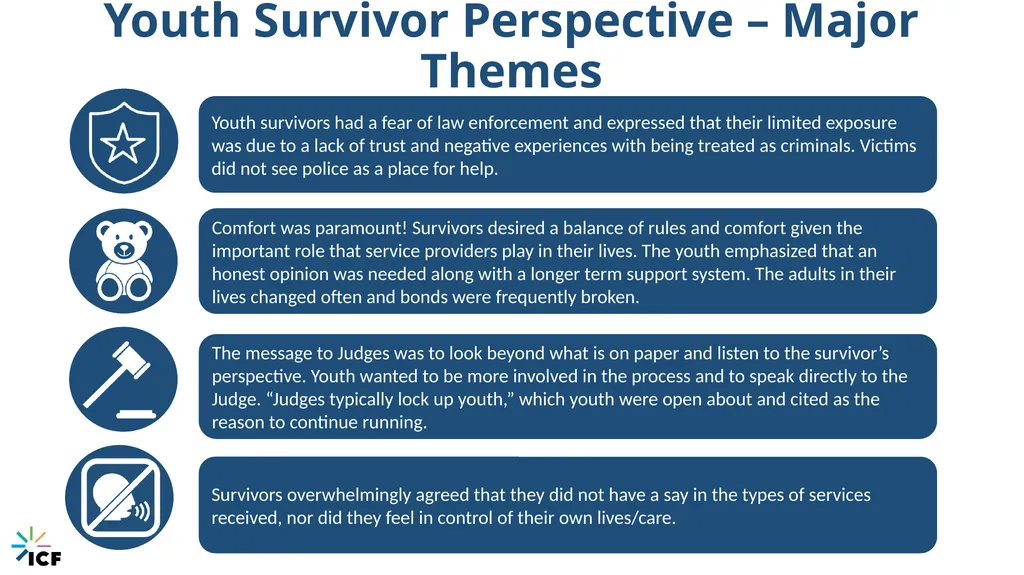
Youth Survivor Perspective – Major Themes Youth survivors had a fear of law enforcement and expressed that their limited exposure was due to a lack of trust and negative experiences with being treated as criminals. Victims did not see police as a place for help. Comfort was paramount! Survivors desired a balance of rules and comfort given the important role that service providers play in their lives. The youth emphasized that an honest opinion was needed along with a longer term support system. The adults in their lives changed often and bonds were frequently broken. The message to Judges was to look beyond what is on paper and listen to the survivor’s perspective. Youth wanted to be more involved in the process and to speak directly to the Judge. “Judges typically lock up youth,” which youth were open about and cited as the reason to continue running. Survivors overwhelmingly agreed that they did not have a say in the types of services received, nor did they feel in control of their own lives/care. ICF proprietary and confidential. Do not copy, distribute, or disclose.<br>
40
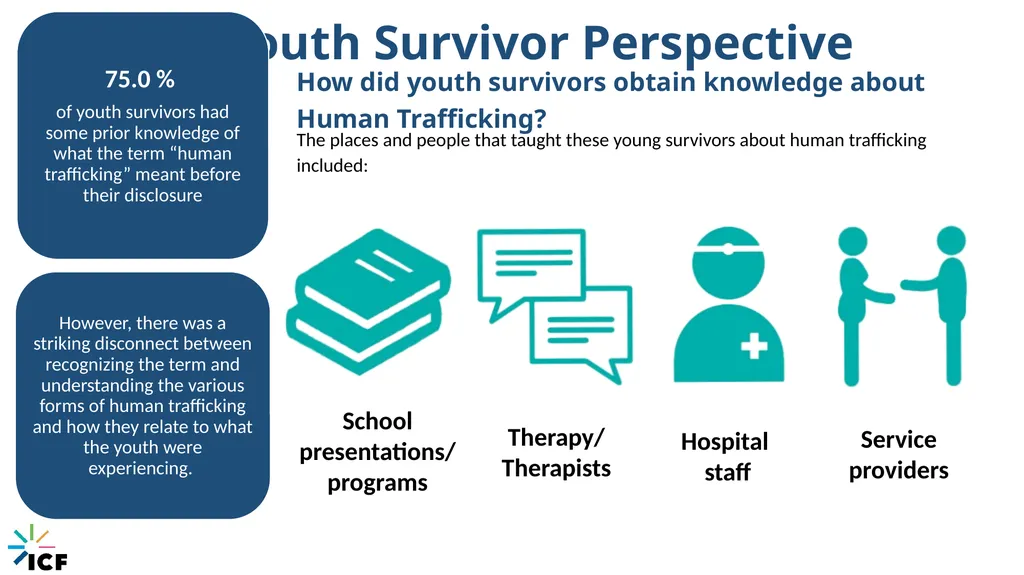
Youth Survivor Perspective The places and people that taught these young survivors about human trafficking included: How did youth survivors obtain knowledge about Human Trafficking? School presentations/programs Service providers Hospital
staff Therapy/
Therapists ICF proprietary and confidential. Do not copy, distribute, or disclose.<br>
staff Therapy/
Therapists ICF proprietary and confidential. Do not copy, distribute, or disclose.<br>
41
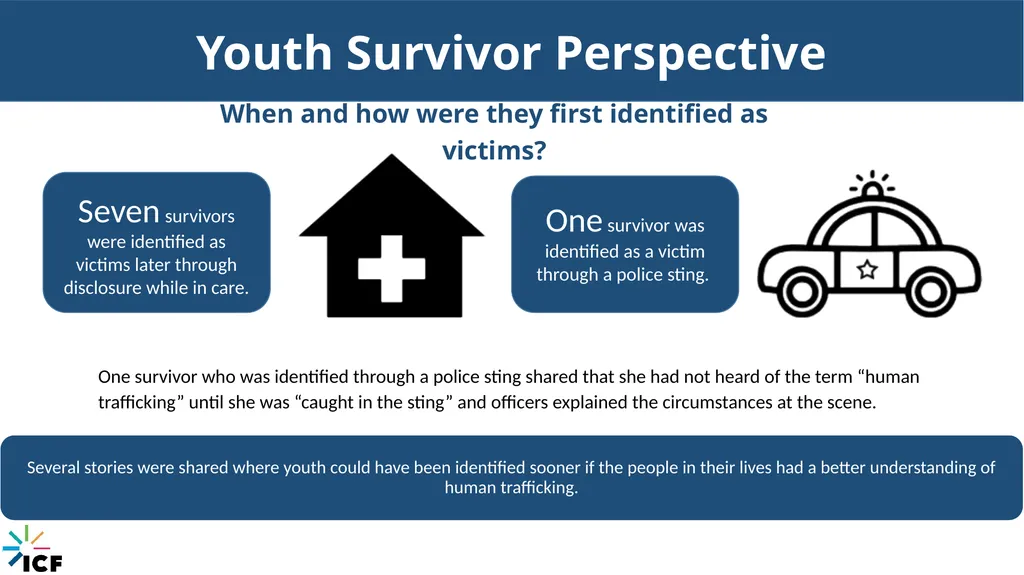
Youth Survivor Perspective One survivor who was identified through a police sting shared that she had not heard of the term “human trafficking” until she was “caught in the sting” and officers explained the circumstances at the scene. When and how were they first identified as victims? One survivor was identified as a victim through a police sting. Seven survivors were identified as victims later through disclosure while in care. ICF proprietary and confidential. Do not copy, distribute, or disclose.<br>
42
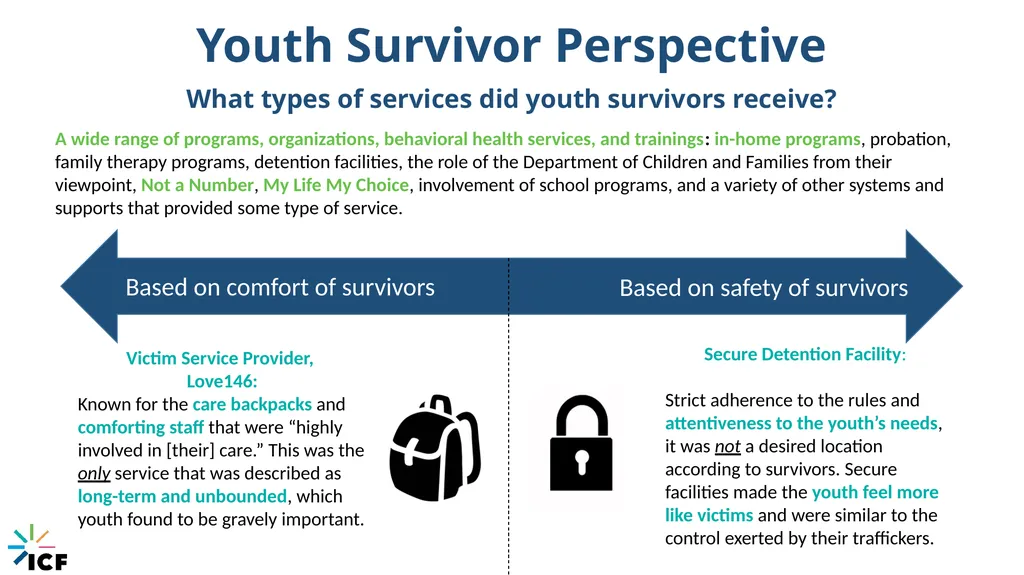
Youth Survivor Perspective A wide range of programs, organizations, behavioral health services, and trainings: in-home programs, probation, family therapy programs, detention facilities, the role of the Department of Children and Families from their viewpoint, Not a Number, My Life My Choice, involvement of school programs, and a variety of other systems and supports that provided some type of service. What types of services did youth survivors receive? Secure Detention Facility:
Strict adherence to the rules and attentiveness to the youth’s needs, it was not a desired location according to survivors. Secure facilities made the youth feel more like victims and were similar to the control exerted by their traffickers. Victim Service Provider,
Love146:
Known for the care backpacks and comforting staff that were “highly involved in [their] care.” This was the only service that was described as long-term and unbounded, which youth found to be gravely important. Based on comfort of survivors Based on safety of survivors ICF proprietary and confidential. Do not copy, distribute, or disclose.<br>
Strict adherence to the rules and attentiveness to the youth’s needs, it was not a desired location according to survivors. Secure facilities made the youth feel more like victims and were similar to the control exerted by their traffickers. Victim Service Provider,
Love146:
Known for the care backpacks and comforting staff that were “highly involved in [their] care.” This was the only service that was described as long-term and unbounded, which youth found to be gravely important. Based on comfort of survivors Based on safety of survivors ICF proprietary and confidential. Do not copy, distribute, or disclose.<br>
43
Youth Survivor Recommendations #1: AWARENESS OF HUMAN TRAFFICKING “More awareness, even for those not in the life. Like for bullies. They’ll call me whore. I’ve had that happen to me… so, AWARENESS THAT PEOPLE ARE VICTIMS.” ICF proprietary and confidential. Do not copy, distribute, or disclose.<br>
44
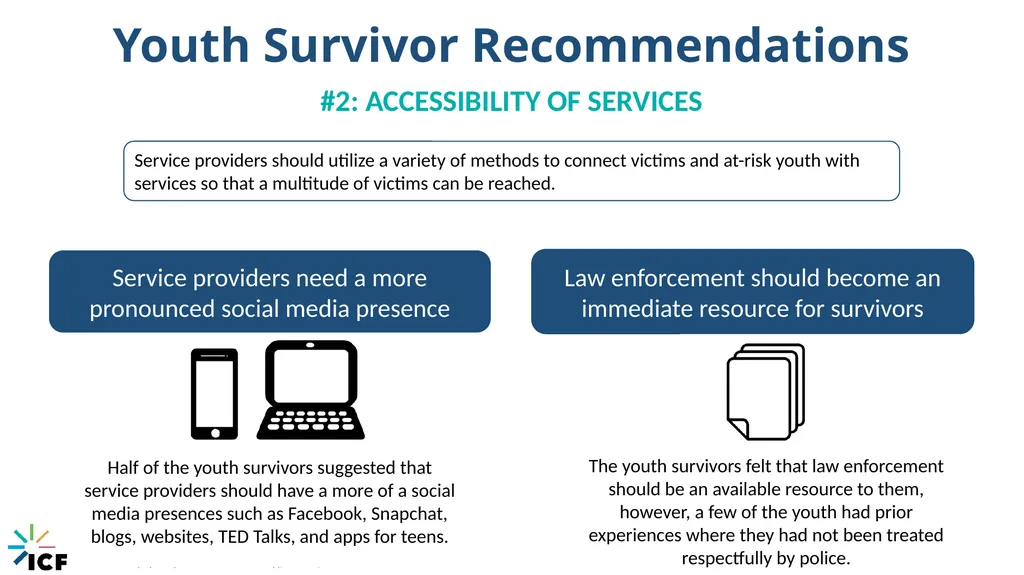
Youth Survivor Recommendations #2: ACCESSIBILITY OF SERVICES Service providers need a more pronounced social media presence Half of the youth survivors suggested that service providers should have a more of a social media presences such as Facebook, Snapchat, blogs, websites, TED Talks, and apps for teens. Service providers should utilize a variety of methods to connect victims and at-risk youth with services so that a multitude of victims can be reached. Law enforcement should become an immediate resource for survivors The youth survivors felt that law enforcement should be an available resource to them, however, a few of the youth had prior experiences where they had not been treated respectfully by police. ICF proprietary and confidential. Do not copy, distribute, or disclose.<br>
45
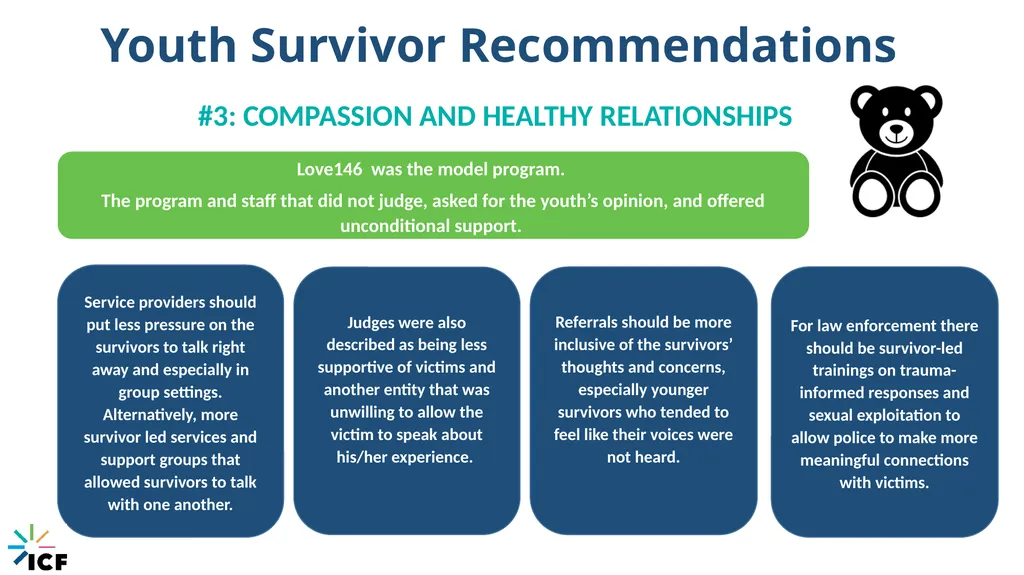
Youth Survivor Recommendations #3: COMPASSION AND HEALTHY RELATIONSHIPS Service providers should put less pressure on the survivors to talk right away and especially in group settings. Alternatively, more survivor led services and support groups that allowed survivors to talk with one another. Referrals should be more inclusive of the survivors’ thoughts and concerns, especially younger survivors who tended to feel like their voices were not heard. For law enforcement there should be survivor-led trainings on trauma-informed responses and sexual exploitation to allow police to make more meaningful connections with victims. Love146 was the model program.
The program and staff that did not judge, asked for the youth’s opinion, and offered unconditional support. Judges were also described as being less supportive of victims and another entity that was unwilling to allow the victim to speak about his/her experience. ICF proprietary and confidential. Do not copy, distribute, or disclose.<br>
The program and staff that did not judge, asked for the youth’s opinion, and offered unconditional support. Judges were also described as being less supportive of victims and another entity that was unwilling to allow the victim to speak about his/her experience. ICF proprietary and confidential. Do not copy, distribute, or disclose.<br>
46
Youth Survivor Demographics Hispanic
(12.5%) Puerto Rican
(12.5%) Caucasian
(12.5%) African American
(12.5%) Multiethnic
(50.0%) White
(62.5%) Black
(12.5%) Multiracial
(25.0%) 15 years-old (12.5%) 16 years-old (50.0%) 17 years-old (37.5%) Ethnicity Race Location Gender Age (n=8) ICF proprietary and confidential. Do not copy, distribute, or disclose.<br>
(12.5%) Puerto Rican
(12.5%) Caucasian
(12.5%) African American
(12.5%) Multiethnic
(50.0%) White
(62.5%) Black
(12.5%) Multiracial
(25.0%) 15 years-old (12.5%) 16 years-old (50.0%) 17 years-old (37.5%) Ethnicity Race Location Gender Age (n=8) ICF proprietary and confidential. Do not copy, distribute, or disclose.<br>
47
Expansion and Statewide Training Initiatives Tammy Sneed
Department of Children & Families<br>
Department of Children & Families<br>
48
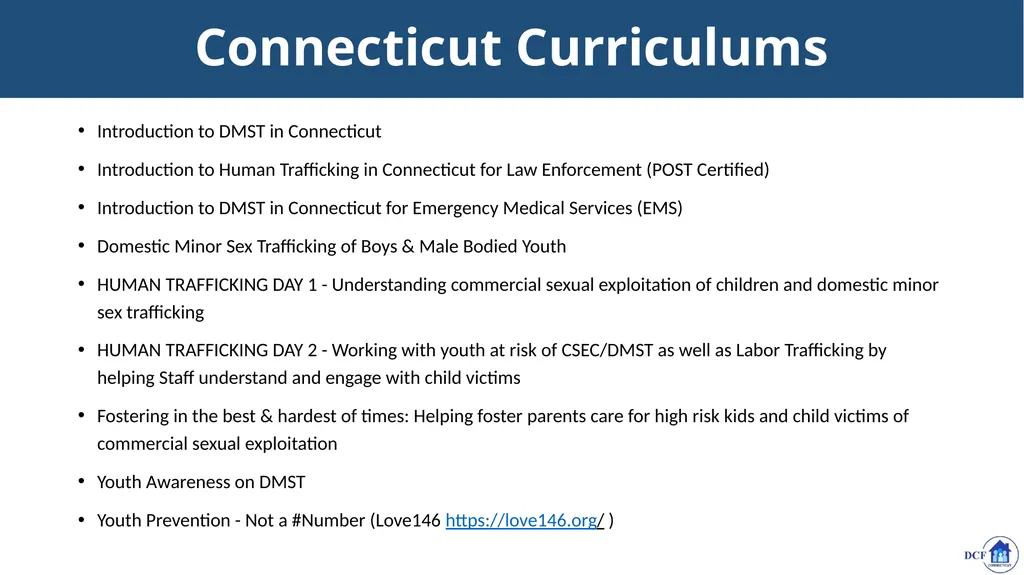
Connecticut Curriculums Introduction to DMST in Connecticut
Introduction to Human Trafficking in Connecticut for Law Enforcement (POST Certified)
Introduction to DMST in Connecticut for Emergency Medical Services (EMS)
Domestic Minor Sex Trafficking of Boys & Male Bodied Youth
HUMAN TRAFFICKING DAY 1 - Understanding commercial sexual exploitation of children and domestic minor sex trafficking
HUMAN TRAFFICKING DAY 2 - Working with youth at risk of CSEC/DMST as well as Labor Trafficking by helping Staff understand and engage with child victims
Fostering in the best & hardest of times: Helping foster parents care for high risk kids and child victims of commercial sexual exploitation
Youth Awareness on DMST
Youth Prevention - Not a #Number (Love146 https://love146.org/ )<br>
Introduction to Human Trafficking in Connecticut for Law Enforcement (POST Certified)
Introduction to DMST in Connecticut for Emergency Medical Services (EMS)
Domestic Minor Sex Trafficking of Boys & Male Bodied Youth
HUMAN TRAFFICKING DAY 1 - Understanding commercial sexual exploitation of children and domestic minor sex trafficking
HUMAN TRAFFICKING DAY 2 - Working with youth at risk of CSEC/DMST as well as Labor Trafficking by helping Staff understand and engage with child victims
Fostering in the best & hardest of times: Helping foster parents care for high risk kids and child victims of commercial sexual exploitation
Youth Awareness on DMST
Youth Prevention - Not a #Number (Love146 https://love146.org/ )<br>
49
Statewide Awareness Efforts
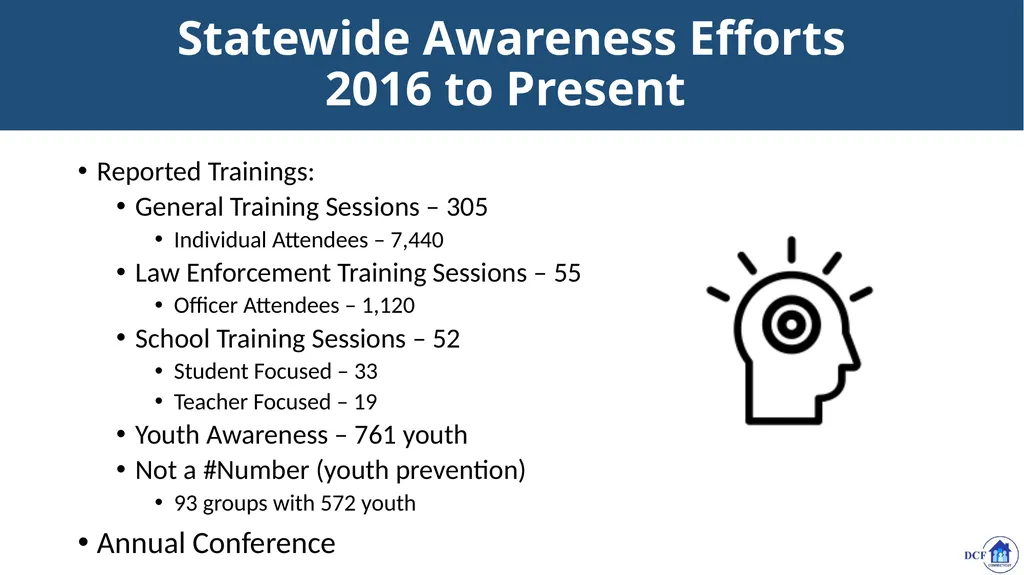
2016 to Present Reported Trainings:
General Training Sessions – 305
Individual Attendees – 7,440
Law Enforcement Training Sessions – 55
Officer Attendees – 1,120
School Training Sessions – 52
Student Focused – 33
Teacher Focused – 19
Youth Awareness – 761 youth
Not a #Number (youth prevention)
93 groups with 572 youth
Annual Conference<br>
General Training Sessions – 305
Individual Attendees – 7,440
Law Enforcement Training Sessions – 55
Officer Attendees – 1,120
School Training Sessions – 52
Student Focused – 33
Teacher Focused – 19
Youth Awareness – 761 youth
Not a #Number (youth prevention)
93 groups with 572 youth
Annual Conference<br>
50
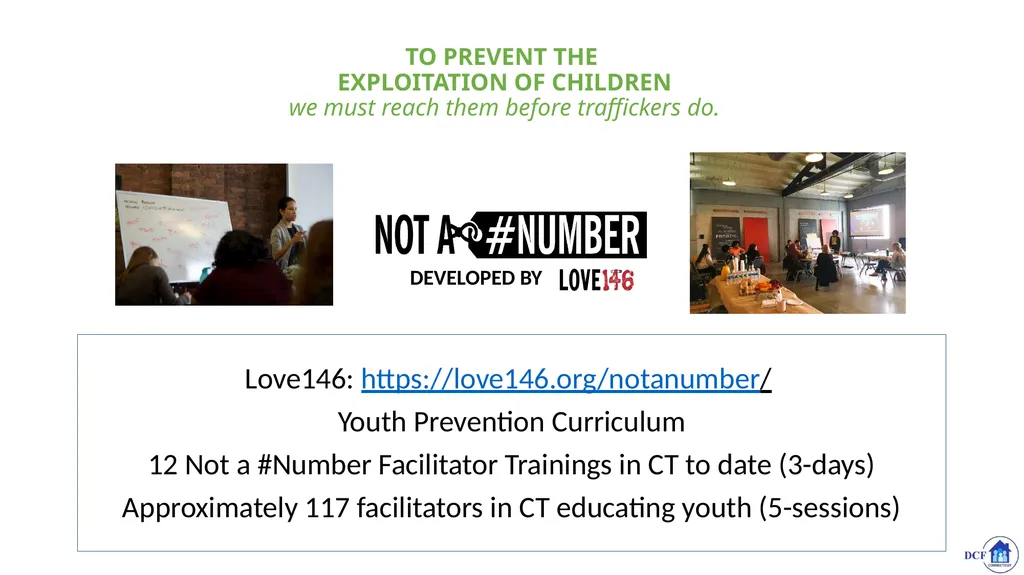
TO PREVENT THE
EXPLOITATION OF CHILDREN
we must reach them before traffickers do. Love146: https://love146.org/notanumber/
Youth Prevention Curriculum
12 Not a #Number Facilitator Trainings in CT to date (3-days)
Approximately 117 facilitators in CT educating youth (5-sessions)<br>
Youth Prevention Curriculum
12 Not a #Number Facilitator Trainings in CT to date (3-days)
Approximately 117 facilitators in CT educating youth (5-sessions)<br>
51
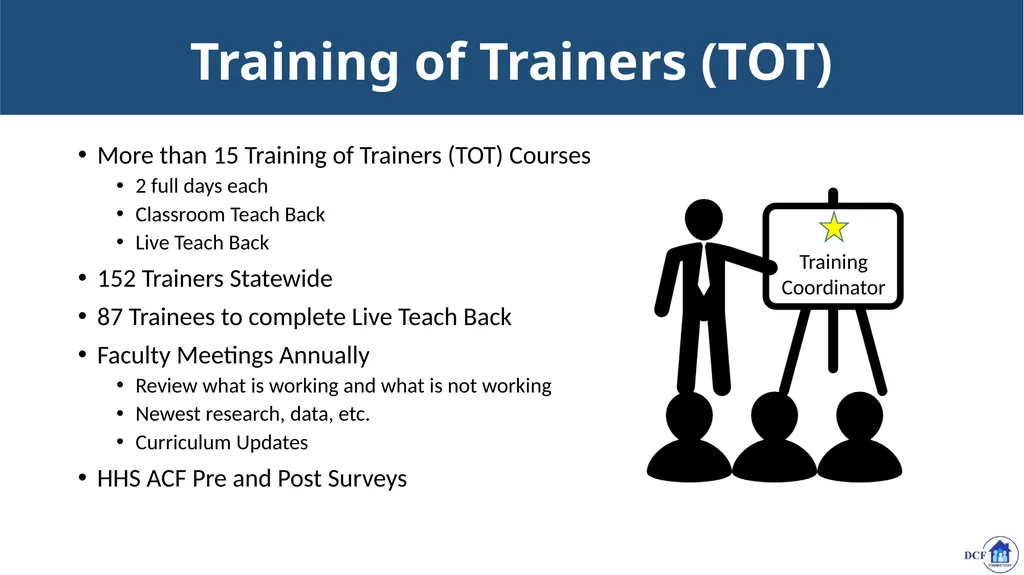
More than 15 Training of Trainers (TOT) Courses
2 full days each
Classroom Teach Back
Live Teach Back
152 Trainers Statewide
87 Trainees to complete Live Teach Back
Faculty Meetings Annually
Review what is working and what is not working
Newest research, data, etc.
Curriculum Updates
HHS ACF Pre and Post Surveys Training of Trainers (TOT) Training Coordinator<br>
2 full days each
Classroom Teach Back
Live Teach Back
152 Trainers Statewide
87 Trainees to complete Live Teach Back
Faculty Meetings Annually
Review what is working and what is not working
Newest research, data, etc.
Curriculum Updates
HHS ACF Pre and Post Surveys Training of Trainers (TOT) Training Coordinator<br>
52
Training Evaluation Samantha Lowry
ICF<br>
ICF<br>
53
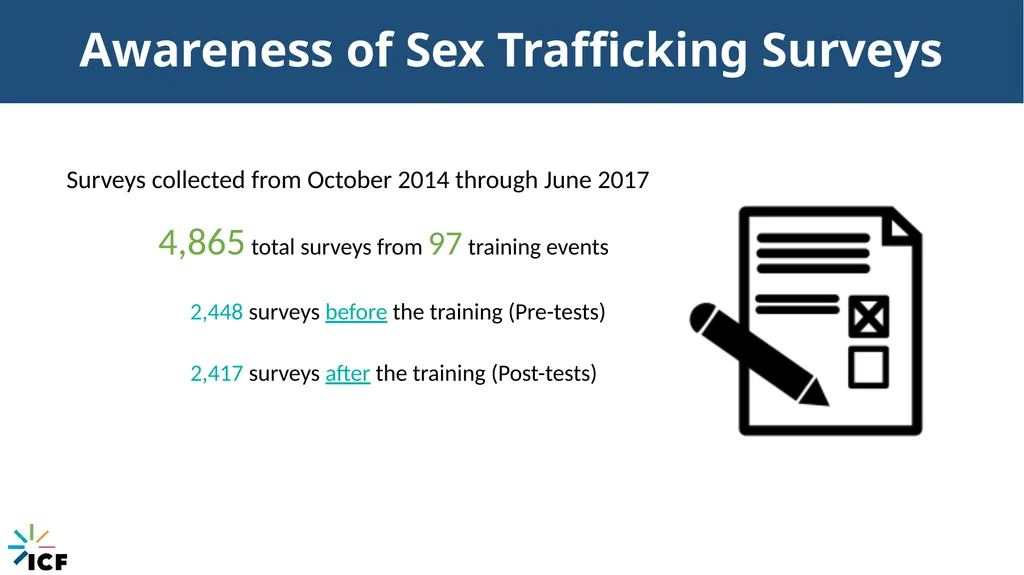
Surveys collected from October 2014 through June 2017
4,865 total surveys from 97 training events
2,448 surveys before the training (Pre-tests)
2,417 surveys after the training (Post-tests) Awareness of Sex Trafficking Surveys<br>
4,865 total surveys from 97 training events
2,448 surveys before the training (Pre-tests)
2,417 surveys after the training (Post-tests) Awareness of Sex Trafficking Surveys<br>
54
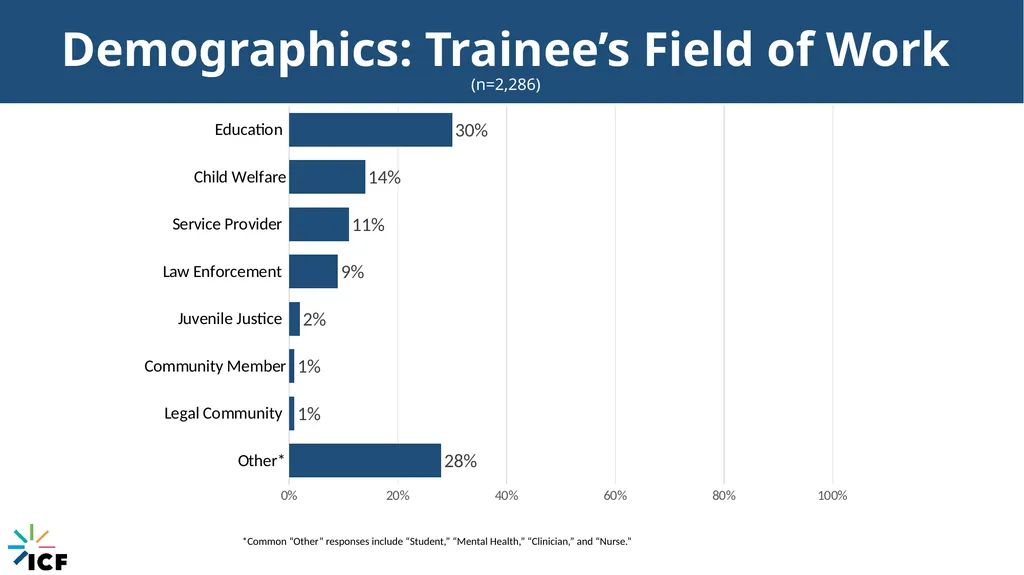
Demographics: Trainee’s Field of Work (n=2,286) *Common “Other” responses include “Student,” “Mental Health,” “Clinician,” and “Nurse.”<br>
55
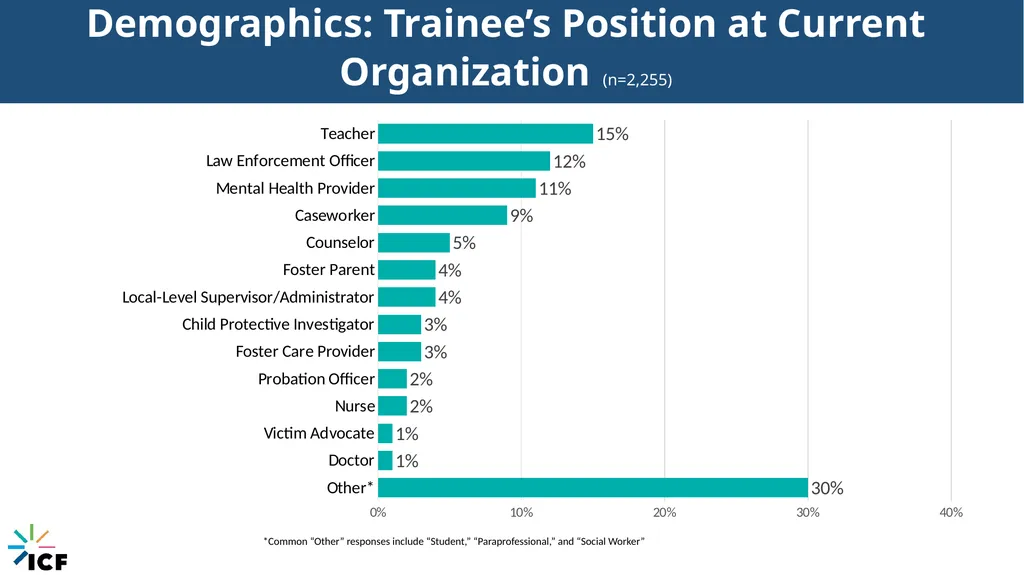
Demographics: Trainee’s Position at Current Organization (n=2,255) *Common “Other” responses include “Student,” “Paraprofessional,” and “Social Worker”<br>
56
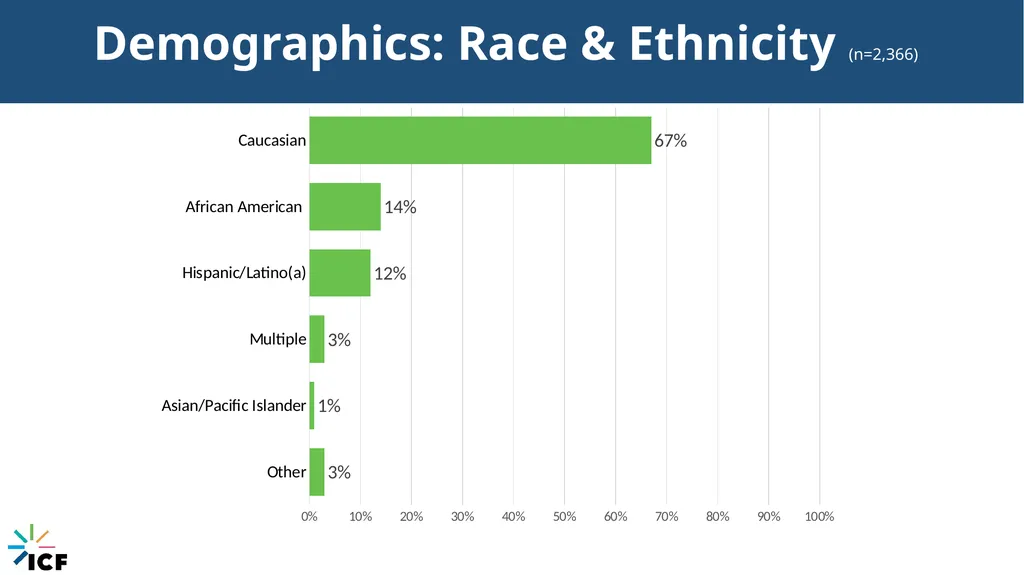
Demographics: Race & Ethnicity (n=2,366)<br>
57
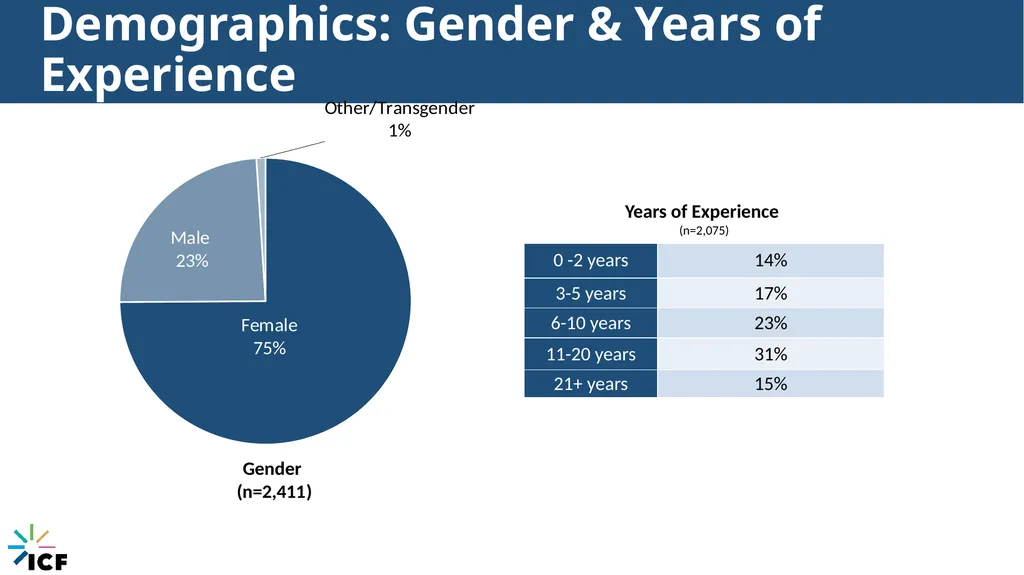
Demographics: Gender & Years of Experience<br>
58
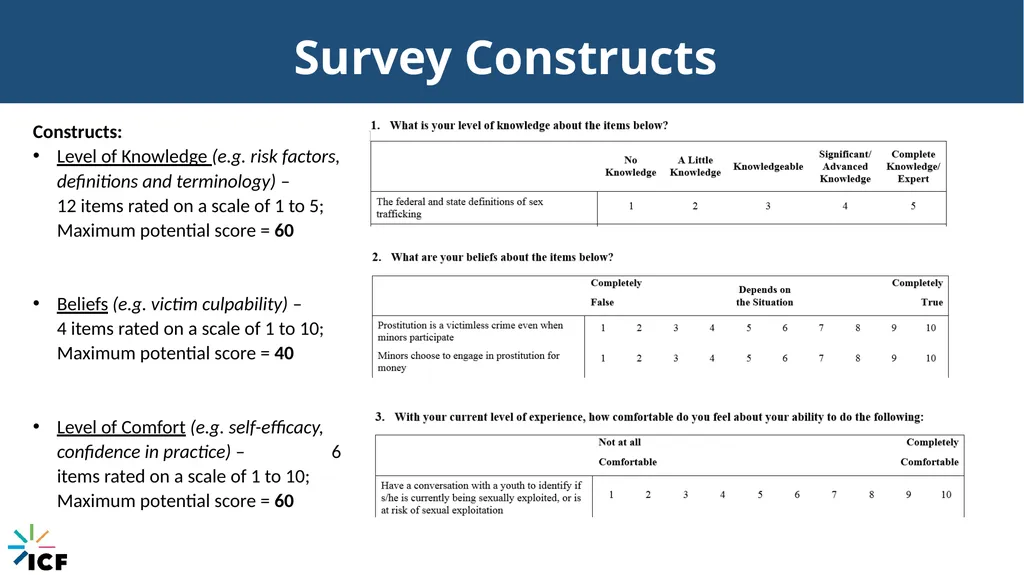
Survey Constructs Constructs:
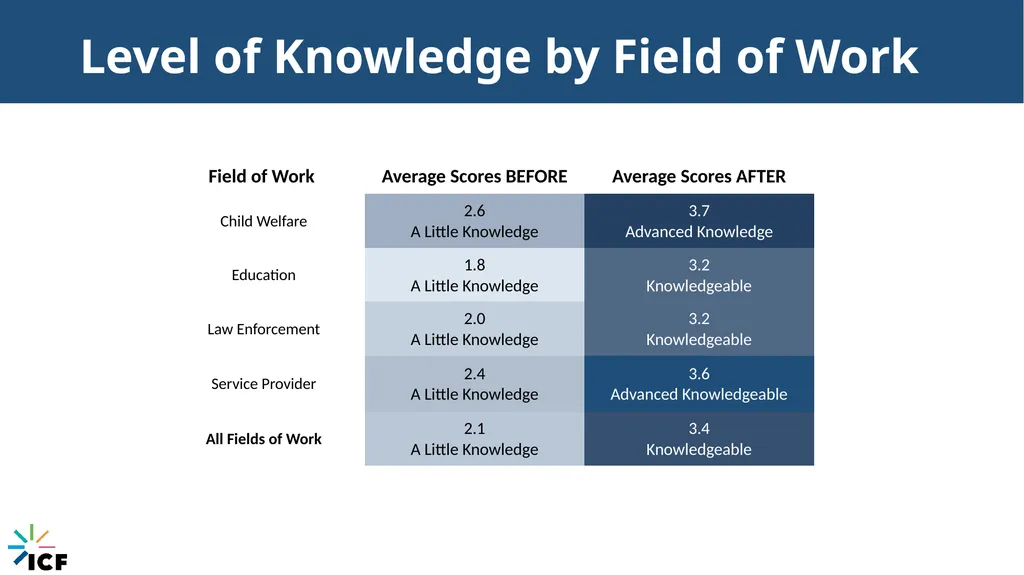
Level of Knowledge (e.g. risk factors, definitions and terminology) – 12 items rated on a scale of 1 to 5; Maximum potential score = 60
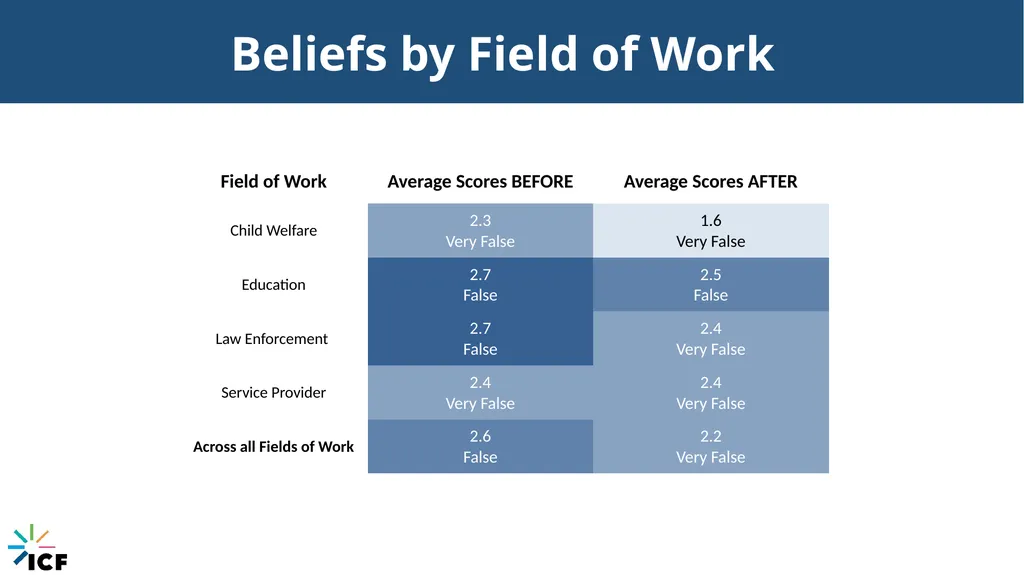
Beliefs (e.g. victim culpability) – 4 items rated on a scale of 1 to 10; Maximum potential score = 40
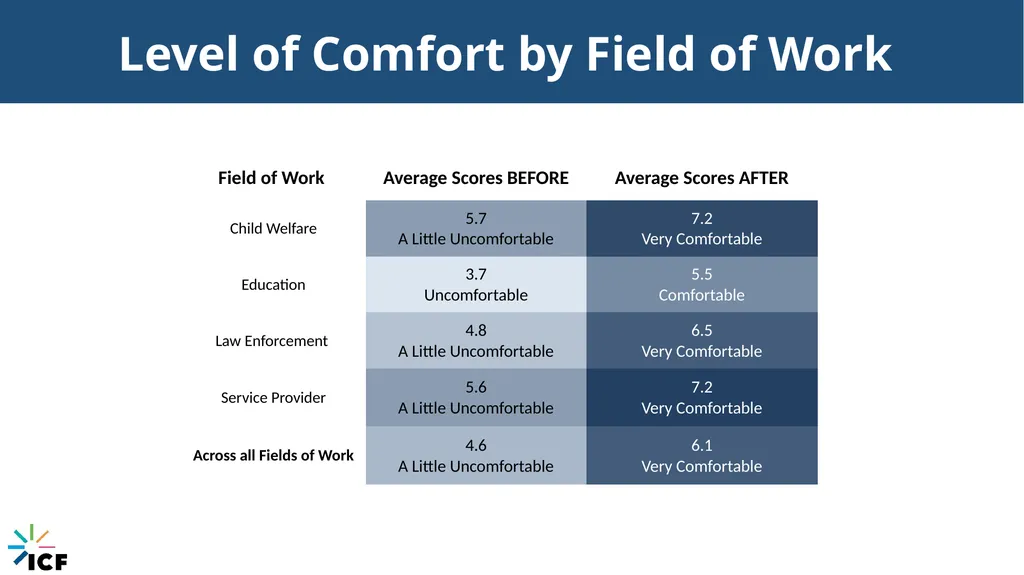
Level of Comfort (e.g. self-efficacy, confidence in practice) – 6 items rated on a scale of 1 to 10; Maximum potential score = 60<br>
Level of Knowledge (e.g. risk factors, definitions and terminology) – 12 items rated on a scale of 1 to 5; Maximum potential score = 60
Beliefs (e.g. victim culpability) – 4 items rated on a scale of 1 to 10; Maximum potential score = 40
Level of Comfort (e.g. self-efficacy, confidence in practice) – 6 items rated on a scale of 1 to 10; Maximum potential score = 60<br>
59
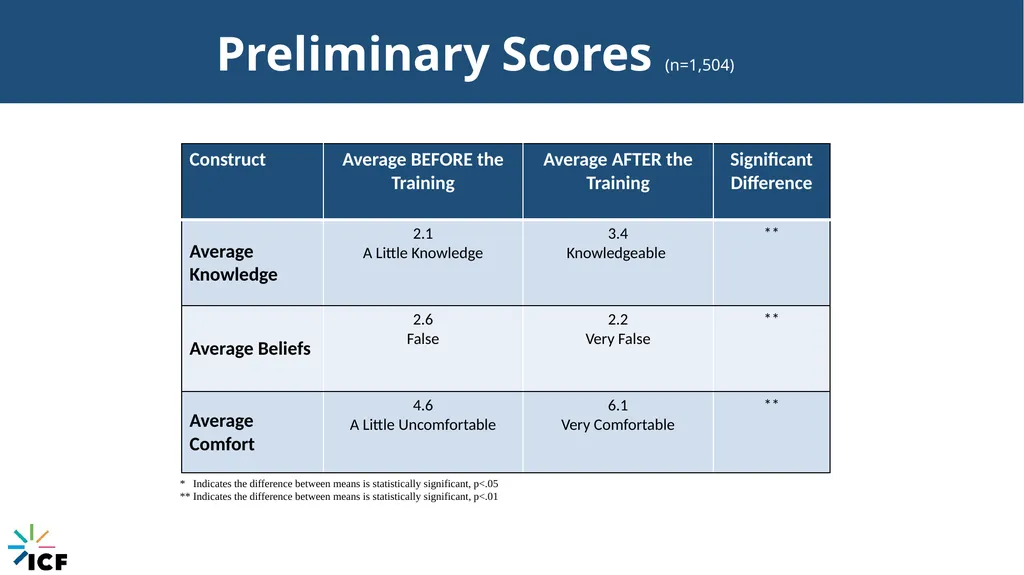
Preliminary Scores (n=1,504) * Indicates the difference between means is statistically significant, p<.05
** Indicates the difference between means is statistically significant, p<.01<br>
** Indicates the difference between means is statistically significant, p<.01<br>
60
Level of Knowledge by Field of Work<br>
61
Beliefs by Field of Work<br>
62
Level of Comfort by Field of Work<br>
63
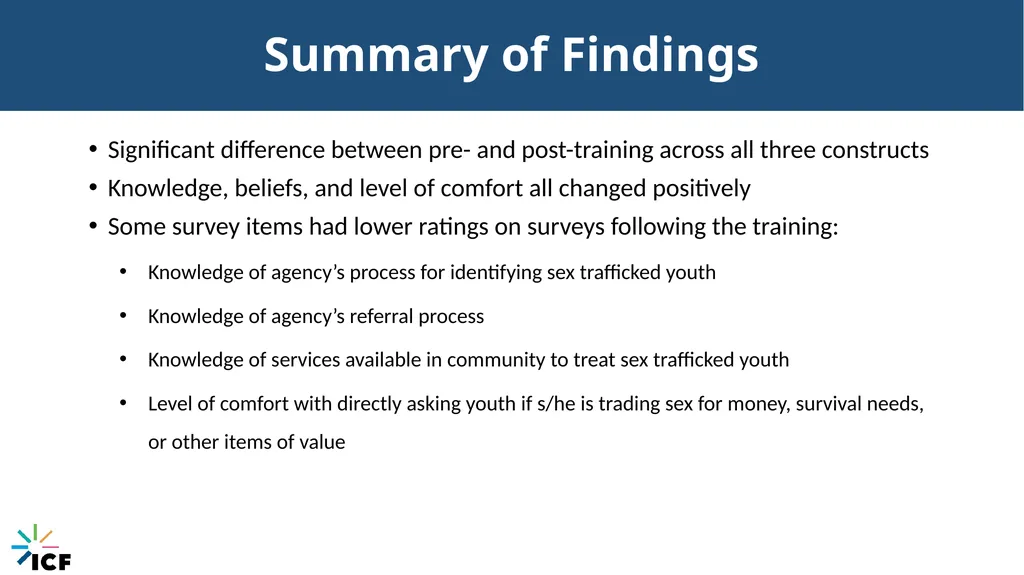
Significant difference between pre- and post-training across all three constructs
Knowledge, beliefs, and level of comfort all changed positively
Some survey items had lower ratings on surveys following the training:
Knowledge of agency’s process for identifying sex trafficked youth
Knowledge of agency’s referral process
Knowledge of services available in community to treat sex trafficked youth
Level of comfort with directly asking youth if s/he is trading sex for money, survival needs, or other items of value Summary of Findings<br>
Knowledge, beliefs, and level of comfort all changed positively
Some survey items had lower ratings on surveys following the training:
Knowledge of agency’s process for identifying sex trafficked youth
Knowledge of agency’s referral process
Knowledge of services available in community to treat sex trafficked youth
Level of comfort with directly asking youth if s/he is trading sex for money, survival needs, or other items of value Summary of Findings<br>
64
Collaboration with Polaris Vanessa Chauhan
Polaris<br>
Polaris<br>
65
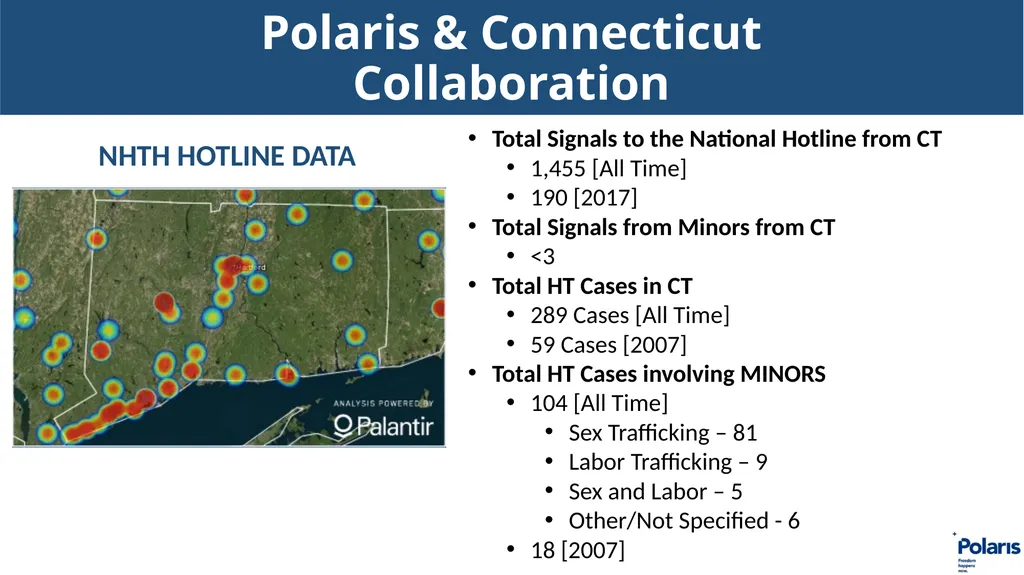
Polaris & Connecticut Collaboration Total Signals to the National Hotline from CT
1,455 [All Time]
190 [2017]
Total Signals from Minors from CT
<3
Total HT Cases in CT
289 Cases [All Time]
59 Cases [2007]
Total HT Cases involving MINORS
104 [All Time]
Sex Trafficking – 81
Labor Trafficking – 9
Sex and Labor – 5
Other/Not Specified - 6
18 [2007] NHTH HOTLINE DATA<br>
1,455 [All Time]
190 [2017]
Total Signals from Minors from CT
<3
Total HT Cases in CT
289 Cases [All Time]
59 Cases [2007]
Total HT Cases involving MINORS
104 [All Time]
Sex Trafficking – 81
Labor Trafficking – 9
Sex and Labor – 5
Other/Not Specified - 6
18 [2007] NHTH HOTLINE DATA<br>
66
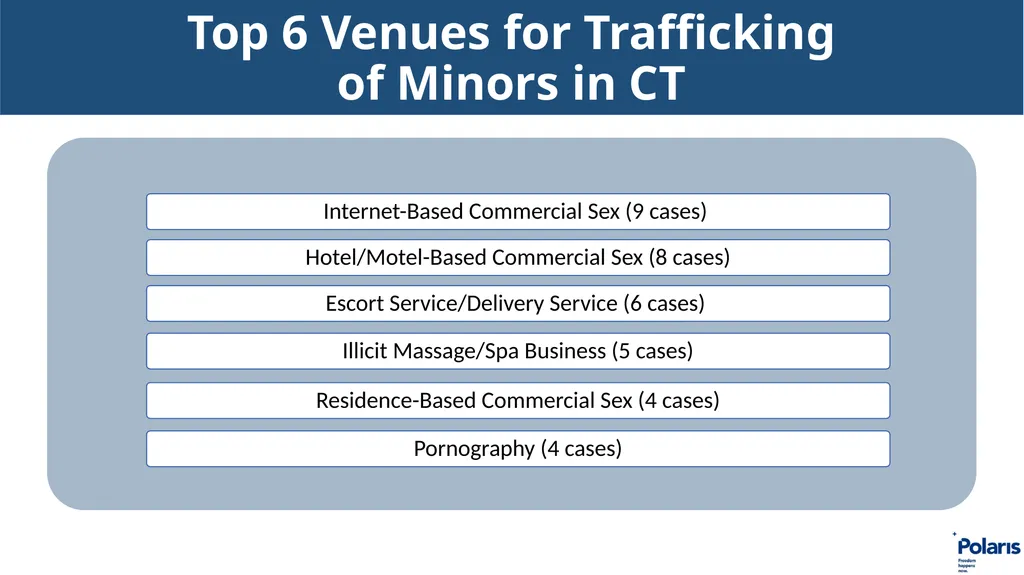
Top 6 Venues for Trafficking of Minors in CT<br>
67
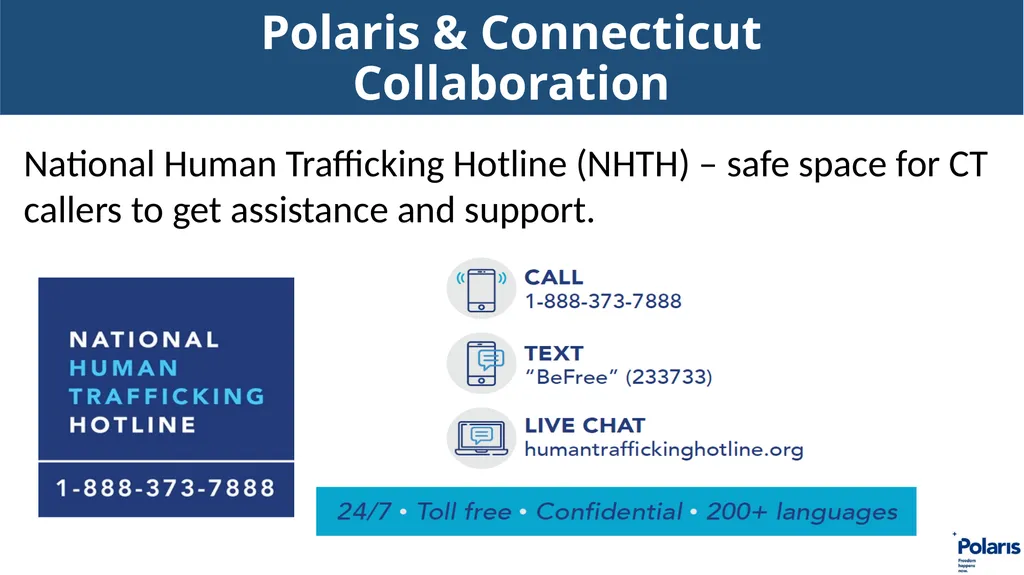
Polaris & Connecticut Collaboration National Human Trafficking Hotline (NHTH) – safe space for CT callers to get assistance and support.<br>
68
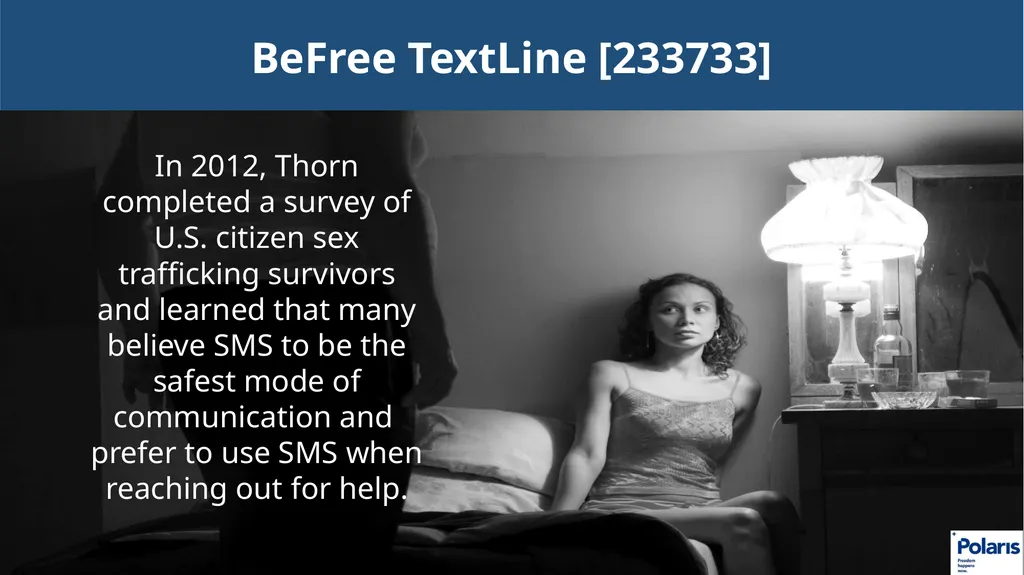
BeFree TextLine [233733] In 2012, Thorn completed a survey of U.S. citizen sex trafficking survivors and learned that many believe SMS to be the safest mode of communication and prefer to use SMS when reaching out for help.<br>
69
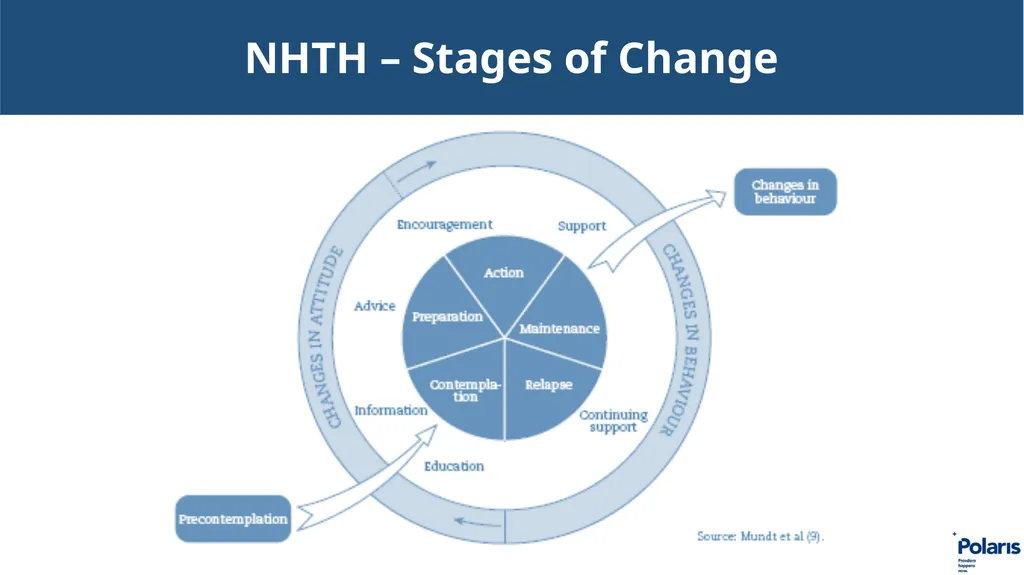
NHTH – Stages of Change<br>
70
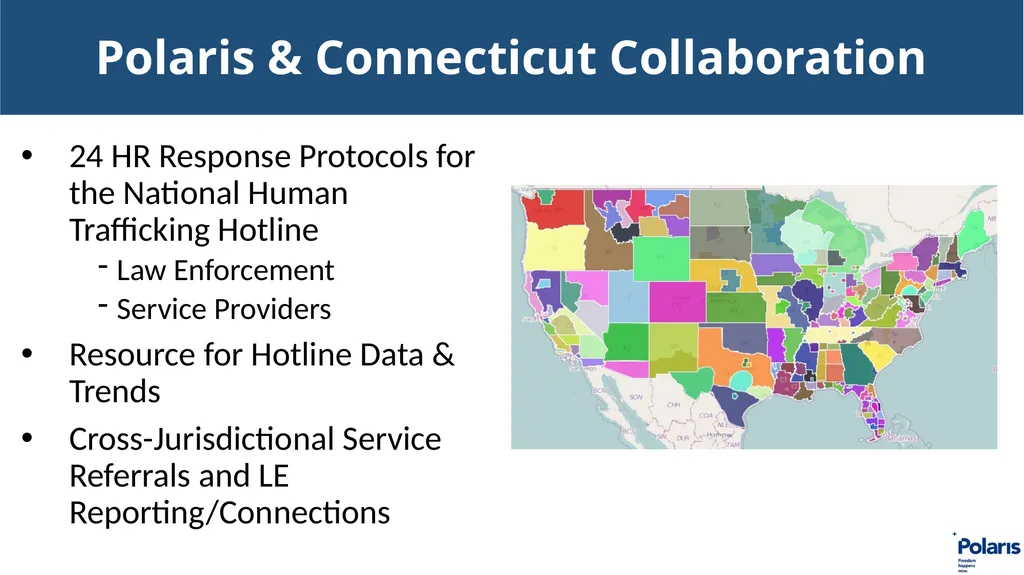
24 HR Response Protocols for the National Human Trafficking Hotline
Law Enforcement
Service Providers
Resource for Hotline Data & Trends
Cross-Jurisdictional Service Referrals and LE Reporting/Connections Polaris & Connecticut Collaboration<br>
Law Enforcement
Service Providers
Resource for Hotline Data & Trends
Cross-Jurisdictional Service Referrals and LE Reporting/Connections Polaris & Connecticut Collaboration<br>
71
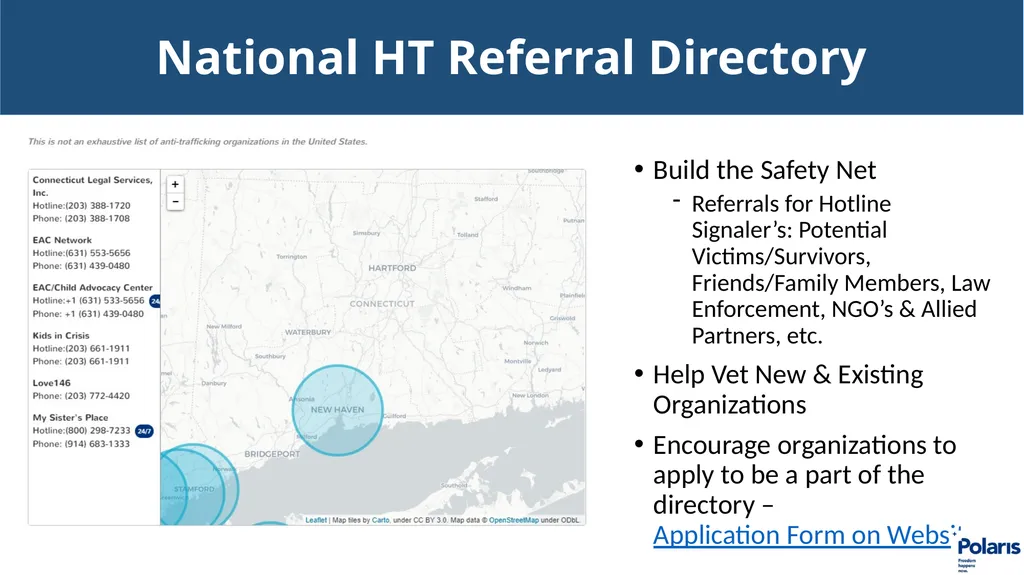
Build the Safety Net
Referrals for Hotline Signaler’s: Potential Victims/Survivors, Friends/Family Members, Law Enforcement, NGO’s & Allied Partners, etc.
Help Vet New & Existing Organizations
Encourage organizations to apply to be a part of the directory – Application Form on Website National HT Referral Directory<br>
Referrals for Hotline Signaler’s: Potential Victims/Survivors, Friends/Family Members, Law Enforcement, NGO’s & Allied Partners, etc.
Help Vet New & Existing Organizations
Encourage organizations to apply to be a part of the directory – Application Form on Website National HT Referral Directory<br>
72
Strengths, Challenges, and Next Steps Tammy Sneed
Department of Children & Families<br>
Department of Children & Families<br>
73
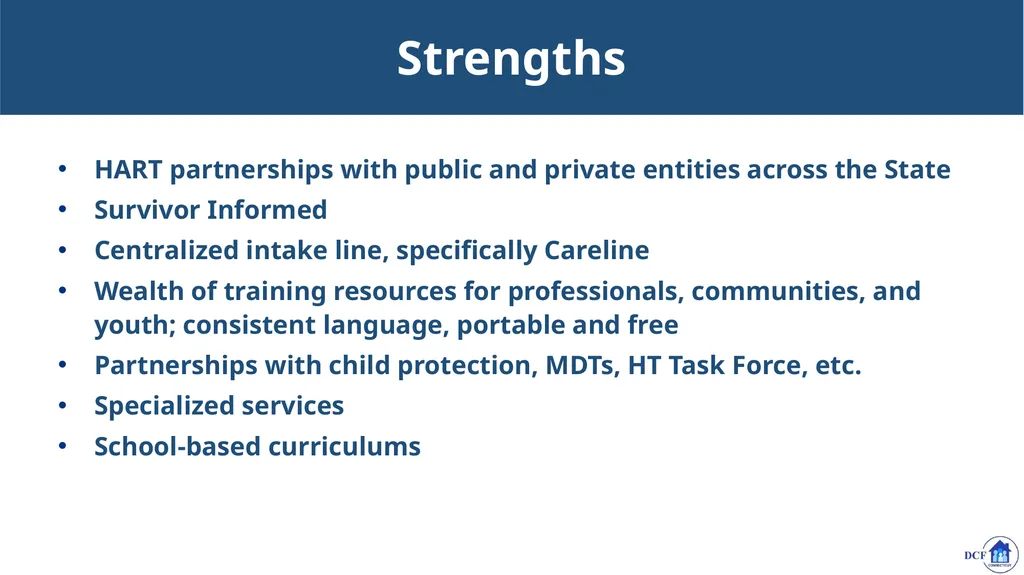
HART partnerships with public and private entities across the State
Survivor Informed
Centralized intake line, specifically Careline
Wealth of training resources for professionals, communities, and youth; consistent language, portable and free
Partnerships with child protection, MDTs, HT Task Force, etc.
Specialized services
School-based curriculums Strengths<br>
Survivor Informed
Centralized intake line, specifically Careline
Wealth of training resources for professionals, communities, and youth; consistent language, portable and free
Partnerships with child protection, MDTs, HT Task Force, etc.
Specialized services
School-based curriculums Strengths<br>
74
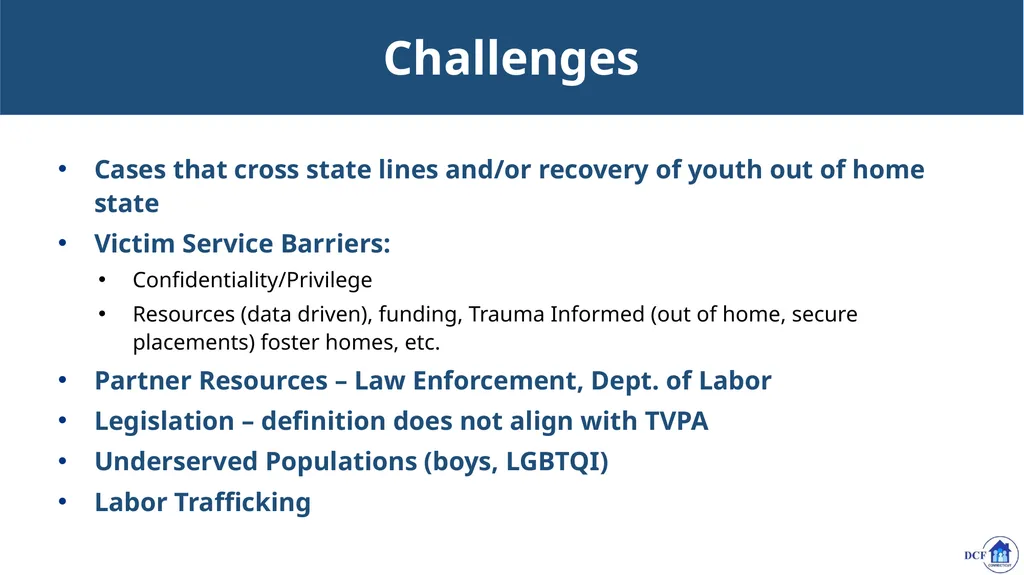
Cases that cross state lines and/or recovery of youth out of home state
Victim Service Barriers:
Confidentiality/Privilege
Resources (data driven), funding, Trauma Informed (out of home, secure placements) foster homes, etc.
Partner Resources – Law Enforcement, Dept. of Labor
Legislation – definition does not align with TVPA
Underserved Populations (boys, LGBTQI)
Labor Trafficking Challenges<br>
Victim Service Barriers:
Confidentiality/Privilege
Resources (data driven), funding, Trauma Informed (out of home, secure placements) foster homes, etc.
Partner Resources – Law Enforcement, Dept. of Labor
Legislation – definition does not align with TVPA
Underserved Populations (boys, LGBTQI)
Labor Trafficking Challenges<br>
75
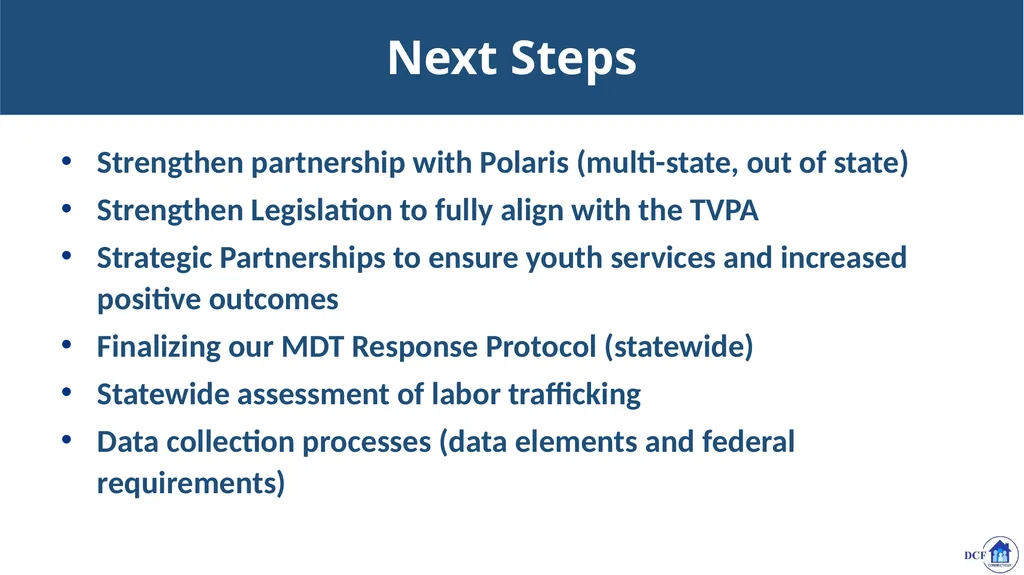
Strengthen partnership with Polaris (multi-state, out of state)
Strengthen Legislation to fully align with the TVPA
Strategic Partnerships to ensure youth services and increased positive outcomes
Finalizing our MDT Response Protocol (statewide)
Statewide assessment of labor trafficking
Data collection processes (data elements and federal requirements) Next Steps<br>
Strengthen Legislation to fully align with the TVPA
Strategic Partnerships to ensure youth services and increased positive outcomes
Finalizing our MDT Response Protocol (statewide)
Statewide assessment of labor trafficking
Data collection processes (data elements and federal requirements) Next Steps<br>
76
Special Thanks to the Administration
for
Children and Families<br>
77
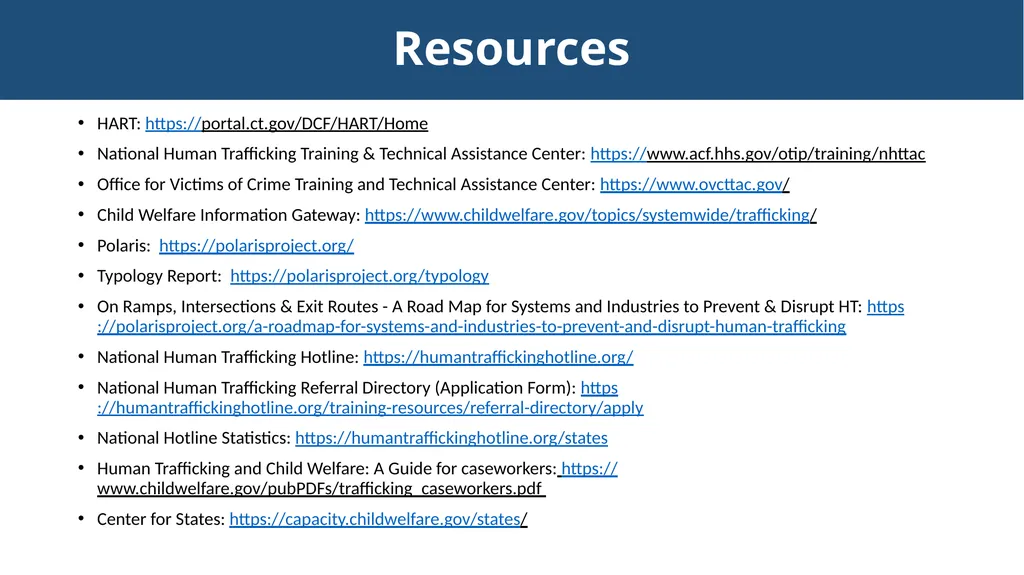
Resources HART: https://portal.ct.gov/DCF/HART/Home
National Human Trafficking Training & Technical Assistance Center: https://www.acf.hhs.gov/otip/training/nhttac
Office for Victims of Crime Training and Technical Assistance Center: https://www.ovcttac.gov/
Child Welfare Information Gateway: https://www.childwelfare.gov/topics/systemwide/trafficking/
Polaris: https://polarisproject.org/
Typology Report: https://polarisproject.org/typology
On Ramps, Intersections & Exit Routes - A Road Map for Systems and Industries to Prevent & Disrupt HT: https://polarisproject.org/a-roadmap-for-systems-and-industries-to-prevent-and-disrupt-human-trafficking
National Human Trafficking Hotline: https://humantraffickinghotline.org/
National Human Trafficking Referral Directory (Application Form): https://humantraffickinghotline.org/training-resources/referral-directory/apply
National Hotline Statistics: https://humantraffickinghotline.org/states
Human Trafficking and Child Welfare: A Guide for caseworkers: https://www.childwelfare.gov/pubPDFs/trafficking_caseworkers.pdf
Center for States: https://capacity.childwelfare.gov/states/<br>
National Human Trafficking Training & Technical Assistance Center: https://www.acf.hhs.gov/otip/training/nhttac
Office for Victims of Crime Training and Technical Assistance Center: https://www.ovcttac.gov/
Child Welfare Information Gateway: https://www.childwelfare.gov/topics/systemwide/trafficking/
Polaris: https://polarisproject.org/
Typology Report: https://polarisproject.org/typology
On Ramps, Intersections & Exit Routes - A Road Map for Systems and Industries to Prevent & Disrupt HT: https://polarisproject.org/a-roadmap-for-systems-and-industries-to-prevent-and-disrupt-human-trafficking
National Human Trafficking Hotline: https://humantraffickinghotline.org/
National Human Trafficking Referral Directory (Application Form): https://humantraffickinghotline.org/training-resources/referral-directory/apply
National Hotline Statistics: https://humantraffickinghotline.org/states
Human Trafficking and Child Welfare: A Guide for caseworkers: https://www.childwelfare.gov/pubPDFs/trafficking_caseworkers.pdf
Center for States: https://capacity.childwelfare.gov/states/<br>
78
Thank you for joining us! Questions? Samantha Lowry:
Samantha.Lowry@icf.com Vanessa Chauhan:
vchauhan@polarisproject.org Krystal Rich:
ctchildrensalliance@gmail.com Tammy Sneed:
Tammy.Sneed@ct.gov *This presentation was also supported by: Christa Rider, Erika Mongrain, Caroline Diemar, and Aubrey Sneesby.<br>
Samantha.Lowry@icf.com Vanessa Chauhan:
vchauhan@polarisproject.org Krystal Rich:
ctchildrensalliance@gmail.com Tammy Sneed:
Tammy.Sneed@ct.gov *This presentation was also supported by: Christa Rider, Erika Mongrain, Caroline Diemar, and Aubrey Sneesby.<br>