
Conservative management is considered as first
Description: Conservative management is considered as first line before pharmacological treatment is offered. This includes: Medication review Patient education Lifestyle advice - caffeine reduction, weight loss if indicated, addressing fluid intake,
Related Topics
Download Presentation
"Conservative management is considered as first" is the property of its rightful owner. Permission is granted to download and print the materials on this website for personal, non-commercial use only, and to display it on your personal computer provided you do not modify the materials and that you retain all copyright notices contained in the materials. By downloading content from our website, you accept the terms of this agreement.
Presentation Transcript
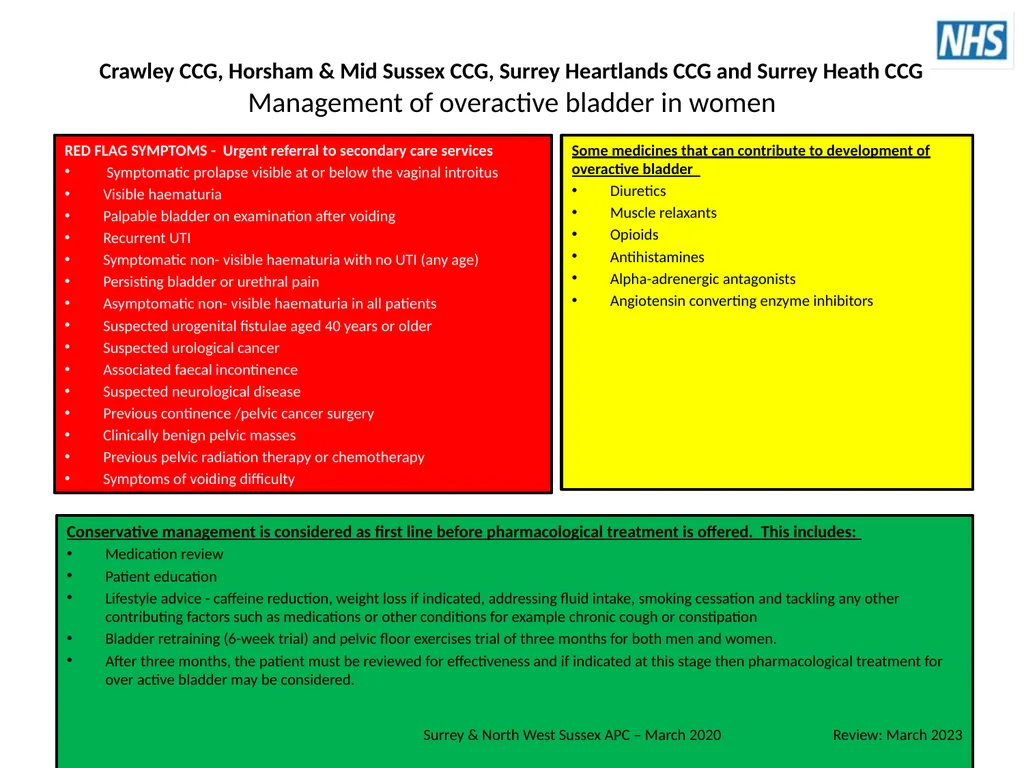
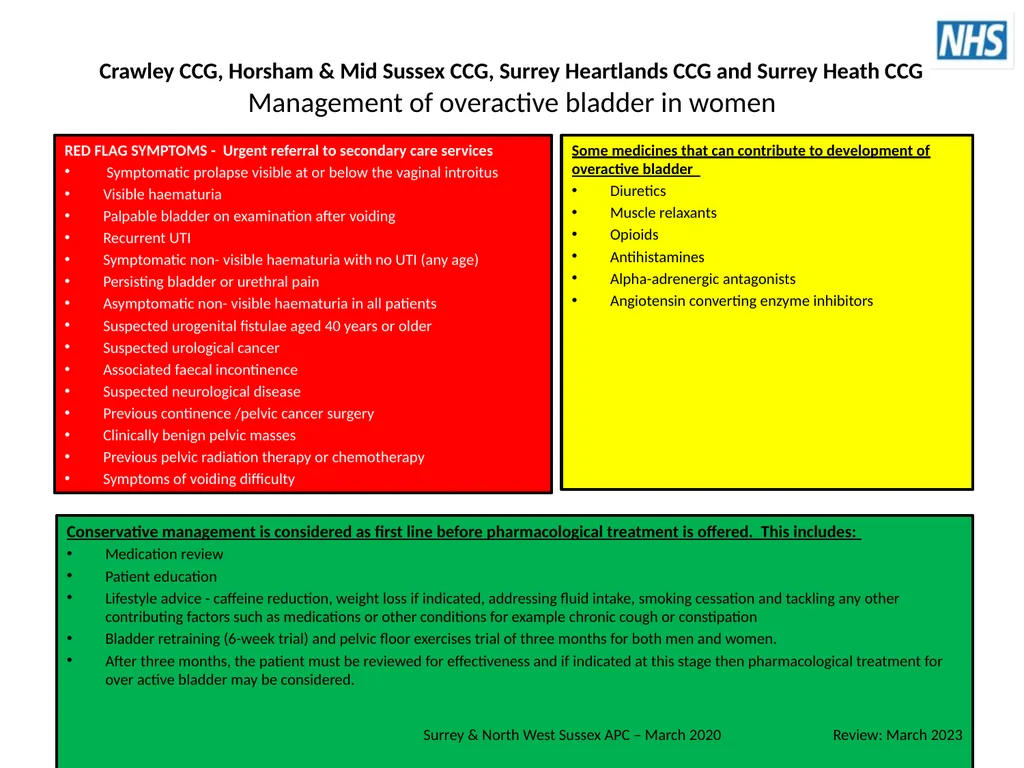
slide1. Conservative management is considered as first line before pharmacological treatment is offered. This includes:
Medication review
Patient education
Lifestyle advice - caffeine reduction, weight loss if indicated, addressing fluid intake, smoking cessation and tackling any other contributing factors such as medications or other conditions for example chronic cough or constipation
Bladder retraining (6-week trial) and pelvic floor exercises trial of three months for both men and women.
After three months, the patient must be reviewed for effectiveness and if indicated at this stage then pharmacological treatment for over active bladder may be considered. Crawley CCG, Horsham & Mid Sussex CCG, Surrey Heartlands CCG and Surrey Heath CCG Management of overactive bladder in women RED FLAG SYMPTOMS - Urgent referral to secondary care services
Symptomatic prolapse visible at or below the vaginal introitus
Visible haematuria
Palpable bladder on examination after voiding
Recurrent UTI
Symptomatic non- visible haematuria with no UTI (any age)
Persisting bladder or urethral pain
Asymptomatic non- visible haematuria in all patients
Suspected urogenital fistulae aged 40 years or older
Suspected urological cancer
Associated faecal incontinence
Suspected neurological disease
Previous continence /pelvic cancer surgery
Clinically benign pelvic masses
Previous pelvic radiation therapy or chemotherapy
Symptoms of voiding difficulty Some medicines that can contribute to development of overactive bladder
Diuretics
Muscle relaxants
Opioids
Antihistamines
Alpha-adrenergic antagonists
Angiotensin converting enzyme inhibitors Surrey & North West Sussex APC – March 2020 Review: March 2023<br>
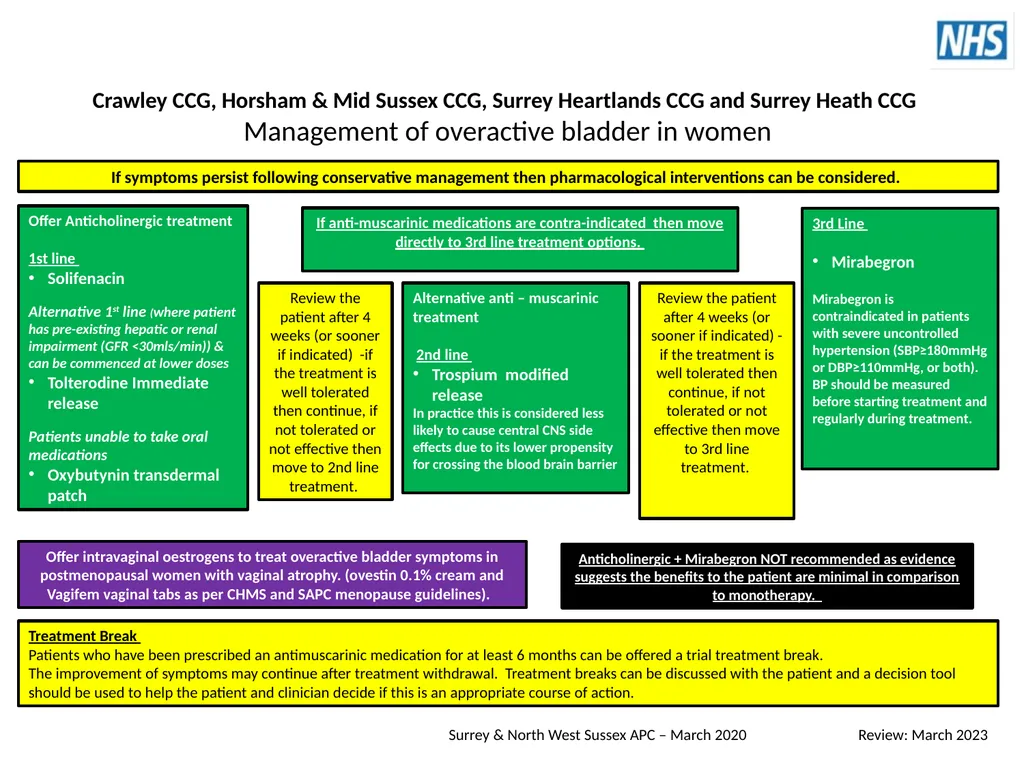
slide2. Crawley CCG, Horsham & Mid Sussex CCG, Surrey Heartlands CCG and Surrey Heath CCG Management of overactive bladder in women Offer Anticholinergic treatment
1st line
Solifenacin
Alternative 1st line (where patient has pre-existing hepatic or renal impairment (GFR <30mls/min)) & can be commenced at lower doses
Tolterodine Immediate release
Patients unable to take oral medications
Oxybutynin transdermal patch 3rd Line
Mirabegron
Mirabegron is contraindicated in patients with severe uncontrolled hypertension (SBP≥180mmHg or DBP≥110mmHg, or both). BP should be measured before starting treatment and regularly during treatment. Alternative anti – muscarinic treatment
2nd line
Trospium modified release
In practice this is considered less likely to cause central CNS side effects due to its lower propensity for crossing the blood brain barrier Review the patient after 4 weeks (or sooner if indicated) -if the treatment is well tolerated then continue, if not tolerated or not effective then move to 2nd line treatment. Review the patient after 4 weeks (or sooner if indicated) - if the treatment is well tolerated then continue, if not tolerated or not effective then move to 3rd line treatment. Treatment Break
Patients who have been prescribed an antimuscarinic medication for at least 6 months can be offered a trial treatment break.
The improvement of symptoms may continue after treatment withdrawal. Treatment breaks can be discussed with the patient and a decision tool should be used to help the patient and clinician decide if this is an appropriate course of action. If symptoms persist following conservative management then pharmacological interventions can be considered. If anti-muscarinic medications are contra-indicated then move directly to 3rd line treatment options. Offer intravaginal oestrogens to treat overactive bladder symptoms in postmenopausal women with vaginal atrophy. (ovestin 0.1% cream and Vagifem vaginal tabs as per CHMS and SAPC menopause guidelines). Anticholinergic + Mirabegron NOT recommended as evidence suggests the benefits to the patient are minimal in comparison to monotherapy. Surrey & North West Sussex APC – March 2020 Review: March 2023<br>
Medication review
Patient education
Lifestyle advice - caffeine reduction, weight loss if indicated, addressing fluid intake, smoking cessation and tackling any other contributing factors such as medications or other conditions for example chronic cough or constipation
Bladder retraining (6-week trial) and pelvic floor exercises trial of three months for both men and women.
After three months, the patient must be reviewed for effectiveness and if indicated at this stage then pharmacological treatment for over active bladder may be considered. Crawley CCG, Horsham & Mid Sussex CCG, Surrey Heartlands CCG and Surrey Heath CCG Management of overactive bladder in women RED FLAG SYMPTOMS - Urgent referral to secondary care services
Symptomatic prolapse visible at or below the vaginal introitus
Visible haematuria
Palpable bladder on examination after voiding
Recurrent UTI
Symptomatic non- visible haematuria with no UTI (any age)
Persisting bladder or urethral pain
Asymptomatic non- visible haematuria in all patients
Suspected urogenital fistulae aged 40 years or older
Suspected urological cancer
Associated faecal incontinence
Suspected neurological disease
Previous continence /pelvic cancer surgery
Clinically benign pelvic masses
Previous pelvic radiation therapy or chemotherapy
Symptoms of voiding difficulty Some medicines that can contribute to development of overactive bladder
Diuretics
Muscle relaxants
Opioids
Antihistamines
Alpha-adrenergic antagonists
Angiotensin converting enzyme inhibitors Surrey & North West Sussex APC – March 2020 Review: March 2023<br>
slide2. Crawley CCG, Horsham & Mid Sussex CCG, Surrey Heartlands CCG and Surrey Heath CCG Management of overactive bladder in women Offer Anticholinergic treatment
1st line
Solifenacin
Alternative 1st line (where patient has pre-existing hepatic or renal impairment (GFR <30mls/min)) & can be commenced at lower doses
Tolterodine Immediate release
Patients unable to take oral medications
Oxybutynin transdermal patch 3rd Line
Mirabegron
Mirabegron is contraindicated in patients with severe uncontrolled hypertension (SBP≥180mmHg or DBP≥110mmHg, or both). BP should be measured before starting treatment and regularly during treatment. Alternative anti – muscarinic treatment
2nd line
Trospium modified release
In practice this is considered less likely to cause central CNS side effects due to its lower propensity for crossing the blood brain barrier Review the patient after 4 weeks (or sooner if indicated) -if the treatment is well tolerated then continue, if not tolerated or not effective then move to 2nd line treatment. Review the patient after 4 weeks (or sooner if indicated) - if the treatment is well tolerated then continue, if not tolerated or not effective then move to 3rd line treatment. Treatment Break
Patients who have been prescribed an antimuscarinic medication for at least 6 months can be offered a trial treatment break.
The improvement of symptoms may continue after treatment withdrawal. Treatment breaks can be discussed with the patient and a decision tool should be used to help the patient and clinician decide if this is an appropriate course of action. If symptoms persist following conservative management then pharmacological interventions can be considered. If anti-muscarinic medications are contra-indicated then move directly to 3rd line treatment options. Offer intravaginal oestrogens to treat overactive bladder symptoms in postmenopausal women with vaginal atrophy. (ovestin 0.1% cream and Vagifem vaginal tabs as per CHMS and SAPC menopause guidelines). Anticholinergic + Mirabegron NOT recommended as evidence suggests the benefits to the patient are minimal in comparison to monotherapy. Surrey & North West Sussex APC – March 2020 Review: March 2023<br>