
Constipation, Scant Feces, Alimentary Tract



Description: Constipation, Scant Feces, Alimentary Tract Hemorrhage By Dr. Hussein AlNaji Constipation is the decreased frequency of defecation accompanied by feces that contain a decreased concentration of water. The feces vary in consistency from
Related Topics
Download Presentation
"Constipation, Scant Feces, Alimentary Tract" is the property of its rightful owner. Permission is granted to download and print the materials on this website for personal, non-commercial use only, and to display it on your personal computer provided you do not modify the materials and that you retain all copyright notices contained in the materials. By downloading content from our website, you accept the terms of this agreement.
Presentation Transcript
slide1. Constipation, Scant Feces, Alimentary Tract Hemorrhage By Dr. Hussein AlNaji<br>
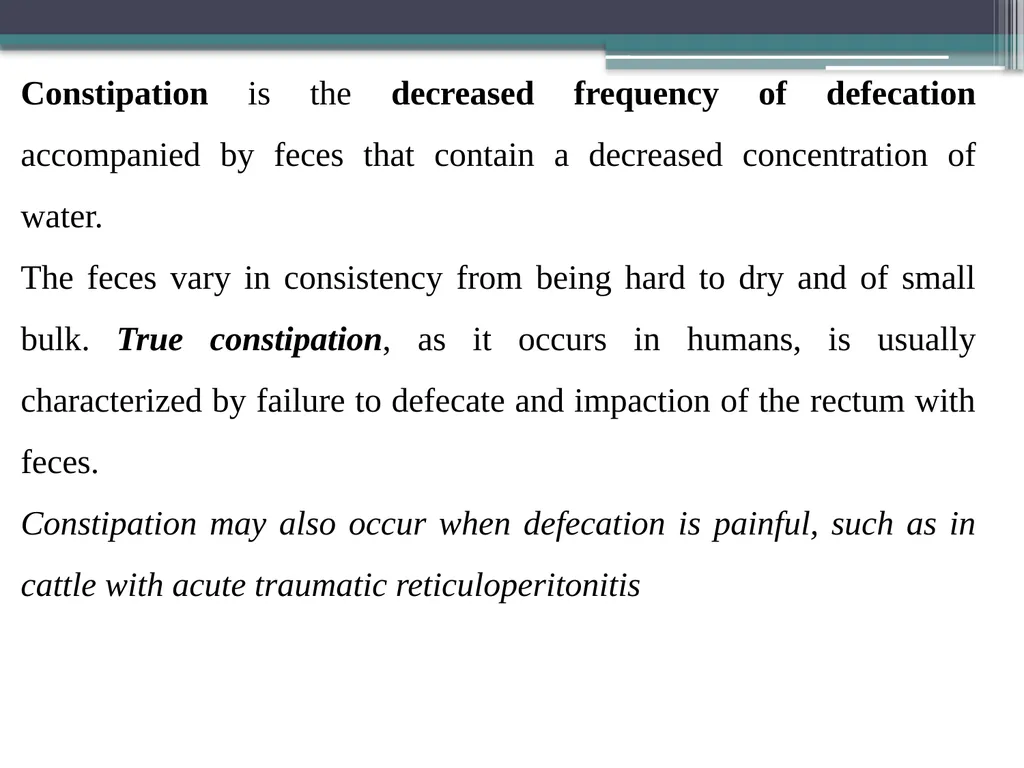
slide2. Constipation is the decreased frequency of defecation accompanied by feces that contain a decreased concentration of water.
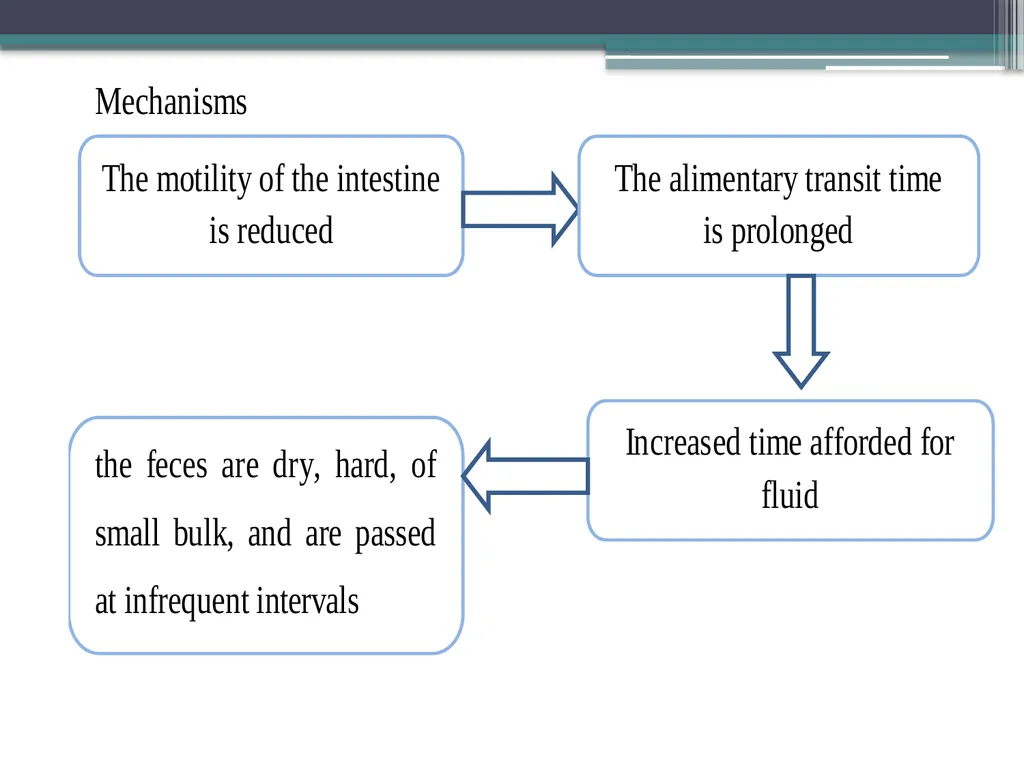
The feces vary in consistency from being hard to dry and of small bulk. True constipation, as it occurs in humans, is usually characterized by failure to defecate and impaction of the rectum with feces.
Constipation may also occur when defecation is painful, such as in cattle with acute traumatic reticuloperitonitis<br>
slide4. SCANT FECES
Scant feces are small quantities of feces, which may be dry or soft. Scant feces are most common in cattle with abnormalities of the forestomach or abomasum resulting in the movement of only small quantities of ingesta into the small and large intestines (an outflow abnormality).
Common causes of constipation or scantfeces are as follows:<br>
slide5. Diseases of the forestomach and abomasum causing failure of outflow
Impaction of the large intestine in the horse and the sow
Severe debility, as in old age
Deficient dietary bulk, usually fiber
Chronic dehydration
Partial obstruction of large intestine
Painful conditions of the anus
Paralytic ileus
Grass sickness in horses
Chronic zinc poisoning in cattle
Terminal stages of pregnancy in cows<br>
slide6. Alimentary Tract Hemorrhage
Hemorrhage into the stomach or intestine is a common occurrence in farm animals. The main causes include the following:
Gastric or abomasal (rarely duodenal) ulcers
Severe hemorrhagic enteritis.
Structural lesions of the intestinal wall, e.g., adenomatosis, neoplasia.
Infestation with blood-sucking nematodes, e.g., bunostomiasis,
Local vascular engorgement or obstruction as in intussusception and verminous thrombosis<br>
slide7. Hemorrhage into the stomach results in the formation of acid hematin, which makes vomitus a dark brown color like coffee grounds, and feces have a black or very dark brown, tarry appearance (melena).
The change in appearance of the feces caused by hemorrhage into the intestine varies with the level at which the hemorrhage occurs.
If the blood originates in the small intestine, the feces may be brown-black.
If it originates in the colon or cecum, the blood is unchanged and gives the feces an even red color.
Hemorrhage into the lower colon and rectum may cause the voiding of feces containing of clots of whole blood (hematochezia).<br>
slide8. Abdominal Pain
The pain associated with diseases of the abdominal viscera causes similar signs regardless of the viscus or organ involved and careful clinical examination is necessary to locate the site of the lesion.
Horses
Acute pain: Pawing, flank-watching, rolling
Subacute pain: Lesser degree of flank-watching, often excessive pawing, lying down frequently without rolling, stretching out as if to urinate, males may extrude the penis, walking backward, dog-sitting posture, lying on back, impulsive walking
Peritoneal pain: Rigidity of the abdominal wall, pain on palpation.<br>
slide9. Cattle
Acute pain: Downward arching of back with treading of the hind feet, lying down (rolling is uncommon), calves will lie down and bellow with severe abdominal pain, as in abomasal torsion.
Subacute pain, including peritoneal pain: Back arched upward, grunting on walking or lying down, grunting on deep palpation of the abdomen, immobility.<br>
slide10. Common Causes Of Alimentary Tract Pain
Horses
Acute pain: All causes of intestinal obstruction, gastric dilatation, enteritis generally, acute colitis, rarely salmonellosis.
Subacute pain: Thromboembolic colic, impaction of the large intestine, ileal hypertrophy.
Cattle
Acute pain: Intestinal obstruction, especially by phytobezoars; poisoning
Subacute pain: Traumatic reticuloperitonitis and peritonitis generally, abomasal volvulus.<br>
slide11. TENESMUS
Tenesmus, or persistent straining, is common in many diseases of the organs of the pelvic cavity; therefore, it is not necessarily a diagnostic
sign of disease in the lower alimentary tract.
It is sometimes associated with frequent defecation caused by neurologic stimulation of peristalsis. Common causes of tenesmus.<br>
slide12. Cattle
Lower alimentary tract disease, e.g., colitis and proctitis caused by Coccidiosis.
Genital tract disease, e.g., severe vaginitis, retained placenta
Estrogen toxicity in steers, e.g., estrogen implantation, fusariotoxicosis
Aminopyridine poisoning, methiocarb poisoning
Lower spinal cord lesions: spinal cord abscess, rabies
Idiopathic
Horses
Tenesmus does not usually occur except during parturition.<br>
slide2. Constipation is the decreased frequency of defecation accompanied by feces that contain a decreased concentration of water.
The feces vary in consistency from being hard to dry and of small bulk. True constipation, as it occurs in humans, is usually characterized by failure to defecate and impaction of the rectum with feces.
Constipation may also occur when defecation is painful, such as in cattle with acute traumatic reticuloperitonitis<br>
slide4. SCANT FECES
Scant feces are small quantities of feces, which may be dry or soft. Scant feces are most common in cattle with abnormalities of the forestomach or abomasum resulting in the movement of only small quantities of ingesta into the small and large intestines (an outflow abnormality).
Common causes of constipation or scantfeces are as follows:<br>
slide5. Diseases of the forestomach and abomasum causing failure of outflow
Impaction of the large intestine in the horse and the sow
Severe debility, as in old age
Deficient dietary bulk, usually fiber
Chronic dehydration
Partial obstruction of large intestine
Painful conditions of the anus
Paralytic ileus
Grass sickness in horses
Chronic zinc poisoning in cattle
Terminal stages of pregnancy in cows<br>
slide6. Alimentary Tract Hemorrhage
Hemorrhage into the stomach or intestine is a common occurrence in farm animals. The main causes include the following:
Gastric or abomasal (rarely duodenal) ulcers
Severe hemorrhagic enteritis.
Structural lesions of the intestinal wall, e.g., adenomatosis, neoplasia.
Infestation with blood-sucking nematodes, e.g., bunostomiasis,
Local vascular engorgement or obstruction as in intussusception and verminous thrombosis<br>
slide7. Hemorrhage into the stomach results in the formation of acid hematin, which makes vomitus a dark brown color like coffee grounds, and feces have a black or very dark brown, tarry appearance (melena).
The change in appearance of the feces caused by hemorrhage into the intestine varies with the level at which the hemorrhage occurs.
If the blood originates in the small intestine, the feces may be brown-black.
If it originates in the colon or cecum, the blood is unchanged and gives the feces an even red color.
Hemorrhage into the lower colon and rectum may cause the voiding of feces containing of clots of whole blood (hematochezia).<br>
slide8. Abdominal Pain
The pain associated with diseases of the abdominal viscera causes similar signs regardless of the viscus or organ involved and careful clinical examination is necessary to locate the site of the lesion.
Horses
Acute pain: Pawing, flank-watching, rolling
Subacute pain: Lesser degree of flank-watching, often excessive pawing, lying down frequently without rolling, stretching out as if to urinate, males may extrude the penis, walking backward, dog-sitting posture, lying on back, impulsive walking
Peritoneal pain: Rigidity of the abdominal wall, pain on palpation.<br>
slide9. Cattle
Acute pain: Downward arching of back with treading of the hind feet, lying down (rolling is uncommon), calves will lie down and bellow with severe abdominal pain, as in abomasal torsion.
Subacute pain, including peritoneal pain: Back arched upward, grunting on walking or lying down, grunting on deep palpation of the abdomen, immobility.<br>
slide10. Common Causes Of Alimentary Tract Pain
Horses
Acute pain: All causes of intestinal obstruction, gastric dilatation, enteritis generally, acute colitis, rarely salmonellosis.
Subacute pain: Thromboembolic colic, impaction of the large intestine, ileal hypertrophy.
Cattle
Acute pain: Intestinal obstruction, especially by phytobezoars; poisoning
Subacute pain: Traumatic reticuloperitonitis and peritonitis generally, abomasal volvulus.<br>
slide11. TENESMUS
Tenesmus, or persistent straining, is common in many diseases of the organs of the pelvic cavity; therefore, it is not necessarily a diagnostic
sign of disease in the lower alimentary tract.
It is sometimes associated with frequent defecation caused by neurologic stimulation of peristalsis. Common causes of tenesmus.<br>
slide12. Cattle
Lower alimentary tract disease, e.g., colitis and proctitis caused by Coccidiosis.
Genital tract disease, e.g., severe vaginitis, retained placenta
Estrogen toxicity in steers, e.g., estrogen implantation, fusariotoxicosis
Aminopyridine poisoning, methiocarb poisoning
Lower spinal cord lesions: spinal cord abscess, rabies
Idiopathic
Horses
Tenesmus does not usually occur except during parturition.<br>