04
After completing this training �you will be able to: Know how to measure noise using common indicators and free mobile applications (apps)
Describe several ways to control noise exposure
Understand the different types of hearing protection devices used in construction and how to use them correctly 4<br>
05
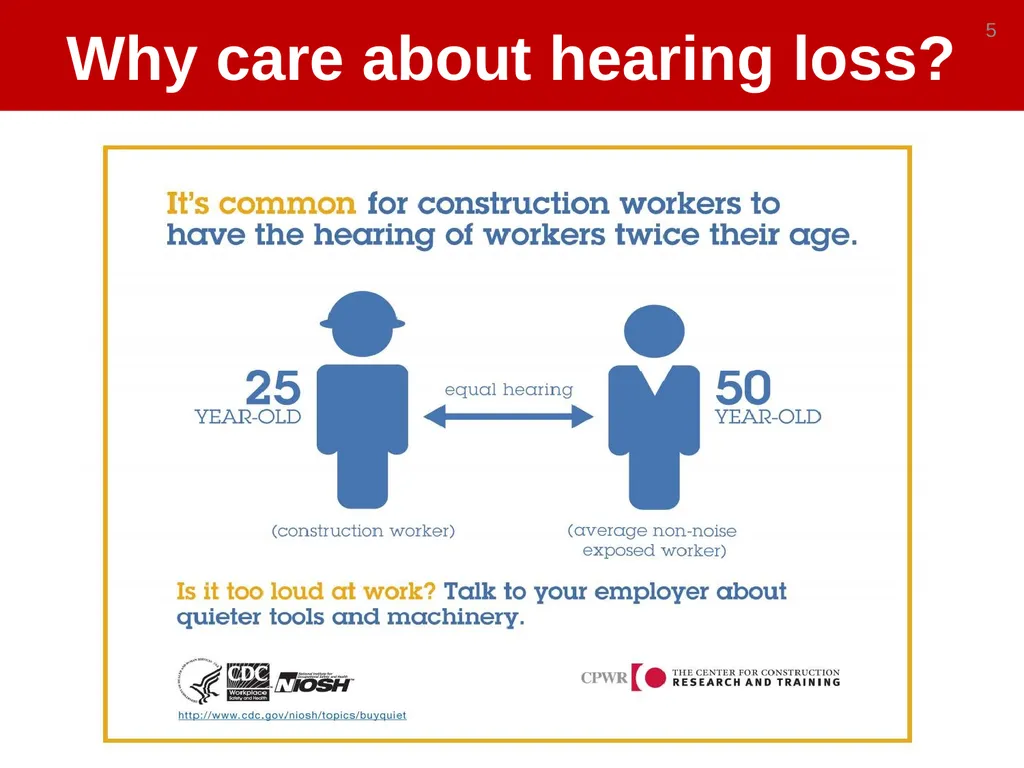
Why care about hearing loss? 5<br>
06
Have you experienced the following… Have trouble hearing people talk when there is background noise
People sound like they are mumbling
Often have to ask people to repeat what they say
Turn up the radio or TV a lot
Have difficulty hearing people on the phone
Have constant ringing in your ears 6<br>
07
Tinnitus Ringing in ears (or hissing, buzzing, roaring, chirping, or whistling sound)
50 million people in the U.S. have tinnitus 7<br>
08
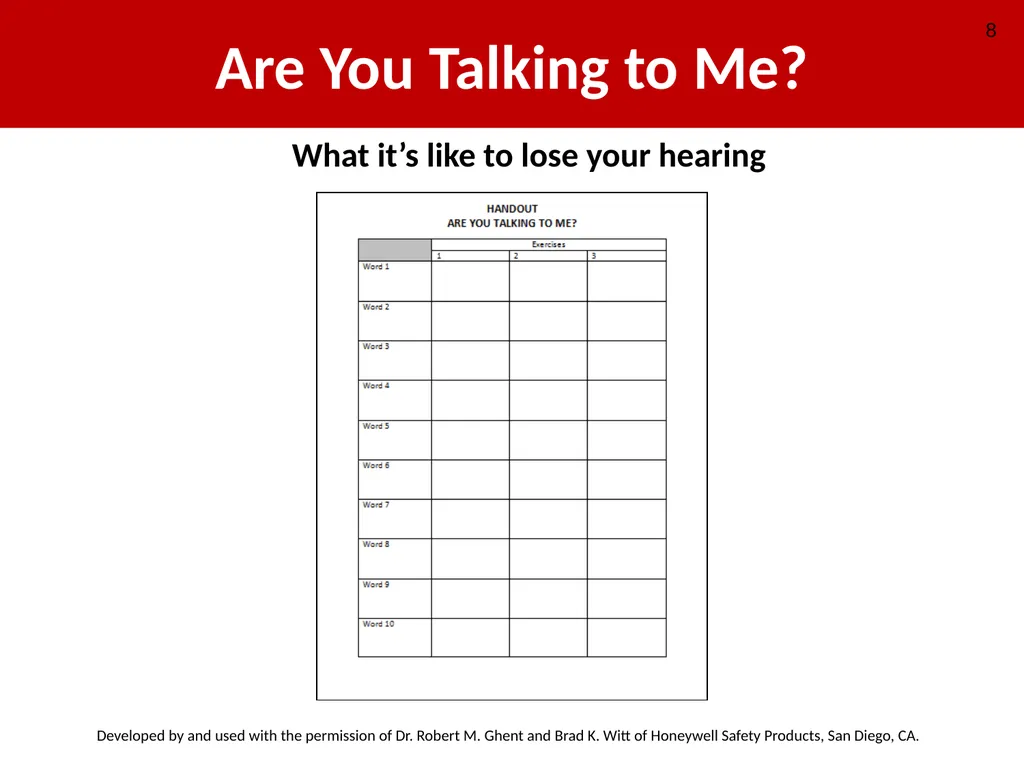
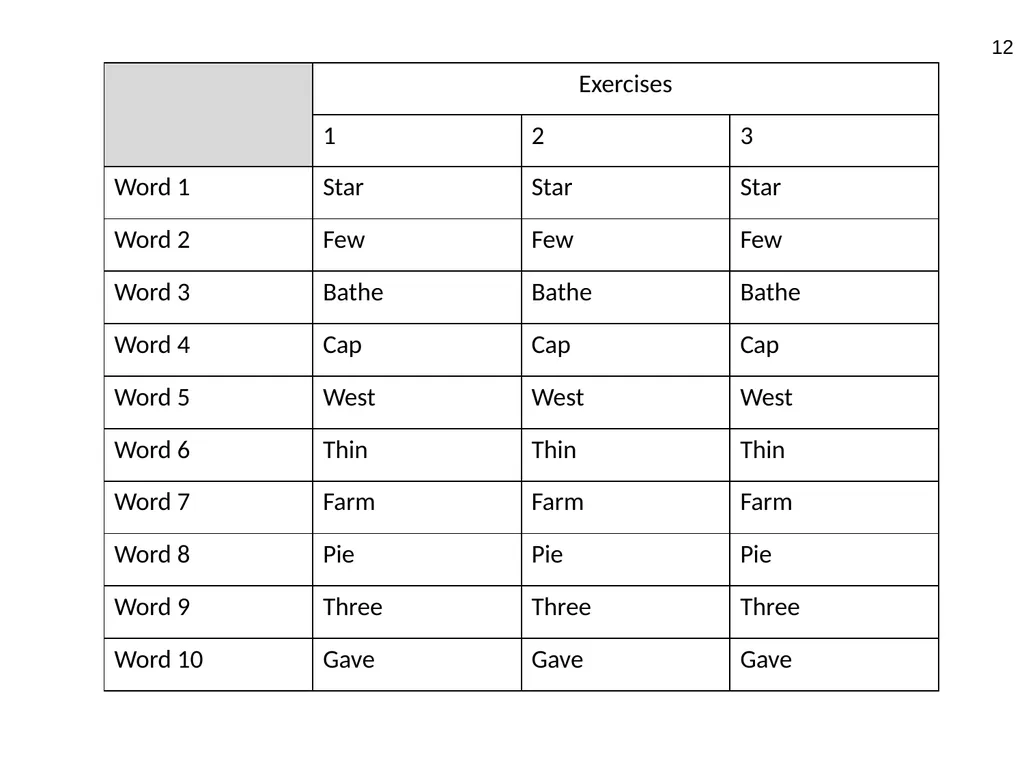
Are You Talking to Me? What it’s like to lose your hearing 8 Developed by and used with the permission of Dr. Robert M. Ghent and Brad K. Witt of Honeywell Safety Products, San Diego, CA.<br>
09
Developed by and used with the permission of Dr. Robert M. Ghent and Brad K. Witt of Honeywell Safety Products, San Diego, CA. 9<br>
10
Developed by and used with the permission of Dr. Robert M. Ghent and Brad K. Witt of Honeywell Safety Products, San Diego, CA. 10<br>
11
Developed by and used with the permission of Dr. Robert M. Ghent and Brad K. Witt of Honeywell Safety Products, San Diego, CA. 11<br>
13
Effects of Hearing Loss Temporary hearing loss
Difficulty hearing warning signals on the job
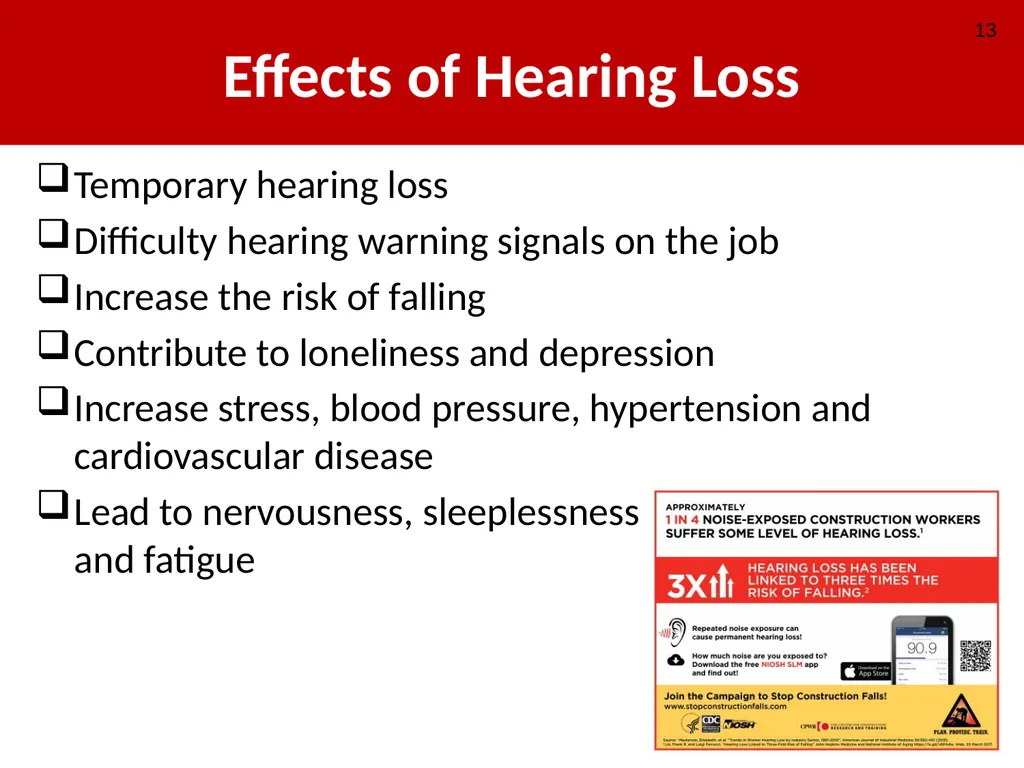
Increase the risk of falling
Contribute to loneliness and depression
Increase stress, blood pressure, hypertension and cardiovascular disease
Lead to nervousness, sleeplessness and fatigue 13 13<br>
14
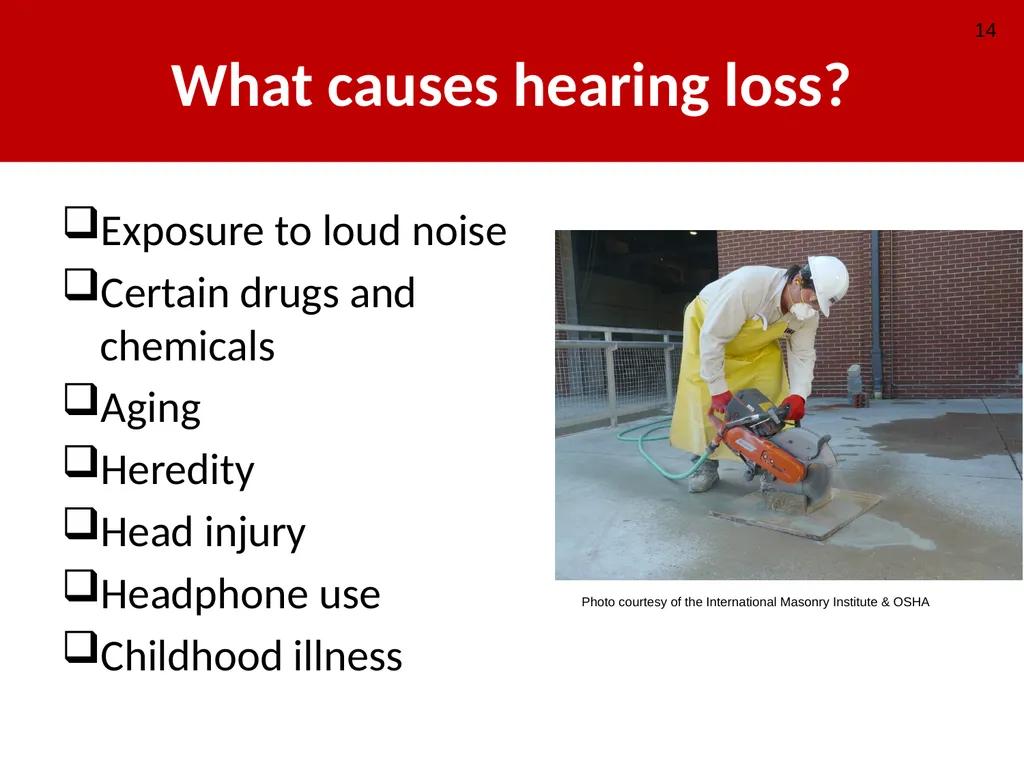
What causes hearing loss? Exposure to loud noise
Certain drugs and chemicals
Aging
Heredity
Head injury
Headphone use
Childhood illness Photo courtesy of the International Masonry Institute & OSHA 14<br>
15
How do you know if it’s too loud at work? You have to:
Shout to be heard an arm’s length away (2-3 feet)
Turn equipment off to be heard
Move to another location to talk & be heard
Turn up the car radio at the end of the day 15<br>
16
How Sound Is Measured Sound is measured in units called decibels (dB) using A-weighted sound levels (dBA)
A reduction of 3 dBA cuts the noise energy in half 16<br>
17
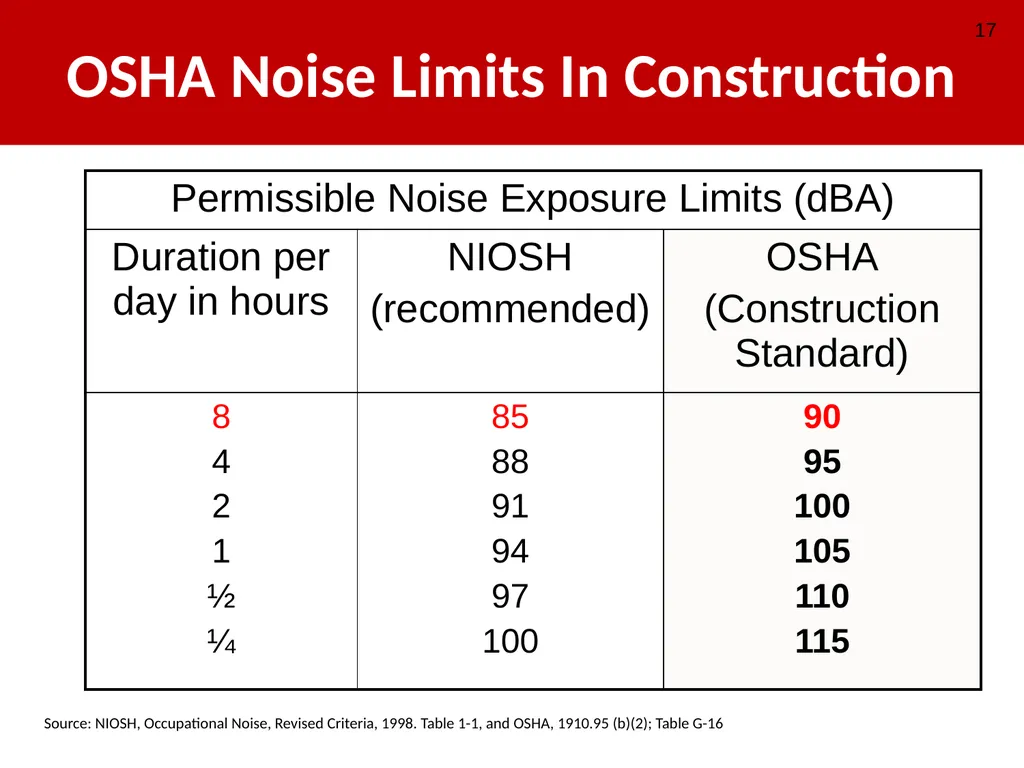
OSHA Noise Limits In Construction Source: NIOSH, Occupational Noise, Revised Criteria, 1998. Table 1-1, and OSHA, 1910.95 (b)(2); Table G-16 17<br>
18
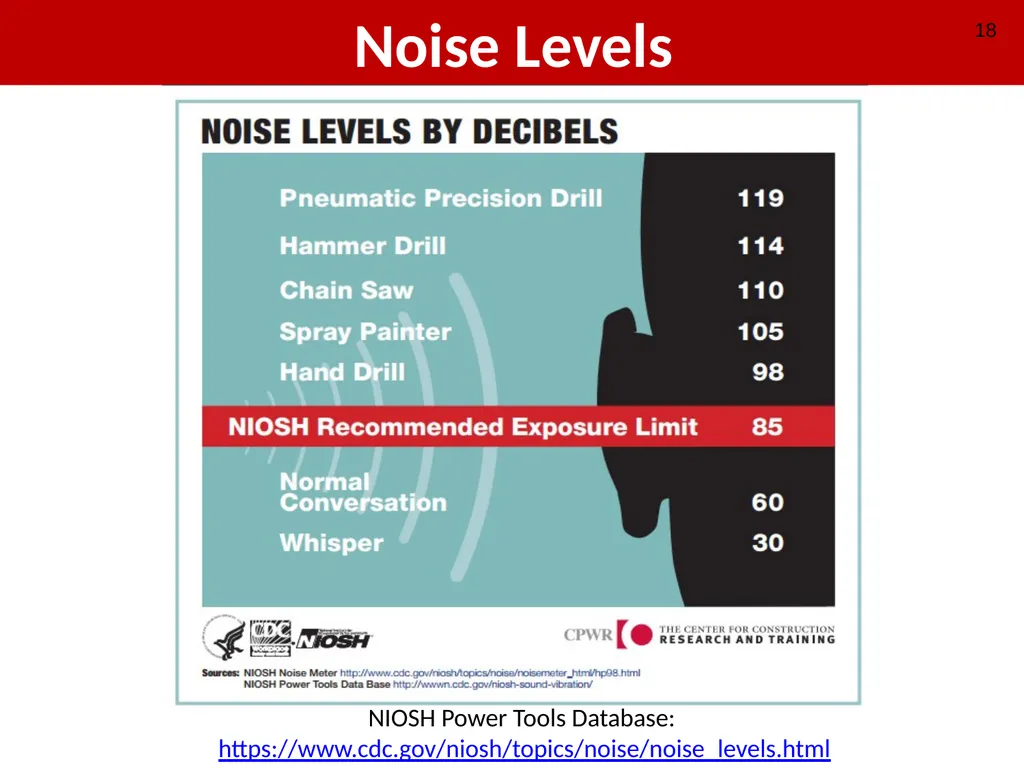
Noise Levels NIOSH Power Tools Database: https://www.cdc.gov/niosh/topics/noise/noise_levels.html 18<br>
19
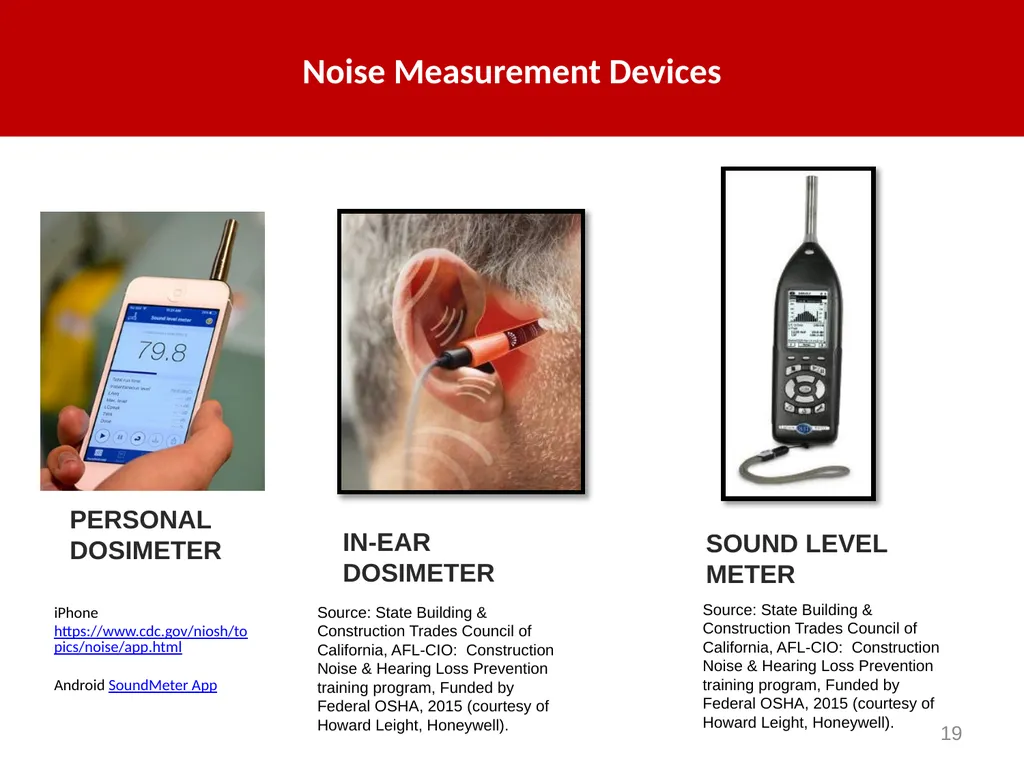
Noise Measurement Devices 19 SOUND LEVEL METER PERSONAL DOSIMETER IN-EAR DOSIMETER Source: State Building & Construction Trades Council of California, AFL-CIO: Construction Noise & Hearing Loss Prevention training program, Funded by Federal OSHA, 2015 (courtesy of Howard Leight, Honeywell). Source: State Building & Construction Trades Council of California, AFL-CIO: Construction Noise & Hearing Loss Prevention training program, Funded by Federal OSHA, 2015 (courtesy of Howard Leight, Honeywell). iPhone https://www.cdc.gov/niosh/topics/noise/app.html
Android SoundMeter App<br>
20
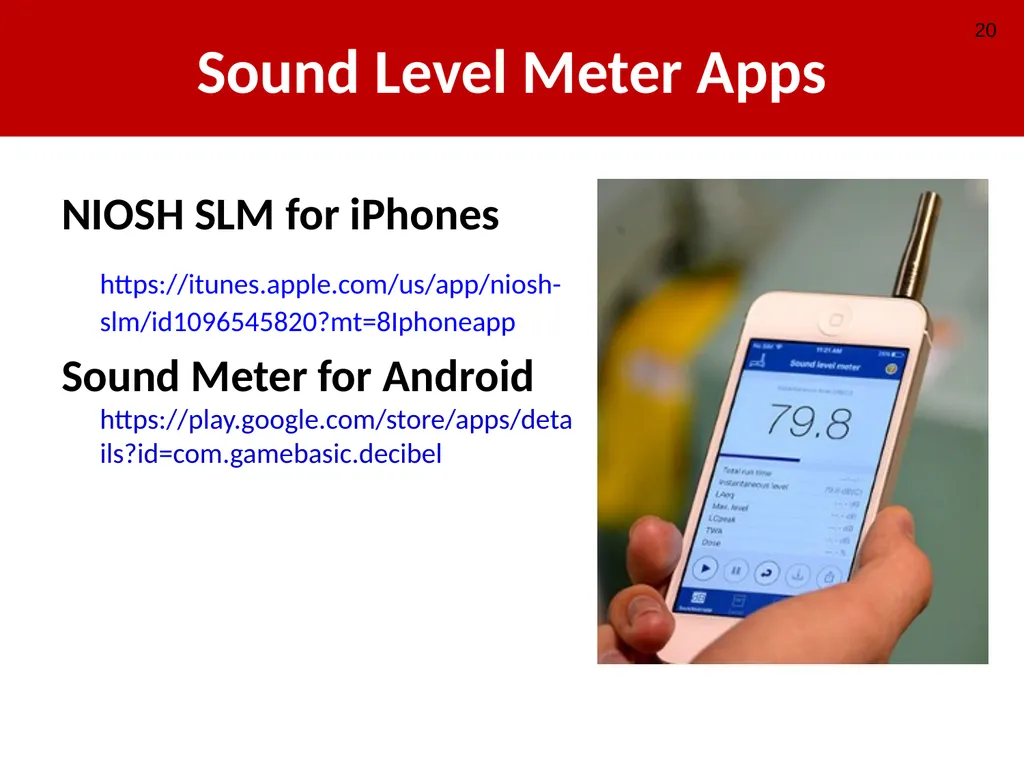
Sound Level Meter Apps NIOSH SLM for iPhones
https://itunes.apple.com/us/app/niosh-slm/id1096545820?mt=8Iphoneapp
Sound Meter for Android https://play.google.com/store/apps/details?id=com.gamebasic.decibel 20<br>
21
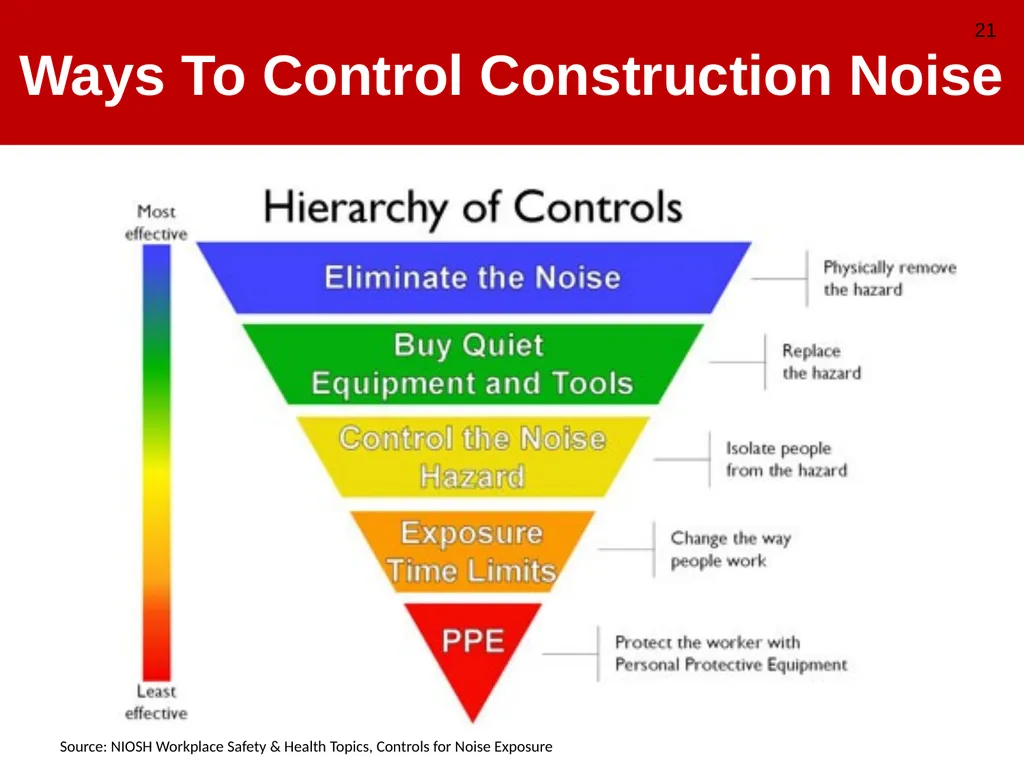
Ways To Control Construction Noise Source: NIOSH Workplace Safety & Health Topics, Controls for Noise Exposure 21<br>
22
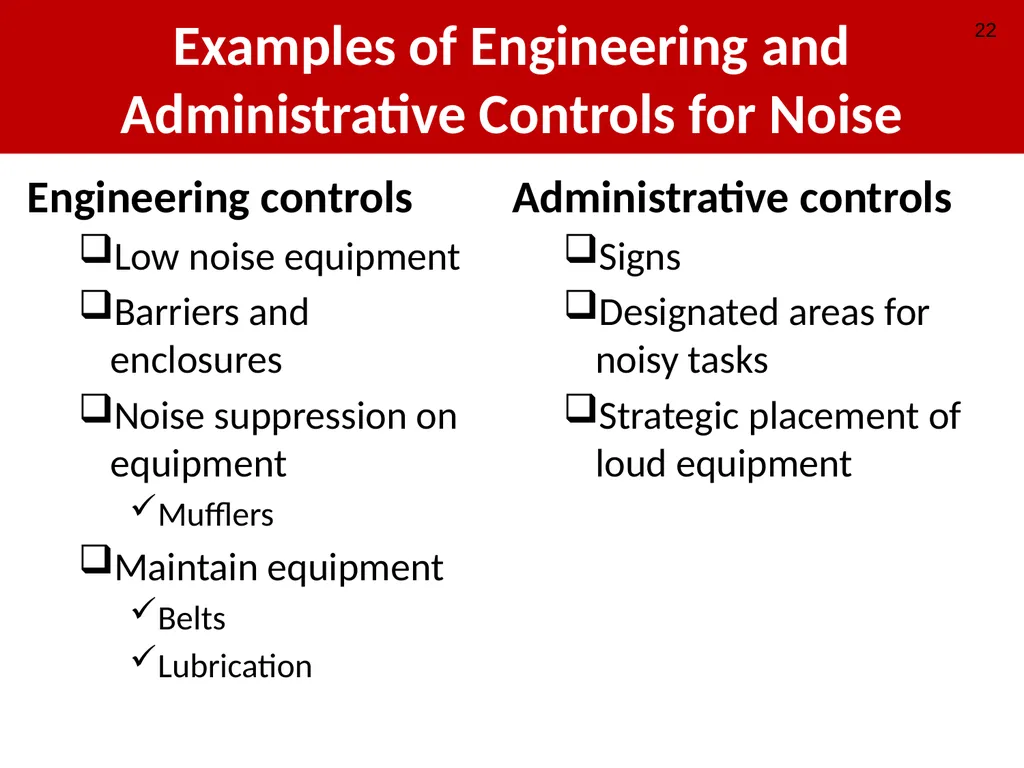
Examples of Engineering and Administrative Controls for Noise Engineering controls
Low noise equipment
Barriers and enclosures
Noise suppression on equipment
Mufflers
Maintain equipment
Belts
Lubrication Administrative controls
Signs
Designated areas for noisy tasks
Strategic placement of loud equipment 22<br>
23
What Employers Should Do �to Protect You Plan: Before the job starts identify noisy tasks and equipment and plan for controlling noise – including buying or renting quieter equipment.
Each day - do a walk-around inspection to make sure the plan is being implemented
Monitor noise levels
Provide different types of hearing protection - one size or style may not fit all workers
Conduct training on each type of hearing protection provided 23<br>
24
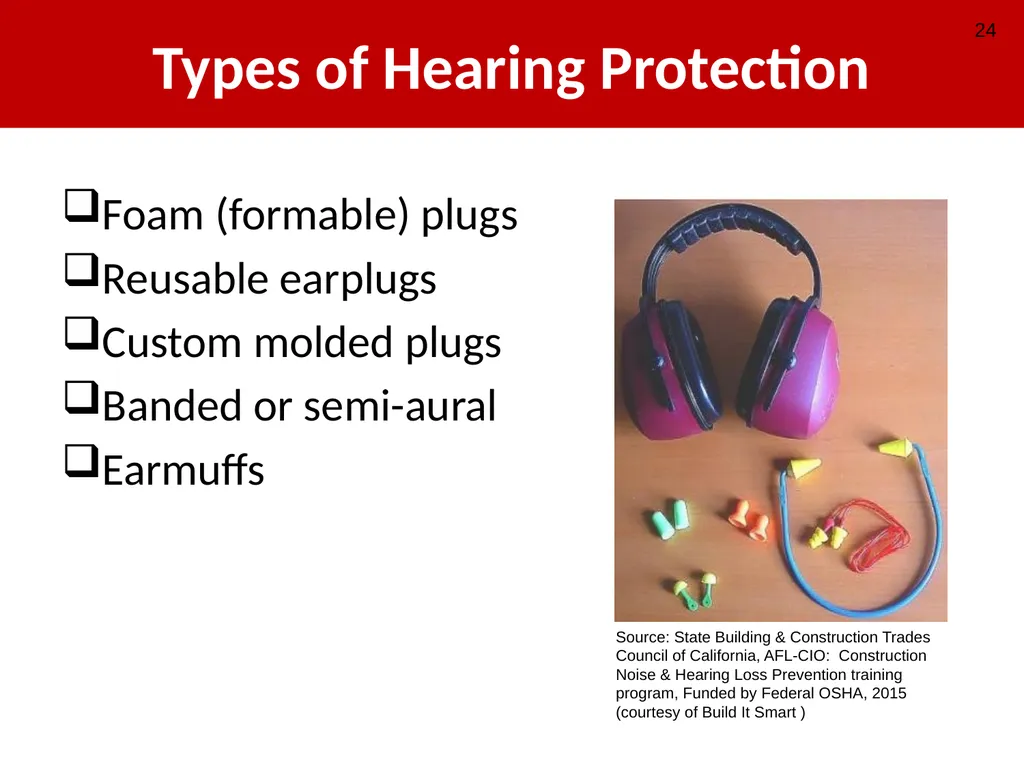
Types of Hearing Protection Foam (formable) plugs
Reusable earplugs
Custom molded plugs
Banded or semi-aural
Earmuffs Source: State Building & Construction Trades Council of California, AFL-CIO: Construction Noise & Hearing Loss Prevention training program, Funded by Federal OSHA, 2015 (courtesy of Build It Smart ) 24<br>
25
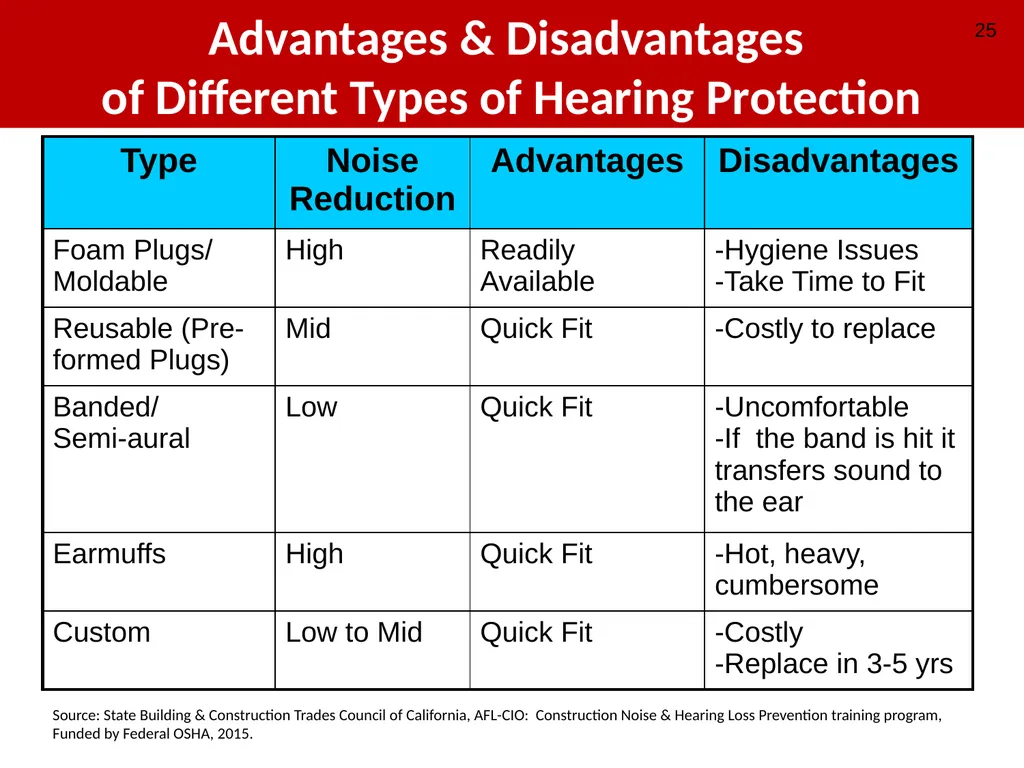
Advantages & Disadvantages �of Different Types of Hearing Protection Source: State Building & Construction Trades Council of California, AFL-CIO: Construction Noise & Hearing Loss Prevention training program, Funded by Federal OSHA, 2015. 25<br>
26
Care and Maintenance Foam roll plugs
dispose of foam roll plugs after each use
Reusable plugs
clean with soap and water, replace when damaged
Custom plugs
wash in mild soapy water 26<br>
27
Care and Maintenance Banded or semi-aural
Clean and replace pods regularly
Earmuffs
Wipe down with damp cloth, or remove cushions and wash in soapy water
Replace cushions if torn or cracked 27<br>
28
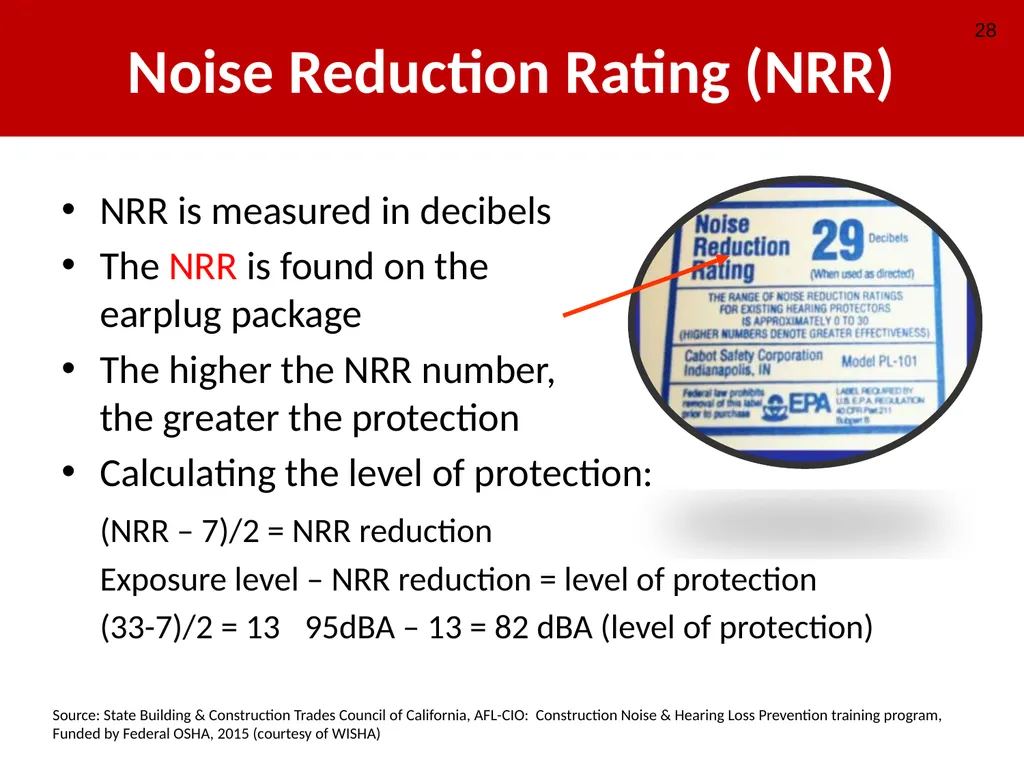
Noise Reduction Rating (NRR) NRR is measured in decibels
The NRR is found on the earmuff or earplug package
The higher the NRR number, the greater the protection
Calculating the level of protection:
(NRR – 7)/2 = NRR reduction
Exposure level – NRR reduction = level of protection
(33-7)/2 = 13 95dBA – 13 = 82 dBA (level of protection) Source: State Building & Construction Trades Council of California, AFL-CIO: Construction Noise & Hearing Loss Prevention training program, Funded by Federal OSHA, 2015 (courtesy of WISHA) 28<br>
29
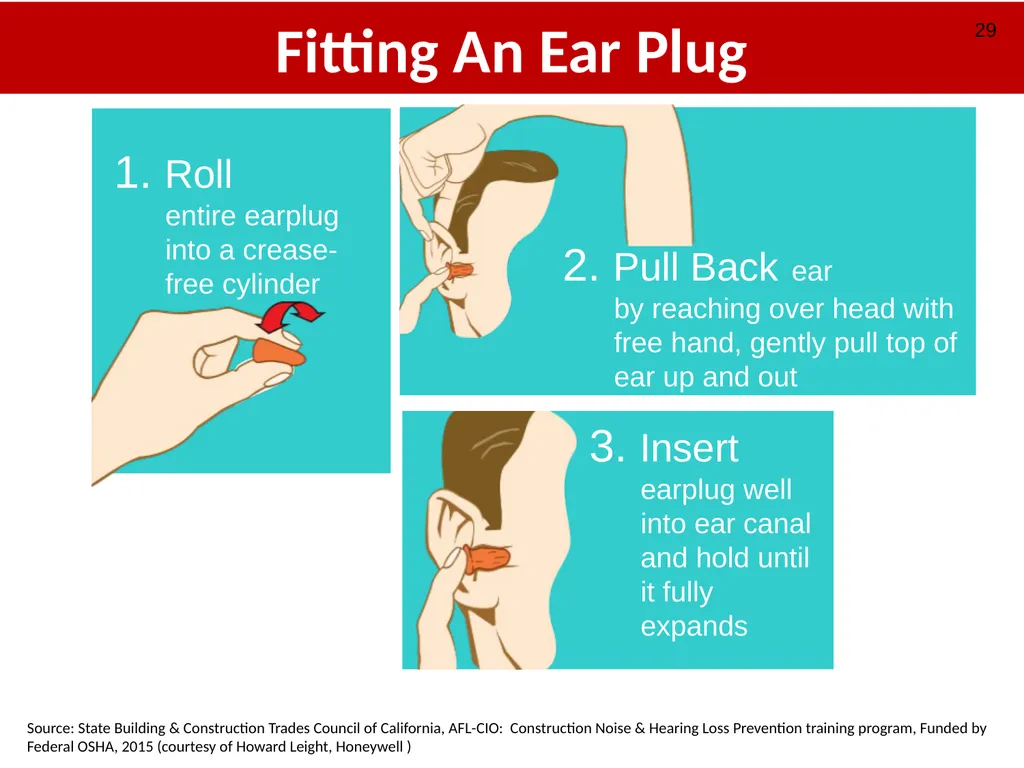
Fitting An Ear Plug Source: State Building & Construction Trades Council of California, AFL-CIO: Construction Noise & Hearing Loss Prevention training program, Funded by Federal OSHA, 2015 (courtesy of Howard Leight, Honeywell ) 29<br>
30
What we covered The Risk for Hearing Loss
How to Identify Noise Sources
Measuring Noise
Ways to Control Noise
Hearing Protection Devices
Real Life Lessons 30<br>
31
Acknowledgments State Building and Construction Trades Council of California
Dr. Robert M. Ghent and Brad K. Witt of Honeywell Safety Products, San Diego, CA. ©2017, CPWR-The Center for Construction Research and Training. All rights reserved. CPWR is the research and training arm of NABTU. Production of this document was supported by cooperative agreement OH009762 from the National Institute for Occupational Safety and Health (NIOSH). The contents are solely the responsibility of the authors and do not necessarily represent the official views of NIOSH. 31<br>