CONTENT Main Agenda: Sustainable Development Goal Indicators (SDGs) Important Definitions Background on SDGs 2.3.1, 2.3.2 5.a.1 Data Gaps for computation Recommendations for HIES Questionnaire SDG indicators 2.3.1, 2.3.2 and 5.a.1 and
"CONTENT Main Agenda: Sustainable Development Goal" is the property of its rightful owner. Permission is granted to
download and print the materials on this website for personal, non-commercial use only, and to display it
on your personal computer provided you do not modify the materials and that you retain all copyright
notices contained in the materials. By downloading content from our website, you accept the terms of this
agreement.
Presentation Transcript
01
CONTENT
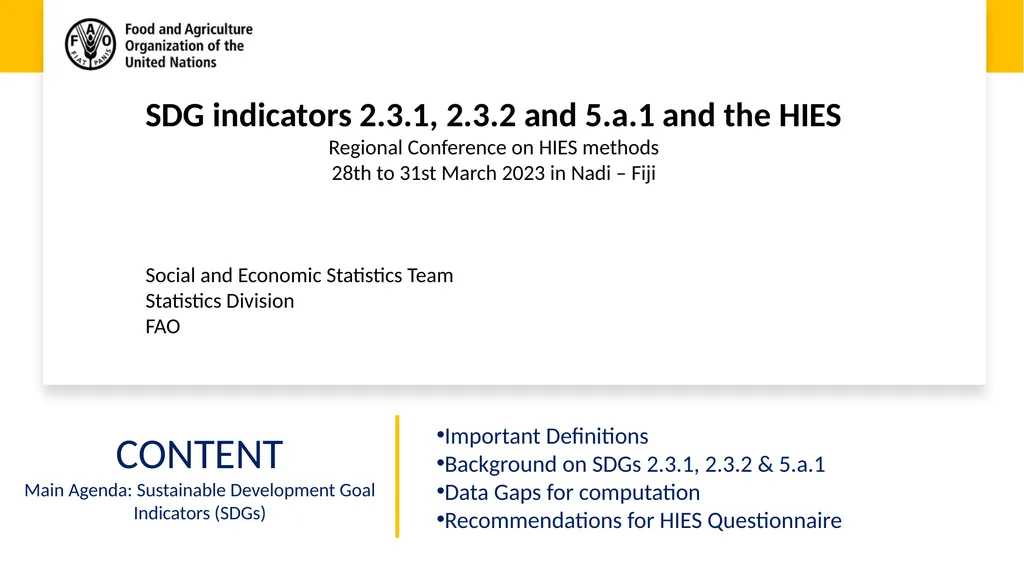
Main Agenda: Sustainable Development Goal Indicators (SDGs) Important Definitions
Background on SDGs 2.3.1, 2.3.2 & 5.a.1
Data Gaps for computation
Recommendations for HIES Questionnaire SDG indicators 2.3.1, 2.3.2 and 5.a.1 and the HIES
Regional Conference on HIES methods
28th to 31st March 2023 in Nadi – Fiji
Social and Economic Statistics Team
Statistics Division
FAO<br>
02
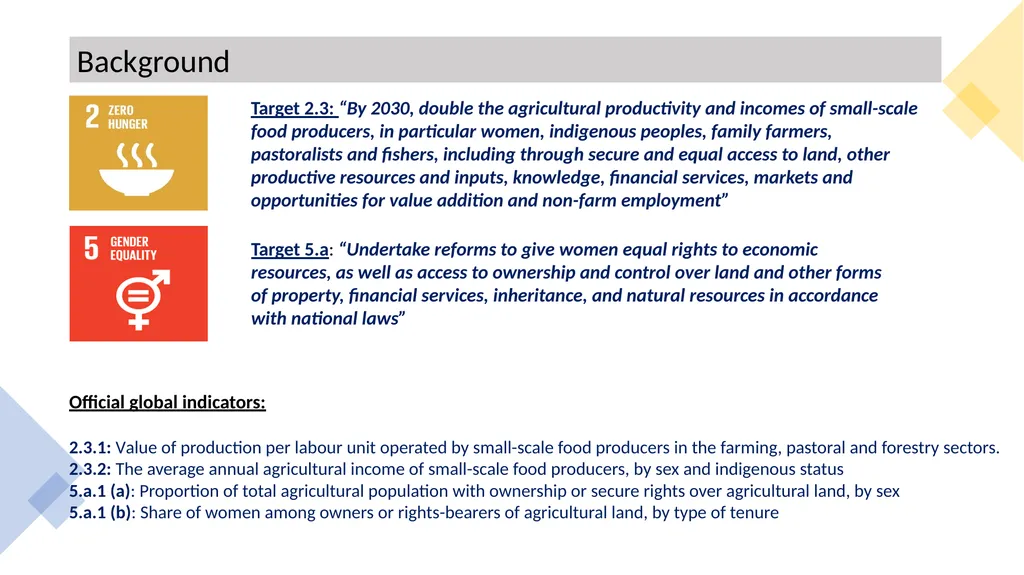
Background Target 2.3: “By 2030, double the agricultural productivity and incomes of small-scale food producers, in particular women, indigenous peoples, family farmers, pastoralists and fishers, including through secure and equal access to land, other productive resources and inputs, knowledge, financial services, markets and opportunities for value addition and non-farm employment” Official global indicators:
2.3.1: Value of production per labour unit operated by small-scale food producers in the farming, pastoral and forestry sectors.
2.3.2: The average annual agricultural income of small-scale food producers, by sex and indigenous status
5.a.1 (a): Proportion of total agricultural population with ownership or secure rights over agricultural land, by sex
5.a.1 (b): Share of women among owners or rights-bearers of agricultural land, by type of tenure Target 5.a: “Undertake reforms to give women equal rights to economic resources, as well as access to ownership and control over land and other forms of property, financial services, inheritance, and natural resources in accordance with national laws”<br>
03
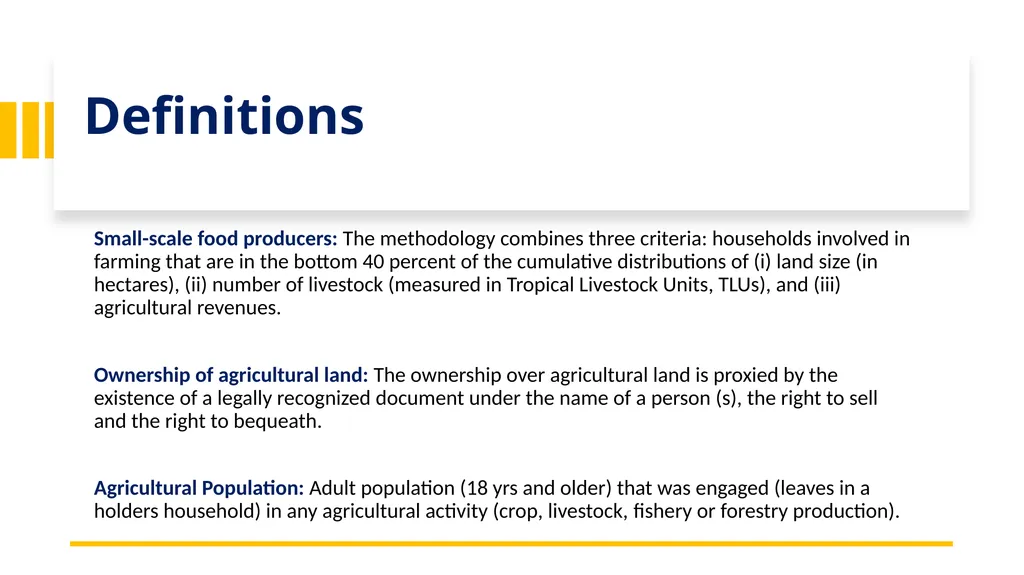
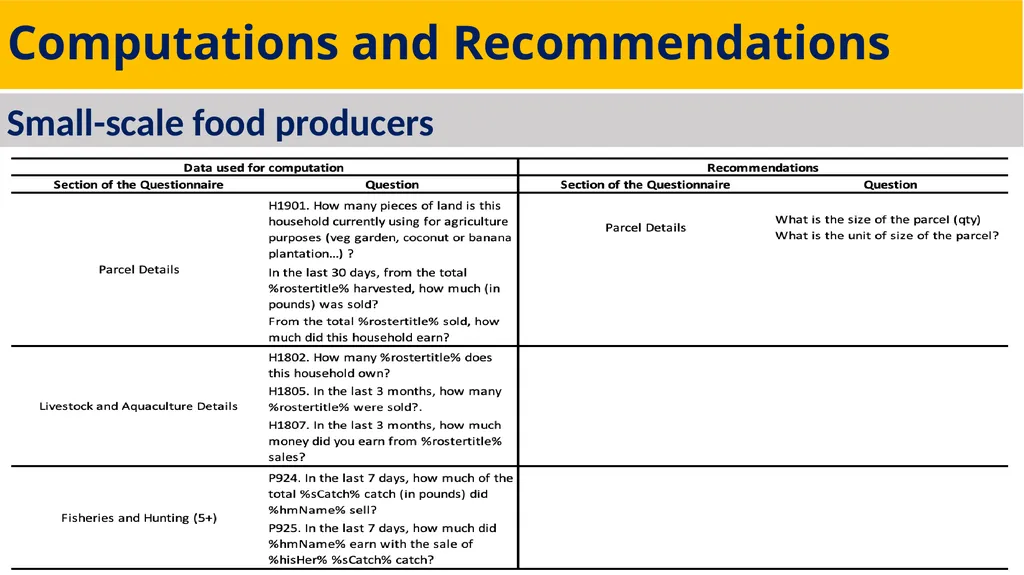
Definitions Small-scale food producers: The methodology combines three criteria: households involved in farming that are in the bottom 40 percent of the cumulative distributions of (i) land size (in hectares), (ii) number of livestock (measured in Tropical Livestock Units, TLUs), and (iii) agricultural revenues.
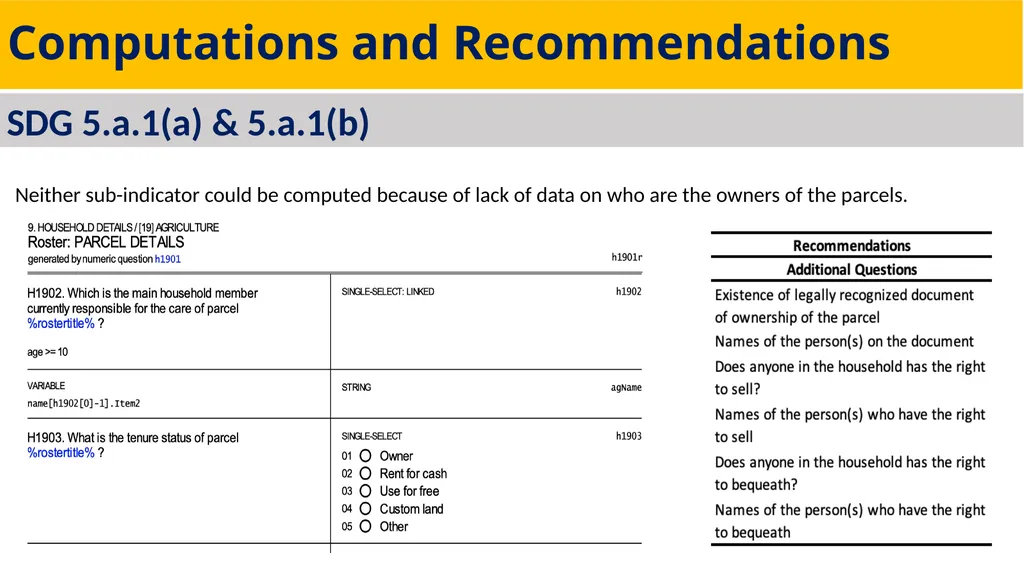
Ownership of agricultural land: The ownership over agricultural land is proxied by the existence of a legally recognized document under the name of a person (s), the right to sell and the right to bequeath.
Agricultural Population: Adult population (18 yrs and older) that was engaged (leaves in a holders household) in any agricultural activity (crop, livestock, fishery or forestry production).<br>
04
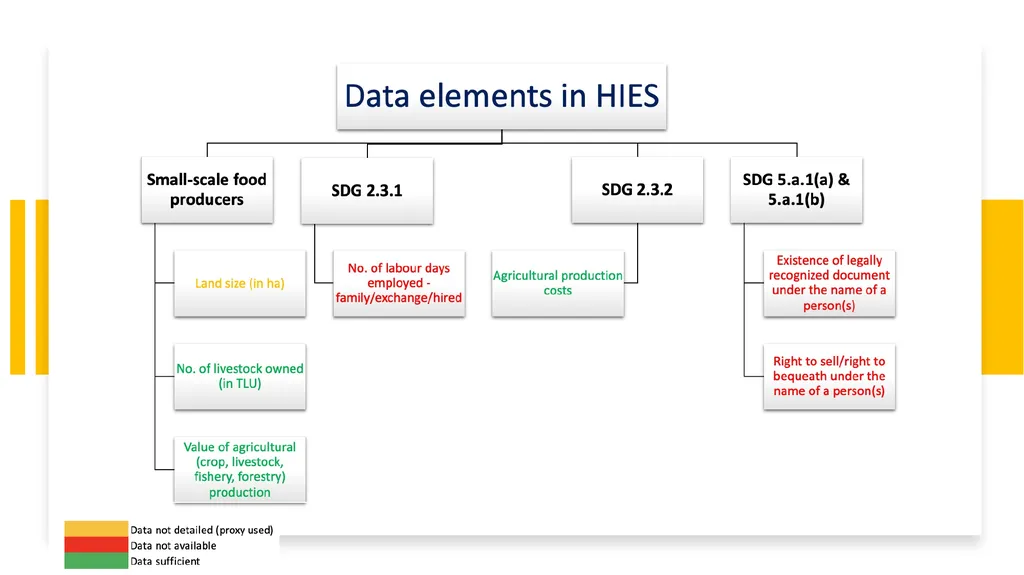
Computations and Recommendations Small-scale food producers<br>
05
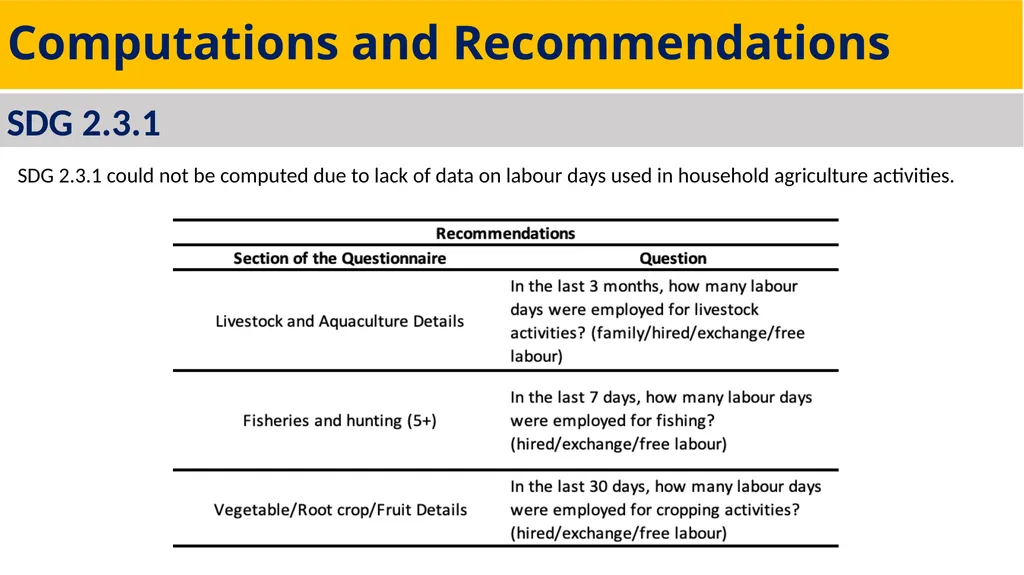
Computations and Recommendations SDG 2.3.1 SDG 2.3.1 could not be computed due to lack of data on labour days used in household agriculture activities.<br>
06
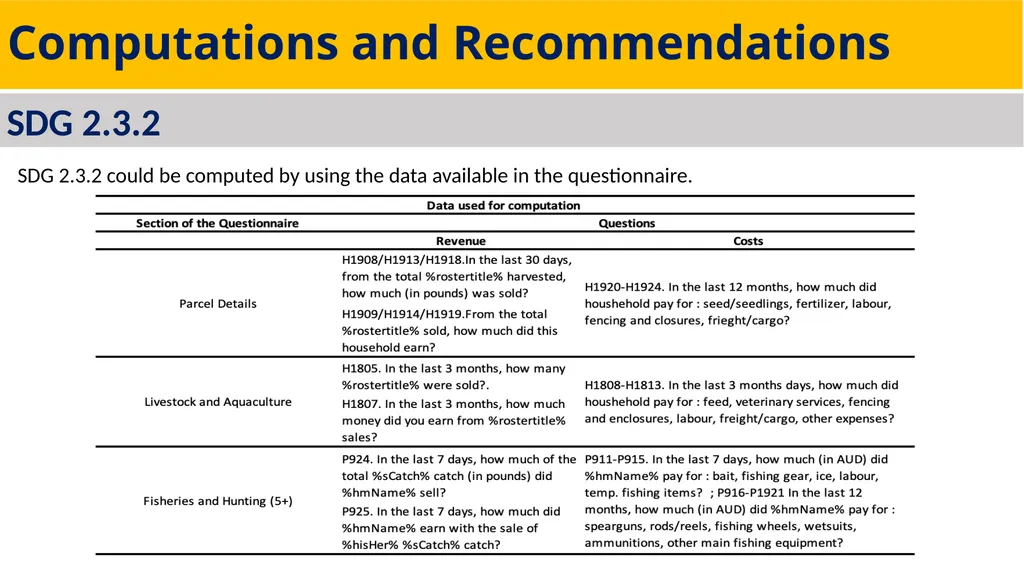
Computations and Recommendations SDG 2.3.2 SDG 2.3.2 could be computed by using the data available in the questionnaire.<br>
07
Computations and Recommendations SDG 5.a.1(a) & 5.a.1(b) Neither sub-indicator could be computed because of lack of data on who are the owners of the parcels.<br>