
Content Writing How to write content with impact
Description: Content Writing How to write content with impact How This Course Will Work 15 weeks, new topic each week Well review the previous week and homework, answer remaining questions and start a new topic. At the end of each session, Ill let you
Related Topics
Download Presentation
"Content Writing How to write content with impact" is the property of its rightful owner. Permission is granted to download and print the materials on this website for personal, non-commercial use only, and to display it on your personal computer provided you do not modify the materials and that you retain all copyright notices contained in the materials. By downloading content from our website, you accept the terms of this agreement.
Presentation Transcript
slide1. Content Writing How to write content with impact<br>
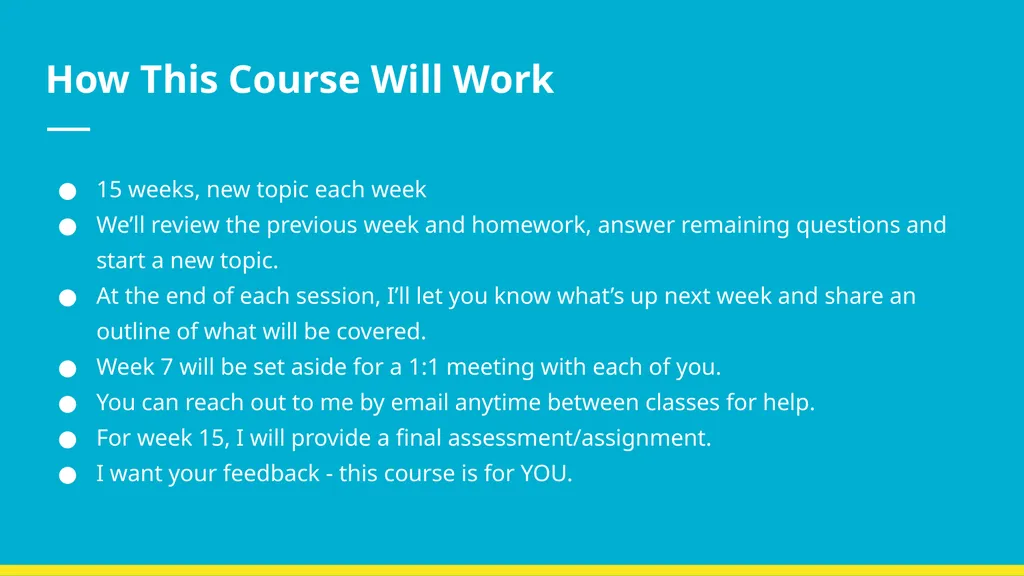
slide2. How This Course Will Work 15 weeks, new topic each week
We’ll review the previous week and homework, answer remaining questions and start a new topic.
At the end of each session, I’ll let you know what’s up next week and share an outline of what will be covered.
Week 7 will be set aside for a 1:1 meeting with each of you.
You can reach out to me by email anytime between classes for help.
For week 15, I will provide a final assessment/assignment.
I want your feedback - this course is for YOU.<br>
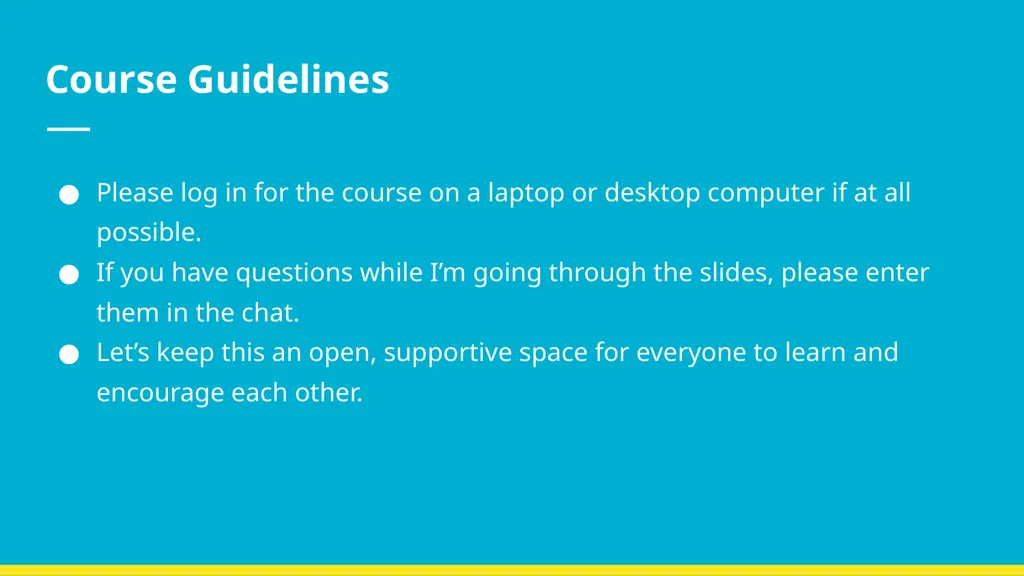
slide3. Course Guidelines Please log in for the course on a laptop or desktop computer if at all possible.
If you have questions while I’m going through the slides, please enter them in the chat.
Let’s keep this an open, supportive space for everyone to learn and encourage each other.<br>
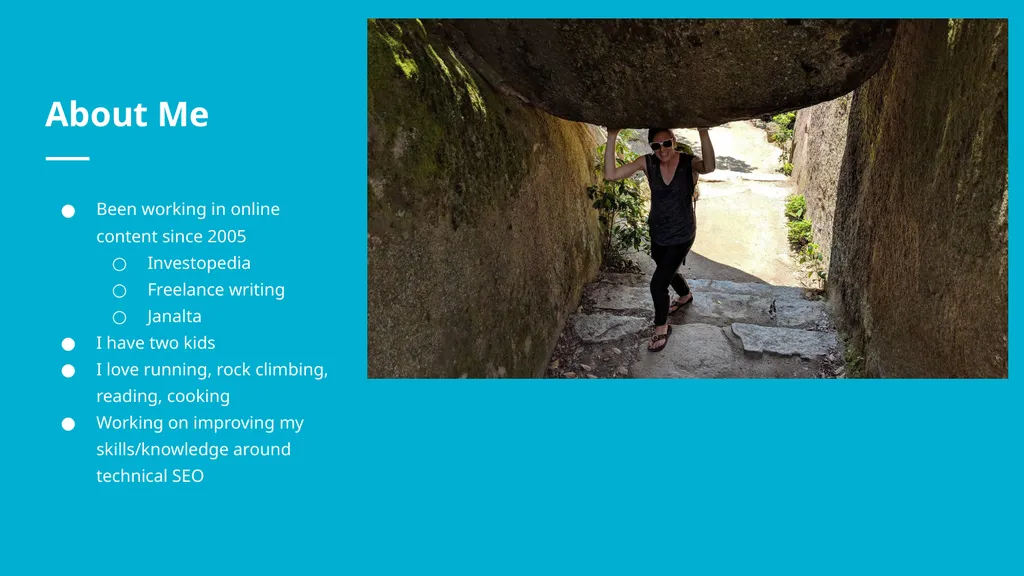
slide4. About Me Been working in online content since 2005
Investopedia
Freelance writing
Janalta
I have two kids
I love running, rock climbing, reading, cooking
Working on improving my skills/knowledge around technical SEO<br>
slide5. About You Where are you from?
Why are you here?
What is your No.1 challenge?<br>
slide6. How to Become a Better … Reader<br>
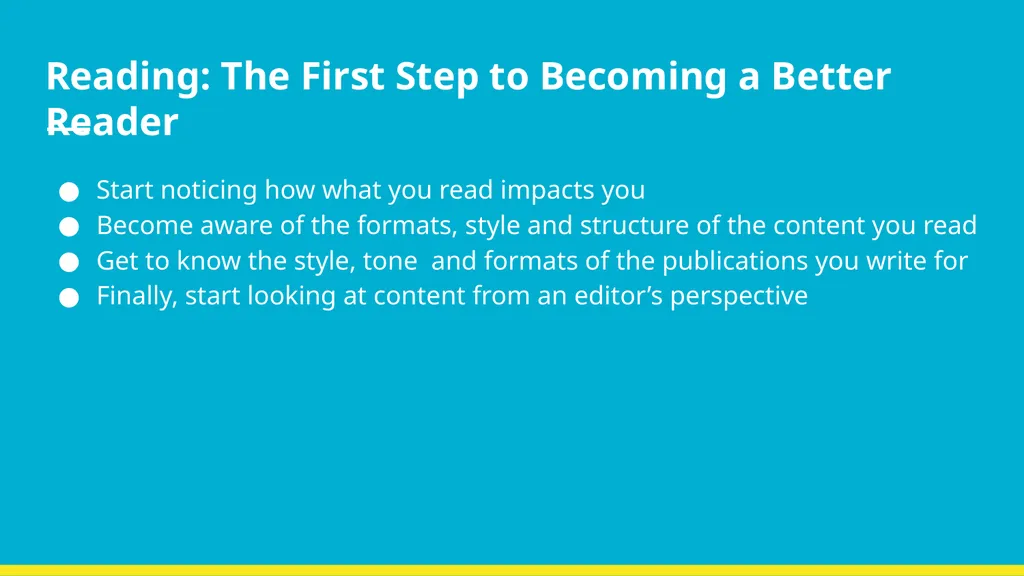
slide7. Reading: The First Step to Becoming a Better Reader Start noticing how what you read impacts you
Become aware of the formats, style and structure of the content you read
Get to know the style, tone and formats of the publications you write for
Finally, start looking at content from an editor’s perspective<br>
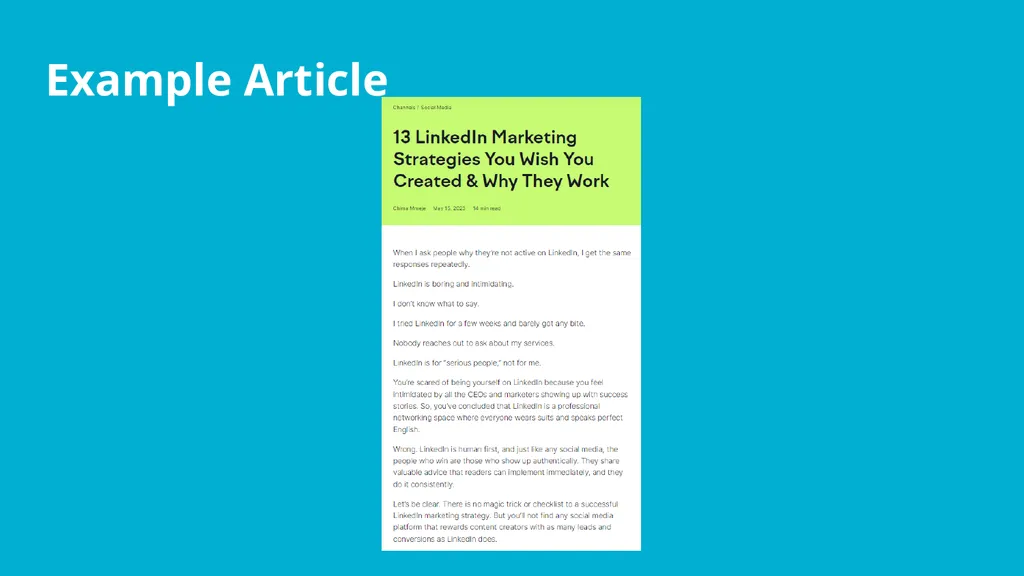
slide8. Example Article<br>
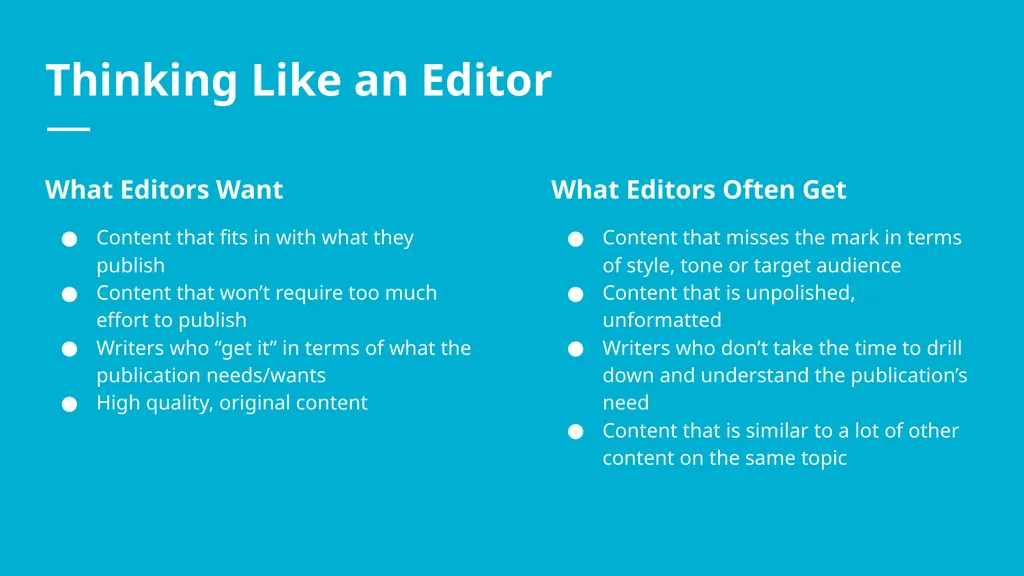
slide9. Thinking Like an Editor What Editors Want
Content that fits in with what they publish
Content that won’t require too much effort to publish
Writers who “get it” in terms of what the publication needs/wants
High quality, original content What Editors Often Get
Content that misses the mark in terms of style, tone or target audience
Content that is unpolished, unformatted
Writers who don’t take the time to drill down and understand the publication’s need
Content that is similar to a lot of other content on the same topic<br>
slide10. You can’t just read, though.<br>
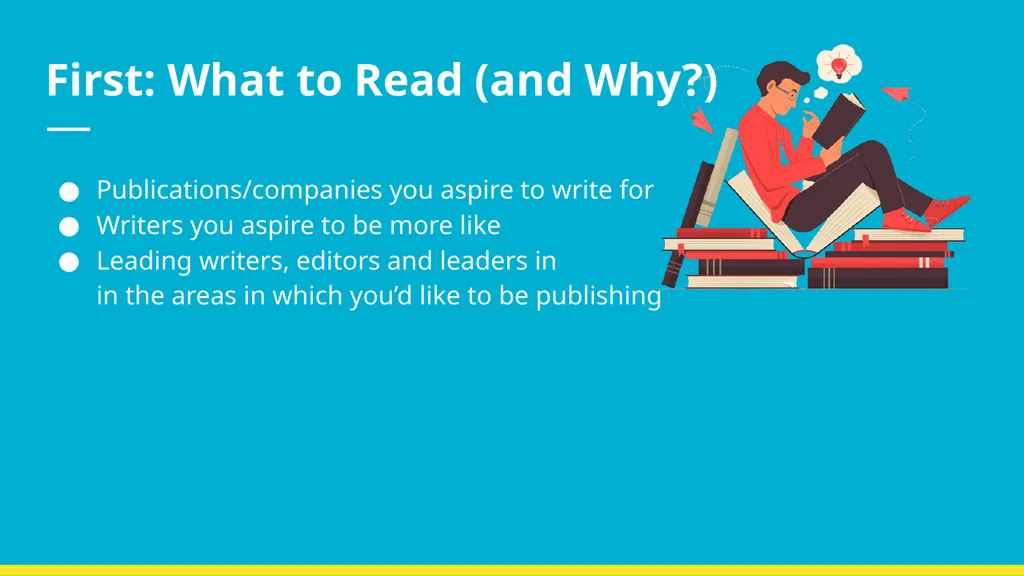
slide11. First: What to Read (and Why?) Publications/companies you aspire to write for
Writers you aspire to be more like
Leading writers, editors and leaders in in the areas in which you’d like to be publishing<br>
slide12. Next: Set up a reading schedule If you want reading to help your writing and career growth, you have to be intentional about it and you have to make it a habit.<br>
slide13. “Habits are the compound interest of self-improvement.”
Atomic Habits, James Clear<br>
slide14. Make a reading list.<br>
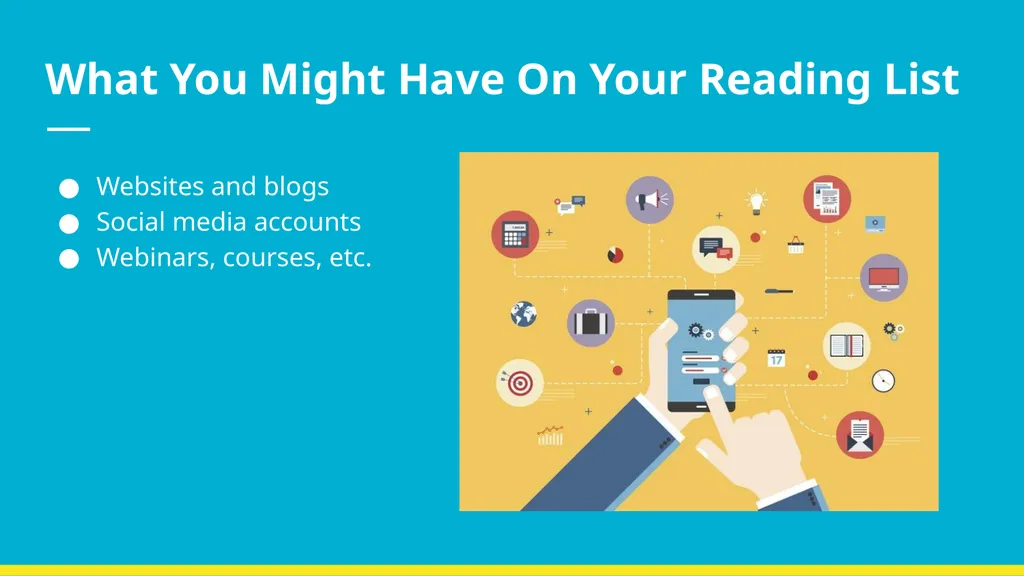
slide15. What You Might Have On Your Reading List Websites and blogs
Social media accounts
Webinars, courses, etc.<br>
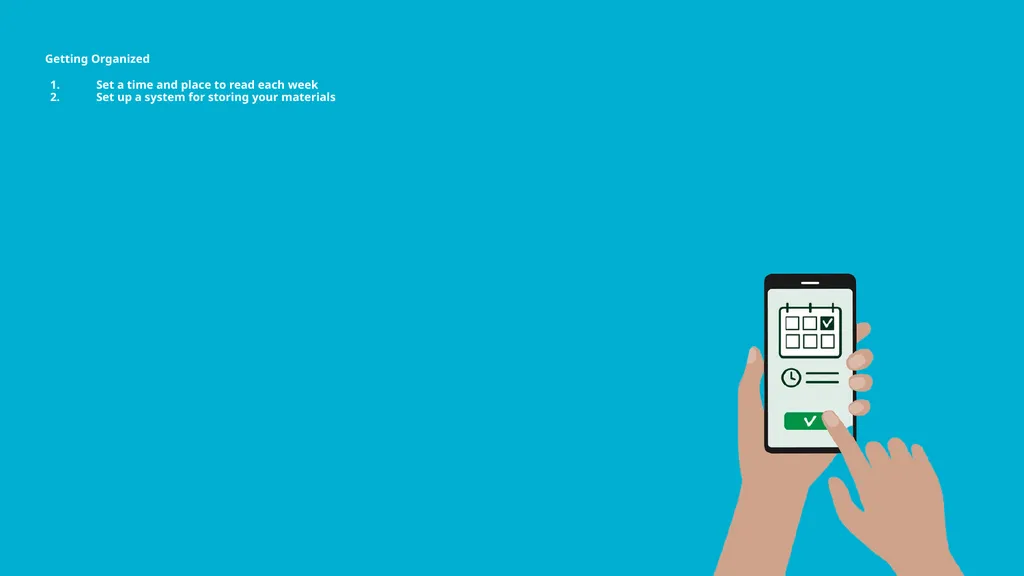
slide16. Getting Organized
Set a time and place to read each week
Set up a system for storing your materials<br>
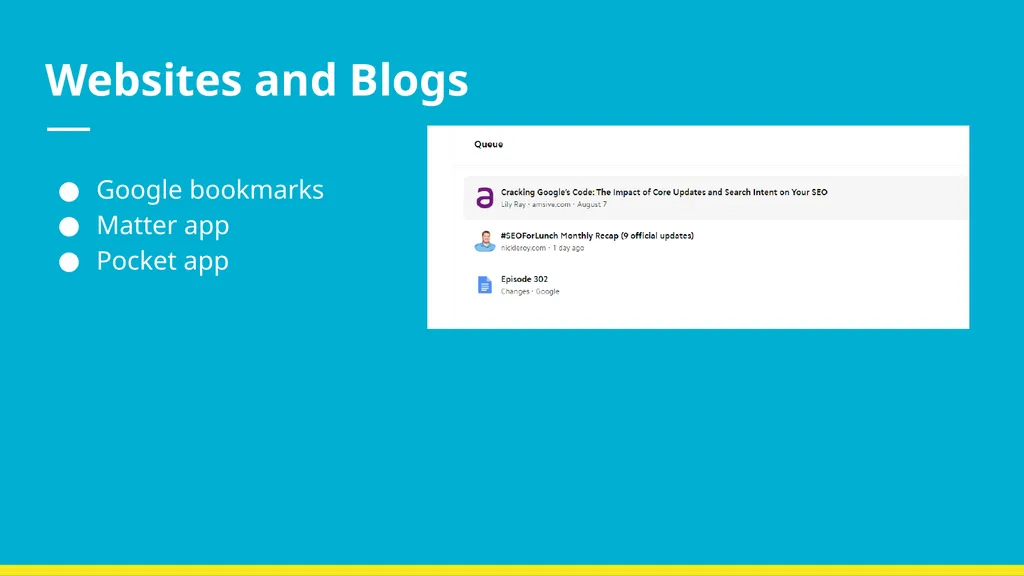
slide17. Websites and Blogs Google bookmarks
Matter app
Pocket app<br>
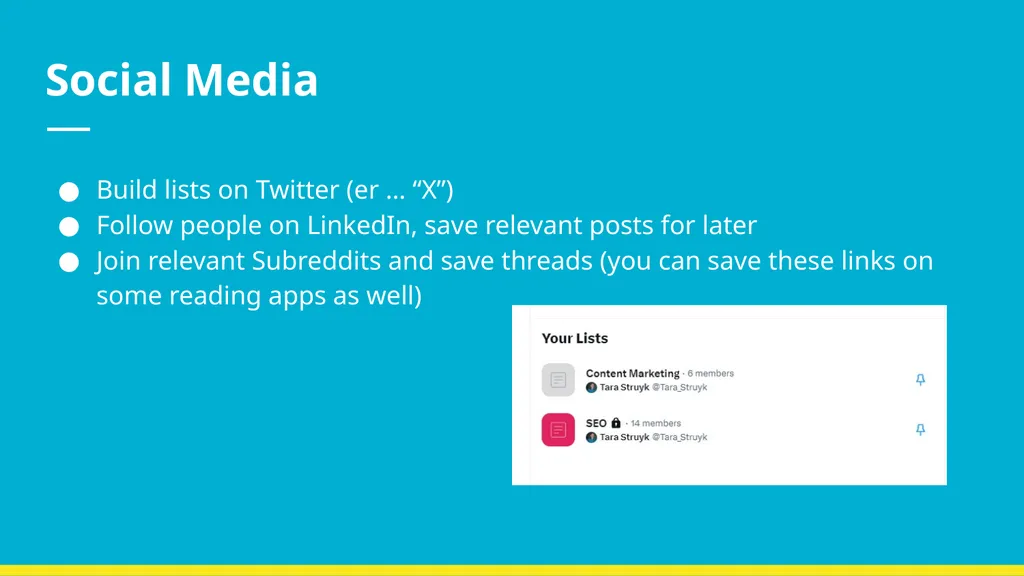
slide18. Social Media Build lists on Twitter (er … “X”)
Follow people on LinkedIn, save relevant posts for later
Join relevant Subreddits and save threads (you can save these links on some reading apps as well)<br>
slide19. Questions?<br>
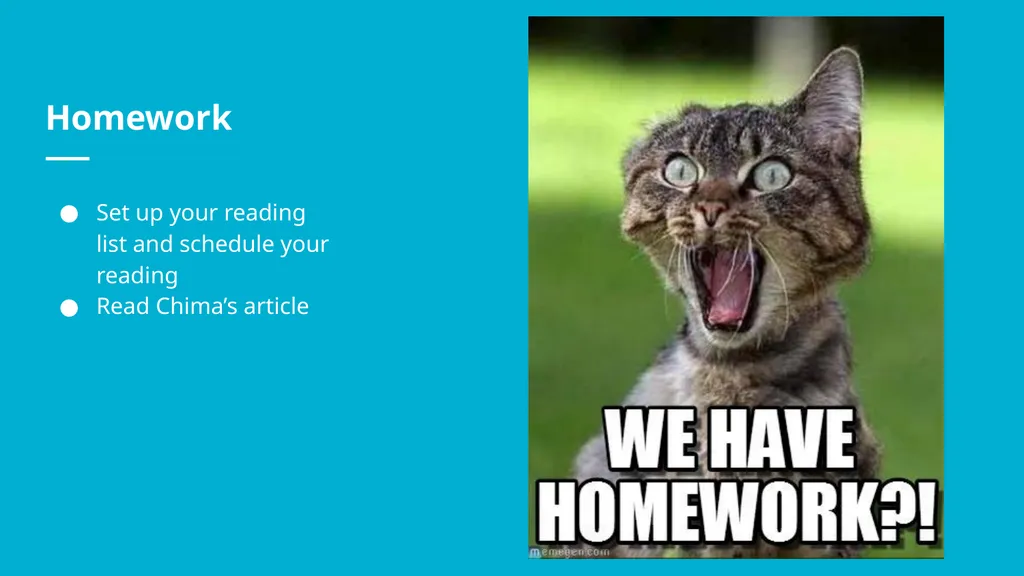
slide20. Homework Set up your reading list and schedule your reading
Read Chima’s article<br>
slide2. How This Course Will Work 15 weeks, new topic each week
We’ll review the previous week and homework, answer remaining questions and start a new topic.
At the end of each session, I’ll let you know what’s up next week and share an outline of what will be covered.
Week 7 will be set aside for a 1:1 meeting with each of you.
You can reach out to me by email anytime between classes for help.
For week 15, I will provide a final assessment/assignment.
I want your feedback - this course is for YOU.<br>
slide3. Course Guidelines Please log in for the course on a laptop or desktop computer if at all possible.
If you have questions while I’m going through the slides, please enter them in the chat.
Let’s keep this an open, supportive space for everyone to learn and encourage each other.<br>
slide4. About Me Been working in online content since 2005
Investopedia
Freelance writing
Janalta
I have two kids
I love running, rock climbing, reading, cooking
Working on improving my skills/knowledge around technical SEO<br>
slide5. About You Where are you from?
Why are you here?
What is your No.1 challenge?<br>
slide6. How to Become a Better … Reader<br>
slide7. Reading: The First Step to Becoming a Better Reader Start noticing how what you read impacts you
Become aware of the formats, style and structure of the content you read
Get to know the style, tone and formats of the publications you write for
Finally, start looking at content from an editor’s perspective<br>
slide8. Example Article<br>
slide9. Thinking Like an Editor What Editors Want
Content that fits in with what they publish
Content that won’t require too much effort to publish
Writers who “get it” in terms of what the publication needs/wants
High quality, original content What Editors Often Get
Content that misses the mark in terms of style, tone or target audience
Content that is unpolished, unformatted
Writers who don’t take the time to drill down and understand the publication’s need
Content that is similar to a lot of other content on the same topic<br>
slide10. You can’t just read, though.<br>
slide11. First: What to Read (and Why?) Publications/companies you aspire to write for
Writers you aspire to be more like
Leading writers, editors and leaders in in the areas in which you’d like to be publishing<br>
slide12. Next: Set up a reading schedule If you want reading to help your writing and career growth, you have to be intentional about it and you have to make it a habit.<br>
slide13. “Habits are the compound interest of self-improvement.”
Atomic Habits, James Clear<br>
slide14. Make a reading list.<br>
slide15. What You Might Have On Your Reading List Websites and blogs
Social media accounts
Webinars, courses, etc.<br>
slide16. Getting Organized
Set a time and place to read each week
Set up a system for storing your materials<br>
slide17. Websites and Blogs Google bookmarks
Matter app
Pocket app<br>
slide18. Social Media Build lists on Twitter (er … “X”)
Follow people on LinkedIn, save relevant posts for later
Join relevant Subreddits and save threads (you can save these links on some reading apps as well)<br>
slide19. Questions?<br>
slide20. Homework Set up your reading list and schedule your reading
Read Chima’s article<br>