04
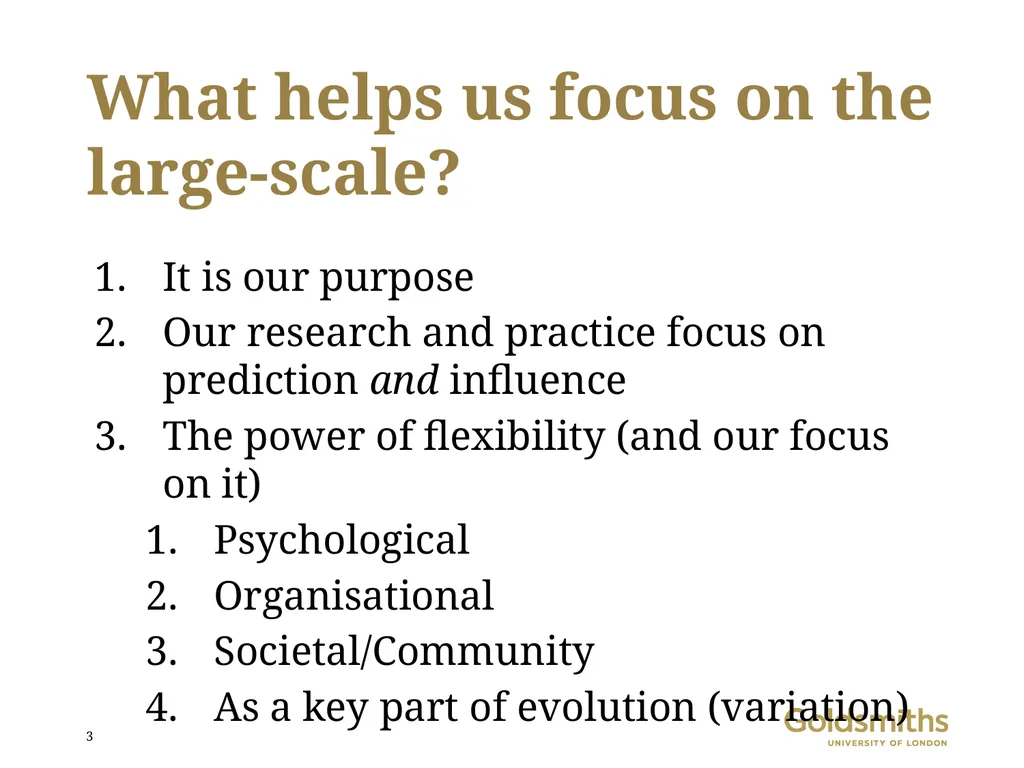
4 Our community is using PF to go for large scale change by: Conducting (really) brief and effective interventions (FACT)
Creating more effective leaders
Designing better organisations
Impacting on public policy (Biglan, White)
Building effective communities (PROSOCIAL)
All through using flexibility<br>
05
5 Groups and flexibility ‘Rigid, overly standardised groups and organisations serve as a defence against ‘neurotic anxiety’ and so cannot respond flexibly to their ever-changing internal and external contexts’.
(Jacques, 1955: Tavistock Institute of Human Relations )<br>
06
6 Flexibility at three levels Psychoanalytic thinkers have been able to scale-up their analytic aims (making the unconscious conscious) from the:
Individual level to the
group level to the
organisational level
Can we do this from the perspective of contextual behavioural science?<br>
07
Contextual behavioural science As applied to organisations, a CBS perspective would be to identify, develop and examine characteristics and processes that we can influence.
How do we identify such characteristics and processes? 7<br>
08
Organisational behaviour OB is a field of study that investigates the impact that individual (e.g., personality, mental health), group (leadership, teams), and organisational characteristics (e.g., structure, processes) have on organisational effectiveness (including the health of individuals)
Perhaps we can look at how we increase flexibility within these three levels of analysis, in an organisational context 8<br>
09
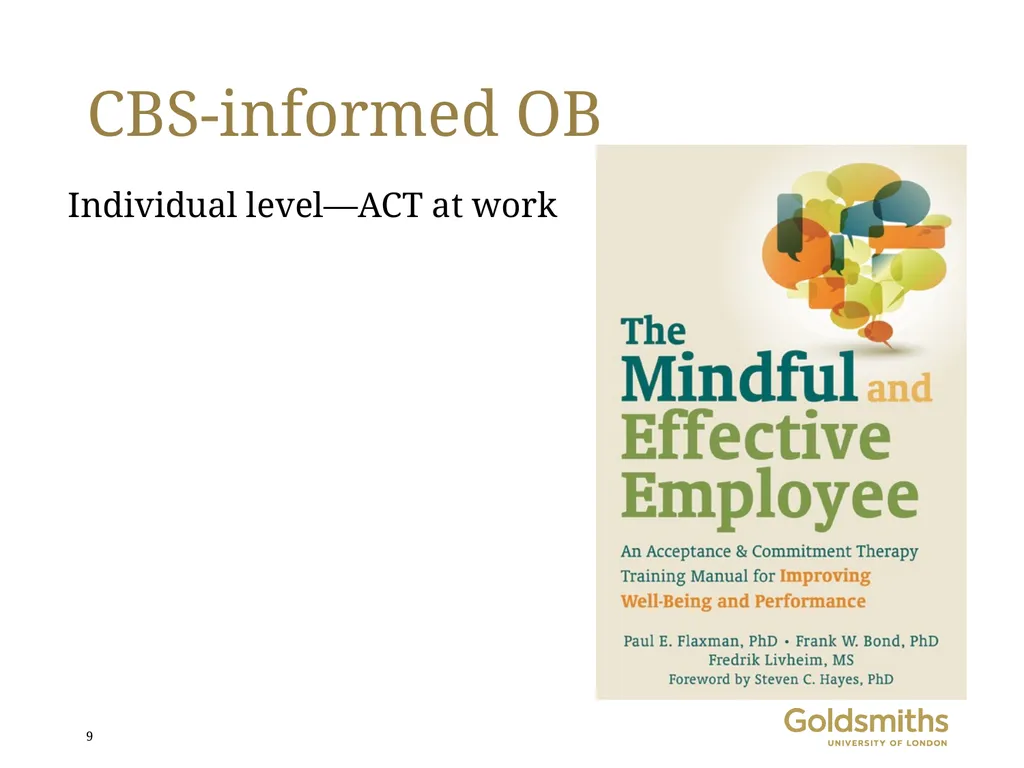
CBS-informed OB Individual level—ACT at work 9<br>
10
10 Psychological flexibility People’s ability to focus on their current (psychological and external) situation, and based upon the opportunities afforded by that situation, take appropriate and committed action towards achieving their goals and values, even in the presence of challenging or unwanted psychological events (e.g., thoughts, feelings, physiological sensations, images, and memories)<br>
11
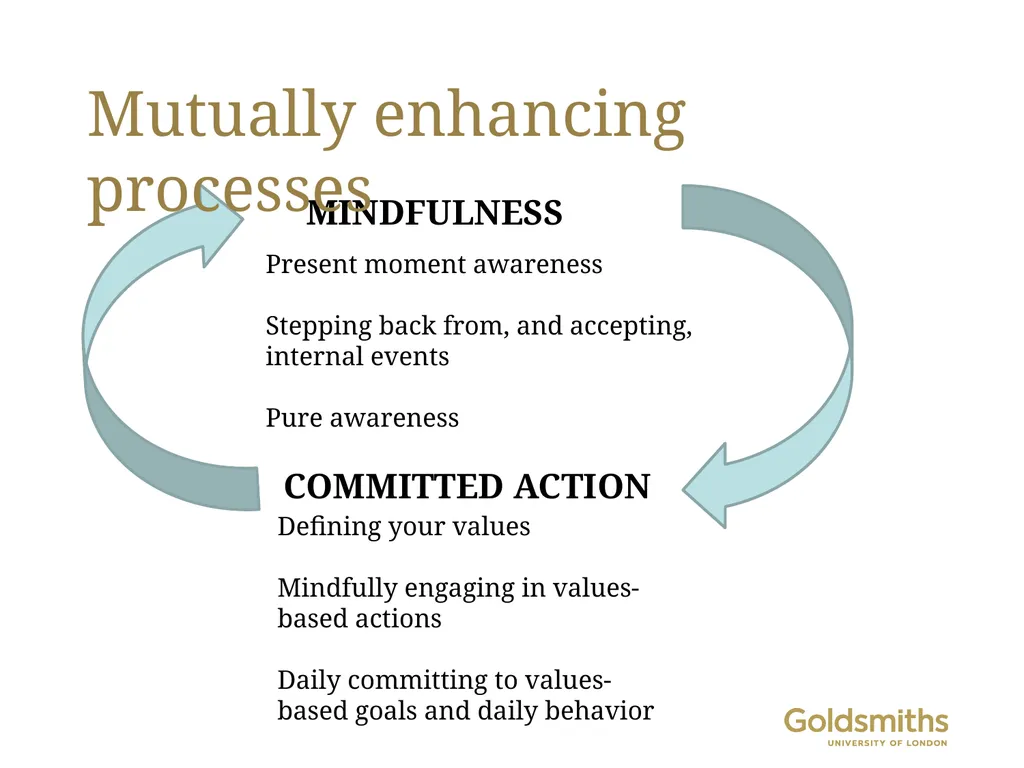
COMMITTED ACTION MINDFULNESS Present moment awareness
Stepping back from, and accepting, internal events
Pure awareness Defining your values
Mindfully engaging in values-based actions
Daily committing to values-based goals and daily behavior Mutually enhancing processes<br>
12
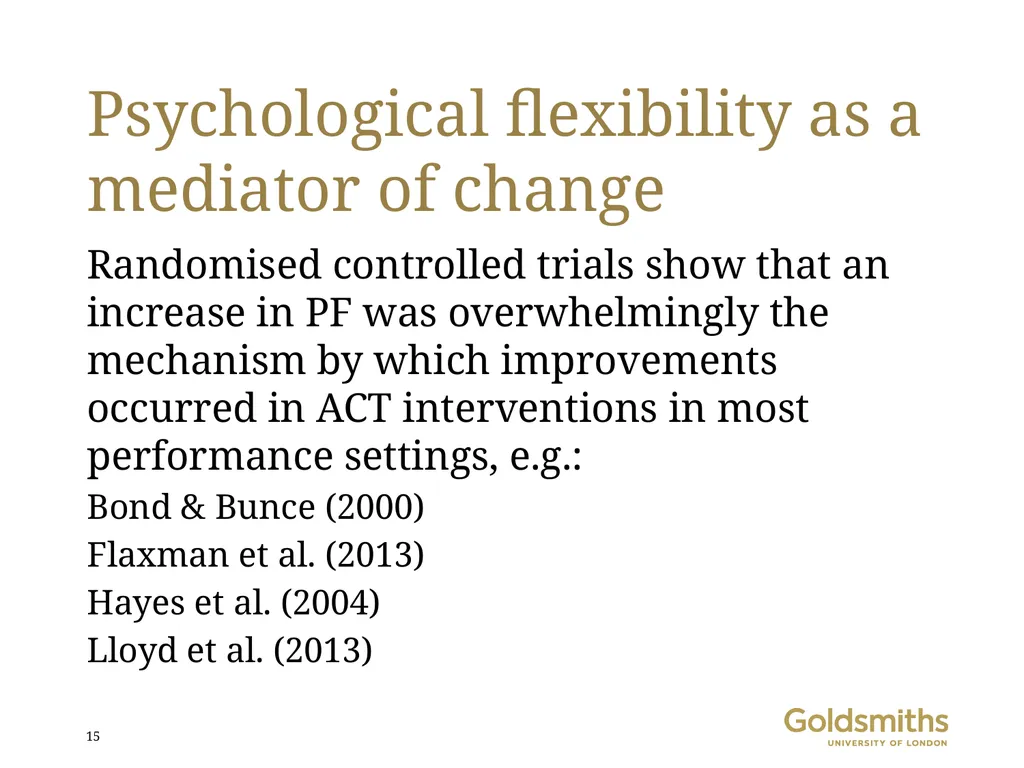
Psychological flexibility as a mediator of change Randomised controlled trials show that an increase in PF was overwhelmingly the mechanism by which improvements occurred in ACT interventions in most performance settings, e.g.:
Bond & Bunce (2000)
Flaxman et al. (2013)
Hayes et al. (2004)
Lloyd et al. (2013) 15<br>
13
Flexibility at the group level: The role of leadership Leaders must have a vision and be flexible as to how they and their teams realise that vision, so if one course of action, process or strategy is not working, it needs to change
These adaptable leaders can then shape adaptable and flexible teams 16<br>
14
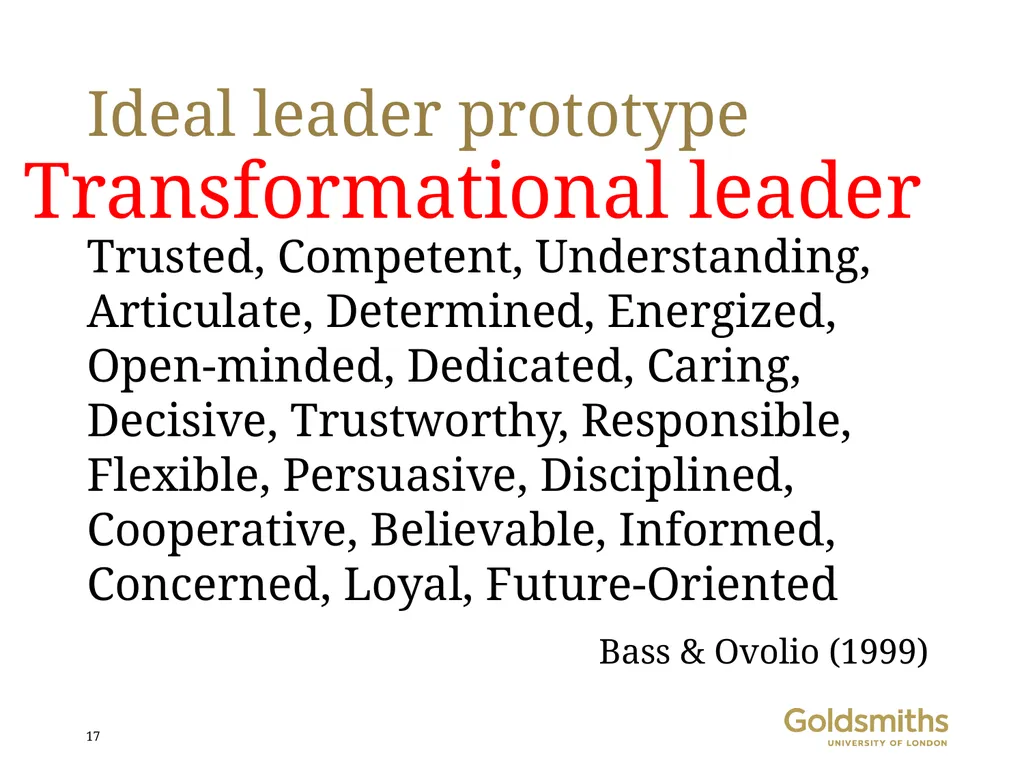
Ideal leader prototype Trusted, Competent, Understanding, Articulate, Determined, Energized, Open-minded, Dedicated, Caring, Decisive, Trustworthy, Responsible, Flexible, Persuasive, Disciplined, Cooperative, Believable, Informed, Concerned, Loyal, Future-Oriented
Bass & Ovolio (1999) 17 Transformational leader<br>
16
ACT enhanced TL 2.5 days simultaneous training for both groups
On the first day, one group received ACT, the other presentation and communication skills training
For the 1.5 subsequent days, there was traditional TL training (mindgarden.com) 19<br>
17
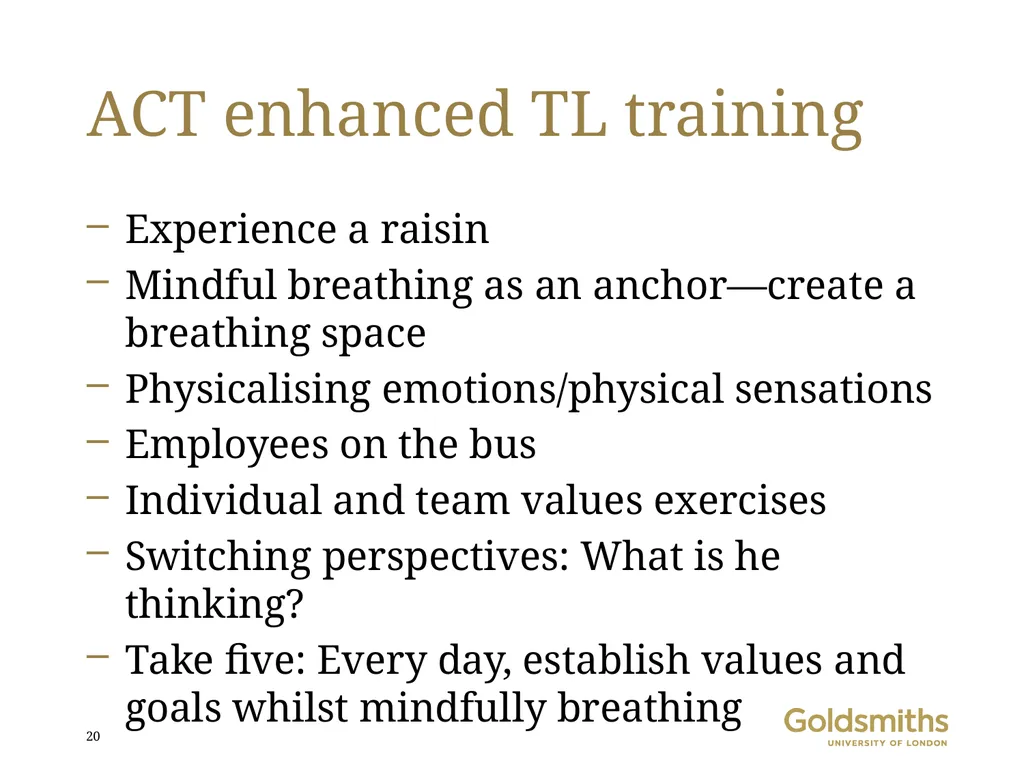
ACT enhanced TL training Experience a raisin
Mindful breathing as an anchor—create a breathing space
Physicalising emotions/physical sensations
Employees on the bus
Individual and team values exercises
Switching perspectives: What is he thinking?
Take five: Every day, establish values and goals whilst mindfully breathing 20<br>
18
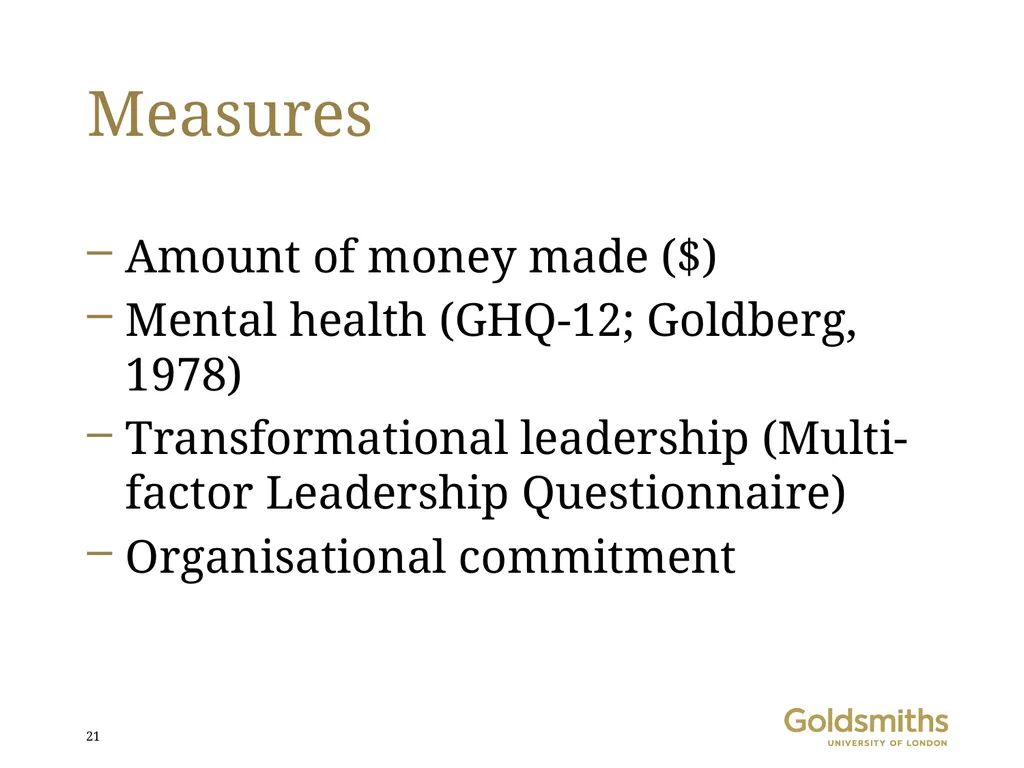
Measures Amount of money made ($)
Mental health (GHQ-12; Goldberg, 1978)
Transformational leadership (Multi-factor Leadership Questionnaire)
Organisational commitment 21<br>
19
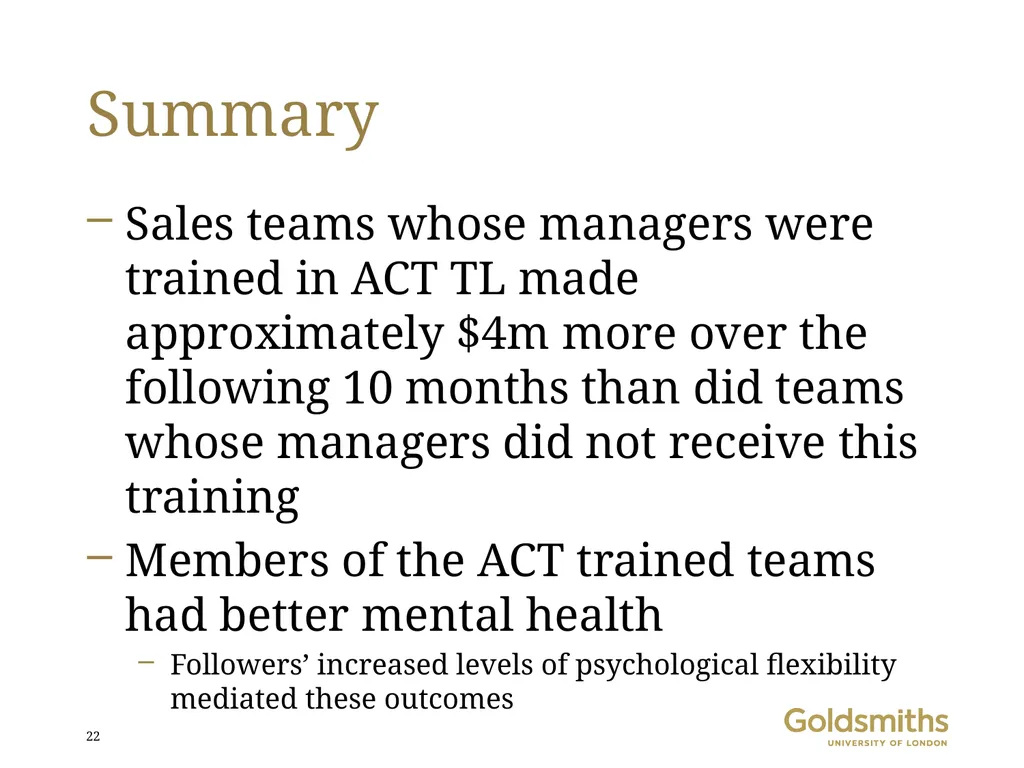
Summary Sales teams whose managers were trained in ACT TL made approximately $4m more over the following 10 months than did teams whose managers did not receive this training
Members of the ACT trained teams had better mental health
Followers’ increased levels of psychological flexibility mediated these outcomes 22<br>
20
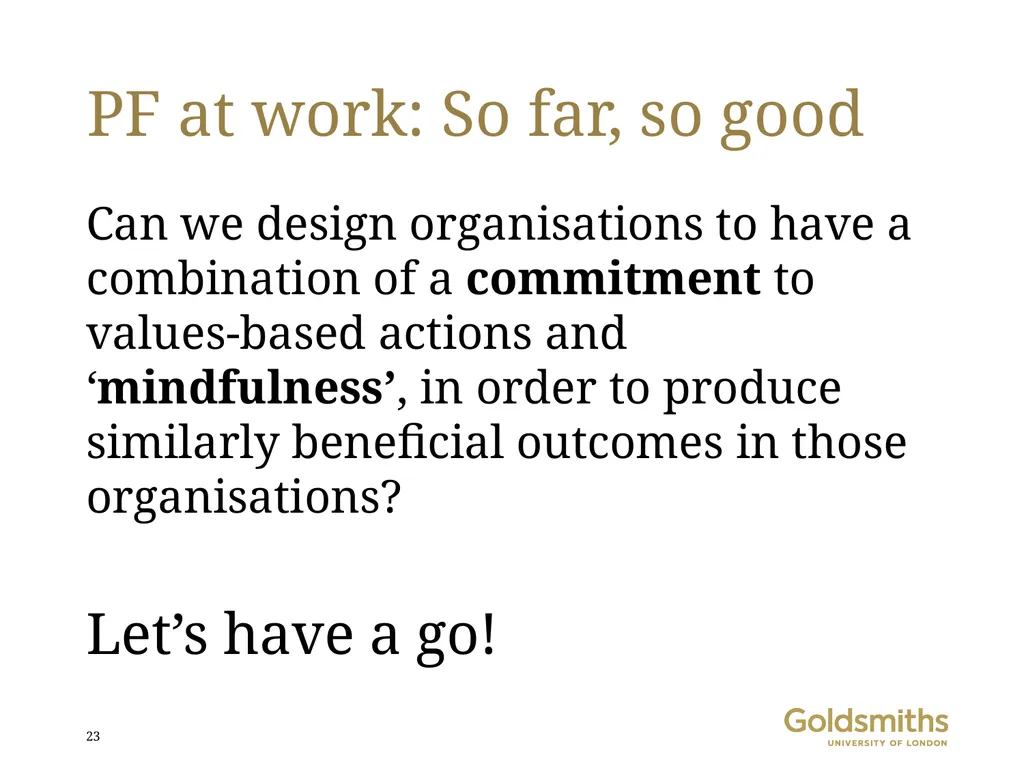
PF at work: So far, so good Can we design organisations to have a combination of a commitment to values-based actions and ‘mindfulness’, in order to produce similarly beneficial outcomes in those organisations?
Let’s have a go! 23<br>
21
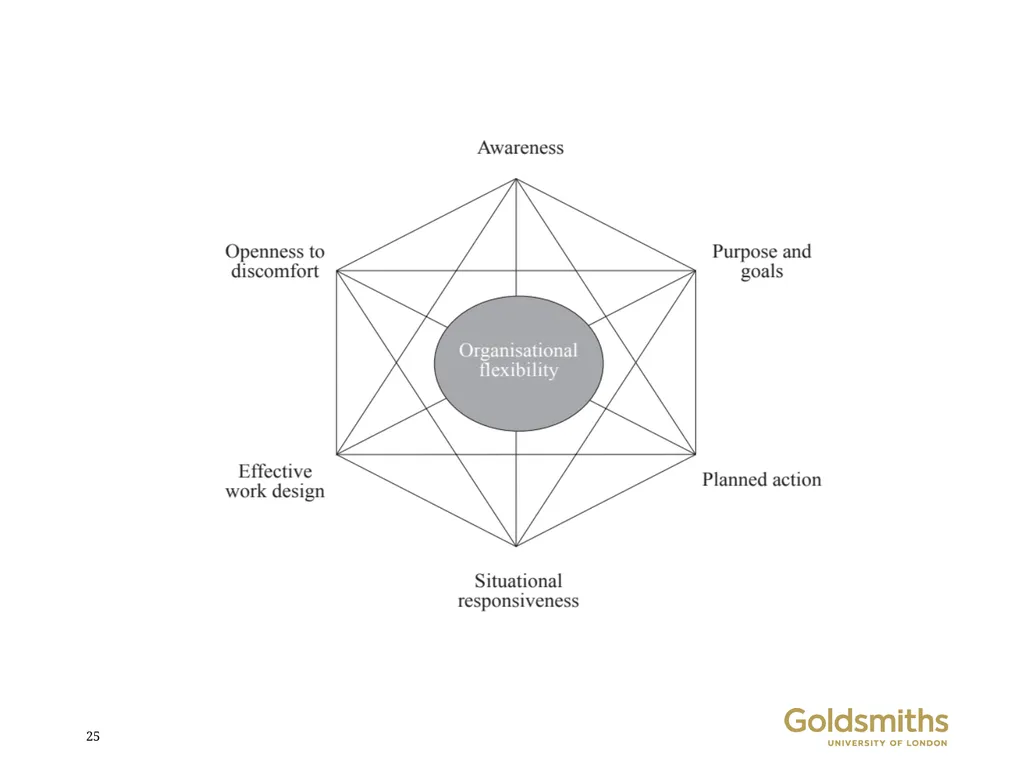
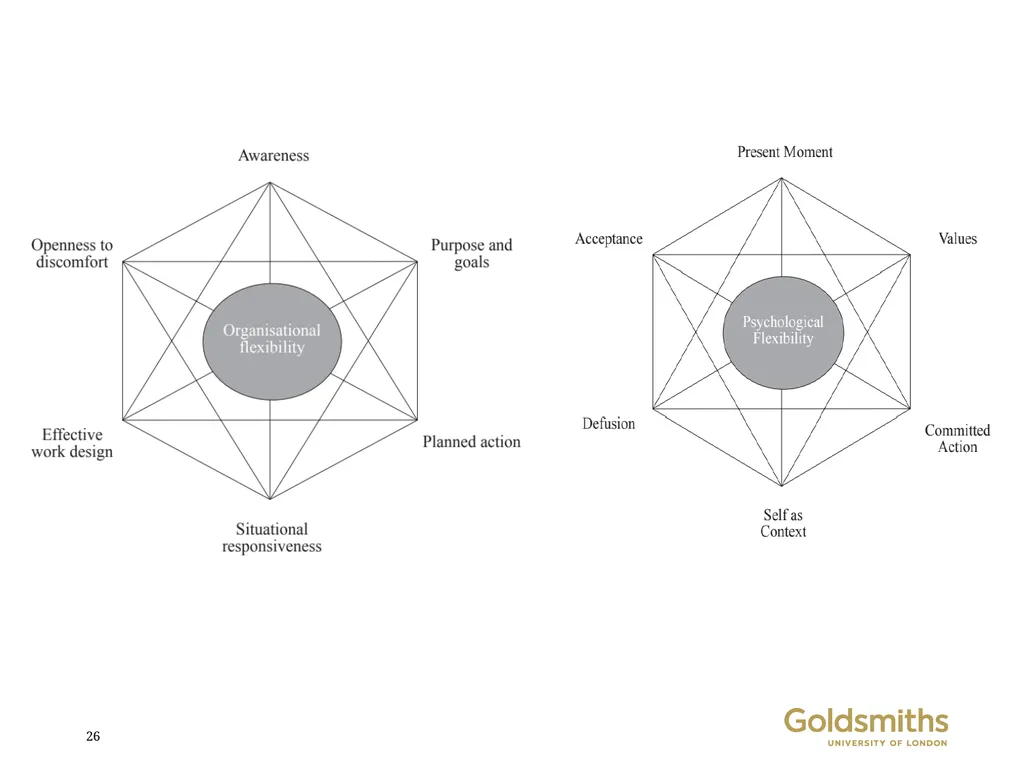
Organisational flexibility We can select existing constructs, strategies and techniques from extant OB models that are focused on prediction-and-influence, in order to establish a new model that we can use to predict-and-influence the levers that produce organisational flexibility and, hence, organisational effectiveness. 24<br>
24
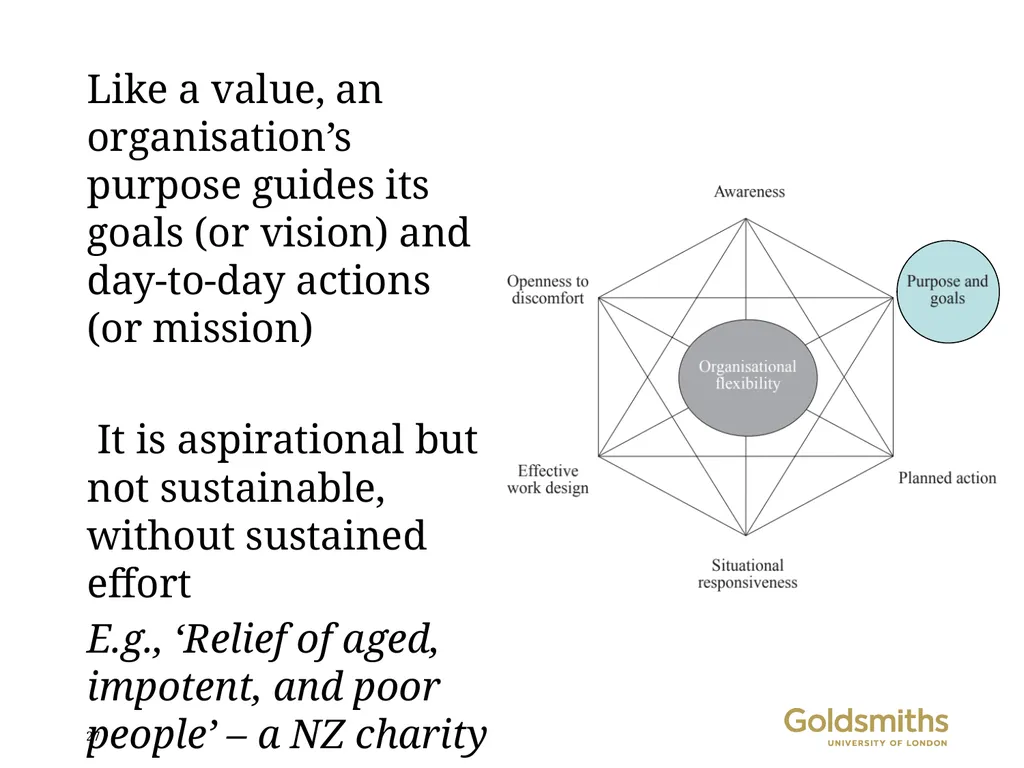
Like a value, an organisation’s purpose guides its goals (or vision) and day-to-day actions (or mission)
It is aspirational but not sustainable, without sustained effort
E.g., ‘Relief of aged, impotent, and poor people’ – a NZ charity 27<br>
25
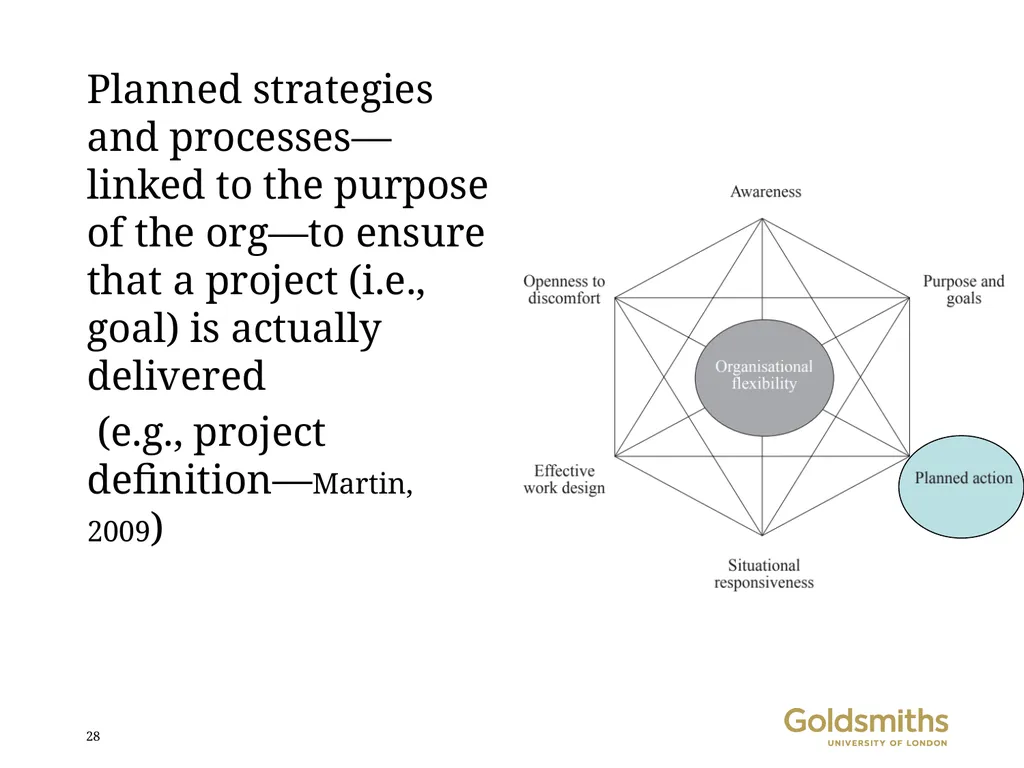
Planned strategies and processes—linked to the purpose of the org—to ensure that a project (i.e., goal) is actually delivered
(e.g., project definition—Martin, 2009) 28<br>
26
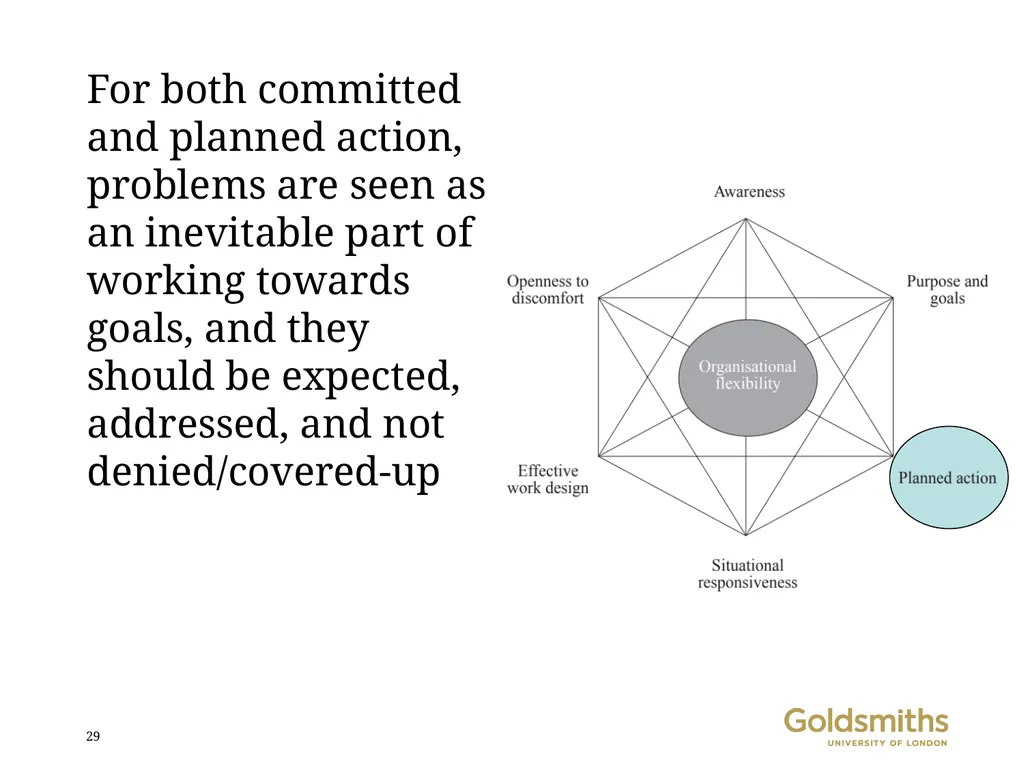
For both committed and planned action, problems are seen as an inevitable part of working towards goals, and they should be expected, addressed, and not denied/covered-up 29<br>
27
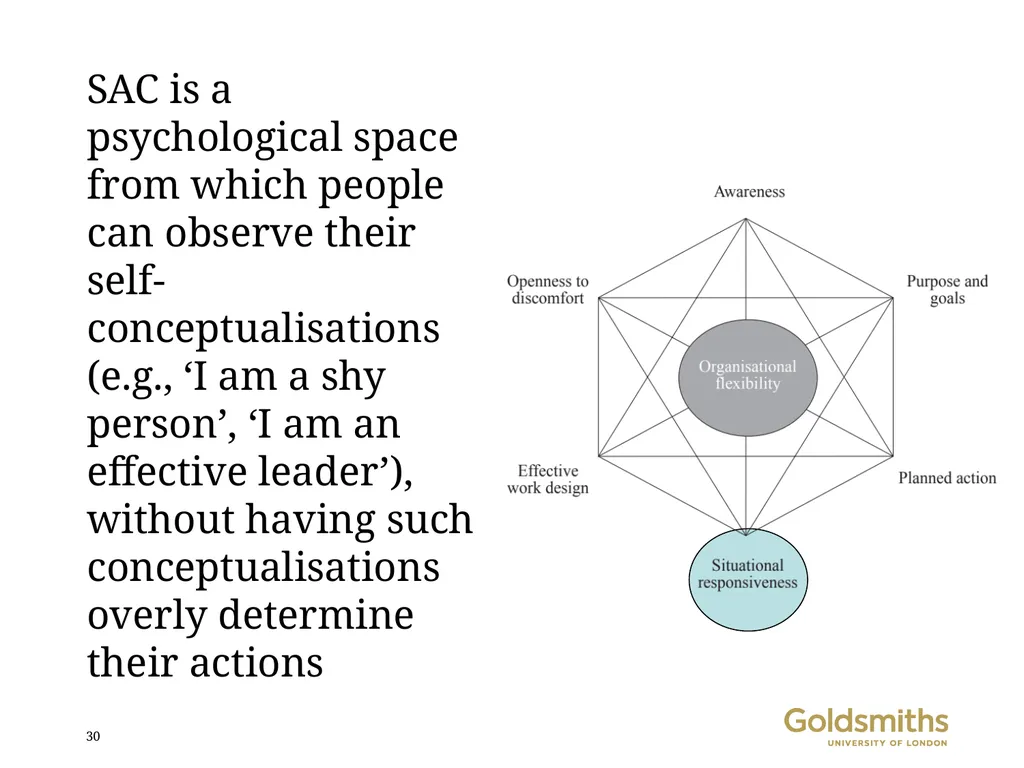
SAC is a psychological space from which people can observe their self-conceptualisations (e.g., ‘I am a shy person’, ‘I am an effective leader’), without having such conceptualisations overly determine their actions 30<br>
28
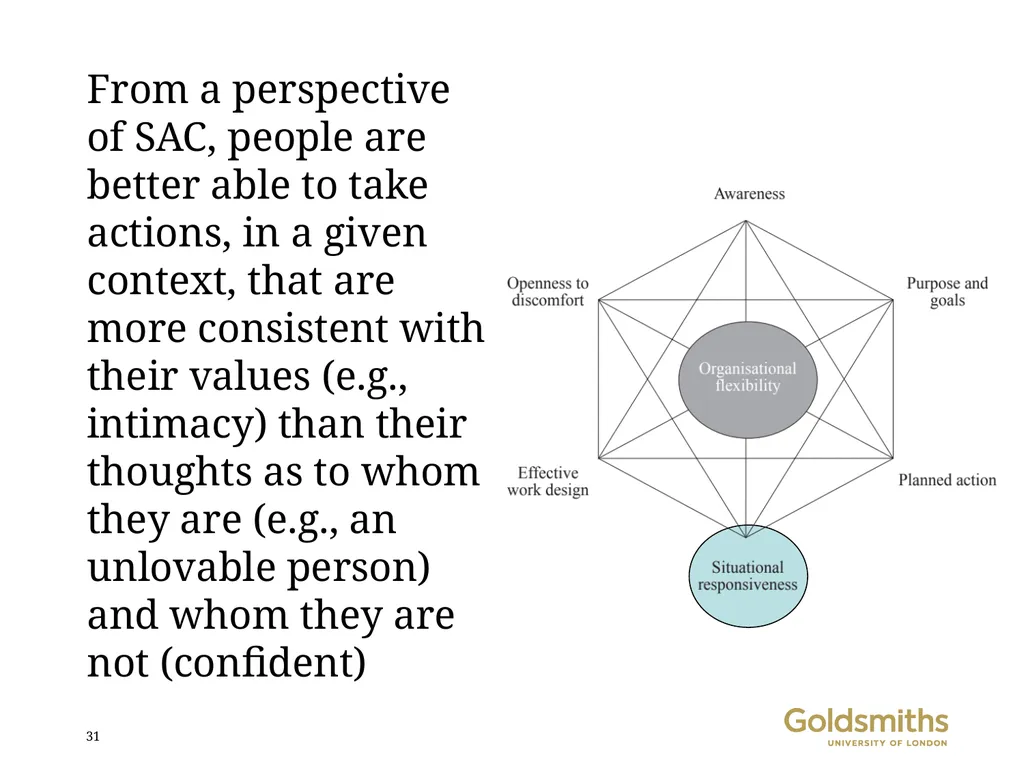
From a perspective of SAC, people are better able to take actions, in a given context, that are more consistent with their values (e.g., intimacy) than their thoughts as to whom they are (e.g., an unlovable person) and whom they are not (confident) 31<br>
29
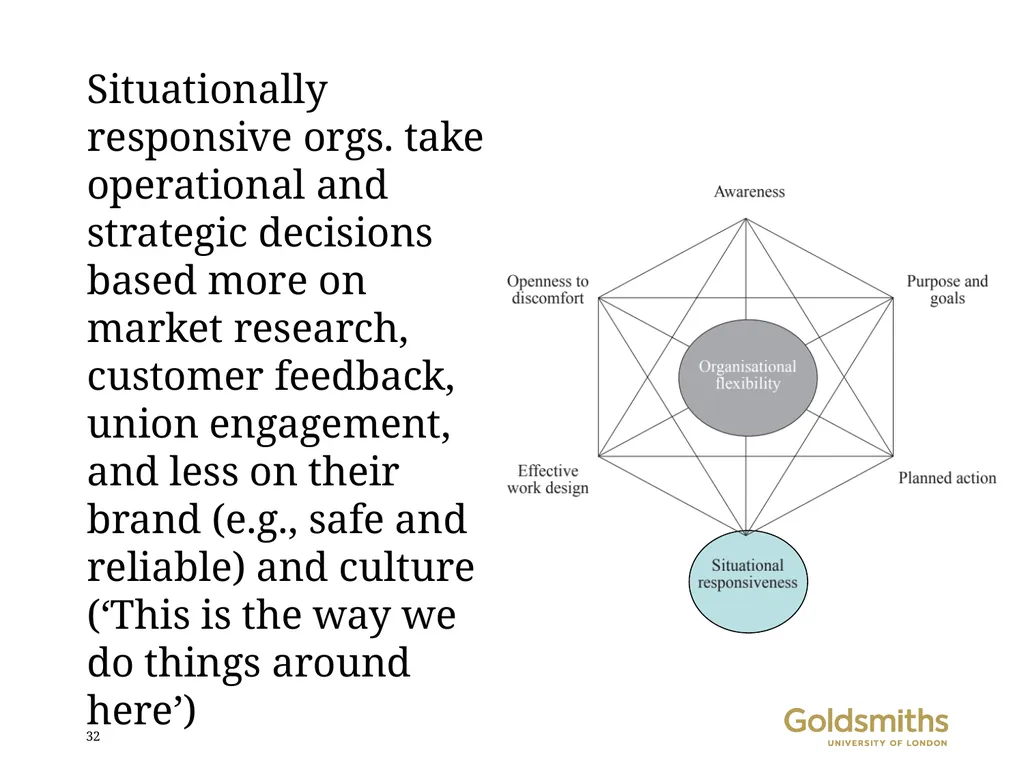
Situationally responsive orgs. take operational and strategic decisions based more on market research, customer feedback, union engagement, and less on their brand (e.g., safe and reliable) and culture (‘This is the way we do things around here’) 32<br>
30
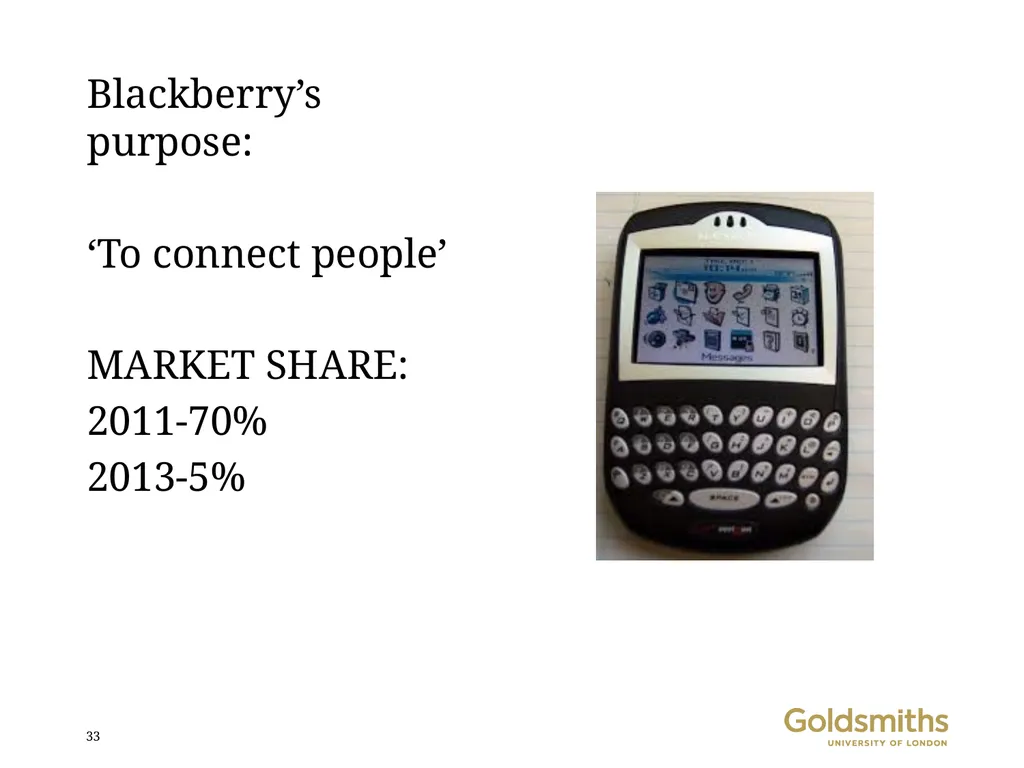
33 Blackberry’s purpose:
‘To connect people’
MARKET SHARE:
2011-70%
2013-5%<br>
31
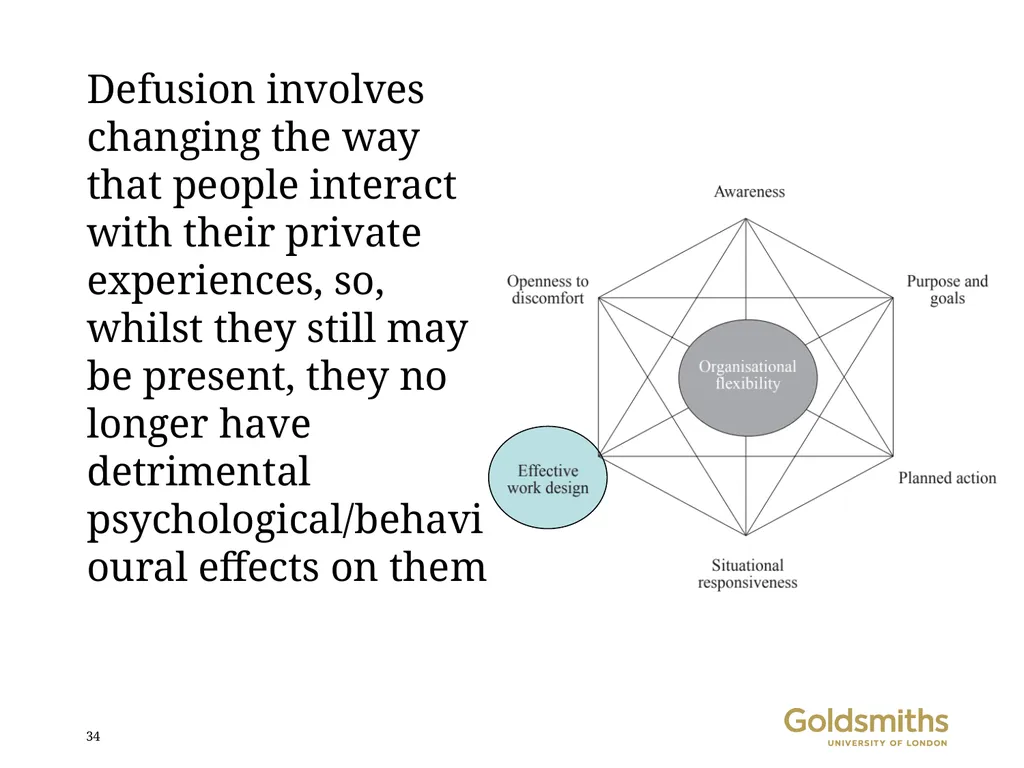
Defusion involves changing the way that people interact with their private experiences, so, whilst they still may be present, they no longer have detrimental psychological/behavioural effects on them 34<br>
32
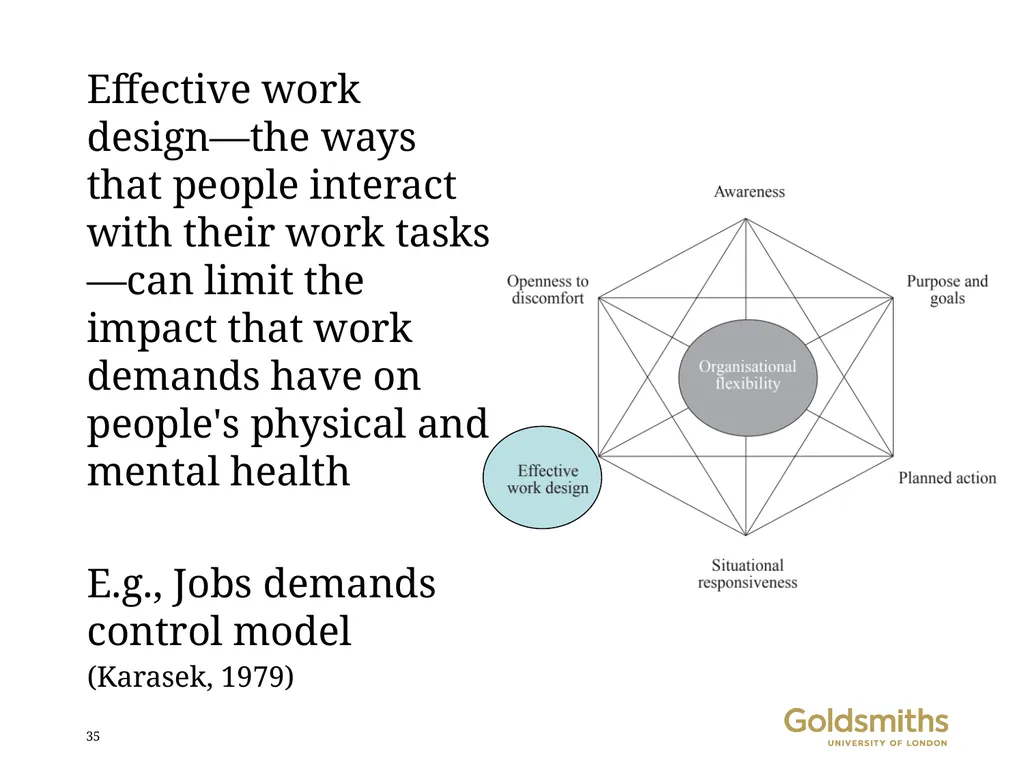
Effective work design—the ways that people interact with their work tasks—can limit the impact that work demands have on people's physical and mental health
E.g., Jobs demands control model
(Karasek, 1979) 35<br>
33
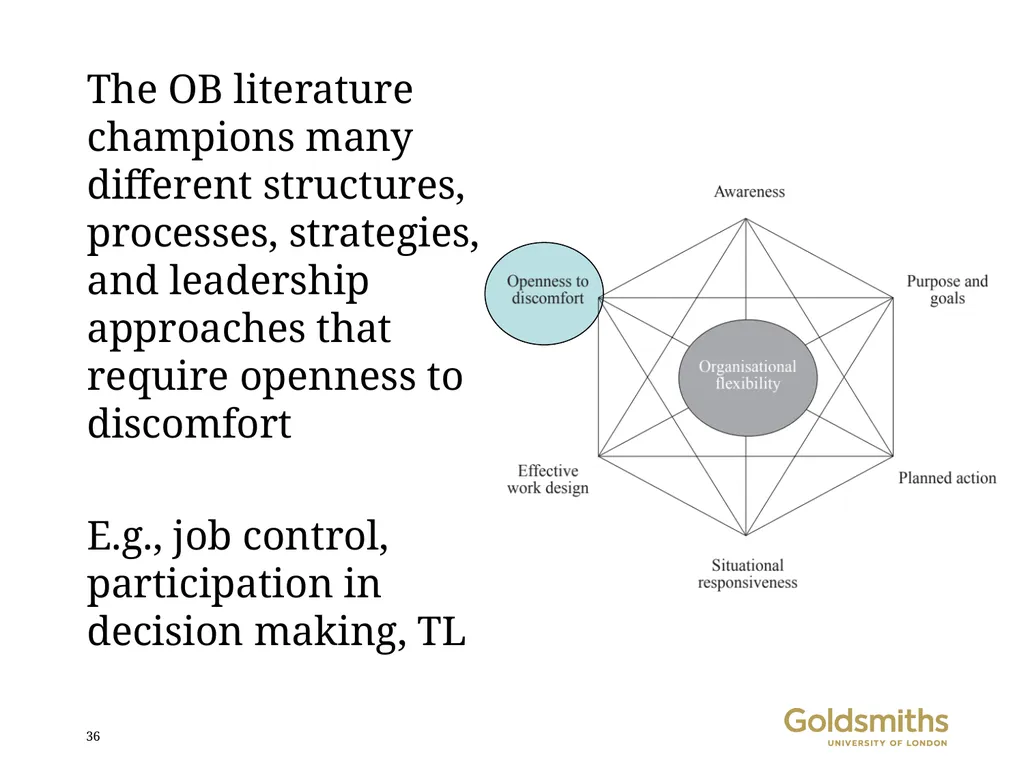
36 The OB literature champions many different structures, processes, strategies, and leadership approaches that require openness to discomfort
E.g., job control, participation in decision making, TL<br>
34
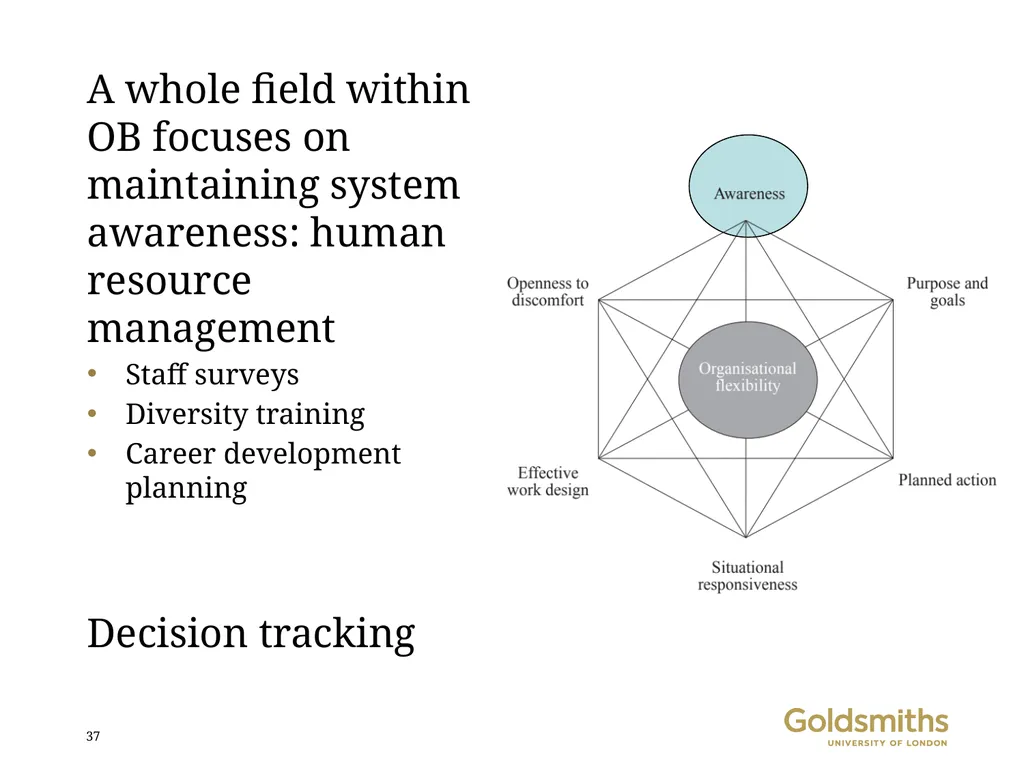
A whole field within OB focuses on maintaining system awareness: human resource management
Staff surveys
Diversity training
Career development planning
Decision tracking 37<br>
35
The story so far… Flexibility is clearly important at the individual level
Evidence beginning to show flexibility may be important at the group level
The orgflex specifies one way to enhance flexibility at the group and organisational level
Is it a mechanism for the benefits that can come from effective organisational change? 38<br>
36
Thank-you for your attention! Enjoy looking at the innovative ways our colleagues are using CBS to enact large-scale change. 39<br>
37
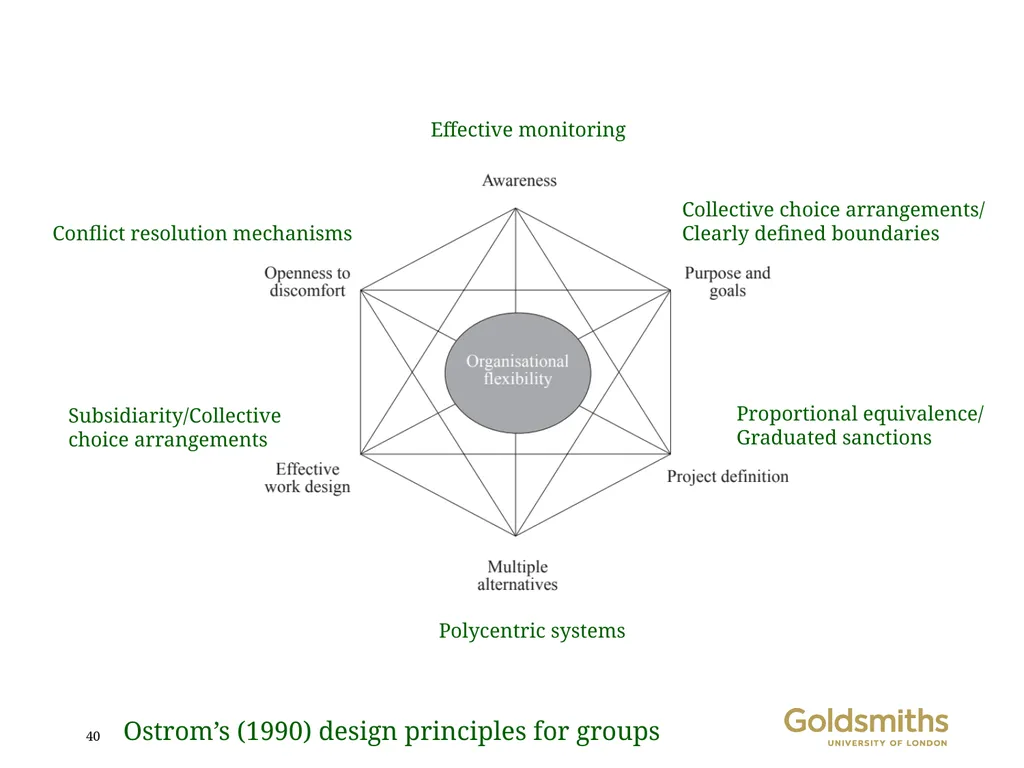
40 Effective monitoring Collective choice arrangements/
Clearly defined boundaries Proportional equivalence/
Graduated sanctions Polycentric systems Subsidiarity/Collective
choice arrangements Conflict resolution mechanisms Ostrom’s (1990) design principles for groups<br>